Adhyaya 87
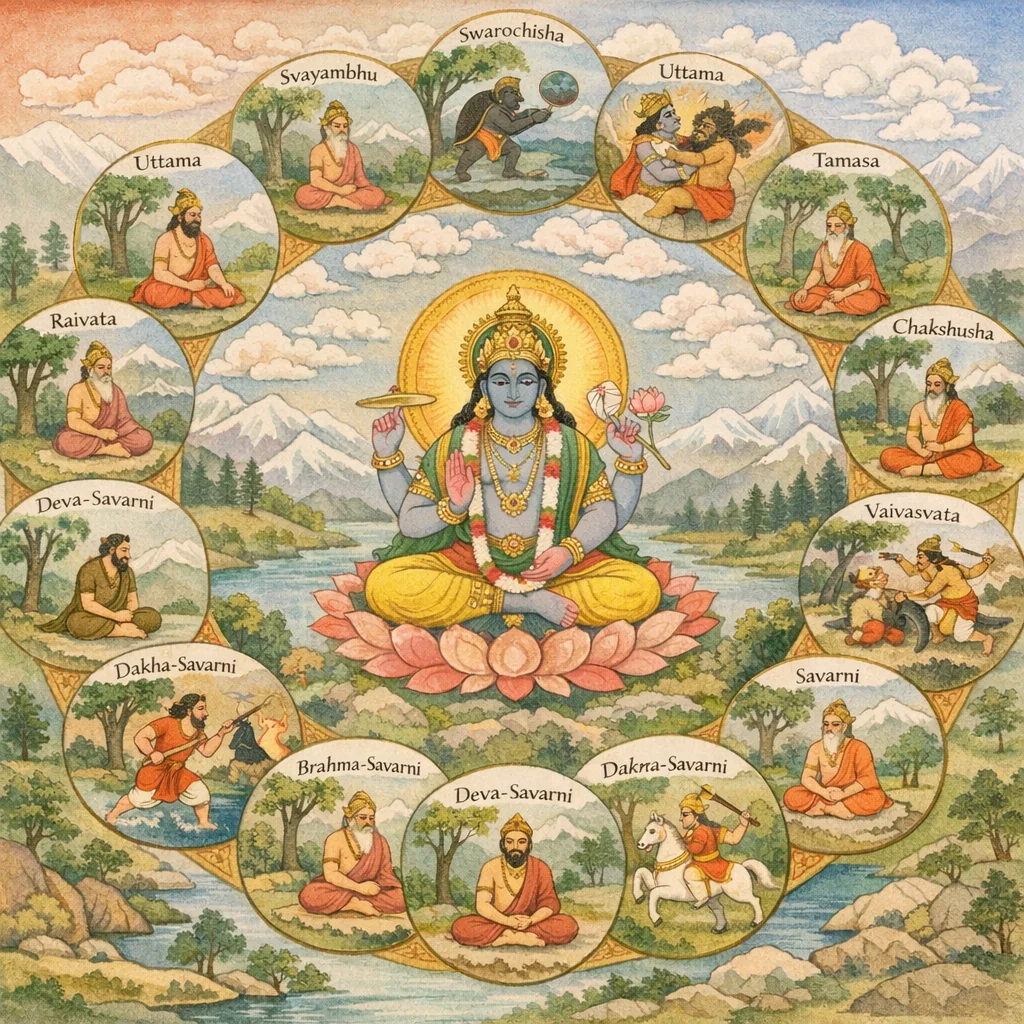
Manvantara Catalog: Fourteen Manus, Their Sons, Saptarishis, Indras, Deva-Hosts, and the 18 Vidyās
After concluding the Gayā-māhātmya, Hari (Viṣṇu) turns to a systematic account of the cosmic epochs (Manvantaras): beginning with Svāyambhuva Manu, the text lists the Manus, their sons, the Saptarṣis, and the deva-hosts for each successive Manvantara. Brief, theologically charged notices of asuric opposition and its pacification are interwoven—Viṣṇu repeatedly restores order by manifesting fitting forms (fish, tortoise, boar, swan, peacock, elephant, horse), so the Manvantara catalogue becomes not mere genealogy but a moral history of dharma defended. The Vaivasvata Manu section anchors the familiar human-age lineage (Ikṣvāku and others) and expands into standard divine enumerations (Ādityas, Rudras, Vasus, Maruts, Aśvins, Viśvedevas). The chapter culminates by identifying Viṣṇu, in the guise of Vyāsa, as the source through whom the Purāṇas and the eighteen vidyā-sthānas are composed, preparing the reader for the ensuing śāstra-grounded instruction.
Shlokas
Verse 1
षडशीतितमो ऽध्यायः (इति गयामाहात्म्यं समाप्तम्) / हरिरुवाच / चतुर्दश मनून्वक्ष्ये तत्सुताश्च सुकादिकान् / मनुः स्वायम्भुवः पूर्वमग्निघ्राद्याश्च तत्सुताः
Chapter Eighty-Seven (thus ends the Gayā-māhātmya). Hari said: “I shall describe the fourteen Manus and their sons, beginning with Suka and others. First is Svāyambhuva Manu, and Agnighra and the rest are his sons.”
Verse 2
मरीचिरत्र्यङ्गिरसौ पुलस्त्यः पुलहः क्रतुः / वसिष्ठश्च महातेजा ऋषयः सप्तकीर्तिताः
Marīci, Atri, and Aṅgiras; Pulastya, Pulaha, Kratu, and the great-radiant Vasiṣṭha—these are proclaimed as the Seven Sages (Saptarṣis).
Verse 3
जयाख्याशाचमिताख्याश्च शुक्रा यामास्तथैव च / गणा द्वादशकाश्चैति चत्वारः सोमपायिनः
Jayā, Mitā, Śukrā, and the Yāmās—these hosts are reckoned as twelve in number; and there are also four who drink Soma (Somapāyins).
Verse 4
विश्वभुग्वामदेवेन्द्रो बाष्कलिस्तदरिर्ह्यभूत् / स हतो विष्णुना दैत्यश्चक्रेण सुमहात्मना
The Daitya named Bāṣkali became the foe of Viśvabhuk (also called Vāmadeva-Indra). Then the great-souled Lord Viṣṇu slew him with His discus (cakra).
Verse 5
मनुः स्वारोचिषश्चाथ तत्पुत्रो मण्डलेश्वरः / चित्रको विनतश्चैव कर्णान्तो विद्युतो रविः
Then came Manu Svārociṣa, and his son Maṇḍaleśvara. After them were Citraka, Vinata, Karṇānta, Vidyuta, and Ravi.
Verse 6
बृहद्गुणो नभश्चैव महाबलपराक्रमः / ऊर्ज स्तम्बस्तथा प्राण ऋषभो निश्चल (र) स्तथा
“(He is) vast in virtues, and like the sky; endowed with great strength and valor; called the Pillar of vital energy, and Prāṇa itself; the Ṛṣabha, the foremost, and likewise the Unmoving, the steadfast one.”
Verse 7
दत्तो (म्भो) लिश्चावरीवांश्च ऋष्यः सप्तकीर्तिताः / तुषिता द्वादश प्रोक्तास्तथा पारावताश्च ये
Datta, (Ambho), and Liśca-Āvarīvān—these are declared to be the seven Ṛṣis. The Tuṣitas are said to be twelve in number, and likewise those called the Pārāvatas are also twelve.
Verse 8
इन्द्रो विपश्चिद्देवानां तद्रिपुः पुरुकृत्सरः / जघान हस्तिरूपेण भगवान्मधुसूदनः
Indra—wise among the gods—had that enemy, the tormentor of many. The Blessed Lord Madhusūdana (Viṣṇu) slew him, assuming the form of an elephant.
Verse 9
औत्तमस्य मनोः पुत्रा आजश्च परशुस्तथा / विनीतश्च सुकेतुश्च सुमित्रः सुबलः शुचिः
The sons of Manu Auttama were: Āja and Paraśu; also Vinīta, Suketu, Sumitra, Subala, and Śuci.
Verse 10
देवो देवावृधो रुद्र ! महोत्साहोजितस्तथा / रथौजा ऊर्ध्वबाहुश्च शरणश्चानघो मुनिः
O Rudra—God, increaser of the gods—so too are Mahotsāha (of great valor), Jita (the victorious), Rathaujā (mighty as a chariot), Ūrdhvabāhu (with uplifted arms), Śaraṇa (refuge), and the sinless sage Anagha.
Verse 11
सुतपाः शङ्कुरित्येते ऋषयः सप्त कीर्तिताः / वशवर्तिस्वधामानः शिवाः सत्याः प्रतर्दनाः
These are proclaimed as the seven sages: Sutapā and Śaṅku; also Vaśavarti, Svadhāmāna, Śiva, Satya, and Pratardana.
Verse 12
पञ्च देवगणाः प्रोक्ता सर्वे द्वादशकास्तु ते / इन्द्रः स्वशान्तिस्तच्छुक्रः प्रलम्बो नाम दानवः
Five groups of deities are proclaimed—each consisting of twelve. Among them are Indra, Svaśānti, and Śukra; and also a Dānava named Pralamba.
Verse 13
मत्स्यरूपी हरिर्विष्णुस्तं जघान च दानवम् / तामसस्य मनोः पुत्रा जानुजङ्घो ऽथ निर्भयः
Vishnu, Hari, taking the form of a Fish (Matsya), slew that demon. Then (is named) Jānujangha, the fearless son of Tāmasa Manu.
Verse 14
नवख्यातिर्नयश्चैव प्रियभृत्यो विविक्षिपः / दृढेषुधिः प्रस्तलाक्षः कृबन्धुः कृतस्तथा
Navakhyāti and Naya; Priyabhṛtya and Vivikṣipa; Dṛḍheṣudhi and Prastalākṣa; and also Kṛbandhu and Kṛta—these too are declared.
Verse 15
ज्योतिर्धामा पृथुः (धृष्ट) काव्यश्चैत्रश्चेताग्निहेमकाः (कौ) / मुनयः कीर्तिताः सप्त सुरागाः सुधियस्तथा
Jyotirdhāmā, Pṛthu (or Dhṛṣṭa), Kāvya, Caitra, Cetā, Agni, and Hemaka—these are proclaimed as seven sages (munis), virtuous and wise.
Verse 16
हरयो देवतामां च चत्वारः पञ्च (सप्त) विंशकाः / गणा इन्द्रः शिविस्तस्य शत्रुर्भोमरथाः स्मृताः
The Haris and the deities are said to be four; the attendant hosts are described as twenty-five (or twenty-seven). Indra is named among them; Śivi is remembered as his enemy, and the Bhoma-rathas are also mentioned.
Verse 17
हरिणा कूर्मरूपेण हतो भीमरथो ऽसुरः / रैवतस्य मनोः पुत्रो महा प्राणश्च साधकः
Assuming the form of a tortoise, Hari slew the asura Bhīmaratha. He is the son of Manu Raivata—Mahāprāṇa, the accomplished sādhaka.
Verse 18
वन (ल) बन्धुर्निरमित्रः प्रत्यङ्गः परहा शुचिः / दृढव्रतः केतुशृगं ऋषयस्तस्य वर्ण्यते
His kinsman is Vana(la); he is without enemies; his limbs are well-formed; a destroyer of foes, pure, and steadfast in vow. The ṛṣi describe him as bearing a banner-like horn (ketu-śṛṅga).
Verse 19
वेदश्रीर्वेदबाहुश्च ऊर्ध्वबाहुस्तथैव च / हिरण्यरोमा पर्जन्यः सत्यनेत्रः (नामा) स्वधाम च
Vedaśrī, Vedabāhu, and likewise Ūrdhvabāhu; also Hiraṇyaromā, Parjanya, Satyanetra (by name), and Svadhāma—these are the ones mentioned here.
Verse 20
अभूतरजसश्चैव तथा देवाश्वमेधसः / वैकुण्ठ (ण्ठाः श्चामृत (ता) श्चैव चत्वारो देवतागणाः
There are four groups of divine beings: the Abhūtarajasas, the Deva-aśvamedhas, the Vaikuṇṭhas, and the Amṛtas.
Verse 21
गणे चतुर्दश सुरा विभुरिद्रः प्रतापवान् / शान्तः शत्रुर्हतो दैत्यो हंसरूपेण विष्णुना
In that assembly were the fourteen classes of gods, and Indra—mighty and resplendent. The foe was subdued: the enemy daitya was slain by Viṣṇu in the form of Haṃsa, the swan.
Verse 22
चाक्षुषस्य मनोः पुत्रा उरुः पुरुर्महाबलः / शतद्युम्नस्तपस्वी च सत्यबाहुः(क्यो) कृतिस्तथा
The sons of Cākṣuṣa Manu were Uru, Puru of mighty strength, Śatadyumna the ascetic, Satyabāhu, and also Kṛti.
Verse 23
अग्निष्णुरतिरात्रश्च सुद्युम्नश्च तथा नरः / हविष्मानुत्तमः श्रीमान्स्व (सु) धामा विरजस्तथा
Agniṣṇu, Atirātra, Sudyumna, and likewise Nara; also Haviṣmān, Uttama, the illustrious Śrīmān, Svadhāmā (or Sudhāmā), and Viraja—these are the names enumerated here.
Verse 24
अभिमानः सहिष्णुश्च मधुश्रीरृषयः स्मृताः / आर्याः प्रभूता भाव्याश्च लेखाश्च पृथुकास्तथा
Abhimāna, Sahiṣṇu, Madhuśrī, and the Ṛṣis are remembered as such; likewise there are the Āryas, the Prabhūtas, the Bhāvyas, the Lekhas, and also the Pṛthukas.
Verse 25
अष्टकस्य गणाः पञ्च तथा प्रोक्ता दिवौकसाम् / इन्द्रो मनोजवः शत्रुर्महाकालो महाभजः
Thus, among the gods, five groups belonging to the Aṣṭakas are declared: Indra, Manojava, Śatru, Mahākāla, and Mahābhaja.
Verse 26
अश्वरूपेण स हतो हरिणा लोकधारिणा / मनोर्वैवस्वतस्येते पुत्रा विष्णुपरायणाः
He was slain by Hari—the sustainer of the worlds—who assumed the form of a horse. These are the sons of Manu Vaivasvata, wholly devoted to Viṣṇu.
Verse 27
इक्ष्वाकुरथ नाभागो धृष्टः शर्यातिरेव च / नरिष्यन्तस्तथा पांसुर्नभो नेदिष्ठ एव च
There were Ikṣvākuratha, Nābhāga, Dhṛṣṭa, and also Śaryāti; likewise Nariṣyanta, Pāṁsu, Nabhas, and Nediṣṭha as well.
Verse 28
करूषश्च पृषध्रश्च सुद्युम्नश्च मनोः सुताः / अत्रिर्वसिष्ठो भगवाञ्जमदग्निश्च कश्यपः
Karūṣa, Pṛṣadhra, and Sudyumna are sons of Manu; and so too are the revered sages Atri, Vasiṣṭha, the blessed Jamadagni, and Kaśyapa.
Verse 29
गौतमश्च भरद्वाजो विशामित्रो ऽथ सप्तमः / तथा ह्येकोनपञ्चाशन्मरुतः परिकीर्तिताः
Gautama, Bharadvāja, and Viśvāmitra are mentioned—then the seventh group as well; thus, indeed, the Maruts are proclaimed to be forty-nine in number.
Verse 30
आदित्या वसवः साध्यागणा द्वादशकास्त्रयः / एकादशा तथा रुद्रा वसवो ऽष्टौ प्रकीर्तिताः
The Ādityas, the Vasus, and the hosts of Sādhyas are each said to be twelve in number; likewise, the Rudras are eleven, and the Vasus are proclaimed to be eight.
Verse 31
द्वावश्विनौ विनिर्दिष्टौ विश्वेदेवास्तथा दशा / दशौवाङ्गिरसो देवा नव देवगणास्तथा
Two Aśvins are specified; likewise the Viśvedevas are ten. The Vāṅgirasa deities are also ten, and the groups of gods are nine as well.
Verse 32
तेजस्वी नाम वै शक्रो हिरण्याक्षो रिपुः स्मृतः / हतो वराहरूपेण हरिण्याख्यो ऽथ विष्णुना
Indra (Śakra) was indeed known by the name Tejasvī; and the foe Hiraṇyākṣa is remembered as such. That Hariṇyākṣa was then slain by Viṣṇu in the form of the Boar, Varāha.
Verse 33
वक्ष्ये मनोर्भविष्यस्य सावर्ण्याख्यस्य वै सुतान् / विजयश्चार्ववीरश्च निर्मोहः सत्यवाक्रृती
Now I shall declare the sons of the future Manu known as Sāvarṇya: Vijaya, Cārvavīra, Nirmoha, and Satyavākṛtī.
Verse 34
वरिष्ठश्च गरिष्ठश्च वाचः संगतिरेव च / अश्वत्थामा कृपो व्यासो गालवो दीप्तिमानथ
There were ‘the most excellent’ and ‘the most weighty’, and even ‘the very concord of speech’: Aśvatthāmā, Kṛpa, Vyāsa, Gālava, and also the radiant one.
Verse 35
ऋष्यशृङ्गस्तथा राम ऋषयः सप्त कीर्तिताः / सुतपा अमृताभाश्च मुख्याश्चापि तथा सुराः
O Rāma, Ṛṣyaśṛṅga too is counted among them. Seven sages (ṛṣi) are enumerated; likewise Sutapā and Amṛtābhā, and also the foremost among the gods.
Verse 36
तेषां गणस्तु देवाना मेकैको विंशकः स्मृतः / विरोचनसुतस्तेषां बलिरिन्द्रो भविष्यति
Of those gods, each group is said to consist of twenty-one; and among them, Bali—the son of Virocana—will become Indra.
Verse 37
दत्त्वेमां याचमानाय विष्णवे यः पदत्रयम् / ऋद्धिमिन्द्रपदं हित्वा ततः सिद्धिमवाप्स्यति
Whoever grants to Viṣṇu—when He asks—these three strides, abandoning even prosperity and the rank of Indra, thereafter attains spiritual perfection (siddhi).
Verse 38
वारुणेर्दक्षसावर्णेर्नवमस्य सुताञ्छृणु / धृतिकेतुर्देप्तिकेतुः पञ्चहस्तो निरामयः / पृतुश्रवा बृहदूद्युम्न ऋचीको बृहतो गुणः
Hear now the sons of Varuṇa, born of Dakṣa-sāvarṇi—the ninth in the line: Dhṛtiketu, Deptiketu, Pañcahasta, Nirāmaya, Pṛtuśravā, Bṛhadūdyumna, Ṛcīka, and Bṛhato-guṇa.
Verse 39
मेधातिथिर्द्युतिश्चैव सवसो वसुरेव च / ज्योतिष्मान्हव्यकव्यौ च ऋषयो विभुरीश्वरः
Medhātithi and Dyuti, likewise Savas and Vasu; Jyotiṣmān, and also Havyakavya—these sages (ṛṣi) are by nature all-pervading and sovereign.
Verse 40
परो मरीचिर्गर्भश्च स्व (सु) धर्माणश्च ते त्रयः / देशशत्रु) कालकाक्षस्तद्धन्ता पद्मनाभकः
These three are: Para, Marīci, and Garbha; and (also) Sva (or Su) and Dharmāṇa. Deśaśatru, Kālakākṣa, and Padmanābhaka are mentioned—Padmanābhaka being the slayer of that one.
Verse 41
धमपुत्रस्य पुत्रांस्तु दश मस्य मनोः शृणु / सुक्षेत्रश्चोत्तमौजाश्च भूरिश्रेण्यश्च वीर्यवान्
Now hear, O Garuḍa, the ten sons of Dhama’s son, belonging to Manu: Sukṣetra, Uttamaujā, and Bhūriśreṇya, mighty in strength.
Verse 42
शतानीको निरमित्रो वृषसेनो जयद्रथः / भूरिद्युम्नः सुवर्चाश्च शान्तिरिन्द्रः प्रतापवान्
Śatānīka, Niramitra, Vṛṣasena, Jayadratha, Bhūridyumna, Suvarcā, Śānti, and the mighty Indra—renowned for valor—are mentioned here.
Verse 43
अयो (पो) मूर्तिर्हविष्मांश्च सुकृतिश्चाव्ययस्तथा / नाभागो ऽप्रतिमौजाश्च सौरभ ऋषयस्तथा
Ayo (and Po), Mūrti, Haviṣmān, Sukṛti, and Avyaya; likewise Nābhāga and Apratimaujā of incomparable vigor, as well as Saurabha—these are the Ṛṣis (sages) mentioned here.
Verse 44
प्राणाख्याः शतसंख्यास्तु देवतानां गणस्तदा / तेषामिन्द्रश्च भविता शान्तिर्नाम महाबलः / बलिः शत्रुस्तं हरिश्च गदया घातयिष्यति
Then there will be a host of deities, a hundred in number, called the Prāṇas. Among them, a mighty one named Śānti will become their Indra (leader). Bali will be his enemy, and Hari will strike him down with a mace.
Verse 45
रुद्र पुत्रस्य ते पुत्रान्वक्ष्याम्येकादशस्य तु / सर्वत्रगः सुशर्मा च देवानीकः पुरुर्गुरुः
Now I shall tell you the sons—eleven in number—of Rudra’s son: Sarvatraga, Suśarmā, Devānīka, and Pururguru.
Verse 46
क्षेत्रवर्णो दृढेषुश्च आर्द्रकः पुत्रकस्तथा / हविष्मांश्च हविष्यश्च वरुणो विश्वविस्तरौ
Kṣetravarṇa and Dṛḍheṣu; Ārdraka and Putraka; Haviṣmān and Haviṣya; and also Varuṇa and Viśvavistara—these are the names enumerated here.
Verse 47
विष्णुश्चैवाग्नितेजाश्च ऋषयः सप्त कीर्तिताः / विहङ्गमाः कामगम् निर्माणरुचयस्तथा
Viṣṇu and those radiant with the splendor of fire are proclaimed as the seven ṛṣis. Likewise, the birds are said to move at will, endowed with the power of manifestation and luminous brilliance.
Verse 48
एकैकस्त्रिंशकस्तेषां गणश्चैन्द्रश्च वै वृषः / धसग्रीवो रिपुस्तस्य श्रीरूपी घातयिष्यति
Each of them forms a group of thirty-one; among them are also the lunar host and the Bull (Vṛṣa). Dhasagrīva is his enemy; Śrīrūpī will slay him.
Verse 49
मनोस्तु दक्षपुत्रस्य द्वादशस्यात्मजाञ्छृणु / देववानु पदेवश्च देवश्रेष्ठो विदूरथः
Now hear of the sons of Manu, the twelfth son of Dakṣa: Devavānu, Padeva, Devaśreṣṭha, and Vidūratha.
Verse 50
मित्रवान्मित्रदेवश्च मित्रबिन्दुश्च वीर्यवान् / मित्रवाहः प्रवाहश्च दक्षपुत्रमनोः सुताः
Mitravān, Mitradeva, and Mitrabindu; along with the valiant Vīryavān; and also Mitravāha and Pravāha—these are the sons of Manu, the son of Dakṣa.
Verse 51
तपस्वी सुतपाश्चैव तपोमूर्तिस्तपोरतिः / तपोधृतिर्द्युतिश्चान्यः सप्तमश्च तपोधनाः
Tapasvī and Sutapā; Tapomūrti and Taporati; Tapodhṛti and Dyuti; and as the seventh, Tapodhana—these are the seven endowed with the wealth of austerity (tapas).
Verse 52
स्वधर्माणः सुतपसो हरितो होहितास्तथा / सुरारयो गणाश्चैते प्रत्येकं दशको गणः
The groups called Svadharmāṇa, Sutapas, Harita, and Rohita, as well as the Surāraya—each of these is a gaṇa, a troop of ten members.
Verse 53
ऋतधामा च भद्रे (तत्रे) न्द्रस्तारको नाम तद्रिपुः / हरिर्नपुंसकं भूत्वा घातयिष्यति शङ्कर
O Bhadre, there an Indra named Tāraka will arise, an enemy to him. Hari (Viṣṇu), assuming a neuter (sexless) form, will cause Śaṅkara (Śiva) to slay him.
Verse 54
त्रयोदशस्य रौच्यस्य मनोः पुत्रान्निबोध मे / चित्रसेनो विचित्रश्च तपोधर्मरतो धृतिः
Learn from me the sons of the thirteenth Manu, Raucya: Citrasena, Vicitra, and Dhṛti, who is devoted to austerity (tapas) and dharma.
Verse 55
सुनेत्रः क्षेत्रवृत्तिश्च सुनयो धर्मपो दृढः / धृतिमानव्ययश्चैव निशारूपो निरुत्सुकः
He is clear-sighted, established in the duties of his station, and of good conduct; a steadfast protector of dharma—endowed with fortitude, unwavering and imperishable; night-formed (moving in secrecy), and free from restlessness or craving.
Verse 56
निर्मोहस्तत्त्वदर्शो च ऋषयः सप्त कीर्तिताः / स्व (सु) रोमाणः स्व (सु) धर्माणः स्व (सु) कर्माणस्तथामराः
Seven ṛṣis are proclaimed—free from delusion and endowed with the vision of truth; and likewise the immortals, each abiding in their own proper forms, their own dharmas, and their own karmas.
Verse 57
त्रयस्त्रिंशद्विभेदास्ते देवानां तत्र वै गणाः / इन्द्रो दिवस्पतिः शत्रुस्त्विष्टिभो नाम दानवः
There, indeed, the hosts of the gods are divided into thirty-three classes. Indra is the lord of heaven; and there is an enemy—a Dānava named Tviṣṭibha.
Verse 58
मायूरेण च रूपेण घातयिष्यति माधवः / चतुर्दशस्य भौत्यस्य शृणु पुत्रान्मनोर्मम
Assuming the form of a peacock, Mādhava (Viṣṇu) will slay him. Now listen, my son, to the sons of Manu—beginning with the fourteenth, named Bhauti.
Verse 59
उरुर्गभीरो धृष्टश्च तरस्वीग्रा (ग्र) ह एव च / अभिमानि प्रवीरश्च जिष्णुः संक्रन्दनस्तथा / तेजस्वी दुर्लभश्चैव भौत्यस्यैते मनोः सुताः
Uru, Gabhīra, Dhṛṣṭa, Tarasvī, and also Grāha; Abhimānī, Pravīra, Jiṣṇu, and Saṃkrandana; as well as Tejasvī and Durlabha—these are the mind-born sons of the Manu named Bhauti.
Verse 60
अग्नीध्रश्चाग्निबाहुश्च मागधश्च तथा शुचिः / अजितो मुक्तशुक्रौ च ऋषयः सप्त कीर्तिताः
Agnīdhra, Agnibāhu, Māgadha, and likewise Śuci; Ajita and Muktaśukra—these are proclaimed as the seven ṛṣis.
Verse 61
चाक्षुषाः कर्मनिष्ठाश्च पवित्रा भ्राजिनस्तथा / वचोवृद्धा देवगणाः पञ्च प्रोक्तास्तु सप्तकाः
The divine hosts are declared to be five—Cākṣuṣa, Karmaniṣṭha, Pavitra, Bhrājina, and Vacovṛddha—each of these being a group of seven.
Verse 62
शुचिरिन्द्रो महादैत्यो रिपुहन्ता हरिः स्वयम् / एको देवश्चतुर्धा तु व्यासरूपेण विष्णुना
Śuci, Indra, the great Daitya, and Hari Himself—the one Divine Being indeed manifests in fourfold form, as Viṣṇu in the guise of Vyāsa.
Verse 63
कृतस्ततः पुराणानि विद्याश्चाष्टादशैव तु / अङ्गानि चतुरो वेदा मीमांसा न्यायविस्तरः
From him, the Purāṇas were composed, and likewise the eighteen branches of knowledge; the auxiliary Vedic disciplines, the four Vedas, Mīmāṃsā, and the extensive tradition of Nyāya as well.
Verse 64
पुराणं धर्मशास्त्रं च आयुर्वेदार्थशास्त्रकम् / धनुर्वेदश्च गान्धर्वो विद्या ह्यष्टादशैव ताः
The Purāṇa, the Dharmaśāstra, Ayurveda, and Arthaśāstra; as well as Dhanurveda and Gāndharva—these are indeed among the eighteen branches of knowledge.
Frequently Asked Questions
It pivots from tīrtha-māhātmya (sacred-place merit) to cosmic governance by listing Manvantaras, implying that pilgrimage-dharma and cosmic-dharma belong to one continuum of order maintained under Viṣṇu.
The repeated form-assumptions teach avatāra as functional theology: divine form adapts to circumstance to remove adharma, ensuring that each Manvantara’s administration can proceed without obstruction.
It grounds cosmological narration in epistemic authority: the same Viṣṇu who stabilizes the cosmos is presented as the transmitter of śāstra (Purāṇas and disciplines), legitimizing subsequent teachings as part of a safeguarded knowledge-tradition.