Adhyaya 2
Uddhava’s Remembrance of Kṛṣṇa and the Theology of the Lord’s Disappearance
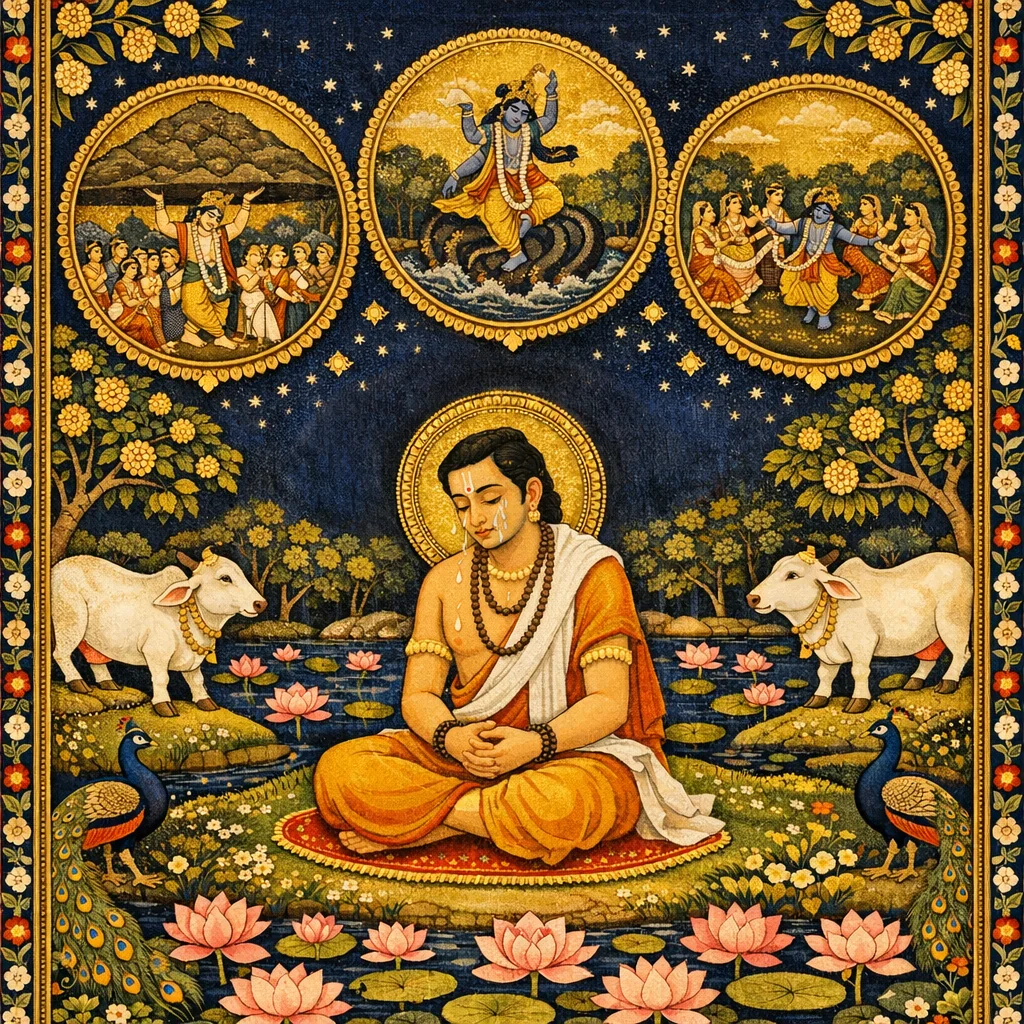
At Vidura’s request to hear of Kṛṣṇa, Uddhava is overwhelmed: remembrance awakens bhakti-ecstasy, bodily transformations, and tears of separation. Regaining composure, he laments that the world’s “sun” has set—Kṛṣṇa’s disappearance—and that Time has swallowed the Yadu house. He reflects on the paradox that even the Yadus, ever near Kṛṣṇa, did not fully recognize His supreme divinity, teaching that true knowledge arises from surrendered vision rather than mere proximity or learning. The Lord, he explains, appears by yoga-māyā in an eternal form fit for līlā, and “disappears” for those whose sight is unpurified. Uddhava then recalls major Vraja and Mathurā–Dvārakā līlās—birth in prison, childhood in Vṛndāvana, demon-slaying, Kāliya’s chastisement, lifting Govardhana, and the rāsa—showing compassion and sovereignty joined with humanlike conduct. The chapter bridges Vidura’s inquiry to the canto’s next movement: a more systematic narration of Kṛṣṇa’s life and the metaphysical meaning of His descent and withdrawal.
Shlokas
Verse 1
श्री शुक उवाच इति भागवत: पृष्ट: क्षत्त्रा वार्तां प्रियाश्रयाम् । प्रतिवक्तुं न चोत्सेह औत्कण्ठ्यात्स्मारितेश्वर: ॥ १ ॥
Śrī Śukadeva said: When Vidura asked the great devotee Uddhava to speak the messages of the dearest Lord, Śrī Kṛṣṇa, Uddhava could not reply at once, for remembrance of the Lord stirred overwhelming longing.
Verse 2
य: पञ्चहायनो मात्रा प्रातराशाय याचित: । तन्नैच्छद्रचयन् यस्य सपर्यां बाललीलया ॥ २ ॥
Even at five years of age, when his mother called him for the morning meal, he was so absorbed in serving Śrī Kṛṣṇa—like a child’s devotional play—that he did not wish to eat.
Verse 3
स कथं सेवया तस्य कालेन जरसं गत: । पृष्टो वार्तां प्रतिब्रूयाद्भर्तु: पादावनुस्मरन् ॥ ३ ॥
Thus Uddhava served the Lord unceasingly from childhood, and even in old age that spirit of service never waned. When asked about the Lord’s message, he at once remembered his Master’s lotus feet and became absorbed in that remembrance.
Verse 4
स मुहूर्तमभूत्तूष्णीं कृष्णाङ्घ्रि सुधया भृशम् । तीव्रेण भक्तियोगेन निमग्न: साधु निर्वृत: ॥ ४ ॥
For a moment he remained silent and motionless. By intense bhakti-yoga he sank deeply into the nectar of remembering Kṛṣṇa’s lotus feet, appearing like a saint ever more immersed in that ecstasy.
Verse 5
पुलकोद्भिन्नसर्वाङ्गो मुञ्चन्मीलद्दृशा शुच: । पूर्णार्थो लक्षितस्तेन स्नेहप्रसरसंप्लुत: ॥ ५ ॥
Vidura observed that Uddhava’s whole body was thrilled with transcendental ecstasy, and that he was wiping away tears of separation from his eyes. Thus Vidura understood that Uddhava was completely flooded with expansive love for the Lord.
Verse 6
शनकैर्भगवल्लोकान्नृलोकं पुनरागत: । विमृज्य नेत्रे विदुरं प्रीत्याहोद्धव उत्स्मयन् ॥ ६ ॥
Gradually Uddhava returned from the Lord’s abode to the human realm. Wiping his eyes and stirring memories of the past, he spoke to Vidura with affection, smiling softly.
Verse 7
उद्धव उवाच कृष्णद्युमणिनिम्लोचे गीर्णेष्वजगरेण ह । किं नु न: कुशलं ब्रूयां गतश्रीषु गृहेष्वहम् ॥ ७ ॥
Uddhava said: My dear Vidura, the sun of this world—Lord Śrī Kṛṣṇa—has set, and our home has been swallowed by the great serpent of Time. What can I possibly tell you now of our welfare?
Verse 8
दुर्भगो बत लोकोऽयं यदवो नितरामपि । ये संवसन्तो न विदुर्हरिं मीना इवोडुपम् ॥ ८ ॥
Alas, this universe is most unfortunate; and even more unfortunate are the Yadus, for though they lived with Him, they did not recognize Hari—just as fish cannot recognize the moon.
Verse 9
इङ्गितज्ञा: पुरुप्रौढा एकारामाश्च सात्वता: । सात्वतामृषभं सर्वे भूतावासममंसत ॥ ९ ॥
The Yadus were skilled in reading signs, greatly mature, and well versed in the Sātvata path. In every kind of leisure they were always with the Lord; yet all of them could know Him only as the Supreme, the foremost of the Sātvatas, who dwells within all beings.
Verse 10
देवस्य मायया स्पृष्टा ये चान्यदसदाश्रिता: । भ्राम्यते धीर्न तद्वाक्यैरात्मन्युप्तात्मनो हरौ ॥ १० ॥
The words of those bewildered by the Lord’s māyā and sheltering in the unreal can never divert the intelligence of one who is wholly surrendered to Hari.
Verse 11
प्रदर्श्यातप्ततपसामवितृप्तदृशां नृणाम् । आदायान्तरधाद्यस्तु स्वबिम्बं लोकलोचनम् ॥ ११ ॥
Śrī Kṛṣṇa, the eyes of the world, revealed His eternal form before all on earth, and then—by withdrawing that very form—He enacted His disappearance from the sight of those who, lacking due austerity, could not behold Him as He is.
Verse 12
यन्मर्त्यलीलौपयिकं स्वयोग- मायाबलं दर्शयता गृहीतम् । विस्मापनं स्वस्य च सौभगर्द्धे: परं पदं भूषणभूषणाङ्गम् ॥ १२ ॥
By His inner potency, yoga-māyā, the Lord appeared in the mortal world in His eternal form, perfectly suited to His līlās. Those pastimes astonished all—even the proud of their opulence, and even the Lord Himself as the Master of Vaikuṇṭha; thus Śrī Kṛṣṇa’s transcendental body is the ornament of all ornaments.
Verse 13
यद्धर्मसूनोर्बत राजसूये निरीक्ष्य दृक्स्वस्त्ययनं त्रिलोक: । कार्त्स्न्येन चाद्येह गतं विधातु- रर्वाक्सृतौ कौशलमित्यमन्यत ॥ १३ ॥
At the altar of Mahārāja Yudhiṣṭhira’s rājasūya sacrifice, the demigods of the three worlds assembled. Beholding the exquisite features of Lord Śrī Kṛṣṇa, they reflected that He was Brahmā’s most supremely skillful creation among humankind.
Verse 14
यस्यानुरागप्लुतहासरास- लीलावलोकप्रतिलब्धमाना: । व्रजस्त्रियो दृग्भिरनुप्रवृत्त- धियोऽवतस्थु: किल कृत्यशेषा: ॥ १४ ॥
The maidens of Vraja, whose hearts were filled through love-soaked laughter, sweet līlās, and exchanges of glances, were anguished when Kṛṣṇa departed. They followed Him with their eyes and then sat stunned in mind, unable to finish their household duties.
Verse 15
स्वशान्तरूपेष्वितरै: स्वरूपै- रभ्यर्द्यमानेष्वनुकम्पितात्मा । परावरेशो महदंशयुक्तो ह्यजोऽपि जातो भगवान् यथाग्नि: ॥ १५ ॥
The Bhagavān, the compassionate Lord of both the spiritual and material realms, though unborn, appears in birth like fire when friction arises between His peaceful devotees and those ruled by the guṇas, accompanied by a portion of the mahat-tattva.
Verse 16
मां खेदयत्येतदजस्य जन्म- विडम्बनं यद्वसुदेवगेहे । व्रजे च वासोऽरिभयादिव स्वयं पुराद् व्यवात्सीद्यदनन्तवीर्य: ॥ १६ ॥
When I remember Lord Kṛṣṇa—how the Unborn appeared in Vasudeva’s prison, how He went to Vraja and lived hidden out of fear of the enemy, and how, though of limitless power, He withdrew from Mathurā—these bewildering deeds distress my heart.
Verse 17
दुनोति चेत: स्मरतो ममैतद् यदाह पादावभिवन्द्य पित्रो: । ताताम्ब कंसादुरुशङ्कितानां प्रसीदतं नोऽकृतनिष्कृतीनाम् ॥ १७ ॥
Because of great fear of Kaṁsa and living far from home, Kṛṣṇa and Balarāma could not serve the lotus feet of Their parents; thus the Lord begged, “O Mother, O Father, please forgive Us.” Remembering this pains my heart.
Verse 18
को वा अमुष्याङ्घ्रि सरोजरेणुं विस्मर्तुमीशीत पुमान् विजिघ्रन् । यो विस्फुरद्भ्रूविटपेन भूमे- र्भारं कृतान्तेन तिरश्चकार ॥ १८ ॥
Who could ever forget, after once inhaling the dust of His lotus feet? By the mere flashing spread of His eyebrow-leaves, Śrī Kṛṣṇa dealt death’s blow to those who burdened the earth.
Verse 19
दृष्टा भवद्भिर्ननु राजसूये चैद्यस्य कृष्णं द्विषतोऽपि सिद्धि: । यां योगिन: संस्पृहयन्ति सम्यग् योगेन कस्तद्विरहं सहेत ॥ १९ ॥
At the Rājasūya you yourselves saw that even Śiśupāla, the king of Cedi, though he hated Kṛṣṇa, attained yogic perfection—what true yogīs long for through proper practice. Who could endure separation from Him?
Verse 20
तथैव चान्ये नरलोकवीरा य आहवे कृष्णमुखारविन्दम् । नेत्रै: पिबन्तो नयनाभिरामं पार्थास्त्रपूत: पदमापुरस्य ॥ २० ॥
In the same way, other heroes of the human realm on the field of Kurukṣetra were purified by the onslaught of Arjuna’s arrows; and, beholding Kṛṣṇa’s lotuslike face—so pleasing to the eyes—they attained the Lord’s supreme abode.
Verse 21
स्वयं त्वसाम्यातिशयस्त्र्यधीश: स्वाराज्यलक्ष्म्याप्तसमस्तकाम: । बलिं हरद्भिश्चिरलोकपालै: किरीटकोट्येडितपादपीठ: ॥ २१ ॥
Yet Lord Śrī Kṛṣṇa Himself is the sovereign Master of all triads, unequaled and independently supreme; by the fortune of His own kingship all desires are fulfilled. The eternal guardians of the worlds worship Him, offering the paraphernalia of devotion and touching His footstool with millions of crowns.
Verse 22
तत्तस्य कैङ्कर्यमलं भृतान्नो विग्लापयत्यङ्ग यदुग्रसेनम् । तिष्ठन्निषण्णं परमेष्ठिधिष्ण्ये न्यबोधयद्देव निधारयेति ॥ २२ ॥
Therefore, O Vidura, does it not grieve us—His servants—when we remember how Lord Śrī Kṛṣṇa would stand before King Ugrasena seated upon the royal throne and, with humility, submit His explanations, saying, “O my lord, please know this”?
Verse 23
अहो बकी यं स्तनकालकूटं जिघांसयापाययदप्यसाध्वी । लेभे गतिं धात्र्युचितां ततोऽन्यं कं वा दयालुं शरणं व्रजेम ॥ २३ ॥
Alas! Though the she-demon Pūtanā was faithless and, intent on killing, offered her breast smeared with deadly poison, she still attained the destiny befitting a nursing mother. To whom could we go for shelter more merciful than He?
Verse 24
मन्येऽसुरान् भागवतांस्त्र्यधीशे संरम्भमार्गाभिनिविष्टचित्तान् । ये संयुगेऽचक्षत तार्क्ष्यपुत्र- मंसे सुनाभायुधमापतन्तम् ॥ २४ ॥
I deem the demons who are hostile to the Lord—the Master of all triads—to be, in a sense, greater than devotees; for in battle, though absorbed in thoughts of enmity, they are able to behold the Lord rushing forth upon the shoulder of Garuḍa, son of Tārkṣya, with the Sudarśana wheel-weapon in His hand.
Verse 25
वसुदेवस्य देवक्यां जातो भोजेन्द्रबन्धने । चिकीर्षुर्भगवानस्या: शमजेनाभियाचित: ॥ २५ ॥
Prayed to by Brahmā for the welfare of the earth, Bhagavān Śrī Kṛṣṇa appeared as the son of Vasudeva in Devakī’s womb, within the prison of the Bhoja king.
Verse 26
ततो नन्दव्रजमित: पित्रा कंसाद्विबिभ्यता । एकादश समास्तत्र गूढार्चि: सबलोऽवसत् ॥ २६ ॥
Then, fearing Kaṁsa, His father carried Him to Mahārāja Nanda’s cowherd settlement, where He lived for eleven years with Baladeva like a flame kept hidden.
Verse 27
परीतो वत्सपैर्वत्सांश्चारयन् व्यहरद्विभु: । यमुनोपवने कूजद्द्विजसंकुलिताङ्घ्रिपे ॥ २७ ॥
Surrounded by cowherd boys and calves, the all-powerful Lord herded them and wandered along the Yamunā’s bank, through groves thick with trees and alive with the chirping of birds.
Verse 28
कौमारीं दर्शयंश्चेष्टां प्रेक्षणीयां व्रजौकसाम् । रुदन्निव हसन्मुग्धबालसिंहावलोकन: ॥ २८ ॥
The Lord displayed charming deeds befitting childhood for the people of Vraja to behold—now as if crying, now laughing—innocent and enchanting, yet appearing like a lion cub.
Verse 29
स एव गोधनं लक्ष्म्या निकेतं सितगोवृषम् । चारयन्ननुगान् गोपान् रणद्वेणुररीरमत् ॥ २९ ॥
He, the abode of Lakṣmī and the treasury of all fortune, herded the splendid cattle and, with resonant flute-song, enlivened His devoted cowherd companions.
Verse 30
प्रयुक्तान् भोजराजेन मायिन: कामरूपिण: । लीलया व्यनुदत्तांस्तान् बाल: क्रीडनकानिव ॥ ३० ॥
The mighty sorcerers, able to assume any form and sent by Kaṁsa, king of the Bhojas, to slay Kṛṣṇa, were destroyed by Lord Śrī Kṛṣṇa in His līlā as easily as a child breaks dolls.
Verse 31
विपन्नान् विषपानेन निगृह्य भुजगाधिपम् । उत्थाप्यापाययद्गावस्तत्तोयं प्रकृतिस्थितम् ॥ ३१ ॥
When a portion of the Yamunā was poisoned by Kāliya, lord of the serpents, the people of Vṛndāvana were thrown into distress. The Lord subdued the snake-king within the waters and drove him away; then He had the cows drink that water, showing it had returned to its natural purity.
Verse 32
अयाजयद्गोसवेन गोपराजं द्विजोत्तमै: । वित्तस्य चोरुभारस्य चिकीर्षन् सद्वययं विभु: ॥ ३२ ॥
The Supreme Lord, Śrī Kṛṣṇa, wished to employ Mahārāja Nanda’s abundant wealth in the worship of the cows and also to teach Indra, king of heaven, a lesson. Thus He advised His father, with the aid of learned brāhmaṇas, to perform the gosava worship of the pasturing land and the cows.
Verse 33
वर्षतीन्द्रे व्रज: कोपाद्भग्नमानेऽतिविह्वल: । गोत्रलीलातपत्रेण त्रातो भद्रानुगृह्णता ॥ ३३ ॥
When Indra, enraged at the insult to his honor, poured unceasing rain upon Vraja, its people were overwhelmed with distress. Yet compassionate Lord Śrī Kṛṣṇa saved them by His līlā umbrella—the Govardhana Hill.
Verse 34
शरच्छशिकरैर्मृष्टं मानयन् रजनीमुखम् । गायन् कलपदं रेमे स्त्रीणां मण्डलमण्डन: ॥ ३४ ॥
At the opening of an autumn night washed in moonlight, the Lord—adornment of the circle of women—took delight, singing sweet, enchanting songs.
Frequently Asked Questions
Uddhava’s silence and tears are symptoms of bhāva—devotional ecstasy—arising from intense remembrance (smaraṇa) and separation (vipralambha). In Bhāgavata theology, such transformation indicates that the heart has deeply assimilated love for Bhagavān; speech momentarily fails because the mind is absorbed in the ‘nectar’ of the Lord’s lotus feet rather than in external narration.
The chapter distinguishes physical proximity from spiritual recognition. The Yadus had association, learning, and devotion, yet many related to Kṛṣṇa through familiarity, social identity, or partial understanding. Bhāgavata emphasizes that full recognition of Hari as the Supreme Person depends on purified vision and surrender (śaraṇāgati), not merely being near the Lord in a worldly sense.
Uddhava frames disappearance not as the Lord’s loss of existence but as withdrawal from the perception of those lacking qualification (tapas/discipline and spiritual vision). Since the Lord appears by His internal potency (yoga-māyā) in an eternal form, His departure is likewise a divine act: He remains Bhagavān, while access to His visible līlā is curtailed for those unable to see Him ‘as He is.’
It illustrates the Lord’s extraordinary mercy (dayā) and His acceptance of even a distorted offering when it contacts Him. Pūtanā came with poison and hostility, yet because she offered her breast (a motherly gesture, though deceitful), Kṛṣṇa granted her a maternal position in liberation. The point is not to endorse malice, but to magnify Bhagavān’s compassion and the purifying power of contact with Him.