Adhyaya 79
Balarāma Slays Balvala and Visits Sacred Tīrthas; He Attempts to Stop Bhīma–Duryodhana
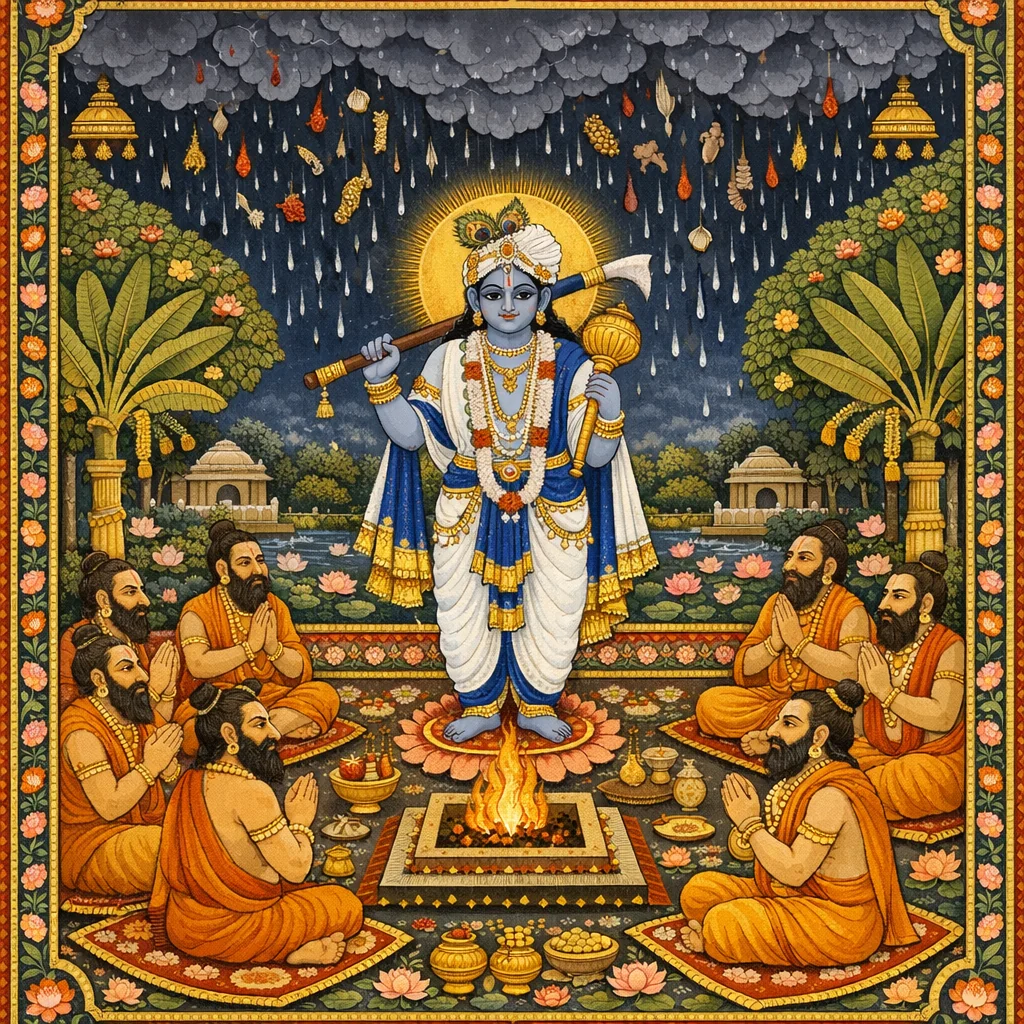
On the new-moon day at Naimiṣāraṇya, foul winds and a rain of filth herald the demon Balvala, who torments brāhmaṇas and disrupts yajña. Śrī Balarāma honors the sages’ sacrificial arena, summons His weapons (hala and gadā) by mere will, and swiftly slays Balvala, restoring ritual purity and order. The sages praise Him, bathe and consecrate Him like Indra after Vṛtra’s fall, and offer auspicious gifts. Balarāma then undertakes a long tīrtha-yātrā across Bhārata-varṣa—bathing in famed rivers, visiting sacred mountains and deities (Paraśurāma, Skanda, Śiva-kṣetras, Kanyā-kumārī), and giving vast charity—thus revealing dharma through sacred geography. Hearing of Kurukṣetra’s devastation, He sees Earth’s burden relieved and goes to stop the climactic club duel of Bhīma and Duryodhana; when they refuse, He accepts daiva’s arrangement, returns to Dvārakā, and later to Naimiṣāraṇya for sacrifices and spiritual instruction. The chapter ends by praising remembrance of Balarāma’s wondrous deeds as a direct means to become dear to Śrī Viṣṇu.
Shlokas
Verse 1
श्रीशुक उवाच तत: पर्वण्युपावृत्ते प्रचण्ड: पांशुवर्षण: । भीमो वायुरभूद् राजन्पूयगन्धस्तु सर्वश: ॥ १ ॥
Śukadeva Gosvāmī said: Then, on the new-moon day, O King, a fierce and frightening wind arose, scattering dust all about and spreading the smell of pus everywhere.
Verse 2
ततोऽमेध्यमयं वर्षं बल्वलेन विनिर्मितम् । अभवद् यज्ञशालायां सोऽन्वदृश्यत शूलधृक् ॥ २ ॥
Next, onto the sacrificial arena came a downpour of abominable things sent by Balvala, after which the demon himself appeared, trident in hand.
Verse 3
तं विलोक्य बृहत्कायं भिन्नाञ्जनचयोपमम् । तप्तताम्रशिखाश्मश्रुं दंष्ट्रोग्रभ्रुकुटीमुखम् ॥ ३ ॥ सस्मार मूषलं राम: परसैन्यविदारणम् । हलं च दैत्यदमनं ते तूर्णमुपतस्थतु: ॥ ४ ॥
The immense demon resembled a mass of black carbon. His topknot and beard were like molten copper, and his face had horrible fangs and furrowed eyebrows. Upon seeing him, Lord Balarāma thought of His club, which tears to pieces His enemies’ armies, and His plow weapon, which punishes the demons. Thus summoned, His two weapons appeared before Him at once.
Verse 4
तं विलोक्य बृहत्कायं भिन्नाञ्जनचयोपमम् । तप्तताम्रशिखाश्मश्रुं दंष्ट्रोग्रभ्रुकुटीमुखम् ॥ ३ ॥ सस्मार मूषलं राम: परसैन्यविदारणम् । हलं च दैत्यदमनं ते तूर्णमुपतस्थतु: ॥ ४ ॥
The immense demon resembled a mass of black carbon. His topknot and beard were like molten copper, and his face had horrible fangs and furrowed eyebrows. Upon seeing him, Lord Balarāma thought of His club, which tears to pieces His enemies’ armies, and His plow weapon, which punishes the demons. Thus summoned, His two weapons appeared before Him at once.
Verse 5
तमाकृष्य हलाग्रेण बल्वलं गगनेचरम् । मूषलेनाहनत्क्रुद्धो मूर्ध्नि ब्रह्मद्रुहं बल: ॥ ५ ॥
With the tip of His plow Lord Balarāma caught hold of the demon Balvala as he flew through the sky, and with His club the Lord angrily struck that harasser of brāhmaṇas on the head.
Verse 6
सोऽपतद्भुवि निर्भिन्नललाटोऽसृक् समुत्सृजन् । मुञ्चन्नार्तस्वरं शैलो यथा वज्रहतोऽरुण: ॥ ६ ॥
Balvala cried out in agony and fell to the ground, his forehead cracked open and gushing blood. He resembled a red mountain struck by a lightning bolt.
Verse 7
संस्तुत्य मुनयो रामं प्रयुज्यावितथाशिष: । अभ्यषिञ्चन् महाभागा वृत्रघ्नं विबुधा यथा ॥ ७ ॥
The exalted sages praised Lord Rāma with sincere prayers and bestowed infallible blessings upon Him. Then they performed His ritual bathing, just as the demigods once bathed Indra after he slew Vṛtra.
Verse 8
वैजयन्तीं ददुर्मालां श्रीधामाम्लानपङ्कजाम् । रामाय वाससी दिव्ये दिव्यान्याभरणानि च ॥ ८ ॥
They presented Lord Balarāma with a Vaijayantī garland of unfading lotuses, the abode of Śrī, and also offered Him divine garments and celestial ornaments.
Verse 9
अथ तैरभ्यनुज्ञात: कौशिकीमेत्य ब्राह्मणै: । स्नात्वा सरोवरमगाद् यत: सरयूरास्रवत् ॥ ९ ॥
Then, granted leave by the sages, the Lord went with brāhmaṇas to the Kauśikī River and bathed there. From that place He proceeded to the lake from which the Sarayū flows.
Verse 10
अनुस्रोतेन सरयूं प्रयागमुपगम्य स: । स्नात्वा सन्तर्प्य देवादीन्जगाम पुलहाश्रमम् ॥ १० ॥
Following the course of the Sarayū, the Lord came to Prayāga. There He bathed and offered tarpaṇa to satisfy the devas and other beings, and then He went on to the āśrama of Ṛṣi Pulaha.
Verse 11
गोमतीं गण्डकीं स्नात्वा विपाशां शोण आप्लुत: । गयां गत्वा पितृनिष्ट्वा गङ्गासागरसङ्गमे ॥ ११ ॥ उपस्पृश्य महेन्द्राद्रौ रामं दृष्ट्वाभिवाद्य च । सप्तगोदावरीं वेणां पम्पां भीमरथीं तत: ॥ १२ ॥ स्कन्दं दृष्ट्वा ययौ राम: श्रीशैलं गिरिशालयम् । द्रविडेषु महापुण्यं दृष्ट्वाद्रिं वेङ्कटं प्रभु: ॥ १३ ॥ कामकोष्णीं पुरीं काञ्चीं कावेरीं च सरिद्वराम् । श्रीरङ्गाख्यं महापुण्यं यत्र सन्निहितो हरि: ॥ १४ ॥ ऋषभाद्रिं हरे: क्षेत्रं दक्षिणां मथुरां तथा । सामुद्रं सेतुमगमत्महापातकनाशनम् ॥ १५ ॥
Lord Balarāma bathed in the Gomatī, Gaṇḍakī, and Vipāśā rivers, and also immersed Himself in the Śoṇa. He went to Gayā to worship the forefathers, and to the meeting of the Gaṅgā and the ocean for purifying ablutions. At Mount Mahendra He beheld Lord Paraśurāma and offered reverent salutations; then He bathed in the seven branches of the Godāvarī, and also in the Veṇā, Pampā, and Bhīmarathī rivers. Next, after meeting Lord Skanda, Balarāma went to Śrī-śaila, the abode of Lord Giriśa. In Draviḍa-deśa the Supreme Lord saw the sacred Veṅkaṭa Hill, the cities of Kāmakoṣṇī and Kāñcī, the exalted Kāverī River, and the supremely holy Śrī-raṅga, where Hari is manifest. From there He visited Ṛṣabhādri, the Lord’s holy kṣetra, and southern Mathurā, and finally reached Setubandha by the sea, where the gravest sins are destroyed.
Verse 12
गोमतीं गण्डकीं स्नात्वा विपाशां शोण आप्लुत: । गयां गत्वा पितृनिष्ट्वा गङ्गासागरसङ्गमे ॥ ११ ॥ उपस्पृश्य महेन्द्राद्रौ रामं दृष्ट्वाभिवाद्य च । सप्तगोदावरीं वेणां पम्पां भीमरथीं तत: ॥ १२ ॥ स्कन्दं दृष्ट्वा ययौ राम: श्रीशैलं गिरिशालयम् । द्रविडेषु महापुण्यं दृष्ट्वाद्रिं वेङ्कटं प्रभु: ॥ १३ ॥ कामकोष्णीं पुरीं काञ्चीं कावेरीं च सरिद्वराम् । श्रीरङ्गाख्यं महापुण्यं यत्र सन्निहितो हरि: ॥ १४ ॥ ऋषभाद्रिं हरे: क्षेत्रं दक्षिणां मथुरां तथा । सामुद्रं सेतुमगमत्महापातकनाशनम् ॥ १५ ॥
Lord Balarāma bathed in the Gomatī, Gaṇḍakī and Vipāśā rivers, and also immersed Himself in the Śoṇa. He went to Gayā to offer rites to His forefathers, and at the meeting of the Gaṅgā and the ocean He performed purifying ablutions.
Verse 13
गोमतीं गण्डकीं स्नात्वा विपाशां शोण आप्लुत: । गयां गत्वा पितृनिष्ट्वा गङ्गासागरसङ्गमे ॥ ११ ॥ उपस्पृश्य महेन्द्राद्रौ रामं दृष्ट्वाभिवाद्य च । सप्तगोदावरीं वेणां पम्पां भीमरथीं तत: ॥ १२ ॥ स्कन्दं दृष्ट्वा ययौ राम: श्रीशैलं गिरिशालयम् । द्रविडेषु महापुण्यं दृष्ट्वाद्रिं वेङ्कटं प्रभु: ॥ १३ ॥ कामकोष्णीं पुरीं काञ्चीं कावेरीं च सरिद्वराम् । श्रीरङ्गाख्यं महापुण्यं यत्र सन्निहितो हरि: ॥ १४ ॥ ऋषभाद्रिं हरे: क्षेत्रं दक्षिणां मथुरां तथा । सामुद्रं सेतुमगमत्महापातकनाशनम् ॥ १५ ॥
At Mount Mahendra He beheld Lord Paraśurāma, offered obeisances and prayers, and then bathed in the seven branches of the Godāvarī, as well as in the rivers Veṇā, Pampā and Bhīmarathī.
Verse 14
गोमतीं गण्डकीं स्नात्वा विपाशां शोण आप्लुत: । गयां गत्वा पितृनिष्ट्वा गङ्गासागरसङ्गमे ॥ ११ ॥ उपस्पृश्य महेन्द्राद्रौ रामं दृष्ट्वाभिवाद्य च । सप्तगोदावरीं वेणां पम्पां भीमरथीं तत: ॥ १२ ॥ स्कन्दं दृष्ट्वा ययौ राम: श्रीशैलं गिरिशालयम् । द्रविडेषु महापुण्यं दृष्ट्वाद्रिं वेङ्कटं प्रभु: ॥ १३ ॥ कामकोष्णीं पुरीं काञ्चीं कावेरीं च सरिद्वराम् । श्रीरङ्गाख्यं महापुण्यं यत्र सन्निहितो हरि: ॥ १४ ॥ ऋषभाद्रिं हरे: क्षेत्रं दक्षिणां मथुरां तथा । सामुद्रं सेतुमगमत्महापातकनाशनम् ॥ १५ ॥
Then Lord Balarāma met Lord Skanda and visited Śrī-śaila, the abode of Lord Giriśa. In Draviḍa-deśa the Supreme Lord also beheld the supremely sacred Veṅkaṭa Hill.
Verse 15
गोमतीं गण्डकीं स्नात्वा विपाशां शोण आप्लुत: । गयां गत्वा पितृनिष्ट्वा गङ्गासागरसङ्गमे ॥ ११ ॥ उपस्पृश्य महेन्द्राद्रौ रामं दृष्ट्वाभिवाद्य च । सप्तगोदावरीं वेणां पम्पां भीमरथीं तत: ॥ १२ ॥ स्कन्दं दृष्ट्वा ययौ राम: श्रीशैलं गिरिशालयम् । द्रविडेषु महापुण्यं दृष्ट्वाद्रिं वेङ्कटं प्रभु: ॥ १३ ॥ कामकोष्णीं पुरीं काञ्चीं कावेरीं च सरिद्वराम् । श्रीरङ्गाख्यं महापुण्यं यत्र सन्निहितो हरि: ॥ १४ ॥ ऋषभाद्रिं हरे: क्षेत्रं दक्षिणां मथुरां तथा । सामुद्रं सेतुमगमत्महापातकनाशनम् ॥ १५ ॥
He visited Kāmakoṣṇī and Kāñcī, the exalted Kāverī River, and the supremely holy Śrī-raṅga, where Lord Hari is manifest. From there He went to Ṛṣabha Mountain and southern Mathurā, and then reached the ocean Setu, which destroys the gravest sins.
Verse 16
तत्रायुतमदाद् धेनूर्ब्राह्मणेभ्यो हलायुध: । कृतमालां ताम्रपर्णीं मलयं च कुलाचलम् ॥ १६ ॥ तत्रागस्त्यं समासीनं नमस्कृत्याभिवाद्य च । योजितस्तेन चाशीर्भिरनुज्ञातो गतोऽर्णवम् । दक्षिणं तत्र कन्याख्यां दुर्गां देवीं ददर्श स: ॥ १७ ॥
At Setubandha Lord Halāyudha gave the brāhmaṇas ten thousand cows in charity. He then visited the Kṛtamālā and Tāmraparṇī rivers and the great Malaya Mountains; there He bowed to Agastya Ṛṣi in meditation, offered prayers, received his blessings, and, taking leave, went to the southern ocean shore, where He beheld Goddess Durgā as Kanyā-kumārī.
Verse 17
तत्रायुतमदाद् धेनूर्ब्राह्मणेभ्यो हलायुध: । कृतमालां ताम्रपर्णीं मलयं च कुलाचलम् ॥ १६ ॥ तत्रागस्त्यं समासीनं नमस्कृत्याभिवाद्य च । योजितस्तेन चाशीर्भिरनुज्ञातो गतोऽर्णवम् । दक्षिणं तत्र कन्याख्यां दुर्गां देवीं ददर्श स: ॥ १७ ॥
At Setubandha (Rāmeśvaram), Lord Halāyudha Balarāma bestowed in charity ten thousand cows upon the brāhmaṇas. He then visited the Kṛtamālā and Tāmraparṇī rivers and the great Malaya Mountains. In the Malaya range He found Ṛṣi Agastya seated in samādhi; bowing down, He offered praises and received the sage’s blessings and leave. Thereafter He went to the shore of the southern ocean, where He beheld Goddess Durgā in her form as Kanyā-kumārī.
Verse 18
तत: फाल्गुनमासाद्य पञ्चाप्सरसमुत्तमम् । विष्णु: सन्निहितो यत्र स्नात्वास्पर्शद् गवायुतम् ॥ १८ ॥
Next He reached Phālguna-tīrtha and bathed in the most sacred Pañcāpsarā Lake, where Lord Viṣṇu had manifested His direct presence. There He again gave away ten thousand cows in charity.
Verse 19
ततोऽभिव्रज्य भगवान् केरलांस्तु त्रिगर्तकान् । गोकर्णाख्यं शिवक्षेत्रं सान्निध्यं यत्र धूर्जटे: ॥ १९ ॥ आर्यां द्वैपायनीं दृष्ट्वा शूर्पारकमगाद् बल: । तापीं पयोष्णीं निर्विन्ध्यामुपस्पृश्याथ दण्डकम् ॥ २० ॥ प्रविश्य रेवामगमद् यत्र माहिष्मती पुरी । मनुतीर्थमुपस्पृश्य प्रभासं पुनरागमत् ॥ २१ ॥
Then the Bhagavān traveled through the kingdoms of Kerala and Trigarta and visited Gokarṇa, Śiva’s sacred kṣetra, where Dhūrjaṭi (Śiva) reveals his direct presence. After also beholding the Goddess Āryā Dvaipāyanī (Pārvatī), who dwells upon an island, Balarāma went to the holy region of Śūrpāraka and bathed in the Tāpī, Payoṣṇī, and Nirvindhyā rivers. Next He entered the Daṇḍaka forest and reached the Revā (Narmadā) River, along whose bank lies the city of Māhiṣmatī. After bathing at Manu-tīrtha, He finally returned to Prabhāsa.
Verse 20
ततोऽभिव्रज्य भगवान् केरलांस्तु त्रिगर्तकान् । गोकर्णाख्यं शिवक्षेत्रं सान्निध्यं यत्र धूर्जटे: ॥ १९ ॥ आर्यां द्वैपायनीं दृष्ट्वा शूर्पारकमगाद् बल: । तापीं पयोष्णीं निर्विन्ध्यामुपस्पृश्याथ दण्डकम् ॥ २० ॥ प्रविश्य रेवामगमद् यत्र माहिष्मती पुरी । मनुतीर्थमुपस्पृश्य प्रभासं पुनरागमत् ॥ २१ ॥
Then the Bhagavān traveled through the kingdoms of Kerala and Trigarta and visited Gokarṇa, Śiva’s sacred kṣetra, where Dhūrjaṭi (Śiva) reveals his direct presence. After also beholding the Goddess Āryā Dvaipāyanī (Pārvatī), who dwells upon an island, Balarāma went to the holy region of Śūrpāraka and bathed in the Tāpī, Payoṣṇī, and Nirvindhyā rivers. Next He entered the Daṇḍaka forest and reached the Revā (Narmadā) River, along whose bank lies the city of Māhiṣmatī. After bathing at Manu-tīrtha, He finally returned to Prabhāsa.
Verse 21
ततोऽभिव्रज्य भगवान् केरलांस्तु त्रिगर्तकान् । गोकर्णाख्यं शिवक्षेत्रं सान्निध्यं यत्र धूर्जटे: ॥ १९ ॥ आर्यां द्वैपायनीं दृष्ट्वा शूर्पारकमगाद् बल: । तापीं पयोष्णीं निर्विन्ध्यामुपस्पृश्याथ दण्डकम् ॥ २० ॥ प्रविश्य रेवामगमद् यत्र माहिष्मती पुरी । मनुतीर्थमुपस्पृश्य प्रभासं पुनरागमत् ॥ २१ ॥
Then the Bhagavān traveled through the kingdoms of Kerala and Trigarta and visited Gokarṇa, Śiva’s sacred kṣetra, where Dhūrjaṭi (Śiva) reveals his direct presence. After also beholding the Goddess Āryā Dvaipāyanī (Pārvatī), who dwells upon an island, Balarāma went to the holy region of Śūrpāraka and bathed in the Tāpī, Payoṣṇī, and Nirvindhyā rivers. Next He entered the Daṇḍaka forest and reached the Revā (Narmadā) River, along whose bank lies the city of Māhiṣmatī. After bathing at Manu-tīrtha, He finally returned to Prabhāsa.
Verse 22
श्रुत्वा द्विजै: कथ्यमानं कुरुपाण्डवसंयुगे । सर्वराजन्यनिधनं भारं मेने हृतं भुव: ॥ २२ ॥
Hearing from brāhmaṇas that in the Kuru–Pāṇḍava war all the kings had been slain, the Lord understood that the earth had now been relieved of her burden.
Verse 23
स भीमदुर्योधनयोर्गदाभ्यां युध्यतोर्मृधे । वारयिष्यन् विनशनं जगाम यदुनन्दन: ॥ २३ ॥
To stop the ruinous club fight raging on the battlefield between Bhīma and Duryodhana, Lord Balarāma, the joy of the Yadus, went to Kurukṣetra.
Verse 24
युधिष्ठिरस्तु तं दृष्ट्वा यमौ कृष्णार्जुनावपि । अभिवाद्याभवंस्तुष्णीं किं विवक्षुरिहागत: ॥ २४ ॥
When Yudhiṣṭhira, the twin brothers, Lord Kṛṣṇa and Arjuna saw Lord Balarāma, they bowed to Him with respect, yet remained silent, thinking, “What has He come here to tell us?”
Verse 25
गदापाणी उभौ दृष्ट्वा संरब्धौ विजयैषिणौ । मण्डलानि विचित्राणि चरन्ताविदमब्रवीत् ॥ २५ ॥
Lord Balarāma saw Duryodhana and Bhīma with clubs in hand, both enraged and seeking victory as they skillfully circled in varied patterns; then He addressed them.
Verse 26
युवां तुल्यबलौ वीरौ हे राजन् हे वृकोदर । एकं प्राणाधिकं मन्ये उतैकं शिक्षयाधिकम् ॥ २६ ॥
[Lord Balarāma said:] O King Duryodhana, and O Vṛkodara Bhīma! You two heroes are equal in martial might. Yet I perceive that one excels in bodily strength, while the other excels in training and technique.
Verse 27
तस्मादेकतरस्येह युवयो: समवीर्ययो: । न लक्ष्यते जयोऽन्यो वा विरमत्वफलो रण: ॥ २७ ॥
Since you two are equal in martial prowess, I see neither victory nor defeat for either in this duel. Therefore cease this fruitless battle.
Verse 28
न तद्वाक्यं जगृहतुर्बद्धवैरौ नृपार्थवत् । अनुस्मरन्तावन्योन्यं दुरुक्तं दुष्कृतानि च ॥ २८ ॥
O King, though His words were reasonable, bound by irrevocable enmity they did not accept Lord Balarāma’s request. Each continually remembered the other’s insults and injuries.
Verse 29
दिष्टं तदनुमन्वानो रामो द्वारवतीं ययौ । उग्रसेनादिभि: प्रीतैर्ज्ञातिभि: समुपागत: ॥ २९ ॥
Concluding that the battle was arranged by fate, Lord Rāma (Balarāma) returned to Dvārakā. There Ugrasena and other delighted relatives came forward to greet Him.
Verse 30
तं पुनर्नैमिषं प्राप्तमृषयोऽयाजयन् मुदा । क्रत्वङ्गं क्रतुभि: सर्वैर्निवृत्ताखिलविग्रहम् ॥ ३० ॥
Later, when He returned to Naimiṣāraṇya, the sages joyfully engaged Him—the very embodiment of all sacrifice—in performing various Vedic sacrifices. Lord Balarāma had then withdrawn from warfare.
Verse 31
तेभ्यो विशुद्धं विज्ञानं भगवान् व्यतरद् विभु: । येनैवात्मन्यदो विश्वमात्मानं विश्वगं विदु: ॥ ३१ ॥
The all-powerful Lord Balarāma bestowed upon the sages pure spiritual knowledge, by which they could see the entire universe within Him and also see Him pervading everything.
Verse 32
स्वपत्यावभृथस्नातो ज्ञातिबन्धुसुहृद् वृत: । रेजे स्वज्योत्स्नयेवेन्दु: सुवासा: सुष्ठ्वलङ्कृत: ॥ ३२ ॥
After performing the avabhṛtha bath with His wife, Lord Balarāma—beautifully dressed and finely adorned—stood surrounded by family, relatives, and friends, shining like the moon encircled by its own effulgent rays.
Verse 33
ईदृग्विधान्यसङ्ख्यानि बलस्य बलशालिन: । अनन्तस्याप्रमेयस्य मायामर्त्यस्य सन्ति हि ॥ ३३ ॥
Countless pastimes like these were performed by mighty Balarāma—the unlimited, immeasurable Supreme Lord—who, by His Yoga-māyā, appears as though a human being.
Verse 34
योऽनुस्मरेत रामस्य कर्माण्यद्भुतकर्मण: । सायं प्रातरनन्तस्य विष्णो: स दयितो भवेत् ॥ ३४ ॥
All the deeds of the unlimited Lord Balarāma are wondrous. Whoever regularly remembers them at dawn and at dusk becomes very dear to Śrī Viṣṇu, the Supreme Personality of Godhead.
Frequently Asked Questions
Balvala is a demon who desecrates the sages’ sacrificial arena with filth and fear, embodying opposition to brāhmaṇas and yajña. Balarāma kills him to reestablish dharma, protect the ritual order, and demonstrate poṣaṇa—Bhagavān’s active protection of devotees and sacred practices.
By mere remembrance (saṅkalpa), His hala and gadā appear immediately, indicating divine sovereignty: the Lord’s instruments are not separate from Him and respond to His will. Theologically, it highlights that His power is intrinsic (svābhāvikī śakti) and not dependent on material conditions.
The comparison frames Balvala’s death as the removal of a cosmic-social obstruction to dharma, similar to Vṛtra’s removal of a threat to the devas. The abhiṣeka publicly honors the Lord as protector of yajña and affirms the sacrificial community’s restored purity and auspiciousness.
It models dharmic purification through sacred travel, bathing (snāna), worship, and charity (dāna), while also integrating India’s tīrtha network into Bhāgavata sacred history. Devotionally, it teaches that the Lord sanctifies tīrthas by His presence, and sādhakas sanctify themselves through regulated contact with them.
As an elder and martial authority (and Duryodhana’s instructor), Balarāma recognizes both fighters’ near-equality and the destructive futility of continued enmity. His intervention expresses dharma’s preference for restraint when victory cannot be justly or clearly determined, even though the combatants’ hatred overrides counsel.
When the duelists refuse his reasonable request, Balarāma concludes the outcome is daiva-yojana—arranged by providence. This does not erase moral responsibility; rather, it frames history as unfolding under the Lord’s overarching governance, where human choices operate within a destined resolution of Earth’s burden.
Regular remembrance of Balarāma’s pastimes at dawn and dusk (sandhyā-kāla smaraṇa). The text states that such steady recollection makes one dear to Śrī Viṣṇu, emphasizing smaraṇa as a direct bhakti-sādhana with transformative results.