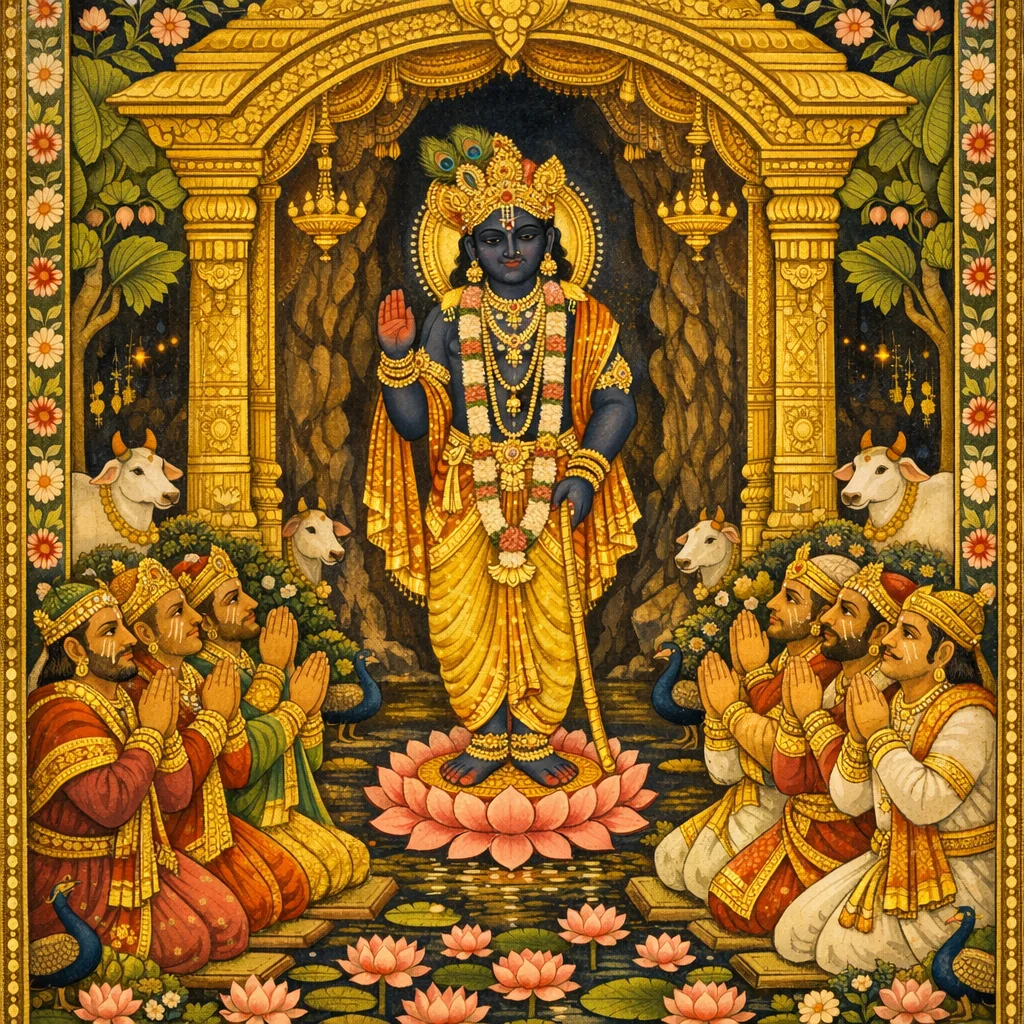
Adhyaya 73
The Freed Kings Glorify Kṛṣṇa; Instruction on Kingship, Detachment, and Remembrance
After Jarāsandha’s decisive fall at Bhīma’s hands—arranged by Śrī Kṛṣṇa to remove a grave threat to dharma—the narrative turns to its immediate aftermath: the liberation of 20,800 kings imprisoned at Giridroṇī. Wasted and humiliated by captivity, they revive in ecstasy upon seeing Kṛṣṇa and offer a collective stuti, reinterpreting their political ruin as divine mercy. Refusing to blame Jarāsandha, they identify intoxication with aiśvarya (royal opulence and power) under māyā as the root of adharma and delusion, like a desert mirage, and pray for constant remembrance of Kṛṣṇa’s lotus feet. Kṛṣṇa reassures them on the path of bhakti, cites fallen exemplars (Haihaya, Nahuṣa, Veṇa, Rāvaṇa, Naraka), and instructs them to rule with restraint, protect subjects by dharma, perform Vedic sacrifice, remain detached from body-identification, and keep the mind fixed on Him amid life’s dualities. He restores their royal dignity with bathing, adornment, hospitality, gifts, and safe passage home. The chapter closes by returning to the rājasūya arc: Kṛṣṇa comes back with Bhīma and Arjuna to Indraprastha, where Yudhiṣṭhira hears their report and is overwhelmed with devotional emotion, setting the stage for the imperial sacrifice and its tensions.
Shlokas
Verse 1
श्रीशुक उवाच अयुते द्वे शतान्यष्टौ निरुद्धा युधि निर्जिता: । ते निर्गता गिरिद्रोण्यां मलिना मलवासस: ॥ १ ॥ क्षुत्क्षामा: शुष्कवदना: संरोधपरिकर्शिता: । ददृशुस्ते घनश्यामं पीतकौशेयवाससम् ॥ २ ॥ श्रीवत्साङ्कं चतुर्बाहुं पद्मगर्भारुणेक्षणम् । चारुप्रसन्नवदनं स्फुरन्मकरकुण्डलम् ॥ ३ ॥ पद्महस्तं गदाशङ्ख रथाङ्गैरुपलक्षितम् । किरीटहारकटककटिसूत्राङ्गदाञ्चितम् ॥ ४ ॥ भ्राजद्वरमणिग्रीवं निवीतं वनमालया । पिबन्त इव चक्षुर्भ्यां लिहन्त इव जिह्वया ॥ ५ ॥ जिघ्रन्त इव नासाभ्यां रम्भन्त इव बाहुभि: । प्रणेमुर्हतपाप्मानो मूर्धभि: पादयोर्हरे: ॥ ६ ॥
Śukadeva Gosvāmī said: Jarāsandha had defeated 20,800 kings in battle and imprisoned them in the Giridroṇī fortress. When they came out, they were filthy and poorly clad—emaciated by hunger, their faces dried up, and greatly weakened by long confinement.
Verse 2
श्रीशुक उवाच अयुते द्वे शतान्यष्टौ निरुद्धा युधि निर्जिता: । ते निर्गता गिरिद्रोण्यां मलिना मलवासस: ॥ १ ॥ क्षुत्क्षामा: शुष्कवदना: संरोधपरिकर्शिता: । ददृशुस्ते घनश्यामं पीतकौशेयवाससम् ॥ २ ॥ श्रीवत्साङ्कं चतुर्बाहुं पद्मगर्भारुणेक्षणम् । चारुप्रसन्नवदनं स्फुरन्मकरकुण्डलम् ॥ ३ ॥ पद्महस्तं गदाशङ्ख रथाङ्गैरुपलक्षितम् । किरीटहारकटककटिसूत्राङ्गदाञ्चितम् ॥ ४ ॥ भ्राजद्वरमणिग्रीवं निवीतं वनमालया । पिबन्त इव चक्षुर्भ्यां लिहन्त इव जिह्वया ॥ ५ ॥ जिघ्रन्त इव नासाभ्यां रम्भन्त इव बाहुभि: । प्रणेमुर्हतपाप्मानो मूर्धभि: पादयोर्हरे: ॥ ६ ॥
Then the kings beheld Śrī Kṛṣṇa, Hari—dark as a rain cloud and dressed in yellow silk. Though wasted by hunger, the nectar of His darśana filled their hearts with peace and joy.
Verse 3
श्रीशुक उवाच अयुते द्वे शतान्यष्टौ निरुद्धा युधि निर्जिता: । ते निर्गता गिरिद्रोण्यां मलिना मलवासस: ॥ १ ॥ क्षुत्क्षामा: शुष्कवदना: संरोधपरिकर्शिता: । ददृशुस्ते घनश्यामं पीतकौशेयवाससम् ॥ २ ॥ श्रीवत्साङ्कं चतुर्बाहुं पद्मगर्भारुणेक्षणम् । चारुप्रसन्नवदनं स्फुरन्मकरकुण्डलम् ॥ ३ ॥ पद्महस्तं गदाशङ्ख रथाङ्गैरुपलक्षितम् । किरीटहारकटककटिसूत्राङ्गदाञ्चितम् ॥ ४ ॥ भ्राजद्वरमणिग्रीवं निवीतं वनमालया । पिबन्त इव चक्षुर्भ्यां लिहन्त इव जिह्वया ॥ ५ ॥ जिघ्रन्त इव नासाभ्यां रम्भन्त इव बाहुभि: । प्रणेमुर्हतपाप्मानो मूर्धभि: पादयोर्हरे: ॥ ६ ॥
They saw the Lord marked with Śrīvatsa, four-armed, with lotus-bud reddish eyes, a beautiful serene face, and shining makara earrings.
Verse 4
श्रीशुक उवाच अयुते द्वे शतान्यष्टौ निरुद्धा युधि निर्जिता: । ते निर्गता गिरिद्रोण्यां मलिना मलवासस: ॥ १ ॥ क्षुत्क्षामा: शुष्कवदना: संरोधपरिकर्शिता: । ददृशुस्ते घनश्यामं पीतकौशेयवाससम् ॥ २ ॥ श्रीवत्साङ्कं चतुर्बाहुं पद्मगर्भारुणेक्षणम् । चारुप्रसन्नवदनं स्फुरन्मकरकुण्डलम् ॥ ३ ॥ पद्महस्तं गदाशङ्ख रथाङ्गैरुपलक्षितम् । किरीटहारकटककटिसूत्राङ्गदाञ्चितम् ॥ ४ ॥ भ्राजद्वरमणिग्रीवं निवीतं वनमालया । पिबन्त इव चक्षुर्भ्यां लिहन्त इव जिह्वया ॥ ५ ॥ जिघ्रन्त इव नासाभ्यां रम्भन्त इव बाहुभि: । प्रणेमुर्हतपाप्मानो मूर्धभि: पादयोर्हरे: ॥ ६ ॥
They saw Hari with lotus hands, known by His club, conch, and discus, and adorned with crown, necklace, bracelets, waist-belt, and armlets.
Verse 5
श्रीशुक उवाच अयुते द्वे शतान्यष्टौ निरुद्धा युधि निर्जिता: । ते निर्गता गिरिद्रोण्यां मलिना मलवासस: ॥ १ ॥ क्षुत्क्षामा: शुष्कवदना: संरोधपरिकर्शिता: । ददृशुस्ते घनश्यामं पीतकौशेयवाससम् ॥ २ ॥ श्रीवत्साङ्कं चतुर्बाहुं पद्मगर्भारुणेक्षणम् । चारुप्रसन्नवदनं स्फुरन्मकरकुण्डलम् ॥ ३ ॥ पद्महस्तं गदाशङ्ख रथाङ्गैरुपलक्षितम् । किरीटहारकटककटिसूत्राङ्गदाञ्चितम् ॥ ४ ॥ भ्राजद्वरमणिग्रीवं निवीतं वनमालया । पिबन्त इव चक्षुर्भ्यां लिहन्त इव जिह्वया ॥ ५ ॥ जिघ्रन्त इव नासाभ्यां रम्भन्त इव बाहुभि: । प्रणेमुर्हतपाप्मानो मूर्धभि: पादयोर्हरे: ॥ ६ ॥
His neck blazed with finest jewels, and He was garlanded with the forest wreath, the vanamālā. They seemed to drink Him with their eyes, taste Him with their tongues, inhale His fragrance, and embrace Him with their arms; their sins destroyed, they bowed with their heads at Hari’s feet.
Verse 6
श्रीशुक उवाच अयुते द्वे शतान्यष्टौ निरुद्धा युधि निर्जिता: । ते निर्गता गिरिद्रोण्यां मलिना मलवासस: ॥ १ ॥ क्षुत्क्षामा: शुष्कवदना: संरोधपरिकर्शिता: । ददृशुस्ते घनश्यामं पीतकौशेयवाससम् ॥ २ ॥ श्रीवत्साङ्कं चतुर्बाहुं पद्मगर्भारुणेक्षणम् । चारुप्रसन्नवदनं स्फुरन्मकरकुण्डलम् ॥ ३ ॥ पद्महस्तं गदाशङ्ख रथाङ्गैरुपलक्षितम् । किरीटहारकटककटिसूत्राङ्गदाञ्चितम् ॥ ४ ॥ भ्राजद्वरमणिग्रीवं निवीतं वनमालया । पिबन्त इव चक्षुर्भ्यां लिहन्त इव जिह्वया ॥ ५ ॥ जिघ्रन्त इव नासाभ्यां रम्भन्त इव बाहुभि: । प्रणेमुर्हतपाप्मानो मूर्धभि: पादयोर्हरे: ॥ ६ ॥
Śukadeva Gosvāmī said: Jarāsandha had defeated 20,800 kings in battle and confined them within the Giridroṇī fortress. When those kings came out, they were filthy and poorly clad—emaciated by hunger, their faces dried up, and greatly weakened by long imprisonment. Then they beheld Śrī Hari, dark as a rain cloud, dressed in yellow silk, marked with the Śrīvatsa, four-armed, lotus-eyed, and serene of face; as if drinking Him with their eyes, tasting Him with their tongues, smelling Him with their noses, and embracing Him with their arms, they bowed down, placing their heads at Lord Hari’s feet.
Verse 7
कृष्णसन्दर्शनाह्लादध्वस्तसंरोधनक्लमा: । प्रशशंसुर्हृषीकेशं गीर्भि: प्राञ्जलयो नृपा: ॥ ७ ॥
The ecstasy of beholding Lord Kṛṣṇa dispelled the weariness of their imprisonment. With palms joined, the kings praised Hṛṣīkeśa, the supreme master of the senses, with heartfelt words.
Verse 8
राजान ऊचु: नमस्ते देवदेवेश प्रपन्नार्तिहराव्यय । प्रपन्नान् पाहि न: कृष्ण निर्विण्णान्घोरसंसृते: ॥ ८ ॥
The kings said: “Obeisances to You, O Lord of the gods, O infallible remover of the distress of those who surrender. O inexhaustible Kṛṣṇa, since we have taken shelter of You, please save us from this dreadful samsāra, which has left us utterly despondent.”
Verse 9
नैनं नाथानुसूयामो मागधं मधुसूदन । अनुग्रहो यद् भवतो राज्ञां राज्यच्युतिर्विभो ॥ ९ ॥
O master, Madhusūdana, we do not blame the king of Magadha, for, O almighty Lord, the very fall of kings from their royal station is indeed Your mercy.
Verse 10
राज्यैश्वर्यमदोन्नद्धो न श्रेयो विन्दते नृप: । त्वन्मायामोहितोऽनित्या मन्यते सम्पदोऽचला: ॥ १० ॥
Intoxicated by the pride of sovereignty and opulence, a king cannot attain his true welfare. Bewildered by Your māyā, he imagines his temporary possessions to be permanent and unshakable.
Verse 11
मृगतृष्णां यथा बाला मन्यन्त उदकाशयम् । एवं वैकारिकीं मायामयुक्ता वस्तु चक्षते ॥ ११ ॥
Just as those of childish understanding take a desert mirage to be a pool of water, so the irrational regard Māyā’s illusory transformations as real substance.
Verse 12
वयं पुरा श्रीमदनष्टदृष्टयो जिगीषयास्या इतरेतरस्पृध: । घ्नन्त: प्रजा: स्वा अतिनिर्घृणा: प्रभो मृत्युं पुरस्त्वाविगणय्य दुर्मदा: ॥ १२ ॥ त एव कृष्णाद्य गभीररंहसा दुरन्तेवीर्येण विचालिता: श्रिय: । कालेन तन्वा भवतोऽनुकम्पया विनष्टदर्पाश्चरणौ स्मराम ते ॥ १३ ॥
O Lord, formerly we were blinded by the intoxication of wealth; desiring to conquer this earth, we rivaled one another and, most mercilessly, tormented our own subjects. In arrogant madness we disregarded You, though You stood before us as death itself.
Verse 13
वयं पुरा श्रीमदनष्टदृष्टयो जिगीषयास्या इतरेतरस्पृध: । घ्नन्त: प्रजा: स्वा अतिनिर्घृणा: प्रभो मृत्युं पुरस्त्वाविगणय्य दुर्मदा: ॥ १२ ॥ त एव कृष्णाद्य गभीररंहसा दुरन्तेवीर्येण विचालिता: श्रिय: । कालेन तन्वा भवतोऽनुकम्पया विनष्टदर्पाश्चरणौ स्मराम ते ॥ १३ ॥
But now, O Kṛṣṇa, Your own form as Time—moving with deep, irresistible force and unconquerable power—has shaken and taken away our opulences. By Your mercy our pride is destroyed; we beg only to remember Your lotus feet.
Verse 14
अथो न राज्यं मृगतृष्णिरूपितं देहेन शश्वत् पतता रुजां भुवा । उपासितव्यं स्पृहयामहे विभो क्रियाफलं प्रेत्य च कर्णरोचनम् ॥ १४ ॥
O almighty Lord, never again will we hanker for a mirage-like kingdom, to be slavishly served by this mortal body—an abode of disease and suffering, falling away at every moment. Nor will we crave the heavenly fruits of karma in the next life, for such promises are only empty enticements for the ear.
Verse 15
तं न: समादिशोपायं येन ते चरणाब्जयो: । स्मृतिर्यथा न विरमेदपि संसरतामिह ॥ १५ ॥
Please instruct us in the means by which, though we continue to wander in this world within the cycle of birth and death, our remembrance of Your lotus feet will never cease.
Verse 16
कृष्णाय वासुदेवाय हरये परमात्मने । प्रणतक्लेशनाशाय गोविन्दाय नमो नम: ॥ १६ ॥
Again and again we bow to Lord Kṛṣṇa—Hari, son of Vasudeva—Govinda, the Supreme Soul, who destroys the suffering of those who surrender to Him.
Verse 17
श्रीशुक उवाच संस्तूयमानो भगवान् राजभिर्मुक्तबन्धनै: । तानाह करुणस्तात शरण्य: श्लक्ष्णया गिरा ॥ १७ ॥
Śukadeva Gosvāmī said: Thus the kings, freed from bondage, glorified the Bhagavān. Then, dear Parīkṣit, the merciful giver of shelter spoke to them in a gentle voice.
Verse 18
श्रीभगवानुवाच अद्यप्रभृति वो भूपा मय्यात्मन्यखिलेश्वरे । सुदृढा जायते भक्तिर्बाढमाशंसितं तथा ॥ १८ ॥
The Supreme Lord said: From this day on, O kings, firm devotion will arise in you toward Me, the Supreme Self and Lord of all. I assure you it will happen, just as you desire.
Verse 19
दिष्ट्या व्यवसितं भूपा भवन्त ऋतभाषिण: । श्रीयैश्वर्यमदोन्नाहं पश्य उन्मादकं नृणाम् ॥ १९ ॥
Fortunately, O kings, you have reached the proper conclusion and spoken the truth. I see that intoxication with opulence and power breeds a lack of self-restraint in men and leads only to madness.
Verse 20
हैहयो नहुषो वेणो रावणो नरकोऽपरे । श्रीमदाद् भ्रंशिता: स्थानाद् देवदैत्यनरेश्वरा: ॥ २० ॥
Haihaya, Nahuṣa, Veṇa, Rāvaṇa, Naraka and many other rulers among the devas, men and asuras fell from their exalted positions because they were intoxicated by material opulence.
Verse 21
भवन्त एतद् विज्ञाय देहाद्युत्पाद्यमन्तवत् । मां यजन्तोऽध्वरैर्युक्ता: प्रजा धर्मेण रक्ष्यथ ॥ २१ ॥
Knowing that this body and all connected with it have a beginning and an end, worship Me through Vedic sacrifices, and with clear intelligence protect your subjects according to dharma.
Verse 22
सन्तन्वन्त: प्रजातन्तून् सुखं दु:खं भवाभवौ । प्राप्तं प्राप्तं च सेवन्तो मच्चित्ता विचरिष्यथ ॥ २२ ॥
As you live, begetting generations and meeting happiness and distress, birth and death, accept whatever comes and move through life with your mind always fixed on Me.
Verse 23
उदासीनाश्च देहादावात्मारामा धृतव्रता: । मय्यावेश्य मन: सम्यङ्मामन्ते ब्रह्म यास्यथ ॥ २३ ॥
Be detached from the body and all that is connected with it. Self-satisfied and steadfast in your vows, fully absorb your mind in Me; thus, in the end, you will attain Me, the Supreme Brahman.
Verse 24
श्रीशुक उवाच इत्यादिश्य नृपान् कृष्णो भगवान् भुवनेश्वर: । तेषां न्ययुङ्क्त पुरुषान् स्त्रियो मज्जनकर्मणि ॥ २४ ॥
Śukadeva Gosvāmī said: Having thus instructed the kings, Lord Kṛṣṇa, master of all worlds, engaged male and female attendants to bathe and groom them.
Verse 25
सपर्यां कारयामास सहदेवेन भारत । नरदेवोचितैर्वस्त्रैर्भूषणै: स्रग्विलेपनै: ॥ २५ ॥
O descendant of Bharata, the Lord then had Sahadeva honor those kings with royal offerings—fine garments, ornaments, garlands, and sandalwood paste.
Verse 26
भोजयित्वा वरान्नेन सुस्नातान्समलङ्कृतान् । भोगैश्च विविधैर्युक्तांस्ताम्बूलाद्यैर्नृपोचितै: ॥ २६ ॥
After having the kings properly bathed and adorned, Lord Śrī Kṛṣṇa fed them excellent food and bestowed various royal enjoyments, such as betel and other fitting gifts.
Verse 27
ते पूजिता मुकुन्देन राजानो मृष्टकुण्डला: । विरेजुर्मोचिता: क्लेशात् प्रावृडन्ते यथा ग्रहा: ॥ २७ ॥
Honored by Lord Mukunda and freed from distress, the kings shone splendidly, their earrings gleaming, like the moon and other heavenly bodies at the end of the rainy season.
Verse 28
रथान्सदश्वानारोप्य मणिकाञ्चनभूषितान् । प्रीणय्य सुनृतैर्वाक्यै: स्वदेशान् प्रत्ययापयत् ॥ २८ ॥
Then the Lord seated the kings on chariots drawn by fine horses and adorned with jewels and gold; pleasing them with gracious words, He sent them back to their own kingdoms.
Verse 29
त एवं मोचिता: कृच्छ्रात् कृष्णेन सुमहात्मना । ययुस्तमेव ध्यायन्त: कृतानि च जगत्पते: ॥ २९ ॥
Thus liberated from all hardship by Kṛṣṇa, the greatest of persons, the kings departed, and as they went they thought only of Him, the Lord of the universe, and of His wondrous deeds.
Verse 30
जगदु: प्रकृतिभ्यस्ते महापुरुषचेष्टितम् । यथान्वशासद् भगवांस्तथा चक्रुरतन्द्रिता: ॥ ३० ॥
The kings told their ministers and companions what the Supreme Lord had done, and then, without negligence, they diligently carried out the orders He had given them.
Verse 31
जरासन्धं घातयित्वा भीमसेनेन केशव: । पार्थाभ्यां संयुत: प्रायात् सहदेवेन पूजित: ॥ ३१ ॥
Having arranged for Bhīmasena to slay Jarāsandha, Lord Keśava accepted Sahadeva’s worship and then departed with the two sons of Pṛthā.
Verse 32
गत्वा ते खाण्डवप्रस्थं शङ्खान् दध्मुर्जितारय: । हर्षयन्त: स्वसुहृदो दुर्हृदां चासुखावहा: ॥ ३२ ॥
Reaching Khāṇḍavaprastha, the heroes who had conquered their foes blew their conchshells, gladdening well-wishing friends and bringing sorrow to enemies.
Verse 33
तच्छ्रुत्वा प्रीतमनस इन्द्रप्रस्थनिवासिन: । मेनिरे मागधं शान्तं राजा चाप्तमनोरथ: ॥ ३३ ॥
Hearing that sound, the people of Indraprastha rejoiced, understanding that the Magadhan king had been laid to rest; King Yudhiṣṭhira felt his aims fulfilled.
Verse 34
अभिवन्द्याथ राजानं भीमार्जुनजनार्दना: । सर्वमाश्रावयां चक्रुरात्मना यदनुष्ठितम् ॥ ३४ ॥
Then Bhīma, Arjuna, and Janārdana bowed to the King and fully related all that they had accomplished.
Verse 35
निशम्य धर्मराजस्तत् केशवेनानुकम्पितम् । आनन्दाश्रुकलां मुञ्चन् प्रेम्णा नोवाच किञ्चन ॥ ३५ ॥
Hearing of the great mercy Keśava had shown him, King Dharmarāja shed tears of bliss; so filled with love, he could not speak.
Frequently Asked Questions
They interpret their fall as ultimately governed by the Lord’s mercy and the corrective force of time (kāla), which is Kṛṣṇa’s potency. Jarāsandha is treated as an instrument, while the deeper cause is their own aiśvarya-mada—intoxication with power that breeds adharma and forgetfulness of the Lord. This reading shifts the lesson from political grievance to spiritual diagnosis and reform.
Kṛṣṇa and the kings describe opulence as a trigger for loss of self-restraint, leading to “madness” (pramāda) under māyā. The chapter uses exemplars (Haihaya, Nahuṣa, Veṇa, Rāvaṇa, Naraka) to show that even highly placed rulers collapse when they mistake temporary assets for permanent reality—like mistaking a mirage for water.
He instructs them to (1) worship through Vedic sacrifices with clear intelligence, (2) protect subjects according to dharma, (3) accept life’s dualities while keeping the mind fixed on Him, and (4) remain detached from the body and its extensions. The goal is steady bhakti expressed as remembrance (smaraṇa) while fulfilling rāja-dharma.
They are numerous rulers previously defeated by Jarāsandha and confined in the Giridroṇī fortress. The Bhāgavatam presents them collectively to emphasize the scale of Jarāsandha’s oppression and, more importantly, the scale of Kṛṣṇa’s poṣaṇa—His compassionate restoration of those humbled by providence.
It demonstrates poṣaṇa in a tangible way: the Lord not only liberates from bondage but restores dignity, capacity for dharma, and social order. The hospitality functions as a sacramental reversal of degradation—showing that surrender culminates in purification and renewed service, not mere escape.