Adhyaya 3
स्वर्गारोहणपर्व — तृतीयोऽध्यायः (Indra and Dharma’s Consolation; Celestial Gaṅgā Purification)
Upa-parva: Svargārohaṇa (Divine Consolation and Purification Episode)
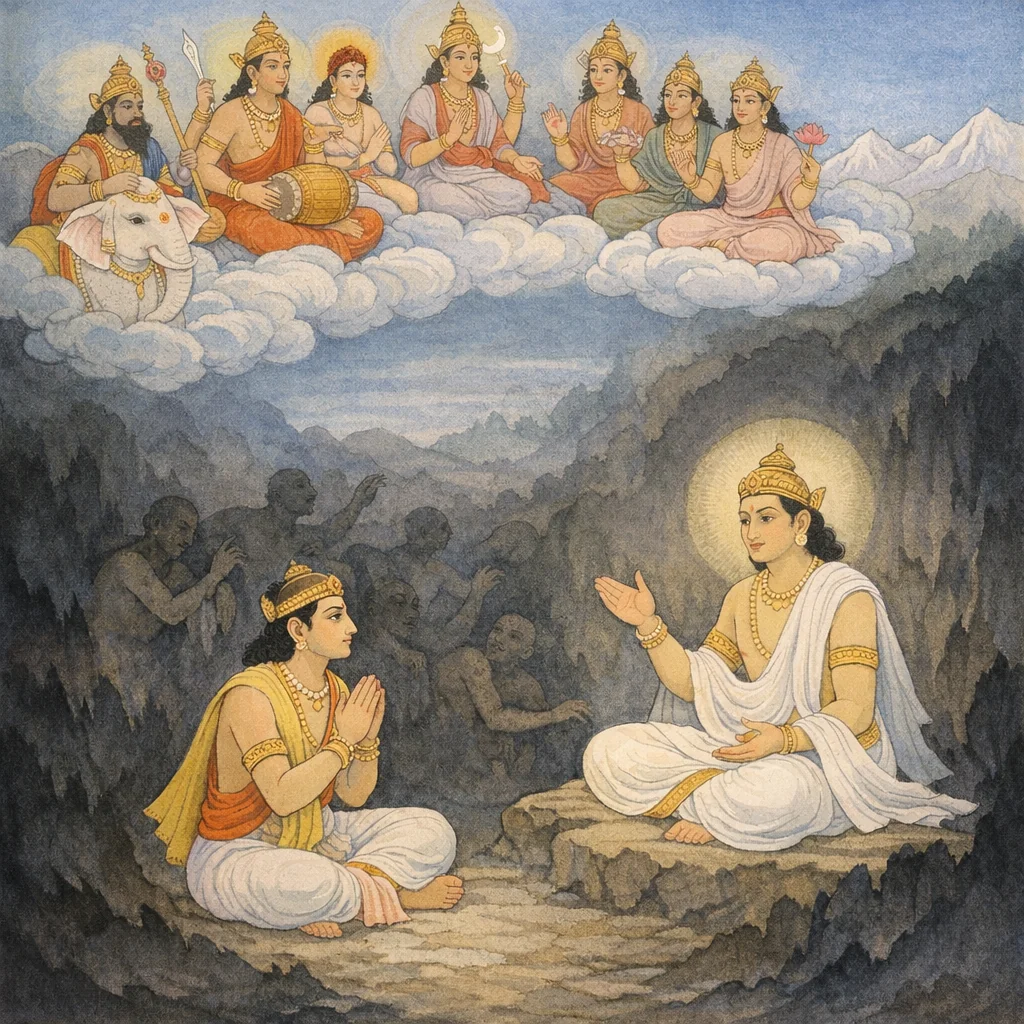
Vaiśaṃpāyana reports that after Yudhiṣṭhira stands briefly in the prior grim setting, the devas arrive led by Śakra (Indra), alongside Maruts, Vasus, Aśvins, Rudras, Ādityas, Siddhas, and great ṛṣis. With their luminous presence, the infernal markers—Vaitaraṇī, Kūṭaśālmalī, iron cauldrons, and other punitive visions—cease to appear, and an auspicious, fragrant, cooling wind arises. Indra addresses Yudhiṣṭhira with reassurance: the gods are pleased; his success is secured; and the experience of naraka is described as a necessary sight for kings, interpreted through a doctrine of karmic sequencing (some enjoy merit first then suffer, others suffer first then enjoy). Indra further explains that Yudhiṣṭhira’s brief ordeal corresponds to a residual ethical blemish linked to a ‘vyāja’ (pretext/deception) involving Droṇa, and that similar ‘by pretext’ descents applied to his companions. He is invited to behold his allies and even Karṇa established in their proper stations, and to relinquish grief. Dharma then appears in embodied form, explicitly praising Yudhiṣṭhira’s devotion, truthfulness, forbearance, and self-restraint, stating that this is the third and final test, and clarifying that the earlier perception of the brothers’ suffering was a divinely arranged māyā. Indra and Dharma guide him to the celestial Gaṅgā (Ākāśa-Gaṅgā); upon immersion, Yudhiṣṭhira’s human condition falls away, he attains a divine body, becomes free of enmity and distress, and proceeds surrounded by devas and praised by sages.
Chapter Arc: नरक-दर्शन के धुएँ और भय के बीच युधिष्ठिर को अचानक दिव्य प्रकाश का स्पर्श मिलता है—देवगण आते हैं और तमस छँटने लगता है। → युधिष्ठिर के चारों ओर दिखते विकृत शरीर और पीड़ा के दृश्य एक-एक कर अदृश्य होते हैं; तभी साक्षात् धर्म देह धारण कर उपस्थित होते हैं और इस विचित्र अनुभव का अर्थ खोलने लगते हैं—कर्मफल की दो राशियाँ, शुभ-अशुभ, और उनका क्रम। → धर्म युधिष्ठिर को कर्मफल-क्रम का रहस्य सुनाते हैं: कोई पहले नरक भोगकर फिर स्वर्ग पाता है, और कोई पहले स्वर्ग भोगकर फिर नरक—यह क्रम शेष बचे पुण्य-पाप के ‘भोग’ से तय होता है; साथ ही वे बताते हैं कि यह नरक-दर्शन ‘व्याज’ (उपाय/छल) से कराया गया था। → धर्म स्पष्ट करते हैं कि यह परीक्षा और दर्शन युधिष्ठिर के कल्याण हेतु था; फिर वे युधिष्ठिर को दिखाते हैं कि युद्ध में मारे गए अनेक राजा और योद्धा पापमुक्त होकर स्वर्ग को प्राप्त हो चुके हैं। अंततः युधिष्ठिर की सिद्धि और अक्षय लोकों की प्राप्ति की घोषणा होती है। → धर्म यह भी खोलते हैं कि द्रौपदी और पाण्डव भ्राताओं को भी इसी प्रकार ‘व्याज’ से नरक-दर्शन कराया गया—पाठक के मन में प्रश्न उठता है कि उनके सूक्ष्म दोष क्या थे और स्वर्गारोहण का अंतिम दृश्य कैसे पूर्ण होगा।
Shlokas
Verse 1
इस प्रकार श्रीमह्याभारत स्वगरिह्हणपर्वमें युधिष्टिरकों नरकका दर्शनविषयक दूसरा अध्याय पूरा हुआ ॥/ २ ॥ ऑपन-माज बछ। अल तृतीयो<थध्याय: इन्द्र और धर्मका युधिष्िरको सान्त्वना देना तथा युधिष्ठिरका शरीर त्यागकर दिव्य लोकको जाना वैशम्पायन उवाच स्थिते मुहूर्त पार्थे तु धर्मराजे युधिष्ठिरे । आजम्मुस्तत्र कौरव्य देवा: शक्रपुरोगमा:,वैशम्पायनजी कहते हैं--जनमेजय! कुन्तीकुमार धर्मराज युधिष्ठिरको उस स्थानपर खड़े हुए अभी दो ही घड़ी बीतने पायी थी कि इन्द्र आदि सम्पूर्ण देवता वहाँ आ पहुँचे
Vaiśampāyana said: O descendant of the Kurus (Janamejaya), when Pārtha—Dharma-rāja Yudhiṣṭhira—had stood there for only a brief moment, all the gods arrived at that place, led by Śakra (Indra).
Verse 2
सच विग्रहवान् धर्मो राजानं प्रसमीक्षितुम् तत्राजगाम यत्रासौ कुरुराजो युधिषिर:,साक्षात् धर्म भी शरीर धारण करके राजासे मिलनेके लिये उस स्थानपर आये जहाँ वे कुरुराज युधिष्छिर विद्यमान थे
And Dharma himself, assuming a visible bodily form, came there in order to meet and observe the king—at the very place where Yudhiṣṭhira, the Kuru king, was present. The passage underscores that righteousness is not merely an abstract principle: it confronts the ruler directly, testing and confirming the king’s moral stature through personal encounter.
Verse 3
तेषु भासुरदेहेषु पुण्याभिजनकर्मसु । समागतेषु देवेषु व्यगमत् तत् तमो नृूप,राजन्! जिनके कुल और कर्म पवित्र हैं, उन तेजस्वी शरीरवाले देवताओंके आते ही वहाँका सारा अन्धकार दूर हो गया इति श्रीमहाभारते स्वर्गारोहणपर्वणि युधिष्ठिरतनुत्यागे तृतीयो5ध्याय:
Verse 4
नादृश्यन्त च तास्तत्र यातना: पापकर्मिणाम् | नदी वैतरणी चैव कूटशाल्मलिना सह
Vaiśampāyana said: There, no torments meant for those who commit sinful deeds were seen—neither the river Vaitaraṇī nor the dreadful thorny Śālmalī-tree (with its sharp spikes). The scene was free from the usual signs of punitive suffering, underscoring that the travelers were not being subjected to the consequences reserved for grave wrongdoing.
Verse 5
विकृतानि शरीराणि यानि तत्र समन्तत:,ववौ देवसमीपस्थ: शीतलो5तीव भारत | कुरुकुलनन्दन राजा युधिष्ठिरने वहाँ चारों ओर जो विकृत शरीर देखे थे वे सभी अदृश्य हो गये। तदनन्तर वहाँ पावन सुगन्ध लेकर बहनेवाली पवित्र सुखदायिनी वायु चलने लगी। भारत! देवताओंके समीप बहती हुई वह वायु अत्यन्त शीतल प्रतीत होती थी
Vaiśampāyana said: “O Bhārata, the deformed bodies that were seen there on every side vanished from sight. Then a pure, pleasant breeze began to blow, bearing a sacred fragrance and bringing comfort. Flowing near the gods, that wind felt exceedingly cool.”
Verse 6
ददर्श राजा कौरव्यस्तान्यदृश्यानि चाभवन् । ततो वायु: सुखस्पर्श: पुण्यगन्धवह: शुचि:
Then the Kuru king beheld those wondrous signs, and what had been unseen became manifest. Thereupon a pure wind arose—pleasant to the touch and bearing a sacred fragrance—suggesting an auspicious, otherworldly transition in which the righteous are gently guided beyond ordinary perception.
Verse 7
मरुत: सह शक्रेण वसवश्चाश्चिनौ सह
Vaiśampāyana said: The Maruts, together with Śakra (Indra), and the Vasus, and the two Aśvins as well—these divine hosts were present in attendance, underscoring that the climactic events are witnessed and sanctioned by the gods themselves, not merely by human eyes.
Verse 8
साध्या रुद्रास्तथा55दित्या ये चान्येडपि दिवौकस: । सर्वे तत्र समाजग्मु: सिद्धाश्व॒ परमर्षय:
Vaiśampāyana said: The Sādhyas, the Rudras, the Ādityas, and other celestial beings too—all of them assembled there; and the Siddhas as well, along with the supreme seers. The scene underscores a moment of cosmic witness, where the highest orders of beings gather to behold and affirm the moral and spiritual culmination of the narrative.
Verse 9
यत्र राजा महातेजा थधर्मपुत्र: स्थितो5भवत् । इन्द्रके साथ मरुद्गण, वसुगण, दोनों अश्विनीकुमार, साध्यगण, रुद्रगण, आदित्यगण, अन्यान्य देवलोकवासी सिद्ध और महर्षि सभी उस स्थानपर आये जहाँ महातेजस्वी धर्मपुत्र राजा युधिष्ठिर खड़े थे ।। ततः शक्र: सुरपति: श्रिया परमया युत:
Where the mighty, radiant king—Dharma’s son—stood, there came Indra together with the hosts of the Maruts and Vasus, the two Aśvin twins, the Sādhyas, Rudras, and Ādityas, along with other celestial dwellers, Siddhas, and great seers. All assembled at the very spot where the illustrious Dharma-born king Yudhiṣṭhira was standing. Then Śakra, lord of the gods, endowed with supreme splendor, (approached/appeared).
Verse 10
युधिष्ठिर महाबाहो लोकाश्षाप्यक्षयास्तव,“महाबाहु युधिष्ठिर! तुम्हें अक्षयलोक प्राप्त हुए हैं। पुरुषसिंह! प्रभो! अबतक जो हुआ सो हुआ। अब अधिक कष्ट उठानेकी आवश्यकता नहीं है। आओ हमारे साथ चलो। महाबाहो! तुम्हें बहुत बड़ी सिद्धि मिली है; साथ ही अक्षयलोकोंकी भी प्राप्ति हुई है
Vaiśaṃpāyana said: “O mighty-armed Yudhiṣṭhira, imperishable worlds are yours to attain. O lion among men, O lord—what has happened has happened. There is no need to endure further suffering now. Come with us. O strong-armed one, you have gained a great perfection, and with it the attainment of undecaying realms.”
Verse 11
“महाबाहु युधिष्ठिर! तुम्हें अक्षयलोक प्राप्त हुए हैं। पुरुषसिंह! प्रभो! अबतक जो हुआ सो हुआ। अब अधिक कष्ट उठानेकी आवश्यकता नहीं है। आओ हमारे साथ चलो। महाबाहो! तुम्हें बहुत बड़ी सिद्धि मिली है; साथ ही अक्षयलोकोंकी भी प्राप्ति हुई है
Vaiśaṃpāyana said: “O mighty-armed Yudhiṣṭhira, the imperishable worlds have been attained by you. O lion among men, O lord—what has happened until now has happened. There is no need to endure further suffering. Come, go with us. O strong-armed one, you have gained a great perfection, and along with it the attainment of the eternal realms.”
Verse 12
न च मन्युस्त्वया कार्य: शृणु चेद॑ वचो मम | अवश्यं नरकस्तात द्रष्टव्य: सर्वराजभि:,“तात! तुम्हें जो नरक देखना पड़ा है इसके लिये क्रोध न करना। मेरी यह बात सुनो! समस्त राजाओंको निश्चय ही नरक देखना पड़ता है
Vaiśampāyana said: “Do not give way to anger because of this. Listen to my words: O dear one, it is inevitable that all kings must behold hell.”
Verse 13
शुभानामशुभानां च द्वौ राशी पुरुषर्षभ । यः पूर्व सुकृतं भुड्चक्ते पश्चान्रिरयमेव स:,'पुरुषप्रवर! मनुष्यके जीवनमें शुभ और अशुभ कर्मोंकी दो राशियाँ सज्चित होती हैं। जो पहले ही शुभ कर्म भोग लेता है उसे पीछे नरकमें ही जाना पड़ता है
Vaiśampāyana said: “O bull among men, there are two accumulated heaps in a person’s life—of auspicious deeds and of inauspicious deeds. He who first exhausts the fruit of his merit must thereafter go only to hell (to undergo the remaining demerit).”
Verse 14
पूर्व नरकभाग् यस्तु पश्चात् स्वर्गमुपैति सः । भूयिष्ठं पापकर्मा यः स पूर्व स्वर्गमश्षुते,'परंतु जो पहले नरक भोग लेता है वह पीछे स्वर्गमें जाता है। जिसके पास पापकर्मोका संग्रह अधिक है वह पहले ही स्वर्ग भोग लेता है
Vaiśampāyana said: One who first undergoes a share of hell thereafter attains heaven. But the one whose store of sinful deeds is greater enjoys heaven first—only later meeting the painful consequences. The verse frames post-mortem experience as a moral sequencing: mixed karma can yield both pleasure and suffering, and the order depends on which tendency predominates.
Verse 15
तेन त्वमेवं गमितो मया श्रेयोडर्थिना नूप । व्याजेन हि त्वया द्रोण उपचीर्ण: सुतं प्रति
Therefore I, seeking what was truly best, led you along in this way, O king. For it was under a pretext that Droṇa was induced by you to act with special regard toward his son—an ethically fraught maneuver that frames the episode as a calculated means to an end rather than a straightforward act of righteousness.
Verse 16
यथैव त्वं तथा भीमस्तथा पार्थो यमौ तथा
Vaiśaṃpāyana said: “Just as you are, so too is Bhīma; so too is Pārtha, and likewise the twin sons.”
Verse 17
आगच्छ नरशार्दूल मुक्तास्ते चैव कल्मषात्,'पुरुषसिंह! आओ, वे सभी पापसे मुक्त हो गये हैं। भरतश्रेष्ठ! तुम्हारे पक्षके जो-जो राजा युद्धमें मारे गये हैं वे सभी स्वर्गलोकमें आ पहुँचे हैं। चलो, उनका दर्शन करो
Vaiśaṃpāyana said: “Come, tiger among men. They have indeed been released from defilement. O lion among men, come—those kings who fell in battle on your side have all reached the heavenly world, freed from sin. Come now and behold them.”
Verse 18
स्वपक्ष्याश्वैव ये तुभ्यं पार्थिवा निहता रणे । सर्वे स्वर्गमनुप्राप्तास्तान् पश्य भरतर्षभ,'पुरुषसिंह! आओ, वे सभी पापसे मुक्त हो गये हैं। भरतश्रेष्ठ! तुम्हारे पक्षके जो-जो राजा युद्धमें मारे गये हैं वे सभी स्वर्गलोकमें आ पहुँचे हैं। चलो, उनका दर्शन करो
Verse 19
कर्णश्रैव महेष्वास: सर्वशस्त्रभृतां वर: । स गत: परमां सिद्धि यदर्थ परितप्यसे,“तुम जिनके लिये सदा संतप्त रहते हो वे सम्पूर्ण शस्त्रधारियोंमें श्रेष्ठ महाधनुर्धर कर्ण भी परम सिकद्धिको प्राप्त हुए हैं
Vaiśampāyana said: “And Karṇa too— that great archer, the foremost among all who bear weapons—has attained the highest perfection. It is for him (and such as him) that you continually burn with grief.” The verse reframes sorrow within a moral horizon: even those remembered with anguish have reached their destined consummation, so lamentation should yield to steadiness and discernment.
Verse 20
त॑ पश्य पुरुषव्याप्रमादित्यतनयं विभो । स्वस्थानस्थं महाबाहो जहि शोकं नरर्षभ,'प्रभो! नरश्रेष्ठ! महाबाहो! तुम पुरुषसिंह सूर्यकुमार कर्णका दर्शन करो। वे अपने स्थानमें स्थित हैं। तुम उनके लिये शोक त्याग दो
Vaiśampāyana said: “Behold him—Karna, the Sun’s son—radiant and mighty in manly prowess. O lord, O bull among men, O strong-armed one: he now stands established in his own rightful station. Therefore abandon grief for him.”
Verse 21
भ्रातृश्चान्यांस्तथा पश्य स्वपक्ष्याश्रैव पार्थिवान् । स्वं स्वं स्थानमनुप्राप्तान् व्येतु ते मानसो ज्वर:,“अपने दूसरे भाइयोंको तथा पाण्डवपक्षके अन्यान्य राजाओंको भी देखो। वे सब अपने-अपने योग्य स्थानको प्राप्त हुए हैं। उन सबकी सद्गतिके विषयमें अब तुम्हारी मानसिक चिन्ता दूर हो जानी चाहिये
Vaiśampāyana said: “Behold your other brothers as well, and also the kings who belonged to the Pāṇḍavas’ side. Each has attained his own proper station. Seeing their blessed end, let the fever of anxiety in your mind now subside.”
Verse 22
कृच्छू पूर्व चानुभूय इत:प्रभूति कौरव । विहरस्व मया साथे गतशोको निरामय:,“कुरुनन्दन! पहले कष्टका अनुभव करके अबसे तुम मेरे साथ रहकर रोग-शोकसे रहित हो स्वच्छन्द विहार करो
Vaiśampāyana said: “O Kaurava, having first endured hardship, from this time onward dwell with me and roam freely—free from sorrow and free from disease.”
Verse 23
कर्मणां तात पुण्यानां जितानां तपसा स्वयम् । दानानां च महाबाहो फल प्राप्रुहि पार्थिव,“तात! महाबाहु! पृथ्वीनाथ! अपने किये हुए पुण्यकर्मोंका, तपस्यासे जीते हुए लोकोंका और दानींका फल भोगो
Vaiśaṃpāyana said: “Dear child, mighty-armed king—lord of the earth—now receive and enjoy the fruits of your own meritorious deeds, the worlds you have won by austerity, and the rewards that come from acts of giving.”
Verse 24
अद्य त्वां देवगन्धर्वा दिव्याश्षाप्सरसो दिवि | उपसेवन्तु कल्याण्यो विरजो<म्बरभूषणा:,“आजसे देव, गन्धर्व तथा कल्याणस्वरूपा दिव्य अप्सराएँ स्वच्छ वस्त्र और आभूषणोंसे विभूषित हो स्वर्गलोकमें तुम्हारी सेवा करें
Vaiśampāyana said: “From today, may the gods and Gandharvas, and the auspicious celestial Apsarases in heaven—adorned with spotless garments and ornaments—attend upon you.” The line frames the hero’s passage into a divine order where honor and service replace earthly struggle, marking the ethical closure of a life’s burdens through heavenly recognition.
Verse 25
राजसूयजिताॉल्लोकान श्वमेधाभिवर्धितान् । प्राप्रुहि त्वं महाबाहो तपसश्न महाफलम्,“महाबाहो! राजसूय यज्ञद्वारा जीते हुए तथा अश्वमेध यज्तद्वारा वृद्धिको प्राप्त हुए पुण्य लोकोंको प्राप्त करो और अपने तपके महान् फलको भोगो
Vaiśampāyana said: “O mighty-armed one, attain those heavenly worlds won through the Rājasūya and further increased by the Aśvamedha; and enjoy the great fruit of your austerity.”
Verse 26
उपर्युपरि राज्ञां हि तव लोका युधिष्छिर । हरिश्वन्द्रसमा: पार्थ येषु त्वं विहरिष्यसि,“कुन्तीनन्दन युधिष्ठिर! तुम्हें प्राप्त हुए सम्पूर्ण लोक राजा हरिश्वन्द्रके लोकोंकी भाँति सब राजाओंके लोकोंसे ऊपर हैं; जिनमें तुम विचरण करोगे
Vaiśaṃpāyana said: “O Yudhiṣṭhira, the worlds that have come to you are indeed higher than the worlds of other kings—like those attained by King Hariścandra. In those exalted realms, O son of Pṛthā, you shall dwell and move about.”
Verse 27
मान्धाता यत्र राजर्षियत्र राजा भगीरथ: । दौष्यन्तिर्यत्र भरतस्तत्र त्वं विहरिष्यसि
Vaiśampāyana said: “There, where the royal sage Māndhātṛ dwells, where King Bhagīratha abides, and where Bharata, son of Duṣyanta, is found—there you too shall roam in joy.” The verse evokes the ethical ideal of kingship: those who upheld dharma and served the world through righteous rule become exemplars and companions in the blessed realms attained by virtue.
Verse 28
“जहाँ राजर्षि मान्धाता, राजा भगीरथ और दुष्यन्तकुमार भरत गये हैं, उन्हीं लोकोंमें तुम भी विहार करोगे ।। एषा देवनदी पुण्या पार्थ त्रैलोक्यपावनी । आकाशगड़् राजेन्द्र तत्राप्लुत्य गमिष्यसि,'पार्थ! ये तीनों लोकोंको पवित्र करनेवाली पुण्यसलिला देवनदी आकाशगड़ा हैं। राजेन्द्र! इनके जलमें गोता लगाकर तुम दिव्य लोकोंमें जा सकोगे
Vaiśampāyana said: “You too shall roam in those very worlds where the royal sage Māndhātā, King Bhagīratha, and Bharata, the son of Duṣyanta, have gone. This sacred river of the gods, O Pārtha, purifies the three worlds—she is the heavenly Gaṅgā. O king, by plunging into her waters you will depart to the divine realms.”
Verse 29
अत्र स्नातस्य भावस्ते मानुषो विगमिष्यति । गतशोको निरायासो मुक्तवैरो भविष्यसि,“मन्दाकिनीके इस पवित्र जलमें स्नान कर लेनेपर तुम्हारा मानव-स्वभाव दूर हो जायगा। तुम शोक, संताप और वैरभावसे छुटकारा पा जाओगे”
Vaiśampāyana said: “By bathing here, your human condition will fall away. Freed from grief, without strain or affliction, and released from enmity, you will become.”
Verse 30
एवं ब्रुवति देवेन्द्रे कौरवेन्द्रं युधिष्ठिरम् । धर्मो विग्रहवान् साक्षादुवाच सुतमात्मन:,देवराज इन्द्र जब इस प्रकार कह रहे थे, उसी समय शरीर धारण करके आये हुए साक्षात् धर्मने अपने पुत्र कौरवराज युधिष्ठिससे कहा--
As Indra, the lord of the gods, was speaking in this manner to Yudhiṣṭhira, the sovereign of the Kurus, Dharma himself—manifest in bodily form—addressed his own son directly. The scene shifts from divine persuasion to the voice of righteousness incarnate, preparing a decisive moral clarification for Yudhiṣṭhira.
Verse 31
भो भो राजन महाप्राज्ञ प्रीतो5स्मि तव पुत्रक । मद्धकत्या सत्यवाक्यैश्नल क्षमया च दमेन च,“महाप्राज्ञ नरेश! मेरे पुत्र! तुम्हारे धर्मविषयक अनुराग, सत्यभाषण, क्षमा और इन्द्रियसंयम आदि गुणोंसे मैं बहुत प्रसन्न हूँ
Vaiśampāyana said: “O king, O greatly wise one—my son—I am deeply pleased with you: with your devotion toward me, your truth-speaking, your forbearance, and your self-restraint.”
Verse 32
एषा तृतीया जिज्ञासा तव राजन् कृता मया | न शकक््यसे चालयितु स्वभावात् पार्थ हेतुतः,“राजन! यह मैंने तीसरी बार तुम्हारी परीक्षा ली थी। पार्थ! किसी भी युक्तिसे कोई तुम्हें अपने स्वभावसे विचलित नहीं कर सकता
Vaiśampāyana said: “O King, this was the third time I tested you. O Pārtha, by no argument or pretext can anyone turn you away from your own nature.”
Verse 33
पूर्व परीक्षितो हि त्व॑ं प्रश्नाद् द्वैृतवने मया । अरणीसहितस्यार्थ तच्च निस्तीर्णवानसि,'द्वैतववनमें अरणिकाष्ठका अपहरण करनेके पश्चात् जब यक्षके रूपमें मैंने तुमसे कई प्रश्न किये थे वह मेरे द्वारा तुम्हारी पहली परीक्षा थी। उसमें तुम भलीभाँति उत्तीर्ण हो गये
Vaiśaṃpāyana said: “Earlier, in the Dvaitavana, I tested you through questions, after the fire-kindling sticks (araṇi) had been taken away. You passed that trial well.”
Verse 34
सोदर्येषु विनष्टेषु द्रौपद्या तत्र भारत । श्वरूपधारिणा तत्र पुनस्त्व॑ मे परीक्षित:,“भारत! फिर द्रौपदीसहित तुम्हारे सभी भाइयोंकी मृत्यु हो जानेपर कुत्तेका रूप धारण करके मैंने दूसरी बार तुम्हारी परीक्षा ली थी। उसमें भी तुम सफल हुए
Vaiśampāyana said: “O Bhārata, when your own brothers had perished there, along with Draupadī, I tested you a second time by assuming the form of a dog. In that trial too, you proved steadfast.”
Verse 35
इदं तृतीयं भ्रातृणामर्थ यत् स्थातुमिच्छसि । विशुद्धोईसि महाभाग सुखी विगतकल्मष:,“अब यह तुम्हारी परीक्षाका तीसरा अवसर था; किंतु इस बार भी तुम अपने सुखकी परवा न करके भाइयोंके हितके लिये नरकमें रहना चाहते थे, अतः महाभाग! तुम इस तरहसे शुद्ध प्रमाणित हुए। तुममें पापका नाम भी नहीं है; अत: सुखी होओ
Vaiśampāyana said: “This is the third test concerning your brothers’ welfare. Since you wished to remain (even in hell) for the sake of your brothers, disregarding your own comfort, O greatly fortunate one, you have thereby been proven pure. You are free from all taint of sin; therefore, be at peace and enjoy happiness.”
Verse 36
नच ते भ्रातरः पार्थ नरकार्हा विशाम्पते । मायैषा देवराजेन महेन्द्रेण प्रयोजिता,'पार्थ! प्रजानाथ! तुम्हारे भाई नरकमें रहनेके योग्य नहीं हैं। तुमने जो उन्हें नरक भोगते देखा है वह देवराज इन्द्रद्वारा प्रकट की हुई माया थी
Vaiśaṃpāyana said: “O Pārtha, lord of the people, your brothers are not fit to dwell in hell. What you saw of them undergoing torment in hell was only an illusion contrived and displayed by Indra, the king of the gods.”
Verse 37
अवश्यं नरकास्तात द्रष्टव्या: सर्वराजभि: । ततस्त्वया प्राप्तमिदं मुहूर्त दुःखमुत्तमम्,“तात! समस्त राजाओंको नरकका दर्शन अवश्य करना पड़ता है; इसलिये तुमने दो घड़ीतक यह महान् दु:ख प्राप्त किया है
Vaiśampāyana said: “Dear child, all kings must inevitably behold the hells. Therefore, you have undergone this supreme anguish only for a brief moment.”
Verse 38
न सव्यसाची भीमो वा यमौ वा पुरुषर्षभौ | कर्णो वा सत्यवाक् शूरो नरकार्ह श्चिरं नृप
Vaiśampāyana said: “Neither Savyasācī (Arjuna), nor Bhīma, nor the twin sons (Nakula and Sahadeva)—those best of men—nor Karṇa, the heroic speaker of truth, O king, remained fit for hell for long.”
Verse 39
“नरेश्वर! सव्यसाची अर्जुन, भीमसेन, पुरुषप्रवर नकुल-सहदेव अथवा सत्यवादी शूरवीर कर्ण--इनमेंसे कोई भी चिरकालतक नरकमें रहनेके योग्य नहीं है ।। न कृष्णा राजपुत्री च नरकार्हा कथंचन । एहोहि भरतश्रेष्ठ पश्य गड्जां त्रिलोकगाम्,“भरतश्रेष्ठ) राजकुमारी कृष्णा भी किसी तरह नरकमें जानेयोग्य नहीं है। आओ, त्रिभुवनगामिनी गंगाजीका दर्शन करो”
Vaiśampāyana said: “O king! Neither Arjuna the ambidextrous, nor Bhīmasena, nor the foremost of men Nakula and Sahadeva, nor even Karṇa—the truthful and heroic warrior—among these is anyone fit to dwell in hell for a long time. Nor is Kṛṣṇā, the princess, in any way deserving of hell. Come, O best of the Bharatas; behold the Gaṅgā, the river whose course reaches the three worlds.”
Verse 40
एवमुक्त: स राजर्षिस्तव पूर्वपितामह: । जगाम सह धर्मेण सर्वैक्ष त्रिदिवालयै:,जनमेजय! धर्मके यों कहनेपर तुम्हारे पूर्वपितामह राजर्षि युधिष्ठिरने धर्म तथा समस्त स्वर्गवासी देवताओंके साथ जाकर मुनिजनवन्दित परम पावन पुण्यसलिला देवनदी गड़ाजीमें स्नान किया। स्नान करके राजाने तत्काल अपने मानवशरीरको त्याग दिया
Vaiśampāyana said: Thus addressed, your forefather, the royal sage, set forth—accompanied by Dharma and by all the dwellers of heaven, O Janamejaya. (In the narrative continuation of this moment, he proceeds to the sacred divine river, bathes, and then relinquishes his human body.)
Verse 41
गड्ढां देवनदीं पुण्यां पावनीमृषिसंस्तुताम् । अवगाहा ततो राजा तनुं तत्याज मानुषीम्,जनमेजय! धर्मके यों कहनेपर तुम्हारे पूर्वपितामह राजर्षि युधिष्ठिरने धर्म तथा समस्त स्वर्गवासी देवताओंके साथ जाकर मुनिजनवन्दित परम पावन पुण्यसलिला देवनदी गड़ाजीमें स्नान किया। स्नान करके राजाने तत्काल अपने मानवशरीरको त्याग दिया
Vaiśaṃpāyana said: Then, O Janamejaya, the king immersed himself in the sacred river of the gods, the holy Devanadī called Gāḍḍhā—purifying and praised by sages. After bathing there, the king at once cast off his human body, marking the final transition from mortal duty to the consummation of his dharma.
Verse 42
ततो दिव्यवपुर्भूत्वा धर्मराजो युधिष्िर: । निर्वेरो गतसंतापो जले तस्मिन् समाप्लुत:,तत्पश्चात् दिव्यदेह धारण करके धर्मराज युधिष्ठिर वैरभावसे रहित हो गये। मन्दाकिनीके शीतल जलमें स्नान करते ही उनका सारा संताप दूर हो गया
Vaiśampāyana said: Then King Yudhiṣṭhira, the lord of dharma, assumed a divine form. Free from enmity and with all anguish dispelled, he immersed himself in that water—so that, upon bathing, the heat of sorrow and the residue of conflict fell away from him.
Verse 43
लोहकुम्भ्य: शिलाश्वैव नादृश्यन्त भयानका: । वहाँ पापकर्मी पुरुषोंको जो यातनाएँ दी जाती थीं वे सहसा अदृश्य हो गयीं। न वैतरणी नदी रह गयी, न कूटशाल्मलि वृक्ष। लोहेके कुम्भ और लोहमयी भयंकर तप्त शिलाएँ भी नहीं दिखायी देती थीं,ततो ययौ वृतो देवै: कुरुराजो युधिष्ठिर: । धर्मेण सहितो धीमान् स्तूयमानो महर्षिभि: तत्पश्चात् देवताओंसे घिरे हुए बुद्धिमान् कुरुराज युधिष्छठिर महर्षियोंके मुखसे अपनी स्तुति सुनते हुए धर्मके साथ उस स्थानको गये जहाँ वे पुरुषसिंह शूरवीर पाण्डव और धृतराष्ट्रपुत्र क्रोध त्यागकर आनन्दपूर्वक अपने-अपने स्थानोंपर रहते थे
The dreadful iron cauldrons and the burning iron-like stones were no longer seen. Then the Kuru king Yudhiṣṭhira—wise, accompanied by Dharma, surrounded by the gods, and praised by the great seers—proceeded onward. The scene signals a moral turning-point: the terrifying vision of punitive suffering vanishes, and the righteous king is led, under Dharma’s guidance, toward the realm where the heroic Pāṇḍavas and the sons of Dhṛtarāṣṭra dwell in their own stations, having abandoned anger and found peace.
Verse 44
यत्र ते पुरुषव्याप्रा: शूरा विगतमन्यव: । पाण्डवा धार्तराष्ट्रश्न स्वानि स्थानानि भेजिरे,तत्पश्चात् देवताओंसे घिरे हुए बुद्धिमान् कुरुराज युधिष्छठिर महर्षियोंके मुखसे अपनी स्तुति सुनते हुए धर्मके साथ उस स्थानको गये जहाँ वे पुरुषसिंह शूरवीर पाण्डव और धृतराष्ट्रपुत्र क्रोध त्यागकर आनन्दपूर्वक अपने-अपने स्थानोंपर रहते थे
Vaiśampāyana said: There, those heroic men—active in their proper roles and now free from anger—both the Pāṇḍavas and the sons of Dhṛtarāṣṭra, had taken their own appointed stations. After that, the wise Kuru king Yudhiṣṭhira, surrounded by the gods and hearing his own praise from the mouths of great seers, went together with Dharma to that region where those lion-like heroes—the valiant Pāṇḍavas and the sons of Dhṛtarāṣṭra—having abandoned wrath, dwelt joyfully each in his own place.
Verse 66
ववौ देवसमीपस्थ: शीतलो5तीव भारत | कुरुकुलनन्दन राजा युधिष्ठिरने वहाँ चारों ओर जो विकृत शरीर देखे थे वे सभी अदृश्य हो गये। तदनन्तर वहाँ पावन सुगन्ध लेकर बहनेवाली पवित्र सुखदायिनी वायु चलने लगी। भारत! देवताओंके समीप बहती हुई वह वायु अत्यन्त शीतल प्रतीत होती थी
Verse 93
युधिष्ठिरमुवाचेदं सान्त्वपूर्वमिदं वच: । तदनन्तर उत्तम शोभासे सम्पन्न देवराज इन्द्रने युधिष्ठिरको सान्त्वना देते हुए इस प्रकार कहा
Vaiśampāyana said: Then Indra, the king of the gods, addressing Yudhiṣṭhira with words of consolation, spoke gently—praising him as noble and radiant—so as to steady his mind after what had occurred.
Verse 131
एहोहि पुरुषव्यात्र कृतमेतावता विभो । सिद्धि: प्राप्ता महाबाहो लोकाश्षाप्यक्षयास्तव
Vaiśampāyana said: “Come, O tiger among men, O mighty one. Enough has been done. O strong-armed hero, you have attained fulfillment; and the worlds that are yours are imperishable.”
Verse 153
व्याजेनैव ततो राजन् दर्शितो नरकस्तव । “नरेश्वर! मैंने तुम्हारे कल्याणकी इच्छासे तुम्हें पहले ही इस प्रकार नरकका दर्शन करानेके लिये यहाँ भेज दिया है। राजन! तुमने गुरुपुत्र अश्वत्थामाके विषयमें छलसे काम लेकर द्रोणाचार्यको उनके पुत्रकी मृत्युका विश्वास दिलाया था, इसलिये तुम्हें भी छलसे ही नरक दिखलाया गया है
Vaiśaṃpāyana said: “O King, it was only by a stratagem that your hell was shown to you. Since you once employed deception in the matter of Droṇa’s son Aśvatthāmā—causing Droṇācārya to believe, through a ruse, that his son had died—so too have you been made to behold hell through deception.”
Verse 1636
द्रौपदी च तथा कृष्णा व्याजेन नरकं गता: । 'जैसे तुम यहाँ लाये गये थे उसी प्रकार भीमसेन, अर्जुन, नकुल, सहदेव तथा ट्रपदकुमारी कृष्णा--ये सभी छलसे नरकके निकट लाये गये थे
Vaiśampāyana said: Draupadī—also called Kṛṣṇā—was, by a contrivance (a deceptive pretext), made to go toward hell. The narrative underscores that even the righteous may be shown the near-vision of hell through divine arrangement, not as final condemnation but as a moral revelation about subtle faults and the impartiality of karmic law.
Frequently Asked Questions
The chapter confronts how a righteous king should respond when reality appears to contradict moral expectation—whether to accept personal elevation or to remain loyal to companions and to truth, even amid distressing visions.
Karmic results are depicted as temporally ordered rather than simplistic: merit and demerit may ripen in different sequences, and apparent injustice can function as a limited, instructive ordeal rather than a final verdict.
Yes: Dharma states the vision was māyā arranged by Indra, clarifies it as Yudhiṣṭhira’s third examination, and presents immersion in the celestial Gaṅgā as the transition point where the human state is relinquished and reconciliation is completed.