Adhyaya 20
Karṇa-parva Adhyāya 20 — Yudhiṣṭhira–Duryodhana Encounter and Escalation of Arms
Upa-parva: Yudhiṣṭhira–Duryodhana Rathayuddha (Episode: Afternoon Engagement)
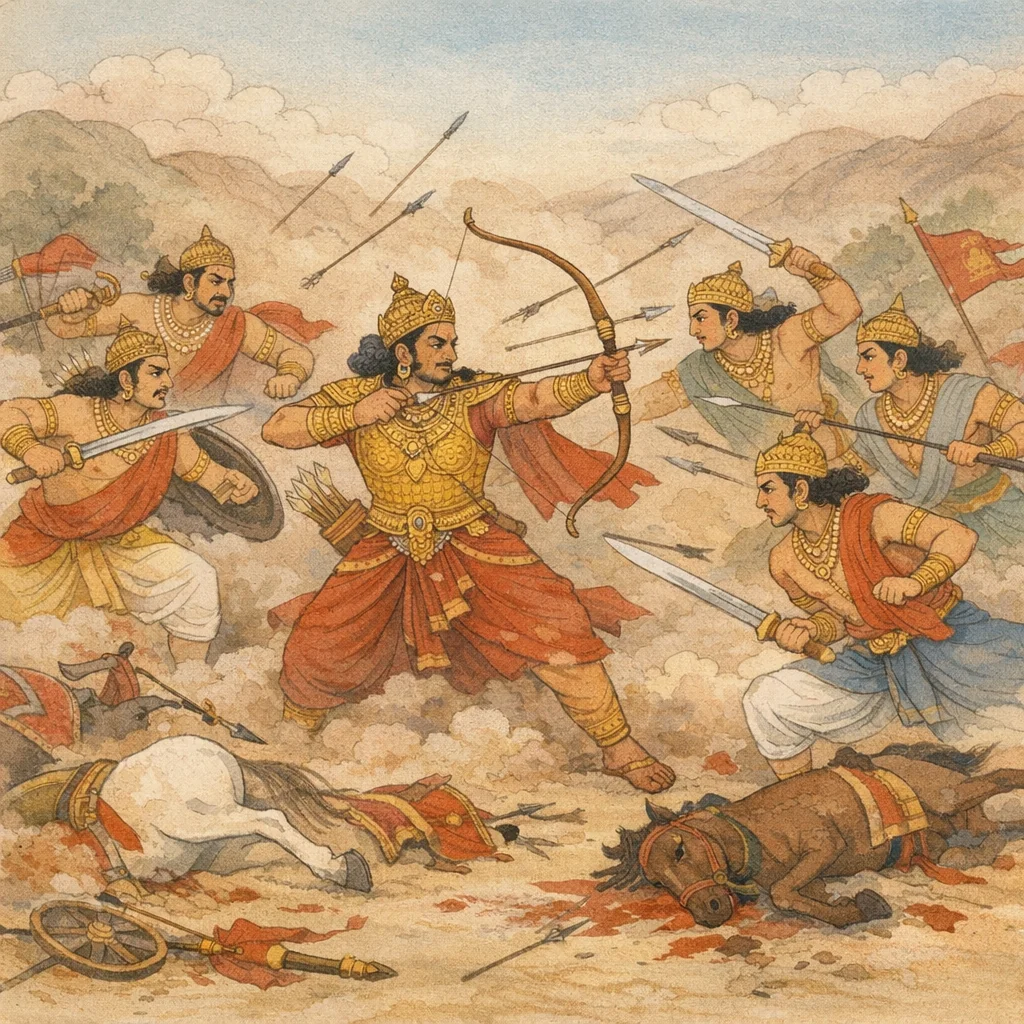
Dhṛtarāṣṭra opens with a grief-laden inquiry, stating that he has heard of severe and unbearable losses and pressing Sañjaya to describe how the battle proceeded, especially the afternoon engagement. Sañjaya reports that Duryodhana, remounting a new chariot amid fragmented fighting, advances toward Yudhiṣṭhira with urgent instructions to his charioteer. Yudhiṣṭhira, angered, likewise directs his driver to meet Duryodhana, and the two kings engage in a concentrated rathayuddha. The exchange includes precision archery: Duryodhana severs Yudhiṣṭhira’s bow; Yudhiṣṭhira replaces it and counters by cutting Duryodhana’s banner and bow. The duel intensifies through sustained arrow volleys, audible signals (conch and battle cries), and mutual wounding. Duryodhana throws a sharp śakti likened to a meteor; Yudhiṣṭhira intercepts it mid-flight, then pierces Duryodhana with additional arrows. After further strikes, Yudhiṣṭhira launches a powerful śakti that penetrates Duryodhana’s armor, causing him to fall and lose consciousness. Kṛtavarmā rapidly intervenes to retrieve and protect Duryodhana, while Bhīma rushes forward with a mace, marking the episode’s tactical shift from duel to protective engagement.
Chapter Arc: धृतराष्ट्र संजय से पूछते हैं—‘अमित्रघ्न धनंजय से जो महान् भय उठता है, उस भय के बीच पार्थ ने वहाँ क्या किया?’—और कथा का द्वार अर्जुन की सिद्ध युद्धविद्या तथा उसके आतंककारी प्रभाव से खुलता है। → कौरव-पाण्डव सेनाएँ निर्भय होकर फिर आमने-सामने आ जुटती हैं—एक ओर भीमसेनमुख पाण्डव, दूसरी ओर सूतपुत्र कर्णमुख कौरव। पाण्डवों के महावीर, शीघ्रास्त्र चलाने वाले योद्धा कर्ण को चारों ओर से घेरते हैं; अस्त्रों की ‘दस गतियों’ का संकेत युद्ध-कौशल की जटिलता और घातकता को बढ़ाता है। → समुद्र-तुल्य रणभूमि में रथ, अश्व, गज और पदाति—सब पर परशु, पट्टिश, असि, शक्ति, भिन्दिपाल, नखर, प्रास, तोमर बरसते हैं; कर्ण (अश्वत्थामा के संकल्प/योजना के अनुरूप) पलटकर प्रचण्ड प्रतिरोध करता है और दोनों पक्षों में भीषण कदन मचता है—हाथी-रथ गिरते हैं, घुड़सवार पदातियों के हाथों कटते हैं, और शवों का ढेर रण को शोक-चित्र बना देता है। → दिन का परिणाम निर्णायक विजय की जगह रक्त-क्षय और थकान के रूप में उतरता है—पाण्डवों की वापसी से शत्रुसेना में भगदड़ तो उठती है, पर कर्ण के प्रत्याघात से युद्ध फिर स्थिर-सा हो जाता है; रणभूमि पर कुचले कमलों-सी देहें और मुरझाई मालाओं-से मुख शेष रह जाते हैं। → अर्जुन के भय-प्रेरक पराक्रम का प्रश्न अभी खुला है—अगले प्रसंग में संजय को बताना है कि धनंजय ने किस प्रकार युद्ध की धारा मोड़ी और कर्ण-पक्ष ने उसका प्रतिकार कैसे किया।
Shlokas
Verse 1
इस प्रकार श्रीमह्या भारत कर्णपर्वमें पाण्ड्यवधविषयक बीसवाँ अध्याय पूरा हुआ ॥/ २० ॥। अपन बक। है २ >> - बाणोंकी दस गतियाँ बतायी गयी हैं, जो इस प्रकार हैं--१-उन्मुखी, २-अभिमुखी, ३-तिर्यक्, ४-मन्दा, ५-गोमूत्रिका, ६-ध्रुवा, ७-स्खलिता, ८-यमकाक्रान्ता, ९-क्रुष्टा और १०-अतिक्कुष्टा। इनमेंसे पूर्वकी तीन गतियाँ क्रमश: मस्तक, हृदय तथा पार्शवंदेशका स्पर्श करनेवाली हैं। अर्थात् उन्मुखी गतिसे छोड़ा हुआ बाण मस्तकपर, अभिमुखी गतिसे प्रेरित बाण वक्ष:स्थलपर और तिर्यक्ू-गतिसे चलाया हुआ बाण पार्श्वभागमें आघात करता है। मन्दा गतिसे छोड़े गये बाण त्वचाको कुछ-कुछ छेद पाते हैं। गोमूत्रिका गतिसे चलाये गये बाण बायें और दायें दोनों ओर जाते तथा कवचको भी काट देते हैं। ध्रुवा गति निश्चितरूपसे लक्ष्यका भेदन करानेवाली होती है। स्खलिता कहते हैं, लक्ष्यसे विचलित होनेवाली गतिको। उसके द्वारा संचालित बाण लक्ष्यभ्रष्ट होते हैं। यमकाक्रान्ता वह गति है, जिसके द्वारा प्रेरित बाण बारंबार लक्ष्य वेधकर निकल जाते हैं। क्रुष्टा उस गतिका नाम है, जो लक्ष्यके एक अवयव भुजा आदिका छेदन करती है। दसवीं गतिका नाम है अतिक्रुष्टा; जिसके द्वारा चलाया गया बाण शत्रुका मस्तक काटकर उसके साथ ही दूर जा गिरता है। (नीलकण्ठीके आधारपर) एकविशो< ध्याय: कौरव-पाण्डव-दलोंका भयंकर घमासान युद्ध धृतराष्ट्र रवाच पाण्ड्ये हते किमकरोदर्जुनो युधि संजय । एकवीरेण कर्णेन द्रावितेषु परेषु च,धृतराष्ट्रने पूछा--संजय! जब युद्धस्थलमें अश्वत्थामाद्वारा पाण्ड्यनरेश मार डाले गये और मेरे पक्षके अद्वितीय वीर कर्णने जब शत्रुसैनिकोंको मार भगाया, उस समय अर्जुनने क्या किया?
Sanjaya said: “Thus, in the revered Mahābhārata, within the Karṇa Parva, the twentieth chapter—concerning the slaying of the Pāṇḍya king—comes to an end.”
Verse 2
समाप्तविद्यो बलवान् युक्तो वीर: स पाण्डव: । सर्वभूतेष्वनुज्ञात: शड्करेण महात्मना,पाण्डुकुमार अर्जुन युद्धविद्याकी शिक्षा समाप्त कर चुके हैं। वे विजयके प्रयत्नमें लगे हुए बलवान वीर हैं। भगवान् शंकरने उन्हें कृपापूर्वक अनुगृहीत करते हुए यह कह दिया है कि “तुम समस्त प्राणियोंमें प्रधान एवं अजेय होओगे”
Sañjaya said: That Pāṇḍava hero, Arjuna—the son of Pāṇḍu—has completed his training in the arts of war. Strong and steadfast in the pursuit of victory, he has also received the gracious sanction of the great-souled Lord Śaṅkara, who has granted him the assurance: “Among all beings you shall be foremost and unconquerable.”
Verse 3
तस्मान्महद् भयं तीव्रममित्रघ्नाद् धनंजयात् | स यत् तत्राकरोत् पार्थस्तन्ममाचक्ष्व संजय,इसलिये उन शत्रुनाशक धनंजयसे मुझे अत्यन्त तीव्र एवं महान् भय बना रहता है। अतः संजय! वहाँ कुन्तीकुमार अर्जुनने जो कुछ किया हो, वह मुझे बताओ
Therefore a great and piercing fear grips me because of Dhanañjaya, the slayer of foes. So, Sañjaya, tell me what Pārtha (Arjuna), the son of Kuntī, did there—what course of action he took in that moment of war.
Verse 4
संजय उवाच हते पाण्ड्ये<र्जुनं कृष्णस्त्वरन्नाह वचो हितम् । पश्यामि नाहं राजानमपयातांश्व पाण्डवान्,संजयने कहा--राजन्! पाण्ड्यनरेशके मारे जानेपर श्रीकृष्णने बड़ी उतावलीके साथ अर्जुनसे यह हितकर वचन कहा--'पार्थ! मैं राजा युधिष्ठिरको नहीं देख रहा हूँ। युद्धस्थलसे हटे हुए अन्य पाण्डव भी मुझे नहीं दिखायी दे रहे हैं
Sañjaya said: When the king of the Pāṇḍyas had been slain, Kṛṣṇa, in urgent haste, spoke a beneficial counsel to Arjuna: “I do not see the king (Yudhiṣṭhira), nor do I see the other Pāṇḍavas who seem to have withdrawn from the battlefield.”
Verse 5
निवत्तैश्न पुनः पार्थर्भग्नं शत्रुबलं महत् । अश्वत्थाम्नश्न॒ सड़्कल्पाद्धता: कर्णेन सृज्जया:
Sañjaya said: When they had withdrawn again, O Pārtha, the mighty host of the enemy was shattered. And, in accordance with Aśvatthāman’s resolve, the Sṛñjayas were slain by Karṇa. The verse underscores how strategic withdrawal and fixed intent (saṅkalpa) shape the moral and practical course of battle, where resolve becomes a driver of lethal action and collective suffering.
Verse 6
सर्वमाख्यातवान् वीरो वासुदेव: किरीटिने,वीर वसुदेवनन्दन श्रीकृष्णने किरीटधारी अर्जुनको ये सारी बातें बतायीं। यह सुनकर तथा अपने भाईके ऊपर आये हुए इस घोर एवं महान् भयको देखकर पाण्डुकुमार अर्जुनने कहा--'हृषीकेश! आप शीघ्र ही इन घोड़ोंको बढ़ाइये'
Sañjaya said: The heroic Vāsudeva (Kṛṣṇa) told everything to the diadem-wearing Arjuna. Hearing this, and seeing the dreadful and great peril that had befallen his brother, Arjuna, the son of Pāṇḍu, spoke: “Hṛṣīkeśa, quickly urge these horses on.”
Verse 7
एतच्छुत्वा च दृष्ट्वा च क्रातुर्घोरें महद्धयम् । वाहयाश्चान् हृषीकेश क्षिप्रमित्याह पाण्डव:,वीर वसुदेवनन्दन श्रीकृष्णने किरीटधारी अर्जुनको ये सारी बातें बतायीं। यह सुनकर तथा अपने भाईके ऊपर आये हुए इस घोर एवं महान् भयको देखकर पाण्डुकुमार अर्जुनने कहा--'हृषीकेश! आप शीघ्र ही इन घोड़ोंको बढ़ाइये'
Sañjaya said: Hearing this and also seeing the dreadful, overwhelming peril that had befallen his brother, the Pāṇḍava (Arjuna) spoke at once: “Hṛṣīkeśa, drive the horses forward quickly.” In the press of war, Arjuna’s urgency reflects both fraternal responsibility and the ethical demand to respond decisively when a loved one is threatened.
Verse 8
ततः प्रायाद्धुषीकेशो रथेनाप्रतियोधिना । दारुणश्न पुनस्तत्र प्रादुरासीत्ू समागम:,तब भगवान् हृषीकेश जिसका सामना करनेवाला दूसरा कोई योद्धा नहीं था उस रथके द्वारा आगे बढ़े। उस समय वहाँ पुनः बड़ा भयंकर संग्राम छिड़ा हुआ था
Sañjaya said: Then Hṛṣīkeśa (Kṛṣṇa) advanced in that chariot which none could truly withstand in battle. And there, once again, a fierce and dreadful clash of armies burst forth—signaling the relentless momentum of war and the grave moral pressure under which the warriors acted.
Verse 9
ततः पुन: समाजग्मुरभीता: कुरुपाण्डवा: । भीमसेनमुखा: पार्था: सूतपुत्रमुखा वयम्,कौरव तथा पाण्डव-योद्धा पुनः निर्भवय होकर एक-दूसरेसे भिड़ गये थे। पाण्डव- सैनिकोंके प्रधान थे भीमसेन और हमलोगोंका प्रधान था सूतपुत्र कर्ण
Sañjaya said: Then once again the Kurus and the Pāṇḍavas, unafraid, closed in upon one another and clashed. The Pāṇḍava host was led foremost by Bhīmasena, while our side was led foremost by Karṇa, the son of a charioteer. The verse underscores the renewed resolve of both armies and the decisive role of their champions as the battle’s violence resumes without hesitation.
Verse 10
ततः प्रववृते भूय: संग्रामो राजसत्तम । कर्णस्य पाण्डवानां च यमराष्ट्रविवर्धन:,नृपश्रेष्ठ उस समय कर्णका पाण्डव-सैनिकोंके साथ जो पुनः संग्राम आरम्भ हुआ था, वह यमराजके राज्यकी श्रीवृद्धि करनेवाला था
Sañjaya said: “Then, O best of kings, the battle flared up once again between Karṇa and the Pāṇḍavas’ forces—a clash that only swelled the dominion of Yama, for it increased the harvest of death.”
Verse 11
धनूंषि बाणान् परिघानसिपट्टिशतोमरान् । मुसलानि भुशुण्डीश्व सशक््त्यूष्टिपरश्वधान्,दोनों दलोंके सैनिक एक-दूसरेको मार डालनेकी इच्छासे धनुष, बाण, परिघ, खड्ग, पट्टिश, तोमर, मूसल, भुशुण्डी, शक्ति, ऋष्टि, फरसे, गदा, प्रास, तीखे कुन्त, भिन्दिपाल और बड़े-बड़े अंकुश लेकर शीघ्रतापूर्वक युद्धके मैदानमें कूद पड़े थे
Sañjaya said: Driven by the desire to slay one another, the warriors of both armies sprang swiftly into the battlefield, bearing bows and arrows, iron clubs, swords, battle-axes and spears, maces and heavy pestles, the bhuśuṇḍī weapon, śaktis and ṛṣṭis, and other sharp instruments of war. The scene underscores how, when wrath and rivalry eclipse discernment, human strength and skill are turned toward mutual destruction rather than the protection of dharma.
Verse 12
गदा: प्रासाञ्छितान् कुन्तान् भिन्दिपालान् महाड्ः कुशान् | प्रगृह्य क्षिप्रमापेतु: परस्परजिघांसया,दोनों दलोंके सैनिक एक-दूसरेको मार डालनेकी इच्छासे धनुष, बाण, परिघ, खड्ग, पट्टिश, तोमर, मूसल, भुशुण्डी, शक्ति, ऋष्टि, फरसे, गदा, प्रास, तीखे कुन्त, भिन्दिपाल और बड़े-बड़े अंकुश लेकर शीघ्रतापूर्वक युद्धके मैदानमें कूद पड़े थे
Sañjaya said: Seizing maces, spears, sharp javelins, bhindipālas, and great goads, the warriors of both armies rushed forward in haste, driven by the mutual desire to slay one another. The verse underscores the battlefield’s moral collapse into reciprocal violence, where intent (jighāṃsā—wish to kill) becomes the immediate motive eclipsing restraint and discernment.
Verse 13
बाणज्यातलशब्देन द्यां दिश: प्रदिशो वियत् । पृथिवीं नेमिघोषेण नादयन्तो<5भ्ययु: परान्,रथी वीर अपने बाणसहित धनुषकी प्रत्यंचाकी टंकारध्वनि एवं रथके पहियोंकी घर्घराहटसे आकाश, अन्तरिक्ष, दिशा, विदिशा तथा भूतलको शब्दायमान करते हुए शत्रुओंपर चढ़ आये
Sañjaya said: With the sharp twang of their bowstrings and the clatter of their chariot-wheels, the warriors made the sky, the quarters and intermediate directions, the mid-air, and the very earth resound; thus, raising a thunderous din, they surged forward against the enemy. The verse underscores the overwhelming momentum of battle—where martial prowess and collective force press upon opponents, testing resolve and duty amid the chaos of war.
Verse 14
तेन शब्देन महता संद्ृष्ठ श्चक़्ुराहवम् । वीरा वीरैर्महाघोरं कलहान्तं तितीर्षव:,कलहके पार जानेकी इच्छा रखनेवाले वे सभी वीर उस महान् शब्दसे हर्ष एवं उत्साहमें भरकर विपक्षी वीरोंके साथ अत्यन्त घोर संग्राम करने लगे
Sañjaya said: Stirred by that mighty roar, the warriors fixed their gaze upon the battlefield. Longing to carry the conflict through to its end, those heroes—facing heroes—were filled with exhilaration and resolve, and they plunged into a most dreadful combat against the opposing champions.
Verse 15
ज्यातलत्रधनु:शब्द: कुछ्जराणां च बृंहताम् | पादातानां च पततां नृणां नादो महानभूत्,प्रत्यंचा, हस्तत्राण और धनुषका शब्द, चिग्घाड़ते हुए हाथियोंकी आवाज तथा रणभूमिमें गिरते हुए पैदल मनुष्योंके महान् आर्तनादकी तुमुल ध्वनि वहाँ गूँजने लगी
Sañjaya said: “There arose a tremendous din— the twang of bowstrings and the sound of bows, the loud trumpeting of great elephants, and the mighty cries of foot-soldiers as they fell upon the battlefield.”
Verse 16
तालशब्दांश्व विविधाज्शूराणां चाभिगर्जताम् | श्र॒त्वा तत्र भृशं त्रेसु: पेतुर्मम्लुश्न सैनिका:,सामने गर्जना करनेवाले शूरवीरोंके ताल ठोंकनेके विविध शब्द सुनकर कितने ही सैनिक वहाँ भयसे थर्रा उठते थे, कितने ही गिर पड़ते थे और कितने ही ग्लानिसे भर जाते थे
Verse 17
तेषां निनदतां चैव शस्त्रवर्ष च मुज्चताम् । बहूनाधिरथिरवीर: प्रममाथ्ेषुभि: परान्,जोर-जोरसे गर्जते तथा अस्त्र-शस्त्रोंकी वर्षा करते हुए उन शत्रुसैनिकोंमेंसे बहुतोंको वीर कर्णने अपने बाणोंसे मथ डाला
Sañjaya said: As those warriors roared aloud and poured down a rain of weapons, the heroic Karṇa—son of Adhiratha—crushed many of the foes with his arrows. The scene underscores the grim momentum of battle, where prowess and resolve drive men to relentless violence, even as the moral weight of slaughter hangs over the field.
Verse 18
पज्च पाज्चालवीराणां रथान् दश च पञज्च च । साश्वसूतध्वजान् कर्ण: शरैरनिन्ये यमक्षयम्,उसने अपने बाणोंद्वारा पांचाल वीरोंमेंसे पहले पाँच, फिर दस और फिर पाँच रथियोंको घोड़े, सारथि एवं ध्वजोंसहित मारकर यमलोक पहुँचा दिया
Sañjaya said: Karṇa, with his arrows, sent to Yama’s abode the charioteers of the Pāñcālas—first five, then ten, and then five more—slaying them along with their horses, charioteers, and standards. The verse underscores the relentless, impersonal momentum of war, where prowess is measured in destruction and entire martial retinues are swept away in an instant.
Verse 19
योधमुख्या महावीर्या: पाण्डूनां कर्णमाहवे । शीघ्रास्त्रास्तूर्णमावृत्य परिवद्रु: समन््ततः,तब समरांगणमें पाण्डवदलके शीघ्रतापूर्वक अस्त्र चलानेवाले महापराक्रमी प्रधान- प्रधान योद्धाओंने तुरंत आकर कर्णको चारों ओरसे घेर लिया
Sañjaya said: Then, on the battlefield, the foremost warriors of the Pāṇḍavas—men of great valor and swift in the discharge of weapons—rushed in at once and surrounded Karṇa on every side. The scene underscores the relentless pressure of war, where even a single champion is met not only by individual prowess but by coordinated force and tactical encirclement.
Verse 20
ततः कर्णों द्विषत्सेनां शरवर्षविलोडयन् | विजगाहाण्डजाकीर्णा पद्मिनीमिव यूथप:,तदनन्तर कर्णने अपने बाणोंकी वर्षासे शत्रुसेनाका मनन््थन करते हुए उसके भीतर उसी प्रकार प्रवेश किया, जैसे यूथयति गजराज पक्षियोंसे भरे हुए कमलपूर्ण सरोवरमें घुसकर उसे मथने लगता है
Verse 21
द्विषन्मध्यमवस्कन्द्य राधेयो धनुरुत्तमम् विधुन्वान: शितैर्बाणै: शिरांस्युन्मथ्य पातयत्,राधापुत्र कर्ण क्रमशः शत्रुसेनाके मध्यभागमें पहुँचकर अपने उत्तम धनुषको कम्पित करता हुआ पैने बाणोंसे शत्रुओंके सिर काट-काटकर गिराने लगा इति श्रीमहाभारते कर्णपर्वणि संकुलयुद्धे एकविंशो5ध्याय:
Sañjaya said: Rādheya (Karna), forcing his way into the very midst of the hostile ranks, shook his excellent bow and, with razor-sharp arrows, struck off the enemies’ heads, making them fall. The scene underscores the relentless momentum of battle, where prowess and fury dominate, even as the larger question of righteous conduct in war remains in the background of the epic’s moral horizon.
Verse 22
चर्मवर्माणि संछिज्नान्यपतन् भुवि देहिनाम् । विषेहुर्नास्य संस्पर्श द्वितीयस्य पतत्रिण:,उस समय देहधारियोंके चमड़े और कवच कट-कटकर भूतलपर गिर रहे थे। शत्रुसैनिक कर्णके द्वितीय बाणका स्पर्श नहीं सहन कर पाते थे
Sanjaya said: As Karna’s shafts struck, the leather coverings and armor of the embodied warriors were cut to pieces and fell upon the earth. The enemy soldiers could not endure even the touch of his second arrow—so overwhelming was its force in the slaughter of battle.
Verse 23
वर्मदेहासुम थनैर्धनुष: प्रच्युतै: शरैः । मौर्व्या तलत्रे न्यहनत् कशया वाजिनो यथा,जैसे घुड़सवार घोड़ोंकों कोड़ेसे पीटता है, उसी प्रकार कर्ण धनुषसे छूटकर कवच शरीर और प्राणोंको मथ डालनेवाले बाणोंद्वारा शत्रुओंके हस्तत्राणपर भी प्रहार करने लगा
Sanjaya said: With arrows loosed from his bow—arrows that churned and shattered armour, bodies, and even life-breath—Karna struck the enemies’ bow-strings and protective hand-guards, as a rider lashes horses with a whip. The verse underscores the ruthless efficiency of battlefield skill: mastery is turned toward destruction, and the warrior’s prowess becomes an instrument that breaks both weapons and lives.
Verse 24
पाण्ड्सृूज्जयपञ्चालान् शरगोचरमागतान् । ममर्द तरसा कर्ण: सिंहो मृगगणानिव,जैसे सिंह अपनी दृष्टिमें पड़े हुए मृगोंको वेगपूर्वक मसल डालता है, उसी प्रकार कर्णने अपने बाणोंकी पहुँचके भीतर आये हुए पाण्डव, सृंजय तथा पांचाल योद्धाओंको बड़े वेगसे रौंद डाला
Sañjaya said: Karṇa, with irresistible speed, crushed the Pāṇḍavas, the Sṛñjayas, and the Pāñcālas who had come within the range of his arrows—just as a lion, upon sighting a herd of deer, swiftly overpowers and tramples them. The verse underscores the brutal momentum of battle, where martial prowess and tactical reach decide life and death, even as the wider war continues to test the limits of dharma amid violence.
Verse 25
ततः पाज्चालराजकश्ष द्रौपदेयाश्ष मारिष | यमौ च युयुधानश्नव सहिता: कर्णमभ्ययु:,मान्यवर! तब पांचालराज धृष्टद्युम्न, द्रौपदीके पुत्र तथा नकुल, सहदेव और सात्यकि-- इन सबने एक साथ आकर कर्णपर आक्रमण किया
Sañjaya said: Then, O venerable king, the Pāñcāla prince (Dhṛṣṭadyumna), the sons of Draupadī, the twin brothers Nakula and Sahadeva, and Yuyudhāna (Sātyaki) together advanced and fell upon Karṇa. In the moral atmosphere of the war, this is a coordinated assault by the Pāṇḍava side against a formidable champion, showing how strategy and collective effort are marshalled when a single warrior’s prowess threatens the balance of dharma on the battlefield.
Verse 26
तेषु व्यायच्छमानेषु कुरुपाज्चालपाण्डुषु । प्रियानसून् रणे त्यक्त्वा योधा जघ्नु: परस्परम्
Sañjaya said: As the Kurus, the Pāñcālas, and the Pāṇḍavas pressed hard against one another, the warriors—casting aside even their dear lives on the battlefield—struck down one another. The scene underscores how, once battle is fully joined, attachment to life and loved ones is overridden by the harsh compulsion of kṣatriya-duty and the momentum of collective violence.
Verse 27
उस समय जब कौरव, पांचाल तथा पाण्डव योद्धा परिश्रमपूर्वक युद्धमें लगे हुए थे, सभी सैनिक रणभूमिमें अपने प्यारे प्राणोंका मोह छोड़कर एक-दूसरेको मारने लगे ।। सुसंनद्धा: कवचिन: सशिरस्त्राणभूषणा: । गदाभिर्मुसलै क्षान्ये परिघचैश्ञ महाबला:,माननीय नरेश! कमर कसे, कवच बाँधे तथा शिरस्त्राण एवं आभूषण धारण किये हुए महाबली योद्धा गरजते, उछलते-कूदते और एक-दूसरेको ललकारते हुए कालदण्डके समान गदा, मूसल और परिघ उठाये परस्पर धावा बोल रहे थे
Sañjaya said: At that time, when the Kaurava, Pāñcāla, and Pāṇḍava warriors were strenuously engaged in battle, all the soldiers on the field cast aside attachment to their own dear lives and began striking one another down. Well-armoured and mail-clad, wearing helmets and ornaments, mighty fighters—O revered king—tightening their girdles and fastening their cuirasses, roared and sprang forward, challenging each other as they rushed in. Lifting clubs, maces, and iron bars like the rod of Death itself, they charged headlong against one another.
Verse 28
समभ्यधावन्त भृशं कालदण्डैरिवोद्यतै: । नर्दन्तश्नाह्नयन्तश्न प्रवल्गन्तश्न मारिष,माननीय नरेश! कमर कसे, कवच बाँधे तथा शिरस्त्राण एवं आभूषण धारण किये हुए महाबली योद्धा गरजते, उछलते-कूदते और एक-दूसरेको ललकारते हुए कालदण्डके समान गदा, मूसल और परिघ उठाये परस्पर धावा बोल रहे थे
Sañjaya said: “O venerable king, the mighty warriors—having tightened their waist-belts, fastened their armour, and donned helmets and ornaments—roared aloud, leapt and surged forward, and challenged one another as they charged. With clubs, pestles, and iron bars raised high like the very rods of Death, they rushed upon each other with fierce intent.”
Verse 29
ततो निजषघ्नुरन्योन्यं पेतुश्वान्योन्यताडिता: । वमन्तो रुधिरं गान्रैविमस्तिष्केक्षणायुधा:
Sañjaya said: Then, striking down their own comrades and battered by one another, the warriors fell. Vomiting blood, their limbs shattered, their heads and eyes mangled by weapons, they collapsed—an image of battle’s moral ruin, where fury overwhelms discernment and kinship is forgotten amid mutual slaughter.
Verse 30
तदनन्तर वे एक-दूसरेका वध करने, परस्पर चोट खाकर धराशायी होने तथा शरीरसे रक्त बहाने लगे। उनके मस्तिष्क, नेत्र और आयुध नष्ट हो गये थे ।। दन्तपूर्ण: सरुधिरैर्वक्त्र्दीडिमसंनिभै: । जीवन्त इव चाप्येके तस्थु: शस्त्रोपबृंहिता:,कितने ही वीरोंके शरीर अस्त्र-शस्त्रोंसे व्याप्त एवं प्राणशून्य होकर पड़े थे; परंतु उनके खुले हुए मुखमें जो रक्तरंजित दाँत थे, उनके द्वारा वे फटे हुए अनारके फलों-जैसे जान पड़ते थे और उस तरहके मुखोंद्वारा वे जीवित-से प्रतीत होते थे
Sañjaya said: Thereafter they began to slay one another—striking and being struck, collapsing to the earth, and pouring blood from their bodies. Heads, eyes, and weapons were shattered and ruined. Many warriors lay lifeless, their bodies pierced through with missiles and blades; yet their mouths, filled with blood and bared teeth, looked like split pomegranates, so that by those gaping, crimson mouths they seemed almost as if still alive. The verse underscores the moral horror of war: even when life has departed, the body’s violent display can mimic vitality, revealing how battle confuses the signs of life, dignity, and dharma.
Verse 31
परश्वथैश्वाप्यवरे पट्टिशैरसिभिस्तथा । शक्तिभिभिन्न्दिपालैश्ष नखरप्रासतोमरै:,महासागरके समान उस विशाल युद्धस्थलमें परस्पर कुपित हुए अन्यान्य योद्धा परशु, पट्टिश, खड्ग, शक्ति, भिन्दिपाल, नखर, प्रास तथा तोमरोंद्वारा यथासम्भव एक-दूसरेका छेदन-भेदन, विदारण, क्षेपण, कर्तन और हनन करने लगे
Sañjaya said: In that vast battlefield, the warriors—enraged against one another—set about cutting, piercing, rending, hurling, and striking each other as best they could, using axes and other weapons: paṭṭiśas, swords, spears (śaktis), bhindipālas, nakharas, prāsas, and tomaras. The scene underscores how wrath and rivalry, once unleashed in war, drive men to relentless mutual destruction, eclipsing restraint and ethical reflection.
Verse 32
ततक्षुश्रिच्छिदुश्वान्ये बिभिदुश्चिक्षिपुस्तथा । संचकर्तश्व जधघ्नुश्न क्ुद्धा रणमहार्णवे,महासागरके समान उस विशाल युद्धस्थलमें परस्पर कुपित हुए अन्यान्य योद्धा परशु, पट्टिश, खड्ग, शक्ति, भिन्दिपाल, नखर, प्रास तथा तोमरोंद्वारा यथासम्भव एक-दूसरेका छेदन-भेदन, विदारण, क्षेपण, कर्तन और हनन करने लगे
Sañjaya said: Then, in that vast ocean of battle, the other warriors—enraged at one another—began, as best they could, to cut and pierce with razors and weapons, to split and hurl missiles, to hew down and strike. The scene shows how wrath (krodha) overwhelms restraint, turning the field into a churning sea where skill serves destruction rather than dharma.
Verse 33
पेतुरन्योन्यनिहता व्यसवो रुधिरोक्षिता: । क्षरन्त: सुरसं रक्त प्रकृत्ताश्नन्दना इव,जैसे लाल चन्दनके वृक्ष कट जानेपर रक्त वर्णका रस बहाने लगते हैं, उसी प्रकार परस्परके आघातसे मारे गये योद्धा खूनसे लथपथ एवं प्राणशून्य होकर युद्धभूमिमें पड़े थे और अपने अंगोंसे रक्त बहा रहे थे
Sañjaya said: Struck down by one another, the warriors fell upon the battlefield—lifeless and drenched in blood. From their bodies blood streamed forth, as when red sandalwood trees, once cut, begin to exude their richly colored sap. The scene underscores the grim moral cost of war: mutual violence reduces even the mighty to inert bodies, and the earth is made to drink the price of wrath and rivalry.
Verse 34
रथै रथा विनिहता हस्तिभिश्नापि हस्तिन: । नरैर्नरा हता: पेतुरश्चाश्नाश्वेः: सहस्रश:,रथियोंसे रथी, हाथियोंसे हाथी, पैदल मनुष्योंसे मनुष्य और घोड़ोंसे घोड़े मारे जाकर रणभूमिमें सहस्रोंकी संख्यामें पड़े थे
Sañjaya said: Chariot-warriors were cut down by chariot-warriors, elephants by elephants, foot-soldiers by foot-soldiers, and horses by horses; thus, in their thousands, the slain fell upon the battlefield. The report underscores the grim reciprocity of combat—each arm of the army meeting its like—revealing the impersonal, consuming nature of war where valor and duty are entangled with mass destruction.
Verse 35
ध्वजा: शिरांसि च्छत्राणि द्विपहस्ता नृणां भुजा: । क्षुरेर्भल्लार्धचन्द्रैश्न च्छिन्ना: पेतुर्महीतले,ध्वज, मस्तक, छत्र, हाथीकी सूँड़ तथा मनुष्योंकी भुजाएँ--ये सब-के-सब क्षुरों, भल्लों तथा अर्धचन्द्रोंद्रारा कटकर भूतलपर पड़े थे
Sañjaya said: “Standards, severed heads, and fallen parasols—along with the trunks of elephants and the arms of men—cut down by razor-edged blades, barbed darts, and crescent-headed arrows, all dropped upon the earth. The scene proclaimed the ruthless momentum of battle, where pride and protection alike were brought low, and the cost of violence became visible in scattered emblems of rank and shattered bodies.”
Verse 36
नरांश्व नागान् सरथान् हयान् ममृदुराहवे । अश्चवारोहैर्हता: शूराश्छिन्नहस्ताश्न॒ दन्तिन:
Sañjaya said: In that battle, men, horses, elephants, and chariots were crushed and broken. Brave warriors were slain by mounted horsemen; and even the great elephants were left with their hands (trunks) severed—an image of war’s pitiless force where valor and life alike are cut down amid the chaos.
Verse 37
पत्तिभिश्न समाप्लुत्य द्विरदा: स्यन्दनास्तथा
Sañjaya said: The battlefield was flooded with foot-soldiers; elephants and chariots too surged in, pressing forward together—an image of war’s overwhelming momentum where massed forces, rather than individual virtue, begin to dominate the scene.
Verse 38
अश्चवारोहा: समासाद्य त्वरिता: पत्तिभिहता:
Sañjaya said: The horse-mounted warriors, having rushed in to engage, were swiftly struck down by the foot-soldiers. The verse underscores how, in the chaos of battle, speed and rank offer no sure protection when disciplined infantry meets cavalry at close quarters.
Verse 39
मृदितानीव पद्मानि प्रम्लाना इव च स्रज:
Sañjaya said: “They appeared like lotus-flowers that have been crushed, and like garlands that have withered—an image of beauty and vitality ruined by the harsh force of battle.”
Verse 40
रूपाण्यत्यर्थकान्तानि द्विरदाश्वनृणां नृप समुन्नानीव वस्त्राणि ययुर्दुर्दर्शतां पराम्,नरेश्वर! हाथी, घोड़े और मनुष्योंके अत्यन्त सुन्दर रूप भी वहाँ कीचड़में सने हुए वस्त्रोंके समान घिनौने हो गये थे। उनकी ओर देखना कठिन हो रहा था
Sañjaya said: O King, the exceedingly beautiful forms of elephants, horses, and men became, as it were, like garments smeared with mud—repulsive and hard to look at. Thus, amid the carnage, even what was once splendid turned into something scarcely bearable to behold, revealing the war’s power to strip dignity and beauty from living beings.
Verse 56
तथाश्वरथनागानां कृतं च कदनं महत् । “पुनः लौटे हुए पाण्डव-योद्धाओंने विशाल शत्रुसेनामें भगदड़ मचा दी थी; परंतु अश्वत्थामाके संकल्पके अनुसार कर्णने सुंजयोंका संहार कर डाला तथा अपनी सेनाके हाथी, घोड़े एवं रथोंका भारी विनाश कर दिया”
Sañjaya said: In that same manner, a great slaughter was wrought among the horses, chariots, and elephants. The returning Pāṇḍava warriors threw the vast enemy host into panic and flight; yet, in keeping with Aśvatthāmā’s resolve, Karṇa carried out a fierce destruction, causing heavy ruin to the opposing force’s elephants, horses, and chariots—an image of war’s momentum where determination and retaliation amplify devastation beyond restraint.
Verse 366
सपताकाध्वजा: पेतुर्विशीर्णा इव पर्वता: । घुड़सवारोंने कितने ही शूरवीरोंको मार डाला और बड़े-बड़े दन्तार हाथियोंकी सूँड़ें काट लीं। सूँड़ कट जानेपर उन हाथियोंने युद्धस्थलमें बहुत-से मनुष्यों, हाथियों, रथों और घोड़ोंको कुचल डाला। फिर वे पताका और ध्वजोंसहित टूटे-फूटे पर्वतोंके समान पृथ्वीपर गिर पड़े
Sañjaya said: Standards and banners fell, as if shattered mountains were collapsing. In the press of battle, mounted warriors slew many heroes and severed the trunks of great tusked elephants. Once their trunks were cut, those elephants, maddened by pain, trampled down many men, elephants, chariots, and horses across the field; then, bearing broken flags and standards, they too crashed to the earth like mountains broken apart—an image of war’s blind momentum, where violence rebounds upon all sides and the mighty become instruments of indiscriminate ruin.
Verse 373
हताश्न हन्यमानाक्ष पतिताश्वैव सर्वश: । पैदल वीरोंद्वारा उछल-उछलकर मारे गये और मारे जाते हुए कितने ही हाथी और रथ सवारोंसहित सब ओर पड़े थे
Sañjaya said: Everywhere the battlefield was strewn with ruin—warriors with their eyes dulled in despair as they were struck down, chariots with fallen horses, and many elephants and chariot-fighters collapsing as they were being killed. Foot-soldiers, leaping forward again and again, cut them down at close quarters. The scene exposes the moral inversion of war: even the mighty are reduced to helpless bodies, and courage becomes indistinguishable from slaughter.
Verse 383
सादिश्रि: पत्तिसंघाश्व निहता युधि शेरते । कितने ही घुड़सवार बड़ी उतावलीके साथ पैदल वीरोंके पास जाकर उनके द्वारा मारे गये तथा झुडं-के-झुंड पैदल सैनिक भी घुड़सवारोंकी चोटसे मारे जाकर युद्धस्थलमें सदाके लिये सो गये थे
Sanjaya said: In that battle, ranks of foot-soldiers and horses lay slain upon the field. Many cavalrymen, rushing forward in reckless haste toward the infantry, were cut down by those foot-warriors; and, in turn, whole clusters of infantry were struck down by the blows of the horsemen, falling on the battlefield as if to sleep there forever. The scene underscores the mutual destructiveness of war, where impatience and aggression quickly become causes of ruin.
Verse 393
हतानां वदनान्यासन् गात्राणि च महाहवे । उस महासमरमें मारे गये योद्धाओंके मुख और शरीर कुचले हुए कमलों और कुम्हलायी हुई मालाओंके समान श्रीहीन हो गये थे
Sañjaya said: In that great battle, the faces and bodies of the slain had lost all beauty—appearing like crushed lotuses and withered garlands. The image underscores the moral cost of war: even the mighty, once adorned with honor and vitality, are reduced to lifeless forms, reminding the listener of the impermanence of bodily glory and the grievous consequence of violence.
Frequently Asked Questions
The tension lies between personal kingship honor and collective responsibility: leaders pursue direct confrontation to preserve authority and reputation while the wider battle requires continuity of command and allied protection.
Sañjaya’s account implies that effective leadership under extreme pressure depends on rapid adaptation (weapon replacement, countermeasures) and coordinated support systems (charioteers and allies) rather than isolated heroism alone.
No explicit phalaśruti is stated in this unit; its meta-function is archival—embedding tactical detail and emotional framing (Dhṛtarāṣṭra’s grief, Sañjaya’s reportage) to contextualize consequence within the epic’s dharma discourse.