Adhyaya 18
Adhyāya 18 — Sequential Duels and Formation Pressure (Ulūka–Yuyutsu; Śakuni–Sutasoma; Kṛpa–Dhṛṣṭadyumna; Kṛtavarmā–Śikhaṇḍin)
Upa-parva: Karṇa-parva — Adhyāya 18 (Tactical Engagements: Ulūka, Śakuni, Kṛpa, and Kṛtavarmā Episodes)
Saṃjaya narrates a chain of engagements emphasizing tactical disruption. Ulūka intercepts the fast-moving Yuyutsu, is struck, retaliates by severing the bow and cutting down the banner, and forces Yuyutsu to counterstrike; Ulūka then beheads the charioteer, disables horses, and moves on to attack Pañcāla and Sṛñjaya troops. Elsewhere, Śatānīka and Śrutakarman rapidly neutralize each other’s chariot capacity through direct impact (gadā), prompting both to withdraw and remount. Sutasoma concentrates on Śakuni with dense arrow volleys; Śakuni counters with precision, dismantles Sutasoma’s chariot assets, and forces a transition to ground combat where Sutasoma displays sword-skill by cutting incoming arrows, until Śakuni severs the sword and bow, compelling Sutasoma to shift position. Śakuni then advances against Pāṇḍava formations, producing visible disarray. Kṛpa restrains Dhṛṣṭadyumna, generating fear and interpretive commentary among troops; Dhṛṣṭadyumna, experiencing physiological distress, orders withdrawal to seek safer engagement elsewhere. Finally, Śikhaṇḍin confronts Kṛtavarmā; repeated bow-severing and high-volume exchanges culminate in Kṛtavarmā’s decisive strike that induces Śikhaṇḍin’s fainting and evacuation, after which a localized Pāṇḍava retreat is described. The chapter’s thematic center is battlefield causality: how disabling tools of war (bows, banners, horses) rapidly converts advantage into rout without requiring total annihilation.
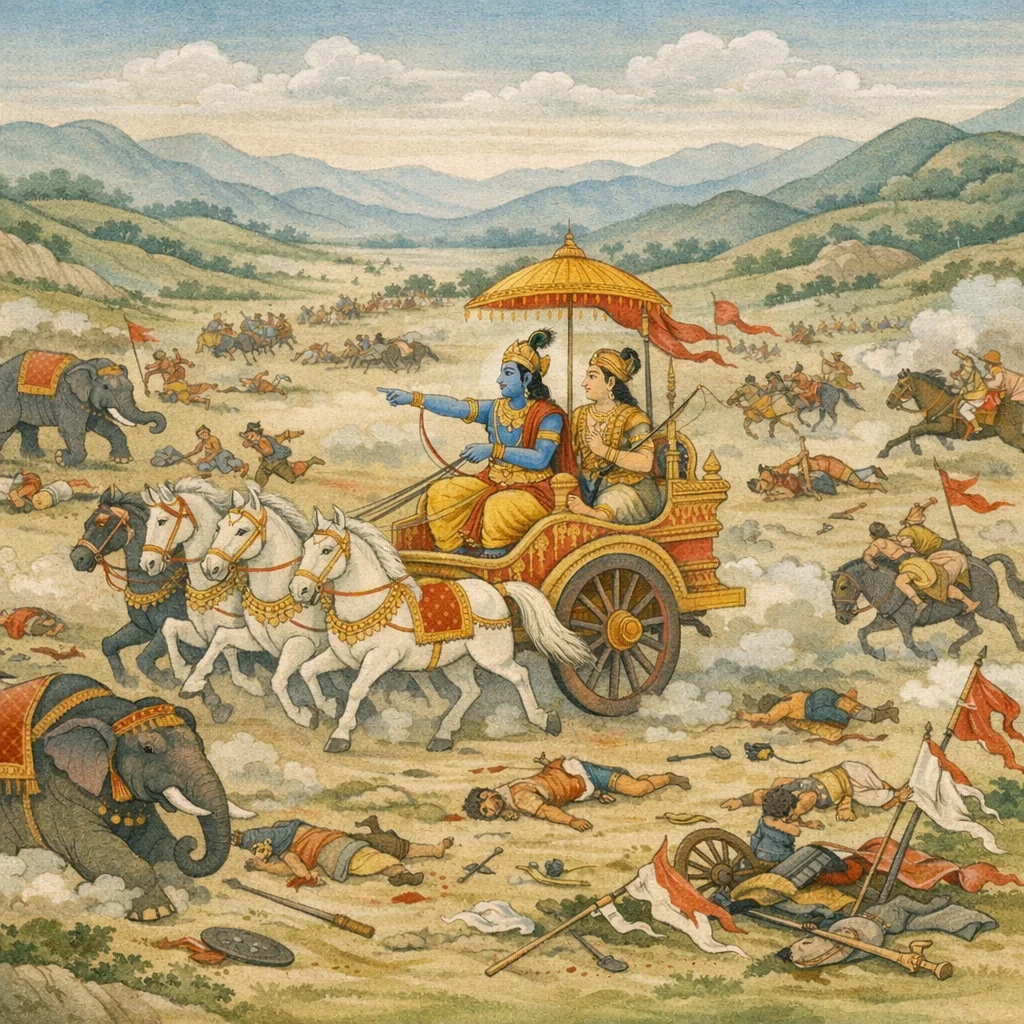
Chapter Arc: रणभूमि में संशप्तक-सेना अर्जुन को घेरकर प्रतिज्ञा-युद्ध में उतरती है; चारों ओर हाथी, घोड़े, रथ और पदाति की भीड़—और पार्थ के धनुष से उठती मृत्यु की आहट। → अर्जुन के बाण रथों के धुरे, सारथी, ध्वज, अश्व, शस्त्रधारी हाथ, भुजाएँ और शिर तक काटते चलते हैं; घायल दल भ्रमित होकर भागता, गिरता, कराहता है, फिर भी संशप्तक बार-बार लहरों की तरह लौटते हैं। → पार्थ ‘शस्त्रास्त्र-सेतु’ रचकर हाथी-घोड़े-रथ-पैदल की महाप्रवाहिनी को एक साथ चीर देता है; युद्धस्थल यमराज के समान संहारक रूप में उसका प्रचण्ड ताण्डव दिखता है—दुर्योधन के कारण उठे इस ‘भरतक्षय’ का साक्षात् दृश्य। → बहुमूल्य कवच-आभूषणों से सजे संशप्तक वीर पार्थ के हाथों ढेर हो जाते हैं; मैदान ध्वजों, अस्त्रों, टूटे रथों और गिरे अश्वों से पट जाता है, और कृष्ण अर्जुन को रण का दृश्य दिखाते हुए उसके पराक्रम की प्रशंसा करते हैं। → संशप्तकों का संहार हो चुका है, पर ‘भरतक्षय’ की ज्वाला बुझी नहीं—अगली घड़ी में यह प्रचण्ड वेग किस ओर मुड़ेगा?
Shlokas
Verse 1
है ० बक। हक २ एकोनविशो< ध्याय: अर्जुनके द्वारा संशप्तक-सेनाका संहार, श्रीकृष्णका अर्जुनको युद्धस्थलका दृश्य दिखाते हुए उनके पराक्रमकी प्रशंसा करना तथा पाण्ड्यनरेशका कौरव-सेनाके साथ युद्धारम्भ संजय उवाच प्रत्यागत्य पुनर्जिष्णुर्जघ्ने संशप्तकान् बहून् । वक्रातिवक्रगमनादड्भरारक इव ग्रह:,संजय कहते हैं--राजन्! जैसे मंगल नामक ग्रह वक्र और अतिचार गतिसे चलकर लोकके लिये अनिष्टकारी होता है, उसी प्रकार विजयशील अर्जुनने दण्डधारकी सेनासे पुनः लौटकर बहुत-से संशप्तकोंका संहार आरम्भ कर दिया
Sañjaya said: O King, returning once again, Arjuna—ever victorious—began to strike down many of the Saṁśaptakas. Like the planet Mars, whose retrograde and irregular course is regarded as bringing harm to the world, Arjuna, by his swift and unpredictable movements, became a fearful agent of destruction for that vowed host. The verse frames Arjuna’s battlefield efficacy through an omen-like simile, underscoring the moral gravity and inescapable momentum of war.
Verse 2
पार्थबाणहता राजन् नराश्चरथकुज्जरा: । विचेलुर्ब भ्रमुर्नेशु: पेतुर्मम्लुश्न भारत,भरतवंशी नरेश! अर्जुनके बाणोंसे आहत हो हाथी, घोड़े, रथ और पैदल मनुष्य विचलित, भ्रान्त, पतित, मलिन तथा नष्ट होने लगे
Sañjaya said: “O King, struck by Pārtha’s arrows, men—along with chariots and elephants—were thrown into confusion. They reeled and wandered in disarray; they cried out, fell to the ground, and became bloodied and ruined. Thus, under the force of Arjuna’s shafts, the battlefield turned into a scene of panic and collapse, revealing how swiftly martial prowess can shatter pride and order in war.”
Verse 3
धुर्यान् धुर्यगतान् सूतान् ध्वजांश्वापासिसायकान् | पाणीन् पाणिगतं शस्त्र बाहूुनपि शिरांसि च,पाण्डुनन्दन अर्जुनने भल्ल, क्षुर, अर्धचन्द्र और वत्सदन््त नामक अस्त्रोंद्वारा समरांगणमें सामना करनेवाले विपक्षी वीरोंके रथोंमें जुते हुए धुरंधर अश्वों, सारथियों, ध्वजों, धनुषों, सायकों, तलवारों, हाथों, हाथमें रखे हुए शस्त्रों, भुजाओं तथा मस्तकोंको भी काट डाला
Sañjaya said: Arjuna, the son of Pāṇḍu, with arrows such as the bhalla, kṣura, ardhacandra, and vatsadanta, cut down even those who stood to face him on the battlefield—severing the powerful horses yoked to their chariots, the charioteers, the standards, and the weapons: bows, missiles, and swords; and he struck off hands, the weapons held in those hands, arms, and even heads. The passage underscores the terrifying efficiency of martial skill in war, where valor and duty on the field coexist with the stark cost in human life and bodily ruin.
Verse 4
भल््लै: क्षुरैरर्धचन्द्रैर्वत्सदन्तैश्व पाण्डव: । चिच्छेदामित्रवीराणां समरे प्रतियुध्यताम्,पाण्डुनन्दन अर्जुनने भल्ल, क्षुर, अर्धचन्द्र और वत्सदन््त नामक अस्त्रोंद्वारा समरांगणमें सामना करनेवाले विपक्षी वीरोंके रथोंमें जुते हुए धुरंधर अश्वों, सारथियों, ध्वजों, धनुषों, सायकों, तलवारों, हाथों, हाथमें रखे हुए शस्त्रों, भुजाओं तथा मस्तकोंको भी काट डाला
Sañjaya said: In the thick of battle, the Pāṇḍava (Arjuna) cut down the enemy champions as they fought back—using bhalla, kṣura, ardhacandra, and vatsadanta arrows. With these keen missiles he severed the powerful horses yoked to their chariots, their charioteers, banners, bows, shafts, swords, hands and the weapons held in them, their arms, and even their heads—an image of relentless martial mastery that underscores the grim, ethically fraught efficiency of war.
Verse 5
वासितार्थे युयुत्सन्तो वृषभा वृषभं यथा । निपतन्त्यर्जुनं शूराःशतशो5थ सहस्रश:,जैसे मैथुनकी वासनावाली गायके लिये युद्धकी इच्छासे बहुतेरे साँड़ किसी एक साँड़पर टूट पड़ते हों, उसी प्रकार सैकड़ों और हजारों शूरवीर अर्जुनपर धावा बोलने लगे
Sañjaya said: “Driven by desire and eager to fight, the warriors rushed upon Arjuna—hundreds and then thousands—just as bulls, stirred by lust, charge at a single bull.”
Verse 6
तेषां तस्य च तद् युद्धमभवल्लोमहर्षणम् । त्रैलोक्यविजये यादृग् दैत्यानां सह वज्िणा,उन योद्धाओं तथा अर्जुनका वह युद्ध वैसा ही रोमांचकारी था, जैसा कि त्रैलोक्य- विजयके समय वज्र॒धारी इन्द्रके साथ दैत्योंका हुआ था
Sañjaya said: The battle between those warriors and Arjuna became hair-raising and awe-inspiring—like the terrible clash the Daityas once fought with Indra, the wielder of the thunderbolt, at the time of his conquest of the three worlds. By this comparison, the poet frames the human conflict in cosmic proportions, highlighting how war can swell into a spectacle of power that tests courage and righteousness alike.
Verse 7
तमविध्यत् त्रिभिर्बाणैर्दन्दशूकैरिवाहिभि: । उग्रायुधसुतस्तस्य शिर: कायादपाहरत्,उस समय गग्रायुधके पुत्रने अत्यन्त डँस लेनेके स्वभाववाले सर्पोके समान तीन बाणोंद्वारा अर्जुनको बींध डाला। तब अर्जुनने उसके सिरको धड़से उतार लिया
Sañjaya said: Ugrāyudha’s son pierced him with three arrows, like venomous serpents striking to bite. In response, Arjuna severed his head from his body—an abrupt, decisive act within the ruthless momentum of battle, where skill and vigilance determine survival and where violence, though tragic, is framed as duty within the war’s grim code.
Verse 8
तेडर्जुनं सर्वतः क्रुद्धा नानाशस्त्रैरवीवृषन् मरुद्धिः प्रेरिता मेघा हिमवन्तमिवोष्णगे,वे संशप्तक योद्धा कुपित हो अर्जुनपर सब ओरसे नाना प्रकारके अस्त्र-शस्त्रोंकी वर्षा करने लगे, मानो वर्षाकालमें पवनप्रेरित मेघ हिमालयपर जलकी वृष्टि कर रहे हों
Sañjaya said: Enraged on every side, the Saṃśaptaka warriors showered Arjuna with volleys of diverse weapons, as if rain-clouds driven by the winds were pouring down upon the Himālaya in the heat of summer. The image underscores the war’s relentless pressure on a single champion and the fierce, vow-bound resolve that fuels such assaults.
Verse 9
अस्त्रैरस्त्राणि संवार्य द्विषतां सर्वतोर<्डर्जुन: । सम्यगस्तै: शरै: सर्वानहितानहनद् बहून्,अर्जुनने अपने अस्त्रोंद्वारा शत्रुओंके अस्त्रोंका सब ओरसे निवारण करके अच्छी तरह चलाये हुए बाणोंद्वारा समस्त विपक्षियोंमेंसे बहुतोंको मार डाला
Sañjaya said: Arjuna, warding off the enemies’ missiles on every side with his own weapons, then—using well-aimed arrows—struck down many among all those hostile foes. The verse highlights disciplined martial skill used to neutralize aggression and protect one’s side in the righteous but tragic necessity of war.
Verse 10
छिन्नत्रिवेणुसंघातान् हताश्चान् पार्ष्णिसारथीन् | विस्नस्तहस्ततूणीरान् विचक्ररथकेतनान्,अर्जुनने उस समय अपने बाणोंद्वारा शत्रुओंके रथोंकी बड़ी बुरी दशा कर डाली। उनके त्रिवेणुसमूह काट डाले, घोड़ों और पार्श्वरक्षकोंको मार डाला। उन योद्धाओंके हाथोंसे खिसककर तूणीर गिर गये तथा उनके रथोंके पहिये और ध्वज भी नष्ट हो गये। घोड़ोंकी बागडोर, जोत और रथके धुरे भी काट डाले गये। उनके अनुकर्ष और जूए भी चौपट हो गये थे
Sañjaya said: Arjuna, at that time, reduced the enemy chariots to ruin with his arrows—cutting down their clustered triveṇu-poles, slaying their horses and the chariot-guards and drivers, and leaving the warriors’ quivers slipping from their hands. Their chariots were rendered helpless: wheels shattered and banners brought down. The scene underscores the brutal efficiency of battlefield skill, where martial prowess swiftly strips opponents of mobility, protection, and honor-symbols, turning war into a stark display of impermanence and vulnerability.
Verse 11
संछिन्नरश्मियोकत्राक्षान् व्यनुकर्षयुगान् रथान् | विध्वस्तसर्वसंनाहान् बाणैश्षक्रेडर्जुनस्तदा,अर्जुनने उस समय अपने बाणोंद्वारा शत्रुओंके रथोंकी बड़ी बुरी दशा कर डाली। उनके त्रिवेणुसमूह काट डाले, घोड़ों और पार्श्वरक्षकोंको मार डाला। उन योद्धाओंके हाथोंसे खिसककर तूणीर गिर गये तथा उनके रथोंके पहिये और ध्वज भी नष्ट हो गये। घोड़ोंकी बागडोर, जोत और रथके धुरे भी काट डाले गये। उनके अनुकर्ष और जूए भी चौपट हो गये थे
Sañjaya said: Then Arjuna, with his arrows, reduced the enemy chariots to ruin—cutting their reins and yokes, damaging their axles, and throwing their harness into disarray. Their equipment and defenses were shattered, so that the chariots, no longer properly controlled or protected, became helpless on the battlefield. The scene underscores the grim mechanics of war: victory is won not only by slaying warriors but by disabling the instruments that sustain their fighting power.
Verse 12
ते रथास्तत्र विध्वस्ता: परार्ध्या भान्त्यनेकश: । धनिनामिव वेश्मानि हतान्यग्न्यनिलाम्बुभि:,वे बहुमूल्य और बहुसंख्यक रथ, जो वहाँ टूट-फ़ूटकर गिरे पड़े थे, आग, हवा और पानीसे नष्ट हुए धनवानोंके घरोंके समान जान पड़ते थे
Sañjaya said: There, many exceedingly costly chariots lay shattered and strewn about, appearing like the mansions of the wealthy after they have been ruined by fire, wind, and flood. The battlefield’s splendor is thus turned into a grim lesson: even the finest works of human pride and possession collapse under the forces unleashed by war.
Verse 13
द्विपा: सम्भिन्नवर्माणो वज़्ाशनिसमै: शरै: । पेतुर्गियग्रवेश्मानि वज्ञवाताग्निभिर्यथा,वज्र और बिजलीके समान तेजस्वी बाणोंसे कवच विदीर्ण हो जानेके कारण हाथी वज्र, वायु तथा आगसे नष्ट हुए पर्वत-शिखरोंपर बने हुए गृहोंके समान गिर पड़ते थे
Sañjaya said: Struck by arrows blazing like the thunderbolt and lightning, the elephants—whose armor had been shattered—collapsed, like mountain-peak dwellings brought down by the combined fury of thunderbolt, wind, and fire. The scene underscores the war’s relentless destructiveness, where even the mightiest beings fall when protective order (armor, discipline) is broken.
Verse 14
सारोहास्तुरगा: पेतुर्बहवो<र्जुनताडिता: । निर्जिद्वान्त्रा: क्षितौ क्षीणा रुधिरार्द्रा: सुदुर्दूश:,अर्जुनके मारे हुए बहुसंख्यक घोड़े और घुड़सवार पृथ्वीपर क्षत-विक्षत होकर पड़े थे। उनकी जीभ तथा आँतें बाहर निकल आयी थीं। वे खूनसे लथपथ हो रहे थे। उनकी ओर देखना अत्यन्त कठिन हो गया था
Sañjaya said: Many horsemen and horses, struck down by Arjuna, fell to the ground—mangled and exhausted, their tongues and entrails spilling out, drenched in blood, a sight almost impossible to behold. The narration underscores the terrible cost of battle, where prowess achieves victory through scenes that test the limits of human endurance and moral sensibility.
Verse 15
नराश्वनागा नाराचै: संस्यूता: सव्यसाचिना । बश्रमुश्नस्खलुः पेतुर्नेदुर्मम्लुश्ष मारिष,मान्यवर! सव्यसाची अर्जुनके नाराचोंसे गुथे हुए हाथी, घोड़े और मनुष्य चक्कर काटते, लड़खड़ाते, गिरते, चिल्लाते और मन मारकर रह जाते थे
Sañjaya said: Men, horses, and elephants, transfixed and bound fast by the razor-sharp arrows of Savyasācin (Arjuna), reeled in confusion; they stumbled, fell to the ground, cried out in anguish, and at last lay crushed in spirit. The verse underscores the grim momentum of battle, where martial skill turns into overwhelming force and the living become helpless under the consequences of violent action.
Verse 16
अनेकैश्न शिलाधौतैर्वज्ञाशनिविषोपमै: । शरैर्निजध्निवान् पार्थों महेन्द्र इव दानवान्,जैसे देवराज इन्द्र दानवोंका संहार करते हैं, उसी प्रकार कुन्तीकुमार अर्जुनने शिलापर तेज किये हुए वज्र, अशनि तथा विषके तुल्य अनेक भयंकर बाणोंद्वारा उन संशप्तक वीरोंका वध कर डाला
Sañjaya said: Then Pārtha (Arjuna) struck down those warriors with many arrows, sharpened on stone and likened to the thunderbolt, the lightning-stroke, and even poison in their deadly force—just as Mahendra (Indra), king of the gods, destroys the Dānavas. The verse heightens the ethical tension of war: Arjuna’s prowess is portrayed as divinely comparable, yet it is exercised within the grim necessity of battlefield duty rather than personal cruelty.
Verse 17
महार्हवर्माभरणा नानारूपाम्बरायुधा: । सरथा: सध्वजा वीरा हता: पार्थेन शेरते,अर्जुनद्वारा मारे गये संशप्तक वीर बहुमूल्य कवच, आभूषण, भाँति-भाँतिके वस्त्र, आयुध, रथ और ध्वजोंसहित रणभूमिमें सो रहे थे
Sañjaya said: The valiant warriors—adorned with priceless armor and ornaments, equipped with weapons and garments of many kinds—lay on the battlefield, slain by Pārtha, their chariots and banners still with them. The scene underscores the stark moral weight of war: worldly splendor and martial pride are reduced to silence when dharma-driven combat reaches its fatal end.
Verse 18
विजिता: पुण्यकर्माणो विशिष्टाभिजनश्रुता: । गता: शरीरैर्वसुधामूर्जित: कर्मभिर्दिवम्,वे पुण्यात्मा, उत्तम कुलमें उत्पन्न तथा विशिष्ट शास्त्रज्ञानसे सम्पन्न वीर पराजित होकर अपने शरीरोंसे तो पृथ्वीपर गिरे, परंतु प्रबल उत्तम कर्मोके द्वारा स्वर्गलोकमें जा पहुँचे
Verse 19
अथार्जुनं रथवरं त्वदीया: समभिद्रवन् । नानाजनपदाध्यक्षा: सगणा जातमन्यव:,तदनन्तर आपके सैनिक रथियोंमें श्रेष्ठ अर्जुनपर टूट पड़े। वे विभिन्न जनपदोंके अधिपति थे और अपने दलबलके साथ कुपित होकर चढ़ आये थे इति श्रीमहाभारते कर्णपर्वणि संकुलयुद्धे एकोनविंशो5ध्याय:
Verse 20
उहामाना रथाश्रेभै: पत्तयश्न जिघांसव: । समभ्यधावन्नस्यन्तो विविध॑ क्षिप्रमायुधम्,रथों, घोड़ों और हाथियोंके सवार तथा पैदल सैनिक उन्हें मार डालनेकी इच्छासे नाना प्रकारके अस्त्र-शस्त्रोंका प्रहार करते हुए शीघ्रतापूर्वक धावा बोलने लगे
Sañjaya said: Eager to slay, the foot-soldiers and the foremost of chariot-warriors rushed forward together, swiftly hurling a variety of weapons. The battlefield surged with coordinated assaults—mounted and infantry alike pressing in with lethal intent, showing how, in the heat of war, resolve hardens into collective violence and the struggle for victory eclipses restraint.
Verse 21
तदायुधमहावर्ष मुक्त योधमहाम्बुदै: । व्यधमन्निशितैर्बाणै: क्षिप्रमर्जुनमारुत:,परंतु अर्जुनरूपी वायुने संशप्तक सैनिकरूपी महामेघोंद्वारा की हुई अस्त्र-शस्त्रोंकी उस महावृष्टिको तीखे बाणोंद्वारा छिन्न-भिन्न कर डाला
Sañjaya said: Then that great downpour of weapons, released by the mighty cloud-like host of warriors, was swiftly shattered and scattered by sharp arrows, as Arjuna—like a driving wind—broke the storm of missiles. The image underscores disciplined prowess: force is met not by rage, but by focused skill that protects one’s side amid the chaos of war.
Verse 22
साश्चपत्तिद्विपरथं महाशस्त्रौ्सम्प्लवम् | सहसा संतितीर्षन्तं पार्थ शस्त्रास्त्रसेतुना,अर्जुन हाथी, घोड़े, रथ और पैदलसमूहोंसे युक्त तथा महान् अस्त्र-शस्त्रोंके प्रवाहसे परिपूर्ण उस सैन्य-समुद्रको अपने अस्त्र-शस्त्ररूपी पुलके द्वारा सहसा पार कर जाना चाहते थे। उस समय भगवान् श्रीकृष्णने उनसे कहा--“निष्पाप पार्थ! यह क्या खिलवाड़ कर रहे हो? इन संशप्तकोंका संहार करके कर्णके वधका शीजघ्रतापूर्वक प्रयत्न करो”
Sañjaya said: Arjuna (Pārtha), seeing that vast host—filled with horses, infantry, elephants, and chariots, and swollen like a flood with the torrent of great weapons—wished to cross that ‘ocean of the army’ at once by means of a bridge made of his own missiles and weapons. At that moment Śrī Kṛṣṇa addressed him, urging him not to treat the battle as sport, but to destroy the Saṁśaptakas and then strive swiftly and resolutely for Karṇa’s fall—placing duty and the larger aim of the war above display and delay.
Verse 23
अथाब्रवीद वासुदेव: पार्थ कि क्रीडसेडनघ । संशप्तकान् प्रमथ्यैनांस्तत: कर्णवधे त्वर,अर्जुन हाथी, घोड़े, रथ और पैदलसमूहोंसे युक्त तथा महान् अस्त्र-शस्त्रोंके प्रवाहसे परिपूर्ण उस सैन्य-समुद्रको अपने अस्त्र-शस्त्ररूपी पुलके द्वारा सहसा पार कर जाना चाहते थे। उस समय भगवान् श्रीकृष्णने उनसे कहा--“निष्पाप पार्थ! यह क्या खिलवाड़ कर रहे हो? इन संशप्तकोंका संहार करके कर्णके वधका शीजघ्रतापूर्वक प्रयत्न करो”
Sañjaya said: Then Vāsudeva spoke, “O Pārtha, blameless one—why do you sport as though in play? First crush these Saṁśaptakas, and then hasten your effort toward the slaying of Karṇa.” The rebuke frames the battle as a grave moral task: Arjuna must not treat war as display or diversion, but as disciplined action directed toward the necessary objective.
Verse 24
तथेत्युक्त्वार्जुन: कृष्णं शिष्टान् संशप्तकांस्तदा । आशक्षिप्य शस्त्रेण बलाद् दैत्यानिन्द्र इवावधीत्,तब श्रीकृष्णसे “बहुत अच्छा" कहकर अर्जुन दैत्योंका वध करनेवाले इन्द्रके समान उस समय शेष संशप्तक-सेनाको अस्त्र-शस्त्रोंसे छिन्न-भिन्न करके उसका बलपूर्वक विनाश करने लगे
Sañjaya said: “So be it,” Arjuna replied to Kṛṣṇa. Then, turning upon the remaining Saṃśaptakas, he forcefully struck them down with his weapons, destroying them like Indra slaying the Daityas. The scene underscores Arjuna’s resolute obedience to Kṛṣṇa’s guidance and his unwavering commitment to his warrior-duty amid the moral gravity of war.
Verse 25
आददत् संदधरन्नेषून् दृष्ट: कैश्वचिद् रणेडर्जुन: । विमुज्चन् वा शरान् शीघ्र दृश्यन्ते वै नरा हता:,उस समय रणभूमिमें किसीने यह नहीं देखा कि अर्जुन कब बाण लेते, कब उनका संधान करते अथवा कब उन्हें छोड़ते हैं? केवल उनके द्वारा शीघ्रतापूर्वक मारे गये मनुष्य ही दृष्टिगोचर होते थे
Sañjaya said: On that battlefield, no one could see Arjuna—when he took up his arrows, when he set them to the bow, or when he released them. Only the men struck down by him in swift succession came into view. The verse underscores the overwhelming mastery of a righteous warrior whose skill makes the act itself invisible, while its grave consequence—death in war—stands starkly before all.
Verse 26
आश्षचर्यमिति गोविन्दो ब्रुवन्नश्वानचोदयत् । हंसांशुगौरास्ते सेनां हंसा: सर इवाविशन्,'आश्चर्य है” ऐसा कहकर भगवान् श्रीकृष्णने घोड़ोंको आगे बढ़ाया। हंस तथा चन्द्र- किरणोंके समान श्वेतवर्णवाले वे घोड़े शत्रुसेनामें उसी प्रकार घुस गये, जैसे हंस तालाबमें प्रवेश करते हैं
Sañjaya said: Saying, “How wondrous!”, Govinda urged the horses forward. White as swans and as moonbeams, those steeds plunged into the enemy host just as swans enter a lake—an image that heightens the awe of Kṛṣṇa’s fearless charioteering amid the moral gravity of war.
Verse 27
ततः संग्राम भूमिं च वर्तमाने जनक्षये । अवेक्षमाणो गोविन्द: सव्यसाचिनमतब्रवीत्,जब इस प्रकार जनसंहार होने लगा, उस समय रणभूमिकी ओर देखते हुए भगवान् श्रीकृष्ण अर्जुनसे इस प्रकार बोले--
Sañjaya said: Then, as the slaughter of men was unfolding, Govinda—gazing over the battlefield—addressed Arjuna, the ambidextrous archer, and spoke to him.
Verse 28
एष पार्थ महारौद्रो वर्तते भरतक्षय: । पृथिव्यां पार्थिवानां वै दुर्योधनकृते महान्,'पार्थ! दुर्योधनके कारण यह भूमण्डलके भूपालों तथा भरतवंशियोंकी सेनाका महाभयंकर एवं महान् संहार हो रहा है
Sañjaya said: “O Pārtha (Dhṛtarāṣṭra), a most dreadful destruction of the Bharatas is now unfolding. Upon this earth, a vast and terrifying slaughter of kings is taking place—brought about for Duryodhana’s sake.”
Verse 29
पश्य भारत चापानि रुक्मपृष्ठानि धन्विनाम् | महतां चापविद्धानि कलापानिषुधीस्तथा,“भरतनन्दन! देखो, बड़े-बड़े धनुर्धरोंके ये सुवर्णजटित पृष्ठभागवाले धनुष, आभूषण और तरकस पड़े हुए हैं
Sañjaya said: “Behold, O Bhārata—here lie the bows of the archers, their backs inlaid with gold; and here too are the quivers and arrow-cases, cast down by mighty warriors.” The scene underscores the battlefield’s stark reversal: instruments of prowess and pride now abandoned, marking the heavy cost of war and the fragility of martial glory.
Verse 30
जातरूपमयै: पुड्खै: शरांशक्ष नतपर्वण: । तैलथौतांश्व नाराचान् विमुक्तानिव पन्नगान्,'सुनहरी पाँखोंसे युक्त झुकी हुई गाँठवाले ये बाण तथा तेलमें धोकर साफ किये हुए नाराच धनुषसे छूटकर सर्पोंके समान पड़े हुए हैं, इनपर दृष्टिपात करो
Sañjaya said: “Behold these arrows—fitted with golden-hued fletchings and having joints bent down along their knots—and these nārāca shafts, cleansed bright by washing in oil. Released from the bow, they lie strewn like serpents. Look upon them.”
Verse 31
आकीणर्णास्तोमरांश्चापि विचित्रान् हेमभूषितान् | चर्माणि चापविद्धानि रुक्मपृष्ठानि भारत,“भारत! देखो, ये सुवर्णभूषित विचित्र तोमर चारों ओर बिखरे पड़े हैं और ये फेंकी हुई ढालें हैं, जिनके पृष्ठभागपर सोना जड़ा हुआ था
Sañjaya said: “O Bhārata, look—here lie scattered all around the spears (tomaras), wondrous and adorned with gold; and here too are the shields that have been cast away, their backs inlaid with gold. Such is the visible cost of battle: splendid weapons and ornaments, once borne with pride, now abandoned amid the ruin of war.”
Verse 32
सुवर्णविकृतान् प्रासाञउशक्ती: कनकभूषिता: । जाम्बूनदमयै: पट्टैर्बद्धाश्न विपुला गदा:,'सोनेके बने हुए प्रास, सुवर्णभूषित शक्तियाँ, सोनेके पत्रोंसे जड़ी हुई विशाल गदाएँ, स्वर्णमयी ऋष्टि, सुवर्णभूषित पट्टिश तथा स्वर्णचित्रित दंडोंके साथ बहुत-से फरसे फेंके पड़े हैं, इनपर दृष्टिपात करो
Sanjaya said: “Behold—there lie scattered spears wrought of gold, javelins adorned with gold, and massive maces bound with plates of Jāmbūnada-gold.” In this vision of the battlefield, the poet underscores the grim irony of wealth and craftsmanship being reduced to debris amid adharma-driven slaughter, where splendid weapons become mere remnants of human ruin.
Verse 33
जातरूपमयीश्ष्टी: पट्टिशान् हेमभूषितान् । दण्डै: कनकचित्रैश्व विप्रविद्धान् परश्वधान्,'सोनेके बने हुए प्रास, सुवर्णभूषित शक्तियाँ, सोनेके पत्रोंसे जड़ी हुई विशाल गदाएँ, स्वर्णमयी ऋष्टि, सुवर्णभूषित पट्टिश तथा स्वर्णचित्रित दंडोंके साथ बहुत-से फरसे फेंके पड़े हैं, इनपर दृष्टिपात करो
Sañjaya said: “Look—there lie weapons cast down in heaps: a spear made wholly of gold, paṭṭiśa-blades adorned with gold, staffs inlaid with golden designs, and axes hurled away. The battlefield is strewn with richly ornamented arms, showing how fierce the clash has been and how wealth and pride are rendered meaningless amid slaughter.”
Verse 34
परिघान् भिन्दिपालांश्व भुशुण्डी: कुणपानपि । अयस्कुन्तांश्ष पतितान् मुसलानि गुरूणि च,“देखो, ये परिघ, भिन्दिपाल, भुशुण्डी, कुणप, लोहेके बने हुए भाले तथा भारी-भारी मुसल पड़े हुए हैं
Sañjaya said: “Look—here lie fallen many kinds of weapons: iron clubs (parighas), bhindipālas, bhuśuṇḍīs, kuṇapas, iron-tipped spears, and heavy pestle-like maces.” In the grim moral atmosphere of the war, the catalogue of discarded arms underscores the scale of violence and the dehumanizing abundance of means to kill, serving as a stark narrative reminder of the cost of adharma-driven conflict.
Verse 35
नानाविधानि शस्त्राणि प्रगृह्य जयगृद्धिन: । जीवन्त इव दृश्यन्ते गतसत्त्वास्तरस्विन:,“विजयकी अभिलाषा रखनेवाले वेगशाली वीर सैनिक हाथोंमें नाना प्रकारके अस्त्र- शस्त्र लिये प्राणशून्य हो गये हैं तो भी जीवित-से दिखायी देते हैं
Sañjaya said: “Those swift warriors, driven by the craving for victory, are seen as if still alive—though their life-force has departed—because they lie with many kinds of weapons still clutched in their hands.”
Verse 36
गदाविमशथितैगत्रिर्मुसलैर्भिन्नमस्तकान् | गजवाजिरथीै: क्षुण्णान् पश्य योधान् सहस्रश:,“देखो, ये सहस्रों योद्धा हाथी, घोड़ों और रथोंसे कुचल गये हैं। गदाओंके आघातसे इनके अंग चूर-चूर हो गये हैं और मुसलोंकी मारसे मस्तक फट गये हैं
Sañjaya said: “Behold these warriors by the thousands—crushed beneath elephants, horses, and chariots; their limbs shattered by the blows of maces, and their heads split open by the strikes of clubs. Such is the dreadful harvest of battle, where strength and fury, unrestrained by compassion, reduce human bodies to ruin.”
Verse 37
मनुष्यगजवाजीनां शरशव्त्यूष्टितोमरै: । निस्त्रिंशै: पट्टिशै: प्रासैर्नखरैर्लगुडैरपि,'शत्रुसूदन अर्जुन! बाण, शक्ति, ऋष्टि, तोमर, खड़्ग, पट्टिश, प्रास, नखर और लगुडोंकी मारसे हाथी, घोड़े और मनुष्योंके शरीरोंके कई टुकड़े हो गये हैं। वे सब-के-सब खूनसे लथपथ हो प्राणशून्य होकर पड़े हैं और उनके द्वारा सारी रणभूमि पट गयी है
Sañjaya said: O Arjuna, subduer of foes, by the blows of arrows, spears, lances, javelins, swords, battle-axes, pikes, claw-like weapons, and clubs, the bodies of men, elephants, and horses have been hewn into many pieces. All of them, drenched in blood and bereft of life, lie strewn about, and by them the entire battlefield has been covered—an unflinching portrayal of war’s ruthless cost and the grave moral weight borne by those who wage it.
Verse 38
शरीरैर्बहुधा छिन्ने: शोणितौघपरिप्लुतै: । गतासुभिरमित्रघ्न संवृता रणभूमय:,'शत्रुसूदन अर्जुन! बाण, शक्ति, ऋष्टि, तोमर, खड़्ग, पट्टिश, प्रास, नखर और लगुडोंकी मारसे हाथी, घोड़े और मनुष्योंके शरीरोंके कई टुकड़े हो गये हैं। वे सब-के-सब खूनसे लथपथ हो प्राणशून्य होकर पड़े हैं और उनके द्वारा सारी रणभूमि पट गयी है
Sañjaya said: “O slayer of foes, the battlefields are covered over with bodies—many times severed into pieces—drenched in torrents of blood and lying lifeless. The violence has reduced elephants, horses, and men alike to mangled remains, so that the very ground is carpeted with the dead.”
Verse 39
बाहुभिश्वन्दनादिग्धै: साड़दै: शुभभूषणै: । सतलन्रै: सकेयूरैभाति भारत मेदिनी,“भारत! बाजूबंद और सुन्दर आभूषणोंसे विभूषित, चन्दनसे चर्चित, दस्ताने और केयूरोंसे सुशोभित कटी भुजाओंद्वारा रणभूमिकी अद्भुत शोभा हो रही है
Sañjaya said: “O Bhārata, the earth—this battlefield—shines with a strange splendor, crowded with severed arms: arms smeared with sandal-paste, adorned with armlets and auspicious ornaments, still bearing gloves and keyūras. Thus the very ground is made radiant by the trappings of warriors, revealing the grim irony of war where beauty and status become mere debris.”
Verse 40
साडगुलिन्रैर्भुजाग्रैश्न विप्रविद्धेरलंकृतैः । हस्तिहस्तोपमैश्छिन्नैरूरुभिश्न॒ तरस्विनाम्
Sañjaya said: The battlefield was strewn with severed limbs—mighty forearms and the tips of arms, adorned with armlets and pierced by arrows; and with the cut-off thighs of powerful warriors, huge like the trunks of elephants. The description underscores the terrible cost of wrath and rivalry in war, where valor and ornament alike are reduced to lifeless fragments, warning how violence eclipses human dignity and dharma.
Verse 41
रथांश्व बहुधा भग्नान् हेमकिड्किणिन: शुभान्,“देखो, सोनेकी छोटी-छोटी घंटियोंसे सुशोभित बहुसंख्यक रथोंके कितने ही टुकड़े हो गये हैं और नाना प्रकारके घोड़े लहूलुहान होकर पड़े हैं। अनुकर्ष, उपासंग, पताका, नाना प्रकारके ध्वज, योद्धाओंके सब ओर बिखरे हुए बड़े-बड़े श्वेत शंख तथा कितने ही पर्वताकार हाथी जीभ निकाले सोये पड़े हैं
Sañjaya said: “Behold—many splendid chariots, adorned with golden tinkling bells, have been shattered into pieces in countless ways; and horses of various kinds lie fallen, drenched in blood. Harness-gear and fittings, banners and many sorts of standards are scattered on every side; great white conches lie strewn about; and many mountain-like elephants, their tongues lolling out, lie as though asleep.”
Verse 42
अश्वांश्व बहुधा पश्य शोणितेन परिप्लुतान् । अनुकर्षनुपासज्रान् पताका विविधान् ध्वजान्,“देखो, सोनेकी छोटी-छोटी घंटियोंसे सुशोभित बहुसंख्यक रथोंके कितने ही टुकड़े हो गये हैं और नाना प्रकारके घोड़े लहूलुहान होकर पड़े हैं। अनुकर्ष, उपासंग, पताका, नाना प्रकारके ध्वज, योद्धाओंके सब ओर बिखरे हुए बड़े-बड़े श्वेत शंख तथा कितने ही पर्वताकार हाथी जीभ निकाले सोये पड़े हैं
Sañjaya said: “Behold the horses lying in many places, drenched in blood. See also the anukarṣas and upāsaṅgas (the trailing and attached fittings of chariots), the banners and the many kinds of standards—scattered about in the ruin of battle.” In this report, the narrator does not glorify violence; he forces the listener to confront the moral weight of war through its concrete aftermath—broken equipment, fallen animals, and the disordered symbols of martial pride.
Verse 43
योधानां च महाशड्खान् पाण्डुरांश्न॒ प्रकीर्णकान् । निरस्तजिद्दान् मातड़ान् शयानान् पर्वतोपमान्,“देखो, सोनेकी छोटी-छोटी घंटियोंसे सुशोभित बहुसंख्यक रथोंके कितने ही टुकड़े हो गये हैं और नाना प्रकारके घोड़े लहूलुहान होकर पड़े हैं। अनुकर्ष, उपासंग, पताका, नाना प्रकारके ध्वज, योद्धाओंके सब ओर बिखरे हुए बड़े-बड़े श्वेत शंख तथा कितने ही पर्वताकार हाथी जीभ निकाले सोये पड़े हैं
Sañjaya said: “And there were the great conch-shells of the warriors, scattered everywhere—white and strewn across the field. There too lay mighty elephants, cast down and motionless, like mountains, their bodies sprawled in death. The scene proclaimed the terrible cost of battle: the proud emblems and instruments of war reduced to debris, and living strength brought low.”
Verse 44
वैजयन्तीर्विचित्राश्न॒ हतांक्ष गजयोधिन: । वारणानां परिस्तोमान् संयुक्तानेककम्बलान्,“कहीं विचित्र वैजयन्ती पताकाएँ पड़ी हैं, कहीं हाथी-सवार मरकर गिरे हैं और कहीं अनेक कम्बलोंसे युक्त हाथियोंके झूल बिखरे पड़े हैं। इनकी ओर दृष्टिपात करो
Sañjaya said: “Here lie many variegated vaijayantī banners; here elephant-warriors have been slain and have fallen; and here are strewn the elephants’ trappings and coverings—layered with many blankets. Look upon these signs of the battlefield.”
Verse 45
विपाटितविचित्राश्न रूपचित्रा: कुथास्तथा । भिन्नाश्च बहुधा घण्टा: पतद्धिश्ूर्णिता गजै:,“हाथीकी पीठपर बिछाये जानेवाले कितने ही विचित्र कम्बल फट जानेके कारण विचित्र दशाको पहुँच गये हैं। कटकर गिरे हुए नाना प्रकारके घंटे गिरते हुए हाथियोंसे दबकर चूर-चूर हो गये हैं
Verse 46
वैदूर्यमणिदण्डांश्व पतितांश्वाड्कुशान् भुवि । अश्वानां च युगापीडान् रत्नचित्रानुरश्छदान्,“देखो, वैदूर्यमणिके बने हुए दण्ड और अंकुश भूतलपर पड़े हैं, घोड़ोंके युगापीड तथा रत्नचित्रित कवच इधर-उधर गिरे हैं
Sañjaya said: “Look—on the ground lie fallen the staffs and goads inlaid with vaidūrya gems; the horses’ yoke-pads too are scattered about, along with jewel-adorned breast-guards. Such splendor, meant to guide and protect, now lies discarded in the dust—an image of how war reduces royal wealth and disciplined order to ruin.”
Verse 47
विद्धा: सादिध्वजाग्रेषु सुवर्णविकृता: कुथा: । विचित्रान् मणिचित्रांश्ष॒ जातरूपपरिष्कृतान्
Sañjaya said: “There were banners and standards—pierced and torn—at the very tips of the flagstaffs. Yet they were fashioned with gold, adorned in many colors, inlaid with gems, and richly finished with wrought gold.”
Verse 48
चूडामणीन् नरेन्द्राणां विचित्रा: काउ्चनस्रज:
Sañjaya said: “There were diadem-gems of kings, and wondrous garlands of gold.” In the grim setting of battle, the line evokes the costly royal insignia—symbols of sovereignty and pride—now appearing as spoils and scattered finery, hinting at the ethical irony that worldly splendor is rendered fragile and transient amid adharma-driven slaughter.
Verse 49
चन्द्रनक्षत्रभासै श्व वदनैश्वारुकुण्डलै:
Sañjaya said: (The scene was filled) with beings shining like the moon and stars, with dog-faced forms, and with beautiful earrings—an ominous, otherworldly spectacle that underscores the moral darkness and dread surrounding the war’s unfolding.
Verse 50
कुमुदोत्पलपद्मानां खण्डै: फुल्लं यथा सर:
Sañjaya said: “Just as a lake appears covered over—its surface seeming to bloom—when it is strewn with broken pieces of kumuda, utpala, and lotus flowers.”
Verse 51
तथा महीभूतां वक््त्रै: कुमुदोत्पलसंनिभै: । 'जैसे तालाब कुमुद, उत्पल और कमलोंके समूहसे विकसित दिखायी देता है, उसी प्रकार राजाओंके कुमुद और उत्पल-सदृश मुखोंसे यह रणभूमि सुशोभित हो रही है ।। ५० 3] तारागणविचित्रस्य निर्मलेन्दुद्युतित्विष:
Sañjaya said: “So too, this battlefield appears adorned with the faces of kings—faces resembling white water-lilies and blue lotuses—just as a pond looks splendid when it is in full bloom with clusters of kumuda and utpala.”
Verse 52
पश्येमां नभसस्तुल्यां शरज्नक्षत्रमालिनीम् । “तारागणोंसे जिसकी विचित्र शोभा होती है तथा जहाँ निर्मल चन्द्रमाकी चाँदनी छिटकी रहती है, उस आकाशके समान इस रणभूमिकी शोभाको देखो। जान पड़ता है कि यह शरद-ऋतुके नक्षत्रोंकी मालाओंसे अलंकृत है || ५१ ई ।। एतत् तवैवानुरूपं कर्मार्जुन महाहवे
Sañjaya said: “Behold this battlefield, resplendent like the sky—adorned as though with garlands of autumnal constellations. This deed, O Arjuna, in the great battle, is indeed befitting of you.”
Verse 53
दिवि वा देवराजस्य त्वया यत् कृतमाहवे । “अर्जुन! महासमरमें ऐसा पराक्रम, जो तूने किया है, या तो तुम्हारे ही योग्य है या स्वर्गमें देवराज इन्द्रके योग्य” || ५२ $ ।। एवं तां दर्शयन् कृष्णो युद्धभूमिं किरीटिने
Sanjaya said: “O Arjuna, the prowess you displayed in this great battle is fit only for you—or for Indra, the king of the gods, in heaven.” Saying this, Krishna continued to show the battlefield to the diadem-wearing Arjuna, directing his attention to the scene of war and its consequences, as if to steady his resolve and clarify the demands of duty amid slaughter.
Verse 54
गच्छन्नेवाशृणोच्छब्दं दुर्योधनबले महत् | शड्खदुन्दुभिनिर्घोषं भेरीपणवनि:स्वनम्
Sañjaya said: As he went on, he heard a great uproar from Duryodhana’s army—the thunder of conches and kettledrums, the blaring resonance of war-drums and tabors—signaling a force rousing itself for battle and the hardening of resolve that precedes violence.
Verse 55
रथाश्वगजनादांश्व शस्त्रशब्दांश्व॒ दारुणान् । इस प्रकार किरीटधारी अर्जुनको उस युद्धभूमिका दर्शन कराते हुए श्रीकृष्णने जाते- जाते ही दुर्योधनकी सेनामें महान् कोलाहल सुना। वहाँ शंखों और दुन्दुभियोंकी ध्वनि छा रही थी। भेरी और पणव आदि बाजे बज रहे थे। रथके घोड़ों और हाथियोंके हींसने एवं विग्घाड़नेके तथा शस्त्रोंके परस्पर टकरानेके भयानक शब्द भी सुनायी पड़ते थे || ५३-५४ ई | प्रविश्य तद् बल॑ कृष्णस्तुरगैर्वातवेगितै:
Sañjaya said: As Kṛṣṇa drove on—showing the battlefield to the diadem-wearing Arjuna—he entered Duryodhana’s host with horses swift as the wind. There he heard a vast uproar: the blare of conches and kettledrums, the booming of bhērīs and paṇavas, the neighing of chariot-horses and the trumpeting of elephants, and the harsh, terrifying clamor of weapons striking against one another—sounds that announce the gathering momentum of war and the moral gravity of the slaughter about to unfold.
Verse 56
स हि नानाविधैर्बाणैरिष्वस्त्रप्रवरो युधि
Sañjaya said: For he—pre-eminent in the science of bow and missile-weapons—was in battle striking with arrows of many kinds, displaying the feared mastery of a warrior whose skill turns the field into a test of endurance and duty amid the chaos of war.
Verse 57
गजवाजिमनुष्याणां शरीराणि शितै: शरै:
Sañjaya said: With razor-sharp arrows, the bodies of elephants, horses, and men were struck and torn—an image of the battle’s indiscriminate violence, where living beings become mere targets amid the collapse of restraint and compassion.
Verse 58
शत्रुप्रवीरैरस्त्राणि नानाशस्त्राणि सायकै: । छित्त्वा तानवधीच्छत्रून् पाण्ड्य: शक्र इवासुरान्,जैसे इन्द्र असुरोंका संहार करते हैं, उसी प्रकार पाण्ड्यनरेश शत्रुवीरोंद्वारा चलाये गये नाना प्रकारके अस्त्र-शस्त्रोंको अपने बाणोंद्वारा नष्ट करके उन शत्रुओंका वध कर डालते थे
Sañjaya said: Like Indra slaying the Asuras, the king of the Pāṇḍyas cut down with his arrows the many missiles and weapons hurled by the enemy champions, and then struck those foes down. The verse frames his prowess as disciplined, decisive action in battle—neutralizing incoming violence before delivering a final, righteous blow in the war’s grim duty.
Verse 406
बद्धचूडामणिवरै: शिरोभिश्नल सकुण्डलै: । “अंगुलित्र और अलंकारोंसे अलंकृत हाथ फेंके पड़े हैं। वेगवान् वीरोंकी हाथीकी सूँड़के समान मोटी जाँघें कटकर गिरी हैं और जिनपर सुन्दर चूड़ामणि बँधी है वे योद्धाओंके कुण्डल-मण्डित मस्तक भी खण्डित होकर इधर-उधर बिखरे पड़े हैं। उन सबसे रणभूमिकी अपूर्व शोभा हो रही है
Sañjaya said: The battlefield was strewn with severed hands adorned with finger-guards and ornaments. The thick thighs of swift, heroic warriors—like the trunks of elephants—had been cut down and lay fallen. Heads too, crowned with splendid crest-jewels and decorated with earrings, were shattered and scattered in every direction. From all this, the field of battle displayed a strange, unprecedented splendor—an awe-inspiring beauty born of destruction, underscoring the grim moral cost of war.
Verse 483
छत्राणि चापविद्धानि चामरव्यजनानि च । “राजाओंकी चूड़ामणियाँ, विचित्र स्वर्णमालाएँ, छत्र, चँवर और व्यजन फेंके पड़े हैं
Sañjaya said: “Umbrellas lie cast aside, and so do the yak-tail fans and other fans—royal insignia abandoned on the field. The scene proclaims the collapse of kingly splendor before the impartial violence of war, where pride and status are reduced to discarded objects.”
Verse 493
क्लृप्तश्मश्रुभिराकीर्णा पूर्णचन्द्रनि भर्महीम् । 'यहाँकी भूमि राजाओंके मनोहर कुण्डलयुक्त, चन्द्रमा और नक्षत्रोंके समान कान्तिमान् एवं दाढ़ी-मूँछवाले पूर्ण चन्द्रतुल्य मुखोंसे ढक गयी है
Sañjaya said: The earth here has become densely covered with kings—adorned with well-trimmed moustaches and beards—whose faces shine like the full moon. Their beauty, likened to the moon and stars and enhanced by charming earrings, now lies strewn across the battlefield, turning the ground itself into a grim spectacle of fallen royalty and the cost of war.
Verse 553
पाण्ड्येनाभ्यर्दितं सैन्यं त्वदीयं वीक्ष्य विस्मित: । तब श्रीकृष्णने वायुके समान वेगशाली अअभ्रोंद्वारा उस सेनामें प्रवेश करके देखा कि पाण्ड्यनरेशने आपकी सेनाको अत्यन्त पीड़ित कर दिया है; यह देखकर उन्हें बड़ा आश्चर्य हुआ
Verse 566
न्यहनद् द्विषतां पूगान् गतासूनन्तको यथा । जैसे यमराज आयुरहित प्राणियोंके प्राण हर लेते हैं, उसी प्रकार धनुर्धरोंमें श्रेष्ठ पाण्ड्य युद्धस्थलमें नाना प्रकारके बाणोंद्वारा शत्रुसमूहोंका नाश कर रहे थे
Sañjaya said: Like Antaka—Death itself—who takes away the lives of those whose time has come, the Pāṇḍya, foremost among bowmen, was cutting down masses of enemies on the battlefield with volleys of diverse arrows. The image underscores the grim inevitability of death in war and the terrifying efficiency of a warrior when dharma has turned into the duty of battle.
Verse 573
भित्त्वा प्रहरतां श्रेष्ठो विदेहासूनपातयत् । प्रहार करनेवाले योद्धाओंमें श्रेष्ठ पाण्डय अपने तीखे बाणोंसे हाथी, घोड़े और मनुष्योंके शरीरोंको विदीर्ण करके उन्हें देह और प्राणोंसे शून्य एवं धराशायी कर देते थे
Sañjaya said: The foremost among those striking in battle, he pierced the bodies of elephants, horses, and men with his razor-sharp arrows, stripping them of body and breath and casting them down upon the earth. The scene underscores the grim, duty-driven ferocity of war, where martial excellence becomes inseparable from widespread destruction.
Verse 4763
अश्वास्तरपरिस्तोमान् राड़कवान् पतितान् भुवि । 'घुड़सवारोंकी ध्वजाओंके अग्रभागमें हाथियोंके सुनहरे कंबल उलझ गये हैं। घोड़ोंकी पीठपर बिछाये जानेवाले विचित्र, मणिजटित एवं सुवर्णभूषित रंकुमृगके चमड़ेके बने हुए झूल और जीन धरतीपर पड़े हैं, इन्हें देखो
Sañjaya said: “Look—on the ground lie the rich trappings of horses and mules, the splendid coverings and ornaments that once adorned them. In the chaos of battle, the proud display of banners and the costly caparisons have become tangled and cast down, showing how quickly martial pomp collapses into ruin when violence overwhelms order.”
Frequently Asked Questions
The text juxtaposes uncompromising battlefield efficacy (weapon-severing, disabling chariots) with hesitation around certain opponents perceived as protected by status or invulnerability (e.g., the brāhmaṇa-warrior Kṛpa), raising the question of how duty is performed when victory appears to require actions that feel ethically or ritually constrained.
Small tactical interventions—neutralizing mobility, communications (banners), and weapon systems—can determine outcomes more quickly than direct attempts at elimination; simultaneously, morale and interpretation (fear, rumor, perceived fate) function as force multipliers that can compel withdrawal even before physical defeat is complete.
No explicit phalaśruti is presented in the supplied passage; the meta-layer instead operates through Saṃjaya’s reportorial framing and the troops’ interpretive reactions, which position the events as evidence of shifting fortune and the ethical weight of renowned combatants.