Adhyaya 12
Chapter 12: Arjuna’s suppression of the Saṃśaptakas and duel with Aśvatthāmā (Drauṇi)
Upa-parva: Saṃśaptaka–Drauṇi Saṃgrāma (Arjuna’s engagements with the Saṃśaptakas and Aśvatthāmā)
Dhṛtarāṣṭra requests a report on Arjuna’s battle with the Saṃśaptakas and the wider Kaurava situation; Saṃjaya narrates the engagement as a purificatory, high-stakes contest for elite warriors. Arjuna enters the Saṃśaptaka formation likened to an ocean and disrupts it with sustained archery: severing heads, arms, weapons, reins, standards, chariots, and mounts, sending elephants, horses, and chariot divisions into collapse. Celestial beings praise Keśava and Arjuna as an extraordinary paired force, framed in elevated theological language (Nara-Nārāyaṇa). Aśvatthāmā, stirred by the spectacle, challenges Arjuna with the idiom of martial hospitality; Arjuna consults Keśava, then advances. The duel intensifies through reciprocal missile-storms: Aśvatthāmā wounds both Keśava and Arjuna; Arjuna counters by breaking bows, dispersing volleys, and employing broader-coverage weaponry (sarvatodhāra). Keśava urges decisive action; Arjuna targets the enemy’s mobility by cutting reins and striking horses, forcing Aśvatthāmā’s tactical withdrawal from immediate engagement. Keśava and Arjuna then turn back toward the Saṃśaptakas, continuing the campaign sequence.
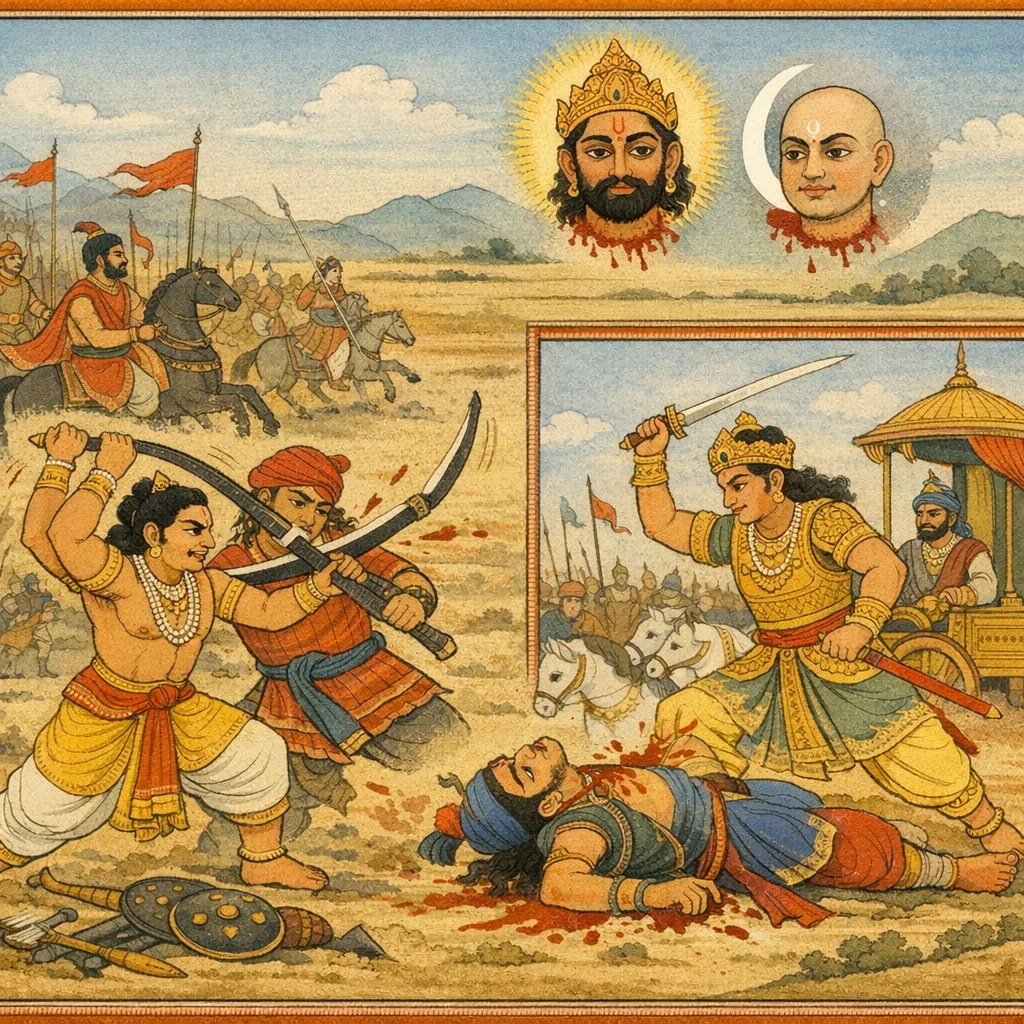
Chapter Arc: संजय धृतराष्ट्र से कहते हैं—दोनों सेनाएँ देव-दानवों-सी दीप्त, हर्षित और उन्मत्त होकर आमने-सामने आ टकराईं; हाथी-घोड़े-मनुष्य एक साथ गर्जे और रणभूमि जाग उठी। → रथी, गजसवार, अश्वारोही और पदाति घोर प्रहारों से ‘शरीर-प्राण-पाप’ का नाश करने वाले आघात करने लगते हैं; वीरों के कटे मस्तक चन्द्र-सूर्य-से तेजस्वी दिखते हैं और शत्रु-हत योद्धा रथ-हाथी-घोड़ों से वैसे गिरते हैं जैसे पुण्य क्षीण होने पर स्वर्ग से। रण-नाद, ताल-ठोंक और बाणों की ध्वनि चारों ओर उत्साह भर देती है। → भीमसेन अपने घुमावदार, तीक्ष्ण ‘क्षुर’ बाण से शत्रु का धनुष काटकर (शस्त्र-भंग) निर्णायक बढ़त लेते हैं और क्षेम के वध की ओर युद्ध को मोड़ देते हैं; समानांतर में सात्यकि विन्द के साथ घातक द्वंद्व में उतरकर उसे काट गिराते हैं, जिससे पाण्डव पक्ष का मनोबल उछलता है। → विन्द-वध के बाद सात्यकि तुरंत युधामन्यु के रथ पर चढ़ जाते हैं—पाण्डव पंक्तियाँ पुनर्गठित होती हैं; रणभूमि पर एक बड़े धनुर्धर केकयराज का कवच सहित वज्राहत पर्वत-सा गिरना युद्ध की भीषणता को मुहरबंद करता है और दिन की कथा को रक्त-धूल में स्थिर कर देता है। → कौरव-पाण्डव दोनों ओर से नए प्रतिशोध की ज्वाला उठती है—अगले प्रहार में कौन-सा महारथी लक्ष्य बनेगा, यह अनिश्चित रह जाता है।
Shlokas
Verse 1
अफड--रू- द्वादशोड् ध्याय: दोनों सेनाओंका ला और भीमसेनके द्वारा क्षेम वध संजय उवाच ते सेने<न्योन्यमासाद्य प्रह्ृष्टाश्चनरद्धिपे । बृहत्यौ सम्प्रजहाते देवासुरसमप्र भे,बी आस ह्य अस्सी ं त्रयोदशो 5 ध्याय: दोनों सेनाओंका परस्पर घोर युद्ध तथा सात्यकिके द्वारा विन्द और अनुविन्दका वध संजय उवाच तत: कर्णो महेष्वास: पाण्डवानामनीकिनीम् । जघान समरे शूर: शरै: संनतपर्वभि: संजय कहते हैं--राजन्! तत्पश्चात् महाधनुर्धर शूरवीर कर्णने झुकी हुई गाँठवाले बाणोंद्वारा समरांगणमें पाण्डव-सेनाका संहार आरम्भ किया
Sanjaya said: O King, thereafter Karna—mighty archer and heroic in battle—began to strike down the Pandavas’ army on the battlefield, showering it with arrows whose joints were bent (well-aimed and deadly). The verse frames the war’s momentum: prowess and martial skill surge forward, while the ethical tension of mass slaughter in a fratricidal conflict remains implicit beneath the narration.
Verse 2
संजय कहते हैं--राजन्! उन दोनों सेनाओंके हाथी, घोड़े और मनुष्य बहुत प्रसन्न थे। देवताओं तथा असुरोंके समान प्रकाशित होनेवाली वे दोनों विशाल सेनाएँ परस्पर भिड़कर अस्त्र-शस्त्रोंका प्रहार करने लगीं ।। ततो नररथाश्रेभा: पत्तयश्षोग्रविक्रमा: । सम्प्रहारान् भृशं चक्रुर्देहपाप्मासुनाशनान्,तथैव पाण्डवा राजंस्तव पुत्रस्य वाहिनीम् । कर्णस्य प्रमुखे क्रुद्धा निजघ्नुस्ते महारथा: राजन! इसी प्रकार क्रोधमें भरे हुए महारथी पाण्डव भी कर्णके सामने ही आपके बेटेकी सेनाका विनाश करने लगे
Sañjaya said: O King, the elephants, horses, and foot-soldiers in both armies were in high spirits. Those two vast hosts, shining like gods and asuras, closed upon one another and began striking with missiles and weapons. Then the foremost of warriors—great chariot-fighters and fierce infantry—launched violent assaults that destroyed bodies and lives. In the same way, O King, the enraged Pāṇḍava mahārathas, right before Karṇa, began to cut down the army of your son. The passage underscores how exhilaration and wrath in battle rapidly turn into mutual ruin, eclipsing restraint and compassion.
Verse 3
तत्पश्चात् भयंकर पराक्रमी रथी, हाथीसवार, घुड़सवार और पैदल सैनिक शरीर, प्राण और पापोंका विनाश करनेवाले घोर प्रहार बड़े जोर-जोरसे करने लगे ।। पूर्णचन्द्रार्कपद्मानां कान्तिभिर्गन्धत: समै: । उत्तमाज्जै्नसिंहानां नृसिंहास्तस्तरुर्महीम्,कर्णोडपि राजन् समरे व्यहनत् पाण्डवीं चमूम् । नाराचैरर्करश्म्या भै: कर्मारपरिमार्जिति: महाराज! कर्णके नाराच कारीगरोंद्वारा धोकर साफ किये गये थे, इसलिये सूर्यकी किरणोंके समान चमक रहे थे। उनके द्वारा वह भी रणभूमिमें पाण्डव-सेनाका वध करने लगा
Sañjaya said: Thereafter, warriors of dreadful prowess—chariot-fighters, elephant-riders, horsemen, and foot-soldiers—began to strike with fierce blows, as if intent on destroying bodies, lives, and the sins that cling to men in war. With splendour like the full moon, the sun, and the lotus, and with a presence likened to noble lions among men, they churned the earth with their onset. O King, Karṇa too, in that battle, struck down the Pāṇḍava host, showering it with arrows that shone like sunbeams—shafts burnished and polished by smiths—turning the field into a scene of relentless slaughter and grim consequence.
Verse 4
मनुष्योंमें सिंहके समान पराक्रमी वीरोंने विपक्षी पुरुषसिंहोंके मस्तकोंको काट- काटकर उनके द्वारा धरतीको पाटने लगे। उनके वे मस्तक पूर्ण चन्द्रमा और सूर्यके समान कान्तिमान् तथा कमलोंके समान सुगन्धित थे ।। अर्धचन्द्रैस्तथा भल्लै: क्षुरप्रैरसिपट्टिशै: । परश्ववैश्वाप्यकृन्तन्नुत्तमाज़नि युध्यताम्,अर्द्धचन्द्र, भल््ल, क्षुरप्र, खड्ग, पट्टिश और फरसोंद्वारा वे योद्धाओंके मस्तक काटने लगे तत्र भारत कर्णेन नाराचैस्ताडिता गजा: । नेदुः सेदुश्न मम्लुश्न बग्रमुश्न दिशो दश भरतनन्दन! वहाँ कर्णके चलाये हुए नाराचोंकी मार खाकर झुंड-के-झुंड हाथी चिग्घाड़ने, पीड़ासे कराहने, मलिन होने और दसों दिशाओं में चक्कर काटने लगे
Sanjaya said: With crescent-headed shafts, broad-headed arrows, razor-edged missiles, swords, spears, and axes, the warriors in that battle kept severing the heads of their opponents. There, O descendant of Bharata, struck by the iron darts loosed by Karna, whole herds of elephants trumpeted loudly, groaned in pain, grew faint and distressed, and reeled about in all ten directions. The scene underscores the terrible momentum of war: prowess and weapon-skill achieve immediate victory, yet the cost is measured in suffering and disorientation that spreads across the battlefield.
Verse 5
व्यायतायतबाहूनां व्यायतायतबाहुभि: । बाहव: पातिता रेजुर्धरण्यां सायुधाड़रदा:,हृष्ट-पुष्ट और लंबी भुजाओंवाले वीरोंने, हृष्ट-पुष्ट और लंबी बाँहोंवाले योद्धाओंकी बाँहें पृथ्वीपर काट गिरायीं। वे भुजाएँ आयुधों और अंगदोंसहित शोभा पा रही थीं वध्यमाने बले तस्मिन् सूतपुत्रेण मारिष | नकुलो<भ्यद्रवत् तूर्ण सूतपुत्रं महारणे माननीय नरेश! सूतपुत्रके द्वारा उस महासमरमें जब अपनी सेना मारी जाने लगी, तब नकुलने तुरंत ही कर्णपर धावा किया
Sanjaya said: In that clash, warriors with broad, well-developed arms hewed down the arms of other warriors equally strong and long-limbed; those severed arms lay upon the earth, still adorned with weapons and armlets, and yet appearing splendid. O revered king, when that host was being cut down by the Sūta’s son (Karna), Nakula swiftly charged straight at Karna in the great battle—an act of kṣatriya resolve amid the ruin of one’s own side, where courage and duty contend with the horror of slaughter.
Verse 6
तैः स्फुरद्धिर्मही भाति रक्ताड्गुलितलैस्तथा । गरुडप्रहितैरुग्रै: पजचास्यैरुरगैरिव,जिनके तलवे और अंगुलियाँ लाल रंगकी थीं, उन तड़पती हुई भुजाओंसे रणभूमिकी वैसी ही शोभा हो रही थी, मानो वहाँ गरुड़के गिराये हुए भयंकर पंचमुख सर्प छटपटा रहे हों भीमसेनस्तथा द्रौणिं कुर्वाणं कर्म दुष्करम् | विन्दानुविन्दौ कैकेयौ सात्यकि: समवारयत् भीमसेनने दुष्कर कर्म करते हुए अश्वत्थामाको तथा सात्यकिने केकयदेशीय विन्द और अनुविन्दको रोका
Sañjaya said: The earth shone with those twitching severed arms, their palms and fingers stained red, as if fierce five-hooded serpents, dropped by Garuḍa, were writhing there. At the same time, Bhīmasena checked Droṇa’s son Aśvatthāmā as he attempted a deed hard to accomplish; and Sātyaki held back the Kekaya princes Vinda and Anuvinda. The scene underscores the brutal momentum of war, where valor and restraint alike become instruments of duty amid pervasive violence.
Verse 7
द्विरदस्यन्दनाश्रे भ्य: पेतुर्वीरा द्विषद्धता: । विमानेभ्यो यथा क्षीणे पुण्ये स्वर्गसदस्तथा,शत्रुओंद्वारा मारे गये वीर हाथी, रथ और घोड़ोंसे उसी प्रकार गिर रहे थे, जैसे स्वर्गवासी जीव पुण्य क्षीण होनेपर वहाँके विमानोंसे नीचे गिर पड़ते हैं श्रुतकर्माणमायान्तं चित्रसेनो महीपति: । प्रतिविन्ध्यस्तथा चित्र चित्रकेतनकार्मुकम् सामने आते हुए श्रुतकर्माको राजा चित्रसेनने रोका तथा प्रतिविंध्यने विचित्र ध्वज और धनुषवाले चित्रका सामना किया
Sanjaya said: Warriors, struck down by their foes, fell from elephants and chariots, just as dwellers in heaven fall from their celestial cars when their merit is exhausted. Then King Chitrasena checked the advancing Shrutakarman, and Prativindhya confronted Chitra, who bore a variegated banner and a bow—each meeting the other in the ordered fury of battle.
Verse 8
गदाभिरन्ये गुर्वीभि: परिघैर्मुसलैरपि । पोथिता: शतशः पेतुर्वीरा वीरतरै रणे,अन्य सैकड़ों वीर बड़े-बड़े वीरोंद्वारा भारी गदाओं, परिघों और मुसलोंसे कुचले जाकर रणभूमिमें गिर रहे थे दुर्योधनस्तु राजानं धर्मपुत्रं युधिष्ठिरम् । संशप्तकगणान् क्रुद्धो ह्भ्यधावद् धनंजय: दुर्योधनने धर्मपुत्र राजा युधिष्ठिरपर और क्रोधमें भरे हुए अर्जुनने संशप्तकगणोंपर धावा किया
Sañjaya said: Many other warriors, struck down by heavy maces, iron bludgeons, and pestles, fell by the hundreds on the battlefield—crushed by fighters even more formidable than themselves. Meanwhile, Duryodhana pressed his attack against King Yudhiṣṭhira, the son of Dharma; and Arjuna (Dhanañjaya), burning with anger, charged straight at the Saṃśaptaka host. The scene underscores how, in war, prowess multiplies violence, while leaders’ choices and rivalries draw entire formations into peril.
Verse 9
रथा रथैरविमथिता मत्ता मन्तैद्विपा द्विपै: सादिन: सादिभिश्लैव तस्मिन् परमसंकुले,धृष्टद्युम्न: कृपेणाथ तस्मिन् वीरवरक्षये । शिखण्डी कृतवर्माणं समासादयदच्युतम् बड़े-बड़े वीरोंका संहार करनेवाले उस संग्राममें धृष्टद्युम्न कृपाचार्यके साथ युद्ध करने लगे और शिखण्डी कभी पीछे न हटनेवाले कृतवर्मासे भिड़ गया
Sanjaya said: In that supremely confused melee—where chariots crashed against chariots, maddened elephants were driven back by opposing elephants, and horsemen clashed with horsemen—Dhrishtadyumna engaged Kripa in battle amid the slaughter of great heroes. Shikhandi, unyielding, closed in to fight Kritavarma.
Verse 10
उस भारी घमासान युद्धमें रथोंने रथोंको मथ डाला, मतवाले हाथियोंने मदमत्त गजराजोंको धराशायी कर दिया और घुड़सवारोंने घुड़सवारोंको कुचल डाला ।। रथैर्नरा रथा नागैरश्वारोहाश्न पत्तिभि: | अश्वारोहै: पदाताश्न निहता युधि शेरते,रथियोंद्वारा मारे गये पैदल मनुष्य, हाथियोंद्वारा कुचले गये रथ और रथी, पैदलोंद्वारा मारे गये घुड़सवार और घुड़सवारोंद्वारा कालके गालमें भेजे गये पैदल सिपाही उस युद्धभूमिमें सो रहे थे श्रुतकीर्तिस्तथा शल्यं माद्रीपुत्र: सुतं तव । दुःशासनं महाराज सहदेव: प्रतापवान् महाराज! श्रुतकीर्तिने शल्यपर और प्रतापी माद्रीकुमार सहदेवने आपके पुत्र दुःशासनपर आक्रमण किया
Sañjaya said: In that crushing melee, charioteers smashed charioteers; maddened elephants brought down great elephants; and horsemen trampled horsemen. On the battlefield lay the slain—foot-soldiers cut down by chariots, chariots and chariot-warriors crushed by elephants, horsemen felled by infantry, and infantry sent to death by horsemen. Then, O King, Śrutakīrti charged at Śalya, and the valiant Sahadeva, son of Mādrī, attacked your son Duḥśāsana.
Verse 11
गजों और गजारोहियोंने रथियों, घुड़सवारों और पैदलोंको मार गिराया, पैदलोंने रथियों, घुड़सवारों और हाथीसवारोंको धराशायी कर दिया, घुड़सवारोंने रथियों, पैदलों और गजारोहियोंको मार डाला तथा रथियोंने भी पैदल मनुष्यों और गजारोहियोंको मार गिराया,कैकेयौ सात्यकिं युद्धे शरवर्षेण भास्वता । सात्यकि: केकयौ चापि च्छादयामास भारत
Sañjaya said: In that battle, the Kaikeya warrior covered Sātyaki with a blazing shower of arrows; and Sātyaki, O Bhārata, in turn covered the Kekaya as well. Thus, amid the mutual onslaught, each sought to check the other through sheer martial prowess, illustrating how war drives even renowned heroes into relentless retaliation rather than restraint.
Verse 12
रथाश्वेभनराणां तु नराश्वेभरथै: कृतम् । पाणिपादैश्व शस्त्रैश्वन रथैश्न कदनं महत्,पैदल, घुड़सवार, हाथीसवार तथा रथियोंने रथियों, घुड़सवारों, हाथीसवारों और पैदलोंका हाथों, पैरों, अस्त्र-शस्त्रों एवं रथोंद्वारा महान् संहार कर डाला इस प्रकार श्रीमहाभारत कर्णपर्वमें क्षेमधूर्तिका वधविषयक बारहवाँ अध्याय पूरा हुआ भरतनन्दन! केकयराजकुमार विन्द और अनुविन्दने युद्धमें चमकीले बाणोंकी वर्षा करके सात्यकिको और सात्यकिने दोनों केकयराजकुमारोंको आच्छादित कर दिया ।। तावेनं भ्रातरौ वीरौ जघ्नतुर्ह्दये भूशम् । विषाणाभ्यां यथा नागौ प्रतिनागं महावने जैसे विशाल वनमें दो हाथी अपने विरोधी हाथीपर दोनों दाँतोंसे प्रहार करते हों, उसी प्रकार वे दोनों वीर भ्राता विन्द और अनुविन्द सात्यकिकी छातीमें गहरी चोट पहुँचाने लगे
Sañjaya said: “There was a great slaughter—of charioteers, horsemen, elephant-riders, and foot-soldiers—wrought by chariots, horses, elephants, and men, using hands and feet, weapons and missiles, and the very chariots themselves. Thus, in the Karṇa Parvan of the Mahābhārata, the twelfth chapter—concerning the slaying of Kṣemadhūrti—comes to its close. O Bhārata’s descendant, thereafter the Kekaya princes Vinda and Anuvinda showered Sātyaki with shining arrows, and Sātyaki in turn covered both princes. Like two elephants in a vast forest striking a rival elephant with their tusks, those two heroic brothers repeatedly drove deep blows into Sātyaki’s chest.”
Verse 13
तथा तस्मिन् बले शूरैर्वध्यमाने हतेडपि च | अस्मानभ्याययु: पार्था वृकोदरपुरोगमा:,इस प्रकार जब शूरवीरोंद्वारा वह सेना मारी जाने लगी और मारी गयी, तब कुन्तीके पुत्रोने भीमसेनको आगे रखकर हमलोगोंपर आक्रमण किया शरसम्भिन्नवर्माणौ तायुभौ भ्रातरौ रणे । सात्यकिं सत्यकर्माणं राजन् विव्यधतु: शरै: राजन! उन दोनोंके कवच बाणोंसे छिन्न-भिन्न हो गये थे, तो भी उन दोनों भाइयोंने रणभूमिमें सत्यकर्मा सात्यकिको बाणोंसे घायल कर दिया इति श्रीमहाभारते कर्णपर्वणि विन्दानुविन्दवधे त्रयोदशो 5ध्याय:
Sañjaya said: Even as that host was being cut down by heroes and lay slain, the sons of Pṛthā advanced against us with Bhīma (Vṛkodara) at their head. Though the armor of those two brothers had been shattered by arrows, they still, in the thick of battle, struck Sātyaki—renowned for deeds true to his vows—piercing him with their shafts, O King. The scene underscores the relentless momentum of war: courage persists amid ruin, and even wounded fighters press on, driven by loyalty to their side and the harsh demands of kṣatriya duty.
Verse 14
धृष्टद्युम्न: शिखण्डी च द्रौपदेया: प्रभद्रका: । सात्यकिश्नेकितानश्ष द्राविडै: सैनिक: सह,तौ सात्यकिर्महाराज प्रहसन् सर्वतोदिश: । छादयज्छरवर्षेण वारयामास भारत महाराज! भरतनन्दन! सात्यकिने हँसते-हँसते सम्पूर्ण दिशाओंको अपने बाणोंकी वर्षासे आच्छादित करके उन दोनों भाइयोंको रोक दिया
Sanjaya said: Dhrishtadyumna and Shikhandi, the sons of Draupadi, the Prabhadrakas, and Satyaki—together with the Dravida troops—advanced in the battle. Then Satyaki, O great king, laughing as he fought, covered all directions with a rain of arrows and checked those two brothers, holding them back in the press of war. The scene underscores the warrior’s duty (kṣātra-dharma): resolute action and tactical restraint amid the chaos, where prowess is used not for cruelty but to stop an opponent’s advance and protect one’s side.
Verse 15
वृता व्यूहेन महता पाण्ड्याश्नोला: सकेरला: । धृष्टद्युम्न, शिखण्डी, द्रौपदीके पुत्र, प्रभद्रक, सात्यकि, चेकितान, द्राविड सैनिकोंसहित महान् व्यूहसे घिरे हुए पाण्डय, चोल तथा केरल योद्धाओंने धावा किया ।। व्यूढोरस्का दीर्घभुजा: प्रांशव: पृथुलोचना:,वार्यमाणौ ततस्तौ हि शैनेयशरवृष्टिभि: । शैनेयस्य रथं तूर्ण छादयामासतु: शरै: सात्यकिकी बाण-वर्षासे रोके जाते हुए उन दोनों राजकुमारोंने तुरंत ही उनके रथको बाणोंसे आच्छादित कर दिया
Sañjaya said: Surrounded by a vast battle-formation, the warriors of the Pāṇḍyas, the Colas, and the Keralas—together with Dhṛṣṭadyumna, Śikhaṇḍī, the sons of Draupadī, the Prabhadrakas, Sātyaki, Cekitāna, and Drāviḍa troops—rushed forward into the fray. Then two princely fighters, broad-chested, long-armed, tall, and large-eyed, though checked by the arrow-showers of Śaineya (Sātyaki), swiftly covered Śaineya’s chariot with their own shafts. The scene underscores the relentless momentum of war: even when restrained, warriors press on through skill and resolve, and formations and alliances become instruments through which duty to one’s side is enacted amid escalating violence.
Verse 16
आपीडिनो रक्तदन्ता मत्तमातड्रविक्रमा: । इन सबकी छाती चौड़ी और भुजाएँ तथा आँखें बड़ी थीं। वे सब-के-सब ऊँचे कदके थे। उन्होंने भाँति-भाँतिके शिरोभूषण एवं हार धारण किये थे। उनके दाँत लाल थे और वे मतवाले हाथीके समान पराक्रमी थे ।। नानाविरागवसना गन्धचूर्णावचूर्णिता:,तयोस्तु धनुषी चित्रे छित्त्वा शौरिर्महायशा: । अथ तौ सायकैस्ती&णैर्वारियामास संयुगे तब महायशस्वी सात्यकिने अपने तीखे बाणोंसे उन दोनोंके विचित्र धनुषोंको काटकर उन्हें युद्धस्थलमें आगे बढ़नेसे रोक दिया
Sañjaya said: They wore crested head-ornaments; their teeth were red, and their might in onset was like that of intoxicated elephants. Clad in garments of many hues and dusted with fragrant powders, they advanced in the fight. Then the illustrious Śauri (Sātyaki), cutting down their two ornate bows, checked them in battle; and with sharp arrows he held them back from pressing forward. The scene underscores the Mahābhārata’s war-ethic: splendor and ferocity do not decide righteousness—skill, resolve, and disciplined restraint shape the immediate course of combat.
Verse 17
समानमृत्यवो राजन् नात्यजन्त परस्परम्,राजन्! वे सभी सैनिक समानरूपसे मृत्युको वरण करनेकी प्रतिज्ञा करके एक- दूसरेका साथ नहीं छोड़ते थे। वे मस्तकपर मोरपंख धारण किये हुए थे। उनके हाथोंमें धनुष शोभा पाता था। उनके केश बहुत बड़े थे और वे प्रिय वचन बोलते थे। अन्यान्य पैदल और घुड़सवार भी बड़े भयंकर पराक्रमी थे अथान्ये धनुषी चित्रे प्रगृह्दा च महाशरान् । सात्यकिं छादयन्तौ तौ चेरतुर्लघु सुष्नाच फिर वे दोनों भाई दूसरे विचित्र धनुष और उत्तम बाण लेकर सात्यकिको आच्छादित करते हुए सुन्दर एवं शीघ्र गतिसे सब ओर विचरने लगे
Sanjaya said: O King, they were alike in their resolve to meet death, and therefore did not abandon one another. Then two others, taking up splendid bows and great arrows, moved about swiftly and skillfully on every side, screening Sātyaki with their fire—an image of comradeship in battle where loyalty is kept even at the cost of life.
Verse 18
कलापिनश्चापहस्ता दीर्घकेशा: प्रियंवदा: । पत्तय: सादिनक्षान्ये घोररूपपराक्रमा:,राजन्! वे सभी सैनिक समानरूपसे मृत्युको वरण करनेकी प्रतिज्ञा करके एक- दूसरेका साथ नहीं छोड़ते थे। वे मस्तकपर मोरपंख धारण किये हुए थे। उनके हाथोंमें धनुष शोभा पाता था। उनके केश बहुत बड़े थे और वे प्रिय वचन बोलते थे। अन्यान्य पैदल और घुड़सवार भी बड़े भयंकर पराक्रमी थे ताभ्यां मुक्ता महाबाणा: कड़्कबर्हिणवासस: । द्योतयन्तो दिश: सर्वा: सम्पेतु: स्वर्णभूषणा: उन दोनोंके छोड़े हुए स्वर्णभूषित महान् बाण, जो कंक और मोरके पंखोंसे सुशोभित थे, सम्पूर्ण दिशाओंको प्रकाशित करते हुए गिरने लगे
Sañjaya said: “O King, those warriors—having vowed alike to embrace death—did not abandon one another. With peacock-feathers upon their heads, bows gleaming in their hands, long hair flowing, and speech that sounded pleasing, they advanced. Other foot-soldiers and horsemen too were dreadful in form and fierce in prowess. From those two, great arrows—adorned with gold and fletched with vulture-feathers and peacock-plumes—were released; blazing as they flew, they seemed to light up all directions before they fell.” Ethically, the passage juxtaposes outward gentleness (pleasant speech, ornamentation) with the grim resolve of battlefield vows, highlighting how in war even attractive forms and courteous words can mask a collective commitment to lethal duty and mutual loyalty unto death.
Verse 19
अथापरे पुन: शूराश्वेदिपठ्चालकेकया: । कारूषा: कोसला: काउ्च्या मागधाश्षचापि दुद्र॒ुवु:,तदनन्तर पुनः दूसरे शूरवीर चेदि, पांचाल, केकय, कारूष, कोसल, कांचीनिवासी और मागध सैनिक भी हमी लोगोंपर चढ़ आये बाणान्धकारमभवत् तयो राजन् महामृथे । अन्योन्यस्य धनुश्चैव चिच्छिदुस्ते महारथा: राजन! उस महासमरमें उन दोनोंके बाणोंसे अन्धकार छा गया। फिर उन तीनों महारथियोंने एक दूसरेके धनुष काट डाले
Sañjaya said: Then other valiant warriors—those of Cedi, Pañcāla, Kekaya, Kārūṣa, Kosala, Kāñcī, and Magadha—also rushed forward. O King, in that great battle a darkness formed from the shower of arrows. And those great chariot-warriors cut down one another’s bows, each striving to break the other’s power and resolve in the midst of the slaughter.
Verse 20
तेषां रथाश्वनागाश्च प्रवराश्नोग्रपत्तय: । नानावाद्यधरै्हष्टा नृत्यन्ति च हसन्ति च,ततः क्रुद्धो महाराज सात्वतो युद्धदुर्मदः । धनुरन्यत् समादाय सज्यं कृत्वा च संयुगे
Sanjaya said: Among them were excellent chariots, horses, and elephants, along with foremost and fierce warriors. Delighted, and accompanied by men bearing many kinds of musical instruments, they danced and laughed. Then the mighty king of the Sātvatas, intoxicated with the fury of battle, became enraged; taking up another bow, he strung it and made ready in the thick of the fight. The passage contrasts careless triumph and revelry with the sudden return of disciplined martial resolve, showing how pride and celebration in war can swiftly provoke renewed violence.
Verse 21
उनके रथ, घोड़े और हाथी उत्तम कोटिके थे। पैदल सैनिक भी बड़े भयंकर थे। वे नाना प्रकारके बाजे बजाने-वालोंके साथ हर्षमें भरकर नाचते-कूदते और हँसते थे ।। तस्य सैन्यस्य महतो महामात्रवरैर्वृतः । मध्ये वृकोदरो< भ्यायात् त्वदीयान् नागधूर्गत:,उस विशाल सेनाके मध्यभागमें हाथीकी पीठपर बड़े-बड़े महावतोंसे घिरकर बैठे हुए भीमसेन आपके सैनिकोंकी ओर बढ़े आ रहे थे अपतत् तच्छिरो राजन् कुण्डलोपचितं महत् राजन! उस महासमरमें मारे गये अनुविन्दका कुण्डलमण्डित महान् मस्तक शम्बरासुरके सिरके समान कटकर गिरा और समस्त केकयोंको शोकमें डालता हुआ शीतघ्र पृथ्वीपर जा पड़ा
Sañjaya said: In the midst of that vast host, Bhīmasena—Vṛkodara—mounted upon an elephant and surrounded by excellent mahouts and commanders, advanced straight toward your troops. Then, O King, in that great battle the large head of Anuvinda, adorned with earrings, was struck off and fell to the earth—like the head of the demon Śambara—casting the Kekayas into grief. The passage underscores the brutal momentum of war: valor and martial display surge forward, yet the immediate fruit is bereavement and the spreading of sorrow through allied ranks.
Verse 22
स नागप्रवरो>त्युग्रो विधिवत् कल्पितो बभौ । उदयाद्रयग्रयभवनं यथाभ्युदितभास्करम्,उस अत्यन्त भयंकर गजराजको विधिपूर्वक सजाया गया था, वह सूर्योदयसे युक्त उदयाचलके उच्चतम शिखरके समान सुशोभित होता था शम्बरस्य शिरो यद्वन्निहतस्य महारणे । शोचयन् केकयान् सर्वान् जगामाशु वसुन्धराम् राजन! उस महासमरमें मारे गये अनुविन्दका कुण्डलमण्डित महान् मस्तक शम्बरासुरके सिरके समान कटकर गिरा और समस्त केकयोंको शोकमें डालता हुआ शीतघ्र पृथ्वीपर जा पड़ा
Sañjaya said: That foremost of elephants—fierce and formidable—had been arrayed according to proper rule and discipline, and it shone like the loftiest summit of the Udaya mountain when the sun has just risen. Then, in that great battle, the jewel-adorned head of Anuvinda, severed and falling, resembled the head of the demon Śambara when slain; and as it swiftly struck the earth, it plunged all the Kekayas into grief—an image of war’s dreadful cost and the sorrow that follows the fall of a leader.
Verse 23
तस्यायसं वर्म वरं वररत्नविभूषितम् । ताराव्याप्तस्थ नभस: शारदस्य समत्विषम्,उसका लोहेका बना हुआ उत्तम कवच श्रेष्ठ रत्नोंसे विभूषित होकर ताराओंसे भरे हुए शरत्कालीन आकाशके समान प्रकाशित हो रहा था त॑ दृष्टवा निहतं शूरं भ्राता तस्य महारथ: । सज्यमन्यद् धनु: कृत्वा शैनेयं पर्यवारयत् शूरवीर अनुविन्दको मारा गया देख उसके महारथी भाई विन्दने अपने धनुषपर प्रत्यंचा चढ़ाकर सात्यकिको चारों ओरसे रोका
Sanjaya said: His excellent iron cuirass, adorned with the finest jewels, shone with a radiance like the star-filled sky of autumn. Seeing that hero slain, his brother—himself a great chariot-warrior—strung another bow and closed in around Shaineya (Satyaki), seeking to check him on every side. The passage highlights how, in the heat of war, grief and kinship quickly turn into renewed resolve and retaliatory action.
Verse 24
स तोमरव्यग्रकरश्चारुमौलि: स्वलंकृतः । शरन्मध्यंदिनाकभिस्तेजसा व्यदहद् रिपून्,उस समय सुन्दर मुकुट और आभूषणोंसे विभूषित हो हाथमें तोमर लेकर शरत्कालके मध्याह्न सूर्यके समान प्रकाशित होनेवाले भीमसेन अपने तेजसे शत्रुओंको दग्ध करने लगे स षष्ट्या सात्यकिं विद्ध्वा स्वर्णपुड्ूखे शिलाशितै: । ननाद बलवन्नादं तिष्ठ तिछेति चाब्रवीत् उसने शिलापर तेज किये गये सुवर्णपंखयुक्त साठ बाणोंद्वारा सात्यकिको घायल करके बड़े जोरकी गर्जना की और कहा--'खड़ा रह, खड़ा रह”
Sañjaya said: Adorned with a beautiful crown and ornaments, his hand intent on the javelin, Bhīmasena blazed like the midday sun in autumn, scorching the enemy ranks with his splendor. Then, striking Sātyaki with sixty arrows—golden-feathered and honed upon stone—he roared loudly and cried, “Stand! Stand!” The scene underscores the war’s harsh ethic: prowess and intimidation are used to break an opponent’s resolve, even as valor is measured by facing such terror without yielding.
Verse 25
त॑ दृष्टवा द्विरदं दूरात् क्षेमधूर्तिद्धिपस्थित: । आह्वयन्नभिदुद्राव प्रमना: प्रमनस्तरम्,उनके उस हाथीको दूरसे ही देखकर हाथीपर ही बैठे हुए महामना क्षेमधूर्तिने महामनस्वी भीमसेनको ललकारते हुए उनपर धावा किया सात्यकिं च ततस््तूर्ण केकयानां महारथ: । शरैरनेकसाहसैर्बाह्वोरुगसि चार्पयत् तदनन्तर केकय-महारथी विन्दने तुरंत ही सात्यकिकी दोनों भुजाओं और छातीमें कई हजार बाण मारे
Sañjaya said: Seeing that elephant from afar, Kṣemadhūrti—mounted upon the great beast—rushed forward, loudly challenging the high-souled Bhīmasena and charging straight at him. Then, without delay, the Kekaya great chariot-warrior struck Sātyaki with many thousands of arrows, planting them into his arms and broad chest. The passage underscores the relentless momentum of battle, where valor and aggression surge forward even as the moral weight of violence hangs over every act.
Verse 26
तयो: समभवद् युद्ध द्विपयोरुग्ररूपयो: । यदृच्छया द्रुमवतोर्महापर्वतयोरिव,जैसे वृक्षोंसे भरे हुए दो महान् पर्वत दैवेच्छासे परस्पर टकरा रहे हों, उसी प्रकार उन भयानक रूपधारी दोनों गजराजोंमें भारी युद्ध छिड़ गया स शरै: क्षतसर्वाज्र: सात्यकि: सत्यविक्रम: । रराज समरे राजन् सपुष्प इव किंशुक
Sañjaya said: Between those two fearsome elephant-lords a fierce battle arose, as though two great, tree-clad mountains had, by sheer chance, collided with one another. And Sātyaki—his entire body wounded by arrows, yet steadfast in true valor—shone in that combat, O King, like a kiṃśuka tree in full bloom.
Verse 27
संसक्तनागौ तौ वीरौ तोमरैरितरेतरम् । बलवत् सूर्यरश्म्याभैर्भित्त्वान्योन्यं विनेदतु:,जिनके हाथी एक-दूसरेसे उलझे हुए थे, वे दोनों वीर क्षेमधूर्ति और भीमसेन सूर्यकी किरणोंके समान चमकीले तोमरोंद्वारा एक-दूसरेको बलपूर्वक विदीर्ण करते हुए जोर- जोरसे गर्जने लगे राजन्! उन बाणोंसे समरांगणमें सत्यपराक्रमी सात्यकिके सारे अंग क्षत-विक्षत हो लहूलुहान हो गये और वे खिले हुए पलाशके समान सुशोभित होने लगे ।। सात्यकि: समरे विद्ध: कैकेयेन महात्मना । कैकेयं पठ्चविशत्या विव्याध प्रहसन्निव महामना कैकेय (विन्द)-के द्वारा समरांगणमें घायल हुए सात्यकिने हँसते हुए-से पचीस बाण मारकर कैकेयको भी घायल कर दिया
Sanjaya said: With their elephants locked together, those two heroes struck each other with javelins that shone like the sun’s rays. Rending one another with force, they roared aloud, O King. The scene underscores the war’s relentless escalation: valor expresses itself as endurance and ferocity, while the ethical tension of battle remains—heroic duty is performed amid mutual injury and mounting destruction.
Verse 28
व्यपसृत्य तु नागाभ्यां मण्डलानि विचेरतु: । प्रगृह्ा चोभी धनुषी जध्नतुर्वे परस्परम्,फिर हाथियोंद्वारा ही पीछे हटकर वे दोनों मण्डलाकार विचरने और धनुष लेकर एक- दूसरेपर बाणोंका प्रहार करने लगे तावन्योन्यस्य समरे संछिद्य धनुषी शुभे । हत्वा च सारथी तूर्ण हयांश्ष रथिनां वरी
Sañjaya said: Drawing back from the elephants, the two warriors began to wheel about in circles. Taking up their bows, they struck at one another with volleys of arrows. In that battle each cut down the other’s splendid bow; and the foremost of chariot-fighters swiftly slew the opponent’s charioteer and horses—an escalation that shows how combat skill, pride, and the drive for victory can push the fight beyond mere exchange of missiles into the dismantling of the enemy’s very means of war.
Verse 29
क्ष्ेडितास्फोटितरवैर्बाणशब्दैस्तु सर्वतः । तौ जन हर्षयन्तौ च सिंहनादं प्रचक्रतु:,उन दोनों महारथियोंने युद्धस्थलमें एक-दूसरेके सुन्दर धनुष काटकर तुरंत ही सारथि और घोड़े भी मार डाले ।। विरथावसियुद्धाय समाजग्मतुराहवे । शतचन्द्रचिते गृह चर्मणी सुभुजी तथा फिर वे सुन्दर भुजाओंवाले दोनों वीर रथहीन होकर सौ चन्द्राकार चिह्नोंसे युक्त ढाल और तलवार लिये खड्ग-युद्धके लिये उद्यत हो युद्धस्थलमें एक-दूसरेके सामने आये
Sañjaya said: Amid the clashing and cracking din on every side—arrows hissing and striking—the two heroes, delighting the watching warriors, raised lion-roars. Having cut each other’s fine bows and swiftly slain the charioteers and horses, they were left without chariots. Then, those strong-armed champions, taking up shields marked with a hundred moon-emblems and their swords, advanced on the battlefield to meet one another, ready for close combat—an escalation that displays both their martial resolve and the grim ethic of kṣatriya warfare where honor is pursued even when the means of battle change.
Verse 30
वे गर्जने, ताल ठोंकने और बाणोंके शब्दसे चारों ओरके योद्धाओंको हर्ष प्रदान करते हुए सिंहनाद कर रहे थे ।। समुद्यतकरा भ्यां तौ द्विपाभ्यां कृतिनावुभौ । वातोद्धूतपताकाभ्यां युयुधाते महाबलौ,वे दोनों महाबली और विद्वान योद्धा उन सूँड़ उठाये हुए दोनों हाथियोंद्वारा युद्ध कर रहे थे। उस समय उन हाथियोंके ऊपर लगी हुई पताकाएँ हवाके वेगसे फहरा रही थीं व्यरोचेतां महारज्ले निस्त्रिंशवरधारिणौ । यथा देवासुरे युद्धे जम्भशक्रौ महाबलौ जैसे देवासुर-संग्राममें महाबली इन्द्र और जम्भसुर शोभा पाते थे, उसी प्रकार युद्धके उस महान रंगस्थलमें उत्तम खड़्ग धारण किये हुए वे दोनों योद्धा सुशोभित हो रहे थे
Sañjaya said: In that vast arena of battle, the two warriors, bearing excellent swords, shone brilliantly—just as, in the war between gods and demons, the mighty Śakra (Indra) and Jambha appeared resplendent. The comparison heightens the spectacle of combat, presenting martial prowess as dazzling and formidable, even as it underscores the epic’s recurring tension between glory in war and the grave cost of violence.
Verse 31
तावन्योन्यस्य धनुषी छिज्त्वान्योन्यं विनेदतु: । शक्तितोमरवर्षेण प्रावृण्मेघाविवाम्बुभि:,जैसे वर्षाकालके दो मेघ पानी बरसा रहे हों, उसी प्रकार शक्ति और तोमरोंकी वर्षासे एक-दूसरेके धनुषको काटकर वे दोनों ही परस्पर गर्जन-तर्जन करने लगे मण्डलानि ततस्तौ तु विचरन्तौ महारणे । अन्योन्यमभितस्तूर्ण समाजग्मतुराहवे उस महासमरमें मण्डलाकार विचरते और पैंतरे दिखाते हुए वे दोनों वीर तुरंत ही एक- दूसरेके समीप आ गये
Sañjaya said: Having cut each other’s bows, the two warriors began to roar and challenge one another. With a shower of spears and tomara-javelins they covered the field, like two rain-clouds pouring down water in the monsoon. Then, moving in circles in that great battle—circling, feinting, and seeking advantage—they swiftly closed in upon each other in the fight. The scene underscores how, once the restraints of distance and weaponry are broken, pride and wrath drive combatants toward ever more direct and perilous confrontation.
Verse 32
क्षेमधूर्तिस्तदा भीमं तोमरेण स्तनान्तरे । निर्बिभेदातिवेगेन षड्भिकश्षाप्यपरैर्नदन्,उस समय क्षेमधूर्तिने भीमसेनकी छातीमें बड़े वेगसे एक तोमर धँसा दिया। फिर गर्जना करते हुए उसने उन्हें छ: तोमर और मारे अन्योन्यस्य वधे चैव चक्रतुर्यत्नमुत्तमम् कैकेयस्य द्विधा चर्म ततश्रिच्छेद सात्वत:
Sañjaya said: Then Kṣemadhūrti, with tremendous force, drove a javelin into Bhīma’s chest. Roaring aloud, he struck him again with six more javelins. Both warriors then exerted their utmost effort to bring about each other’s death. Thereafter the Sātvata hero cut the Kaikeya’s armor in two.
Verse 33
स भीमसेन: शुशुभे तोमरै रड्भमाश्रितै: । क्रोधदीप्तवपुर्मेचै: सप्तसप्तिरिवांशुमान्,अपने शरीरमें धँसे हुए उन तोमरोंद्वारा क्रोधसे उद्दीप्त शरीरवाले भीमसेन मेघोंद्वारा सात घोड़ोंवाले सूर्यके समान सुशोभित हो रहे थे चर्म च्छित्त्वा तु कैकेयस्तारागणशतैर्वृतम्
Sañjaya said: Bhīmasena shone forth, his body pierced by the tomara-spears. With his form blazing in wrath, he appeared like the sun drawn by seven horses, as if veiled and yet made more striking by masses of clouds—his fury and endurance turning wounds into a terrible splendor on the battlefield.
Verse 34
ततो भास्करवर्णाभमञ्जोगतिमयस्मयम् । ससर्ज तोमरं भीम: प्रत्यमित्राय यत्नवान्,तब भीमसेनने सूर्यके समान प्रकाशमान तथा सीधी गतिसे जानेवाले एक लोहमय तोमरको अपने शत्रुपर प्रयत्नपूर्वक छोड़ा त॑ चरन्तं महारज्जे निस्त्रिंशवरधारिणम्
Sañjaya said: Then Bhīma, exerting himself with full effort, hurled at his opposing foe an iron tomara (javelin), radiant like the sun and flying straight with swift, unerring speed. The scene underscores the grim ethic of battlefield duty, where resolve and skill are pressed into service for victory amid lethal confrontation.
Verse 35
ततः कुलूताधिपतिश्लापमानम्य सायकै: । दशभिस्तोमरं भित्त्वा षष्ट्या विव्याध पाण्डवम्,यह देख कुलूतदेशके राजा क्षेमधूर्तिने अपने धनुषको नवाकर दस सायकोंसे उस तोमरको काट डाला और साठ बाण मारकर भीमसेनको भी घायल कर दिया सवर्मा केकयो राजन द्विधा छिन्नो महारणे
Sañjaya said: Then the lord of Kulūta, bending his bow and shooting arrows, shattered that tomara with ten shafts; and with sixty more he pierced the Pāṇḍava warrior. In the fierce press of battle, the Kekaya king Savarmā was cut asunder into two.
Verse 36
अथ कार्मुकमादाय भीमो जलदनि:स्वनम् | रिपोरभ्यर्दयन्नागमुन्नदन् पाण्डव: शरै:,तत्पश्चात् गर्जते हुए पाण्डुपुत्र भीमसेनने मेघ-गर्जनाके समान गम्भीर घोष करनेवाले धनुषको लेकर अपने बाणोंद्वारा शत्रुके हाथीको पीड़ित कर दिया त॑ निहत्य रणे शूर: शैनेयो रथसत्तम:
Sañjaya said: Then Bhīma took up his bow, whose sound was deep like thunderclouds. Roaring aloud, the Pāṇḍava assailed the enemy’s elephant, tormenting it with a shower of arrows—an image of relentless battlefield force directed toward breaking the opponent’s war-machine.
Verse 37
स शरीघार्दितो नागो भीमसेनेन संयुगे | गृहरमाणो5पि नातिष्ठद् वातोद्धूत इवाम्बुद:,युद्धस्थलमें भीमसेनके बाणसमूहोंसे पीड़ित हुआ वह गजराज हवाके उड़ाये हुए बादलोंके समान रोकनेपर भी वहाँ रुक न सका ततोअन्यं रथमास्थाय विधिवत्कल्पितं पुनः । केकयानां महत् सैन्यं व्यधमत् सात्यकि: शरै: तत्पश्चात् विधिपूर्वक सजाकर लाये हुए दूसरे रथपर आरूढ़ हो सात्यकि अपने बाणोंद्वारा केकयोंकी विशाल सेनाका संहार करने लगे
Sañjaya said: In the thick of battle, the lordly elephant—pierced and tormented by Bhīmasena’s volleys—could not be held back; though restrained, it would not stand its ground, like a cloud driven onward by the wind. Then Sātyaki, mounting another chariot newly prepared according to proper martial procedure, began to cut down the great host of the Kekayas with his arrows. The passage underscores how, amid the moral chaos of war, discipline and readiness (vidhi) are still treated as binding duties, even as brute force and panic can sweep away control.
Verse 38
तमभ्यधावद् द्विरदं भीमो भीमस्य नागराट् । महावातेरितं मेघं वातोद्धूत इवाम्बुद:,जैसे आँधीके उड़ाये हुए मेघके पीछे वायुप्रेरित दूसरा मेघ जा रहा हो, उसी प्रकार भीमसेनका भयंकर गजराज क्षेमधूर्तिके उस हाथीका पीछा करने लगा सा वध्यमाना समरे केकयानां महाचमू: । तमुत्सृज्य रणे शत्रु प्रदुद्राव दिशो दश समरभूमिमें मारी जाती हुई केकयोंकी वह विशाल सेना रणमें शत्रुको त्यागकर दसों दिशाओंमें भाग गयी
Sanjaya said: Bhima’s lordly elephant charged after that elephant, just as one cloud, driven by the wind, pursues another cloud hurled onward by a great gale. Meanwhile, the vast Kekaya host, being cut down on the battlefield, abandoned the enemy in the fight and fled in all ten directions. The passage underscores how, when leadership and cohesion collapse under fear and slaughter, even a great army can lose its resolve and scatter—while relentless pursuit in war magnifies panic and rout.
Verse 39
संनिवार्यात्मनो नागं क्षेमधूर्ति: प्रतापवान् विव्याधाभिद्रुतं बाणैरभीमसेनस्यथ कुज्जरम्,उस समय प्रतापी क्षेमधूर्तिने अपने हाथीको किसी प्रकार रोककर सामने आते हुए भीमसेनके हाथीको बाणोंसे बींध डाला
Sañjaya said: The valiant Kṣemadhūrti, somehow restraining his own elephant, pierced with arrows the elephant of Bhīmasena as it charged forward. The scene underscores the battlefield ethic of controlled skill—mastery over one’s mount and senses—directed toward decisive action amid the fury of war.
Verse 40
ततः साधुविसूष्टेन क्षुरेणानतपर्वणा । छित्त्वा शरासनं शत्रोर्नागमामित्रमार्दयत्,इसके बाद अच्छी तरह छोड़े हुए झुकी हुई गाँठवाले क्षुर॒ नामक बाणसे भीमसेनने शत्रुके धनुषको काटकर उसके हाथीको पुन: अच्छी तरह पीड़ित किया
Sañjaya said: Then Bhīmasena, with a well-released razor-headed arrow whose joints were bent, cut down the enemy’s bow; and he again grievously harassed the foe’s elephant. The verse underscores the battlefield ethic of decisive, skillful action—disarming the opponent first, then pressing the advantage without hesitation in the ordained duty of war.
Verse 41
ततः क्रुद्धो रणे भीम॑ क्षेमधूर्ति: पराभिनत् | जघान चास्य द्विरदं नाराचै: सर्वमर्मसु,तब क्षेमधूर्तिने कुपित हो रणभूमिमें भीमसेनको गहरी चोट पहुँचायी और अनेक नाराचोंद्वारा उनके हाथीके सम्पूर्ण मर्मस्थानोंमें आधात किया
Sañjaya said: Then, inflamed with anger on the battlefield, Kṣemadhūrti fiercely assailed Bhīmasena. He also struck down Bhīma’s elephant, piercing it with nārāca arrows in all its vital spots—an episode that underscores how, in the fury of war, combatants target not only warriors but also their mounts, intensifying the violence and moral weight of the conflict.
Verse 42
स पपात महानागो भीमसेनस्य भारत | पुरा नागस्य पतनादवप्लुत्य स्थितो महीम्,भारत! इससे भीमसेनका महान् गजराज पृथ्वीपर गिर पड़ा। उसके गिरनेसे पहले ही भीमसेन कूदकर भूमिपर खड़े हो गये
Sañjaya said: O Bhārata, Bhīmasena’s mighty war-elephant collapsed to the ground. Yet before the great beast fell, Bhīma leapt clear and stood firm upon the earth—showing presence of mind and readiness amid the chaos of battle.
Verse 43
तस्य भीमोडपि द्विरदं गदया समपोथयत् | तस्मात् प्रमथिताजन्नागात् क्षेमधूर्तिमवप्लुतम्,तदनन्तर भीमने भी अपनी गदासे क्षेमधूर्तिके हाथीको मार डाला। फिर जब उस मरे हुए हाथीसे कूदकर क्षेमधूर्ति तलवार उठाये सामने आने लगा, उस समय भीमसेनने उसपर भी गदासे प्रहार किया। गदाकी चोट खाकर उसके प्राणपखेरू उड़ गये और वह तलवार लिये हुए अपने हाथीके पास ही गिर पड़ा
Sañjaya said: Bhīma too struck down his elephant with a mace. Then Kṣemadhūrti, shaken and forced to abandon the beast, leapt down and came forward. As he advanced with sword in hand, Bhīmasena again smote him with the mace; felled by the blow, his life departed, and he collapsed near his elephant, still clutching the sword. The episode underscores the brutal immediacy of battlefield dharma, where valor and survival override gentler norms, and decisive force ends resistance without delay.
Verse 44
उद्यतायुधमायान्तं गदयाहन् वृकोदर: । स पपात हत:ः सासिर्व्यसुस्तमभितो द्विपम्,तदनन्तर भीमने भी अपनी गदासे क्षेमधूर्तिके हाथीको मार डाला। फिर जब उस मरे हुए हाथीसे कूदकर क्षेमधूर्ति तलवार उठाये सामने आने लगा, उस समय भीमसेनने उसपर भी गदासे प्रहार किया। गदाकी चोट खाकर उसके प्राणपखेरू उड़ गये और वह तलवार लिये हुए अपने हाथीके पास ही गिर पड़ा
Sañjaya said: As the foe advanced with weapon raised, Vṛkodara (Bhīma) struck him with his mace. Sword in hand, the warrior fell lifeless beside his elephant. The scene underscores the brutal immediacy of battlefield duty: once combat is joined, hesitation can mean death, and Bhīma’s forceful action reflects the relentless ethic of kṣatriya warfare in the Kurukṣetra struggle.
Verse 45
वज्रप्रभग्नमचलं सिंहो वजहतो यथा । त॑ हतं नृपतिं दृष्टवा कुलूतानां यशस्करम् | प्राद्रवद् व्यथिता सेना त्वदीया भरतर्षभ,भरतश्रेष्ठ) जैसे वज़के आघातसे टूट-फ़ूटकर गिरे हुए पर्वतके समीप वज्रका मारा हुआ सिंह गिरा हो, उसी प्रकार उस हाथीके समीप क्षेमधूर्ति धराशायी हो रहे थे। कुलूतोंका यश बढ़ानेवाले राजा क्षेमधूर्तिको मारा गया देख आपकी सेना व्यथित होकर भागने लगी
Sañjaya said: “As a lion, struck down by a thunderbolt, lies shattered beside a mountain split by the same blow, so did that king fall slain. Seeing the death of that ruler—who had been the glory of the Kulūtas—your army, O bull among the Bharatas, became shaken with anguish and fled.”
Verse 131
रथाश्वपत्तयो नागै रथाश्रेभाश्ष पत्तिभि: | रथपत्तिद्विपश्षाश्रै रथैश्षापि नरद्विपा:
Sañjaya said: In that tumult of battle, chariots, horses, and foot-soldiers were struck down by elephants; chariot-fighters were assailed by infantry; and elephants and footmen were in turn pressed by chariots—so that men and elephants alike were crushed amid the interlocking assaults. The verse underscores the moral chaos of war, where strength and advantage shift rapidly and life is consumed in reciprocal violence.
Verse 163
बद्धासय: पाशहस्ता वारणप्रतिवारणा: । उन्होंने अनेक प्रकारके रंगीन वस्त्र पहन रखे थे और अपने अंगोंमें सुगन्धित चूर्ण लगा रखा था। उनकी कमरमें तलवार बँधी थी, वे हाथमें पाश लिये हुए थे और हाथियोंको भी रोक देनेकी शक्ति रखते थे
Sañjaya said: They were resolute and disciplined in purpose, holding nooses in their hands, and possessed the strength and skill to restrain even elephants. The description underscores a force trained not merely for display but for controlled power—men prepared to subdue and capture, embodying the coercive apparatus that accompanies war and royal authority.
Verse 203
क्षुरप्रेण सुतीक्ष्णेणन अनुविन्दशिरोडहरत् । महाराज! फिर तो रणदुर्मद सात्यकि कुपित हो उठे। उन्होंने युद्धस्थलमें दूसरा धनुष लेकर उसकी प्रत्यंचा चढ़ायी और एक अत्यन्त तीखे क्षुरप्रके द्वारा अनुविन्दका सिर काट लिया
Sanjaya said: With a razor-edged, exceedingly sharp arrow, he struck off Anuvinda’s head. O King, then Satyaki—intoxicated with the fury of battle—rose in anger. On the battlefield he took up another bow, strung it, and with a supremely keen razor-headed shaft severed Anuvinda’s head. The episode underscores how wrath and martial pride, once unleashed, drive combatants toward irreversible acts, tightening the moral tragedy of war even amid proclaimed duties of kṣatriya combat.
Verse 326
सात्यकेस्तु तथैवासौ चर्म चिच्छेद पार्थिव: । फिर वे एक-दूसरेके वधके लिये भारी यत्न करने लगे। तदनन्तर सात्यकिने विन्दकी ढालके दो टुकड़े कर दिये। इसी प्रकार राजकुमार विन्दने भी सात्यकिकी ढाल टूक-टूक कर दी
Sañjaya said: In the same manner, that king cut through Sātyaki’s leather shield. Then, driven by the grim resolve to slay one another, they strove with great intensity. Thereafter Sātyaki split Vinda’s shield into two pieces; likewise Prince Vinda shattered Sātyaki’s shield into fragments—an exchange that displays the relentless escalation of combat and the warriors’ unwavering commitment to their chosen side in the dharmic crisis of war.
Verse 336
चचार मण्डलान्येव गतप्रत्यागतानि च । सैकड़ों तारक-चिह्लोंसे भरी हुई सात्यकिकी ढाल काटकर विन्द गत और प्रत्यागत आदि पैंतरे बदलने लगा
Sañjaya said: He moved in circling maneuvers alone—advancing and withdrawing in quick alternation—displaying the disciplined footwork of a seasoned warrior amid the moral gravity of battle.
Verse 343
अपहस्तेन चिच्छेद शैनेयस्त्वरयान्वित: । युद्धके उस महान् रंगस्थलमें श्रेष्ठ खड़ग धारण करके विचरते हुए विन्दको सात्यकिने तिरछे हाथसे शीघ्रतापूर्वक काट डाला
Sañjaya said: With a swift, oblique stroke of his hand, Śaineya—moving with great speed—cut down Vindaka as he ranged about the battlefield bearing a fine sword. The verse underscores the grim efficiency of war, where prowess and haste decide life and death, even as the larger struggle continues to test the warriors’ adherence to their chosen duty (svadharma) amid violence.
Verse 366
युधामन्युरथं तूर्णमारुरोह परंतप: । रथियोंमें श्रेष्ठ शत्रुदमन रणशूर सात्यकि विन्दका वध करके तुरंत ही युधामन्युके रथपर चढ़ गये
Sañjaya said: Then Yudhāmanyu, the scorcher of foes, swiftly mounted his chariot. And Sātyaki—foremost among chariot-warriors, a subduer of enemies and a hero of the battlefield—having slain Vindaka, immediately climbed onto Yudhāmanyu’s chariot. The episode underscores the relentless momentum of war, where valor and loyalty are expressed through decisive action and mutual support amid grave violence.
Verse 3536
निपपात महेष्वासो वज्जाहत इवाचल: । राजन! इस प्रकार महायुद्धमें दो टुकड़ोंमें कटा हुआ कवचसहित महाथनुर्धर केकयराज वच्जके मारे हुए पर्वतके समान गिर पड़ा
Sañjaya said: “O King, thus in that great battle the mighty archer—the Kekaya king—fell, still clad in armor, cut into two pieces, like a mountain struck down by a thunderbolt.” The image underscores the brutal finality of war: even the well-protected and heroic are brought low when violence reaches its peak.
Frequently Asked Questions
Arjuna must balance the etiquette of accepting a formal challenge (yuddhātithya) with the operational necessity of controlling an ongoing mass threat (the Saṃśaptakas), choosing to engage Aśvatthāmā without abandoning strategic responsibilities.
Excellence in action is portrayed as disciplined responsiveness: skill (śikṣā), composure, and counsel-guided decision-making convert overwhelming pressure into ordered outcomes, while acknowledging that agency operates within karmic and situational constraints.
No standalone phalaśruti appears in the provided passage; meta-commentary is conveyed indirectly through cosmic witnessing (praise, drums, flower-rain) that frames the episode as exemplary and instructive within the epic’s moral architecture.