Adhyaya 133
दुर्योधनस्य कर्णप्रार्थना — कृपकर्णसंवादः (Duryodhana’s Appeal to Karna — The Kripa–Karna Dialogue)
Upa-parva: Karna–Kripa Saṃvāda (Karna and Kṛpa’s Counsel-Dialogue)
Sañjaya reports Duryodhana’s alarm at the surging, encircling strength of the Pāṇḍava-led forces and his request that Karṇa protect the Kaurava side in the engagement. Karṇa answers with firm assurances: he will defeat the Pāṇḍavas and allied contingents, and he identifies Arjuna (Phalguna) as the principal obstacle, declaring intent to use the infallible śakti granted by Indra to neutralize him. Kṛpa then interjects with a pointed critique, arguing that Karṇa’s repeated boasts are not matched by prior battlefield results, recalling earlier defeats and challenging the plausibility of overcoming Kṛṣṇa and the Pāṇḍavas together. Karṇa defends the legitimacy of “thunder before rain” as a model of warrior resolve, asserts that determination invites divine support, and reiterates his plan centered on the Indra-śakti. The exchange sharpens into a dispute over realism versus rhetoric: Kṛpa enumerates the Pāṇḍavas’ virtues, training, allies, and perceived invincibility, while Karṇa counters by listing Kaurava champions and attributing outcomes to daiva (fate) as well as effort. The chapter ends with Karṇa insisting he will strive according to ability for Duryodhana’s interest, while acknowledging victory’s dependence on destiny—thereby framing forthcoming actions as a convergence of will, counsel, and fate.
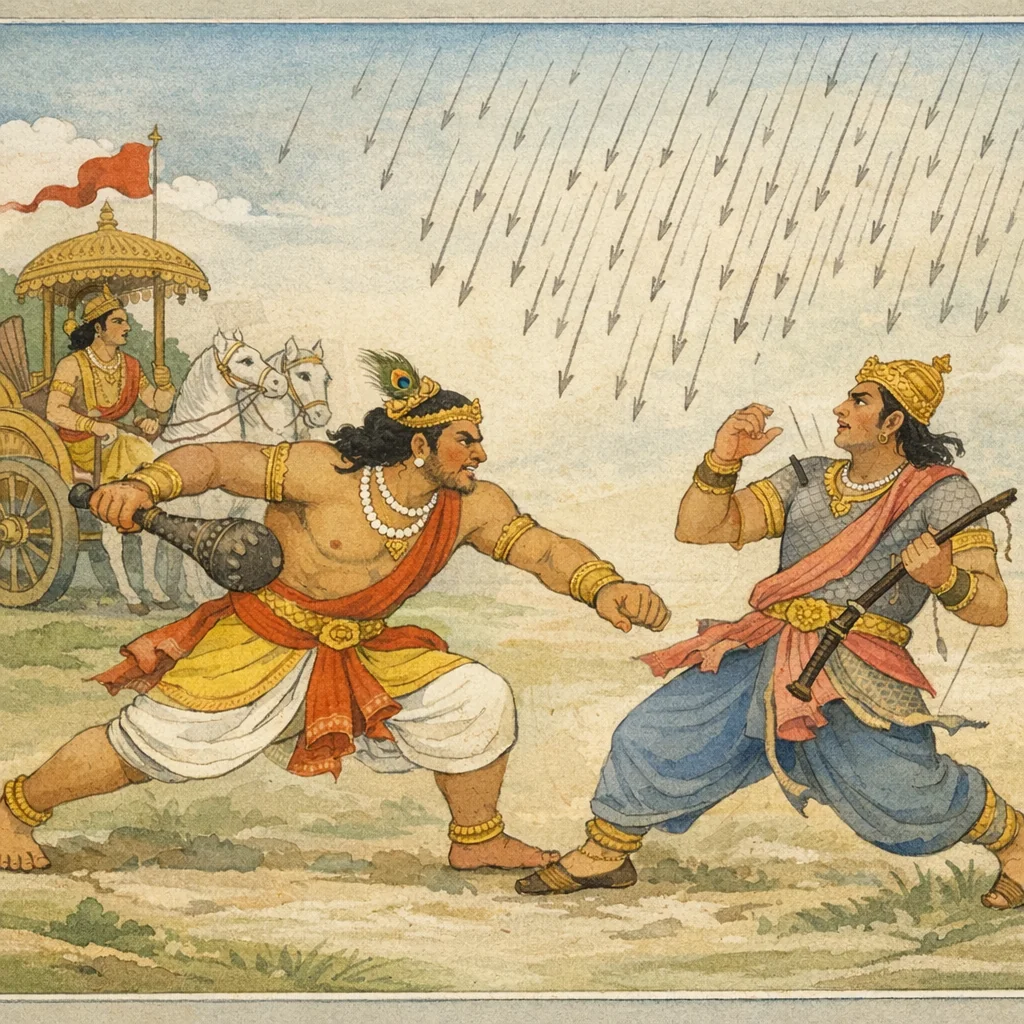
Chapter Arc: संजय धृतराष्ट्र को उस लोमहर्षक संग्राम का दृश्य सुनाते हैं जहाँ अर्जुन के रथोपान्त में भीमसेन और राधेय कर्ण आमने-सामने आ खड़े होते हैं—दोनों की कीर्ति और क्रोध एक साथ भड़क उठते हैं। → धृतराष्ट्र बार-बार पूछता है कि जिन पर उसकी पुत्र-विजय की आशा टिकी है, वह कर्ण भयंकर कर्मा भीम को कैसे रोक सका; और संजय बताता है कि कर्ण के तीक्ष्ण बाण भीम के रथ, ध्वज और सारथि तक को ढँक देते हैं, मानो शर-वृष्टि से आकाश ही गिर पड़ा हो। → भीमसेन प्रत्युत्तर में प्रचण्ड वेग से बाणों की वर्षा कर कर्ण का धनुष छिन्न कर देता है; शराहत कर्ण ‘छिन्नधन्वा’ होकर वैक्लव्य (असमर्थता/विवशता) को प्राप्त होता है और पुरुषाभिमान होते हुए भी रथान्तर की ओर हटने को बाध्य होता है। → कर्ण की यह पीछे हटना—पराजय का स्पष्ट संकेत—पाण्डव पक्ष के उत्साह को बढ़ाता है और अर्जुन के निकट भीम की उपस्थिति को युद्ध-भूमि में एक दृढ़ कवच बना देती है। → कर्ण अपमान और क्रोध के साथ पुनः अवसर खोजता है—क्या वह लौटकर भीम से प्रतिशोध लेगा, या अर्जुन-वध की अपनी प्रतिज्ञा की ओर मुड़ेगा?
Shlokas
Verse 1
ऑपन--माजल छा अफ-जआकऋा-ज एकत्रिशर्दाधेकशततमो< ध्याय: भीमसेनके द्वारा कर्णकी पराजय संजय उवाच वर्तमाने महाराज संग्रामे लोमहर्षणे । व्याकुलेषु च सर्वेषु पीड्यमानेषु सर्वश:,संजय कहते हैं--भरतश्रेष्ठ महाराज! इस प्रकार रोमांचकारी संग्राम छिड़ जानेपर जब सारी सेनाएँ सब ओरसे पीड़ित और व्याकुल हो गयीं तब राधानन्दन कर्ण युद्धके लिये पुनः भीमसेनके सामने आया। ठीक उसी तरह, जैसे वनमें एक मतवाला हाथी दूसरे मदोन्मत्त हाथीपर आक्रमण करता है इस प्रकार श्रीमहाभारत द्रोणपर्वके अन्तर्गत जयद्रथवधपर्वमें कर्णकी पराजयविषयक एक सौ इकतीसवाँ अध्याय पूरा हुआ ॥/ १३१ ॥। अपन काल छा | अप्-#-रू+ द्वात्रिशर्दाधिकशततमो< ध्याय: भीमसेन और कर्णका घोर युद्ध धृतराष्ट्र रवाच स्वयं शिष्यो महेशस्य भृगूत्तम धनुर्धर: । शिष्यत्वं प्राप्तवान् कर्णस्तस्य तुल्यो<स्त्रविद्यया
Sanjaya said: O great King, as that hair-raising battle raged on, when all the forces were thrown into confusion and were being harried on every side, the struggle intensified—setting the stage for Karṇa to come forward again to face Bhīmasena. The verse underscores the moral atmosphere of war: once violence is unleashed, even the mighty become collectively shaken, and the battlefield turns into a whirlpool of fear, pressure, and relentless assault.
Verse 2
राधेयो भीममानर्च्छद् युद्धाय भरतर्षभ | यथा नागो वने नागं मत्तो मत्तमभिद्रवन्,संजय कहते हैं--भरतश्रेष्ठ महाराज! इस प्रकार रोमांचकारी संग्राम छिड़ जानेपर जब सारी सेनाएँ सब ओरसे पीड़ित और व्याकुल हो गयीं तब राधानन्दन कर्ण युद्धके लिये पुनः भीमसेनके सामने आया। ठीक उसी तरह, जैसे वनमें एक मतवाला हाथी दूसरे मदोन्मत्त हाथीपर आक्रमण करता है
Sanjaya said: O bull among the Bharatas, Radheya (Karna) again rushed toward Bhima for battle. As the clash grew fierce and the armies on all sides became harried and distressed, he advanced like a musth elephant in the forest charging another musth elephant—an image of overwhelming force meeting overwhelming force in the heat of war.
Verse 3
धृतराष्ट्र रवाच यौ तौ कर्णश्न भीमश्च सम्प्रयुद्धो महाबलौ । अर्जुनस्य रथोपान्ते कीदृश: सो5भवद् रण:,धृतराष्ट्रने पूछा--संजय! महाबली कर्ण और भीमसेनने अर्जुनके रथके निकट जाकर जो बड़े वेगसे युद्ध किया, उनका वह संग्राम कैसा हुआ?
Dhṛtarāṣṭra said: “Sañjaya, when the mighty warriors Karṇa and Bhīmasena closed in near Arjuna’s chariot and fought with full force, what was that battle like?”
Verse 4
पूर्व हि निर्जित: कर्णो भीमसेनेन संयुगे । कथं भूय: स राधेयो भीममागान्महारथ:,भीमसेनने युद्धमें जब राधानन्दन महारथी कर्णको पहले ही जीत लिया था, तब वह पुनः उनका सामना करनेके लिये कैसे आया?
Sañjaya said: “For Karṇa had previously been defeated by Bhīmasena in battle. How, then, did that great chariot-warrior, the son of Rādhā, come once again to confront Bhīma?”
Verse 5
भीमो वा सूततनयं प्रत्युद्यात: कथं रणे । महारथं समाख्यातं पृथिव्यां प्रवरं रथम्,अथवा भीमसेन भूमण्डलके श्रेष्ठ एवं विख्यात महारथी सूतपुत्र कर्णसे समरांगणमें युद्ध करनेके लिये कैसे आगे बढ़े?
Sañjaya said: “How, in the midst of battle, has Bhīma advanced to confront the charioteer’s son (Karna)? Karna is renowned on earth as a foremost chariot-warrior, celebrated as a mahāratha.”
Verse 6
भीष्मद्रोणावतिक्रम्य धर्मराजो युधिष्ठिर: । नान्यतो भयमादत्त विना कर्णान्महारथात्,भीष्म और द्रोणसे पार पाकर धर्मराज युधिष्ठिरको अब महारथी कर्णके सिवा दूसरे किसीसे भय नहीं रह गया है
Sañjaya said: Having passed beyond Bhīṣma and Droṇa, Dharmarāja Yudhiṣṭhira no longer took fear from any other quarter—except from Karṇa, the great chariot-warrior. The verse highlights a shift in the moral and strategic landscape of the war: once the foremost elders are overcome, the remaining dread concentrates upon the single rival whose prowess and enmity most directly threaten the righteous king’s cause.
Verse 7
भयाद् यस्य महाबाहोरन शेते बहुला: समा: । चिन्तयन् नित्यशो वीर्य राधेयस्य महात्मन: । त॑ कथं सूतपुत्रं तु भीमोड्योधयताहवे,पहले जिस महाबाहु महामना राधानन्दन कर्णके बल-पराक्रमका नित्य चिन्तन करते हुए राजा युधिष्ठिर भयके मारे बहुत वर्षोतक नींद नहीं लेते थे, उसी सूतपुत्र कर्णके साथ भीमसेनने समरभूमिमें किस तरह युद्ध किया?
Sañjaya said: Out of fear of that mighty-armed, great-souled Radheya (Karna), whose valor King Yudhiṣṭhira would constantly contemplate and, for many years, could not sleep—how, then, did Bhīmasena fight that very charioteer’s son in battle? The question underscores the extraordinary audacity and resolve required to confront a warrior whose reputation had long weighed upon the righteous king’s mind.
Verse 8
ब्रद्माण्यं वीर्यसम्पन्नं समरेष्वनिवर्तिनम् । कथं कर्ण युधां श्रेष्ठ योधयामास पाण्डव:,जो ब्राह्मणभक्त, पराक्रमसम्पन्न और समरभूमिमें कभी पीछे न हटनेवाला है, योद्धाओंमें श्रेष्ठ उस कर्णके साथ भीमसेनने किस प्रकार युद्ध किया?
Sañjaya said: “How did Bhīmasena, the Pāṇḍava, engage in battle with Karṇa—foremost among warriors—who was devoted to brāhmaṇas, endowed with great prowess, and never turned back in the clashes of war?”
Verse 9
यौ तौ समीयतुर्वीरी वैकर्तनवृकोदरौ । कथं तावत्र युध्येतां महाबलपराक्रमौ,जो वीर पहले आपसमें भिड़ चुके थे, वे ही महान् बल और पराक्रमसे सम्पन्न कर्ण और भीमसेन यहाँ पुन: कैसे युद्धमें प्रवृत्त हुए?
Sañjaya said: Those two heroes—Karna, the son of the charioteer (Vaikartana), and Bhīmasena, the wolf-bellied (Vṛkodara)—who had already met in combat before: how did they here again engage in battle, both endowed with immense strength and fearless prowess? Implicit in the question is the relentless compulsion of kṣatriya-war and fate: even after prior clashes, the demands of duty, rivalry, and the larger course of the war drive the same champions back into confrontation.
Verse 10
भ्रातृत्वं दर्शितं पूर्व घूणी चापि स सूतज: । कथं भीमेन युयुधे कुन्त्या वाक्यमनुस्मरन्,पहले तो सूतपुत्र कर्णने अर्जुनके सिवा अन्य पाण्डवोंके प्रति बन्धुत्व दिखाया था और वह दयालु भी है ही, तथापि कुन्तीके वचनोंको बारंबार स्मरण करते हुए भी उसने भीमसेनके साथ कैसे युद्ध किया?
Sañjaya said: Earlier, Karṇa—the son of a charioteer—had shown a spirit of brotherhood toward the Pāṇḍavas (except Arjuna), and he is known to be compassionate as well. Even so, while repeatedly recalling Kuntī’s words, how did he come to fight Bhīmasena? (How did he reconcile remembered kinship and mercy with the demands of battle?)
Verse 11
भीमो वा सूतपुत्रेण स्मरन् वैरं पुरा कृतम् अयुध्यत कथं शूर: कर्णेन सह संयुगे,अथवा शूरवीर भीमसेनने पहलेके किये हुए वैरका स्मरण करके सूतपुत्र कर्णके साथ उस रफणक्षेत्रमें किस प्रकार युद्ध किया?
Sañjaya said: “How did the heroic Bhīma, recalling the enmity formed long ago, fight in battle with Karṇa, the son of a charioteer? In that field of combat, in what manner did the valiant Bhīmasena engage Karṇa while keeping the memory of their prior feud before him?”
Verse 12
आशास्ते च सदा सूत पुत्रो दुर्योधनो मम । कर्णो जेष्यति संग्रामे समस्तान् पाण्डवानिति,संजय! मेरा बेटा दुर्योधन सदा यही आशा करता है कि कर्ण संग्राममें समस्त पाण्डवोंको जीत लेगा
Sañjaya said: “My son Duryodhana, the son of a charioteer, continually clings to this hope: ‘Karna will triumph in battle and defeat all the Pāṇḍavas.’” The line underscores how Duryodhana’s confidence rests less on sober judgment and more on persistent expectation—an ethically fraught reliance on martial prowess to secure an unjust cause.
Verse 13
जयाशा यत्र पुत्रस्य मम मन्दस्य संयुगे | स कथं भीमकर्माणं भीमसेनमयोधयत्,युद्धस्थलमें जिसके ऊपर मेरे मूर्ख पुत्रकी विजयकी आशा लगी हुई है, उस कर्णने भयंकर कर्म करनेवाले भीमसेनके साथ किस प्रकार युद्ध किया?
Sanjaya said: “In that battle, my foolish son had fixed his hope of victory upon Karna. How, then, did Karna engage in combat with Bhimasena, the doer of dreadful deeds?”
Verse 14
यं समासाद्य पुत्रै्मे कृतं वैरं महारथै: । त॑ सूततनयं तात कथं भीमो हायोधयत्,तात! जिसका आश्रय लेकर मेरे पुत्रोंने महारथी पाण्डवोंके साथ वैर ठाना है, उस सूतपुत्र कर्णके साथ भीमसेनने किस प्रकार युद्ध किया?
Sanjaya said: “O dear one, relying upon him, my sons have undertaken enmity with the great chariot-warriors, the Pāṇḍavas. How, then, did Bhīmasena fight with that son of a charioteer, Karṇa?”
Verse 15
अनेकान् विप्रकारांश्व सूतपुत्रसमुद्भवान् | स्मरमाण: कथं भीमो युयुथे सूतसूनुना,सूतपुत्रके द्वारा किये गये अनेक अपकारोंको स्मरण करके भीमसेनने उसके साथ किस तरह युद्ध किया?
Sañjaya said: “Even while recalling the many wrongs and injuries that had arisen from the charioteer’s son, how did Bhīma engage in battle with that son of a sūta?” The question highlights the moral strain of war: personal grievance and remembered harm must be held in check as the warrior acts within the harsh demands of the battlefield.
Verse 16
योडजयत् पृथिवीं सर्वा रथेनैकेन वीर्यवान् । त॑ सूततनयं युद्धे कथं भीमो हायोधयत्,जिस पराक्रमी वीरने एकमात्र रथकी सहायतासे सारी पृथ्वीको जीत लिया, उस सूतपुत्रके साथ रणभूमिमें भीमसेनने किस तरह युद्ध किया?
Sañjaya said: “How did Bhīmasena engage in battle with that mighty son of a charioteer—who, relying on a single chariot, had conquered the whole earth? In the midst of war, by what manner of combat did Bhīma contend with him?”
Verse 17
यो जात: कुण्डलाभ्यां च कवचेन सहैव च । त॑ सूतपुत्रं समरे भीम: कथमयोधयत्,जो जन्मसे ही कवच और कुण्डलोंके साथ उत्पन्न हुआ था, उस सूतपुत्रके साथ समरांगणमें भीमसेनने किस प्रकार युद्ध किया?
Sañjaya said: “How did Bhīmasena fight in the battlefield against that charioteer’s son—he who was born already bearing the divine earrings and the natural armor?”
Verse 18
यथा तयोर्युद्धमभूद् यश्चासीद् विजयी तयो: । तन्ममाचक्ष्व तत्त्वेन कुशलो हासि संजय,संजय! उन दोनों वीरोंमें जिस प्रकार युद्ध हुआ और उनमेंसे जिस एकको विजय प्राप्त हुई, उसका वह सब समाचार मुझे ठीक-ठीक बताओ; क्योंकि तुम इस कार्यमें कुशल हो
Sanjaya said: “Tell me truthfully, in full detail, how the battle between those two heroes took place, and which of the two emerged victorious. Report it to me exactly as it happened, O Sanjaya—for you are skilled in conveying such matters.”
Verse 19
संजय उवाच भीमसेनस्तु राधेयमुस्तृज्य रथिनां वरम् | इयेष गन्तुं यत्रास्तां वीरी कृष्णधनंजयौ,संजयने कहा--राजन्! भीमसेनने रथियोंमें श्रेष्ठ राधापुत्र कर्णको छोड़कर वहाँ जानेकी इच्छा की जहाँ वीर श्रीकृष्ण और अर्जुन विद्यमान थे
Sañjaya said: Bhīmasena, leaving aside Rādheya (Karna), the foremost among chariot-warriors, wished to go to the place where the two heroes—Kṛṣṇa and Dhanañjaya (Arjuna)—were stationed. The verse highlights a tactical and moral pivot in battle: Bhīma chooses to disengage from a formidable opponent in order to rejoin and support the central axis of dharma-led strategy embodied by Kṛṣṇa and Arjuna.
Verse 20
त॑ प्रयान्तमभिद्रुत्य राधेय: कड्कपत्रिभि: । अभ्यवर्षन्महाराज मेघो वृष्ट्येव पर्वतम्,महाराज! वहाँसे जाते हुए भीमसेनपर आक्रमण करके राधापुत्र कर्णने उनके ऊपर कंकपत्रयुक्त बाणोंकी उसी प्रकार वर्षा आरम्भ कर दी, जैसे बादल पर्वतपर जलकी वर्षा करता है
Sañjaya said: O King, as Bhīmasena was moving away, Rādheya (Karna) rushed after him and showered him with arrows fletched with vulture-feathers, just as a cloud pours down rain upon a mountain. The scene underscores the relentless momentum of battle, where pursuit and counterattack override respite, and martial prowess is displayed through sustained, overwhelming force.
Verse 21
फुल्लता पड़कजेनेव वक्त्रेण विहसन् बली । आजुहाव रणे यान्तं भीममाधिरथिस्तदा,बलवान् अधिरथपुत्रने खिलते हुए कमलके समान मुखसे हँसकर जाते हुए भीमसेनको युद्धके लिये ललकारा
Sañjaya said: Then the mighty son of Adhiratha (Karna), smiling with a face like a fully blossomed lotus, challenged Bhīma—who was advancing into the battle—to fight. The scene underscores the warriors’ deliberate display of confidence and resolve amid the moral gravity of fratricidal war.
Verse 22
कर्ण उवाच भीमाहितैस्तव रणे स्वप्रेडपि न विभावितम् । तद् दर्शयसि कस्मान्मे पृष्ठं पार्थदिदृक्षया,कर्णने कहा--भीमसेन! तुम्हारे शत्रुओंने स्वप्नमें भी यह नहीं सोचा था कि तुम युद्धमें पीठ दिखाओगे; परंतु इस समय अर्जुनसे मिलनेके लिये तुम मुझे पीठ क्यों दिखा रहे हो?
Verse 23
कुन्त्या: पुत्रस्य सदृशं नेदं पाण्डवनन्दन । तेन मामभित: स्थित्वा शरवर्षैरवाकिर,पाण्डवनन्दन! तुम्हारा यह कार्य कुन्तीके पुत्रके योग्य नहीं है। अतः मेरे सम्मुख रहकर मुझपर बाणोंकी वर्षा करो
Karna said: “O joy of the Pāṇḍus, this is not conduct befitting a son of Kuntī. Therefore, stand facing me at close quarters and shower me with volleys of arrows.” In the heat of battle, Karna rebukes his opponent for acting in a way he deems unworthy of noble lineage, urging a direct, courageous engagement consistent with a warrior’s code.
Verse 24
भीमसेनस्तदाद्धानं कर्णन्नामर्षयद् युधि । अर्धमण्डलमावृत्य सूतपुत्रमयोधयत्,कर्णकी ओरसे रणक्षेत्रमें वह युद्धकी ललकार भीमसेन न सह सके। उन्होंने अर्धमण्डल गतिसे घूमकर सूतपुत्रके साथ युद्ध आरम्भ कर दिया
On the battlefield, Bhīmasena could not endure Karṇa’s war-cry and challenge. Wheeling about in a half-circle maneuver, he closed in and began to fight the charioteer’s son, Karṇa—driven by wrath and the compulsion to answer a public provocation in the midst of war.
Verse 25
अवक्रगामिभिर्बाणैर भ्यवर्षन्महायशा: । दंशितं द्वैरथे यत्तं सर्वशस्त्रविशारदम्,महायशस्वी भीमसेन सम्पूर्ण शस्त्रोंके चलानेमें निपुण, कवचधारी तथा द्वैरथ युद्धके लिये तैयार कर्णके ऊपर सीधे जानेवाले बाणोंकी वर्षा करने लगे
Karna said: The illustrious Bhimasena showered Karna with arrows that flew straight to their mark. Karna stood armored and fully prepared for chariot-to-chariot combat, a master of every weapon; yet Bhima pressed the attack with a relentless rain of shafts—an image of war’s fierce momentum, where prowess and preparedness are tested by unceasing force rather than by words or negotiation.
Verse 26
विधित्सु: कलहस्यान्तं जिघांसु: कर्णमक्षिणोत् । हत्वा तस्यानुगांस्तं च हन्तुकामो महाबल:,कलहका अन्त करनेकी इच्छासे महाबली भीमसेन कर्णको मार डालना चाहते थे और इसीलिये उसे बाणोंद्वारा क्षत-विक्षत कर रहे थे। वे कर्णको मारकर उसके अनुगामी सेवकोंका भी वध करनेकी इच्छा रखते थे
Verse 27
तस्मै व्यसृजदुग्राणि विविधानि परंतप: । अमर्षात् पाण्डव: क्रुद्ध: शरवर्षाणि मारिष,माननीय नरेश! शत्रुओंको संताप देनेवाले पाण्डुनन्दन भीमसेन कुपित हो अमर्षवश कर्णपर नाना प्रकारके भयंकर बाणोंकी वर्षा करने लगे
Then the Pāṇḍava, Bhīmasena—an afflicter of foes—angered and unable to endure the provocation, unleashed upon Karṇa a fierce, many-formed rain of arrows. In the ethical atmosphere of the war, the verse highlights how wrath and wounded pride (amarṣa) drive escalation, even among those fighting for a cause they deem righteous.
Verse 28
तस्य तानीषुवर्षाणि मत्तद्विरदगामिन: । सूतपुत्रो5स्त्रमायाभिर ग्रसत् परमास्त्रवित्,उत्तम अस्त्रोंका ज्ञान रखनेवाले सूतपुत्र कर्णने अपने अस्त्रोंकी मायासे मतवाले हाथीके समान मस्तीसे चलनेवाले भीमसेनकी उस बाण-वर्षाको ग्रस लिया
Karna, the charioteer’s son and a master of the highest weapons, countered and as it were ‘swallowed up’ that shower of arrows. By the illusory deployments of his missiles, he neutralized the volleys launched by Bhimasena, who was advancing with the headlong force of a rutting elephant. The verse highlights how, in the ethics of war, prowess is measured not only by fury and strength but by disciplined mastery and timely countermeasure.
Verse 29
स यथावन्महाबाहुर्विद्यया वै सुपूजित: । आचार्यवन्महेष्वास: कर्ण: पर्यचरद् बली,महाबाहु महाधनुर्धर बलवान् कर्ण अपनी विद्याद्वारा आचार्य द्रोणके समान यथावत् पूजित हो रणक्षेत्रमें विचरने लगा
Thus Karṇa—mighty-armed, powerful, and a great archer—moved about the battlefield. Honoured in due measure for his mastery of weapons-knowledge, he was treated with the regard one shows to an ācārya, and he conducted himself with the confidence of a fully acknowledged warrior.
Verse 30
युध्यमानं तु संरम्भाद् भीमसेनं हसन्निव । अभ्यपद्यत कौन्तेयं कर्णो राजन् वृकोदरम्,राजन! क्रोधपूर्वक युद्ध करनेवाले कुन्तीपुत्र भीमसेनकी हँसी उड़ाता हुआ-सा कर्ण उनके सामने जा पहुँचा
As Bhīmasena fought in a surge of wrathful zeal, Karṇa—seeming to laugh in derision—advanced straight up to that son of Kuntī, Vṛkodara, O King. The moment underscores how mockery and pride can inflame the battlefield, turning combat into a contest not only of arms but of temper and honor.
Verse 31
तन्नामृष्यत कौन्तेय: कर्णस्य स्मितमाहवे । युध्यमानेषु वीरेषु पश्यत्सु च समन््ततः,कुन्तीकुमार भीम युद्धस्थलमें कर्णकी उस हँसीको न सह सके। सब ओर युद्ध करते हुए समस्त वीरोंको देखते-देखते बलवान् भीमसेनने कुपित हो सामने आये हुए कर्णकी छातीमें वत्सदन््त नामक बाणोंद्वारा उसी प्रकार चोट पहुँचायी, जैसे महावत महान् गजराजको अंकुशोंद्वारा पीड़ित करता है
Kunti’s son (Bhima) could not endure Karna’s smile on the battlefield. While warriors fought and looked on from every side, the mighty Bhimasena, angered, advanced and struck Karna in the chest with arrows called Vatsadanta—just as a mahout goads a great elephant with a sharp hook. The scene underscores how, amid war, even a gesture of contempt can ignite wrath and provoke a retaliatory blow, tightening the cycle of violence.
Verse 32
त॑ं भीमसेन: सम्प्राप्तं वत्सदन्तै: स्तनान्तरे । विव्याध बलवान क्रुद्धस्तोत्रैरिव महाद्विपम्,कुन्तीकुमार भीम युद्धस्थलमें कर्णकी उस हँसीको न सह सके। सब ओर युद्ध करते हुए समस्त वीरोंको देखते-देखते बलवान् भीमसेनने कुपित हो सामने आये हुए कर्णकी छातीमें वत्सदन््त नामक बाणोंद्वारा उसी प्रकार चोट पहुँचायी, जैसे महावत महान् गजराजको अंकुशोंद्वारा पीड़ित करता है
Enraged, the mighty Bhīmasena closed in upon Karṇa and struck him in the chest with the arrows called Vatsadanta—like a mahout goading a great elephant with sharp prods. The moment underscores how, amid the chaos of battle, wounded pride and provocation can harden into retaliatory violence, even among renowned heroes bound by the warrior code.
Verse 33
पुनश्न सूतपुत्र॑ तु स्वर्णपुडुखै: शिलाशितै: । सुमुक्तैश्नित्रवर्माणं निर्बिभेद त्रिसप्तभि:,तत्पश्चात् विचित्र कवच धारण करनेवाले सूतपुत्रको सानपर चढ़ाकर तेज किये हुए सुवर्णमय पंखवाले तथा अच्छी तरह छोड़े हुए इक्कीस बाणोंद्वारा पुनः क्षत-विक्षत कर दिया
Then again Karṇa, the charioteer’s son, with well-released arrows—golden-fletched and whetted on stone—pierced the warrior clad in variegated armour with twenty-one shafts, once more wounding and tearing him. The verse underscores the relentless escalation of violence in battle, where skill and resolve are repeatedly applied to disable the opponent rather than to seek reconciliation, reflecting the grim ethical tension of kṣatriya-duty amid destructive warfare.
Verse 34
कर्णो जाम्बूनदैर्जालै: संछन्नान् वातरंहस: । हयान् विव्याध भीमस्य पञ्चभि: पठ्चभि: शरै:,उधर कर्णने भीमसेनके सोनेकी जालियोंसे आच्छादित हुए वायुके समान वेगशाली घोड़ोंको पाँच-पाँच बाणोंसे वेध दिया
Karna pierced Bhima’s horses—swift as the wind and covered with nets of Jāmbūnada gold—striking each with five arrows. In the fierce ethics of battlefield duty, the act is a calculated disabling of the opponent’s mobility and momentum rather than a direct blow at the warrior, displaying Karna’s tactical focus and relentless martial resolve.
Verse 35
ततो बाणमयं जालं भीमसेनरयथं प्रति । कर्णेन विहितं राजन् निमेषार्धाददृश्यत,राजन! तदनन्तर आधे निमेषमें ही भीमसेनके रथपर कर्णद्वारा बाणोंका जाल-सा बिछाया जाता दिखायी दिया
Then, O King, a net as it were made entirely of arrows—devised by Karṇa—was seen to be cast against Bhīmasena’s chariot, appearing within less than half a blink. The scene underscores the terrifying speed and mastery of weapons in battle, where prowess is displayed in an instant and the moral weight of violence is carried by those who choose to unleash it.
Verse 36
सरथ: सध्वजस्तत्र समूत: पाण्डवस्तदा । प्राच्छाद्यत महाराज कर्णचापच्युतै: शरै:,महाराज! वहाँ कर्णके धनुषसे छूटे हुए बाणोंद्वारा उस समय रथ, ध्वज और सारथिसहित पाण्डुनन्दन भीमसेन आच्छादित हो गये
O King, at that moment the Pandava—Bhimasena—together with his charioteer and banner, was completely covered over by the arrows released from Karna’s bow. The scene underscores the relentless intensity of the battle, where martial prowess and resolve momentarily eclipse all else, and a warrior’s skill can overwhelm even a foremost hero on the field.
Verse 37
तस्य कर्णश्नतु:षष्ट्या व्यधमत् कवचं दृढम् । क्रुद्धक्षाप्पहनत् पार्थ नाराचैर्मर्म भेदिभि:,कर्णने चौंसठ बाण मारकर भीमसेनके सुदृढ़ कवचकी धज्जियाँ उड़ा दीं। फिर कुपित होकर उसने मर्मभेदी नाराचोंसे कुन्तीकुमारको अच्छी तरह घायल किया
With sixty-four arrows Karṇa tore apart his opponent’s sturdy armor. Then, angered, he swiftly struck Pārtha (Arjuna) with vital-point–piercing nārāca shafts, wounding him severely—an episode that underscores how wrath in battle drives warriors from measured prowess into ruthless, life-targeting violence.
Verse 38
ततो<चिन्त्य महाबाहु: कर्णकार्मुकनि:सृतान् । समाश्लिष्यदसम्शभ्रान्त: सूतपुत्रं वृकोदर:,महाबाहु भीमसेन कर्णके धनुषसे छूटे हुए उन बाणोंकी कोई परवा न करके बिना किसी घबराहटके सूतपुत्रके इतने समीप पहुँच गये, मानो उससे सटे जा रहे हों
Then mighty-armed Bhīma (Vṛkodara), giving no thought to the arrows released from Karṇa’s bow, advanced without the least agitation and closed in upon the charioteer’s son, as though he would clasp him in a grapple. The verse highlights fearless resolve in battle—Bhīma’s steadiness of mind amid danger and his direct, personal challenge to Karṇa.
Verse 39
स कर्णचापप्रभवानिषूनाशीविषोपमान् । बिभ्रद् भीमो महाराज न जगाम व्यथां रणे,महाराज! कर्णके धनुषसे छूटे हुए विषधर सर्पके समान भयंकर बाणोंको अपने शरीरपर धारण करते हुए भीमसेन रणक्षेत्रमें व्यथित नहीं हुए
Karna said: O King, Bhima—though bearing upon his body the dreadful arrows released from Karna’s bow, like venomous serpents—did not succumb to pain or falter in the battle. The verse highlights Bhima’s steadfast endurance and warrior resolve amid the brutal ethics of war, where courage is measured by the ability to remain unshaken even when grievously wounded.
Verse 40
ततो द्वात्रिंशता भल्लैरनिशितैस्तिग्मतेजनै: । विव्याध समरे कर्ण भीमसेन: प्रतापवान्,तत्पश्चात् अच्छी तरह तेज किये हुए बत्तीस तीखे भल्लोंसे प्रतापी भीमसेनने समरांगणमें कर्णको भारी चोट पहुँचायी
Then, in the thick of battle, the mighty Bhīmasena pierced Karṇa with thirty-two razor-edged bhalla arrows, keenly sharpened and blazing in power—an act that underscores the relentless reciprocity of violence on the battlefield, where prowess and endurance are tested without respite and ethical restraint is narrowed to the warrior-code of direct combat.
Verse 41
अयल्नेनैव तं॑ कर्ण: शरैर्भूशमवाकिरत् । भीमसेनं महाबाहुं सैन्धवस्य वधैषिणम्,उधर कर्ण जयद्रथके वधकी इच्छावाले महाबाहु भीमसेनपर अनायास ही बाणोंकी बड़ी भारी वर्षा करने लगा
Karna, with effortless ease, showered Bhimasena with a dense rain of arrows. Bhima—the mighty-armed warrior—was intent on slaying Saindhava (Jayadratha); and Karna’s counterattack seeks to check that vow-driven fury within the brutal ethics of battlefield duty.
Verse 42
मृदुपूर्व तु राथेयो भीममाजावयोधयत् । क्रोधपूर्व तथा भीम: पूर्व वैरमनुस्मरन्,राधानन्दन कर्ण तो भीमसेनपर कोमल प्रहार करता हुआ रणभूमिमें उनके साथ युद्ध करता था; परंतु भीमसेन पहलेके वैरको बारंबार स्मरण करते हुए क्रोधपूर्वक उसके साथ जूझ रहे थे
Then Rātheya (Karna) fought Bhīma in the battle with comparatively gentle blows; but Bhīma, remembering their former enmity again and again, grappled with him in wrath, striking and striving with anger born of old hostility.
Verse 43
त॑ भीमसेनो नामृष्यदवमानममर्षण: । स तस्मै व्यसृजत् तूर्ण शरवर्षममित्रहा,शत्रुओंका नाश करनेवाले अमर्षशील भीमसेन कर्णद्वारा दिखायी जानेवाली कोमलता या ढिलाईको अपने लिये अपमान समझकर उसे सह न सके। अतः उन्होंने भी तुरंत ही उसपर बाणोंकी वर्षा प्रारम्भ कर दी
Bhīmasena, intolerant of insult and unable to endure humiliation, could not bear what he took to be Karṇa’s softness or slackening toward him. Therefore, the foe-slayer at once let loose upon Karṇa a swift rain of arrows—answering perceived contempt with immediate martial retaliation.
Verse 44
ते शरा: प्रेषितास्तेन भीमसेनेन संयुगे । निपेतु: सर्वतो वीरे कूजन्त इव पक्षिण:,युद्धस्थलमें भीमसेनके द्वारा चलाये हुए वे बाण कूजते हुए पक्षियोंके समान वीर कर्णपर सब ओरसे पड़ने लगे
Karna said: “Those arrows, loosed by Bhimasena in the thick of battle, fell upon the heroic warrior from every side, sounding like chirping birds.” The verse underscores the relentless, all‑encompassing pressure of combat—where martial prowess manifests as an overwhelming shower of missiles rather than a single strike, testing a warrior’s endurance and resolve.
Verse 45
हेमपुड्खा: प्रसन्नाग्रा भीमसेनथधनुश्चयुता: । प्राच्छादयंस्ते राधेयं शलभा इव पावकम्,भीमसेनके धनुषसे छूटे हुए चमचमाती हुई धारवाले सुवर्णमय पंखोंसे सुशोभित उन बाणोंने राधानन्दन कर्णको उसी प्रकार ढक दिया, जैसे पतिंगे आगको आच्छादित कर लेते हैं
Karna said: “Those arrows—golden-feathered, bright-tipped, and released from Bhimasena’s bow—covered Radheya (Karna) on all sides, just as moths swarm and veil a blazing fire.” In the ethical frame of the war, the image underscores how relentless martial effort can momentarily overwhelm even a famed warrior, while still leaving the larger question of right conduct (dharma) in battle to be tested by endurance and restraint.
Verse 46
कर्णस्तु रथिनां श्रेष्ठश्छाद्यमान: समन्तत: । राजन् व्यसृजदुग्राणि शरवर्षाणि भारत,भरतवंशी नरेश! इस प्रकार सब ओरसे बाणोंद्वारा आच्छादित होते हुए रथियोंमें श्रेष्ठ कर्णने भी भीमपर भयंकर बाण-वर्षा आरम्भ कर दी
Karna, the foremost among chariot-warriors, though being covered on every side by showers of arrows, O King, unleashed fierce torrents of shafts in return—thus intensifying the duel in steadfast warrior-fashion, meeting assault with resolute counter-assault.
Verse 47
तस्य तानशनिप्रख्यानिषून् समरशोभिन: । चिच्छेद बहुभिर्भल्लैरसम्प्राप्तान् वकोदर:,परंतु समरभूमिमें शोभा पानेवाले कर्णके उन वज्रोपम बाणोंको भीमसेनने अपने पास आनेसे पहले ही बहुत-से भल्लोंद्वारा काट गिराया
Those thunderbolt-like arrows of Karṇa, splendid on the battlefield, were cut down by Vṛkodara (Bhīmasena) with many broad-headed shafts before they could even reach him—showing not only strength but alertness and mastery amid the fierce ethics of war, where skill and readiness decide life and death.
Verse 48
पुनश्च शरवर्षेण च्छादयामास भारत । कर्णो वैकर्तनो युद्धे भीमसेनमरिंदम:,भरतनन्दन! शत्रुओंका दमन करनेवाले सूर्यपुत्र कर्णने युद्धमें पुन: बाण-वर्षा करके भीमसेनको ढक दिया
Then again, O Bhārata, Karṇa Vaikartana—crusher of foes—covered Bhīmasena in battle with a dense rain of arrows. The verse underscores the relentless momentum of combat: prowess is shown not merely by striking once, but by sustaining pressure, testing endurance, and seeking dominance through disciplined martial skill.
Verse 49
तत्र भारत भीमं तु दृष्टवन्त: सम सायकै: । समाचिततनु संख्ये श्वाविधं शललैरिव,भारत! उस समय युद्धस्थलमें बाणोंसे चिने हुए शरीरवाले भीमसेनको सब लोगोंने कंटकोंसे युक्त साहीके समान देखा
There, O Bhārata, the warriors beheld Bhīma on the battlefield—his body densely covered with equal flights of arrows—looking like a porcupine bristling with quills. The image underscores the ferocity of the combat and Bhīma’s steadfast endurance amid overwhelming assault.
Verse 50
हेमपुड्खान् शिलाधौतान् कर्णचापच्युतान् शरान् । दधार समरे वीर: स्वरश्मीनिव रश्मिवान्,वीर भीमसेनने कर्णके धनुषसे छूटे और शिलापर तेज किये हुए सुवर्णपंखयुक्त बाणोंको समरांगणमें अपने शरीरपर उसी प्रकार धारण किया था, जैसे अंशुमाली सूर्य अपने किरणोंको धारण करते हैं
Karna’s golden‑fletched arrows—sharpened by whetting on stone and released from his bow—struck the hero Bhimasena. In the thick of battle Bhima bore them upon his body, just as the radiant Sun bears his own rays. The verse heightens the ethical portrait of the warrior: steadfast endurance under injury, refusing to yield in a righteous contest of arms.
Verse 51
रुधिरोक्षितसर्वाड्रो भीमसेनो व्यराजत । समृद्धकुसुमापीडो वसन्ते5शोकवृक्षवत्,भीमसेनका सारा शरीर खूनसे लथपथ हो रहा था। वे वसन्त-ऋतुमें खिले हुए अधिकाधिक पुष्पोंसे सम्पन्न अशोक वृक्षके समान सुशोभित हो रहे थे
Karna said: Bhimasena, his entire body drenched in blood, shone forth. He appeared like an aśoka tree in spring, laden with abundant blossoms—an image that heightens the battlefield’s moral tension, where heroic endurance and terrible violence coexist in the same moment.
Verse 52
तत्तु भीमो महाबाहो: कर्णस्य चरितं रणे | नामृष्यत महाबाहु: क्रोधादुद्वृत्तलोचन:,महाबाहु भीमसेन रणभूमिमें विशालबाहु कर्णके उस चरित्रको न सह सके। उस समय क्रोधसे उनके नेत्र घूमने लगे
But Bhīma, mighty-armed, could not endure Karṇa’s conduct on the battlefield. In anger his eyes rolled, as wrath surged within him—signaling that the contest was turning from mere combat into a personal reckoning over honor and restraint in war.
Verse 53
स कर्ण पज्चविंशत्या नाराचानां समार्पयत् | महीधरमिव श्वैतं गूढपादैर्विषोल्बणै:,उन्होंने कर्णपर पचीस नाराच चलाये; उनके लगनेसे कर्ण छिपे हुए पैरोंवाले विषैले सर्पोसे युक्त श्वेत पर्वतके समान जान पड़ता था
He struck Karṇa with twenty-five nārāca arrows. With those shafts embedded in him, Karṇa appeared like a white mountain bristling with hidden-footed, venomous serpents—an image that heightens the grim spectacle of battle and the relentless resolve of warriors who endure pain without yielding.
Verse 54
पुनरेव च विव्याध षड्भिरष्टाभिरेव च । मर्मस्वमरविक्रान्त: सूतपुत्र॑ं तनुत्यजम्,फिर देवोपम पराक्रमी भीमने अपने शरीरकी परवा न करनेवाले सूतपुत्रको उसके मर्मस्थानोंमें छः और आठ बाण मारकर घायल कर दिया
Karna said: “And again he pierced him—first with six, and then with eight more arrows—striking the vital points. That hero of godlike prowess wounded the charioteer’s son, who, heedless of his own body, did not shrink from the fight.”
Verse 55
पुनरन्येन बाणेन भीमसेन: प्रतापवान् । चिच्छेद कार्मुकं तूर्ण कर्णस्य प्रहसन्निव,इसके बाद हँसते हुए-से प्रतापी भीमसेनने दूसरा बाण मारकर तुरंत ही कर्णके धनुषको काट दिया
Karna said: Then, with another arrow, the mighty Bhimasena swiftly cut down Karna’s bow, as if laughing—an act that heightens the battle’s moral tension, where prowess and resolve are displayed through the disabling of an opponent’s weapon rather than a direct killing blow.
Verse 56
जघान चतुरश्नाश्वान् सूतं च त्वरित: शरै: । नाराचैरर्करश्म्याभै: कर्ण विव्याध चोरसि,फिर शीघ्रतापूर्वक बाणोंका प्रहार करके उसके चारों घोड़ों और सारथिको भी मार डाला। साथ ही सूर्यकी किरणोंके समान तेजस्वी नाराचोंसे कर्णकी छातीमें भारी आघात किया
He swiftly struck with arrows, killing the four horses and the charioteer. Then, with nārāca shafts blazing like the sun’s rays, he pierced Karṇa in the chest with a heavy, decisive blow—an episode that underscores the ruthless momentum of battlefield duty, where skill and speed eclipse pity amid the demands of war.
Verse 57
ते जम्मुर्धरणीमाशु कर्ण निर्भिद्य पत्रिण: । यथा जलधरं भित्त्वा दिवाकरमरीचय:,जैसे सूर्यकी किरणें बादलोंको भेदकर सब ओर फैल जाती हैं, उसी प्रकार भीमसेनके बाण कर्णके शरीरको छेदकर शीघ्र ही धरतीमें समा गये
Karna said: “Those feathered shafts, having swiftly pierced Karna, plunged at once into the earth—just as the rays of the sun, breaking through a bank of clouds, spread forth in every direction.” The verse underscores the relentless momentum of battle: even a mighty warrior’s body becomes a mere passage for forceful arrows, reminding the listener of the impersonal, almost natural-law-like violence of war and the fragility of embodied pride amid kṣatriya duty.
Verse 58
स वैक्लव्यं महत् प्राप्प छिन्नधन्वा शराहतः । तथा पुरुषमानी स प्रत्यपायाद् रथान्तरम्,यद्यपि कर्णको अपने पुरुषत्वका बड़ा अभिमान था, तो भी भीमसेनके बाणोंसे घायल हो धनुष कट जानेपर रथहीन होनेके कारण वह बड़ी भारी घबराहटमें पड़ गया और दूसरे रथपर बैठनेके लिये वहाँसे भाग निकला
Struck by arrows and with his bow cut down, he fell into great dismay; though proud of his manhood, he withdrew and fled toward another chariot. The verse underscores how, in the press of battle, even a warrior’s self-image can collapse when the instruments of combat and immediate support fail.
Verse 130
इस प्रकार श्रीमहाभारत द्रोणपर्वके अन्तर्गत जयद्रथवधपर्वमें दुर्योधनका युद्धविषयक एक सौ तीसवाँ अध्याय पूरा हुआ
Thus, in the Śrī Mahābhārata, within the Droṇa Parva—specifically in the Jayadratha-vadha section—the one hundred and thirtieth chapter concerning Duryodhana’s conduct and deliberations about war comes to an end. The closing formula underscores the epic’s framing of warfare as a grave moral arena, where choices and counsel shape responsibility and consequence.
Verse 13131
इति श्रीमहाभारते द्रोणपर्वणि जयद्रथवधपर्वणि कर्णपराजये एकत्रिंशदधिकशततमो< ध्याय:
Thus, in the Śrī Mahābhārata, within the Droṇa Parva—specifically in the section on the slaying of Jayadratha—this concludes the chapter concerning Karṇa’s defeat, being the one hundred and thirty-first chapter. The line functions as a colophon, marking the end of a narrative unit and situating the episode within the larger moral and historical frame of the war.
Frequently Asked Questions
The tension is between loyalty-driven assurances and truthful strategic counsel: whether a warrior’s speech should amplify morale through vows and confidence, or remain constrained by prior evidence and realistic appraisal of risk.
Resolve (vyavasāya) matters, but it is ethically and strategically incomplete without discernment (viveka): effective action integrates determination, honest counsel, and recognition of contingency (daiva) rather than substituting rhetoric for capability.
No formal phalaśruti appears in this passage; its meta-level function is character-analytic, positioning later outcomes against prior claims, and framing war decisions within the broader epic debate on fate, effort, and responsibility.