Adhyaya 77
भीष्मस्य मण्डलव्यूहः — Bhīṣma’s Maṇḍala Battle-Formation and the Opening Engagements
Upa-parva: Bhīṣma-vyūha-nirmāṇa (Maṇḍala-vyūha) Episode
Saṃjaya reports that Bhīṣma (Gāṅgeya), after a reflective pause, is addressed with encouraging words that enumerate key Kaurava champions and the breadth of allied forces prepared to fight. A caution is then articulated: despite the commitment to obey royal instruction, the Pāṇḍavas are described as extremely difficult to overcome due to Vāsudeva’s support and their near-Indra-like prowess. A restorative medicinal measure (viśalyakaraṇī oṣadhi) is given, after which, at a clear dawn, Bhīṣma—expert in formations—personally arrays the Kaurava host into a maṇḍala formation dense with mixed arms. The text specifies proportional deployment (elephant-centered chariot groupings, chariot-horse pairings, and layered archers and shield-bearers), emphasizing depth and mutual support. Duryodhana is depicted as resplendent and the battlefield resounds with martial noise. Observing the formidable maṇḍala, Yudhiṣṭhira establishes a vajra (thunderbolt) formation in response. Initial pairings and advances occur: key warriors seek designated opponents; multiple kings converge upon Arjuna; Arjuna addresses Kṛṣṇa and initiates heavy archery, later invoking an Indra-linked weapon to suppress incoming missile volleys. Under pressure, Kaurava fighters fall back toward Bhīṣma for protection, and the Kaurava line is described as churning like an ocean in wind—signaling the first destabilization under concentrated counteraction.
Chapter Arc: पंचम दिवस के रण में सात्यकि अपने अर्जुन-प्रशिक्षित हस्तलाघव का प्रदर्शन करता हुआ बाणों की वर्षा करता है; उसके वेग से साथ आए सैनिक भी चकित और शत्रु-सेना विचलित हो उठती है। → सात्यकि के तीव्र, क्रमबद्ध प्रहारों से अनेक महेष्वासों के धनुष कटते हैं और पंक्तियाँ टूटती हैं; तभी कौरव-पक्ष का प्रख्यात योद्धा भूरिश्रवा इन्द्रधनुष-सम बहुरंगी धनुष चढ़ाकर प्रतिघात करता है और युद्ध एकल-द्वंद्व की ओर सिमटने लगता है। → भूरिश्रवा चुनौती देता है—‘या तो तुम हमें पराजित कर यश लो, या हम तुम्हें पराजित कर पिता के लिए प्रीति अर्जित करें’; इसके बाद वह छिन्नधनुष योद्धाओं के शिर काटता हुआ भीषण संहार करता है और सात्यकि के सामने युद्ध का दाँव अत्यंत कठोर हो जाता है। → अध्याय का अंत निर्णायक वध पर नहीं, बल्कि भूरिश्रवा के प्रचंड प्रताप और रणभूमि में अनेक वीरों के वज्र-वृक्षवत गिरने के वर्णन पर होता है—द्वंद्व की आग और भड़कती है, परिणाम अगले प्रसंग के लिए छोड़ दिया जाता है। → भूरिश्रवा-सात्यकि का संघर्ष निर्णायक मोड़ पर पहुँचकर भी अधूरा रहता है—अगले अध्याय में इस द्वंद्व का निर्णायक क्षण आने का संकेत मिलता है।
Shlokas
Verse 1
[दाक्षिणात्य अधिक पाठका १ श्लोक मिलाकर कुल ४४ “लोक हैं।] अपने-आप बछ। अं क्ाज चतु:सप्ततितमो< ध्याय: सात्यकि और भूरिश्रवाका युद्ध, भूरिश्रवाद्वारा सात्यकिके दस पुत्रोंका वध, अर्जुनका पराक्रम तथा पाँचवें दिनके युद्धका उपसंहार संजय उवाच अथ राजन् महाबाहु: सात्यकिर्युद्धदुर्मद: । विकृष्य चापं समरे भारसाहमनुत्तमम्
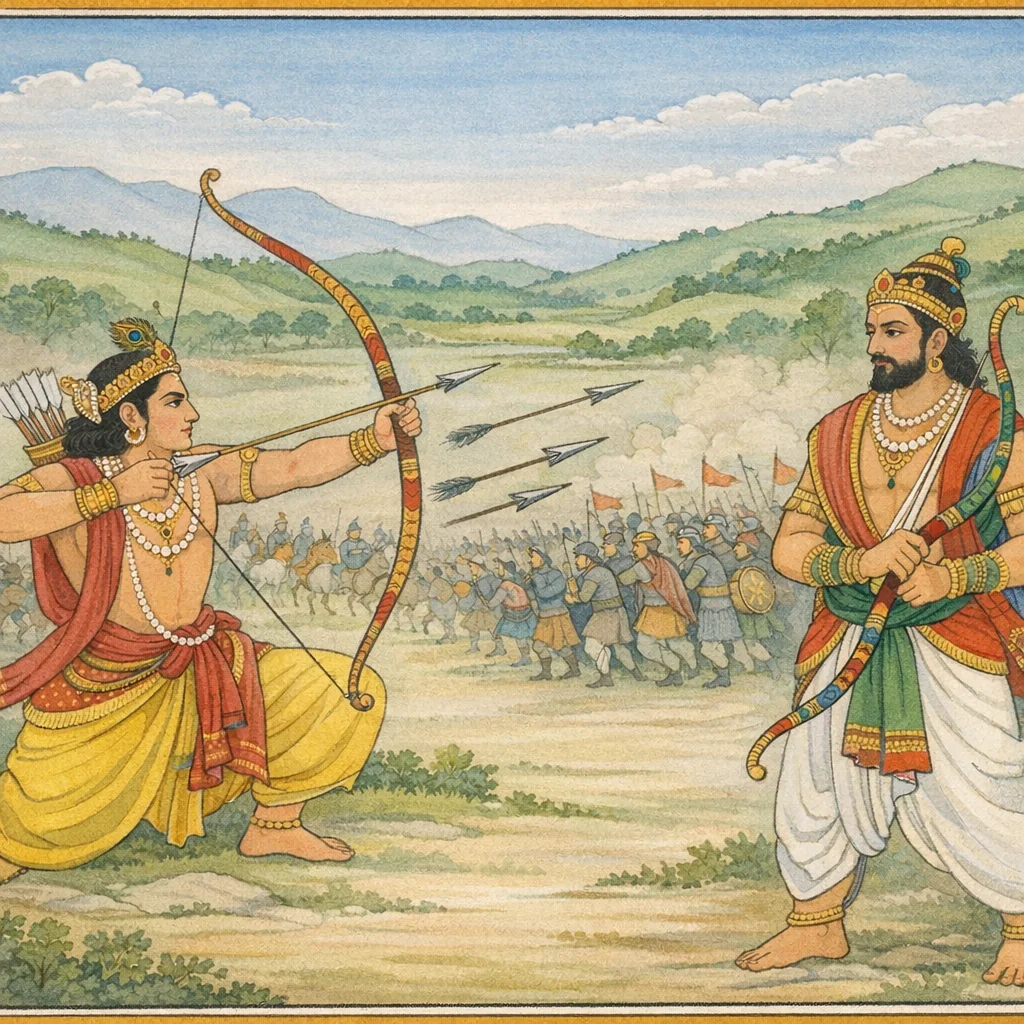
Sanjaya said: Then, O King, the mighty-armed Satyaki, intoxicated with the ardor of battle, drew back his unsurpassed bow—one capable of bearing the strain of great force—in the midst of the fight. The scene signals a renewed surge of resolve and martial duty as the combat intensifies.
Verse 2
प्रगाढं लघु चित्र च दर्शयन् हस्तलाघवम्,(यत् तत् सख्युस्तु पूर्वेण अर्जुनादुपशिक्षितम् ।) बाणोंको छोड़ते समय सात्यकिने अपने उस प्रगाढ़, शीघ्रकारी और विचित्र हस्तलाघवका परिचय दिया, जिसे उन्होंने पूर्वकालमें अपने सखा अर्जुनसे सीखा था
Sanjaya said: As he released his arrows, Sātyaki displayed a mastery of hand-skill—deeply trained, swift in execution, and wondrous in variety—an art he had formerly learned from his friend Arjuna. The scene underscores how disciplined learning and loyal companionship become decisive strengths when duty must be carried out amid war.
Verse 3
तस्य विक्षिपतश्चापं शरानन्यांश्न॒ मुज्चत: । आददानस्य भूयश्न संदधानस्य चापरान्,जब वे धनुषको खींचते, दूसरे-दूसरे बाण छोड़ते, फिर नये-नये बाण हाथमें लेते, धनुषपर रखते, उन्हें शत्रुओंपर चलाते और उनका संहार करते थे, उस समय वर्षा करनेवाले मेघके समान उनका स्वरूप अत्यन्त अद्भुत दिखायी देता था
Sañjaya said: As he drew and brandished his bow, loosing arrow after arrow, then taking up fresh shafts again and again and fitting still others to the string, his form—while he struck down the foes—appeared wondrous, like a rain-bearing cloud pouring forth its torrents in battle.
Verse 4
क्षिपतश्न परांस्तस्य रणे शत्रून् विनिघ्नतः । ददृशे रूपमत्यर्थ मेघस्येव प्रवर्षत:,जब वे धनुषको खींचते, दूसरे-दूसरे बाण छोड़ते, फिर नये-नये बाण हाथमें लेते, धनुषपर रखते, उन्हें शत्रुओंपर चलाते और उनका संहार करते थे, उस समय वर्षा करनेवाले मेघके समान उनका स्वरूप अत्यन्त अद्भुत दिखायी देता था
Sañjaya said: As he swiftly hurled his far-reaching arrows and struck down enemies in the thick of battle, his form appeared exceedingly wondrous—like a rain-laden cloud pouring forth its showers. The image underscores the awe-inspiring, almost elemental force of a warrior whose skill becomes a relentless, impersonal downpour of destruction on the battlefield.
Verse 5
तमुदीर्यन्तमालोक्य राजा दुर्योधनस्तत: । रथानामयुतं तस्य प्रेषयामास भारत,भारत! उस समय उन्हें युद्धमें बढ़ते देख राजा दुर्योधनने उनका सामना करनेके लिये दस हजार रथियोंकी सेना भेजी
Sañjaya said: Seeing him advancing in battle, King Duryodhana then dispatched against him a force of ten thousand chariot-warriors, O Bhārata—an escalation that reveals how fear and pride can drive a ruler to multiply violence rather than seek restraint.
Verse 6
तांस्तु सर्वान् महेष्वासान् सात्यकि: सत्यविक्रम: । जघान परमेष्वासो दिव्येनास्त्रेण वीर्यवान्,परंतु श्रेष्ठ धनुर्धर सत्यपराक्रमी शक्तिशाली सात्यकिने उन समस्त धनुर्धर योद्धाओंको अपने दिव्यास्त्रके द्वारा मार डाला
Sañjaya said: Then Sātyaki—true in valor, mighty and foremost among archers—struck down all those great bowmen by means of a divine weapon. The scene underscores the terrible efficiency of celestial arms in war: prowess joined with higher weaponry can decide fate swiftly, even against many skilled fighters at once.
Verse 7
स कृत्वा दारुणं कर्म प्रगृहीतशरासन: । आससाद ततो वीरो भूरिश्रवसमाहवे,यह भयंकर कर्म करके फिर धनुष लिये वीर सात्यकिने युद्धस्थलमें भूरिश्रवापर आक्रमण किया
Having committed a grim deed, the hero—bow in hand—then advanced in the battle and fell upon Bhūriśravas. The line underscores how, amid the moral turbulence of war, action can be both strategically driven and ethically fraught, as combatants press forward despite the weight of what has just been done.
Verse 8
स हि संदृश्य सेनां ते युयुधानेन पातिताम् । अभ्यधावत संक्रुद्धः कुरूणां कीर्तिवर्धन:,सात्यकिने आपकी सेनाको मार गिराया है, यह देखकर कुरुकुलकी कीर्ति बढ़ानेवाला भूरिश्रवा अत्यन्त कुपित हो उनकी ओर दौड़ा
Seeing your army struck down by Yuyudhāna (Sātyaki), Bhūriśravas—renowned as an enhancer of the Kurus’ fame—rushed toward him in fierce anger. The verse highlights how, amid the moral strain of war, wounded pride and loyalty to one’s lineage can ignite retaliatory violence and escalate the cycle of combat.
Verse 9
इन्द्रायुधसवर्ण तु विस्फार्य सुमहद् धनु: । सृष्टवान् वजसंकाशान् शरानाशीविषोपमान्
Sañjaya said: Having fully drawn his mighty bow, whose hue was like Indra’s rainbow, he loosed arrows that flashed like thunderbolts and were as deadly as venomous serpents—an image of the war’s fierce resolve and the peril that follows when power is unleashed without restraint.
Verse 10
शरांस्तान् मृत्युसंस्पर्शान् सात्यकेश्व पदानुगा:
Sañjaya said: Those arrows—deadly to the touch, like the very contact of death—followed close upon Sātyaki’s steps, pursuing him as he advanced amid the press of battle.
Verse 11
न विषेहुस्तदा राजन दुद्ग॒वुस्ते समन््ततः । विहाय सात्यकिं राजन् समरे युद्धदुर्मदम्
Sañjaya said: “At that time, O King, they could not endure him; they fled in all directions. Leaving Sātyaki behind on the battlefield—intoxicated with the fierce pride of combat—(he continued to press the fight).”
Verse 12
उन बाणोंका स्पर्श मृत्युके तुल्य था। राजन्! उस समय सात्यकिके साथ आये हुए सैनिक उन सायकोंका वेग न सह सके। नरेश्वर! युद्धभूमिमें वे रण-दुर्मद सात्यकिको वहीं छोड़कर सब ओर भाग निकले ।। त॑ दृष्टवा युयुधानस्य सुता दश महाबला: । महारथा: समाख्याताश्षित्रवर्मायुधध्वजा:,सात्यकिके दस महाबलवानू पुत्र थे। उनके कवच, आयुध और ध्वज सभी विचित्र थे। वे सब-के-सब महारथी कहे जाते थे। वे युद्धस्थलमें यूपचिह्वलित ध्वजवाले महारथी भूरिश्रवाको देखकर उसके पास आये और अत्यन्त क्रोधपूर्वक उससे इस प्रकार बोले --
Sañjaya said: The touch of those arrows was like death itself. O King, at that moment the troops who had come with Sātyaki could not endure the force of those shafts. O lord of men, maddened by battle, they abandoned Yuyudhāna (Sātyaki) right there on the field and fled in every direction. Seeing him, Sātyaki’s ten sons—mighty warriors, famed as mahārathas, with splendid armor, weapons, and banners—advanced toward the foe, moved by wrath and the duty to protect their father amid the chaos of war.
Verse 13
समासाद्य महेष्वासं भूरिश्रवसमाहवे । ऊचुः सर्वे सुसंरब्धा यूपकेतुं महारणे,सात्यकिके दस महाबलवानू पुत्र थे। उनके कवच, आयुध और ध्वज सभी विचित्र थे। वे सब-के-सब महारथी कहे जाते थे। वे युद्धस्थलमें यूपचिह्वलित ध्वजवाले महारथी भूरिश्रवाको देखकर उसके पास आये और अत्यन्त क्रोधपूर्वक उससे इस प्रकार बोले --
Sañjaya said: Having approached the great archer Bhūriśravas on the battlefield, all of them—highly enraged—addressed Yūpaketu amid the great combat. The scene signals a surge of wrath-driven confrontation, where martial pride and anger begin to govern speech and action, foreshadowing ethically fraught choices in war.
Verse 14
भो भो: कौरवदायाद सहास्माभिमहाबल । एहि युध्यस्व संग्रामे समस्तै: पृथगेव वा,“महाबली कौरवपुत्र! आओ, इस संग्रामभूमिमें हम सब लोगोंके साथ अथवा पृथक्- पृथक् एक-एकके साथ युद्ध करो
Sañjaya said: “Ho there, heir of the Kuru line, mighty-armed one! Come—fight in this battle, either against all of us together or, if you prefer, one by one.”
Verse 15
अस्मान् वा त्वं पराजित्य यशः प्राप्रुहि संयुगे । वयं वा त्वां पराजित्य प्रीतिं धास्यामहे पितु:,'या तो तुम युद्धमें हमें पराजित करके यश प्राप्त करो अथवा हम तुम्हें परास्त करके पिताकी प्रसन्नता बढ़ायेंगे”
Sañjaya said: “Either you may defeat us in battle and win glory, or we may defeat you and thereby increase our father’s satisfaction. In this contest, each side frames victory as a duty—glory for the warrior, and filial approval for the sons.”
Verse 16
प्रामुड्चत् पुडुखसंयुक्तान् शरानाशीविषोपमान् | संजय कहते हैं--राजन्! महाबाहु सात्यकि युद्धमें उन््मत्त होकर लड़नेवाले थे। उन्होंने युद्धमें भार सहन करनेमें समर्थ और परम उत्तम धनुषको बलपूर्वक खींचकर विषधर सर्पके समान भयानक पंखयुक्त बाण छोड़े,एवमुक्तस्तदा शूरैस्तानुवाच महाबल: । वीर्यश्लाघी नरश्रेष्ठस्तान् दृष्टया समवस्थितान् तब उन शूरवीरोंके ऐसा कहनेपर अपने पराक्रमकी श्लाघा करनेवाला महाबली नरश्रेष्ठ भूरिश्रवा उन्हें युद्धके लिये उपस्थित देख उनसे इस प्रकार बोला--
Sañjaya said: O King, the mighty-armed Sātyaki, fighting with fierce ardour, forcefully drew his excellent bow—fit to bear the strain of battle—and released broad, well-fitted arrows, dreadful like venomous serpents. The scene underscores the relentless momentum of war: prowess is displayed through disciplined skill, yet its immediate fruit is fear and destruction on the battlefield.
Verse 17
साध्विदं कथ्यते वीरा यद्येवं मतिरद्य व: । युध्यध्वं सहिता यत्ता निहनिष्यामि वो रणे,“वीरो! यदि तुम्हारा ऐसा विचार है तो तुमलोगोंने यह बड़ी अच्छी बात कही है। तुम सब लोग एक साथ सावधान होकर यत्नपूर्वक युद्ध करो। मैं इस रणभूमिमें तुम सब लोगोंको मार गिराऊँगा'
Sañjaya said: “Heroes, what you have said is indeed fitting—if such is your resolve today. Then fight, united and fully prepared, striving with all your effort; on this battlefield I will strike you down.” The line conveys a hard, martial ethic: once a decision for war is owned, it must be met with disciplined unity and readiness, even as it escalates the vow of mutual destruction that defines the Kurukṣetra conflict.
Verse 18
एवमुक्ता महेष्वासास्ते वीरा: क्षिप्रकारिण: । महता शरवर्षेण अभ्यधावन्नरिंदमम्,भूरिश्रवाके ऐसा कहनेपर शीघ्रता करनेवाले उन महाधनुर्धर वीरोंने बड़ी भारी बाण- वर्षा करते हुए शत्रुदमन भूरिश्रवापर आक्रमण किया
Sañjaya said: Thus addressed, those heroic, great bowmen—swift to act—rushed forward, showering a mighty rain of arrows, and fell upon Bhūriśravā, the subduer of foes. The verse underscores the battlefield ethic of immediate response to command and the collective momentum of warriors once a decision is voiced.
Verse 19
सो<पराह्ने महाराज संग्रामस्तुमुलो5भवत् । एकस्य च बहूनां च समेतानां रणाजिरे,महाराज! अपराह्नकालमें उस समरांगणमें एकत्र हुए बहुत-से वीरोंके साथ एक वीरका भयंकर युद्ध प्रारम्भ हुआ
Sañjaya said: “O King, in the latter part of the day the battle grew exceedingly fierce. There, on the battlefield, a dreadful combat began—one warrior contending against many who had gathered together.”
Verse 20
तमेकं रथिनां श्रेष्ठ शरैस्ते समवाकिरन् । प्रावषीव यथा मेरुं सिषिचुर्जलदा नूप,नरेश्वर! जैसे मेघ वर्षाकालमें मेरुपर्वतपर जलकी बूँदें बरसाते हैं, उसी प्रकार उन सबने मिलकर रथियोंमें श्रेष्ठ एकमात्र भूरिश्रवापर बाणोंकी वर्षा आरम्भ की
Sañjaya said: Then all of them together showered arrows upon that single foremost of chariot-warriors, just as, in the rainy season, clouds pour down torrents upon Mount Meru—so did they begin a concentrated downpour of shafts against Bhūriśravas. The image underscores the war’s harsh ethic of overwhelming force, where even a solitary hero becomes the target of collective assault.
Verse 21
तैस्तु मुक्तान् शरान् घोरान् यमदण्डाशनिप्रभान् । असम्प्राप्तानसम्भ्रान्तश्चिच्छेदाशु महारथ:,उनके छोड़े हुए यमदण्ड और वज्रके समान प्रकाशित होनेवाले भयंकर बाणोंको अपने पास पहुँचनेसे पहले ही महारथी भूरिश्रवाने बिना किसी घबराहटके शीघ्रतापूर्वक काट गिराया
Verse 22
तत्रादभुतमपश्याम सौमदत्ते: पराक्रमम् । यदेको बहुभियुद्धे समसज्जदभीतवत्,वहाँ हम सबने सोमदत्तपुत्र भूरिश्रवाका अद्भुत पराक्रम देखा। वह अकेला होनेपर भी बहुत-से वीरोंके साथ निर्भीक-सा युद्ध करता रहा
Sañjaya said: “There we witnessed the astonishing prowess of Saumadatti (Bhūriśravas). Though alone, he engaged in battle against many warriors, joining combat as if utterly fearless.”
Verse 23
विसृज्य शरवृष्टिं तां दश राजन् महारथा: । परिवार्य महाबाहुं निहन्तुमुपचक्रमु:,राजन! उन दस महारथियोंने वहाँ बाणोंकी वर्षा करके महाबाहु भूरिश्रवाको चारों ओरसे घेरकर उसे मार डालनेकी तैयारी की
Sañjaya said: “O King, after unleashing that shower of arrows, those ten great chariot-warriors surrounded the mighty-armed Bhūriśravas on all sides and set about to slay him.”
Verse 24
सौमदत्तिस्तत:ः क्रुद्धस्तेषां चापानि भारत | चिच्छेद समरे राजन् युध्यमानो महारथै:,भरतवंशीनरेश! उस समय क्रोधमें भरे हुए भूरिश्रवाने उन महारथियोंके साथ युद्ध करते हुए ही समरभूमिमें उनके धनुष काट डाले
Sañjaya said: Then Saumadatti (Bhūriśravas), inflamed with anger, O Bhārata, cut down their bows on the battlefield, O King, even as he fought against those great chariot-warriors. The verse underscores the fierce momentum of war, where wrath and prowess drive combatants to disable opponents by breaking their weapons rather than merely seeking personal glory.
Verse 25
अथीैषां छिन्नधनुषां शरै: संनतपर्वभि: । चिच्छेद समरे राजन शिरांसि भरतर्षभ,भरतश्रेष्ठ) इनके धनुष कट जानेपर झुकी हुई गाँठवाले बाणोंसे भूरिश्रवाने उनके मस्तक भी समर-भूमिमें काट गिराये
Sanjaya said: Then, O king—when their bows had been cut—Bhūriśravas, using arrows whose joints were bent, severed their heads on the battlefield, O bull among the Bharatas. The verse underscores the grim momentum of war: once a warrior is disarmed, the struggle turns swiftly into lethal advantage, raising the ethical tension between martial prowess and restraint.
Verse 26
ते हता न््यपतन् राजन् वज्रभग्ना इव द्रुमा: । तान् दृष्टवा निहतान् वीरो रणे पुत्रान् महाबलान्
Sañjaya said: “O King, once struck down, they fell—like trees shattered by a thunderbolt. Seeing those mighty sons lying slain upon the battlefield, the hero beheld the ruin wrought by war, where strength and lineage alike are brought low.”
Verse 27
रथं रथेन समरे पीडयित्वा महाबलौ,वे दोनों महाबली समरांगणमें अपने रथके द्वारा दूसरेके रथको पीड़ा देने लगे। उन्होंने आपसमें एक-दूसरेके रथ और घोड़ोंको नष्ट कर दिया। इस प्रकार रथहीन हुए वे दोनों महारथी उछलते-कूदते हुए एक-दूसरेका सामना करने लगे
Sañjaya said: In the thick of battle, the two mighty warriors pressed chariot against chariot, each striving to overpower the other. In that fierce exchange they shattered one another’s chariots and horses; and when both were left without chariots, those great fighters sprang forward and continued to confront each other face to face—showing the relentless escalation of combat where prowess and resolve, rather than advantage, drive the struggle onward.
Verse 28
तावन्योन्यं हि समरे निहत्य रथवाजिन: । विरथावभिवल्गन्तौ समेयातां महारथौ,वे दोनों महाबली समरांगणमें अपने रथके द्वारा दूसरेके रथको पीड़ा देने लगे। उन्होंने आपसमें एक-दूसरेके रथ और घोड़ोंको नष्ट कर दिया। इस प्रकार रथहीन हुए वे दोनों महारथी उछलते-कूदते हुए एक-दूसरेका सामना करने लगे
Sañjaya said: In the thick of battle, the two great chariot-warriors struck down each other’s chariots and horses. Deprived of their cars, they sprang forward on foot and closed with one another again—undaunted, intent on continuing the contest despite the loss of their war-gear.
Verse 29
प्रगूहीतमहाखड्गौ तौ चर्मवरधारिणौ । शुशुभाते नरव्याप्रौ युद्धाय समवस्थितौ,वे दोनों पुरुषसिंह हाथमें बड़ी-बड़ी तलवारें और सुन्दर ढालें लिये युद्धके लिये उद्यत होकर बड़ी शोभा पा रहे थे
Sañjaya said: Those two tiger-like heroes, gripping great swords and bearing fine shields, stood poised for battle and shone with martial splendor—an image of valor at the threshold where duty and violence meet.
Verse 30
(खड्गप्रहारैः सुभृशं जघ्नतुश्च॒ परस्परम् पीडितौ खड्गघाताभ्यां स्रवद् रक्तौ क्षितौ भृशम् ।। शुशुभाते महावीर्यावुभौ समरदुर्जयौ । असूगुक्षितसर्वाज्ि पुष्पिताविव किंशुकौ ।।) वे तलवारोंकी मारसे एक-दूसरेको अत्यन्त घायल करने लगे। खड्गके आघातसे पीड़ित हो दोनों ही पृथ्वीपर रक्त बहाने लगे। उनके सारे अंग रक्तरंजित हो रहे थे। अतः वे रणदुर्जय महापराक्रमी वीर खिले हुए दो पलाश-वृक्षोंकी भाँति अत्यन्त सुशोभित होने लगे। ततः सात्यकिमभ्येत्य निस्त्रिंशवरधारिणम् । भीमसेनस्त्वरन् राजन् रथमारोपयत् तदा,राजन! तदनन्तर उत्तम खड़ग धारण करनेवाले सात्यकिके पास पहुँचकर भीमसेनने उस समय तुरंत उन्हें अपने रथपर बिठा लिया
Sañjaya said: Striking each other fiercely with sword-blows, the two warriors wounded one another again and again. Tormented by the cuts of their blades, both poured out blood upon the earth in abundance. With every limb smeared in gore, those mighty heroes—hard to overcome in battle—shone like two kiṃśuka (palāśa) trees in full bloom. Then Bhīmasena, O king, hastening to Sātyaki, the bearer of an excellent sword, lifted him up onto his chariot at that time.
Verse 31
तवापि तनयो राजन् भूरिश्रवसमाहवे । आरोपयद्ू रथं तूर्ण पश्यतां सर्वधन्विनाम्,महाराज! इसी प्रकार आपके पुत्र दुर्योधनने भी युद्धस्थलमें समस्त धनुर्धरोंके देखते- देखते भूरिश्रवाको तुरंत अपने रथपर चढ़ा लिया
Sañjaya said: “O King, your son too, in the midst of battle, swiftly lifted Bhūriśravas onto his chariot, while all the bowmen looked on.” The scene underscores the public, witnessed nature of battlefield conduct—acts of protection and alliance are performed under the scrutiny of warriors, where honor and reputation carry ethical weight.
Verse 32
तस्मिंस्तथा वर्तमाने रणे भीष्म॑ महारथम् | अयोधयन्त संरब्धा: पाण्डवा भरतर्षभ,भरतश्रेष्ठ] उस समय क्रोधमें भरे हुए पाण्डव उस युद्धमें महारथी भीष्मके साथ युद्ध करने लगे
Sañjaya said: As the battle continued in that manner, the Pāṇḍavas—inflamed with wrath—engaged Bhīṣma, the great chariot-warrior, in combat, O bull among the Bharatas. The scene underscores the moral strain of war: even those fighting for a righteous cause are driven by powerful passions as they confront an elder revered for his vows and stature.
Verse 33
लोहितायति चादित्ये त्वरमाणो धनंजय: । पजञ्चविंशतिसाहस्रानु निजघान महारथान्
Sañjaya said: As the sun turned red, Dhanañjaya (Arjuna), pressing on with urgency, struck down twenty-five thousand great chariot-warriors. The verse underscores the relentless momentum of battle as daylight wanes, and the grave moral weight of mass slaughter carried out in the name of a chosen cause and duty.
Verse 34
जब सूर्य अस्ताचलके पास पहुँचकर लाल होने लगे, उस समय अर्जुनने बड़ी उतावलीके साथ बाण-वर्षा करके पचीस हजार महारथियोंको मार डाला ।। ते हि दुर्योधनादिष्टास्तदा पार्थनिबर्हणे । सम्प्राप्यैव गता नाशं शलभा इव पावकम्
Sañjaya said: For those warriors, commanded by Duryodhana to bring about Pārtha’s destruction, rushed into the encounter only to meet their own ruin—like moths flying into a flame. The verse underscores the moral blindness of aggression driven by pride and command, where intent to annihilate the righteous turns back upon the aggressor.
Verse 35
वे सब-के-सब दुर्योधनकी आज्ञासे अर्जुनका संहार करनेके लिये आये थे। परंतु वे उस समय आगममें गिरे हुए पतंगोंकी भाँति उनके पास आते ही नष्ट हो गये ।। ततो मत्स्या: केकयाश्च धरनुर्वेदविशारदा: । परिवत्रुस्तदा पार्थ सहपुत्रं महारथम्,तदनन्तर थधर्नुर्विद्यामें प्रवीण मत्स्य और केकयदेशके वीर अभिमन्यु आदि पुत्रोंसे युक्त महारथी अर्जुनको घेरकर कौरवोंसे युद्धके लिये खड़े हो गये
Sanjaya said: Then the warriors of Matsya and Kekaya, highly skilled in the science of archery, surrounded Arjuna—the great chariot-warrior—together with his son, and stood ready to fight the Kauravas. The scene underscores how, amid the chaos of war, disciplined allies rally around a righteous cause, protecting their leader and kin as duty demands.
Verse 36
एतस्मिन्नेव काले तु सूर्येडस्तमुपगच्छति । सर्वेषां चैव सैन्यानां प्रमोहः समजायत,इसी समय सूर्य अस्ताचलको चले गये। तब आपके समस्त सैनिकोंपर मोह छा गया
Sañjaya said: Just at that very time, as the sun was setting, a bewildering confusion fell upon all the armies. With daylight fading, clarity of judgment and coordinated action weakened, and the battlefield slipped into disarray.
Verse 37
अवहारं तततक्रषुक्रे पिता देवव्रतस्तव । संध्याकाले महाराज सैन्यानां श्रान्तवाहन:,महाराज! तब आपके ताऊ देवव्रतने संध्याके समय अपनी सेनाको पीछे हटा लिया। उनके वाहन बहुत थक गये थे
Sañjaya said: “O great king, your uncle Devavrata (Bhīṣma), seeing that the troops’ mounts and conveyances were exhausted, ordered a withdrawal at twilight and drew the army back.”
Verse 38
पाण्डवानां कुरूणां च परस्परसमागमे । ते सेने भृशसंविग्ने ययतु: स्व॑ं निवेशनम्,पाण्डवों और कौरवोंके पारस्परिक संघर्षमें दोनों ही सेनाएँ अत्यन्त उद्विग्न हो उठी थीं। अत: वे अपनी-अपनी छावनीको चली गयीं
Sañjaya said: When the Pāṇḍavas and the Kurus met in mutual clash, both armies became intensely shaken and anxious; therefore they withdrew, each to its own camp. The verse underscores how even disciplined forces, when pressed by the moral and physical weight of fratricidal war, can be driven to retreat and regroup rather than continue a ruinous engagement.
Verse 39
ततः स्वशिबिरं गत्वा न्यविशंस्तत्र भारत । पाण्डवा: सूंजयै: सार्थ कुरवश्च॒ यथाविधि,भारत! तदनन्तर सूंजयोंसहित पाण्डव और कौरव अपने शिविरमें जाकर वहाँ विधिपूर्वक विश्राम करने लगे
Then, having gone back to their own camp, they settled down there, O Bharata. The Pāṇḍavas together with Sañjaya, and the Kurus as well, rested in due order—each side observing the proper discipline of the camp after the day’s events.
Verse 74
इति श्रीमहाभारते भीष्मपर्वणि भीष्मवधपर्वणि पञठचमदिवसावहारे चतु:सप्ततितमोध्याय:
Thus, in the Śrī Mahābhārata, within the Bhīṣma Parva—specifically the section concerning the slaying (fall) of Bhīṣma—during the account of the fifth day (of battle), ends the seventy-fourth chapter. This is a colophon marking the close of a narrative unit, situating the events within the ethical gravity of war and the impending downfall of a great elder whose fate is tied to vows, duty, and the tragic necessities of the battlefield.
Verse 96
सहस््रशो महाराज दर्शयन् पाणिलाघवम् । उसका विशाल धनुष इन्द्रधनुषके समान बहुरंगा था। महाराज! उसे खींचकर भूरिश्रवाने अपने हस्त-लाघवका परिचय देते हुए वज़्के समान दुःसह और विषैले सर्पोके तुल्य भयंकर सहस्रों बाण छोड़े
Sañjaya said: “O King, displaying extraordinary dexterity of hand again and again, Bhūriśravā drew his great bow—many-hued like Indra’s rainbow. Then, to demonstrate his mastery, he pulled it taut and released thousands of arrows: unbearable like a thunderbolt and terrifying like venomous serpents.” The passage highlights how martial skill, when driven by battle-fury, becomes a force of dread—powerful, yet ethically ambivalent in the carnage of war.
Verse 266
वार्ष्णेयो विनदन् राजन् भूरिश्रवसम भ्ययात् । राजन! वे दसों वीर वज्रके मारे हुए वृक्षोंकी भाँति रणभूमिमें मरकर गिर पड़े। उन महाबली पुत्रोंको संग्राममें मारा गया देख वीरवर सात्यकिने गर्जना करते हुए वहाँ भूरिश्रवापर आक्रमण किया
Sañjaya said: “O King, the Vārṣṇeya warrior, roaring aloud, advanced against Bhūriśravas. O King, those ten heroes, struck down by Vajraka, fell dead upon the battlefield like trees felled by a thunderbolt. Seeing those mighty sons slain in the fight, the foremost of warriors, Sātyaki, with a lion-like cry, rushed there to assail Bhūriśravas.”
Frequently Asked Questions
The counsel balances loyalty to royal command with the obligation to speak beneficial truth: commitment to fight is affirmed, yet the assessment warns that the Pāṇḍavas—supported by Vāsudeva—are not readily conquerable, highlighting the duty to advise honestly even within hierarchical allegiance.
The chapter teaches that battlefield effectiveness is not only heroic skill but systems design: layered combined-arms ratios, protected command nodes, and responsive counter-formations determine resilience and the ability to absorb shocks during first contact.
No explicit phalaśruti is presented in this chapter; its meta-significance lies in documenting how strategic structure (vyūha) and truthful counsel function as practical expressions of rājadharma within the epic’s war chronicle.