Adhyaya 91
अश्वमेधावसानम् — Dakṣiṇā-vibhāga and Avabhṛtha (Completion of the Aśvamedha)
Upa-parva: Aśvamedha-kratu-saṃsthāpanā (Completion of the Aśvamedha and Dakṣiṇā Distribution Episode)
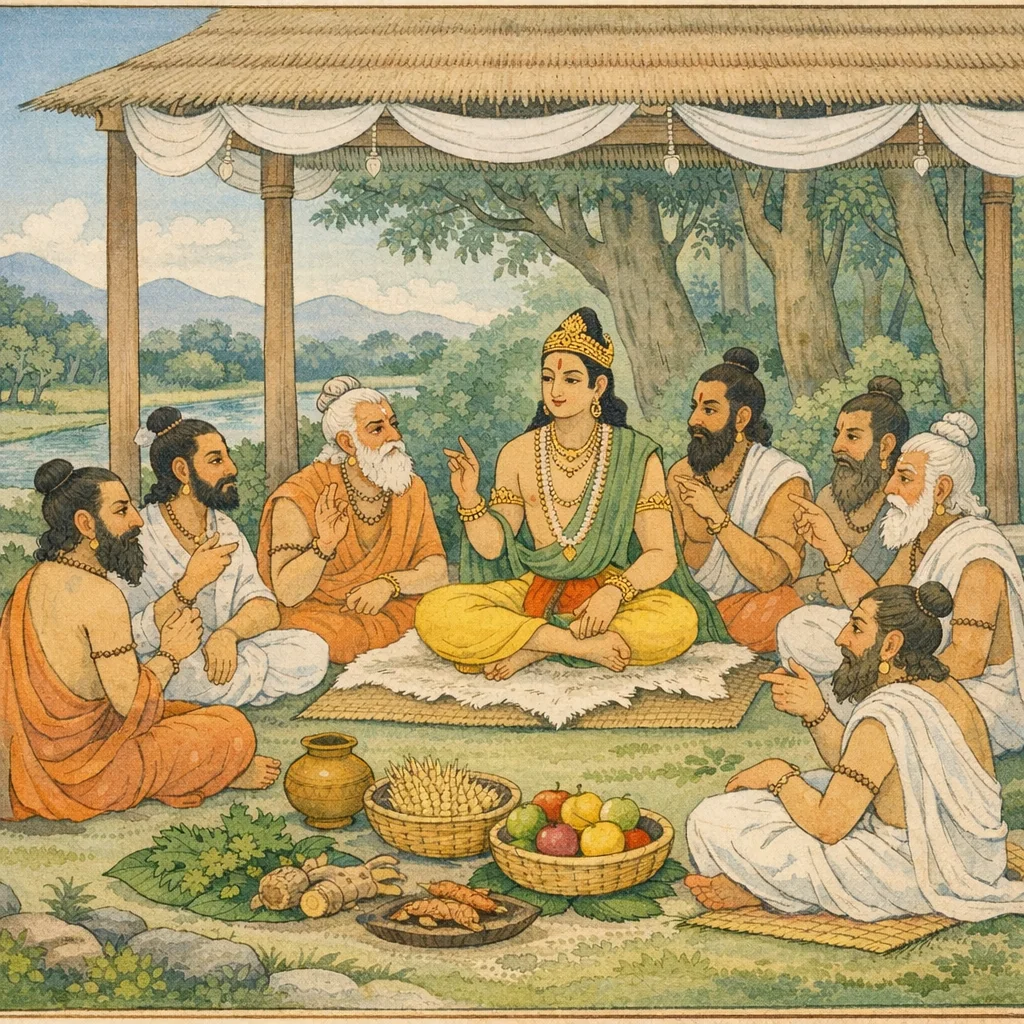
Vaiśaṃpāyana narrates the final procedures of the Aśvamedha. The officiating twice-born priests perform the śāstric handling of the sacrificial horse, including the prescribed cooking of portions and the ritualized sensory act wherein Yudhiṣṭhira, with his brothers, inhales the purificatory fragrance of the offering’s smoke. The remaining parts are offered into the fire by the full complement of sixteen ṛtvij. Vyāsa, present with disciples, formally completes the rite and ‘augments’ the king’s merit. Yudhiṣṭhira then gives vast gifts to the assembly and offers the earth itself to Vyāsa as dakṣiṇā. Vyāsa accepts but clarifies that the earth remains Yudhiṣṭhira’s trust; he requests a monetary ‘niṣkraya’ (redemption price) since brāhmaṇas seek wealth rather than territorial rule. Yudhiṣṭhira publicly states that in an Aśvamedha the earth is remembered as dakṣiṇā, conquered by Arjuna and delivered by him to the priests; yet he refuses to personally appropriate brahmin-dedicated property and even proposes retreat to the forest while the priests divide the land by cāturhotra measure. His brothers and Draupadī affirm his stance; a disembodied voice praises it. Vyāsa returns the earth to Yudhiṣṭhira and instructs him to give gold to the twice-born; Kṛṣṇa endorses this counsel. Yudhiṣṭhira grants an even greater, tripled dakṣiṇā, which Vyāsa distributes in four shares to the officiants. The ritual field’s gold and valuables are apportioned with royal permission; over time additional groups also collect remaining wealth. The brāhmaṇas depart satisfied. Vyāsa gives Kuntī a personal share as a gesture responding to reverence. After the avabhṛtha, Yudhiṣṭhira, purified, returns to the city amid assembled rulers, distributing further gifts and installing Duḥśalā’s young grandson in his protected domain. The chapter closes by portraying the sacrifice as an immense festival of abundance, sound, and continual giving, culminating in the king’s fulfilled re-entry into civic life.
Chapter Arc: जनमेजय यज्ञ-धर्म की प्रशंसा करते हुए पूछते हैं कि राजाओं ने यज्ञों से कीर्ति और स्वर्ग पाया है—तो क्या यज्ञफल के तुल्य कोई अन्य साधन है ही नहीं? → संवाद यज्ञ की ‘हिंसामिश्रित’ प्रकृति पर टिकता है: क्या धर्म का आधार कर्मकाण्ड है या शुद्ध साधन-शुद्ध उद्देश्य? अन्यायोपार्जित धन, राग-मोह, और संशययुक्त यजमान—इन सबके कारण यज्ञ का फल संदिग्ध ठहरता है। तपस्वी और विद्वानों में यह विवाद उभरता है कि यज्ञ में स्थावर (जड़/वनस्पति) पदार्थों से ही आहुति हो या प्राणियों की हिंसा भी ‘विधि’ के नाम पर स्वीकार्य है। → इन्द्र के यज्ञ में उपस्थित तपस्वियों के बीच तीखा मतभेद चरम पर पहुँचता है—एक पक्ष ‘स्थावरैः’ यज्ञ का आग्रह करता है, दूसरा परम्परागत हिंसामिश्रित विधान का; ऋषि तत्त्वदर्शी होकर शास्त्रसम्मत, संयमित और अहिंसक/शुद्ध साधन-प्रधान यज्ञ की ओर संकेत करते हैं, पर इन्द्र अभिमान और मोहवश उस उपदेश को स्वीकार नहीं करते। → अध्याय का निष्कर्ष कर्मकाण्ड-गौरव से आगे बढ़कर ‘धर्म की शर्तें’ स्पष्ट करता है: अन्यायोपार्जित द्रव्य से, संशय और लोभ से किया गया यज्ञ धर्मफल नहीं देता; दान, तप, संयम, और शास्त्रीय विधि से—यहाँ तक कि उच्छ (बीनाअन्न), फल, मूल, शाक, जलपात्र जैसे सरल साधनों से—धार्मिक पुरुष स्वर्गगामी होते हैं। → इन्द्र का मोह-आवरण बना रहता है—तत्त्वदर्शी ऋषियों की वाणी अस्वीकृत होने से यह संकेत मिलता है कि आगे देव-मानव-ऋषि संवाद में धर्म की सूक्ष्म परीक्षा और तीव्र होगी।
Shlokas
Verse 1
अफ्--णक+ एकनवतितमो< ध्याय: हिंसामिश्रित यज्ञ और धर्मकी निन्दा जनमेजय उवाच यज्ञे सक्ता नृपतयस्तपःसक्ता महर्षय: । शान्तिव्यवस्थिता विप्रा: शमे दम इति प्रभो,जनमेजयने कहा--प्रभो! राजालोग यज्ञमें संलग्न होते हैं, महर्षि तपस्यामें तत्पर रहते हैं और ब्राह्मणलोग शान्ति (मनोनिग्रह)-में स्थित होते हैं। मनका निग्रह हो जानेपर इन्द्रियोंका संयम स्वत: सिद्ध हो जाता है
Janamejaya said: “O lord, kings are devoted to sacrifice; great seers are devoted to austerity; and brāhmaṇas abide in peace—through mental tranquility and the discipline of self-restraint.”
Verse 2
तस्माद् यज्ञफलैस्तुल्यं न किंचिदिह दृश्यते । इति मे वर्तते बुद्धिस्तथा चैतदसंशयम्,अत: यज्ञफलकी समानता करनेवाला कोई कर्म यहाँ मुझे नहीं दिखायी देता है। यज्ञके सम्बन्धमें मेरा तो ऐसा ही विचार है और नि:संदेह यही ठीक है
Janamejaya said: “Therefore, I see nothing in this world that is equal to the fruits of sacrifice. Such is my settled understanding—and of this there is no doubt.”
Verse 3
यज्ञैरिष्टवा तु बहवो राजानो द्विजसत्तमा: । इह कीर्ति परां प्राप्य प्रेत्य स्वर्गमवाप्रुयु:,यज्ञोंका अनुष्ठान करके बहुत-से राजा और श्रेष्ठ ब्राह्मण इहलोकमें उत्तम कीर्ति पाकर मृत्युके पश्चात् स्वर्गलोकमें गये हैं
Janamejaya said: “O best of Brahmins, many kings, having duly performed sacrifices, gained the highest renown in this world; and after death they attained heaven. ”
Verse 4
देवराज: सहस्राक्ष: क्रतुभिर्भूरिदक्षिणै: । देवराज्यं महातेजा: प्राप्तवानखिलं विभु:,सहस्र नेत्रधारी महातेजस्वी देवराज भगवान् इन्द्रने बहुत-सी दक्षिणावाले बहुसंख्यक यज्ञोंका अनुष्ठान करके देवताओंका समस्त साम्राज्य प्राप्त किया था
Janamejaya said: The mighty Lord of the gods, Indra of a thousand eyes, by performing many sacrifices rich in priestly gifts, attained the entire sovereignty of the gods. The verse underscores a moral logic familiar to the epic: sustained ritual merit and generous giving are presented as legitimate means to acquire rightful authority and preeminence.
Verse 5
यदा युधिष्छिरो राजा भीमार्जुनपुर:सर: । सदृशो देवराजेन समृद्धा विक्रमेण च,भीम और अर्जुनको आगे रखकर राजा युधिष्छिर भी समृद्धि और पराक्रमकी दृष्टिसे देवराज इन्द्रके ही तुल्य थे
Janamejaya said: “At that time King Yudhiṣṭhira, with Bhīma and Arjuna leading before him, was comparable to Indra, the king of the gods—equal in prosperity and in heroic prowess.”
Verse 6
अथ कस्मात् स नकुलो गर्हयामास त॑ क्रतुम् । अश्वमेधं महायज्ञं राज्ञस्तस्य महात्मन:,फिर उस नेवलेने महात्मा राजा युधिष्ठिरके उस अश्वमेध नामक महायज्ञकी निन्दा क्यों की?
Janamejaya asked: “For what reason did that mongoose censure the rite—the Aśvamedha, the great sacrifice—performed by that noble king?” The question presses the ethical tension between outward grandeur in ritual and the inner measure of merit that may expose hidden shortcomings.
Verse 7
वैशम्पायन उवाच यज्ञस्य विधिमग्र्यं वै फलं चापि नराधिप । गदत: शृणु मे राजन् यथावदिह भारत,वैशम्पायनजीने कहा--नरेश्वर! भरतनन्दन! मैं यज्ञकी श्रेष्ठ विधि और फलका यहाँ यथावत् वर्णन करता हूँ, तुम मेरा कथन सुनो
Vaiśampāyana said: “O lord of men, O Bhārata king, listen as I speak. Here I shall set forth, in due order, the foremost procedure of sacrifice and its fruits—so that you may understand how righteous action bears its proper result.”
Verse 8
पुरा शक्रस्य यजत: सर्व ऊचुर्महर्षय: । ऋतचिविक्षु कर्मव्यग्रेषु वितते यज्ञकर्मणि,राजन! प्राचीन कालकी बात है, जब इन्द्रका यज्ञ हो रहा था और सब महर्षि मन्त्रोच्चारण कर रहे थे, ऋत्विजूलोग अपने-अपने कर्मोमें लगे थे, यज्ञका काम बड़े समारोह और विस्तारके साथ चल रहा था, उत्तम गुणोंसे युक्त आहुतियोंका अग्निमें हवन किया जा रहा था, देवताओंका आवाहन हो रहा था, बड़े-बड़े महर्षि खड़े थे, ब्राह्मणलोग बड़ी प्रसन्नताके साथ वेदोक्त मन्त्रोंका उत्तम स्वरसे पाठ करते थे और शीघ्रकारी उत्तम अध्वर्युगण बिना किसी थकावटके अपने कर्तव्यका पालन कर रहे थे। इतनेहीमें पशुओंके आलम्भका समय आया। महाराज! जब पशु पकड़ लिये गये, तब महर्षियोंको उनपर बड़ी दया आयी
Vaiśampāyana said: In ancient times, O king, when Śakra (Indra) was performing a sacrifice, all the great seers spoke as the ritual proceeded on a grand scale. The officiating priests were intent on their respective duties, fully engaged in the spread of sacrificial work. (In that setting, when the time came for the binding of animals for the rite, compassion arose in the sages toward those creatures.)
Verse 9
हूयमाने तथा वह्लौ होत्रे गुणसमन्विते । देवेष्वाहयमानेषु स्थितेषु परमर्षिषु,राजन! प्राचीन कालकी बात है, जब इन्द्रका यज्ञ हो रहा था और सब महर्षि मन्त्रोच्चारण कर रहे थे, ऋत्विजूलोग अपने-अपने कर्मोमें लगे थे, यज्ञका काम बड़े समारोह और विस्तारके साथ चल रहा था, उत्तम गुणोंसे युक्त आहुतियोंका अग्निमें हवन किया जा रहा था, देवताओंका आवाहन हो रहा था, बड़े-बड़े महर्षि खड़े थे, ब्राह्मणलोग बड़ी प्रसन्नताके साथ वेदोक्त मन्त्रोंका उत्तम स्वरसे पाठ करते थे और शीघ्रकारी उत्तम अध्वर्युगण बिना किसी थकावटके अपने कर्तव्यका पालन कर रहे थे। इतनेहीमें पशुओंके आलम्भका समय आया। महाराज! जब पशु पकड़ लिये गये, तब महर्षियोंको उनपर बड़ी दया आयी
Vaiśaṃpāyana said: “O King, as oblations endowed with excellent qualities were being duly offered into the blazing fire by the competent Hotṛ, while the gods were being invoked and the great seers stood present, the sacrifice proceeded in full solemnity. The scene conveys the ordered harmony of Vedic ritual—yet it also sets the stage for the moral tension that arises when the time comes for the binding of animals, stirring compassion in the sages.”
Verse 10
सुप्रतीतैस्तथा विप्रैः स्वागमै: सुस्वरैर्न॒प । अश्रान्तैश्ञापि लघुभिरवथ्वर्युवृषभैस्तथा,राजन! प्राचीन कालकी बात है, जब इन्द्रका यज्ञ हो रहा था और सब महर्षि मन्त्रोच्चारण कर रहे थे, ऋत्विजूलोग अपने-अपने कर्मोमें लगे थे, यज्ञका काम बड़े समारोह और विस्तारके साथ चल रहा था, उत्तम गुणोंसे युक्त आहुतियोंका अग्निमें हवन किया जा रहा था, देवताओंका आवाहन हो रहा था, बड़े-बड़े महर्षि खड़े थे, ब्राह्मणलोग बड़ी प्रसन्नताके साथ वेदोक्त मन्त्रोंका उत्तम स्वरसे पाठ करते थे और शीघ्रकारी उत्तम अध्वर्युगण बिना किसी थकावटके अपने कर्तव्यका पालन कर रहे थे। इतनेहीमें पशुओंके आलम्भका समय आया। महाराज! जब पशु पकड़ लिये गये, तब महर्षियोंको उनपर बड़ी दया आयी
Vaiśampāyana said: “O king, the well-instructed brāhmaṇas, firmly grounded in their own Vedic traditions, were reciting the mantras in clear and excellent tones. The foremost of the Adhvaryu priests—swift in action and unwearied—were likewise carrying out their ritual duties without fatigue.”
Verse 11
आलम्भसमये तस्मिन् गृहीतेषु पशुष्वथ । महर्षयो महाराज बभूवु: कृपयान्विता:,राजन! प्राचीन कालकी बात है, जब इन्द्रका यज्ञ हो रहा था और सब महर्षि मन्त्रोच्चारण कर रहे थे, ऋत्विजूलोग अपने-अपने कर्मोमें लगे थे, यज्ञका काम बड़े समारोह और विस्तारके साथ चल रहा था, उत्तम गुणोंसे युक्त आहुतियोंका अग्निमें हवन किया जा रहा था, देवताओंका आवाहन हो रहा था, बड़े-बड़े महर्षि खड़े थे, ब्राह्मणलोग बड़ी प्रसन्नताके साथ वेदोक्त मन्त्रोंका उत्तम स्वरसे पाठ करते थे और शीघ्रकारी उत्तम अध्वर्युगण बिना किसी थकावटके अपने कर्तव्यका पालन कर रहे थे। इतनेहीमें पशुओंके आलम्भका समय आया। महाराज! जब पशु पकड़ लिये गये, तब महर्षियोंको उनपर बड़ी दया आयी
Vaiśampāyana said: At that time, when the moment for the animal-offering had arrived and the animals had been seized, the great seers—O great king—became filled with compassion. The verse highlights a moral tension within ritual: even in a sanctioned sacrifice, the sight of living beings bound for harm awakens pity in the wise, reminding the listener that dharma must be weighed with sensitivity to suffering.
Verse 12
ततो दीनान् पशून् दृष्टवा ऋषयस्ते तपोधना: । ऊचुः: शक्रं: समागम्य नायं यज्ञविधि: शुभ:,उन पशुओंकी दयनीय अवस्था देखकर वे तपोधन ऋषि इन्द्रके पास जाकर बोले --“यह जो यज्ञमें पशुवधका विधान है, यह शुभकारक नहीं है
Then, seeing the animals in a pitiable condition, those ascetics rich in austerity approached Śakra (Indra) and said: “This procedure of sacrifice—this rule that involves the killing of animals—is not auspicious.”
Verse 13
अपरिज्ञानमेतत् ते महान्तं धर्ममिच्छत: । न हि यज्ञे पशुगणा विधिदृष्टा: पुरंदर,'पुरंदर! आप महान् धर्मकी इच्छा करते हैं तो भी जो पशुवधके लिये उद्यत हो गये हैं, यह आपका अज्ञान ही है; क्योंकि यज्ञमें पशुओंके वधका विधान शास्त्रमें नहीं देखा गया है
Vaiśampāyana said: This is ignorance on your part—despite your desire to pursue the great path of dharma—if you have become intent on the slaughter of animals. For in a sacrifice, the scriptural rule for killing herds of animals is not found, O Purandara.
Verse 14
धर्मोपघातकस्त्वेष समारम्भस्तव प्रभो । नायं धर्मकृतो यज्ञो न हिंसा धर्म उच्यते,'प्रभो! आपने जो यज्ञका समारम्भ किया है, यह धर्मको हानि पहुँचानेवाला है। यह यज्ञ धर्मके अनुकूल नहीं है, क्योंकि हिंसाको कहीं भी धर्म नहीं कहा गया है
Vaiśaṃpāyana said: “O lord, this undertaking of yours harms dharma. This sacrifice is not performed in accordance with righteousness, for violence is nowhere declared to be dharma.”
Verse 15
आगमेनैव ते यज्ञं कुर्वन्तु यदि चेच्छसि
Vaiśampāyana said: “If you so desire, let them perform your sacrifice strictly in accordance with the received tradition and authoritative procedure.”
Verse 16
यज बीजै: सहस्राक्ष त्रिवर्षपरमोषितै:
Vaiśaṃpāyana said: “O Sahasrākṣa, perform the sacrifice using seeds that have been stored for as long as three years.” In context, the instruction underscores disciplined preparation and purity of means in ritual action—right performance depends not only on intent but also on properly obtained and duly matured resources.
Verse 17
शतक्रतुस्तु तद् वाक्यमृषिभिस्तत्त्वदर्शिभि:
Vaiśampāyana said: Then Śatakratu (Indra) [heard/received] those words spoken by the seers who behold the truth—words carrying the weight of insight and righteous counsel.
Verse 18
तेषां विवाद: सुमहान् शक्रयज्ञे तपस्विनाम्
Vaiśaṃpāyana said: Among those ascetics, a very great dispute arose at the sacrifice of Śakra (Indra)—a scene that underscores how even the learned and self-controlled can be drawn into contention when questions of ritual precedence, merit, and right conduct are at stake.
Verse 19
ते तु खिन्ना विवादेन ऋषयस्तत्त्वदर्शिन:,भरतनन्दन! वे तत्त्वदर्शी ऋषि जब इस विवादसे बहुत खिन्न हो गये, तब उन्होंने इन्द्रके साथ सलाह लेकर इस विषयमें राजा उपरिचर वसुसे पूछा--“महामते! हमलोग धर्मविषयक संदेहमें पड़े हुए हैं। आप हमसे सच्ची बात बताइये
Vaiśampāyana said: The seers, true discerners of reality, grew weary from the dispute. Then, after taking counsel with Indra, they approached King Uparicara Vasu and asked about the matter: “O great-minded one, we have fallen into doubt regarding dharma. Tell us what is truly correct.”
Verse 20
तदा संधाय शक्रेण पप्रच्छुर्न॒पतिं वसुम् धर्मसंशयमापन्नान् सत्यं ब्रूहि महामते,भरतनन्दन! वे तत्त्वदर्शी ऋषि जब इस विवादसे बहुत खिन्न हो गये, तब उन्होंने इन्द्रके साथ सलाह लेकर इस विषयमें राजा उपरिचर वसुसे पूछा--“महामते! हमलोग धर्मविषयक संदेहमें पड़े हुए हैं। आप हमसे सच्ची बात बताइये
Vaiśampāyana said: Then, having conferred with Śakra (Indra), the seers questioned King Vasu. Troubled by doubt regarding dharma, they said, “O wise one, O delight of the Bharatas, tell us the truth.”
Verse 21
महाभाग कथं यज्ञेष्वागमो नृपसत्तम । यष्टव्यं पशुभिमुख्यैरथो बीजै रसैरिति,“महाभाग नृपश्रेष्ठ! यज्ञोंके विषयमें शास्त्रका मत कैसा है? मुख्य-मुख्य पशुओंद्वारा यज्ञ करना चाहिये अथवा बीजों एवं रसोंद्वारा'
Vaiśampāyana said: “O greatly fortunate one, O best among kings—what is the scriptural rule regarding sacrifices? Should a sacrifice be performed chiefly with animals, or instead with seeds and liquid offerings?”
Verse 22
तच्छुत्वा तु वसुस्तेषामविचार्य बलाबलम् | यथोपनीतैर्यष्टव्यमिति प्रोवाच पार्थिव:,यह सुनकर राजा वसुने उन दोनों पक्षोंके कथनमें कितना सार या असार है, इसका विचार न करके यों ही बोल दिया कि “जब जो वस्तु मिल जाय, उसीसे यज्ञ कर लेना चाहिये”
Hearing their statements, King Vasu—without weighing the strength or weakness (the merit or flaw) of either side’s reasoning—declared impulsively: “One should perform the sacrifice with whatever materials happen to be brought or obtained.” The verse highlights a lapse in ethical discernment: a ruler’s duty is not merely to pronounce, but to judge carefully before setting a norm for dharma.
Verse 23
एवमुक्क्त्वा स नृपति: प्रविवेश रसातलम् । उक्त्वाथ वितथं प्रश्न॑ चेदीनामी श्वर: प्रभु:,इस प्रकार कहकर असत्य निर्णय देनेके कारण चेदिराज वसुको रसातलमें जाना पड़ा
Vaiśampāyana said: Having spoken thus, that king entered Rasātala. For having given a false decision in response to a question, Vasu—the powerful lord of the Cedis—was made to descend to the netherworld. The passage underscores the ethical consequence of untruth in judgment: when a ruler distorts truth, his authority becomes the cause of his fall.
Verse 24
तस्मान्न वाच्यं होकेन बहुज्ञेनापि संशये । प्रजापतिमपाहाय स्वयम्भुवमृते प्रभुम्,अतः कोई संदेह उपस्थित होनेपर स्वयम्भू भगवान् प्रजापतिको छोड़कर अन्य किसी बहुज्ञ पुरुषको भी अकेले कोई निर्णय नहीं देना चाहिये
Therefore, when a doubt arises, no decision should be pronounced by a single person—even if he is very learned. Except for the Lord Svayambhū, the self-born Prajāpati, none should be treated as the sole and final authority in matters of uncertainty.
Verse 25
तेन दत्तानि दानानि पापेनाशुद्धबुद्धिना । तानि सर्वाण्यनादृत्य नश्यन्ति विपुलान्यपि,उस जशुद्ध बुद्धिवाले पापी पुरुषके दिये हुए दान कितने ही अधिक क्यों न हों, वे सब- के-सब अनाहत होकर नष्ट हो जाते हैं
Vaiśampāyana said: Even when gifts are given in great abundance, if they come from a sinful person whose understanding is impure, those donations are not accepted with honor and ultimately come to nothing.
Verse 26
तस्याधर्मप्रवृत्तस्य हिंसकस्य दुरात्मन: । दानेन कीर्तिर्भवति न प्रेत्येह च दुर्मतेः,अधर्ममें प्रवृत्त हुए दुर्बद्धि दुरात्मा हिंसक मनुष्य जो दान देते हैं, उससे इहलोक या परलोकमें उनकी कीर्ति नहीं होती
Vaiśampāyana said: For a man who has turned to unrighteousness—violent, wicked at heart, and of perverse understanding—charity does not produce true renown, neither in this world nor after death. Gifts cannot cleanse a life rooted in harm and adharma.
Verse 27
अन्यायोपगतं द्रव्यमभी क्ष्णं यो हपण्डित: । धर्माभिशंकी यजते न स धर्मफलं लभेत्,जो मूर्ख अन्यायोपार्जित धनका बारंबार संग्रह करके धर्मके विषयमें संशय रखते हुए यजन करता है, उसे धर्मका फल नहीं मिलता
Vaiśampāyana said: Even if a man is regarded as learned, if he repeatedly amasses wealth obtained through injustice and then performs sacrifices while harboring doubts about dharma, he does not attain the fruit of righteousness. The verse underscores that ritual acts cannot purify or validate gains rooted in wrongdoing; ethical acquisition and inner conviction are integral to dharmic merit.
Verse 28
धर्मवैतंसिको यस्तु पापात्मा पुरुषाधम: । ददाति दान विप्रेभ्यो लोकविश्वासकारणम्,जो धर्मध्वजी, पापात्मा एवं नराधम है, वह लोकमें अपना विश्वास जमानेके लिये ब्राह्मणोंको दान देता है, धर्मके लिये नहीं
Vaiśampāyana said: “That man—who is a mere pretender of dharma, sinful at heart and the lowest among men—gives gifts to Brahmins only to win the world’s trust, not out of genuine commitment to righteousness.”
Verse 29
पापेन कर्मणा विप्रो धन प्राप्प निरडकुश: । रागमोहान्वित: सो<न्ते कलुषां गतिमश्लुते,जो ब्राह्मण पापकर्मसे धन पाकर उच्छुंखल हो राग और मोहके वशीभूत हो जाता है, वह अन्तमें कलुषित गतिको प्राप्त होता है
Vaiśampāyana said: A brāhmaṇa who gains wealth through sinful deeds becomes unrestrained; overcome by attachment and delusion, he finally attains a tainted, impure destiny. The verse warns that prosperity acquired by wrongdoing corrodes self-control and leads to moral and spiritual downfall.
Verse 30
अपि संचयबुद्धिहि लोभमोहवशंगत: । उद्वेजयति भूतानि पापेनाशुद्धबुद्धिना,वह लोभ और मोहके वशमें पड़कर संग्रह करनेकी बुद्धिको अपनाता है। कृपणतापूर्वक पैसे बटोरनेका विचार रखता है। फिर बुद्धिको अशुद्ध कर देनेवाले पापाचारके द्वारा प्राणियोंको उद्धेगमें डाल देता है
Vaishampayana said: Overpowered by greed and delusion, a person adopts the mindset of hoarding. With an impure understanding, he then, through sinful conduct, throws living beings into distress and agitation—showing how acquisitiveness corrodes judgment and harms the world around him.
Verse 31
एवं लब्ध्वा धनं मोहाद यो हि दद्याद् यजेत वा । न तस्य स फल प्रेत्य भुड़क्ते पापधनागमात्,इस प्रकार जो मोहवश अन्यायसे धनका उपार्जन करके उसके द्वारा दान या यज्ञ करता है, वह मरनेके बाद भी उसका फल नहीं पाता; क्योंकि वह धन पापसे मिला हुआ होता है
Vaiśampāyana said: If a person, deluded, acquires wealth through wrongdoing and then uses that very wealth for charity or for sacrifice, he does not enjoy its merit after death. The reason is that the wealth itself has arisen from sin, and the taint of its origin obstructs the promised fruit of giving and ritual.
Verse 32
उज्छं मूलं फलं शाकमुदपात्रं तपोधना: । दानं विभवतो दत्त्वा नरा: स्वर्यान्ति धार्मिका:,तपस्याके धनी धर्मात्मा पुरुष उज्छ (बीने हुए अन्न), फल, मूल, शाक और जलपात्रका ही अपनी शक्तिके अनुसार दान करके स्वर्गलोकमें चले जाते हैं
Vaiśampāyana said: O rich in austerity, righteous people attain heaven by giving charity according to their means—even if what they offer is only gleaned grain, roots, fruits, vegetables, or a vessel of water. The verse underscores that the moral worth of giving lies in sincerity and proportion to one’s capacity, not in the material magnitude of the gift.
Verse 33
एष धर्मो महायोगो दानं भूतदया तथा । ब्रह्मचर्य तथा सत्यमनुक्रोशो धृति: क्षमा,यही धर्म है, यही महान् योग है, दान, प्राणियोंपर दया, ब्रह्मचर्य, सत्य, करुणा, धृति और क्षमा--ये सनातन धर्मके सनातन मूल हैं। सुना जाता है कि पूर्वकालमें विश्वामित्र आदि नरेश इसीसे सिद्धिको प्राप्त हुए थे
Vaiśampāyana said: “This is Dharma; this is the great Yoga: generosity, compassion toward all beings, celibate self-restraint, truthfulness, mercy, steadfastness, and forgiveness. These are the eternal roots of the eternal Dharma. It is heard that in ancient times kings such as Viśvāmitra attained spiritual accomplishment through these very virtues.”
Verse 34
सनातनस्य धर्मस्य मूलमेतत् सनातनम् | श्रूयन्ते हि पुरा वृत्ता विश्वामित्रादयो नृपा:,यही धर्म है, यही महान् योग है, दान, प्राणियोंपर दया, ब्रह्मचर्य, सत्य, करुणा, धृति और क्षमा--ये सनातन धर्मके सनातन मूल हैं। सुना जाता है कि पूर्वकालमें विश्वामित्र आदि नरेश इसीसे सिद्धिको प्राप्त हुए थे
Vaiśampāyana said: “This is the eternal root of the eternal Dharma. Indeed, it is heard from ancient tradition that kings such as Viśvāmitra and others, by living in accordance with this very foundation, attained spiritual accomplishment.”
Verse 35
विश्वामित्रोडसितश्रैव जनकश्ष महीपति: । कक्षसेनार्टिषेणौ च सिन्धुद्वीपश्च पार्थिव:,विश्वामित्र, असित, राजा जनक, कक्षसेन, आर्टिषिण और भूपाल सिन्धुद्वीप--ये तथा अन्य बहुत-से राजा तथा तपस्वी न्यायोपार्जित धनके दान और सत्यभाषणद्धारा परम सिद्धिको प्राप्त हुए हैं
Vaiśampāyana said: Viśvāmitra, Asita, King Janaka, Kakṣasena, Ārtiṣeṇa, and the ruler Sindhudvīpa—these and many other kings and ascetics attained the highest spiritual accomplishment through gifts made from righteously acquired wealth and through steadfast truthfulness. The passage underscores that ethical means of earning and the integrity of speech are themselves powerful disciplines leading to perfection.
Verse 36
एते चान्ये च बहव: सिद्धि परमिकां गता: । नृपाः सत्यैश्न दानैश्व न्यायलब्धैस्तपोधना:,विश्वामित्र, असित, राजा जनक, कक्षसेन, आर्टिषिण और भूपाल सिन्धुद्वीप--ये तथा अन्य बहुत-से राजा तथा तपस्वी न्यायोपार्जित धनके दान और सत्यभाषणद्धारा परम सिद्धिको प्राप्त हुए हैं
Verse 37
ब्राह्मणा: क्षत्रिया वैश्या: शूद्रा ये चाश्रितास्तप: । दानधमग्निना शुद्धास्ते स्वर्ग यान्ति भारत,भरतनन्दन! ब्राह्मण, क्षत्रिय, वैश्य और शूद्र जो भी तपका आश्रय लेते हैं, वे दानधर्मरूपी अग्निसे तपकर सुवर्णके समान शुद्ध हो स्वर्गलोकको जाते हैं
Vaiśampāyana said: “Brāhmaṇas, Kṣatriyas, Vaiśyas, and Śūdras—whoever among them takes refuge in austerity—when purified by the fire of charity and righteous conduct, go to heaven, O Bhārata.” The verse underscores that spiritual purification and auspicious destiny are grounded not in birth alone but in disciplined practice, generosity, and dharma.
Verse 91
इति श्रीमहाभारते आश्वमेधिके पर्वणि अनुगीतापर्वणि हिंसामिश्रधर्मनिन्दायामेकनवतितमो< ध्याय:,इस प्रकार श्रीमह्ाभारत आश्वमेधिकपर्वके अन्तर्गत अनुगीतापर्वमें हिंसामिश्रित धर्मकी निन््दाविषयक इक्यानबेवाँ अध्याय पूरा हुआ
Thus, in the Śrī Mahābhārata, within the Āśvamedhika Parva, in the Anugītā section, the ninety-first chapter—concerning the censure of dharma mixed with violence—comes to an end.
Verse 156
विधिदृष्टेन यज्ञेन धर्मस्ते सुमहान् भवेत् । “यदि आपकी इच्छा हो तो ब्राह्मणलोग शास्त्रके अनुसार ही इस यज्ञका अनुष्ठान करें। शास्त्रीय विधिके अनुसार यज्ञ करनेसे आपको महान् धर्मकी प्राप्ति होगी
Vaiśampāyana said: “If the sacrifice is performed in the manner prescribed by the śāstras, a very great store of dharma will accrue to you.”
Verse 163
एष धर्मो महान् शक्र महागुणफलोदय: । “सहस्र नेत्रधारी इन्द्र! आप तीन वर्षके पुराने बीजों (जौ, गेहूँ आदि अनाजों)-से यज्ञ करें। यही महान् धर्म है और महान् गुणकारक फलकी प्राप्ति करानेवाला है”
Vaiśampāyana said: “O Śakra (Indra), this is a great form of dharma, one that brings forth the rise of great virtues and their fruits. O thousand‑eyed Indra, perform sacrifice using grain-seeds that are three years old (such as barley and wheat). This indeed is the great dharma, capable of yielding the fruits born of great merit.”
Verse 186
जड़मै: स्थावरैर्वापि यष्टव्यमिति भारत । इन्द्रके उस यज्ञमें जुटे हुए तपस्वी लोगोंमें इस प्रश्नको लेकर महान् विवाद खड़ा हो गया। भारत! एक पक्ष कहता था कि जंगम पदार्थ (पशु आदि)-के द्वारा यज्ञ करना चाहिये और दूसरा पक्ष कहता था कि स्थावर वस्तुओं (अन्न-फल आदि)-के द्वारा यजन करना उचित है
Vaiśampāyana said: “O Bhārata, (some held that) the sacrifice should be performed even with insentient, immobile offerings. In that sacrifice of Indra, among the assembled ascetics, a great dispute arose over this very question. One side argued that a rite should be carried out with moving beings—such as animals—while the other maintained that worship is rightly done with immobile offerings—such as grains and fruits.”
Verse 276
उक्त न प्रतिजग्राह मानान्मोहवशं गत: । तत्त्वदर्श ऋषियोंके कहे हुए इस वचनको इन्द्रने अभिमानवश नहीं स्वीकार किया। वे मोहके वशीभूत हो गये थे
Vaiśaṃpāyana said: Overcome by delusion and driven by pride, Indra did not accept the words that had been spoken by the seers who perceived the truth. Ethically, the passage highlights how arrogance can eclipse discernment, causing even a powerful ruler to reject wise counsel.
Frequently Asked Questions
Whether the king may retain, control, or re-appropriate what is designated as priestly entitlement (brahmasva) when the earth is offered as dakṣiṇā—resolved by Yudhiṣṭhira’s refusal to take it back as personal property and by Vyāsa’s conversion of the gift into a monetary redemption for distribution.
Ritual gifts function to sustain social order, not to destabilize governance; hence symbolic sovereignty (earth) can remain with the ruler as trusteeship while the ethical substance of giving is fulfilled through distributable wealth allocated to the officiants and brāhmaṇa recipients.
Rather than a formal phalaśruti, the chapter provides meta-validation through public affirmation (brothers and Draupadī), celestial acclamation (‘sādhu’), and the narrative claim of purification (dhūta-pāpmā, jita-svarga), functioning as an implied efficacy statement for dharmic giving and ritual completion.