एकादशरुद्रावतारकथनम् / Account of the Eleven Rudra Manifestations (Rudrāvatāras)
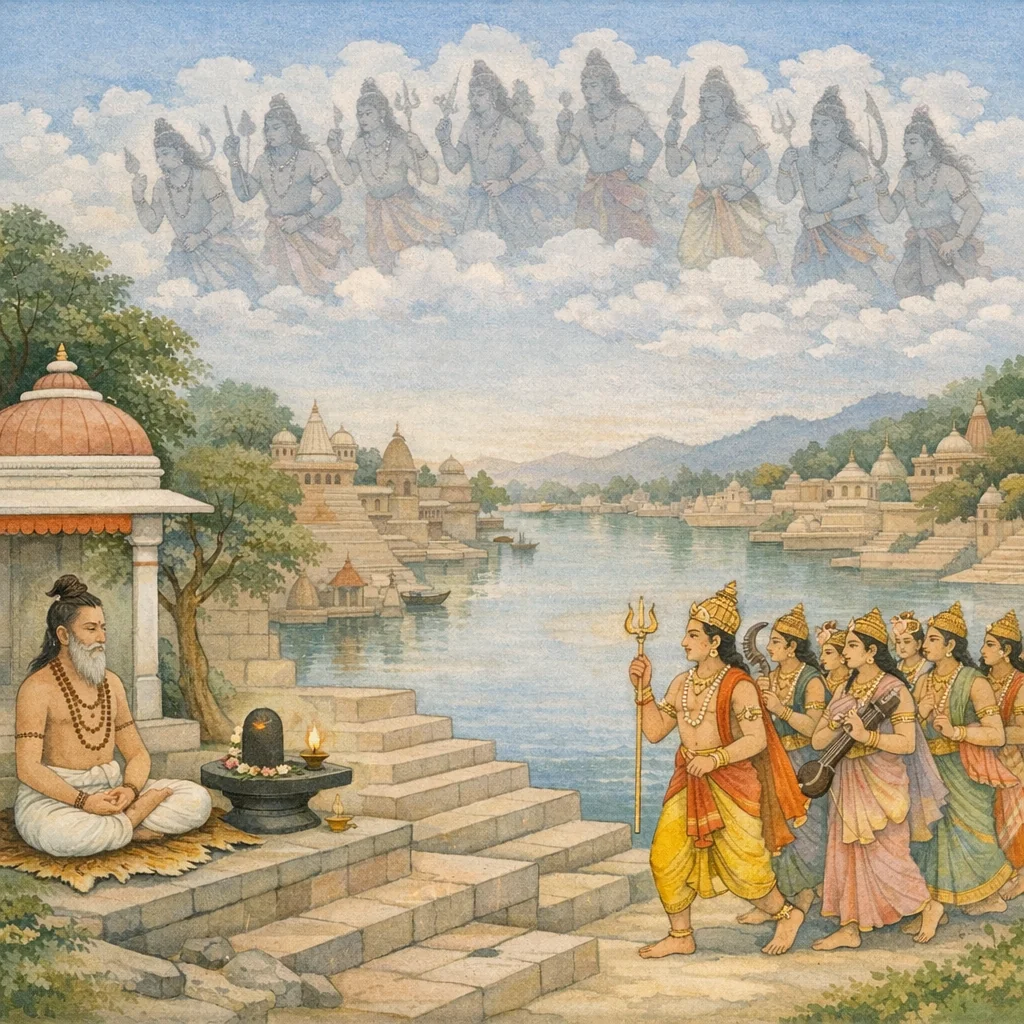
In Nandīśvara’s discourse, this chapter introduces the eleven Śāṃkara (Rudra) manifestations through a crisis: the devas led by Indra are defeated by the daityas and flee Amarāvatī. In distress they approach Kaśyapa, prostrate, and report their loss. Kaśyapa, steadfast in devotion to Śiva, responds calmly and with resolve; he goes to Kāśī (Viśveśvara-purī), bathes in the Gaṅgā, performs the prescribed rites, worships Viśveśvara (Śiva) as Sāmba and Sarveśvara, installs a Śiva-liṅga, and undertakes great tapas for the gods’ welfare. The chapter links the enumeration of Rudra-forms—such as Kapālī, Piṅgala, Bhīma, Virūpākṣa, and Vilohita—with a clear ritual path: crisis → seeking a guru/ṛṣi → pilgrimage and purification → liṅga worship and tapas → divine aid through Rudra manifestations. In its inner teaching, Śiva’s multiplicity is protective in function, and devotion and rite make that protection effective in the world.
Shlokas
Verse 1
नन्दीश्वर उवाच । एकादशवतारान्वै शृण्वथो शांकरान्वरान् । याञ्छ्रुत्वा न हि बाध्येत बाधासत्यादिसम्भवा
Nandīśvara said: “Hear, indeed, the eleven supremely auspicious incarnations of Śaṅkara. Having heard them, one is not afflicted by troubles that arise from ‘so‑called realities’—the many conditions that generate suffering.”
Verse 2
पुरा सर्वे सुराश्शक्रमुखा दैत्यपराजिताः । त्यक्त्वामरावतीम्भीत्याऽपलायन्त निजाम्पुरीम्
In former times, all the Devas—led by Śakra (Indra)—were defeated by the Daityas. Stricken with fear, they abandoned Amarāvatī and fled to their own city, seeking refuge.
Verse 3
दैत्यप्रपीडिता देवा जग्मुस्ते कश्यपा न्तिकम् । बद्ध्वा करान्नतस्कन्धाः प्रणेमुस्तं सुविह्वलम्
Tormented by the demons, the gods went to Kaśyapa. With their hands joined and their shoulders bowed in humility, they prostrated before him, overwhelmed and distressed.
Verse 4
सुनुत्वा तं सुरास्सर्व्वे कृत्वा विज्ञप्तिमादरात् । सर्वं निवेदयामा स्स्वदुःखन्तत्पराजयम्
Having heard that, all the gods, with reverence, made a humble petition and reported everything—both their own distress and the defeat they had suffered.
Verse 5
कपाली १ पिंगलो २ भीमो ३ विरूपाक्षो ४ विलोहितः
He is Kapālī, the Skull-bearer; Piṅgala, the tawny-hued One; Bhīma, the Terrible and awe-inspiring Lord; Virūpākṣa, the One of wondrous, all-seeing eyes; and Vilohita, the Ruddy-red One—these are names of Śiva’s manifold forms.
Verse 6
तानाश्वास्य मुनिस्सोऽथ धैर्यमाधाय शान्तधीः । काशीं जगाम सुप्रीत्या विश्वेश्वरपुरीम्मुने
Thus consoling them, the sage of tranquil mind regained his steadiness and, with glad devotion, went to Kāśī—the city of Viśveśvara, Lord Śiva—O sage.
Verse 7
गंगाम्भसि ततः स्नात्वा कृत्वा तं विधिमादरात् । विश्वेश्वरं समानर्च साम्बं सर्वेश्वरम्प्रभुम्
Then, bathing in the waters of the Gaṅgā and reverently completing the prescribed rite, he duly worshipped Lord Viśveśvara—Sāmba Śiva, the Supreme Lord, the sovereign of all.
Verse 8
शिवलिंगं सुसंस्थाप्य चकार विपुलन्तपः । शम्भुमुद्दिश्य सुप्रीत्या देवानां हितकाम्यया
Having duly installed the Śiva-liṅga, he performed intense and abundant austerities, joyfully directing his devotion to Śambhu, desiring the welfare of the gods.
Verse 9
महान्कालो व्यतीयाय तपतस्तस्य वै मुनेः । शिवपादाम्बुजासक्तमनसो धैर्य्यशालिनः
A very long time passed while that sage performed austerities—steadfast and courageous, his mind firmly attached to the lotus-feet of Lord Śiva.
Verse 10
अथ प्रादुरभूच्छम्भुर्वरन्दातुन्तदर्षये । स्वपदासक्तमनसे दीनबन्धुस्सतांगतिः
Then Śambhu—ever the bestower of boons—manifested before that ṛṣi whose mind was firmly devoted to His feet; for He is the friend of the distressed and the refuge of the righteous.
Verse 11
वरम्ब्रूहीति चोवाच सुप्रसन्नो महेश्वरः । कश्यपं मुनिशार्दूलं स्वभक्तं भक्तवत्सलः
Great Lord Maheśvara, perfectly pleased, said to Kaśyapa—the tiger among sages—His own devotee: “Speak your boon.” Thus the Lord, ever affectionate to His devotees, invited him to ask.
Verse 12
दृष्ट्वाथ तं महेशानं स प्रणम्य कृताञ्जलिः । तुष्टाव कश्यपो हृष्टो देवतातः प्रस न्नधीः
Then, beholding that Mahēśāna (the Great Lord), Kaśyapa—the progenitor of the gods—bowed down with folded hands. Overjoyed and with a serene, pleased mind, he began to hymn the Lord in praise.
Verse 13
कश्यप उवाच । देवदेव महेशान शरणागतवत्सल । सर्वेश्वरः परात्मा त्वं ध्यानगम्योद्वयोऽव्ययः
Kaśyapa said: “O God of gods, O Maheśāna, compassionate to those who seek refuge! You are the Lord of all, the Supreme Self—attainable through meditation—non-dual and imperishable.”
Verse 14
बलनिग्रह कर्ता त्वं महेश्वर सतां गतिः । दीनबन्धुर्दयासिन्धुर्भक्तरक्षणदक्षधीः
O Maheśvara, You are the restrainer of all forces; You are the refuge and final goal of the righteous. You are the kinsman of the afflicted, an ocean of compassion, and of unfailing wisdom in protecting Your devotees.
Verse 15
एते सुरास्त्वदीया हि त्वद्भक्ताश्च विशेषतः । दैत्यैः पराजिताश्चाथ पाहि तान्दुःखितान् प्रभो
These gods are truly Yours, and above all they are devoted bhaktas of You. Now they have been defeated by the daityas; therefore, O Lord, protect them who are afflicted with sorrow.
Verse 16
असमर्थो रमेशोपि दुःखदस्ते मुहुर्मुहुः । अतः सुरा मच्छरणा वेदयन्तोऽसुखं च तत्
Even Rameśa (Viṣṇu), though a lord, is powerless in this matter and again and again becomes a giver of suffering. Therefore, O gods, take refuge in Me; by My grace you shall know that very sorrow and its remedy.
Verse 17
तदर्थं देवदेवेश देवदुःखविनाशकः । तत्पूरितुं तपोनिष्ठां प्रसन्नार्थं तवासदम्
Therefore, O Lord of the gods—destroyer of the sorrows of the devas—so that this may be fulfilled and so that my steadfast austerity may bear fruit, I have approached You, seeking Your gracious favor.
Verse 18
इति श्रीशिवमहापुराणे तृतीयायां शतरुद्रसंहितायां एकादशावतारवर्णनं नामाष्टादशोऽध्यायः
Thus, in the venerable Śiva Mahāpurāṇa, in the Third—Śatarudra-saṃhitā—ends the eighteenth chapter entitled “The Description of the Eleven Incarnations.”
Verse 19
पुत्रदुःखैश्च देवेश दुःखितोऽहं विशेषतः । सुखिनं कुरु मामीश सहाय स्त्वन्दिवौकसाम्
O Lord of the gods, I am deeply afflicted—most of all by the sorrows brought by my sons. O Īśa, make me joyful; for You are the helper and refuge of the dwellers of heaven.
Verse 20
भूत्वा मम सुतो नाथ देवा यक्षाः पराजिताः । दैत्यैर्महाबलैश्शम्भो सुरानन्दप्रदो भव
O Lord, become my son. The Devas and the Yakṣas have been defeated by the mighty Dāṇavas; O Śambhu, become the giver of joy and reassurance to the gods.
Verse 21
सदैवास्तु महेशान सर्वलेखसहायकः । यथा दैत्यकृता बाधा न बाधेत सुरान्प्रभो
O Maheśāna, may You ever be the helper and support behind every sacred record and every undertaking, so that the afflictions wrought by the Daityas may never obstruct the Devas, O Lord.
Verse 22
नंदीश्वर उवाच । इत्युक्तस्स तु सर्वेशस्तथेति प्रोच्य शंकरः । पश्यतस्तस्य भगवांस्तत्रैवांतर्दधे हरः
Nandīśvara said: Thus addressed, the Lord of all replied, “So be it.” Having spoken thus, Śaṅkara—Bhagavān Hara—vanished right there, even as he was being watched.
Verse 23
कश्यपोऽपि महाहृष्टः स्वस्थानमगमद्द्रुतम् । देवेशः कथयामास सर्ववृत्तान्तमादरात्
Kaśyapa too, greatly delighted, quickly returned to his own abode. Then the Lord of the gods (Deveśa) respectfully narrated the entire account in full.
Verse 24
ततस्स शंकरश्शर्वस्सत्यं कर्तुं स्वकं वचः । सुरभ्यां कश्यपाज्जज्ञे एकादशस्वरूपवान्
Then Śaṅkara—Śarva—desiring to make His own word true, was born from Surabhī through Kaśyapa, manifesting in eleven forms.
Verse 25
महोत्सवस्तदासीद्वे सर्वं शिवमयं त्वभूत् । आसन्हृष्टाः सुराश्चाथ मुनिना कश्यपेन च
Then indeed a great festival arose; everything became pervaded with Śiva. The gods were filled with joy, and so too was the sage Kaśyapa.
Verse 26
शास्ताऽ ६ जपाद ७ हिर्बुध्न्य ८ श्शंभु ९ श्चण्डो १० भवस्तथा ११
These too are His sacred names: Śāstā, Japāda, Hirbudhnya, Śambhu, Caṇḍa, and Bhava.
Verse 27
एकादशैते रुद्रास्तु सुरभतिनयाः स्मृताः । देवकार्य्यार्थमुत्पन्नाश्शिवरूपास्सुखास्पदम्
These eleven are remembered as the Rudras, the sons of Surabhati. They manifested for the fulfillment of the gods’ purpose; they are forms of Śiva Himself, and the very abode of auspicious bliss.
Verse 28
ते रुद्राः काश्यपा वीरा महाबलपराक्रमाः । दैत्याञ्जघ्नुश्च संग्रामे देवसाहाय्यकारिणः
Those Rudras—heroic sons of Kaśyapa, endowed with immense strength and valor—slew the Daityas in battle, acting as the gods’ helpers.
Verse 29
तद्रुद्रकृपया देवा दैत्याञ्जित्वा च निर्भयाः । चक्रुस्वराज्यं सर्वे ते शक्राद्यास्स्वस्थमानसाः
By Rudra’s grace, the gods, having conquered the Daityas, became fearless. Then all of them, beginning with Śakra (Indra), regained their sovereignty, their minds restored to peace and well-being.
Verse 30
अद्यापि ते महारुद्रास्सर्वे शिवस्वरूपकाः । देवानां रक्षणार्थाय विराजन्ते सदा दिवि
Even now, those Great Rudras—all embodying the very form of Śiva—ever shine in heaven, for the purpose of protecting the gods.
Verse 31
ऐशान्याम्पुरि ते वासं चक्रिरे भक्तवत्सलाः । विरमन्ते सदा तत्र नानालीलाविशारदाः
Those devotees—ever affectionate to the bhaktas—made their dwelling in that northeastern city. Always abiding there, they continually delighted in manifold divine sports, being fully adept in many sacred līlās.
Verse 32
तेषामनुचरा रुद्राः कोटिशः परिकीर्तिताः । सर्वत्र संस्थितास्तत्र त्रिलोकेष्वभिभागशः
Their attendant Rudras are proclaimed to be in crores. Stationed everywhere, they remain distributed throughout the three worlds, each according to his appointed sphere—upholding Śiva’s cosmic governance in all realms.
Verse 33
इति ते वर्णितास्तातावताराश्शंकरस्य वै । एकादशमिता रुद्रास्सर्वलोकसुखावहाः
Thus, dear one, the incarnations of Śaṅkara have been described to you. These Rudras, eleven in number, are indeed the bringers of well-being and happiness to all the worlds.
Verse 34
इदमाख्यानममलं सर्वपापप्रणाशकम् । धन्यं यशस्यमायुष्यं सर्वकामप्रदायकम्
This stainless sacred narrative destroys all sins. It bestows blessedness, fame, long life, and grants every worthy desire.
Verse 35
य इदं शृणुयात्तात श्रावयेद्वै समाहितः । इह सर्वसुखम्भुक्त्वा ततो मुक्तिं लभेत सः
Dear one, whoever listens to this with focused mind, or causes it to be recited for others, enjoys all auspicious happiness in this very world and thereafter attains liberation (mokṣa).
Frequently Asked Questions
The devas, defeated by daityas, seek Kaśyapa’s counsel; the chapter argues narratively that cosmic distress is resolved through Śaiva means—Kaśyapa’s Kāśī pilgrimage, Viśveśvara worship, and tapas—culminating in the relevance of Rudra’s multiple protective manifestations.
Kāśī and Viśveśvara function as a sacral axis where purification (Gaṅgā snāna), installation (liṅga-pratiṣṭhā), and sustained tapas convert devotion into effective divine presence; the liṅga symbolizes Śiva’s immanence, while the named Rudra forms encode differentiated modes of the same supreme agency.
The chapter explicitly begins listing Rudra manifestations, including Kapālī, Piṅgala, Bhīma, Virūpākṣa, and Vilohita, presented as Śāṃkara forms through which Śiva’s protection and intervention become historically actionable.