Sarga 7
काकुत्स्थस्य शोकनिग्रहः—सुग्रीवसान्त्वनम् (Rama’s Grief Restrained—Sugriva’s Consolation)
किष्किन्धाकाण्ड
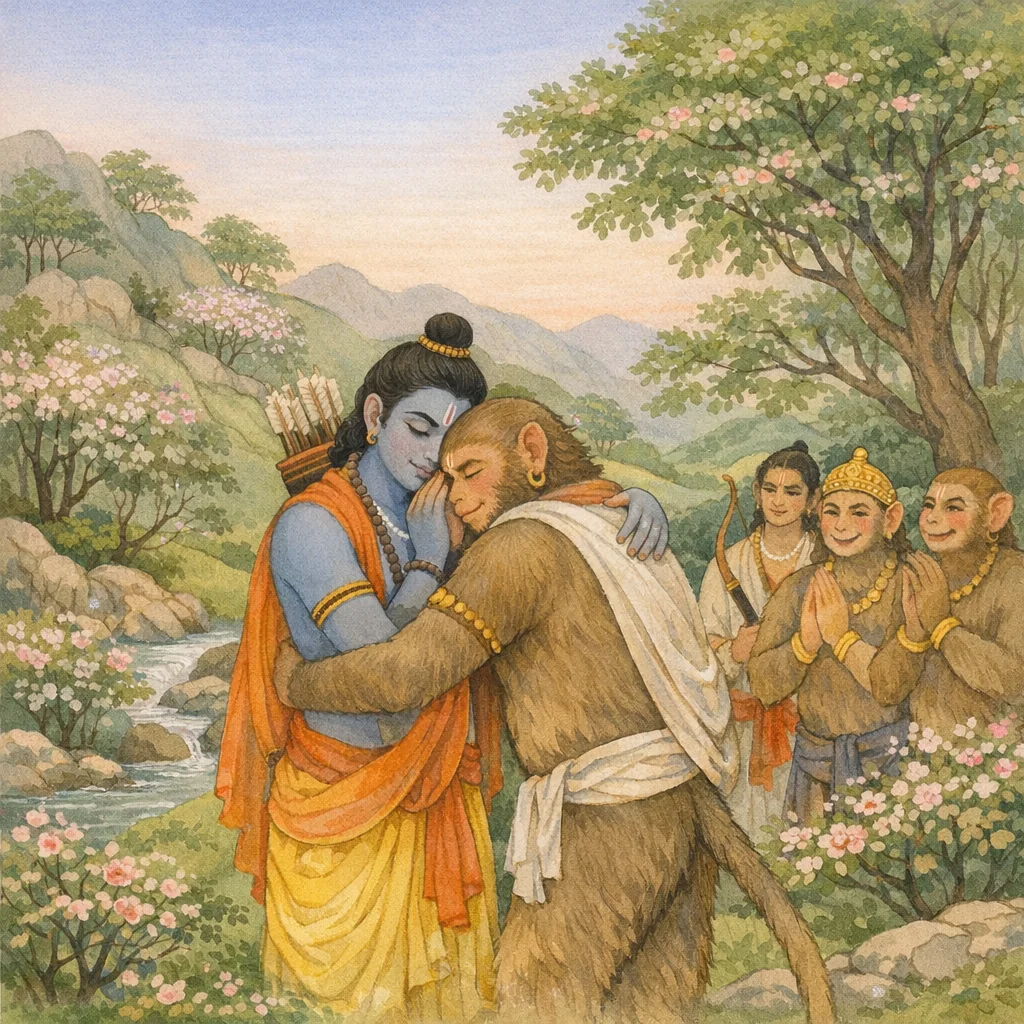
In Sarga 7, Sugrīva sees Rāma’s grief and approaches with folded palms, his voice choked with tears. He argues that sorrow is a sinkhole that consumes happiness, diminishes tejas (radiance and vigor), and can endanger even one’s life; therefore, in calamity one must hold to dhairya (steadfastness), restrain tears, and act with reflective intelligence. Such grief, he says, is unworthy of the dignified and is practically self-defeating. He then turns compassion into resolve, promising vigorous effort to recover Maithilī (Sītā) and even to destroy Rāvaṇa with his clan, grounding his assurance in friendship rather than presumption. Consoled, Rāma wipes his tears, regains composure, embraces Sugrīva, and acknowledges how rare such a friend is in crisis. At the close, Rāma asks for concrete help in tracing Sītā and Rāvaṇa, offers reciprocal duty, and reaffirms his truthfulness by oath. Sugrīva and his counselors rejoice, and the two meet privately to share joys and sorrows, sealing their alliance through shared vulnerability and pledged action.
Shlokas
Verse 1
एवमुक्तस्तु सुग्रीवो रामेणार्तेन वानरः।अब्रवीत्प्राञ्जलिर्वाक्यं सबाष्पं बाष्पगद्गदः।।।।
Thus addressed by the sorrow-stricken Rāma, Sugrīva the vānara replied with palms joined; his words were tearful, and his voice was choked with emotion.
Verse 2
न जाने निलयं तस्य सर्वथा पापरक्षसः।सामर्थ्यं विक्रमं वापि दौष्कुलेयस्य वा कुलम्।।
I do not know at all that sinful rākṣasa’s abode—nor his power, nor his prowess, nor even the lineage he claims, born as he is of a disgraceful stock.
Verse 3
सत्यं ते प्रतिजानामि त्यज शोकमरिन्दम।करिष्यामि तथा यत्नं यथा प्राप्स्यसि मैथिलीम्।।
“O subduer of enemies, abandon your grief. I give you my true pledge: I will exert such effort that you will regain Maithilī.”
Verse 4
रावणं सगणं हत्वा परितोष्यात्मपौरुषम्।तथाऽस्मि कर्ता न चिराद्यथा प्रीतो भविष्यसि।।
“After slaying Rāvaṇa together with his followers, I will prove my own valor and bring you satisfaction—so that, before long, you will be pleased.”
Verse 5
अलं वैक्लब्यमालम्ब्य धैर्यमात्मगतं स्मर।त्वद्विधानां न सदृशमीदृशं बुद्धिलाघवम्।।।।
“Enough of clinging to despair—remember the steadiness that is natural to you. Such fickleness of mind does not befit a man of your stature.”
Verse 6
मयाऽपि व्यसनं प्राप्तं भार्याविरहजं महत्।नाहमेवं हि शोचामि न च धैर्यं परित्यजे।।
I too have met great suffering born of separation from my wife; yet I do not grieve in this way, nor do I abandon my fortitude.
Verse 7
नाहं तामनुशोचामि प्राकृतो वानरोऽपि सन्।महात्मा च विनीतश्च किं पुनर्धृतिमान्भवान्।।
Though I am only a common monkey, I do not brood over her. You are high-souled and disciplined—how much more should you, steadfast as you are, refrain from such grief?
Verse 8
बाष्पमापतितं धैर्यान्निग्रहीतुं त्वमर्हसि।मर्यादां सत्त्वयुक्तानां धृतिं नोत्स्रष्टुमर्हसि।।
You should restrain these falling tears with fortitude. Those endowed with inner strength must not forsake their dignity and steadfastness.
Verse 9
व्यसने वाऽर्थकृच्छ्रे वा भये वा जीवितान्तके।विमृशन्वै स्वया बुद्ध्या धृतिमान्नावसीदति।।
Whether in calamity, in hardship of wealth, in fear, or even at the edge of death—one who reflects with his own understanding and possesses steadfastness does not sink into despair.
Verse 10
बालिशस्तु नरो नित्यं वैक्लब्यं योऽनुवर्तते।स मज्जत्यवशश्शोके भाराक्रान्तेव नौर्जले।।
A foolish man who habitually yields to despair loses self-mastery and sinks in grief, like an overloaded boat going down in water.
Verse 11
एषोऽञ्जलिर्मया बद्धः प्रणयात्त्वां प्रसादये।पौरुषं श्रय शोकस्य नान्तरं दातुमर्हसि।।
With palms joined in friendship, I entreat you: take refuge in manly courage; do not grant grief any opening.
Verse 12
ये शोकमनुवर्तन्ते न तेषां विद्यते सुखम्।तेजश्च क्षीयते तेषां न त्वं शोचितुमर्हसि।।
Those who give themselves over to grief find no happiness; their inner radiance also wanes. Therefore you should not grieve.
Verse 13
शोकेनाभिप्रपन्नस्य जीविते चापि संशयः।स शोकं त्यज राजेन्द्र धैर्यमाश्रय केवलम्।।
For one overwhelmed by grief, even survival becomes uncertain. Abandon sorrow, O king, and take refuge only in steadfastness.
Verse 14
हितं वयस्यभावेन ब्रूमि नोपदिशामि ते।वयस्यतां पूजयन्मे न त्वं शोचितुमर्हसि।।
For your welfare I speak, out of a friend’s caring—I do not presume to instruct you. Honoring our friendship, you should not yield to grief.
Verse 15
मधुरं सान्त्वित स्तेन सुग्रीवेण स राघवः।मुखमश्रुपरिक्लिन्नं वस्त्रान्तेन प्रमार्जयत्।।
Comforted by Sugrīva’s gentle, sweet words, Rāghava wiped his tear-wet face with the edge of his garment.
Verse 16
प्रकृतिस्थस्तु काकुत्स्थस्सुग्रीववचनात्प्रभुः।सम्परिष्वज्य सुग्रीवमिदं वचनमब्रवीत्।।
Comforted by Sugrīva’s words, Lord Rāma of the Kakutstha line regained composure; embracing Sugrīva, he spoke these words:
Verse 17
कर्तव्यं यद्वयस्येन स्निग्धेन च हितेन च।अनुरूपं च युक्तं च कृतं सुग्रीव तत्त्वया।।
“O Sugrīva, you have done exactly what a friend—affectionate and truly well-wishing—ought to do: what is fitting and proper.”
Verse 18
एष च प्रकृतिस्थोऽहमनुनीतस्त्वया सखे।दुर्लभो हीदृशो बन्धुरस्मिन्काले विशेषतः।।
“Friend, guided by you, I have returned to myself. Indeed, a companion like this is hard to find—especially in times like these.”
Verse 19
किं तु यत्नस्त्वया कार्यो मैथिल्याः परिमार्गणे।राक्षसस्य च रौद्रस्य रावणस्य दुरात्मनः।।
But you must now exert yourself in the search for Maithilī—and in tracking that fierce rākṣasa, the evil-minded Rāvaṇa.
Verse 20
मया च यदनुष्ठेयं विस्रब्धेन तदुच्यताम्।वर्षास्विव च सुक्षेत्रे सर्वं सम्पद्यते तव।।
And whatever is to be done by me—say it without hesitation. For your aims will surely succeed, like seed in fertile soil when the rains arrive in season.
Verse 21
मया च यदिदं वाक्यमभिमानात्समीरितम्।तत्त्वया हरिशार्दूल तत्त्वमित्युपधार्यताम्।।
And whatever words I spoke out of wounded pride—O tiger among monkeys—please understand them in their true intent.
Verse 22
अनृतं नोक्तपूर्वं मे न च वक्ष्ये कदाचन।एतत्ते प्रतिजानामि सत्येनैव च ते शपाम्यहमं।।।।
I have never spoken falsehood before, nor will I ever speak it. This I promise you; I swear to you by truth itself.
Verse 23
ततः प्रहृष्टस्सुग्रीवो वानरैस्सचिवैस्सह।राघवस्य वचश्श्रुत्वा प्रतिज्ञातं विशेषतः।।
Then Sugrīva, together with his monkey counsellors, rejoiced on hearing Rāghava’s words—especially the pledge he had given.
Verse 24
एवमेकान्तसम्पृक्तौ ततस्तौ नरवानरौ।उभावन्योन्यसदृशं सुखं दुःखमभाषताम्।।
Thus, meeting in private, the man and the monkey spoke together, each sharing joys and sorrows in a manner fitting to the other.
Verse 25
महानुभावस्य वचो निशम्यहरिर्नृपाणामृषभस्य तस्य।कृतं स मेने हरिवीरमुख्यस्तदा स्वकार्यं हृदयेन विद्वान्।।
Having heard the words of that magnanimous bull among kings, the wise chief of monkey-heroes felt in his heart that his own purpose had been fulfilled.
Frequently Asked Questions
The pivotal action is the disciplined containment of grief: Sugrīva argues that yielding to despair causes loss of self-control and practical failure, so Rāma must choose dignified restraint and purposeful action while entering a binding alliance for Sītā’s recovery.
Sorrow is portrayed as corrosive to tejas and sukha; the proper response to crisis is dhairya guided by reflective intelligence. Friendship becomes a moral technology: truthful promises and mutual obligation convert emotion into ethical, effective strategy.
No new external geography is foregrounded; the key ‘landmark’ is social-ritual: the private council (ekānta) and formal gestures—folded palms, embrace, oath by truth—mark the cultural grammar of alliance-making in the Kishkindha setting.