Adhyaya 76
Adhyāya 76: Kuṇḍina-praveśaḥ, Bhīmena satkāraḥ, Ṛtuparṇa-kṣamā, Aśvahṛdaya-pratyarpanam (Nala’s Reception and Reconciliation)
Upa-parva: Nala–Damayantī Upākhyāna (Embedded Narrative within Āraṇyaka Parva)
Bṛhadaśva narrates Nala’s arrival after the night has passed: Nala, adorned and accompanied by Damayantī, meets Bhīma (the ruler of Vidarbha) in the morning and offers respectful salutations; Damayantī follows with reverence toward her father. Bhīma receives Nala with paternal warmth, honors him appropriately, and reassures Damayantī’s steadfast presence beside her husband. News of Nala’s return produces civic jubilation: the city is decorated with banners and flags, roads are cleaned and strewn with flowers, and shrines are honored. King Ṛtuparṇa hears that “Bāhuka” was Nala in disguise and rejoices; when brought, Nala and Ṛtuparṇa mutually seek forgiveness, with Ṛtuparṇa explicitly requesting pardon for any offense committed during Nala’s incognito residence. Nala denies wrongdoing on Ṛtuparṇa’s part, reaffirms friendship and kinship ties, praises Ṛtuparṇa’s hospitality, and proposes to return the equine science (aśvahṛdaya) previously obtained. Nala then transmits the knowledge to Ṛtuparṇa by proper procedure; Ṛtuparṇa departs for his city with another charioteer, and Nala remains in Kuṇḍina for a short period.
Chapter Arc: दमयन्ती का हृदय अब भी ‘बाहुक’ में नल की छाया पहचान चुका है; वह केशिनी को फिर भेजती है—क्योंकि नल-दर्शन की अभिलाषा दुःख बनकर लौट-लौट आती है। → बाहुक की पहचान को लेकर संशय और संकोच गहराते हैं—दमयन्ती स्वयं सत्य जानना चाहती है, पर मर्यादा, लोकलज्जा और पूर्व-वियोग का भय उसे रोकता है। वह माता-पिता की आज्ञा लेकर नल को राजभवन के भीतर बुलवाती है, ताकि सत्य का निर्णय प्रत्यक्ष हो सके। → दमयन्ती वायुदेवता को साक्षी मानकर शपथ/सत्यवचन करती है—‘यदि मैं पाप कर रही हूँ तो प्राण छूट जाएँ’; उसी क्षण पुष्पवृष्टि होती है, देवदुन्दुभियाँ बजती हैं और शुभ पवन बहता है—दैवी संकेत से दमयन्ती की निष्कलुषता और नल की पहचान का सत्य प्रकाशित हो उठता है। → नल (बाहुक-रूप) दमयन्ती को दीर्घ आलिंगन में लेता है—शोक से आप्लुत होकर भी मिलन की सच्चाई में स्थिर होता है। दमयन्ती की ज्वर-तन्द्रा शांत होती है; वह पुनः समवाप्तकामा होकर चन्द्र-उदय से शोभित रात्रि की भाँति दमक उठती है—नल-दमयन्ती का समागम सिद्ध होता है। → समागम तो हो गया, पर नल का ‘बाहुक’ से पूर्ण ‘नल’ में प्राकट्य और आगे का धर्म-निर्णय (कली-शाप, राज्य-प्राप्ति, पुनर्स्थापन) अगले प्रसंगों की ओर संकेत करता है।
Shlokas
Verse 1
न > 'मांस' शब्दका अर्थ 'संस्कृत-शब्दार्थ-कौस्तुभ' में फलका गूदा किया गया है। षट्सप्ततितमो< ध्याय: दमयन्ती और बाहुककी बातचीत, नलका प्राकट्य और नल-दमयन्ती-मिलन बृहदश्चव उवाच सर्व विकार दृष्टवा तु पुण्यश्लोकस्य धीमत: । आगत्य केशिनी सर्व दमयन्त्यै न््यवेदयत्,बृहदश्व मुनि कहते हैं--युधिष्ठिर! परम बुद्धिमान् पुण्यश्लोक राजा नलके सम्पूर्ण विकारोंको देखकर केशिनीने दमयन्तीको आकर बताया
Bṛhadaśva said: Having observed all the changes in the wise and renowned King Nala, Keśinī came and reported everything to Damayantī. Thus the tale of reunion moves forward, as careful watchfulness, truthful speech, and loyal service become the means by which the separated spouses draw near to recognition and restoration.
Verse 2
दमयन्ती ततो भूय: प्रेषयामास केशिनीम् । मानु: सकाशं दु:खार्ता नलदर्शनकाड्क्षया,अब दमयन्ती नलके दर्शनकी अभिलाषासे दुःखातुर हो गयी। उसने केशिनीको पुनः अपनी माँके पास भेजा
Then Damayantī once again sent Keśinī to her mother. Tormented by sorrow and longing to see Nala, she sought her mother’s support, keeping within the bounds of propriety while pursuing a righteous reunion with her husband.
Verse 3
परीक्षितो मे बहुशो बाहुको नलशड्कया । रूपे मे संशयस्त्वेक: स्वयमिच्छामि वेदितुम्,(और यह कहलाया--) “माँ! मेरे मनमें बाहुकके ही नलके होनेका संदेह था, जिसकी मैंने बार-बार परीक्षा करा ली है और सब लक्षण तो मिल गये हैं। केवल नलके रूपमें संदेह रह गया है। इस संदेहका निवारण करनेके लिये मैं स्वयं पता लगाना चाहती हूँ
Bṛhadaśvā said: “Mother, suspecting that Bāhuka is truly Nala, I have tested him again and again, and the signs have matched. Yet one doubt remains—his very appearance as Nala. To remove this uncertainty, I wish to ascertain it for myself.”
Verse 4
स वा प्रवेश्यतां मातर्मा वानुज्ञातुमहसि । विदितं वाथवा ज्ञातं॑ पितुर्मे संविधीयताम्,“माताजी! या तो बाहुकको महलमें बुलाओ या मुझे ही बाहुकके निकट जानेकी आज्ञा दो। तुम अपनी रुचिके अनुसार पिताजीसे सूचित करके अथवा उन्हें इसकी सूचना दिये बिना इसकी व्यवस्था कर सकती हो”
Bṛhadaśva said: “Mother, either have Bāhuka brought into the palace, or grant me permission to go to Bāhuka myself. Arrange it as you deem fit—either after informing my father, or even without letting him know.”
Verse 5
एवमुक्ता तु वैदर्भ्या सा देवी भीममब्रवीत् । दुहितुस्तमभिप्रायमन्वजानात् स पार्थिव:,दमयन्तीके ऐसा कहनेपर महारानीने विदर्भनरेश भीमसे अपनी पुत्रीका यह अभिप्राय बताया। सब बातें सुनकर महाराजने आज्ञा दे दी
Thus addressed, the queen of Vidarbha spoke to King Bhīma, conveying to him her daughter’s intention. Having understood the girl’s wish, the king gave his assent.
Verse 6
सा वै पित्राभ्यनुज्ञाता मात्रा च भरतर्षभ । नलं॑ प्रवेशयामास यत्र तस्या: प्रतिश्रय:,भरतकुलभूषण! पिता और माताकी आज्ञा ले दमयन्तीने नलको राजभवनके भीतर जहाँ वह स्वयं रहती थी, बुलवाया। दमयन्तीको सहसा सामने उपस्थित देख राजा नल शोक और दु:खसे व्याप्त हो नेत्रोंसे आँसू बहाने लगे
Having obtained the consent of her father and her mother, O bull of the Bharata line, Damayantī had Nala brought inside the royal residence, to the place where she herself dwelt.
Verse 7
तां सम दृष्टवैव सहसा दमयन्तीं नलो नृपः । आविष्ट: शोकदु:खाभ्यां बभूवाश्रुपरिप्लुत:,भरतकुलभूषण! पिता और माताकी आज्ञा ले दमयन्तीने नलको राजभवनके भीतर जहाँ वह स्वयं रहती थी, बुलवाया। दमयन्तीको सहसा सामने उपस्थित देख राजा नल शोक और दु:खसे व्याप्त हो नेत्रोंसे आँसू बहाने लगे
As soon as King Nala suddenly beheld Damayantī before him, he was overwhelmed by grief and sorrow, and his eyes flooded with tears.
Verse 8
त॑ तु दृष्टवा तथायुक्तं दमयन्ती नलं तदा । तीव्रशोकसमाविष्टा बभूव वरवर्णिनी,उस समय नलको उस अवस्थामें देखकर सुन्दरी दमयन्ती भी तीव्र शोकसे व्याकुल हो गयी
But when Damayantī then saw Nala in that altered, pitiable condition, the fair-complexioned lady was overwhelmed by intense grief.
Verse 9
ततः काषायवसना जटिला मलपड्किनी । दमयन्ती महाराज बाहुकं वाक्यमत्रवीत्,महाराज! तदनन्तर मलिन वस्त्र पहने, जटा धारण किये, मैल और पंकसे मलिन दमयन्तीने बाहुकसे पूछा--
Then Damayantī—O king—clad in soiled ochre garments, her hair matted in locks, and her body smeared with dirt and mud, addressed Bāhuka with words.
Verse 10
पूर्व दृष्टस्त्वया कश्चिद् धर्मज्ञो नाम बाहुक । सुप्तामुत्सृज्य विपिने गतो यः पुरुष: स्त्रियम्,“बाहुक! तुमने पहले किसी ऐसे धर्मज्ञ पुरुषको देखा है, जो अपनी सोयी हुई पत्नीको वनमें अकेली छोड़कर चले गये थे
Bṛhadaśva said: “O Bāhuka, have you ever before seen any man—one famed as a knower of dharma—who, abandoning his wife while she slept, went away leaving her alone in the forest?”
Verse 11
अनागसं प्रियां भार्या विजने श्रममोहिताम् । अपहाय तु को गच्छेत् पुण्यश्लोकमृते नलम्,'पुण्यश्लोक महाराज नलके सिवा दूसरा कौन होगा, जो एकान्तमें थकावटके कारण अचेत सोयी हुई अपनी निर्दोष प्रियतमा पत्नीको छोड़कर जा सकता हो
Bṛhadaśva said: “Who, other than the famed and virtuous King Nala, could go away after abandoning his beloved, blameless wife—alone in a lonely place, overcome by exhaustion and faintness?”
Verse 12
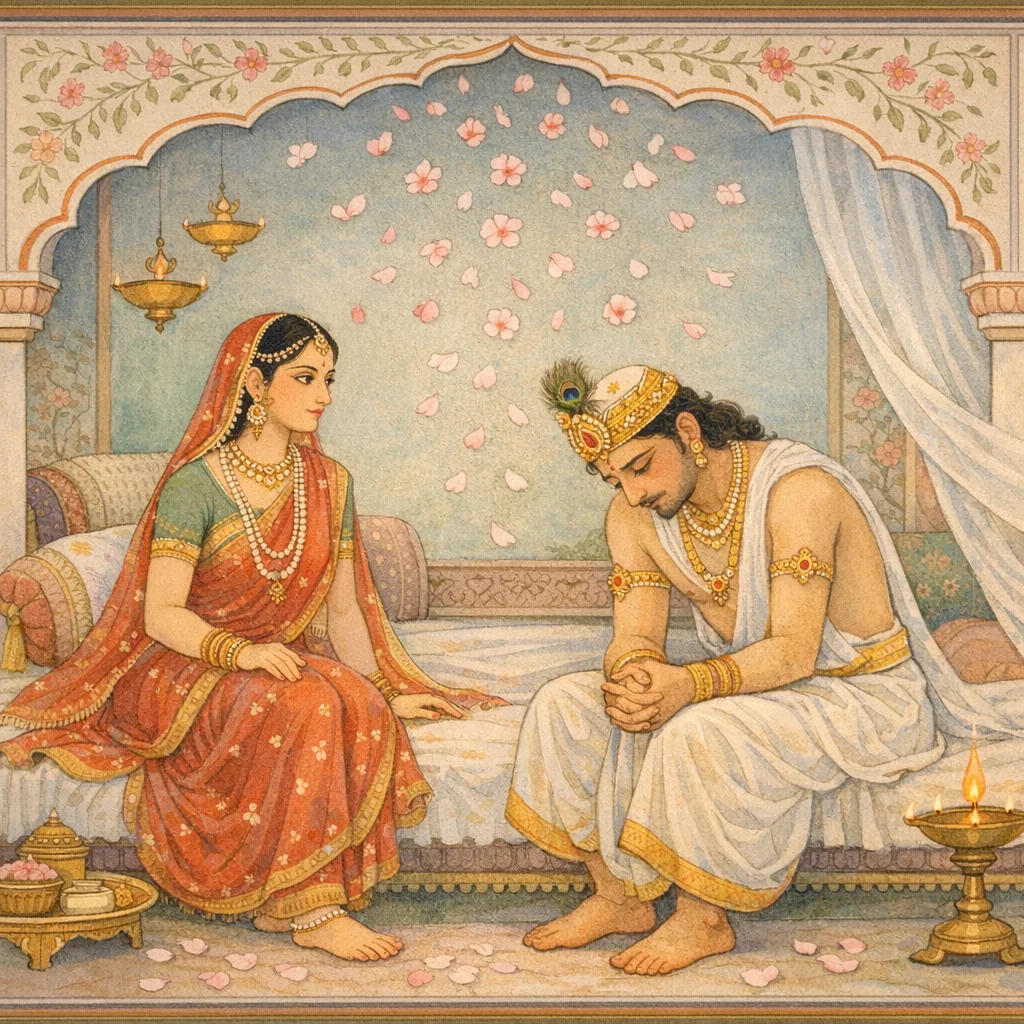
किमु तस्य मया बाल्यादपराद्ध॑ महीपते: । यो मामुत्सृज्य विपिने गतवान् निद्रयार्दिताम्,“न जाने उन महाराजका मैंने बचपनसे ही क्या अपराध किया था, जो नींदकी मारी हुई मुझ असहाय अबलाको जंगलमें छोड़कर चल दिये
Bṛhadaśva said: “What wrong had I ever done to that king, from my very childhood, that he could abandon me—helpless and overcome by sleep—and go away, leaving me in the forest?”
Verse 13
साक्षाद् देवानपाहाय वृतो य: स पुरा मया | अनुव्रतां साभिकामा पुत्रिणीं त्यक्तवान् कथम्,“पहले स्वयंवरके समय साक्षात् देवताओंको छोड़कर मैंने उनका वरण किया था। मैं उनकी अनुगत भक्त, निरन्तर उन्हें चाहनेवाली और पुत्रवती हूँ, तो भी उन्होंने कैसे मुझे त्याग दिया?
‘In former days, at the time of the svayaṃvara, I chose him—passing over even the gods who stood before me. I have been devoted to him, faithful in conduct, ever desirous of him, and I am a mother of his children; how, then, could he abandon me?’
Verse 14
अग्नौ पार्णिं गृहीत्वा तु देवानामग्रतस्तथा । भविष्यामीति सत्य तु प्रतिश्रुत्य क्व तद् गतम्,'“अग्निके समीप और देवताओंके समक्ष मेरा हाथ पकड़कर और “मैं तेरा ही अनुगत होकर रहूँगा” ऐसी प्रतिज्ञा करके जिन्होंने मुझे अपनाया था, उनका वह सत्य कहाँ चला गया?”
Having taken my hand beside the sacred fire, and likewise in the presence of the gods, he pledged in truth, ‘I will remain yours, following you alone.’ Where has that truth gone now?
Verse 15
दमयन्त्या ब्रुवन्त्यास्तु सर्वमेतदरिंदम । शोकजं वारि नेत्राभ्यामसुखं प्रास्रवद् बहु,शत्रुदमन युधिष्ठिर! दमयन्ती जब ये सब बातें कह रही थी, उस समय नलके नेत्रोंसे शोकजनित दुःखपूर्ण आँसुओंकी अजस््र धारा बहती जा रही थी
Bṛhadaśva said: As Damayantī spoke all these words, O subduer of foes, a great stream of sorrow-born water—painful tears—kept flowing from Nala’s eyes. Thus is it shown that even a mighty king, struck by remorse and separation, is overwhelmed by grief when truth is spoken plainly before him.
Verse 16
अतीव कृष्णसाराशभ्यां रक्तान्ताभ्यां जल॑ तु तत् परिस््रवन् नलो दृष्टवा शोकार्तामिदमब्रवीत्,उनकी आँखोंकी पुतलियाँ काली थीं और नेत्रके किनारे कुछ-कुछ लाल थे। उनसे निरन्तर अश्रुधारा बहाते हुए नलने दमयन्तीको शोकसे आतुर देख इस प्रकार कहा --
Bṛhadaśva said: Seeing Damayantī—her eyes dark as those of a black antelope, their corners tinged with red, and tears continually streaming—Nala, beholding her overwhelmed by grief, spoke these words.
Verse 17
मम राज्यं प्रणष्टं यन्नाहं तत् कृतवान् स्वयम् । कलिना तत् कृतं भीरु यच्च त्वामहमत्यजम्,'भीरु! मेरा जो राज्य नष्ट हो गया और मैंने जो तुम्हें त्याग दिया, वह सब कलियुगकी करतूत थी। मैंने स्वयं कुछ नहीं किया था
Bṛhadaśva said: “That my kingdom was ruined—and that I abandoned you—was not of my own doing. O timid one, it was all wrought by Kali; I myself did nothing.”
Verse 18
यत् त्वया धर्मकृच्छे तु शापेनाभिहत: पुरा । वनस्थया दुःखितया शोचन्त्या मां दिवानिशम्,“पहले जब तुम वनमें दुखी होकर दिन-रात मेरे लिये शोक करती थी और उस समय धर्मसंकटमें पड़नेपर तुमने जिसे शाप दे दिया था, वही कलियुग मेरे शरीरमें तुम्हारी शापग्निसे दग्ध होता हुआ निवास करता था, जैसे आगमें रखी हुई आग हो; उसी प्रकार वह कलि तुम्हारे शापसे दग्ध हो सदा मेरे भीतर रहता था
Bṛhadaśva said: “Formerly, when you were dwelling in the forest—afflicted with sorrow and lamenting for me day and night—at a moment of grave moral crisis you uttered a curse. From that time, the force of that curse struck and burned within me, remaining lodged in my body like fire placed within fire.”
Verse 19
स मच्छरीरे त्वच्छापाद् दह्मुमानो&$वसत् कलि: । त्वच्छापदग्ध: सततं सो5ग्नावग्निरिवाहित:,“पहले जब तुम वनमें दुखी होकर दिन-रात मेरे लिये शोक करती थी और उस समय धर्मसंकटमें पड़नेपर तुमने जिसे शाप दे दिया था, वही कलियुग मेरे शरीरमें तुम्हारी शापग्निसे दग्ध होता हुआ निवास करता था, जैसे आगमें रखी हुई आग हो; उसी प्रकार वह कलि तुम्हारे शापसे दग्ध हो सदा मेरे भीतर रहता था
Bṛhadaśva said: “That Kali, scorched by the fire of your curse, dwelt within my very body. Continually burned by your imprecation, he remained lodged in me—like fire placed within fire. In those earlier days, when you grieved for me day and night in the forest, and when, caught in a crisis of dharma, you uttered a curse upon him, that same Kali has ever since endured its burning power within me.”
Verse 20
मम च व्यवसायेन तपसा चैव निर्जित: । दुःखस्यान्तेन चानेन भवितव्यं हि नौ शुभे,'शुभे! मेरे व्यवसाय (उद्योग) तथा तपस्यासे कलियुग परास्त हो चुका है। अतः अब हमारे दुःखोंका अन्त हो जाना चाहिये
Bṛhadaśva said: “By my steadfast effort and by austerity, this has been overcome. And now, O auspicious one, it must indeed come to pass that our sorrow will reach its end through this very outcome.”
Verse 21
विमुच्य मां गत: पापस्ततो5हमिह चागत: । त्वदर्थ विपुलश्रोणि न हि मेडन्यत् प्रयोजनम्,'सुन्दरी! पापी कलियुग मुझे छोड़कर चला गया, इसीसे मैं तुम्हारी प्राप्तिका उद्देश्य लेकर यहाँ आया हूँ। इसके सिवा, मेरे आगमनका दूसरा कोई प्रयोजन नहीं है
Bṛhadaśva said: “That sinful one, having released me, has gone away; therefore I have come here. O broad-hipped beauty, I have come for your sake alone—there is no other purpose for my coming.”
Verse 22
कथं नु नारी भर्तारमनुरक्तमनुव्रतम् । उत्सृज्य वरयेदन्यं यथा त्वं भीरु कहिचित्,'भीरु! कोई भी स्त्री कभी अपने अनुरक्त एवं भक्त पतिको त्यागकर दूसरे पुरुषका वरण कैसे कर सकती है? जैसा कि तुम करने जा रही हो
Bṛhadaśva said: “How could any woman ever abandon a husband who is devoted to her and faithful in conduct, and then choose another man? Yet you, timid one, are about to do just that.”
Verse 23
दूताश्चरन्ति पृथिवीं कृत्स्नां नूपतिशासनात् । भेमी किल सम भर्तरं द्वितीयं वरयिष्यति,“विदर्भनरेशकी आज्ञासे सारी पृथ्वीपर दूत विचरते हैं और यह घोषणा कर रहे हैं कि दमयन्ती द्वितीय पतिका वरण करेगी
Bṛhadaśva said: “By the king’s command, heralds are roaming over the whole earth, proclaiming that Bhīmī (Damayantī) will choose a second husband—one equal to her former lord.”
Verse 24
स्वैरवृत्ता यथाकाममनुरूपमिवात्मन: । श्रुत्वैव चैवं त्वरितो भाड़ासुरिरुपस्थित:,“दमयन्ती स्वेच्छाचारिणी है और अपनी रुचिके अनुसार किसी अनुरूप पतिका वरण कर सकती है', यह सुनकर ही राजा ऋतुपर्ण बड़ी उतावलीके साथ यहाँ उपस्थित हुए हैं!
Bṛhadaśva said: “Hearing that Damayantī is free to act by her own choice and may select a husband suited to her liking, Bhāḍāsuri (King Ṛtupārṇa) has come here at once, in great haste.”
Verse 25
दमयन्ती तु तच्छुत्वा नलस्य परिदेवितम् । प्राउजलिवेपमाना च भीता वचनमत्रवीत्,दमयन्ती नलका यह विलाप सुनकर काँप उठी और भयभीत हो हाथ जोड़कर यह वचन बोली
Hearing Nala’s lament, Damayantī trembled. Frightened, she folded her hands in reverence and spoke—her words shaped by fear, concern, and steadfast regard for dharma amid distress.
Verse 26
दमयन्त्युवाच न मा्महसि कल्याण दोषेण परिशड्कितुम् । मया हि देवानुत्सृज्य वृतस्त्वं निषधाधिप,दमयन्तीने कहा--कल्याणमय निषधनरेश! आपको मुझपर दोषारोपण करते हुए मेरे चरित्रपर संदेह नहीं करना चाहिये। (आपके प्रति अनन्य प्रेमके कारण ही) मैंने देवताओंको छोड़कर आपका वरण किया है
Damayantī said: “O noble one, you should not suspect me of fault or cast doubt upon my character. For it was I who, setting aside even the gods, chose you, O lord of Niṣadha.”
Verse 27
तवाभिगमनार्थ तु सर्वतो ब्राह्मणा गता: । वाक्यानि मम गाथाभिग्गायमाना दिशो दश,आपका पता लगानेके लिये ही चारों ओर ब्राह्मणलोग भेजे गये और वे मेरी कही हुई बातोंको सब दिशाओंमें गाथाके रूपमें गाते फिरे
To find you and bring about a meeting with you, Brahmins were sent out in every direction. Singing my message as verses, they wandered through all the ten quarters, spreading the word everywhere.
Verse 28
ततत्त्वां ब्राह्मणो विद्वान् पर्णादो नाम पार्थिव । अभ्यगच्छत् कोसलायामृतुपर्णनिवेशने
Then, O king, a learned brāhmaṇa named Parṇāda approached you in Kosala, at the residence of Ṛtuparṇa.
Verse 29
राजन! इसी योजनाके अनुसार पर्णाद नामक दिद्दान् ब्राह्मण अयोध्यापुरीमें ऋतुपर्णके राजभवनमें गये थे ।। तेन वाक्ये कृते सम्यक् प्रतिवाक्ये तथा$56वते । उपायो<यं मया दृष्टो नैषधानयने तव,उन्होंने वहाँ मेरी बात उपस्थित की और वहाँसे आपके द्वारा प्राप्त हुआ ठीक-ठीक उत्तर वे ले आये। निषधराज! इसके बाद आपको यहाँ बुलानेके लिये मुझे यह उपाय सूझा (कि एक ही दिनके बाद होनेवाले स्वयंवरका समाचार देकर ऋतुपर्णको बुलाया जाय)
Bṛhadaśva said: “O King, following this plan, a Brahmin named Parṇāda went to the city of Ayodhyā and entered King Ṛtupārṇa’s palace. He conveyed my message there, and he returned bringing back your reply exactly as it was given. O ruler of Niṣadha, after that I devised this means to bring you here—by announcing to Ṛtupārṇa the news of a svayaṃvara said to be taking place the very next day.”
Verse 30
त्वामृते न हि लोकेडन्य एकाह्वा पृथिवीपते । समर्थो योजनशतं गन्तुम श्वैर्नराधिप,नरेश्वर! पृथ्वीनाथ! मैं यह अच्छी तरह जानती हूँ कि इस जगत्में आपके सिवा दूसरा कोई ऐसा पुरुष नहीं है, जो एक ही दिनमें घोड़े जुते हुए रथकी सवारीसे सौ योजन दूरतक जानेमें समर्थ हो
Bṛhadaśvā said: “Apart from you, O lord of the earth, there is in this world no other single man capable of travelling a hundred yojanas in one day by riding in a chariot drawn by horses. I know this well.”
Verse 31
स्पृशेयं तेन सत्येन पादावेतौ महीपते । यथा नासत्कृतं किंचिन्मनसापि चराम्यहम्,महीपते! मैं मनसे भी कभी कोई असदाचरण नहीं करती हूँ और इसी सत्यकी शपथ खाकर आपके इन दोनों चरणोंका स्पर्श करती हूँ
Bṛhadaśvā said: “O king, invoking this truth, I touch your two feet: never do I commit any improper act— not even in my mind.”
Verse 32
अयं चरति लोके5स्मिन् भूतसाक्षी सदागति: । एष मे मुछ्चतु प्राणान् यदि पापं चराम्यहम्,ये सदा गतिशील वायुदेवता इस जगत्में निरन्तर विचरते रहते हैं, अतः ये सम्पूर्ण भूतोंके साक्षी हैं। यदि मैंने पाप किया है तो ये मेरे प्राणोंका हरण कर लें
Bṛhadaśva said: “This one who moves throughout this world—ever in motion and a witness to all beings—may he take away my very life-breath if I have committed sin.”
Verse 33
यथा चरति तिग्मांशु: परेण भुवनं सदा | स मुञ्चतु मम प्राणान् यदि पापं चराम्यहम्,प्रचण्ड किरणोंवाले सूर्यदेव समस्त भुवनोंके ऊपर विचरते हैं, (अतः वे भी सबके शुभाशुभ कर्म देखते रहते हैं।) यदि मैंने पाप किया है तो ये मेरे प्राणोंका हरण कर लें
Bṛhadaśva said: “Just as the sharp-rayed Sun ever moves across the world above, witnessing all that is done, so may he take away my life—if indeed I have committed sin.”
Verse 34
चन्द्रमा: सर्वभूतानामन्तश्चरति साक्षिवत् | स मुञ्चतु मम प्राणान् यदि पापं चराम्यहम्,चित्तके अभिमानी देवता चन्द्रमा समस्त प्राणियोंके अन्तःकरणमें साक्षीरूपसे विचरते हैं। यदि मैंने पाप किया है तो वे मेरे प्राणोंका हरण कर लें
Bṛhadaśva said: “The Moon moves within the hearts of all beings as a witness. If I have committed sin, then let him take away my life-breath.”
Verse 35
एते देवास्त्रय: कृत्स्नं त्रैलोक्यं धारयन्ति वै । विल्लुवन्तु यथा सत्यमेतद् देवास्त्यजन्तु माम्,ये पूर्वोक्त तीन देवता सम्पूर्ण त्रिलोकीको धारण करते हैं। मेरे कथनमें कितनी सचाई है, इसे देवतालोग स्वयं स्पष्ट करें। यदि मैं झूठ बोलती हूँ तो देवता मेरा त्याग कर दें
“These three gods indeed uphold the whole of the three worlds. Let the gods themselves make plain how true my words are. If I speak falsely, let the gods forsake me.”
Verse 36
एवमुक्तस्तथा वायुरन्तरिक्षादभाषत । नैषा कृतवती पापं नल सत्य ब्रवीमि ते,दमयन्तीके ऐसा कहनेपर अन्तरिक्षलोकसे वायु-देवताने कहा--“नल! मैं तुमसे सत्य कहता हूँ, इस दमयन्तीने कभी कोई पाप नहीं किया है
Thus addressed, the Wind-god spoke from mid-air: “Nala, I tell you the truth—this Damayantī has never committed any sin.”
Verse 37
राजज्छीलनिधि: स्फीतो दमयन्त्या सुरक्षित: । साक्षिणो रक्षिणश्चास्या वयं त्रीन् परिवत्सरान्,“राजन! दमयन्तीने अपने शीलकी उज्ज्वल निधिको सदा सुरक्षित रखा है। हमलोग तीन वर्षोतक निरन्तर इसके रक्षक और साक्षी रहे हैं
Bṛhadaśva said: “O King, Damayantī has kept her radiant treasure of chastity and noble conduct fully protected. For three years we have stood as her guardians and witnesses.”
Verse 38
उपायो विहितश्चायं त्वदर्थमतुलो5नया । न होकाह्वा शतं गन्ता त्वामृतेडन्य: पुमानिह,“तुम्हारी प्राप्तिके लिये दमयन्तीने यह अनुपम उपाय ढूँढ़ निकाला था; क्योंकि इस जगतमें तुम्हारे सिवा दूसरा कोई पुरुष नहीं है, जो एक दिनमें सौ योजन (रथद्वारा) जा सके
Bṛhadaśva said: “This incomparable plan was devised by her for your sake. For in this world, apart from you, there is no other man who can travel a hundred yojanas in a single day.”
Verse 39
उपपन्ना त्वया भैमी त्वं च भैम्या महीपते । नात्र शड़्का त्वया कार्या संगच्छ सह भार्यया,“राजन! भीमकुमारी दमयन्ती तुम्हारे योग्य है और तुम दमयन्तीके योग्य हो। तुम्हें इसके चरित्रके विषयमें कोई शंका नहीं करनी चाहिये। तुम अपनी पत्नीसे निःशंक होकर मिलो”
Bṛhadaśva said: “O king, Damayantī, the daughter of Bhīma, is truly worthy of you, and you are worthy of her. Therefore you should entertain no doubt about her conduct. Go to your wife and be reunited with her in full confidence.”
Verse 40
तथा ब्रुवति वायौ तु पुष्पवृष्टि: पपात ह । देवदुन्दुभयो नेदुर्ववी च पवन: शिव:,वायुदेवके ऐसा कहते समय आकाशसे फूलोंकी वर्षा हो रही थी, देवताओंकी दुन्दुभियाँ बज रही थीं और मंगलमय पवन चलने लगा
As Vāyu spoke these words, a shower of flowers fell from the sky. The celestial kettledrums of the gods resounded, and an auspicious wind began to blow—signs that the divine world approved of what had just been spoken and done.
Verse 41
तदद्भुतमयं दृष्टवा नलो राजाथ भारत | दमयन्त्यां विशड्कां तामुपाकर्षदरिंदम:,युधिष्ठि!! यह अद्भुत दृश्य देखकर शत्रुसूदन राजा नलने दमयन्तीके विरुद्ध होनेवाली शंकाको त्याग दिया
O Bhārata, when King Nala—the subduer of foes—beheld that wondrous sight, he drew back and cast away the suspicion he had harbored against Damayantī. In the face of clear evidence, he chose fairness over doubt, restoring trust where mistrust had begun to arise.
Verse 42
ततस्तदू वस्त्रमजरं प्रावणोद् वसुधाधिप: । संस्मृत्य नागराजं तं ततो लेभे स्वकं वपु:,तदनन्तर उन भूपालने नागराज कर्कोटकका स्मरण करके उसके दिये हुए अजीर्ण वस्त्रको ओढ़ लिया। उससे उन्हें अपने पूर्वस्वरूपकी प्राप्ति हो गयी
Then the lord of the earth wrapped himself in that same ageless garment. Remembering the serpent-king, he at once regained his own true form.
Verse 43
स्वरूपिणं तु भर्तरें दृष्टवा भीमसुता तदा । प्राक्रोशदुच्चैरालिड्र्य पुण्यश्लोकमनिन्दिता,अपने वास्तविक रूपमें प्रकट हुए अपने पतिदेव पुण्यश्लोक महाराज नलको देखकर सती साध्वी दमयन्ती उनके हृदयसे लगकर उच्च स्वरसे रोने लगी
Then Bhīma’s daughter (Damayantī), seeing her husband revealed in his true form, embraced the blameless King Nala—renowned for righteous fame—and cried aloud.
Verse 44
भैमीमपि नलो राजा भ्राजमानो यथा पुरा । ससस््वजे स्वसुतौ चापि यथावतृ प्रत्यनन्दत,राजा नलका रूप पहलेकी ही भाँति ही प्रकाशित हो रहा था। उन्होंने भी दमयन्तीको छातीसे लगा लिया और अपने दोनों बालकोंको भी प्यार-दुलार करके प्रसन्न किया
King Nala, radiant as he had been before, embraced Bhīmī (Damayantī) as well. He also clasped his own two children, and in due measure—befitting the moment and propriety—he rejoiced and expressed his joy.
Verse 45
ततः स्वोरसि विन्यस्य वक्त्रं तस्य शुभानना | परीता तेन दुःखेन नि:शश्वासायतेक्षणा,तत्पश्चात् सुन्दर मुख और विशाल नेत्रोंवाली दमयन्ती नलके मुखको अपने वक्ष:स्थलपर रखकर दु:खसे व्याकुल हो लंबी साँसे खींचने लगी
Then the fair-faced Damayantī drew his face to her own breast. Overwhelmed by that sorrow, the wide-eyed lady began to heave long, deep sighs—her grief breaking forth in breath when words could not.
Verse 46
तथैव मलदिग्धाजुीं परिष्वज्य शुचिस्मिताम् । सुचिरं पुरुषव्याप्रस्तस्थौ शोकपरिप्लुत:,इसी प्रकार पवित्र मुसकान तथा मैलसे भरे हुए अंगोंवाली दमयन्तीको हृदयसे लगाकर पुरुषसिंह नल बहुत देरतक शोकमग्न खड़े रहे
In the same way, embracing Damayantī—whose limbs were smeared with grime yet whose smile remained pure—Nala, the tiger among men, stood for a long time, overwhelmed and flooded by grief.
Verse 47
ततः सर्व यथावृत्तं दमयन्त्या नलस्य च । भीमायाकथयतु प्रीत्या वैदर्भ्या जननी नूप,“राजन! तदनन्तर (दमयन्तीके द्वारा मालूम होनेपर) दमयन्तीकी माताने अत्यन्त प्रसन्नतापूर्वक राजा भीमसे नल-दमयन्तीका सारा वृत्तान्त यथावत् कह सुनाया"
Then, O king, Damayantī’s mother—the queen of Vidarbha—joyfully related to King Bhīma the entire account, exactly as it had occurred, concerning both Damayantī and Nala.
Verse 48
ततोड<ब्रवीन्महाराज: कृतशौचमहं नलम् | दमयन्त्या सहोपेतं कल्ये द्रष्टा सुखोषितम्,तब महाराज भीमने कहा--“आज नलको सुखपूर्वक यहीं रहने दो। कल सबेरे स्नान आदिसे शुद्ध हुए दमयन्तीसहित नलसे मैं मिलूँगा”
Then King Bhīma said: “Let Nala, who has completed his purificatory bath, stay here today in comfort. Tomorrow morning, after I too have bathed and become ritually pure, I shall meet Nala together with Damayantī.”
Verse 49
ततस्तौ सहितौ रात्रिं कथयन्तौ पुरातनम् | वने विचरितं सर्वमूषतुर्मुदिती नूप,राजन! तत्पश्चात् वे दोनों दम्पति रातभर वनमें रहनेकी पुरानी घटनाओंको एक-दूसरेसे कहते हुए प्रसन्नतापूर्वक एक साथ रहे
Then the two of them spent the night together, joyfully recounting to one another the old memories of all they had experienced while living and wandering in the forest. In this way, O king, the couple remained together with glad hearts.
Verse 50
गृहे भीमस्य नृपते: परस्परसुखैषिणौ | वसेतां हृष्टसंकल्पौ वैदर्भी च नलश्ष ह,एक-दूसरेको सुख देनेकी इच्छा रखनेवाले दमयन्ती और नल राजा भीमके महलमें प्रसन्नचित्त होकर रहे
Bṛhadaśva said: In King Bhīma’s palace, Nala and the princess of Vidarbha (Damayantī)—each intent on the other’s happiness—dwelt with hearts made glad and with renewed resolve.
Verse 51
स चतुर्थे ततो वर्षे संगम्य सह भार्यया । सर्वकामै: सुसिद्धार्थो लब्धवान् परमां मुदम्,चौथे वर्षमें अपनी प्यारी पत्नीसे मिलकर सम्पूर्ण कामनाओंसे सफलमनोरथ हो नल अत्यन्त आनन्दमें निमग्न हो गये
Then, in the fourth year, Nala was reunited with his wife. With all his wishes fulfilled and his aims accomplished, he attained the highest joy.
Verse 52
दमयन्त्यपि भर्तारमासाद्याप्यायिता भृशम् | अर्धसंजातसस्येव तोयं प्राप्प वसुंधरा,जैसे आधी जमी हुई खेतीसे भरी वसुधा वर्षाका जल पाकर उल्लसित हो उठती है, उसी प्रकार दमयन्ती भी अपने पतिको पाकर बहुत संतुष्ट हुई
Bṛhadaśva said: Even Damayantī, on reaching her husband, was greatly refreshed and fulfilled—just as the earth, bearing a crop only half-grown, rejoices when it receives water.
Verse 53
सैवं समेत्य व्यपनीय तन््द्रां शान्तज्वरा हर्षविवृद्धसत्त्वा । रराज भैमी समवाप्तकामा शीतांशुना रात्रिरिवोदितेन,जैसे चन्द्रोदयसे रात्रिकी शोभा बढ़ जाती है, उसी प्रकार भीमकुमारी दमयन्ती पतिसे मिलकर आलस्यका त्याग करके निश्चिन्त और हर्षोल्लसित हृदयसे पूर्णकाम होकर अत्यन्त शोभा पाने लगी
Having thus met her husband and cast off her languor, her fever of distress subsided. With her inner strength heightened by joy, Bhīmī (Damayantī), her longing fulfilled, shone brilliantly—like the night made beautiful by the rising of the cool-rayed moon.
Verse 75
इस प्रकार श्रीमह्याभारत वनपर्वके अन्तर्गत नलोपाख्यानपर्वमें नलका अपनी पुत्री और पुत्रके देखनेसे सम्बन्ध रखनेवाला पचद्वत्तरवाँ अध्याय पूरा हुआ
Thus ends the seventy-fifth chapter of the Nalopākhyāna section within the Vana Parva of the Śrī Mahābhārata, a chapter concerned with King Nala’s reunion and the significance of seeing his children.
Verse 76
इति श्रीमहाभारते वनपर्वणि नलोपाख्यानपर्वणि नलदमयन्तीसमागमे षट्सप्ततितमो<्ध्याय:
Thus, in the Śrī Mahābhārata, within the Vana Parva, in the sub-tale known as the Story of Nala, in the section describing the reunion of Nala and Damayantī, the seventy-sixth chapter comes to its end. This closing colophon marks the completion of a narrative unit devoted to endurance amid adversity, the restoration of rightful order, and the dharmic ideal that steadfastness and integrity ultimately lead to reconciliation and renewal.
Frequently Asked Questions
The chapter negotiates ethical repair after concealment: how to address potential offense incurred during ajñātavāsa through explicit requests for pardon, denial of grievance, and reaffirmation of prior bonds without escalating blame.
Reconciliation is modeled as an active duty: restoring trust through humility, hospitality, and reciprocal restitution (returning knowledge or benefits received), thereby converting a period of disguise and vulnerability into renewed social order.
No explicit phalaśruti is stated in these verses; the chapter’s significance is conveyed implicitly through exemplary conduct—public honor, mutual forgiveness, and ethical reciprocity—as a normative template within the larger Nala–Damayantī teaching narrative.