Adhyaya 262
रावण–मारीचसंवादः तथा मृगप्रलोभनपूर्वकं सीताहरणोपक्रमः (Rāvaṇa–Mārīca Dialogue and the Decoy-Deer Prelude to Sītā’s Abduction)
Upa-parva: Mārkaṇḍeya-Ākhyāna (Embedded Rāmāyaṇa Episode: Rāvaṇa–Mārīca Counsel and Sītā-Haraṇa Prelude)
Mārkaṇḍeya narrates how Mārīca receives Rāvaṇa with formal hospitality and measured speech. Rāvaṇa inquires after Mārīca’s welfare and states his purpose; Mārīca responds with concise strategic counsel, warning that engagement with Rāma is unsustainable given Rāma’s demonstrated martial capacity and the unbearable force of his arrows. Rāvaṇa rejects restraint and threatens Mārīca with certain death for disobedience, converting counsel into compelled service. Mārīca reasons that death is inevitable under such coercion and chooses compliance as the least-disordered outcome. Rāvaṇa orders Mārīca to become a jewel-horned, ornamented deer to entice Sītā and prompt Rāma’s pursuit; once Rāma is displaced, Rāvaṇa plans to abduct Sītā. The plan is executed: Rāvaṇa adopts an ascetic disguise while Mārīca appears as the deer, drawing Sītā’s attention and motivating Rāma to chase. Rāma tracks and ultimately strikes the deer-form; Mārīca imitates Rāma’s voice in distress, causing Sītā to fear for Rāma and press Lakṣmaṇa to leave protection. With Lakṣmaṇa gone, Rāvaṇa approaches Sītā as a renunciant, reveals his identity, proposes she abandon Rāma, and upon refusal forcibly seizes her and departs through the sky. The chapter closes as Jaṭāyu observes the abduction and Sītā’s cries.
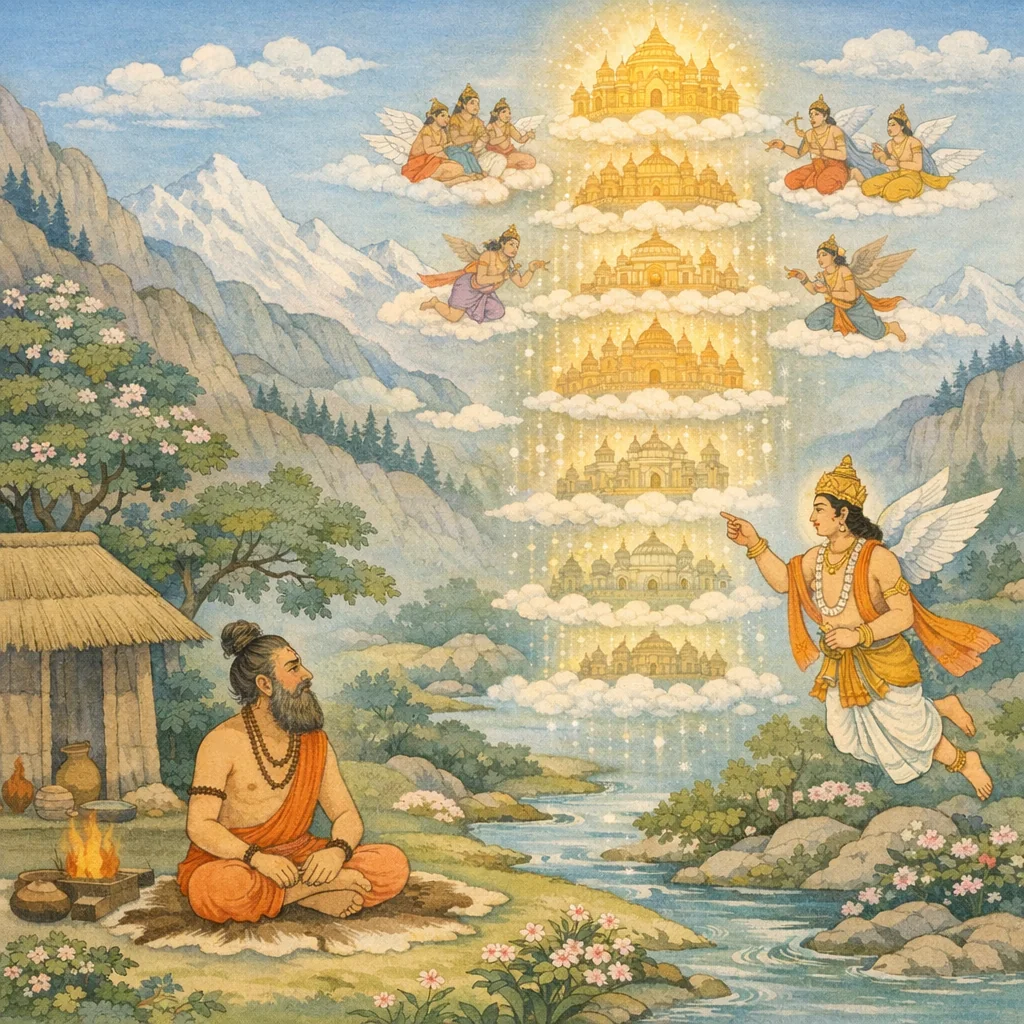
Chapter Arc: मुद्गल के प्रश्न पर देवदूत स्वर्लोक के ऊर्ध्वगामी ‘देवयान’ पथ और उसके लोकों का वर्णन आरम्भ करता है—मानो पृथ्वी के दुःख से ऊपर उठती एक उज्ज्वल सीढ़ी खुल जाती हो। → देवदूत स्पष्ट करता है कि स्वर्ग का द्वार सबके लिए नहीं: बिना तप, बिना महायज्ञ, असत्यवादी और नास्तिक वहाँ नहीं पहुँचते। फिर वह देव-निकायों के पृथक-पृथक तेजोमय लोकों, उनके वैभव और दिव्य देह-धर्म का विस्तार करता है। → स्वर्गीय देह की अद्भुत अवस्था का चरम चित्र उभरता है—न पसीना, न दुर्गन्ध, न मल-मूत्र, न वस्त्रों पर रज का बाधक स्पर्श; और उससे भी ऊपर ऋभु-देवों का लोक, जिन्हें देवता भी पूजते हैं—मानव आकांक्षा की अंतिम ऊँचाई का संकेत। → देवदूत कहता है कि जो कुछ पूछा गया था वह सब बता दिया; अब वह मुद्गल को शीघ्र चलने का आग्रह करता है। तत्पश्चात व्यास युधिष्ठिर को आश्वासन देते हैं कि तेरहवें वर्ष के बाद पितृ-पैतामह राज्य प्राप्त होगा और मन का ज्वर शांत होगा। → व्यास तपस्या हेतु पुनः आश्रम लौट जाते हैं—पाण्डवों के लिए प्रतीक्षा का काल शेष रहता है और राज्य-प्राप्ति का वचन भविष्य में टँगा रह जाता है।
Shlokas
Verse 1
(दाक्षिणात्य अधिक पाठका ६ “लोक मिलाकर कुल ३६३ “लोक हैं) ७ “5 (9) #...# >25...# ३. कुछ विद्वानोंके मतसे यह सोलह सेरका होता है। २. 'उज्छ: कणश आदानं कणिशाद्यर्जन॑ शिलम्।” इस कोषवाक्यके अनुसार बाजार उठ जानेपर या खेत कटनेपर वहाँ बिखरे हुए अन्नके दाने बीनना “उज्छ'” कहलाता है और खेत कट जानेपर वहाँ गिरी हुई गेहूँ-धान आदिकी बालें बीनना 'शील' कहा गया है। एकषष्टर्याधेकद्विशततमो< ध्याय: देवदूतद्वारा स्वर्गलोकके गुण-दोषोंका तथा दोषरहित विष्णुधामका वर्णन सुनकर मुद्गलका देवदूतको लौटा देना एवं व्यासजीका युधिषछ्तटिरको समझाकर अपने आश्रमको लौट जाना देवदूत उवाच महर्षे आर्यबुद्धिस्त्वं यः स्वर्गसुखमुत्तमम् । सम्प्राप्तं बहु मनन््तव्यं विमृशस्यबुधो यथा,देवदूत बोला--महर्षे! तुम्हारी बुद्धि बड़ी उत्तम है। जिस उत्तम स्वर्गीय सुखको दूसरे लोग बहुत बड़ी चीज समझते हैं, वह तुम्हें प्राप्त ही है, फिर भी तुम अनजान-से बनकर इसके सम्बन्धमें विचार करते हो--इसके गुण-दोषकी समीक्षा कर रहे हो
The divine messenger said: “O great seer, your understanding is truly noble. That highest happiness of heaven—which others regard as a great prize—has already come to you; yet you, as though unaware, continue to deliberate upon it, examining it like a wise man, weighing its merits and faults.”
Verse 2
उपरिष्टादसौ लोको यो<यं स्वरिति संज्ञित: । ऊर्ध्वग: सत्पथ: शश्वद् देवयानचरो मुने,मुने! जिसे स्वर्लोक कहते हैं, वह यहाँसे बहुत ऊपर है। वहाँ पहुँचनेके लिये ऊपरको जाया जाता है, इसलिये उसका एक नाम ऊर्ध्वग भी है। वहाँ जानेके लिये जो मार्ग है, वह बहुत उत्तम है। वहाँके लोग सदा विमानोंपर विचरा करते हैं
Above this world lies that realm known as Svarga (the heaven-world). It is reached by ascending, and therefore it is also called ‘Ūrdhvaga’—the upward-going. The path leading there is ever the noble ‘good way’ (satpatha). O sage, those who dwell there continually move about in divine aerial cars, enjoying the fruits of their meritorious deeds.
Verse 3
नातप्ततपस: पुंसो नामहायज्ञयाजिन: । नानृता नास्तिकाश्वैव तत्र गच्छन्ति मुदूगल,मुद्गल! जिन्होंने तपस्या नहीं की है, बड़े-बड़े यज्ञोंद्वारा यजन नहीं किया है तथा जो असत्यवादी एवं नास्तिक हैं, वे उस लोकमें नहीं जा पाते हैं
The divine messenger said: “O Mudgala, those who have not undergone austerity, who have not worshipped through great sacrifices, and who are false-speakers and unbelievers—such people do not attain that realm.”
Verse 4
धर्मात्मानो जितात्मान: शान्ता दान्ता विमत्सरा: | दानधर्मरता मर्त्या: शूराश्चाहवलक्षणा:,ब्रह्म! धर्मात्मा, मनको वशमें रखनेवाले, शम-दमसे सम्पन्न, ईर्ष्यारहित, दानधर्मपरायण तथा युद्धकलामें प्रसिद्ध शूरवीर मनुष्य ही वहाँ सब धर्मोमें श्रेष्ठ इन्द्रिय- संयम और मनोनिग्रहरूपी योगको अपनाकर सत्पुरुषों-द्वारा सेवित पुण्यवानोंके लोकोंमें जाते हैं
The divine messenger said: “Those mortals who are righteous in nature, self-mastered, tranquil and disciplined, free from envy, devoted to charity and the practice of dharma, and renowned as heroes marked by prowess in battle—such people, having embraced the supreme dharma of sense-restraint and the yoga of governing the mind, attain the meritorious worlds that are honored and frequented by the good.”
Verse 5
तत्र गच्छन्ति धर्माग्रयं कृत्वा शमदमात्मकम् | लोकान् पुण्यकृतां ब्रह्मन् सद्भिराचरितान् नृभि:,ब्रह्म! धर्मात्मा, मनको वशमें रखनेवाले, शम-दमसे सम्पन्न, ईर्ष्यारहित, दानधर्मपरायण तथा युद्धकलामें प्रसिद्ध शूरवीर मनुष्य ही वहाँ सब धर्मोमें श्रेष्ठ इन्द्रिय- संयम और मनोनिग्रहरूपी योगको अपनाकर सत्पुरुषों-द्वारा सेवित पुण्यवानोंके लोकोंमें जाते हैं
There they go—having made the highest dharma their aim, and having embraced the discipline of inner calm and self-restraint. O Brahmin, they attain the worlds of the meritorious, realms long practiced and inhabited by the good among men.
Verse 6
देवा: साध्यास्तथा विश्वे तथैव च महर्षय: । यामा धामाश्न मौद्गल्य- गन्धर्वाप्सरसस्तथा,मुद्गल! वहाँ देवता, साध्य, विश्वेदेव, महर्षिगण, याम, धाम, गन्धर्व तथा अप्सरा--इन सब देवसमूहोंके अलग-अलग अनेक प्रकाशमान लोक हैं, जो इच्छानुसार प्राप्त होनेवाले भोगोंसे सम्पन्न, तेजस्वी तथा मंगलकारी हैं
The divine messenger said: “O Maudgalya (Mudgala), there exist many distinct, radiant worlds belonging to the gods—such as the Devas, the Sādhyas, the Viśvedevas, the great seers, the Yāmas, the Dhāmas, and also the Gandharvas and Apsarases. Each of these celestial communities has its own luminous realm, endowed with splendid, auspicious enjoyments attainable according to one’s desire.”
Verse 7
एषां देवनिकायानां पृथक् पृथगनेकश: । भास्वन्त: कामसम्पन्ना लोकास्तेजोमया: शुभा:,मुद्गल! वहाँ देवता, साध्य, विश्वेदेव, महर्षिगण, याम, धाम, गन्धर्व तथा अप्सरा--इन सब देवसमूहोंके अलग-अलग अनेक प्रकाशमान लोक हैं, जो इच्छानुसार प्राप्त होनेवाले भोगोंसे सम्पन्न, तेजस्वी तथा मंगलकारी हैं
The divine messenger said: “O Mudgala, for these various hosts of gods there exist many distinct realms, each separate from the other—radiant, filled with enjoyments attainable according to one’s desire, made of pure splendor, and auspicious. There are such worlds for the Devas, the Sādhyas, the Viśvedevas, the great seers, the Yāmas, the Dhāmas, as well as for the Gandharvas and the Apsarases.”
Verse 8
त्रयस्त्रिंशत्सहस्राणि योजनानि हिरण्मय: । मेरु: पर्वतराड यत्र देवोद्यानानि मुदूगल,स्वर्गमें तैंतीस हजार योजनका सुवर्णमय एक बहुत ऊँचा पर्वत है जो मेरुगिरिके नामसे विख्यात है। मुद्गल! वहीं देवताओंके नन््दन आदि पवित्र उद्यान तथा पुण्यात्मा पुरुषोंके विहारस्थल हैं। वहाँ किसीको भूख-प्यास नहीं लगती, मनमें कभी ग्लानि नहीं होती, गरमी और जाड़ेका कष्ट भी नहीं होता और न कोई भय ही होता है
The divine messenger said: “Mudgala, there stands a golden mountain named Meru, the king of mountains, rising to a measure of thirty-three thousand yojanas. There, around it, lie the sacred gardens of the gods—such as Nandana—and the pleasure-grounds where the righteous dwell. In that realm no one is afflicted by hunger or thirst; the mind knows no remorse or dejection; neither heat nor cold causes distress, and fear finds no place.”
Verse 9
नन्दनादीनि पुण्यानि विहारा: पुण्यकर्मणाम् | न क्षुत्पिपासे न ग्लानिर्न शीतोष्णे भयं तथा,स्वर्गमें तैंतीस हजार योजनका सुवर्णमय एक बहुत ऊँचा पर्वत है जो मेरुगिरिके नामसे विख्यात है। मुद्गल! वहीं देवताओंके नन््दन आदि पवित्र उद्यान तथा पुण्यात्मा पुरुषोंके विहारस्थल हैं। वहाँ किसीको भूख-प्यास नहीं लगती, मनमें कभी ग्लानि नहीं होती, गरमी और जाड़ेका कष्ट भी नहीं होता और न कोई भय ही होता है
The divine messenger said: “There are holy pleasure-groves such as Nandana—resorts meant for those whose deeds are meritorious. There, hunger and thirst do not arise; there is no inner weariness or dejection; neither cold nor heat causes distress, and fear is likewise absent.”
Verse 10
बीभत्समशुभं वापि तत्र किंचिन्न विद्यते । मनोज्ञा: सर्वतो गन्धा: सुखस्पर्शाश्व॒ सर्वश:,वहाँ कोई भी वस्तु ऐसी नहीं है, जो घृणा करने-योग्य एवं अशुभ हो। वहाँ सब ओर मनोरम सुगन्ध, सुखदायक स्पर्श तथा कानों और मनको प्रिय लगनेवाले मधुर शब्द सुननेमें आते हैं। मुने! स्वर्गलोकमें न शोक होता है, न बुढ़ापा। वहाँ थकावट तथा करुणाजनक विलाप भी श्रवणगोचर नहीं होते
The divine messenger said: “In that realm there exists nothing at all that is repulsive or inauspicious. Everywhere there are delightful fragrances, and all contacts are pleasant to the touch.”
Verse 11
शब्दा: श्रुतिमनोग्राह्मा: सर्वतस्तत्र वै मुने । न शोको न जरा तत्र नायासपरिदेवने,वहाँ कोई भी वस्तु ऐसी नहीं है, जो घृणा करने-योग्य एवं अशुभ हो। वहाँ सब ओर मनोरम सुगन्ध, सुखदायक स्पर्श तथा कानों और मनको प्रिय लगनेवाले मधुर शब्द सुननेमें आते हैं। मुने! स्वर्गलोकमें न शोक होता है, न बुढ़ापा। वहाँ थकावट तथा करुणाजनक विलाप भी श्रवणगोचर नहीं होते
The divine messenger said: “O sage, in that realm, on every side, there are sounds that delight both ear and mind. There is no sorrow there, no old age; and neither weariness nor any lamentation is heard.”
Verse 12
ईदृश: स मुने लोक: स्वकर्मफलहेतुक: । सुकृतैस्तत्र पुरुषा: सम्भवन्त्यात्मकर्मभि:,महर्षे! स्वर्गलोक ऐसा ही है। अपने सत्कर्मोके फलरूप ही उसकी प्राप्ति होती है। मनुष्य वहाँ अपने किये हुए पुण्यकर्मोंसे ही रह पाते हैं
“Such, O sage, is that world: it is attained only as the result of one’s own deeds. There, people come to be and continue to exist solely through their own meritorious actions, O great seer.”
Verse 13
तैजसानि शरीराणि भवन्त्यत्रोपपद्यताम् | कर्मजान्येव मौद्गल्य न मातृपितृजान्युत,मुद्गल! स्वर्गवासियोंके शरीरमें तैजस तत्त्वकी प्रधानता होती है। वे शरीर पुण्यकर्मोंसे ही उपलब्ध होते हैं। माता-पिताके रजोवीर्यसे उनकी उत्पत्ति नहीं होती है
The divine messenger said: “For those who are reborn here (in the heavenly realm), the bodies they obtain are luminous and fire-like in nature. O Maudgalya, such bodies arise solely from one’s own deeds (especially meritorious karma); they are not produced from the union of mother and father.”
Verse 14
न संस्वेदो न दौर्गन्ध्यं पुरीषं मूत्रमेव च । तेषां न च रजो वस्त्र बाधते तत्र वै मुने,उन शरीरोंमें कभी पसीना नहीं निकलता, दुर्गन्ध नहीं आती तथा मल-मूत्रका भी अभाव होता है। मुने! उनके कपड़ोंमें कभी मैल नहीं बैठती है
The divine messenger said: “In that realm, they do not perspire, no foul odor arises, and there is no excretion of feces or urine. And, O sage, dust and grime do not cling to their garments there.”
Verse 15
न म्लायन्ति स्रजस्तेषां दिव्यगन्धा मनोरमा: । संयुज्यन्ते विमानैश्न ब्रद्मन्नेवंविधैश्ष ते,स्वर्गवासियोंकी जो (दिव्य कुसुमोंकी) मालाएँ होती हैं, वे कभी कुम्हलाती नहीं हैं। उनसे निरन्तर दिव्य सुगन्ध फैलती रहती है तथा वे देखनेमें भी बड़ी मनोरम होती हैं। ब्रह्मन! स्वर्गके सभी निवासी ऐसे ही विमानोंसे सम्पन्न होते हैं
The divine messenger said: “The garlands worn by the dwellers of heaven never wither. They continually exude a celestial fragrance and are delightful to behold. O Brāhmaṇa, all who reside in Svarga are endowed with such wondrous aerial chariots (vimānas).”
Verse 16
ईर्ष्याोशोकक्लमापेता मोहमात्सर्यवर्जिता: । सुखं स्वर्गजितस्तत्र वर्तयन्ते महामुने,महामुने! जो अपने सत्कर्मोद्वारा स्वर्गलोकपर विजय पा चुके हैं, वे वहाँ बड़े सुखसे जीवन बिताते हैं। उनमें किसीके प्रति ईर्ष्या नहीं होती, वे कभी शोक तथा थकावटका अनुभव नहीं करते एवं मोह तथा मार्सर्य (द्वेषभाव)-से सदा दूर रहते हैं
The celestial messenger said: “O great sage, those who have won the realms of heaven through their own meritorious deeds live there in happiness. They are free from envy; they do not experience grief or fatigue; and they remain untouched by delusion and malice.”
Verse 17
तेषां तथाविधानां तु लोकानां मुनिपुड्रव । उपर्युपरि लोकस्य लोका दिव्या गुणान्विता:,मुनिश्रेष्ठ! देवताओंके जो पूर्वोक्त प्रकारके लोक हैं, उन सबसे ऊपर अन्य कितने ही विविध गुणसम्पन्न दिव्य लोक हैं
O bull among sages, above those worlds of the kind just described there exist, one higher than another, many celestial realms endowed with diverse excellences.
Verse 18
पुरस्ताद् ब्राह्मणास्तत्र लोकास्तेजोमया: शुभा: । यत्र यान्त्यूषयो ब्रह्मन् पूता: स्वै: कर्मभि: शुभै:,उन सबसे ऊपर ब्रह्माजीके लोक हैं, जो अत्यन्त तेजस्वी एवं मंगलकारी हैं। ब्रह्मन! वहाँ अपने शुभ कर्मोसे पवित्र ऋषि, मुनि जाते हैं
The divine messenger said: “Beyond these lie the radiant and auspicious worlds of the Brāhmaṇas—realms made of spiritual splendor. O Brāhmaṇa, it is to those regions that the purified seers go, made clean by their own noble deeds.”
Verse 19
ऋशभवो नाम तत्रान्ये देवानामपि देवता: । तेषां लोकात् परतरे यान् यजन्तीह देवता:,वहीं ऋभु नामक दूसरे देवता रहते हैं, जो देवगणोंके भी आराध्यदेव हैं। देवताओंके लोकोंसे उनका स्थान उत्कृष्ट है। देवतालोग भी यज्ञोंद्वारा उनका यजन करते हैं
The divine messenger said: “There, too, dwell other beings known as the Ṛṣabhas—divinities who are revered even by the gods themselves. Their realm stands beyond and above the ordinary worlds of the gods, and even the gods worship them here through sacrificial rites (yajña).”
Verse 20
स्वयंप्रभास्ते भास्वन्तो लोका: कामदुघा: परे | न तेषां स्त्रीकृतस्तापो न लोकैश्चर्यमत्सर:,उनके उत्तम लोक स्वयंप्रकाश, तेजस्वी और सम्पूर्ण कामनाओंकी पूर्ति करनेवाले हैं। उन्हें स्त्रियोंके लिये संताप नहीं होता। लोकोंके ऐश्वर्यके लिये उनके मनमें कभी ईर्ष्या नहीं होती
The divine messenger said: “Those higher worlds are self-luminous and radiant, and they yield the fulfillment of every desire. For the beings who dwell there, there is no anguish born of attachment to women, nor any jealousy stirred by the splendor and prosperity of other realms.”
Verse 21
न वर्तयन्त्याहुतिभिस्ते नाप्यमृतभोजना: । तथा दिव्यशरीरास्ते न च विग्रहमूर्तय:,वे देवताओंकी तरह आहुतियोंसे जीविका नहीं चलाते। उन्हें अमृत पीनेकी आवश्यकता नहीं होती। उनके शरीर दिव्य ज्योतिर्मय हैं। उनकी कोई विशेष आकृति नहीं होती
The divine messenger said: “They do not sustain themselves by sacrificial oblations like the gods, nor do they require the drinking or eating of nectar. Their bodies are of a celestial, luminous nature, and they are not confined to any fixed, graspable form.”
Verse 22
न सुखे सुखकामास्ते देवदेवा: सनातना: । न कल्पपरिवर्तेषु परिवर्तन्ति ते तथा,वे सुखमें प्रतिष्ठित हैं, परंतु सुखकी कामना नहीं रखते। वे देवताओंके भी देवता और सनातन हैं। कल्पका अन्त होनेपर भी उनकी स्थितिमें कोई परिवर्तन नहीं होता--वे ज्यों के-त्यों बने रहते हैं
They abide in happiness, yet they do not crave happiness. They are the eternal Gods of the gods; and even when the aeons turn and the cycles of creation change, their state does not alter—they remain just as they are.
Verse 23
जरा मृत्यु: कुतस्तेषां हर्ष: प्रीति: सुखं न च । न दु:खं न सुखं चापि रागद्वेषौ कुतो मुने,मुने! उनमें जरा-मृत्युकी सम्भावना तो हो ही कैसे सकती है? हर्ष, प्रीति तथा सुख आदि विकारोंका भी उनमें सर्वथा अभाव ही है। ऐसी स्थितिमें उनके भीतर दुःख-सुख तथा राग-द्वेषादि कैसे रह सकते हैं?
The divine messenger said: “How could old age and death ever pertain to them? In them there is absolutely no place for agitation such as exhilaration, affection, or pleasure. In such a state, O sage, how could pain and pleasure exist within them at all—and how could attachment and aversion arise?”
Verse 24
देवानामपि मौद्गल्य कांक्षिता सा गति: परा | दुष्प्रापा परमा सिद्धिरगम्या कामगोचरै:,मौदगल्य! स्वर्गवासी देवता भी उस (ऋभु नामक देवताओंकी) परमगतिको प्राप्त करनेकी इच्छा रखते हैं। वह परा सिद्धिकी अवस्था है, जो अत्यन्त दुर्लभ है। विषयभोगोंकी इच्छा रखनेवाले लोगोंकी वहाँतक पहुँच नहीं होती
The divine messenger said: “O Maudgalya, even the gods long for that supreme destination. It is the highest state of perfection, exceedingly hard to attain; those whose range is confined to sense-pleasures cannot reach it.”
Verse 25
त्रयस्त्रिंशदिमे देवा येषां लोका मनीषिभि: । गम्यन्ते नियमै: श्रेष्ठैर्दनिर्वा विधिपूर्वकै:,ये जो तैंतीस देवता हैं, उन्हींके लोकोंको मनीषी पुरुष उत्तम नियमोंके आचरणसे अथवा विधिपूर्वक दिये हुए दानोंसे प्राप्त करते हैं
These are the thirty-three gods; and the worlds belonging to them are attained by wise men—either through the practice of excellent disciplines and restraints, or through gifts given in the proper, prescribed manner.
Verse 26
सेयं दानकृता व्युष्टिरनुप्राप्ता सुखं त्वया । तां भुड्क्ष्व सुकृतैर्लब्धां तपसा द्योतितप्रभ:,ब्रह्मन! तुमने अपने दानके प्रभावसे अनायास ही वह स्वर्गीय सुख-सम्पत्ति प्राप्त कर ली है। अपनी तपस्याके तेजसे देदीप्यमान होकर अब तुम अपने पुण्यसे प्राप्त हुए उस दिव्य वैभवका उपभोग करो
The divine messenger said: “By the power of your generosity, this radiant dawn of blessedness has come to you effortlessly. Now, O Brahmin—your splendor kindled by austerity—enjoy that heavenly prosperity which you have earned through your own merit.”
Verse 27
एतत् स्वर्गसुखं विप्र लोका नानाविधास्तथा । गुणा: स्वर्गस्य प्रोक्तास्ते दोषानपि निबोध मे,विप्रवर! यही स्वर्गका सुख है और ऐसे ही वहाँ भाँति-भाँतिके लोक हैं। यहाँतक मैंने तुम्हें स्वर्गके गुण बताये हैं; अब वहाँके दोष भी मुझसे सुन लो
“O brāhmaṇa, this is the happiness of heaven, and such too are the many kinds of worlds found there. Thus far I have described to you the excellences of heaven; now, O best of brāhmaṇas, learn from me its faults as well.”
Verse 28
कृतस्य कर्मणस्तत्र भुज्यते यत् फलं दिवि | न चान्यत् क्रियते कर्म मूलच्छेदेन भुज्यते,अपने किये हुए सत्कर्मोंका जो फल होता है, वही स्वर्गमें भोगा जाता है। वहाँ कोई नया कर्म नहीं किया जाता। अपना पुण्यरूप मूलधन गँवानेसे ही वहाँके भोग प्राप्त होते हैं
In heaven, one experiences only the fruit of the good deeds one has already performed. No fresh action is undertaken there to generate new merit. The enjoyments of that realm are obtained by drawing down—and thereby exhausting—the stored capital of one’s past virtue.
Verse 29
सोअत्र दोषो मम मतस्तस्यान्ते पतनं च यत् | सुखबव्याप्तमनस्कानां पतनं यच्च मुदूगल,मुद्गल! स्वर्गमें सबसे बड़ा दोष मुझे यह जान पड़ता है कि कर्मोंका भोग समाप्त होनेपर एक दिन वहाँसे पतन हो ही जाता है। जिनका मन सुखभोगमें लगा हुआ है, उनको सहसा पतन कितना दुःखदायी होता है
“Mudgala! In my view, the greatest fault of heaven is this: when the fruit of one’s past deeds has been fully enjoyed, a day inevitably comes when one must fall from that realm. For those whose minds are steeped in pleasure, how grievous is that sudden descent!”
Verse 30
असंतोष: परीतापो दृष्ट्वा दीप्ततरा: श्रिय: । यद् भवत्यवरे स्थाने स्थितानां तत् सुदुष्करम्,स्वर्गमें भी जो लोग नीचेके स्थानोंमें स्थित हैं, उन्हें अपनेसे ऊपरके लोकोंकी समुज्ज्वल श्रीसम्पत्ति देखकर जो असंतोष और संताप होता है, उसका वर्णन करना अत्यन्त कठिन है
Even in heaven, those who dwell in the lower stations, on beholding the more radiant splendor and prosperity of the worlds above them, are seized by discontent and burning anguish. To describe that dissatisfaction and torment is exceedingly difficult.
Verse 31
संज्ञामोहश्न पततां रजसा च प्रधर्षणम् । प्रम्लानेषु च माल्येषु ततः पिपतिषोर्भयम्,स्वर्गलोकसे गिरते समय वहाँके निवासियोंकी चेतना लुप्त हो जाती है। रजोगुणके आक्रमणसे उनकी बुद्धि बिगड़ जाती है। पहले उनके गलेकी मालाएँ कुम्हला जाती हैं; इससे उन्हें पतनकी सूचना मिल जानेसे उनके मनमें बड़ा भारी भय समा जाता है
The divine messenger said: “When their merit is exhausted and they are about to fall from heaven, their awareness becomes clouded; the force of rajas assails them and their discernment is disturbed. First their garlands wither, and recognizing this as the sign of impending descent, a great fear arises in those who are about to fall.”
Verse 32
आब्रह्मभवनादेते दोषा मौद्गल्य दारुणा: । नाकलोके सुकृतिनां गुणास्त्वयुतशो नृणाम्,मौदगल्य! ब्रह्मलोकपर्यन्त जितने लोक हैं, उन सबमें ये भयंकर दोष देखे जाते हैं। स्वर्गलोकमें रहते समय तो पुण्यात्मा पुरुषोंमें सहस्रों गुण होते हैं
The divine messenger said: “O Maudgalya, these dreadful faults are found throughout all realms, from Brahmā’s abode downward. Yet in the heavenly world, while they dwell there, the meritorious among men possess virtues in countless abundance.”
Verse 33
अयं त्वन्यो गुण: श्रेष्ठक्ष्युतानां स्वर्गतो मुने । शुभानुशययोगेन मनुष्येषूपजायते,मुने! परंतु वहाँसे भ्रष्ट हुए जीवोंका भी यह एक अन्य श्रेष्ठ गुण देखा जाता है कि वे अपने शुभ कर्मों-के संस्कारसे युक्त होनेके कारण मनुष्ययोनिमें ही जन्म पाते हैं
The divine messenger said: “O sage, there is yet another excellent distinguishing feature seen in those who have fallen from heaven: because they remain connected with the latent impressions (saṃskāra) of their auspicious deeds, they are born specifically among human beings.”
Verse 34
तत्रापि स महाभाग: सुखभागभिजायते । न चेत् सम्बुध्यते तत्र गच्छत्यधमतां तत:,वहाँ भी वह महाभाग मानव सुखके साधनोंसे सम्पन्न होकर ही उत्पन्न होता है। परंतु यदि मानवयोनिमें वह अपने कर्तव्यको न समझे, तो उससे भी नीची योनिमें चला जाता है
“Even there, in human birth, that fortunate one is born endowed with a share of happiness and the means to enjoy it. But if, in the human condition, he does not awaken to and understand his duty (dharma), then from there he falls into still lower states of existence.”
Verse 35
इह यत् क्रियते कर्म तत् परत्रोपभुज्यते । कर्मभूमिरियं ब्रह्मनू फलभूमिरसौ मता,इस मनुष्यलोकमें मानव-शरीरद्वारा जो कर्म किया जाता है, उसीको परलोकमें भोगा जाता है। ब्रह्म! यह कर्मभूमि और वह फलभोगकी भूमि मानी गयी है
Whatever action is performed here in this human world is experienced and enjoyed in the world beyond. O Brahman, this realm is regarded as the field for performing deeds, while that other realm is held to be the field where their results are tasted.
Verse 36
मुदूगल उवाच महान्तस्तु अमी दोषास्त्वया स्वर्गस्य कीर्तिता: । निर्दोष एव यस्त्वन्यो लोकं तं प्रवदस्व मे
Muḍūgala said: “You have described to me these great faults that are said to belong to heaven. Now tell me of that other realm which is truly free from fault—declare it to me.”
Verse 37
मुद्गल बोले--देवदूत! तुमने स्वर्गके महान् दोष बताये, परंतु स्वर्गकी अपेक्षा यदि कोई दूसरा लोक इन दोषोंसे सर्वथा रहित हो तो मुझसे उसीका वर्णन करो ।। देवदूत उवाच ब्रह्मण: सदनादूर्ध्व तद् विष्णो: परमं पदम् । शुद्ध सनातन ज्योति: परं ब्रह्मेति यद् विदु:,देवदूतने कहा--ब्रह्माजीके भी लोकसे ऊपर भगवान् विष्णुका परम धाम है। वह शुद्ध सनातन ज्योतिर्मय लोक है। उसे परब्रह्म भी कहते हैं
Muḍgala said: “O divine messenger, you have told me of heaven’s great faults. But if there is another realm beyond heaven, wholly free of these defects, describe that to me.” The divine messenger replied: “Beyond even Brahmā’s abode lies Viṣṇu’s supreme station. It is a pure, eternal realm of light, known by the wise as the Supreme Brahman.”
Verse 38
न तत्र विप्र गच्छन्ति पुरुषा विषयात्मका: । दम्भलोभमहाक्रो धमोहद्रोहैरभिद्रुता:,विप्रवर! जिनका मन विषयोंमें रचा-पचा रहता है, वे लोग वहाँ नहीं जा सकते। दम्भ, लोभ, महाक्रोध, मोह और द्रोहसे युक्त मनुष्य भी वहाँ नहीं पहुँच सकते
The divine messenger said: “O brāhmaṇa, those whose minds are absorbed in sense-objects do not go to that realm. Nor do people driven and overpowered by hypocrisy, greed, great anger, delusion, and malice attain it.”
Verse 39
निर्ममा निरहड्कारा निर्दधन्द्धा: संयतेन्द्रिया: । ध्यानयोगपराश्षैव तत्र गच्छन्ति मानवा:,जो ममता और अहंकारसे रहित, सुख-दुःख आदि द्वद्धोंसे ऊपर उठे हुए, जितेन्द्रिय तथा ध्यानयोगमें तत्पर हैं, वे मनुष्य ही उस लोकमें जा सकते हैं
The divine messenger said: Only those people can reach that realm who are free from possessiveness and ego, who have risen beyond the pairs of opposites such as pleasure and pain, who have mastered their senses, and who are devoted to the discipline of meditation.
Verse 40
एतत् ते सर्वमाख्यातं यन्मां पृच्छसि मुद्गल । तवानुकम्पया साधो साधु गच्छाम मा चिरम्,मुद्गल! तुमने जो कुछ मुझसे पूछा था, वह सब मैंने कह सुनाया। साधो! अब आपकी कृपासे हमलोग सुखपूर्वक स्वर्गकी यात्रा करें, विलम्ब नहीं होना चाहिये
The divine messenger said: “Mudgala, I have now told you everything you asked me. O good man, by your gracious favor, let us proceed well on our journey to heaven—there should be no delay.”
Verse 41
व्यास उवाच एतच्छुत्वा तु मौद्गल्यो वाक््यं विममृशे धिया । विमृश्य च मुनिश्रेष्ठो देवदूतमुवाच ह,व्यासजी कहते हैं--राजन्! देवदूतकी यह बात सुनकर मुनिश्रेष्ठ मुदगलने उसपर बुद्धिपूर्वक विचार किया। विचार करके उन्होंने देवदूतसे कहा--
Vyāsa said: O King, having heard these words of the divine messenger, the foremost sage Mudgala reflected upon them with discerning intelligence. After due consideration, the great seer then addressed the celestial envoy—signaling a deliberate, ethically grounded response rather than a hasty reaction.
Verse 42
देवदूत नमस्ते5स्तु गच्छ तात यथासुखम् | महादोषेण मे कार्य न स्वर्गेण सुखेन वा,“देवदूत! तुम्हें नमस्कार है। तात! तुम सुखपूर्वक पधारो। स्वर्ग अथवा वहाँका सुख महान् दोषसे युक्त है; इसलिये मुझे उसकी आवश्यकता नहीं है
Vyāsa said: “O divine messenger, my salutations to you. Dear one, go on your way in comfort. For me, heaven—and even the happiness found there—is bound up with a grave moral fault; therefore I have no need of it.”
Verse 43
पतनान्ते महद् दुःखं परिताप: सुदारुण: । स्वर्गभाज शक्षरन्तीह तस्मात् स्वर्ग न कामये,“ओह! पतनके बाद तो स्वर्गवासी मनुष्योंको अत्यन्त भयंकर महान् दुःख और अनुताप होता है और फिर वे इसी लोकमें विचरते रहते हैं; इसलिये मुझे स्वर्गमें जानेकी इच्छा नहीं है
Vyāsa said: “At the end of one’s fall from heaven there arises immense suffering and a most dreadful remorse. Those who have enjoyed heaven then slip away and wander again here in this mortal world; therefore I do not desire heaven.”
Verse 44
यत्र गत्वा न शोचन्ति न व्यथन्ति चलन्ति वा । तदहं स्थानमत्यन्तं मार्गयिष्यामि केवलम्,“जहाँ जाकर मनुष्य कभी शोक नहीं करते, व्यथित नहीं होते तथा जहाँसे विचलित नहीं होते हैं। केवल उसी अक्षय धामका मैं अनुसंधान करूँगा”
“That place where, once reached, beings neither grieve nor suffer distress, nor are they shaken from their steadiness—only that imperishable abode will I seek.”
Verse 45
इत्युक्त्वा स मुनिर्वाक्यं देवदूतं विसृज्य तम् । शिलोज्छवृत्तिर्थर्मात्मा शममातिष्ठदुत्तमम्,ऐसा कहकर मुद्गल मुनिने उस देवदूतको विदा कर दिया और शिल एवं उज्छवृत्तिसे जीवन-निर्वाह करनेवाले वे धर्मात्मा महर्षि उत्तम रीतिसे शम-दम आदि नियमोंका पालन करने लगे
Having spoken thus, the sage dismissed the divine messenger. That great seer, righteous in spirit, living on what he could obtain from stone and on what he gathered without choosing, then observed in the highest manner the disciplines of śama and dama, abiding in supreme tranquility.
Verse 46
तुल्यनिन्दास्तुतिर्भूत्वा समलोष्टाश्मकाउ्चन: । ज्ञानयोगेन शुद्धेन ध्याननित्यो बभूव ह
Vyāsa said: Having become one to whom blame and praise were the same, and for whom a clod of earth, a stone, and gold were equal, he was purified by the stainless discipline of the yoga of knowledge and came to abide continually in meditation.
Verse 47
उनकी दृष्टिमें निन्दा और स्तुति समान हो गयी। वे मिट्टीके ढेले, पत्थर और सुवर्णको समान समझने लगे और विशुद्ध ज्ञानयोगके द्वारा नित्य ध्यानमें तत्पर रहने लगे ।। ध्यानयोगाद् बल॑ लब्ध्वा प्राप्य बुद्धिमनुत्तमाम् । जगाम शाश्षतीं सिद्धि परां निर्वाणलक्षणाम्,ध्यानसे (परम वैराग्यका) बल पाकर उन्हें उत्तम बोध प्राप्त हुआ और उसके द्वारा उन्होंने सनातन मोक्षरूपा परम सिद्धि प्राप्त कर ली
In his vision, blame and praise became the same. He regarded a clod of earth, a stone, and gold as equal, and through pure jñāna-yoga remained ever intent on meditation. Then, gaining strength through the discipline of meditation and attaining unsurpassed clarity, he reached the eternal, highest perfection—liberation marked by nirvāṇa.
Verse 48
तस्मात् त्वमपि कौन्तेय न शोकं कर्तुमहसि । राज्यात् स्फीतात् परिगभ्रष्टसतपसा तदवाप्स्यसि,कुन्तीनन्दन! इसलिये तुम भी समृद्धिशाली राज्यसे भ्रष्ट होनेके कारण शोक न करो; तपस्याद्वारा तुम उसे प्राप्त कर लोगे
Therefore, O son of Kuntī, you should not give way to grief. Though you have fallen away from a prosperous kingdom, you will win it back through tapas—disciplined austerity and effort.
Verse 49
सुखस्यानन्तरं दुःखं दुःखस्यानन्तरं सुखम् | पर्यायेणोपसर्पन्ते नरं नेमिमरा इव,मनुष्यपर सुखके बाद दुःख और दुःखके बाद सुख बारी-बारीसे आते रहते हैं। जैसे अरे नेमिसे जुड़े हुए ऊँचे-नीचे आते रहते हैं, वैसे ही मनुष्यका दुःख-सुखसे सम्बन्ध होता रहता है
Vyāsa said: After happiness comes sorrow, and after sorrow comes happiness. They approach a person in turn, like the spokes attached to a wheel’s rim that alternately rise and fall—so does human life remain bound to the cycle of joy and grief.
Verse 50
पितृपैतामहं राज्यं प्राप्स्पस्पमितविक्रम । वर्षात् त्रयोदशादूर्ध्व व्येतु ते मानसो ज्वर:,अमितपराक्रमी युधिष्ठिर! तुम तेरहवें वर्षके बाद अपने बाप-दादोंका राज्य प्राप्त कर लोगे, अतः अब तुम्हारी मानसिक चिन्ता दूर हो जानी चाहिये
Vyāsa said: “O restrained yet valiant one, after thirteen years you will regain the ancestral kingdom of your fathers and grandfathers. Therefore let the fever of your mind—your anxious grief—now depart.”
Verse 51
वैशग्पायन उवाच स एवमुक्त्वा भगवान् व्यास: पाण्डवनन्दनम् | जगाम तपसे धीमान् पुनरेवाश्रमं प्रति,वैशम्पायनजी कहते हैं--जनमेजय! परम बुद्धिमान् भगवान् व्यास पाण्डुनन्दन युधिष्ठिरसे ऐसा कहकर तपस्याके लिये पुनः अपने आश्रमकी ओर चले गये
Vaiśampāyana said: Having spoken thus to Yudhiṣṭhira, the delight of the Pāṇḍavas, the venerable and wise Vyāsa departed once more toward his hermitage, intent on austerity.
Verse 261
इति श्रीमहाभारते वनपर्वणि व्रीहिद्रौणिकपर्वणि मुद्गलदेवदूतसंवादे एकषष्ट्यधिकद्विशततमो<5ध्याय:
Thus, in the Śrī Mahābhārata, within the Vana Parva—specifically the section known as the Vrīhi-Drāuṇika Parva—ends the dialogue between Mudgala and the divine messenger, constituting the two-hundred-and-sixty-first chapter.
Frequently Asked Questions
The chapter centers on counsel under coercion: Mārīca recognizes a harmful strategy and advises restraint, yet faces a threat that converts moral agency into forced participation, illustrating how intimidation can collapse ethical deliberation into compliance.
The narrative instructs that deception and coercive power can create tactical openings but generate cascading moral and strategic liabilities; prudent governance depends on hearing counsel, avoiding intimidation, and recognizing that ends pursued through manipulation destabilize social trust.
No explicit phalaśruti appears in the provided verses; the meta-function is implicit, using an embedded exemplum to sharpen the listener’s discernment about counsel, coercion, and the predictable vulnerabilities created by engineered separation.