Adhyaya 22
Adhyāya 22: Śālva’s Weapon-Shower, Dāruka’s Wounding, and the Māyā-Report of Vasudeva’s Father
Upa-parva: Saubha-vadha Upākhyāna (Episode of the Destruction of Saubha)
Vāsudeva recounts an intense phase of engagement with Śālva, who repeatedly attacks using heavy weapons and volleys, including a mass discharge of arrows that wounds the charioteer Dāruka, the horses, and the chariot. Dāruka, overwhelmed and injured, reports difficulty maintaining control; Vāsudeva observes the extent of the wounding and steadies the situation. A man from Dvārakā then approaches as a messenger, conveying an alarming statement attributed to Āhuka: that Śālva has struck down the son of Śūra while Kṛṣṇa is engaged elsewhere, urging Kṛṣṇa to withdraw and protect Dvārakā. The report induces grief and cognitive instability in Vāsudeva, who internally assesses the improbability of such a defeat while allies like Baladeva and others live; he concludes that if the report is true, it implies catastrophic loss. Amid renewed fighting, he perceives a vision of his aged father falling from Saubha, which triggers a brief collapse and the dropping of the Śārṅga bow; the army reacts in alarm. Regaining composure, Vāsudeva recognizes the episode as māyā (deceptive illusion), reorients to the engagement, and resumes action with renewed volleys, marking the chapter’s thematic pivot from emotional shock to discriminative clarity.
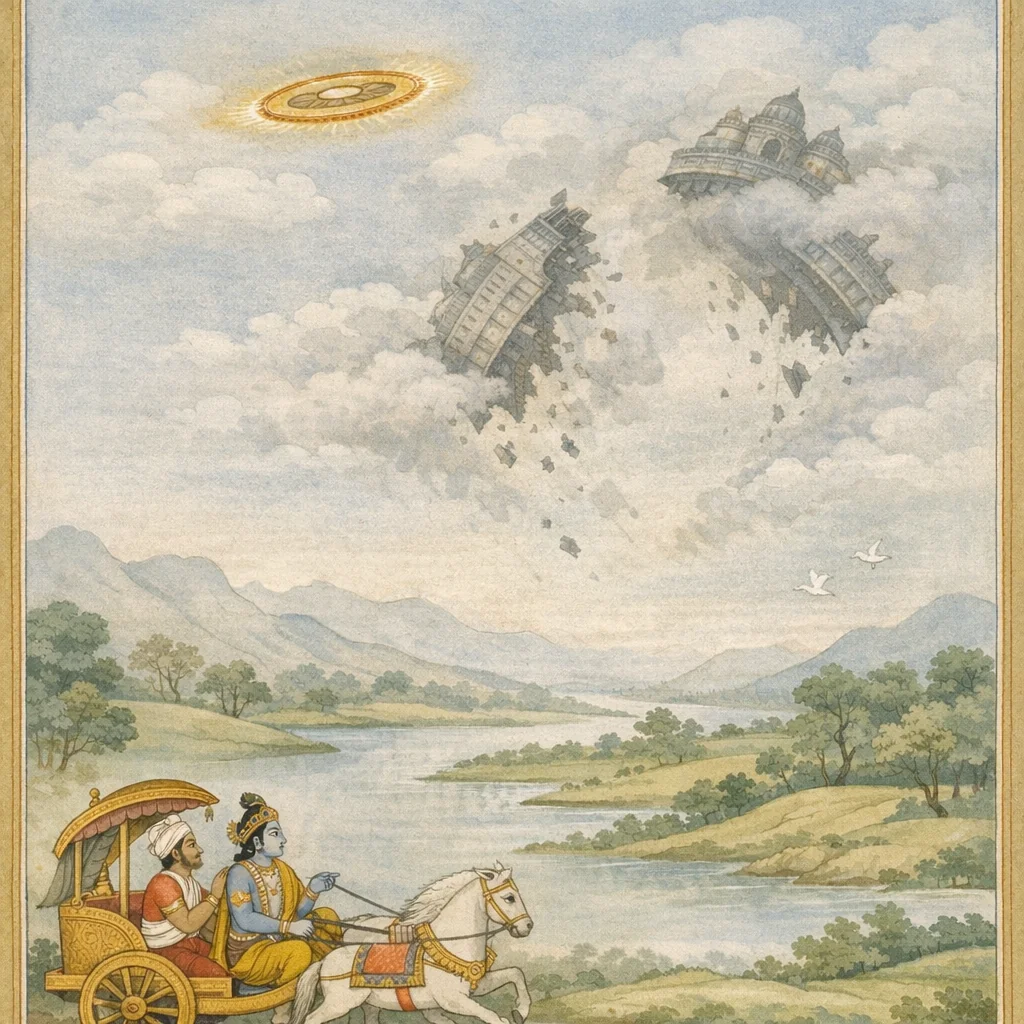
Chapter Arc: सौभविमान-वध की गाथा के धुएँ और तेज के बीच कथा खुलती है—शाल्व पर छोड़े गए सर्प-सदृश विषबाण, और फिर मायावी सौभ का अचानक अदृश्य हो जाना, जिससे वीर भी क्षणभर को विस्मित रह जाए। → माया-आवरण के कारण लक्ष्य लुप्त है; रथ-घोड़े पर्वत-भार से दबे, प्राण-क्षीण और लड़खड़ाते दिखते हैं। सारथि दारुक तात्कालिक सलाह देता है, और कृष्ण क्षण-भर ठहरने का आदेश देकर दिव्य, अभेद्य प्रतिरोध के बीच निर्णायक प्रहार का अवसर साधते हैं। → सुदर्शन-चक्र की अचूक शक्ति से सौभविमान त्रिपुर के समान चूर होकर द्विधा गिरता है; उसी तेजस्वी वेग में गदा घुमाते शाल्व को भी चक्र सहसा दो भागों में कर देता है—युद्ध का मायावी शिखर एक क्षण में कट जाता है। → उपाख्यान का परिणाम स्पष्ट है—माया पर धर्म-तेज की विजय। इसके बाद दृश्य बदलता है: काम्यक वन में युधिष्ठिर के राज्य/आश्रय से जुड़े ब्राह्मण-वैश्य पाण्डवों को छोड़ने को तैयार नहीं; अंततः युधिष्ठिर उनकी अनुमति लेकर सेवकों को रथ जोतने का आदेश देते हैं। → काम्यक वन का वह ‘अद्भुत समवाय’ समाप्ति की ओर है—रथ जुड़ रहे हैं; पाण्डवों की अगली गति और वन-यात्रा का अगला मोड़ सामने खड़ा है।
Shlokas
Verse 1
इस प्रकार श्रीमह्याभारत वनपर्वके अन्तर्गत अ्जुनाभिगमनपर्वमें सौभवधोपाख्यानविषयक इक्कीसवाँ अध्याय पूरा हुआ ॥/ २९ ॥। हि >> मय ० | है 7 द्ाविशोद्ध्याय: शाल्ववधोपाख्यानकी समाप्ति और युधिष्ठिरकी आज्ञा लेकर श्रीकृष्ण, धृष्टद्युम्न तथा अन्य सब राजाओंका अपने- अपने नगरको प्रस्थान वायुदेव उवाच ततो<हं भरतश्रेष्ठ प्रगृह्य रुचिरं धनु: । शरैरपातयं सौभाच्छिरांसि विबुधद्विषाम्,भगवान् श्रीकृष्ण कहते हैं--भरतश्रेष्ठ] तब मैं अपना सुन्दर धनुष उठाकर बाणोंद्वारा सौभविमानसे देवद्रोही दानवोंके मस्तक काट-काटकर गिराने लगा
Vāyu said: “Then, O best of the Bharatas, taking up my splendid bow, I began to strike with arrows, cutting down and casting from the Saubha aerial fortress the heads of those demons who bore enmity toward the gods. Thus the divine order was defended by force directed against the god-hating aggressors.”
Verse 2
शरांश्षाशीविषाकारानूर्ध्वगांस्तिग्मतेजस: । प्रैषयं शाल्वराजाय शार्ज्रमुक्तानू सुवासस:,तत्पश्चात् शार्ड़् धनुषसे छूटे हुए विषैले सर्पोंके समान प्रतीत होनेवाले, सुन्दर पंखोंसे सुशोभित, प्रचण्ड तेजस्वी तथा अनेक ऊर्ध्वगामी बाण मैंने राजा शाल्वपर चलाये
Thereafter I loosed upon King Śālva many arrows—keen and blazing, shooting upward like venomous serpents—adorned with fair feathers and charged with fierce radiance.
Verse 3
ततो नादृश्यत तदा सौभं कुरुकुलोद्वह । अन्तहितं माययाभूत् ततो5हं विस्मितो5$भवम्,कुरुकुलशिरोमणे! परंतु उस समय सौभविमान मायासे अदृश्य हो गया, अतः किसी प्रकार दिखायी नहीं देता था। इससे मुझे बड़ा आश्चर्य हुआ
Then, O foremost bearer of the Kuru line, the Saubha aerial city could no longer be seen. Hidden by illusion, it vanished from sight; and I, O crest-jewel of the Kurus, was filled with astonishment.
Verse 4
अथ दानवसडूघास्ते विकृताननमूर्धजा: । उदक्रोशन् महाराज विछिते मयि भारत,भरतवंशी महराज! तदनन्तर जब मैं निर्भय और अचलभावसे स्थित हुआ तथा उनपर शस्त्रप्रहार करने लगा, तब विकृत मुख और केशवाले सौभनिवासी दानवगण जोर-जोरसे चिल्लाने लगे
Then those bands of Dānavas, with grotesque faces and dishevelled hair, began to cry out loudly, O great king, O scion of Bharata, when I stood firm and unshaken and struck at them with weapons.
Verse 5
ततोअस्त्रं शब्दसाहं वै त्वरमाणो महारणे । अयोजयं तद्गभधाय तत: शब्द उपारमत्,तब मैंने उनके वधके लिये उस महान् संग्राममें बड़ी उतावलीके साथ शब्दवेधी बाणका संधान किया। यह देख उनका कोलाहल शान्त हो गया
Then, in that great battle, eager to bring about their destruction, I swiftly set and discharged the sound-seeking missile. As soon as it was fixed upon its target, their uproar subsided and silence fell.
Verse 6
हतास्ते दानवा: सर्वे यै: स शब्द उदीरित: । शरैरादित्यसंकाशैज्वलितै: शब्दसाधनै:,जिन दानवोंने पहले कोलाहल किया था, वे सब सूर्यके समान तेजस्वी शब्दवेधी बाणोंद्वारा मारे गये
Vāyu said: “All those Dānavas who had raised that uproar were slain—struck down by blazing, sun-bright arrows, weapons that take their aim from sound itself. Thus the very noise they unleashed became the means by which they were found and destroyed.”
Verse 7
तस्मिन्नुपरते शब्दे पुनरेवान्यतो5भवत् | शब्दो5परो महाराज तत्रापि प्राहरं शरै:,महाराज! वह कोलाहल शान्त होनेपर फिर दूसरी ओर उनका शब्द सुनायी दिया। तब मैंने उधर भी बाणोंका प्रहार किया
When that sound had ceased, another sound arose again from a different direction. O King, hearing that second noise as well, I shot arrows there too—striking toward the source of the disturbance.
Verse 8
एवं दश दिश: सर्वास्तिर्यगूर्ध्य च भारत । नादयामासुरसुरास्ते चापि निहता मया,भारत! इस तरह वे असुर इधर-उधर ऊपर-नीचे दसों दिशाओंमें कोलाहल करते और मेरे हाथसे मारे जाते थे
Vāyu said: “Thus, O Bhārata, in all the ten directions—sideways and above as well—the Asuras raised a great uproar; yet they too were struck down by me. Though tumult spread everywhere, it met its end before a force aligned with dharma.”
Verse 9
ततः प्राग्ज्योतिषं गत्वा पुनरेव व्यदृश्यत । सौभं कामगमं वीर मोहयन्मम चक्षुषी,तदनन्तर इच्छानुसार चलनेवाला सौभविमान प्राग्ज्योतिषपुरके निकट जाकर मेरे नेत्रोंको भ्रममें डालता हुआ फिर दिखायी दिया
Then, having gone toward Prāgjyotiṣa, that Saubha—an aerial craft able to move at will—again came into view. O hero, it bewildered my very eyes, as though it were playing tricks upon perception.
Verse 10
ततो लोकान्तकरणो दानवो दारुणाकृति: । शिलावर्षेण महता सहसा मां समावृणोत्,तत्पश्चात् लोकान्तकारी भयंकर आकृतिवाले दानवने आकर सहसा पत्थरोंकी भारी वर्षकि द्वारा मुझे आवृत कर दिया
Then a dreadful-looking Dānava, a bringer of world-ending ruin, suddenly enveloped me with a massive shower of stones.
Verse 11
सो<हं पर्वतवर्षेण वध्यमान: पुन: पुनः । वल्मीक इव राजेन्द्र पर्वतोपचितो5भवम्,राजेन्द्र! शिलाखण्डोंकी उस निरन्तर वृष्टिसे बार-बार आहत होकर मैं पर्वतोंसे आच्छादित बाँबी-सा प्रतीत होने लगा
Vāyu said: “O king, struck again and again by a rain of mountains, I came to look like an anthill buried beneath heaps of rock.”
Verse 12
ततोऊहं पर्वतचित: सहय: सहसारथि: । अप्रख्यातिमियां राजन सर्वतः पर्वतैश्चित:,राजन! मेरे चारों ओर शिलाखण्ड जमा हो गये थे। मैं घोड़ों और सारथिसहित प्रस्तरखण्डोंसे चुना-सा गया था, जिससे दिखायी नहीं देता था
Then, O king, I was heaped over with mountains of rock—together with my horses and my charioteer. Covered on every side by piled-up boulders, I became unrecognizable and could not be seen.
Verse 13
ततो वृष्णिप्रवीरा ये ममासन् सैनिकास्तदा । ते भयार्ता दिश: सर्वे सहसा वित्रदुद्रुवु:,यह देख वृष्णिकुलके श्रेष्ठ वीर जो मेरे सैनिक थे, भयसे आर्त हो सहसा चारों दिशाओंमें भाग चले
Then those foremost heroes of the Vṛṣṇi line who were serving as my soldiers at that time—stricken with fear—suddenly fled in all directions.
Verse 14
ततो हाहाकृतमभूत् सर्व किल विशाम्पते । द्यौश्न भूमिश्व खं चैवादृश्यमाने तथा मयि,प्रजानाथ! मेरे अदृश्य हो जानेपर भूलोक, अन्तरिक्ष तथा स्वर्गलोक--सभी स्थानोंमें हाहाकार मच गया
Then, O lord of the people, a universal cry of distress arose. For when I became invisible, heaven, earth, and the mid-region all seemed to vanish as well—so great was the upheaval caused by my disappearance.
Verse 15
ततो विषण्णमनसो मम राजन् सुहृज्जना: । रुरुदुश्लुक्तुशुश्वेव द:खशोकसमन्विता:,राजन्! उस समय मेरे सभी सुहृद् खिन्नचित्त हो दुःख-शोकमें डूबकर रोने-चिल्लाने लगे
Then, O King, my well-wishers—their minds cast down—were overwhelmed by grief and sorrow; they began to weep and cry aloud.
Verse 16
द्विषतां च प्रहर्षो5 भूदार्ति श्वाद्धिषतामपि । एवं विजितवान् वीर पश्चादश्रौषमच्युत,शत्रुओंमें उल्लास छा गया और मित्रोंमें शोक। अपनी मर्यादासे च्युत न होनेवाले वीर युधिष्ठिर! इस प्रकार राजा शाल्व एक बार मुझपर विजयी हो चुका था। यह बात मैंने सचेत होनेपर पीछे सारथिके मुँहसे सुनी थी
Among my enemies there arose exultation, and among my own well-wishers there was distress. O hero, unwavering from propriety, only afterward did I hear that in this manner King Śālva had once overcome me—so I learned, when I had regained awareness, from the charioteer’s own mouth.
Verse 17
ततो5हमिन्द्रदयितं सर्वपाषाण भेदनम् । वज़मुद्यम्य तान् सर्वान् पर्वतान् समशातयम्,तब मैंने सब प्रकारके प्रस्तरोंको विदीर्ण करनेवाले इन्द्रके प्रिय आयुध वज्रका प्रहार करके उन समस्त शिलाखण्डोंको चूर-चूर कर दिया
Then I lifted up the thunderbolt—Indra’s beloved weapon, capable of splitting every kind of rock—and struck, crushing all those mountains into fragments.
Verse 18
ततः पर्वतभारार्त्ता मन्दप्राणविचेष्टिता: । हया मम महाराज वेपमाना इवाभवन्,महाराज! उस समय पर्वतखण्डोंके भारसे पीड़ित हुए मेरे घोड़े कम्पित-से हो रहे थे। उनकी बलसाध्य चेष्टाएँ बहुत कम हो गयी थीं
Then, O great king, my horses—crushed by the weight of the mountain-masses—became as if trembling. Their movements grew feeble, and their vital force seemed diminished.
Verse 19
मेघजालमिवाकाशे विदार्यभ्युदितं रविम् । दृष्टवा मां बान्धवा: सर्वे हर्षमाहारयन् पुन:,जैसे आकाशमें बादलोंके समुदायको छिन्न-भिन्न करके सूर्य उदित होता है, उसी प्रकार शिलाखण्डोंको हटाकर मुझे प्रकट हुआ देख मेरे सभी बन्धु-बान्धब पुनः हर्षसे खिल उठे
Vāyu said: “Just as the sun rises after tearing apart a mass of clouds in the sky, so too—when the slabs of stone were removed and I was revealed—my kinsmen, seeing me, were once again filled with joy.”
Verse 20
ततः पर्वतभारार्त्तान् मन्दप्राणविचेष्टितान् । हयान् संदृश्य मां सूत: प्राह तात्कालिकं वच:,तब प्रस्तरखण्डोंके भारसे पीड़ित तथा धीरे-धीरे प्राणसाध्य चेष्टा करनेवाले घोड़ोंको देखकर सारथिने मुझसे यह समयोचित बात कही--
Then, seeing the horses—crushed by the weight of rocky boulders and struggling with faint, labored breaths—the charioteer addressed me with words suited to that urgent moment.
Verse 21
साधु सम्पश्य वार्ष्णेय शाल्वं सौभपतिं स्थितम् । अलं कृष्णावमन्यैनं साधु यत्नं समाचर,4वार्ष्णेय! वह देखिये, सौभराज शाल्व वहाँ खड़ा है। श्रीकृष्ण! इसकी उपेक्षा करनेसे कोई लाभ नहीं। इसके वधका कोई उचित उपाय कीजिये
Vāyu said: “Look well, O Vārṣṇeya—Śālva, the lord of Saubha, stands there. Do not treat him with contempt, O Kṛṣṇa; mere disregard will not help. Take up a fitting and careful effort—devise the proper means to bring about his downfall.”
Verse 22
मार्दव॑ सखितां चैव शाल्वादद्य व्यपाहर । जहि शाल्वं महाबाहो मैनं जीवय केशव,“महाबाहु केशव! अब शाल्वकी ओरसे कोमलता और मित्रभाव हटा लीजिये। इसे मार डालिये, जीवित न रहने दीजिये इति श्रीमहाभारते वनपर्वणि अर्जुनाभिगमनपर्वणि सौभवधोपाख्याने द्वाविंशोडध्याय:
Verse 23
सर्वे: पराक्रमैर्वीर वध्य: शत्रुरमित्रहन् | न शत्रुरवमन्तव्यो दुर्बलोडपि बलीयसा,शत्रुहन्ता वीरवर! आपको सारा पराक्रम लगाकर इस शत्रुका वध कर डालना चाहिये। कोई कितना ही बलवान क्यों न हो, उसे अपने दुर्बल शत्रुकी भी अवहेलना नहीं करनी चाहिये
Vāyudeva said: “O hero, slayer of foes—this enemy must be brought down by exerting every measure of valor. However strong one may be, one should never treat an enemy with contempt, even if that enemy appears weak.”
Verse 24
योडपि स्यात् पीठग: ककश्रित् कि पुनः समरे स्थित: । स त्वं पुरुषशार्दूल सर्वयत्नैरिमं प्रभो,“कोई शत्रु अपने घरमें आसनपर बैठा हो (युद्ध न करना चाहता हो), तो भी उसे नष्ट करनेमें नहीं चूकना चाहिये; फिर जो संग्राममें युद्ध करनेके लिये खड़ा हो, उसकी तो बात ही क्या है? अतः पुरुषसिंह! प्रभो! आप सभी उपायोंसे इस शत्रुको मार डालिये। वृष्णिवंशावतंस! इस कार्यमें आपको पुनः विलम्ब नहीं करना चाहिये। यह मृदुतापूर्ण उपायसे वशमें आनेवाला नहीं। वास्तवमें यह आपका मित्र भी नहीं है; क्योंकि वीर! इसने आपके साथ युद्ध किया और द्वारकापुरीको तहस-नहस कर दिया, अतः इसको शीघ्र मार डालना चाहिये।” कुन्तीनन्दन! सारथिके मुखसे इस तरहकी बातें सुनकर मैंने सोचा, यह ठीक ही तो कहता है। यह विचारकर मैंने शाल्वराजका वध करने और सौभविमानको मार गिरानेके लिये युद्धमें मन लगा दिया
Vāyu said: “Even if an enemy were merely seated at home upon his seat—one who does not even wish to fight—he should still not be spared when his destruction is required; how much more, then, one who stands ready in battle. Therefore, O tiger among men, O lord, exert every effort and strike down this foe.”
Verse 25
जहि वृष्णिकुलश्रेष्ठ मा त्वां कालो<त्यगात् पुन: । नैष मार्दवसाध्यो वै मतो नापि सखा तव,“कोई शत्रु अपने घरमें आसनपर बैठा हो (युद्ध न करना चाहता हो), तो भी उसे नष्ट करनेमें नहीं चूकना चाहिये; फिर जो संग्राममें युद्ध करनेके लिये खड़ा हो, उसकी तो बात ही क्या है? अतः पुरुषसिंह! प्रभो! आप सभी उपायोंसे इस शत्रुको मार डालिये। वृष्णिवंशावतंस! इस कार्यमें आपको पुनः विलम्ब नहीं करना चाहिये। यह मृदुतापूर्ण उपायसे वशमें आनेवाला नहीं। वास्तवमें यह आपका मित्र भी नहीं है; क्योंकि वीर! इसने आपके साथ युद्ध किया और द्वारकापुरीको तहस-नहस कर दिया, अतः इसको शीघ्र मार डालना चाहिये।” कुन्तीनन्दन! सारथिके मुखसे इस तरहकी बातें सुनकर मैंने सोचा, यह ठीक ही तो कहता है। यह विचारकर मैंने शाल्वराजका वध करने और सौभविमानको मार गिरानेके लिये युद्धमें मन लगा दिया
Vāyu said: “Slay him, O best of the Vṛṣṇis; do not let time slip past you again. This man is not to be subdued by gentleness, nor is he truly your friend. Even if an enemy sits within one’s own house upon a seat, claiming he does not wish to fight, one should not fail to destroy him; how much more so when he stands ready for battle. Therefore, O lion among men, act decisively and by every means bring down this foe without delay.”
Verse 26
येन त्वं योधितो वीर द्वारका चावमर्दिता । एवमादि तु कौन्तेय श्रुत्वाहं सारथेवच:,“कोई शत्रु अपने घरमें आसनपर बैठा हो (युद्ध न करना चाहता हो), तो भी उसे नष्ट करनेमें नहीं चूकना चाहिये; फिर जो संग्राममें युद्ध करनेके लिये खड़ा हो, उसकी तो बात ही क्या है? अतः पुरुषसिंह! प्रभो! आप सभी उपायोंसे इस शत्रुको मार डालिये। वृष्णिवंशावतंस! इस कार्यमें आपको पुनः विलम्ब नहीं करना चाहिये। यह मृदुतापूर्ण उपायसे वशमें आनेवाला नहीं। वास्तवमें यह आपका मित्र भी नहीं है; क्योंकि वीर! इसने आपके साथ युद्ध किया और द्वारकापुरीको तहस-नहस कर दिया, अतः इसको शीघ्र मार डालना चाहिये।” कुन्तीनन्दन! सारथिके मुखसे इस तरहकी बातें सुनकर मैंने सोचा, यह ठीक ही तो कहता है। यह विचारकर मैंने शाल्वराजका वध करने और सौभविमानको मार गिरानेके लिये युद्धमें मन लगा दिया
Vāyu said: “O hero, it was by him that you were challenged to battle, and by him that Dvārakā was ravaged. O son of Kuntī, hearing such words from the charioteer—urging that even an enemy who sits at ease at home should not be spared, and all the more one who stands ready for war—I judged the counsel to be sound. Reflecting thus, I fixed my mind on the fight: to slay King Śālva and to bring down the Saubha aerial fortress.”
Verse 27
तत्त्वमेतदिति ज्ञात्वा युद्धे मतिमधारयम् । वधाय शाल्वराजस्य सौभस्य च निपातने,“कोई शत्रु अपने घरमें आसनपर बैठा हो (युद्ध न करना चाहता हो), तो भी उसे नष्ट करनेमें नहीं चूकना चाहिये; फिर जो संग्राममें युद्ध करनेके लिये खड़ा हो, उसकी तो बात ही क्या है? अतः पुरुषसिंह! प्रभो! आप सभी उपायोंसे इस शत्रुको मार डालिये। वृष्णिवंशावतंस! इस कार्यमें आपको पुनः विलम्ब नहीं करना चाहिये। यह मृदुतापूर्ण उपायसे वशमें आनेवाला नहीं। वास्तवमें यह आपका मित्र भी नहीं है; क्योंकि वीर! इसने आपके साथ युद्ध किया और द्वारकापुरीको तहस-नहस कर दिया, अतः इसको शीघ्र मार डालना चाहिये।” कुन्तीनन्दन! सारथिके मुखसे इस तरहकी बातें सुनकर मैंने सोचा, यह ठीक ही तो कहता है। यह विचारकर मैंने शाल्वराजका वध करने और सौभविमानको मार गिरानेके लिये युद्धमें मन लगा दिया
Recognizing this as the true course, I fixed my resolve upon battle—determined to slay King Śālva and to bring down Saubha. The counsel was clear: even an enemy who sits at ease should not be spared, and how much more one who stands ready for war. Since this foe cannot be subdued by gentleness and has already violated friendship by waging war and laying waste to Dvārakā, swift and decisive action in combat is presented as the rightful, protective duty.
Verse 28
दारुकं चाब्रुवं वीर मुहूर्त स्थीयतामिति । ततो<प्रतिहतं दिव्यमभेद्यमतिवीर्यवत्,वीर! तत्पश्चात् मैंने दारुकसे कहा--'सारथे! दो घड़ी और ठहरो (फिर तुम्हारी इच्छा पूरी हो जायगी)।' तदनन्तर मैंने कहीं भी कुण्ठित न होनेवाले दिव्य, अभेद्य, अत्यन्त शक्तिशाली, सब कुछ सहन करनेमें समर्थ, प्रिय तथा परम कान्तिमान् आग्नेयास्त्रका अपने धनुषपर संधान किया। वह अस्त्र युद्धमें दानवोंका अन्त करनेवाला था
Vāyu-deva said: “O hero, I told Dāruka, ‘Stay here for just a little while.’ Then I prepared a divine weapon—unstoppable, unbreakable, and of tremendous power. In the narrative frame, the pause is not hesitation but disciplined timing: restraint and right sequencing are shown as part of righteous action, even when force is about to be unleashed.”
Verse 29
आग्नेयमस्त्र दयितं सर्वसाहं महाप्रभम् । योजयं तत्र धनुषा दानवान्तकरं रणे,वीर! तत्पश्चात् मैंने दारुकसे कहा--'सारथे! दो घड़ी और ठहरो (फिर तुम्हारी इच्छा पूरी हो जायगी)।' तदनन्तर मैंने कहीं भी कुण्ठित न होनेवाले दिव्य, अभेद्य, अत्यन्त शक्तिशाली, सब कुछ सहन करनेमें समर्थ, प्रिय तथा परम कान्तिमान् आग्नेयास्त्रका अपने धनुषपर संधान किया। वह अस्त्र युद्धमें दानवोंका अन्त करनेवाला था
Vāyu said: “I then set upon my bow the beloved Agneya weapon—unyielding, all-enduring, and of great splendor—an arm of tremendous might, famed for destroying the Dānavas in battle. After that I said to Dāruka, ‘Charioteer, wait just two more moments; then your wish will be fulfilled.’ Thereupon I fixed in place that divine, unbreakable, supremely powerful Agneya missile, never to be blunted anywhere, radiant and dear—an instrument meant to bring the Dānavas to their end in war.”
Verse 30
यक्षाणां राक्षसानां च दानवानां च संयुगे । राज्ञां च प्रतिलोमानां भस्मान्तकरणं महत्,इतना ही नहीं, वह यक्षों, राक्षसों, दानवों तथा विपक्षी राजाओंको भी भस्म कर डालनेवाला और महान था
Vāyu said: “In battle, it was a mighty power—capable of reducing to ashes not only Yakṣas, Rākṣasas, and Dānavas, but even hostile kings who stood in opposition.”
Verse 31
क्षुरान्तममलं चक्रं कालान्तकयमोपमम् । अनुमन्त्रयाहमतुलं द्विषतां विनिबर्हणम्,वह आग्नेयास्त्र (सुदर्शन) चक्रके रूपमें था। उसके परिधिभागमें सब ओर तीखे छूरे लगे हुए थे। वह उज्ज्वल अस्त्र काल, यम और अन्तकके समान भयंकर था। उस शत्रुनाशक अनुपम अस्त्रको अभिमन्त्रित करके मैंने कहा--'तुम अपनी शक्तिसे सौभविमान और उसपर रहनेवाले मेरे शत्रुओंको मार डालो।' ऐसा कहकर अपने बाहुबलसे रोषपूर्वक मैंने वह अस्त्र सौभ-विमानकी ओर चलाया
Vāyu said: “I consecrated an incomparable, spotless discus—its rim set with razor-like edges—terrifying like Kāla (Time), Antaka (Death), and Yama. That peerless, foe-destroying weapon, once empowered by mantra, I resolved to hurl forth by my own might against the Saubha aerial city and those dwelling upon it, to cut down my enemies.”
Verse 32
जहि सौभे स्ववीर्येण ये चात्र रिपवो मम । इत्युक्त्वा भुजवीर्येण तस्मै प्राहिणवं रुषा,वह आग्नेयास्त्र (सुदर्शन) चक्रके रूपमें था। उसके परिधिभागमें सब ओर तीखे छूरे लगे हुए थे। वह उज्ज्वल अस्त्र काल, यम और अन्तकके समान भयंकर था। उस शत्रुनाशक अनुपम अस्त्रको अभिमन्त्रित करके मैंने कहा--'तुम अपनी शक्तिसे सौभविमान और उसपर रहनेवाले मेरे शत्रुओंको मार डालो।' ऐसा कहकर अपने बाहुबलसे रोषपूर्वक मैंने वह अस्त्र सौभ-विमानकी ओर चलाया
Vāyu-deva said: “Destroy Saubha by your own might, and also those enemies of mine who are there.” Having spoken thus, in wrath and relying on the strength of his arms, he dispatched that weapon toward it.
Verse 33
रूप॑ सुदर्शनस्थासीदाकाशे पततस्तदा । द्वितीयस्येव सूर्यस्य युगान्ते प्रपतिष्यत:,आकाशमें जाते ही उस सुदर्शन चक्रका स्वरूप प्रलयकालमें उगनेवाले द्वितीय सूर्यके समान प्रकाशित हो उठा
Vāyu said: “As it sped into the sky, the Sudarśana discus blazed forth in form and radiance—like a second sun rising at the end of an age, as though the world were rushing toward dissolution.”
Verse 34
तत् समासाद्य नगरं सौभं व्यपगतत्विषम् । मध्येन पाटयामास क्रकचो दार्विवोच्छितम्,उस दिव्यास्त्रने सौभनगरमें पहुँचकर उसे श्रीहीन कर दिया और जैसे आरा ऊँचे काठको चीर डालता है, उसी प्रकार सौभविमानको बीचसे काट डाला
Vāyu-deva said: “Having reached the city called Saubha, he stripped it of its splendor; then, like a saw cleaving through a lofty mass of timber, he split the Saubha aerial fortress right through the middle.”
Verse 35
द्विधा कृतं ततः: सौभ॑ सुदर्शनबलाद्धतम् । महेश्वरशरोद्धूतं पपात त्रिपुरं यथा,सुदर्शन चक्रकी शक्तिसे कटकर दो टुकड़ोंमें बँटा हुआ सौभविमान महादेवजीके बाणोंसे छिन्न-भिन्न हुए त्रिपुरकी भाँति पृथ्वीपर गिर पड़ा
Then the Saubha aerial city, split into two and struck down by the might of the Sudarśana, fell to the earth—just as Tripura once fell, shattered and hurled down by Maheśvara’s arrows.
Verse 36
तस्मिन् निपतिते सौभे चक्रमागात् करं मम | पुनश्चादाय वेगेन शाल्वायेत्यहमब्रुवम्,सौभविमानके गिरनेपर चक्र फिर मेरे हाथमें आ गया। मैंने फिर उसे लेकर वेगपूर्वक चलाया और कहा--“अबकी बार शाल्वको मारनेके लिये तुम्हें छोड़ रहा हूँ”
When the Saubha aerial city had fallen, the discus returned to my hand. Taking it up again with swift force, I declared: “Now I release you once more—this time to strike down Śālva.”
Verse 37
ततः शाल्वं गदां गुर्वीमाविध्यन्तं महाहवे । द्विधा चकार सहसा प्रजज्वाल च तेजसा,तब उस चक्रने महासमरमें बड़ी भारी गदा घुमानेवाले शाल्वके सहसा दो टुकड़े कर दिये और वह तेजसे प्रज्वलित हो उठा
Then, in that great battle, the discus instantly split Śālva—who was whirling a massive mace—into two. Blazing with its own fiery power, the weapon flared up as it struck.
Verse 38
तस्मिन् विनिहते वीरे दानवास्त्रस्तचेतस: । हाहाभूता दिशो जम्मुरदिता मम सायकै:,वीर शाल्वके मारे जानेपर दानवोंके मनमें भय समा गया। वे मेरे बाणोंसे पीड़ित हो हाहाकार करते हुए सब दिशाओंमें भाग गये
When that heroic warrior was slain, the Dānavas—shaken in mind and struck with terror—broke into cries of “hā hā.” Tormented by my arrows, they fled in all directions.
Verse 39
ततो<5हं समवस्थाप्य रथं सौभसमीपत: । शड्खं प्रध्माप्य हर्षेण सुहृद: पर्यहर्षयम्,तब मैंने सौभविमानके समीप अपने रथको खड़ा करके प्रसन्नतापूर्वक शंख बजाकर सभी सुहृदोंको हर्षमें निमग्न कर दिया
Then I stationed my chariot close to the Saubha aerial fortress. Blowing my conch with exhilaration, I filled my well-wishers and allies with renewed joy and confidence.
Verse 40
तन्मेरुशिखराकारं विध्वस्ताट्टालगोपुरम् । दह्यूमानमभिप्रेक्ष्य स्त्रियस्ता: सम्प्रदुद्गरुवु:,मेरुपर्वतके शिखरके समान आकृतिवाले सौभ-नगरकी अट्टालिका और गोपुर सभी नष्ट हो गये। उसे जलते देख उसपर रहनेवाली स्त्रियाँ इधर-उधर भाग गयीं
Seeing that city—shaped like the peak of Mount Meru—its lofty ramparts and gateways shattered, and now blazing with smoke and flame, the women who dwelt there fled in panic in all directions.
Verse 41
एवं निहत्य समरे सौभ॑ शाल्व॑ निपात्य च । आनर्तान् पुनरागम्य सुहृदां प्रीतिमावहम्,धर्मराज! इस प्रकार युद्धमें सौभविमान तथा राजा शाल्वको नष्ट करके मैं पुनः आनर्तनगर [द्वारका)-में लौट आया और सुहृदोंका हर्ष बढ़ाया
Thus, having destroyed in battle the Saubha aerial fortress and brought down King Śālva as well, I returned again to the land of Ānarta (Dvārakā) and became the cause of joy for my well-wishing friends, O Dharmarāja.
Verse 42
तदेतत् कारणं राजन् यदहं नागसाह्नयम् । नागमं परवीरघ्न न हि जीवेत् सुयोधन:,राजन! यही कारण है, जिससे मैं उन दिनों हस्तिनापुरमें न आ सका। शत्रुवीरोंका नाश करनेवाले धर्मराज! मेरे आनेपर या तो जूआ नहीं होता या दुर्योधन जीवित नहीं रह पाता। जैसे बाँध टूट जानेपर पानीको कोई नहीं रोक सकता, उसी प्रकार आज जबकि सब कुछ बिगड़ चुका है, तब मैं क्या कर सकूँगा
O king, this is the reason I could not come to Hāstinapura in those days. O slayer of hostile heroes, had I arrived, either the gambling match would not have taken place at all, or Suyodhana (Duryodhana) would not have remained alive.
Verse 43
मय्यागते<5थवा वीर द्यूतं न भविता तथा । अद्याहं कि करिष्यामि भिन्नसेतुरिवोदकम्,राजन! यही कारण है, जिससे मैं उन दिनों हस्तिनापुरमें न आ सका। शत्रुवीरोंका नाश करनेवाले धर्मराज! मेरे आनेपर या तो जूआ नहीं होता या दुर्योधन जीवित नहीं रह पाता। जैसे बाँध टूट जानेपर पानीको कोई नहीं रोक सकता, उसी प्रकार आज जबकि सब कुछ बिगड़ चुका है, तब मैं क्या कर सकूँगा
Vāyu said: “O hero, had I arrived there, the gambling would not have taken place at all—or else Duryodhana would not have remained alive. But now, O king, what can I do today, when everything has already gone wrong? Just as water cannot be held back once a dam has broken, so too events, once unbound, rush onward beyond restraint.”
Verse 44
वैशम्पायन उवाच एवमुकक््त्वा महाबाहु: कौरवं पुरुषोत्तम: । आमन्त्रय प्रययौ श्रीमान् पाण्डवान् मधुसूदन:,वैशम्पायनजी कहते हैं--जनमेजय! ऐसा कहकर पुरुषोंमें श्रेष्ठ महाबाहु श्रीमान् मधुसूदन कुरुनन्दन युधिष्ठिरकी आज्ञा लेकर द्वारकाकी ओर चले
Vaiśampāyana said: Having spoken thus, the illustrious Madhusūdana—supreme among men and mighty-armed—took leave of the Pāṇḍavas and, with the Kaurava (Yudhiṣṭhira)’s consent, departed toward Dvārakā.
Verse 45
अभिवाद्य महाबाहुर्धर्मराजं युधिष्ठिरम् । राज्ञा मूर्थन्युपाप्रातो भीमेन च महाभुज:,महाबाहु श्रीकृष्णने धर्मराज युधिष्ठिरको प्रणाम किया। राजा युधिष्ठिर तथा भीमने बड़ी-बड़ी भुजाओंवाले श्रीकृष्णका सिर सूँघा
Vaiśaṃpāyana said: Having respectfully greeted Dharmarāja Yudhiṣṭhira, the mighty-armed one approached. Then King Yudhiṣṭhira and Bhīma, in affectionate recognition, touched and smelled his head—an intimate gesture of honor and familial warmth.
Verse 46
परिष्वक्तश्नार्जुनेन यमा भ्यां चाभिवादित: । सम्मानितश्च धौम्येन द्रौपद्या चार्चितो5श्रुभि:,अर्जुनने उनको हृदयसे लगाया और नकुल-सहदेवने उनके चरणोंमें प्रणाम किया। पुरोहित धौम्यजीने उनका सम्मान किया तथा द्रौपदीने अपने आँसुओंसे उनकी अर्चना की
Vaiśampāyana said: He was embraced by Arjuna; and the twins—Nakula and Sahadeva, the sons of Yamā—bowed to him in reverence. The family priest Dhaumya honored him with due respect, and Draupadī, her heart overflowing, received him as in worship, with tears.
Verse 47
सुभद्रामभिमन्युं च रथमारोप्य काउ्चनम् | आरुरोह रथं कृष्ण: पाण्डवैरभिपूजित:,पाण्डवोंसे सम्मानित श्रीकृष्ण सुभद्रा और अभिमन्युको अपने सुवर्णमय रथपर बैठाकर स्वयं भी उसपर आरूढ़ हुए
Vaiśampāyana said: Having seated Subhadrā and Abhimanyu upon a golden chariot, Kṛṣṇa himself mounted it, honored and respectfully received by the Pāṇḍavas.
Verse 48
शैब्यसुग्रीवयुक्तेन रथेनादित्यवर्चसा । द्वारकां प्रययौ कृष्ण: समाश्वास्य युधिष्ठिरम्,उस रथमें शैब्य और सुग्रीव नामक घोड़े जुते हुए थे और वह सूर्यके समान तेजस्वी प्रतीत होता था। युधिष्ठिरको आश्वासन देकर श्रीकृष्ण उसी रथके द्वारा द्वारकापुरीकी ओर चल दिये
Vaiśampāyana said: Harnessing the sun-bright chariot yoked with the horses named Śaibya and Sugrīva, Kṛṣṇa set out for Dvārakā. Having reassured Yudhiṣṭhira, he departed.
Verse 49
ततः प्रयाते दाशाहें धृष्टद्युम्नोडपि पार्षत: । द्रौपदेयानुपादाय प्रययौ स्वपुरं तदा,श्रीकृष्णके चले जानेपर ट्रुपदपुत्र धृष्टद्युम्नने भी द्रौपदीकुमारोंको साथ ले अपनी राजधानीको प्रस्थान किया
When Śrī Kṛṣṇa of the Dāśārha line had departed, Dhṛṣṭadyumna too—the son of Pṛṣata—then set out, taking the sons of Draupadī with him, and proceeded to his own capital.
Verse 50
धृष्टकेतु: स्वसारं च समादायाथ चेदिराट् । जगाम पाण्डवान् दृष्टवा रम्यां शुक्तिमतीं पुरीम्,चेदिराज धृष्टकेतु भी अपनी बहिन करेणुमतीको, जो नकुलकी भार्या थी, साथ ले पाण्डवोंसे मिल-जुलकर अपनी सुरम्य राजधानी शुक्तिमतीपुरीको चले गये
Vaiśampāyana said: Then Dhṛṣṭaketu, the king of Cedi, taking his sister along, went to meet the Pāṇḍavas; and after seeing the lovely city of Śuktimatī, he proceeded there.
Verse 51
केकयाश्षाप्यनुज्ञाता: कौन्तेयेनामितौजसा । आमन्त्र्य पाण्डवान् सर्वान् प्रययुस्तेषपि भारत,भारत! केकयराजकुमार भी अमित तेजस्वी कुन्तीनन्दन युधिष्ठिरकी आज्ञा पा समस्त पाण्डवोंसे विदा लेकर अपने नगरको चले गये
Vaiśaṃpāyana said: The princes of Kekaya, having received permission from the mighty-armed son of Kuntī, took leave of all the Pāṇḍavas and then departed for their own city. The passage highlights courteous conduct and adherence to proper protocol—seeking consent, offering farewell, and parting without discord.
Verse 52
ब्राह्मणाश्ष विशश्वैव तथा विषयवासिन: । विसृज्यमाना: सुभृशं न त्यजन्ति सम पाण्डवान्,युधिष्ठिरके राज्यमें रहनेवाले ब्राह्मण तथा वैश्य बारंबार विदा करनेपर भी पाण्डवोंको छोड़कर जाना नहीं चाहते थे
Vaiśampāyana said: The brāhmaṇas and the vaiśyas, and indeed the other inhabitants of the realm, though repeatedly urged to depart, would not abandon the Pāṇḍavas. Their steadfastness reflects a moral loyalty to righteous rulers in distress, choosing solidarity over self-preservation.
Verse 53
समवाय: स राजेन्द्र सुमहाद्भुतदर्शन: । आसीन्महात्मनां तेषां काम्यके भरतर्षभ,भरतवंशभूषण महाराज जनमेजय! उस समय काम्यकवनमें उन महात्माओंका बड़ा अद्भुत सम्मेलन जुटा था
Vaiśampāyana said: O best of kings, that gathering was a truly great and wondrous sight. In the Kāmyaka forest, O bull among the Bharatas, those high-souled men had assembled in an extraordinary conclave—an event marked by reverence, spiritual stature, and the moral weight of their presence.
Verse 54
युधिष्ठिरस्तु विप्रांस्ताननुमान्य महामना: । शशास पुरुषान् काले रथान् योजयतेति वै,तदनन्तर महामना युधिष्ठिरने सब ब्राह्मणोंकी अनुमतिसे अपने सेवकोंको समयपर आज्ञा दी--*रथोंको जोतकर तैयार करो”
Then the high-minded Yudhiṣṭhira, having obtained the assent of those brāhmaṇas, issued timely orders to his attendants: “Yoke the chariots and make them ready.” The verse highlights his disciplined leadership—acting with respect for learned counsel and proceeding in an orderly, duty-conscious manner.
Frequently Asked Questions
The dilemma is divided duty under uncertain information: whether to disengage to protect Dvārakā based on a distressing report, or to maintain the present engagement—requiring discernment about truth, deception, and proportional response.
Perception is not equivalent to reality in moments of crisis; disciplined discrimination (viveka) and emotional regulation are necessary to prevent strategic and ethical failure when deceptive appearances target attachment and grief.
No explicit phalaśruti is stated in these verses; the chapter’s meta-function is implicit—illustrating how recognizing māyā preserves agency and dharmic action within the epic’s larger moral-psychological framework.