Adhyaya 210
पञ्चवर्णोत्पत्तिः — The Origin of the Five-Colored Fiery Being and Ritual-Disruptor Lineages
Upa-parva: Mārkaṇḍeya-ṛṣi Upākhyāna (Genealogical–Ritual Discourse on Tapas and Yajña)
Mārkaṇḍeya enumerates five ascetic figures—Kāśyapa, Vāsiṣṭha, Prāṇa (and Prāṇaputraka), Agni Āṅgirasa, and Cyavana Triṣuvarcaka—who undertake prolonged tapas seeking a righteous, renowned son. Through meditation on the five mahāvyāhṛtis, a luminous five-colored being arises, described with a fiery head and solar-like arms, with contrasting golden and dark features. The discourse identifies this entity as Pāñcajanya, known in Vedic tradition and characterized as a progenitor of “five lineages” (pañcavaṃśakara). After extended austerity, further emanations and named offspring are listed, organizing a genealogical register. The chapter then shifts to ritual theory: groups arranged in sets of five are said to appropriate or obstruct sacrificial offerings, harming sacrificial outcomes through rivalry, yet they avoid properly established fires and are subdued by mantra when the ritual is correctly conducted. The close reinforces that well-founded agnihotra and competent ritual performance on earth secure sacrificial integrity, and it notes specific fires/sons (e.g., Bhūmi-upāśrita, Rathantara) recognized by ritual specialists.
Chapter Arc: मार्कण्डेय ऋषि धर्म की सूक्ष्मता का द्वार खोलते हैं और धर्मव्याध के मुख से यह प्रतिज्ञा कराते हैं कि धर्म केवल नियम नहीं—विवेक की कठिन परीक्षा है। → धर्मव्याध ‘श्रुति-प्रमाण’ और ‘वृद्धानुशासन’ का सहारा लेकर बताता है कि धर्म की गति बहुशाखी और अनन्त है; फिर वह सत्य-असत्य के कठोर द्वन्द्व को उठाता है—कुछ स्थितियों में प्राणरक्षा, विवाह-रक्षा या महाविपत्ति में असत्य-वचन भी धर्म के निकट हो सकता है, क्योंकि परिणाम-धर्म (फल) और करुणा-धर्म (हित) भी साथ चलते हैं। → वह कर्म-फल की अपरिहार्यता और जीव की अवशता का निर्णायक कथन करता है—कोई भी ब्रह्मन्, अपने हाथ में आयी वस्तुओं/परिस्थितियों का पूर्ण स्वामी नहीं; मनुष्य अपने ही कृत दोषों से जन्म-मृत्यु-जरा-दुःख में पकता है, और इसी कर्म-चक्र से मुक्ति का उपाय भी कर्म-शुद्धि, शम-दम और वैराग्य है। → धर्मव्याध मोक्ष-मार्ग को क्रमबद्ध करता है: शुभ-अशुभ कर्मों की पहचान, पाप-त्याग, वैराग्य, शम-दम-तप, बन्धन-निवृत्ति और विशुद्धि—जिससे मनुष्य पहले सुकृत-लोकों को और अंततः परम मोक्ष को प्राप्त करता है, जहाँ जाकर शोक नहीं रहता। → धर्म की यह सूक्ष्म कसौटी सुनकर श्रोता के भीतर प्रश्न शेष रहता है—किस विशेष परिस्थिति में ‘हितकारी असत्य’ वास्तव में धर्म होगा, और कब वह केवल स्वार्थ का आवरण?
Shlokas
Verse 1
हि न (0) है 7 नवाधिकद्विशततमो< ध्याय: धर्मकी सूक्ष्मता, शुभाशुभ कर्म और उनके फल तथा ब्रह्मकी प्राप्तिके उपायोंका वर्णन मार्कण्डेय उवाच धर्मव्याधस्तु निपुणं पुनरेव युधिष्ठिर । विप्रर्षभमुवाचेदं सर्वधर्मभूतां वर,मार्कण्डेयजी कहते हैं--सम्पूर्ण धर्मात्माओंमें श्रेष्ठ युधिष्ठिर! तदनन्तर धर्मव्याधने विप्रवर कौशिकसे पुन: कुशलतापूर्वक कहना आरम्भ किया
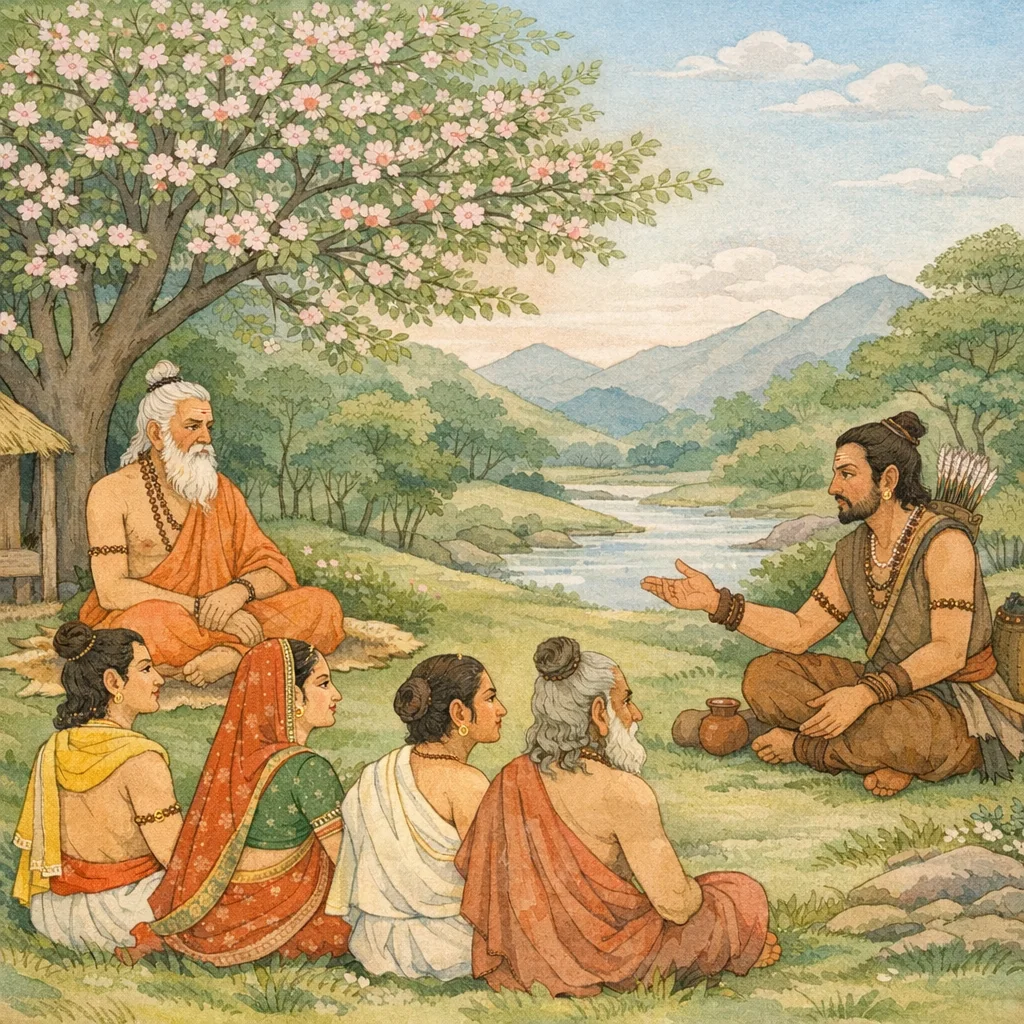
Mārkaṇḍeya said: “O Yudhiṣṭhira, best among those who uphold dharma, the Dharmavyādha—skilled in discernment—once again addressed Kauśika, the bull among brāhmaṇas, resuming his instruction.”
Verse 2
व्याध उवाच श्रुतिप्रमाणो धर्मोड्यमिति वृद्धानुशासनम् | सूक्ष्मा गतिहिं धर्मस्य बहुशाखा हानन्तिका,व्याध बोला--वृद्ध पुरुषोंका कहना है कि “धर्मके विषयमें केवल वेद ही प्रमाण है।' यह ठीक है, तो भी धर्मकी गति बड़ी सूक्ष्म है। उसके अनन्त भेद और अनेक शाखाएँ हैं
The hunter said: “The elders instruct that the Veda (Śruti) is the sole authority for dharma. That is indeed so; yet the course of dharma is exceedingly subtle—its distinctions are without end, and its branches are many.”
Verse 3
प्राणान्तिके विवाहे च वक्तव्यमनृतं भवेत् | अनृतेन भवेत् सत्यं सत्येनैवानृतं भवेत्,(वेदके अनुसार सत्य धर्म और असत्य अधर्म हैं, परंतु) यदि किसीके प्राणोंपर संकट आ जाय अथवा कन्या आदिका विवाह तै करना हो तो ऐसे अवसरोंपर प्राणरक्षा आदिके लिये झूठ बोलनेकी आवश्यकता पड़ जाय तो वहाँ असत्यसे ही सत्यका फल मिलता है। इसके विपरीत (यदि सत्यभाषणसे किसीके प्राणोंपर संकट आ गया, तो वहाँ) सत्यसे ही असत्यका फल प्राप्त होता है
The hunter said: “In a life‑threatening emergency, and also at the time of arranging a marriage, one may have to speak what is untrue. By an untruth, the result can become ‘truth’—that is, it can serve dharma by protecting life or securing a rightful marriage. Conversely, if speaking the literal truth brings danger to someone’s life, then that ‘truth’ yields the fruit of untruth, for it becomes ethically blameworthy.”
Verse 4
यद् भूतहितमत्यन्तं तत् सत्यमिति धारणा । विपर्ययकृतो<धर्म: पश्य धर्मस्य सूक्ष्मताम्,जिससे परिणाममें प्राणियोंका अत्यन्त हित होता हो, वह वास्तवमें सत्य है। इसके विपरीत जिससे किसीका अहित होता हो या दूसरोंके प्राण जाते हों, वह देखनेमें सत्य होनेपर भी वास्तवमें असत्य एवं अधर्म है-। इस प्रकार विचार करके देखिये, धर्मकी गति कितनी सूक्ष्म है
“That which brings the greatest welfare to living beings—this is what should be held to be ‘truth’. But when the opposite is done—when harm is caused or lives are lost—then even something that appears factually true becomes, in reality, untruth and adharma. Reflect on this and see how subtle the course of dharma truly is.”
Verse 5
यत् करोत्यशुभं कर्म शुभं वा यदि सत्तम | अवश्यं तत् समाप्रोति पुरुषो नात्र संशय:,सज्जनशिरोमणे! मनुष्य जो शुभ या अशुभ कार्य करता है, उसका फल उसे अवश्य भोगना पड़ता है, इसमें संशय नहीं है
The hunter said: “O best of the good, whether a person performs an inauspicious deed or a virtuous one, he inevitably attains its result. Of this there is no doubt.”
Verse 6
विषमां च दशां प्राप्तो देवान् गहति वै भृशम् । आत्मन: कर्मदोषाणि न विजानात्यपण्डित:,मूर्ख मानव संकटकी दशामें पड़नेपर देवताओंको बहुत कोसता है, उनकी भरपेट निन्दा करता है; किंतु वह यह नहीं समझता कि यह अपने ही कर्मोका दोषावह परिणाम है
The hunter said: “When a man falls into a harsh and uneven condition, he vehemently blames the gods and pours out full reproach upon them. Yet the unwise does not recognize that the fault lies in his own actions—the suffering is the consequence of his own deeds.”
Verse 7
मूढो नैकृतिकश्चापि चपलश्च द्विजोत्तम । सुखदुःखविपर्यासान् सदा समुपपद्यते
The hunter said: “O best of Brahmins, a person who is deluded, deceitful, and fickle continually falls into reversals of happiness and sorrow—ever meeting life’s outcomes in a confused, unstable way.”
Verse 8
योड्यमिच्छेद् यथा काम त॑ तं कामं स आप्नुयात्
If a person desires to pursue any undertaking according to his wish, then he attains that very object of desire.
Verse 9
संयताश्चापि दक्षाश्व॒ मतिमन्तश्व मानवा:
“They are disciplined as well, and capable; they are thoughtful human beings.”
Verse 10
भूतानामपर: कश्रिद्धिंसायां सततोत्थित:
The hunter said: “Among living beings there is yet another kind of person—one who is ever intent upon violence.”
Verse 11
अचेष्टमपि चासीनं श्री: कंचिदुपतिछ्ठति
Even when a person makes no outward effort and merely sits still, prosperity (Śrī) may nonetheless come and stand by him. The hunter points out that worldly success is not always a direct measure of merit or exertion; therefore one should judge by dharma and conduct rather than by visible fortune.
Verse 12
देवानिष्टवा तपस्तप्त्वा कृपणै: पुत्रगृद्धिभि:
“Having worshipped the gods and performed austerities, (many do so) with a miserly spirit—driven by craving for sons.”
Verse 13
अपरे धनधान्यैश्न भोगैश्व पितृसंचितै:
“Others, however, live upon wealth and grain, and upon enjoyments that have been amassed by their forefathers.”
Verse 14
कर्मजा हि मनुष्याणां रोगा नास्त्यत्र संशय:
The hunter said: “Human ailments arise from one’s own actions—of this, in this matter, there is no doubt.”
Verse 15
ते चापि कुशलैरवद्यैर्निपुणै: सम्भूतौषधै:
And they too were treated by skilled, blameless, and expert healers, using medicines properly prepared from herbs—so that the care given was both competent and ethically unimpeachable.
Verse 16
येषामस्ति च भोक्तव्यं ग्रहणीदोषपीडिता:
The hunter said: “There are those who do have food that ought to be eaten, yet they are afflicted by disorders of digestion (grahaṇī), and so cannot properly enjoy or assimilate what is available.”
Verse 17
अपरे बाहुबलिन: क्लिश्यन्ते बहवो जना:
“Others, though strong-armed, are still afflicted—many people suffer.”
Verse 18
इति लोकमनाक्रन्दं मोहशोकपरिप्लुतम्
“Thus is the world—without any true outcry for help, yet wholly overwhelmed and flooded by delusion and grief.”
Verse 19
न म्रियेयुर्न जीर्येयु: सर्वे स्यु: सार्वकामिका:
“None would die, nor would any grow old; all beings would remain ever fulfilled in every desire.”
Verse 20
उपर्युपरि लोकस्य सर्वो गन्तुं समीहते । यतते च यथाशक्ति न च तद् वर्तते तथा,सब लोग सारे जगत्के ऊपर-ऊपर जानेकी इच्छा रखते हैं--सभी सबसे ऊँचा होना चाहते हैं और उसके लिये वे यथाशक्ति प्रयत्न भी करते हैं परंतु (सभी जगह) वैसा होता नहीं है
The hunter said: “Everyone strives to rise above the world—to be higher than all. Each exerts himself as far as his strength allows; yet the outcome does not always turn out that way.”
Verse 21
बहव: सम्प्रदृश्यन्ते तुल्यनक्षत्रमड्रला: । महच्च फलवैषम्यं दृश्यते कर्मसंधिषु,बहुत-से ऐसे मनुष्य देखे जाते हैं, जिनका जन्म एक ही नक्षत्रमें हुआ है और जिनके लिये मंगल कृत्य भी समानरूपसे ही किये गये हैं, परंतु विभिन्न प्रकारके कर्मोंका संग्रह होनेके कारण उन्हें प्राप्त होनेवाले फलमें महान् अन्तर दृष्टिगोचर होता है
The hunter said: “Many people are seen who share the same birth-star, and for whom the auspicious rites are performed in the same manner; yet, because their accumulated actions differ, a great disparity is clearly seen in the results they obtain.”
Verse 22
न केचिदीशते ब्रह्मन् स्वयंग्राह्म॒ुस्थ सत्तम । कर्मणा प्राक् कृतानां वै इह सिद्धि: प्रदृश्यते,ब्रह्म! साधुशिरोमणे! कोई अपने हाथमें आयी हुई वस्तुका भी उपयोग करनेमें समर्थ नहीं है। इस जगतमें पूर्वजन्ममें किये हुए कर्मोंके ही फलकी प्राप्ति देखी जाती है
The hunter said: “O Brahmin, best of the virtuous! No one is truly in control, not even of what has already come into his hands. In this world, what is seen is the attainment of the fruits of deeds done before—in a former life.”
Verse 23
यथाश्रुतिरियं ब्रह्मन्ू जीव: किल सनातन: । शरीरमध्ृर॒वं लोके सर्वेषां प्राणिनामिह,विप्रवर! श्रुतिके अनुसार यह जीवात्मा निश्चय ही सनातन है और इस संसारमें समस्त प्राणियोंका शरीर नश्वर है
The hunter said: “O Brahmin, as the Vedic teaching has been heard and handed down, the individual self is indeed eternal; but in this world the body of every living creature is unstable and perishable. Therefore, one should not cling to the body as the true self, but act with discernment and dharma, remembering what endures and what passes away.”
Verse 24
वध्यमाने शरीरे तु देहनाशो भवत्युत । जीव: सड्क्रमते<न्यत्र कर्मबन्धनिबन्धन:
When the body is being struck down, the destruction is only of the physical frame. The living self passes elsewhere, driven onward by the binding force of its own actions. Thus, what perishes is the body; the moral consequence of deeds carries the being to another state of existence.
Verse 25
शरीरपर आघात करनेसे उस शरीरका नाश तो हो जाता है; किंतु अविनाशी जीव नहीं मरता। वह कर्मोंके बन्धनमें बँधकर फिर दूसरे शरीरमें प्रवेश कर जाता है ।। ब्राह्मण उवाच कथं धर्मविदां श्रेष्ठ जीवो भवति शाश्वत: । एतदिच्छाम्यहं ज्ञातुं तत्वेन वदतां वर,ब्राह्मणने पूछा--धर्मज्ञों तथा वक्ताओंमें श्रेष्ठ व्याध! जीव सनातन कैसे है? मैं इस विषयको यथार्थरूपसे जानना चाहता हूँ
The Brahmin said: “O best among those who know dharma, O foremost of speakers—how is the living self eternal? I wish to understand this matter in its true reality.”
Verse 26
व्याध उवाच न जीवनाशो<स्ति हि देहभेदे मिथ्यैतदाहुर्ग्नियते किलेति । जीवस्तु देहान्तरित: प्रयाति दशार्धतैवास्यथ शरीरभेद:,धर्मव्याधने कहा--ब्रह्मन! देहका नाश होनेपर जीवका नाश नहीं होता। मनुष्योंका यह कथन कि “जीव मरता है” मिथ्या ही है, किंतु जीव तो इस शरीरको छोड़कर दूसरे शरीरमें चला जाता है। शरीरके पाँचों तत्त्वोंका पृथक्ू-पृथक् पाँच भूतोंमें मिल जाना ही उसका नाश कहलाता है
The Hunter said: “There is truly no destruction of the living self when the body is broken up. People speak falsely when they say, ‘It dies.’ Rather, the jīva departs from this body and goes on into another body. What is called the ‘death’ of the body is only its dissolution—its constituent elements separating and returning to their respective elemental sources.”
Verse 27
अन्यो हि नाक्षाति कृतं हि कर्म मनुष्यलोके मनुजस्य कश्रित् | यत् तेन किंचिद्धि कृतं हि कर्म तदश्लुते नास्ति कृतस्य नाश:
The hunter said: “In the world of men, no one can escape the consequences of actions once performed. Whatever deed a person has done—however small—its result must be experienced; there is no destruction or annulment of what has been done.”
Verse 28
इस मानवलोकमें मनुष्यके किये हुए कर्मको (उस कतकि सिवा) दूसरा कोई नहीं भोगता है। उसके द्वारा जो कुछ ही कर्म किया गया है, उसे वह स्वयं ही भोगेगा। किये हुए कर्मोका कभी नाश नहीं होता ।। सुपुण्यशीला हि भवन्ति पुण्या नराधमा: पापकृतो भवन्ति । नरो<नुयातस्त्विह कर्मभि: स्वै- सतत: समुत्पद्यति भावितस्तै:,पुण्यात्मा मनुष्य पुण्यकर्मोंका अनुष्ठान करते हैं और नीच मनुष्य पापमें प्रवृत्त होते हैं। यहाँ अपने किये हुए कर्म मनुष्यका अनुसरण करते हैं और उनसे प्रभावित होकर वह दूसरा जन्म धारण करता है
The hunter says: In this human world, no one else experiences the results of a person’s deeds—only the doer. Whatever action one has performed, one must oneself undergo its fruit; deeds once done do not simply vanish. Those of truly virtuous conduct become meritorious, while the base sink into wrongdoing. Here, a person is followed by his own actions, and shaped by them he continually takes up another birth.
Verse 29
ब्राह्मण उवाच कथं सम्भवते योनौ कथं वा पुण्यपापयो: । जाती: पुण्यास्त्वपुण्याश्ष कथं गच्छति सत्तम,ब्राह्मणने पूछा--सत्पुरुषोंमें श्रेष्ठ जीव दूसरी योनिमें कैसे जन्म लेता है, पाप और पुण्यसे उसका सम्बन्ध किस प्रकार होता है तथा उसे पुण्ययोनि और पापयोनिकी प्राप्ति कैसे होती है?
The Brāhmaṇa said: “How does a being come to be born in a particular womb? How, indeed, is it connected with merit and sin? And how does the best of the good attain births that are meritorious, and births that are unmeritorious?”
Verse 30
व्याध उवाच गर्भाधानसमायुक्तं कर्मेदं सम्प्रदृश्यते । समासेन तु ते क्षिप्रं प्रवक्ष्यामि द्विजोत्तम,व्याधने कहा--विप्रवर! गर्भाधान आदि संस्कार-सम्बंधी ग्रन्थोंद्वारा यह प्रतिपादन किया गया है “कि यह जो कुछ भी दृष्टिगोचर हो रहा है, सब कर्मोंका ही परिणाम है।' अतः किस कर्मसे कहाँ जन्म होता है? इस विषयका मैं तुमसे संक्षिप्त वर्णन करता हूँ, सुनो
The hunter said: “In the tradition connected with the rites that begin with conception (garbhādhāna), this whole matter is seen to be governed by karma. Therefore, O best of Brahmins, I will quickly explain to you in brief—listen—how beings are born into particular conditions through particular actions.”
Verse 31
यथा सम्भूतसम्भार: पुनरेव प्रजायते । शुभकृच्छुभयोनीषु पापकृत् पापयोनिषु,जीव कर्मबीजोंका संग्रह करके जिस प्रकार पुनः जन्म ग्रहण करता है, वह बताया जा रहा है। शुभकर्म करनेवाला मनुष्य शुभ योनियोंमें और पापकर्म करनेवाला पापयोनियोंमें जन्म लेता है
The hunter said: “Just as a being, having gathered the ‘equipment’ of karma, is born again, so it is explained here: one who performs auspicious deeds is reborn among auspicious wombs and conditions of life, while one who performs sinful deeds is reborn among sinful wombs and conditions.”
Verse 32
शुभै: प्रयोगैर्देवत्वं व्यामिश्रैर्मानुषो भवेत् मोहनीयैर्वियोनीषु त्वधोगामी च किल्बिषी,शुभकर्मोंके संयोगसे जीवको देवत्वकी प्राप्ति होती है। शुभ और अशुभ दोनोंके सम्मिश्रणसे उसका मनुष्य-योनिमें जन्म होता है। मोहमें डालनेवाले तामस कर्मोंके आचरणसे जीव पशु, पक्षी आदिकी योनिमें जन्म ग्रहण करता है और जिसने केवल पापका ही संचय किया है, वह नरकगामी होता है
The hunter-teacher explains the moral law of rebirth: by the consistent practice of auspicious deeds one attains a divine state; by actions mixed with both good and evil one is born among humans. By delusive, tamasic acts that cloud discernment, one falls into lower wombs—such as animals and birds. And the one who has accumulated only sin becomes a downward-bound offender, destined for hellish realms.
Verse 33
जातिमृत्युजरादु:खै: सततं समभिद्रुत: । संसारे पच्यमानश्न दोषैरात्मकृतैर्नर:,मनुष्य अपने ही किये हुए अपराधोंके कारण जन्म-मृत्यु और जरासम्बन्धी दु:खोंसे सदा पीडित हो बारंबार संसारमें पचता रहता है
The hunter said: “A man, continually assailed by the sufferings of birth, death, and old age, is repeatedly scorched in the cycle of worldly existence—tormented by the very faults and wrongs he has himself committed.”
Verse 34
तिर्यग्योनिसहस्राणि गत्वा नरकमेव च । जीवा: सम्परिवर्तन्ते कर्मबन्धनिबन्धना:,कर्मबन्धनमें बँधे हुए (पापी) जीव सहस्रों प्रकारकी तिर्यक् योनियों तथा नरकॉंमें चक्कर लगाया करते हैं
“Bound fast by the fetters of their own deeds, sinful beings revolve again and again—passing through thousands of animal wombs and even through hell—wandering in repeated cycles of suffering until the force of karma is exhausted or transformed by righteous conduct.”
Verse 35
जन्तुस्तु कर्मभिस्तैस्तै: स्वकृतैः प्रेत्य दु:खित: । तददुःखप्रतिघातार्थमपुण्यां योनिमाप्लुते
The living being, afflicted after death by those very deeds it has done itself, enters an unmeritorious womb in order to counteract that suffering—seeking relief through another birth shaped by its own karma.
Verse 36
प्रत्येक जीव अपने किये हुए कममोसे ही मृत्युके पश्चात् दुःख भोगता है और उस दुःखका भोग करनेके लिये ही वह (चाण्डालादि) पापयोनिमें जन्म लेता है ।। ततः कर्म समादत्ते पुनरन्यं नवं बहु । पच्यते तु पुनस्तेन भुक्त्वापथ्यमिवातुर:,वहाँ फिर नये-नये बहुत-से पापकर्म कर डालता है, जिसके कारण कुपथ्य खा लेनेवाले रोगीकी भाँति उसे नाना प्रकारके कष्ट भोगने पड़ते हैं
The hunter said: “Each being, after death, experiences suffering only as the result of its own deeds; and precisely in order to undergo that suffering it is born into sinful wombs—such as among outcastes and the like. Then, once again, it takes up many new and further actions; and by those it is cooked (tormented) again and again—like a sick man who, having eaten what is harmful, must endure many kinds of distress.”
Verse 37
अजसमेव दु:खार्तो5दु:ःखित: सुखसंज्ञित: । ततो<निवृत्तबन्धत्वात् कर्मणामुदयादपि
“A person, though truly afflicted by sorrow, comes to be regarded (and even regards himself) as ‘not sorrowful’ and as ‘happy’—because he has not withdrawn from attachment. Indeed, even when the fruits of actions arise, bondage persists so long as attachment remains.”
Verse 38
स चेन्निवृत्तबन्धस्तु विशुद्धक्षापि कर्मभि:,द्विजश्रेष्ठस जब बन्धनकारक कर्मोंका भोग पूरा हो जाता है और सत्कमोंके द्वारा मनुष्यमें शुद्धि आ जाती है, तब वह तप और योगका आरम्भ करता है। अतः बहुत-से शुभकर्मोके फलस्वरूप उसे उत्तम लोकोंका भोग प्राप्त होता है
The Hunter said: When a person’s binding ties have ceased, and even the self becomes purified through right action—when the experience of the results of deeds that create bondage is fully exhausted, and purity arises in a person through good deeds—then he begins the disciplines of austerity and yoga. Therefore, as the fruit of many auspicious actions, he attains the enjoyment of higher worlds.
Verse 39
तपोयोगसमारम्भं कुरुते द्विजसत्तम | कर्मभिर्बहुभिश्चापि लोकानश्नाति मानव:,द्विजश्रेष्ठस जब बन्धनकारक कर्मोंका भोग पूरा हो जाता है और सत्कमोंके द्वारा मनुष्यमें शुद्धि आ जाती है, तब वह तप और योगका आरम्भ करता है। अतः बहुत-से शुभकर्मोके फलस्वरूप उसे उत्तम लोकोंका भोग प्राप्त होता है
The hunter said: “O best of brāhmaṇas, a person undertakes the beginning of austerity and yoga only after engaging in many kinds of actions. Through the fruits of those numerous deeds, a human being comes to enjoy higher worlds.”
Verse 40
स चेन्निवृत्तबन्धस्तु विशुद्धश्नापि कर्मभि: । प्राप्नोति सुकृताललोकान् यत्र गत्वा न शोचति,इस प्रकार बन्धनरहित तथा शुद्ध हुआ मनुष्य अपने पुण्य कर्मोके प्रभावसे पुण्यलोक प्राप्त करता है, जहाँ जाकर कोई भी शोक नहीं करता है
The hunter said: If a person has truly withdrawn from worldly bonds and become inwardly pure, then—even while continuing to act—he attains the realms won by merit. Having reached those auspicious worlds, one does not grieve there.
Verse 41
पापं कुर्वन् पापवृत्त: पापस्यान्तं न गच्छति । तस्मात् पुण्यं यतेत् कर्तु वर्जयीत च पापकम्,पाप करनेवाले मनुष्यको पापकी आदत हो जाती है, फिर उसके पापका अन्त नहीं होता। अतः मनुष्यको चाहिये कि वह पुण्य कर्म करनेका ही प्रयत्न करे और पापको सर्वथा त्याग दे
The hunter said: One who commits sin becomes habituated to sinful conduct, and then does not reach an end to his sin. Therefore a person should strive to perform meritorious deeds and should completely avoid wrongdoing.
Verse 42
अनसूयु: कृतज्ञश्न कल्याणानि च सेवते । सुखानि धर्ममर्थ च स्वर्ग च लभते नर:,पुण्यात्मा मनुष्य दोषदृष्टिसे रहित और कृतज्ञ होकर कल्याणकारी कर्मोंका सेवन करता है तथा उसे सुख, धर्म, अर्थ एवं स्वर्गकी प्राप्ति होती है
The hunter said: A person who is free from fault-finding, who is grateful, and who practices what is wholesome and beneficial, attains happiness here, gains dharma and prosperity, and ultimately reaches heaven.
Verse 43
संस्कृतस्य च दान्तस्य नियतस्य यतात्मन: । प्राज्ञस्यानन्तरा वृत्तिरिह लोके परत्र च
The wise person—refined in conduct, self-restrained, disciplined, and master of the inner self—has an unbroken course of right living, both in this world and in the world beyond.
Verse 44
जो संस्कारसम्पन्न, जितेन्द्रिय, शौचाचारपरायण और मनको काबूमें रखनेवाला है, उस बुद्धिमान पुरुषको इहलोक और परलोकमें भी सुखकी प्राप्ति होती है ।। सतां धर्मेण वर्तेत क्रियां शिष्टवदाचरेत् । असंक्लेशेन लोकस्य वृत्तिं लिप्सेत वै द्विज,ब्रह्म! अतः मनुष्यको चाहिये कि वह सत्पुरुषोंके धर्मका पालन करे, शिष्ट पुरुषोंके समान बर्ताव करे और जगतमें किसी भी प्राणीको कष्ट दिये बिना जिससे जीवन-निर्वाह हो सके--ऐसी आजीविका प्राप्त करनेकी इच्छा करे
The hunter said: A wise man who is refined by proper discipline, who has conquered his senses, who is devoted to purity and right conduct, and who keeps his mind under control, attains happiness both in this world and in the next. Therefore, O brahmin, one should live by the dharma of the good, behave as the cultured behave, and seek a livelihood that sustains life without causing distress to any being in the world.
Verse 45
सन्ति हाागमविज्ञाना: शिष्टा: शास्त्रे विचक्षणा: । स्वथधर्मेण क्रिया लोके कर्मण: सो5प्यसंकर:,संसारमें बहुत-से वेदवेत्ता और शास्त्रविचक्षण शिष्ट पुरुष विद्यमान हैं, उनके उपदेशके अनुसार स्वधर्मके पालनपूर्वक प्रत्येक कार्य करना चाहिये, इससे कर्मोंका संकर नहीं हो पाता
In this world there are many who know the Vedas and many cultured men, discerning in the śāstras. Following their counsel, one should perform every act while upholding one’s own svadharma; thus the deeds do not fall into mixture and confusion.
Verse 46
प्राज्ञो धर्मेण रमते धर्म चैवोपजीवति । तस्माद् धर्मादवाप्तेन धनेन द्विजसत्तम
The wise delight in dharma and live by dharma alone. Therefore, O best of the twice-born, one should sustain oneself with wealth obtained through that very dharma.
Verse 47
धर्मात्मा भवति होवं चित्त चास्य प्रसीदति
The hunter said: “By such conduct one becomes truly dharma-minded, and his heart, too, grows calm and clear.”
Verse 48
शब्द स्पर्श तथा रूप॑ गन्धानिष्टांश्ष सत्तम
The hunter said: “O best of men, sound, touch, and form—and likewise pleasing fragrances—these are among the objects of the senses.” In this teaching, he begins to frame ethical discipline by first naming the sensory attractions that commonly draw the mind outward and become the starting point for attachment and moral lapse unless governed by dharma.
Verse 49
धर्मस्य च फलं लब्ध्वा न तृप्पति महाद्विज
O great Brahmin, even after obtaining the fruit of dharma, one does not become fully satisfied—such is the subtle, ever-demanding nature of righteousness and its rewards.
Verse 50
प्रज्ञाचक्षुर्नर इह दोषं नैवानुरुध्यते
The man whose vision is guided by true discernment does not, in this world, become attached to fault or wrongdoing—he does not follow it, excuse it, or let it govern his conduct.
Verse 51
विरज्यति यथाकामं न च धर्म विमुज्चति । इस जगत्में ज्ञानदृष्टिसे सम्पन्न पुरुष राग-द्वेष आदि दोषोंका अनुसरण नहीं करता। उसे यशथेष्ट वैराग्य होता है तथा वह कभी धर्मका त्याग नहीं करता है ।। सर्वत्यागे च यतते दृष्टवा लोक॑ क्षयात्मकम्
The hunter said: “A man endowed with the vision of true knowledge becomes dispassionate as he wills, yet he does not abandon dharma. Seeing that the world is perishable by nature, he strives toward complete renunciation, and does not follow the faults of attachment and aversion.”
Verse 52
एवं निर्वेदमादत्ते पापं कर्म जहाति च
Thus one takes up dispassion and, along with it, abandons sinful action—turning away from wrongdoing through inner revulsion and moral clarity.
Verse 53
तपो नि:श्रेयसं जन्तोस्तस्य मूलं शमो दम:
The hunter said: “Austerity leads a living being toward the highest good; and the very root of that austerity is inner calm and self-restraint.”
Verse 54
तेन सर्वानिवाप्रोति कामान् यान् मनसेच्छति । जीवके कल्याणका साधन है तप और उसका मूल है शम (मनोनिग्रह) तथा दम (इन्द्रियसंयम)। मनुष्य मनके द्वारा जिन-जिन अभीष्ट पदार्थोंकी पाना चाहता है उन सबको वह उस तपके द्वारा प्राप्त कर लेता है ।। ५३ ह || इन्द्रियाणां निरोधेन सत्येन च दमेन च । ब्रह्मण: पदमाप्रोति यत् परं द्विजसत्तम
The hunter said: “By restraining the senses, by truthfulness, and by self-control, one attains the supreme state of Brahman, O best of the twice-born. Such disciplined mastery over mind and senses is the root of true austerity and the sure path to the highest good.”
Verse 55
द्विजश्रेष्ठ! इन्द्रियसंयम, सत्यभाषण और मनोनिग्रह--इनके द्वारा मनुष्य ब्रह्मके परमपदको प्राप्त कर लेता है ।। ब्राह्मण उवाच इन्द्रियाणि तु यान्याहु: कानि तानि यतव्रत । निग्रहश्न॒ कथं कार्यो निग्रहस्य च कि फलम्,ब्राह्मणने पूछा--उत्तम व्रतका पालन करनेवाले व्याध! जिन्हें इन्द्रिय कहते हैं, वे कौन-कौन हैं? उनका निग्रह कैसे करना चाहिये? और उस निग्रहका फल क्या है?
The Brahmin said: “O you who observe excellent vows, which faculties are called the senses? How should their restraint be practiced, and what is the fruit of such restraint?”
Verse 56
कथं च फलमाप्रोति तेषां धर्मभूतां वर । एतदिच्छामि तत्त्वेन धर्म ज्ञातुं निबोध मे,धर्मात्माओंमें श्रेष्ठ व्याध! उन इन्द्रियोंके निग्रहका फल कैसे प्राप्त होता है? मैं इस इन्द्रिय-निग्रहरूपी धर्मको यथार्थरूपसे जानना चाहता हूँ। तुम मुझे समझाओ
The brāhmaṇa said: “O best among the righteous, how does one truly obtain the fruit of that discipline which consists in restraining the senses? I wish to understand, in its real nature, this dharma of self-control. Teach me and make me comprehend it.”
Verse 73
नैनं प्रज्ञा सुनीतं वा त्रायते नैव पौरुषम् । द्विजश्रेष्ठ! मूर्ख, शठ और चंचल चित्तवाला मनुष्य सदा ही भ्रमवश सुखमें दु:ख और दुःखमें सुखबुद्धि कर लेता है। उस समय बुद्धि, उत्तम नीति (शिक्षा) तथा पुरुषार्थ भी उसकी रक्षा नहीं कर पाते
Neither discernment nor good conduct—nor even personal effort—can save such a man. O best of Brahmins, a foolish, deceitful person with a restless mind, driven by delusion, constantly mistakes pain for pleasure and pleasure for pain. At such a time, even intelligence, sound instruction in right policy, and manly exertion fail to protect him.
Verse 86
यदि स्यादपराधीनं पौरुषस्य क्रियाफलम् | यदि पुरुषार्थजनित कर्मका फल पराधीन न होता तो जिसकी जो इच्छा होती, उसीको वह प्राप्त कर लेता
The hunter said: “If the result of a person’s effort and action were not dependent on factors beyond one’s control, then whatever anyone wished for would be attained exactly as desired.”
Verse 96
दृश्यन्ते निष्फला: सन्त: प्रहीणा: सर्वकर्मभि: । किंतु बड़े-बड़े संयमी, कार्यकुशल और बुद्धिमान् मनुष्य भी अपना काम करते-करते थक जाते हैं तो भी वे इच्छानुसार फलकी प्राप्तिसे वंचित ही देखे जाते हैं
The righteous are seen to remain without the fruits they seek, even after they have exhausted themselves in every kind of effort. Even great men—self-controlled, capable in action, and intelligent—grow weary while doing their work; yet they are still observed to be deprived of the results they desire.
Verse 106
वज्चनायां च लोकस्य स सुखी जीवते सदा । तथा दूसरा मनुष्य, जो निरन्तर जीवोंकी हिंसाके लिये उद्यत रहता है और सदा लोगोंको ठगनेमें ही लगा रहता है, वह सुखपूर्वक जीवन बिताता देखा जाता है
The hunter said: “He who lives by deceiving the world is seen to live happily at all times. Likewise, another kind of man—ever intent on harming living beings and constantly absorbed in cheating people—also appears to pass his life in comfort.”
Verse 113
वश्चित् कर्माणि कुर्वन् हि न प्राप्पमधिगच्छति । कोई बिना उद्योग किये चुपचाप बैठा रहता है और लक्ष्मी उसकी सेवामें उपस्थित हो जाती है और कोई सदा काम करते रहनेपर भी अपने उचित वेतनसे भी वज्चित रह जाता है (ऐसा देखा जाता है)
The hunter said: “One may keep performing actions, yet still fail to obtain what is due. It is seen that someone, without making any effort, sits quietly and prosperity comes to serve him; while another, though constantly working, is deprived even of his rightful wages.”
Verse 123
दशमासधूता गर्भ जायन्ते कुलपांसना: । कितने ही दीन मनुष्य पुत्रकी कामना रखकर देवताओंको पूजते और कठिन तपस्या करते हैं, तो भी उनके द्वारा गर्भमें स्थापित तथा दस मासतक माताके उदरमें पालित होकर जो पुत्र पैदा होते हैं वे कुलांगार निकल जाते हैं-
The hunter said: “Even after being carried in the womb and sustained for ten months, children are born who become the disgrace of their lineage. Many wretched men, longing for sons, worship the gods and undertake severe austerities; yet the sons thus conceived and nurtured in the mother’s belly still turn out to be the ruin of the family.”
Verse 136
विपुलैरभिजायन्ते लब्धास्तैरेव मड़लै: । और दूसरे बहुत-से ऐसे भी हैं जो अपने पिताके द्वारा जोड़कर रखे हुए धन-धान्य तथा भोग-विलासके प्रचुर साधनोंके साथ पैदा होते हैं और उनकी प्राप्ति भी उन्हीं मांगलिक कृत्योंके अनुष्ठानसे होती है
The hunter said: “Some are born into abundance—into prosperity already obtained—through those very auspicious rites. Likewise, many others are born amid wealth, grain, and plentiful means of enjoyment that have been accumulated and preserved by their fathers; and even such attainments arise from the performance of those same auspicious, merit-bearing acts.”
Verse 143
आधिकभिश्ैव बाध्यन्ते व्याधै: क्षुद्रमूगा इव । इसमें संदेह नहीं कि मनुष्योंके जो रोग होते हैं, वे उनके कर्मोंके ही फल हैं। जैसे बहेलिये छोटे मृगोंको पीड़ा देते हैं, उसी प्रकार वे रोग और आधि-व्याधियाँ जीवोंको पीड़ा देती रहती हैं
The hunter said: “Living beings are indeed afflicted by anxieties and diseases, just as small deer are harassed by hunters. There is no doubt that the illnesses that befall human beings arise as the fruits of their own actions; in the same way, these ailments and mental torments continually trouble creatures.”
Verse 166
न शवनुवन्ति ते भोक्तुं पश्य धर्मभूतां वर । धर्मात्माओंमें श्रेष्ठ कौशिक! देखो, जिनके यहाँ भोजनका भण्डार भरा पड़ा है, उन्हें प्राय: संग्रहणी सता रही है, वे उसका उपभोग नहीं कर पाते
The hunter said: “They are not able to enjoy it—see this, O best among the righteous. O Kauśika, foremost among the virtuous, look: even those whose houses are filled with stores of food are often afflicted by a wasting digestive disorder, and so they cannot partake of what they have amassed.”
Verse 173
दुःखेन चाधिगच्छन्ति भोजन द्विजसत्तम | विप्रवर! दूसरे बहुत-से ऐसे मनुष्य हैं, जिनकी भुजाओंमें बल है--जो स्वस्थ और अन्नको पचानेमें समर्थ हैं, परंतु उन्हें बड़ी कठिनाईसे भोजन मिल पाता है--वे सदा ही अन्नका कष्ट भोगते रहते हैं
The hunter said: “O best of the twice-born, O foremost Brahmin! Many other people too are like this: they have strength in their arms, they are healthy and able to digest food, yet they obtain a meal only with great difficulty. They continually suffer the hardship of hunger and the struggle for sustenance.”
Verse 186
स्रोतसासकृदाक्षिप्तं द्वियमाणं बलीयसा । इस प्रकार यह संसार असहाय तथा मोह, शोकमें डूबा हुआ है। कर्मोके अत्यन्त प्रबल प्रवाहमें पड़कर बार-बार उसकी आधि-व्याधिरूपी तरंगोंके थपेड़े सहता और विवश होकर इधर-से-उधर बहता रहता है
The world is like something caught in a river-current: once seized by the stream, it is dragged along and tossed about by a stronger force. Thus, helpless and deluded, it remains submerged in grief, repeatedly struck by the waves of affliction and disease, and—overpowered by the mighty flow of karma—kept drifting from place to place against its will.
Verse 208
इस प्रकार श्रीमहाभारत वनपर्वके अन्तर्गत मार्कण्डेयसमास्यापर्वमें पतिव्रतोपाख्यानके प्रसंगमें ब्राह्मणव्याधसंवादाविषयक दो सौ आठवाँ अध्याय पूरा हुआ
Thus ends the two-hundred-and-eighth chapter of the Mahābhārata’s Vana Parva, within the Markandeya-samāsya section, in the context of the tale of the devoted wife (Pativratā-upākhyāna), specifically concerning the dialogue between the Brahmin and the hunter. The colophon signals the completion of this instructional episode, emphasizing dharma as discerned through lived conduct rather than mere social status.
Verse 209
इति श्रीमहाभारते वनपर्वणि मार्कण्डेयसमास्यापर्वणि ब्राह्मणव्याधसंवादे नवाधिकद्वधिशततमो< ध्याय:,इस प्रकार श्रीमहाभारत वनपवके अन्तर्गत मार्कण्डेयसमास्यापर्वमें ब्राह्मण-व्याध- संवादविषयक दो सौ नौवाँ अध्याय पूरा हुआ
Thus, in the Śrī Mahābhārata, within the Vana Parva, in the section known as the Mārkaṇḍeya-samāsya Parva, the dialogue between the Brāhmaṇa and the Vyādha concludes; this marks the completion of the two-hundred-and-ninth chapter. The colophon signals closure of a teaching episode where dharma is examined through conversation and lived conduct rather than mere status or learning.
Verse 373
परिक्रामति संसारे चक्रवद् बहुवेदन: । इस प्रकार वह यद्यपि निरन्तर दुःख ही भोगता रहता है, तथापि अपनेको दु:खी नहीं मानता। इस दुःखको ही वह सुखकी संज्ञा दे देता है। जबतक बन्धनमें डालनेवाले कर्मोंका भोग पूरा नहीं होता और नये-नये कर्म बनते रहते हैं तबतक अनेक प्रकारके कष्टोंको सहन करता हुआ वह चक्रकी तरह इस संसारमें चक्कर लगाता रहता है
The hunter said: “Thus, though he continually undergoes nothing but suffering, he does not regard himself as miserable. He even gives to that very suffering the name ‘happiness.’ So long as the fruits of karma that bind one are not exhausted, and new actions keep being accumulated, he endures many kinds of distress and, like a wheel, keeps revolving through this world.”
Verse 466
तस्यैव सिज्चते मूलं गुणान् पश्यति तत्र वै । द्विजश्रेष्ठ! बुद्धिमान् पुरुष धर्मसे ही आनन्द मानता है, धर्मका ही आश्रय लेकर जीवन- निर्वाह करता है और धर्मसे ही उपलब्ध किये हुए धनसे धनका ही मूल सींचता है, अर्थात् धर्मका पालन करता है। वह धर्ममें ही गुण देखता है
He waters that very root and beholds virtues there. O best of the twice-born! A wise man takes joy only in dharma, sustains his life by taking refuge in dharma, and with wealth gained through dharma he nourishes the “root of wealth”—that is, he continues to uphold dharma. In dharma alone he sees true qualities.
Verse 473
स मित्रजनसंतुष्ट इह प्रेत्य च नन्दति । इस प्रकार वह धर्मात्मा होता है, उसका अन्तःकरण निर्मल हो जाता है तथा मित्रजनोंसे संतुष्ट होकर वह इहलोक और परलोकमें भी आनन्दित होता है
The hunter said: “One who is content with friends and well-wishers rejoices both here in this world and after death as well.” Thus, a dharma-grounded person becomes pure within, and, satisfied with friends, is joyful in this life and in the hereafter.
Verse 486
प्रभुत्वं लभते चापि धर्मस्यैतत् फल विदु: । सज्जनशिरोमणे! धर्मात्मा पुरुष शब्द, स्पर्श, रूप और प्रिय गन्ध--सभी प्रकारके विषय तथा प्रभुत्व भी प्राप्त करता है। उसकी यह स्थिति धर्मका ही फल मानी गयी है
The hunter said: “Know that sovereignty too is a fruit of dharma. O best among the virtuous! A righteous man attains all desirable objects of sense—sound, touch, form, and pleasing fragrance—and he also gains authority and lordship. This condition of his is regarded as nothing other than the result of dharma.”
Verse 496
अतृष्यमाणो निर्वेदमापेदे ज्ञानचक्षुषा । द्विजोत्तम! कोई-कोई धर्मके फलरूपसे सांसारिक सुखको पाकर संतुष्ट नहीं होता। वह ज्ञानदृष्टिके कारण विषयभोगके सुखसे तृप्ति-लाभ न करके निर्वेद (वैराग्य)-को प्राप्त होता है
The hunter said: “O best of the twice-born! There are some who, even after obtaining worldly pleasures as the fruit of dharma, do not become satisfied. Endowed with the eye of wisdom, they find no true fulfillment in sense-enjoyments and thus arrive at dispassion (nirveda), turning away from the objects of pleasure.”
Verse 513
ततो मोक्षे प्रयतते नानुपायादुपायत: । सम्पूर्ण जगतको नश्वर समझकर वह सबको त्यागनेका प्रयत्न करता है। तत्पश्चात् उचित उपायसे मोक्षके लिये सचेष्ट होता है। अनुपाय (प्रारब्ध आदि)-का अवलम्बन करके बैठ नहीं रहता
Then he strives for liberation—not by clinging to what is no true means, but by adopting the proper means. Seeing the entire world as perishable, he endeavors to renounce attachment to all; thereafter, he actively pursues mokṣa through the right disciplines, rather than merely sitting back relying on “non-means” such as fate or the momentum of past actions.
Verse 523
धार्मिकश्नापि भवति मोक्ष च लभते परम् | इस प्रकार वह वैराग्यको अपनाता और पापकर्मको छोड़ता जाता है। फिर सर्वथा धर्मात्मा हो जाता और अन्तमें परम मोक्ष प्राप्त कर लेता है
The hunter said: “He becomes truly righteous, and in the end attains the supreme liberation. Thus, by adopting dispassion and steadily abandoning sinful actions, he grows into a wholly dharma-minded person and finally reaches the highest mokṣa.”
Verse 1563
व्याधयो विनिवार्यन्ते मृगा व्याधैरिव द्विज । ब्रह्म! (उनका भोग पूरा होनेपर) ओषधियोंका संग्रह करनेवाले चिकित्साकुशल चतुर चिकित्सक उन रोगव्याधियोंका उसी प्रकार निवारण कर देते हैं, जैसे व्याध मृगोंको भगा देते हैं
The hunter said: “O twice-born one, diseases are warded off just as deer are driven away by hunters. When their allotted course of suffering has run its span, a clever physician—skilled in gathering herbs and in the art of healing—removes those ailments, in the same way a hunter disperses the deer.”
Verse 1936
नाप्रियं प्रतिपश्येयु्वशित्वं यदि वै भवेत् यदि जीव अपने वशमें होते तो वे न मरते और न बूढ़े ही होते। सभी सब तरहकी मनचाही वस्तुओंको प्राप्त कर लेते। किसीको अप्रिय घटना नहीं देखनी पड़ती
The hunter said: “If living beings truly had mastery over themselves, they would never die, nor would they grow old. They would obtain every desired thing in every way, and no one would ever have to witness anything unpleasant. Therefore, the fact that people meet death, decay, and unwanted events shows that embodied life is not fully under one’s control.”
Frequently Asked Questions
The implied problem is how to preserve sacrificial order when disruptive agents appropriate offerings; the text answers by relocating responsibility to correct ritual establishment—proper fire, qualified performance, and mantra-governed restraint.
Tapas and disciplined knowledge (śruti/mantra) are portrayed as stabilizing forces: generative power must be regulated by correct form, and ethical order is inseparable from procedural integrity in sacred action.
No explicit phalaśruti is stated in these verses; the meta-message functions implicitly—understanding the genealogy and ritual mechanics reinforces confidence that properly grounded agni and mantra secure auspicious sacrificial results.