Adhyaya 48
Nara-Nārāyaṇa Precedent and Bhīṣma’s Counsel on Kṛṣṇa–Arjuna; Karṇa’s Reply
Upa-parva: Bhīṣma–Kṛṣṇa-Arjuna (Nara-Nārāyaṇa) Identification and Court Counsel Episode
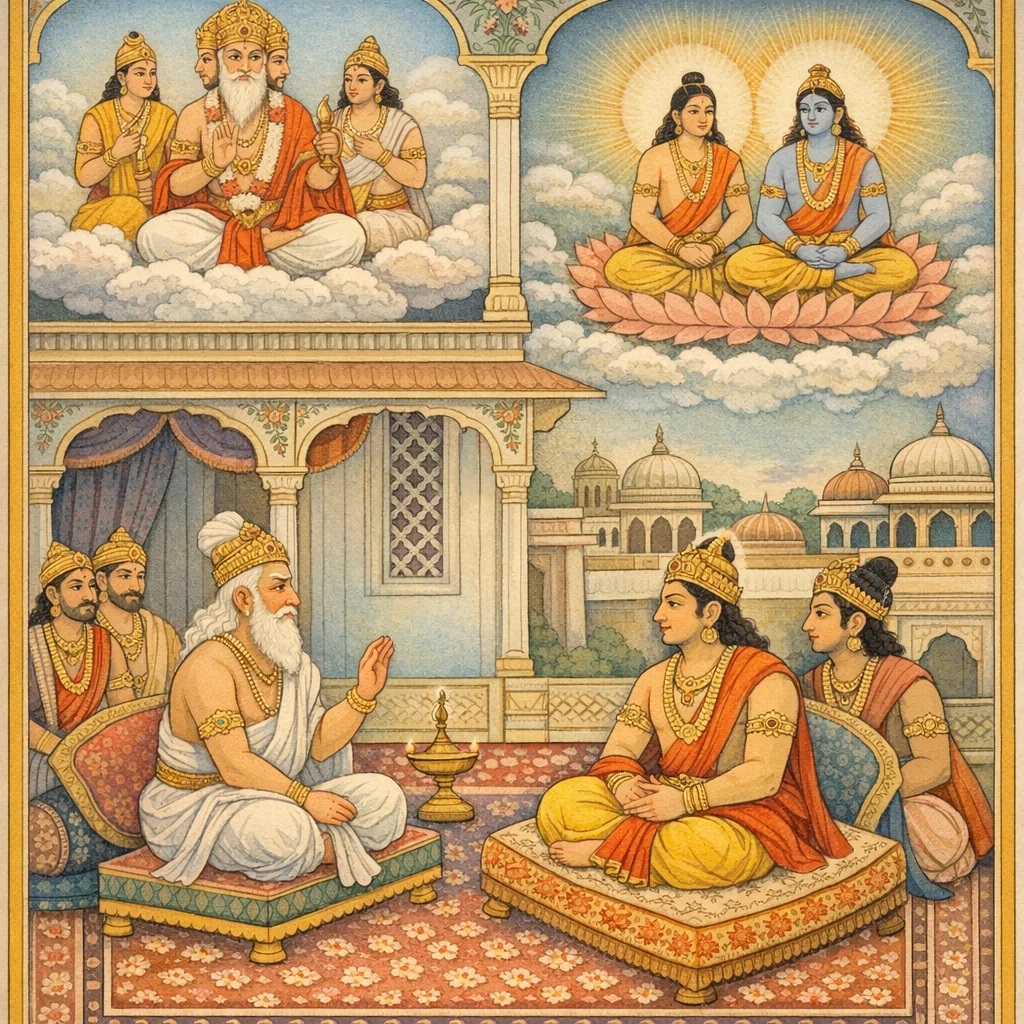
Vaiśaṃpāyana narrates that, in the presence of assembled rulers, Bhīṣma speaks to Duryodhana. The chapter opens with a cosmological tableau: devas and celestial beings approach Brahmā, and Brahmā explains the surpassing tapas and power of the twin sages Nara and Nārāyaṇa, who aid Indra against daitya-dānava forces. The narrative then maps this archetype onto the human plane: Kṛṣṇa is identified as Nārāyaṇa and Arjuna (Phalguna) as Nara—one essence appearing in dual form—implying their combined strategic invincibility. Bhīṣma uses this identification as a warning: when Duryodhana sees Kṛṣṇa and Arjuna together, he should recall this counsel, because his judgment has been diverted from artha and dharma. Bhīṣma criticizes Duryodhana’s dependence on a narrow set of advisors (Karṇa, Śakuni, Duḥśāsana), prompting Karṇa to defend his kṣatriya-commitment and loyalty to Dhṛtarāṣṭra and Duryodhana. Bhīṣma counters by challenging Karṇa’s habitual boasts with references to earlier episodes where the Pāṇḍavas prevailed, and Bhāradvāja supports Bhīṣma’s recommendation that conciliation with the Pāṇḍavas is preferable before war. The chapter ends with a somber court atmosphere, suggesting that disregarding senior counsel erodes collective confidence.
Chapter Arc: कौरव-सभा में संधि और युद्ध का प्रश्न धधक रहा है; भीष्म दुर्योधन को समझाने के लिए वाणी उठाते हैं और कृष्ण-अर्जुन की महिमा का स्मरण कराते हैं। → भीष्म ब्रह्मलोक की पुराकथा सुनाते हैं—बृहस्पति और शुक्र ब्रह्मा की सेवा में उपस्थित हैं; देवासुर-संग्राम में भयभीत देवता नर-नारायण से वर माँगते हैं। नारद द्वारा वृष्णियों के सम्मुख कहा गया धर्म-संरक्षण का वचन भीष्म अपने उपदेश का आधार बनाते हैं। इसी क्रम में वे कृष्ण-अर्जुन की अलौकिक शक्ति और धर्म-रक्षा-स्वभाव को रेखांकित करते हुए कर्ण के अभिमान/आत्मप्रशंसा पर आक्षेप करते हैं। → भीष्म का निर्णायक निष्कर्ष—दुर्योधन को ‘अर्थ-काम-लिप्सु’ सलाहकारों की बात न मानकर भीष्म के वचनानुसार संधि की ओर झुकना चाहिए; क्योंकि जिनके साथ कृष्ण और अर्जुन हैं, उनके विरुद्ध खड़ा होना स्वयं विनाश को बुलाना है। → उपदेश का स्वर स्पष्ट हो जाता है: दुष्ट-दमन और साधु-धर्म-रक्षा ही नर-नारायण (और उनके अंश/स्वरूप कृष्ण-अर्जुन) का कर्तव्य है; अतः कौरवों के लिए हितकर मार्ग संधि और विनय है, न कि दर्प और हठ। → दुर्योधन क्या भीष्म की चेतावनी स्वीकार करेगा, या कर्ण-प्रेरित अहंकार के साथ युद्ध की ओर ही बढ़ेगा?
Shlokas
Verse 1
अपना छा अकाल एकोनपज्चाशत्तमो<्ध्याय: भीष्मका दुर्योधनको संधिके लिये समझाते हुए श्रीकृष्ण और अर्जुनकी महिमा बताना एवं कर्णपर आक्षेप करना, कर्णकी आत्मप्रशंसा, भीष्मके द्वारा उसका पुनः उपहास एवं द्रोणाचार्यद्वारा भीष्मजीके कथनका अनुमोदन वैशम्पायन उवाच समवेतेषु सर्वेषु तेषु राजसु भारत । दुर्योधनमिदं वाक््यं भीष्म: शान्तनवोडब्रवीत्,वैशम्पायनजी कहते हैं--भारत! वहाँ एकत्र हुए उन समस्त राजाओंकी मण्डलीमें शान्तनुनन्दन भीष्मने दुर्योधनसे यह बात कही--
Vaiśampāyana said: O Bhārata, when all those kings had assembled together, Bhīṣma, the son of Śāntanu, addressed these words to Duryodhana.
Verse 2
बृहस्पतिश्वोशना च ब्रह्माणं पर्युपस्थितौ । मरुतश्न सहेन्द्रेण वसवश्चाग्निना सह,एक समयकी बात है, बृहस्पति और शुक्राचार्य ब्रह्माजीकी सेवामें उपस्थित हुए। उनके साथ इन्द्रसहित मरुद्गण, अग्नि, वसुगण, आदित्य, साध्य, सप्तर्षि, विश्वावसु गन्धर्व और श्रेष्ठ अप्सराएँ भी वहाँ मौजूद थीं
Vaiśampāyana said: Once, Bṛhaspati and Uśanā (Śukrācārya) stood in attendance upon Brahmā. Along with them were the Maruts with Indra, and the Vasus together with Agni.
Verse 3
आदित्याश्रैव साध्याक्ष ये च सप्तर्षयो दिवि । विश्वावसुश्न गन्धर्व: शुभाश्चाप्सरसां गणा:,एक समयकी बात है, बृहस्पति और शुक्राचार्य ब्रह्माजीकी सेवामें उपस्थित हुए। उनके साथ इन्द्रसहित मरुद्गण, अग्नि, वसुगण, आदित्य, साध्य, सप्तर्षि, विश्वावसु गन्धर्व और श्रेष्ठ अप्सराएँ भी वहाँ मौजूद थीं
Vaiśampāyana said: Present there in heaven were the Ādityas and the Sādhyas, and the Seven Sages; Viśvāvasu the Gandharva, and the auspicious companies of Apsarases as well. The scene underscores a solemn, cosmic assembly—where even celestial orders gather as witnesses to matters of counsel and right conduct, suggesting that decisions affecting the world are to be weighed in the presence of dharma and the highest authorities.
Verse 4
नमस्कृत्योपजग्मुस्ते लोकवृद्धं पितामहम् । परिवार्य च विश्वेशं पर्यासत दिवौकस:,ये सब देवता संसारके बड़े-बूढ़े पितामह ब्रह्माजीके पास गये और उन्हें प्रणाम करनेके पश्चात् उन लोकेश्वरको सब ओरसे घेरकर बैठ गये
Vaiśampāyana said: Having offered their reverent salutations, those celestial beings approached the Grandsire—ancient in wisdom for the worlds. Then, surrounding the Lord of the universe on all sides, the gods sat down around him, seeking counsel in a moment that calls for humility before higher order and guidance.
Verse 5
तेषां मनश्न तेजश्वाप्पाददानाविवौजसा । पूर्वदेवी व्यतिक्रान्ती नरनारायणावृषी,इसी समय पुरातन देवता नर-नारायण ऋषि उधर आ निकले और अपनी कान्ति तथा ओजसे उन सबके चित्त और तेजका अपहरण-सा करते हुए उस स्थानको लाँघकर चले गये
Vaiśampāyana said: By the sheer force of their spiritual energy, those two ancient divine sages, Nara and Nārāyaṇa, seemed to carry away the minds and splendor of all present. Passing across that place, they went on—overawing the assembly with a radiance that humbled ordinary pride and recalled the higher law that stands above worldly power.
Verse 6
बृहस्पतिस्तु पप्रच्छ ब्रह्माणं काविमाविति । भवन्तं नोपतिछेते तौ न: शंस पितामह,यह देख बृहस्पतिजीने ब्रह्माजीसे पूछा--'पितामह! ये दोनों कौन हैं, जिन्होंने आपका अभिनन्दन भी नहीं किया। हमें इनका परिचय दीजिये”
Vaiśampāyana said: Then Bṛhaspati questioned Brahmā: “O Pitāmaha, who are these two sages? They have not even risen to greet you with due reverence. Tell us who they are.”
Verse 7
ब्रह्मोवाच यावेतौ पृथिवीं द्यांच भासयन्तौ तपस्विनौ । ज्वलन्तौ रोचमानौ च व्याप्यातीती महाबलौ,ब्रद्माजी बोले-बृहस्पते! ये जो दोनों महान् शक्तिशाली तपस्वी पृथ्वी और आकाशको प्रकाशित करते हुए हमलोगोंका अतिक्रमण करके आगे बढ़ गये हैं, नर और नारायण हैं। ये अपने तेजसे प्रजवयलित और कान्तिसे प्रकाशित हो रहे हैं। इनका धैर्य और पराक्रम महान् है। ये अपनी तपस्यासे अत्यन्त प्रभावशाली होनेके कारण भूलोकसे ब्रह्मलोकमें आये हैं
Brahmā said: “These two mighty ascetics, illuminating both the earth and the heavens, blazing and radiant, have passed beyond all bounds and gone forward, pervading everything. They are Nara and Nārāyaṇa. By the power of their austerity they have become exceedingly influential, and from the human world they have come up to the world of Brahmā.”
Verse 8
नरनारायणावेतौ लोकाल्लोकं समास्थितौ । ऊर्जितौ स्वेन तपसा महासत्त्वपराक्रमौ,ब्रद्माजी बोले-बृहस्पते! ये जो दोनों महान् शक्तिशाली तपस्वी पृथ्वी और आकाशको प्रकाशित करते हुए हमलोगोंका अतिक्रमण करके आगे बढ़ गये हैं, नर और नारायण हैं। ये अपने तेजसे प्रजवयलित और कान्तिसे प्रकाशित हो रहे हैं। इनका धैर्य और पराक्रम महान् है। ये अपनी तपस्यासे अत्यन्त प्रभावशाली होनेके कारण भूलोकसे ब्रह्मलोकमें आये हैं
Vaiśampāyana said: “These two—Nara and Nārāyaṇa—have passed from one world to another, advancing beyond the ordinary reach of beings. Strengthened by their own austerity, they shine with immense spiritual power and heroic might. By the force of their tapas they have risen from the earthly realm to the Brahmā-world, radiant with inner fire and brilliance.”
Verse 9
एतौ हि कर्मणा लोकं नन्दयामासतुर्ध्ुवम् । द्विधाभूतौ महाप्राज्ञौ विद्धि ब्रह्मन् परंतपौ | असुराणां विनाशाय देवगन्धर्वपूजिती,इन्होंने अपने सत्कर्मोंसे निश्चय ही सम्पूर्ण लोकोंका आनन्द बढ़ाया है। ब्रह्मन! ये दोनों अत्यन्त बुद्धिमान् और शत्रुओंको संताप देनेवाले हैं। इन्होंने एक होते हुए भी असुरोंका विनाश करनेके लिये दो शरीर धारण किये हैं। देवता और गन्धर्व सभी इनकी पूजा करते हैं
For by their righteous deeds these two have surely gladdened the worlds. Know them, O Brahmin, to be exceedingly wise and fierce tormentors of their foes. Though one in essence, they have assumed two forms for the destruction of the asuras; gods and gandharvas alike worship them.
Verse 10
वैशम्पायन उवाच जगाम ५ बे सो लिये तौ तेपतुस्तप: । सार्ध देवगणै: सर्वर्बहस्पतिपुरोगमै:,वैशम्पायनजी कहते हैं--जनमेजय! ब्रह्माजीकी यह बात सुनकर इन्द्र बृहस्पति आदि सब देवताओंके साथ उस स्थानपर गये जहाँ उन दोनों ऋषियोंने तपस्या की थी
Vaiśampāyana said: O Janamejaya, having heard Brahmā’s words, Indra went to that place together with all the hosts of gods, led by Bṛhaspati, where the two sages were performing austerities.
Verse 11
तदा देवासुरे युद्धे भये जाते दिवौकसाम् | अयाचत महात्मानौ नरनारायणौ वरम्,उन दिनों देवासुर-संग्राम उपस्थित था और उसमें देवताओंको महान् भय प्राप्त हुआ अतः उन्होंने उन दोनों महात्मा नर-नारायणसे वरदान माँगा
Vaiśampāyana said: When the war between the gods and the asuras arose and fear seized the dwellers of heaven, they approached the two great-souled sages, Nara and Nārāyaṇa, and begged a boon.
Verse 12
तावब्रूतां वृणीष्वेति तदा भरतसत्तम | अथैतावब्रवीच्छक्र: साह्ूं नः क्रियतामिति,भरतश्रेष्ठ) देवताओंकी प्रार्थना सुनकर उस समय उन दोनों ऋषियोंने इन्द्रसे कहा -- तुम्हारी जो इच्छा हो, उसके अनुसार वर माँगो।” तब इन्द्रने उनसे कहा--'भगवन्! आप हमारी सहायता करें'
Vaishampayana said: “Then those two (sages) said, ‘Choose a boon, O best of the Bharatas.’ Thereupon Śakra (Indra) replied to them, ‘Revered sirs, grant us assistance.’”
Verse 13
ततस्तौ शक्रमब्रूतां करिष्यावो यदिच्छसि । ताभ्यां च सहित: शक्रो विजिग्ये दैत्यदानवान्,तब नर-नारायण ऋषियोंने इन्द्रसे कहा--'देवराज! तुम जो कुछ चाहते हो, वह हम करेंगे।। फिर उन दोनोंको साथ लेकर इन्द्रने समस्त दैत्यों और दानवोंपर विजय पायी
Then those two—Nara and Nārāyaṇa—said to Śakra (Indra), “Whatever you desire, we shall do.” With them at his side, Indra conquered the hosts of the Daityas and the Dānavas.
Verse 14
नर इन्द्रस्य संग्रामे हत्वा शत्रून् परंतप:ः । पौलोमान् कालखज्जांश्व सहस्नाणि शतानि च,एक समय शत्रुओंको संताप देनेवाले नरस्वरूप अर्जुनने युद्धमें इन्द्रसे शत्रुता रखनेवाले सैकड़ों और हजारों पौलोम एवं कालखंज नामक दानवोंका संहार किया
Vaiśampāyana said: In Indra’s battle, Nara—scorcher of foes—slew the enemies, destroying hundreds and thousands of the Pauloma and Kālakhañja demons who bore hostility toward Indra.
Verse 15
एष क्रान्ते रथे तिष्ठन् भल्लेनापाहरच्छिर: । जम्भस्य ग्रसमानस्य तदा हार्जुन आहवे,था; पककट, | उस समय ये नरस्वरूप अर्जुन सब ओर चक्कर लगानेवाले रथपर बैठे हुए थे, तो भी इन्होंने सबको अपना ग्रास बनानेवाले जम्भ नामक असुरका मस्तक अपने एक भल्लसे काट गिराया
Vaiśampāyana said: Then Hārjuna, though standing upon a swiftly wheeling chariot in the thick of battle, struck off with a sharp arrow the head of the asura Jambha, who was devouring all before him.
Verse 16
एष पारे समुद्रस्यथ हिरण्यपुरमारुजत् । जित्वा षष्टिं सहस्राणि निवातकवचान् रणे,इन्होंने ही संग्राममें साठ हजार निवातकवचोंको पराजित करके समुद्रके उस पार बसे हुए दैत्योंके हिरण्यपुर नामक नगरको तहस-नहस कर डाला
Vaiśampāyana said: He crossed to the far shore of the ocean and shattered the city called Hiraṇyapura. In battle he first defeated sixty thousand Nivātakavacas, and then laid waste to that Daitya stronghold beyond the sea.
Verse 17
एष देवान् सहेन्द्रेण जित्वा परपुरञ्जय: । अतर्पयन्महाबाहुरर्जुनो जातवेदसम्,शत्रुओंके नगरपर विजय पानेवाले इन महाबाहु अर्जुनने खाण्डवदाहके समय इन्द्रसहित समस्त देवताओंको जीतकर अग्निदेवको पूर्णतः तृप्त किया था
Vaiśampāyana said: This mighty-armed Arjuna—conqueror of enemy cities—having overcome the gods together with Indra, fully satisfied Agni (Jātavedas) at the time of the burning of the Khāṇḍava forest.
Verse 18
नारायणस्तथैवात्र भूयसो5न्याज्जघान ह । एवमेतौ महावीरयां तौ पश्यत समागतौ,इसी प्रकार नारायणस्वरूप भगवान् श्रीकृष्णने भी खाण्डवदाहके समय दूसरे बहुत-से हिंसक प्राणियोंको यमलोक पहुँचाया था। इस प्रकार ये दोनों महान् पराक्रमी हैं। दुर्योधन! इस समय ये दोनों एक-दूसरेसे मिल गये हैं, इस बातको तुमलोग अच्छी तरह देख और समझ लो
Vaiśampāyana said: “Here too, Nārāyaṇa (Śrī Kṛṣṇa), in the same manner, slew many other creatures. Thus these two are heroes of great might. Duryodhana, see clearly and understand well: at this moment these two have come together and are united.”
Verse 19
वासुदेवार्जुनी वीरोी समवेतौ महारथौ । नरनारायणो देवौ पूर्वदेवाविति श्रुति:,परस्पर मिले हुए महार॒थी वीर श्रीकृष्ण और अर्जुन पुरातन देवता नर और नारायण ही हैं; यह बात विख्यात है
Vaiśampāyana said: The two heroic great chariot-warriors, Vāsudeva (Kṛṣṇa) and Arjuna, who have come together, are indeed the divine pair Nara and Nārāyaṇa—the primeval gods; thus it is affirmed by sacred tradition. The statement frames their alliance as more than political strategy: it is a dharmic convergence of divine purpose and human agency on the eve of conflict.
Verse 20
अजेयौ मानुषे लोके सेन्द्रैरपि सुरासुरै: । एष नारायण: कृष्ण: फाल्गुनश्न नर: स्मृत: । नारायणो नरश्वैव सत्त्वमेकं द्विधा कृतम्,इस मनुष्यलोकमें इन्हें इन्द्रसहित सम्पूर्ण देवता और असुर भी नहीं जीत सकते। ये श्रीकृष्ण नारायण हैं और अर्जुन नर माने गये हैं। नारायण और नर दोनों एक ही सत्ता हैं, परंतु लोकहितके लिये दो शरीर धारण करके प्रकट हुए हैं
Vaiśaṃpāyana said: “In the human world, even all the gods and asuras together—Indra included—cannot conquer these two. Kṛṣṇa is known as Nārāyaṇa, and Phālguna (Arjuna) is remembered as Nara. Nārāyaṇa and Nara are in truth a single divine reality, appearing in two forms for the welfare of the world.”
Verse 21
एतौ हि कर्मणा लोकानश्रुवातेक्षयान् ध्रुवान् | तत्र तत्रैव जायेते युद्धकाले पुन: पुन:,ये दोनों अपने सत्कर्मके प्रभावसे अक्षय एवं ध्रुवलोकोंको व्याप्त करके स्थित हैं। लोकहितके लिये जब-जब जहाँ-जहाँ युद्धका अवसर आता है, तब-तब वहाँ-वहाँ ये बार- बार अवतार ग्रहण करते हैं
“These two, by the power of their righteous deeds, pervade and abide in worlds that are imperishable and steadfast. For the welfare of the world, whenever and wherever the occasion for war arises, there and then, again and again, they take birth (descend as avatāras).”
Verse 22
तस्मात् कर्मव कर्तव्यमिति होवाच नारद: । एतद्धि सर्वमाचष्ट वृष्णिचक्रस्य वेदवित्
Therefore, Nārada declared, ‘Action must indeed be performed.’ The knower of the Vṛṣṇi lineage thus set forth this entire teaching, presenting it as the guiding principle for right conduct.
Verse 23
दुष्टोंका दमन करके साधु पुरुषों एवं धर्मका संरक्षण ही इनका कर्तव्य है, ये सारी बातें वेदोंके ज्ञाता नारदजीने समस्त वृष्णिवंशियोंके सम्मुख कही थीं ।। शड्खचक्रगदाहस्तं यदा द्रक्ष्यसि केशवम् | पर्याददानं चास्त्राणि भीमधन्वानमर्जुनम्,वत्स दुर्योधन! जब तुम देखोगे कि दोनों सनातन महात्मा श्रीकृष्ण और अर्जुन एक ही रथपर बैठे हैं, श्रीकृष्णके हाथमें शंख, चक्र और गदा है और भयंकर धनुष धारण करनेवाले अर्जुन निरन्तर नाना प्रकारके अस्त्र लेते और छोड़ते जा रहे हैं, तब तुम्हें मेरी बातें याद आयेंगी
When, dear Duryodhana, you behold Keśava with conch, discus, and mace in hand, and Arjuna—bearing a fearsome bow—unceasingly taking up and releasing many kinds of weapons, then you will remember my words. This warning declares that dharma will be protected and the wicked restrained by those who stand with righteousness, and that the sight of Kṛṣṇa and Arjuna united will make the consequence of adharma unmistakable.
Verse 24
सनातनौ महात्मानौ कृष्णावेकरथे स्थितौ । दुर्योधन तदा तात स्मर्तासि वचनं मम,वत्स दुर्योधन! जब तुम देखोगे कि दोनों सनातन महात्मा श्रीकृष्ण और अर्जुन एक ही रथपर बैठे हैं, श्रीकृष्णके हाथमें शंख, चक्र और गदा है और भयंकर धनुष धारण करनेवाले अर्जुन निरन्तर नाना प्रकारके अस्त्र लेते और छोड़ते जा रहे हैं, तब तुम्हें मेरी बातें याद आयेंगी
Vaiśampāyana said: “When you behold the two eternal, great-souled Kṛṣṇas—Kṛṣṇa and Arjuna—seated together on a single chariot, then, O Duryodhana, dear child, you will remember my words.” The statement underscores the moral inevitability of consequences: when divine guidance and righteous prowess unite, arrogance and injustice are forced to confront truth.
Verse 25
नोचेदयमभाव: स्यात् कुरूणां प्रत्युपस्थित: । अर्थाच्च तात धर्माच्च तव बुद्धिरुपप्लुता,यदि तुमने मेरी बात नहीं मानी तो समझ लो, कौरवोंका विनाश अवश्य ही उपस्थित हो जायगा। तात! तुम्हारी बुद्धि अर्थ और धर्म दोनोंसे भ्रष्ट हो गयी है
Vaiśampāyana said: “If you do not heed my counsel, then know this: the ruin of the Kurus is already at hand. Dear one, your judgment has been overwhelmed—corrupted by considerations of gain and by a distorted sense of dharma.”
Verse 26
नचेद् ग्रहीष्यसे वाक््यं श्रोतासि सुबहून् हतान् तवैव हि मतं सर्वे कुरव: पर्युपासते,यदि मेरा कहना नहीं मानोगे तो एक दिन सुनोगे कि हमारे बहुत-से सगे-सम्बन्धी मार डाले गये; क्योंकि सब कौरव तुम्हारे ही मतका अनुसरण करते हैं
Vaiśampāyana said: “If you do not accept this counsel, then one day you will hear that many of our own kinsmen have been slain; for all the Kurus follow only your judgment.” The warning frames a moral responsibility: when a leader’s will becomes the standard for all, refusal to heed wise speech can turn collective loyalty into collective ruin.
Verse 27
त्रयाणामेव च मतं तत् त्वमेको5नुमन्यसे । रामेण चैव शप्तस्य कर्णस्य भरतर्षभ,भरतश्रेष्ठ! एक तुम्हीं ऐसे हो, जो कि परशुरामजीके द्वारा अभिशप्त खोटी जातिवाले सूतपुत्र कर्ण एवं सुबलपुत्र शकुनि तथा अपने नीच एवं पापात्मा भाई दुःशासन--इन तीनोंके मतका अनुमोदन एवं अनुसरण करते हो
Vaiśaṃpāyana said: “O bull among the Bharatas, you alone approve that very counsel which belongs to those three—especially of Karṇa, who was cursed by Rāma (Paraśurāma).” The line censures a deliberate moral choice: instead of heeding wiser, dharmic advice, the addressee aligns himself with a small, blameworthy faction whose guidance is portrayed as ethically compromised and ruinous.
Verse 28
दुर्जाते: सूतपुत्रस्य शकुने: सौबलस्य च । तथा क्षुद्रस्य पापस्य भ्रातुर्द:शासनस्य च,भरतश्रेष्ठ! एक तुम्हीं ऐसे हो, जो कि परशुरामजीके द्वारा अभिशप्त खोटी जातिवाले सूतपुत्र कर्ण एवं सुबलपुत्र शकुनि तथा अपने नीच एवं पापात्मा भाई दुःशासन--इन तीनोंके मतका अनुमोदन एवं अनुसरण करते हो
Vaiśampāyana said: “O best of the Bharatas, you alone are such a man—one who approves and follows the counsel of three: Karṇa, the charioteer’s son of ill-fated birth, cursed by Paraśurāma; Śakuni, son of Subala; and your own brother Duḥśāsana, base and sinful. By aligning yourself with their views, you choose a path that deepens wrongdoing and drives the house of Kuru toward ruin.”
Verse 29
कर्ण उवाच नैवमायुष्मता वाच्यं यन्मामात्थ पितामह । क्षत्रधर्मे स्थितो हास्मि स्वधर्मादनपेयिवान्,कर्ण बोला--पितामह! आपने मेरे प्रति जिन शब्दोंका प्रयोग किया है, वे अनुचित हैं। आप-जैसे वृद्ध पुरुषको ऐसी बातें मुँहसे नहीं निकालनी चाहिये। मैं क्षत्रियधर्ममें स्थित हूँ और अपने धर्मसे कभी भ्रष्ट नहीं हुआ हूँ
Karna said: “Grandfather, the words you have spoken to me are not fitting. A venerable elder such as you should not utter such reproaches. I stand firm in the dharma of a kshatriya, and I have never swerved from my own duty.”
Verse 30
कि चान्यन्मयि दुर्वत्तं येन मां परिगर्हसे । न हि मे वृजिनं किंचिद् धार्तराष्ट्रा विदुः क्वचित्
Karna said: “And what other misconduct do you find in me, on account of which you censure me? The sons of Dhṛtarāṣṭra, at any time, know of no wrongdoing of mine whatsoever.”
Verse 31
नाचरं वृजिनं किंचिद् धार्तराष्ट्रस्य नित्यश: । मुझमें कौन-सा ऐसा दुराचार है जिसके कारण आप मेरी निन्दा करते हैं। महाराज धृतराष्ट्रके पुत्रोने कभी मेरा कोई पापाचार देखा या जाना हो ऐसी बात नहीं है। मैंने दुर्योधनका कभी कोई अनिष्ट नहीं किया है |। ३० इ ।। अहं हि पाण्डवान् सर्वान् हनिष्यामि रणे स्थितान्
Karna said: “I have never, at any time, committed any wrongdoing against Dhṛtarāṣṭra’s son. What misconduct is there in me that makes you censure me? I have never harmed Duryodhana; rather, I stand resolved to slay all the Pāṇḍavas when they take their stand in battle.”
Verse 32
राज्ञो हि धृतराष्ट्रस्य सर्व कार्य प्रियं मया । तथा दुर्योधनस्थापि स हि राज्ये समाहित:
Karna said: “Indeed, I have always regarded every undertaking of King Dhṛtarāṣṭra as dear and worthy of my support; and likewise I hold Duryodhana’s cause dear as well—for he is firmly established and intent upon the kingship.”
Verse 33
मुझे जिस प्रकार राजा धृतराष्ट्रका समस्त प्रिय कार्य करना चाहिये, उसी प्रकार दुर्योधनका भी करना उचित है; क्योंकि अब वे ही राज्यपर प्रतिष्ठित हैं ।। वैशम्पायन उवाच कर्णस्य तु वच: श्रुत्वा भीष्म: शान्तनव: पुन: । धृतराष्ट्र महाराज सम्भाष्येदं वचो<ब्रवीत्,वैशम्पायनजी कहते हैं--महाराज जनमेजय! कर्णकी बात सुनकर शान्तनुनन्दन भीष्मने राजा धृतराष्ट्रको सम्बोधित करके पुन: इस प्रकार कहा--
Vaiśampāyana said: “O King Janamejaya, having heard Karṇa’s words, Bhīṣma, the son of Śantanu, once again addressed King Dhṛtarāṣṭra and spoke as follows.”
Verse 34
यदयं कत्थते नित्यं हन्ताहं पाण्डवानिति । नायं कलापि सम्पूर्णा पाण्डवानां महात्मनाम्,“राजन! यह कर्ण जो प्रतिदिन यह डींग हाँका करता है कि मैं पाण्डवोंको मार डालूगा, वह व्यर्थ है। मेरी रायमें यह महात्मा पाण्डवोंकी सोलहवीं कलाके बराबर भी नहीं है
Vaiśampāyana said: “As for this man who constantly boasts, ‘I will kill the Pāṇḍavas,’ it is empty talk. In my judgment, he is not even equal to a sixteenth part of those great-souled Pāṇḍavas.”
Verse 35
अनयो योड्यमागन्ता पुत्राणां ते दुरात्मनाम् । तदस्य कर्म जानीहि सूतपुत्रस्य दुर्मते:,“तुम्हारे दुरात्मा पुत्रोंपर अन्यायके फलस्वरूप जो यह महान् संकट आनेवाला है, वह सब इस दूषित बुद्धिवाले सूतपुत्र कर्णकी ही करतूत समझो
Vaiśampāyana said: “The impending calamity that is about to befall your wicked sons as the consequence of injustice—know that to be the deed of Karṇa, the charioteer’s son, whose mind is corrupted.”
Verse 36
|! न -<#- 22८ रु ब्पव्शा गा उन जन 677 ६ न्ट्र ० ' |! | ऐ > प्र #* ् हा "रू || ८ ल्ज््टः हॉ ५४ | एतमाश्रित्य पुत्रस्ते मन्दबुद्धि: सुयोधन: । अवामन्यत तान् वीरान् देवपुत्रानरिंदमान्,“तुम्हारे मन्दबुद्धि पुत्र दुर्योधनने इसीका सहारा लेकर शत्रुओंका दमन करनेवाले उन वीर देवपुत्र पाण्डवोंका अपमान किया है
Vaiśampāyana said: “Relying on this, your dull-witted son Suyodhana (Duryodhana) showed contempt for those heroic Pāṇḍavas—sons of the gods—who crush their enemies.”
Verse 37
कि चाप्येतेन तत्कर्म कृतपूर्व सुदुष्करम् । तैर्यथा पाण्डवै: सर्वैरैकैकेन कृतं पुरा,“आजसे पहले समस्त पाण्डवोंने मिलकर अथवा उनमेंसे एक-एकने अलग-अलग जैसे-जैसे दुष्कर पराक्रम किये हैं, वैसा कौन-सा कठिन पुरुषार्थ इस सूतपुत्रने पहले कभी किया है?
“And what extraordinarily difficult deed has this sūta’s son ever accomplished before, comparable to the feats that all the Pāṇḍavas together—or each of them individually—performed in earlier times?”
Verse 38
दृष्टवा विराटनगरे भ्रातरं निहतं प्रियम् । धनंजयेन विक्रम्प किमनेन तदा कृतम्,“जब विराटनगरमें अर्जुनने अपना पराक्रम दिखाते हुए इसके सामने ही इसके प्यारे भाईको मार डाला था, तब इसने सब कुछ अपनी आँखोंसे देखकर भी अर्जुनका क्या बिगाड़ लिया?
Vaiśaṃpāyana said: “When, in the city of Virāṭa, he saw his beloved brother slain right before him by Dhanaṃjaya displaying his prowess, what could this man do to Arjuna then? What harm did he manage to inflict, even after witnessing it all with his own eyes?”
Verse 39
सहितान् हि कुरून् सर्वानभियातो धनंजय: । प्रमथ्य चाच्छिनद् वास: किमयं प्रोषितस्तदा,“जब धनंजयने अकेले ही समस्त कौरवोंपर आक्रमण किया और सबको मूर्च्छित करके उनके वस्त्र छीन लिये थे, उस समय यह कर्ण क्या कहीं परदेश चला गया था?
Vaiśampāyana said: “When Dhanañjaya (Arjuna) advanced against all the Kurus together, overpowered them, and even stripped away their garments, was this Karṇa away in some foreign place at that time?”
Verse 40
गन्धर्वर्घोषयात्रायां द्वियते यत् सुतस्तव । क्व तदा सूतपुत्रो5भूद् य इदानीं वृषायते,“घोषयात्राके समय जब गन्धर्वलोग तुम्हारे पुत्रको कैद करके लिये जा रहे थे, उस समय यह सूतपुत्र कहाँ था? जो इस समय साँड़की तरह डँकार रहा है
Vaiśampāyana said: “When, during the Gandharvas’ ‘Ghoṣa-yātrā’, your son was being carried off as a captive, where was this charioteer’s son then—the very one who now bellows like a bull?”
Verse 41
ननु तत्रापि भीमेन पार्थेन च महात्मना । यमाभ्यामेव संगम्य गन्धर्वास्ते पराजिता:
Indeed, even there, those Gandharvas were defeated when they encountered Bhīma and the great-souled Pārtha (Arjuna)—as though they had met Yama himself.
Verse 42
“वहाँ भी तो महात्मा भीमसेन, अर्जुन और नकुल-सहदेवने ही मिलकर उन गन्धर्वोंको परास्त किया था ।। एतान्यस्य मृषोक्तानि बहूनि भरतर्षभ | विकत्थनस्य भद्रं ते सदा धर्मार्थलोपिन:,“भरतश्रेष्ठ! तुम्हारा भला हो। यह कर्ण व्यर्थ ही शेखी बघारता रहता है। इसकी कही हुई बहुत-सी बातें इसी तरह झूठी हैं। यह तो धर्म और अर्थ--दोनोंका ही लोप करनेवाला है
Vaiśampāyana said: “Even there, it was the great-souled Bhīmasena, Arjuna, and Nakula–Sahadeva together who overcame those Gandharvas. Many statements of his are false in this very way, O bull among the Bharatas. Blessings upon you: this Karṇa is ever given to empty boasting, and his conduct tends to undermine both dharma and artha.”
Verse 43
भीष्मस्य तु वच: श्रुत्वा भारद्वाजो महामना: । धृतराष्ट्रमुवाचेदं राजमध्येडभिपूजयन्,भीष्मजीकी यह बात सुनकर महामना द्रोणाचार्यने समस्त राजाओंके मध्यमें उनकी प्रशंसा करते हुए राजा धृतराष्ट्रसे इस प्रकार कहा--
Having heard Bhīṣma’s words, the great-souled Bhāradvāja (Droṇa), honoring him in the midst of the assembled kings, addressed King Dhṛtarāṣṭra as follows.
Verse 44
यदाह भरतमश्रेष्ठो भीष्मस्तत् क्रियतां नूप । न काममर्थलिप्सूनां वचन कर्तुमहसि,“नरेश्वर! भरतकुलतिलक भीष्मजीने जो कहा है, वही कीजिये। जो लोग अर्थ और कामके लोभी हैं, उनकी बातें आपको नहीं माननी चाहिये
Vaiśampāyana said: “O king, do exactly what Bhīṣma—the best of the Bharatas—has advised. You should not follow the counsel of those who are driven by greed for wealth and pleasure.”
Verse 45
पुरा युद्धात् साधु मन्ये पाण्डवै: सह संगतम् | यद् वाक्यमर्जुनेनोक्त संजयेन निवेदितम्
Vaiśampāyana said: “Even before the war, I consider it a good and fitting thing that there was an encounter with the Pāṇḍavas—since the words spoken by Arjuna were conveyed by Sañjaya.”
Verse 46
न हास्य त्रिषु लोकेषु सदृशो$स्ति धनुर्धर:,“तीनों लोकोंमें अर्जुनके समान कोई धनुर्थर नहीं है
Vaiśampāyana said: “In the three worlds there is no archer equal to him.”
Verse 47
अनादृत्य तु तद् वाक्यमर्थवद् द्रोणभीष्मयो: । ततः स संजयं राजा पर्यपृच्छत पाण्डवान्,द्रोणाचार्य और भीष्मकी बातें सार्थक और सारगर्भित थीं, तथापि उनकी अवहेलना करके राजा धृतराष्ट्र पुन: संजयसे पाण्डवोंका समाचार पूछने लगे
Vaiśampāyana said: Disregarding the meaningful and weighty counsel spoken by Droṇa and Bhīṣma, King Dhṛtarāṣṭra then turned again to Saṃjaya and questioned him about the Pāṇḍavas.
Verse 48
इस प्रकार श्रीमह्याभारत उद्योगपर्वके अन्तर्गत यानसंधिपर्वमें अर्जुनवाक्यनिवेदनविषयक अड़तालीसवाँ अध्याय पूरा हुआ,तदैव कुरव: सर्वे निराशा जीविते5भवन् । भीष्मद्रोणी यदा राजा न सम्यगनुभाषते जब राजा धृतराष्ट्रने भीष्म और द्रोणाचार्यसे भी अच्छी तरह वार्तालाप नहीं किया, तभी समस्त कौरव अपने जीवनसे निराश हो गये
Sanjaya said: Just then, all the Kurus fell into despair for their very lives, because King Dhritarashtra did not speak properly and in due measure with Bhishma and Drona. The moment signals a moral and political failure: when the king neglects frank, timely counsel from elders and teachers, the community’s confidence collapses and the path toward war hardens.
Verse 49
इति श्रीमहाभारते उद्योगपर्वणि यानसंधिपर्वणि भीष्मद्रोणवाक्ये एकोनपज्चाशत्तमो5 ध्याय:,इस प्रकार श्रीमह्ाभारत उद्योगपर्वके अन्तर्गत यानसंधिपर्वमें भीष्यद्रोणवचनविषयक उनचासवाँ अध्याय पूरा हुआ
Thus, in the Śrī Mahābhārata, within the Udyoga Parva—specifically the Yāna–Saṃdhi section—ends the forty-ninth chapter, concerning the words and counsel of Bhīṣma and Droṇa. (This is the colophon marking the close of the chapter.)
Verse 316
प्राग्विरुद्धौ: शमं सद्धिः कथं वा क्रियते पुन: । मैं युद्धभूमिमें खड़े होनेपर समस्त पाण्डवोंको अवश्य मार डालूँगा। जो लोग पहले अपने विरोधी रहे हों, उनके साथ पुनः संधि कैसे की जा सकती है?
Karna said: “How can peace or a renewed treaty be made with those who were formerly our adversaries? Once I stand upon the battlefield, I will certainly slay all the Pāṇḍavas. With people who have already stood in opposition, how can reconciliation be forged again?”
Verse 4536
सर्व तदपि जानामि करिष्यति च पाण्डव: । “मैं तो युद्धसे पहले पाण्डवोंके साथ संधि करना ही अच्छा समझता हूँ। अर्जुनने जो बात कही है और संजयने उनका जो संदेश यहाँ सुनाया है, मैं वह सब जानता और समझता हूँ। पाण्डुनन्दन अर्जुन वैसा करके ही रहेंगे
Vaiśampāyana said: “I know all of that as well—and the son of Pāṇḍu will indeed carry it out. I judge it best to seek a settlement with the Pāṇḍavas before war begins. I understand the very point Arjuna has stated and the message Sañjaya has delivered here; Arjuna, the Pāṇḍu prince, will act exactly in accordance with it.”
Frequently Asked Questions
Whether a ruler should prioritize sober, elder-led risk assessment and reconciliation, or proceed under pride and factional influence despite clear indicators of catastrophic outcome.
Competence and power must be evaluated realistically, and governance should be guided by dharma-informed counsel; ignoring credible warning signs converts political rivalry into preventable systemic loss.
Yes: the Nara–Nārāyaṇa paradigm functions as interpretive meta-commentary, presenting Kṛṣṇa–Arjuna as a recurring dharmic force in times of conflict and thereby reframing court politics within a broader cosmological-ethical horizon.