Adhyaya 157
उलूकदूतवाक्यम् / Ulūka’s Message to the Pāṇḍavas
Upa-parva: Ulūka-dūta (Uluka’s Embassy) Episode
Saṃjaya reports that, with the Pāṇḍavas settled at Hiraṇvatī, Duryodhana—alongside Karṇa, Śakuni, and Duḥśāsana—summons Ulūka and instructs him to deliver a pointed address to the Pāṇḍavas while Vāsudeva Kṛṣṇa listens. The message frames the impending Pāṇḍava–Kuru war as long contemplated and now arrived. It urges the Pāṇḍavas to remember the seizure of their kingdom, the hardships of exile, and Draupadī (Kṛṣṇā)’s suffering, presenting these memories as grounds for immediate assertion of kṣatra capability. It contrasts boastful speech with enacted competence, stating that the virtuous judge action as the proof of declared intent. It further frames the stakes as binary—either defeat the Kauravas and rule the earth or fall and attain the warrior’s posthumous reward. The speech culminates in a direct taunt toward Bhīma regarding his assembly vow about drinking Duḥśāsana’s blood, and it closes with logistical readiness imagery: the field prepared, horses fed, warriors maintained, and a call to engage promptly, “with Keśava.”
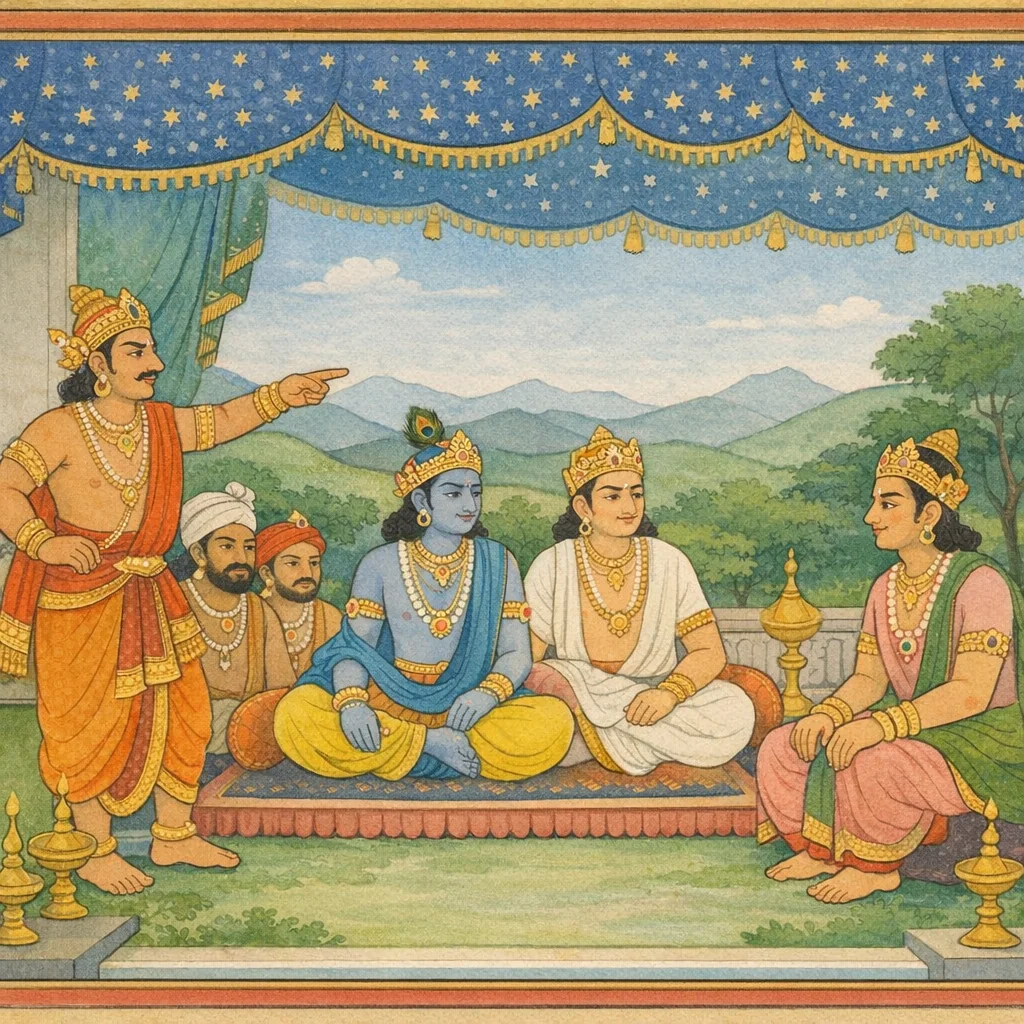
Chapter Arc: उद्योग-पर्व की कूटनीतिक आँधी के बीच दक्षिणापथ का प्रसिद्ध राजकुमार रुक्मी, चतुरङ्गिणी सेना सहित, युद्ध में ‘सहायता’ का प्रस्ताव लेकर पाण्डव-शिविर की ओर बढ़ता है—मानो एक नया पलड़ा तराजू पर रखा जा रहा हो। → रुक्मी का परिचय उसके यश, धनुर्वेद-निपुणता और दूर तक मार करने वाली विशाल सेना के साथ होता है। वह वीरों की सभा के मध्य बैठकर अर्जुन को लक्ष्य करता है और अपने पराक्रम का स्मरण कराते हुए (घोषयात्रा-प्रसंग में गन्धर्वों से युद्ध का उल्लेख) स्वयं को ‘उपयुक्त सहायक’ सिद्ध करने लगता है। परन्तु उसके शब्दों में सहायता से अधिक आत्म-प्रदर्शन और श्रेष्ठता का आग्रह झलकता है, जिससे सभा का संतुलन डगमगाने लगता है। → रुक्मी अर्जुन के सामने अपनी ‘सहायता’ को चुनौती-भरे प्रस्ताव की तरह रखता है—मानो पाण्डवों की क्षमता पर प्रश्नचिह्न लगा रहा हो। इसी क्षण युधिष्ठिर और श्रीकृष्ण की उपस्थिति में, अन्य राजाओं के सुनते हुए, अर्जुन (प्रहस्य, सखि-भाव से) ऐसा प्रत्युत्तर देता है कि रुक्मी की दर्प-ध्वजा झुक जाती है; सहायता का प्रस्ताव सम्मानजनक गठबंधन न रहकर अहंकार की परीक्षा बन जाता है। → पाण्डव रुक्मी का विधिपूर्वक सत्कार करते हैं, उसकी प्रशंसा भी करते हैं, परन्तु उसकी शर्तों/अहं-रंगित मुद्रा को स्वीकार नहीं करते। रुक्मी को दोनों पक्षों से ‘कोरा उत्तर’ मिलता है—न पाण्डव उसे अपने साथ बाँधते हैं, न कौरव उसे अपनाते हैं। वह अपनी सेना सहित लौट जाता है, और एक संभावित बाहरी शक्ति युद्ध-राजनीति से बाहर हो जाती है। → रुक्मी के लौटने के बाद प्रश्न हवा में रह जाता है—जब बड़े राजा भी अहंकार के कारण निष्प्रभावी हो जाएँ, तब आगामी संघर्ष में कौन-सा नया गठबंधन या नया विघ्न अचानक प्रकट होगा?
Shlokas
Verse 1
ऑपनआक्राता छा अकाल अष्टपञ्चाशर्दाधिकशततमो« ध्याय: रुक्मीका सहायता देनेके लिये आना; परंतु पाण्डव और कौरव दोनों पक्षोंके द्वारा कोरा उत्तर पाकर लौट जाना वैशम्पायन उवाच एतस्मिन्नेव काले तु भीष्मकस्य महात्मन: । हिरण्यरोम्णो नृपते: साक्षादिन्द्रसखस्य वै,वैशम्पायनजी कहते हैं-जनमेजय! इसी समय अति यशस्वी दाक्षिणात्य देशके अधिपति भोजवंशी तथा इन्द्रके सखा हिरण्यरोमा नामवाले संकल्पोंके स्वामी महामना भीष्मकका सगा पुत्र, सम्पूर्ण दिशाओंमें विख्यात रुक्मी, पाण्डवोंके पास आया
Vaiśampāyana said: “At that very time there came the noble Bhīṣmaka—renowned as Hiraṇyaroman, a king and a direct companion of Indra.”
Verse 2
आकूतीनामधिपतिभोजस्यातियशस्विन: । दाक्षिणात्यपते: पुत्रो दिक्षु रुक्मीति विश्रुत:,वैशम्पायनजी कहते हैं-जनमेजय! इसी समय अति यशस्वी दाक्षिणात्य देशके अधिपति भोजवंशी तथा इन्द्रके सखा हिरण्यरोमा नामवाले संकल्पोंके स्वामी महामना भीष्मकका सगा पुत्र, सम्पूर्ण दिशाओंमें विख्यात रुक्मी, पाण्डवोंके पास आया
Vaiśampāyana said: “O Janamejaya, at that very time there arrived among the Pāṇḍavas Rukmī—son of the exceedingly renowned Bhoja ruler, the sovereign of the southern country—celebrated in all directions by name and fame.”
Verse 3
यः किंपुरुषसिंहस्य गन्धमादनवासिन: । कृत्स्नं शिष्यो धरनुर्वेदं चतुष्पादमवाप्तवान्,जिसने गन्धमादननिवासी किंपुरुषप्रवर द्रुमका शिष्य होकर चारों पादोंसे युक्त सम्पूर्ण धनुर्वेदकी शिक्षा प्राप्त की थी
He, having become the disciple of Drumaka—the lion among the Kiṃpuruṣas who dwelt on Gandhamādana—had mastered the entire science of archery (Dhanurveda), complete in all its four divisions. The verse underscores the ethical weight of disciplined apprenticeship and the ideal of learning a martial art in its full, regulated form rather than as mere violence.
Verse 4
यो माहेन्द्रं धनुर्लेभे तुल्यं गाण्डीवतेजसा । शार्ड्रेण च महाबाहु: सम्मितं दिव्यलक्षणम्,जिस महाबाहुने गाण्डीवधनुषके तेजके समान ही तेजस्वी विजय नामक धनुष इन्द्रदेवतासे प्राप्त किया था। वह दिव्य लक्षणोंसे सम्पन्न धनुष शार्ज््धनुषकी समानता करता था
That mighty-armed warrior received from Indra the bow named Vijaya, radiant with a splendor equal to the might of Gāṇḍīva. Endowed with divine marks, that bow was deemed comparable to Śārṅga.
Verse 5
त्रीण्येवैतनि दिव्यानि धनूंषि दिवि चारिणाम् । वारुणं गाण्डिवं तत्र माहेन्द्रं विजयं धनु: । शार्ज्ज तु वैष्णवं प्राहुर्दिव्यं तेजोमयं धनु:,झुलोकमें विचरनेवाले देवताओंके ये तीन ही धनुष दिव्य माने गये हैं। उनमेंसे गाण्डीव धनुष वरुणका, विजय देवराज इन्द्रका तथा शार्क् नामक दिव्य तेजस्वी धनुष भगवान् विष्णुका बताया गया है
Vaiśampāyana said: Among the gods who move in heaven, only these three bows are regarded as truly divine. Of them, the Gāṇḍīva is Varuṇa’s; the Vijaya bow belongs to Mahendra (Indra), king of the gods; and the radiant, divine bow called Śārṅga is declared to be Viṣṇu’s.
Verse 6
धारयामास तत् कृष्ण: परसेना भयावहम् । गाण्डीवं पावकाललेभे खाण्डवे पाकशासनि:,शत्रुसेनाको भयभीत करनेवाले उस शार्क्न -धनुषको भगवान् श्रीकृष्णने धारण किया और खाण्डव-दाहके समय इन्द्रकुमार अर्जुनने साक्षात् अग्निदेवसे गाण्डीवधनुष प्राप्त किया था
Vaiśampāyana said: Kṛṣṇa bore that fearsome weapon which struck terror into the enemy host. And Arjuna, the chastiser of foes, had obtained the bow Gāṇḍīva directly from the Fire-god at the time of the burning of the Khāṇḍava forest.
Verse 7
ट्रुमाद् रुक्मी महातेजा विजयं प्रत्यपद्यत । संछिद्य मौरवान् पाशान् निहत्य मुरमोजसा
Vaiśaṃpāyana said: Then the radiant Rukmī regained victory. Cutting through the bonds laid by the Kauravas, he struck down Mura by sheer force.
Verse 8
निर्जित्य नरक॑ भौममाह्त्य मणिकुण्डले । षोडश स्त्रीसहसत्राणि रत्नानि विविधानि च
Vaiśampāyana said: Having conquered Naraka, the son of Bhūmi, and having brought away the jeweled earrings, he also recovered sixteen thousand women and many kinds of precious gems.
Verse 9
प्रतिपेदे हृषीकेश: शार्ड्ध च धनुरुत्तमम् । महातेजस्वी रुक््मीने द्रमसे विजय नामक धनुष पाया था। भगवान् श्रीकृष्णने अपने तेज और बलसे मुर दैत्यके पाशोंका उच्छेद करके भूमिपुत्र नरकासुरको जीतकर जब उसके यहाँसे अदितिके मणिमय कुण्डल वापस ले लिये और सोलह हजार स्त्रियों तथा नाना प्रकारके रत्नोंको अपने अधिकारमें कर लिया, उसी समय उन्हें शार्ड़् नामक उत्तम धनुष भी प्राप्त हुआ था || ७-८ है ।। रुक्मी तु विजयं लब्ध्वा धनुर्मेघनिभस्वनम्
Vaiśampāyana said: Hṛṣīkeśa (Śrī Kṛṣṇa) obtained the supreme bow named Śārṅga. The narrative recalls that this weapon came to him in the course of his righteous victory—after cutting through the bonds of the demon Mura, defeating the earth-born Narakāsura, recovering Aditi’s jeweled earrings, and taking under his protection the sixteen thousand women along with many treasures.
Verse 10
नामृष्यत पुरा योडसौ स्वबाहुबलगर्वितः
Formerly, that man—puffed up with pride in the strength of his own arms—could not endure it.
Verse 11
कृत्वा प्रतिज्ञां नाहत्वा निवर्तिष्ये जनार्दनम्
Vaiśampāyana said: “Having made this vow, I will not turn back without striking down Janārdana.”
Verse 12
सेनया चतुरद्धिण्या महत्या दूरपातया
Vaiśampāyana said: With a vast fourfold army—so great in scale and striking power that it could project its force from afar—they advanced.
Verse 13
स समासाद्य वार्ष्णेयं योगानामीश्ररं प्रभुम्
Having approached Vārṣṇeya—Kṛṣṇa, the sovereign Lord and master of all yogic disciplines—he came into his presence.
Verse 14
यत्रैव कृष्णेन रणे निर्जित: परवीरहा
Vaiśampāyana said: “In that very place, in the midst of battle, he was defeated by Kṛṣṇa—the slayer of enemy heroes.”
Verse 15
सैन्येन महा तेन प्रभूतगजवाजिना
Vaiśampāyana said: With that vast army—abounding in elephants and horses—the march and preparation for conflict are portrayed as a display of overwhelming force, foreshadowing the ethical tension between rightful duty and the destructive momentum of war.
Verse 16
स भोजराज: सैन्येन महता परिवारित:
Vaiśampāyana said: That Bhoja king, surrounded and escorted by a great army, proceeded in a display of royal power—an image that underscores how political authority in this episode is inseparable from military strength and the looming ethical tensions of impending conflict.
Verse 17
ततः स कवच धन्वी तली खड़्गी शरासनी
Then he appeared fully equipped for battle—armoured, bearing a bow, wearing a sword-belt, carrying a sword, and furnished with a quiver and bow-gear—signalling readiness for the coming conflict and the grave turn of events.
Verse 18
विदित: पाण्डवेयानां वासुदेवप्रियेप्सया
Vaiśampāyana said: It became known among the sons of Pāṇḍu, through their desire to win the favor of Vāsudeva, (that a certain course of action was to be pursued).
Verse 19
स पूजित: पाण्डुपुत्रैर्य थान्यायं सुसंस्तुत:
Vaiśampāyana said: Thus, he was duly honored by the sons of Pāṇḍu according to proper custom and was warmly praised—an act reflecting their adherence to righteous conduct and respectful hospitality.
Verse 20
उवाच मध्ये वीराणां कुन्तीपुत्रं धनंजयम्,तदनन्तर वीरोंके बीचमें बैठकर उसने कुन्तीकुमार अर्जुनसे कहा--'पाण्डुनन्दन! यदि तुम डरे हुए हो तो मैं युद्धमें तुम्हारी सहायताके लिये आ पहुँचा हूँ। मैं इस महायुद्धमें तुम्हारी वह सहायता करूँगा, जो तुम्हारे शत्रुओंके लिये असह्य हो उठेगी
Vaiśampāyana said: In the midst of the assembled heroes, the valiant one sat among them and addressed Dhanañjaya (Arjuna), Kuntī’s son: “O son of Pāṇḍu, if fear has arisen in you, I have come to aid you in battle. In this great war I shall render you such assistance as will be unbearable for your enemies.”
Verse 21
सहायो<स्मि स्थितो युद्धे यदि भीतो5सि पाण्डव । करिष्यामि रणे साहा[मसहां तव शत्रुभि:,तदनन्तर वीरोंके बीचमें बैठकर उसने कुन्तीकुमार अर्जुनसे कहा--'पाण्डुनन्दन! यदि तुम डरे हुए हो तो मैं युद्धमें तुम्हारी सहायताके लिये आ पहुँचा हूँ। मैं इस महायुद्धमें तुम्हारी वह सहायता करूँगा, जो तुम्हारे शत्रुओंके लिये असह्य हो उठेगी
Vaiśampāyana said: “I stand here as your ally in this war, O Pāṇḍava. If you are afraid, I have come to support you. In battle I will render you such help that it will become unbearable to your enemies.”
Verse 22
न हि मे विक्रमे तुल्य: पुमानस्तीह कश्नन | हनिष्यामि रणे भागं यन्मे दास्यसि पाण्डव,“इस जगतमें मेरे समान पराक्रमी दूसरा कोई पुरुष नहीं है। पाण्डुकुमार! तुम शत्रुओंका जो भाग मुझे सौंप दोगे, मैं समरभूमिमें उसका संहार कर डालूँगा
Vaiśampāyana said: “In this world there is no man equal to me in prowess. O son of Pāṇḍu, whatever share of the enemy you assign to me, I will destroy it on the battlefield.”
Verse 23
अपि द्रोणकृपौ वीरौ भीष्मकर्णावथो पुन: । अथवा सर्व एवैते तिष्ठन्तु वसुधाधिपा:
Vaiśampāyana said: “Let the two heroes Droṇa and Kṛpa stand (there); and again, Bhīṣma and Karṇa as well. Or else, let all these kings, lords of the earth, remain present.”
Verse 24
निहत्य समरे शत्रूंस्तव दास्यामि मेदिनीम् । “मेरे हिस्सेमें द्रोणाचार्य, कृपाचार्य तथा वीरवर भीष्म एवं कर्ण ही क्यों न हों, किसीको जीवित नहीं छोड़ूँगा अथवा यहाँ पधारे हुए ये सब राजा चुपचाप खड़े रहें। मैं अकेला ही समरभूमिमें तुम्हारे सारे शत्रुओंका वध करके तुम्हें पृथ्वीका राज्य अर्पित कर दूँगा” ।। २३ -॥] इत्युक्तो धमराजस्य केशवस्य च संनिधौ,उवाच धीमान् कौन्तेय: प्रहस्य सखिपूर्वकम् | धर्मराज युधिष्ठिर तथा भगवान् श्रीकृष्णके समीप अन्य सब राजाओंके सुनते हुए रुक्मीके ऐसा कहनेपर परमबुद्धिमान् कुन्तीपुत्र अर्जुनने वसुदेवनन्दन श्रीकृष्ण और धर्मराज युधिष्ठिरकी ओर देखते हुए मित्रभावसे हँसकर कहा--
Rukmī declared: “Having slain your enemies in battle, I will give you the earth. Even if my share includes Droṇa, Kṛpa, the mighty Bhīṣma, and Karṇa, I will leave none alive. Or else let all these kings who have come here stand by in silence. I alone will kill all your foes on the battlefield and present you with sovereignty over the earth.” When he spoke thus in the presence of Dharmarāja Yudhiṣṭhira and Keśava (Kṛṣṇa), with the other kings listening, the wise son of Kuntī—Arjuna—looked toward Kṛṣṇa and Yudhiṣṭhira and, smiling in a friendly manner, replied.
Verse 25
शृण्वतां पार्थिवेन्द्राणामन्येषां चैव सर्वश: । वासुदेवमभिप्रेक्ष्य धर्मराजं च पाण्डवम्
Vaiśampāyana said: As the assembled kings and all the others listened from every side, he looked toward Vāsudeva and toward Dharmarāja Yudhiṣṭhira, the Pāṇḍava—signaling that what was to be spoken or decided would be shaped in the presence of divine counsel and righteous authority.
Verse 26
कौरवाणां कुले जात: पाण्डो: पुत्रो विशेषत:,“वीर! मैं कौरवोंके कुलमें उत्पन्न हुआ हूँ। विशेषतः महाराज पाण्डुका पुत्र हूँ। आचार्य द्रोणको अपना गुरु कहता हूँ और स्वयं उनका शिष्य कहलाता हूँ। इसके सिवा साक्षात् भगवान् श्रीकृष्ण हमारे सहायक हैं और मैं अपने हाथमें गाण्डीव धनुष धारण करता हूँ। ऐसी स्थितिमें मैं अपने-आपको डरा हुआ कैसे कह सकता हूँ?
Vaiśampāyana said: “O hero, I was born in the lineage of the Kauravas—indeed, I am especially the son of King Pāṇḍu. I acknowledge Ācārya Droṇa as my teacher and count myself as his disciple. Moreover, Lord Śrī Kṛṣṇa himself stands as our ally, and I bear the Gāṇḍīva bow in my own hands. In such a situation, how could I call myself afraid?”
Verse 27
द्रोणं व्यपदिशज्शिष्यो वासुदेवसहायवान् । भीतो<स्मीति कथं ब्रूयां दधानो गाण्डिवं धनु:,“वीर! मैं कौरवोंके कुलमें उत्पन्न हुआ हूँ। विशेषतः महाराज पाण्डुका पुत्र हूँ। आचार्य द्रोणको अपना गुरु कहता हूँ और स्वयं उनका शिष्य कहलाता हूँ। इसके सिवा साक्षात् भगवान् श्रीकृष्ण हमारे सहायक हैं और मैं अपने हाथमें गाण्डीव धनुष धारण करता हूँ। ऐसी स्थितिमें मैं अपने-आपको डरा हुआ कैसे कह सकता हूँ?
Vaiśampāyana said: “How could I ever say, ‘I am afraid,’ when I claim Droṇa as my teacher and myself as his disciple, when Vāsudeva (Kṛṣṇa) stands as my ally, and when I bear the Gāṇḍīva bow in my hands?”
Verse 28
युध्यमानस्य मे वीर गन्धर्व: सुमहाबलै: । सहायो घोषयात्रायां कस्तदा55सीत् सखा मम,“वीरवर! कौरवोंकी घोषयात्राके समय जब मैंने महाबली गन्धर्वोके साथ युद्ध किया था, उस समय कौन-सा मित्र मेरी सहायताके लिये आया था?
Vaiśampāyana said: “O hero, when I was engaged in battle with the exceedingly powerful Gandharvas during the Kauravas’ cattle-expedition (ghoṣa-yātrā), which friend of mine came then to aid me?”
Verse 29
तथा प्रतिभये तस्मिन् देवदानवसंकुले । खाण्डवे युध्यमानस्य क: सहायस्तदाभवत्,“खाण्डववनमें देवताओं और दानवोंसे परिपूर्ण भयंकर युद्धमें जब मैं अपने प्रतिपक्षियोंके साथ युद्ध कर रहा था, उस समय मेरा कौन सहायक था?
And in that dreadful turmoil—when the Khāṇḍava forest had become crowded with gods and dānavas—while I was engaged in battle, who, at that time, was my ally?
Verse 30
निवातकवचैर्युद्धे कालकेयैश्व दानवै: । तत्र मे युध्यमानस्य कः सहायस्तदाभवत्,“जब निवातकवच तथा कालकेय नामक दानवोंके साथ छिड़े हुए युद्धमें मैं अकेला ही लड़ रहा था, उस समय मेरी सहायताके लिये कौन आया था?
Vaiśaṃpāyana said: “In the war against the Nivātakavacas and the Kālakeyas—those Dānava foes—when I was fighting there, who was it that came then to aid me?”
Verse 31
तथा विराटनगरे कुरुभि: सह संगरे । युध्यतो बहुभिस्तत्र क: सहायो5भवन्मम,“इसी प्रकार विराटनगरमें जब कौरवोंके साथ होनेवाले संग्राममें मैं अकेला ही बहुत-से वीरोंके साथ युद्ध कर रहा था, उस समय मेरा सहायक कौन था?
“And likewise, in the city of Virāṭa, when a battle arose with the Kurus, as I fought there against many warriors while standing alone—who, at that time, was my helper?”
Verse 32
उपजीव्य रणे रुद्रं शक्रं वैश्रवणं यमम् । वरुणं पावकं चैव कृपं द्रोणं च माधवम्,“मैंने युद्धमें सफलताके लिये रुद्र, इन्द्र, यम, कुबेर, वरुण, अग्नि, कृपाचार्य, द्रोणाचार्य तथा भगवान् श्रीकृष्णकी आराधना की है। मैं तेजस्वी, दृढ़ एवं दिव्य गाण्डीव धनुष धारण करता हूँ। मेरे पास अक्षय बाणोंसे भरे हुए तरकस मौजूद हैं और दिव्यास्त्रोंके ज्ञानसे मेरी शक्ति बढ़ी हुई है। नरश्रेष्ठ! फिर मेरे-जैसा पुरुष साक्षात् वज्रधारी इन्द्रके सामने भी “मैं डरा हुआ हूँ" यह सुयशका नाश करनेवाला वचन कैसे कह सकता है?
Vaiśampāyana said: “For success in battle I have sought support through reverent invocation of Rudra, Indra, Kubera, Yama, Varuṇa, and Agni—and also of Kṛpa, Droṇa, and Mādhava (Kṛṣṇa). I bear the radiant, firm, divine Gāṇḍīva bow; I possess quivers filled with inexhaustible arrows; and my strength is heightened by knowledge of celestial weapons. O best of men, how could a man like me—even before Indra himself, the wielder of the thunderbolt—utter the disgraceful words, ‘I am afraid,’ which would destroy his hard-won fame?”
Verse 33
धारयन् गाण्डिवं दिव्यं धनुस्तेजोमयं दृढम् । अक्षय्यशरसंयुक्तो दिव्यास्त्रपरिबृंहित:,“मैंने युद्धमें सफलताके लिये रुद्र, इन्द्र, यम, कुबेर, वरुण, अग्नि, कृपाचार्य, द्रोणाचार्य तथा भगवान् श्रीकृष्णकी आराधना की है। मैं तेजस्वी, दृढ़ एवं दिव्य गाण्डीव धनुष धारण करता हूँ। मेरे पास अक्षय बाणोंसे भरे हुए तरकस मौजूद हैं और दिव्यास्त्रोंके ज्ञानसे मेरी शक्ति बढ़ी हुई है। नरश्रेष्ठ! फिर मेरे-जैसा पुरुष साक्षात् वज्रधारी इन्द्रके सामने भी “मैं डरा हुआ हूँ" यह सुयशका नाश करनेवाला वचन कैसे कह सकता है?
Bearing the divine Gāṇḍīva bow—firm and made of blazing splendor—he stood equipped with inexhaustible arrows, his prowess augmented by mastery of celestial weapons.
Verse 34
कथमस्मद्विधो ब्रूयाद् भीतो5स्मीति यशोहरम् । वचन नरशार्दूल वज्जायुधमपि स्वयम्,“मैंने युद्धमें सफलताके लिये रुद्र, इन्द्र, यम, कुबेर, वरुण, अग्नि, कृपाचार्य, द्रोणाचार्य तथा भगवान् श्रीकृष्णकी आराधना की है। मैं तेजस्वी, दृढ़ एवं दिव्य गाण्डीव धनुष धारण करता हूँ। मेरे पास अक्षय बाणोंसे भरे हुए तरकस मौजूद हैं और दिव्यास्त्रोंके ज्ञानसे मेरी शक्ति बढ़ी हुई है। नरश्रेष्ठ! फिर मेरे-जैसा पुरुष साक्षात् वज्रधारी इन्द्रके सामने भी “मैं डरा हुआ हूँ" यह सुयशका नाश करनेवाला वचन कैसे कह सकता है?
How could a man like me utter the honor-destroying words, “I am afraid”? O tiger among men, how could I say such a thing even in the very presence of Indra himself, the wielder of the thunderbolt?
Verse 35
नास्मिभीतो महाबाहो सहायार्थश्न नास्ति मे । यथाकामं यथायोगं गच्छ वान्यत्र तिष्ठ वा,“महाबाहो! मैं डरा हुआ नहीं हूँ तथा मुझे सहायककी भी आवश्यकता नहीं है। आप अपनी इच्छाके अनुसार जैसा उचित समझें अन्यत्र चले जाइये या यहीं रहिये”
“O mighty-armed one, I am not afraid, nor do I need assistance. As you wish, and as you deem fitting, go elsewhere—or stay here.”
Verse 36
वैशम्पायन उवाच (तच्छुत्वा वचनं तस्य विजयस्य हि धीमत: ।) विनिवर्त्य ततो रुक्मी सेनां सागरसंनिभाम् | दुर्योधनमुपागच्छत् तथैव भरतर्षभ,वैशम्पायनजी कहते हैं--भरतश्रेष्ठ! उन परम बुद्धिमान् अर्जुनका यह वचन सुनकर रुक्मी अपनी समुद्र-सदूश विशाल सेनाको लौटाकर उसी प्रकार दुर्योधनके पास गया
Vaiśampāyana said: “O bull among the Bharatas, having heard the words of that wise Vijaya (Arjuna), Rukmī then turned back his ocean-like vast army and, just as before, went to Duryodhana.”
Verse 37
तथैव चाभिगम्यैनमुवाच वसुधाधिप: । प्रत्याख्यातश्न॒ तेनापि स तदा शूरमानिना,दुर्योधनसे मिलकर राजा रुक्मीने उससे भी वैसी ही बातें कहीं। तब अपनेको शूरवीर माननेवाले दुर्योधनने भी उसकी सहायता लेनेसे इन्कार कर दिया
Vaiśampāyana said: “The lord of the earth (the king) approached him in the same manner and spoke likewise. But he too was refused; for at that time the one who prided himself on being a great hero rejected him.”
Verse 38
द्वावेव तु महाराज तस्माद् युद्धादपेयतु: । रौहिणेयश्व॒ वार्ष्णेयो रुक्मी च वसुधाधिप:,महाराज! उस युद्धसे दो ही वीर अलग हो गये थे--एक तो वृष्णिवंशी रोहिणीनन्दन बलराम और दूसरा राजा रुक्मी
Vaiśaṃpāyana said: “O great king, only two warriors withdrew from that battle: Balarāma—the son of Rohiṇī, of the Vṛṣṇi line—and Rukmī, the lord of the earth.”
Verse 39
गते रामे तीर्थयात्रां भीष्मकस्य सुते तथा । उपाविशन् पाण्डवेया मन्त्राय पुनरेव च,बलरामजीके तीर्थयात्रामें और भीष्मकपुत्र रुक्मीके अपने नगरको चले जानेपर पाण्डवोंने पुनः गुप्त मन्त्रणाके लिये बैठक की
Vaiśampāyana said: “When Rāma (Balarāma) had departed on his pilgrimage, and likewise Bhīṣmaka’s son (Rukmī) had gone back to his own city, the sons of Pāṇḍu sat down once again for a confidential council.”
Verse 40
समितिर्धर्मराजस्य सा पार्थिवसमाकुला । शुशुभे तारवैश्षित्रा द्यौश्न्द्रेणेव भारत,भारत! राजाओंसे भरी हुई धर्मराजकी वह सभा तारों और चन्द्रमासे विचित्र शोभा धारण करनेवाले आकाशकी भाँति सुशोभित हुई
Vaiśampāyana said: The royal assembly of Dharmarāja, crowded with kings, shone splendidly—like the sky made wondrous by stars and the moon.
Verse 96
विभीषयन्निव जगत् पाण्डवानभ्यवर्तत । रुक्मी मेघकी गर्जनाके समान भयानक टंकार करनेवाले विजय नामक धनुषको पाकर सम्पूर्ण जगत्को भयभीत-सा करता हुआ पाण्डवोंके यहाँ आया
Vaiśampāyana said: As though terrifying the whole world, he advanced toward the Pāṇḍavas. Having obtained the bow named Vijaya—whose dreadful twang was like the roar of harsh thunderclouds—he came to the Pāṇḍavas’ side, making the entire world seem struck with fear.
Verse 106
रुक्मिण्या हरणं वीरो वासुदेवेन धीमता । यह वही वीर रुक्मी था, जो अपने बाहुबलके घमंडमें आकर पहले परम बुद्धिमान् भगवान् श्रीकृष्णके द्वारा किये गये रुक्मिणीके अपहरणको नहीं सह सका था
Vaiśampāyana said: The valiant Rukmī could not endure the abduction of his sister Rukmiṇī by the wise Vāsudeva (Kṛṣṇa). Overpowered by pride in his own strength, he nursed resentment against Kṛṣṇa’s deed.
Verse 116
ततो<न्वधावद् वार्ष्णेयं सर्वशस्त्रभूतां वर: । वह सम्पूर्ण शस्त्रधारियोंमें श्रेष्ठ था। उसने यह प्रतिज्ञा करके कि मैं वृष्णिवंशी श्रीकृष्णको मारे बिना अपने नगरको नहीं लौटूँगा, उनका पीछा किया था
Vaiśampāyana said: Then that foremost warrior—preeminent among all who bore weapons—pursued Vārṣṇeya (Śrī Kṛṣṇa). Having made a grim vow, “I will not return to my city unless I kill Śrī Kṛṣṇa of the Vṛṣṇi line,” he chased him.
Verse 126
विचित्रायुधवर्मिण्या गड़येव प्रवृद्धया । उस समय उसके साथ विचित्र आयुधों और कवचोंसे सुशोभित, दूरतकके लक्ष्यको मार गिरानेमें समर्थ तथा बढ़ी हुई गंगाके समान विशाल चतुरंगिणी सेना थी
Vaiśampāyana said: At that time, accompanying him was a vast fourfold army—adorned with wondrous weapons and armor, capable of striking down targets even from afar—like the Gaṅgā when she swells in flood.
Verse 136
व्यंसितो व्रीडितो राजन् नाजगाम स कुण्डिनम् । राजन! योगेश्वर भगवान् श्रीकृष्णके पास पहुँचकर उनसे पराजित होनेके कारण लज्जित हो वह पुनः कुण्डिनपुरको नहीं लौटा
Vaiśampāyana said: O King, shamed and humiliated by his defeat, he did not return to Kuṇḍina. Having approached Bhagavān Śrī Kṛṣṇa, the Lord of Yoga, and being overcome by the disgrace of being bested, he stayed away instead of going back.
Verse 146
तत्र भोजकटं नाम कृतं नगरमुत्तमम् । भगवान् श्रीकृष्णने जहाँ युद्धमें शत्रुवीरोंका हनन करनेवाले रुक्मीको हराया था, वहीं रुक्मीने भोजकट नामक उत्तम नगर बसाया
Vaiśaṃpāyana said: There, an excellent city named Bhojakaṭa was founded. In the very region where the Blessed Lord Śrī Kṛṣṇa—slayer of enemy heroes in battle—had once defeated Rukmī, Rukmī later established a splendid city called Bhojakaṭa.
Verse 156
पुरं तद् भुवि विख्यातं नाम्ना भोजकटं नृप । राजन! प्रचुर हाथी-घोड़ोंवाली विशाल सेनासे सम्पन्न वह भोजकट नामक नगर सम्पूर्ण भूमण्डलमें विख्यात है
Vaiśaṃpāyana said: O king, that city on earth is renowned by the name Bhojakaṭa. O ruler, the great town called Bhojakaṭa—richly furnished with a vast army abounding in elephants and horses—is celebrated throughout the whole world.
Verse 158
इति श्रीमहा भारते उद्योगपर्वणि सैन्यनिर्याणपर्वणि रुक्मिप्रत्याख्याने अष्टपञज्चाशदधिकशततमो<ध्याय:
Thus, in the sacred Mahābhārata, within the Udyoga Parva—specifically in the section on the marching forth of the armies—ends the chapter concerning the rejection of Rukmī: the one hundred and fifty-eighth chapter.
Verse 166
अक्षौहिण्या महावीर्य: पाण्डवान् क्षिप्रमागमत् । महापराक्रमी भोजराज रुक्मी एक अक्षौहिणी विशाल सेनासे घिरा हुआ शीघ्रतापूर्वक पाण्डवोंके पास आया
Vaiśampāyana said: The mighty hero Rukmī, king of the Bhojas and renowned for great valor, quickly came to the Pāṇḍavas, surrounded by a vast force amounting to one akṣauhiṇī.
Verse 176
ध्वजेनादित्यवर्णेन प्रविवेश महाचमूम् । उसने कवच, धनुष, दस्ताने, खड़ग और तरकस धारण किये सूर्यके समान तेजस्वी ध्वजके साथ पाण्डवोंकी विशाल सेनामें प्रवेश किया
Vaiśampāyana said: Bearing a banner radiant like the sun, he entered the vast army—fully armed with cuirass, bow, gloves, sword, and quiver—his presence marked by a solar brilliance as he moved into the Pāṇḍavas’ great host.
Verse 186
युधिष्ठिरस्तु तं राजा प्रत्युद्गम्याभ्यपूजयत् । वह वसुदेवनन्दन भगवान् श्रीकृष्णका प्रिय करनेकी इच्छासे आया था। पाण्डवोंको उसके आगमनकी सूचना दी गयी, तब राजा युधिष्ठिरने आगे बढ़कर उसकी अगवानी की और उसका यथायोग्य आदर-सत्कार किया
Vaiśaṃpāyana said: King Yudhiṣṭhira went forward to meet him and received him with due honor. The scene underscores the dharmic etiquette of welcoming a revered guest—especially one regarded as a benefactor and guide—through respectful approach, hospitality, and fitting reverence.
Verse 196
प्रतिगृह्य तु तान् सर्वान् विश्रान्त: सहसैनिक:ः । पाण्डवोंने रुक्मीका विधिपूर्वक आदर-सत्कार करके उसकी भूरि-भूरि प्रशंसा की। रुक्मीने भी उन सबको प्रेमपूर्वक अपनाकर सैनिकोंसहित विश्राम किया
Vaiśampāyana said: Having duly accepted them all, Rukmī—together with his troops—rested. The Pāṇḍavas, in accordance with proper custom, honored him with respectful hospitality and praised him greatly; and Rukmī, receiving them with affection, stayed on in repose with his soldiers.
Verse 256
उवाच धीमान् कौन्तेय: प्रहस्य सखिपूर्वकम् | धर्मराज युधिष्ठिर तथा भगवान् श्रीकृष्णके समीप अन्य सब राजाओंके सुनते हुए रुक्मीके ऐसा कहनेपर परमबुद्धिमान् कुन्तीपुत्र अर्जुनने वसुदेवनन्दन श्रीकृष्ण और धर्मराज युधिष्ठिरकी ओर देखते हुए मित्रभावसे हँसकर कहा--
Vaiśaṃpāyana said: When Rukmī spoke thus in the hearing of the other kings, the wise son of Kuntī—Arjuna—glanced toward Dharmarāja Yudhiṣṭhira and toward Bhagavān Śrī Kṛṣṇa, and, with a friendly smile and a light laugh, replied.
Frequently Asked Questions
The chapter pressures the Pāṇḍavas to translate remembered injustice into sanctioned action, intensifying the tension between restraint/peaceful settlement and the asserted duty to uphold honor and vows through decisive enforcement.
Declared intent is portrayed as incomplete without enacted competence: social and moral evaluation, the speech claims, ultimately rests on karma (deed) rather than katthana (boast), especially in matters of royal responsibility and public vows.
No explicit phalaśruti is presented here; the chapter functions as situational meta-commentary by framing war-readiness and vow-enforcement as interpretive lenses for subsequent events rather than promising a recitational merit.