Adhyaya 58
अक्षविजय-प्रसङ्गः (Escalation of Wagers and Shakuni’s Repeated Declarations of Victory)
Upa-parva: Dyūta Parva (Dice-Match Episode)
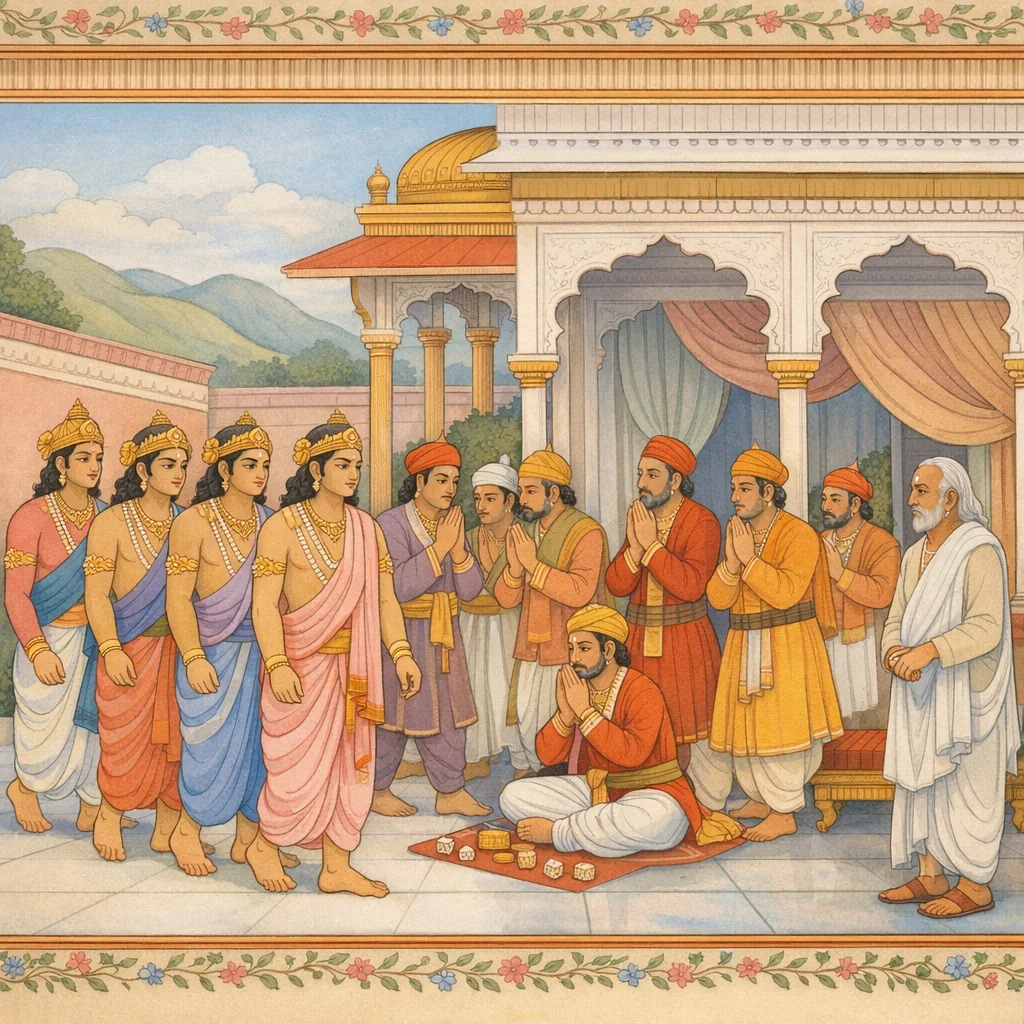
The chapter records a patterned escalation in the dice match. Śakuni challenges Yudhiṣṭhira to name any remaining “unconquered” wealth. Yudhiṣṭhira responds by enumerating vast, near-hyperbolic measures of treasure and then successively concrete holdings: cattle and horses, settlements and land, and personal ornaments. After each declaration, Vaiśaṃpāyana notes Śakuni’s settled resolve and reliance on deception, followed by the repeated verdict “jitam” (won). The stakes then shift from property to persons: Nakula is implicitly drawn into the wager, and Sahadeva is offered next, with Yudhiṣṭhira framing them through virtues and affection. Arjuna and Bhīma are subsequently invoked as unparalleled leaders in battle and protection, yet are still wagered and lost as Śakuni continues the same refrain. The dialogue includes Yudhiṣṭhira’s ethical protest that Śakuni seeks to divide well-disposed brothers, contrasted with Śakuni’s taunting civility and gambler’s psychology. The sequence culminates in Śakuni proposing Draupadī (Kṛṣṇā Pāñcālī) as the remaining stake; Yudhiṣṭhira describes her beauty and qualities in extended imagery and agrees to wager her. The assembly reacts with distress and condemnation, while Dhṛtarāṣṭra’s repeated questioning and some courtiers’ jubilation reveal polarized institutional sentiment.
Chapter Arc: विदुर का प्रस्थान—महाबुद्धिमान् क्षत्त विदुर मार्ग पार कर धर्मपुत्र युधिष्ठिर की राजधानी में प्रवेश करते हैं, जहाँ राजगृह कुबेर-भवन-सा दीप्तिमान है। → युधिष्ठिर विदुर के मनोहर हर्ष को देखकर कुशल-क्षेम पूछते हैं और परिवार-जन की स्थिति जानना चाहते हैं। इसके बाद पाण्डव राजकीय मर्यादा के अनुसार रथारूढ़ होकर (बाह्लीक-योजित रथ) हस्तिनापुर की ओर बढ़ते हैं और वहाँ उपस्थित राजाओं—सोमदत्त, दुर्योधन, शल्य, शकुनि, दुःशासन आदि—से औपचारिक भेंट करते हैं। सत्कार, रत्नमय गृह, स्त्रियों (दुःशला-प्रमुख) का स्वागत—सबके भीतर एक अनकहा दबाव बनता है कि यह मिलन केवल सौजन्य नहीं, किसी बड़े आयोजन की भूमिका है। → रात सुखपूर्वक बिताकर प्रातः संध्योपासनादि नित्यकर्म के बाद पाण्डव रमणीय सभा में प्रवेश करते हैं; वहाँ ‘जुआरियों’ द्वारा अभिनन्दन—सभा का स्वर बदल देता है और संकेत मिलता है कि आगे का केंद्र राजधर्म नहीं, द्यूत-क्रीड़ा होगी। → पाण्डव राजकीय अनुशासन में दिनचर्या निभाते हुए (स्त्रियों से संवाद, व्यायाम, केश-प्रसाधन, भोजन) सभा-जीवन में सम्मिलित हो जाते हैं; बाह्यतः सब कुछ शिष्टाचार और ऐश्वर्य से परिपूर्ण दिखता है। → सभा में जुआरियों की उपस्थिति और अभिनन्दन यह प्रश्न छोड़ देता है—क्या युधिष्ठिर इस निमंत्रण को धर्मसम्मत सीमा में रख पाएँगे, या द्यूत का जाल उन्हें बाँध लेगा?
Shlokas
Verse 1
अपन बछ। है २ >> अष्टपञ्चाशत्तमो< ध्याय: विदुर और युधिष्ठिरकी बातचीत तथा युधिष्ठिरका हस्तिनापुरमें जाकर सबसे मिलना वैशम्पायन उवाच ततः प्रायाद् विदुरो5श्वैरुदारै- महाजवैब॑लिभि: साधुदान्तै: । बलान्नियुक्तो धृतराष्ट्रेण राज्ञा मनीषिणां पाण्डवानां सकाशे,वैशम्पायनजी कहते हैं--जनमेजय! तदनन्तर राजा धृतराष्ट्रके बलपूर्वक भेजनेपर विदुरजी अत्यन्त वेगशाली, बलवान् और अच्छी प्रकार काबूमें किये हुए महान् अश्वोंसे जुते रथपर सवार हो परम बुद्धिमान पाण्डवोंके समीप गये
Vaiśampāyana said: Then Vidura set out to the presence of the wise Pāṇḍavas, mounted on a chariot yoked with noble horses—very swift, powerful, and well-trained—having been dispatched by King Dhṛtarāṣṭra with insistence.
Verse 2
सो$5भिपत्य तदध्वानमासाद्य नृपते: पुरम् प्रविवेश महाबुद्धि: पूज्यमानो द्विजातिभि:,महाबुद्धिमान् विदुरजी उस मार्गको तय करके राजा युधिष्ठिरकी राजधानीमें जा पहुँचे और वहाँ द्विजातियोंसे सम्मानित होकर उन्होंने नगरमें प्रवेश किया
Vaiśampāyana said: Having swiftly covered that route and reached the king’s city, the wise Vidura entered the capital, being honored and received with reverence by the twice-born.
Verse 3
स राजगृहमासाद्य कुबेरभवनोपमम् | अभ्यागच्छत धर्मात्मा धर्मपुत्रं युधिष्ठिरम्,कुबेरके भवनके समान सुशोभित राजमहलमें जाकर धर्मात्मा विदुर धर्मपुत्र युधिष्ठिरसे मिले। सत्यवादी महात्मा अजमीढनन्दन अजातशत्रु राजा युधिष्ठिरने विदुरजीका यथावत् आदर-सत्कार करके उनसे पुत्रसहित धृतराष्ट्रकी कुशल पूछी
Having reached the royal palace—splendid like the mansion of Kubera—the righteous Vidura went to meet Yudhiṣṭhira, the son of Dharma. Yudhiṣṭhira, truthful and noble, received Vidura with due honor and hospitality, and then inquired after the welfare of Dhṛtarāṣṭra and his sons—thus upholding the ethics of respect, kinship, and proper conduct even amid political strain.
Verse 4
त॑ वै राजा सत्यधृतिर्महात्मा अजातशन्रुरविंदुरं यथावत् । पूजापर्व प्रतिगृह्माजमीढ- स्ततो<पृच्छद् धृतराष्ट्रं सपुत्रम्,कुबेरके भवनके समान सुशोभित राजमहलमें जाकर धर्मात्मा विदुर धर्मपुत्र युधिष्ठिरसे मिले। सत्यवादी महात्मा अजमीढनन्दन अजातशत्रु राजा युधिष्ठिरने विदुरजीका यथावत् आदर-सत्कार करके उनसे पुत्रसहित धृतराष्ट्रकी कुशल पूछी
Vaiśampāyana said: Then the great-souled king Yudhiṣṭhira—steadfast in truth and known as Ajātaśatru—received Vidura with due honor, following the proper rites of welcome. After completing the formal courtesies, the descendant of Ajamīḍha inquired about the welfare of Dhṛtarāṣṭra and his sons. The scene underscores the ethic of respectful hospitality and dutiful concern even toward those bound up in political tension.
Verse 5
युधिषछ्िर उवाच विज्ञायते ते मनसो<प्रहर्ष: कच्चित् क्षत्त: कुशलेनागतो5सि । कच्चित् पुत्रा: स्थविरस्यानुलोमा वशानुगाश्चापि विशो5थ कच्चित्,युधिष्ठिर बोले--विदुरजी! आपका मन प्रसन्न नहीं जान पड़ता। आप कुशलसे तो आये हैं? बूढ़े राजा धृतराष्ट्रके पुत्र उनके अनुकूल चलते हैं न? तथा सारी प्रजा उनके वशमें हैन?
Yudhiṣṭhira said: “I can see that your mind is not cheerful. O Kṣattṛ (Vidura), have you come here safely and in good health? Are the sons of the aged king acting in accordance with him? And is the people as well obedient and under control?”
Verse 6
विदुर उवाच राजा महात्मा कुशली सपुत्र आस्ते वृतो ज्ञातिभिरिन्द्रकल्प: । प्रीतो राजन् पुत्रगणैर्विनीतै- विशोक एवात्मरतिर्महात्मा,विदुरने कहा--राजन! इन्द्रके समान प्रभावशाली महामना राजा धुृतराष्ट्र अपने जातिभाइयों तथा पुत्रोंसहित सकुशल हैं। अपने विनीत पुत्रोंसे वे प्रसन्न रहते हैं। उनमें शोकका अभाव है। वे महामना अपनी आत्मामें ही अनुराग रखनेवाले हैं
Vidura said: “O King, the great-souled Dhṛtarāṣṭra—mighty like Indra—dwells in safety, surrounded by his kinsmen and accompanied by his sons. He is pleased with his well-disciplined sons; he is free from grief, and that noble one finds his satisfaction within his own self.”
Verse 7
इदं तु त्वां कुरुगाजो 5 भ्युवाच पूर्व पृष्टवा कुशलं चाव्ययं च । इयं सभा त्वत्सभातुल्यरूपा भ्रातृणां ते दृश्यतामेत्य पुत्र,कुरुराज धृतराष्ट्रने पहले तुमसे कुशल और आरोग्य पूछकर यह संदेश दिया है कि वत्स! मैंने तुम्हारी सभाके समान ही एक सभा तैयार करायी है। तुम अपने भाइयोंके साथ आकर अपने दुर्योधन आदि भाइयोंकी इस सभाको देखो। इसमें सभी इष्ट-मित्र मिलकर द्यूतक्रीड़ा करें और मन बहलावें। हम सभी कौरव तुम सबसे मिलकर बहुत प्रसन्न होंगे
Vidura said: “But first the king of the Kurus addressed you, after inquiring about your welfare and unbroken health: ‘Son, a hall has been prepared here, equal in splendor to your own. Come with your brothers and see it.’”
Verse 8
समागम्य भ्रातृभि: पार्थ तस्यां सुहृद्द्यूत॑ क्रियतां रम्यतां च | प्रीयामहे भवतां संगमेन समागता: कुरवश्चापि सर्वे,कुरुराज धृतराष्ट्रने पहले तुमसे कुशल और आरोग्य पूछकर यह संदेश दिया है कि वत्स! मैंने तुम्हारी सभाके समान ही एक सभा तैयार करायी है। तुम अपने भाइयोंके साथ आकर अपने दुर्योधन आदि भाइयोंकी इस सभाको देखो। इसमें सभी इष्ट-मित्र मिलकर द्यूतक्रीड़ा करें और मन बहलावें। हम सभी कौरव तुम सबसे मिलकर बहुत प्रसन्न होंगे
Vidura conveys the king’s message to Arjuna: “O Partha, come here with your brothers and see that splendid new hall. Let friends and well-wishers gather and engage in dice-play for amusement. All of us Kurus, assembled together, will be delighted by meeting with you.”
Verse 9
दुरोदरा विहिता ये तु तत्र महात्मना धृतराष्ट्रेण राज्ञा । तान् द्रक्ष्य्से कितवान् संनिविष्टा- नित्यागतो<हं नूपते तज्जुषस्व,महामना राजा धृतराष्ट्रने वहाँ जो जूएके स्थान बनवाये हैं, उनको और वहाँ जुटकर बैठे हुए धूर्त जुआरियोंको तुम देखोगे। राजन! मैं इसीलिये आया हूँ। तुम चलकर उस सभा एवं द्यूतक्रीड़ाका सेवन करो
Vidura said: “O king, you will see there the gambling-hall that has been arranged by the great-souled King Dhṛtarāṣṭra, and the deceitful gamblers seated together within it. It is for this very reason that I have come, O ruler; go and take part in that assembly and in that game of dice.”
Verse 10
युधिछिर उवाच द्यूते क्षत्त: कलहो विद्यते नः को वै द्यूत॑ रोचयेद् बुध्यमान: । कि वा भवान् मन्यते युक्तरूपं भवद्वाक्ये सर्व एव स्थिता: सम,युधिष्ठटिरने पूछा--विदुरजी! जूएमें तो झगड़ा-फसाद होता है। कौन समझदार मनुष्य जूआ खेलना पसंद करेगा अथवा आप क्या ठीक समझते हैं; हम सब लोग तो आपकी आज्ञाके अनुसार ही चलनेवाले हैं
Yudhiṣṭhira said: “O Kṣattṛ (Vidura), in gambling there is quarrel and strife—who, being wise and clear-minded, would ever take pleasure in dice-play? Tell me what you consider proper and fitting; for we all stand ready to act in accordance with your counsel.”
Verse 11
विदुर उवाच जानाम्यहं द्यूतमनर्थमूलं कृतश्च यत्नो5स्य मया निवारणे । राजा च मां प्राहिणोत् त्वत्सकाशं श्र॒त्वा विद्वन्छेय इहाचरस्व,विदुरजीने कहा--विद्वन्! मैं जानता हूँ, जूआ अनर्थकी जड़ है; इसीलिये मैंने उसे रोकनेका प्रयत्न भी किया तथापि राजा धुृतराष्ट्रने मुझे तुम्हारे पास भेजा है, यह सुनकर तुम्हें जो कल्याणकर जान पड़े, वह करो
Vidura said: “I know that gambling is the root of calamity, and I have indeed made efforts to prevent it. Yet the king has sent me to you. Having heard this, O wise one, do here what you judge to be for the good.”
Verse 12
युधिछिर उवाच के तत्रान्ये कितवा दीव्यमाना विना राज्ञो धृतराष्ट्रस्य पुत्रै: । पृच्छामि त्वां विदुर ब्रूहि नस्तान् यैर्दीव्याम: शतश: संनिपत्य,युधिष्ठिरने पूछा--विदुरजी! वहाँ राजा धृतराष्ट्रके पुत्रोंकी छोड़कर दूसरे कौन-कौन धूर्त जुआ खेलनेवाले हैं? यह मैं आपसे पूछता हूँ। आप उन सबको बताइये, जिनके साथ मिलकर और सैकड़ोंकी बाजी लगाकर हमें जुआ खेलना पड़ेगा
Yudhiṣṭhira said: “Who else are there, apart from the sons of King Dhṛtarāṣṭra, that crafty gamblers are playing there? I ask you, Vidura—tell us who they are, those with whom we must gamble, assembling together and staking by the hundreds.”
Verse 13
विदुर उवाच गान्धारराज: शकुनिर्विशाम्पते राजातिदेवी कृतहस्तो मताक्ष: । विविंशतिक्षित्रसेनश्ष॒ राजा सत्यव्रत: पुरुमित्रो जयश्वल,विदुरने कहा--राजन्! वहाँ गान्धारराज शकुनि है, जो जुएका बहुत बड़ा खिलाड़ी है। वह अपनी इच्छाके अनुसार पासे फेंकनेमें सिद्ध॒हस्त है। उसे द्यूतविद्याके रहस्यका ज्ञान है। उसके सिवा राजा विविंशति, चित्रसेन, राजा सत्यव्रत, पुरुमित्र और जय भी रहेंगे
Vidura said: “O lord of the people (King), there is Śakuni, the king of Gāndhāra—an expert gambler, perfectly skilled in casting the dice as he wishes, and one who knows the inner stratagems of the game. Besides him, there will also be King Viviṁśati, Citrasena, King Satyavrata, Purumitra, and Jaya.”
Verse 14
युधिष्ठिर उवाच महाभया: कितवा: संनिविष्टा मायोपधा देवितारोअत्र सन्ति । धात्रा तु दिष्टस्य वशे किलेदं सर्व जगत् तिष्ठति न स्वतन्त्रम्,युधिष्ठिर बोले--तब तो वहाँ बड़े भयंकर, कपटी और धूर्त जुआरी जुटे हुए हैं। विधाताका रचा हुआ यह सम्पूर्ण जगत् दैवके ही अधीन है; स्वतन्त्र नहीं है
Yudhiṣṭhira said: “Then indeed, terrifying gamblers—deceitful and full of trickery—are gathered there. For this entire world stands under the sway of what the Creator has ordained; it is not independent.”
Verse 15
नाहं राज्ञो धृतराष्ट्रस्य शासना- न्न गन्तुमिच्छामि कवे दुरोदरम् | इष्टो हि पुत्रस्य पिता सदैव तदस्मि कर्ता विदुरात्थ मां यथा
Yudhiṣṭhira said: “I do not wish to go to the dice-game merely because King Dhṛtarāṣṭra commands it, O wise one. A father is always dear to his son; therefore I will do as you, Vidura, have told me.”
Verse 16
बुद्धिमान् विदुरजी! मैं राजा धृतराष्ट्रकी आज्ञासे जूएमें अवश्य चलना चाहता हूँ। पुत्रको पिता सदैव प्रिय है; अतः: आपने मुझे जैसा आदेश दिया है, वैसा ही करूँगा ।। न चाकाम: शकुनिना देविताहं न चेन्मां जिष्णुराह्मयिता सभायाम् | आहूतो<हं न निवर्ते कदाचित् तदाद्ठितं शाश्रवृतं वै व्रतं मे,मेरे मनमें जूआ खेलनेकी इच्छा नहीं है। यदि मुझे विजयशील राजा धृतराष्ट्र सभामें न बुलाते, तो मैं शकुनिसे कभी जुआ न खेलता; किंतु बुलानेपर मैं कभी पीछे नहीं हटूँगा। यह मेरा सदाका नियम है
Yudhiṣṭhira said: “O wise Vidura, by King Dhṛtarāṣṭra’s command I intend to go to the dice-game without fail. A son is always dear to his father; therefore I shall act exactly as you have instructed me. I have no desire to gamble. Had the victorious King Dhṛtarāṣṭra not summoned me to the assembly, I would never have played dice with Śakuni. But once invited, I do not turn back—this is my enduring vow.”
Verse 17
वैशम्पायन उवाच एवमुकक््त्वा विदुरं धर्मराज: प्रायात्रिकं सर्वमाज्ञाप्य तूर्णम् । प्रायाच्छवो भूते सगण: सानुयात्र: सह स्त्रीभिद्रौपदीमादि कृत्वा,वैशम्पायनजी कहते हैं--जनमेजय! विदुरसे ऐसा कहकर धर्मराज युधिष्िरने तुरंत ही यात्राकी सारी तैयारी करनेके लिये आज्ञा दे दी। फिर सबेरा होनेपर उन्होंने अपने भाई- बन्धुओं, सेवकों तथा द्रौपदी आदि स्त्रियोंके साथ हस्तिनापुरकी यात्रा की
Vaiśampāyana said: Having spoken thus to Vidura, Dharmarāja (Yudhiṣṭhira) swiftly ordered that all preparations for the journey be made. Then, when morning came, he set out on the road—accompanied by his group and attendants, with his followers in train—taking Draupadī and the other women along, and proceeded toward Hastināpura.
Verse 18
दैवं हि प्रज्ञां मुष्णाति चक्षुस्तेज इवापतत् । धातुश्च वशमन्वेति पाशैरिव नर: सितः,जैसे उत्कृष्ट तेज सामने आनेपर आँखकी ज्योतिको हर लेता है, उसी प्रकार दैव मनुष्यकी बुद्धिको हर लेता है। दैवसे ही प्रेरित होकर मनुष्य रस्सीमें बँधे हुएकी भाँति विधाताके वशमें घूमता रहता है
For destiny indeed steals away a person’s discernment, just as a sudden blaze of brilliance robs the eyes of their power to see. Driven by that same destiny, a man moves under the control of the Ordainer, like one bound fast with ropes—his freedom of judgment and action constrained, and his course compelled.
Verse 19
इत्युक्त्वा प्रययौ राजा सह क्षत्रा युधिष्ठिर: । अमृष्यमाणस्तस्यथाथ समाह्दवानमरिंदम:,ऐसा कहकर शत्रुदमन राजा युधिष्ठिर जूएके लिये राजा धृतराष्ट्रके उस बुलावेको सहन न करते हुए भी विदुरजीके साथ वहाँ जानेको उद्यत हो गये
Vaiśampāyana said: Having spoken thus, King Yudhiṣṭhira set out, accompanied by Vidura. Though he could not inwardly tolerate Dhṛtarāṣṭra’s summons to the dice-game, the foe-subduing king nevertheless prepared to go—choosing restraint and obedience to royal authority over immediate protest, even as the call itself felt ethically troubling.
Verse 20
बाह्लीकेन रथं यत्तमास्थाय परवीरहा । परिच्छन्नो ययौ पार्थों भ्रातृभि: सह पाण्डव:,बाह्लीकद्वारा जोते हुए रथपर बैठकर शत्रुसूदन पाण्डुकुमार युधिष्ठटिरने अपने भाइयोंके साथ हस्तिनापुरकी यात्रा प्रारम्भ की
Vaiśaṃpāyana said: Mounting a chariot yoked by Bāhlīka, the Pāṇḍava hero—clad and equipped for the road—set out with his brothers. Thus the son of Pāṇḍu began the journey toward Hastināpura, moving forward with resolve amid the political tensions that would test dharma and kinship.
Verse 21
(संदिदेश ततः प्रेष्यान् नागाह्नयगतिं प्रति । ततस्ते नरशार्टूलाश्षक्रुर्वै नूपशासनम् ।। सबसे पहले राजा युधिष्ठिरने अपने सेवकोंको हस्तिनापुरकी ओर चलनेका आदेश दिया। वे नरश्रेष्ठ राजसेवक महाराजकी आज्ञाका पालन करनेमें तत्पर हो गये। ततो राजा महातेजा: सधौम्य: सपरिच्छद: । ब्राह्मणै: स्वस्ति वाच्यैव निर्दयौ मन्दिराद् बहि: ।। तत्पश्चात् महातेजस्वी राजा युधिष्ठिर समस्त सामग्रियोंसे सुसज्जित हो ब्राह्मणोंसे स्वस्तिवाचन कराकर पुरोहित धौम्यके साथ राजभवनसे बाहर निकले। ब्राह्मणेभ्यो धनं दत्त्वा गत्यर्थ स यथाविधि । अन्येभ्य: स तु दत्त्वार्थ गन्तुमेवोपचक्रमे ।। यात्राकी सफलताके लिये उन्होंने ब्राह्मणोंको विधिपूर्वक धन देकर और दूसरोंको भी मनोवांछित वस्तुएँ अर्पित करके यात्रा प्रारम्भ की। सर्वलक्षणसम्पन्नं राजाह सपरिच्छदम् | तमारुहा[ महाराजो गजेन्द्रं षष्टिहायनम् ।। निषसाद गजस्कन्धे काञ्चने परमासने । हारी किरीटी हेमा भ: सर्वाभरणभूषित: ।। रराज राजन् पार्थो वै परया नृपशोभया । रुक्मवेदिगतः प्राज्यो ज्वलन्निव हुताशन: ।। राजाके बैठनेयोग्य एक साठ वर्षका गजराज सब आवश्यक सामग्रियोंसे सुसज्जित करके लाया गया। वह समस्त शुभ लक्षणोंसे सम्पन्न था। उसकी पीठपर सोनेका सुन्दर हौदा कसा गया था। महाराज युधिष्छिर (पूर्वोक्त रथसे उतर कर) उस गजराजपर आखूढ़ हो हौदेमें बैठे। उस समय वे हार, किरीट तथा अन्य सभी आभूषणोंसे विभूषित हो अपनी स्वर्णगौर-कान्ति तथा उत्कृष्ट राजोचित शोभासे सुशोभित हो रहे थे। उन्हें देखकर ऐसा जान पड़ता था, मानो सोनेकी वेदीपर स्थापित अग्निदेव घीकी आहुतिसे प्रज्वलित हो रहे हों। ततो जगाम राजा स प्रहृष्टनरवाहन: । रथघोषेण महता पूरयन् वै नभ:स्थलम् ।। संस्तूयमान: स्तुतिभि: सूतमागधवन्दिभि: । महासैन्येन संवीतो यथा5<दित्य: स्वरश्मिभि: ।। तदनन्तर हर्षमें भरे हुए मनुष्यों तथा वाहनोंके साथ राजा युधिष्ठिर वहाँसे चल पड़े। वे (राजपरिवारके लोगोंसे भरे हुए पूर्वोक्त) रथके महान् घोषसे समस्त आकाशमण्डलको गुँजाते जा रहे थे। सूत, मागध और बन्दीजन नाना प्रकारकी स्तुतियोंद्वारा उनके गुण गाते थे। उस समय विशाल सेनासे घिरे हुए राजा युधिष्ठिर अपनी किरणोंसे आवृत हुए सूर्यदेवकी भाँति शोभा पा रहे थे। पाण्डुरेणातपत्रेण प्रियमाणेन मूर्थनि । बभौ युधिष्ठिरो राजा पौर्णमास्यामिवोडुराट् ।। उनके मस्तकपर श्वेत छत्र तना हुआ था, जिससे राजा युधिष्ठिर पूर्णिमाके चन्द्रमाकी भाँति शोभा पाते थे। चामरैहेमदण्डैश्व धूयमान: समन्ततः । जयाशिष: प्रह्ृष्टाणां नराणां पथि पाण्डव: ।। प्रत्यगृह्नाद् यथान्यायं यथावद् भरतर्षभ । उनके चारों ओर स्वर्णदण्डविभूषित चँवर डुलाये जाते थे। भरतश्रेष्ठ! पाण्डुनन्दन युधिष्ठिरको मार्ममें बहुतेरे मनुष्य हर्षोल्लासमें भरकर “महाराजकी जय हो” कहते हुए शुभाशीर्वाद देते थे और वे यथोचितरूपसे सिर झुकाकर उन सबको स्वीकार करते थे। अपरे कुरुराजानं पथि यान्तं समाहिता: ।। स्तुवन्ति सततं सौख्यान्मृगपक्षिस्वनैर्नरा: । उस मार्ममें दूसरे बहुत-से मनुष्य एकाग्रचित्त हो मृगों और पक्षियोंकी-सी आवाजमें निरन्तर सुखपूर्वक कुरुराज युधिष्ठिरकी स्तुति करते थे। तथैव सैनिका राजन् राजानमनुयान्ति ये ।। तेषां हलहलाशब्दो दिवं स्तब्ध्वा प्रतिष्ठित: । जनमेजय! इसी प्रकार जो सैनिक राजा युधिष्ठिरके पीछे-पीछे जा रहे थे, उनका कोलाहल भी समूचे आकाशमण्डलको स्तब्ध करके गूँज रहा था। नृपस्याग्रे ययौ भीमो गजस्कन्धगतो बली ।। उभौ पार्श्वगतौ राज्ञ: सदश्वौ वै सुकल्पितौ । अधिरूढौ यमौ चापि जम्मतुर्भरतर्षभ ।। शोभयन्तौ महासैन्यं तावुभौ रूपशालिनौ | हाथीकी पीठपर बैठे हुए बलवान् भीमसेन राजाके आगे-आगे जा रहे थे। उनके दोनों ओर सजे-सजाये दो श्रेष्ठ अश्व थे, जिनपर नकुल और सहदेव बैठे थे। भरतश्रेष्ठ! वे दोनों भाई स्वयं तो अपने रूप-सौन्दर्यसे सुशोभित थे ही, उस विशाल सेनाकी भी शोभा बढ़ा रहे थे। पृष्ठतो$नुययौ धीमान् पार्थ: शस्त्रभृतां वर: ।। श्वेताश्वो गाण्डिवं गृह अग्निदत्तं रथं गतः । शस्त्रधारियोंमें श्रेष्ठ परम बुद्धिमान् श्वेतवाहन अर्जुन अग्निदेवके दिये हुए रथपर बैठकर गाण्डीव धनुष धारण किये महाराजके पीछे-पीछे जा रहे थे। सैन्यमध्ये ययौ राजन् कुरुराजो युधिष्ठिर: ।। द्रौपदीप्रमुखा नार्य: सानुगा: सपरिच्छदा: । आरुह्दु ता विचित्राणि शिबिकानां शतानि च ।। महत्या सेनया राजन्नग्रे राज्ञो ययुस्तदा । राजन! कुरुराज युधिष्ठिर सेनाके बीचमें चल रहे थे। द्रौपदी आदि स्त्रियाँ अपनी सेविकाओं तथा आवश्यक सामग्रियोंके साथ सैकड़ों विचित्र शिबिकाओं (पालकियों)-पर आरूढ़ हो बड़ी भारी सेनाके साथ महाराजके आगे-आगे जा रही थीं। समृद्धनरनागाश्वं सपताकरथध्वजम् ।। समृद्धरथनिस्त्रिंशं पत्तिभिर्घोषितस्वनम् । पाण्डवोंकी वह सेना हाथी-घोड़ों तथा पैदल सैनिकोंसे भरी-पूरी थी। उसमें बहुत-से रथ भी थे, जिनकी ध्वजाओंपर पताकाएँ फहरा रही थीं। उन सभी रथोंमें खड़ग आदि अस्त्र-शस्त्र संगृहीत थे। पैदल सैनिकोंका कोलाहल सब ओर फैल रहा था। शड्खदुन्दुभितालानां वेणुवीणानुनादितम् ।। शुशुभे पाण्डवं सैन्यं प्रयातं तत् तदा नृप । राजन! शंख, दुन्दुभि, ताल, वेणु और वीणा आदि वाद्योंकी तुमुल ध्वनि वहाँ गूँज रही थी। उस समय हस्तिनापुरकी ओर जाती हुई पाण्डवोंकी उस सेनाकी बड़ी शोभा हो रही थी। स सरांसि नदीश्वैव वनान्युपवनानि च ।। अत्यक्रामन्महाराज पुरी चाभ्यवपद्यत । हस्तीपुरसमीपे तु कुरुराजो युधिष्िर: ।। जनमेजय! कुरुराज युधिष्ठिर अनेक सरोवर, नदी, वन और उपवनोंको लाँघते हुए हस्तिनापुरके समीप जा पहुँचे। चक्रे निवेशनं तत्र ततः स सहसैनिक: । शिवे देशे समे चैव न्यवसत् पाण्डवस्तदा ।। वहाँ उन्होंने एक सुखद एवं समतल प्रदेशमें सैनिकोंसहित पड़ाव डाल दिया। उसी छावनीमें पाण्डुनन्दन युधिष्ठिर स्वयं भी ठहर गये। ततो राजन् समाहूय शोकविह्नललया गिरा । एतद् वाक््यं च सर्वस्वं धृतराष्ट्रचिकीर्षितम् । आचचतक्षे यथावृत्तं विदुरोडथ तपस्य ह ।।) राजन्! तदनन्तर विदुरजीने शोकाकुल वाणीमें महाराज युधिष्ठिरको वहाँका सारा वृत्तान्त ठीक-ठीक बता दिया कि धृतराष्ट्र क्या करना चाहते हैं और इस द्यूतक्रीडाके पीछे क्या रहस्य है? धृतराष्ट्रेण चाहूत: कालस्य समयेन च,तब धुृतराष्ट्रके द्वारा बुलाये हुए कालके समयानुसार धर्मात्मा पाण्डुपुत्र युधिष्ठिर हस्तिनापुरमें पहुँचकर धृतराष्ट्रके भवनमें गये और उनसे मिले
Vaiśaṃpāyana said: Then King Yudhiṣṭhira dispatched his attendants with orders to proceed toward the course of the Gaṅgā (and thus toward Hāstinapura). Those tiger-like men, foremost among servants, promptly carried out the king’s command. The scene underscores royal discipline and orderly governance: a righteous ruler does not act in haste or secrecy, but moves with due procedure, clear instruction, and responsible retinue—an outer sign of inner commitment to dharma even as events draw him toward a perilous invitation.
Verse 22
स हास्तिनपुरं गत्वा धृतराष्ट्रगृहं ययौ । समियाय च धर्मात्मा धृतराष्ट्रेण पाण्डव:,तब धुृतराष्ट्रके द्वारा बुलाये हुए कालके समयानुसार धर्मात्मा पाण्डुपुत्र युधिष्ठिर हस्तिनापुरमें पहुँचकर धृतराष्ट्रके भवनमें गये और उनसे मिले
Having gone to Hāstinapura, the Pāṇḍava of righteous nature proceeded to Dhṛtarāṣṭra’s residence and met with Dhṛtarāṣṭra. The verse underscores timely obedience to a royal summons and the ethic of respectful conduct toward elders and the reigning authority, even amid underlying political tension.
Verse 23
तथा भीष्मेण द्रोणेन कर्णेन च कृपेण च । समियाय यथान्यायं द्रौणिना च विभु: सह,इसी प्रकार महाराज युधिष्ठिर, भीष्म, द्रोण, कर्ण, कृपाचार्य और अश्वत्थामाके साथ भी यथायोग्य मिले
Vaiśampāyana said: In the same manner, the mighty king met Bhīṣma, Droṇa, Karṇa, and Kṛpa, and also Droṇa’s son Aśvatthāmā, as was proper—rendering to each the due respect and fitting courtesies.
Verse 24
समेत्य च महाबाहु: सोमदत्तेन चैव ह | दुर्योधनेन शल्येन सौबलेन च वीर्यवान्
Vaiśampāyana said: The mighty-armed, valiant one then came together with Somadatta, and indeed with Duryodhana, with Śalya, and with the Saubala (Śakuni).
Verse 25
ये चान्ये तत्र राजान: पूर्वमेव समागता: । दुःशासनेन वीरेण सर्वैर्ग्रतृभिरेव च
Vaiśampāyana said: “And those other kings who had already assembled there earlier—together with the valiant Duḥśāsana and with all his brothers as well—were present.”
Verse 26
जयद्रथेन च तथा कुरुभिश्चापि सर्वश: । ततः सर्वर्महाबाहुर्भ्रतृ भि: परिवारित:
Vaiśampāyana said: Thus, Jayadratha and the Kurus on every side surrounded him; then that mighty-armed hero stood encompassed by his brothers.
Verse 27
प्रविवेश गृहं राज्ञो धृतराष्ट्रस्य धीमत: । ददर्श तत्र गान्धारीं देवीं पतिमनुव्रताम्
Vaiśampāyana said: He entered the residence of the wise King Dhṛtarāṣṭra. There he beheld Queen Gāndhārī, a noble lady steadfast in her vow of fidelity and devotedly aligned with her husband—an image of wifely dharma within the royal household.
Verse 28
स््नुषाभि: संवृतां शश्वत् ताराभिरिव रोहिणीम् । अभिवाद्य स गान्धारीं तया च प्रतिनन्दित:
Vaiśampāyana said: Surrounded always by her daughters-in-law, like Rohiṇī encircled by the stars, he bowed in reverence to Gāndhārī; and she, in turn, received him with gracious approval.
Verse 29
तत्पश्चात् पराक्रमी महाबाहु युधिष्ठिर सोमदत्तसे मिलकर दुर्योधन, शल्य, शकुनि तथा जो राजा वहाँ पहलेसे ही आये हुए थे, उन सबसे मिले। फिर वीर दुःशासन, उसके समस्त भाई, राजा जयद्रथ तथा सम्पूर्ण कौरवोंसे मिल करके भाइयोंसहित महाबाहु युधिष्ठिरने बुद्धिमान् राजा धृतराष्ट्रके भवनमें प्रवेश किया और वहाँ सदा ताराओंसे घिरी रहनेवाली रोहिणीदेवीके समान पुत्रवधुओंके साथ बैठी हुई पतिव्रता गान्धारीदेवीको देखा। युधिष्ठिरने गान्धारीको प्रणाम किया और गान्धारीने भी उन्हें आशीर्वाद देकर प्रसन्न किया || २४-- २८ ।। ददर्श पितरं वृद्धं प्रज्ञाचक्षुषमी श्वरम्,तत्पश्चात् उन्होंने अपने बूढ़े चाचा प्रज्ञाचक्षु राजा धृतराष्ट्रका पुनः दर्शन किया
After this, the valiant, mighty-armed Yudhiṣṭhira met Somadatta, and also Duryodhana, Śalya, Śakuni, and the other kings who had already arrived there. Then, having greeted the hero Duḥśāsana, all his brothers, King Jayadratha, and the entire Kaurava company, Yudhiṣṭhira—together with his own brothers—entered the residence of the wise King Dhṛtarāṣṭra. There he beheld the devoted Gāndhārī seated with her daughters-in-law, radiant like the goddess Rohiṇī surrounded by stars. Yudhiṣṭhira bowed to Gāndhārī, and she, pleased, blessed him. Thereafter he again saw his aged uncle Dhṛtarāṣṭra, the ‘one whose sight is wisdom’ (blind yet discerning), a lordly elder of the house.
Verse 30
राज्ञा मूर्थन्युपाप्रातास्ते च कौरवनन्दना: । चत्वार: पाण्डवा राजन् भीमसेनपुरोगमा:
Vaiśampāyana said: Those sons of the Kuru line, together with the four Pāṇḍavas led by Bhīmasena, approached the king and stood before him with bowed heads, a visible sign of deference.
Verse 31
राजा धृतराष्ट्रने कुरुकुलको आनन्दित करनेवाले युधिष्ठिर तथा भीमसेन आदि अन्य चारों पाण्डवोंका मस्तक सूँघा ।। ततो हर्ष: समभवत् कौरवाणां विशाम्पते । तान् दष्टवा पुरुषव्याप्रान् पाण्डवान् प्रियदर्शनान्,जनमेजय! उन पुरुषश्रेष्ठ प्रियदर्शन पाण्डवोंको आये देख कौरवोंको बड़ा हर्ष हुआ
Vaiśampāyana said: King Dhṛtarāṣṭra, who brought joy to the Kuru line, affectionately smelled the heads of Yudhiṣṭhira, Bhīmasena, and the other Pāṇḍavas. Then, O lord of men, seeing those tiger-like heroes—the handsome, beloved Pāṇḍavas—arrive, the Kauravas were filled with great delight.
Verse 32
विविशुस्ते5भ्यनुज्ञाता रत्नवन्ति गृहाणि च । ददृशुश्नोपयातांस्तान् दुःशलाप्रमुखा: स्त्रिय:,तत्पश्चात् धृतराष्ट्रकी आज्ञा ले पाण्डवोंने रत्नमय गृहोंमें प्रवेश किया। दुःशला आदि स्त्रियोंने वहाँ आये हुए उन सबको देखा। ट्रपदकुमारीकी प्रज्वलित अग्निके समान उत्तम समृद्धि देखकर धृतराष्ट्रकी पुत्रवधुएँ अधिक प्रसन्न नहीं हुईं
Vaiśampāyana said: Having received permission, they entered the jewel-adorned residences. There, the women—led by Duḥśalā—saw them as they arrived. Though the Pāṇḍavas were formally honored with opulence, not all the women of the Kaurava household felt unalloyed joy; confronted with the radiant prosperity and dignity associated with Draupadī and the Pāṇḍavas, a shadow of envy showed beneath outward hospitality.
Verse 33
याज्ञसेन्या: परामृद्धि दृष्टवा प्रजवयलितामिव । स्नुषास्ता धृतराष्ट्रस्य नातिप्रमनसो5भवन्,तत्पश्चात् धृतराष्ट्रकी आज्ञा ले पाण्डवोंने रत्नमय गृहोंमें प्रवेश किया। दुःशला आदि स्त्रियोंने वहाँ आये हुए उन सबको देखा। ट्रपदकुमारीकी प्रज्वलित अग्निके समान उत्तम समृद्धि देखकर धृतराष्ट्रकी पुत्रवधुएँ अधिक प्रसन्न नहीं हुईं
Vaiśampāyana said: Seeing the blazing, unsurpassed prosperity of Yājñasenī (Draupadī), those daughters-in-law of Dhṛtarāṣṭra did not become greatly pleased. The scene shows how envy and rivalry can eclipse courtesy and dharma even within a royal household, when another’s excellence is taken as a threat rather than an honor.
Verse 34
ततस्ते पुरुषव्याप्रा गत्वा स्त्रीभिस्तु संविदम् । कृत्वा व्यायामपूर्वाणि कृत्यानि प्रतिकर्म च,मनोज्ञमशनं भुक्त्वा विविशु: शरणान्यथ । तदनन्तर वे नरश्रेष्ठ पाण्डव द्रौपदी आदि अपनी स्त्रियोंसे बातचीत करके पहले व्यायाम एवं केश-प्रसाधन आदि कार्य किया। तदनन्तर नित्यकर्म करके सबने अपनेको दिव्य चन्दन आदिसे विभूषित किया। तत्पश्चात् मनमें कल्याणकी भावना रखनेवाले पाण्डव ब्राह्मणोंसे स्वस्तिवाचन कराकर मनो$नुकूल भोजन करनेके पश्चात् शयनगृहमें गये
Then those energetic men went and conferred with their womenfolk. Having first attended to bodily exercise and the customary personal rites and grooming, and then completing their regular daily observances, they partook of a pleasing meal. Afterward, they entered their private quarters to rest—conducting themselves with orderly discipline and a mind set on well-being.
Verse 35
ततः कृताह्विका: सर्वे दिव्यचन्दनभूषिता: । कल्याणमनसश्रवैव ब्राह्मणान् स्वस्ति वाच्य च
Then all those who had been invited and assembled—adorned with heavenly sandalwood—approached with auspicious intent, and the Brahmins were duly greeted and asked to pronounce blessings of well-being. The scene underscores that even amid political display, ritual propriety and the honoring of Brahmins through benediction remain markers of legitimacy and dharma.
Verse 36
उपगीयमाना नारीभिरस्वपन् कुरुपुज़रवा:,वहाँ स्त्रियोंद्वारा अपने सुयशका गान सुनते हुए वे कुरुकुलके श्रेष्ठ पुरुष सो गये
Vaiśampāyana said: While women sang of their noble fame, the foremost men of the Kuru line lay down and fell asleep—resting amid praise that affirmed their public honor and social standing.
Verse 37
जगाम तेषां सा रात्रि: पुण्या रतिविहारिणाम् । स्तूयमानाश्व विश्रान्ता: काले निद्रामथात्यजन्,उनकी वह पुण्यमयी रात्रि रति-विलासपूर्वक समाप्त हुई। प्रातःकाल बन्दीजनोंके द्वारा स्तुति सुनते हुए पूर्ण विश्रामके पश्चात् उन्होंने निद्राका त्याग किया
Thus passed for them that auspicious night, spent in amorous sport. When the proper time came, having fully rested and hearing the praises sung by the court-bards at dawn, they rose and cast off sleep. The verse underscores the courtly rhythm of royal life—pleasure bounded by time and public duty—where even enjoyment is followed by orderly awakening and the formalities of praise and attendance.
Verse 38
सुखोषितास्ते रजनीं प्रात: सर्वे कृताह्िका: । सभां रम्यां प्रविविशु: कितवैरभिनन्दिता:
Having spent the night in comfort, at dawn they all completed their morning rites. Then they entered the splendid assembly hall, welcomed and applauded by the gamblers—an ominous sign that ritual propriety can stand beside moral peril when one steps into a place fashioned for deceit.
Verse 57
इस प्रकार श्रीमह्ाभारत सभापव॑के अन्तर्गत झ्टूतपर्वमें युधिष्ठिरके बुलानेसे सम्बन्ध रखनेवाला सत्तावनवाँ अध्याय पूरा हुआ
Thus ends the fifty-seventh chapter of the Dyūta section within the Sabhā Parva of the Śrī Mahābhārata, concerning the circumstances of Yudhiṣṭhira being summoned. This closing note marks the narrative’s turn toward the fateful events set in motion by that summons, where duty, consent, and moral responsibility will be tested.
Verse 58
इस प्रकार सुखपूर्वक रात बिताकर वे प्रातःकाल उठे और संध्योपासनादि नित्यकर्म करनेके अनन्तर उस रमणीय सभामें गये। वहाँ जुआरियोंने उनका अभिनन्दन किया ।। इति श्रीमहाभारते सभापर्वणि द्यूतपर्वणि युधिष्ठिरसभागमने<ष्टपञ्चाशत्तमो 5 ध्याय:,इस प्रकार श्रीमह्या भारत सभापव॑के अन्तर्गत ट्यूतपर्वमें युधिष्चिरसभागमनविषयक अद्डावनवाँ अध्याय पूरा हुआ
Vaiśampāyana said: After passing the night in comfort, they rose at dawn. Having completed their daily duties—such as the twilight worship—they went to that splendid assembly hall. There the gamblers greeted them with formal welcome. The scene shows how outward propriety and ritual observance can coexist with an ethically perilous setting, as the courtly decorum of the dice-hall masks the approaching moral collapse.
Verse 356
मनोज्ञमशनं भुक्त्वा विविशु: शरणान्यथ । तदनन्तर वे नरश्रेष्ठ पाण्डव द्रौपदी आदि अपनी स्त्रियोंसे बातचीत करके पहले व्यायाम एवं केश-प्रसाधन आदि कार्य किया। तदनन्तर नित्यकर्म करके सबने अपनेको दिव्य चन्दन आदिसे विभूषित किया। तत्पश्चात् मनमें कल्याणकी भावना रखनेवाले पाण्डव ब्राह्मणोंसे स्वस्तिवाचन कराकर मनो$नुकूल भोजन करनेके पश्चात् शयनगृहमें गये
Vaiśampāyana said: Having eaten a pleasing meal, they entered their quarters. Then, O best of men, the Pāṇḍavas—beginning with Draupadī—conversed with their womenfolk and first attended to exercise and the arranging of their hair and adornment. After performing their daily rites, all of them anointed themselves with divine sandalwood and other fragrances. Thereafter, with auspicious intentions in their hearts, they had brāhmaṇas pronounce blessings, took food agreeable to their minds, and went into the sleeping chambers.
Verse 2036
राजश्रिया दीप्यमानो ययीौ ब्रह्मपुर:सर: । वे अपनी राजलक्ष्मीसे देदीप्यमान हो रहे थे। उन्होंने ब्राह्मगको आगे करके प्रस्थान किया
Vaiśampāyana said: Radiant with royal splendor, he set out, placing the brāhmaṇas at the forefront—an act that signals reverence for sacred authority and the ethical ideal that kingship should proceed under the guidance and auspicious presence of the learned.
Frequently Asked Questions
The dilemma is whether formal participation in a court-sanctioned wager can justify staking persons—especially kin and spouse—when the game is driven by manipulation, compromised agency, and escalating loss.
The chapter illustrates that dharma cannot be reduced to ritual correctness; when intention, fairness, and consent collapse, procedure becomes an ethical trap, and silence by witnesses can amplify institutional wrongdoing.
No explicit phalaśruti appears here; the meta-commentary is narrative—Vaiśaṃpāyana’s recurring note that Śakuni is 'nikṛtiṃ samupāśritaḥ' (relying on deceit) frames the episode as ethically diagnosed rather than ritually rewarded.