Adhyaya 44
Śakuni–Duryodhana-saṃvāda: Dyūta-yojanā (Śakuni and Duryodhana on Planning the Dice-Game)
Upa-parva: Dyūta-prastāva (Prelude to the Dice-Game)
Chapter 44 records a strategic dialogue in which Śakuni addresses Duryodhana’s agitation toward Yudhiṣṭhira. Śakuni first normalizes the Pāṇḍavas’ prosperity as their rightful share and notes the concrete sources of their strength: alliances (Draupadī and Drupada with sons), support networks, and the prestige of a well-built sabhā associated with Maya and extraordinary attendants. He then corrects Duryodhana’s claim of Pāṇḍava ‘lack of support’ by listing Kaurava-side champions, yet immediately cautions that the Pāṇḍavas and their allies are not readily defeatable by force. The chapter’s pivot is Śakuni’s proposal of an alternative victory-condition: exploit Yudhiṣṭhira’s fondness for dyūta and his inability to refuse a formal challenge, coupled with Śakuni’s own expertise in play. Duryodhana accepts the plan, foreseeing total political gain (land, kings, and the sabhā’s wealth), and urges Śakuni to present the proposal to Dhṛtarāṣṭra according to courtly propriety.
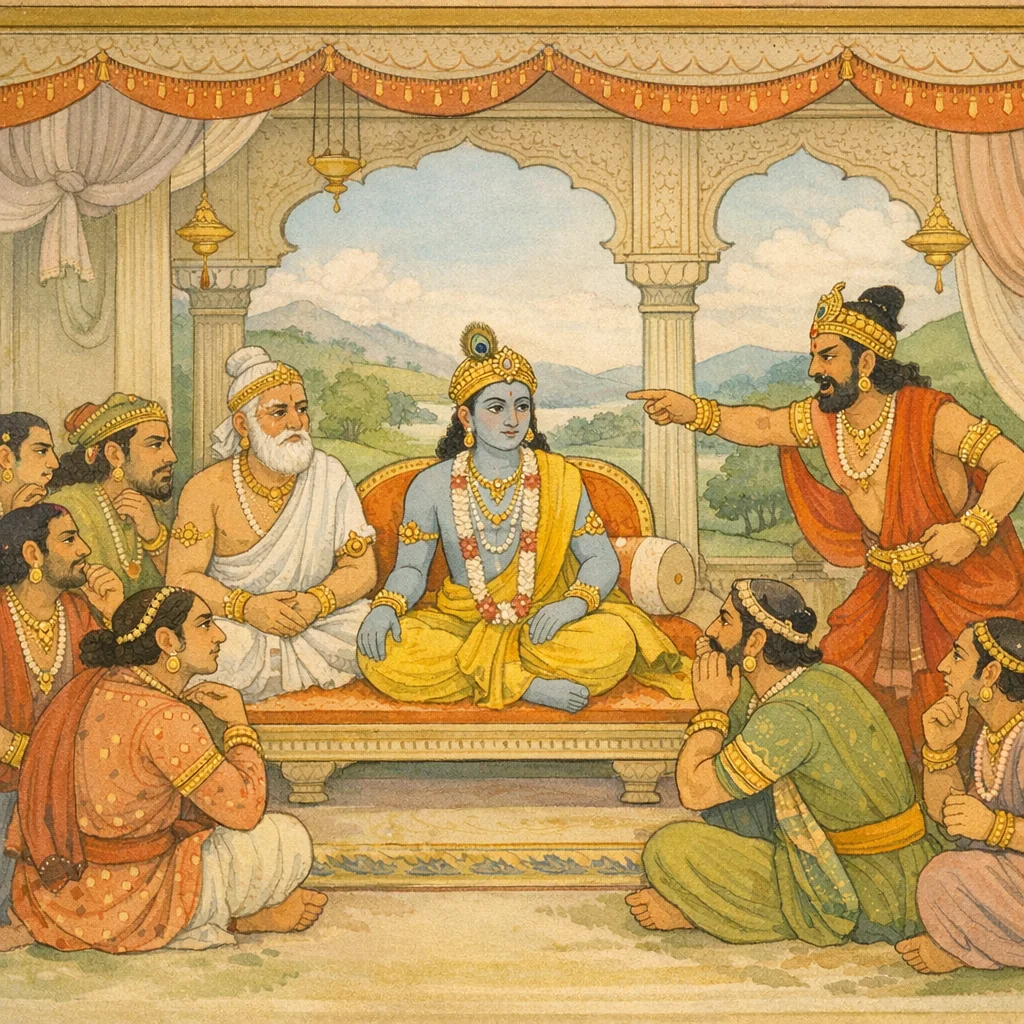
Chapter Arc: राजसूय-यज्ञ की सभा में शिशुपाल, भीष्म के कृष्ण-स्तवन से चिढ़कर कटु वचन बरसाता है और सभा की मर्यादा को चुनौती देता है। → वह भीष्म को अपमानित करता, कृष्ण की प्रशंसा को ‘अतिशयोक्ति’ बताकर अनेक राजाओं (द्रोण, अश्वत्थामा, जयद्रथ, दन्तवक्र, भगदत्त आदि) के पराक्रम गिनाता है और प्रश्न उठाता है कि केशव को सर्वोच्च क्यों माना जाए। भीमसेन सहित पाण्डव-पक्ष में रोष उमड़ता है; राजाओं के बीच भी उथल-पुथल फैलती है। → शिशुपाल उन्मत्त होकर राजाओं को उकसाता है—‘भीष्म को पशुवत् मारो या आग में जला दो’—और अंततः कृष्ण को युद्ध के लिए ललकारता है, ‘चक्र-गदा-धारी गोविन्द को आज रण में लाओ।’ → भीष्म शिशुपाल की बुद्धि-भ्रष्टता को ‘काल-ग्रस्त’ कहकर उसकी उग्रता का अर्थ खोलते हैं और संकेत देते हैं कि शिशुपाल का तेज स्वयं हरि का अंश होकर भी अब विनाश की ओर दौड़ रहा है; सभा का नैतिक केंद्र कृष्ण की ओर स्थिर हो जाता है। → कृष्ण को खुले युद्ध-आह्वान के बाद सभा श्वास रोके है—क्या अब यज्ञ-सभा ही रणभूमि बनेगी और शिशुपाल का अंत यहीं होगा?
Shlokas
Verse 1
ऑपन-माज बक। ्-ज:डिडिअ चतुश्नत्वारिशो< ध्याय: भीष्मकी बातोंसे चिढ़े हुए शिशुपालका उन्हें फटकारना तथा भीष्मका श्रीकृष्णसे युद्ध करनेके लिये समस्त राजाओंको चुनौती देना भीष्म उवाच नैषा चेदिपते्ुद्धिर्यया त्वा55ह्दयतेड्च्युतम् । नूनमेष जगद्धरतुः कृष्णस्यैव विनिश्चय:,भीष्मजी कहते हैं--भीमसेन यह चेदिराज शिशुपालकी बुद्धि नहीं है, जिसके द्वारा वह युद्धसे कभी पीछे न हटनेवाले तुम-जैसे महावीरको ललकार रहा है, अवश्य ही सम्पूर्ण जगतके स्वामी भगवान् श्रीकृष्णका ही यह निश्चित विधान है
Bhishma said: “O king of Cedi, this is not your own judgment by which you are provoking Acyuta (Krishna). Surely this is the settled will of Krishna himself, the sustainer of the whole world.”
Verse 2
को हि मां भीमसेनाद्य क्षितावहति पार्थिव: | क्षेप्तुं कालपरीतात्मा यथैष कुलपांसन:,भीमसेन! कालने ही इसके मन और बुद्धिको ग्रस लिया है, अन्यथा इस भूमण्डलमें कौन ऐसा राजा होगा, जो मुझपर इस तरह आक्षेप कर सके, जैसे यह कुलकलंक शिशुपाल कर रहा है
Bhīṣma said: “O Bhīmasena, who among the kings on this earth could today dare to cast reproach upon me? Only one whose mind has been seized by Time (fate) would fling such an insult—just as this disgrace to his lineage, Śiśupāla, is doing.”
Verse 3
एष हास्य महाबाहुस्तेजों5शश्न हरेर्धुवम् । तमेव पुनरादातुमिच्छत्युत तथा विभु:,यह महाबाहु चेदिराज निश्चय ही भगवान् श्रीकृष्णके तेजका अंश है। ये सर्वव्यापी भगवान् अपने उस अंशको पुनः समेट लेना चाहते हैं
Bhīṣma said: “This mighty-armed one is certainly a fixed portion of Hari’s divine splendor. And now that all-pervading Lord wills to draw back that very portion again.”
Verse 4
येनैष कुरुशार्दूल शार्दूल इव चेदिराट् गर्जत्यतीव दुर्बुद्धि: सर्वानस्मानचिन्तयन्,कुरुसिंह भीम! यही कारण है कि यह दुर्बुद्धि शिशुपाल हम सबको कुछ न समझकर आज सिंहके समान गरज रहा है
Bhishma said: “O tiger among the Kurus, this is why the king of Cedi—like a roaring lion—cries out so fiercely. That foolish-minded Shishupala, disregarding all of us, is today roaring as though he were a lion. O Bhima, lion among the Kurus, this is the cause.”
Verse 5
वैशम्पायन उवाच ततो न ममृषे चैद्यस्तद् भीष्मवचनं तदा । उवाच चैन संक्रुद्धः पुनर्भीष्ममथोत्तरम्,वैशम्पायनजी कहते हैं--जनमेजय! भीष्मकी यह बात शिशुपाल न सह सका। वह पुनः अत्यन्त क्रोधमें भरकर भीष्मको उनकी बातोंका उत्तर देते हुए बोला
Vaiśampāyana said: Then the Caidya (Śiśupāla) could not endure Bhīṣma’s words. Inflamed with anger, he spoke again, replying to Bhīṣma with a retort.
Verse 6
शिशुपाल उवाच द्विषतां नोअस्तु भीष्मैष प्रभाव: केशवस्थ यः । यस्य संस्तववक्ता त्वं वन्दिवत् सततोत्थित:,शिशुपालने कहा--भीष्म! तुम सदा भाटकी तरह खड़े होकर जिसकी स्तुति गाया करते हो, उस कृष्णका जो प्रभाव है, वह हमारे शत्रुओंके पास ही रहे
Shishupala said: “O Bhishma, let that ‘glory’ of Krishna—on whose behalf you stand ever alert, praising him like a court-bard—remain only with our enemies, not with us.”
Verse 7
संस्तवे च मनो भीष्म परेषां रमते यदि । तदा संस्तौषि राज्ञस्त्वमिमं हित्वा जनार्दनम्,भीष्म! यदि तुम्हारा मन सदा दूसरोंकी स्तुतिमें ही लगता है तो इस जनार्दनको छोड़कर इन राजाओंकी ही स्तुति करो
Shishupala said: “O Bhishma, if your mind truly delights in praising others, then praise these kings instead—leaving aside Janardana (Krishna).”
Verse 8
दरदं स्तुहि बाह्लीकमिमं पार्थिवसत्तमम् | जायमानेन येनेयमभवद् दारिता मही,ये दरददेशके राजा हैं, इनकी स्तुति करो। ये भूमिपालोंमें श्रेष्ठ बाह्नीक बैठे हैं, इनके गुण गाओ। इन्होंने जन्म लेते ही अपने शरीरके भारसे इस पृथ्वीको विदीर्ण कर दिया था
Śiśupāla said: “Praise Darada, and praise this Bāhlīka, the finest among kings. Sing his virtues—he by whose very birth this earth was said to have been split asunder.”
Verse 9
वड़ाड्रविषयाध्यक्षं सहस्राक्षसमं बले | स्तुहि कर्णमिमं भीष्म महाचापविकर्षणम्,भीष्म! ये जो वंग और अंग दोनों देशोंके राजा हैं, इन्द्रके समान बल-पराक्रमसे सम्पन्न हैं तथा महान् धनुषकी प्रत्यंचा खींचनेवाले हैं, इन वीरवर कर्णकी कीर्तिका गान करो
Śiśupāla said: “O Bhīṣma, sing the fame of this Karṇa—lord of the realms of Vaṅga and Aṅga, equal to the thousand-eyed Indra in strength and prowess, and a mighty hero who can draw back the string of a great bow.”
Verse 10
यस्येमे कुण्डले दिव्ये सहजे देवनिर्मिते । कवचं च महाबाहो बालार्कसदृशप्रभम्,महाबाहो! इन कर्णके ये दोनों दिव्य कुण्डल जन्मके साथ ही प्रकट हुए हैं। किसी देवताने ही इन कुण्डलोंका निर्माण किया है। कुण्डलोंके साथ-साथ इनके शरीरपर यह दिव्य कवच भी जन्मसे ही पैदा हुआ है, जो प्रातःकालके सूर्यके समान प्रकाशित हो रहा है
Śiśupāla points to unmistakable signs of divine favor: this hero bears a pair of radiant earrings that appeared with him at birth, fashioned by the gods themselves; and with them he has a natural, heaven-sent cuirass, blazing like the morning sun. The description underscores extraordinary destiny and protection, implying that such marks demand recognition and restraint in judgment.
Verse 11
वासवप्रतिमो येन जरासंधो$तिदुर्जय: । विजितो बाहुयुद्धेन देहभेदं च लम्भित:,जिन्होंने इन्द्रके तुल्य पराक्रमी तथा अत्यन्त दुर्जय जरासंधको बाहुयुद्धके द्वारा केवल परास्त ही नहीं किया, उनके शरीरको चीर भी डाला, उन भीमसेनकी स्तुति करो
Śiśupāla said: “He by whom Jarāsandha—mighty like Vāsava (Indra) and exceedingly hard to conquer—was overcome in a contest of sheer arm-strength, and even made to suffer the rending of his body: praise that Bhīmasena.”
Verse 12
द्रोणं द्रौर्णिं च साधु त्वं पितापुत्रौ महारथौ । स्तुहि स्तुत्यावुभी भीष्म सततं द्विजसत्तमौ,द्रोणाचार्य और अभश्वत्थामा दोनों पिता-पुत्र महारथी हैं तथा ब्राह्मणोंमें श्रेष्ठ हैं, अतएव स्तुत्य भी हैं। भीष्म! तुम उन दोनोंकी अच्छी तरह स्तुति करो
Śiśupāla urges Bhīṣma to praise Droṇa and Droṇa’s son Aśvatthāman, calling them a father-and-son pair of great chariot-warriors and foremost among brāhmaṇas. The ethical edge is pointed: by stressing their brahmin status and worthiness of honor, he presses Bhīṣma to publicly affirm their prestige, using praise as a political instrument within the royal assembly.
Verse 13
ययोरन्यतरो भीष्म संक़ुद्ध: सचराचराम् | इमां वसुमतीं कुर्यान्नि:शेषामिति मे मति:,भीष्म! इन दोनों पिता-पुत्रोंमेंसे यदि एक भी अत्यन्त क्रोधमें भर जाय, तो चराचर प्राणियोंसहित इस सारी पृथ्वीको नष्ट कर सकता है, ऐसा मेरा विश्वास है
Śiśupāla said: “O Bhīṣma, if even one of those two—father or son—were seized by extreme wrath, he could annihilate this entire earth together with all moving and unmoving beings. Such is my conviction.”
Verse 14
द्रोणस्य हि सम॑ युद्धे न पश्यामि नराधिपम् । नाश्वृत्थाम्न: समं भीष्म न च तौ स्तोतुमिच्छसि,भीष्म! मुझे तो कोई भी ऐसा राजा नहीं दिखायी देता, जो युद्धमें द्रोण अथवा अश्वत्थामाकी बराबरी कर सके। तो भी तुम इन दोनोंकी स्तुति करना नहीं चाहते
Śiśupāla said: “O Bhīṣma, in battle I see no king who equals Droṇa; nor do I see anyone equal to Aśvatthāman. Yet you do not wish to praise these two.”
Verse 15
पृथिव्यां सागरान्तायां यो वै प्रतिसमो भवेत् | दुर्योधन त्वं राजेन्द्रमतिक्रम्य महाभुजम्,इस समुद्रपर्यन्त सारी पृथ्वीपर जो अद्वितीय अनुपम वीर हैं, उन राजाधिराज महाबाहु दुर्योधनको, अस्त्रविद्यामें निपुण और सुदृढ़पराक्रमी राजा जयद्रथको और विश्वविख्यात विक्रमशाली महाबली किम्पुरुषा-चार्य ट्रमको छोड़कर तुम कृष्णकी प्रशंसा क्यों करते हो?
Śiśupāla said: “On this earth bounded by the ocean, if there is anyone who may be deemed an equal to the foremost, then why do you, passing over the mighty-armed King Duryodhana—lord among kings—offer praise to Kṛṣṇa?”
Verse 16
जयद्रथं च राजानं कृतास्त्रं दृढविक्रमम् । द्रुमं किम्पुरुषाचार्य लोके प्रथितविक्रमम् । अतिक्रम्य महावीर्य कि प्रशंससि केशवम्,इस समुद्रपर्यन्त सारी पृथ्वीपर जो अद्वितीय अनुपम वीर हैं, उन राजाधिराज महाबाहु दुर्योधनको, अस्त्रविद्यामें निपुण और सुदृढ़पराक्रमी राजा जयद्रथको और विश्वविख्यात विक्रमशाली महाबली किम्पुरुषा-चार्य ट्रमको छोड़कर तुम कृष्णकी प्रशंसा क्यों करते हो?
Śiśupāla said: “Passing over King Jayadratha, trained in weapons and firm in prowess, and Druma, the Kimpuruṣa preceptor famed in the world for valor—why do you, O mighty one, praise Keśava?”
Verse 17
वृद्धं च भारताचार्य तथा शारद्वतं कृपम् । अतिक्रम्य महावीर्य कि प्रशंससि केशवम्,शरद्वान् मुनिके पुत्र महापराक्रमी कृप भरतवंशके वृद्ध आचार्य हैं। इनका उल्लंघन करके तुम कृष्णका गुण क्यों गाते हो?
Śiśupāla said: “Setting aside the aged preceptor of the Bhāratas, and also Kṛpa Śāradvata—both men of great prowess—why do you praise Keśava?”
Verse 18
धनुर्धराणां प्रवरं रुक्मिणं पुरुषोत्तमम् अतिक्रम्य महावीरय॑ कि प्रशंससि केशवम्,धनुर्धरोंमें श्रेष्ठ पुरुषरत्न महाबली रुक्मीकी अवहेलना करके तुम केशवकी प्रशंसाके गीत क्यों गाते हो?
Śiśupāla said: “Why do you sing the praises of Keśava after disregarding Rukmī—foremost among bowmen, a supreme man, and a warrior of great might?”
Verse 19
भीष्मकं च महावीर्य दन््तवक्रं च भूमिपम् । भगदत्तं यूपकेतुं जयत्सेनं च मागधम्
Śiśupāla continued his pointed speech, naming renowned rulers: “Bhīṣmaka of great might; Dantavakra, lord of the land; King Bhagadatta; Yūpaketu; and Jayatsena of Magadha,” invoking their fame and power as part of his argument over rank and honor among sovereigns in the royal assembly.
Verse 20
विराटद्रुपदौ चोभौ शकुनिं च बृहद्धलम् । विन्दानुविन्दावावन्त्यौ पाण्ड्यं श्वेतमथोत्तरम्
Śiśupāla continued his pointed roll of famed kings and warriors—Virāṭa and Drupada, Śakuni and Bṛhaddhala; the brothers Vinda and Anuvinda of Avanti; and the Pāṇḍya ruler, Śveta, and Uttara.
Verse 21
शड़्खं च सुमहाभागं वृषसेनं च मानिनम् । एकलव्यं च विक्रान्तं कालिडूं च महारथम्
Śiśupāla said: “There are Śaṅkha, greatly fortunate; Vṛṣasena, proud in spirit; Ekalavya, valiant; and Kālidu, a great chariot-warrior.”
Verse 22
अतिक्रम्य महावीर कि प्रशंससि केशवम् । महापराक्रमी भीष्मक, भूमिपाल दन्तवक्र, भगदत्त, यूपकेतु, जयत्सेन, मगधराज सहदेव, विराट, द्रुपद, शकुनि, बृहद्धल, अवन्तीके राजकुमार विन्द-अनुविन्द, पाण्ड्यनरेश, श्वेत, उत्तर, महाभाग शंख, अभिमानी वृषसेन, पराक्रमी एकलव्य तथा महारथी एवं महाबली कलिंगनरेशकी अवहेलना करके कृष्णकी प्रशंसा क्यों कर रहे हो? ।। १९--२१ $ || शल्यादीनपि कस्मात् त्वं न सतौषि वसुधाधिपान् । स्तवाय यदि ते बुद्धिर्वर्तते भीष्म सर्वदा,भीष्म! यदि तुम्हारा मन सदा दूसरोंकी स्तुति करनेमें ही लगता है तो इन शल्य आदि श्रेष्ठ राजाओंकी स्तुति क्यों नहीं करते?
Śiśupāla said: “O great hero, why do you praise Keśava, passing over so many renowned kings—Bhīṣmaka, Dantavakra, Bhagadatta, Yūpaketu, Jayatsena, Sahadeva the king of Magadha, Virāṭa, Drupada, Śakuni, Bṛhaddhala, the Avanti princes Vinda and Anuvinda, the Pāṇḍya ruler, Śveta, Uttara, the illustrious Śaṅkha, the proud Vṛṣasena, the valiant Ekalavya, and the mighty king of Kaliṅga, a great chariot-warrior? Why, slighting these, do you extol Kṛṣṇa? And if, Bhīṣma, your mind is always inclined to praising others, why do you not praise Śalya and the other eminent lords of the earth?”
Verse 23
कि हि शक्यं मया कर्तु यद् वृद्धानां त्वया नृप । पुरा कथयतां नून॑ न श्रुतं धर्मवादिनाम्,भीष्म! तुमने पहले बड़े-बूढ़े धर्मोपदेशकोंके मुखसे यदि यह धर्मसंगत बात, जिसे मैं अभी बताऊँगा नहीं सुनी, तो मैं क्या कर सकता हूँ?
Shishupala said: “What indeed can I do, O king, if you—Bhīṣma—have surely not heard earlier from the mouths of aged elders, those expounders of dharma, this very point of righteousness that I am now about to state?”
Verse 24
आत्मनिन्दा55त्मपूजा च परनिन्दा परस्तव: । अनाचरितमार्याणां वृत्तमेतच्चतुर्विधम्,भीष्म! अपनी निन्दा, अपनी प्रशंसा, दूसरेकी निन््दा और दूसरेकी स्तुति--ये चार प्रकारके कार्य पहलेके श्रेष्ठ पुरुषोंने कभी नहीं किये हैं
Śiśupāla said: “Self-censure, self-glorification, censuring others, and praising others—these four modes of conduct, O Bhīṣma, were never practiced by the noble elders of old.”
Verse 25
यदस्तव्यमिमं शश्वन्मोहात् संस्तौषि भक्तित: | केशवं तच्च ते भीष्म न कश्चिदनुमन्यते,भीष्म! जो स्तुतिके सर्वथा अयोग्य है, उसी केशवकी तुम मोहवश सदा भक्तिभावसे जो स्तुति करते रहते हो, उसका कोई अनुमोदन नहीं करता
Shishupala said: “Bhishma, the one whom you keep praising again and again—out of delusion and with a devotee’s fervor—namely Keshava, is in truth unworthy of praise. No one approves of that praise of yours.”
Verse 26
कथं भोजस्य पुरुषे वर्गपाले दुरात्मनि । समावेशयसे सर्व जगत् केवलकाम्यया,दुरात्मा कृष्ण तो राजा कंसका सेवक है, उनकी गौओंका चरवाहा रहा है। तुम केवल स्वार्थवश इसमें सारे जगत्का समावेश कर रहे हो
Shishupala said: “How can you, driven only by self-serving desire, place the whole world’s reverence in a man of the Bhoja line—an ignoble, wicked fellow, a mere keeper of the herd?”
Verse 27
अथ चैषा न ते बुद्धि: प्रकृतिं याति भारत । मयैव कथित पूर्व भूलिड्रशकुनिर्यथा,भारत! तुम्हारी बुद्धि ठिकानेपर नहीं आ रही है। मैं यह बात पहले ही बता चुका हूँ कि तुम भूलिंग पक्षीके समान कहते कुछ और करते कुछ हो
And yet, O Bhārata, your understanding does not return to its proper nature. I have already told you before: like the Bhūliḍra bird, you speak one way and act another—your words and conduct do not align.
Verse 28
भूलिड्शशकुनिर्नाम पाश्वे हिमवतः परे । भीष्म तस्या: सदा वाच: श्रूयन्ते<र्थविगर्हिता:,भीष्म! हिमालयके दूसरे भागमें भूलिंग नामसे प्रसिद्ध एक चिड़िया रहती है। उसके मुखसे सदा ऐसी बात सुनायी पड़ती है, जो उसके कार्यके विपरीत भावकी सूचक होनेके कारण अत्यन्त निन्दनीय जान पड़ती है
Śiśupāla said: “O Bhīṣma! Beyond the Himavat, on its farther side, there is a bird known as Bhūliṅga. From its mouth one constantly hears speech that is blameworthy in meaning—words that run contrary to proper conduct and thus deserve censure.”
Verse 29
मा साहसमितीदं सा सततं वाशते किल । साहसं चात्मनातीव चरन्ती नावबुध्यते,वह चिड़िया सदा यही बोला करती है--“मा साहसम' (अर्थात् साहसका काम न करो), परंतु वह स्वयं ही भारी साहसका काम करती हुई भी यह नहीं समझ पाती
She is said to keep crying out constantly, ‘Do not act rashly!’ Yet, even while she herself behaves with extreme recklessness, she fails to recognize it.
Verse 30
सा हि मांसार्गलं भीष्म मुखात् सिंहस्य खादत: । दन्तान्तरविलग्नं यत् तदादत्तेडल्पचेतना,भीष्म! वह मूर्ख चिड़िया मांस खाते हुए सिंहके दाँतोंमें लगे हुए मांसके टुकड़ेको अपनी चोंचसे चुगती रहती है
O Bhīṣma, that dull-witted bird called the “meat-pick” keeps pecking at the scraps of flesh stuck between the teeth of a lion while it is eating. With this biting image, Śiśupāla mocks the one who, before overwhelming power, presumes to snatch petty gains and to lecture or meddle beyond his station—an ethical warning against shameless opportunism and reckless speech before the mighty.
Verse 31
इच्छत: सा हि सिंहस्य भीष्म जीवत्यसंशयम् | तद्वत् त्वमप्यधर्मिष्ठ सदा वाच: प्रभाषसे,निःसंदेह सिंहकी इच्छासे ही वह अबतक जी रही है। पापी भीष्म! इसी प्रकार तुम भी सदा बढ़-बढ़कर बातें करते हो
Śiśupāla said: “Bhīṣma, it is beyond doubt that she still lives only because the lion so wills it. In the same way, you too—most unrighteous—keep speaking lofty, overbearing words again and again.”
Verse 32
इच्छतां भूमिपालानां भीष्म जीवस्यसंशयम् | लोकविद्धिष्टकर्मा हि नान्यो5स्ति भवता सम:,भीष्म! निःसंदेह तुम्हारा जीवन इन राजाओंकी इच्छासे ही बचा हुआ है; क्योंकि तुम्हारे समान दूसरा कोई राजा ऐसा नहीं है, जिसके कर्म सम्पूर्ण जगतसे द्वेष करनेवाले हों
Śiśupāla said: “O Bhīṣma, without doubt your life has been spared only because these kings have wished it so. For there is no other ruler equal to you—your deeds are notorious to the whole world, marked by hostility toward all.”
Verse 33
वैशम्पायन उवाच ततश्रेदिपते: श्रुत्वा भीष्म: स कटुकं वच: । उवाचेदं वचो राजंश्रेदिराजस्य शृण्वत:,वैशम्पायनजी कहते हैं--जनमेजय! शिशुपालका यह कटु वचन सुनकर भीष्मजीने शिशुपालके सुनते हुए यह बात कही--
Vaiśampāyana said: Then Bhīṣma, having heard that bitter speech of the lord of Śreḍi (Śiśupāla), addressed the king (Janamejaya) and spoke these words while the king of Śreḍi himself listened.
Verse 34
इच्छतां किल नामाहं जीवाम्येषां महीक्षिताम् । सो<5हं न गणयाम्येतांस्तृणेनापि नराधिपान्,“अहो! शिशुपालके कथनानुसार मैं इन राजाओंकी इच्छापर जी रहा हूँ; परंतु मैं तो इन समस्त भूपालोंको तिनके-बराबर भी नहीं समझता”
“Indeed, it seems I live only at the pleasure of these kings. Yet I do not count these rulers as worth even a blade of grass.”
Verse 35
एवमुक्ते तु भीष्मेण ततः संचुक्रुशुर्न॒पा: । केचिज्जह्ृषिरे तत्र केचिद् भीष्मं॑ जगहिरे,भीष्मके ऐसा कहनेपर बहुत-से राजा कुपित हो उठे। कुछ लोगोंको हर्ष हुआ तथा कुछ भीष्मजीकी निन्दा करने लगे
When Bhīṣma had spoken thus, many kings cried out in agitation. Some were delighted, while others began to censure Bhīṣma.
Verse 36
केचिदूचुर्महेष्वासा: श्रुत्वा भीष्मस्य तद् वच: । पापो5वलिप्तो वृद्धश्न नायं भीष्मो$्हति क्षमाम्,कुछ महान् धनुर्धर नरेश भीष्मकी वह बात सुनकर कहने लगे--“यह बूढ़ा भीष्म पापी और घमण्डी है; अत: क्षमाके योग्य नहीं है
Vaiśampāyana said: Hearing those words of Bhīṣma, some of the great bowmen spoke out: “This Bhīṣma is sinful, arrogant, and old; therefore he is not worthy of forgiveness.”
Verse 37
हन्यतां दुर्मतिर्भीष्म: पशुवत् साध्वयं नृपा: । सर्वे: समेत्य संरब्धैर्दहुतां वा कटाग्निना,“राजाओ! क्रोधमें भरे हुए हम सब लोग मिलकर इस खोटी बुद्धिवाले भीष्मको पशुकी भाँति गला दबाकर मार डालें अथवा घास-फूसकी आगमें इसे जीते-जी जला दें”
Vaiśampāyana said: “O kings, let this ill-minded Bhīṣma be slain—strangled like an animal; or, with all of us assembling in wrath, let him be burned alive in a fire of dry grass.”
Verse 38
इति तेषां वच: श्रुत्वा ततः कुरुपितामह: । उवाच मतिमान् भीष्मस्तानेव वसुधाधिपान्,उन राजाओंकी ये बातें सुनकर कुरुकुलके पितामह बुद्धिमान् भीष्मजी फिर उन्हीं नरेशोंसे बोले--
Hearing the words spoken by those kings, the grandsire of the Kuru line—wise Bhīṣma—then addressed those very rulers again.
Verse 39
उक्तस्योक्तस्य नेहान्तमहं समुपलक्षये । यत् तु वक्ष्यामि तत् सर्व शृणुध्वं वसुधाधिपा:,“राजाओ! यदि मैं सबकी बातका अलग-अलग उत्तर दूँ तो यहाँ उसकी समाप्ति होती नहीं दिखायी देती। अतः मैं जो कुछ कह रहा हूँ, वह सब ध्यान देकर सुनो
Vaiśampāyana said: “I do not see any end here to replying point by point to each statement as it is spoken. Therefore, O lords of the earth, listen attentively to everything that I am about to declare.”
Verse 40
पशुवद् घातनं वा मे दहनं वा कटाग्निना | क्रियतां मूर्थ्नि वो न्यस्तं मयेदं सकल॑ पदम्,“तुमलोगोंमें साहस या शक्ति हो, तो पशुकी भाँति मेरी हत्या कर दो अथवा घास- फ़ूसकी आगमें मुझे जला दो। मैंने तो तुमलोगोंके मस्तकपर अपना यह पूरा पैर रख दिया
Vaiśampāyana said: “If you have the daring or the strength, then kill me like an animal, or burn me in a fire of dry grass. For I have set my whole foot upon your heads.”
Verse 41
एष तिष्ठति गोविन्द: पूजितो<स्माभिरच्युत: । यस्य वस्त्वरते बुद्धिर्मरणाय स माधवम्,“हमने जिनकी पूजा की है, अपनी महिमासे कभी च्युत न होनेवाले वे भगवान् गोविन्द तुमलोगोंके सामने मौजूद हैं। तुमलोगोंमेंसे जिसकी बुद्धि मृत्युका आलिंगन करनेके लिये उतावली हो रही हो, वह इन्हीं यदुकुल-तिलक चक्रगदाधर श्रीकृष्णको आज युद्धके लिये ललकारे और इनके हाथों मारा जाकर इन्हीं भगवानके शरीरमें प्रविष्ट हो जाय”
Vaiśaṃpāyana said: “Here stands Govinda—Acyuta—whom we have duly honored. Whoever among you has a mind eager for the ‘real thing’—for death itself—let him challenge Mādhava today for battle; slain by His hand, he will enter into the very body of that Lord.”
Verse 42
कृष्णमाह्दनयतामद्य युद्धे चक्रगदाधरम् । यादवस्यैव देवस्य देहं विशतु पातित:,“हमने जिनकी पूजा की है, अपनी महिमासे कभी च्युत न होनेवाले वे भगवान् गोविन्द तुमलोगोंके सामने मौजूद हैं। तुमलोगोंमेंसे जिसकी बुद्धि मृत्युका आलिंगन करनेके लिये उतावली हो रही हो, वह इन्हीं यदुकुल-तिलक चक्रगदाधर श्रीकृष्णको आज युद्धके लिये ललकारे और इनके हाथों मारा जाकर इन्हीं भगवानके शरीरमें प्रविष्ट हो जाय”
Vaiśampāyana said: “Let him who is eager to embrace death today challenge in battle Kṛṣṇa, the bearer of discus and mace. Struck down, let him enter the very body of that divine Lord of the Yādavas.”
Verse 44
इति श्रीमहाभारते सभापर्वणि शिशुपालवधपर्वणि भीष्मवाक्ये चतुश्नत्वारिंशो5ध्याय:
Thus ends the forty-fourth chapter of the Sabha Parva of the Śrī Mahābhārata, within the section concerning the slaying of Śiśupāla, concluding with Bhīṣma’s words.
Frequently Asked Questions
Whether a politically engineered contest can be treated as ethically valid merely because it appears voluntary and rule-governed—especially when one party’s known vulnerability (attachment to gaming and reluctance to refuse summons) is deliberately targeted.
The chapter warns that dharma can be undermined not only by overt force but also by procedural manipulation; ethical evaluation must consider intent, power asymmetry, and engineered compulsion, not only formal consent.
No explicit phalaśruti appears here; the chapter functions as causal scaffolding, clarifying how strategic counsel and institutional procedure initiate the later crisis central to the Sabhā Parva.