Adhyaya 80
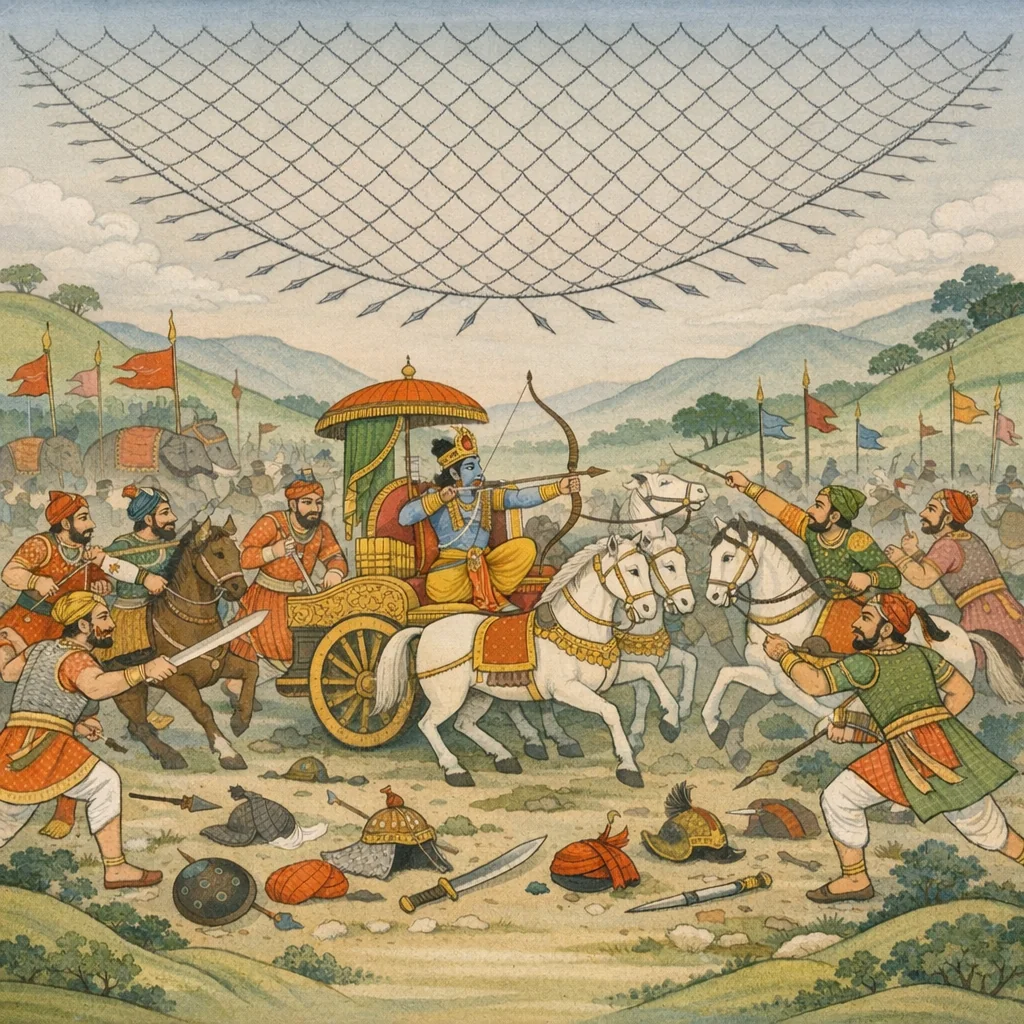
Chapter Arc: संजय धृतराष्ट्र से कहता है—किरिटधारी अर्जुन ने सूतपुत्र कर्ण की सेना पर बाणों की वर्षा छोड़ दी और कौरव-वीरों को मृत्यु-लोक की ओर धकेलने लगा। → अर्जुन के शरजाल आकाश के भिन्न-भिन्न भागों में छा जाते हैं; कौरव वाहिनी कटती-बिखरती है—कहीं कवच कटकर गिरते हैं, कहीं धड़-शीश अलग होकर रणभूमि ढँक देते हैं। भय, भ्रम और प्रतिहिंसा में कुछ योद्धा भागते हैं तो कुछ अर्जुन के रथ की दिशा बदलते ही पराङ्मुख होकर फिर टूट पड़ते हैं। → दुःशासन से छोटे धृतराष्ट्र के दस वीर पुत्र अर्जुन को चारों ओर से घेर लेते हैं। अर्जुन गाण्डीव की टंकार से मेघ-गर्जन को भी तिरस्कृत-सा कर देता है और भल्लों से एक-एक कर उनके मस्तक काट गिराता है—कमलों की भाँति बहुत-से मुख रणभूमि पर बिखर जाते हैं। → कौरव पक्ष की यह घेराबंदी रक्त-धूल में ढह जाती है; अर्जुन का रथ अजेय वेग से आगे बढ़ता है और कौरव सेना ‘संपिष्ट-दग्ध-विध्वस्त’ होकर पीछे हटती/छिन्न-भिन्न होती जाती है। → कृष्ण के मन में क्षणिक रोक-टोक/विचार उठता है कि अर्जुन द्वारा सबको यमलोक भेज देना ‘उचित’ है या नहीं—यह संकेत अगले प्रसंग में नीति और संहार की सीमा पर नई कसौटी रखता है।
Shlokas
Verse 1
इस प्रकार श्रीमह्याभारत कर्णपर्वमें संकुलयुद्धाविषयक उनयासीवाँ अध्याय पूरा हुआ ॥/ ७९ ॥ (दाक्षिणात्य अधिक पाठके ३ श्लोक मिलाकर कुल ९८ श्लोक हैं।) ऑपनआक्रात बछ। 2 अशीतितमो<ध्याय: अर्जुनका कौरव-सेनाको नष्ट करके आगे बढ़ना संजय उवाच राजन् कुरूणां प्रवरैर्बलैर्भीममभिद्रुतम् । मज्जन्तमिव कौन्तेयमुज्जिहीर्षर्धनंजय:,संजय कहते हैं--राजन्! कौरव-सेनाके प्रमुख वीरोंने कुन्तीपुत्र भीमसेनपर धावा किया था और वे उस सैन्यसागरमें डूबते-से जान पड़ते थे। भारत! उस समय उनका उद्धार करनेके लिये अर्जुनने सूतपुत्रकी सेनाको छोड़कर उधर ही आक्रमण किया और बाणोंद्वारा शत्रुपक्षके बहुत-से वीरोंको यमलोक भेज दिया
Sanjaya said: O King, the foremost warriors of the Kurus, with their powerful forces, charged at Bhima. The son of Kunti seemed as though he were sinking in that sea of troops. Seeing this, Dhananjaya (Arjuna), intent on rescuing him, turned away from the Suta’s son’s (Karna’s) army and struck in that direction, sending many enemy heroes to Yama’s realm with his arrows.
Verse 2
विसृज्य सूतपुत्रस्य सेनां भारत सायकै: । प्राहिणोन्मृत्युलोकाय परवीरान् धनंजय:,संजय कहते हैं--राजन्! कौरव-सेनाके प्रमुख वीरोंने कुन्तीपुत्र भीमसेनपर धावा किया था और वे उस सैन्यसागरमें डूबते-से जान पड़ते थे। भारत! उस समय उनका उद्धार करनेके लिये अर्जुनने सूतपुत्रकी सेनाको छोड़कर उधर ही आक्रमण किया और बाणोंद्वारा शत्रुपक्षके बहुत-से वीरोंको यमलोक भेज दिया
Sañjaya said: O King, leaving aside the army of the charioteer’s son, Dhanañjaya (Arjuna) turned his assault elsewhere. With his arrows he dispatched many heroic warriors of the opposing side to the realm of Death—acting to rescue his own, who were being hard-pressed in the battle’s tide.
Verse 3
ततोअस्याम्बरमाश्रित्य शरजालानि भागश: । अदृश्यन्त तथान्ये च निध्नन्तस्तव वाहिनीम्,तदनन्तर अर्जुनके बाणजाल आकाशके विभिन्न भागोंमें छा गये, वे तथा और भी बहुत-से बाण आपकी सेनाका संहार करते दिखायी दिये
Sañjaya said: Then, taking the sky as their support, Arjuna’s nets of arrows spread out in distinct divisions and became visible everywhere. Along with them, many other shafts were also seen, striking down and destroying your army. The scene underscores the grim momentum of battle: skill and resolve manifest as overwhelming force, and the ethical weight of war is felt in the mass destruction of living beings.
Verse 4
स पक्षिसंघाचरितमाकाशं पूरयन् शरै: । धनंजयो महाबाहु: कुरूणामन्तको5भवत्,जहाँ पक्षियोंके झुंड उड़ा करते थे, उस आकाशको बाणोंसे भरते हुए महाबाहु धनंजय वहाँ कौरव-सैनिकोंके काल बन गये
Sañjaya said: Filling with his arrows the very sky where flocks of birds used to fly, the mighty-armed Dhanañjaya (Arjuna) became, in that place, the very Death of the Kuru warriors. The verse underscores the overwhelming force of Arjuna’s martial skill in a dharma-war, where prowess is portrayed as an instrument of inevitable consequence rather than mere cruelty.
Verse 5
ततो भल्लै: क्षुरप्रैश्न नाराचैर्विमलैरपि । गात्राणि प्राच्छिनत् पार्थ: शिरांसि च चकर्त ह,पार्थने भल््लों, क्षुरप्रों तथा निर्मल नाराचोंद्वारा शत्रुओंका अंग-अंग काट डाला और उनके मस्तक भी धड़से अलग कर दिये
Sañjaya said: Then Pārtha (Arjuna), with bhalla arrows, razor-edged shafts, and spotless nārāca missiles, severed the warriors’ limbs and struck off their heads. The verse underscores the grim, impersonal mechanics of battle: skill and resolve are exercised within the violent duty of war, where the ethical tension lies in acting as a kṣatriya without personal hatred, even while causing terrible destruction.
Verse 6
छिन्नगात्रैर्विकवचैर्विशिरस्कै: समन्तत: । पातितैश्न पतद्विश्व योधैरासीत् समावृता,जिनके शरीरोंके टुकड़े-टुकड़े हो गये थे, कवच कटकर गिर गये थे और मस्तक भी काट डाले गये थे, ऐसे बहुत-से योद्धा वहाँ पृथ्वीपर गिरे थे और गिरते जा रहे थे, उन सबकी लाशोंसे वहाँकी भूमि सब ओरसे पट गयी थी
Sañjaya said: All around, the ground was covered over by warriors who had been struck down—and by others still falling—whose limbs were severed, whose armor had been cut away, and whose heads had been hewn off. The battlefield had become choked with corpses, revealing the grim moral cost of unchecked fury in war.
Verse 7
धनंजयशराभ्यस्तै: स्यन्दनाश्वरथद्विपै: । संछिन्नभिन्नविध्वस्तैर्व्यज्राज़ावयवै: स्तृता,जिनपर अर्जुनके बाणोंकी बारंबार मार पड़ी थी, वे रथके घोड़े, रथ और हाथी छिज्न- भिन्न और विध्वस्त हो गये थे; उनका एक-एक अंग अथवा अवयव कटकर अलग हो गया था। इन सबके द्वारा वहाँकी भूमि आच्छादित हो गयी थी
Sañjaya said: The ground there became covered with the shattered remnants of chariots, horses, and elephants—again and again struck by the arrows of Dhanañjaya (Arjuna). Cut apart, split, and utterly wrecked, their limbs and parts lay scattered, bearing witness to the relentless force of battle and the terrible cost of martial prowess.
Verse 8
सुदुर्गमा सुविषमा घोरात्यर्थ सुदुर्दशा । रणभूमिरभूद् राजन् महावैतरणी यथा
Sañjaya said: O King, the battlefield became utterly impassable and treacherous—terrifying beyond measure, a scene of extreme calamity—like the great Vaitaraṇī itself. The comparison underscores how war, once unleashed, turns into a hell-like passage where suffering overwhelms all ordinary human limits.
Verse 9
राजन्! उस समय रणभूमि महावैतरणी नदीके समान अत्यन्त दुर्गम, बहुत ऊँची-नीची और भयंकर हो गयी थी, उसकी ओर देखना भी अत्यन्त कठिन जान पड़ता था ।। ईषाचक्राक्षभम्नैश्ष व्यश्वैः साथ्रैश्न युध्यताम् । ससूतैर्हतसूतैश्न रथैस्तीर्णाभवन्मही,योद्धाओंके टूटे-फूटे रथोंसे रणभूमि ढक गयी थी। उन रथोंके ईषादण्ड, पहिये और धुरे खण्डित हो गये थे। कुछ रथोंके घोड़े और सारथि जीवित थे और कुछके अश्व एवं सारथि मार डाले गये थे
Sañjaya said: “O King, at that time the battlefield became like the great river Vaitaraṇī—exceedingly hard to cross, uneven with rises and hollows, and terrifying; even to look upon it seemed almost impossible. The ground was covered over with chariots—some with their shafts, wheels, and axles shattered—amid the clash of warriors. Some chariots still had their horses and charioteers alive, while others lay with horses and drivers slain.”
Verse 10
सुवर्णवर्णसंनाहैयोंचै: कनकभूषणै: । आस्थिता: क्लूृप्तवर्माणो भद्रा नित्यमदा द्विपा:
Sañjaya said: Adorned with golden-hued trappings and splendid gold ornaments, the noble elephants—ever in rut—stood ready, their armor and fittings carefully prepared. The scene underscores the deliberate, lavishly equipped readiness for battle, where power and display are marshaled in service of a destructive war.
Verse 11
क्रुद्धा: क्रूरैर्महामात्रै: पाष्ण्यड्गुष्ठप्रचोदिता: । चतु:शता: शरवरैहता: पेतु: किरीटिना
Sañjaya said: Enraged and driven on by their harsh commanders—spurred on with heel and toe—four hundred of them, struck down by volleys of arrows, fell at the hands of Kirīṭin (Arjuna). The verse underscores how wrath and coercive leadership propel men into destruction, while martial prowess, when unleashed in war, turns disciplined ranks into sudden ruin.
Verse 12
पर्यस्तानीव शृुड्राणि ससत्त्वानि महागिरे: । धनंजयशराभ्यस्तै: स्तीर्णा भूर्वरवारणै:
Sañjaya said: The battlefield looked as though the very peaks of a great mountain—still bearing living creatures—had been hurled down. The earth was strewn with noble elephants, struck and overwhelmed by the arrows of Dhanañjaya (Arjuna).
Verse 13
किरीटथधारी अर्जुनके उत्तम बाणोंसे आहत होकर नित्य मद बहानेवाले, कवचधारी एवं मंगलमय लक्षणोंसे युक्त चार सौ रोषभरे हाथी धराशायी हो गये। उन हाथियोंपर सुवर्णमय कवच और सोनेके आभूषण धारण करनेवाले योद्धा बैठे थे और क्रूर स्वभाववाले महावत उन्हें अपने पैरोंकी एड़ियों तथा अँगूठोंसे आगे बढ़नेकी प्रेरणा दे रहे थे। उन सबके साथ गिरे हुए वे हाथी जीव-जन्तुओंसहित धराशायी हुए महान् पर्वतके शिखरोंके समान सब ओर पड़े थे। अर्जुनके बाणोंसे विशेष घायल होकर गिरे हुए उन गजराजोंके शरीरोंसे रणभूमि ढक गयी थी ।। समन्ताज्जलदप्रख्यान् वारणान् मदवर्षिण: । अभिपेदे<र्जुनरथो घनान् भिन्दन्निवांशुमान्,जैसे अंशुमाली सूर्य बादलोंको छिन्न-भिन्न करते हुए प्रकाशित हो उठते हैं, उसी प्रकार अर्जुनका रथ सब ओरसे मेघोंकी घटाके समान काले मदस्रावी गजराजोंको विदीर्ण करता हुआ वहाँ आ पहुँचा था
Sañjaya said: Struck by the finest arrows of Arjuna, the diadem-wearer, four hundred furious elephants—armored, marked with auspicious signs, and ever streaming rut—fell to the ground. Upon them sat warriors clad in golden mail and gold ornaments, while cruel mahouts urged them on with heel and toe. Fallen with all their riders, those elephants lay scattered on every side like the shattered peaks of a great mountain, with men and beasts cast down together. The bodies of those lordly elephants, grievously wounded by Arjuna’s shafts, covered the battlefield. Then Arjuna’s chariot drove into the midst of the elephants—dark as rain-clouds and pouring rut—rending their ranks on every side, as the radiant sun breaks apart dense clouds.
Verse 14
हतैर्गजमनुष्याश्वैभिन्नैश्व बहुधा रथै: । विशस्त्रयन्त्रकवर्चैर्युद्धशौण्डैर्गतासुभि:
Sañjaya said: The battlefield was strewn with slain elephants, men, and horses, and with many chariots shattered in diverse ways—along with warriors, masters of combat, lying lifeless, their weapons, mechanisms, and armor destroyed.
Verse 15
व्यस्फारयद् वै गाण्डीवं सुमहद् भैरवारवम्
Sañjaya said: Arjuna then drew and stretched the great bow Gāṇḍīva, producing a tremendous, fearsome roar.
Verse 16
ततः प्रादीर्यत चमूर्थनंजयशराहता
Sañjaya said: Then the army, struck by the arrows of Dhanañjaya (Arjuna), broke apart and was thrown into confusion.
Verse 17
नानारूपा: प्राणहरा: शरा गाण्डीवचोदिता:
Sañjaya said: Arrows of many kinds—life-taking in their effect—were released, driven forth by the Gāṇḍīva.
Verse 18
महागिरौ वेणुवनं निशि प्रज्वलितं यथा
Sañjaya said: “It was like a bamboo-grove on a great mountain blazing in the night.”
Verse 19
संपिष्टदग्धविध्वस्तं तव सैन्यं किरीटिना
Sañjaya said: “Your army has been crushed, burned, and utterly shattered by the Kirīṭin (Arjuna).”
Verse 20
महावने मृगगणा दावाग्नित्रासिता यथा
Sañjaya said: “Just as herds of deer in a vast forest, terrified by a raging wildfire…”
Verse 21
उत्सृज्य च महाबाहुं भीमसेनं तथा रणे
Sañjaya said: In the midst of battle, having set aside the mighty-armed Bhīmasena as well…
Verse 22
ततः कुरुषु भग्नेषु बीभत्सुरपराजित:
Sañjaya said: Then, when the Kuru forces had been broken and thrown into disarray, Bībhatsu (Arjuna) remained unconquered—standing firm amid the collapse of the opposing ranks, a sign that steadfast resolve and righteous purpose in dharma can endure even when armies falter.
Verse 23
समागम्य च भीमेन मन्त्रयित्वा च फाल्गुन:
Sañjaya said: Having met with Bhīma and then taking counsel, Phālguna (Arjuna) proceeded—acting not on impulse but through deliberate consultation amid the pressures of war, where strategy and responsibility toward dharma must guide action.
Verse 24
भीमसेनाभ्यनुज्ञातस्तत: प्रायाद् धनंजय:
Sañjaya said: Having received Bhīmasena’s permission, Dhanañjaya then set out. The line underscores disciplined conduct amid war: even in urgency, action proceeds with consent and coordination among allies, reflecting restraint and responsibility rather than impulsive force.
Verse 25
ततः परिवृतो वीरैर्दशभियांधपुड़वै:
Sañjaya said: Then, surrounded by ten heroic Pāṇḍava warriors, he found himself hemmed in on all sides—an image that underscores how, in the chaos of battle, even the mighty are tested when confronted by disciplined collective strength.
Verse 26
ते तमभ्यर्दयन् बाणैरुल्काभिरिव कुज्जरम्
Sañjaya said: They pressed hard upon him with volleys of arrows, as though striking a great elephant with blazing meteors—an image that underscores the relentless, collective assault typical of the war’s harsh ethic, where valor is tested amid overwhelming force.
Verse 27
आततेष्वसना: शूरा नृत्यन्त इव भारत | भरतनन्दन! जैसे शिकारी लुआठोंसे हाथीको मारते हैं, उसी प्रकार अपने धनुषको ताने हुए उन शूर-वीरोंने नाचते हुए-से वहाँ अर्जुनको बाणोंद्वारा व्यथित कर डाला ।। अपस्व्यांस्तु तांश्षक्रे रथेन मधुसूदन:
Sañjaya said: O Bhārata, those valiant warriors, with their bows fully drawn, moved as if in a dance. O joy of the Bharatas, just as hunters strike down an elephant with their weapons, so did those heroic fighters—seeming to dance in the fray—torment Arjuna there with volleys of arrows. Then Madhusūdana, driving the chariot, turned those foes to the left (counter-clockwise), bringing them under control by his maneuver.
Verse 28
तथान्ये प्राद्रवन् मूढा: पराड्मुखरथे<र्जुने,जब अर्जुनका रथ दूसरी ओर जाने लगा, तब दूसरे मूढ़ कौरव योद्धा लोग उनपर टूट पड़े। उस समय कुन्तीकुमार अर्जुनने उन आक्रमणकारियोंके ध्वज, अश्व, धनुष और बाणोंको नाराचों और अर्धचन्द्रोंद्वारा शीघ्र ही काट गिराया
Sañjaya said: When Arjuna’s chariot turned away to another direction, other deluded Kaurava warriors rushed forward and fell upon him. Then Arjuna, the son of Kuntī, swiftly cut down the attackers’ standards, horses, bows, and arrows with nārāca shafts and crescent-headed missiles—showing disciplined mastery in battle rather than reckless fury.
Verse 29
तेषामापततां केतूनश्वांश्वापानि सायकान् । नाराचैरर्थचन्द्रैश्न क्षिप्रं पार्थो न्यपातयत्,जब अर्जुनका रथ दूसरी ओर जाने लगा, तब दूसरे मूढ़ कौरव योद्धा लोग उनपर टूट पड़े। उस समय कुन्तीकुमार अर्जुनने उन आक्रमणकारियोंके ध्वज, अश्व, धनुष और बाणोंको नाराचों और अर्धचन्द्रोंद्वारा शीघ्र ही काट गिराया
Sañjaya said: As those warriors rushed in, Arjuna—the son of Pṛthā—swiftly struck down their standards, horses, bows, and arrows with nārāca shafts and crescent-headed missiles. The scene shows disciplined skill used to blunt a reckless onslaught, turning chaotic aggression into checked and ordered combat.
Verse 30
अथान्यैर्बहुभिर्भल्लै: शिरांस्पेषामपातयत् । रोषसंरक्तनेत्राणि संदष्टौष्ठानि भूतले
Sañjaya said: Then, with many other broad-headed arrows, he struck down their heads, which fell upon the ground—eyes reddened with rage and lips clenched tight. The scene underscores how wrath, once unleashed in war, hardens the heart and reduces living persons to the grim tokens of violence.
Verse 31
तांस्तु भल्लैमहावेगैर्दशभिर्दश भारत
Sañjaya said: O Bhārata, with ten swift, high-velocity bhalla arrows, he struck them—ten by ten—showing the relentless precision of battle where skill is turned into destruction rather than restraint.
Verse 32
रुक्माड्दान् रुक्मपुड्खैहत्वा प्रायादमित्रहा
Sañjaya said: Having slain his foes with arrows whose shafts were of gold and whose feathers were golden, the destroyer of enemies advanced onward—pressing the battle forward with relentless resolve.
Verse 80
भारत! शत्रुओंका संहार करनेवाले अर्जुन सुवर्णमय पंखवाले महान् वेगशाली दस भल््लोंद्वारा सोनेके अंगदोंसे विभूषित उन दसों वीरोंको बींधकर आगे बढ़ गये ।। इति श्रीमहा भारते कर्णपर्वणि संकुलयुद्धे5डशीतितमो<5ध्याय:
Sañjaya said: O Bharata, Arjuna—mighty and swift, a destroyer of foes—shot ten powerful bhalla arrows, golden-winged in their sheen, and pierced those ten heroes who were adorned with golden armlets. Having struck them, he pressed forward, advancing deeper into the thick of battle.
Verse 143
अपविद्धायुधैर्मार्ग: स्तीर्णो5 भूत् फाल्गुनेन वै । मारे गये हाथियों, मनुष्यों और घोड़ोंसे; टूट-फूटकर बिखरे हुए अनेकानेक रथोंसे; शस्त्र, यन्त्र तथा कवचोंसे रहित हुए युद्धकुशल प्राणशून्य योद्धाओंसे और इधर-उधर फेंके हुए आयुधोंसे अर्जुनने वहाँके मार्गको आच्छादित कर दिया था
Sañjaya said: The roadway there was strewn by Phālguna (Arjuna) with weapons cast aside—so that the path became covered with the wreckage and remnants of battle: fallen warriors stripped of arms and armor, and the scattered instruments of war.
Verse 153
घोरवज्विनिष्पेषं स्तनयित्नुरिवाम्बरे । उन्होंने आकाशमें मेघके समान भयानक वज्रपातके शब्दको तिरस्कृत करनेवाले भयंकर स्वरमें अपने विशाल गाण्डीव धनुषकी टंकार की
Sañjaya said: Like a thundercloud roaring in the sky, he released a dreadful sound—one that seemed to drown out even the crash of terrifying thunderbolts—by twanging his mighty Gāṇḍīva bow.
Verse 166
महावातसमाविद्धा महानौरिव सागरे । तदनन्तर अर्जुनके बाणोंसे आहत हुई कौरव-सेना समुद्रमें उठे तूफानसे टकराये हुए जहाजके समान विदीर्ण हो उठी
Sañjaya said: Then, struck by Arjuna’s arrows, the Kaurava host was torn apart—like a great ship on the ocean battered by a violent gale and smashed by the storm’s surge.
Verse 176
अलातोल्काशनिप्रख्यास्तव सैन्यं विनिर्दहन् । गाण्डीव धनुषसे छूटे हुए प्राण लेनेवाले नाना प्रकारके बाण जो अलात, उल्का और बिजलीके समान प्रकाशित हो रहे थे, आपकी सेनाको दग्ध करने लगे
Sañjaya said: Arrows released from the bow Gāṇḍīva—gleaming like blazing firebrands, meteors, and lightning—began to scorch your army. Varied in form and deadly in intent, they seemed to seize away life itself, turning the battlefield into a spectacle of irresistible force and the grim moral weight of war.
Verse 186
तथा तव महासैन्यं प्रास्फुरच्छरपीडितम् । जैसे रात्रिकालमें किसी महान् पर्वतपर बाँसोंका वन जल रहा हो, उसी प्रकार अर्जुनके बाणोंसे पीड़ित हुई आपकी विशाल सेना आगकी लपटोंसे घिरी हुई-सी प्रतीत हो रही थी
Sañjaya said: “And so your vast host, struck and tormented by Arjuna’s arrows, seemed to blaze and quiver—like a great mountain at night with a bamboo-forest burning upon it.” The image underscores the moral weight of war: when adharma-driven ambition persists, even a mighty army can appear helpless before disciplined valor and righteous resolve.
Verse 196
कृतं प्रविहतं बाणै: सर्वतः प्रद्रुत॑ दिश: । किरीटधारी अर्जुनने आपकी सेनाको पीस डाला, चला दिया, विध्वस्त कर दिया, बाणोंसे बींध डाला और सम्पूर्ण दिशाओंमें भगा दिया
Sañjaya said: “Arjuna, the wearer of the diadem, struck your forces down with his arrows—crushing and shattering them, piercing them through, and driving them into flight in every direction. The battlefield’s order collapsed under the force of his disciplined, relentless assault.”
Verse 203
कुरव: पर्यवर्तन्त निर्दग्धा: सव्यसाचिना । जैसे विशाल वनमें दावानलसे डरे हुए मृगोंके समूह इधर-उधर भागते हैं, उसी प्रकार सव्यसाची अर्जुनके बाणरूपी अग्निसे चलते हुए कौरव-सैनिक चारों ओर चक्कर काट रहे थे
Sanjaya said: The Kuru warriors, scorched by Savyasācin (Arjuna), wheeled about in confusion. Just as herds of deer, terrified by a forest-fire in a vast woodland, scatter and run in every direction, so the Kaurava soldiers—driven by the fire of Arjuna’s arrow-shafts—were forced to circle and reel on all sides. The image underscores how fear and disorder overtake an army when violence is unleashed with overwhelming skill, turning disciplined ranks into panicked flight.
Verse 213
बल॑ कुरूणामुद्विग्नं सर्वमासीत् पराड्मुखम् । रणभूमिमें उद्विग्न हुई सारी कौरव-सेनाने महाबाहु भीमसेनको छोड़कर युद्धसे मुँह मोड़ लिया
Sañjaya said: The strength of the Kurus became wholly shaken and turned away in dismay. On the battlefield, the entire Kaurava host, terrified, turned its face away from the fight—leaving aside the mighty-armed Bhīmasena—showing how fear can dissolve collective resolve when confronted by overwhelming prowess.
Verse 226
भीमसेनं समासाद्य मुहूर्त सो5भ्यवर्तत । इस प्रकार कौरव-सैनिकोंके भाग जानेपर कभी पराजित न होनेवाले अर्जुन भीमसेनके पास पहुँचकर दो घड़ीतक रुके रहे
Sañjaya said: Having reached Bhīmasena, he stayed there for a short while. When the Kaurava troops broke and fled, even Arjuna—renowned as unconquered—came up to Bhīma and paused with him briefly, as if to steady the line and reaffirm resolve amid the chaos of battle.
Verse 233
विशल्यमरुजं चास्मै कथयित्वा युधिष्ठिरम् । फिर भीमसे मिलकर उन्होंने कुछ सलाह की और यह बताया कि राजा युधिष्ठिरके शरीरसे बाण निकाल दिये गये हैं, अतः वे इस समय स्वस्थ हैं
Sañjaya said: Having informed him that King Yudhiṣṭhira had been freed of arrows and was now without pain, he then went and conferred with Bhīmasena, offering counsel in view of the ongoing demands of war and duty.
Verse 243
नादयन् रथघोषेण पृथिवीं द्यां च भारत । भारत! तत्पश्चात् भीमसेनकी आज्ञा ले अर्जुन अपने रथकी घर्घराहटसे पृथ्वी और आकाशको गुँजाते हुए वहाँसे चल दिये
Sañjaya said: “O Bhārata, then Arjuna—having received Bhīmasena’s command—set out from there, making the earth and the sky resound with the thunderous roar of his chariot.”
Verse 256
दुःशासनादवरजैस्तव पुत्रैर्धनंजय: । इसी समय आपके दस वीर पुत्रोंने, जो योद्धाओंमें श्रेष्ठ और दुःशासनसे छोटे थे, अर्जुनको चारों ओरसे घेर लिया
Sañjaya said: At that very moment, your ten valiant sons—warriors of high repute and younger than Duḥśāsana—surrounded Dhanañjaya (Arjuna) on all sides. The scene underscores how, in the press of war, numerical force and coordinated encirclement are used to check a single formidable fighter, even as kinship ties are overridden by the demands of battle.
Verse 2736
न युक्तान् हि स तान् मेने यमायाशु किरीटिना । उस समय भगवान् श्रीकृष्णने यह सोचकर कि अर्जुन-द्वारा इन सबको यमलोकमें भेज देना उचित नहीं है, रथके द्वारा उन्हें शीघ्र ही अपने दाहिने भागमें कर दिया
Sañjaya said: He did not deem it proper that those men, already caught in that situation, should be swiftly sent to Yama’s realm by the diademed Arjuna. Therefore, Śrī Kṛṣṇa, considering it ethically unfitting, quickly maneuvered the chariot so as to place them to his right side, sparing them from immediate death.
Verse 3036
तानि वक््त्राणि विबभु: कमलानीव भूरिश: । तदनन्तर अन्य बहुत-से भल्लोंद्वारा उन सबके मस्तक काट डाले। वे मस्तक रोषसे लाल हुए नेत्रोंसे युक्त थे और उनके ओठ दाँतोंतले दबे हुए थे। पृथ्वीपर गिरे हुए उनके वे मुख बहुसंख्यक कमलपुष्पोंके समान सुशोभित हो रहे थे