Adhyaya 43
कर्णपरर्वणि त्रयोचत्वारिंशदध्यायः (Karṇa-parva Adhyāya 43) — Kṛṣṇa’s Battlefield Assessment and the Reversal Around Bhīma
Upa-parva: Yudhiṣṭhira-Paritrāṇa (Protection of Yudhiṣṭhira) Episode
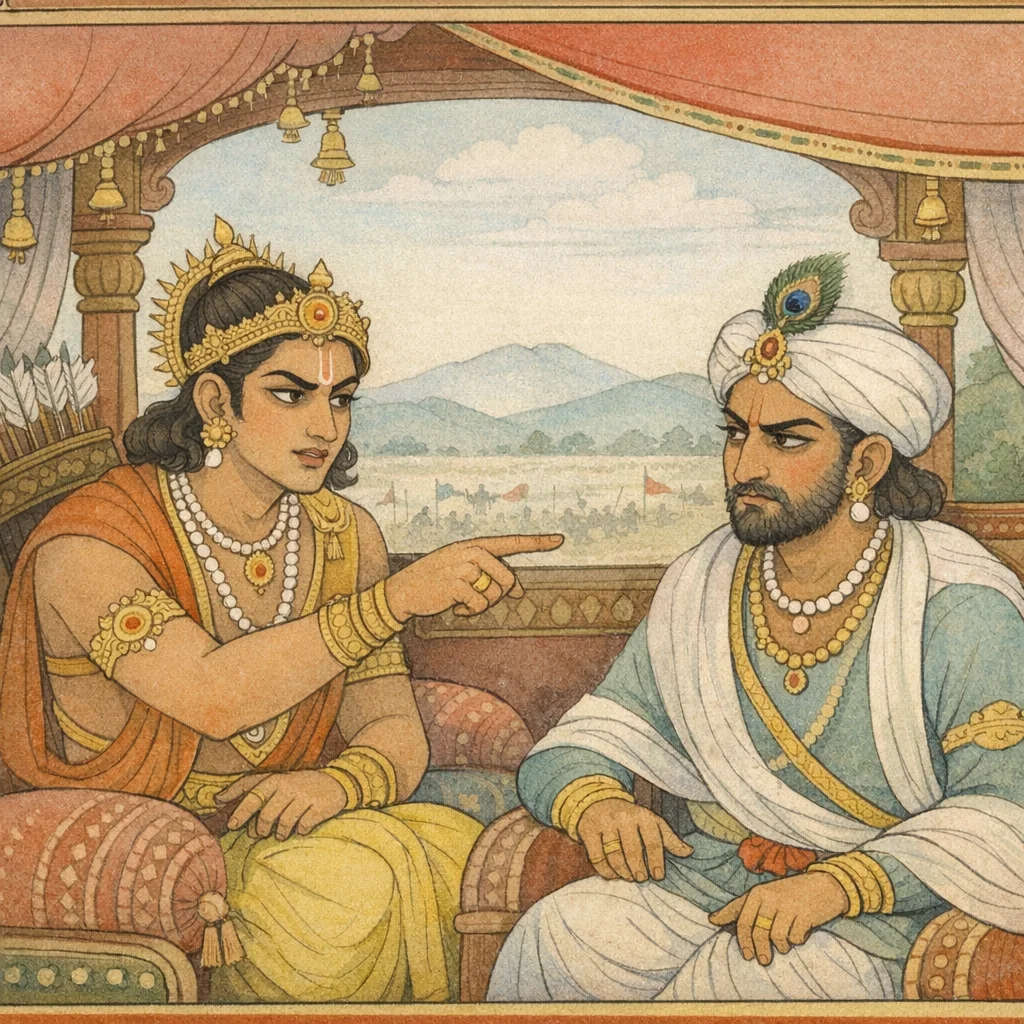
Saṃjaya reports Kṛṣṇa’s urgent address to Arjuna in the midst of rapidly shifting formations. Kṛṣṇa indicates that Yudhiṣṭhira is being pursued by Duryodhana and powerful Dhārtarāṣṭra archers, describing the concentrated missile threat from Duryodhana, Aśvatthāman (Drauṇi), Kṛpa (Śāradvata), and Karṇa. The narration portrays Yudhiṣṭhira as physically weakened (austere, fasting-lean) and tactically endangered, with his standard reportedly struck down by Karṇa’s arrows, signaling crisis in royal visibility and morale. Karṇa is depicted as dispersing Pāṇḍava-aligned forces, issuing rallying commands to Kaurava troops, and then turning attention toward Arjuna as a principal objective. The chapter then pivots: Saṃjaya announces that Yudhiṣṭhira survives, while Bhīma, supported by Sṛñjayas and Sātyaki, counterattacks with force, causing Kaurava units to recoil. Detailed battlefield imagery follows—fallen banners, scattered umbrellas, rout of elephants and chariots—culminating in Bhīma’s decisive suppression of multiple akṣauhiṇīs and Arjuna’s subsequent engagement against remaining hostile groups (including Saṃśaptakas). The thematic lesson is operational: leadership protection, morale indicators, and coordinated counterpressure can reverse an apparent collapse even under superior missile concentration.
Chapter Arc: Shalya, Karna’s unwilling charioteer, answers Karna’s boasts with a cutting rebuke, turning the chariot-seat into a battlefield of words before the eyes of Dhritarashtra’s narrative world. → Stung, Karna retaliates not with strategy but with scorn: he launches into a long, venomous catalogue of the Madra–Bahlika (Bāhīka) lands and their people—food, drink, customs, speech, and supposed moral decay—seeking to shame Shalya by shaming his homeland. → Karna’s invective peaks in sweeping denunciations of Bāhīka life—drunken revelry, coarse songs, mixed lineages, and ritual impurity—culminating in the claim that such practices make dharma impossible among them and that no noble should dwell there even briefly. → The tirade settles into a grim ‘geography of disgrace’: Karna names regions and towns, lists alleged transgressions, and frames the entire country as a cautionary example, attempting to reassert dominance over Shalya through humiliation rather than persuasion. → The verbal war leaves the alliance poisoned: Shalya’s resentment is sharpened, foreshadowing how a charioteer’s will and words can tilt the fate of the coming duel.
Shlokas
Verse 1
अप-#-राल जा चतुश्नत्वारिशो< ध्याय: कर्णके द्वारा मद्र आदि बाहीक देशवासियोंकी निन्दा शल्य उवाच ननु प्रलापा: कर्णते यान् ब्रवीषि परान् प्रति । ऋते कर्णसहस्त्रेण शक््या जेतुं परे युधि,शल्य बोले--कर्ण! तुम दूसरोंके प्रति जो आक्षेप करते हो, ये तुम्हारे प्रलापमात्र हैं। तुम-जैसे हजारों कर्ण न रहें तो भी युद्धस्थलमें शत्रुओंपर विजय पायी जा सकती है
Śalya said: “Karṇa, the accusations you hurl at others are mere ramblings. Even without a thousand men like you, the enemy can still be defeated on the battlefield.”
Verse 2
संजय उवाच तथा ब्रुवन्तं परुषं कर्णो मद्राधिपं तदा । परुषं द्विगुणं भूय: प्रोवाचाप्रियदर्शनम्,संजय कहते हैं--राजन्! ऐसी कठोर बात बोलते हुए मद्रराज शल्यसे कर्णने पुनः दूनी कठोरता लिये अप्रिय वचन कहना आरम्भ किया
Sanjaya said: O King, as the lord of Madra, Shalya, spoke such harsh words, Karna—his appearance itself displeasing in that moment—answered again with speech twice as harsh. The exchange shows how anger and wounded pride, once indulged, quickly escalate into greater cruelty, darkening judgment on the eve of battle.
Verse 3
कर्ण उवाच इदं तु ते त्वमेकाग्र: शृणु मद्रजनाधिप । संनिधौ धृतराष्ट्रस्य प्रोच्यमानं मया श्रुतम्,कर्ण बोला--मद्रनरेश! तुम एकाग्रचित्त होकर मेरी ये बातें सुनो। राजा धृतराष्ट्रके समीप कही जाती हुई इन सब बातोंको मैंने सुना था
Karna said: “But now, O lord of Madra, listen with a focused mind to this. I myself heard these words as they were being spoken in the presence of Dhṛtarāṣṭra.”
Verse 4
देशांश्न विविधांश्षित्रान् पूर्ववृत्तांश्व॒ पार्थिवान् । ब्राह्मणा: कथयन्ति सम धृतराष्ट्रनिवेशने,एक दिन महाराज धूृतराष्ट्रके घरमें बहुत-से ब्राह्मण आ-आकर नाना प्रकारके विचित्र देशों तथा पूर्ववर्ती भूपालोंके वृत्तान्त सुना रहे थे
Karna said: “In Dhṛtarāṣṭra’s residence, Brahmins used to recount—day after day—accounts of many wondrous and varied lands, and the histories and deeds of kings of former times.”
Verse 5
तत्र वृद्ध: पुरावृत्ता: कथा: कश्रिद् द्विजोत्तम: । वाहीकदेशं मद्रांश्न॒ कुत्सयन् वाक्यमब्रवीत्,वहीं किसी वृद्ध एवं श्रेष्ठ ब्राह्मणने बाहीक और मद्रदेशकी निन्दा करते हुए वहाँकी पूर्वघटित बातें कही थीं--
There, an aged and eminent Brahmin recounted tales of events from long ago; while censuring the land of the Vāhīkas and the Madras, he spoke these words—setting forth a moralizing narrative that frames certain regions as examples of blameworthy conduct.
Verse 6
बहिष्कृता हिमवता गड़या च बहिष्कृता: । सरस्वत्या यमुनया कुरुक्षेत्रेण चापि ये
Karna said: “Those who were cast out by Himavat, and those likewise cast out by the river Gaḍā; those rejected by the Sarasvatī and the Yamunā, and even those excluded by Kurukṣetra itself—(all such) are being spoken of.”
Verse 7
पज्चानां सिन्धुषष्ठानां नदीनां येडन्तराश्रिता: । तान् धर्मबाह्यानशुचीन् वाहीकानपि वर्जयेत्
Karna said: “Those who dwell in the tract lying between the five rivers—of which the Sindhu is counted as the sixth—are regarded as outside the bounds of dharma and impure; therefore one should avoid even the Vāhīkas.”
Verse 8
'जो प्रदेश हिमालय, गंगा, सरस्वती, यमुना और कुरक्षेत्रकी सीमासे बाहर हैं तथा जो सतलज, व्यास, रावी, चिनाव और झेलम--इन पाँचों एवं छठी सिंधु नदीके बीचमें स्थित हैं, उन्हें बाहीक कहते हैं। वे धर्मबाह्म और अपवित्र हैं। उन्हें त्याग देना चाहिये ।। गोवर्धनो नाम वट: सुभद्रंं नाम चत्वरम् । एतद् राजकुलद्वारमाकुमारात् स्मराम्यहम्,“गोवर्धन नामक वटवृक्ष और सुभद्र नामक चबूतरा--ये दोनों वहाँके राजभवनके द्वारपर स्थित हैं, जिन्हें मैं बचपनसे ही भूल नहीं पाता हूँ
Karna said: “Those regions that lie outside the bounds marked by the Himalaya and the rivers Gaṅgā, Sarasvatī, Yamunā, and the sacred field of Kurukṣetra—and those lands situated between the five rivers Śatadru (Sutlej), Vipāśā (Beas), Irāvatī (Ravi), Candrabhāgā (Chenab), Vitastā (Jhelum) and the sixth river Sindhu (Indus)—are called Bāhīka. Their ways stand outside dharma and are deemed impure; therefore they should be abandoned. And I still remember from my very childhood the royal gateway there: the banyan called Govardhana and the platform named Subhadrā that stood at its entrance.”
Verse 9
कार्येणात्यर्थगूढेन वाहीकेपूषितं मया । तत एषां समाचार: संवासाद् विदितो मम,“मैं अत्यन्त गुप्त कार्यवश कुछ दिनोंतक बाहीक देशमें रहा था। इससे वहाँके निवासियोंके सम्पर्कमें आकर मैंने उनके आचार-व्यवहारकी बहुत-सी बातें जान ली थीं
Karna said: “On account of a certain mission that had to be kept extremely secret, I lived for some days in the land of the Vāhīkas. Therefore, through close association and residence among them, their customary conduct and ways became known to me.”
Verse 10
शाकलं नाम नगरमापगा नाम निम्नगा | जर्तिका नाम वाहीकास्तेषां वृत्तं सुनिन्दितम्,“वहाँ शाकल नामक एक नगर और आपगा नामकी एक नदी है, जहाँ जर्तिक नामवाले बाहीक निवास करते हैं। उनका चरित्र अत्यन्त निन्दित है
Karna said: “There is a city called Śākala and a river called Āpagā. There dwell the Vāhīkas known as the Jartikās; their conduct is held to be deeply blameworthy.”
Verse 11
धाना गौड्यासवं पीत्वा गोमांसं लशुनैः सह । अपूपमांसवाट्यानामाशिन: शीलवर्जिता:,*वे भुने हुए जौ और लहसुनके साथ गोमांस खाते और गुड़से बनी हुई मदिरा पीकर मतवाले बने रहते हैं। पुआ, मांस और वाटी खानेवाले बाहीकदेशके लोग शील और आचारसे शून्य हैं
Karna said: “Having drunk liquor made from molasses and eaten roasted grains, they consume beef together with garlic. Those who feed on cakes, meat, and balls of food are devoid of good conduct and proper custom.”
Verse 12
गायन्त्यथ च नृत्यन्ति स्त्रियो मत्ता विवासस: । नगरागारवप्रेषु बहिर्माल्यानुलेपना:,“वहाँकी स्त्रियाँ बाहर दिखायी देनेवाली माला और अंगराग धारण करके मतवाली तथा नंगी होकर नगर एवं घरोंकी चहारदिवारियोंके पास गाती और नाचती हैं
Karna said: “There, the women—intoxicated and unclothed—sing and dance near the city ramparts and the walls of houses, appearing outside adorned with garlands and fragrant unguents.”
Verse 13
मत्तावगीतैरविविधै: खरोष्टनिनदोपमै: । अनावृता मैथुने ता: कामचाराश्न सर्वश:,“वे गदहोंके रेंकने और ऊँटोंके बलबलानेकी-सी आवाजसे मतवालेपनमें ही भाँति- भाँतिके गीत गाती हैं और मैथुनकालमें भी परदेके भीतर नहीं रहती हैं। वे सब-की-सब सर्वथा स्वेच्छाचारिणी होती हैं
Karna said: “In their drunkenness they sing all sorts of songs, their sounds resembling the braying of donkeys and the bellowing of camels. Even at the time of sexual union they remain uncovered, and in every way they act according to their own will.”
Verse 14
आहुरन्योन्यसूक्तानि प्रब्रुवाणा मदोत्कटा: । हे हते हे हतेत्येवं स्वामिभर्तृहतेति च
Karna said: “Maddened with battle-fury, they shouted taunts back and forth. Again and again they cried, ‘He is slain! He is slain!’ and also, ‘Your lord—your master—has been killed!’ Thus they sought to break one another’s resolve by proclaiming the fall of leaders.”
Verse 15
तासां किलावलिप्तानां निवसन् कुरुजाड़ले
Karna said: “Indeed, dwelling in the Kuru Jāṅgala among those who are steeped in pride and self-conceit…”
Verse 16
कश्चिद् वाहीकदुष्टानां नातिहृष्टमना जगौ । उन्हीं बाहीकदेशी मदमत्त एवं दुष्ट स्त्रियोंका कोई सम्बन्धी वहाँसे आकर कुरुजांगल प्रदेशमें निवास करता था। वह अत्यन्त खिन्नचित्त होकर इस प्रकार गुनगुनाया करता था -- १५३ || सा नूनं बृहती गौरी सूक्ष्मकम्बलवासिनी
Karna said: “Someone connected with those depraved people of Vāhīka, his mind far from cheerful, uttered (these words) in a low, murmuring manner.” The line frames a moral critique: the speaker introduces a lament that arises from disgust and sorrow at corrupt conduct, preparing the listener for an ethical condemnation of a region’s degraded customs.
Verse 17
शतद्रुकामहं तीर्त्वा तां च रम्यामिरावतीम्
Karna said: “Having crossed the Śatadrū river, I also crossed that lovely Irāvatī.” In recalling these crossings, Karna evokes the arduous movement of warriors across sacred and strategic waterways—an image of resolve and relentless advance amid the moral weight of war.
Verse 18
मन:शिलोज्ज्वलापाड्ग्यो गौर्यस्त्रिककुदाउ्जना:,“जिनके नेत्रोंके प्रान्नभाग मैनसिलके आलेपसे उज्ज्वल हैं, दोनों नेत्र और ललाट अंजनसे सुशोभित हैं तथा जिनके सारे अंग कम्बल और मृगचर्मसे आवृत हैं, वे गोरे रंगवाली प्रियदर्शना (परम सुन्दरी) रमणियाँ मृदंग, ढोल, शंख और मर्दल आदि वाद्योंकी ध्वनिके साथ-साथ कब नृत्य करती दिखायी देंगी
Karna said: “When shall I again behold those fair-complexioned, lovely women—whose eyes shine with the bright red unguent of manaḥśilā, whose eyes and forehead are adorned with collyrium—moving in dance to the resonant music of drums, kettledrums, conches, and mṛdaṅgas? Their limbs are wrapped in blankets and deer-skins; yet their beauty and charm remain unmistakable.”
Verse 19
कम्बलाजिनसंवीता: कूर्दन्त्य: प्रियदर्शना: । मृदज्रानकशड्खानां मर्दलानां च नि:स्वनै:,“जिनके नेत्रोंके प्रान्नभाग मैनसिलके आलेपसे उज्ज्वल हैं, दोनों नेत्र और ललाट अंजनसे सुशोभित हैं तथा जिनके सारे अंग कम्बल और मृगचर्मसे आवृत हैं, वे गोरे रंगवाली प्रियदर्शना (परम सुन्दरी) रमणियाँ मृदंग, ढोल, शंख और मर्दल आदि वाद्योंकी ध्वनिके साथ-साथ कब नृत्य करती दिखायी देंगी
Karna said: “When shall I again behold those fair and beloved women—wrapped in blankets and deer-skins, moving in dance—while the resonant sounds of mṛdaṅga drums, ānaka kettledrums, conches, and mardala drums rise all around?” In the midst of war, his words reveal a mind pulled toward memories of festive life and domestic joy, highlighting the ethical tension between a warrior’s duty and the human longing for peace and beauty.
Verse 20
खरोष्टाश्वतरैश्वैव मत्ता यास्यामहे सुखम् । शमीपीलुकरीराणां वनेषु सुखवर्त्मसु,“कब हमलोग मदोन्मत्त हो गदहे, ऊँट और खच्चरोंकी सवारीद्वारा सुखद मार्गोंवाले शमी, पीलु और करीलोंके जंगलोंमें सुखसे यात्रा करेंगे
Karna said: “When shall we, intoxicated with carefree delight, travel at ease—riding on donkeys, camels, and mules—through the forests of śamī, pīlu, and karīra, along paths that are pleasant to tread?” In the war’s grim setting, the line carries a bitter, ironic longing for a simple, non-heroic life far from the demands of kṣatriya violence and rivalry.
Verse 21
अपूपान् सक्तुपिण्डांश्व प्राश्नन्तो मथितान्वितान् | पथि सुप्रबला भूत्वा कदा सम्पततो5ध्वगान्
Karna said: “Feasting on apūpa cakes and balls of saktu (parched grain), and carrying churned curds besides—when will these travellers on the road ever grow truly strong and rush forward?”
Verse 22
एवंशीलेषु व्रात्येषु वाहीकेषु दुरात्मसु
Among the Vāhīkas—men of such conduct, deemed impure and beyond the bounds of proper Vedic discipline, and of wicked disposition—
Verse 23
ईदृशा ब्राह्मणेनोक्ता वाहीका मोघचारिण:
Karna said: “Such are the Vāhīkas, as described by that brāhmaṇa—people whose conduct is fruitless and misguided.”
Verse 24
इत्युक्त्वा ब्राह्मण: साधुरुत्तरं पुनरुक्तवान्
Having spoken thus, the virtuous brāhmaṇa again replied with a further answer—continuing his counsel in a measured, righteous tone.
Verse 25
तत्र सम राक्षसी गाति सदा कृष्णचतुर्दशीम्
There, that rākṣasī regularly observes Kṛṣṇa-caturdaśī—the fourteenth lunar day of the dark fortnight.
Verse 26
कदा वाहेयिका गाथा: पुनर्गास्यामि शाकले,पलाण्डुगंडूषयुतान् खादन्ती चैडकान् बहून् । “मैं वस्त्राभूषणोंसे विभूषित हो गोमांस खाकर और गुड़की बनी हुई मदिरा पीकर तृप्त हो अंजलि भर प्याजके साथ बहुत-सी भेड़ोंको खाती हुई गोरे रंगकी लंबी युवती स्त्रियोंके साथ मिलकर इस शाकल नगरमें पुन: कब इस तरहकी बाहीकसम्बन्धी गाथाओंका गान करूँगी
Karna said: “When shall I again, in Śākala, sing once more those ballads of the Vāheya (Bāhīka) land—while eating many rams, with mouthfuls of onions?”
Verse 27
गव्यस्य तृप्ता मांसस्य पीत्वा गौडं सुरासवम् | गौरीभि: सह नसिभिर्बृहतीभि: स्वलंकृता:
Karna said: “Sated with beef and meat, and having drunk a sweet, molasses-based intoxicant, they—adorned and in the company of fair women—moved about with large swords.”
Verse 28
वाराहं कौक्कुटं मांसं गव्यं गार्दभमौष्टिकम्
Karna said: “(There is) the flesh of boar and cock, and also beef; likewise the flesh of donkey and camel.”
Verse 29
इति गायन्ति ये मत्ता: सीधुना शाकलाश्च ये
Karna said: “Thus sing those who are intoxicated—those made drunk by sīdhu (fermented liquor), and those who are mere ‘shākalas’ (fragmentary, incoherent talkers).”
Verse 30
इति शल्य विजानीहि हन्त भूयो ब्रवीमि ते
“So understand this, Śalya. Come—once more I shall speak to you.”
Verse 31
पज्च नद्यो वहन्त्येता यत्र पीलुवनान्युत
Karna said: “Five rivers flow there, and there too are groves of pīlu trees.”
Verse 32
शतद्रुश्ष विपाशा च तृतीयैरावती तथा । चन्द्रभागा वितस्ता च सिन्धुषष्ठा बहिगिरि:
Karna continued, naming the great rivers of the north-west: “The Śatadru, the Vipāśā, and third the Irāvatī; likewise the Candrabhāgā and the Vitastā; and as the sixth, the Sindhu—together with the Bahirgiri.”
Verse 33
आरट्टा नाम ते देशा नष्टधर्मा न तान् व्रजेत् । “जहाँ शतद्रु (सतलज), विपाशा (व्यास), तीसरी इरावती (रावी), चन्द्रभागा (चिनाव) और वितस्ता (झेलम)--ये पाँच नदियाँ छठी सिंधु नदीके साथ बहती हैं, जहाँ पीलु नामक वृक्षोंक कई जंगल हैं, वे हिमालयकी सीमासे बाहरके प्रदेश “आरट्ट” नामसे विख्यात हैं। वहाँका धर्म-कर्म नष्ट हो गया है। उन देशोंमें कभी न जाय ।। व्रात्यानां दासमीयानां वाहीकानामयज्वनाम्,“जिनके धर्म-कर्म नष्ट हो गये हैं, वे संस्कारहीन, जारज बाहीक यज्ञ-कर्मसे रहित होते हैं। उनके दिये हुए द्रव्यको देवता, पितर और ब्राह्मण भी नहीं ग्रहण करते हैं, यह बात सुननेमें आयी है”
Karna said: “Those regions are called Ārāṭṭa; their dharma has fallen into ruin—one should not go to them. The Vāhīkas there are said to be vrātyas (outside Vedic discipline), of servile conduct, and non-sacrificers; it is heard that even gods, ancestors, and Brahmins do not accept what is given by them.”
Verse 34
न देवा: प्रतिगृह्नन्ति पितरो ब्राह्मणास्तथा | तेषां प्रणष्टरर्माणां वाहीकानामिति श्रुति:,“जिनके धर्म-कर्म नष्ट हो गये हैं, वे संस्कारहीन, जारज बाहीक यज्ञ-कर्मसे रहित होते हैं। उनके दिये हुए द्रव्यको देवता, पितर और ब्राह्मण भी नहीं ग्रहण करते हैं, यह बात सुननेमें आयी है”
Karna said: “It is heard in sacred tradition that even the gods, the ancestors, and the Brahmins do not accept offerings from those Vāhīkas whose righteous rites and duties have perished.”
Verse 35
ब्राह्मणेन तथा प्रोक्त विदुषा साधुसंसदि । काष्ठकुण्डेषु वाहीका मृन्मयेषु च भुज्जते,तद्विकारांश्व वाहीका: खादन्ति च पिबन्ति च | किसी दिद्वान् ब्राह्मणने साधु पुरुषोंकी सभामें यह भी कहा था कि “बाहीक देशके लोग काठके कुण्डों तथा मिट्टीके बर्तनोंमें जहाँ सत्तू और मदिरा लिपटे होते हैं और जिन्हें कुत्ते चाटते रहते हैं, घृणाशून्य होकर भोजन करते हैं। बाहीक देशके निवासी भेड़, ऊँटनी और गदहीके दूध पीते और उसी दूधके बने हुए दही-घी आदि भी खाते हैं
Karna said: “So it was declared by a learned Brahmin in an assembly of the virtuous: the Vāhīkas eat from wooden troughs and earthen vessels; and the Vāhīkas also eat and drink those impure remnants and derivatives.”
Verse 36
सक्तुमद्यावलिप्तेषु श्वावलीढेषु निर्घणा: । आविकं चौष्टिकं चैव क्षीरं गार्दभमेव च
Karna said: “They are utterly without compassion—feeding on flour mixed with liquor, on food licked by dogs, and even drinking milk taken from a ewe, a she-camel, and a she-ass.”
Verse 37
पुत्रसंकरिणो जाल्मा: सर्वन्नक्षीरभोजना:
Karna said: “You wretches, you are corrupters of lineage—men who eat anything and everything, living on milk and its products.”
Verse 38
आरट्टा नाम वाहीका वर्जनीया विपक्चिता । “वे जारज पुत्र उत्पन्न करनेवाले नीच आरट्ट नामक बाहीक सबका अन्न खाते और सभी पशुओंके दूध पीते हैं। अतः विद्वान् पुरुषको उन्हें दूरसे ही त्याग देना चाहिये” ।। ३७३ || हन्त शल्य विजानीहि हन्त भूयो ब्रवीमि ते
Karna said: “There are people called the Āraṭṭas among the Vāhīkas; the wise should keep away from them. Come, Śalya—understand this; and come, I will tell you still more.”
Verse 39
यदन्यो<प्युक्तवान् महां ब्राह्मण: कुरुसंसदि । शल्य! इस बातको याद कर लो। अभी तुमसे और भी बातें बताऊँगा, जिन्हें किसी दूसरे ब्राह्मणने कौरवसभामें स्वयं मुझसे कहा था-- || ३८ $ ।। युगन्धरे पयः पीत्वा प्रोष्य चाप्यच्युतस्थले
Karna said: “Śalya, remember this. I shall tell you further things as well—things that another eminent Brahmin once spoke to me personally in the assembly of the Kurus. Having drunk milk on Yugandhara and having sojourned also in the place of Acyuta…”
Verse 40
पज्च नद्यो वहन्त्येता यत्र नि:सृत्य पर्वतात्
Karna said: “Five rivers flow here, issuing forth from the mountain.”
Verse 41
बहिश्न नाम हीकश्न विपाशायां पिशाचकौ,विपाशा (व्यास) नदीमें दो पिशाच रहते हैं। एकका नाम है बहि और दूसरेका नाम है हीक। इन्हीं दोनोंकी संतानें बाहीक कहलाती हैं। ब्रह्माजीने इनकी सृष्टि नहीं की है। वे नीच योनिमें उत्पन्न हुए मनुष्य नाना प्रकारके धर्मोंको कैसे जानेंगे?
Karna said: “On the river Vipāśā dwell two piśācas, one named Bahi and the other Hīka. Their offspring are known as the Bāhīkas. Brahmā did not create them; born from a base womb, how could such men understand the many forms of dharma?”
Verse 42
तयोरपत्यं वाहीका नैषा सृष्टि: प्रजापते: । ते कथं विविधान् धर्मान् ज्ञास्यन्ते हीनयोनय:,विपाशा (व्यास) नदीमें दो पिशाच रहते हैं। एकका नाम है बहि और दूसरेका नाम है हीक। इन्हीं दोनोंकी संतानें बाहीक कहलाती हैं। ब्रह्माजीने इनकी सृष्टि नहीं की है। वे नीच योनिमें उत्पन्न हुए मनुष्य नाना प्रकारके धर्मोंको कैसे जानेंगे?
Karna said: “The Vāhīkas are the offspring of those two; this is not a creation of Prajāpati. How could people born of a base womb ever understand the many forms of dharma?”
Verse 43
इस प्रकार श्रीमहाभारत कर्णपर्वमें कर्ण और शल्यका संवादविषयक तैंतालीयवाँ अध्याय पूरा हुआ,कारस्करान्माहिषकान् कुरण्डान् केरलांस्तथा । कर्कोटकान् वीरकांभश्व दुर्धर्माश्न॒ विवर्जयेत् कारस्कर, माहिषक, कुरंड, केरल, कर्कोटक और वीरक--इन देशोंके धर्म (आचार- व्यवहार) दूषित हैं; अतः इनका त्याग कर देना चाहिये
Thus, in the Mahābhārata, in the Karna Parva, the forty-third chapter—concerning the dialogue between Karna and Śalya—was completed. “One should shun the Kāraṣkaras, Māhiṣakas, Kuraṇḍas, Keralas, Karkoṭakas, and Vīrakas; for the dharma (customs and conduct) of those lands is corrupt.”
Verse 44
इति तीर्थानुसरतरं राक्षसी काचिदब्रवीत् । एकरात्रशयी गेहे महोलूखलमेखला,विशाल ओखलियोंकी मेखला (करधनी) धारण करनेवाली किसी राक्षसीने किसी तीर्थयात्रीके घरमें एक रात रहकर उससे इस प्रकार कहा था-- इति श्रीमहाभारते कर्णपर्वणि कर्णशल्यसंवादे चतुश्नत्वारिंशो5ध्याय:
Then, in the course of the account that follows the pilgrimage places, a certain rākṣasī spoke thus: “A rākṣasī, girded with a belt of massive mortars, having lodged for a single night in a pilgrim’s house, spoke in this manner.” Thus in the Mahābhārata, in the Karna Parva, in the dialogue of Karna and Śalya, the forty-third chapter.
Verse 45
आरट्टा नाम ते देशा वाहीकं॑ नाम तज्जलम् | ब्राह्मणापसदा यत्र तुल्यकाला: प्रजापते:,जहाँ ब्रह्माजीके समकालीन (अत्यन्त प्राचीन) वेदविरुद्ध आचरणवाले नीच ब्राह्मण निवास करते हैं, वे आरट्ट नामक देश हैं और वहाँके जलका नाम बाहीक है
Karna said: “Those lands are called Āraṭṭa, and the water there is known as Vāhīka. In that region dwell degraded Brahmins—men who act against the Veda—said to be as ancient as Prajāpati’s own age.”
Verse 46
वेदा न तेषां वेद्यक्ष॒ यज्ञा यजनमेव च । व्रात्यानां दासमीयानामन्नं देवा न भुज्जते,उन अधम ब्राह्मणोंको न तो वेदोंका ज्ञान है, न वहाँ यज्ञकी वेदियाँ हैं और न उनके यहाँ यज्ञ-याग ही होते हैं। वे संस्कारहीन एवं दासोंसे समागम करनेवाली कुलटा स्त्रियोंकी संतानें हैं; अत: देवता उनका अन्न नहीं ग्रहण करते हैं
Karna said: “Among them there is no knowledge of the Vedas, no sacred altars fit for Vedic rites, and no true performance of sacrifice. Being born of the uninitiated and of women who consort with slaves, their food is not accepted by the gods.”
Verse 47
प्रस्थला मद्रगान्धारा आरट्टा नामत: खशा: । वसातिसिन्धुसौवीरा इति प्रायोडतिकुत्सिता:,प्रस्थल, मद्र, गान्धार, आरट्ट, खस, वसाति, सिंधु तथा सौवीर--ये देश प्रायः अत्यन्त निन्दित हैं
Karna said: “Prasthala, Madra, Gandhāra, Āraṭṭa, and the Khaśas by name; likewise Vāsāti, Sindhu, and Sauvīra—these regions are, for the most part, spoken of as exceedingly contemptible.”
Verse 146
आक्रोशन्त्य: प्रनृत्यन्ति व्रात्या पर्वस्वसंयता: । “मदसे उन्मत्त होकर परस्पर सरस विनोदयुक्त बातें करती हुई वे एक-दूसरीको 'ओ घायल की हुई! ओ किसीकी मारी हुई! हे पतिमर्दिते!” इत्यादि कहकर पुकारती और नृत्य करती हैं। पर्वों और त्योहारोंक अवसरपर तो उन संस्कारहीन रमणियोंके संयमका बाँध और भी टूट जाता है
Karna said: “Those unrestrained, uncultured women shout and dance about. At festival times their self-control breaks down even more; in drunken frenzy they call out to one another with coarse, taunting cries—‘Wounded one! Slain one! Husband-beaten!’—and trade vulgar jests.”
Verse 166
मामनुस्मरती शेते वाहीकं कुरुजाडूले । “निश्चय ही वह लंबी, गोरी और महीन कम्बलकी साड़ी पहननेवाली मेरी प्रेयसी कुरुजांगल प्रदेशमें निवास करनेवाले मुझ बाहीकको निरन्तर याद करती हुई सोती होगी
Karna said: “That fair, slender beloved of mine, clad in a fine woollen wrap, surely lies down to sleep while constantly remembering me—the Vāhīka—dwelling in the Kuru-Jāṅgala region.”
Verse 176
गत्वा स्वदेशं द्रक्ष्यामि स्थूलशड्खा: शुभा: स्त्रिय: । “मैं कब सतलज और उस रमणीय रावी नदीको पार करके अपने देशमें पहुँचकर शंखकी बनी हुई मोटी-मोटी चूड़ियोंको धारण करनेवाली वहाँकी सुन्दरी स्त्रियोंको देखूँगा
Karna said: “When, having crossed back into my own land, shall I behold the auspicious women there, adorned with thick bangles made of conch?”
Verse 216
चेलापहारं कुर्वाणास्ताडयिष्याम भूयस: । 'मार्गमें तक्रके साथ पूए और सत्तूके पिण्ड खाकर अत्यन्त प्रबल हो कब चलते हुए बहुत-से राहगीरोंको उनके कपड़े छीनकर हम अच्छी तरह पीटेंगे”
Karna said: “Again and again, while we are stripping travellers of their garments, we shall beat them soundly.”
Verse 226
कश्चेतयानो निवसेन्मुहूर्तमपि मानव: । संस्कारशून्य दुरात्मा बाहीक ऐसे ही स्वभावके होते हैं। उनके पास कौन सचेत मनुष्य दो घड़ी भी निवास करेगा?”
Karna said: “What conscious, discerning person would stay even for a moment with a Bāhīka—one devoid of refinement and right conduct, of wicked disposition? Such is their very nature.”
Verse 233
येषां षड़भागहर्ता त्वमुभयो: शुभपापयो: । ब्राह्मणने निरर्थक आचार-विचारवाले बाहीकोंको ऐसा ही बताया है, जिनके पुण्य और पाप दोनोंका छठा भाग तुम लिया करते हो
Karna said: “You are the one who takes a sixth share of both their merit and their sin.”
Verse 243
वाहीकेष्वविनीतेषु प्रोच्यमानं निबोध तत् | शल्य! उस श्रेष्ठ ब्राह्मणने ये सब बातें बताकर उद्ण्ड बाहीकोंके विषयमें पुनः जो कुछ कहा था, वह भी बताता हूँ, सुनो--
Karna said: “Listen carefully to what was being said about the undisciplined Vāhīkas. O Śalya, after that excellent brāhmaṇa had already related all those matters, whatever he further declared regarding the unruly Vāhīkas—I shall tell you that as well. Hear me.”
Verse 256
नगरे शाकले स्फीते आहत्य निशि दुन्दुभिम् । “उस देशमें एक राक्षसी रहती है, जो सदा कृष्णपक्षकी चतुर्दशी तिथिको समृद्धिशाली शाकल नगरमें रातके समय दुन्दुभि बजाकर इस प्रकार गाती है--
Karna said: “In the prosperous city of Śākala, at night, she strikes the war-drum (dundubhi) and sings thus.”
Verse 276
पलाण्डुगंडूषयुतान् खादन्ती चैडकान् बहून् । “मैं वस्त्राभूषणोंसे विभूषित हो गोमांस खाकर और गुड़की बनी हुई मदिरा पीकर तृप्त हो अंजलि भर प्याजके साथ बहुत-सी भेड़ोंको खाती हुई गोरे रंगकी लंबी युवती स्त्रियोंके साथ मिलकर इस शाकल नगरमें पुन: कब इस तरहकी बाहीकसम्बन्धी गाथाओंका गान करूँगी
Karna spoke with biting satire, conjuring the coarse pleasures and food-habits that (in the epic’s polemical rhetoric) are associated with the Bāhlīka/Śākala region. He imagines a scene of indulgence—adorned with garments and ornaments, eating beef, drinking liquor fermented from jaggery, and taking handfuls of onions while devouring many sheep—amid fair, tall young women, and asks when, in the city of Śākala, he will again sing such “Bāhlīka-related” ballads.
Verse 283
ऐडं च ये न खादन्ति तेषां जन्म निरर्थकम् । “जो सूअर, मुर्गा, गाय, गदहा, ऊँट और भेड़के मांस नहीं खाते, उनका जन्म व्यर्थ है!
Karna said: “Those who do not eat the flesh of pig, fowl, cow, donkey, camel, and sheep—their birth is purposeless!”
Verse 293
सबालवृद्धा: क्रन्दन्तस्तेषु धर्म: कथं भवेत् । “जो शाकलनिवासी आबालवृद्ध नर-नारी मदिरासे उन्मत्त हो चिल्ला-चिल्लाकर ऐसी गाथाएँ गाया करते हैं, उनमें धर्म कैसे रह सकता है?”
Karna said: “When even children and the aged cry out loudly among them, how can dharma remain there? In a place where men and women of every age are driven mad by liquor and shout and sing such ballads, what room is left for righteousness?”
Verse 303
यदन्यो<प्युक्तवानस्मान् ब्राह्मण: कुरुसंसदि । शल्य! इस बातको अच्छी तरह समझ लो। हर्षका विषय है कि इसके सम्बन्धमें मैं तुम्हें कुछ और बातें बता रहा हूँ, जिन्हें दूसरे ब्राह्मणने कौरव-सभामें हमलोगोंसे कहा था --
Karna said: “Śalya, understand this clearly. It is a matter of satisfaction that, in connection with this, I can tell you still more—things that another Brahmin once spoke to us in the Kuru assembly. I am recalling those words now to place their meaning before you.”
Verse 363
तद्विकारांश्व वाहीका: खादन्ति च पिबन्ति च | किसी दिद्वान् ब्राह्मणने साधु पुरुषोंकी सभामें यह भी कहा था कि “बाहीक देशके लोग काठके कुण्डों तथा मिट्टीके बर्तनोंमें जहाँ सत्तू और मदिरा लिपटे होते हैं और जिन्हें कुत्ते चाटते रहते हैं, घृणाशून्य होकर भोजन करते हैं। बाहीक देशके निवासी भेड़, ऊँटनी और गदहीके दूध पीते और उसी दूधके बने हुए दही-घी आदि भी खाते हैं
Karna says that the Vāhīkas, devoid of shame, eat and drink even such impure, degraded things. A learned Brahmin once said in an assembly of good men: “The people of Bāhlīka eat without disgust from wooden troughs and earthen vessels smeared with sattu and liquor, which dogs keep licking. The inhabitants of Bāhlīka drink the milk of sheep, of a she-camel, and of a she-donkey, and they also eat curd (dahi), ghee, and other foods made from that same milk.”
Verse 393
तद्वद् भूतिलये स्नात्वा कथं स्वर्ग गमिष्यति । “युगन्धर नगरमें दूध पीकर अच्युतस्थल नामक नगरमें एक रात रहकर तथा भूतिलयमें स्नान करके मनुष्य कैसे स्वर्गमें जायगा?”
Karna asked with skepticism: “How could a man reach heaven merely by bathing at Bhūtilaya? Can salvation be reduced to a simple rite, severed from true merit, right conduct, and ethical responsibility?”
Verse 403
आरट्टा नाम वाहीका न तेष्वार्योद्व्यहं वसेत् । जहाँ पर्वतसे निकलकर ये पूर्वोक्त पाँचों नदियाँ बहती हैं, वे आरट्ट नामसे प्रसिद्ध बाहीक प्रदेश हैं। उनमें श्रेष्ठ पुरुष दो दिन भी निवास न करे
Karna said: “The Vāhīkas are known as the Āraṭṭas. In their land, an Ārya—a noble and cultivated man—should not stay even for two days.” The remark serves as a moral and social censure, using ‘Ārya’ conduct as the measure by which certain regions are deemed unfit for refined living and ethical discipline.
Frequently Asked Questions
The chapter frames a conflict between pursuing high-value tactical targets and the immediate dharmic-political obligation to protect Yudhiṣṭhira, whose safety is tied to legitimacy, continuity of command, and the ethical order of the Pāṇḍava cause.
Effective action under crisis requires clear prioritization: preserving the moral-political center (the king) and reading battlefield signs (standards, rout patterns) as real indicators of systemic stability, not merely spectacle.
No formal phalaśruti appears in this unit; the meta-level significance is implicit, using Saṃjaya’s narration to emphasize how perception, counsel, and rapid re-coordination shape outcomes within the epic’s dharma-and-karma framework.