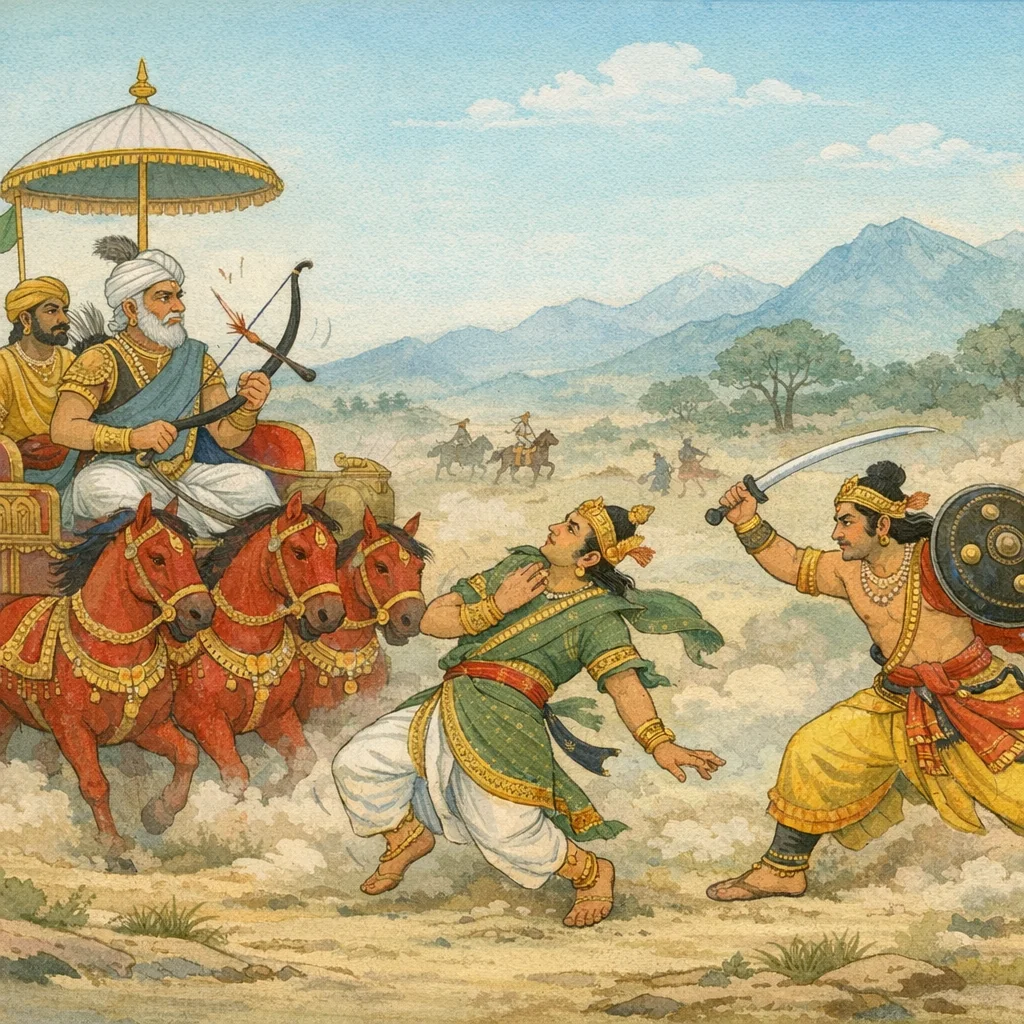
Adhyaya 193
Chapter Arc: संजय धृतराष्ट्र को स्मरण कराते हैं कि धृष्टद्युम्न वही अग्निज पुत्र है जिसे द्रुपद ने महान् यज्ञ में द्रोण-वध के हेतु पाया था—और अब वही प्रतिज्ञा रणभूमि में साक्षात् रूप लेती है। → धृष्टद्युम्न द्रोण पर टूट पड़ता है, पर आचार्य घायल होकर भी विचलित नहीं होते; वे तीक्ष्ण भल्ल से उसका धनुष काटते हैं और उसके रथ के ईषाबन्ध, चक्रबन्ध, रथबन्ध आदि को नष्ट कर युद्ध-यंत्र को ही अपंग कर देते हैं। साथ ही सात्यकि अपनी शिक्षित चपलता और शस्त्र-कौशल से रण को और उग्र बनाता है। → निकृष्ट/सन्निकट युद्ध में द्रोण का अद्वितीय शर-वर्ष धृष्टद्युम्न की रक्षा-व्यवस्था (ढाल-आदि) को चूर करता है; और जब शिष्य-पुत्रतुल्य धृष्टद्युम्न को मारने की इच्छा से आचार्य धनुष पर परम दृढ़ बाण चढ़ाते हैं, तब गुरु-शिष्य-वध की घड़ी रण के शिखर पर पहुँचती है। → धृष्टद्युम्न और उसके सहायक (विशेषतः सात्यकि) कौशल, निकटता और अवसर-हरण से द्रोण के निर्णायक प्रहार को टालते हैं; युद्ध का परिणाम तत्काल निष्कर्ष पर नहीं आता, पर यह स्पष्ट हो जाता है कि द्रोण की प्रचण्डता के सामने केवल असाधारण वीर ही टिक सकते हैं। → आचार्य का चढ़ा हुआ वह ‘परम सुदृढ़’ बाण—क्या वह शिष्य के प्राण लेगा, या रण-नीति फिर किसी अप्रत्याशित मोड़ पर द्रोण के हाथ बाँध देगी?
Shlokas
Verse 1
(दाक्षिणात्य अधिक पाठका ३ “लोक मिलाकर कुल ५९ ६ “लोक हैं।) एकनवर्त्याधिकशततमो< ध्याय: द्रोणाचार्य और धृष्टद्युम्नका युद्ध तथा सात्यकिकी शूरवीरता और प्रशंसा संजय उवाच त॑ दृष्टवा परमोद्धिग्नं शोकोपहतचेतसम् । पाज्चालराजस्य सुतो धृष्टद्युम्न: समाद्रवत्
Sañjaya said: Seeing him in extreme agitation, his mind overwhelmed by grief, Dhṛṣṭadyumna, the son of the king of the Pāñcālas, rushed forward. The verse frames a battlefield response where compassion and urgency arise in the midst of duty-bound combat, showing how grief can momentarily unseat composure even among warriors.
Verse 2
य इष्ट्वा मनुजेन्द्रेण द्रुपदेन महामखे । लब्धो द्रोणविनाशाय समिद्धाद्धव्यवाहनात्
Sañjaya said: “He who, after King Drupada had performed a great sacrifice, was obtained from the blazing sacrificial fire—destined for the destruction of Droṇa.”
Verse 3
संजय कहते हैं--राजन! राजा द्रपदने एक महान् यज्ञमें देवाराथन करके द्रोणाचार्यका विनाश करनेके लिये प्रज्वलित अग्निसे जिस पुत्रको प्राप्त किया था, उस पांचालराजकुमार धृष्टद्युम्नने जब देखा कि आचार्य द्रोण बड़े उद्विग्न हैं और उनका चित्त शोकसे व्याकुल है, तब उन्होंने उनपर धावा कर दिया ।। स धनुर्जैत्रमादाय घोरं जलदनि:स्वनम् । दृढज्यमजरं दिव्यं शरं चाशीविषोपमम्,उन पांचालपुत्रने द्रोणाचार्यके वधकी इच्छा रखकर सुदृढ़ प्रत्यंचासे युक्त, मेघगर्जनाके समान गम्भीर ध्वनि करनेवाले, कभी जीर्ण न होनेवाले, भयंकर तथा विजयशील दिव्य धनुष हाथमें लेकर उसके ऊपर विषधर सर्पके समान भयदायक और प्रचण्ड लपटोंवाले अग्निके तुल्य तेजस्वी एक बाण रखा
Sanjaya said: O King, Dhrishtadyumna—the Panchala prince born from Drupada’s sacrificial fire for the very purpose of bringing about Drona’s downfall—seeing the preceptor Drona shaken and his mind overwhelmed by grief, rushed to attack him. Intent on Drona’s death, he seized his dreadful, victory-bringing celestial bow, tightly strung and unaging, whose sound was like the rumble of storm-clouds, and set upon it an arrow as fearsome as a venomous serpent—blazing with a fire-like brilliance. The scene underscores the grim moral tension of war: a divinely-ordained instrument of vengeance confronting a revered teacher at a moment of human vulnerability.
Verse 4
संदधे कार्मुके तस्मिंस्ततस्तमनलोपमम् | द्रोणं जिघांसु: पाउ्चाल्यो महाज्वालमिवानलम्,उन पांचालपुत्रने द्रोणाचार्यके वधकी इच्छा रखकर सुदृढ़ प्रत्यंचासे युक्त, मेघगर्जनाके समान गम्भीर ध्वनि करनेवाले, कभी जीर्ण न होनेवाले, भयंकर तथा विजयशील दिव्य धनुष हाथमें लेकर उसके ऊपर विषधर सर्पके समान भयदायक और प्रचण्ड लपटोंवाले अग्निके तुल्य तेजस्वी एक बाण रखा
Sañjaya said: Then the son of Pāñcāla, intent on slaying Droṇa, set upon that bow an arrow blazing like fire—like a great-flamed conflagration. The scene underscores the grim momentum of battle: personal resolve and vengeance drive the warrior’s aim, even against a revered teacher, as the war’s ethics tighten into the harsh logic of survival and retribution.
Verse 5
तस्य रूप॑ शरस्यासीद् धनुरज्यामण्डलान्तरे । द्योततो भास्करस्थेव घनान्ते परिवेषिण:,धनुषकी प्रत्यंचा खींचनेसे जो मण्डलाकार घेरा बन गया था, उसके भीतर उस तेजस्वी बाणका रूप शरत्कालमें परिधिके भीतर प्रकाशित होनेवाले सूर्यके समान जान पड़ता था
Sañjaya said: Within the circular arc formed by the bowstring, the blazing arrow’s appearance shone like the sun seen in the rainy season, ringed by a halo amid the edge of clouds—an image that heightens the awe of martial power and the ominous beauty of war.
Verse 6
पार्षतेन परामृष्टं ज्वलन्तमिव तद् धनु: । अन्तकालमनुप्राप्तं मेनिरे वीक्ष्य सैनिका:,धृष्टद्युम्नके हाथमें आये हुए उस प्रज्वलित अग्निके सदृश तेजस्वी धनुषको देखकर सब सैनिक यह समझने लगे कि “मेरा अन्तकाल आ पहुँचा है”
Sañjaya said: When the soldiers saw that bow—seized by Pārṣata (Dhṛṣṭadyumna)—blazing as if on fire, they took it as a sign that their final hour had arrived.
Verse 7
तमिषुं संहतं तेन भारद्वाज: प्रतापवान् | दृष्टवामन्यत देहस्य कालपर्यायमागतम्,द्रुपदपुत्रके द्वारा उस बाणको धनुषपर रखा गया देख प्रतापी द्रोणने भी यह मान लिया कि “अब इस शरीरका काल आ गया”
Sañjaya said: Seeing that arrow, firmly set by him (the son of Drupada), the valiant Bhāradvāja (Droṇa) concluded that the destined turn of time for his body had arrived—recognizing in that act the approach of death amid the righteous yet terrible course of war.
Verse 8
ततः प्रयत्नमातिष्ठदाचार्यस्तस्य वारणे । न चास्यास्त्राणि राजेन्द्र प्रादुगासन्महात्मन:,राजेन्द्र! तदनन्तर आचार्यने उस अस्त्रको रोकनेका प्रयत्न किया, परंतु उन महात्माके अन्तःकरणमें वे दिव्यास्त्र पूर्ववत् प्रकट न हो सके
Sañjaya said: Thereupon the Teacher (Droṇa) exerted himself to check it; yet, O king, the divine weapons did not manifest again within that great-souled warrior as they had before. The moment underscores how, in the turmoil of war, even the might of celestial arms can fail when inner steadiness, favor, or the requisite spiritual condition is absent.
Verse 9
तस्य त्वहानि चत्वारि क्षपा चैकास्थतो गता । तस्य चाह्नस्त्रिभागेन क्षयं जग्मु: पतत्त्रिण:,उनके निरन्तर बाण चलाते चार दिन और एक रातका समय बीत चुका था। उस दिनके पंद्रह भागोंमेंसे तीन ही भागमें उनके सारे बाण समाप्त हो गये
Sañjaya said: As he kept up his unbroken discharge of arrows, four days and a single night passed in that very manner. And within three parts out of the fifteen divisions of that day, all his winged missiles—his arrows—were exhausted.
Verse 10
स शरक्षयमासाद्य पुत्रशोकेन चार्दित: । विविधानां च दिव्यानामस्त्राणामप्रसादत:,बाणोंके समाप्त हो जानेसे पुत्रशोकसे पीड़ित हुए द्रोणाचार्य नाना प्रकारके दिव्यास्त्रोंके प्रकट न होनेसे महर्षियोंकी आज्ञा मानकर अब हथियार डाल देनेको उद्यत हो गये; इसीलिये तेजसे परिपूर्ण होनेपर भी वे पूर्ववर्त् युद्ध नहीं करते थे
Sañjaya said: Having reached the exhaustion of his arrows, and tormented by grief for his son, Drona—finding that the many kinds of celestial weapons did not manifest for him—became ready to lay down his arms in obedience to the seers’ injunction. Therefore, though filled with brilliance, he no longer fought as before.
Verse 11
उत्स्रष्टकाम: शस्त्राणि ऋषिवाक्यप्रचोदित: । तेजसा पूर्यमाणश्न युयुधे न यथा पुरा,बाणोंके समाप्त हो जानेसे पुत्रशोकसे पीड़ित हुए द्रोणाचार्य नाना प्रकारके दिव्यास्त्रोंके प्रकट न होनेसे महर्षियोंकी आज्ञा मानकर अब हथियार डाल देनेको उद्यत हो गये; इसीलिये तेजसे परिपूर्ण होनेपर भी वे पूर्ववर्त् युद्ध नहीं करते थे
Sañjaya said: Urged on by the words of the seers, and with his resolve turning toward laying down his weapons, he no longer fought as he had before—though his inner splendor still surged within him.
Verse 12
भूयश्वान्यत् समादाय दिव्यमाज्डिरसं धनु: । शरांश्व ब्रह्म॒दण्डाभान् धृष्टद्युम्नमयोधयत्,इसके बाद द्रोणाचार्यने पुन: आंगिरस नामक दिव्य धनुष तथा ब्रह्मदण्डके समान बाण हाथमें लेकर धृष्टद्युम्नके साथ युद्ध आरम्भ कर दिया
Sañjaya said: Then again, taking up another divine bow known as Āṅgirasa, and arrows resembling the rod of Brahmā in their dread power, Droṇa renewed the combat and engaged Dhṛṣṭadyumna in battle.
Verse 13
ततस्तं शरवर्षेण महता समवाकिरत् | व्यशातयच्च संक्रुद्धों धृष्टद्युम्नममर्षणम्,उन्होंने अत्यन्त कुपित होकर अमर्षमें भरे हुए धृष्टद्युम्मको अपनी भारी बाणवर्षासे ढक दिया और उन्हें क्षत-विक्षत कर दिया
Sañjaya said: Then, in a surge of wrath, he covered Dhṛṣṭadyumna—burning with fierce impatience and indignation—with a massive shower of arrows, tearing and mangling him.
Verse 14
शरांश्ष शतधा तस्य द्रोणश्रविच्छेद सायकै: । ध्वजं धनुश्चव निशितै: सारथिं चाप्पपातयत्,इतना ही नहीं, द्रोणाचार्यने अपने तीखे बाणोंद्वारा धृष्टद्युम्मके बाण, ध्वज और धनुषके सैकड़ों टुकड़े कर डाले और सारथिको भी मार गिराया
Sañjaya said: With razor-sharp arrows meant for severing shafts, Droṇa cut Dṛṣṭadyumna’s missiles into hundreds of pieces; then, with keen shafts, he struck down his banner and bow, and even felled his charioteer.
Verse 15
धृष्टद्युम्न: प्रहस्यान्यत् पुनरादाय कार्मुकम् | शितेन चैनं बाणेन प्रत्यविध्यत् स्तनान्तरे,तब धृष्टद्युम्नने हँसकर फिर दूसरा धनुष उठाया और तीखे बाणद्वारा आचार्यकी छातीमें गहरी चोट पहुँचायी
Sañjaya said: Dṛṣṭadyumna, laughing, took up another bow again and then struck Droṇācārya with a sharp arrow, piercing him in the region of the chest.
Verse 16
सो35तिविद्धो महेष्वासो5सम्भ्रान्त इव संयुगे । भल्लेन शितधारेण चिच्छेदास्य पुनर्धनु:,युद्धस्थलमें अत्यन्त घायल होकर भी महाथधनुर्धर द्रोणने बिना किसी घबराहटके तीखी धारवाले भल्लसे पुनः उनका धनुष काट दिया
Sañjaya said: Though grievously wounded, the great archer Droṇa, as if unshaken amid the clash of battle, once again severed his opponent’s bow with a razor-edged bhalla arrow.
Verse 17
यच्चास्य बाणविकृतं धनूंषि च विशाम्पते । सर्व चिच्छेद दुर्धर्षो गदां खड्गं च वर्जयन्
Sañjaya said: “O lord of the people, whatever of his bows had been damaged and distorted by arrows—those too the irresistible warrior cut to pieces entirely, yet he deliberately spared the mace and the sword.”
Verse 18
प्रजानाथ! धृष्टद्युम्मके जो-जो बाण, तरकस और धनुष आदि थे, उनमेंसे गदा और खड्गको छोड़कर शेष सारी वस्तुओंको दुर्धर्ष द्रोणाचार्यने काट डाला ।। धृष्टद्युम्नं च विव्याध नवभिर्निशितै: शरै: । जीवितान्तकरे: क्रुद्धः क्ुद्धरूपं परंतप:,शत्रुओंको संताप देनेवाले द्रोणने कुपित होकर क्रोधमें भरे हुए धृष्टद्युम्नको नौ प्राणान्तकारी तीक्ष्ण बाणोंद्वारा बींध डाला
Sañjaya said: O lord of men, whatever arrows, quivers, bows, and other weapons Dṛṣṭadyumna possessed—except for his mace and sword—those formidable arms were all hewn apart by the hard-to-assail Acharya Droṇa. Then, in wrath, the enemy-scorching Droṇa, his form fierce with anger, pierced Dṛṣṭadyumna with nine razor-sharp arrows, each as if a bringer of death.
Verse 19
धृष्टद्युम्नो5थ तस्याश्वान् स्वरथाश्वैर्महारथ: । व्यामिश्रयदमेयात्मा ब्राह्ममस्त्रमुदीरयन्,तब अमेय आत्मबलसे सम्पन्न महारथी धृष्टद्युम्नने ब्रह्मास्त्रका प्रयोग करनेके लिये अपने रथके घोड़ोंको आचार्यके घोड़ोंसे मिला दिया
Sañjaya said: Then the great chariot-warrior Dhṛṣṭadyumna, of immeasurable spirit, drove his own horses into close mêlée with Droṇa’s horses, even as he set in motion the Brahmā-weapon (Brahmāstra). In the thick of battle he chose direct engagement, invoking a supreme missile—an act that sharpens both the tactical urgency and the moral tension of wielding extraordinary force against a revered teacher.
Verse 20
ते मिश्रा बह्दशो भन्त जवना वातरंहस: । पारावतसवर्णाशक्ष शोणाश्वा भरतर्षभ,भरतश्रेष्ठ! वे वायुके समान वेगशाली, कबूतरके समान रंगवाले और लाल घोड़े परस्पर मिलकर बड़ी शोभा पाने लगे
Sañjaya said: “O bull among the Bharatas, those horses—of mixed kinds and many varieties—shone brilliantly: swift as the wind, dove-coloured, and red. Mingling together in the press of war, they appeared all the more splendid.”
Verse 21
यथा सविद्युतो मेघा नदन्तो जलदागमे । तथा रेजुर्महाराज मिश्रिता रणमूर्थनि,महाराज! जैसे वर्षाकालमें गर्जते हुए विद्युत्सहित मेघ सुशोभित होते हैं, उसी प्रकार युद्धके मुहानेपर परस्पर मिले हुए वे घोड़े शोभा पाते थे
Sañjaya said: “O King, just as thunderous clouds, streaked with lightning, shine forth at the coming of the rain, so too those horses—mingled together at the very forefront of battle—appeared splendid.”
Verse 22
ईषाबन्धं चक्रबन्धं रथबन्धं तथैव च । प्रणाशयदमेयात्मा धृष्टद्युम्नस्य स द्विज:,उस समय अमेय बलसम्पन्न विप्रवर द्रोणाचार्यने धृष्टद्युम्मके रथके ईषाबन्ध, चक्रबन्ध तथा रथबन्धको नष्ट कर दिया
Sañjaya said: The immeasurable-souled brahmin (Droṇācārya) destroyed Dhṛṣṭadyumna’s chariot—its pole-fastening, its wheel-fastening, and the chariot-fastening as well.
Verse 23
स च्छिन्नधन्वा पाज्चाल्यो निकृत्तध्वजसारथि: । उत्तमामापदं प्राप्य गदां वीर: परामृशत्,धनुष, ध्वज और सारथिके नष्ट हो जानेपर भारी विपत्तिमें पड़कर पांचालराजकुमार वीर धृष्टद्युम्नने गदा उठायी
Sañjaya said: When his bow had been cut down, and his banner and charioteer had been struck down, the Pāñcāla prince—heroic Dhṛṣṭadyumna—having fallen into a most perilous crisis, reached for a mace.
Verse 24
तामस्य विशिखैस्ती&्ष्णै: क्षिप्पमाणां महारथ: । निजघान शरैद्रोण: क्रुद्ध:ः सत्यपराक्रम:,उसके द्वारा चलायी जानेवाली उस गदाको सत्यपराक्रमी महारथी द्रोणने कुपित हो बाणोंद्वारा नष्ट कर दिया
Sañjaya said: As that weapon of his was being hurled, the great chariot-warrior Droṇa—angered yet true to his proven valor—struck it down at once with sharp arrows. In the harsh ethics of battle, mastery and restraint appear together: the teacher-warrior neutralizes a deadly assault swiftly, aiming to prevent further harm rather than indulge in needless cruelty.
Verse 25
तां तु दृष्टवा नरव्याप्रो द्रोणेन निहतां शरै: । विमलं खड्गमादत्त शतचन्द्रं च भानुमत्,उस गदाको द्रोणाचार्यके बाणोंसे नष्ट हुई देख पुरुषसिंह धृष्टद्युम्नने सौ चन्द्राकार चिह्नोंसे युक्त चमकीली ढाल और चमचमाती हुई तलवार हाथमें ले ली
Sañjaya said: Seeing it struck down by Droṇa’s arrows, the tiger among men—Dhṛṣṭadyumna—took up a spotless sword and a radiant shield marked with a hundred moon-emblems. In the face of grievous loss, he steels himself to meet violence with disciplined resolve, embodying the grim warrior-duty of the battlefield rather than personal indulgence.
Verse 26
असंशयं तथाभूत: पाउ्चाल्य: साध्वमन्यत । वधमाचार्यमुख्यस्य प्राप्तकालं महात्मन:,उस अवस्थामें पांचालराजकुमारने यह निःसंदेह ठीक मान लिया कि अब आचार्यप्रवर महात्मा द्रोणके वधका समय आ पहुँचा है
Sañjaya said: The Pāñcāla prince, being in that state of mind, judged without doubt that it was right—that the time had now arrived for the slaying of the great-souled Droṇa, foremost among teachers. The verse frames a grim wartime calculus: a revered preceptor is treated as a strategic obstacle, and ‘right action’ is interpreted through the urgency of the moment rather than through reverence alone.
Verse 27
ततः स रथनीडस्थं स्वरथस्य रथेषया । अगच्छदसिमुद्यम्य शतचन्द्रं च भानुमत्,उस समय उन्होंने तलवार और सौ चन्द्रचिह्"ोंवाली ढाल लेकर अपने रथकी ईषाके मार्गसे रथकी बैठकमें बैठे हुए द्रोणपर आक्रमण किया
Sañjaya said: Then he advanced toward Droṇa, who was seated in the chariot’s nest-seat, moving along the pole of his own chariot; raising his sword and bearing a radiant shield marked with a hundred moon-emblems, he launched his assault. The scene underscores the relentless momentum of battle, where personal valor and tactical proximity drive the encounter even against a revered teacher on the field of dharma-war.
Verse 28
चिकीर्षुर्दुष्करं कर्म धृष्टद्युम्नो महारथ: । इयेष वक्षो भेत्तुं स भारद्वाजस्य संयुगे,तत्पश्चात् महारथी धृष्टद्युम्नने दुष्कर कर्म करनेकी इच्छासे उस रणभूमिमें आचार्य द्रोणकी छातीमें तलवार भोंक देनेका विचार किया
Sañjaya said: Wishing to accomplish a deed hard to perform, the great chariot-warrior Dhṛṣṭadyumna resolved, in the thick of battle, to pierce the chest of Bhāradvāja’s son (Droṇa). The verse frames his intent as a daring, perilous act—an ethically charged resolve within the brutal necessities and transgressions of war.
Verse 29
सो&तिष्ठद् युगमध्ये वै युगसन्नहनेषु च । जघनार्थेषु चाश्वानां तत् सैन्या: समपूजयन्,वे रथके जूएके ठीक बीचमें, जूएके बन्धनोंपर और द्रोणाचार्यके घोड़ोंके पिछले भागोंपर पैर जमाकर खड़े हो गये। उनके इस कार्यकी सभी सैनिकोंने भूरि-भूरि प्रशंसा की
Sañjaya said: He stood firmly in the very middle of the yoke, bracing himself upon the yoke-fastening straps, and even planting his feet near the hindquarters of the horses—an act of daring control amid the press of battle. Seeing this feat, the assembled troops praised him greatly, admiring his skill and steadiness in war.
Verse 30
तिष्ठतो युगपालीषु शोणानप्यधितिष्ठत: । नापश्यदन्तरं द्रोणस्तदद्भुतमिवाभवत्
Sañjaya said: Even while they stood firm in their battle-formations, and even as the blood-red carnage surged all around, Droṇa could find no opening at all. It seemed truly wondrous—an extraordinary moment in the moral drama of war, where steadfast discipline and resolve momentarily checked even a master of arms.
Verse 31
जैसे मांसके टुकड़ेके लोभसे विचरते हुए बाजका बड़े वेगसे आक्रमण होता है, उसी प्रकार रणभूमिमें द्रोणाचार्य और धृष्टद्युम्नके परस्पर वेगपूर्वक आक्रमण होते थे
Sañjaya said: Just as a hawk, roaming with greed for a piece of flesh, swoops down with tremendous speed, so on the battlefield Droṇācārya and Dhṛṣṭadyumna repeatedly rushed at one another with forceful, mutual assaults.
Verse 32
तस्य पारावतानश्चान् रथशक््त्या पराभिनत् | सवनिकैकशो द्रोणो रक्तानश्वान् विवर्जयन्,द्रोणाचार्यने लाल घोड़ोंको बचाते हुए रथशक्तिका प्रहार करके बारी-बारीसे कबूतरके समान रंगवाले सभी घोड़ोंको मार डाला
Sañjaya said: Drona, sparing the red horses, struck down—one after another—with a spear hurled from his chariot, all the horses that were dove-coloured.
Verse 33
ते हता न््यपतन् भूमौ धृष्टद्युम्नस्य वाजिन: । शोणास्तु पर्यमुच्यन्त रथबन्धाद् विशाम्पते,प्रजानाथ! धृष्टद्युम्नके वे घोड़े मारे जाकर पृथ्वीपर गिर पड़े और लाल रंगवाले घोड़े रथके बन्धनसे मुक्त हो गये
Sañjaya said: The horses of Dhṛṣṭadyumna, struck down, fell upon the earth. But the red steeds were released from the chariot’s harness—O lord of the people, O protector of subjects—showing how, amid the violence of war, fate spares some even as others perish.
Verse 34
तान् हयान् निहतानू् दृष्टवा द्विजाग्रयेण स पार्षतः । नामृष्यत युधां श्रेष्ठो याज्ञसेनिर्महारथ:,विप्रवर द्रोणके द्वारा अपने घोड़ोंको मारा गया देख योद्धाओंमें श्रेष्ठ पार्षतवंशी महारथी ट्रपदकुमार सहन न कर सके
Sañjaya said: Seeing those horses slain by the foremost of the twice-born (Droṇa), the Pārṣata warrior—Drupada’s son Yājñaseni, a great chariot-fighter famed among combatants—could not endure it. The sight of his mounts cut down kindled his wrath, showing how, in the heat of war, even a disciplined hero is driven by wounded pride and the urgent demands of battle.
Verse 35
विरथ: स गृहीत्वा तु खड्गं खड्गभृतां वर । द्रोणमभ्यपतद् राजन् वैनतेय इवोरगम्,राजन! रथहीन हो जानेपर खड्गधारियोंमें श्रेष्ठ धृष्टद्यम्म खड्ग हाथमें लेकर द्रोणाचार्यपर उसी प्रकार टूट पड़े, जैसे गरुड़ किसी सर्पपर झपटते हैं
Sañjaya said: Then, though bereft of his chariot, Dhṛṣṭadyumna—foremost among swordsmen—seized his sword and rushed straight at Droṇa, O King, like Garuḍa (son of Vinatā) swooping upon a serpent. The image underscores the fierce resolve of a warrior who, even when disadvantaged, presses the attack with single-minded intent, turning personal valor into a decisive moral and tactical moment in the battle.
Verse 36
तस्य रूपं बभौ राजन् भारद्वाजं जिघांसत: । यथा रूपं पुरा विष्णोर्हिरण्यकशिपोर्वधे
Sañjaya said: O King, as he sought to slay Bhāradvāja (Droṇa), his appearance blazed forth—like the form Viṣṇu once assumed when He brought about the death of Hiraṇyakaśipu. The comparison casts the warrior’s wrathful purpose in a near-divine, awe-inspiring light, as though battle could momentarily mirror the terrible majesty of cosmic justice.
Verse 37
नरेश्वर! द्रोणके वधकी इच्छा रखनेवाले धृष्टद्युम्नका रूप पूर्वकालमें हिरण्यकशिपुके वधके लिये उद्यत हुए नृसिंहरूपधारी भगवान् विष्णुके समान प्रतीत होता था ।। स तदा विविधान् मार्गान् प्रवरांश्चैकविंशतिम् | दर्शयामास कौरव्य पार्षतो विचरन् रणे,कुरुनन्दन! रणमें विचरते हुए धृष्टद्युम्नने उस समय तलवारके इक्कीस प्रकारके विविध उत्तम हाथ दिखाये
Sañjaya said: O King, Dhṛṣṭadyumna—intent on slaying Droṇa—appeared like Lord Viṣṇu in the form of Narasiṃha, who once rose to destroy Hiraṇyakaśipu. Then, moving about in the battle, the son of Pṛṣata displayed, O descendant of Kuru, twenty-one excellent and varied sword-techniques.
Verse 38
भ्रान्तमुद्भ्रान्तमाविद्धमाप्लुतं प्रसृतं सृतम् । परिवृत्तं निवृत्तं च खड््गं॑ चर्म च धारयन्,उन्होंने ढाल-तलवार लेकर भ्रान्त, उदभ्रान्त, आविद्ध, आप्लुत, प्रसृत, सृत, परिवृत्त, निवृत्त, सम्पात, समुदीर्ण, भारत, कौशिक तथा सात्वत आदि मार्गोंकौो- अपनी शिक्षाके अनुसार दिखलाया
Sañjaya said: Bearing sword and shield, he displayed—according to his training—the many prescribed modes of movement and attack: circling and whirling, striking and leaping, advancing and withdrawing, turning and returning. Thus he demonstrated the disciplined art of combat, where skill is governed by method and instruction even amid the violence of war.
Verse 39
सम्पातं समुदीर्ण च दर्शयामास पार्षत: । भारतं कौशिक चैव सात्वतं चैव शिक्षया,उन्होंने ढाल-तलवार लेकर भ्रान्त, उदभ्रान्त, आविद्ध, आप्लुत, प्रसृत, सृत, परिवृत्त, निवृत्त, सम्पात, समुदीर्ण, भारत, कौशिक तथा सात्वत आदि मार्गोंकौो- अपनी शिक्षाके अनुसार दिखलाया
Sañjaya said: The son of Pṛṣata (Dhṛṣṭadyumna), keeping to the discipline of his training, displayed the movements called “Sampāta” and “Samudīrṇa”, and likewise the “Bhārata”, “Kauśika”, and “Sātvata” methods—revealing the refined, rule-bound art of sword and shield even amid the pressures of war.
Verse 40
दर्शयन् व्यचरद् युद्धे द्रोणस्यान्तचिकीर्षया । चरतस्तस्य तान् मार्गान् विचित्रान् खड़्गचर्मिण:
Sañjaya said: Displaying his prowess, he moved about in the battle with the resolve to bring Droṇa to his end. As that sword-and-shield-bearing warrior ranged across the field, he traced many astonishing and varied paths of attack—maneuvers meant to close in on Droṇa and fulfill a grim purpose within the demands of war.
Verse 41
व्यस्मयन्त रणे योधा देवताश्न समागता: । वे द्रोणाचार्यका अन्त करनेकी इच्छासे युद्धमें तलवारके उपर्युक्त हाथ दिखाते हुए विचर रहे थे। ढाल-तलवार लेकर विचरते हुए धृष्टद्युम्नके उन विचित्र पैंतरोंको देखकर रणभूमिमें आये हुए योद्धा और देवता आश्वर्यचकित हो उठे थे || ४० ई ।। तत:ः शरसहस्रेण शतचन्द्रमपातयत्
Sañjaya said: On the battlefield, the warriors—and even the assembled gods—were struck with amazement. With sword and shield in hand, Dhṛṣṭadyumna moved about employing extraordinary feints and maneuvers, intent on bringing about the end of Droṇācārya. Seeing those uncanny movements of Dhṛṣṭadyumna, the fighters who had come to the field, along with the divine spectators, were filled with wonder. Then, with a thousand arrows, he struck down a hundred “moon-like” targets—shattering the enemy’s shining weapons or crests in rapid succession.
Verse 42
चर्म खड््गं च सम्बाधे धृष्टद्युम्नस्य स द्विज: । ये तु वैतस्तिका नाम शरा आसन्नयोधिन:
Sañjaya said: In the press of close combat, that Brahmin too took up a shield and sword against Dhṛṣṭadyumna; and the arrows called vaitastikā were at hand for the fighters—implements of war brought into use amid the crush, where survival depends on readiness and resolve.
Verse 43
निकृष्टयुद्धे द्रोणस्य नान्येषां सन्ति ते शरा: । तदनन्तर, उस युद्ध-संकटके समय विप्रवर द्रोणाचार्यने एक हजार बाणोंसे धुृष्टद्युम्नकी सौ चाँदवाली ढाल और तलवार काट गिरायी। निकटसे युद्ध करते समय उपयोगमें आनेवाले जो एक बित्तेके बराबर वैतस्तिक नामक बाण होते हैं, वे समीपसे भी युद्ध करनेमें कुशल द्रोणाचार्यके ही पास थे, दूसरोंके नहीं ।। ४१-४२ $ ।। ऋते शारद्वतात् पार्थाद् द्रौणेवैंकर्तनात् तथा
Sañjaya said: In close-quarters fighting, such arrows were found with Droṇa and not with others. Then, in that crisis of battle, the best of Brahmins, Droṇācārya, with a thousand shafts, cut down Dhṛṣṭadyumna’s shield marked with a hundred moon-emblems and also his sword. The arrows called vaitastika—meant for fighting at very close range and about a span in measure—belonged to Droṇa alone, who was skilled even in near combat; they were not possessed by the rest.
Verse 44
अथास्येषुं समाधत्त दृढे परमसम्मतम्
Sañjaya said: Then he fixed an arrow upon his bow—firm and perfectly approved for the task—signaling a resolute intent to strike with disciplined purpose amid the moral gravity of battle.
Verse 45
त॑ शरैर्दशभिस्ती &णैश्वचिच्छेद शिनिपुज्रव:,परंतु उस बाणको शिनिप्रवर सात्यकिने महामना कर्ण और आपके पुत्रके देखते-देखते दस तीखे बाणोंसे काट डाला और आचार्यप्रवरके द्वारा प्राणसंकटमें पड़े हुए धृष्टद्युम्नको छुड़ा लिया
Sanjaya said: Then the foremost of the Śinis—Sātyaki, great-souled—before Karṇa and your son looked on, cut that arrow into pieces with ten sharp shafts. Thus he rescued Dhṛṣṭadyumna, whose life had been brought into peril by the preeminent teacher, upholding the warrior’s duty to protect an ally in the midst of battle.
Verse 46
पश्यतस्तव पुत्रस्य कर्णस्य च महात्मन: । ग्रस्तमाचार्यमुख्येन धृष्टद्युम्मममोचयत्,परंतु उस बाणको शिनिप्रवर सात्यकिने महामना कर्ण और आपके पुत्रके देखते-देखते दस तीखे बाणोंसे काट डाला और आचार्यप्रवरके द्वारा प्राणसंकटमें पड़े हुए धृष्टद्युम्नको छुड़ा लिया
Sanjaya said: While your son and the high-souled Karna looked on, Satyaki—foremost among the Shinis—cut down that missile with ten sharp arrows and freed Dhrishtadyumna, who had been seized and brought into mortal peril by the foremost of teachers (Drona).
Verse 47
चरन्तं रथमार्गेषु सात्यकिं सत्यविक्रमम् । द्रोणकर्णान्तरगतं कृपस्थापि च भारत
Sañjaya said: O Bhārata, Sātyaki—whose valor never proves false—was moving along the tracks made by chariots, having pressed into the space between Droṇa and Karṇa, and even into the position held by Kṛpa. The scene shows a warrior’s resolute advance through the most dangerous gaps in the enemy line, where courage is tested against duty and the brutal necessities of war.
Verse 48
अपश्येतां महात्मानौ विष्वक्सेनधनंजयौ । अपूजयेतां वार्ष्णेयं ब्रवाणी साधु साध्विति
Sañjaya said: Those two great-souled heroes—Viṣvaksena and Dhanañjaya—beheld him, and they honored Vārṣṇeya (Kṛṣṇa), repeatedly saying, “Well done, well done!” In the midst of war, the verse highlights reverence for righteous counsel and the ethical impulse to acknowledge what is truly commendable.
Verse 49
दिव्यान्यस्त्राणि सर्वेषां युधि निघ्नन्तमच्युतम् भारत! उस समय सत्यपराक्रमी सात्यकि द्रोण, कर्ण और कृपाचार्यके बीचमें होकर रथके मार्गोंपर विचर रहे थे। उन्हें उस अवस्थामें महात्मा श्रीकृष्ण और अर्जुनने देखा और 'साधु-साधु” कहकर सात्यकिकी भूरि-भूरि प्रशंसा की। वे युद्धमें अविचलभावसे डटे रहकर समस्त विरोधियोंके दिव्यास्त्रोंका निवारण कर रहे थे || ४७-४८ $ ।। अभिपत्य ततः सेनां विष्वक्सेनधनंजयौ,तदनन्तर श्रीकृष्ण और अर्जुन शत्रुसेनापर टूट पड़े। उस समय अर्जुनने श्रीकृष्णसे कहा--'केशव! देखिये, यह मधुवंशशिरोमणि सात्यकि आचार्यकी रक्षा करनेवाले मुख्य महारथियोंके बीचमें खेल रहा है
Sañjaya said: “O Bhārata, at that time the truly valiant Sātyaki was moving along the chariot-lanes of the battlefield, passing between Droṇa, Karṇa, and Kṛpa. In that condition the great-souled Śrī Kṛṣṇa and Arjuna saw him, and crying ‘Well done! Well done!’ they praised Sātyaki again and again. Steadfast in the fight, he was warding off the divine missiles of all opponents. Then Viṣvaksena (Kṛṣṇa) and Dhanañjaya (Arjuna) charged upon the enemy host. Arjuna said to Kṛṣṇa: ‘Keśava, look! This crest-jewel of the Madhu line—Sātyaki—seems to be sporting in the very midst of the foremost mahārathas who stand as the chief protectors of the Ācārya.’”
Verse 50
धनंजयस्तत: कृष्णमब्रवीत् पश्य केशव । आचार्यरथमुख्यानां मध्ये क्रीडन् मधूद्गह:,तदनन्तर श्रीकृष्ण और अर्जुन शत्रुसेनापर टूट पड़े। उस समय अर्जुनने श्रीकृष्णसे कहा--'केशव! देखिये, यह मधुवंशशिरोमणि सात्यकि आचार्यकी रक्षा करनेवाले मुख्य महारथियोंके बीचमें खेल रहा है
Sañjaya said: Then Dhanañjaya (Arjuna) spoke to Kṛṣṇa, “Look, Keśava! There, in the very midst of the foremost chariot-warriors who are guarding the Teacher’s chariot, that hero—born of the Madhu line—moves as if at play.” The remark underscores both the ferocity of the battle and the astonishing fearlessness and skill of Sātyaki as he penetrates the protective ring around Droṇa.
Verse 51
आनन्दयति मां भूय: सात्यकि: परवीरहा । माद्रीपुत्रो च भीमं च राजानं च युधिषछ्विरम्,शत्रुवीरोंका संहार करनेवाला सात्यकि मुझे बारंबार आनन्द दे रहा है और नकुल, सहदेव, भीमसेन तथा राजा युधिष्ठिरको भी आनन्दित कर रहा है
Sañjaya said: “Again and again Sātyaki, the slayer of enemy heroes, fills me with joy; and he also gladdens Mādrī’s sons, Bhīma, and King Yudhiṣṭhira.”
Verse 52
यच्छिक्षयानुद्धत: सन् रणे चरति सात्यकि: । महारथानुपक्रीडन् वृष्णीनां कीर्तिवर्धन:,*वृष्णिवंशका यश बढ़ानेवाला सात्यकि उत्तम शिक्षासे युक्त होनेपर भी अभिमानशून्य हो महारथियोंके साथ क्रीड़ा करता हुआ रणभूमिमें विचर रहा है। इसलिये ये सिद्धणण और सैनिक आश्चवर्यवकित हो समरांगणमें परास्त न होनेवाले सात्यकिकी ओर देखकर “साधु- साधु” कहते हुए इसका अभिनन्दन करते हैं और दोनों दलोंके समस्त योद्धाओंने इसके वीरोचित कर्मोंसे प्रभावित हो इसकी बड़ी प्रशंसा की है”
Sañjaya said: Though perfectly trained, Sātyaki moves through the battlefield without arrogance. Sporting with the great chariot-warriors as if in play, he increases the fame of the Vṛṣṇis. Seeing his fearless prowess, warriors on both sides acclaim him with cries of “Well done!” and praise his heroic deeds.
Verse 53
तमेते प्रतिनन्दन्ति सिद्धा: सैन्याश्न विस्मिता: । अजय्यं समरे दृष्टवा साधु साध्विति सात्यकिम् | योधाश्वो भयत:ः सर्वे कर्मभि: समपूजयन्,*वृष्णिवंशका यश बढ़ानेवाला सात्यकि उत्तम शिक्षासे युक्त होनेपर भी अभिमानशून्य हो महारथियोंके साथ क्रीड़ा करता हुआ रणभूमिमें विचर रहा है। इसलिये ये सिद्धणण और सैनिक आश्चवर्यवकित हो समरांगणमें परास्त न होनेवाले सात्यकिकी ओर देखकर “साधु- साधु” कहते हुए इसका अभिनन्दन करते हैं और दोनों दलोंके समस्त योद्धाओंने इसके वीरोचित कर्मोंसे प्रभावित हो इसकी बड़ी प्रशंसा की है”
Sañjaya said: “Seeing Sātyaki—unconquerable in battle—these Siddhas and the astonished soldiers applaud him. Gazing upon him in the thick of combat, they cry ‘Well done! Well done!’ and celebrate his deeds.”
Verse 190
इस प्रकार श्रीमह्मा भारत द्रोणपर्वके अन्तर्गत द्रोणवधपर्वमें युधिष्ठिरका असत्यभाषणविषयक एक सौ नब्बेवाँ अध्याय पूरा हुआ
Thus ends the one hundred and ninety-ninth chapter of the Droṇa Parva of the Śrī Mahābhārata, within the section on the slaying of Droṇa, dealing with Yudhiṣṭhira’s utterance of untruth. The colophon signals the moral tension at the heart of the episode: in the pressure of war, even a king famed for truth is drawn into a compromised speech-act whose ethical weight shapes the fall of Droṇa and the narrative’s reflection on dharma under extreme necessity.
Verse 191
इति श्रीमहाभारते द्रोणपर्वणि द्रोणवधपर्वणि संकुलयुद्धे एकनवत्यधिकशततमो< ध्याय:,इस प्रकार श्रीमहाभारत द्रोणपर्वके अन्तर्गत द्रोणवधपर्वमें संकुलयुद्धविषयक एक सौ इक्यानबेवाँ अध्याय पूरा हुआ
Sañjaya said: Thus ends the one hundred and ninety-first chapter, entitled “The Confused and Intermingled Battle,” within the Droṇa Parva of the Śrī Mahābhārata, in the sub-section concerning the slaying of Droṇa. The narration marks a formal closure to this phase of the war-account, underscoring how the conflict has reached a state of dense entanglement—where clarity of order and restraint is strained, and the ethical weight of warfare presses heavily upon all sides.
Verse 331
वे जूएके मध्यभागमें और द्रोणाचार्यके लाल घोड़ोंकी पीठपर पैर रखकर खड़े थे। उस अवस्थामें द्रोणाचार्यको उनके ऊपर प्रहार करनेका कोई अवसर ही नहीं दिखायी देता था, यह एक अदभुत-सी बात हुई ।। क्षिप्रं श्येनस्थ चरतो यथैवामिषगृद्धिन: । तद्धदासीदभीसारो द्रोणपार्षतयो रणे
They stood in the midst of the battle, planting their feet upon the backs of Droṇācārya’s red horses. In that posture, Droṇācārya could see no opening at all to strike at them from above—an astonishing thing. And in the fight, the onrush of Droṇa and the son of Pārṣata was swift as a hawk in flight, like a predator greedy for flesh.
Verse 433
प्रद्युम्नयुयुधानाभ्यामभिमन्योश्व॒ भारत । भारत! कृपाचार्य, अर्जुन, अश्वत्थामा, वैकर्तन, कर्ण, प्रद्युम्म, सात्यकि और अभिमन्युको छोड़कर और किसीके पास वैसे बाण नहीं थे
Sanjaya said: O Bharata, apart from Pradyumna, Yuyudhāna (Sātyaki), and Abhimanyu—and besides Kṛpācārya, Arjuna, Aśvatthāmā, Vaikartana (Karna), and Karna—no one else possessed arrows of such power. By this, the narrator marks a moral and martial hierarchy: in the chaos of war, only a few warriors combine skill, discipline, and resolve sufficient to wield extraordinary weapons without losing restraint.
Verse 443
अन्तेवासिनमाचार्यों जिघांसु: पुत्रसम्मितम् । तत्पश्चात् पुत्रतुल्य शिष्यको मार डालनेकी इच्छासे आचार्यने धनुषपर परम उत्तम सुदृढ़ बाण रखा
Sañjaya said: The teacher, intent on killing his own resident disciple—one regarded as a son—then, with the desire to slay that pupil who was like a son to him, set upon his bow an excellent, exceedingly firm arrow. The moment exposes the moral fracture of war: even bonds of teacher and student, akin to family, are overridden by the resolve to destroy.