Adhyaya 53
Rajo-dhūli-saṃmūḍha-saṅgrāmaḥ (The Dust-Obscured Battle and Mutual Charges)
Upa-parva: Kurukṣetra-saṅgrāma-varṇana (Battlefield Chronicle under Bhīṣma)
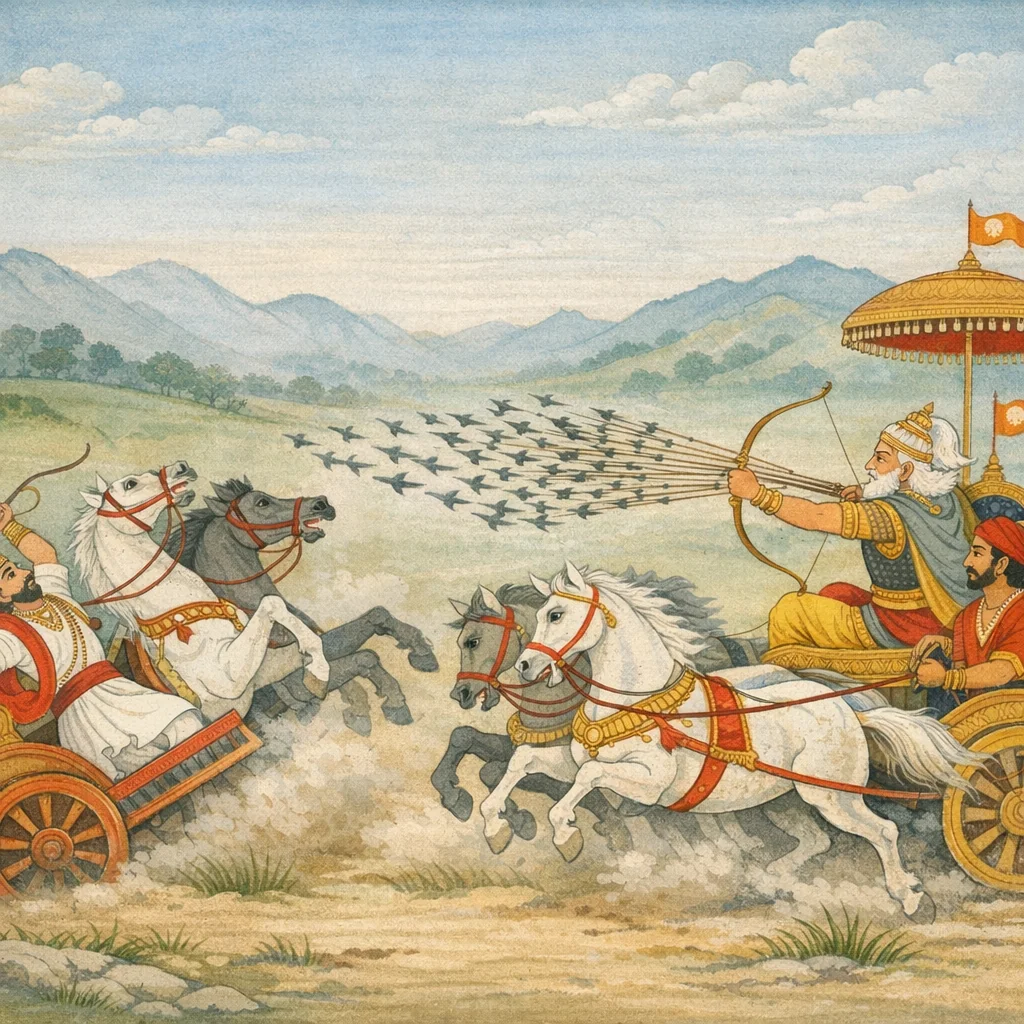
Saṃjaya reports that once both armies are arrayed, Arjuna (Dhanañjaya), described as an atiratha, strikes down a ratha-contingent and repeatedly fells chariot-leaders with arrows. Despite losses, Dhṛtarāṣṭra’s forces press on, seeking conspicuous renown and treating withdrawal as tantamount to death. The fighting becomes chaotic: broken chariots, rapid turns, and fleeing units raise dense dust that obscures the sun and dissolves clear identification; combatants recognize one another only by inference, calls, and lineage-names. Yet the major formations do not collapse—Kaurava vyūhas are held together under the protection of the resolute Bhāradvāja (Droṇa), while the Pāṇḍava formation is guarded by Savyasācin (Arjuna) and reinforced by Bhīma. The narrative then catalogs mixed-arm engagements—horsemen against horsemen, charioteers against charioteers, elephant-riders against elephant-riders, infantry against multiple arms—producing a landscape strewn with weapons, banners, armor, and bodies. As dust settles, omens of devastation are suggested through the appearance of numerous headless trunks (kabandhas). The chapter closes by naming leading champions on both sides who repeatedly break opposing units, culminating in Duryodhana’s advance with a thousand chariots and a renewed, intensified clash as the Pāṇḍavas counter-march against Droṇa and Bhīṣma.
Chapter Arc: धृतराष्ट्र श्वेत के सेनापति-रूप में अग्रसर होने और संग्राम के प्रथम दिन की भीषणता का समाचार सुनकर संजय से पूछते हैं—श्वेत के गिरने के बाद युद्ध का प्रवाह किस ओर मुड़ा। → संजय बतलाते हैं कि विराटपुत्र श्वेत ने क्रोध और प्रतिज्ञा से प्रेरित होकर कौरव-पक्ष के प्रमुख रथियों पर धावा बोला; उसके बाण-वर्ष से अनेक योद्धा विचलित हुए, पर भीष्म अपने प्रचण्ड पराक्रम से रणभूमि को ढँक देते हैं—उनके रथ से छूटे बाण पक्षियों-से आकाश भर देते हैं। → भीष्म का श्वेत पर निर्णायक प्रहार—भीष्म के तीक्ष्ण, बहु-प्रहारक शर-वर्ष के सामने श्वेत का रथ-बल टूटता है और सेनापति श्वेत युद्ध में निपातित होता है; कौरवों में उत्साह और पाण्डवों में ज्वाला-सा रोष भड़क उठता है। → श्वेत-वध के बाद कौरव-सेना संभलती है, भीष्म की ध्वजा-सी स्थिरता से प्रथम दिन का युद्ध समापन की ओर जाता है; धृतराष्ट्र के मन में विजय-आशा जागती है, पर संजय संकेत देता है कि यह विजय-उल्लास क्षणिक है क्योंकि पाण्डवों का क्रोध अब और तीव्र होगा। → श्वेत-वध से पाण्डवों के भीतर जो ‘प्रज्वलित मन’ उठता है, वह अगले दिन किस महाविनाशक प्रतिशोध में फूटेगा—यही अनकहा भय अगले प्रसंग पर छोड़ दिया जाता है।
Shlokas
Verse 1
ऑपन--माज छा जि: एकोनपज्चाशत्तमो<ड्ध्याय: शंखका युद्ध, भीष्मका प्रचण्ड पराक्रम तथा प्रथम दिनके युद्धकी समाप्ति धृतराष्ट उवाच श्वैते सेनापतौ तात संग्रामे निहते परै: । किमकुर्वन् महेष्वासा: पञ्चाला: पाण्डवै: सह,धृतराष्ट्रने पूछा--तात! सेनापति श्वेतके शत्रुओंद्वारा युद्धस्थलमें मारे जानेपर महान् धनुर्धर पांचालों और पाण्डवोंने क्या किया?
Dhṛtarāṣṭra said: “Dear son, when Śveta, the commander, was slain in battle by the enemy, what did the great bowmen—the Pāñcālas together with the Pāṇḍavas—do then?”
Verse 2
सेनापतिं समाकर्ण्य श्वेतं युधि निपातितम् । तदर्थ यततां चापि परेषां प्रपलायिनाम्
Dhṛtarāṣṭra said: Hearing that Śveta, the commander, had been struck down in battle, and that the others—though striving for that very objective—were nonetheless fleeing from the enemy, (tell me what followed).
Verse 3
मन: प्रीणाति मे वाक््यं जयं संजय शृण्वत: । प्रत्युपायं चिन्तयतो लज्जां प्राप्रोति मे न हि
Dhṛtarāṣṭra said: “O Sañjaya, as I listen, your words delight my heart and make me feel as though victory is mine. And while I keep thinking of counter-measures, I feel no shame at all.”
Verse 4
स हि वीरो<नुरक्तश्न वृद्ध: कुरुपतिस्तदा । संजय! सेनापति श्वेत युद्धमें मारे गये। उनकी रक्षाके लिये प्रयत्न करनेपर भी शत्रुओंको पलायन करना पड़ा तथा अपने पक्षकी विजय हुई--से सब बातें सुनकर मेरे मनमें बड़ी प्रसन्नता हो रही है। शत्रुओंके प्रतीकारका उपाय सोचते हुए मुझे अपने पक्षके द्वारा की गयी अनीतिका स्मरण करके भी लज्जा नहीं आती है। वे वृद्ध एवं वीर कुरुराज भीष्म हमपर सदा अनुराग रखते हैं (इस कारण ही उन्होंने श्वेतके साथ ऐसा व्यवहार किया होगा) | २-३ ह || कृतं वैरं सदा तेन पितु: पुत्रेण धीमता
Dhṛtarāṣṭra said: “That aged hero, the lord of the Kurus, was then truly devoted to us. O Sañjaya, my commander Śveta has been slain in battle. Thus has that wise son forged a firm enmity against the father.”
Verse 5
सर्व बल॑ परित्यज्य दुर्ग संश्रित्य तिष्तति,पहले तो वह समस्त सेनाका परित्याग करके (अकेला ही) दुर्गमें छिपा रहता था। फिर पाण्डवोंके प्रतापसे दुर्गम प्रदेशमें रहकर निरन्तर शत्रुओंको बाधा पहुँचाते हुए सदाचारका पालन करने लगा
Dhṛtarāṣṭra said: “Abandoning all military support, he took refuge in a fort and remained there. Earlier he had withdrawn from the entire army and stayed hidden in the stronghold alone; later, under the pressure of the Pāṇḍavas’ prowess, he lived in difficult terrain, continually obstructing the enemy while maintaining the conduct of the righteous.”
Verse 6
पाण्डवानां प्रतापेन दुर्ग देशं निवेश्य च । सपत्नान् सततं बाधन्नार्यवृत्तिमनुछित:,पहले तो वह समस्त सेनाका परित्याग करके (अकेला ही) दुर्गमें छिपा रहता था। फिर पाण्डवोंके प्रतापसे दुर्गम प्रदेशमें रहकर निरन्तर शत्रुओंको बाधा पहुँचाते हुए सदाचारका पालन करने लगा
Dhṛtarāṣṭra said: “Pressed by the prowess of the Pāṇḍavas, he withdrew and took shelter in a hard-to-reach stronghold. Yet, while continually harassing his rivals, he also began to conduct himself in a manner consistent with noble, righteous custom.”
Verse 7
आश्चर्य वै सदा तेषां पुरा राज्ञां सुदुर्मति: । ततो युधिष्छिरे भक्त: कथं संजय सूदित:,क्योंकि पूर्वकालमें अपने साथ विरोध करनेवाले उन राजाओंके प्रति उसकी बुद्धिमें दुर्भाव था; पर संजय! आश्चर्य तो यह है कि ऐसा शूरवीर श्वेत, जो युधिष्ठिरका बड़ा भक्त था, मारा कैसे गया?
Dhṛtarāṣṭra said: “For in former days his mind bore ill will toward those kings who opposed him. Yet, O Sañjaya, this is the wonder: how was Śveta—so valiant a warrior, so devoted to Yudhiṣṭhira—brought low?”
Verse 8
प्रक्षिप्त: सम्मतः क्षुद्र: पुत्रो मे पुरुषाधम: । न युद्ध रोचयेद् भीष्मो न चाचार्य: कथंचन
Dhṛtarāṣṭra said: “My son—deemed contemptible and base, the lowest among men—has been cast aside. Neither Bhīṣma nor the Teacher (Droṇa) would ever approve of war.”
Verse 9
न वासुदेवो वार्ष्णेयो धर्मराजश्व॒ पाण्डव:
Dhṛtarāṣṭra said: “Neither Vāsudeva, the Vārṣṇeya (Kṛṣṇa), nor Dharmarāja, the Pāṇḍava (Yudhiṣṭhira)…”—a troubled, incredulous reflection that frames what follows in terms of moral authority: even those famed for righteousness and restraint are being drawn into the inexorable crisis of war.
Verse 10
वार्यमाणो मया नित्यं गान्धार्या विदुरेण च,मैंने, गान्धारीने और विदुरने तो सदा ही उसे मना किया है, जमदग्निपुत्र परशुरामने तथा महात्मा व्यासजीने भी उसे युद्धसे रोकनेका प्रयत्न किया है; तथापि कई, शकुनि तथा दुःशासनके मतमें आकर पापी दुर्योधन सदा युद्धका ही निश्चय रखता आया है। उसने पाण्डवोंको कभी कुछ नहीं समझा
Dhṛtarāṣṭra said: “I have always tried to restrain him, and so have Gāndhārī and Vidura. Paraśurāma, the son of Jamadagni, and the great-souled Vyāsa also attempted to hold him back from war. Yet, swayed by the counsel of Śakuni and Duḥśāsana, the sinful Duryodhana has continually resolved upon war alone. He has never regarded the Pāṇḍavas as of any account.”
Verse 11
जामदग्न्येन रामेण व्यासेन च महात्मना । दुर्योधनो युध्यमानो नित्यमेव हि संजय,मैंने, गान्धारीने और विदुरने तो सदा ही उसे मना किया है, जमदग्निपुत्र परशुरामने तथा महात्मा व्यासजीने भी उसे युद्धसे रोकनेका प्रयत्न किया है; तथापि कई, शकुनि तथा दुःशासनके मतमें आकर पापी दुर्योधन सदा युद्धका ही निश्चय रखता आया है। उसने पाण्डवोंको कभी कुछ नहीं समझा
Dhṛtarāṣṭra said: “Sañjaya, though Rāma Jāmadagnya (Paraśurāma) and the great-souled Vyāsa have tried to restrain him, Duryodhana remains ever intent on fighting. Even after being repeatedly counseled against war, he persists in a fixed resolve for battle—revealing a will hardened against wise advice and ethical restraint.”
Verse 12
कर्णस्य मतमास्थाय सौबलस्य च पापकृत् । दुःशासनस्य च तथा पाण्डवान् नान्वचिन्तयत्,मैंने, गान्धारीने और विदुरने तो सदा ही उसे मना किया है, जमदग्निपुत्र परशुरामने तथा महात्मा व्यासजीने भी उसे युद्धसे रोकनेका प्रयत्न किया है; तथापि कई, शकुनि तथा दुःशासनके मतमें आकर पापी दुर्योधन सदा युद्धका ही निश्चय रखता आया है। उसने पाण्डवोंको कभी कुछ नहीं समझा
Dhṛtarāṣṭra said: “Taking his stand on Karṇa’s counsel, and on that of Śakuni the son of Subala, that doer of sin—Duryodhana—also followed Duḥśāsana’s view. Thus he never gave due thought to the Pāṇḍavas at all.”
Verse 13
तस्याहं व्यसन घोरें मन्ये प्राप्तं तु संजय । श्वैतस्य च विनाशेन भीष्मस्य विजयेन च
Dhṛtarāṣṭra said: “Sañjaya, I think a dreadful calamity has befallen him—both because Śvaita has been destroyed and because Bhīṣma has gained victory.”
Verse 14
संक्रुद्ध: कृष्णसहित: पार्थ: किमकरोद् युधि । संजय! मेरा तो विश्वास है कि दुर्योधनपर घोर संकट प्राप्त होनेवाला है। श्वेतके मारे जाने और भीष्मकी विजय होनेसे अत्यन्त क्रोधमें भरे हुए श्रीकृष्णसहित अर्जुनने युद्धसस््थलमें क्या किया? ।। १३ है || अर्जुनाद्धि भयं भूयस्तन्मे तात न शाम्यति,तात! अर्जुनसे मुझे अधिक भय बना रहता है और वह भय कभी शान्त नहीं होता; क्योंकि कुन्ती-नन्दन अर्जुन शूरवीर तथा शीघ्रतापूर्वक अस्त्र संचालन करनेवाला है। मैं समझता हूँ कि वह अपने बाणोंद्वारा शत्रुओंके शरीरोंको मथ डालेगा
Dhṛtarāṣṭra said: “My son, my fear of Arjuna only grows and does not subside. For Arjuna, Kuntī’s son, is a heroic warrior, swift and quick in the handling of weapons. I believe he will churn and tear apart the bodies of his enemies with his arrows.”
Verse 15
स हि शूरश्न कौन्तेय: क्षिप्रकारी धनंजय: । मन्ये शरै: शरीराणि शत्रूणां प्रमथिष्यति,तात! अर्जुनसे मुझे अधिक भय बना रहता है और वह भय कभी शान्त नहीं होता; क्योंकि कुन्ती-नन्दन अर्जुन शूरवीर तथा शीघ्रतापूर्वक अस्त्र संचालन करनेवाला है। मैं समझता हूँ कि वह अपने बाणोंद्वारा शत्रुओंके शरीरोंको मथ डालेगा
Dhṛtarāṣṭra said: “For that son of Kuntī—Dhanañjaya Arjuna—is truly a hero, swift and decisive in action. I fear him constantly, and that fear does not subside. I think he will, with his arrows, crush and churn the bodies of his enemies, my son.”
Verse 16
ऐन्द्रिमिन्द्रानुजसमं महेन्द्रसदृशं बले । अमोघक्रोधसंकल्पं दृष्टवा व: किमभून्मन:,इन्द्रकुमार अर्जुन भगवान् विष्णुके समान पराक्रमी और महेन्द्रके समान बलवान है। उसका क्रोध और संकल्प कभी व्यर्थ नहीं होता। उसे देखकर तुमलोगोंके मनमें क्या विचार उठा था?
“Arjuna, Indra’s son, is as mighty in prowess as Viṣṇu and as strong as Mahendra. His wrath and resolve never prove futile. When you beheld him, what thought arose in your minds?”
Verse 17
तथैव वेदविच्छूरो ज्वलनार्कसमद्युति: । इन्द्रास्त्रविदमेयात्मा प्रपतन् समितिंजय:,अर्जुन वेदज्ञ, शौर्यसम्पन्न, अग्नि और सूर्यके समान तेजस्वी, इन्द्रास्त्रका ज्ञाता, अमेय आत्मबलसे सम्पन्न, वेगपूर्वक आक्रमण करनेवाला और बड़े-बड़े संग्रामोंमें विजय पानेवाला है। वह ऐसे-ऐसे अस्त्रोंका प्रयोग करता है, जिनका हलका-सा स्पर्श भी वज्रके समान कठोर है। महारथी अर्जुन अपने हाथमें सदा तलवार खींचे ही रहता है और उसका प्रहार करके विकट गर्जना करता है
Dhṛtarāṣṭra said: “So too is Arjuna—learned in the Vedas and a true hero—radiant like blazing fire and the sun. He is a knower of Indra’s celestial weapons, possessed of immeasurable inner power, and he rushes forward to attack, a conqueror of hostile hosts. By such prowess and mastery of arms, he stands as a formidable force in the battle, inspiring awe through the very might of his weapon-skill.”
Verse 18
वज्संस्पर्शरूपाणामस्त्राणां च प्रयोजक:ः । स खड्गाक्षेपहस्तस्तु घोष॑ चक्रे महारथ:,अर्जुन वेदज्ञ, शौर्यसम्पन्न, अग्नि और सूर्यके समान तेजस्वी, इन्द्रास्त्रका ज्ञाता, अमेय आत्मबलसे सम्पन्न, वेगपूर्वक आक्रमण करनेवाला और बड़े-बड़े संग्रामोंमें विजय पानेवाला है। वह ऐसे-ऐसे अस्त्रोंका प्रयोग करता है, जिनका हलका-सा स्पर्श भी वज्रके समान कठोर है। महारथी अर्जुन अपने हाथमें सदा तलवार खींचे ही रहता है और उसका प्रहार करके विकट गर्जना करता है
Dhṛtarāṣṭra said: “He is a master in deploying weapons whose very touch is like a thunderbolt. That great chariot-warrior, with sword raised in his hand, struck and made a fearsome roar.”
Verse 19
स संजय महाप्राज्ञो द्रुपदस्थात्मजो बली । धृष्टद्युम्न: किमकरोच्छवेते युधि निपातिते,संजय! ट्रपदके परम बुद्धिमान पुत्र बलवान धृष्टद्युम्नने श्वेतके युद्धमें मारे जानेपर क्या किया?
Dhṛtarāṣṭra said: “O Sañjaya, when Śveta was struck down in battle, what did the mighty Dhṛṣṭadyumna—Drupada’s son, a man of great intelligence—do then?”
Verse 20
पुरा चैवापराधेन वधेन च चमूपते: । मन्ये मन: प्रजज्वाल पाण्डवानां महात्मनाम्,पहले भी कौरवोंद्वारा पाण्डवोंका अपराध हुआ है; उससे तथा सेनापतिके वधसे महामना पाण्डवोंके हृदयमें आग-सी लग गयी होगी, यह मेरा विश्वास है
Dhṛtarāṣṭra said: “Earlier too, through wrongdoing committed against them—and now through the slaying of their commander—I believe the hearts of the great-souled Pāṇḍavas have been set ablaze. Their anger, born of injury and injustice, must now be burning fiercely.”
Verse 21
तेषां क्रोधं चिन्तयंस्तु अह:सु च निशासु च । न शान्तिमधिगच्छामि दुर्योधनकृतेन हि । कथं चाभून्महायुद्ध॑ सर्वमाचक्ष्व संजय,दुर्योधनके कारण पाण्डवोंके मनमें जो क्रोध है, उसका चिन्तन करके मुझे न तो दिनमें शान्ति मिलती है, न रात्रिमें ही। संजय! वह महायुद्ध किस प्रकार हुआ, यह सब मुझे बताओ
Dhṛtarāṣṭra said: “As I brood over the Pāṇḍavas’ anger—by day and by night—I find no peace, for it has been brought about by Duryodhana’s doing. Tell me, Sañjaya, how that great war came to pass; recount everything.”
Verse 22
संजय उवाच शृणु राजन् स्थिरो भूत्वा तवापनयनो महान् । न च दुर्योधने दोषमिममाधातुमहसि,संजयने कहा--राजन्! स्थिर होकर सुनिये। इस युद्धके होनेमें सबसे बड़ा अन्याय आपका ही है। इसका सारा दोष आपको दुर्योधनके ही माथे नहीं मढ़ना चाहिये
Sanjaya said: “O King, listen with steadiness. The greatest wrongdoing in bringing about this calamity lies with you. You should not place the whole blame for this upon Duryodhana alone.”
Verse 23
गतोदके सेतुबन्धो यादृक् तादूड्मतिस्तव । संदीप्ते भवने यद्वत् कृूपस्य खननं तथा,जैसे पानीकी बाढ़ निकल जानेपर पुल बाँधनेका प्रयास किया जाय अथवा घरमें आग लग जानेपर उसे बुझानेके लिये कुआँ खोदनेकी चेष्टा की जाय, उसी प्रकार आपकी यह समझ है
Sanjaya said: “Your counsel is like trying to build a bridge after the floodwaters have already passed, or like digging a well only after a house has caught fire. In the same way, your understanding comes too late—when the moment for timely, effective action has already been lost.”
Verse 24
गतपूर्वाह्नभूयिष्ठे तस्मिन्नहनि दारुणे । तावकानां परेषां च पुनर्युद्धमवर्तत,उस भयंकर दिनके पूर्वभागका अधिकांश व्यतीत हो जानेपर आपके और पाण्डवोंके सैनिकोंमें पुनः युद्ध आरम्भ हुआ
Sañjaya said: When most of the forenoon of that dreadful day had passed, the battle once again surged forth between your forces and those of the enemy.
Verse 25
श्वेतं तु निहतं दृष्टवा विराटस्य चमूपतिम् । कृतवर्मणा च सहित दृष्टवा शल्यमवस्थितम्
Sañjaya said: Seeing Śveta—commander of Virāṭa’s host—lying slain, and seeing Śalya standing firm together with Kṛtavarman, the warriors’ resolve and alignments on the battlefield became clear.
Verse 26
स विस्फार्य महच्चापं शक्रचापोपमं बली
Sañjaya said: The mighty warrior, drawing his great bow—like the bow of Śakra (Indra)—made it ring out, signaling readiness for battle.
Verse 27
महता रथसंघेन समन्तात् परिरक्षित:
Sañjaya said: He was protected on all sides by a great mass of chariots.
Verse 28
तमापततन्तं सम्प्रेक्ष्य मत्तवारणविक्रमम्,मतवाले हाथीके समान पराक्रम प्रकट करनेवाले शंखको धावा करते देख आपके सात रथियोंने मौतके दाँतोंमें फँसे हुए मद्राज शल्यको बचानेकी इच्छा रखकर उन्हें चारों ओरसे घेर लिया
Sañjaya said: Seeing Śaṅkha charging in—displaying the might of a rutting elephant—your seven chariot-warriors, wishing to rescue the Madra king Śalya who had fallen into the jaws of death, surrounded him on all sides.
Verse 29
तावकानां रथा: सप्त समन्तात् पर्यवारयन् । मद्रराजं परीप्सन्तो मृत्योर्दष्टान्तरं गतम्,मतवाले हाथीके समान पराक्रम प्रकट करनेवाले शंखको धावा करते देख आपके सात रथियोंने मौतके दाँतोंमें फँसे हुए मद्राज शल्यको बचानेकी इच्छा रखकर उन्हें चारों ओरसे घेर लिया
Seven chariots of your side ringed him round on every quarter, longing to save Śalya, king of Madra—one who seemed caught in Death’s fangs and fallen into the very cleft of doom—when they saw Śaṅkha charging in, displaying prowess like a maddened elephant.
Verse 30
बृहदूबलश्न॒ कौसल्यो जयत्सेनश्व मागध: । तथा रुकक््मरथो राजन पुत्र: शल्यस्य मानित:,राजन! उन रथियोंके नाम ये हैं--कोसलनरेश बृहदबल, मगधदेशीय जयत्सेन, शल्यके प्रतापी पुत्र रुक्मरथ, अवन्ति-के राजकुमार विन्द और अनुविन्द, काम्बोजराज सुदक्षिण तथा बृहत्क्षत्रके पुत्र सिन्धुराज जयद्रथ
Sañjaya said: “O King, among the foremost chariot-warriors are Bṛhadbala of Kosala, Jayatsena of Magadha, and likewise Rukmaratha, the honored and valiant son of Śalya.”
Verse 31
विन्दानुविन्दावावन्त्यौ काम्बोजश्च सुदक्षिण: । बृहत्क्षत्रस्थ दायाद: सैन्धवश्चल जयद्रथ:,राजन! उन रथियोंके नाम ये हैं--कोसलनरेश बृहदबल, मगधदेशीय जयत्सेन, शल्यके प्रतापी पुत्र रुक्मरथ, अवन्ति-के राजकुमार विन्द और अनुविन्द, काम्बोजराज सुदक्षिण तथा बृहत्क्षत्रके पुत्र सिन्धुराज जयद्रथ
Sañjaya said: Vindā and Anuvindā, the princes of Avanti; Sudakṣiṇa, the king of Kāmboja; and Jayadratha of Sindhu, heir of the line of Bṛhatkṣatra—these are the renowned chariot-warriors.
Verse 32
नानाधातुविचित्राणि कार्मुकाणि महात्मनाम् | विस्फारितान्यदृश्यन्त तोयदेष्विव विद्युत:,इन महामना वीरोंके फैलाये हुए अनेक रूप-रंगके विचित्र धनुष बादलोंमें बिजलियोंके समान दृष्टिगोचर हो रहे थे
Sañjaya said: The many bows of those great-souled heroes—variegated with diverse metals and wondrous workmanship—were seen drawn wide, flashing like lightning amid rain-clouds.
Verse 33
ते तु बाणमयं वर्ष शड्खमूर्थ्नि न््यपातयन् | निदाघान्ते5निलोद्धूता मेघा इव नगे जलम्,उन सबने शंखके मस्तकपर बाणोंकी वर्षा आरम्भ कर दी, मानो ग्रीष्म-ऋतुके अन्तमें वायुद्वारा उठाये हुए मेघ पर्वतपर जल बरसा रहे हों
Sañjaya said: Then they unleashed a rain of arrows upon Śaṅkha’s head, as though, at the end of the summer heat, clouds driven by the wind were pouring water upon a mountain.
Verse 34
ततः क्रुद्धो महेष्वास: सप्तभल्लै: सुतेजनै: । धनूंषि तेषामाच्छिद्य ननर्द पृतनापति:,उस समय महान धनुर्धर सेनापति शंखने कुपित होकर तेज किये हुए भल्ल नामक सात बाणोंद्वारा उन सातों रथियोंके धनुष काटकर गर्जना की
Sañjaya said: Then the great archer, inflamed with anger, with seven razor-sharp bhalla arrows cut down the bows of those warriors and roared aloud as the commander of the host.
Verse 35
ततो भीष्मो महाबाहुर्विनद्य जलदो यथा । तालमात्र धनुर्गृद्दा शडुखमभ्यद्रवद् रणे,तदनन्तर महाबाहु भीष्मने मेघके समान गर्जना करके चार हाथ लंबा धनुष लेकर रणभूमिमें शंखपर धावा किया
Sañjaya said: Then mighty-armed Bhishma, roaring like a thundercloud, took up a bow of palm-tree length and charged in the battle toward the conch-bearing warrior.
Verse 36
तमुद्यन्तमुदीक्ष्याथ महेष्वासं महाबलम् | संत्रस्ता पाण्डवी सेना वातवेगहतेव नौ:,उस समय महाधनुर्धर महाबली भीष्मको युद्धके लिये उद्यत देख पाण्डवसेना वायुके वेगसे डगमग होनेवाली नौकाकी भाँति काँपने लगी
Sañjaya said: Seeing Bhīṣma—the mighty warrior, master of the great bow—rise up ready for battle, the Pāṇḍava army was seized with fear and began to tremble, like a boat battered by the force of the wind.
Verse 37
ततोअ्र्जुन: संत्वरित: शड्खस्यासीत् पुर:सर: । भीष्माद् रक्ष्योड्यमद्येति ततो युद्धमवर्तत,यह देख अर्जुन तुरंत ही शंखके आगे आ गये। उनके आगे आनेका उद्देश्य यह था कि आज भीष्मके हाथसे शंखको बचाना चाहिये। फिर तो महान् युद्ध आरम्भ हुआ
Sañjaya said: Then Arjuna, acting with urgency, moved to the fore in front of the conch, resolved that it must be protected from Bhīṣma’s grasp that very day. Thereupon the great battle surged into motion.
Verse 38
हाहाकारो महानासीद् योधानां युधि युध्यताम् । तेजस्तेजसि सम्पृक्तमित्येवं विस्मयं ययु:,उस समय रणक्षेत्रमें जूझनेवाले योद्धाओंका महान् हाहाकार सब ओर फैल गया। तेजके साथ तेज टक्कर ले रहा है, यह कहते हुए सब लोग बड़े विस्मयमें पड़ गये
Sañjaya said: A great tumultuous cry arose among the warriors as they fought in the battle. Seeing brilliance clash with brilliance, all were struck with astonishment.
Verse 39
अथ शल्यो गदापाणिरवतीर्य महारथात् | शड्ुखस्य चतुरो वाहानहनद् भरतर्षभ,भरतश्रेष्ठ! उस समय राजा शल्यने हाथमें गदा लिये अपने विशाल रथसे उतरकर शंखके चारों घोड़ोंको मार डाला
Sañjaya said: Then King Śalya, mace in hand, descended from his great chariot and struck down the four horses of Śaṅkha.
Verse 40
स हताश्चाद् रथात् तूर्ण खड्गमादाय विद्रुतः | बीभत्सोश्न रथं प्राप्प पुन: शान्तिमविन्दत,घोड़े मारे जानेपर शंख तुरंत ही तलवार लेकर रथसे कूद पड़ा और अर्जुनके रथपर चढ़कर उसने पुनः शान्तिकी साँस ली
Sañjaya said: When his horses had been slain, Śaṅkha quickly leapt down from the chariot, sword in hand. Reaching the chariot of Bībhatsu (Arjuna), he climbed aboard and, finding refuge there, regained his composure.
Verse 41
ततो भीष्मरथात् तूर्णमुत्पतन्ति पतत्त्रिण: । यैरन्तरिक्षं भूमिश्व सर्वतः समवस्तृता,तत्पश्चात् भीष्मके रथसे शीघ्रतापूर्वक पंखयुक्त बाण पक्षीके समान उड़ने लगे, जिन्होंने पृथ्वी और आकाश सबको आच्छादित कर लिया
Sañjaya said: Then, from Bhīṣma’s chariot, winged shafts sprang forth at once, flying like birds, and with them the sky and the earth seemed covered on every side.
Verse 42
पज्चालानथ मत्स्यांश्व केकयांश्व प्रभद्रकान् | भीष्म: प्रहरतां श्रेष्ठ; पातयामास पत्रिभि:,योद्धाओंमें श्रेष्ठ भीष्म पांचाल, मत्स्य, केकय तथा प्रभद्रक वीरोंको अपने बाणोंसे मार-मारकर गिराने लगे
Sañjaya said: Then Bhīṣma—foremost among those who strike in battle—assailed the Pañcālas, the Matsyas, the Kekayas, and the Prabhadraka warriors, felling them again and again with his arrows.
Verse 43
उत्सृज्य समरे राजन् पाण्डवं सव्यसाचिनम् । अभ्यद्रवत पाज्चाल्यं द्रुपदं सेनया वृतम्
Sañjaya said: O King, leaving aside the Pāṇḍava Arjuna, the ambidextrous archer, he charged in the midst of battle toward Drupada of the Pāñcālas, who was surrounded by his army.
Verse 44
अग्निनेव प्रदग्धानि वनानि शिशिरात्यये
Sañjaya said: “Like forests burned up by fire at the close of winter, so were they reduced—scorched and laid waste.”
Verse 45
शरदग्धान्यदृश्यन्त सैन्यानि द्रुपदस्य ह । जैसे ग्रीष्म-ऋतुमें आग लगनेसे सारे वन दग्ध हो जाते हैं, उसी प्रकार द्रुपदकी सारी सेनाएँ भीष्मके बाणोंसे दग्ध दिखायी देने लगीं || ४४ ह ।। अत्यतिष्ठद् रणे भीष्मो विधूम इव पावक:,उस समय भीष्म रणभूमिमें धूमरहित अग्निके समान खड़े थे। जैसे दुपहरीमें अपने तेजसे तपते हुए सूर्यकी ओर देखना कठिन है, उसी प्रकार पाण्डव-सेनाके सैनिक भीष्मकी ओर दृष्टिपात करनेमें भी असमर्थ हो गये
Sañjaya said: The troops of Drupada appeared as though scorched—just as, in the heat of summer, a forest is consumed when wildfire breaks out. In the same way, Drupada’s entire force seemed burned by Bhīṣma’s arrows. Then Bhīṣma stood firm in the battle like smokeless fire. As it is hard to gaze at the blazing sun at midday, so the warriors of the Pāṇḍava host found themselves unable even to look toward Bhīṣma.
Verse 46
मध्यंदिने यथा5<दित्यं तपन्तमिव तेजसा । न शेकुः पाण्डवेयस्य योधा भीष्म निरीक्षितुम्,उस समय भीष्म रणभूमिमें धूमरहित अग्निके समान खड़े थे। जैसे दुपहरीमें अपने तेजसे तपते हुए सूर्यकी ओर देखना कठिन है, उसी प्रकार पाण्डव-सेनाके सैनिक भीष्मकी ओर दृष्टिपात करनेमें भी असमर्थ हो गये
Sañjaya said: As it is hard to gaze upon the sun blazing at midday, so the warriors of the Pāṇḍavas could not even look upon Bhīṣma. Standing on the battlefield like a smokeless fire, he radiated such overpowering splendor that their courage and composure faltered before his presence.
Verse 47
वीक्षांचक्रु: समन्तात् ते पाण्डवा भयपीडिता: । त्रातारं नाध्यगच्छन्त गाव: शीतार्दिता इव,पाण्डव योद्धा भयसे पीड़ित हो सब ओर देखने लगे; परंतु सर्दीसे पीड़ित हुई गौओंकी भाँति उन्हें अपना कोई रक्षक नहीं मिला
Sañjaya said: Stricken with fear, the Pāṇḍavas looked about on every side; yet they found no protector—like cattle tormented by winter cold, searching in vain for shelter.
Verse 48
सा तु यौधिष्ठिरी सेना गाड़ेयशरपीडिता । सिंहेनेव विनिर्भिन्ना शुक्ला गौरिव गोपते,राजन्! गंगानन्दन भीष्मके बाणोंसे पीड़ित हुई वह युधिष्ठिरकी (श्वैत- परिधानविभूषित) सेना सिंहके द्वारा सतायी हुई सफेद गायके समान प्रतीत होने लगी
Sañjaya said: But that army of Yudhiṣṭhira, grievously tormented by the dense shower of arrows, appeared like a white cow harried and torn apart by a lion—O king—when struck by the shafts of Bhīṣma, the son of the Gaṅgā.
Verse 49
हते विप्रद्रुते सैन्ये निरुत्साहे विमर्दिते । हाहाकारो महानासीत् पाण्डुसैन्येषु भारत,भारत! पाण्डव-सेनाके सैनिक बहुत-से मारे गये, बहुतेरे भाग गये, कितने रौंद डाले गये और कितने ही उत्साहशून्य हो गये। इस प्रकार पाण्डवदलमें बड़ा हाहाकार मच गया था इति श्रीमहाभारते भीष्मपर्वणि भीष्मवधपर्वणि शड्खयुद्धे प्रथणदिवसावहारे एकोनपज्चाशत्तमो5 ध्याय: इस प्रकार श्रीमह्या भारत भीष्मपर्वके अन्तर्गत भीष्यवधपर्वमें शंखका युद्ध तथा प्रथम दिनके युद्धका उपसंहाराविषयक उनचासवाँ अध्याय पूरा हुआ
Sañjaya said: When the army had been slain, scattered in flight, stripped of resolve, and crushed in the melee, a great cry of distress arose among the forces of the Pāṇḍus, O Bhārata.
Verse 50
ततो भीष्म: शान्तनवो नित्यं मण्डलकार्मुक:ः । मुमोच बाणान् दीप्ताग्रानहीनाशीविषानिव,उस समय शान्तनुनन्दन भीष्म अपने धनुषको खींचकर गोल बना देते और उसके द्वारा विषैले सर्पोंकी भाँति भयंकर प्रज्वलित अग्रभागवाले बाणोंकी निरन्तर वर्षा करते थे
Sañjaya said: Then Bhīṣma, the son of Śāntanu, ever adept at drawing his bow in a circling sweep, kept releasing arrows with blazing tips—terrible like venomous serpents—pouring them forth without pause.
Verse 51
शरैरेकायनीकुर्वन् दिश: सर्वा यतव्रतः । जघान पाण्डवरथानादिश्यादिश्य भारत,भारत! नियमपूर्वक व्रतोंका पालन करनेवाले भीष्म सम्पूर्ण दिशाओंमें बाणोंसे एक रास्ता बना देते और पाण्डवरथियोंको चुन-चुनकर--उनके नाम ले-लेकर मारते थे
Sañjaya said: Observant of his vows and disciplined in conduct, Bhīṣma, with volleys of arrows, seemed to carve a single clear passage through every direction. Then, O Bhārata, he struck down the Pāṇḍava chariot-warriors one by one—calling them out by name as he targeted them.
Verse 52
ततः सैन्येषु भग्नेषु मथितेषु च सर्वश: । प्राप्ते चास्तं दिनकरे न प्राज्ञायत किंचन,इस प्रकार सारी सेना मथित हो उठी, व्यूह भंग हो गया और सूर्य अस्ताचलको चले गये; उस समय अँधेरेमें कुछ भी सूझ नहीं पड़ता था
Sañjaya said: Then, when the armies had been broken and thrown into complete confusion on every side, and when the sun had reached its setting, nothing at all could be clearly made out in the darkness.
Verse 53
भीष्म॑ च समुदीर्यन्तं दृष्टवा पार्था महाहवे । अवहारमकुर्वन्त सैन्यानां भरतर्षभ,भरतश्रेष्ठ! इधर, उस महान् युद्धमें भीष्मका वेग अधिकाधिक प्रचण्ड होता जा रहा था, यह देख कुन्तीके पुत्रोंने अपनी सेनाओंको युद्धक्षेत्रसे पीछे हटा लिया
Sañjaya said: Seeing Bhīṣma surging forth with ever-increasing force in that great battle, the sons of Pṛthā drew back their troops from the field, O bull among the Bhāratas.
Verse 86
न कृपो न च गान्धारी नाहं संजय रोचये । मेरा पुत्र दुर्योधन क्षुद्र स्वभावका है। वह कर्ण आदिका प्रिय तथा चंचल बुद्धिवाला है। मेरी दृष्टिमें वह समस्त पुरुषोंमें अधम है (इसीलिये उसके मनमें युद्धके लिये आग्रह है)। संजय! मैं, भीष्म, द्रोणाचार्य, कृपाचार्य तथा गान्धारी--इनमेंसे कोई भी युद्ध नहीं चाहता था
Dhṛtarāṣṭra said: “Neither Kṛpa nor Gāndhārī—nor I, Sañjaya—approve of this. My son Duryodhana is petty by nature: he is devoted to Karṇa and the like, and his mind is fickle. In my judgment he is the lowest among men; therefore his heart is set on war. Sañjaya, among us—Bhīṣma, Droṇa, Kṛpa, and Gāndhārī—not one truly wished for this war.”
Verse 93
न भीमो नार्जुनश्वैव न यमौ पुरुषर्षभौ । वृष्णिवंशी भगवान् वासुदेव, पाण्डुपुत्र धर्मराज युधिष्ठिर, भीमसेन, अर्जुन तथा पुरुषरत्न नकुल-सहदेव भी युद्ध नहीं पसंद करते थे
Dhṛtarāṣṭra said: “Neither Bhīma nor Arjuna, nor the twin heroes (Nakula and Sahadeva), nor even the Vṛṣṇi-descended Lord Vāsudeva—indeed, Yudhiṣṭhira the son of Pāṇḍu, famed as Dharmarāja, along with Bhīmasena, Arjuna, and the jewel-like twins Nakula and Sahadeva—took delight in war.”
Verse 256
शड्ख: क्रोधात् प्रजज्वाल हविषा हव्यवाडिव । विराटके सेनापति श्वेतको मारा गया और राजा शल्यको कृतवर्माके साथ रथपर बैठा हुआ देख शंख क्रोधसे जल उठा, मानो अग्निमें घीकी आहुति पड़ गयी हो
Sañjaya said: “Śaṅkha blazed up with anger, like the sacrificial fire when fed with an oblation of clarified butter. Seeing the commander of Virāṭa’s forces, Śvetaka, brought to death, and also King Śalya seated on a chariot together with Kṛtavarmā, Śaṅkha’s wrath flared—his fury kindled like ghee poured upon flame.”
Verse 266
अभ्यधावज्जिघांसन् वै शल्यं मद्राधिपं युधि । उस बलवान वीरने इन्द्रधनुषके समान अपने विशाल शरासनको कानोंतक खींचकर मद्रराज शल्यको युद्धमें मार डालनेकी इच्छासे उनपर धावा किया
Sañjaya said: “Then he rushed forward, intent on killing Śalya, the lord of Madra, in the midst of battle. Drawing his great bow up to his ear—arched like Indra’s rainbow—the mighty hero charged at the Madra king with the resolve to strike him down.”
Verse 276
सृजन् बाणमयं वर्ष प्रायाच्छल्यरथं प्रति । विशाल रथसेनाके द्वारा सब ओरसे घिरकर बाणोंकी वर्षा करते हुए उसने शल्यके रथपर आक्रमण किया
Sañjaya said: “Pouring forth a rain of arrows, and surrounded on all sides by a vast chariot-host, he pressed his attack against Śalya’s chariot, showering it with shafts from every direction.”
Verse 436
तस्योद्वेगभयाच्चापि संश्रित: पाण्डवान् पुरा । उस बुद्धिमान् विराटपुत्र श्वेतने अपने पिताके साथ वैर बाँध रखा था, इस कारण पिताके द्वारा प्राप्त होनेवाले उद्वेग एवं भयसे श्वेतने पहले ही पाण्डवोंकी शरण ले ली थी,प्रियं सम्बन्धिनं राजन् शरानवकिरन् बहून् । राजन! भीष्मने समरभूमिमें सव्यसाची अर्जुनको छोड़कर सेनासे घिरे हुए पांचालराज ट्रपदपर धावा किया और अपने प्रिय सम्बन्धीपर बहुत-से बाणोंकी वर्षा की
Dhṛtarāṣṭra said: “Because of the agitation and fear born of that hostility, he had formerly taken refuge with the Pāṇḍavas. O King, then Bhīṣma showered many arrows upon his dear kinsman.”
Frequently Asked Questions
The narration juxtaposes disciplined formation-defense and duty-bound persistence with the explicit pursuit of renown (yaśas) even at lethal cost, raising the tension between role-obligation and the moral weight of continuing violence amid evident devastation.
Operationally, the chapter highlights that cohesion and identification systems (signals, names, inferred recognition) sustain collective action when visibility and certainty collapse; ethically, it illustrates how intention and social duty can override self-preservation in kṣātra contexts.
No explicit phalaśruti appears in this chapter; its meta-significance is structural—situating tactical realism and omen-like imagery (kabandhas) to frame the war as both a strategic contest and a civilizational crisis within the epic’s moral architecture.