Adhyaya 132
Ādi-parva Adhyāya 132 — Duryodhana’s Instructions to Purocana at Vāraṇāvata (Lākṣāgṛha Planning)
Upa-parva: Jatugṛha-dāha (Lākṣāgṛha) Episode
Vaiśaṃpāyana reports that after the king’s arrangements concerning the Pāṇḍavas, Duryodhana experiences pronounced satisfaction and draws Purocana aside for confidential counsel. Declaring Purocana his most trusted collaborator, Duryodhana issues a detailed operational directive: proceed immediately to Vāraṇāvata by swift conveyance; construct a four-halled, enclosed residence under the guise of an armory and lavish lodging; procure and embed highly combustible materials (fibers, resins, oils, ghee, lac) into the walls and structure; arrange furnishings and hospitality so the Pāṇḍavas and Kuntī remain unsuspecting and at ease during the festival period. Once they are fully unafraid and asleep, Purocana is to ignite the house from the doorway, ensuring that observers conclude the Pāṇḍavas perished in their own dwelling, thereby shaping public testimony and kin reports. Purocana assents and departs, then executes the plan exactly as instructed, aligning with Duryodhana’s intent and method.
Chapter Arc: भीष्म द्रोणाचार्य को विश्राम देकर राजकुमारों को शिष्यत्व में सौंपते हैं और गुरु के लिए धन-धान्य से परिपूर्ण गृह तथा विविध वसुओं की व्यवस्था करते हैं—कुरुवंश की शिक्षा अब एक ही धनुर्धर-आचार्य के हाथों में जाती है। → द्रोण अर्जुन को नित्य उद्युक्त देख कर एकांत में बुलाते हैं और उसके भीतर ‘सर्वश्रेष्ठ’ बनने की आकांक्षा को धार देते हैं; उसी समय वन में एकलव्य, बिना औपचारिक स्वीकृति के, द्रोण की प्रतिमा बनाकर कठोर नियम से धनुर्विद्या साधता है और अद्भुत लाघव दिखाता है। → एकलव्य की सिद्धि देखकर द्रोण उससे गुरुदक्षिणा मांगते हैं—“दाहिने हाथ का अंगूठा दे दो”; शिष्य-भाव में एकलव्य बिना हिचक अंगूठा अर्पित कर देता है, और उसकी अद्वितीय क्षमता का शिखर उसी क्षण काट दिया जाता है। → एकलव्य की गुरु-भक्ति अमिट रहती है, पर उसका धनुर्विद्या-वैभव सीमित हो जाता है; द्रोण का वचन/उद्देश्य सुरक्षित रहता है कि अर्जुन से बढ़कर कोई धनुर्धर न हो, और राजकुमारों की शिक्षा-व्यवस्था उसी अनुशासन में स्थिर हो जाती है। → एकलव्य के त्याग की छाया आगे चलकर हस्तिनापुर की राजनीति और युद्ध-न्याय पर प्रश्न बनकर लौटने वाली है—श्रेष्ठता किसकी: प्रतिभा की, या व्यवस्था की?
Shlokas
Verse 1
- जौके आकारकी बनी हुई काठकी मोटी गुल्लीको “बीटा” कहते हैं। एकत्रिशदाधिकशततमो< ध्याय: द्रोणाचार्यद्वारा राजकुमारोंकी शिक्षा, एकलव्यकी गुरुभक्ति तथा आचार्यद्वारा शिष्योंकी परीक्षा वैशम्पायन उवाच ततः सम्पूजितो द्रोणो भीष्मेण द्विपदां वर: । विशश्राम महातेजा: पूजित: कुरुवेश्मनि,वैशम्पायनजी कहते हैं--जनमेजय! तदनन्तर मनुष्योंमें श्रेष्ठ महातेजस्वी द्रोणाचार्यने भीष्मजीके द्वारा पूजित हो कौरवोंके घरमें विश्राम किया। वहाँ उनका बड़ा सम्मान किया गया
Vaiśampāyana said: Then Droṇa, fully honored by Bhīṣma—the foremost among men—rested in the Kuru household. There the radiant teacher was received with due reverence.
Verse 2
विश्रान्तेडथ गुरौ तस्मिन् पौत्रानादाय कौरवान् | शिष्यत्वेन ददौ भीष्मो वसूनि विविधानि च,गुरु द्रोणाचार्य जब विश्राम कर चुके, तब सामर्थ्यशाली भीष्मजीने अपने कुरुवंशी पौत्रोंकी लेकर उन्हें शिष्यरूपमें समर्पित किया। साथ ही अत्यन्त प्रसन्न होकर भरद्वाजनन्दन द्रोणको नाना प्रकारके धन-रत्न और सुन्दर सामग्रियोंसे सुसज्जित तथा धन- धान्यसे सम्पन्न भवन प्रदान किया
Vaiśampāyana said: When that preceptor had taken rest, Bhīṣma, taking the Kuru grandsons with him, formally entrusted them to him as disciples; and he also presented various kinds of wealth.
Verse 3
गृहं च सुपरिच्छन्नं धनधान्यसमाकुलम् । भारद्वाजाय सुप्रीत: प्रत्यपादयत प्रभु:,गुरु द्रोणाचार्य जब विश्राम कर चुके, तब सामर्थ्यशाली भीष्मजीने अपने कुरुवंशी पौत्रोंकी लेकर उन्हें शिष्यरूपमें समर्पित किया। साथ ही अत्यन्त प्रसन्न होकर भरद्वाजनन्दन द्रोणको नाना प्रकारके धन-रत्न और सुन्दर सामग्रियोंसे सुसज्जित तथा धन- धान्यसे सम्पन्न भवन प्रदान किया
Vaiśampāyana said: The powerful lord, being exceedingly pleased, presented to Bhāradvāja a well-appointed house, richly furnished and filled with wealth and grain.
Verse 4
स ताज्थशिष्यान् महेष्वास: प्रतिजग्राह कौरवान् | पाण्डवान् धार्तराष्ट्रांश् द्रोणो मुदितमानस:,महाधनुर्धर आचार्य द्रोणने प्रसन्नचित्त होकर उन धुृतराष्ट्र-पुत्रों तथा पाण्डवोंको शिष्यरूपमें ग्रहण किया
Vaiśampāyana said: The great archer Droṇa, his mind filled with gladness, accepted those princes as his pupils—both the Kauravas (sons of Dhṛtarāṣṭra) and the Pāṇḍavas—thus formally taking responsibility for their training and discipline.
Verse 5
प्रतिगृह्य च तान् सर्वान् द्रोणो वचनमत्रवीत् | रहस्येक: प्रतीतात्मा कृतोपसदनांस्तथा,उन सबको ग्रहण कर लेनेपर एक दिन एकान्तमें जब द्रोणाचार्य पूर्ण विश्वासयुक्त मनसे अकेले बैठे थे, तब उन्होंने अपने पास बैठे हुए सब शिष्योंसे यह बात कही
Having accepted them all as his pupils, Droṇa then spoke to them. Later, in a private moment—alone, inwardly assured and fully confident—after their formal initiation and residence as students had been duly completed, he addressed the disciples who were seated near him, preparing to lay down a confidential instruction.
Verse 6
द्रोण उदाच कार्य मे काड्क्षितं किंचिद्धृदि सम्परिवर्तते | कृतास्त्रैस्तत् प्रदेयं मे तदेतद् वदतानघा:,द्रोण बोले--निष्पाप राजकुमारो! मेरे मनमें एक कार्य करनेकी इच्छा है। अस्त्रशिक्षा प्राप्त कर लेनेके पश्चात् तुमलोगोंको मेरी वह इच्छा पूर्ण करनी होगी। इस विषयमें तुम्हारे क्या विचार हैं, बतलाओ
Droṇa said: “A certain task I desire keeps turning over in my heart. After you have fully mastered the weapons, you must grant me that request. Tell me, O blameless princes, what do you think of this?”
Verse 7
वैशम्पायन उवाच 8 त्वा कौरवेयास्ते तृष्णीमासन् विशाम्पते । अजनसत ततः सर्व प्रतिजज्ञे परंतप,वैशम्पायनजी कहते हैं--शत्रुओंको संताप देनेवाले राजा जनमेजय! आचार्यकी वह बात सुनकर सब कौरव चुप रह गये; परंतु अर्जुनने वह सब कार्य पूर्ण करनेकी प्रतिज्ञा कर ली
Vaiśampāyana said: “O lord of the people, the Kaurava princes then fell silent before you. Thereafter Arjuna, scorcher of foes, vowed to accomplish the entire undertaking.”
Verse 8
ततोरर्जुनं तदा मूर्थ्नि समाप्राय पुन: पुन: । प्रीतिपूर्व परिष्वज्य प्ररुरोद मुदा तदा,तब आचार्यने बारंबार अर्जुनका मस्तक सूँघा और उन्हें प्रेमपूर्वक हृदयसे लगाकर वे हर्षके आवेशमें रो पड़े
Then, again and again, the teacher drew close to Arjuna’s head, smelling it in affectionate recognition. Embracing him with love, he broke into tears, overwhelmed by joy.
Verse 9
ततो द्रोण: पाण्डुपुत्रानस्त्राणि विविधानि च । ग्राहयामास दिव्यानि मानुषाणि च वीर्यवान्,तब पराक्रमी द्रोणाचार्य पाण्डवों (तथा अन्य शिष्यों)-को नाना प्रकारके दिव्य एवं मानव अस्त्र-शस्त्रोंकी शिक्षा देने लगे
Then the mighty Droṇa began to instruct the sons of Pāṇḍu (along with the other disciples) in many kinds of weapons and missile-sciences—both celestial and human.
Verse 10
राजपुत्रास्तथा चान्ये समेत्य भरतर्षभ । अभिजममुस्ततो द्रोणमस्त्रार्थे द्विजसत्तमम्,भरतश्रेष्ठ] उस समय दूसरे-दूसरे राजकुमार भी अस्त्रविद्याकी शिक्षा लेनेके लिये द्विजश्रेष्ठ द्रोणके पास आने लगे
Vaiśampāyana said: “O bull among the Bharatas, then other princes as well gathered together and went to Droṇa, the foremost of Brahmins, seeking instruction in the science of weapons.”
Verse 11
वृष्णयश्चान्धकाश्रैव नानादेश्याश्न पार्थिवा: | सूतपुत्रश्न राधेयो गुरु द्रोणमियात् तदा,वृष्णिवंशी तथा अन्धकवंशी क्षत्रिय, नाना देशोंके राजकुमार तथा राधानन्दन सूतपुत्र कर्ण--ये सभी आचार्य द्रोणके पास (अस्त्र-शिक्षा लेनेके लिये) आये
Vaiśampāyana said: The Vṛṣṇis and the Andhakas, along with princes from many different lands, and Rādheya—Karna, the son of a charioteer—then approached their teacher Droṇa to receive instruction in the science of weapons.
Verse 12
स्पर्थमानस्तु पार्थेन सूतपुत्रो5त्यमर्षण: । दुर्योधनं समाश्रित्य सोडवमन्यत पाण्डवान्,सूतपुत्र कर्ण सदा अर्जुनसे लाग-डाँट रखता और अत्यन्त अमर्षमें भरकर दुर्योधनका सहारा ले पाण्डवोंका अपमान किया करता था
Vaiśampāyana said: Burning with rivalry toward Pārtha (Arjuna), Karṇa—the charioteer’s son, quick to anger and unable to endure affront—took refuge in Duryodhana’s support and, on that strength, repeatedly insulted the Pāṇḍavas.
Verse 13
अभ्ययात् स ततो द्रोणं धनुर्वेदचिकीर्षया । शिक्षाभुजबलोेथ्योगैस्तेषु सर्वेषु पाण्डव: । अस्त्रविद्यानुरागाच्च विशिष्टो5भवदर्जुन:,पाण्डुनन्दन अर्जुन (सदा अभ्यासमें लगे रहनेसे) धनुर्वेदकी जिज्ञासा, शिक्षा, बाहुबल और उद्योगकी दृष्टिसे उन सभी शिष्योंमें श्रेष्ठ एवं आचार्य द्रोणकी समानता करनेयोग्य हो गये। उनका अस्त्र-विद्यामें बड़ा अनुराग था, इसलिये वे तुल्य अस्त्रोंके प्रयोग, फुर्ती और सफाईमें भी सबसे बढ़-चढ़कर निकले
Vaiśaṃpāyana said: Then Arjuna, the son of Pāṇḍu, approached Droṇa with the resolve to master the science of archery. By disciplined training, strength of arm, and tireless effort, he became pre-eminent among all the pupils—fit to be compared with his teacher. And because of his deep love for the knowledge of weapons, he excelled beyond the rest in the skilled and swift application of arms.
Verse 14
तुल्येष्वस्त्रप्रयोगेषु लाघवे सौष्ठवेषु च । सर्वेषामेव शिष्याणां बभूवाभ्यधिको<र्जुन:,पाण्डुनन्दन अर्जुन (सदा अभ्यासमें लगे रहनेसे) धनुर्वेदकी जिज्ञासा, शिक्षा, बाहुबल और उद्योगकी दृष्टिसे उन सभी शिष्योंमें श्रेष्ठ एवं आचार्य द्रोणकी समानता करनेयोग्य हो गये। उनका अस्त्र-विद्यामें बड़ा अनुराग था, इसलिये वे तुल्य अस्त्रोंके प्रयोग, फुर्ती और सफाईमें भी सबसे बढ़-चढ़कर निकले
Vaiśampāyana said: In the use of weapons—when the exercises were comparable—and in quickness and finesse as well, Arjuna, the son of Pāṇḍu, proved superior to all the pupils. Through constant practice and keen desire to master the science of arms, he rose above his peers, becoming fit to rival even his teacher in skill.
Verse 15
ऐन्द्रिमप्रतिमं द्रोण उपदेशेष्वमन्यत । एवं सर्वकुमाराणामिष्वस्त्रं प्रत्यपादयत्,आचार्य द्रोण उपदेश ग्रहण करनेमें अर्जुनको अनुपम प्रतिभाशाली मानते थे। इस प्रकार आचार्य सब कुमारोंको अस्त्र-विद्याकी शिक्षा देते रहे
Vaiśampāyana said: In the matter of instruction, Droṇa regarded Arjuna as possessing an incomparable, Indra-like brilliance. Thus the teacher Droṇa continued imparting the science of archery and weapons to all the princes.
Verse 16
कमण्डलुं च सर्वेषां प्रायच्छच्चिरकारणात् । पुत्राय च ददौ कुम्भमविलम्बनकारणात्,वे अन्य सब शिष्योंको तो पानी लानेके लिये कमण्डलु देते, जिससे उन्हें लौटनेमें कुछ विलम्ब हो जाय; परंतु अपने पुत्र अश्वत्थामाको बड़े मुँहका घड़ा देते, जिससे उसके लौटनेमें विलम्ब न हो (अत: अभ्वत्थामा सबसे पहले पानी भरकर उनके पास लौट आता था)। जबतक दूसरे शिष्य लौट नहीं आते, तबतक वे अपने पुत्र अश्वत्थामाको अस्त्र- संचालनकी कोई उत्तम विधि बतलाते थे। अर्जुनने उनके इस कार्यको जान लिया
Vaiśampāyana said: To all the other pupils he would hand a water-pot (kamandalu) so that, for the purpose of delay, they would take longer to return; but to his own son he gave a large jar (kumbha) so that there would be no delay in his coming back. Thus Aśvatthāmā would return first with the water, and until the other students arrived, the teacher would privately teach his son superior methods of weapon-practice. Arjuna came to know of this conduct.
Verse 17
यावत् ते नोपगच्छन्ति तावदस्मै परां क्रियाम् द्रोण आचष्ट पुत्राय तत् कर्म जिष्णुरौहत,वे अन्य सब शिष्योंको तो पानी लानेके लिये कमण्डलु देते, जिससे उन्हें लौटनेमें कुछ विलम्ब हो जाय; परंतु अपने पुत्र अश्वत्थामाको बड़े मुँहका घड़ा देते, जिससे उसके लौटनेमें विलम्ब न हो (अत: अभ्वत्थामा सबसे पहले पानी भरकर उनके पास लौट आता था)। जबतक दूसरे शिष्य लौट नहीं आते, तबतक वे अपने पुत्र अश्वत्थामाको अस्त्र- संचालनकी कोई उत्तम विधि बतलाते थे। अर्जुनने उनके इस कार्यको जान लिया
Vaiśampāyana said: So long as the other pupils had not yet returned, Droṇa would teach his own son, Aśvatthāmā, the higher and more refined methods of weapon-practice. Arjuna (Jiṣṇu) observed this conduct—how the teacher, by contriving delays for the rest, kept privileged instruction for Aśvatthāmā. The episode lays bare the ethical strain between a preceptor’s duty of impartiality and the pull of familial favor, and it stirred Arjuna’s resolve to excel despite unequal access.
Verse 18
ततः स वारुणास्त्रेण पूरयित्वा कमण्डलुम् । सममाचार्यपुत्रेण गुरुम भ्येति फाल्गुन:,अतः वे वारुणास्त्रसे तुरंत ही अपना कमण्डलु भरकर आचार्यपुत्रके साथ ही गुरुके समीप आ जाते थे, इसलिये आचार्यपुत्रसे किसी भी गुणकी वृद्धिमें वे अलग या पीछे न रहे। यही कारण था कि मेधावी अर्जुन अश्व॒त्थामासे किसी बातमें कम न रहे। वे अस्त्रवेत्ताओंमें सबसे श्रेष्ठ थे। अर्जुन अपने गुरुदेवकी सेवा-पूजाके लिये भी उत्तम यत्न करते थे। अस्त्रोंके अभ्यासमें भी उनकी अच्छी लगन थी। इसीलिये वे ट्रोणाचार्यके बड़े प्रिय हो गये
Then Phālguna (Arjuna), using the Varuṇa-weapon, filled his water-pot at once and went straight to his teacher, keeping pace with the teacher’s son. Thus he did not fall behind the ācārya’s son in any attainment or growth of skill. For this reason the intelligent Arjuna was in no way inferior to Aśvatthāmā: he became foremost among the knowers of weapons, and by diligent service and reverence toward his guru, together with steady practice, he grew especially dear to Droṇa.
Verse 19
आचार्य पुत्रात् तस्मात् तु विशेषोपचयेडपृथक् । न व्यहीयत मेधावी पार्थो5प्यस्त्रविदां वर:,अतः वे वारुणास्त्रसे तुरंत ही अपना कमण्डलु भरकर आचार्यपुत्रके साथ ही गुरुके समीप आ जाते थे, इसलिये आचार्यपुत्रसे किसी भी गुणकी वृद्धिमें वे अलग या पीछे न रहे। यही कारण था कि मेधावी अर्जुन अश्व॒त्थामासे किसी बातमें कम न रहे। वे अस्त्रवेत्ताओंमें सबसे श्रेष्ठ थे। अर्जुन अपने गुरुदेवकी सेवा-पूजाके लिये भी उत्तम यत्न करते थे। अस्त्रोंके अभ्यासमें भी उनकी अच्छी लगन थी। इसीलिये वे ट्रोणाचार्यके बड़े प्रिय हो गये
Vaiśampāyana said: Therefore, in the matter of special advancement and refinement, Pārtha (Arjuna)—though most intelligent and best among the knowers of weapons—did not remain apart from, nor fall behind, the teacher’s son. By constant diligence and devoted service to his guru, Arjuna kept pace with Aśvatthāman in every respect and became especially dear to Droṇa.
Verse 20
अर्जुन: परमं यत्नमातिष्ठद् गुरुपूजने । अस्त्रे च परम॑ योगं प्रियो द्रोणस्प चाभवत्,अतः वे वारुणास्त्रसे तुरंत ही अपना कमण्डलु भरकर आचार्यपुत्रके साथ ही गुरुके समीप आ जाते थे, इसलिये आचार्यपुत्रसे किसी भी गुणकी वृद्धिमें वे अलग या पीछे न रहे। यही कारण था कि मेधावी अर्जुन अश्व॒त्थामासे किसी बातमें कम न रहे। वे अस्त्रवेत्ताओंमें सबसे श्रेष्ठ थे। अर्जुन अपने गुरुदेवकी सेवा-पूजाके लिये भी उत्तम यत्न करते थे। अस्त्रोंके अभ्यासमें भी उनकी अच्छी लगन थी। इसीलिये वे ट्रोणाचार्यके बड़े प्रिय हो गये
Vaiśampāyana said: Arjuna applied the utmost effort to honoring and serving his teacher. He also pursued the highest discipline in the practice of weapons; therefore he became especially dear to Droṇa. The narrative underscores that excellence in learning is joined to humility and devoted service to one’s instructor, and that such disciplined conduct naturally wins a teacher’s trust and favor.
Verse 21
त॑ं दृष्टवा नित्यमुद्युक्तमिष्वस्त्रं प्रति फाल्गुनम् । आहूय वचन द्रोणो रह: सूदमभाषत,अर्जुनको धनुष-बाणके अभ्यासमें निरन्तर लगा हुआ देख द्रोणाचार्यने रसोइयेको एकान्तमें बुलाकर कहा--“तुम अर्जुनको कभी अँधेरेमें भोजन न परोसना और मेरी यह बात भी अर्जुनसे कभी न कहना”
Vaiśampāyana said: Seeing Phālguna (Arjuna) constantly engaged in the practice of bow-and-arrow, Droṇa summoned the cook in private and instructed him: “Never serve Arjuna his meal in darkness, and never disclose to Arjuna that this is my command.” The episode highlights Droṇa’s deliberate shaping of Arjuna’s discipline—using controlled conditions to intensify alertness and mastery—while also raising an ethical tension about secrecy and partiality in a teacher’s guidance.
Verse 22
अन्धकारेअर्जुनायान्नं न देयं ते कदाचन । न चाख्येयमिदं चापि मद्वाक्यं विजये त्वया,अर्जुनको धनुष-बाणके अभ्यासमें निरन्तर लगा हुआ देख द्रोणाचार्यने रसोइयेको एकान्तमें बुलाकर कहा--“तुम अर्जुनको कभी अँधेरेमें भोजन न परोसना और मेरी यह बात भी अर्जुनसे कभी न कहना”
Vaiśampāyana said: “You must never serve food to Arjuna in darkness. And you must not disclose this instruction of mine to Arjuna.” In context, Droṇācārya—having observed Arjuna’s relentless practice with bow and arrows—privately orders the cook to enforce a discipline that tests and sharpens Arjuna’s alertness and self-mastery, while keeping the method concealed so the training remains effective and ethically focused on excellence rather than vanity.
Verse 23
ततः कदाचिद् भुज्जाने प्रववौ वायुरज्ुने । तेन तत्र प्रदीप: स दीप्यमानो विलोपित:,तदनन्तर एक दिन जब अर्जुन भोजन कर रहे थे, बड़े जोरसे हवा चलने लगी; उससे वहाँका जलता हुआ दीपक बुझ गया
Vaiśampāyana said: Once, while Arjuna was taking his meal, a strong wind suddenly blew. Because of it, the lamp that was burning there was extinguished—an incident that sets the scene for what follows, showing how an ordinary disruption can precipitate a consequential resolve and action.
Verse 24
भुड्ुक्त एव तु कौन्तेयो नास्यादन्यत्र वर्तते । हस्तस्तेजस्विनस्तस्य अनुग्रहणकारणात्,उस समय भी कुन्तीनन्दन अर्जुन भोजन करते ही रहे। उन तेजस्वी अर्जुनका हाथ अभ्यासवश अँधेरेमें भी मुखसे अन्यत्र नहीं जाता था
But Kuntī’s son Arjuna continued eating without pause. For that radiant hero, his hand—trained by constant practice—did not stray elsewhere; even in darkness it moved unerringly to his mouth, as if guided by ingrained discipline and self-control.
Verse 25
तदभ्यासकृतं मत्वा रात्रावपि स पाण्डव: । योग्यां चक्रे महाबाहुर्धनुषा पाण्डुनन्दन:,उसे अभ्यासका ही चमत्कार मानकर महाबाहु पाण्डुनन्दन अर्जुन रातमें भी धनुर्विद्याका अभ्यास करने लगे
Thinking that this was achieved only through constant practice, that mighty-armed son of Pāṇḍu—the Pāṇḍava (Arjuna)—began to train with the bow even at night, resolving to make himself fully proficient. The verse highlights disciplined effort and self-cultivation as the ethical basis of excellence, rather than reliance on chance or mere talent.
Verse 26
तस्य ज्यातलनिर्घोषं द्रोण: शुश्राव भारत । उपेत्य चैनमुत्थाय परिष्वज्येदमब्रवीत्,भारत! उनके धनुषकी प्रत्यंचाका टंकार द्रोणने सोते समय सुना। तब वे उठकर उनके पास गये और उन्हें हृदयसे लगाकर बोले
Vaiśaṃpāyana said: O Bhārata, Droṇa heard, even while lying asleep, the resounding twang of his bowstring. Rising at once, he went up to him, embraced him warmly, and spoke these words—signaling approval and affectionate recognition of the disciple’s martial readiness.
Verse 27
द्रोण उदाच प्रयतिष्ये तथा कर्तु यथा नान्यो धरनुर्धर: । त्वत्समो भविता लोके सत्यमेतद् ब्रवीमि ते,द्रोणने कहा--अर्जुन! मैं ऐसा करनेका प्रयत्न करूँगा, जिससे इस संसारमें दूसरा कोई धनुर्धर तुम्हारे समान न हो। मैं तुमसे यह सच्ची बात कहता हूँ
Droṇa said: “I will strive to train you so that in this world there will be no other archer equal to you. This is the truth I tell you.”
Verse 28
वैशम्पायन उवाच ततो द्रोणो<र्जुनं भूयो हयेषु च गजेषु च । रथेषु भूमावपि च रणशिक्षामशिक्षयत्,वैशम्पायनजी कहते हैं--राजन्! तदनन्तर द्रोणाचार्य अर्जुनको पुनः घोड़ों, हाथियों, रथों तथा भूमिपर रहकर युद्ध करनेकी शिक्षा देने लगे
Vaiśampāyana said: Thereafter Droṇa again trained Arjuna in the disciplines of warfare—fighting from horseback, from elephants, from chariots, and even on foot upon the ground.
Verse 29
गदायुद्धे$सिचर्यायां तोमरप्रासशक्तिषु । द्रोण: संकीर्णयुद्धे च शिक्षयामास कौरवान्,उन्होंने कौरवोंको गदायुद्ध, खड्ग चलाने तथा तोमर, प्रास और शक्तियोंके प्रयोगकी कला एवं एक ही साथ अनेक शशण्त्रोंके प्रयोग अथवा अकेले ही अनेक शत्रुओंसे युद्ध करनेकी शिक्षा दी
Vaiśampāyana said: Droṇa trained the Kauravas in mace-fighting and in the handling of the sword, as well as in the use of javelins, spears, and śakti-weapons; and he also instructed them in the arts of close, mixed combat—how to employ many weapons in rapid succession and how to face many foes even when fighting alone.
Verse 30
तस्य तत् कौशल श्रुत्वा धनुर्वेदजिघृक्षव: । राजानो राजपुत्राश्न समाजग्मु: सहस्रश:,द्रोणाचार्यका वह अस्त्रकौशल सुनकर सहस्रों राजा और राजकुमार धरनुर्वेदकी शिक्षा लेनेके लिये वहाँ एकत्रित हो गये
Vaiśampāyana said: Hearing of his exceptional skill, kings and princes—eager to master the science of archery—gathered there in their thousands to receive instruction.
Verse 31
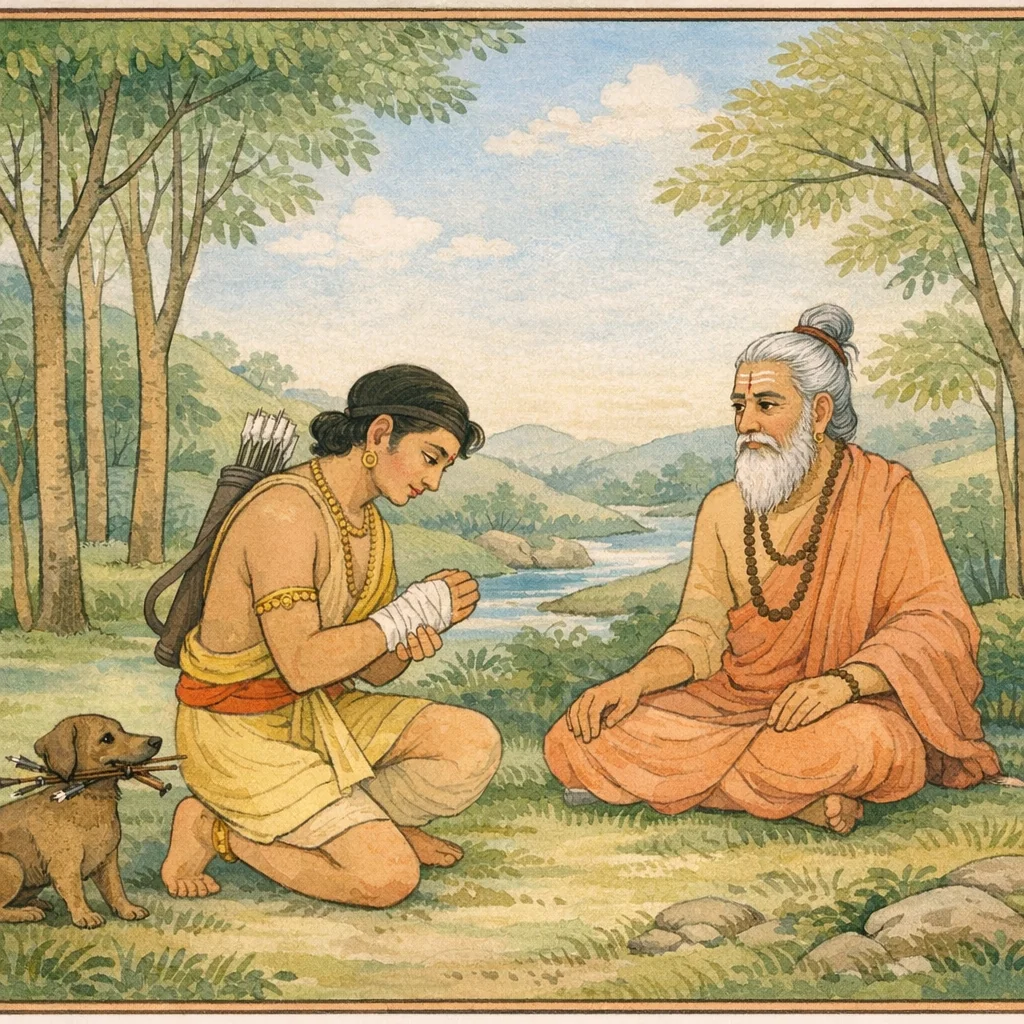
ततो निषादराजस्य हिरण्यधनुष: सुतः । एकलव्यो महाराज द्रोणमभ्याजगाम ह,महाराज! तदनन्तर निषादराज हिरण्यधनुका पुत्र एकलव्य द्रोणके पास आया
Then Ekalavya, the son of Hiraṇyadhanus, king of the Niṣādas, approached Droṇa.
Verse 32
नसतं प्रतिजग्राह नैषादिरिति चिन्तयन् | शिष्यं धनुषि धर्मज्ञस्तेषामेवान्ववेक्षया,परंतु उसे निषादपुत्र समझकर धर्मज्ञ आचार्यने धनुर्विद्याविषयक शिष्य नहीं बनाया। कौरवोंकी ओर दृष्टि रखकर ही उन्होंने ऐसा किया
Vaiśampāyana said: Thinking, “He is a Niṣāda’s son,” the righteous teacher did not accept him as a proper disciple in the science of archery. Keeping his gaze fixed on the Kauravas’ interests alone, he acted in this way.
Verse 33
स तु द्रोणस्य शिरसा पादौ गृहा[ परंतप: । अरण्यमनुसम्प्राप्य कृत्वा द्रोणं महीमयम्,शत्रुओंको संताप देनेवाले एकलव्यने द्रोणाचार्यके चरणोंमें मस्तक रखकर प्रणाम किया और वनमें लौटकर उनकी मिट्टीकी मूर्ति बनायी तथा उसीमें आचार्यकी परमोच्च भावना रखकर उसने थधर्नुर्विद्याका अभ्यास प्रारम्भ किया। वह बड़े नियमके साथ रहता था
Vaiśampāyana said: But Ekalavya, the scorcher of foes, bowed with his head at Droṇa’s feet. Then, returning to the forest, he fashioned an earthen image of Droṇa and, holding the teacher in the highest reverence within his heart, began disciplined practice of archery—living under strict observances. The episode frames devotion and self-training, while also foreshadowing the ethical tension between sincere discipleship and social exclusion.
Verse 34
तस्मिन्नाचार्यवृत्ति च परमामास्थितस्तदा । इष्वस्त्रे योगमातस्थे परं॑ नियममास्थित:,शत्रुओंको संताप देनेवाले एकलव्यने द्रोणाचार्यके चरणोंमें मस्तक रखकर प्रणाम किया और वनमें लौटकर उनकी मिट्टीकी मूर्ति बनायी तथा उसीमें आचार्यकी परमोच्च भावना रखकर उसने थधर्नुर्विद्याका अभ्यास प्रारम्भ किया। वह बड़े नियमके साथ रहता था
Then, having adopted the highest conduct befitting a disciple toward his teacher, he devoted himself to the discipline of archery and missile-weapons. Abiding by strict vows and self-restraint, Ekalavya—intent on honoring Droṇa—bowed at the teacher’s feet, returned to the forest, fashioned an image of the ācārya from clay, and began his practice of the bow with the teacher’s presence held as supreme in his mind.
Verse 35
परया श्रद्धयोपेतो योगेन परमेण च । विमोक्षादानसंधाने लघुत्वं परमाप सः,आचार्यमें उत्तम श्रद्धा रखकर उत्तम और भारी अभ्यासके बलसे उसने बाणोंके छोड़ने, लौटाने और संधान करनेमें बड़ी अच्छी फुर्ती प्राप्त कर ली
Vaiśampāyana said: Endowed with the highest faith and supported by supreme disciplined practice, he attained exceptional quickness in the arts of releasing arrows, withdrawing them, and fixing them accurately on the target—showing how reverent dedication to one’s teacher and rigorous training refine skill into mastery.
Verse 36
अथ द्रोणाभ्यनुज्ञाता: कदाचित् कुरुपाण्डवा: | रथैरविनिर्ययु: सर्वे मृगयामरिमर्दन,शत्रुओंका दमन करनेवाले जनमेजय! तदनन्तर एक दिन समस्त कौरव और पाण्डव आचार्य द्रोणकी अनुमतिसे रथोंपर बैठकर (हिंसक पशुओंका) शिकार खेलनेके लिये निकले
Vaiśampāyana said: Once, with Droṇa’s permission, all the Kurus and the Pāṇḍavas set out together in their chariots for a hunt.
Verse 37
तत्रोपकरणं गृहा नरः कश्चिद् यद्च्छया । राजन्ननुजगामैक: श्वानमादाय पाण्डवान्,इस कार्यके लिये आवश्यक सामग्री लेकर कोई मनुष्य स्वेच्छानुसार अकेला ही उन पाण्डवोंके पीछे-पीछे चला। उसने साथमें एक कुत्ता भी ले रखा था
Then, O King, a certain man, having gathered the needed implements from his home, happened by chance to follow the Pāṇḍavas—going alone behind them and taking a dog along with him.
Verse 38
तेषां विचरतां तत्र तत्तत्कर्मचिकीर्षया । ध्वा चरन् स वने मूढो नैषादिं प्रति जग्मिवान्,वे सब अपना-अपना काम पूरा करनेकी इच्छासे वनमें इधर-उधर विचर रहे थे। उनका वह मूढ़ कुत्ता वनमें घूमता-घामता निषादपुत्र एकलव्यके पास जा पहुँचा
Vaiśampāyana said: While they were roaming about there in the forest, each intent on accomplishing his own task, their foolish dog, wandering through the woods, went toward the Niṣāda youth Ekalavya.
Verse 39
स कृष्णं मलदिग्धाड़ंं कृष्णाजिनजटाधरम् | नैषादिं श्वा समालक्ष्य भषंस्तस्थौ तदन्तिके,एकलव्यके शरीरका रंग काला था। उसके अंगोंमें मैल जम गया था और उसने काला मृगचर्म एवं जटा धारण कर रखी थी। निषादपुत्रको इस रूपमें देखकर वह कुत्ता भौं-भौं करके भूकता हुआ उसके पास खड़ा हो गया
Vaiśampāyana said: Seeing the Niṣāda youth—dark in complexion, his limbs smeared with grime, wearing a black antelope-skin and matted locks—a dog noticed him and, barking loudly, stood close by him.
Verse 40
तदा तस्याथ भषत: शुनः सप्त शरान् मुखे । लाघवं दर्शयन्नस्त्रे मुमोच युगपद् यथा,यह देख भीलने अपने अस्त्रलाघवका परिचय देते हुए उस भूकनेवाले कुत्तेके मुखमें मानो एक ही साथ सात बाण मारे
Vaiśampāyana said: Then, as that dog was barking, he released seven arrows into its mouth—displaying the lightness and mastery of his weapon-skill—as though they were loosed all at once.
Verse 41
सतु श्वा शरपूर्णास्य: पाण्डवानाजगाम ह । त॑ दृष्टवा पाण्डवा वीरा: परं विस्मयमागता:,उसका मुँह बाणोंसे भर गया और वह उसी अवस्थामें पाण्डवोंके पास आया। उसे देखकर पाण्डव वीर बड़े विस्मयमें पड़े
Then that dog, its mouth filled with arrows, came to the Pāṇḍavas. Seeing it in such a condition, the heroic Pāṇḍavas were struck with profound astonishment.
Verse 42
पक ५ एज 72 ञट 8 3002: 0 / न्ड 9७८ फ़्णू हा # प्रफ्प्र 205 58७ «६६ ३७/::2७ २ //%0८ 3026-5० के के. “जी लाघवं शब्दवेधित्वं दृष्टवा तत् परमं तदा । प्रेक्ष्य तं व्रीडिताश्वासन् प्रशशंसुश्च सर्वश:,वह हाथकी फुर्ती और शब्दके अनुसार लक्ष्य बेधनेकी उत्तम शक्ति देखकर उस समय सब राजकुमार उस कुत्तेकी ओर दृष्टि डालकर लज्जित हो गये और सब प्रकारसे बाण मारनेवालेकी प्रशंसा करने लगे
Vaiśampāyana said: Seeing then that supreme lightness of hand and the extraordinary skill of striking a target by sound alone, the princes looked toward him and, feeling ashamed, fell silent; and from every side they praised the archer.
Verse 43
त॑ ततो<न्वेषमाणास्ते वने वननिवासिनम् | ददृशु: पाण्डवा राजन्नस्यन्तमनिशं शरान्,राजन! तत्पश्चात् पाण्डवोंने उस वनवासी वीरकी वनमें खोज करते हुए उसे निरन्तर बाण चलाते हुए देखा
Then, as they continued their search in the forest for that forest-dwelling man, the Pāṇḍavas, O King, caught sight of him there—unceasingly shooting arrows.
Verse 44
न चैनमभ्यजानंस्ते तदा विकृतदर्शनम् | अथीैनं परिपप्रच्छु: को भवान् कस्य वेत्युत,उस समय उसका रूप बदल गया था। पाण्डव उसे पहचान न सके; अतः पूछने लगे --“तुम कौन हो, किसके पुत्र हो?”
Vaiśampāyana said: And they did not recognize him then, for his appearance had become altered. Therefore they questioned him closely: “Who are you, and whose son are you?”
Verse 45
एकलव्य उवाच निषादाधिपतेवीरा हिरण्यधनुष: सुतम् । द्रोणशिष्यं च मां वित्त धनुर्वेदकृतश्रमम्,एकलव्यने कहा--वीरो! आपलोग मुझे निषादराज हिरण्यधनुका पुत्र तथा द्रोणाचार्यका शिष्य जानें। मैंने धनुर्वेदमें विशेष परिश्रम किया है
Ekalavya said: “O heroic lords, know me to be the son of Hiraṇyadhanuṣ, chief of the Niṣādas, and also a disciple of Droṇa. I have exerted myself with dedicated effort in the science of archery.”
Verse 46
वैशम्पायन उवाच ते तमाज्ञाय तत्त्वेन पुनरागम्य पाण्डवा: | यथावृत्तं वने सर्व द्रोणायाचख्युरद्भुतम्,वैशम्पायनजी कहते हैं--राजन! वे पाण्डवलोग उस निषादका यथार्थ परिचय पाकर लौट आये और वनमें जो अद्भुत घटना घटी थी, वह सब उन्होंने द्रोणाचार्यसे कह सुनायी
Vaiśampāyana said: Having truly understood who that Niṣāda was, the Pāṇḍavas returned. They then related to Droṇa, in full, the wondrous event that had occurred in the forest—reporting it exactly as it happened, with no concealment or distortion.
Verse 47
कौन्तेयस्त्वर्जुनो राजन्नेकलव्यमनुस्मरन् । रहो द्रोणं समासाद्य प्रणयादिदमब्रवीत्,जनमेजय! कुन्तीनन्दन अर्जुन बार-बार एकलव्यका स्मरण करते हुए एकान्तमें द्रोणसे मिलकर प्रेमपूर्वक यों बोले
Vaiśampāyana said: O King Janamejaya, Arjuna, Kuntī’s son, again and again recalling Ekalavya, approached Droṇa in private and, with affectionate regard, spoke these words.
Verse 48
अजुन उवाच तदाहं परिरभ्यैक: प्रीतिपूर्वमिदं वच: । भवतोक्तो न मे शिष्यस्त्वद्धिशिष्टो भविष्यति,अर्जुनने कहा--आचार्य! उस दिन तो आपने मुझ अकेलेको हृदयसे लगाकर बड़ी प्रसन्नताके साथ यह बात कही थी कि मेरा कोई भी शिष्य तुमसे बढ़कर नहीं होगा
Arjuna said: “On that day you embraced me alone and, with heartfelt joy, spoke these words: ‘No disciple of mine will ever surpass you.’”
Verse 49
अथ कस्मान्मद्विशिष्टो लोकादपि च वीर्यवान् । अन्यो<5स्ति भवत: शिष्यो निषादाधिपते: सुत:,फिर आपका यह अन्य शिष्य निषादराजका पुत्र अस्त्र-विद्यामें मुझसे बढ़कर कुशल और सम्पूर्ण लोकसे भी अधिक पराक्रमी कैसे हुआ?
Arjuna said: “Then why is there another disciple of yours—the son of the Niṣāda chieftain—who is superior to me in skill and, indeed, possessed of prowess surpassing even that of the whole world? How has this come to be?”
Verse 50
वैशम्पायन उवाच मुहूर्तमिव त॑ द्रोणश्चिन्तयित्वा विनिश्वयम् सव्यसाचिनमादाय नैषादिं प्रति जग्मिवान्,वैशम्पायनजी कहते हैं--जनमेजय! आचार्य द्रोण उस निषादपुत्रके विषयमें दो घड़ीतक मानो कुछ सोचते-विचारते रहे; फिर कुछ निश्चय करके वे सव्यसाची अर्जुनको साथ ले उसके पास गये
Vaiśampāyana said: Having reflected, as it were, for a brief while, Droṇa arrived at a firm decision. Taking with him Arjuna, famed as Savyasācin, he went toward the Naiṣāda youth.
Verse 51
ददर्श मलदिग्धाड़ं जटिलं चीरवाससम् । एकलव्यं धनुष्याणिमस्यन्तमनिशं शरान्,वहाँ पहुँचकर उन्होंने एकलव्यको देखा, जो हाथमें धनुष ले निरन्तर बाणोंकी वर्षा कर रहा था। उसके शरीरपर मैल जम गया था। उसने सिरपर जटा धारण कर रखी थी और वस्त्रके स्थानपर चिथड़े लपेट रखे थे
There they beheld Ekalavya: his body smeared with grime, his hair matted in jatas, and rags wrapped about him in place of garments. Bow in hand, he ceaselessly loosed his arrows.
Verse 52
एकलव्यस्तु तं दृष्टवा द्रोणमायान्तमन्तिकात् | अभिगम्योपसंगृहा जगाम शिरसा महीम्,इधर एकलव्यने आचार्य द्रोणको समीप आते देख आगे बढ़कर उनकी अगवानी की और उनके दोनों चरण पकड़कर पृथ्वीपर माथा टेक दिया
Vaiśampāyana said: Seeing Droṇa approaching nearby, Ekalavya went forward to receive him, clasped his feet in reverence, and bowed with his head to the earth—an act that shows the disciple’s humility and the weight of the teacher–student bond, soon to be tested by questions of duty and fairness.
Verse 53
पूजयित्वा ततो द्रोणं विधिवत् स निषादज: । निवेद्य शिष्यमात्मानं तस्थौ प्राउ्जलिरग्रत:,फिर उस निषादकुमारने अपनेको शिष्यरूपसे उनके चरणोंमें समर्पित करके गुरु द्रोणकी विधिपूर्वक पूजा की और हाथ जोड़कर उनके सामने खड़ा हो गया
Vaiśampāyana said: Then the son of a Niṣāda duly honored Droṇa according to proper rite. Having offered himself as a disciple, he stood before him with hands joined—an image of humility and disciplined seeking, where devotion to learning is expressed through reverent conduct toward the teacher.
Verse 54
ततो द्रोणो<5ब्रवीद् राजन्नेकलव्यमिदं वच: । यदि शिष्योडसि मे वीर वेतनं दीयतां मम
Then Droṇa said to Ekalavya, “O king, hear these words: if you are truly my disciple, O hero, then give me my teacher’s fee.” In the narrative, the demand is framed as a legitimate claim of the guru, yet it also tests the boundaries of fairness and power—how authority can compel sacrifice, and how devotion may be asked to prove itself through a costly offering.
Verse 55
एकलव्य उवाच कि प्रयच्छामि भगवन्नाज्ञापयतु मां गुरु:
Ekalavya said: “O revered one, what shall I offer? Let the teacher command me.” In this moment, Ekalavya places himself under the authority of the guru, expressing readiness to give whatever is asked as a matter of duty and discipleship.
Verse 56
वैशम्पायन उवाच तमब्रवीत् त्वयादुष्ठो दक्षिणो दीयतामिति,वैशम्पायनजी कहते हैं--जनमेजय! तब द्रोणाचार्यने उससे कहा--“तुम मुझे दाहिने हाथका आँगूठा दे दो”
Vaiśampāyana said: He then addressed him, saying, “You must give me the right thumb as my fee.” In the narrative’s ethical tension, the demand functions as a harsh ‘teacher’s due’ that tests obedience and exposes how authority can be used to restrict a gifted outsider.
Verse 57
एकलव्यस्तु तच्छुत्वा वचो द्रोणस्य दारुणम् | प्रतिज्ञामात्मनो रक्षन् सत्ये च नियत: सदा,द्रोणाचार्यका यह दारुण वचन सुनकर सदा सत्यपर अटल रहनेवाले एकलव्यने अपनी प्रतिज्ञाकी रक्षा करते हुए पहलेकी ही भाँति प्रसन्नमुख और उदारचित्त रहकर बिना कुछ सोच-विचार किये अपना दाहिना अँगूठा काटकर द्रोणाचार्यको दे दिया
Vaiśampāyana said: Hearing Droṇa’s harsh demand, Ekalavya—ever steadfast in truth—protected his vow. Without hesitation, and with a composed, generous spirit, he cut off his right thumb and offered it to Droṇa, choosing fidelity to his pledged word over personal loss.
Verse 58
तथैव हृष्टवदनस्तथैवादीनमानस: । छित्त्वाविचार्य तं प्रादाद् द्रोणायाड्गुछ्ठमात्मन:,द्रोणाचार्यका यह दारुण वचन सुनकर सदा सत्यपर अटल रहनेवाले एकलव्यने अपनी प्रतिज्ञाकी रक्षा करते हुए पहलेकी ही भाँति प्रसन्नमुख और उदारचित्त रहकर बिना कुछ सोच-विचार किये अपना दाहिना अँगूठा काटकर द्रोणाचार्यको दे दिया
Vaiśampāyana said: Just so, with the same cheerful face and the same untroubled, generous mind, Ekalavya—without pausing for deliberation—cut off his own thumb and gave it to Droṇa. In doing so he upheld his pledged word, placing fidelity to promise and reverence for the teacher above personal loss.
Verse 59
228 8 2022 (आय 6 (स सत्यसंध॑ नैषादिं दृष्टवा प्रीतो5ब्रवीदिदम् । एवं कर्तव्यमिति वा एकलव्यमभाषत ।।) ततः शरं तु नैषादिरज्भुलीभिव्यकर्षत । न तथा च स शीघ्रो5भूद् यथा पूर्व नराधिप,द्रोणाचार्य निषादनन्दन एकलव्यको सत्यप्रतिज्ञ देखकर बहुत प्रसन्न हुए। उन्होंने संकेतसे उसे यह बता दिया कि तर्जनी और मध्यमाके संयोगसे बाण पकड़कर किस प्रकार धनुषकी डोरी खींचनी चाहिये। तबसे वह निषादकुमार अपनी अँगुलियोंद्वारा ही बाणोंका संधान करने लगा। राजन्! उस अवस्थामें वह उतनी शीघ्रतासे बाण नहीं चला पाता था, जैसे पहले चलाया करता था
Vaiśampāyana said: Seeing the Niṣāda youth, steadfast in his vow, Droṇa—pleased—spoke to Ekalavya, indicating, as it were, “This is how it should be done.” Thereafter the Niṣāda drew and set the arrow using only his fingers. Yet, O king, he was no longer as swift in releasing arrows as he had been before.
Verse 60
ततोअ्र्जुन: प्रीतमना बभूव विगतज्वर: । द्रोणश्न॒ सत्यवागासीन्नान्योडभिभवितार्जुनम्,इस घटनासे अर्जुनके मनमें बड़ी प्रसन्नता हुई। उनकी भारी चिन्ता दूर हो गयी। द्रोणाचार्यका भी वह कथन सत्य हो गया कि अर्जुनको दूसरा कोई पराजित नहीं कर सकता
Then Arjuna became glad at heart, his feverish anxiety dispelled. And Droṇa’s earlier declaration proved true: no other person could overcome Arjuna.
Verse 61
द्रोणस्य तु तदा शिष्यौ गदायोग्यौ बभूवतु: । दुर्योधनश्न भीमश्न सदा संरब्धमानसौ,उस समय द्रोणके दो शिष्य गदायुद्धमें सुयोग्य निकले--दुर्योधन और भीमसेन। ये दोनों सदा एक-दूसरेके प्रति मनमें क्रोध (स्पर्द्धा)-से भरे रहते थे
Vaiśampāyana said: At that time, Droṇa had two disciples who proved especially fit for combat with the mace—Duryodhana and Bhīmasena. Their minds were continually inflamed, each harboring anger and rivalry toward the other, a hostility that would later feed the larger conflict.
Verse 62
अश्वत्थामा रहस्येषु सर्वेष्वभ्यधिको5भवत् | तथाति पुरुषानन्यान् त्सारुकौ यमजावुभौ,अश्वत्थामा धर्नुर्वेदके रहस्योंकी जानकारीमें सबसे बढ़-चढ़कर हुआ। नकुल और सहदेव दोनों भाई तलवारकी मूठ पकड़कर युद्ध करनेमें अत्यन्त कुशल हुए। वे इस कलामें अन्य सब पुरुषोंसे बढ़-चढ़कर थे
Vaiśampāyana said: Aśvatthāmā became pre-eminent among all in the secret teachings (special techniques) of archery. Likewise, the twin brothers Nakula and Sahadeva—skilled in close combat with the sword-hilt—surpassed other men in that martial art. The passage highlights how each warrior excelled in a distinct discipline, suggesting that prowess, when properly trained, becomes a defining attribute in the unfolding duties of kṣatriya life.
Verse 63
युधिष्ठिरो रथश्रेष्ठ: सर्वत्र तु धनंजय: । प्रथित: सागरान्तायां रथयूथपयूथप:,युधिष्ठिर रथपर बैठकर युद्ध करनेमें श्रेष्ठ थे। परंतु अर्जुन सब प्रकारकी युद्ध-कलाओंमें सबसे बढ़कर थे। वे समुद्रपर्यन्त सारी पृथ्वीमें रथयूथपतियोंके भी यूथपतिके रूपमें प्रसिद्ध थे
Yudhiṣṭhira was foremost in battle upon the chariot; but Dhanañjaya (Arjuna) excelled in every art of war. His renown spread across the whole earth up to the ocean’s edge, as a commander of commanders among the chariot-warriors.
Verse 64
बुद्धियोगबलोत्साहै: सर्वास्त्रिषु च निष्ठित: । अस्त्रे गुर्वनुरागे च विशिष्टो5भवदर्जुन:,बुद्धि, मनकी एकाग्रता, बल और उत्साहके कारण वे सम्पूर्ण अस्त्र-विद्याओंमें प्रवीण हुए। अस्त्रोंके अभ्यास तथा गुरुके प्रति अनुरागमें भी अर्जुनका स्थान सबसे ऊँचा था
Through intelligence, focused mind, strength, and ardor, Arjuna became firmly accomplished in all the sciences of weapons. In the practice of the astras and in devoted affection toward his teacher as well, Arjuna stood foremost.
Verse 65
तुल्येष्वस्त्रोपदेशेषु सौष्ठवेन च वीर्यवान् । एक: सर्वकुमाराणां बभूवातिरथो<र्जुन:,यद्यपि सबको समानरूपसे अस्त्र-विद्याका उपदेश प्राप्त होता था तो भी पराक्रमी अर्जुन अपनी विशिष्ट प्रतिभाके कारण अकेले ही समस्त कुमारोंमें अतिरथी हुए
Vaiśampāyana said: Although instruction in the science of weapons was imparted equally to all, the valiant Arjuna—by virtue of his superior excellence—alone became an atiratha among all the princes. The passage highlights that equal opportunity does not yield equal outcome; disciplined aptitude and inner strength elevate one to exceptional mastery.
Verse 66
प्राणाधिकं भीमसेनं कृतविद्यं धनंजयम् । धार्तराष्ट्रा दुरात्मानो नामृष्यन्त परस्परम्,धृतराष्ट्रके पुत्र बड़े दुरात्मा थे। वे भीमसेनको बलमें अधिक और अर्जुनको अस्त्रविद्यामें प्रवीण देखकर परस्पर सहन नहीं कर पाते थे
Vaiśampāyana said: Seeing Bhīmasena surpassing others in sheer vital strength, and Dhanañjaya (Arjuna) accomplished in the sciences of weapons, the wicked-minded sons of Dhṛtarāṣṭra could not bear them; jealousy and rivalry burned within them against the Pāṇḍavas.
Verse 67
तांस्तु सर्वान् समानीय सर्वविद्यास्त्रशिक्षितान् । द्रोण: प्रहरणज्ञाने जिज्ञासु: पुरुषर्षभ:,जब सम्पूर्ण धनुर्विद्या तथा अस्त्र-संचालनकी कलामें वे सभी कुमार सुशिक्षित हो गये, तब नरश्रेष्ठ द्रोणने उन सबको एकत्र करके उनके अस्त्रज्ञानकी परीक्षा लेनेका विचार किया
Vaiśampāyana said: When all those princes had been fully trained in every branch of learning and in the science of weapons, Droṇa—the best of men—gathered them together, wishing to test and ascertain their true proficiency in the knowledge and handling of arms.
Verse 68
कृत्रिमं भासमारोप्य वृक्षाग्रे शिल्पिभि: कृतम् । अविज्ञातं कुमाराणां लक्ष्यभूतमुपादिशत्,उन्होंने कारीगरोंसे एक नकली गीध बनवाकर वृक्षके अग्रभागपर रखवा दिया। राजकुमारोंकों इसका पता नहीं था। आचार्यने उसी गीधको बींधनेयोग्य लक्ष्य बताया
Vaiśampāyana said: Having craftsmen fashion an artificial vulture and set it upon the top of a tree, the teacher—without the princes knowing it was a decoy—pointed to that very bird as the target to be pierced.
Verse 69
द्रोण उदाच शीघ्र भवन्त: सर्वेडपि धनूंष्यादाय सर्वश: । भासमेतं समुद्दिश्य तिष्ठ ध्वं संधितेषव:,द्रोण बोले--तुम सब लोग इस गीधको बींधनेके लिये शीघ्र ही धनुष लेकर उसपर बाण चढ़ाकर खड़े हो जाओ
Vaiśampāyana said: Droṇa declared, “Quickly—each of you—take up your bows at once. Stand ready with arrows set to the string, aiming at this bird.”
Verse 70
मद्वाक्यसमकालं तु शिरो<स्य विनिपात्यताम् | एकैकशो नियोक्ष्यामि तथा कुरुत पुत्रका:,फिर मेरी आज्ञा मिलनेके साथ ही इसका सिर काट गिराओ। पुत्रो! मैं एक-एकको बारी-बारीसे इस कार्यमें नियुक्त करूँगा; तुमलोग मेरे बताये अनुसार कार्य करो
Vaiśaṃpāyana said: “At the very moment my command is given, let his head be struck down and made to fall. I will assign you, one by one, to this task; sons, act exactly as I direct.”
Verse 71
वैशम्पायन उवाच ततो युधिष्ठिरं पूर्वमुवाचाज्धिरसां वर: । संधत्स्व बाणं दुर्धर्ष मद्वाक्यान्ते विमुडच तम्,वैशम्पायनजी कहते हैं--जनमेजय! तदनन्तर अंगिरागोत्रवाले ब्राह्मणोंमें सर्वश्रेष्ठ आचार्य द्रोणने सबसे पहले युधिष्ठिस्से कहा--*दुर्धर्ष वीर! तुम धनुषपर बाण चढ़ाओ और मेरी आज्ञा मिलते ही उसे छोड़ दो”
Vaiśampāyana said: Then the foremost among the descendants of Aṅgiras—Droṇa—addressed Yudhiṣṭhira first: “O hard-to-overcome hero, set the arrow upon your bow; and when my command is complete, release it.”
Verse 72
ततो युधिष्ठिर: पूर्व धनुर्ग.ह्य परंतप: । तस्थौ भासं समुद्दिश्य गुरुवाक्यप्रचोदित:,तब शत्रुओंको संताप देनेवाले युधिष्ठिर गुरुकी आज्ञासे प्रेरित हो सबसे पहले धनुष लेकर गीधको बींधनेके लिये लक्ष्य बनाकर खड़े हो गये
Then Yudhiṣṭhira, scorcher of foes, took up the bow first and stood poised, his aim fixed upon the vulture, urged on by the teacher’s command.
Verse 73
ततो विततथन््वानं द्रोणस्तं कुरुनन्दनम् । स मुहूर्तादुवाचेदं वचन भरतर्षभ,भरतश्रेष्ठ] तब धनुष तानकर खड़े हुए कुरुनन्दन युधिष्ठिरसे दो घड़ी बाद आचार्य द्रोणने इस प्रकार कहा--
Then Droṇa, seeing that Kuru prince standing with his bow fully strung, after a brief interval addressed him with these words—O bull among the Bharatas.
Verse 74
पश्यैन॑ त॑ ट्रुमाग्रस्थं भासं नरवरात्मज । पश्यामीत्येवमाचार्य प्रत्युवाच युधिष्ठिर:,“राजकुमार! वृक्षकी शिखापर बैठे हुए इस गीधको देखो।” तब युधिष्ठिरने आचार्यको उत्तर दिया--“भगवन्! मैं देख रहा हूँ
Vaiśampāyana said: “O prince, look at that vulture perched on the top of the tree.” Thus addressed by the teacher, Yudhiṣṭhira replied, “Revered sir, I see it.”
Verse 75
स मुहूर्तादिव पुनद्रोंणस्तं प्रत्यभाषत । मानो दो घड़ी और बिताकर द्रोणाचार्य फिर उनसे बोले || ७४ $ ।। द्रोण उदाच अथ वृक्षमिमं मां वा भ्रातृन् वापि प्रपश्यसि,द्रोणगने कहा--क्या तुम इस वृक्षको, मुझको अथवा अपने भाइयोंको भी देखते हो?
After a brief interval, Droṇa addressed him again. He asked, “Do you see this tree, or me, or even your brothers?”
Verse 76
तमुवाच स कौन्तेय: पश्याम्येनं वनस्पतिम् । भवन्तं च तथा भ्रातृन् भासं चेति पुनः पुनः,यह सुनकर कुन्तीनन्दन युधिष्ठिर उनसे इस प्रकार बोले--'हाँ, मैं इस वृक्षको, आपको, अपने भाइयोंको तथा गीधको भी बारंबार देख रहा हूँ”
Yudhiṣṭhira, Kuntī’s son, replied: “Yes—I repeatedly see this tree; I see you as well, and likewise my brothers, and the vulture too, again and again.”
Verse 77
तमुवाचापसर्पेति द्रोणो5प्रीतमना इव । नैतच्छक्यं त्वया वेद्धुं लक्ष्यमित्येव कुत्सयन्,उनका उत्तर सुनकर द्रोणाचार्य मन-ही-मन अप्रसन्न-से हो गये और उन्हें झिड़कते हुए बोले, “हट जाओ यहाँसे, तुम इस लक्ष्यको नहीं बींध सकते”
Vaiśampāyana said: Droṇa, as though inwardly displeased, rebuked him and said, “Step aside! You are not capable of piercing this target.” In that moment the teacher’s judgment came not as encouragement but as a cutting dismissal, laying bare the strain between merit, expectation, and the ethics of instruction in a competitive martial hall.
Verse 78
ततो दुर्योधनादींसस््तान् धार्तराष्ट्रानू महायशा: । तेनैव क्रमयोगेन जिज्ञासु: पर्यपृच्छत,तदनन्तर महायशस्वी आचार्यने उसी क्रमसे दुर्योधन आदि धूृतराष्ट्रपुत्रोंको भी उनकी परीक्षा लेनेके लिये बुलाया और उन सबसे उपर्युक्त बातें पूछीं
Then the illustrious teacher summoned Duryodhana and the other sons of Dhṛtarāṣṭra in the same order. Wishing to test them, he questioned them in the very same manner. The episode affirms that instruction and examination should be impartial, even though the pupils’ temperaments and later choices in dharma will diverge.
Verse 79
अन््यांश्व शिष्यान् भीमादीन् राज्ञश्वैवान्यदेशजान् | तथा च सर्वे तत् सर्व पश्याम इति कुत्सिता:,उन्होंने भीम आदि अन्य शिष्यों तथा दूसरे देशके राजाओंसे भी, जो वहाँ शिक्षा पा रहे थे, वैसा ही प्रश्न किया। प्रश्नके उत्तरमें सभीने (युधिष्ठिरकी भाँति ही) कहा--“हम सब कुछ देख रहे हैं।! यह सुनकर आचार्यने उन सबको झिड़ककर हटा दिया
Vaiśampāyana said: He then put the same question to the other pupils—Bhīma and the rest—and also to the kings from other lands who were studying there. When all of them replied, “We see everything,” the teacher judged their answer blameworthy and, rebuking them, dismissed them. The episode shows that mere claims of perception or competence are not enough; learning demands discernment, humility, and an answer aligned with the teacher’s intended test of insight.
Verse 131
इति श्रीमहाभारते आदिपर्वणि सम्भवपर्वणि द्रोणशिष्यपरीक्षायामेकत्रिंशदाधिकशततमो< ध्याय:,इस प्रकार श्रीमहाभारत आदिपव॑ीके अन्तर्गत सम्भवपर्वनें आचार्य द्रोणके द्वारा शिष्योंकी परीक्षासे सम्बन्ध रखनेवाला एक सौ इकतीसवाँ अध्याय पूरा हुआ
Vaiśampāyana said: Thus, in the Śrī Mahābhārata, within the Ādi Parva—specifically the Sambhava Parva—the one-hundred-and-thirty-first chapter concludes, describing the examination of Droṇa’s disciples. The closing formula marks the completion of this section and frames the episode as a formative test of character and capability, where skill is weighed alongside discipline and intent that will later shape the epic’s moral and martial conflicts.
Verse 543
एकलव्यस्तु तच्छुत्वा प्रीयमाणो<ब्रवीदिदम् । राजन! तब द्रोणाचार्यने एकलव्यसे यह बात कही--“वीर! यदि तुम मेरे शिष्य हो तो मुझे गुरुदक्षिणा दो'। यह सुनकर एकलव्य बहुत प्रसन्न हुआ और इस प्रकार बोला
Vaiśampāyana said: Hearing those words, Ekalavya—filled with joy—spoke as follows, addressing the king. The moment frames Ekalavya’s eager acceptance of the guru–disciple bond and his readiness to offer guru-dakṣiṇā, highlighting devotion and the ethical weight of obedience to one’s chosen teacher.
Verse 556
न हि किंचिददेयं मे गुरवे ब्रह्म॒वित्तम | एकलव्यने कहा--भगवन्! मैं आपको क्या दूँ? स्वयं गुरुदेव ही मुझे इसके लिये आज्ञा दें। ब्रह्मवेत्ताओंमें श्रेष्ठ आचार्य! मेरे पास कोई ऐसी वस्तु नहीं, जो गुरुके लिये अदेय हो
Ekalavya said: “For my teacher, nothing is beyond giving. O best of knowers of Brahman, there is nothing I possess that I would withhold from the guru.”
Frequently Asked Questions
The chapter presents the dilemma of political expediency versus kin-protection: a ruler’s claimant employs secrecy, engineered hospitality, and lethal deception to remove rivals while attempting to preserve public legitimacy.
It underscores that intention-guided counsel (mantra) can be used for either protection or harm; ethical evaluation in the epic hinges on motive, means, and foreseeable social consequences, not merely on strategic success.
No explicit phalaśruti appears in this unit; its significance is contextual—serving as a causal hinge that explains later developments by documenting the plan’s formation, execution, and the management of public narrative.