Adhyaya 22
The Kātyāyanī-vrata, the Stealing of the Gopīs’ Garments, and Kṛṣṇa’s Teaching on Purified Desire
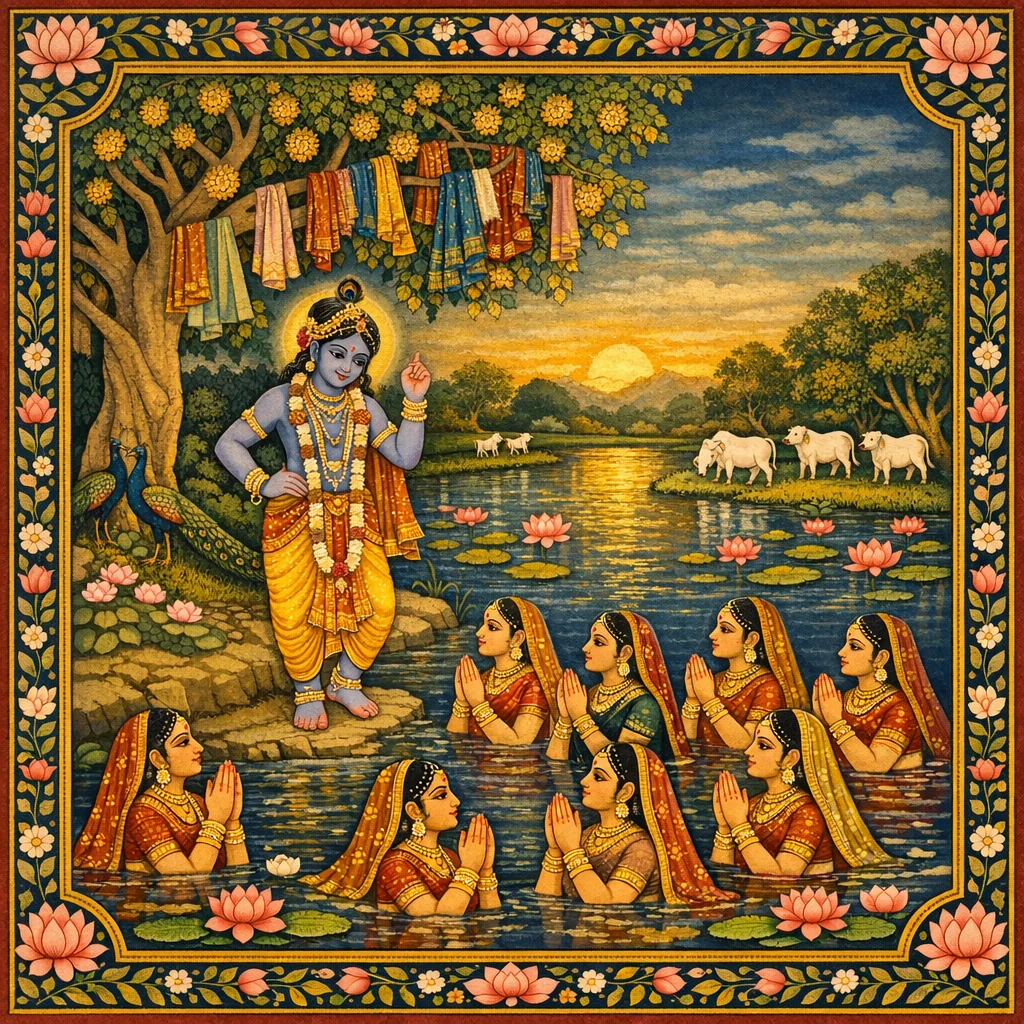
Continuing the Vraja narrative of deepening intimacy between Bhagavān and His devotees, this chapter begins with the unmarried gopīs observing the month-long Kātyāyanī-vrata on the bank of the Yamunā, praying for Kṛṣṇa as their husband—an emblem of single-pointed bhakti expressed through familiar vrata forms. Kṛṣṇa, the Yogīśvara and inner witness, arrives with companions and playfully steals the girls’ garments, placing them in a kadamba tree. His teasing draws them forward, turning social embarrassment into deliberate spiritual disclosure: the vow’s true aim is not mere ritual success but total surrender. Calling their naked bathing an offense, Kṛṣṇa prescribes atonement—bowing with joined palms—thus outwardly manifesting the inner stance of śaraṇāgati. He then returns their clothes, affirms that their desire is approved because it is directed to Him, and promises fulfillment in the coming nights, foreshadowing the Rāsa-līlā. The chapter then shifts to Kṛṣṇa herding cows with Balarāma and the boys; He praises the self-giving trees as exemplars of dharma, and the scene moves toward the boys’ hunger, bridging to the next episode about food, dharma, and devotion near the Yamunā.
Shlokas
Verse 1
श्रीशुक उवाच हेमन्ते प्रथमे मासि नन्दव्रजकुमारिका: । चेरुर्हविष्यं भुञ्जाना: कात्यायन्यर्चनव्रतम् ॥ १ ॥
Śukadeva Gosvāmī said: O King, in the first month of winter the unmarried young girls of Nanda-vraja observed the vow of worshiping Goddess Kātyāyanī, and for the entire month they ate only haviṣya—simple, unspiced khichrī.
Verse 2
आप्लुत्याम्भसि कालिन्द्या जलान्ते चोदितेऽरुणे । कृत्वा प्रतिकृतिं देवीमानर्चुर्नृप सैकतीम् ॥ २ ॥ गन्धैर्माल्यै: सुरभिभिर्बलिभिर्धूपदीपकै: । उच्चावचैश्चोपहारै: प्रवालफलतण्डुलै: ॥ ३ ॥
My dear King, as dawn broke and the sun rose, the gopīs bathed in the Yamunā (Kālindī). On the sandy bank they fashioned an earthen image of the Goddess and worshiped her with sandal paste and other fragrances, sweet garlands, food offerings, incense and lamps, and many gifts—simple and opulent—such as fruits, betel and areca nut, fresh sprouts, and rice.
Verse 3
आप्लुत्याम्भसि कालिन्द्या जलान्ते चोदितेऽरुणे । कृत्वा प्रतिकृतिं देवीमानर्चुर्नृप सैकतीम् ॥ २ ॥ गन्धैर्माल्यै: सुरभिभिर्बलिभिर्धूपदीपकै: । उच्चावचैश्चोपहारै: प्रवालफलतण्डुलै: ॥ ३ ॥
My dear King, at dawn as the sun rose, the gopīs bathed in the waters of the Kālindī (Yamunā). On the sandy bank they fashioned an earthen image of Goddess Durgā and worshiped her, offering sandal paste and other fragrances, garlands, oblations, incense and lamps, and various gifts such as fruits, betel and areca nut, tender leaves, and rice.
Verse 4
कात्यायनि महामाये महायोगिन्यधीश्वरि । नन्दगोपसुतं देवि पतिं मे कुरु ते नम: । इति मन्त्रं जपन्त्यस्ता: पूजां चक्रु: कुमारिका: ॥ ४ ॥
Each unmarried girl worshiped while chanting this mantra: “O Goddess Kātyāyanī, O great Māyā, O mighty Yoginī, supreme controller! O Devi, please make the son of Nanda-gopa my husband. I offer my obeisances unto you.”
Verse 5
एवं मासं व्रतं चेरु: कुमार्य: कृष्णचेतस: । भद्रकालीं समानर्चुर्भूयान्नन्दसुत: पति: ॥ ५ ॥
Thus, for an entire month, the girls observed their vow with minds fixed on Kṛṣṇa. They duly worshiped Goddess Bhadrakālī, cherishing this thought: “May the son of Nanda become my husband.”
Verse 6
ऊषस्युत्थाय गोत्रै: स्वैरन्योन्याबद्धबाहव: । कृष्णमुच्चैर्जगुर्यान्त्य: कालिन्द्यां स्नातुमन्वहम् ॥ ६ ॥
Each day they rose at dawn. Calling to one another by name, they walked hand in hand, and as they went to bathe in the Kālindī, they loudly sang the glories of Kṛṣṇa.
Verse 7
नद्या: कदाचिदागत्य तीरे निक्षिप्य पूर्ववत् । वासांसि कृष्णं गायन्त्यो विजह्रु: सलिले मुदा ॥ ७ ॥
One day they came to the riverbank and, as before, set their garments aside on the shore. Singing the glories of Kṛṣṇa, they joyfully sported in the water.
Verse 8
भगवांस्तदभिप्रेत्य कृष्णो योगेश्वरेश्वर: । वयस्यैरावृतस्तत्र गतस्तत्कर्मसिद्धये ॥ ८ ॥
Lord Śrī Kṛṣṇa, Bhagavān and the supreme master of all mystic yoga, understood the gopīs’ intention and went there surrounded by His young companions to grant perfection to their vowed endeavor.
Verse 9
तासां वासांस्युपादाय नीपमारुह्य सत्वर: । हसद्भि: प्रहसन् बालै: परिहासमुवाच ह ॥ ९ ॥
Taking the girls’ garments, He quickly climbed a kadamba tree. Laughing loudly, with His young companions laughing too, He spoke to the gopīs in playful jest.
Verse 10
अत्रागत्याबला: कामं स्वं स्वं वास: प्रगृह्यताम् । सत्यं ब्रुवाणि नो नर्म यद् यूयं व्रतकर्शिता: ॥ १० ॥
My dear girls, come here as you wish and each take back your own garment. I speak the truth, not a joke, for I see you are weary from your austere vow.
Verse 11
न मयोदितपूर्वं वा अनृतं तदिमे विदु: । एकैकश: प्रतीच्छध्वं सहैवेति सुमध्यमा: ॥ ११ ॥
I have never spoken a lie before, and these boys know it. Therefore, O slender-waisted girls, come forward—one by one or all together—and take your clothes back.
Verse 12
तस्य तत् क्ष्वेलितं दृष्ट्वा गोप्य: प्रेमपरिप्लुता: । व्रीडिता: प्रेक्ष्य चान्योन्यं जातहासा न निर्ययु: ॥ १२ ॥
Seeing Kṛṣṇa’s playful teasing, the gopīs were flooded with love for Him. Though embarrassed, they glanced at one another and burst into laughter, joking among themselves—yet they still did not come out of the water.
Verse 13
एवं ब्रुवति गोविन्दे नर्मणाक्षिप्तचेतस: । आकण्ठमग्ना: शीतोदे वेपमानास्तमब्रुवन् ॥ १३ ॥
As Sri Govinda spoke to the gopis in this way, His joking words completely captivated their minds. Submerged up to their necks in the cold water, they began to shiver. Thus they addressed Him as follows.
Verse 14
मानयं भो: कृथास्त्वां तु नन्दगोपसुतं प्रियम् । जानीमोऽङ्ग व्रजश्लाघ्यं देहि वासांसि वेपिता: ॥ १४ ॥
Dear Krishna, don’t be unfair! We know that You are the respectable son of Nanda and that You are honored by everyone in Vraja. You are also very dear to us. Please give us back our clothes. We are shivering in the cold water.
Verse 15
श्यामसुन्दर ते दास्य: करवाम तवोदितम् । देहि वासांसि धर्मज्ञ नो चेद् राज्ञे ब्रुवाम हे ॥ १५ ॥
O Syamasundara, we are Your maidservants and must do whatever You say. But give us back our clothing. You know what the religious principles are, and if You don’t give us our clothes we will have to tell the king. Please!
Verse 16
श्रीभगवानुवाच भवत्यो यदि मे दास्यो मयोक्तं वा करिष्यथ । अत्रागत्य स्ववासांसि प्रतीच्छत शुचिस्मिता: । नो चेन्नाहं प्रदास्ये किं क्रुद्धो राजा करिष्यति ॥ १६ ॥
The Supreme Personality of Godhead said: If you girls are actually My maidservants, and if you will really do what I say, then come here with your innocent smiles and let each girl pick out her clothes. If you don’t do what I say, I won’t give them back to you. And even if the king becomes angry, what can he do?
Verse 17
ततो जलाशयात् सर्वा दारिका: शीतवेपिता: । पाणिभ्यां योनिमाच्छाद्य प्रोत्तेरु: शीतकर्शिता: ॥ १७ ॥
Then, shivering from the painful cold, all the young girls rose up out of the water, covering their pubic area with their hands.
Verse 18
भगवानाहता वीक्ष्य शुद्धभावप्रसादित: । स्कन्धे निधाय वासांसि प्रीत: प्रोवाच सस्मितम् ॥ १८ ॥
Seeing the gopīs struck with embarrassment, the Supreme Lord was pleased by their pure loving devotion. Placing their garments upon His shoulder, He smiled and spoke to them with affectionate grace.
Verse 19
यूयं विवस्त्रा यदपो धृतव्रता व्यगाहतैतत्तदु देवहेलनम् । बद्ध्वाञ्जलिं मूध्र्न्यपनुत्तयेऽहस: कृत्वा नमोऽधोवसनं प्रगृह्यताम् ॥ १९ ॥
You bathed naked while observing your vow, and that is indeed an offense to the devas. To counteract the sin, bow down with joined palms held above your heads, and then take back your lower garments.
Verse 20
इत्यच्युतेनाभिहितं व्रजाबला मत्वा विवस्त्राप्लवनं व्रतच्युतिम् । तत्पूर्तिकामास्तदशेषकर्मणां साक्षात्कृतं नेमुरवद्यमृग् यत: ॥ २० ॥
Hearing Acyuta’s words, the young girls of Vraja accepted that bathing naked had been a lapse from their vow. Yet wishing to fulfill it, and knowing that Śrī Kṛṣṇa is the ultimate fruit of all pious deeds, they bowed to Him to cleanse away every fault.
Verse 21
तास्तथावनता दृष्ट्वा भगवान् देवकीसुत: । वासांसि ताभ्य: प्रायच्छत्करुणस्तेन तोषित: ॥ २१ ॥
Seeing them bowed down in that way, the Supreme Lord, Devakī’s son, felt compassion and, pleased with their act, returned their garments to them.
Verse 22
दृढं प्रलब्धास्त्रपया च हापिता: प्रस्तोभिता: क्रीडनवच्च कारिता: । वस्त्राणि चैवापहृतान्यथाप्यमुं ता नाभ्यसूयन् प्रियसङ्गनिर्वृता: ॥ २२ ॥
Though the gopīs were thoroughly teased—shamed, mocked, made to act like play-dolls—and though their clothes were taken, they felt no hostility toward Śrī Kṛṣṇa. Rather, they rejoiced simply for the chance to be with their beloved.
Verse 23
परिधाय स्ववासांसि प्रेष्ठसङ्गमसज्जिता: । गृहीतचित्ता नो चेलुस्तस्मिन्लज्जायितेक्षणा: ॥ २३ ॥
Even after putting on their garments, the gopīs—so attached to the company of their beloved Śrī Kṛṣṇa—had their hearts captivated by Him and did not move, but stood there, casting shy glances at Him.
Verse 24
तासां विज्ञाय भगवान् स्वपादस्पर्शकाम्यया । धृतव्रतानां सङ्कल्पमाह दामोदरोऽबला: ॥ २४ ॥
Understanding the gopīs’ firm resolve in their strict vow, and knowing their longing to touch His lotus feet, the Supreme Lord Dāmodara, Śrī Kṛṣṇa, spoke to them as follows.
Verse 25
सङ्कल्पो विदित: साध्व्यो भवतीनां मदर्चनम् । मयानुमोदित: सोऽसौ सत्यो भवितुमर्हति ॥ २५ ॥
[Lord Kṛṣṇa said:] O saintly girls, I know your true intent in this austerity—to worship Me. I approve it, and that resolve must indeed come to fulfillment.
Verse 26
न मय्यावेशितधियां काम: कामाय कल्पते । भर्जिता क्वथिता धाना: प्रायो बीजाय नेशते ॥ २६ ॥
The desire of those whose minds are absorbed in Me does not turn into craving for sense enjoyment, just as barley grains scorched by the sun and then cooked can no longer sprout as seed.
Verse 27
याताबला व्रजं सिद्धा मयेमा रंस्यथा क्षपा: । यदुद्दिश्य व्रतमिदं चेरुरार्यार्चनं सती: ॥ २७ ॥
Now go, girls, and return to Vraja; your desire is fulfilled. In My company you will delight in the nights to come—for this was the very purpose of your vow and your worship of Goddess Āryā Kātyāyanī, O pure-hearted ones.
Verse 28
श्रीशुक उवाच इत्यादिष्टा भगवता लब्धकामा: कुमारिका: । ध्यायन्त्यस्तत्पदाम्भोजं कृच्छ्रान्निर्विविशुर्व्रजम् ॥ २८ ॥
Śukadeva Gosvāmī said: Thus instructed by the Bhagavān, the young girls, their desire now fulfilled, returned to Vraja only with great difficulty, all the while meditating upon His lotus feet.
Verse 29
अथ गोपै: परिवृतो भगवान् देवकीसुत: । वृन्दावनाद्गतो दूरं चारयन् गा: सहाग्रज: ॥ २९ ॥
Some time later Lord Kṛṣṇa, the son of Devakī, surrounded by His cowherd friends and accompanied by His elder brother Balarāma, went far from Vṛndāvana, herding the cows.
Verse 30
निदघार्कातपे तिग्मे छायाभि: स्वाभिरात्मन: । आतपत्रायितान् वीक्ष्य द्रुमानाह व्रजौकस: ॥ ३० ॥
When the sun’s heat became intense, Lord Kṛṣṇa saw that the trees were shading Him like umbrellas, and thus He spoke to His friends in Vraja.
Verse 31
हे स्तोककृष्ण हे अंशो श्रीदामन् सुबलार्जुन । विशाल वृषभौजस्विन् देवप्रस्थ वरूथप ॥ ३१ ॥ पश्यतैतान् महाभागान् परार्थैकान्तजीवितान् । वातवर्षातपहिमान् सहन्तो वारयन्ति न: ॥ ३२ ॥
The Bhagavān said: “O Stoka Kṛṣṇa and Aṁśu; O Śrīdāma, Subala and Arjuna; O Viśāla, Vṛṣabha, Ojasvī, Devaprastha and Varūthapa—just see these most fortunate trees, whose lives are wholly dedicated to the good of others. Though enduring wind, rain, heat and cold, they still protect us from these elements.”
Verse 32
हे स्तोककृष्ण हे अंशो श्रीदामन् सुबलार्जुन । विशाल वृषभौजस्विन् देवप्रस्थ वरूथप ॥ ३१ ॥ पश्यतैतान् महाभागान् परार्थैकान्तजीवितान् । वातवर्षातपहिमान् सहन्तो वारयन्ति न: ॥ ३२ ॥
The Bhagavān said: “O Stoka Kṛṣṇa and Aṁśu; O Śrīdāma, Subala and Arjuna; O Viśāla, Vṛṣabha, Ojasvī, Devaprastha and Varūthapa—just see these most fortunate trees, whose lives are wholly dedicated to the good of others. Though enduring wind, rain, heat and cold, they still protect us from these elements.”
Verse 33
अहो एषां वरं जन्म सर्वप्राण्युपजीवनम् । सुजनस्येव येषां वै विमुखा यान्ति नार्थिन: ॥ ३३ ॥
Oh, how blessed is the birth of these trees, for they sustain every living being. Like great saints, whoever asks something of a tree never goes away disappointed.
Verse 34
पत्रपुष्पफलच्छायामूलवल्कलदारुभि: । गन्धनिर्यासभस्मास्थितोक्मै: कामान्वितन्वते ॥ ३४ ॥
These trees fulfill one’s desires with their leaves, flowers and fruits; with their shade, roots, bark and wood; and also with their fragrance, sap, ashes, pulp and tender shoots.
Verse 35
एतावज्जन्मसाफल्यं देहिनामिह देहिषु । प्राणैरर्थैर्धिया वाचा श्रेयआचरणं सदा ॥ ३५ ॥
This is the true fulfillment of embodied life: to always act for the welfare of others, offering one’s life, wealth, intelligence, and words.
Verse 36
इति प्रवालस्तबकफलपुष्पदलोत्करै: । तरूणां नम्रशाखानां मध्यतो यमुनां गत: ॥ ३६ ॥
Thus, moving among the trees whose branches bent low under the abundance of tender twigs, fruits, flowers, and leaves, Lord Śrī Kṛṣṇa came to the Yamunā River.
Verse 37
तत्र गा: पाययित्वाप: सुमृष्टा: शीतला: शिवा: । ततो नृप स्वयं गोपा: कामं स्वादु पपुर्जलम् ॥ ३७ ॥
There the cowherd boys let the cows drink the Yamunā’s clear, cool, and auspicious water. O King, then they themselves drank that sweet water to their full satisfaction.
Verse 38
तस्या उपवने कामं चारयन्त: पशून् नृप । कृष्णरामावुपागम्य क्षुधार्ता इदमब्रुवन् ॥ ३८ ॥
O King, in a small forest by the Yamunā the cowherd boys leisurely tended the animals. But stricken by hunger, they approached Śrī Kṛṣṇa and Balarāma and spoke as follows.
Frequently Asked Questions
In the Bhāgavata’s Vraja context, the vrata functions as a culturally intelligible form to express a single bhāva: exclusive longing for Kṛṣṇa. The goddess is addressed as the Lord’s śakti (divine potency), so the worship is not independent of Kṛṣṇa but a petition through His energy. The narrative’s point is that their desire is validated because its object is Bhagavān, not sense enjoyment.
Commentarial readings treat the episode as līlā that externalizes inner surrender: ‘clothing’ symbolizes coverings of ego, social self, and possessiveness. By requiring the gopīs to come forward and bow, Kṛṣṇa draws out complete dependence and removes duplicity. The gopīs’ lack of resentment and increased joy signals that the interaction is grounded in prema, not exploitation, and that Kṛṣṇa’s intent is the perfection of their vow—exclusive belonging to Him.
Kṛṣṇa teaches that when desire is fixed on Him (bhagavat-viṣaya), it becomes incapable of producing further material craving—like grains scorched and cooked that cannot sprout. The mind’s energy remains, but its generative power for saṁsāric outcomes is neutralized and redirected into bhakti, culminating in deeper association with Him.
The ‘offense’ language preserves the vrata’s formal dharma-frame while revealing its inner telos: humility and surrender. By prescribing obeisance as atonement, Kṛṣṇa converts ritual rectification into devotional posture (praṇāma), and since He is the ultimate fruit of piety, their bowing to Him completes the purification and fulfills the vow’s deepest purpose.
The trees of Vraja are presented as living exemplars of lokahita—giving shade, fruit, wood, fragrance, and protection while tolerating hardship. This teaching extends the chapter’s core ethic: true dharma is self-giving service. It also transitions the narrative from the gopīs’ vow to the cowherd boys’ forest movement and impending hunger, linking devotion, ethics, and the next episode’s food-related events.