Adhyaya 21
Brahmā Worships Vāmana; the Demons Attack; Bali is Bound and Questioned About the Third Step
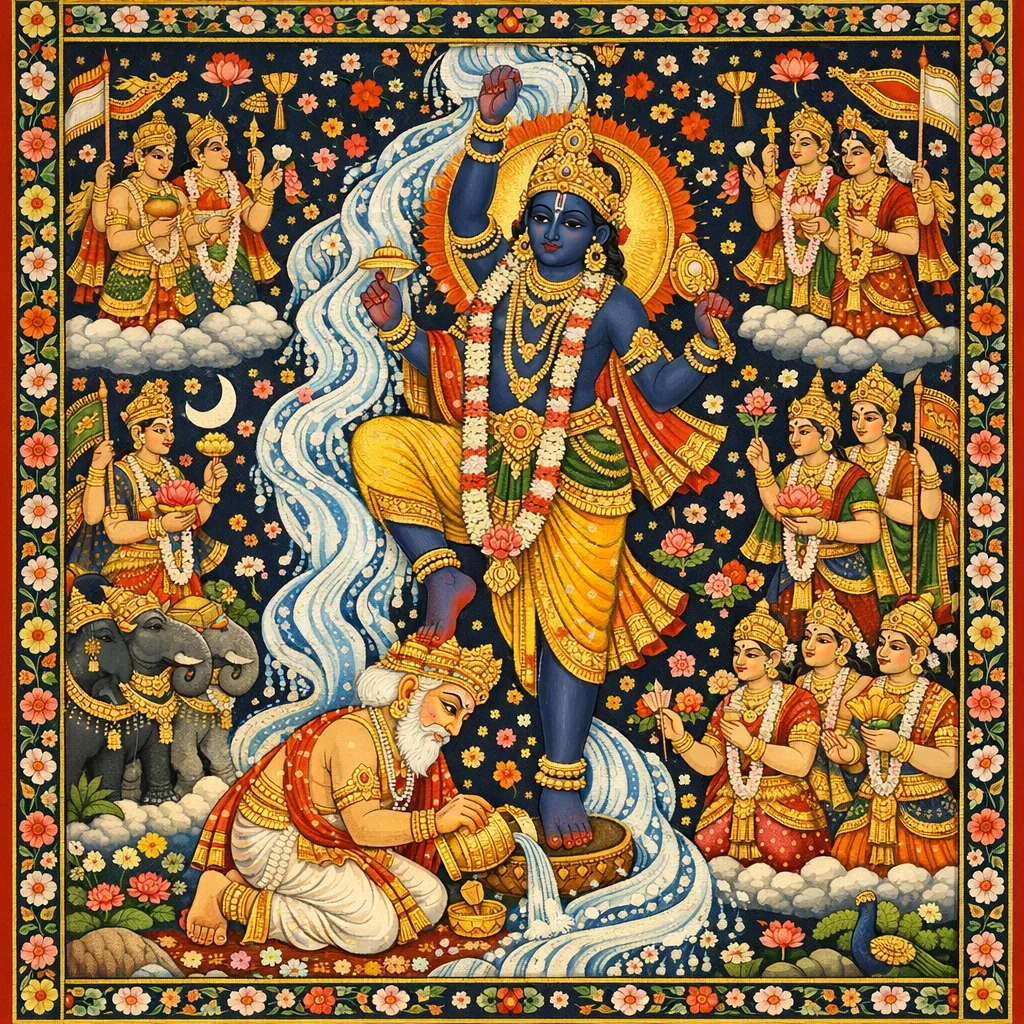
As Vāmanadeva’s transcendental radiance fills the cosmos, Brahmā—joined by Marīci, other ṛṣis, and perfected yogīs—approaches the Lord, whose brilliance eclipses even Brahmaloka. Brahmā performs pāda-pūjā; water from his kamaṇḍalu washes the Lord’s feet and becomes the Gaṅgā, descending to purify the three worlds. The devas and celestial administrators assemble a grand worship with offerings and jubilant acclaim, and Jāmbavān proclaims a victory festival. In contrast, Bali’s asura followers deem the Lord’s brāhmaṇa form a stratagem favoring the devas and resolve to kill Vāmana, but Viṣṇu’s associates (Nanda, Sunanda, Jaya, Vijaya, Garuḍa, and others) repel them. Remembering Śukrācārya’s warning, Bali orders a retreat, teaching that kāla (time/providence), the Lord’s representation, cannot be overcome by force, diplomacy, mantras, or medicine. When the soma-pāna day ends, Garuḍa binds Bali with Varuṇa’s ropes. Vāmana then confronts Bali: two steps have covered the universe—where will the promised third step be placed? This sets the stage for Bali’s decisive reply in the next chapter.
Shlokas
Verse 1
श्रीशुक उवाच सत्यं समीक्ष्याब्जभवो नखेन्दुभि- र्हतस्वधामद्युतिरावृतोऽभ्यगात् । मरीचिमिश्रा ऋषयो बृहद्व्रता: सनन्दनाद्या नरदेव योगिन: ॥ १ ॥
Brahmā, born from the lotus, saw the truth: the radiance of his own Brahmaloka was dimmed by the blazing effulgence from the toenails of Lord Vāmanadeva. He therefore approached the Supreme Personality of Godhead, accompanied by great sages headed by Marīci and yogīs like Sanandana—yet before that splendor they appeared insignificant.
Verse 2
वेदोपवेदा नियमा यमान्विता- स्तर्केतिहासाङ्गपुराणसंहिता: । ये चापरे योगसमीरदीपित- ज्ञानाग्निना रन्धितकर्मकल्मषा: ॥ २ ॥ ववन्दिरे यत्स्मरणानुभावत: स्वायम्भुवं धाम गता अकर्मकम् । अथाङ्घ्रये प्रोन्नमिताय विष्णो- रुपाहरत् पद्मभवोऽर्हणोदकम् । समर्च्य भक्त्याभ्यगृणाच्छुचिश्रवा यन्नाभिपङ्केरुहसम्भव: स्वयम् ॥ ३ ॥
Among those who came to worship the Lord’s lotus feet were masters of yama and niyama, scholars of logic, history, Purāṇas and sacred learning; knowers of the Vedas, Upavedas and their many compendia; and yogīs who had burned away karmic taint in the fire of transcendental knowledge awakened by yoga. Some had attained Brahmaloka not by ordinary karma but by exalted Vedic realization. Then Brahmā, born from the lotus of Viṣṇu’s navel, offered arghya water to Viṣṇu’s upraised lotus feet, worshiped with devotion, and spoke prayers of praise.
Verse 3
वेदोपवेदा नियमा यमान्विता- स्तर्केतिहासाङ्गपुराणसंहिता: । ये चापरे योगसमीरदीपित- ज्ञानाग्निना रन्धितकर्मकल्मषा: ॥ २ ॥ ववन्दिरे यत्स्मरणानुभावत: स्वायम्भुवं धाम गता अकर्मकम् । अथाङ्घ्रये प्रोन्नमिताय विष्णो- रुपाहरत् पद्मभवोऽर्हणोदकम् । समर्च्य भक्त्याभ्यगृणाच्छुचिश्रवा यन्नाभिपङ्केरुहसम्भव: स्वयम् ॥ ३ ॥
Among the great souls who came to worship the Lord’s lotus feet were those perfected in yama and niyama, learned in logic, history, Purāṇas and sacred disciplines; those versed in the Vedas, Upavedas and their compendia; those who had burned away karmic impurity in the fire of knowledge awakened by yoga; and those who had reached Brahmaloka by lofty Vedic realization rather than ordinary karma. Then Brahmā, born from the lotus of Viṣṇu’s navel, offered arghya water to Viṣṇu’s upraised lotus feet, worshiped with devotion, and voiced prayers of praise.
Verse 4
धातु: कमण्डलुजलं तदुरुक्रमस्य पादावनेजनपवित्रतया नरेन्द्र । स्वर्धुन्यभून्नभसि सा पतती निमार्ष्टि लोकत्रयं भगवतो विशदेव कीर्ति: ॥ ४ ॥
O King, the water from Brahmā’s kamaṇḍalu, having washed the lotus feet of Urukrama (Lord Vāmanadeva), became supremely pure and turned into the Svardhunī—the Ganges—flowing down from the heavens. As she descends, she purifies the three worlds, just like the spotless fame of the Supreme Lord.
Verse 5
ब्रह्मादयो लोकनाथा: स्वनाथाय समादृता: । सानुगा बलिमाजह्रु: सङ्क्षिप्तात्मविभूतये ॥ ५ ॥
Lord Brahmā and the ruling deities of all worlds reverently began to worship Lord Vāmanadeva, their supreme Master, who had withdrawn His all-pervading form into His original form. They gathered all the offerings and sacred paraphernalia for that worship.
Verse 6
तोयै: समर्हणै: स्रग्भिर्दिव्यगन्धानुलेपनै: । धूपैर्दीपै: सुरभिभिर्लाजाक्षतफलाङ्कुरै: ॥ ६ ॥ स्तवनैर्जयशब्दैश्च तद्वीर्यमहिमाङ्कितै: । नृत्यवादित्रगीतैश्च शङ्खदुन्दुभिनि:स्वनै: ॥ ७ ॥
They worshiped the Lord by offering water, pādya and arghya, fragrant garlands, divine scented unguents, incense and lamps, puffed rice, unbroken grains, fruits, roots, and tender sprouts.
Verse 7
तोयै: समर्हणै: स्रग्भिर्दिव्यगन्धानुलेपनै: । धूपैर्दीपै: सुरभिभिर्लाजाक्षतफलाङ्कुरै: ॥ ६ ॥ स्तवनैर्जयशब्दैश्च तद्वीर्यमहिमाङ्कितै: । नृत्यवादित्रगीतैश्च शङ्खदुन्दुभिनि:स्वनै: ॥ ७ ॥
They offered prayers glorifying His valor and majesty and cried out, “Jaya! Jaya!” They danced, played instruments, sang, blew conchshells, and beat kettledrums—thus worshiping the Lord.
Verse 8
जाम्बवानृक्षराजस्तु भेरीशब्दैर्मनोजव: । विजयं दिक्षु सर्वासु महोत्सवमघोषयत् ॥ ८ ॥
Jāmbavān, king of the bears, also joined the ceremony. Sounding his horn in every direction, he proclaimed a great festival celebrating Lord Vāmanadeva’s victory.
Verse 9
महीं सर्वां हृतां दृष्ट्वा त्रिपदव्याजयाच्ञया । ऊचु: स्वभर्तुरसुरा दीक्षितस्यात्यमर्षिता: ॥ ९ ॥
When the asuric followers of Mahārāja Bali saw that their master—steadfast in sacrifice after receiving initiation—had been stripped of all possessions because Vāmanadeva took everything away on the pretext of begging three paces of land, they became furious and spoke as follows.
Verse 10
न वायं ब्रह्मबन्धुर्विष्णुर्मायाविनां वर: । द्विजरूपप्रतिच्छन्नो देवकार्यं चिकीर्षति ॥ १० ॥
This Vāmana is certainly not a brāhmaṇa but the best of cheaters, Lord Viṣṇu. Assuming the form of a brāhmaṇa, He has covered His own form, and thus He is working for the interests of the demigods.
Verse 11
अनेन याचमानेन शत्रुणा वटुरूपिणा । सर्वस्वं नो हृतं भर्तुर्न्यस्तदण्डस्य बर्हिषि ॥ ११ ॥
Our lord, Bali Mahārāja, because of his position in performing the yajña, has given up the power to punish. Taking advantage of this, our eternal enemy, Viṣṇu, dressed in the form of a brahmacārī beggar, has taken away all his possessions.
Verse 12
सत्यव्रतस्य सततं दीक्षितस्य विशेषत: । नानृतं भाषितुं शक्यं ब्रह्मण्यस्य दयावत: ॥ १२ ॥
Our lord, Bali Mahārāja, is always fixed in truthfulness, and this is especially so at present, since he has been initiated into performing a sacrifice. He is always kind and merciful toward the brāhmaṇas, and he cannot at any time speak lies.
Verse 13
तस्मादस्य वधो धर्मो भर्तु: शुश्रूषणं च न: । इत्यायुधानि जगृहुर्बलेरनुचरासुरा: ॥ १३ ॥
Therefore it is our duty to kill this Vāmanadeva, Lord Viṣṇu. It is our religious principle and the way to serve our master. After making this decision, the demoniac followers of Mahārāja Bali took up their various weapons with a view to killing Vāmanadeva.
Verse 14
ते सर्वे वामनं हन्तुं शूलपट्टिशपाणय: । अनिच्छन्तो बले राजन् प्राद्रवञ्जातमन्यव: ॥ १४ ॥
O King, the demons, aggravated by their usual anger, took their lances and tridents in hand, and against the will of Bali Mahārāja they pushed forward to kill Lord Vāmanadeva.
Verse 15
तानभिद्रवतो दृष्ट्वा दितिजानीकपान् नृप । प्रहस्यानुचरा विष्णो: प्रत्यषेधन्नुदायुधा: ॥ १५ ॥
O King, seeing the demon soldiers rush forward in fury, the attendants of Lord Viṣṇu smiled. Lifting their weapons, they forbade the demons to press on.
Verse 16
नन्द: सुनन्दोऽथ जयो विजय: प्रबलो बल: । कुमुद: कुमुदाक्षश्च विष्वक्सेन: पतत्त्रिराट् ॥ १६ ॥ जयन्त: श्रुतदेवश्च पुष्पदन्तोऽथ सात्वत: । सर्वे नागायुतप्राणाश्चमूं ते जघ्नुरासुरीम् ॥ १७ ॥
Nanda, Sunanda, Jaya, Vijaya, Prabala, Bala, Kumuda, Kumudākṣa, Viṣvaksena, Patattrirāṭ (Garuḍa), Jayanta, Śrutadeva, Puṣpadanta and Sātvata—all were attendants of Lord Viṣṇu. Mighty as ten thousand elephants, they began to slay the demon army.
Verse 17
नन्द: सुनन्दोऽथ जयो विजय: प्रबलो बल: । कुमुद: कुमुदाक्षश्च विष्वक्सेन: पतत्त्रिराट् ॥ १६ ॥ जयन्त: श्रुतदेवश्च पुष्पदन्तोऽथ सात्वत: । सर्वे नागायुतप्राणाश्चमूं ते जघ्नुरासुरीम् ॥ १७ ॥
Nanda, Sunanda, Jaya, Vijaya, Prabala, Bala, Kumuda, Kumudākṣa, Viṣvaksena, Patattrirāṭ (Garuḍa), Jayanta, Śrutadeva, Puṣpadanta and Sātvata—all were attendants of Lord Viṣṇu. Mighty as ten thousand elephants, they began to slay the demon army.
Verse 18
हन्यमानान् स्वकान् दृष्ट्वा पुरुषानुचरैर्बलि: । वारयामास संरब्धान् काव्यशापमनुस्मरन् ॥ १८ ॥
When Bali Mahārāja saw his own soldiers being slain by the attendants of Lord Viṣṇu, he remembered Śukrācārya’s curse and restrained his enraged troops from fighting on.
Verse 19
हे विप्रचित्ते हे राहो हे नेमे श्रूयतां वच: । मा युध्यत निवर्तध्वं न न: कालोऽयमर्थकृत् ॥ १९ ॥
O Vipracitti, O Rāhu, O Nemi—hear my words! Do not fight; withdraw at once, for this time is not favorable to us.
Verse 20
य: प्रभु: सर्वभूतानां सुखदु:खोपपत्तये । तं नातिवर्तितुं दैत्या: पौरुषैरीश्वर: पुमान् ॥ २० ॥
O Daityas, by human endeavor no one can surpass the Supreme Personality of Godhead, the Lord who bestows happiness and distress upon all living beings.
Verse 21
यो नो भवाय प्रागासीदभवाय दिवौकसाम् । स एव भगवानद्य वर्तते तद्विपर्ययम् ॥ २१ ॥
The supreme factor of time, representing the Supreme Person, was formerly favorable to us and unfavorable to the demigods, but now that same time has turned against us.
Verse 22
बलेन सचिवैर्बुद्ध्या दुर्गैर्मन्त्रौषधादिभि: । सामादिभिरुपायैश्च कालं नात्येति वै जन: ॥ २२ ॥
No one can surpass the Lord’s manifestation as time—by material strength, ministerial counsel, intelligence, diplomacy, fortresses, mystic mantras, medicines, herbs, or any other means.
Verse 23
भवद्भिर्निर्जिता ह्येते बहुशोऽनुचरा हरे: । दैवेनर्द्धैस्त एवाद्य युधि जित्वा नदन्ति न: ॥ २३ ॥
Formerly, empowered by providence, you defeated these followers of Lord Hari many times; but today those same followers have conquered us in battle and roar in jubilation like lions.
Verse 24
एतान् वयं विजेष्यामो यदि दैवं प्रसीदति । तस्मात् कालं प्रतीक्षध्वं यो नोऽर्थत्वाय कल्पते ॥ २४ ॥
If providence becomes favorable to us, we shall surely conquer them; therefore we must wait for that auspicious time when defeating them will be possible for us.
Verse 25
श्रीशुक उवाच पत्युर्निगदितं श्रुत्वा दैत्यदानवयूथपा: । रसां निर्विविशू राजन् विष्णुपार्षदताडिता: ॥ २५ ॥
Śukadeva Gosvāmī said: O King, hearing the command of their master Bali Mahārāja, the leaders of the Daityas and Dānavas, struck and driven back by Viṣṇu’s attendants, entered Rasātala, the lower regions.
Verse 26
अथ तार्क्ष्यसुतो ज्ञात्वा विराट्प्रभुचिकीर्षितम् । बबन्ध वारुणै: पाशैर्बलिं सूत्येऽहनि क्रतौ ॥ २६ ॥
Thereafter Garuḍa, king of birds, understanding his Lord’s intent, on the day of soma-pāna after the sacrifice was completed, bound Bali Mahārāja with the ropes of Varuṇa.
Verse 27
हाहाकारो महानासीद् रोदस्यो: सर्वतोदिशम् । निगृह्यमाणेऽसुरपतौ विष्णुना प्रभविष्णुना ॥ २७ ॥
As Bali Mahārāja, lord of the asuras, was thus seized by the supremely powerful Lord Viṣṇu, a great roar of lamentation arose in all directions throughout the higher and lower worlds.
Verse 28
तं बद्धं वारुणै: पाशैर्भगवानाह वामन: । नष्टश्रियं स्थिरप्रज्ञमुदारयशसं नृप ॥ २८ ॥
O King, the Supreme Lord Vāmanadeva then spoke to Bali Mahārāja, whom He had bound with Varuṇa’s ropes—his bodily luster was gone, yet his resolve remained steady, and his fame and generosity were renowned.
Verse 29
पदानि त्रीणि दत्तानि भूमेर्मह्यं त्वयासुर । द्वाभ्यां क्रान्ता मही सर्वा तृतीयमुपकल्पय ॥ २९ ॥
O king of the demons, you promised Me three steps of land. With two steps I have covered the entire universe; now consider where I should place My third step.
Verse 30
यावत् तपत्यसौ गोभिर्यावदिन्दु: सहोडुभि: । यावद् वर्षति पर्जन्यस्तावती भूरियं तव ॥ ३० ॥
As long as the sun shines with the stars and the moon gives its light, and as long as the clouds pour down rain, all this land throughout the universe is in your possession.
Verse 31
पदैकेन मयाक्रान्तो भूर्लोक: खं दिशस्तनो: । स्वर्लोकस्ते द्वितीयेन पश्यतस्ते स्वमात्मना ॥ ३१ ॥
With one step I have occupied Bhūrloka, and with My body I have filled the sky and all directions. And in your very presence, with My second step, I have occupied Svargaloka, the higher planetary realm.
Verse 32
प्रतिश्रुतमदातुस्ते निरये वास इष्यते । विश त्वं निरयं तस्माद् गुरुणा चानुमोदित: ॥ ३२ ॥
Because you have been unable to give charity according to your promise, the rule is that you must descend to live in the hellish worlds. Therefore, in obedience to your spiritual master Śukrācārya, go down now and dwell there.
Verse 33
वृथा मनोरथस्तस्य दूर: स्वर्ग: पतत्यध: । प्रतिश्रुतस्यादानेन योऽर्थिनं विप्रलम्भते ॥ ३३ ॥
Far from attaining heaven or fulfilling one’s desires, a person who deceives a beggar by not giving what was promised falls down into a hellish condition.
Verse 34
विप्रलब्धो ददामीति त्वयाहं चाढ्यमानिना । तद् व्यलीकफलं भुङ्क्ष्व निरयं कतिचित् समा: ॥ ३४ ॥
Proud of your wealth, you deceived Me by saying, “I will give,” yet you could not fulfill your promise. Therefore, as the fruit of your false pledge, you must live for a few years in hellish life.
Frequently Asked Questions
The Bhāgavata frames Gaṅgā as caraṇāmṛta—water sanctified by contact with the Lord’s lotus feet. Brahmā’s kamaṇḍalu water, used in reverential pāda-pūjā, becomes supremely purifying and descends through the cosmic levels, symbolizing that the highest purity and fame (yaśas) originate from devotion to the Supreme Person rather than from material elevation like Brahmaloka.
The text lists Nanda, Sunanda, Jaya, Vijaya, Prabala, Bala, Kumuda, Kumudākṣa, Viṣvaksena, Patattrirāṭ (Garuḍa), Jayanta, Śrutadeva, Puṣpadanta, and Sātvata. Their intervention shows that the Lord’s will is upheld not only by His own presence but also through His empowered attendants who protect dharma.
Bali teaches that no material strategy—strength, counsel, intelligence, diplomacy, fortresses, mantras, drugs, or herbs—can surpass kāla, the Lord’s representation governing reversals in fortune. When kāla favors a side, success follows; when it turns adverse, even previously victorious forces must withdraw, underscoring the Bhāgavata theme that sovereignty ultimately belongs to the Supreme.
After the soma-pāna day, Garuḍa acts according to the Lord’s desire and binds Bali with Varuṇa-pāśa, a symbol of cosmic law and moral accountability. The binding externalizes Bali’s crisis: he has vowed charity, the Lord has taken two steps, and now Bali must resolve the remaining obligation—transforming the episode from political loss into a dharma-and-surrender examination.