Adhyaya 90
अध्याय ९० — लोमशोपदेशः तथा तीर्थयात्रानिश्चयः (Lomaśa’s Counsel and the Resolve for Pilgrimage)
Upa-parva: Tīrtha-yātrā (Pilgrimage) Episode: Lomaśa’s Guidance to Yudhiṣṭhira
This chapter presents a structured persuasion sequence. Lomaśa reports Arjuna’s directive that Yudhiṣṭhira be “joined” to dharmic prosperity through tīrtha-puṇya, explicitly framing pilgrimage as a royal practice (visiting sacred sites and gifting cattle) requiring total commitment. Lomaśa then adds a security rationale: numerous formidable rākṣasas inhabit difficult terrain, so Yudhiṣṭhira should be protected by the sage, using exempla of protective relationships (e.g., Dadhīca/Indra; Aṅgiras/Sun) to legitimate guardianship. Lomaśa further normalizes the route by citing precedent—royal sages and Manu-like figures undertook fear-removing pilgrimages—and sets eligibility criteria by negation: the crooked-minded, sinful, or undisciplined do not truly bathe in tīrthas. Yudhiṣṭhira responds with humility and readiness, noting that prior counsel (including Dhaumya’s) already aligned his intent; he declares firm resolve to depart when advised. Vaiśaṃpāyana narrates the logistical transition: Yudhiṣṭhira orders the return of mendicant-dependent Brahmins, ascetics, and loyal townsmen to Dhṛtarāṣṭra for support (with Pāñcāla as contingency), after which the group reduces to a lighter retinue; Yudhiṣṭhira stays briefly at Kāmyaka with select Brahmins and Lomaśa, preparing for onward travel.
Chapter Arc: धौम्य ऋषि युधिष्ठिर से कहते हैं—राजन्, सावधान होकर सुनो; उत्तर दिशा के पुण्यप्रद तीर्थों का वर्णन तुम्हारे भीतर शुभ श्रद्धा जगाएगा। → वर्णन सरस्वती जैसी तीर्थमालिनी नदी से आरम्भ होकर उत्तर के अनेक पवित्र आश्रमों, नदियों और देव-ऋषि-सेवित स्थलों तक फैलता है; हर स्थल के साथ पुण्य, कीर्ति और तप-परम्परा का भार बढ़ता जाता है। → इसी प्रसंग में ‘इन्द्र-गीता’ के रूप में लोक-प्रचलित गाथा का उल्लेख आता है—मानो देव-स्वर स्वयं तीर्थ-यात्रा के महात्म्य पर मुहर लगाता हो; फिर बदरी/विशाल बदरी और मधुसूदन के विराजमान होने वाले परम-पुण्य क्षेत्र का उत्कर्ष-घोष होता है—‘पुण्यानामपि तत् पुण्यम्’। → धौम्य तीर्थों और आयतनों की सूची को समेटते हुए बताते हैं कि ये स्थान वसु, साध्य, आदित्य, मरुत, अश्विनीकुमार तथा देवकल्प ऋषियों द्वारा सेवित हैं; युधिष्ठिर को आश्वासन मिलता है कि भाइयों और ब्राह्मणर्षियों सहित इन स्थलों में विचरते हुए उनकी उत्कण्ठा/विषाद शान्त होगा और धर्म-बल पुष्ट होगा। → उत्तर दिशा के तीर्थ-मार्ग का संकेत देकर आगे के तीर्थ-वर्णन की ओर कथा स्वाभाविक रूप से बढ़ती है।
Shlokas
Verse 1
इस प्रकार श्रीमहाभारत वनपर्वके अन्तर्गत तीर्थयात्रापर्वमें धौग्यतीर्थयात्राविषयक नवासीवाँ अध्याय प्रा हुआ ॥/ ८९ ॥। हि आय ० (0) हि २ 7 नवतितमो< ध्याय: धौम्यद्वारा उत्तर दिशाके तीर्थोंका वर्णन धौम्य उवाच उदीच्यां राजशार्दूल दिशि पुण्यानि यानि वै । तानि ते कीर्तयिष्यामि पुण्यान्यायतनानि च,धौम्यजी कहते हैं--नृपश्रेष्ठ! उत्तर दिशामें जो पुण्यप्रद तीर्थ और देवालय आदि हैं, उनका तुमसे वर्णन करता हूँ। प्रभो! तुम सावधान होकर वह सब मेरे मुखसे सुनो। वीरवर! तीर्थोकी कथाका प्रसंग उनके प्रति मंगलमयी श्रद्धा उत्पन्न करता है
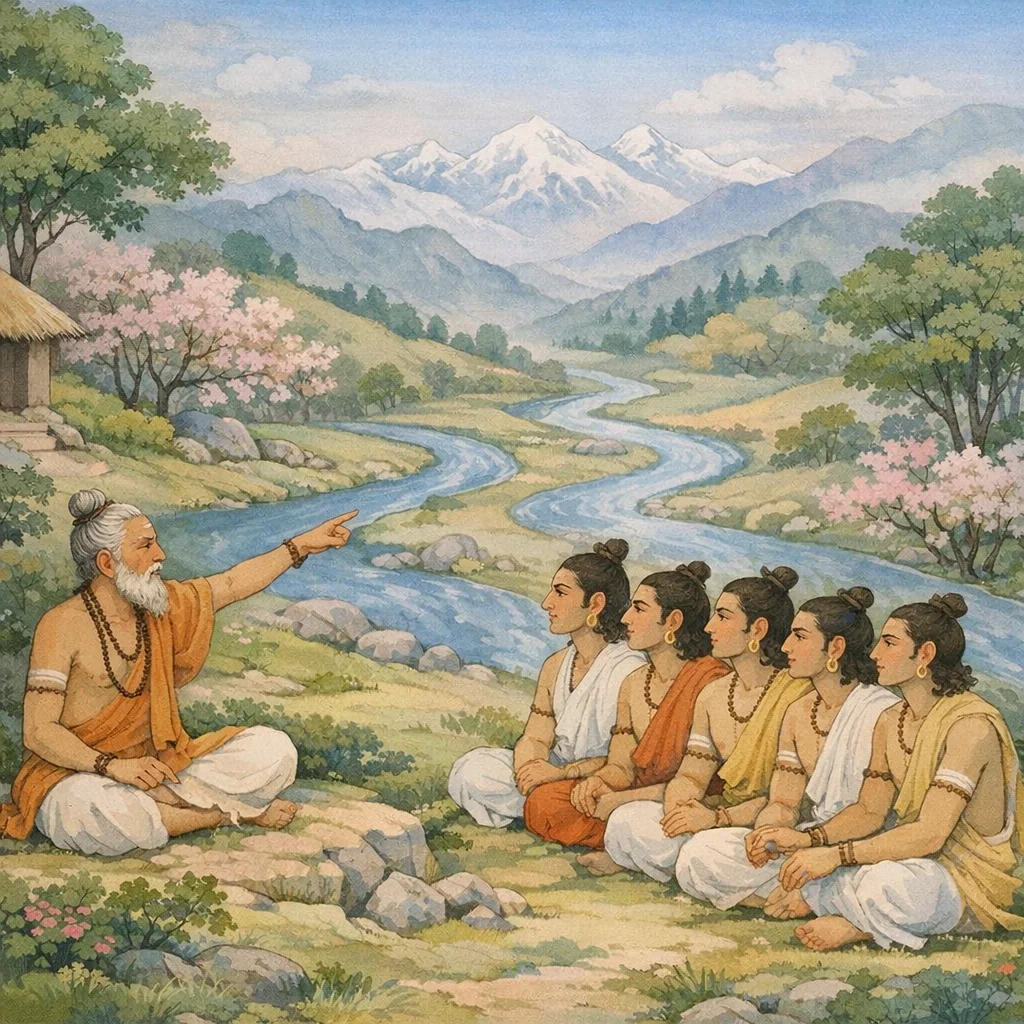
Dhaumya said: “O bull among kings, in the northern quarter there are many sacred fords and holy abodes. I shall recount them to you—those meritorious tīrthas and sanctuaries as well. Listen attentively, for the very occasion of speaking about pilgrimage awakens auspicious faith and reverence.”
Verse 2
शृणुष्वावहितो भूत्वा मम मन्त्रयत: प्रभो । कथाप्रतिग्रहो वीर श्रद्धां जनयते शुभाम्,धौम्यजी कहते हैं--नृपश्रेष्ठ! उत्तर दिशामें जो पुण्यप्रद तीर्थ और देवालय आदि हैं, उनका तुमसे वर्णन करता हूँ। प्रभो! तुम सावधान होकर वह सब मेरे मुखसे सुनो। वीरवर! तीर्थोकी कथाका प्रसंग उनके प्रति मंगलमयी श्रद्धा उत्पन्न करता है
Dhaumya said: “O lord, listen with full attention as I speak. O hero, the very act of receiving and engaging with sacred narratives gives rise to auspicious faith.”
Verse 3
सरस्वती महापुण्या हृदिनी तीर्थमालिनी । समुद्रगा महावेगा यमुना यत्र पाण्डव,तीर्थोंकी पंक्तिसे सुशोभित सरस्वती नदी बड़ी पुण्यदायिनी है। पाण्डुनन्दन! समुद्रमें मिलनेवाली महावेगशालिनी यमुना भी उत्तर दिशामें ही हैं
Dhaumya said: “The Sarasvatī is supremely holy, a river that gladdens the heart and is adorned with a garland of sacred fords. And there too, O Pāṇḍava, is the Yamunā—swift in her mighty current—flowing onward to meet the ocean.”
Verse 4
यत्र पुण्यतरं तीर्थ प्लक्षावतरणं शुभम् । यत्र सारस्वतैरिष्टवा गच्छन्त्यव भृथैद्धिजा:,उधर ही अत्यन्त पुण्यमय प्लक्षावतरण नामक मंगलकारक तीर्थ है; जहाँ ब्राह्मणगणण यज्ञ करके सरस्वतीके जलसे अवभूथस्नान करते और अपने स्थानको जाते हैं
Dhaumya said: “There is a most holy ford, the auspicious pilgrimage-place called Plakṣāvataraṇa. There, after performing sacrifices in the Sarasvatī region, the twice-born (Brahmins) complete the rite with the avabhṛtha bath and then depart to their respective homes.”
Verse 5
पुण्यं चाख्यायते दिव्यं शिवमग्निशिरोडनघ । सहदेवो5यजद् यत्र शम्याक्षेपेण भारत,उधर ही अग्निशिर नामक दिव्य, कल्याणमय, पुण्यतीर्थ बताया जाता है। निष्पाप भरतनन्दन! उसी तीर्थमें सहदेवने शमीका डंडा फेंकवाकर, जितनी दूरीमें वह डंडा पड़ा था उतनी दूरीमें, मण्डप बनवाकर उसमें यज्ञ किया
Dhaumya said: “O sinless one, this place called Agniśiras is proclaimed a sacred ford—divine, auspicious, and purifying. O descendant of Bharata, it was here that Sahadeva performed a sacrifice, marking out the ritual ground by casting a śamī-wood staff and having the sacrificial pavilion set up to the measure of the distance where it fell.” The passage highlights how holy places and properly delimited ritual action are treated as instruments of purification and right order (dharma).
Verse 6
एतस्मिन्नेव चार्थेडसाविन्द्रगीता युधिष्ठिर गाथा चरति लोकेडस्मिन् गीयमाना द्विजातिभि:,युधिष्ठिर! इसी विषयमें इन्द्रकी गायी हुई एक गाथा लोकमें प्रचलित है, जिसे ब्राह्मण गाया करते हैं
On this very matter, O Yudhiṣṭhira, there circulates in the world a well-known verse called the ‘Indra-gītā’—a traditional saying attributed to Indra—sung and preserved by the twice-born. By invoking it, Dhaumya signals that the counsel he is about to convey is not merely personal opinion but an established ethical teaching handed down in sacred memory.
Verse 7
अग्नय: सहदेवेन सेविता यमुनामनु । ते तस्य कुरुशार्टूल सहस्रशतदक्षिणा:,कुरुश्रेष्ठ! सहदेवने यमुना-तटपर लाख स्वर्ण-मुद्राओंकी दक्षिणा देकर अग्निकी उपासना की थी-
Dhaumya said: “O tiger among the Kurus, Sahadeva worshipped the sacred fires along the banks of the Yamunā, offering them generous priestly gifts—amounting to a hundred thousand in dakṣiṇā. This highlights the ethic that devotion is completed by rightful giving: reverence to the divine is joined with gratitude and support for sacred rites.”
Verse 8
तत्रैव भरतो राजा चक्रवर्ती महायशा: । विंशति: सप्त चाष्टी च हयमेधानुपाहरत्,वहीं महायशस्वी चक्रवर्ती राजा भरतने पैंतीस अश्वमेधयज्ञोंका अनुष्ठान किया
Right there, the illustrious emperor Bharata—renowned as a universal sovereign—performed a great series of Aśvamedha sacrifices: twenty-seven and eight more, in all thirty-five. The statement highlights Bharata’s exemplary royal duty: through vast, public rites he upholds order, prosperity, and the prestige of righteous kingship.
Verse 9
कामकृद् यो द्विजातीनां श्रुतस्तात यथा पुरा । अत्यन्तमाश्रम: पुण्य: शरभंगस्य विश्रुत:,तात! प्राचीनकालमें राजा भरत ब्राह्मणोंकी मनोवाञ्छाको पूर्ण करनेवाला राजा सुना गया है। उत्तराखण्डमें ही महर्षि शरभड़का अत्यन्त पुण्यदायक आश्रम विख्यात है
Dhaumya said: “Dear child, in ancient times there was heard of a king named Bharata, famed for fulfilling the wishes of the twice-born (Brahmins). And in the northern region there is also the exceedingly holy hermitage of the renowned sage Śarabhāṅga, celebrated for its sanctity.”
Verse 10
सरस्वती नदी सद्धि: सततं पार्थ पूजिता । बालखिल्यैर्महाराज यत्रेष्टमृषिभि: पुरा,कुन्तीनन्दन! साधु पुरुषोंने सरस्वती नदीकी सदा उपासना की है। महाराज! पूर्वकालमें बालखिल्य ऋषियोंने वहाँ यज्ञ किया था
Dhaumya said: “O Pārtha, the river Sarasvatī is ever revered as a source of spiritual accomplishment. O King, in ancient times the Bālakhilya sages performed sacrificial rites there. Therefore, O son of Kuntī, the noble have always worshipped Sarasvatī with reverence.”
Verse 11
दृषद्वती महापुण्या यत्र ख्याता युधिष्ठिर । न्यग्रोधाख्यस्तु पुण्याख्य: पाज्चाल्यो द्विपदां वर
Dhaumya said: “O Yudhiṣṭhira, the river Dṛṣadvatī is exceedingly sacred and renowned. There too is a holy banyan tree, famed for its sanctity; and there is also a Pāñcāla (a man of the Pāñcāla land), foremost among men.”
Verse 12
दाल्भ्यघोषश्न दाल्भ्यक्ष धरणीस्थो महात्मन: । कौन्तेयानन्तयशस: सुव्रतस्यामितौजस:
Dhaumya said: “Dālbhyaghoṣa and Dālbhyakṣa—both great-souled beings who dwell upon the earth—are connected with the Kuntī-born hero of endless fame, the man of steadfast vows and immeasurable prowess.”
Verse 13
आश्रम: ख्यायते पुण्यस्त्रिषु लोकेषु विश्रुत: । युधिष्ठिर! परम पुण्यमयी दृषद्गवती नदी भी उधर ही बतायी गयी है। मनुष्योंमें श्रेष्ठ युधिष्ठिर! वहीं न्यग्रोध, पुण्य, पाञ्चाल्य, दाल्भ्यघोष और दाल्भ्य--ये पाँच आश्रम हैं तथा अनन्तकीर्ति एवं अमिततेजस्वी महात्मा सुव्रतका पुण्य आश्रम भी उत्तराखण्डमें ही बताया जाता है, जो पृथ्वीपर रहकर भी तीनों लोकोंमें विख्यात है ।। एतावर्णाववर्णो च विश्रुती मनुजाधिप,नरेश्वर! उत्तराखण्डमें ही विख्यात मुनि नर और नारायण हैं, जो एतावर्ण (श्यामवर्ण-- साकार) होते हुए भी वास्तवमें अवर्ण (निराकार) ही हैं
Dhaumya said: “That hermitage is renowned as supremely holy and is celebrated in all the three worlds. O Yudhiṣṭhira, the river Dṛṣadgavatī—most sanctifying—is also said to be there. O best of men, Yudhiṣṭhira, there too are five hermitages: Nyagrodha, Puṇya, Pāñcālya, Dālbhyaghoṣa, and Dālbhyā. And in Uttarakhaṇḍa is also spoken of the holy hermitage of the great-souled Suvrata, of endless fame and immeasurable splendor—though situated on earth, it is famed across the three worlds. O lord of men, O king, in Uttarakhaṇḍa are also renowned the sages Nara and Nārāyaṇa—appearing with a visible hue (dark in complexion, embodied) and yet in truth beyond all hue (formless).”
Verse 14
वेदज्ञौ वेदविद्वांसौ वेदविद्याविदावु भौ । ईजाते क्रतुभिर्मुख्यै: पुण्यैर्भरतसत्तम,भरतश्रेष्ठ! ये दोनों मुनि वेदज्ञ, वेदके मर्मज्ञ तथा वेदविद्याके पूर्ण जानकार हैं। इन्होंने पुण्यदायक उत्तम यज्ञोंद्वारा शंकरका यजन किया है
Dhaumya said: “O best of the Bharatas, those two sages are masters of the Veda—learned in its meaning and fully skilled in Vedic disciplines. By foremost and merit-bearing sacrificial rites, they have worshipped Śaṅkara.”
Verse 15
समेत्य बहुशो देवा: सेन्द्रा: सवरुणा: पुरा । विशाखयूपे5तप्यन्त तेन पुण्यतमश्न सः,पूर्वकालमें इन्द्र, वरुण आदि बहुत-से देवताओंने मिलकर विशाखयूप नामक स्थानमें तप किया था, अतः वह अत्यन्त पुण्यप्रद स्थान है
Dhaumya said: “In ancient times many gods—together with Indra and Varuṇa—assembled repeatedly and performed austerities at the place called Viśākhayūpa. Therefore that spot is supremely sacred and highly merit-giving.”
Verse 16
ऋषिर्महान् महा भागो जमदग्निर्महायशा: । पलाशकेषु पुण्येषु रम्येष्वयजत प्रभु:,महाभाग, महायशस्वी और महाप्रभावशाली महर्षि जमदग्निने परम सुन्दर तथा पुण्यप्रद पलाशवनमें यज्ञ किया था
Dhaumya said: The great sage Jamadagni—illustrious and highly blessed—performed a sacrifice in lovely and sanctifying groves of palāśa trees. The passage highlights the ideal of sacred action (yajña) undertaken in a pure setting by a spiritually powerful seer, presenting ritual duty as a means of sustaining dharma and auspiciousness.
Verse 17
यत्र सर्वा: सरिच्छेष्ठा: साक्षात् तमृषिसत्तमम् | स्वं स्वं तोयमुपादाय परिवार्योपतस्थिरे,जिसमें सब श्रेष्ठ नदियाँ मूर्तिमती हो अपना-अपना जल लेकर उन मुनिश्रेष्ठके पास आयीं और उन्हें सब ओरसे घेरकर खड़ी हुई थीं
There, all the foremost rivers—appearing in embodied form—came directly to that best of sages. Each brought her own waters, and, surrounding him on every side, stood in reverent attendance, as if offering their very essence to honor his sanctity.
Verse 18
अपि चात्र महाराज स्वयं विश्वावसुर्जगौ । इमं श्लोक॑ तदा वीर प्रेक्ष्य दीक्षां महात्मन:,वीर महाराज! यहाँ महात्मा जमदग्निकी वह यज्ञदीक्षा देखकर स्वयं गन्धर्वराज विश्वावसुने इस श्लोकका गान किया था
And here, O great king, the Gandharva Viśvāvasu himself once sang this very verse, O hero, upon beholding the sacred consecration (dīkṣā) of that great-souled one. The passage highlights how the sight of disciplined, vow-bound ritual life can inspire even celestial beings to praise dharma through song.
Verse 19
यजमानस्य वै देवाञज्जमदग्नेर्महात्मन: । आगम्य सरितो विप्रान् मधुना समतर्पयन्,“महात्मा जमदग्नि जब यज्ञद्वारा देवताओंका यजन कर रहे थे, उस समय उनके यज्ञमें सरिताओंने आकर मधुसे ब्राह्मणोंको तृप्त किया”
As the great-souled Jamadagni was performing sacrifice, worshipping the gods, the river-deities came there and, with honey, satisfied the brahmins present at the rite. The episode underscores the sanctity of yajña and hospitality: when a sacrifice is conducted with purity and dharma, even the forces of nature are portrayed as supporting the nourishment and honoring of the worthy.
Verse 20
गन्धर्वयक्षरक्षोभिरप्सरोभि श्व॒ सेवितम् । किरातकिन्नरावासं शैलं शिखरिणां वरम्,युधिष्ठिर! गिरिश्रेष्ठ हिमालय किरातों और किन्नरोंका निवासस्थान है। गन्धर्व, यक्ष, राक्षस और अप्सराएँ उसका सदा सेवन करती हैं। गंगाजी अपने वेगसे उस शैलराजको फोड़कर जहाँ प्रकट हुई हैं, वह पुण्यस्थान गंगाद्वार (हरिद्वार)-के नामसे विख्यात है। राजन! उस तीर्थका ब्रह्मर्षिणण सदा सेवन करते हैं
Dhaumya said: “O Yudhiṣṭhira, that supreme mountain—best among the lofty peaks—is a dwelling-place of the Kirātas and Kinnaras, and it is ever frequented by Gandharvas, Yakṣas, Rākṣasas, and Apsarases.”
Verse 21
बिभेद तरसा गज गज्जद्वारं युधिष्ठिर । पुण्यं तत् ख्यायते राजन ब्रह्मर्षिगणसेवितम्,युधिष्ठिर! गिरिश्रेष्ठ हिमालय किरातों और किन्नरोंका निवासस्थान है। गन्धर्व, यक्ष, राक्षस और अप्सराएँ उसका सदा सेवन करती हैं। गंगाजी अपने वेगसे उस शैलराजको फोड़कर जहाँ प्रकट हुई हैं, वह पुण्यस्थान गंगाद्वार (हरिद्वार)-के नामसे विख्यात है। राजन! उस तीर्थका ब्रह्मर्षिणण सदा सेवन करते हैं
Dhaumya said: “O Yudhiṣṭhira, with its tremendous force the Gaṅgā broke open the ‘Elephant-roaring Gate’ of the mountain. That spot, O king, is renowned as a supremely holy place, frequented by hosts of Brahmarṣis. It is the famed Gaṅgādvāra (Haridvāra), where the river emerges after cleaving the lordly Himālaya—an abode of Kirātas and Kinnaras, and a region ever visited by Gandharvas, Yakṣas, Rākṣasas, and Apsarases.”
Verse 22
सनत्कुमार: कौरव्य पुण्यं कनखलं तथा । पर्वतश्न पुरुर्नाम यत्र यात: पुरूरवा:,कुरुनन्दन! पुण्यमय कनखलमें पहले सनत्कुमारने यात्रा की थी। वहीं पुरु नामसे प्रसिद्ध पर्वत है, जहाँ पूर्वकालमें पुरूरवाने यात्रा की थी
Dhaumya said: “O Kauravya, there is the holy place Kanakhala, sanctified by the pilgrimage of Sanatkumāra. And there is also a mountain known as Puru, where in ancient times King Purūravas once journeyed, O delight of the Kurus.”
Verse 23
भृगुर्यत्र तपस्तेपे महर्षिगणसेविते । राजन् स आश्रम: ख्यातो भृगुतुड़ो महागिरि:,राजन! महर्षियोंसे सेवित जिस महान् पर्वतपर भृगुने तपस्या की थी वह भृगुतुंग आश्रमके नामसे विख्यात है
Dhaumya said: “O King, the great mountain where Bhṛgu once performed austerities—revered and frequented by hosts of great seers—is renowned as the hermitage called Bhṛgutūṅga.”
Verse 24
यः स भूतं भविष्यच्च भवच्च भरतर्षभ | नारायण: प्रभुर्विष्णु: शाश्वत: पुरुषोत्तम:,भरतश्रेष्ठ! भूत, भविष्य और वर्तमान जिनका स्वरूप है, जो सर्वशक्तिमान्, सर्वव्यापी, सनातन एवं पुरुषोत्तम नारायण हैं उन अत्यन्त यशस्वी श्रीहरिकी पुण्यमयी विशालापुरी बदरीवनके निकट है। वह नर-नारायणका आश्रम कहा गया है, वह पुण्यप्रद बदरिका श्रम तीनों लोकोंमें विख्यात है
Dhaumya said: “O bull among the Bharatas, He whose very being encompasses the past, the future, and the present—Nārāyaṇa, the sovereign Lord Viṣṇu, eternal and the Supreme Person—has His holy, expansive city near the Badarī forest. That place is known as the hermitage of Nara and Nārāyaṇa; the sacred Badarikā-āśrama, famed throughout the three worlds, bestows merit and spiritual uplift.”
Verse 25
तस्यातियशस: पुण्यां विशालां बदरीमनु | आश्रम: ख्यायते पुण्यस्त्रिषु लोकेषु विश्रुत:,भरतश्रेष्ठ! भूत, भविष्य और वर्तमान जिनका स्वरूप है, जो सर्वशक्तिमान्, सर्वव्यापी, सनातन एवं पुरुषोत्तम नारायण हैं उन अत्यन्त यशस्वी श्रीहरिकी पुण्यमयी विशालापुरी बदरीवनके निकट है। वह नर-नारायणका आश्रम कहा गया है, वह पुण्यप्रद बदरिका श्रम तीनों लोकोंमें विख्यात है
O best of the Bharatas, near the vast and holy Badarī—belonging to that supremely renowned Lord—there is a sacred hermitage celebrated throughout the three worlds. That place is known as the āśrama of Nara and Nārāyaṇa, famed for its sanctity and power to purify.
Verse 26
उष्णतोयवहा गड़ा शीततोयवहा पुरा । सुवर्णसिकता राजन् विशालां बदरीमनु,राजन! पूर्वकालसे ही विशाला बदरीके समीप गंगा कहीं गरम जल तथा कहीं शीतल जल प्रवाहित करती हैं। उनकी बालू सुवर्णकी भाँति चमकती रहती है
Dhaumya said: “O King, in former times the Gaṅgā flowed near the great Badarī (Viśālā) with waters that were warm in some stretches and cool in others; and her sand there gleamed like gold.”
Verse 27
ऋषयो यत्र देवाश्न महाभागा महौजस: । प्राप्प नित्यं नमस्यन्ति देवं नारायणं प्रभुम्,वहाँ महाभाग एवं महातेजस्वी देवता तथा महर्षि प्रतेदिन जाकर अमित प्रभावशाली भगवान् नारायणको नमस्कार करते हैं। जहाँ सनातन परमात्मा भगवान् नारायण विराजमान हैं वहाँ सम्पूर्ण जगत् है और समस्त तीर्थ तथा देवालय हैं
Dhaumya said: “In that place, the blessed and mighty sages and the gods, having reached it, bow every day to Lord Nārāyaṇa, the supreme Master. Where the eternal Supreme Self, Bhagavān Nārāyaṇa, abides—there the whole world is, and there are all sacred fords and all shrines.”
Verse 28
यत्र नारायणो देव: परमात्मा सनातन: । तत्र कृत्स्नं जगत् सर्व तीर्थान्यायतनानि च,वहाँ महाभाग एवं महातेजस्वी देवता तथा महर्षि प्रतेदिन जाकर अमित प्रभावशाली भगवान् नारायणको नमस्कार करते हैं। जहाँ सनातन परमात्मा भगवान् नारायण विराजमान हैं वहाँ सम्पूर्ण जगत् है और समस्त तीर्थ तथा देवालय हैं
Dhaumya said: Wherever the god Nārāyaṇa—eternal, the supreme Self—abides, there the whole universe is present. In that very place are contained all sacred fords (tīrthas) and all holy shrines. The verse elevates devotion to Nārāyaṇa as a unifying dharmic act: honoring Him is tantamount to honoring every pilgrimage-site and sanctuary, because the divine presence makes a place spiritually complete.
Verse 29
तत् पुण्यं परम॑ ब्रह्म तत् तीर्थ तत् तपोवनम् । तत् परं परम॑ देवं भूतानां परमेश्वरम्,वह बदरिकाश्रम पुण्यक्षेत्र और परत्रह्मस्वरूप है। वही तीर्थ है, वही तपोवन है, वही सम्पूर्ण भूतोंका परमदेव परमेश्वर है
Dhaumya said: “That place is holy; it is the supreme Brahman itself. It is a sacred ford, it is a forest of austerities. It is the highest, the supreme God—the Lord of all beings.”
Verse 30
शाश्व॒तं परम चैव धातारं परमं पदम् | य॑ं विदित्वा न शोचन्ति विद्वांस: शास्त्रदृष्टय:
“(Know) the Eternal, the Supreme—indeed the Creator and the highest state. Having realized Him/That, the wise, whose vision is shaped by the teachings of the śāstras, do not grieve.”
Verse 31
तत्र देवर्षय: सिद्धा: सर्वे चैव तपोधना: । वही सनातन परमधाता एवं परमपद है, जिसे जान लेनेपर शास्त्रदर्शी विद्वान् कभी शोक नहीं करते हैं। वहीं देवर्षि सिद्ध और समस्त तपोधन महात्मा निवास करते हैं |। ३० ३ || आदिदेवो महायोगी यत्रास्ते मधुसूदन:,जहाँ महायोगी आदिदेव भगवान् मधुसूदन विराजमान हैं वह स्थान पुण्योंका भी पुण्य है। इस विषयमें तुम्हें संशय नहीं होना चाहिये। राजन! पृथ्वीपते! नरश्रेष्ठ) ये भूमण्डलके पुण्यतीर्थ और आश्रम आदि कहे गये वसु, साध्य, आदित्य, मरुद्गण, अश्विनीकुमार तथा देवोपम महात्मा मुनि इन सब तीर्थोंका सेवन करते हैं। कुन्तीनन्दन! तुम श्रेष्ठ ब्राह्मणों और महान् सौभाग्यशाली भाइयोंके साथ इन तीर्थोमें विचरते रहोगे तो अर्जुनके लिये तुम्हारी मिलनेकी उत्कट इच्छा अर्थात् विरहव्याकुलता शान्त हो जायगी
Dhaumya said: “There is that supreme, eternal state—the highest abode—knowing which the seers of the scriptures never again fall into grief. There dwell the divine sages, the perfected ones, and all ascetics rich in austerity; there reside great-souled tapasvins. And where the primeval God, the great Yogin, Madhusūdana, abides—know that place to be holier than even holiness itself; have no doubt about this. O king, lord of the earth, best of men: the sacred fords and hermitages spoken of upon this earth are frequented by the Vasus, Sādhyas, Ādityas, the hosts of Maruts, the Aśvin twins, and godlike great sages. O son of Kuntī, if you wander among these tīrthas with excellent brāhmaṇas and with your fortunate brothers, your burning anguish of separation—your intense longing to meet Arjuna—will be calmed.”
Verse 32
पुण्यानामपि तत् पुण्यमत्र ते संशयोअस्तु मा । एतानि राजन् पुण्यानि पृथिव्यां पृथिवीपते,जहाँ महायोगी आदिदेव भगवान् मधुसूदन विराजमान हैं वह स्थान पुण्योंका भी पुण्य है। इस विषयमें तुम्हें संशय नहीं होना चाहिये। राजन! पृथ्वीपते! नरश्रेष्ठ) ये भूमण्डलके पुण्यतीर्थ और आश्रम आदि कहे गये वसु, साध्य, आदित्य, मरुद्गण, अश्विनीकुमार तथा देवोपम महात्मा मुनि इन सब तीर्थोंका सेवन करते हैं। कुन्तीनन्दन! तुम श्रेष्ठ ब्राह्मणों और महान् सौभाग्यशाली भाइयोंके साथ इन तीर्थोमें विचरते रहोगे तो अर्जुनके लिये तुम्हारी मिलनेकी उत्कट इच्छा अर्थात् विरहव्याकुलता शान्त हो जायगी
Dhaumya said: “Even among holy things, that place is the holiest—let there be no doubt in you about this. O King, O Lord of the earth, these are the sacred places upon the earth. Where the great Yogin, the primordial divine Lord, Bhagavān Madhusūdana abides, that spot is the very sanctity of sanctities. By moving among such tīrthas and āśramas in the company of excellent brāhmaṇas and your fortunate brothers, your grief and restless longing born of separation will be calmed, and your mind will be steadied in dharma.”
Verse 33
कीर्तितानि नरश्रेष्ठ तीर्थान्यायतनानि च । एतानि वसुभि: साध्यैरादित्यैर्मरुदश्विभि:,जहाँ महायोगी आदिदेव भगवान् मधुसूदन विराजमान हैं वह स्थान पुण्योंका भी पुण्य है। इस विषयमें तुम्हें संशय नहीं होना चाहिये। राजन! पृथ्वीपते! नरश्रेष्ठ) ये भूमण्डलके पुण्यतीर्थ और आश्रम आदि कहे गये वसु, साध्य, आदित्य, मरुद्गण, अश्विनीकुमार तथा देवोपम महात्मा मुनि इन सब तीर्थोंका सेवन करते हैं। कुन्तीनन्दन! तुम श्रेष्ठ ब्राह्मणों और महान् सौभाग्यशाली भाइयोंके साथ इन तीर्थोमें विचरते रहोगे तो अर्जुनके लिये तुम्हारी मिलनेकी उत्कट इच्छा अर्थात् विरहव्याकुलता शान्त हो जायगी
Dhaumya said: “O best of men, I have described these sacred fords and holy abodes. These very places are frequented and honored by the Vasus, the Sādhyas, the Ādityas, the Maruts, and the Aśvins. Therefore, do not doubt their sanctity: to move among such tīrthas is itself a purifying discipline, steadying the mind and strengthening one’s resolve in dharma.”
Verse 34
ऋषिभिद्देवकलल्पैश्नव सेवितानि महात्मभि: । चरच्नेतानि कौन्तेय सहितो ब्राह्मणर्षभै: । भ्रातृभिश्च महाभागैरुत्कण्ठां विहरिष्यसि,जहाँ महायोगी आदिदेव भगवान् मधुसूदन विराजमान हैं वह स्थान पुण्योंका भी पुण्य है। इस विषयमें तुम्हें संशय नहीं होना चाहिये। राजन! पृथ्वीपते! नरश्रेष्ठ) ये भूमण्डलके पुण्यतीर्थ और आश्रम आदि कहे गये वसु, साध्य, आदित्य, मरुद्गण, अश्विनीकुमार तथा देवोपम महात्मा मुनि इन सब तीर्थोंका सेवन करते हैं। कुन्तीनन्दन! तुम श्रेष्ठ ब्राह्मणों और महान् सौभाग्यशाली भाइयोंके साथ इन तीर्थोमें विचरते रहोगे तो अर्जुनके लिये तुम्हारी मिलनेकी उत्कट इच्छा अर्थात् विरहव्याकुलता शान्त हो जायगी
Dhaumya said: “These sacred places are constantly frequented by great-souled sages who are like the gods. O son of Kuntī, as you journey through them in the company of foremost Brahmins and your highly fortunate brothers, your restless longing will find release. Such pilgrimage is not mere travel: it steadies the mind, purifies grief, and turns separation into disciplined endurance through contact with holy communities and sanctifying sites.”
Verse 90
इति श्रीमहा भारते वनपर्वणि तीर्थयात्रापर्वणि धौम्यतीर्थयात्रायां नवतितमो< ध्याय:,इस प्रकार श्रीमह्ा भारत वनपवकि अन्तर्गत तीथ्यात्रापर्वमें धौम्यतीर्थयात्राविषयक नब्बेवाँ अध्याय पूरा हुआ
Thus, in the revered Mahābhārata, within the Vana Parva—specifically the Tīrtha-yātrā Parva—the ninetieth chapter, concerning Dhaumya’s pilgrimage to sacred fords, comes to its close. The colophon marks the completion of this unit, framing the pilgrimage as a dharmic practice of purification, remembrance, and right conduct through engagement with holy places and their traditions.
Frequently Asked Questions
Balancing a king’s spiritual-ethical program (pilgrimage and meritorious giving) with concrete governance duties: safety, provisioning, and minimizing burden on followers during hazardous travel.
Undertake tīrtha-yātrā with full commitment, guided by dharma and self-restraint, while exercising protective responsibility and orderly administration for those dependent on the royal household.
Rather than a formal phalaśruti, the chapter provides evaluative criteria and implied results: tīrtha travel is “fear-removing” and purifying for the disciplined and truthful, while the unethical or crooked-minded fail to realize its intended benefit.