Adhyaya 313
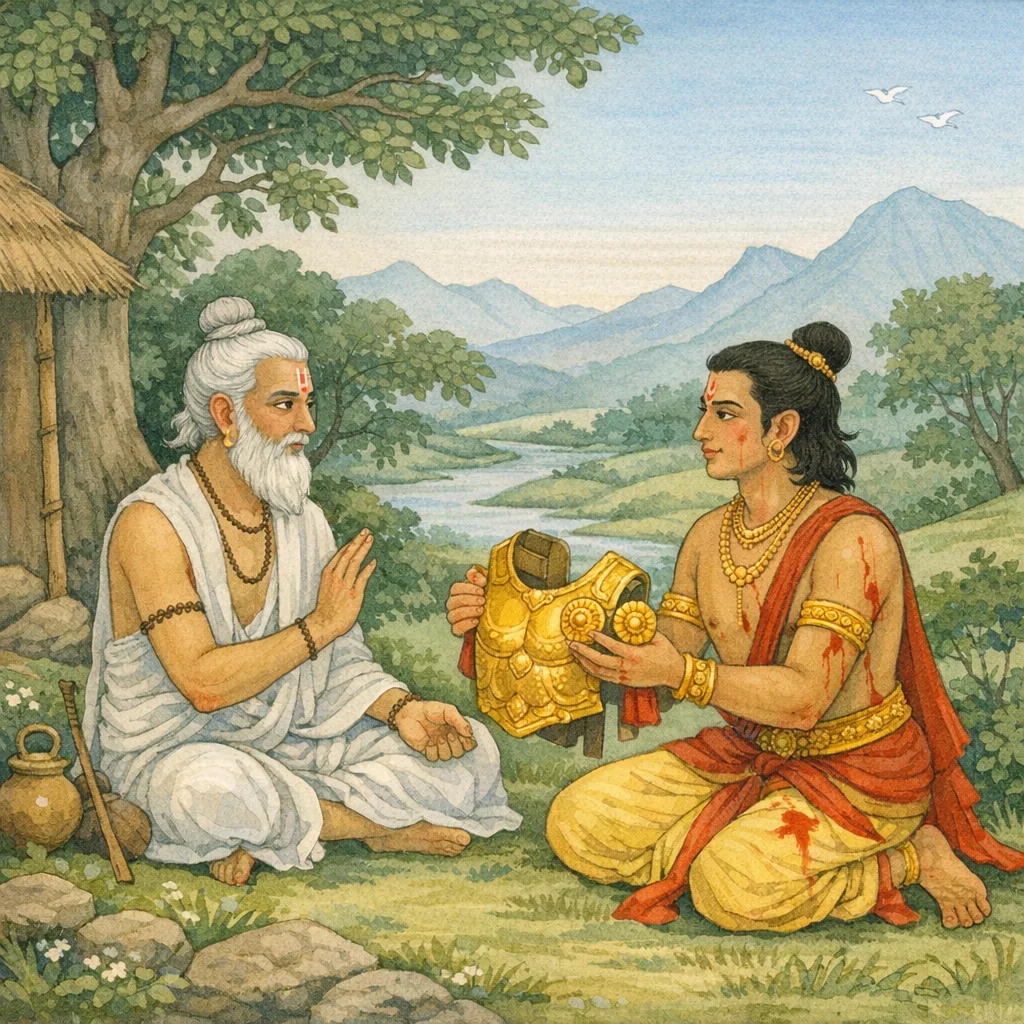
Chapter Arc: A brahmana-guest arrives before Karna, and the famed giver is tested: what will he offer when the request touches his very body? → Karna offers villages, herds, gold, and pleasures—yet the brahmana refuses all ordinary gifts, hinting at a desire that cannot be repaid by wealth. The disguise tightens: it is Indra, seeking to blunt the invincible armor of Surya’s son for the sake of his own son Arjuna. → Karna, unwavering in dana-dharma, tears from his own flesh the divine kavacha and kundala and gives them away—choosing honor over survival. Indra, moved yet strategic, grants Karna the amogha Shakti: a single, unfailing weapon that will surely slay one roaring, mighty foe in battle. → Indra warns of the Shakti’s peril if used carelessly; its power is certain, but its use is bounded. Karna stands diminished in protection yet armed with a terrible certainty—his generosity becomes both his glory and his doom’s seed. → The gift’s condition hangs like fate: whom will Karna choose to kill with the one infallible Shakti, and what price will that choice exact in the coming war?
Shlokas
Verse 1
(दाक्षिणात्य अधिक पाठका $ “लोक मिलाकर कुल २५३ “लोक हैं) #+/ (9) #::..# #25--7 दशाधिकत्रिशततमोब& ध्याय: इन्द्रका कर्णको अमोघ शक्ति देकर बदलेमें उसके कवच- कुण्डल लेना वैशम्पायन उवाच देवराजमनुप्राप्तं ब्राह्मणच्छ्मना वृतम् । दृष्टवा स्वागतमित्याह न बुबोधास्य मानसम्,वैशम्पायनजी कहते हैं--जनमेजय! देवराजको ब्राह्मणके छटद्मावेषमें छिपकर आये देख कर्णने कहा--'ब्रह्मनम!] आपका स्वागत है।” परंतु कर्णको उस समय इन्द्रके मनोभावका कुछ भी पता न चला
Vaiśampāyana said: When Karṇa saw the king of the gods, Indra, who had come disguised under the pretext of a brāhmaṇa, he greeted him, saying, “Welcome.” Yet at that moment Karṇa did not discern Indra’s inner intention. The scene underscores how outward piety and hospitality can be tested by hidden motives, and how discernment (knowing the other’s purpose) becomes ethically crucial in a world moving toward war.
Verse 2
हिरण्यकण्ठी: प्रमदा ग्रामान् वा बहुगोकुलान् । कि ददानीति तं विप्रमुवाचाधिरथिस्तत:,तब अधिरथकुमारने उन ब्राह्मणरूपधारी इन्द्रसे कहा--“विप्रवर! मैं आपको क्या दूँ? सोनेके कण्ठोंसे विभूषित युवती स्त्रियाँ अथवा बहुसंख्यक गोधनोंसे भरे हुए अनेक ग्राम?”
Vaiśampāyana said: Then Adhirathi addressed that brahmin (Indra in disguise), asking, “What shall I give you—young women adorned with golden necklaces, or villages filled with many herds of cattle?” The scene highlights the royal habit of measuring generosity in terms of wealth and possessions, while foreshadowing the ethical tension of giving without recognizing the true identity and intent of the recipient.
Verse 3
ब्राह्मण उवाच हिरण्यकण्ठ्यः प्रमदा यच्चान्यत् प्रीतिवर्धनम् । नाहं दत्तमिहेच्छामि तदर्थि भ्य: प्रदीयताम्,ब्राह्मण बोले--वीरवर! तुम्हारी दी हुई सोनेके कंठोंसे विभूषित युवती स्त्रियाँ तथा दूसरी आनन्दवर्धक वस्तुएँ मैं नहीं लेना चाहता। इन वस्तुओंको उन याचकोंको दे दो, जो इनकी अभिलाषा लेकर आये हों
The Brahmin said: “O best of heroes, I do not wish to accept the women adorned with golden necklaces that you have offered, nor any other pleasure-giving gifts. Let these be given instead to those supplicants who truly desire them.”
Verse 4
यदेतत् सहजं वर्म कुण्डले च तवानघ । एतदुत्कृत्य मे देहि यदि सत्यव्रतो भवान्,अनघ! यदि तुम सत्यव्रती हो, तो ये जो तुम्हारे शरीरके साथ ही उत्पन्न हुए कवच और कुण्डल हैं, इन्हें काटकर मुझे दे दो
The brāhmaṇa said: “O sinless one, the armor and the earrings that were born with you—cut them off and give them to me, if you are truly vowed to truth. O blameless one, if your commitment to truth is real, then grant me these.”
Verse 5
एतदिच्छाम्यहं क्षिप्र॑ं त्वया दत्तं परंतप । एष मे सर्वलाभानां लाभ: परमको मत:,परंतप! तुम्हारा दिया हुआ यही दान मैं शीघ्रतापूर्वक लेना चाहता हूँ। यही मेरे लिये सम्पूर्ण लाभोंमें सबसे बढ़कर लाभ है
The brāhmaṇa said: “O scorcher of foes, I wish to accept without delay this gift that you have offered. In my judgment, this is the highest gain among all gains for me.”
Verse 6
कर्ण उवाच अवनिं प्रमदा गाश्न निवापं बहुवार्षिकम् । तत् ते विप्र प्रदास्यामि न तु वर्म सकुण्डलम्,कर्णने कहा--ब्रह्मन! यदि आप घर बनानेके लिये भूमि, गृहस्थी बसानेके लिये सुन्दरी तरुणी स्त्रियाँ, बहुत-सी गौएँ, खेत और बहुत वर्षोतक चालू रहनेवाली जीवनवृत्ति लेना चाहें तो दे दूँगा; परंतु कवच और कुण्डल नहीं दे सकता
Karna said: “O brahmin, I will give you land, lovely young women, and cows, and even a livelihood that will sustain you for many years; all this I shall bestow upon you. But I will not give my armor together with my earrings.”
Verse 7
वैशम्पायन उवाच एवं बहुविधैर्वाक्यैर्याच्यमान: स तु द्विज: । कर्णेन भरतश्रेष्ठ नान्यं वरमयाचत,वैशम्पायनजी कहते हैं--भरतश्रेष्ठ) इस प्रकार बहुत-सी बातें कहकर कर्णके प्रार्थना करनेपर भी उन ब्राह्मणदेवने दूसरा कोई वर नहीं माँगा
Vaiśampāyana said: Though entreated in many different ways with many words by Karṇa, O best of the Bharatas, that brāhmaṇa asked for no other boon. The scene underscores a stern, single-minded insistence on one chosen request, resisting persuasion and alternative offers.
Verse 8
सान्त्वितश्न यथाशक्ति पूजितश्न यथाविधि । न चान्यं॑ स द्विजश्रेष्ठ; कामयामास वै वरम्,कर्णने उन्हें यथाशक्ति बहुत समझाया एवं विधि-पूर्वक उनका पूजन किया। तथापि उन द्विजश्रेष्ठने और किसी वरको लेनेसे अनिच्छा प्रकट कर दी
Vaiśampāyana said: He consoled him as best he could and honored him according to proper rite; yet that best of Brahmins did not wish to ask for any other boon.
Verse 9
यदा नानय॑ प्रवृणुते वरं वै द्विजसत्तम: । (विनास्य सहजं वर्म कुण्डले च विशाम्पते) । तदैनमब्रवीद् भूयो राधेय: प्रहसन्निव,राजन! जब जन द्विजश्रेष्ठने कर्णके सहज कवच और कुण्डलके सिवा दूसरी कोई वस्तु नहीं माँगी, तब राधानन्दन कर्णने उनसे हँसते हुए-से कहा--
Vaiśaṃpāyana said: When that best of twice-born men chose no other boon—except Karṇa’s inborn armor and his earrings—then Rādheya (Karṇa), as if smiling, spoke to him again, O king. The moment frames a moral tension: a boon requested in the guise of piety targets a warrior’s very life-protection, testing the ethics of asking and the nobility of giving.
Verse 10
सहजं वर्म मे विप्र कुण्डले चामृतोद््भवे । तेनावध्यो5स्मि लोकेषु ततो नैतज्जहाम्पयहम्,“विप्रवर! कवच तो मेरे शरीरके साथ ही उत्पन्न हुआ है और दोनों कुण्डल भी अमृतसे प्रकट हुए हैं। इन्हींके कारण मैं संसारमें अवध्य बना हुआ हूँ; अतः मैं इन सब वस्तुओंको त्याग नहीं सकता
Vaiśaṃpāyana said: “O best of Brahmins, the armor upon my body was born with me, and these two earrings arose from nectar. Because of them I am invulnerable in the worlds; therefore I cannot abandon these possessions.”
Verse 11
विशाल पृथिवीराज्यं क्षेमं निहतकण्टकम् । प्रतिगृह्लीष्व मत्तस्त्वं साधु ब्राह्मणपुजड़व,“ब्राह्मणप्रवर! आप मुझसे समूची पृथ्वीका कल्याणमय, अकण्टक, विशाल एवं उत्तम साम्राज्य ले लें
Vaiśampāyana said: “Accept from me this vast sovereignty over the earth—secure, prosperous, and free of thorns (free from enemies and disturbances). Take it, O noble one, O venerator of brāhmaṇas, O foremost among brāhmaṇas.”
Verse 12
कुण्डलाभ्यां विमुक्तो5हं वर्मणा सहजेन च । गमनीयो भविष्यामि शत्रूणां द्विजसत्तम,द्विजश्रेष्ठ इस सहज कवच और दोनों कुण्डलोंसे वंचित हो जानेपर मैं शत्रुओंका वध्य हो जाऊँगा (अतः इन्हें न माँगिये)!
Vaiśampāyana said: “If I am deprived of my two earrings and my inborn armor, O best of Brahmins, I shall become one who can be led away—an easy prey—for my enemies. Therefore, do not ask for them.”
Verse 13
वैशम्पायन उवाच यदान्यं न वरं वव्रे भगवान् पाकशासन: । ततः प्रहस्य कर्णस्तं पुनरित्यब्रवीद् वच:,वैशम्पायनजी कहते हैं--जनमेजय! इतना अनुनय-विनय करनेपर भी जब पाकशासन भगवान् इन्द्रने दूसरा कोई वर नहीं माँगा, तब कर्णने हँसकर पुनः इस प्रकार कहा--
Vaiśampāyana said: When the blessed Pākaśāsana (Indra), despite further entreaty, did not choose any other boon, then Karṇa, smiling, addressed him again with these words. The moment underscores Karṇa’s unwavering resolve to keep his pledged gift, even when pressed by a powerful deity to retract or modify it.
Verse 14
विदितो देवदेवेश प्रागेवासि मम प्रभो | नतु न््याय्यं मया दातुं तव शक्र वृथा वरम्,'देवदेवेश्वर! प्रभो! आप पधार रहे हैं, यह बात मुझे पहले ही ज्ञात हो गयी थी। पर देवेन्द्र! मैं आपको निष्फल कर दूँ, यह न्यायसंगत नहीं है
Vaiśampāyana said: “O Lord of the gods, O Master—your coming was known to me even beforehand. Yet, O Śakra, it would not be just for me to grant you a boon in vain and send you away fruitless.”
Verse 15
त्वं हि देवेश्वर: साक्षात् त्वया देयो वरो मम । अन््येषां चैव भूतानामी श्वरो हासि भूतकृत्,आप साक्षात् देवेश्वर हैं। उचित तो यही है कि आप मुझे वर दें; क्योंकि आप अन्य सब भूतोंके ईश्वर तथा उन्हें उत्पन्न करनेवाले हैं
Vaiśaṃpāyana said: “You are indeed the manifest Lord of the gods. It is fitting that you grant me a boon, for you are the sovereign of all other beings as well, the very creator from whom they arise.”
Verse 16
यदि दास्यामि ते देव कुण्डले कवचं तथा | वध्यतामुपयास्यामि त्वं च शक्रावहास्यताम्,“इन्द्रदेव! यदि मैं आपको अपने दोनों कुण्डल और कवच दे दूँगा तो मैं तो शत्रुओंका वध्य हो जाऊँगा और संसारमें आपकी हँसी होगी। इसलिये (कर्णने सूर्यकी आज्ञाको याद करके कहा--) शक्र! आप कुछ बदला देकर इच्छानुसार मेरे कुण्डल और उत्तम कवच ले जाइये; अन्यथा मैं इन्हें नहीं दे सकता'
Vaiśampāyana said: “O god, if I give you my earrings and likewise my armor, I shall become vulnerable to being slain; and you, O Śakra, will become a subject of ridicule in the world. Therefore, Śakra—give me some return and then take, as you wish, my earrings and excellent armor; otherwise I cannot give them.”
Verse 17
तस्माद् विनिमयं कृत्वा कुण्डले वर्म चोत्तमम् | हरस्व शक्र काम॑ मे न दद्यामहमन्यथा,“इन्द्रदेव! यदि मैं आपको अपने दोनों कुण्डल और कवच दे दूँगा तो मैं तो शत्रुओंका वध्य हो जाऊँगा और संसारमें आपकी हँसी होगी। इसलिये (कर्णने सूर्यकी आज्ञाको याद करके कहा--) शक्र! आप कुछ बदला देकर इच्छानुसार मेरे कुण्डल और उत्तम कवच ले जाइये; अन्यथा मैं इन्हें नहीं दे सकता'
Vaiśaṃpāyana said: “Therefore, make an exchange and take away, O Śakra, my earrings and this excellent armor as you desire; otherwise I will not give them.” In context, Karṇa does not refuse the request outright, but insists on reciprocity: he will uphold the ethic of gifting, yet not allow himself to be reduced to helplessness without a compensating boon—thus balancing honor, self-preservation, and the moral pressure created by Indra’s disguised solicitation.
Verse 18
शक्र उवाच विदितो*<हं रवे: पूर्वमायानेव तवान्तिकम् । तेन ते सर्वमाख्यातमेवमेतन्न संशय:,इन्द्र बोले--कर्ण! जब मैं तुम्हारे पास आ रहा था, उसके पहले ही सूर्यदेवको यह बात मालूम हो गयी थी। इसमें संदेह नहीं कि उन्होंने ही तुमसे सारी बातें बता दी हैं
Śakra (Indra) said: “Before I even set out to come to you, the Sun already knew of it. Therefore, it was he who disclosed everything to you. This is exactly so—there is no doubt.”
Verse 19
काममस्तु तथा तात तव कर्ण यथेच्छसि । वर्जयित्वा तु मे वज्॑ प्रवृणीष्व यथेच्छसि,तात कर्ण! तुम्हारी रुचिके अनुसार इन वस्तुओंका परिवर्तन ही हो जाय। मेरे वज्ञको छोड़कर तुम जो चाहो, वही आयुध मुझसे माँग लो
Śakra said: “So be it, dear one—O Karṇa—let it be as you wish. Yet leaving aside my thunderbolt, choose from me whatever weapon you desire.” In this exchange, Indra grants freedom of choice while setting a firm ethical boundary: generosity must not extend to surrendering what upholds cosmic order and divine responsibility.
Verse 20
वैशम्पायन उवाच तत:ः कर्ण: प्रह्ृष्टस्तु उपसंगम्य वासवम् | अमाोधघां शक्तिमभ्येत्य वत्रे सम्पूर्णणानस:,वैशम्पायनजी कहते हैं--जनमेजय! तब कर्ण अत्यन्त प्रसन्न होकर देवराज इन्द्रके पास गया और सफलमनोरथ होकर उसने उनकी अमोघ शक्ति माँगी
Vaiśampāyana said: Then Karṇa, filled with delight, approached Vāsava (Indra). With his heart set on success, he asked for Indra’s unfailing spear—seeking a decisive advantage through a divine weapon, a choice that foreshadows the moral tension between personal ambition and the larger order of dharma.
Verse 21
कर्ण उवाच वर्मणा कुण्डलाभ्यां च शक्ति मे देहि वासव । अमोधघां शत्रुसंघानां घातिनीं पृतनामुखे
Karna said: “O Vāsava (Indra), in exchange for my armor and my earrings, grant me your spear—unfailing, and a slayer of masses of enemies at the very front of battle.” In this request, Karna knowingly parts with his innate protections to obtain a single decisive weapon, revealing both the ethics of bargaining with the divine and the war-driven resolve to secure victory through a guaranteed means of destruction.
Verse 22
कर्ण बोला--वासव! मेरे कवच और कुण्डल लेकर आप मुझे अपनी वह अमोघ शक्ति प्रदान कीजिये जो सेनाके अग्रभागमें शत्रुसमुदायका संहार करनेवाली है ।। ततः संचिन्त्य मनसा मुहूर्तमिव वासव: । शक््त्यर्थ पृथिवीपाल कर्ण वाक्यमथाब्रवीत्,राजन! तब इन्द्रने शक्तिके विषयमें दो घड़ी-तक मन-ही-मन विचार करके कर्णसे इस प्रकार कहा--
Karna said, “O Vāsava (Indra)! Take my armor and earrings, and in return grant me that unfailing spear-power which, at the very front of the army, can destroy the massed ranks of enemies.” Then Vāsava, reflecting inwardly for what seemed a moment, spoke to Karna—O king—concerning that weapon-power.
Verse 23
कुण्डले मे प्रयच्छस्व वर्म चैव शरीरजम् । गृहाण कर्ण शक्ति त्वमनेन समयेन च,“कर्ण! तुम मुझे अपने दोनों कुण्डल और सहज कवच दे दो और मेरी यह शक्ति ग्रहण कर लो। इसी शर्तके अनुसार हमलोगोंमें इन वस्तुओंका विनिमय (बदला) हो जाय
Karna said: “Give me your two earrings and the natural cuirass born with your body. And you, O Karna, accept this spear—so that, by this agreed condition, an exchange of these objects may be made between us.” The statement frames a deliberate bargain: Karna’s famed generosity is tested through a contract-like ‘fair exchange,’ where a life-protecting boon is traded for a weapon of decisive but limited use, raising questions of consent, duty, and the ethics of advantage in war.
Verse 24
अमोघा हन्ति शतश: शत्रून् मम करच्युता । पुनश्न पाणिमभ्येति मम दैत्यान् विनिघ्नतः:,'सूतनन्दन! दैत्योंका संहार करते समय मेरे हाथसे छूटनेपर यह अमोघ शक्ति सैकड़ों शत्रुओंको मार देती है और पुनः मेरे हाथमें चली आती है”
Karna said: “This unfailing weapon, once it slips from my hand, strikes down enemies by the hundreds; and after I have slain the foes, it returns again into my hand.” In the ethic of war, he presents the weapon’s ‘infallibility’ as a guarantee of decisive victory—yet the very ease and automaticity of such killing also underscores the peril of power unrestrained by dharma and self-mastery.
Verse 25
सेयं तव करप्राप्ता हत्वैकं रिपुमूर्जितम् गर्जन्तं प्रतपन्तं च मामेवैष्यति सूतज,“वही शक्ति तुम्हारे हाथमें जाकर किसी एक तेजस्वी, ओजस्वी, प्रतापी तथा गर्जना करनेवाले शत्रुको मारकर पुनः मेरे ही पास आ जायगी”
Karna said: “This weapon, once it comes into your hand, will slay just one enemy—mighty in strength, roaring in challenge, and blazing with prowess—and then it will return to me alone, O son of a charioteer.” In context, Karna frames the gift as both potent and limited: a single, decisive act of violence, bounded by a condition that keeps ultimate control with the giver and hints at calculated strategy rather than open-ended slaughter.
Verse 26
कर्ण उवाच एकमेवाहमिच्छामि रिपुं हन्तुं महाहवे । गर्जन्तं प्रतपन्तं च यतो मम भयं भवेत्,कर्ण बोला--देवेन्द्र! मैं महासमरमें अपने एक ही शत्रुको इसके द्वारा मारना चाहता हूँ जो बहुत गर्जना करनेवाला और प्रतापी है, तथा जिससे मुझे सदा भय बना रहता है
Karna said: “In this great battle I desire to slay only one enemy—one who roars loudly and blazes with prowess, and from whom fear continually arises in me.”
Verse 27
इन्द्र रवाच एकं हनिष्यसि रिपुं गर्जन्तं बलिनं रणे । त्वंतुयंप्रार्थयस्येकं रक्ष्यते स महात्मना,इन्द्रने कहा--कर्ण! तुम (इस शक्तिसे) रणभूमिमें गर्जना करनेवाले किसी एक बलवान शत्रुको मार सकोगे, परंतु इस समय तुम जिस एक शत्रुको लक्ष्य करके यह अमोघ शक्ति माँग रहे हो वह तो उन परमात्मद्वारा सुरक्षित है, जिन्हें वेदवेत्ता विद्वान् पुरुषोत्तम अपराजित, हरि तथा अचिन्त्यस्वरूप नारायण कहते हैं। वे स्वयं श्रीकृष्ण हैं जिनके द्वारा उस वीरकी रक्षा हो रही है
Indra said: “In battle you will be able to slay one enemy—one mighty foe who roars on the field. But the particular one whom you now single out and request this unfailing power against is protected by the Supreme Spirit. The Veda-knowing sages call Him the invincible Puruṣottama—Hari, the inconceivable Nārāyaṇa. He is Śrī Kṛṣṇa Himself, by whom that hero is being guarded.”
Verse 28
यमाहुर्वेदविद्वांसो वराहमपराजितम् | नारायणमचिन्त्यं च तेन कृष्णेन रक्ष्यते,इन्द्रने कहा--कर्ण! तुम (इस शक्तिसे) रणभूमिमें गर्जना करनेवाले किसी एक बलवान शत्रुको मार सकोगे, परंतु इस समय तुम जिस एक शत्रुको लक्ष्य करके यह अमोघ शक्ति माँग रहे हो वह तो उन परमात्मद्वारा सुरक्षित है, जिन्हें वेदवेत्ता विद्वान् पुरुषोत्तम अपराजित, हरि तथा अचिन्त्यस्वरूप नारायण कहते हैं। वे स्वयं श्रीकृष्ण हैं जिनके द्वारा उस वीरकी रक्षा हो रही है
Indra said: “Karna, with this power you may indeed slay some single mighty foe who roars on the battlefield. But the one enemy you now single out as your target is protected by the Supreme Lord—whom the Veda-knowing sages proclaim as the unconquered, the divine Boar, Hari, and the inconceivable Nārāyaṇa. That Lord is none other than Śrī Kṛṣṇa, and it is by Him that this hero is being guarded.”
Verse 29
कर्ण उवाच एवमप्यस्तु भगवन्नेकवीरवधे मम । अमोधां देहि मे शक्ति यथा हन्यां प्रतापिनम्,कर्ण बोला--भगवन्! ऐसा ही हो। तो भी आप एक वीरके वधके लिये मुझे अपनी अमोघ शक्ति दे दीजिये, जिससे मैं अपने प्रतापी शत्रुका वध कर सकूँ
Karna said, “So be it, O venerable one. Even if it must be thus, grant me your unfailing divine weapon for the slaying of a single hero, so that I may strike down my mighty foe.” In this request, Karna accepts a limiting condition—power reserved for only one decisive kill—yet seeks a morally weighty advantage in war: a guaranteed means to end an enemy’s life, revealing both his dependence on divine aid and the ethical tension between valor and the pursuit of an ‘infallible’ victory.
Verse 30
उत्कृत्य तु प्रदास्यामि कुण्डले कवचं च ते । निकृत्तेषु तु गात्रेषु न मे बीभत्सता भवेत्,मैं आपको अपने शरीरसे उधेड़कर कवच और कुण्डल तो दे दूँगा; परंतु उस समय मेरे अंगोंके कट जानेपर मेरा स्वरूप बीभत्स न होना चाहिये
Karna said: “I will tear them from my own body and give you my earrings and armor. Yet when my limbs are cut away in the act, let my form not become hideous.”
Verse 31
इन्द्र वाच न ते बीभत्सता कर्ण भविष्यति कथजठ्चन । व्रणश्वैव न गात्रेषु यस्त्वं नानृतमिच्छसि,इन्द्रने कहा--कर्ण! तुम्हारा स्वरूप किसी प्रकार भी बीभत्स नहीं होगा। तुम्हारे अंगोंमें घावतक नहीं होगा; क्योंकि तुम असत्यकी इच्छा नहीं रखते हो
Indra said: “Karna, no hideousness will ever come upon you in any way. Nor will there be any wound-marks upon your limbs—because you do not choose falsehood.”
Verse 32
यादृशस्ते पितुर्वर्णस्तेजश्च॒ वदतां वर । तादृशेनैव वर्णेन त्वं कर्ण भविता पुन:,वक्ताओंमें श्रेष्ठ कर्ण! तुम्हारे पिताका जैसा वर्ण और तेज है, वैसे ही वर्ण और तेजसे तुम पुनः सम्पन्न हो जाओगे। जबतक तुम्हारे पास दूसरे शस्त्र रहें और प्राणसंकटकी परिस्थिति न आ जाय, तबतक तुम यदि प्रमादवश यह अमोघ शक्ति यों ही किसी शत्रुपर छोड़ दोगे तो यह उसे न मारकर तुम्हारे ही ऊपर आ पड़ेगी
Karna said: “O best of speakers, the complexion and radiance that belonged to your father—by that very same hue and splendor, O Karna, you shall again be endowed.” The counsel implied is ethical and strategic: do not squander an unfailing divine power through heedlessness; unless life is truly at stake and no other weapons remain, releasing such a weapon rashly can recoil upon the wielder rather than destroy the foe.
Verse 33
विद्यमानेषु शस्त्रेषु यद्यमोघामसंशये । प्रमत्तो मोक्ष्यसे चापि त्वय्येवैषा पतिष्यति,वक्ताओंमें श्रेष्ठ कर्ण! तुम्हारे पिताका जैसा वर्ण और तेज है, वैसे ही वर्ण और तेजसे तुम पुनः सम्पन्न हो जाओगे। जबतक तुम्हारे पास दूसरे शस्त्र रहें और प्राणसंकटकी परिस्थिति न आ जाय, तबतक तुम यदि प्रमादवश यह अमोघ शक्ति यों ही किसी शत्रुपर छोड़ दोगे तो यह उसे न मारकर तुम्हारे ही ऊपर आ पड़ेगी
So long as you still possess other weapons, if—without a true life‑and‑death necessity—you carelessly release this unfailing missile, then, beyond doubt, it will not accomplish its purpose against the foe; instead, it will recoil and fall back upon you yourself. The warning underscores that supreme powers must be used only with disciplined judgment and in rightful extremity, not in heedlessness or pride.
Verse 34
कर्णको इन्द्रका शक्ति-दान युधिष्ठिर और बगुलारूपधारी यक्ष कर्ण उवाच संशयं परमं प्राप्प विमोक्ष्ये वासवीमिमाम् । यथा मामात्थ शक्र त्वं सत्यमेतद् ब्रवीमि ते,कर्ण बोला--देवेन्द्र! आप जैसा मुझसे कह रहे हैं, उसके अनुसार प्राणसंकटकी अवस्थामें पड़कर ही मैं आपकी दी हुई इस शक्तिका उपयोग करूँगा, यह मैं आपसे सच्ची बात कहता हूँ
Karna said: “Having reached the utmost doubt, I will release this Vāsavī-weapon only under the condition you have stated. O Śakra (Indra), just as you have instructed me, I tell you truthfully: I will employ the power you have given only when I am driven into a life-threatening crisis.”
Verse 35
वैशम्पायन उवाच ततः शक्ति प्रज्वलितां प्रतिगृह्म विशाम्पते । शस्त्र गृहीत्वा निशितं सर्वगात्राण्यकृन्तत,वैशम्पायनजी कहते हैं--राजन्! तदनन्तर इन्द्रकी प्रजवलित शक्ति लेकर कर्णने तीखी तलवार उठायी और कवच उधेड़नेके लिये अपने सब अंगोंको काटना आरम्भ किया
Verse 36
ततो देवा मानवा दानवाश्न निकृन्तन्तं कर्णमात्मानमेवम् । दृष्टवा सर्वे सिंहनादान् प्रणेदु- न हास्यासीन्मुखजो वै विकार:,उस समय देवता, मनुष्य और दानव सब लोग इस प्रकार अपना शरीर काटते हुए कर्णको देखकर सिंहनाद करने लगे; परंतु कर्णके मुखपर तनिक भी विकार नहीं आया
Verse 37
ततो दिव्या दुन्दुभय: प्रणेदु: पपातोच्चै: पुष्पवर्ष च दिव्यम् दृष्टवा कर्ण शस्त्रसंकृत्तगात्रं मुहुश्नापि स्मयमानं नृवीरम्,कर्णके सारे अंग शस्त्रोंक आधातसे कट गये थे, फिर भी वह नरवीर बारंबार मुसकरा रहा था। यह देखकर दिव्य दुन्दुभियाँ बज उठीं एवं आकाशसे दिव्य फूलोंकी वर्षा होने लगी
Then celestial kettledrums resounded, and a lofty shower of divine flowers fell from the sky. Seeing that heroic man—his body cut and mangled by Karṇa’s weapons—yet smiling again and again, the heavens responded with these auspicious signs, as if honoring steadfast valor and the unbroken spirit in the face of suffering.
Verse 38
ततश्कछित्त्वा कवचं दिव्यमज्भात् तथैवार्द् प्रददौ वासवाय । तथोत्कृत्य प्रददौ कुण्डले ते कर्णात् तस्मात् कर्मणा तेन कर्ण:,तदनन्तर अपने शरीरसे दिव्य कवचको उधेड़कर कर्णने इन्द्रके हाथमें दे दिया; वह कवच उस समय रक्तसे भीगा हुआ ही था। इसी प्रकार उसने कानोंके वे कुण्डल भी काटकर दे दिये। अत: इस कर्णन (कर्तन) रूपी कर्मसे उसका नाम “कर्ण” हुआ
Vaiśaṃpāyana said: Then Karṇa cut off his divine armor—still wet with blood—and handed it to Vāsava (Indra). In the same way he tore off and gave the two earrings from his ears. Because of that act of cutting (karṇa—‘ear’/‘cutting’), he came to be known as “Karṇa.” Ethically, the episode highlights the extremity of dāna (gift-giving): Karṇa chooses generosity and keeping his pledged word even at the cost of his own protection and life, revealing both his virtue and the tragic vulnerability it creates.
Verse 39
ततः शक्र: प्रहसन् वज्चयित्वा कर्ण लोके यशसा योजयित्वा । कृतं कार्य पाण्डवानां हि मेने ततः पश्चाद् दिवमेवोत्पपात,इस प्रकार कर्णको (कवच और कुण्डलसे) वंचित करके एवं संसारमें उसका सुयश फैलाकर देवराज इन्द्र हँसते हुए स्वर्गलोकको चले गये। उन्हें मन-ही-मन यह विश्वास हो गया कि “मैंने पाण्डवोंका कार्य पूरा कर दिया”
Then Śakra (Indra), smiling, having deprived Karṇa (of his natural armor and earrings) and yet linking him with fame in the world, thought to himself that the Pāṇḍavas’ purpose had indeed been accomplished. After that, he rose up and returned to heaven. The verse highlights a morally charged act: a god secures advantage for the Pāṇḍavas through stratagem, while ensuring that Karṇa’s renown remains intact despite the loss inflicted upon him.
Verse 40
श्रुत्वा कर्ण मुषितं धार्तराष्ट्र दीना: सर्वे भग्नदर्पा इवासन् | तां चावस्थां गमितं सूतपुत्र श्र॒त्वा पार्था जहृषु: काननस्था:,धृतराष्ट्रके पुत्रोंने जब यह सुना कि कर्णको (कवच और कुण्डलोंसे) वंचित कर दिया गया तो वे सब अत्यन्त दीन-से हो गये; उनका घमंड चूर-चूर-सा हो गया। वनमें रहनेवाले कुन्तीपुत्रोने जब सुना कि सूतपुत्र इस दशामें पहुँच गया है तब उन्हें बड़ा हर्ष हुआ
Vaiśampāyana said: Hearing that Karṇa had been deprived (of his armor and earrings), all the sons of Dhṛtarāṣṭra became despondent, as though their pride had been shattered. And when the Pāṇḍavas, dwelling in the forest, heard that the charioteer’s son had been brought to such a condition, they rejoiced greatly—revealing how shifts in fortune and the weakening of a feared rival can stir confidence and morale amid the long contest of dharma and power.
Verse 41
जनमेजय उवाच क्वस्था वीरा: पाण्डवास्ते बभूवु: कुतश्चैते श्रुतवन्त: प्रियं तत् कि वाकार्षद्धादिशेडब्दे व्यतीते तन्मे सर्व भगवान् व्याकरोतु,जनमेजयने पूछा--भगवन्! वे वीर पाण्डव उन दिनों कहाँ थे? उन्होंने वह प्रिय समाचार कैसे सुना और बारहवाँ वर्ष व्यतीत हो जानेपर क्या किया? ये सब बातें आप मुझे स्पष्टरूपसे बतायें
Janamejaya said: “Where were those heroic Pāṇḍavas staying then? From whom and in what manner did they hear that welcome news? And when the twelfth year had passed, what did they do? O venerable one, please explain all of this to me clearly.”
Verse 42
वैशम्पायन उवाच लब्ध्वा कृष्णां सैन्धवं द्रावयित्वा विप्रै: सार्ध काम्यकादाश्रमात् ते । मार्कण्डेयाच्छुतवन्तः पुराणं देवर्षीणां चरितं विस्तरेण,वैशम्पायनजीने कहा--राजन! द्रौपदीको पाकर तथा जयद्रथको काम्यक वनसे भगाकर ब्राह्मणोंसहित समस्त पाण्डवोंने मार्कण्डेयजीके मुखसे पुराणकथा और देवताओं तथा ऋषियोंके विस्तृत चरित्र सुनते हुए इसे भी सुना था
Vaiśampāyana said: Having recovered Kṛṣṇā (Draupadī) and having driven away the Sindhu prince (Jayadratha) from the Kāmyaka hermitage, the Pāṇḍavas—together with the brāhmaṇas—heard from Mārkaṇḍeya a purāṇic narration, including in full the accounts of the deeds and lives of the gods and the divine seers. The episode frames their ordeal as a return to dharma: after rescuing the wronged, they seek moral and spiritual grounding through sacred history.
Verse 309
इस प्रकार श्रीमह्याभारत वनपर्वके अन्तर्गत कुण्डलाहरणपर्वमें राधाको कर्णकी प्राप्तिविषयक तीन सौ नवाँ अध्याय पूरा हुआ
Thus ends the three hundred and ninth chapter of the Mahābhārata’s Vana Parva, within the episode of the ‘Abduction of the Earrings’, dealing with how Rādhā came to have Karṇa. This closing colophon signals the completion of a narrative unit that frames Karṇa’s origins and identity—an ethical backdrop for later choices shaped by loyalty, gratitude, and the burdens of fate.
Verse 310
(प्रत्याजग्मु: सरथा: सानुयात्रा: सर्वे: सार्थ सूतपौरोगवैस्ते । ततो युयुर्दवतवने नृवीरा निस्तीर्यवं वनवासं समग्रम् ।।) इस प्रकार वनवासकी पूरी अवधि बिताकर वे नरवीर पाण्डव अपने रथ, अनुचर, सूत तथा रसोइयोंके साथ पुनः द्वैतवनमें लौट आये ।। इति श्रीमहा भारते वनपर्वणि कुण्डलाहरणपर्वणि कवचकुण्डलदाने दशाधिकत्रिशततमो<थध्याय:
Vaiśampāyana said: Having completed the entire term of their forest-exile, those heroic men returned—together with their chariots and attendants, and accompanied by their charioteers and household staff. Thereafter the Pāṇḍava heroes came again to the Dvaita forest, having fully endured the whole discipline of living in the wilderness. The verse underscores steadfastness and self-control: they do not evade the consequence of their vow, but complete it and re-enter the narrative field with integrity intact.