Adhyaya 136
Chapter 136: Pandava Counter-Encirclement and the Vāyavya-Astra Disruption
Upa-parva: Droṇa-yuddha (Strategic Engagements under Droṇa’s Command)
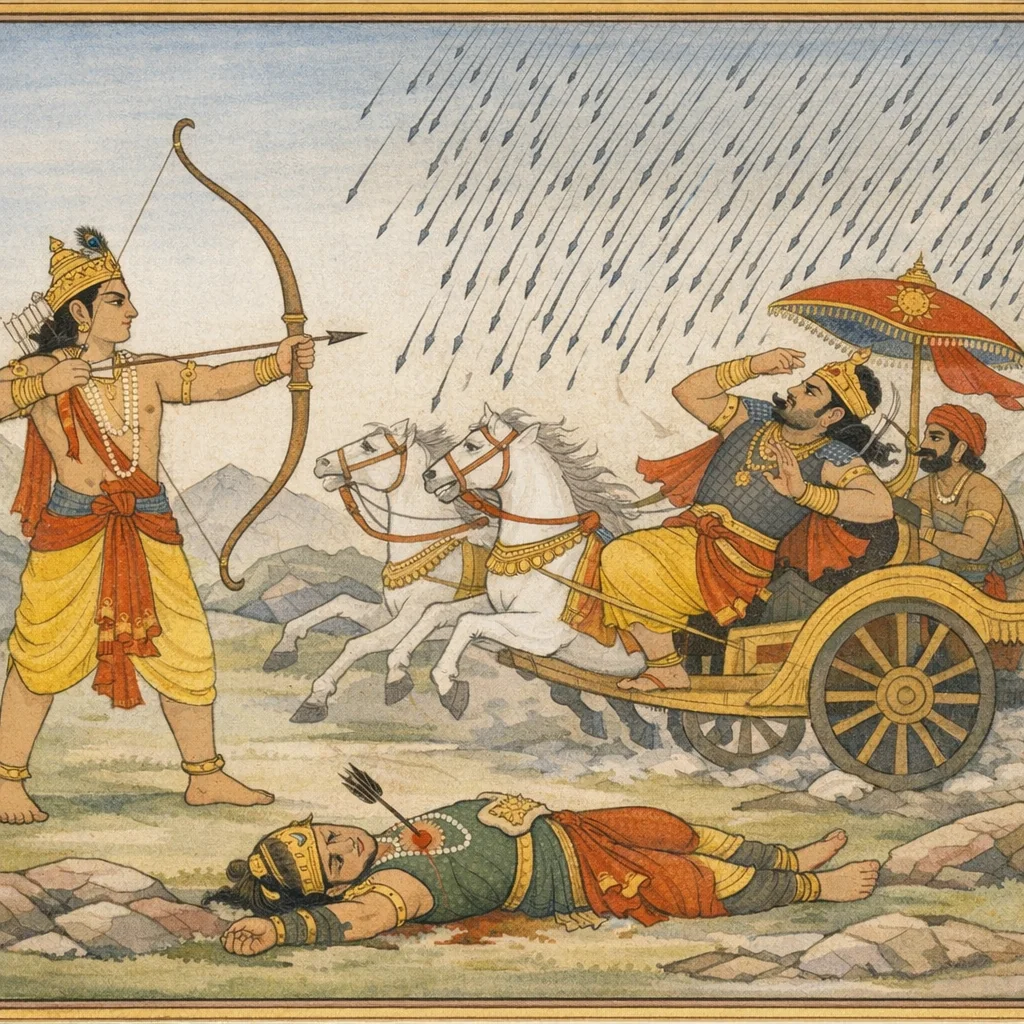
Saṃjaya reports that Yudhiṣṭhira and Bhīma move to encircle Droṇa’s son (Droṇaputra), prompting Duryodhana to advance with Bharadvāja’s support and intensifying the engagement. Yudhiṣṭhira, in a wrathful strategic posture, directs multiple allied groups toward decisive confrontation, while Bhīma and Arjuna (Kirīṭin) inflict heavy losses on clustered contingents; elephants fall, severed limbs and scattered royal insignia are described in a stylized battlefield register that marks collapsing order. The sonic texture of combat (“tumulaḥ śabdaḥ”) and the imagery of darkness and sleep indicate degraded visibility and coordination. Droṇa, “parama-kruddha,” employs the Vāyavya-astra to disperse attackers, causing the Pāñcālas to retreat in fear even as Bhīma and Arjuna attempt to stabilize the Pandava effort by reorienting against Droṇa with concentrated arrow-showers. Despite resistance by Droṇa and Duryodhana, the Kaurava host repeatedly breaks and flees, with rulers abandoning mounts and withdrawing in panic, illustrating the chapter’s central theme: tactical brilliance and weaponry can temporarily reorder the field, but morale and cohesion remain fragile under sustained pressure.
Chapter Arc: संजय धृतराष्ट्र को बतलाते हैं कि भीमसेन के प्रहार से कर्ण फिर रथहीन होकर अपमानित-सा रणभूमि में खड़ा रह गया—और उसी क्षण उसका पुनः रथारूढ़ होना युद्ध को फिर भड़काता है। → कर्ण दूसरे रथ पर चढ़ते ही भीम को बाण-वृष्टि से ढँक देता है; भीम भी स्वर्ण-परिष्कृत धनुष तानकर अग्नि-सदृश स्थिर खड़ा रहता है। दोनों की प्रतिज्ञा-सी टकराहट के बीच दुर्योधन कर्ण को रथहीन देख अपने भाई दुर्मुख को उसे रथ देने/सहायता करने का आदेश देता है, जिससे युद्ध में नया मोड़ आता है। → दुर्मुख के आगे आने पर भीम का प्रचण्ड प्रतिघात टूट पड़ता है—दुर्मुख का वध होता है और उसी उथल-पुथल में कर्ण भीम के तीक्ष्ण बाणों से व्याकुल होकर भयभीत-सा रण छोड़कर पलायन करता है। → कर्ण का पलायन कौरव-पक्ष की प्रतिष्ठा पर आघात करता है; भीम रणभूमि में अडिग रहकर अपने पराक्रम की छाप छोड़ता है और दुर्मुख के पतन से दुर्योधन के निकटवर्ती बल में कमी आ जाती है। → कर्ण के हटते ही प्रश्न उठता है—क्या वह पुनः लौटकर भीम से निर्णायक प्रतिशोध ले पाएगा, या कौरव-सेना का मनोबल और टूटेगा?
Shlokas
Verse 1
भीस्न्आ तन () अजमना चतुस्त्रिंशर्दाधकशततमो< ध्याय: भीमसेन और कर्णका युद्ध, धृतराष्ट्रपुत्र दुर्मुखका वध तथा कर्णका पलायन संजय उवाच सर्वथा विरथ: कर्ण: पुनर्भीमेन निर्जित: । रथमन्यं समास्थाय पुनर्विव्याध पाण्डवम्
Sañjaya said: Karṇa, completely deprived of his chariot, was once again overcome by Bhīma. Mounting another chariot, he returned to the fight and struck the Pāṇḍava again—showing how, in the fury of war, defeat is followed not by reflection but by renewed aggression and persistence.
Verse 2
संजय कहते हैं--राजन्! सब प्रकारसे रथहीन एवं भीमसेनके द्वारा पुनः: पराजित हुए कर्णने दूसरे रथपर बैठकर पाण्डुकुमार भीमसेनको पुनः बींध डाला ।। महागजाविवासाद्य विषाणाग्रै: परस्परम् । शरै: पूर्णायतोत्सूष्टैरन्योन्यमभिजषध्नतु:,जैसे दो विशाल गजराज अपने दाँतोंके अग्रभागोंद्वारा एक-दूसरेसे भिड़ गये हों, उसी प्रकार कर्ण और भीमसेन धनुषको पूर्णतः खींचकर छोड़े गये बाणोंद्वारा एक-दूसरेको चोट पहुँचाने लगे
Sanjaya said: O King, Karna—left without a chariot and once again defeated by Bhimasena—mounted another chariot and struck Bhima, the son of Pandu, anew. Like two mighty lordly elephants colliding head-on with the tips of their tusks, Karna and Bhima, releasing arrows shot from fully drawn bows, began to wound one another. The scene underscores how, in the fury of war, personal valor and relentless retaliation can eclipse restraint, as each warrior answers injury with injury.
Verse 3
अथ कर्ण: शरव्रातैर्भीमसेनं समार्पयत् । ननाद च महानादं पुनर्विव्याध चोरसि,तदनन्तर कर्णने अपने बाणसमूहोंद्वारा भीमसेनको घायल कर दिया। उसने बड़े जोरसे गर्जना की और पुन: भीमसेनकी छातीमें चोट पहुँचायी
Sañjaya said: Then Karṇa struck Bhīmasena with volleys of arrows, loudly roaring in triumph, and once again pierced him in the chest. The scene underscores the relentless intensity of battle, where prowess and resolve are displayed through repeated assault and unwavering aggression rather than restraint.
Verse 4
तं भीमो दशभिर्बाणै: प्रत्यविध्यदजिद्वागै: । पुनर्विव्याध सप्तत्या शराणां नतपर्वणाम्,तब भीमने सीधे जानेवाले दस बाणोंसे कर्णको मारकर बदला चुकाया। तत्पश्चात् झुकी हुई गाँठवाले सत्तर बाणोंद्वारा पुनः कर्णको बींध डाला
Sañjaya said: Bhīma repaid Karṇa by striking him with ten swift, unerring arrows. Then, pressing the attack again, he pierced Karṇa with seventy arrows whose joints were bent—an escalation that reflects the relentless reciprocity of violence on the battlefield, where retaliation and prowess drive the combatants onward.
Verse 5
कर्ण तु नवभिर्भीमो भित्त्वा राजन् स्तनान्तरे । ध्वजमेकेन विव्याध सायकेन शितेन ह,राजन्! भीमसेनने कर्णकी छातीमें नौ बाणोंद्वारा गहरी चोट पहुँचाकर एक तीखे बाणसे उसकी ध्वजाको भी छेद दिया
Sañjaya said: O King, Bhīma, having pierced Karṇa in the region between the breasts with nine arrows, then struck and pierced his banner with a single sharp shaft. The narration underscores the relentless precision of battle, where prowess is displayed not only by wounding the warrior but also by targeting the emblem that proclaims his presence and honor on the field.
Verse 6
सायकानां ततः पार्थस्त्रिषष्ट्या प्रत्यविध्यत । तोत्रैरिव महानागं कशाभिरिव वाजिनम्,तदनन्तर जैसे विशाल गजराजको अंकुशोंसे और घोड़ेको कोड़ोंसे पीटा जाय, उसी प्रकार कुन्तीकुमार भीमने तिरसठ बाणोंद्वारा कर्णको घायल कर दिया
Sañjaya said: Then the son of Pṛthā struck him back with sixty-three arrows—like a great elephant driven by goads, or a horse urged on by whips. The image underscores the relentless compulsion of battle: the warrior’s body is forced onward by pain and pressure, as duty and enmity drive the combatants without respite.
Verse 7
सो5तिविद्धों महाराज पाण्डवेन यशस्विना । सृक्किणी लेलिहन् वीर: क्रोधरक्तान्तलोचन:,महाराज! यशस्वी पाण्डुपुत्रके द्वारा अत्यन्त घायल होकर वीर कर्ण क्रोधसे लाल आँखें करके अपने दोनों जबड़ोंको चाटने लगा
Sañjaya said: O King, grievously pierced by the illustrious Pāṇḍava, the warrior Karṇa—his eyes reddened at the corners with anger—began to lick his lips, a fierce sign of wounded pride and rising wrath amid the brutal ethics of battlefield retaliation.
Verse 8
तत: शरं महाराज सर्वकायावदारणम् । प्राहिणोद् भीमसेनाय बलायेन्द्र इवाशनिम्,राजन! तदनन्तर जैसे इन्द्रने बलासुरपर वज्र चलाया था, उसी प्रकार उसने भीमसेनपर समस्त शरीरको विदीर्ण कर देनेवाले बाणका प्रहार किया
Sañjaya said: “Then, O great king, he discharged at Bhīmasena a shaft capable of rending the entire body—just as Indra once hurled his thunderbolt against Bala.” The simile heightens the scene’s moral gravity: the warrior’s intent is not merely to wound but to annihilate, showing how the battle has escalated into a contest of overwhelming, near-divine force.
Verse 9
स निर्भिद्य रणे पार्थ सूतपुत्रधनुश्च्युत: । अगच्छद् दारयन् भूमिं चित्रपुडख: शिलीमुख:,रणक्षेत्रमें सूतपुत्रके धनुषसे छूटा हुआ वह विचित्र पंखोंवाला बाण भीमसेनको विदीर्ण करके पृथ्वीको चीरता हुआ उसके भीतर समा गया
Sañjaya said: In the midst of battle, that arrow—shot from the bow of the Sūta’s son—pierced Bhīmasena and, splitting the earth as it sped on, disappeared into the ground. The scene underscores the relentless momentum of war, where prowess and wrath drive weapons beyond their immediate target, intensifying the moral weight of violence on the battlefield.
Verse 10
ततो भीमो महाबाहु: क्रोधसंरक्तलोचन: । वज्जकल्पां चतुष्किष्कुं गुर्वी रुक्माड़दां गदाम्
Sañjaya said: Then Bhīma, the mighty-armed hero, his eyes reddened with wrath, seized a heavy mace—hard as a thunderbolt, four cubits in length, and adorned with gold—readying himself for the grim demands of battle.
Verse 11
प्राहिणोत् सूतपुत्राय षडस्रामविचारयन् | तब क्रोधसे लाल नेत्रोंवाले महाबाहु भीमसेनने चार बित्तेकी बनी हुई वज्जके समान भयंकर तथा सुवर्णमय भुजबंदसे विभूषित छः कोणोंवाली भारी गदा उठाकर उसे बिना विचारे सूतपुत्र कर्णपर चला दिया ।। तया जघानाधिरथे: सदश्वान् साधुवाहिन:
Sañjaya said: Deliberating, Bhīmasena hurled toward the charioteer’s son (Karna) a massive, six-edged mace. In anger his eyes reddened; raising that dreadful weapon—four cubits long, hard as a thunderbolt, and adorned with golden arm-bands—he flung it without hesitation at Karna. With it, the great charioteer struck down the well-horsed, well-driven chariot-force. The scene underscores how wrath can override careful judgment in war, even for mighty heroes, and how violence escalates when restraint (dama) is abandoned.
Verse 12
ततो भीमो महाबाहु: क्षुराभ्यां भरतर्षभ
Sañjaya said: Then Bhīma, the mighty-armed hero, O bull among the Bharatas, took up razor-sharp weapons—signaling a decisive, ruthless turn in the clash where valor is tested and restraint is strained by the demands of war.
Verse 13
हताश्वसूतमुत्सूज्य सरथं पतितध्वजम्
Sañjaya said: Abandoning the chariot whose horses and charioteer had been slain—though the vehicle itself still stood with its fittings—(he left) that chariot, now rendered dishonoured and ineffective, its banner fallen. The line underscores a battlefield ethic: when the means of combat is broken and its protectors are dead, a warrior must withdraw from that ruined conveyance rather than cling to a symbol emptied of function and dignity.
Verse 14
तत्राद्भुतमपश्याम राधेयस्य पराक्रमम्
Sanjaya said: There we witnessed something astonishing—the heroic prowess of Radheya (Karna). In the midst of the battle’s moral strain and relentless violence, his extraordinary valor stood out as a striking spectacle of martial excellence.
Verse 15
विरथं त॑ नरश्रेष्ठ दृष्टवका55घिरथिमाहवे,त॑ रथेन नरश्रेष्ठं सम्पादय महारथम् । राजन! नरश्रेष्ठ कर्णको युद्धस्थलमें रथहीन खड़ा देख दुर्योधनने अपने भाई दुर्मुखसे कहा--*दुर्मुख! यह राधानन्दन कर्ण भीमसेनके द्वारा रथसे वंचित कर दिया गया है। इस महारथी नरश्रेष्ठ वीरको रथसे सम्पन्न करो”
Sanjaya said: Seeing Karna, that best of men, standing in battle without a chariot, Duryodhana spoke to his brother Durmukha: “Durmukha, this Karna, son of Radha, has been deprived of his chariot by Bhimasena. Provide this great chariot-warrior—this foremost hero—with a chariot.” The moment underscores the battlefield ethic of sustaining one’s ally and restoring a warrior’s capacity to fight, even amid relentless violence.
Verse 16
दुर्योधनस्ततो राजन्नभ्यभाषत दुर्मुखम् । एष दुर्मुख राधेयो भीमेन विरथीकृत:
Sanjaya said: Then, O King, Duryodhana addressed Durmukha: “Look, Durmukha—Radheya (Karna) has been made chariotless by Bhima.” The report underscores the swift reversals of fortune in war and the moral pressure placed on commanders when a famed warrior is suddenly brought low.
Verse 17
ततो दुर्योधनवच: श्रुत्वा भारत दुर्मुख:
Sañjaya said: Then, O Bhārata, having heard Duryodhana’s words, Durmukha responded—his reaction shaped by loyalty to his king and the hardening resolve of the Kaurava camp amid the moral strain of war.
Verse 18
त्वरमाणो< भ्ययात् कर्ण भीम॑ चावारयच्छरै: । दुर्मुखं प्रेक्ष्य संग्रामे सूतपुत्रपदानुगम्
Sañjaya said: Hastening forward, Karṇa advanced and checked Bhīma with volleys of arrows. Seeing Durmukha on the battlefield following in the footsteps of the charioteer’s son (Karṇa), he pressed on—an image of martial loyalty and emulation amid the moral turbulence of war.
Verse 19
वायुपुत्र: प्रहष्टे> भूत् सक्किणी परिसंलिहन् । भरतनन्दन! दुर्योधनकी यह बात सुनकर दुर्मुख बड़ी उतावलीके साथ कर्णके समीप आ पहुँचा और भीमसेनको अपने बाणोंद्वारा रोका। संग्राममें सूतपुत्रके चरणोंका अनुसरण करनेवाले दुर्मुखको देखकर वायुपुत्र भीमसेन बड़े प्रसन्न हुए। वे अपने दोनों गलफर चाटने लगे |। तत: कर्ण महाराज वारयित्वा शिलीमुखै:
Sanjaya said: The son of Vayu, Bhima, became delighted and began licking his lips. O descendant of Bharata, hearing Duryodhana’s words, Durmukha hurried to Karna’s side and checked Bhimasena with his arrows. Seeing Durmukha—who in battle followed in the footsteps of the charioteer’s son (Karna)—the Vayu-born Bhima was greatly pleased, and he licked both corners of his mouth, as if eager for the fight. Then King Karna, having restrained (the foe) with sharp arrows, continued the engagement.
Verse 20
तस्मिन् क्षणे महाराज नवभिर्नतपर्वभि:
Sañjaya said: “At that very moment, O great king, (he/they were assailed) by nine (weapons/shafts) whose joints were bent—swiftly striking in the crisis of battle.”
Verse 21
ततस्तमेवाधिरथि: स्यन्दनं दुर्मुखे हते
Sañjaya said: Then, when Durmukha had been slain, that same mighty charioteer mounted the chariot—pressing the battle onward in the grim momentum of war, where the fall of one warrior immediately compels another to take up the burden of combat.
Verse 22
आस्थित: प्रबभौ राजन् दीप्यमान इवांशुमान् । नरेश्वर! दुर्मुखके मारे जानेपर कर्ण उसी रथपर बैठकर देदीप्यमान सूर्यके समान प्रकाशित होने लगा ।। शयानं भिन्नमर्माणं दुर्मुखं शोणितोक्षितम्,दीर्घमुष्णं श्वसन् वीरो न किंचित् प्रत्यपद्यत । दुर्मुखका मर्मस्थान विदीर्ण हो गया था। वह खूनसे लथपथ हो पृथ्वीपर पड़ा था। उसे उस दशामें देखकर कर्णके नेत्रोंमें आँसू भर आया। वह दो घड़ीतक विपक्षीका सामना न कर सका। जब उसके प्राणपखेरू उड़ गये, तब कर्ण उस शवकी परिक्रमा करके आगे बढ़ा। वह वीर गरम-गरम लंबी साँस खींचता हुआ किसी कर्तव्यका निश्चय न कर सका
Sañjaya said: O King, Karṇa, firmly seated, shone forth like the blazing sun. But seeing Durmukha lying on the ground with his vital points shattered, drenched in blood, the hero drew long, hot breaths and could not bring himself to any resolve. The scene reveals how even a hardened warrior, bound to the brutal duties of war, can be arrested by grief and moral shock when confronted with the immediate human cost—especially the fall of one connected to him.
Verse 23
दृष्टवा कर्णोडश्रुपूर्णाक्षो मुहूर्त नाभ्यवर्तत । त॑ गतासुमतिक्रम्य कृत्वा कर्ण: प्रदक्षिणम्
Sañjaya said: Seeing him, Karṇa’s eyes filled with tears, and for a moment he could not act. Then, stepping past the one whose life had departed, Karṇa performed a circumambulation—an act of grave, restrained reverence even amid the harsh duties of war.
Verse 24
तस्मिंस्तु विवरे राजन् नाराचान् गार्ध्रवासस:
Sañjaya said: “O King, in that very opening (gap in the formation), the warriors clad in vulture-feathers discharged nārāca arrows.”
Verse 25
ते तस्य कवचं भित्त्वा स्वर्णचित्रं महौजस:
Sañjaya said: With great might, they shattered his golden, ornamented armor—an image of how, in the fury of war, even splendid protections and worldly glory are broken when many strike together and force overwhelms defense.
Verse 26
अपिबन सूतपुत्रस्य शोणितं रक्तभोजना:
Sañjaya said: They drank the blood of the charioteer’s son (Karna), those who fed on blood—an image of the battlefield’s moral collapse, where rage and brutality eclipse restraint and humane conduct.
Verse 27
क्रुद्धा इव मनुष्येन्द्र भुजड़ा: कालचोदिता: । नरेन्द्र! वे रक्तका आहार करनेवाले बाण क्रोधभरे कालप्रेरित भुजंगोंके समान सूतपूत्र कर्णका खून पीने लगे ।। प्रसर्पमाणा मेदिन्यां ते व्यरोचन्त मार्गणा:
Sañjaya said: O best of men, those arrows—like wrathful serpents driven by Time—seemed to drink the blood of Karṇa, the son of a charioteer. Spreading over the earth, those missiles shone forth, as if impelled by anger and the inexorable force of destiny.
Verse 28
त॑ प्रत्यविध्यद् राधेयो जाम्बूनदविभूषितै:
Sañjaya said: Then Rādheya (Karna) struck him back in return, using arrows adorned with Jāmbūnada gold—an image of martial splendor set within the grim reciprocity of battlefield violence.
Verse 29
ते भीमसेनस्य भुजं सब्यं निर्भिद्य पत्रिण:
Sañjaya said: The arrow-bearing warriors pierced Bhīmasena’s left arm—an image of the battle’s ruthless intensity, where even the mightiest are wounded and endurance becomes a test of resolve amid the moral chaos of war.
Verse 30
ते व्यरोचन्त नाराचा: प्रविशन्तो वसुंधराम्
Sañjaya said: Those iron-tipped arrows shone brilliantly as they plunged into the earth—an image of the battle’s relentless force, where human intent turns into swift, impersonal destruction, and the very ground bears witness to the consequences of war.
Verse 31
स निर्भिन्नो रणे भीमो नाराचैर्मर्मभेदिभि:
Sañjaya said: In the thick of battle, Bhīma was pierced through by nārāca arrows—shafts that strike the vital points—yet the scene underscores the brutal precision of war, where even the mightiest are tested by wounds aimed at the body’s most vulnerable places.
Verse 32
स भीमस्त्रिभिरायत्त: सूतपुत्रं पतत्त्रिभि:
Sañjaya said: Bhīma, having been struck by three (weapons) and thus pressed hard, in turn assailed the charioteer’s son (Karna) with three swift-flying missiles—meeting force with force in the fierce ethics of battlefield retaliation.
Verse 33
स विह्वलो महाराज कर्णो भीमशराहत:
Sañjaya said: O King, Karṇa—struck by Bhīma’s arrows—became shaken and bewildered, his composure broken amid the violence of battle.
Verse 34
भीमसेनस्तु विस्फार्य चापं हेमपरिष्कृतम्,परंतु अतिरथी भीमसेन अपने सुवर्णभूषित धनुषको ताने हुए प्रज्वलित अग्निके समान युद्धस्थलमें ही खड़े रहे
Sañjaya said: Bhīmasena, drawing his bow adorned with gold, stood firm on the battlefield, blazing like a kindled fire. The image underscores his unwavering resolve and righteous fury as he prepares to meet the demands of war without retreat.
Verse 35
आहवेडतिरथो<तिष्ठज्ज्वलन्निव हुताशन:,परंतु अतिरथी भीमसेन अपने सुवर्णभूषित धनुषको ताने हुए प्रज्वलित अग्निके समान युद्धस्थलमें ही खड़े रहे
Sañjaya said: In the thick of battle, that foremost chariot-warrior stood his ground, blazing like a sacrificial fire. The image underscores steadfast courage and disciplined resolve amid the moral weight of war—strength held in check by purpose rather than mere rage.
Verse 116
गदया भारत: क्रुद्धो वज्ेणेन्द्र इवासुरान् | जैसे कुपित हुए इन्द्रने वज़्से असुरोंका वध किया था, उसी प्रकार क्रोधमें भरे भरतवंशी भीमने अपनी उस गदासे अधिरथपुत्र कर्णके उन उत्तम घोड़ोंको मार डाला, जो अच्छी तरह सवारीका काम देते थे
Sanjaya said: Enraged, Bhima—the scion of Bharata’s line—wielded his mace like Indra hurling the thunderbolt against the Asuras; in that fury he struck down Karna’s excellent horses, well-suited for bearing a rider. The verse underscores how wrath in war drives warriors to decisive, often ruthless, tactical acts—here, disabling the opponent’s mobility rather than engaging only the person.
Verse 126
ध्वजमाधिरथेश्छित्त्वा सूतम भ्यहनच्छरै: । भरतश्रेष्ठ! तत्पश्चात् महाबाहु भीमसेनने दो छुरोंसे कर्णकी ध्वजा काटकर अपने बाणोंद्वारा उसके सारथिको भी मार डाला
Sañjaya said: Having cut down the banner of Ādhiratha (Karna), Bhīmasena then struck down his charioteer with a volley of arrows. O best of the Bharatas, this act shows the relentless momentum of battle, where disabling an opponent’s symbols of prowess and support-staff becomes a tactical step in the harsh ethics of war.
Verse 133
विस्फारयन् धनु: कर्णस्तस्थौ भारत दुर्मना: । भारत! घोड़े और सारथिके मारे जाने तथा ध्वजाके गिर जानेपर कर्ण उस रथको छोड़कर धनुषकी टंकार करता हुआ दुःखी मनसे वहाँ खड़ा हो गया
Sañjaya said: Karṇa, grief-stricken at heart, stood there twanging his bow. With his horses and charioteer slain and his banner brought down, he abandoned that chariot—an image of a warrior’s pride shaken by the sudden collapse of the supports of battle, yet still clinging to resolve through the sound of his weapon.
Verse 134
इति श्रीमहाभारते द्रोणपर्वणि जयद्रथवधपर्वणि कर्णापयाने चतुस्त्रिंशदाधिकशततमो<ध्याय:
Thus, in the Śrī Mahābhārata, within the Droṇa Parva—specifically in the section narrating the slaying of Jayadratha and the episode concerning Karṇa’s departure—ends the one-hundred-and-thirty-sixth chapter. This closing colophon frames the narrative as part of the larger moral history of the war, marking a transition point in the unfolding consequences of vows, strategy, and responsibility on the battlefield.
Verse 143
विरथो रथिनां श्रेष्ठो वारयामास यद् रिपुम् | वहाँ हमलोगोंने राधानन्दन कर्णका अद्भुत पराक्रम देखा। रथियोंमें श्रेष्ठ उस वीरने रथहीन होनेपर भी अपने शत्रुको आगे नहीं बढ़ने दिया
Sañjaya said: Though deprived of his chariot, that foremost of chariot-warriors still checked the enemy and did not allow him to advance. There we witnessed the astonishing valor of Karṇa, the son of Rādhā—showing that true prowess in war is measured not by equipment, but by steadfast courage and resolve in the face of loss.
Verse 166
त॑ रथेन नरश्रेष्ठं सम्पादय महारथम् । राजन! नरश्रेष्ठ कर्णको युद्धस्थलमें रथहीन खड़ा देख दुर्योधनने अपने भाई दुर्मुखसे कहा--*दुर्मुख! यह राधानन्दन कर्ण भीमसेनके द्वारा रथसे वंचित कर दिया गया है। इस महारथी नरश्रेष्ठ वीरको रथसे सम्पन्न करो”
Sanjaya said: “Provide that foremost of men, that great chariot-warrior, with a chariot. O King! Seeing Karna—best among men—standing on the battlefield without his chariot, Duryodhana spoke to his brother Durmukha: ‘Durmukha, this Karna, the son of Radha, has been deprived of his chariot by Bhimasena. Equip this heroic great warrior, the best of men, with a chariot.’”
Verse 193
दुर्मुखाय रथं तूर्ण प्रेषयामास पाण्डव: । महाराज! तदनन्तर कर्णको अपने बाणोंद्वारा रोककर पाण्डुकुमार भीम तुरंत ही अपने रथको दुर्मुखके पास ले गये
Sañjaya said: The Pāṇḍava swiftly dispatched his chariot toward Durmukha. O King, immediately thereafter Karṇa checked him with a shower of arrows; yet Bhīma, the son of Pāṇḍu, without delay drove his chariot right up to Durmukha. The passage highlights the relentless momentum of battle—where even when restrained by a powerful adversary, a warrior’s resolve and chosen target remain fixed.
Verse 203
सुमुखीैर्दुर्मुख॑ भीम: शरैर्निन्ये यमक्षयम् | राजन! फिर झुकी हुई गाँठवाले नौ सुमुख बाणोंद्वारा भीमसेनने दुर्मुखको उसी क्षण यमलोक पहुँचा दिया
Sañjaya said: O King, Bhīma, with arrows called Sumukha, struck Durmukha and in that very moment sent him to Yama’s imperishable abode—thus another life was cut down in the relentless tide of war, where valor and enmity alike meet their final accounting.
Verse 233
दीर्घमुष्णं श्वसन् वीरो न किंचित् प्रत्यपद्यत । दुर्मुखका मर्मस्थान विदीर्ण हो गया था। वह खूनसे लथपथ हो पृथ्वीपर पड़ा था। उसे उस दशामें देखकर कर्णके नेत्रोंमें आँसू भर आया। वह दो घड़ीतक विपक्षीका सामना न कर सका। जब उसके प्राणपखेरू उड़ गये, तब कर्ण उस शवकी परिक्रमा करके आगे बढ़ा। वह वीर गरम-गरम लंबी साँस खींचता हुआ किसी कर्तव्यका निश्चय न कर सका
Sañjaya said: The hero, drawing long, hot breaths, could not arrive at any clear resolve or course of action. In the moral shock of the moment—seeing the fallen warrior’s vital spot torn open and his body drenched in blood—he stood inwardly shaken, unable for a time to face the opposing side; only after the life had fully departed did he circle the corpse in a gesture of grim respect and move on.
Verse 243
प्राहिणोत् सूतपुत्राय भीमसेनश्षतुर्दश । राजन! इसी अवसरमें भीमसेनने सूतपुत्रपर गीधकी पाँखवाले चौदह नाराच चलाये
Sañjaya said: “O King, at that very moment Bhīmasena discharged fourteen nārāca arrows—feathered like a vulture’s wings—against the charioteer’s son (Karna).” The verse underscores the relentless escalation of the battlefield, where personal enmity and duty to one’s side drive swift, forceful action.
Verse 283
चतुर्दशभिरत्युग्रैनराचैरविचारयन् । तब कर्णने कुछ विचार न करके अत्यन्त भयंकर एवं सुवर्णभूषित चौदह नाराचोंसे भीमसेनको भी घायल कर दिया
Sañjaya said: Without pausing to reflect, Karṇa struck Bhīmasena with fourteen exceedingly fierce narāca arrows, wounding him in the midst of battle—an act that underscores how, in war, unchecked wrath and haste can eclipse deliberation and restraint.
Verse 293
प्राविशन् मेदिनीं भीमा: क्रीज्च॑ पत्ररथा इव । वे पंखधारी भयानक बाण भीमसेनकी बायीं भुजा छेदकर पृथ्वीमें समा गये, मानो पक्षी क्रौंच पर्वतको जा रहे हों
Sañjaya said: Those dreadful, winged arrows—terrifying in their force—cut through Bhīmasena’s arm and plunged into the earth, as if they were birds flying toward the Krauñca mountain. The scene underscores the brutal precision of war, where even the mightiest warrior’s body is made vulnerable, and the battlefield’s momentum drives weapons onward beyond their immediate target.
Verse 303
गच्छत्यस्तं दिनकरे दीप्यमाना इवांशव: । वे नाराच इस पृथ्वीमें प्रवेश करते समय वैसी ही शोभा पा रहे थे, जैसे सूर्यके डूबते समय उनकी चमकीली किरणें प्रकाशित होती हैं
Sañjaya said: As the sun was setting, the blazing shafts seemed to take on a splendor like the sun’s own radiant rays at dusk, as they plunged into the earth—an image that heightens the grim beauty of battle even as it underscores the waste of life and valor in war.
Verse 313
सुस्राव रुधिरं भूरि पर्वतः सलिलं यथा । मर्मभेदी नाराचोंसे रणक्षेत्रमें विदीर्ण हुए भीमसेन उसी प्रकार भूरि-भूरि रक्त बहाने लगे, जैसे पर्वत झरनेका जल गिराता है
Sañjaya said: From him blood flowed in great abundance, just as a mountain pours down water in streams. Even though Bhīmasena had been torn open on the battlefield by a vital-piercing iron arrow, he continued to gush blood like a hillside torrent—an image that underscores the brutal cost of war and the body’s fragility amid relentless martial duty.
Verse 326
सुपर्णवेगैर्विव्याध सारथिं चास्य सप्तभि: । तब भीमसेनने भी प्रयत्नपूर्वक गरुड़के समान वेगशाली तीन बाणोंद्वारा सूतपुत्र कर्णको तथा सात बाणोंसे उसके सारथिको भी घायल कर दिया
Sañjaya said: With arrows swift as Garuḍa’s flight, Bhīmasena struck Karṇa, the charioteer’s son, and with seven shafts he also wounded Karṇa’s charioteer. The episode underscores the relentless precision of battle, where prowess and resolve drive warriors to target both the champion and the support that sustains him, tightening the moral pressure of war’s escalating violence.
Verse 336
प्राद्रवज्जवनैरश्वे रणं हित्वा महाभयात् । महाराज! भीमके बाणोंसे आहत होकर कर्ण विह्नल हो उठा और महान् भयके कारण युद्ध छोड़कर शीघ्रगामी घोड़ोंकी सहायतासे भाग निकला
Sañjaya said: O King, struck by Bhīma’s arrows, Karṇa became shaken and, seized by great fear, abandoned the battle. Relying on his swift horses, he fled from the field—an image of how even famed valor can falter when one’s resolve is pierced and the mind loses steadiness amid the violence of war.
Verse 2536
हेमपुड्खा महाराज व्यशोभन्त दिशो दश । महाराज! वे महातेजस्वी सुनहरी पाँखवाले बाण उसके सुवर्णजटित कवचको छिज्न- भिन्न करके दसों दिशाओंको सुशोभित करने लगे
Sañjaya said: O King, the golden‑fletched arrows blazed forth and made the ten directions seem adorned. In the midst of battle, their brilliance and force tore through the opponent’s gold‑inlaid armor, showing how martial skill and relentless violence can overwhelm even splendid protection.
Verse 2736
अर्धप्रविष्टा: संरब्धा बिलानीव महोरगा: । जैसे क्रोधमें भरे हुए महान् सर्प बिलोंमें प्रवेश करते समय आधे ही घुस पाये हों, उसी प्रकार वे बाण पृथ्वीमें घुसते हुए शोभा पा रहे थे
Sañjaya said: The arrows, driven in with fierce force, looked as though they were only half-entered into the earth—like great serpents, enraged, slipping into their burrows yet caught midway. The image underscores the battlefield’s relentless violence: weapons strike with living intensity, and wrath itself seems to animate the instruments of war.
Frequently Asked Questions
The chapter frames a duty-conflict between decisive military action (protecting one’s side through concentrated force and extraordinary weapons) and the ethical cost of tactics that amplify fear and disorder, especially when cohesion breaks and non-elite troops are overwhelmed.
Agency in conflict is limited by systemic factors—visibility, morale, and chain-of-command. Even superior force or specialized astras cannot guarantee stable outcomes when collective psychology and coordination degrade.
No explicit phalaśruti appears in the provided passage; the chapter’s meta-significance is contextual—documenting how tactical escalation and psychological rupture function as narrative mechanisms driving the war’s irreversible momentum.