Adhyaya 70
वंशानुकीर्तनम् — Genealogical Recitation from Dakṣa to Yayāti and the Establishment of the Paurava Line
Upa-parva: Vaṃśānucarita (Genealogical Prelude: Dakṣa–Manu–Yayāti–Pūru Lineage)
Vaiśaṃpāyana announces to Janamejaya a systematic recitation of lineages: the descent from the Pracetases to Dakṣa, Dakṣa’s progeny, and the distribution of Dakṣa’s daughters to Dharma, Kaśyapa, Kāla, and Soma (Indu). From Kaśyapa and Dākṣāyaṇī arise the Ādityas, including Vivasvān; from Vivasvān comes Yama; and from Martāṇḍa arises Manu Vaivasvata, from whom human lineages proliferate. The chapter then enumerates Manu’s sons and notes internecine dissension leading to extinction of many lines. Purūravas appears with exceptional status and later moral decline: conflict with brāhmaṇas, refusal to return appropriated valuables, and a resulting curse and downfall. The narrative proceeds through Āyu and his descendants, presenting Nahūṣa’s rule and overreach, followed by Yayāti’s prosperous reign. A key ethical-political episode follows: afflicted by premature old age due to a curse, Yayāti requests his sons to exchange their youth for his old age. The elder sons refuse; the youngest, Pūru, accepts, thereby securing royal succession. Yayāti later acknowledges the insufficiency of desire (kāma) even after extended enjoyment, installs Pūru as king, and withdraws in accordance with time-bound duty.
Chapter Arc: मृगया के उन्माद में सहस्रों मृगों का वध कर, महाराज दुष्यन्त अपने बल और पराक्रम के साथ वन की ओर बढ़ते हैं—पर शीघ्र ही वे अकेले, क्षुधा-पिपासा से पीड़ित, एक अनजानी शून्यता में आ खड़े होते हैं। → ऊसर, वृक्षशून्य प्रदेश को पार कर राजा एक दूसरे विशाल, मनोहर वन में प्रवेश करते हैं जहाँ शीतल, सुगन्धित पवन पुष्प-रेणु बिखेरता है। प्रकृति का यह सौन्दर्य उन्हें मोह लेता है और आगे खींचता है—मानो कोई अदृश्य संकेत उन्हें किसी नियति-स्थल की ओर ले जा रहा हो। → वन के तट पर कश्यप-गोत्रीय महात्मा कण्व का रमणीय, तपस्या-रक्षित आश्रम प्रकट होता है—यज्ञविद्या, यजुर्वेद-ज्ञान और मधुर सामगान से शोभित, ऋषिगणों से सेवित। राजा मंत्रिमण्डल और पुरोहित सहित उस ‘उत्तमाश्रम’ में प्रवेश करते हैं और उसकी दिव्यता देखकर तृप्त नहीं होते। → अध्याय का समापन आश्रम के गुण-वैभव और पवित्र वातावरण के स्थापन से होता है—यह स्पष्ट कर दिया जाता है कि दुष्यन्त का आगमन किसी साधारण वन-भ्रमण का परिणाम नहीं, बल्कि एक धर्म-नियोजित कथा-द्वार है। → कण्वाश्रम में प्रवेश के साथ प्रश्न खुला रह जाता है—इस तपोवन में राजा को कौन-सा साक्षात्कार होने वाला है, और यह सौन्दर्य-शान्ति किस आगामी उलटफेर की भूमिका है?
Shlokas
Verse 1
अपन का छा | अफड-ए क्र सप्ततितमो< ध्याय: तपोवन और कण्वके आश्रमका वर्णन तथा राजा दुष्पन्तका उस आश्रममें प्रवेश वैशम्पायन उवाच ततो मृगसहस्राणि हत्वा सबलवाहन: । राजा मृगप्रसड्रेन वनमन्यद् विवेश ह,वैशम्पायनजी कहते हैं--राजन्! तदनन्तर सेना और सवारियोंके साथ राजा दुष्यन्तने सहस्रों हिंसक पशुओंका वध करके एक हिंसक पशुका ही पीछा करते हुए दूसरे वनमें प्रवेश किया इस प्रकार श्रीमह्याभारत आदिपववके अन्तर्गत सम्भवपर्वमें शकुन्तलोपाख्यानविषयक सत्तरवाँ अध्याय पूरा हुआ ॥/ ७० ॥। नी डॉ ितण इज: एकसप्ततितमो<् ध्याय: राजा दुष्यन्तका शकुन्तलाके साथ वार्तालाप, शकुन्तलाके द्वारा अपने जन्मका कारण बतलाना तथा उसी प्रसंगमें विश्वामित्रकी तपस्यासे इन्द्रका चिन्तित होकर मेनकाको मुनिका तपोभंग करनेके लिये भेजना वैशम्पायन उवाच ततो<गच्छन्महाबाहुरेको<मात्यान् विसृज्य तान् | नापश्यच्चाश्रमे तस्मिंस्तमृषिं संशितव्रतम्
Vaiśampāyana said: Then the king, accompanied by his army and mounts, slew thousands of wild beasts; and, driven by the momentum of the hunt as he pursued a single animal, he entered another forest. The passage underscores the king’s martial vigor and the restless force of desire and pursuit that can carry one beyond familiar bounds—setting the stage for a transition from royal action to the moral and spiritual atmosphere of the hermitage-woods.
Verse 2
एक एवोत्तमबल: क्षुत्पिपासाश्रमान्वित: । स वनस्यान्तमासाद्य महच्छून्यं समासदत्,उस समय उत्तम बलसे युक्त महाराज दुष्यन्त अकेले ही थे तथा भूख, प्यास और थकावटसे शिथिल हो रहे थे। उस वनके दूसरे छोरमें पहुँचनेपर उन्हें एक बहुत बड़ा ऊसर मैदान मिला, जहाँ वृक्ष आदि नहीं थे
Vaiśampāyana said: Endowed with excellent strength, yet afflicted by hunger, thirst, and fatigue, King Duṣyanta was all alone. Reaching the far end of the forest, he came upon a vast, empty, barren expanse devoid of trees—an outward sign of the hardship that tests a ruler’s endurance and steadiness of mind.
Verse 3
तच्चाप्यतीत्य नृपतिरुत्तमाश्रमसंयुतम् । मन: प्रह्लादजननं दृष्टिकान्तमतीव च,उस वृक्षशून्य ऊसर भूमिको लाँचकर महाराज दुष्यन्त दूसरे विशालवनमें जा पहुँचे, जो अनेक उत्तम आश्रमोंसे सुशोभित था। देखनेमें अत्यन्त सुन्दर होनेके साथ ही वह मनमें अद्भुत आनन्दोललासकी सृष्टि कर रहा था। उस वनमें शीतल वायु चल रही थी। वहाँके वृक्ष फूलोंसे भरे थे और वनमें सब ओर व्याप्त हो उसकी शोभा बढ़ा रहे थे। वहाँ अत्यन्त सुखद हरी-हरी कोमल घास उगी हुई थी
Vaiśampāyana said: Having passed beyond that region as well, the king reached another great forest, adorned with excellent hermitages. It was exceedingly beautiful to behold and, by its very sight, it generated a deep gladness and delight within the mind.
Verse 4
शीतमारुतसंयुक्तं जगामान्यन्महद् वनम् । पुष्पितै: पादपै: कीर्णमतीव सुखशाद्धलम्,उस वृक्षशून्य ऊसर भूमिको लाँचकर महाराज दुष्यन्त दूसरे विशालवनमें जा पहुँचे, जो अनेक उत्तम आश्रमोंसे सुशोभित था। देखनेमें अत्यन्त सुन्दर होनेके साथ ही वह मनमें अद्भुत आनन्दोललासकी सृष्टि कर रहा था। उस वनमें शीतल वायु चल रही थी। वहाँके वृक्ष फूलोंसे भरे थे और वनमें सब ओर व्याप्त हो उसकी शोभा बढ़ा रहे थे। वहाँ अत्यन्त सुखद हरी-हरी कोमल घास उगी हुई थी
Vaiśampāyana said: Endowed with cool, gentle breezes, he went on to another vast forest. It was strewn with flowering trees and carpeted with exceedingly pleasant, tender grass—an atmosphere that calms the mind and suggests a landscape fit for hermitages and righteous living, setting the stage for a dharmic encounter rather than conflict.
Verse 5
विपुलं मधुरारावैर्नादितं विहगैस्तथा । पुंस्कोकिलनिनादैश्व झिललीकगणनादितम्,वह वन बहुत बड़ा था और मीठी बोली बोलनेवाले विविध विहंगमोंके कलरवोंसे गूँज रहा था। उसमें कहीं कोकिलोंकी कुहू-कुह्ूू सुन पड़ती थी तो कहीं झींगुरोंकी झीनी झनकार गूँज रही थी
Vaiśampāyana said: The forest was vast, and it resounded with the sweet calls of many kinds of birds. In some places one could hear the male cuckoos’ clear notes, and elsewhere the fine, continuous chirring of swarms of crickets—an atmosphere of natural harmony that frames the calm setting of the narrative.
Verse 6
प्रवृद्धविटपैर्वृक्षै: सुखच्छायै: समावृतम् । षट्पदाघ॒ूर्णिततलं लक्ष्म्या परमया युतम्,वहाँ सब ओर बड़ी-बड़ी शाखाओंवाले विशाल वृक्ष अपनी सुखद शीतल छाया किये हुए थे और उन वृक्षोंके नीचे सब ओर भ्रमर मँड़रा रहे थे। इस प्रकार वहाँ सर्वत्र बड़ी भारी शोभा छा रही थी
Verse 7
नापुष्प: पादप: वक्रिन्नाफलो नापि कण्टकी । षट्पदैर्नाप्पपाकीर्णस्तस्मिन् वै कानने5भवत्,उस वनमें एक भी वृक्ष ऐसा नहीं था, जिसमें फूल और फल न लगे हों तथा भौरे न बैठे हों। काँटेदार वृक्ष तो वहाँ ढूँढ़नेपर भी नहीं मिलता था
Vaiśampāyana said: In that forest there was not a single tree anywhere that lacked blossoms; none was without fruit. Nor was there any thorny tree to be found. Indeed, no spot there was without bees hovering about. The scene conveys a naturally ordered, auspicious wilderness—suggesting a realm where harshness is absent and abundance supports life without injury.
Verse 8
विहगैनदितं पुष्पैरलंकृतमतीव च । सर्वर्तुकुसुमैर्वक्षै: सुखच्छायै: समावृतम्,सब ओर अनेकानेक पक्षी चहक रहे थे। भाँति-भाँतिके पुष्प उस वनकी अत्यन्त शोभा बढ़ा रहे थे। सभी ऋतुओंमें फ़ूल देनेवाले सुखद छायायुक्त वृक्ष वहाँ चारों ओर फैले हुए थे
Vaiśampāyana said: The place resounded with the calls of birds and was exceedingly adorned with blossoms. All around it was covered with trees that flowered in every season, spreading a pleasant, cooling shade—an image of a serene, well-ordered natural world that supports peaceful living and auspicious beginnings.
Verse 9
मनोरमं महेष्वासो विवेश वनमुत्तमम् । मारुताकलितास्तत्र द्रुमा: कुसुमशाखिन:
Vaiśampāyana said: The great archer entered a most splendid forest, delightful to behold. There, the trees—laden with flowering branches—swayed as the wind moved among them, setting a serene scene that contrasts with the tensions that drive the heroes onward.
Verse 10
पुष्पवृष्टिं विचित्रां तु व्यसृजंस्ते पुन: पुनः । दिवःस्पृशो5थ संघुष्टा: पक्षिभिर्मधुरस्वनै:
Vaiśampāyana said: Again and again they showered down a wondrous rain of flowers; and then the sky-reaching regions resounded with the sweet calls of birds—an auspicious sign marking divine approval and the moral grandeur of the moment.
Verse 11
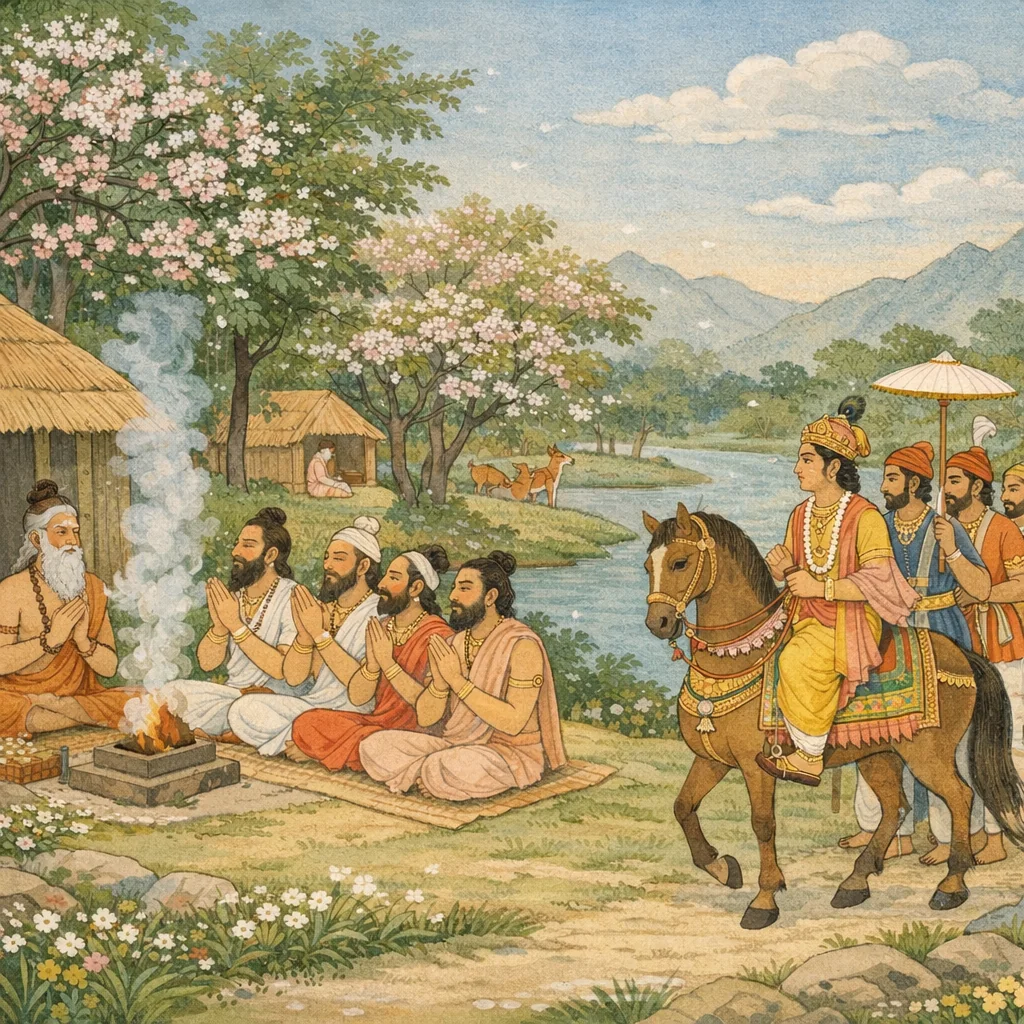
महान् धनुर्थर राजा दुष्यन्तने इस प्रकार मनको मोह लेनेवाले उस उत्तम वनमें प्रवेश किया। उस समय फूलोंसे भरी हुई डालियोंवाले वृक्ष वायुके झकोरोंसे हिल-हिलकर उनके ऊपर बार-बार अदभुत पुष्प-वर्षा करने लगे। वे वृक्ष इतने ऊँचे थे, मानो आकाशको छू लेंगे। उनपर बैठे हुए मीठी बोली बोलनेवाले पक्षियोंके मधुर शब्द वहाँ गूँज रहे थे || ९-- १० || विरेजु: पादपास्तत्र विचित्रकुसुमाम्बरा: । तेषां तत्र प्रवालेषु पुष्पभारावनामिषु,उस वनमें पुष्परूपी विचित्र वस्त्र धारण करनेवाले वृक्ष अद्भुत शोभा पा रहे थे। फूलोंके भारसे झुके हुए उनके कोमल पल््लवोंपर बैठे हुए मधुलोभी भ्रमर मधुर गुंजार कर रहे थे। राजा दुष्यन्तने वहाँ बहुत-से ऐसे रमणीय प्रदेश देखे जो फूलोंके ढेरसे सुशोभित तथा लतामण्डपोंसे अलंकृत थे। मनकी प्रसन्नताको बढ़ानेवाले उन मनोहर प्रदेशोंका अवलोकन करके उस समय महातेजस्वी राजाको बड़ा हर्ष हुआ
Vaiśampāyana said: The great king Duṣyanta, famed for bearing the bow, entered that excellent forest which bewitched the mind. Then the trees, their branches heavy with blossoms, swayed under gusts of wind and again and again showered him with wondrous rain of flowers. They stood so tall it seemed they would touch the sky. The sweet calls of birds perched upon them echoed through the grove. There the trees shone, as though clothed in garments of variegated flowers. On their tender shoots, bent down by the weight of blossoms, honey-seeking bees hummed melodiously. King Duṣyanta beheld many delightful spots adorned with heaps of flowers and embellished with bowers of creepers; and seeing those charming places that increased the heart’s gladness, the radiant king was filled with joy.
Verse 12
रुवन्ति रावान् मधुरान् षट्पदा मधुलिप्सव: । तत्र प्रदेशांश्व बहून् कुसुमोत्करमण्डितान्,उस वनमें पुष्परूपी विचित्र वस्त्र धारण करनेवाले वृक्ष अद्भुत शोभा पा रहे थे। फूलोंके भारसे झुके हुए उनके कोमल पल््लवोंपर बैठे हुए मधुलोभी भ्रमर मधुर गुंजार कर रहे थे। राजा दुष्यन्तने वहाँ बहुत-से ऐसे रमणीय प्रदेश देखे जो फूलोंके ढेरसे सुशोभित तथा लतामण्डपोंसे अलंकृत थे। मनकी प्रसन्नताको बढ़ानेवाले उन मनोहर प्रदेशोंका अवलोकन करके उस समय महातेजस्वी राजाको बड़ा हर्ष हुआ
Vaiśampāyana said: “There, honey-seeking bees hummed sweet sounds. In that woodland the king beheld many delightful tracts adorned with heaps of blossoms and beautified with flowering growth. Seeing those charming places that heightened the mind’s gladness, the radiant King Duṣyanta was filled with joy.”
Verse 13
लतागृहपरिक्षिप्तान् मनस: प्रीतिवर्धनान् । सम्पश्यन् सुमहातेजा बभूव मुदितस्तदा,उस वनमें पुष्परूपी विचित्र वस्त्र धारण करनेवाले वृक्ष अद्भुत शोभा पा रहे थे। फूलोंके भारसे झुके हुए उनके कोमल पल््लवोंपर बैठे हुए मधुलोभी भ्रमर मधुर गुंजार कर रहे थे। राजा दुष्यन्तने वहाँ बहुत-से ऐसे रमणीय प्रदेश देखे जो फूलोंके ढेरसे सुशोभित तथा लतामण्डपोंसे अलंकृत थे। मनकी प्रसन्नताको बढ़ानेवाले उन मनोहर प्रदेशोंका अवलोकन करके उस समय महातेजस्वी राजाको बड़ा हर्ष हुआ
Vaiśampāyana said: Seeing those delightful tracts of woodland—adorned with vine-bowers and pleasing to the mind, increasing inner joy—the mighty and radiant king became glad at that time. The scene is presented as nature’s beauty softening the heart and preparing the ground for a significant moral and emotional turn in the story.
Verse 14
परस्पराश्लिष्टशाखै: पादपै: कुसुमान्वितै: । अशोभत वन तत् तु महेन्द्रध्वजसंनिभै:,फूलोंसे लदे हुए वृक्ष एक-दूसरेसे अपनी डालियोंको सटाकर मानो गले मिल रहे थे। वे गगनचुम्बी वृक्ष इन्द्रकी ध्वजाके समान जान पड़ते थे और उनके कारण उस वनकी बड़ी शोभा हो रही थी
Vaiśampāyana said: The forest shone beautifully. Flower-laden trees, their branches interlaced as if embracing one another, rose sky-high and appeared like Indra’s banner, lending the woodland a majestic splendor.
Verse 15
सिद्धचारणसंघैश्न गन्धर्वाप्सरसां गणै: । सेवितं वनमत्यर्थ मत्तवानरकिन्नरम्,सिद्ध-चारणसमुदाय तथा गन्धर्व और अप्सराओंके समूह भी उस वनका अत्यन्त सेवन करते थे। वहाँ मतवाले वानर और किन्नर निवास करते थे
Vaiśampāyana said: That forest was frequented in abundance by companies of Siddhas and Cāraṇas, and by bands of Gandharvas and Apsarases. It was also inhabited by intoxicated (wild, exuberant) monkeys and by Kinnaras—portraying the woodland as a sacred, otherworldly realm thronged with celestial beings rather than a merely ordinary human landscape.
Verse 16
सुख: शीत: सुगन्धी च पुष्परेणुवहो5निल: । परिक्रामन् वने वृक्षानुपैतीव रिरंसया,उस वनमें शीतल, सुगन्ध, सुखदायिनी मन्द वायु फ़ूलोंके पराग वहन करती हुई मानो रमणकी इच्छासे बार-बार वृक्षोंक समीप आती थी
A gentle breeze—cool, fragrant, and pleasing—carrying the pollen-dust of flowers, seemed to move about in that forest and, as if longing for delight, repeatedly drew near to the trees. The scene underscores the forest’s serene, life-sustaining harmony, contrasting with human restlessness and hinting at the quiet order of nature that supports dharmic living.
Verse 17
एवंगुणसमायुक्तं ददर्श स वन॑ नृप: । नदीकच्छोद्धवं कान्तमुच्छितध्वजसंनिभम्,वह वन मालिनी नदीके कछारमें फैला हुआ था और ऊँची ध्वजाओंके समान ऊँचे वृक्षोंसे भरा होनेके कारण अत्यन्त मनोहर जान पड़ता था। राजाने इस प्रकार उत्तम गुणोंसे युक्त उस वनका भलीभाँति अवलोकन किया
The king beheld that forest, endowed with every excellent quality—lovely in appearance, spreading along the river’s marshy banks, and filled with tall trees that rose like lofty banners. Thus he carefully surveyed the woodland that seemed to embody natural beauty and auspiciousness.
Verse 18
प्रेक्षमाणो वन॑ तत् तु सुप्रहृष्टविहड्रमम् । आश्रमप्रवरं रम्यं ददर्श च मनोरमम्,इस प्रकार राजा अभी वनकी शोभा देख ही रहे थे कि उनकी दृष्टि एक उत्तम आश्रमपर पड़ी, जो अत्यन्त रमणीय और मनोरम था। वहाँ बहुत-से पक्षी हर्षोल्लासमें भरकर चहक रहे थे
As the king continued to gaze upon the beauty of that forest, his eyes fell upon an excellent hermitage—charming and delightful to behold—where many birds, filled with gladness, were singing. The scene quietly signals the moral atmosphere of the āśrama: a place of restraint, peace, and dharmic order, set apart from worldly agitation.
Verse 19
नानावृक्षसमाकीर्ण सम्प्रज्वलितपावकम् । त॑ तदाप्रतिमं श्रीमानाश्रमं प्रत्यपूजयत्,नाना प्रकारके वृक्षोंसे भरपूर उस वनमें स्थान-स्थानपर अग्निहोत्रकी आग प्रज्वलित हो रही थी। इस प्रकार उस अनुपम आश्रमका श्रीमान् दुष्यन्त नरेशने मन-ही-मन बड़ा सम्मान किया
That hermitage, thickly filled with many kinds of trees and marked by the sacred fires blazing in their proper places, appeared incomparable. Seeing it then, the illustrious King Duṣyanta honored the āśrama inwardly—recognizing its sanctity and the dharmic life sustained there.
Verse 20
यतिभिर्वालखिल्यैश्न वृतं मुनिगणान्वितम् । अग्न्यगारैश्न बहुभि: पुष्पसंस्तरसंस्तृतम्,वहाँ बहुत-से त्यागी विरागी यति, बालखिल्य ऋषि तथा अन्य मुनिगण निवास करते थे। अनेकानेक अग्निहोत्रगृह उस आश्रमकी शोभा बढ़ा रहे थे। वहाँ इतने फूल झड़कर गिरे थे कि उनके बिछौने-से बिछ गये थे
Vaiśampāyana said: The hermitage was thronged with ascetics—yatis, the Vālakhilya sages, and many other groups of munis. It was adorned with numerous sacred fire-houses for Agnihotra rites, and the ground lay so thickly strewn with fallen flowers that it looked as though it had been spread with floral bedding. The scene underscores a culture of disciplined renunciation and continuous ritual duty, presenting the āśrama as a moral counterpoint to worldly ambition.
Verse 21
महाकच्छैर्बृहद्धिश्व विभ्राजितमतीव च । मालिनीमभितो राजन् नदीं पुण्यां सुखोदकाम्,बड़े-बड़े तूनके वृक्षोंसे उस आश्रमकी शोभा बहुत बढ़ गयी थी। राजन! बीचमें पुण्यसलिला मालिनी नदी बहती थी, जिसका जल बड़ा ही सुखद एवं स्वादिष्ट था। उसके दोनों तटोंपर वह आश्रम फैला हुआ था
Vaiśampāyana said: “O King, that hermitage shone with exceptional beauty, adorned by great thickets and lofty trees. Through its midst flowed the sacred river Mālinī, whose waters were delightfully cool and pleasant; the āśrama spread along both of her banks.”
Verse 22
नैकपक्षिगणाकीर्णा तपोवनमनोरमाम् | तत्र व्यालमृगान् सौम्यान् पश्यन् प्रीतिमवाप सः,मालिनीमें अनेक प्रकारके जलपक्षी निवास करते थे तथा तटवर्ती तपोवनके कारण उसकी मनोहरता और बढ़ गयी थी। वहाँ विषधर सर्प और हिंसक वनजन्तु भी सौम्यभाव (हिंसाशून्य कोमलवृत्ति)-से रहते थे। यह सब देखकर राजाको बड़ी प्रसन्नता हुई
That (river/region) was thronged with many flocks of water-birds, and its charm was heightened by the lovely hermitage-groves along its banks. Seeing there even serpents and wild beasts living in a gentle, non-violent temper, the king was filled with great delight. The scene suggests the moral power of a true tapas-forest: in the presence of sanctity and restraint, even natural hostility is calmed.
Verse 23
त॑ चाप्रतिरथ: श्रीमानाश्रमं प्रत्यपद्यत । देवलोकप्रतीकाशं सर्वतः सुमनोहरम्,श्रीमान् दुष्यन्त नरेश अप्रतिरथ वीर थे--उस समय उनकी समानता करनेवाला भूमण्डलमें दूसरा कोई रथी योद्धा नहीं था। वे उक्त आश्रमके समीप जा पहुँचे, जो देवताओंके लोक-सा प्रतीत होता था। वह आश्रम सब ओरसे अत्यन्त मनोहर था
Vaiśampāyana said: That illustrious hero, Apratiratha, approached the hermitage—radiant like the world of the gods and delightful to behold on every side. The passage underscores the ideal of a kṣatriya whose prowess is matched by reverence for sacred spaces, moving from worldly power toward the sanctity of āśrama-life.
Verse 24
नदीं चाश्रमसंश्लिष्टां पुण्यतोयां ददर्श सः । सर्वप्राणभूतां तत्र जननीमिव घिछिताम्,राजाने आश्रमसे सटकर बहनेवाली पुण्यसलिला मालिनी नदीकी ओर भी दृष्टिपात किया; जो वहाँ समस्त प्राणियोंकी जननी-सी विराज रही थी
Vaiśampāyana said: He then beheld a river whose course lay close to the hermitage, its waters holy and life-giving. There it shone like a mother to all living beings—nurturing, sustaining, and sanctifying the ascetic landscape around it.
Verse 25
सचक्रवाकपुलिनां पुष्पफेनप्रवाहिनीम् । सकिन्नरगणावासां वानरफक्षनिषेविताम्,उसके तटपर चकवा-चकई किलोल कर रहे थे। नदीके जलमें बहुत-से फूल इस प्रकार बह रहे थे, मानो फेन हों। उसके तटप्रान्तमें किन्नरोंके निवास-स्थान थे। वानर और रीछ भी उस नदीका सेवन करते थे
Verse 26
पुण्यस्वाध्यायसंघुष्टां पुलिनैरुपशोभिताम् । मत्तवारणशार्दूलभुजगेन्द्रनिषेविताम्,अनेक सुन्दर पुलिन मालिनीकी शोभा बढ़ा रहे थे। वेद-शास्त्रोंके पवित्र स्वाध्यायकी ध्वनिसे उस सरिताका निकटवर्ती प्रदेश गूँज रहा था। मतवाले हाथी, सिंह और बड़े-बड़े सर्प भी मालिनीके तटका आश्रय लेकर रहते थे
Vaiśaṃpāyana said: The river-bank region resounded with the sacred recitation of Vedas and śāstras, and its beauty was enhanced by many lovely sandbanks. Even intoxicated elephants, tigers, and great serpent-lords frequented and took shelter along the banks of the Mālinī—suggesting a landscape where sanctity, learning, and untamed nature coexist in a charged yet harmonious order.
Verse 27
तस्यास्तीरे भगवत: काश्यपस्य महात्मन: । आश्रमप्रवरं रम्यं महर्षिगणसेवितम्,उसके तटपर ही कश्यपगोत्रीय महात्मा कण्वका वह उत्तम एवं रमणीय आश्रम था। वहाँ महर्षियोंके समुदाय निवास करते थे
On the bank of that river stood the delightful and foremost hermitage of the venerable, great-souled sage Kāśyapa—an ashram frequented and served by companies of great seers. The scene underscores the Mahābhārata’s moral geography: sacred spaces sustained by disciplined sages become refuges of order, learning, and dharma amid the uncertainties of worldly life.
Verse 28
नदीमाश्रमसम्बद्धां दृष्टवा55श्रमपदं तथा । चकाराभिप्रवेशाय मतिं स नृपतिस्तदा,उस मनोहर आश्रम और आश्रमसे सटी हुई नदीको देखकर राजाने उस समय उसमें प्रवेश करनेका विचार किया
Vaiśampāyana said: Seeing the delightful hermitage-site and the river adjoining the āśrama, the king then resolved to enter it—moved by reverence for the sacred place and the wish to approach it in a fitting manner.
Verse 29
अलंकृतं द्वीपवत्या मालिन्या रम्यतीरया । नरनारायणस्थानं गड़येवोपशोभितम्,टापुओंसे युक्त तथा सुरम्य तटवाली मालिनी नदीसे सुशोभित वह आश्रम गंगा नदीसे शोभायमान भगवान् नर-नारायणके आश्रम-सा जान पड़ता था
Vaiśampāyana said: The hermitage, adorned by the river Mālinī—rich with islets and lovely banks—appeared splendid, as if graced by the Gaṅgā itself, resembling the sacred abode of Nara and Nārāyaṇa. The description frames the place as a morally charged setting: purity of landscape mirrors purity of purpose, preparing the listener for disciplined, dharmic action within an atmosphere of sanctity.
Verse 30
मत्तबर्हिणसंघुष्ट प्रविवेश महद् वनम् | तत् स चैत्ररथप्रख्यं समुपेत्य नरर्षभ:
Vaiśampāyana said: Resounding with the calls of intoxicated peacocks, he entered a vast forest. Then that bull among men approached a region famed like the divine Caitraratha grove—suggesting a place of extraordinary beauty and abundance, where the hero’s journey turns from mere travel to a morally charged encounter with nature’s splendor and its latent tests.
Verse 31
अतीवगुणसम्पन्नमनिर्देश्यं च वर्चसा | महर्षि काश्यपं द्रष्टमथ कण्वं तपोधनम्
Vaiśampāyana said: He beheld the great sage Kāśyapa—abundantly endowed with virtues and possessed of an indescribable radiance—and also Kaṇva, that treasure-house of ascetic power. The passage underscores the Mahābhārata’s ethical valuation of inner excellence (guṇa) and spiritual austerity (tapas) as sources of true authority and splendor.
Verse 32
ध्वजिनीमश्वसम्बाधां पदातिगजसंकुलाम् । अवस्थाप्य वनद्वारि सेनामिदमुवाच स:
Vaiśampāyana said: Having halted the army at the entrance to the forest—an army dense with horses, crowded with foot-soldiers and elephants, and marked by its standards—he then spoke these words. The scene underscores disciplined restraint: even a formidable force is deliberately checked at a threshold, suggesting order and forethought before entering a liminal, potentially unruly space like the forest.
Verse 33
तदनन्तर नरश्रेष्ठ दुष्यन्तने अत्यन्त उत्तम गुणोंसे सम्पन्न कश्यपगोत्रीय महर्षि तपोधन कण्वका, जिनके तेजका वाणीद्दारा वर्णन नहीं किया जा सकता था, दर्शन करनेके लिये कुबेरके चैत्ररथवनके समान मनोहर उस महान् वनमें प्रवेश किया, जहाँ मतवाले मयूर अपनी केकाध्वनि फैला रहे थे। वहाँ पहुँचकर नरेशने रथ, घोड़े, हाथी और पैदलोंसे भरी हुई अपनी चतुरंगिणी सेनाको उस तपोवनके किनारे ठहरा दिया और कहा-- ॥| ३०-- ३२ || मुनि विरजसं द्रष्ट गमिष्यामि तपोधनम् । काश्यपं स्थीयतामत्र यावदागमनं मम,'सेनापति! और सैनिको! मैं रजोगुणरहित तपस्वी महर्षि कश्यपनन्दन कण्वका दर्शन करनेके लिये उनके आश्रममें जाऊँगा। जबतक मैं वहाँसे लौट न आऊँ, तबतक तुमलोग यहीं ठहरो'
Then, O best of men, King Duṣyanta entered that great forest—lovely like Kubera’s Caitraratha grove—where intoxicated peacocks spread their ringing cries. There dwelt the sage Kaṇva, a treasure of austerity, of the Kāśyapa lineage, endowed with the highest virtues, whose radiance could not be adequately described in words. Having arrived, the king halted his fourfold army—chariots, horses, elephants, and foot-soldiers—at the edge of the hermitage-forest, and said: “Commander and soldiers, I shall go to see the dustless sage, the ascetic Kaṇva, son of Kāśyapa. Remain here until I return.”
Verse 34
तद् वन॑ नन्दनप्रख्यमासाद्य मनुजेश्वर: । क्षुत्पिपासे जहौ राजा मुर्दे चावाप पुष्कलाम्,इस प्रकार आदेश दे नरेश्वर दुष्यन्तने नन्दनवनके समान सुशोभित उस तपोवनमें पहुँचकर भूख-प्यासको भुला दिया। वहाँ उन्हें बड़ा आनन्द मिला
Vaiśampāyana said: Having reached that forest-āśrama, radiant like Nandana (Indra’s celestial grove), King Duṣyanta—lord among men—forgot hunger and thirst, and there attained abundant joy. The scene underscores how a sanctified hermitage, by its purity and serenity, can quiet bodily urges and uplift the mind of even a powerful ruler.
Verse 35
सामात्यो राजलिड्रानि सो5पनीय नराधिप: । पुरोहितसहायश्च जगामाश्रममुत्तमम्,वे नरेश मुकुट आदि राजचिह्लोंको हटाकर साधारण वेश-भूषामें मन्त्रियों और पुरोहितके साथ उस उत्तम आश्रमके भीतर गये
Vaiśampāyana said: The king, accompanied by his ministers, removed the outward insignia of royalty. With the help and company of his family priest, he then proceeded—now in a plain guise—into that excellent hermitage. The episode underscores restraint and humility: authority is set aside at the threshold of sacred space, and the ruler approaches the āśrama not as a sovereign demanding honor, but as a seeker honoring dharma.
Verse 36
दिदृक्षुस्तत्र तमृषिं तपोराशिमथाव्ययम् । ब्रह्मलोकप्रतीकाशमाश्रमं सोडभिवीक्ष्य ह । षट्पदोदगीतसंघुष्टं नानाद्धविजगणायुतम्,वहाँ ये तपस्याके भण्डार अविकारी महर्षि कण्वका दर्शन करना चाहते थे। राजाने उस आश्रमको देखा, मानो दूसरा ब्रह्मलोक हो। नाना प्रकारके पक्षी वहाँ कलरव कर रहे थे। भ्रमरोंके गुंजनसे सारा आश्रम गूँज रहा था
Vaiśampāyana said: Wishing to behold that sage—an imperishable treasury of austerity—the king looked upon the hermitage, radiant like the very world of Brahmā. It resounded with the humming song of bees and was filled with countless flocks of birds of many kinds, all calling out together—an image of sanctity and peace born of disciplined life.
Verse 37
ऋचो बह्नचमुख्यैश्न प्रेयमाणा: पदक्रमैः । शुश्राव मनुजव्याप्रो विततेष्विह कर्मसु,श्रेष्ठ ऋग्वेदी ब्राह्मण पद और क्रमपूर्वक ऋचाओंका पाठ कर रहे थे। नरश्रेष्ठ दुष्यन्तने अनेक प्रकारके यज्ञसम्बन्धी कर्मोमें पढ़ी जाती हुई वैदिक ऋचाओंको सुना
Vaiśampāyana said: As the foremost Brahmins recited the Vedic ṛks in the prescribed word-by-word and sequential modes, the tiger among men—King Duṣyanta—heard those sacred hymns being chanted amid the many rites of the sacrifice. The scene underscores royal dharma: a king honors and supports Vedic ritual order, listening with reverence as the priests perform their duties correctly.
Verse 38
यज्ञविद्याड्भविद्धिश्व यजुर्विद्धिश्चन शोभितम् । मधुरै: सामगीतैश्व ऋषिभिननियतव्रतै:,यज्ञविद्या और उसके अंगोंकी जानकारी रखनेवाले यजुर्वेदी विद्वान् भी आश्रमकी शोभा बढ़ा रहे थे। नियमपूर्वक ब्रह्मचर्यव्रतका पालन करनेवाले सामवेदी महर्षियोंद्वारा वहाँ मधुरस्वरसे सामवेदका गान किया जा रहा था। मनको संयममें रखकर नियमपूर्वक उत्तम व्रतका पालन करनेवाले सामवेदी और अथर्ववेदी महर्षि भारुण्डसंज्ञक साममन्त्रोंके गीत गाते और अथर्ववेदके मन्त्रोंका उच्चारण करते थे; जिससे उस आश्रमकी बड़ी शोभा होती थी
Vaiśampāyana said: The hermitage was adorned by learned Yajurvedic priests, well-versed in the science of sacrifice and its subsidiary disciplines. There, sages of disciplined vows sang the Sāman hymns in sweet melodies, enhancing the sanctity and beauty of the āśrama through regulated conduct and Vedic recitation.
Verse 39
भारुण्डसामगीताभिरथर्वशिरसोदगतै: । यतात्मभि: सुनियतै: शुशुभे स तदाश्रम:,यज्ञविद्या और उसके अंगोंकी जानकारी रखनेवाले यजुर्वेदी विद्वान् भी आश्रमकी शोभा बढ़ा रहे थे। नियमपूर्वक ब्रह्मचर्यव्रतका पालन करनेवाले सामवेदी महर्षियोंद्वारा वहाँ मधुरस्वरसे सामवेदका गान किया जा रहा था। मनको संयममें रखकर नियमपूर्वक उत्तम व्रतका पालन करनेवाले सामवेदी और अथर्ववेदी महर्षि भारुण्डसंज्ञक साममन्त्रोंके गीत गाते और अथर्ववेदके मन्त्रोंका उच्चारण करते थे; जिससे उस आश्रमकी बड़ी शोभा होती थी
Then that hermitage shone with splendor: disciplined sages, self-controlled and strictly observant, filled it with the chanting of Bhāruṇḍa Sāman hymns and with Atharvan recitations (from the Atharvaśiras tradition). Their regulated vows and reverent Vedic song made the āśrama radiant, presenting an ideal of sacred learning sustained by restraint and ritual order.
Verse 40
अथर्ववेदप्रवरा: पूगयज्ञियसामगा: । संहितामीरयन्ति सम पदक्रमयुतां तु ते,श्रेष्ठ अथर्ववेदीय विद्वान् तथा पूगयज्ञिय नामक सामके गायक सामवेदी महर्षि पद और क्रमसहित अपनी-अपनी संहिताका पाठ करते थे
Then the foremost Atharvavedins and the Sāmavedic chanters known as the Pūgayajñiya began reciting their respective Saṁhitās. They intoned the Vedic text in a measured, even manner, complete with both the word-by-word (pada) and sequential (krama) recitation—signaling disciplined learning, ritual correctness, and reverence for sacred speech.
Verse 41
शब्दसंस्कारसंयुक्तिर््रुवद्धिश्चापरैर्द्धिजै: । नादितः स बभौ श्रीमान् ब्रह्मलोक इवापर:,दूसरे द्विजबालक शब्द-संस्कारसे सम्पन्न थे--वे स्थान, करण और प्रयत्नका ध्यान रखते हुए संस्कृतवाक्योंका उच्चारण कर रहे थे। इन सबके तुमुल शब्दोंसे गूँजता हुआ वह सुन्दर आश्रम द्वितीय ब्रह्मलोकके समान सुशोभित होता था
Vaiśampāyana said: Endowed with refined speech and correct phonetic training, and filled with other young twice-born students who recited Sanskrit sentences with steady, disciplined articulation, that splendid hermitage resounded on all sides. Echoing with their collective sound, it shone like a second Brahma-world—an image of learning ordered by restraint and reverence.
Verse 42
यज्ञसंस्तरविद्धिश्न क्रमशिक्षाविशारदै: । न्यायतत्त्वात्मविज्ञानसम्पन्नैवेंदपारगै:
Vaiśampāyana said: The rite was arranged and conducted by experts who were skilled in laying out the sacrificial ground and in the proper sequence of ritual instruction—men endowed with knowledge of right reasoning, true principles, and self-knowledge, and who had fully mastered the Vedic tradition.
Verse 43
नानावाक्यसमाहारसमवायविशारदै: । विशेषकार्यविद्धिश्न मोक्षधर्मपरायणै:
Vaiśampāyana said: They were experts in assembling and harmonizing many kinds of statements, skilled in discerning what should be done in particular situations, and devoted to the dharma that leads to liberation.
Verse 44
स्थापनाक्षेपसिद्धान्तपरमर्थज्ञतां गतै: । शब्दच्छन्दोनिरुक्तज्ै: कालज्ञानविशारदै:
Vaiśampāyana said: They had attained mastery in the methods of establishing and refuting arguments, were grounded in settled conclusions and the highest truth, were experts in language, metre, and etymology, and were highly skilled in the knowledge of time—thus portraying the learned authorities whose disciplined scholarship supports right judgment and sound counsel.
Verse 45
द्रव्यकर्मगुणज्ैश्व॒ कार्यकारणवेदिभि: । पक्षिवानररुतज्जैक्ष व्यासग्रन्थसमाश्रितै:
Vaiśampāyana said: They were accompanied by men learned in the nature of substances, actions, and qualities, and by those who understood the relation of cause and effect; also by experts who could interpret the cries and signs of birds and monkeys—scholars grounded in the treatises of Vyāsa. The narrative underscores that great undertakings are guided not merely by power, but by disciplined knowledge, careful reasoning, and attentiveness to omens as understood within the tradition.
Verse 46
नानाशाम्त्रेषु मुख्यैश्न शुश्राव स्वनमीरितम् । लोकायतिकमुख्यैश्न समनन््तादनुनादितम्
Vaiśampāyana said: In the many principal treatises, he did not hear his own view being proclaimed; but in the foremost Lokāyata (worldly, sophistic) doctrines, it was echoed back to him from every side without end.
Verse 47
यज्ञवेदीकी रचनाके ज्ञाता, क्रम और शिक्षामें कुशल, न्यायके तत्त्व और आत्मानुभवसे सम्पन्न, वेदोंके पारंगत, परस्पर विरुद्ध प्रतीत होनेवाले अनेक वाक्योंकी एकवाक्यता करनेमें कुशल तथा विभिन्न शाखाओंकी गुणविधियोंका एक शाखामें उपसंहार करनेकी कलामें निपुण, उपासना आदि विशेषकार्योंके ज्ञाता, मोक्षधर्ममें तत्पर, अपने सिद्धान्तकी स्थापना करके उसमें शंका उठाकर उसके परिहारपूर्वक उस सिद्धान्तके समर्थनमें परम प्रवीण, व्याकरण, छन््द, निरुक्त, ज्योतिष तथा शिक्षा और कल्प--वेदके इन छहों अंगोंके विद्वान, पदार्थ, शुभाशुभ कर्म, सत्त्व, रज, तम आदि गुणोंको जाननेवाले तथा कार्य (दृश्यवर्ग) और कारण (मूल प्रकृति)-के ज्ञाता, पशु-पक्षियोंकी बोली समझनेवाले, व्यासग्रन्थका आश्रय लेकर मन्त्रोंकी व्याख्या करनेवाले तथा विभिन्न शास्त्रोंके प्रमुख विद्वान् वहाँ रहकर जो शब्दोच्चारण कर रहे थे, उन सबको राजा दुष्यन्तने सुना। कुछ लोकरंजन करनेवाले लोगोंकी बातें भी उस आश्रममें चारों ओर सुनायी पड़ती थीं || ४२-- ४६ || तत्र तत्र च विप्रेन्द्रानु नियतान् संशितव्रतान् | जपहोमपरान् विप्रान् ददर्श परवीरहा,शत्रुवीरोंका संहार करनेवाले दुष्यन्तने स्थान-स्थानपर नियमपूर्वक उत्तम एवं कठोर व्रतका पालन करनेवाले श्रेष्ठ एवं बुद्धिमान् ब्राह्मगोंको जप और होममें लगे हुए देखा
There and again, Duṣyanta—slayer of enemy heroes—saw eminent Brahmins in various spots of the hermitage: disciplined men of firm and austere vows, steadfast in rule-bound conduct, wholly engaged in recitation (japa) and sacrificial offerings into the fire (homa). The scene underscores a moral contrast: the king famed for martial prowess encounters the quiet power of dharma sustained through restraint, learning, and sacred practice.
Verse 48
आसनानि विचित्राणि रुचिराणि महीपति: । प्रयत्नोपहितानि सम दृष्टवा विस्मयमागमत्,वहाँ प्रयत्नपूर्वक तैयार किये हुए बहुत सुन्दर एवं विचित्र आसन देखकर राजाको बड़ा आश्चर्य हुआ
Vaiśampāyana said: The king, seeing the beautiful and wonderfully varied seats that had been carefully prepared with deliberate effort, was filled with astonishment. The scene underscores the courtly ethic of honoring guests through thoughtful hospitality and meticulous arrangement.
Verse 49
देवतायतनानां च प्रेक्ष्य पूजां कृतां द्विजै: । ब्रह्मलोकस्थमात्मानं मेने स नृपसत्तम:,द्विजोंद्वारा की हुई देवालयोंकी पूजा-पद्धति देखकर नृपश्रेष्ठ दुष्यन्तने ऐसा समझा कि मैं ब्रह्मलोकमें आ पहुँचा हूँ
Seeing the worship in the temples of the gods duly performed by the twice-born, that best of kings (Duṣyanta) imagined himself to have arrived in Brahmaloka—so elevated and sanctified did the scene appear to him.
Verse 50
स काश्यपतपोगुप्तमाश्रमप्रवरं शुभम् | नातृप्यत् प्रेक्षमाणो वै तपोवनगुणैर्युतम्,वह श्रेष्ठ एवं शुभ आश्रम कश्यपनन्दन महर्षि कण्वकी तपस्यासे सुरक्षित तथा तपोवनके उत्तम गुणोंसे संयुक्त था। राजा उसे देखकर तृप्त नहीं होते थे
Vaiśampāyana said: He beheld that auspicious, excellent hermitage—protected by the austerity of Kaśyapa’s line—and rich with the virtues of a sacred forest of penance. Gazing upon it, the king could not feel satisfied, so captivating was its sanctity and disciplined beauty.
Verse 51
स काश्यपस्यायतन महाव्रतै- वतं समन्तादृषिभिस्तपो धनै: । विवेश सामात्यपुरोहितो5रिहा विविक्तमत्यर्थमनोहरं शुभम्,महर्षि कण्वका वह आश्रम, जिसमें वे स्वयं रहते थे, सब ओरसे महान् व्रतका पालन करनेवाले तपस्वी महर्षियोंद्वारा घिरा हुआ था। वह अत्यन्त मनोहर, मंगलमय और एकान्त स्थान था। शत्रुनाशक राजा दुष्यन्तने मन्त्री और पुरोहितके साथ उसकी सीमामें प्रवेश किया
Vaiśampāyana said: The hermitage—an abode associated with Kaśyapa—was surrounded on every side by ascetic seers, rich in austerity and steadfast in great vows. Into that secluded, exceedingly beautiful and auspicious place entered the foe-destroying King Duṣyanta, accompanied by his ministers and his household priest. The scene contrasts royal power with the sanctity of disciplined spiritual life, suggesting that even kings must approach such spaces with restraint and reverence.
Verse 70
इति श्रीमहाभारते आदिपर्वणि सम्भवपर्वणि शकुन्तलोपाख्याने सप्ततितमो< ध्याय:
Thus, in the Śrī Mahābhārata, within the Ādi Parva—specifically the Sambhava Parva—ends the Śakuntalā episode, concluding the seventieth chapter.
Frequently Asked Questions
The central dharma-saṅkaṭa concerns intergenerational duty and sovereignty: whether sons should accept personal loss (taking a parent’s old age) to preserve dynastic stability and fulfill filial obligation.
The chapter frames desire (kāma) as intrinsically non-satiating and portrays ethical restraint and duty-based succession as stabilizing forces for both personal integrity and political order.
No explicit phalaśruti is stated here; the meta-function is archival and causal—establishing lineage legitimacy and illustrating how choices and transgressions generate long-term outcomes relevant to later Bhārata history.