Adhyaya 184
अध्याय १८४ — भैक्षविभागः, शयनविधानम्, धृष्टद्युम्नस्य निवेदनम् (Alms Distribution, Night Lodging, and Dhṛṣṭadyumna’s Report)
Upa-parva: Svayaṃvara-anantara (Draupadī-haraṇa-prasaṅga) — Bhārgava-niveśana episode
Vaiśaṃpāyana narrates Dhṛṣṭadyumna’s discreet following of the Kuru brothers to a Bhārgava’s residence, where he remains unrecognized. By evening, Bhīma, Arjuna (Jiṣṇu), and the twins return from collecting alms and present it to Yudhiṣṭhira. Kuntī then instructs Draupadī (Drupada’s daughter) on a structured distribution: provide food to those who request it, offer a due portion to a brāhmaṇa, divide the remainder promptly, and assign a larger share to Bhīma due to his exceptional appetite and strength. Draupadī complies without doubt, and the group settles for the night on kuśa grass and hides in an austere arrangement. The heroes converse on martial topics (weapons, chariots, elephants, and arms). Dhṛṣṭadyumna overhears and observes, then hastens to report the entire occurrence to King Drupada. Drupada, distressed at not finding the Pandavas and concerned for his daughter, questions Dhṛṣṭadyumna with a series of propriety-focused inquiries: whether Draupadī has been taken by a socially unsuitable man, whether ominous dishonor has occurred, and who truly won the contest—specifically whether Arjuna struck the target and secured the bow, and what this implies for alliance and reputation.
Chapter Arc: अज्ञातवास की छाया में पाण्डव द्रुपद-नगरी की ओर बढ़ते हैं—और मार्ग में उन्हें स्वयं महर्षि द्वैपायन व्यास का पावन दर्शन होता है, मानो भाग्य स्वयं उन्हें दिशा दे रहा हो। → व्यास का यथावत् सत्कार कर पाण्डव आगे बढ़ते हैं; रमणीय वन-सरिताओं को पार करते हुए वे द्रुपद की राजधानी पहुँचकर कुम्हार के घर ब्राह्मण-वृत्ति धारण कर भिक्षा से जीवन चलाते हैं। उधर नगर में स्वयंवर-सभा की तैयारी—धूप, चन्दन, माल्य, और शत-शत वाद्यों का कोलाहल—जन-समुदाय को एक ही लक्ष्य पर खींच लाता है: ‘कृष्णा’ (द्रौपदी) का दर्शन। → स्वयंवर-मण्डप में धृष्टद्युम्न का उद्घोष गूँजता है—वह राजाओं को नाम, गोत्र और कर्म से संबोधित कर चुनौती/नियमों का संकेत देता है और स्पष्ट करता है कि जो कुल-रूप-बल से युक्त महान कर्म कर सकेगा, उसी को कृष्णा वरेगी; यह घोषणा सभा को उत्कंठा और प्रतिस्पर्धा की ज्वाला में झोंक देती है। → पाण्डव, ब्राह्मण-वेष में, भीड़ और राजाओं के बीच स्वयंवर-सभा का वैभव और व्यवस्था देखते हुए भीतर-भीतर आने वाले निर्णायक क्षण के लिए स्वयं को स्थिर करते हैं; धृष्टद्युम्न का वचन सभा-क्रम को औपचारिक रूप से आरम्भ कर देता है। → घोषणा हो चुकी है—अब प्रश्न केवल यह है कि ‘महाकर्म’ कौन करेगा, और ब्राह्मण-वेषधारी पाण्डवों में से कौन आगे बढ़ेगा?
Shlokas
Verse 1
ऑपन-आक्रात बछ। अर: चतुरशीरत्याधेकशततमो< ध्याय: पाण्डवोंका द्रपदकी राजधानीमें जाकर कुम्हारके यहाँ रहना, स्वयंवरसभाका वर्णन तथा धृष्टद्युम्नकी घोषणा वैशम्पायन उवाच एवमुक्ता: प्रयातास्ते पाण्डवा जनमेजय । राज्ञा दक्षिणपज्चालान ट्रुपदेनाभिरक्षितान्,वैशम्पायनजी कहते हैं--जनमेजय! उन ब्राह्मणोंके यों कहनेपर पाण्डवलोग (उन्हींके साथ) राजा द्रुपदके द्वारा पालित दक्षिणपांचाल देशकी ओर चले
Vaiśampāyana said: “O Janamejaya, when those Brahmins had spoken thus, the Pāṇḍavas set out (in their company) toward the Southern Pañcāla country, which was protected and governed by King Drupada.”
Verse 2
ततस्ते सुमहात्मानं शुद्धात्मानमकल्मषम् । ददृशु: पाण्डवा वीरा मुनि द्वैपायनं तदा,तदनन्तर उन पाण्डववीरोंको मार्गमें पापरहित, शुद्ध-चित्त एवं श्रेष्ठ महात्मा द्वैपायन मुनिका दर्शन हुआ
Then the heroic Pāṇḍavas beheld the sage Dvaipāyana—an exalted great-souled one, pure in spirit and free from taint. The encounter underscores the epic’s ethical ideal that inner purity and freedom from moral blemish are the marks by which true spiritual authority is recognized.
Verse 3
तस्मै यथावत् सत्कारं कृत्वा तेन च सत्कृता: । कथान्ते चाभ्यनुज्ञाता: प्रययुर्द्रपदक्षयम्,पाण्डवोंने उनका यथावत् सत्कार किया और उन्होंने पाण्डवोंका। फिर उनमें आवश्यक बातचीत हुई। वार्तालाप समाप्त होनेपर व्यासजीकी आज्ञा ले पाण्डव पुनः ट्रपदकी राजधानीकी ओर चल दिये
Having duly offered him the proper honors, and having themselves been honored by him in return, the Pāṇḍavas—after the conversation had concluded and with his permission—set out again for Drupada’s imperishable abode (his capital). The passage underscores the ethic of reciprocal respect: hospitality is rendered according to propriety, and departure is taken only after consent is granted.
Verse 4
कक ५ 520० "2 582 2223 आ »“१>+ "| 2 से 3९८४ ही ; #90500 2 ३ +्जछ रे |, ९ पश्यन्तो रमणीयानि वनानि च सरांसि च । तत्र तत्र वसन्तश्व शनैर्जग्मुर्महारथा:,महारथी पाण्डव मार्गमें अनेकानेक रमणीय वन और सरोवर देखते तथा उन-उन स्थानोंमें डेरा डालते हुए धीरे-धीरे आगे बढ़ते गये
Vaiśampāyana said: As they journeyed on, the great chariot-warriors beheld many delightful forests and lakes. Resting here and there along the way, they advanced gradually—moving with measured pace, as disciplined travelers rather than hurried fugitives.
Verse 5
स्वाध्यायवन्त: शुचयो मधुरा: प्रियवादिन: । आनुपूर्व्येण सम्प्राप्ता: पज्चालान् पाण्डुनन्दना:,(प्रतिदिन) स्वाध्यायमें तत्पर रहनेवाले, पवित्र, मधुर प्रकृतिवाले तथा प्रियवादी पाण्डुकुमार इस तरह चलकर क्रमश: पांचालदेशमें जा पहुँचे
Vaiśampāyana said: The sons of Pāṇḍu—steadfast in daily self-study, pure in conduct, gentle in disposition, and pleasing in speech—proceeded in due order and in time came to the land of the Pāñcālas. The verse highlights their disciplined learning and ethical refinement as the foundation of their public conduct while they journey onward in the narrative.
Verse 6
ते तु दृष्टवा पुरं तच्च स्कन्धावारं च पाण्डवा: । कुम्भकारस्य शालायां निवासं चक्रिरे तदा,द्रपदके नगर और उसकी चहारदीवारीको देखकर पाण्डवोंने उस समय एक कुम्हारके घरमें अपने रहनेकी व्यवस्था की
But when the Pāṇḍavas had seen that city and its encampment, they then arranged their lodging in the workshop-house of a potter. The choice reflects prudent concealment and humility—seeking safety without burdening others or courting attention while moving under constraint.
Verse 7
तत्र भैक्षं समाजहुर्ब्राह्मिणीं वृत्तिमाश्रिता: । तान् सम्प्राप्तांस्तथा वीराज्जज्ञिरे न नरा: क्वचित्,वहाँ ब्राह्मणवृत्तिका आश्रय ले वे भिक्षा माँगकर लाते (और उसीसे निर्वाह करते) थे। इस प्रकार वहाँ पहुँचे हुए पाण्डववीरोंको कहीं कोई भी मनुष्य पहचान न सके
Verse 8
यज्ञसेनस्यथ कामस्तु पाण्डवाय किरीटिने । कृष्णां दद्यामिति सदा न चैतद् विवृणोति सः,राजा ट्रुपदके मनमें सदा यही इच्छा रहती थी कि मैं पाण्डुनन्दन अर्जुनके साथ द्रौपदीका ब्याह करूँ। परंतु वे अपने इस मनोभावको किसीपर प्रकट नहीं करते थे
Vaiśampāyana said: King Yajñasena (Drupada) constantly cherished the wish, “I shall give Kṛṣṇā (Draupadī) to the Pāṇḍava, the diadem-wearing Arjuna.” Yet he did not disclose this intention to anyone. The verse highlights a ruler’s private resolve—shaped by political foresight and personal conviction—kept concealed until the proper moment for action.
Verse 9
सो<न्वेषमाण: कौन्तेयं पाउ्चाल्यो जनमेजय । दृढ धनुरनानम्यं कारयामास भारत,भरतवंशी जनमेजय! पांचालनरेशने कुन्तीकुमार अर्जुनको खोज निकालनेकी इच्छासे एक ऐसा दृढ़ धनुष बनवाया, जिसे दूसरा कोई झुका भी न सके
Vaiśampāyana said: O Janamejaya, the Pāñcāla king, intent on finding Kuntī’s son Arjuna, had a firm bow made—so unyielding that no other man could even bend it. The episode underscores a deliberate test of worth: the sought-after hero is to be identified not by claim or birth alone, but by proven capability and resolve.
Verse 10
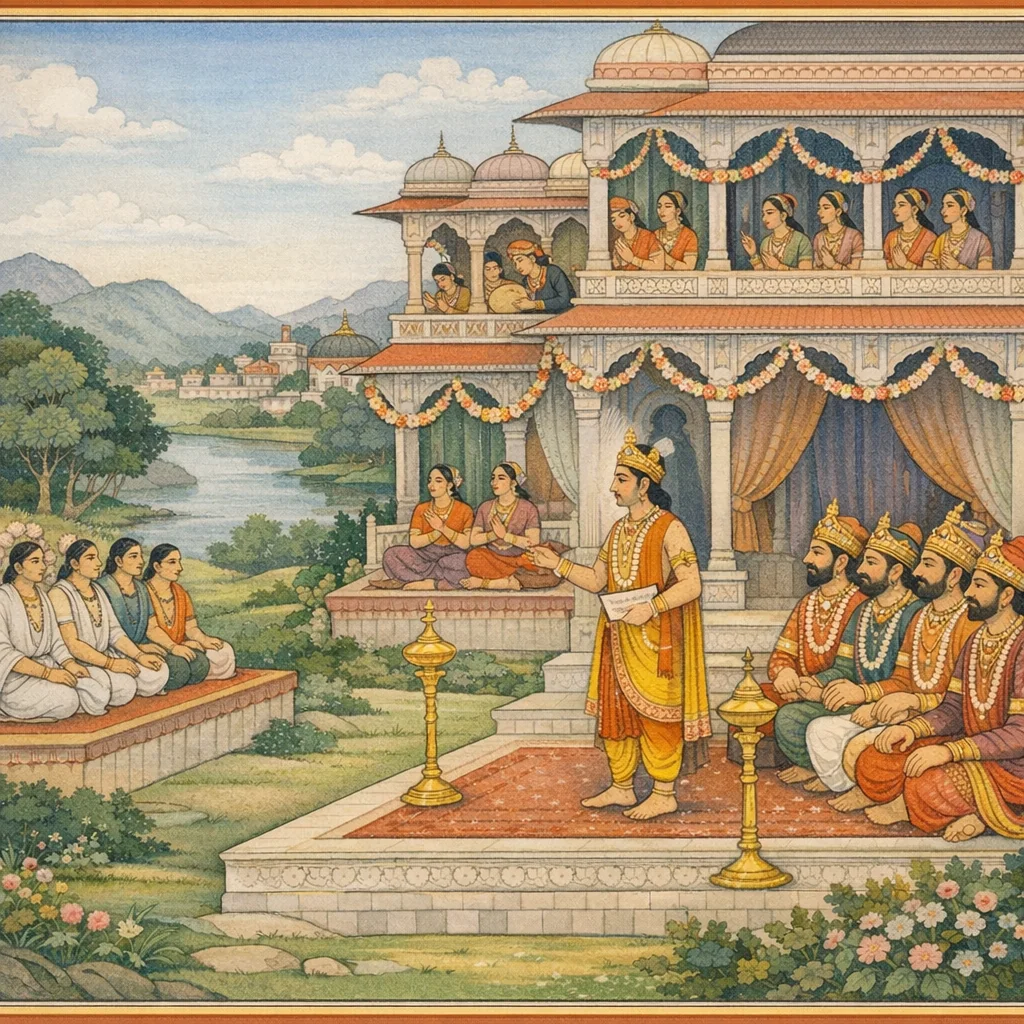
यन्त्र वैहायसं चापि कारयामास कृत्रिमम् | तेन यन्त्रेण समितं राजा लक्ष्यं चकार स:,राजाने एक कृत्रिम आकाश-यन्त्र भी बनवाया (जो तीव्रवेगसे आकाशमें घूमता रहता था)। उस यन्त्रके छिट्रके ऊपर उन्होंने उसीके बराबरका लक्ष्य तैयार कराकर रखवा दिया। (इसके बाद उन्होंने यह घोषणा करा दी)
Vaiśampāyana said: The king also had an artificial aerial device constructed—a machine that moved swiftly through the sky. Upon that moving mechanism he had a target made to match it in measure and set in place, thereby establishing a difficult mark to be aimed at (as part of the test he was about to proclaim).
Verse 11
दुपद उवाच इदं सज्यं धनु: कृत्वा सज्जैरेभिश्व सायकै: । अतीत्य लक्ष्यं यो वेद्धा स लब्धा मत्सुतामिति,द्रपदने घोषणा की--जो वीर इस धनुषपर प्रत्यंचा चढ़ाकर इन प्रस्तुत बाणोंद्वारा ही यन्त्रके छेदके भीतरसे इसे लाँधघकर लक्ष्यवेध करेगा, वही मेरी पुत्रीको प्राप्त कर सकेगा
Verse 12
वैशम्पायन उवाच इति स द्रुपदो राजा स्वयंवरमघोषयत् | तच्छुत्वा पार्थिवा: सर्वे समीयुस्तत्र भारत,वैशम्पायनजी कहते हैं--जनमेजय! इस प्रकार राजा ट्रुपदने जब स्वयंवरकी घोषणा करा दी, तब उसे सुनकर सब राजा वहाँ उनकी राजधानीमें एकत्र होने लगे
Vaiśampāyana said: Thus King Drupada proclaimed a svayaṃvara. Hearing of it, all the kings gathered there, O descendant of Bharata. The episode marks a public, dharma-framed royal decision—marriage as a political and ethical institution conducted before the wider kṣatriya world.
Verse 13
ऋषयश्न महात्मान: स्वयंवरदिदृक्षव: । दुर्योधनपुरोगाश्व॒ सकर्णा: कुरवो नूप,बहुत-से महात्मा ऋषि-मुनि भी स्वयंवर देखनेके लिये आये। राजन! दुर्योधन आदि कुरुवंशी भी कर्णके साथ वहाँ आये थे
Vaiśampāyana said: Many great sages also came, wishing to witness the svayaṃvara. And, O king, the Kurus too arrived there—led by Duryodhana and accompanied by Karṇa—drawn to the spectacle and its political significance.
Verse 14
ब्राह्मणाश्न महाभागा देशेभ्य: समुपागमन् । ततोड<र्चिता राजगणा द्रुपदेन महात्मना,भिन्न-भिन्न देशोंसे कितने ही महाभाग ब्राह्मणोंने भी पदार्पण किया था। महामना राजा द्रपदने (वहाँ पधारे हुए) नरपतियोंका भलीभाँति स्वागत-सत्कार एवं सेवा-पूजा की। तत्पश्चात् वे सभी नरेश स्वयंवर देखनेकी इच्छासे वहाँ रखे हुए मंचोंपर बैठे। उस नगरके समस्त निवासी भी यथास्थान आकर बैठ गये। उन सबका कोलाहल क्षुब्ध हुए समुद्रके भयंकर गर्जनके समान सुनायी पड़ता था
Vaiśampāyana said: Auspicious and eminent brāhmaṇas also arrived from many regions. Then the gathered kings were duly honored by the great-souled Drupada with fitting hospitality and reverent service. (Thereafter, with the desire to witness the svayaṃvara, the rulers took their seats on the prepared platforms, and the townspeople too assembled in their places, their tumult sounding like the roar of a storm-tossed sea.)
Verse 15
उपोपविष्टा मज्चेषु द्रष्टकामा: स्वयंवरम् । तत: पौरजना: सर्वे सागरोद्धूतनि:स्वना:,भिन्न-भिन्न देशोंसे कितने ही महाभाग ब्राह्मणोंने भी पदार्पण किया था। महामना राजा द्रपदने (वहाँ पधारे हुए) नरपतियोंका भलीभाँति स्वागत-सत्कार एवं सेवा-पूजा की। तत्पश्चात् वे सभी नरेश स्वयंवर देखनेकी इच्छासे वहाँ रखे हुए मंचोंपर बैठे। उस नगरके समस्त निवासी भी यथास्थान आकर बैठ गये। उन सबका कोलाहल क्षुब्ध हुए समुद्रके भयंकर गर्जनके समान सुनायी पड़ता था
Vaiśampāyana said: Desiring to witness the svayaṃvara, they took their seats upon the prepared platforms. Then all the townspeople also sat in their proper places; and the tumult of that gathered multitude resounded like the dreadful roar of the sea when it is churned and heaved by the wind—signaling the immense public anticipation surrounding the rite of choice and marriage.
Verse 16
शिशुमारशिर: प्राप्य न्यविशंस्ते सम पार्थिवा: । प्रागुत्तरेण नगराद् भूमिभागे समे शुभे । समाजवाट: शुशुभे भवनै: सर्वतो वृत:,वहाँकी बैठक शिशुमारकी आकृतिमें सजायी गयी थी। शिशुमारके शिरोभागमें सब राजा अपने-अपने मंचोंपर बैठे थे। नगरसे ईशानकोणमें सुन्दर एवं समतल भूमिपर स्वयंवरसभाका रंगमण्डप सजाया गया था, जो सब ओरसे सुन्दर भवनोंद्वारा घिरा होनेके कारण बड़ी शोभा पा रहा था
Vaiśampāyana said: Having reached the ‘head’ of the Śiśumāra-shaped arrangement, the kings took their seats in due order. To the north-east of the city, on auspicious, level ground, the assembly-enclosure for the svayaṃvara shone forth—encircled on all sides by fine buildings, it appeared all the more splendid. The scene emphasizes royal decorum and orderly conduct: even amid competition, public rites are framed by propriety, auspicious planning, and respect for established protocol.
Verse 17
प्राकारपरिखोपेतो द्वारतोरणमण्डित: । वितानेन विचित्रेण सर्वतः समलंकृत:,उसके सब ओर चहारदीवारी और खाई बनी थीं। अनेक फाटक और दरवाजे उस मण्डपकी शोभा बढ़ा रहे थे। विचित्र चँदोवेसे उस सभाभवनको सब ओरसे सजाया गया था
Vaiśampāyana said: “It was furnished with ramparts and a surrounding moat; its gateways and ornamental arches enhanced its splendor. With a wondrous canopy, the hall was adorned on every side.” The description underscores a carefully ordered, protected space—an outward sign of royal discipline and the intent to host proceedings with dignity and propriety.
Verse 18
तूर्योौघ्रशतसंकीर्ण: परार्घ्यागुरुधूपित: । चन्दनोदकसिक्तक्ष माल्यदामोपशोभित:,वहाँ सैकड़ों प्रकारके बाजे बज रहे थे। बहुमूल्य अगुरुधूपकी सुगन्ध चारों ओर फैल रही थी। फर्शपर चन्दनके जलका छिड़काव किया गया था। सब ओर फूलोंकी मालाएँ और हार टँंगे थे, जिससे वहाँकी शोभा बहुत बढ़ गयी थी
Vaiśampāyana said: The place was filled with the loud resonance of hundreds of musical instruments. The air was perfumed with the fragrance of costly aguru-incense; the floor had been sprinkled with sandal-scented water; and garlands and floral festoons hung all around, enhancing the splendor of the scene. The description underscores a public, auspicious celebration where external order, purity, and beauty mirror the community’s intent to honor a significant rite or guest in a dharmic manner.
Verse 19
कैलासशिखरप्रख्यैर्नभस्तलविलेखिभि: । सर्वतः संवृतः शुभ्रै: प्रासादै: सुकृतोच्छूयै:,उस रंगमण्डपके चारों ओर कैलासशिखरके समान ऊँचे और श्वेत रंगके गगनचुम्बी महल बने हुए थे
Vaiśampāyana said: The arena was enclosed on every side by splendid white palaces—lofty, well-built, and so tall that they seemed to scratch the sky, resembling the peaks of Mount Kailāsa. The description underscores royal prosperity and ordered grandeur, presenting a setting where public spectacle is framed by wealth, craftsmanship, and social hierarchy.
Verse 20
सुवर्णजालसंवीतैर्मणिकुट्टिम भूषणै: । सुखारोहणसोपानैर्महासनपरिच्छदै:,उन्हें भीतरसे सोनेके जालीदार पर्दों और झालरोंसे सजाया गया था। फर्श और दीवारोंमें मणि एवं रत्न जड़े गये थे। उत्तम सुखपूर्वक चढ़नेयोग्य सीढ़ियाँ बनी थीं। बड़े-बड़े आसन और बिछावन आदि बिछाये गये थे
Vaiśampāyana said: The inner chambers were adorned with golden latticework—curtains and festoons—while the floors and walls were embellished with gem-inlaid pavements and ornaments. Easy, comfortable stairways were built for ascent, and the halls were furnished with grand seats and rich bedding. The description underscores royal prosperity and careful preparation, presenting outward splendor as a sign of deliberate arrangement and power rather than as an ethical ideal in itself.
Verse 21
सत्रग्दामसमवच्छन्नैरगुरूत्तमवासितै: । हंसांशुवर्णर्बहुभिरायोजनसुगन्धिभि:,अनेक प्रकारकी मालाएँ और हार उन भवनोंकी शोभा बढ़ा रहे थे। अगुरुकी सुगन्ध छा रही थी। वे हंस और चन्द्रमाकी किरणोंके समान श्वेत दिखायी देते थे। उनके भीतरसे निकली हुई धूपकी सुगन्ध चारों ओर एक योजनतक फैल रही थी
Vaiśaṃpāyana said: The halls were adorned and covered with many garlands and necklaces, richly perfumed with the finest agaru. White like swans and like the rays of the moon, they enhanced the splendor of the buildings; and the fragrance of the incense that rose from within spread all around for a full yojana, proclaiming abundance, refinement, and auspicious hospitality.
Verse 22
असम्बाधशतद्वारैः शयनासनशोभितै: । बहुधा तु पिनद्धाजैहिमवच्छिखरैरिव,उन महलोंमें सैकड़ों दरवाजे थे। उनके भीतर आने-जानेके लिये बिलकुल रोक-टोक नहीं थी और वे भाँति-भाँतिकी शय्याओं तथा आसनोंसे सुशोभित थे। उनकी दीवारोंको अनेक प्रकारकी धातुओंके रंगोंसे रँगा गया था। अत: वे राजमहल हिमालयके बहुरंगे शिखरोंके समान सुशोभित हो रहे थे
Vaiśampāyana said: The palaces had hundreds of gateways, with free and unobstructed passage. They were adorned with many kinds of beds and seats, and their walls, inlaid and colored with various metals, shone like the many-hued peaks of the Himālaya—evoking royal prosperity and ordered splendor rather than conflict.
Verse 23
तत्र नानाप्रकारेषु विमानेषु स्वलंकृता: । स्पर्धमानास्तदान्योन्यं निषेदु: सर्वपार्थिवा:,उन्हीं सतमहले मकानों या विमानोंमें, जो अनेक प्रकारके बने हुए थे, सब राजालोग परस्पर एक-दूसरेसे होड़ रखते हुए सुन्दर-से-सुन्दर शृंगार धारण करके बैठे
There, in various kinds of richly fashioned pavilions (vimānas), all the kings—adorned in their finest attire—sat down, each vying with the others in splendor. The scene underscores the courtly ethos of honor and prestige, where outward magnificence becomes a public measure of status and rivalry among rulers.
Verse 24
तत्रोपविष्टान् ददृशुर्महासत्त्वपराक्रमान् । राजसिंहान् महाभागान् कृष्णागुरुविभूषितान्,नगर और जनपदके लोगोंने जब देखा कि उक्त विमानोंमें बहुमूल्य मंचोंके ऊपर महान् बल और पराक्रमसे सम्पन्न परम सौभाग्यशाली, कालागुरुसे विभूषित, महान् कृपाप्रसादसे युक्त, ब्राह्मणभक्त, अपने-अपने राष्ट्रके रक्षक और शुभ पुण्यकर्मोंके प्रभावसे सम्पूर्ण जगतके प्रिय श्रेष्ठ नरपतिगण आकर बैठ गये हैं, तब राजकुमारी द्रौपदीके दर्शनका लाभ लेनेके लिये वे भी सब ओर सुखपूर्वक जा बैठे
Then they beheld those seated there—men of great spirit and prowess: lion-like kings, highly fortunate, adorned with dark aloe-wood perfume. The sight conveys royal dignity and cultivated restraint, presenting the assembled rulers as worthy protectors of their realms and as objects of public regard.
Verse 25
महाप्रसादान ब्रह्मण्यान् स्वराष्ट्रपरिरक्षिण: । प्रियान् सर्वस्य लोकस्य सुकृतै: कर्मभि: शुभै:,नगर और जनपदके लोगोंने जब देखा कि उक्त विमानोंमें बहुमूल्य मंचोंके ऊपर महान् बल और पराक्रमसे सम्पन्न परम सौभाग्यशाली, कालागुरुसे विभूषित, महान् कृपाप्रसादसे युक्त, ब्राह्मणभक्त, अपने-अपने राष्ट्रके रक्षक और शुभ पुण्यकर्मोंके प्रभावसे सम्पूर्ण जगतके प्रिय श्रेष्ठ नरपतिगण आकर बैठ गये हैं, तब राजकुमारी द्रौपदीके दर्शनका लाभ लेनेके लिये वे भी सब ओर सुखपूर्वक जा बैठे
Vaiśampāyana said: “They were men of great graciousness and generosity, devoted to Brahmins, protectors of their own realms, and beloved by all people through their meritorious and auspicious deeds.”
Verse 26
मज्चेषु च पराघध्येषु पौरजानपदा जना: । कृष्णादर्शनसिद्धयर्थ सर्वतः समुपाविशन्,नगर और जनपदके लोगोंने जब देखा कि उक्त विमानोंमें बहुमूल्य मंचोंके ऊपर महान् बल और पराक्रमसे सम्पन्न परम सौभाग्यशाली, कालागुरुसे विभूषित, महान् कृपाप्रसादसे युक्त, ब्राह्मणभक्त, अपने-अपने राष्ट्रके रक्षक और शुभ पुण्यकर्मोंके प्रभावसे सम्पूर्ण जगतके प्रिय श्रेष्ठ नरपतिगण आकर बैठ गये हैं, तब राजकुमारी द्रौपदीके दर्शनका लाभ लेनेके लिये वे भी सब ओर सुखपूर्वक जा बैठे
Vaiśampāyana said: The townspeople and the folk from the surrounding countryside took their seats on every side in the splendid pavilions, with the sole aim of gaining the blessed sight of Kṛṣṇā (Draupadī). The scene underscores a shared social reverence: public life gathers around auspicious presence and virtue, and the community seeks merit and joy through respectful darśana rather than through rivalry or display.
Verse 27
ब्राह्मणैस्ते च सहिता: पाण्डवा: समुपाविशन् | ऋद्धिं पाउचालराजस्य पश्यन्तस्तामनुत्तमाम्,वे पाण्डव भी पांचालनरेशकी उस सर्वोत्तम समृद्धिका अवलोकन करते हुए ब्राह्मणोंके साथ उन्हींकी पंक्तिमें बैठे थे
Vaiśampāyana said: Accompanied by those brāhmaṇas, the Pāṇḍavas sat down in their very row, gazing upon the unsurpassed prosperity of the king of Pāñcāla. The scene underscores their respectful conduct—honouring learned guests and observing royal splendour without arrogance or entitlement.
Verse 28
ततः समाजो ववृधे स राजन् दिवसान् बहून् | रत्नप्रदानबहुल: शोभितो नटनर्तकैः,राजन! नगरमें बहुत दिनोंसे लोगोंकी भीड़ बढ़ रही थी। राजसमाजके द्वारा प्रचुर धन- रत्नोंका दान किया जा रहा था। बहुतेरे नट और नर्तक अपनी कला दिखाकर उस समाजकी शोभा बढ़ा रहे थे
Vaiśampāyana said: “Then, O king, for many days the great assembly continued to grow. It was marked by abundant gifts of wealth and jewels, and it was adorned by actors and dancers who enhanced the splendor of the gathering.”
Verse 29
वर्तमाने समाजे तु रमणीये<ट्लि षोडशे । आप्लुताज़ी सुवसना सर्वाभरणभूषिता,सोलहवें दिन अत्यन्त मनोहर समाज जुटा। भरतश्रेष्ठ) उसी दिन स्नान करके सुन्दर वस्त्र और सब प्रकारके आभूषणोंसे विभूषित हो हाथोंमें सोनेकी बनी हुई कामदार जयमाला लिये ट्रुपदराजकुमारी उस रंग-भूमिमें उतरी
Vaiśampāyana said: When the delightful public assembly was in progress, on the sixteenth day, the princess—having bathed, dressed in fine garments, and adorned with every kind of ornament—entered the arena, bearing in her hands a splendid victory-garland wrought of gold. The scene underscores the solemn, public, and ritualized character of the occasion, where personal choice and royal custom are displayed before the community.
Verse 30
मालां च समुपादाय काञ्चनीं समलंकृताम् । अवतीर्णा ततो रजझ्ुडं द्रौपदी भरतर्षभ,सोलहवें दिन अत्यन्त मनोहर समाज जुटा। भरतश्रेष्ठ) उसी दिन स्नान करके सुन्दर वस्त्र और सब प्रकारके आभूषणोंसे विभूषित हो हाथोंमें सोनेकी बनी हुई कामदार जयमाला लिये ट्रुपदराजकुमारी उस रंग-भूमिमें उतरी
Vaiśampāyana said: Then Draupadī, holding in her hands a finely adorned golden garland, descended onto the arena, O bull among the Bharatas. The scene marks the solemn public moment of the svayaṃvara, where choice, reputation, and royal duty converge under the gaze of the assembled kings.
Verse 31
पुरोहित: सोमकानां मन्त्रविद् ब्राह्मण: शुचि: । परिस्तीर्य जुहावाग्निमाज्येन विधिवत् तदा,तब सोमकवंशी क्षत्रियोंके पवित्र एवं मन्त्रज्ञ ब्राह्मण पुरोहितने अग्निवेदीके चारों ओर कुशा बिछाकर वेदोक्त विधिके अनुसार प्रज्वलित अग्निमें घीकी आहुति डाली
Vaiśampāyana said: The Somakas’ family priest—a pure Brahmin skilled in sacred mantras—spread the ritual grass around the altar and then, according to the prescribed Vedic procedure, offered ghee into the fire. The scene underscores how royal action is framed and legitimized through correctly performed rites and the disciplined authority of a learned priest.
Verse 32
संतर्पयित्वा ज्वलनं ब्राह्मणान् स्वस्ति वाच्य च | वारयामास सर्वाणि वादित्राणि समन्तत:,इस प्रकार अग्निदेवको तृप्त करके ब्राह्मणोंसे स्वस्तिवाचन कराकर चारों ओर बजनेवाले सब प्रकारके बाजे बंद करा दिये गये
Vaiśaṃpāyana said: Having duly satisfied Jvalana (Agni) and having the Brahmins pronounce auspicious benedictions, he then ordered that all the musical instruments sounding on every side be stopped. The moment underscores a shift from celebratory noise to ritual propriety and controlled conduct after a sacred act.
Verse 33
निःशब्दे तु कृते तस्मिन् धृष्टद्युम्नो विशाम्पते । कृष्णामादाय विधिवन्मेघदुन्दुभिनि:स्वन:,महाराज! बाजोंकी आवाज बंद हो जानेपर जब स्वयंवरसभामें सन्नाटा छा गया, तब विधिके अनुसार धृष्टद्युम्न द्रौयदीको (साथ) लेकर रंगमण्डपके बीचमें खड़ा हो मेघ और दुन्दुभिके समान स्वर तथा मेघ-गर्जनकी-सी गम्भीर वाणीमें यह अर्थयुक्त उत्तम एवं मधुर वचन बोला--
When silence had fallen over that assembly, O lord of the people, Dhṛṣṭadyumna—having taken Kṛṣṇā (Draupadī) in accordance with the prescribed rite—stood in the midst of the arena. With a voice deep and resonant like thunderclouds and kettle-drums, he then spoke words that were meaningful, excellent, and sweet—signaling that the proceedings would now be carried forward under dharma and proper formality rather than mere spectacle.
Verse 34
रड्न्रमध्ये गतस्तत्र मेघगम्भीरया गिरा । वाक्यमुच्चैर्जगादेदं शलक्ष्णमर्थवदुत्तमम्,महाराज! बाजोंकी आवाज बंद हो जानेपर जब स्वयंवरसभामें सन्नाटा छा गया, तब विधिके अनुसार धृष्टद्युम्न द्रौयदीको (साथ) लेकर रंगमण्डपके बीचमें खड़ा हो मेघ और दुन्दुभिके समान स्वर तथा मेघ-गर्जनकी-सी गम्भीर वाणीमें यह अर्थयुक्त उत्तम एवं मधुर वचन बोला--
Vaiśampāyana said: When the tumult of voices in the svayaṃvara hall had subsided and a hush fell, Dhṛṣṭadyumna—acting in accordance with the prescribed rite—stood in the middle of the arena with Draupadī and proclaimed aloud, in a deep, cloud-like and drum-resonant voice, a refined, meaningful, and excellent announcement, O King. The scene underscores the transition from public contest to lawful, ritual confirmation, emphasizing that marriage and kingship are to be validated by dharma and proper procedure, not merely by force or clamor.
Verse 35
इदं धनुर्लक्ष्यमिमे च बाणा: शृण्वन्तु मे भूपतय: समेता: । छिद्रेण यन्त्रस्य समर्पयध्व॑ शरै: शितैव्योमचरैर्दशार्थ:,“यहाँ आये हुए भूपालगण! आपलोग (ध्यान देकर) मेरी बात सुनें। यह धनुष है, ये बाण हैं और यह निशाना है। आपलोग आकाशमें छोड़े हुए पाँच पैने बाणोंद्वारा उस यन्त्रके छेदके भीतरसे लक्ष्यको बेधकर गिरा दें
Vaiśampāyana said: “Let the assembled kings listen to me attentively. Here is the bow, here are the arrows, and here is the target. Let each of you, with sharp arrows that fly through the sky, send them through the aperture of the contrivance and strike the mark, bringing it down.” In this public trial of skill, royal ambition is tested under a fixed rule: success must come not from brute force, but from disciplined aim and adherence to the stated condition.
Verse 36
एतन्महत् कर्म करोति यो वै कुलेन रूपेण बलेन युक्तः । तस्याद्य भार्या भगिनी ममेयं कृष्णा भवित्री न मृषा ब्रवीमि,“मैं सच कहता हूँ, झूठ नहीं बोलता--जो उत्तम कुल, सुन्दर रूप और श्रेष्ठ बलसे सम्पन्न वीर यह महान् कर्म कर दिखायेगा, आज यह मेरी बहिन कृष्णा उसीकी धर्मपत्नी होगी”
Vaiśampāyana said: “Whoever, endowed with noble lineage, handsome form, and superior strength, accomplishes this great feat—today my sister Kṛṣṇā shall become his lawful wife. I speak the truth; I do not speak falsely.”
Verse 37
तानेवमुकक्त्या द्रुपदस्य पुत्र: पश्चादिदं तां भगिनीमुवाच । नाम्ना च गोत्रेण च कर्मणा च संकीर्तयन् भूमिपतीन् समेतान्,यों कहकर द्रुपदकुमार धृष्टद्युम्नने वहाँ आये हुए राजाओंके नाम, गोत्र और पराक्रमका वर्णन करते हुए अपनी बहिन द्रौपदीसे इस प्रकार कहा
Verse 184
इति श्रीमहाभारते आदिपर्वणि स्वयंवरपर्वणि धृष्टद्युम्नवाक्ये चतुरशीत्यधिकशततमो<ध्याय:
Thus, in the Śrī Mahābhārata, within the Ādi Parva, in the section concerning the svayaṃvara, in the episode of Dhṛṣṭadyumna’s words, ends the one-hundred-and-eighty-fourth chapter. (This is a colophon marking the close of the chapter and its thematic placement.)
Frequently Asked Questions
The chapter stages a legitimacy dilemma: Drupada must assess whether his daughter’s association aligns with social and political propriety, while the Pandavas must maintain concealment and discipline despite scarcity and public scrutiny.
Orderly giving is portrayed as dharma in practice: resources, even when acquired through alms, should be distributed with priority to dependents and guests, and according to need—linking ethical intention to stable communal life.
No explicit phalaśruti is stated here; the chapter functions as narrative causation, showing how disciplined household conduct and careful verification shape alliance-making and reputational outcomes in the broader epic.