Adhyaya 16
केशीवधः तथा ‘केशव’ नामप्रसिद्धिः
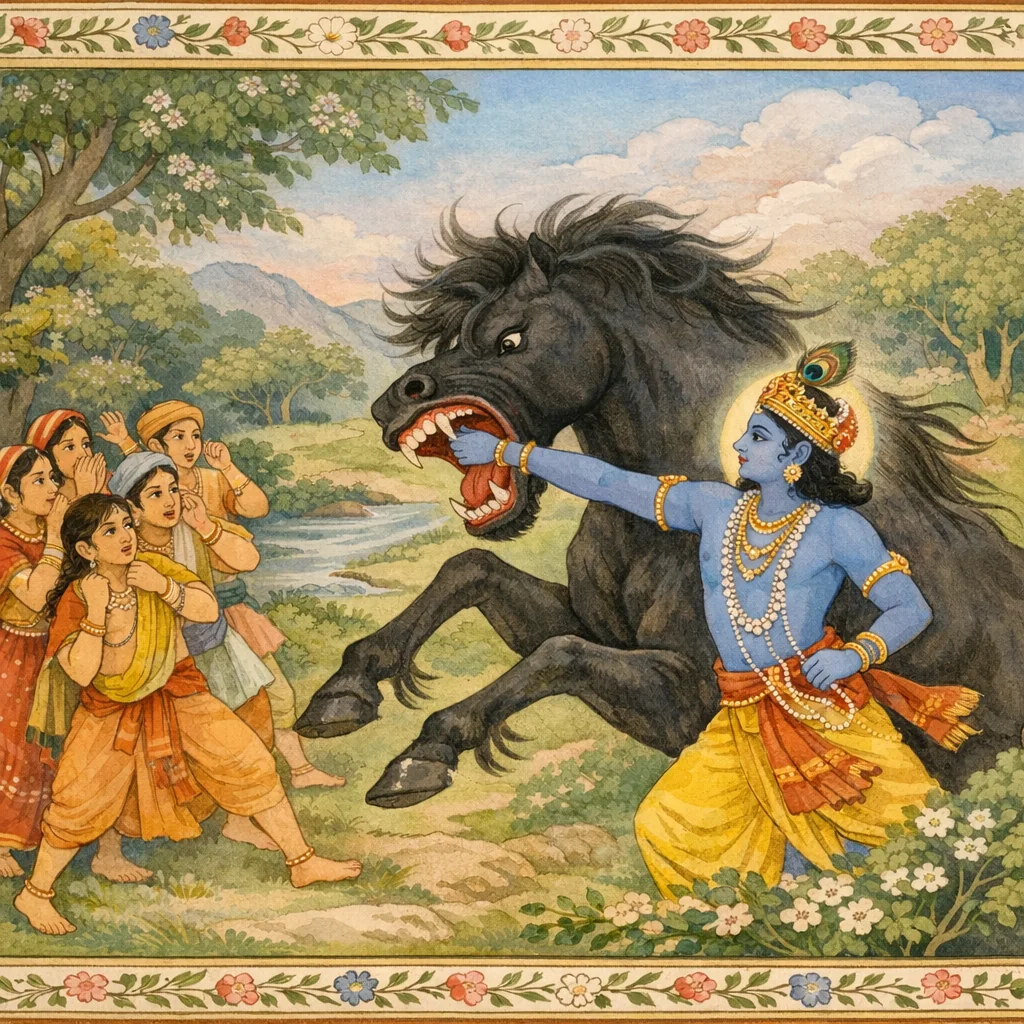
Parashara tells Maitreya: urged on by Kamsa’s messengers, the demon Keshi enters Vrindavana in the form of a horse and harasses the gopas. Terrified, the gopas and gopis take refuge in Govinda. Sri Krishna steadies them, answers Keshi’s roar with a roar, and advances to battle. As Keshi charges with gaping mouth, Janardana thrusts His arm into it—teeth shatter, the arm expands within, and the demon, exhausted, falls split in two like a tree struck by the vajra. The gopas marvel and praise the lotus-eyed Lord; Narada/the devas’ acclaim is revealed, and the name-etymology is indicated: by slaying Keshi, Krishna will be famed in the world as “Keshava.” At the end He enters Gokula with the gopas, displaying the effortless ease of His lila and the Lord’s freedom from strain.
Shlokas
Verse 1
केशी चापि बलोदग्रः कंसदूतप्रचोदितः कृष्णस्य निधनाकाङ्क्षी वृन्दावनम् उपागमत्
Keshi too—mighty and swollen with brute force—spurred on by Kamsa’s messengers, came to Vṛndāvana, longing for Kṛṣṇa’s death.
Verse 2
स खुरक्षतभूपृष्ठः सटाक्षेपधुताम्बुदः प्लुतविक्रान्तचन्द्रार्कमार्गो गोपान् उपाद्रवत्
He charged at the cowherds—his hooves tearing the earth’s surface, his mane-flinging scattering the rain-clouds, and his leaping strides seeming to overrun the very courses of the moon and sun—thus he assailed the gopas.
Verse 3
तस्य हेषितशब्देन गोपाला दैत्यवाजिनः गोप्यश् च भयसंविग्ना गोविन्दं शरणं ययुः
Startled by the fierce neighing of that demonic horse, the cowherds and the gopīs, shaken with fear, sought refuge in Govinda, protector of the cows and the world.
Verse 4
त्राहि त्राहीति गोविन्दः श्रुत्वा तेषां तदा वचः सतोयजलदध्वानगम्भीरम् इदम् उक्तवान्
Hearing their cry—“Save us, save us!”—Govinda spoke, his voice deep and resonant like the rumble of a rain-laden cloud.
Verse 5
अलं त्रासेन गोपालाः केशिनः किं भयातुरैः भवद्भिर् गोपजातीयैर् वीरवीर्यं विलोप्यते
Enough of this panic, O cowherds! What is there to fear from Keśin? When you, born of the cowherd clan, yield to terror, the valor of heroes is squandered away.
Verse 6
किम् अनेनाल्पसारेण हेषिताटोपकारिणा दैतेयबलवाह्येन वल्गता दुष्टवाजिना
What use is this wicked horse—so scant in true strength, yet making a loud show with neighing and swagger—dragging along the Daityas’ might and prancing about in vain?
Verse 7
एह्य् एहि दुष्ट कृष्णो ऽहं पूष्णोर् इव पिनाकधृत् पातयिष्यामि दशनान् वदनाद् अखिलांस् तव
“Come here, come, you wicked one! I am Kṛṣṇa. As the bearer of Pināka (Śiva) struck down Pūṣan, so shall I knock every tooth from your mouth.”
Verse 8
इत्य् उक्त्वास्फोट्य गोविन्दः केशिनः संमुखं ययौ विवृतास्यस् तु सो ऽप्य् एनं दैतेयाश्व उपाद्रवत्
Having spoken thus, Govinda snapped (his arms) in challenge and advanced straight toward Keśin. And that Daitya—appearing as a horse—rushed at Him as well, jaws gaping wide, as though to swallow the Lord who is the sovereign order of all worlds.
Verse 9
बाहुम् आभोगिनं कृत्वा मुखे तस्य जनार्दनः प्रवेशयाम् आस तदा केशिनो दुष्टवाजिनः
Then Janārdana, making His arm expand and swell with irresistible might, thrust it into the mouth of Keśin—the wicked horse-demon—subduing the insolent force that rose against the Lord’s sovereignty.
Verse 10
केशिनो वदनं तेन विशता कृष्णबाहुना शातिता दशनाः पेतुः सिताभ्रावयवा इव
As Kṛṣṇa’s arm thrust into Keśin’s gaping mouth, the demon’s teeth were shattered; and those broken white fangs fell away like fragments of a pale cloud torn apart—revealing, in the very violence of the moment, the irresistible sovereignty of the Lord who protects the order of the world.
Verse 11
कृष्णस्य ववृधे बाहुः केशिदेहगतो द्विज विनाशाय यथा व्याधिर् आसंभूतेर् उपेक्षितः
O twice-born one, when Kṛṣṇa’s arm entered Keśī’s body it expanded within him—like a disease that, ignored from its very first arising, grows only for the destruction (of the host).
Verse 13
जघान धरणीं पादैः शकृन्मूत्रं समुत्सृजन् स्वेदार्द्रगात्रः श्रान्तश् च निर्यत्नः सो ऽभवत् ततः
He struck the earth with his feet, voiding excrement and urine; his limbs drenched in sweat and overcome by fatigue, he then became utterly incapable of further effort.
Verse 14
व्यादितास्यो महारौद्रः सो ऽसुरः कृष्णबाहुना निपपात द्विधाभूतो वैद्युतेन यथा द्रुमः
With jaws gaping and fierce terror blazing, that raging Asura was struck down by Kṛṣṇa’s arm; split in two, he fell like a tree cleft by a thunderbolt.
Verse 15
द्विपादपृष्ठपुच्छार्धश्रवणैकाक्षिनासिके केशिनस् ते द्विधाभूते शकले द्वे विरेजतुः
Keśin’s two shaggy portions—marked by two feet, a back, half a tail, ears, a single eye, and a nose—were split apart; and thus divided, the two fragments shone forth distinctly as separate forms.
Verse 16
हत्वा तु केशिनं कृष्णो गोपालैर् मुदितैर् वृतः अनायस्ततनुः स्वस्थो हसंस् तत्रैव तस्थिवान्
Having slain Keśin, Kṛṣṇa—encircled by the delighted cowherd boys—stood there unwearied and perfectly at ease, smiling as though the deed were effortless.
Verse 17
ततो गोप्यश् च गोपाश् च हते केशिनि विस्मिताः तुष्टुवुः पुण्डरीकाक्षम् अनुरागमनोरमम्
Then, when Keśin had been slain, the cowherd women and men—astonished—praised the Lotus-eyed Lord, captivating in loving devotion.
Verse 18
अथाहान्तरितो विप्रो नारदो जलदे स्थितः केशिनं निहतं दृष्ट्वा हर्षनिर्भरमानसः
Then, without delay, the brāhmaṇa sage Nārada, stationed amid the clouds, beheld Keśin slain, and his heart overflowed with joy.
Verse 19
साधु साधु जगन्नाथ लीलयैव यद् अच्युत निहतो ऽयं त्वया केशी क्लेशदस् त्रिदिवौकसाम्
Well done, well done, O Jagannātha, Lord of the universe! O Acyuta, it is truly wondrous that, as if in mere divine play, you have slain Keśī, the tormentor of the dwellers of the three heavens.
Verse 20
युद्धोत्सुको ऽहम् अत्यर्थं नरवाजिमहाहवम् अवृत्तपूर्वम् अन्यत्र द्रष्टुं स्वर्गाद् उपागतः
I am exceedingly eager for battle. To behold this great combat between men and horses—never before seen elsewhere—I have come down from heaven.
Verse 21
स्वकर्माण्य् अवतारे ते कृतानि मधुसूदन यानि तैर् विस्मितं चेतस् तोषम् एतेन मे गतम्
O Madhusūdana, the deeds You Yourself performed in Your descent as an avatāra—by remembering them my mind is filled with wonder, and by that remembrance alone I find contentment.
Verse 22
तुरगस्यास्य शक्रो ऽपि कृष्ण देवाश् च बिभ्यति धूतकेसरजालस्य ह्रेषतो ऽभ्रावलोकिनः
At the sight of this horse—its mane shaken loose like a streaming net, and its neighing rising like the roar of clouds—O Kṛṣṇa, even Śakra (Indra) and the gods are struck with fear.
Verse 23
यस्मात् त्वयैष दुष्टात्मा हतः केशी जनार्दन तस्मात् केशवनाम्ना त्वं लोके ख्यातो भविष्यसि
Since You have slain this wicked-souled Keśī, O Janārdana, therefore by the name “Keśava” You shall become renowned in the world.
Verse 24
स्वस्त्य् अस्तु ते गमिष्यामि कंसयुद्धे ऽधुना पुनः परश्वो ऽहं समेष्यामि त्वया केशिनिषूदन
May auspiciousness attend you. I shall now depart again for the battle with Kaṃsa; and the day after tomorrow I will meet with you—O slayer of Keśin.
Verse 25
उग्रसेनसुते कंसे सानुगे विनिपातिते भारावतारकर्ता त्वं पृथिव्याः पृथिवीधर
When Kaṁsa—the son of Ugrasena—together with his followers was struck down, you became the true remover of the Earth’s burden; O Upholder of the world.
Verse 26
तत्रानेकप्रकाराणि युद्धानि पृथिवीक्षिताम् द्रष्टव्यानि मया युष्मत्प्रणीतानि जनार्दन
There, O Janārdana, I am to behold wars of many kinds among the kings of the earth—conflicts set in motion by You, and governed by Your ordinance.
Verse 27
सो ऽहं यास्यामि गोविन्द देवकार्यं महत् कृतम् त्वया सभाजितश् चाहं स्वस्ति ते ऽस्तु व्रजाम्य् अहम्
“Therefore I shall depart, O Govinda. A great work for the gods has been accomplished by you. And I, too, have been duly honored by you. May auspiciousness attend you—now I go.”
Verse 28
नारदे तु गते कृष्णः सह गोपैर् अविस्मितः विवेश गोकुलं गोपीनेत्रपानैकभाजनम्
When Nārada had departed, Kṛṣṇa—unshaken and serene—entered Gokula along with the cowherd boys, becoming once again the single vessel for the drinking-feast of the gopīs’ eyes.
Frequently Asked Questions
Krishna expands His arm and thrusts it into Keśī’s mouth; the arm grows within, shattering teeth and exhausting the asura until he splits and falls. The motif signifies the Lord’s irresistible sovereignty: adharma collapses from within when it confronts the Supreme.
After Keśī is slain, the text states that because Krishna killed Keśī, He will become renowned in the world by the name “Keśava,” presenting a loka-nirukti grounded in līlā.