Adhyaya 3
भारतवर्षमहात्म्यम् — कर्मभूमित्वम्, नवभेदाः, कुलपर्वताः-नद्यः-जनपदाः, युगचक्रविशेषः, यज्ञपुरुषविष्णुपूजा
Parāśara defines Bhārata-varṣa by its bounds—north of the ocean and south of the Himālaya—and states its extent. He declares Bhārata the karma-bhūmi where embodied beings may, through action, attain svarga or apavarga (liberation), unlike other regions that are bhoga-bhūmis. He lists the seven kula-parvatas and teaches that from this land arise all destinations—heaven, liberation, animal births, and hell—because the law of karmic consequence according to dharma and adharma operates here. He enumerates Bhārata’s nine divisions, its inhabited limits (Kirātas in the east, Yavanas in the west), the varṇa-based social order, and the great rivers issuing from major mountain ranges, along with many peoples and regions as sacred geography. A key doctrine follows: only in Bhārata do all four yugas fully manifest, enabling yajña, tapas, and dāna aimed at the next world. In Jambūdvīpa, Viṣṇu is worshipped as Yajñapuruṣa through sacrifice, while other dvīpas have different modes. The chapter ends by praising the rarity of human birth in Bhārata and by mentioning the ring-shaped Kṣāra ocean encircling Jambūdvīpa.
Shlokas
Verse 1
उत्तरं यत् समुद्रस्य हिमाद्रेश् चैव दक्षिणम् वर्षं तद् भारतं नाम भारती यत्र संततिः
That region which lies to the north of the ocean and to the south of the Himālaya is called Bhārata-varṣa; it is there that the descendants of Bharata are born and continue their line.
Verse 2
नवयोजनसाहस्रो विस्तारो ऽस्य महामुने कर्मभूमिर् इयं स्वर्गम् अपवर्गं च गच्छताम्
O great sage, this region extends for nine thousand yojanas. This indeed is the field of action (karma-bhūmi) for beings—those who, through their deeds, proceed to heaven, and those who attain liberation as well.
Verse 3
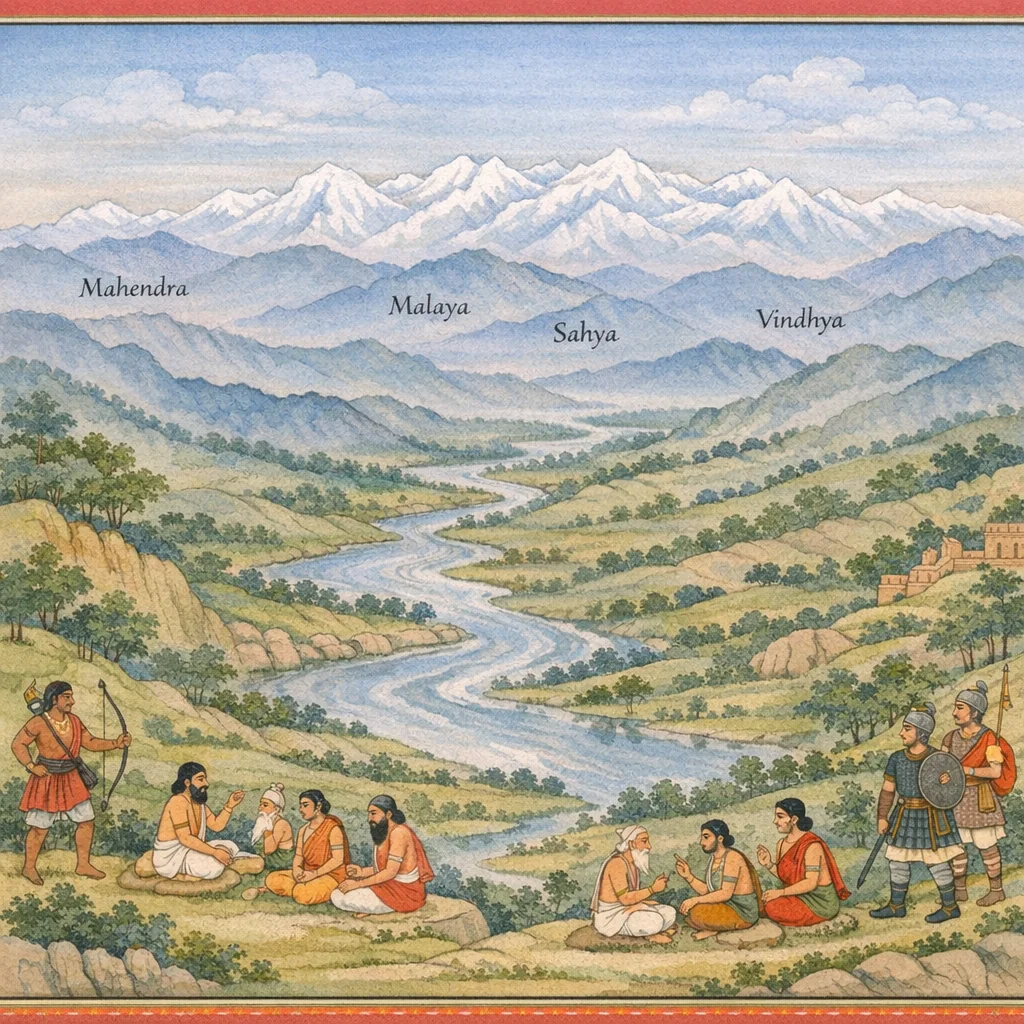
महेन्द्रो मलयः सह्यः शुक्तिमान् ऋक्षपर्वतः विन्ध्यश् च पारियात्रश् च सप्तात्र कुलपर्वताः
Mahendra, Malaya, Sahya, Śuktimān, Ṛkṣa-parvata, Vindhya, and Pāriyātra—these seven are declared as the Kula-mountains.
Verse 4
अतः संप्राप्यते स्वर्गो मुक्तिम् अस्मात् प्रयान्ति च तिर्यक्त्वं नरकं चापि यान्त्य् अतः पुरुषा मुने
From this very law of conduct and action, heaven is attained; and from it, too, some depart into liberation (moksha). From this same cause, O sage, men also go to the state of animals—and to hell as well.
Verse 5
इतः स्वर्गश् च मोक्षश् च मध्यं चान्तश् च गम्यते न खल्व् अन्यत्र मर्त्यानां कर्म भूमौ विधीयते
From here—this very realm—heaven is reached, and liberation (moksha) is reached; the intermediate states and the final end are reached as well. For truly, nowhere else is the field of action ordained for mortals as it is on this soil of karma-bhūmi.
Verse 6
भारतस्यास्य वर्षस्य नव भेदान् निशामय इन्द्रद्वीपः कसेरुश् च ताम्रपर्णो गभस्तिमान्
Listen well as I set forth the nine divisions of this land called Bhārata—Indradvīpa, Kasēru, Tāmraparṇa, and Gabastimān.
Verse 7
नागद्वीपस् तथा सौम्यो गान्धर्वस् त्व् अथ वारुणः अयं तु नवमस् तेषां द्वीपः सागरसंवृतः
(They are) Nāgadvīpa, and likewise Saumya, Gāndharva, and then Vāruṇa. This, indeed, is the ninth among those dvīpas—an expanse encircled by the ocean.
Verse 8
योजनानां सहस्रं तु द्वीपो ऽयं दक्षिणोत्तरात् पूर्वे किराता यस्यान्ते पश्चिमे यवनाः स्थिताः
This dvīpa extends a thousand yojanas from south to north. On its eastern edge dwell the Kirātas, and on its western boundary stand the Yavanas.
Verse 9
ब्राह्मणाः क्षत्रिया वैश्या मध्ये शूद्राश् च भागशः इज्यायुधवणिज्याद्यैर् वर्तयन्तो व्यवस्थिताः
The brāhmaṇas, kṣatriyas, and vaiśyas—together with the śūdras, each according to their proper share—were duly established. Living by their own callings—sacrifice and sacred rites, the bearing of weapons, trade and commerce, and the like—they upheld the world’s order under the law that issues from the Supreme Lord.
Verse 10
शतद्रूचन्द्रभागाद्या हिमवत्पादनिःसृताः वेदस्मृतिमुखाश् चान्याः पारियात्रोद्भवा मुने
O sage, the Śatadrū and the Candrabhāgā, and others besides, flow forth from the very feet of Himavat; and from the Pāriyātra range arise other rivers as well, among which Veda and Smṛti are remembered as foremost.
Verse 11
नर्मदासुरसाद्याश् च नद्यो विन्ध्याद्रिनिर्गताः तापीपयोष्णीनिर्विन्ध्याप्रमुखा ऋक्षसंभवाः
From the Vindhya range arise rivers such as the Narmadā and the Surasā; and from the Ṛkṣa (Satpura) mountains spring the Tāpi and the Payōṣṇī, with the Nirvindhyā and others foremost.
Verse 12
गोदावरी भीमरथी कृष्णवेण्यादिकास् तथा सह्यपादोद्भवा नद्यः स्मृताः पापभयापहाः
Godāvarī, Bhīmarathī, and rivers such as Kṛṣṇā and Veṇī—remembered as born from the very feet of the Sahya mountains—are sacred streams said to dispel the fear of sin and purify the heart.
Verse 13
कृतमालाताम्रपर्णीप्रमुखा मलयोद्भवाः त्रिसामा ऋषिकुल्याद्या महेन्द्रप्रभवाः स्मृताः
From the Malaya mountains arise rivers such as the Kṛtamālā and the Tāmraparṇī; and from the Mahendra range are remembered to spring the Trisāmā and the Ṛṣikulyā, and others besides.
Verse 14
ऋषिकुल्याकुमाराद्याः शुक्तिमत्पादसंभवाः आसां नद्युपनद्यश् च सन्त्य् अन्याश् च सहस्रशः
From the foot of Śuktimat arise rivers such as Ṛṣikulyā and Kumārī; and from them flow forth countless tributaries and lesser streams—indeed, thousands of other currents besides.
Verse 15
तास्व् इमे कुरुपाञ्चाला मध्यदेशादयो जनाः पूर्वदेशादिकाश् चैव कामरूपनिवासिनः
In those lands dwell the Kurus and the Pāñcālas; the peoples of Madhyadeśa and other central tracts; those of the eastern regions and their adjoining countries; and likewise the dwellers of Kāmarūpa—each abiding in its appointed quarter.
Verse 16
पुण्ड्राः कलिङ्गा मगधा दाक्षिणाद्याश् च कृत्स्नशः तथापरान्ताः सौराष्ट्राः शूराभीरास् तथार्बुदाः
There are the Puṇḍras, the Kaliṅgas, and the Magadhas; and likewise all the southern peoples in their entirety—also the Aparāntas, the Saurāṣṭras, the Śūras and Ābhīras, and the people of Arbuda. Thus are the realms of Bhārata-varṣa recounted in order.
Verse 17
कारूषा मालवाश् चैव पारियात्रनिवासिनः सौवीराः सैन्धवा हूणाः साल्वाः शाकलवासिनः
There are the Kārūṣas and the Mālavas; those who dwell along the Pāriyātra range; the Sauvīras and the Saindhavas; the Hūṇas; the Sālvās; and those whose abode is Śākala—such are the peoples named in this region.
Verse 18
मद्रा रामास् तथाम्बष्ठाः पारसीकादयस् तथा आसां पिबन्ति सलिलं वसन्ति सरितां सदा समीपतो महाभागा हृष्टपुष्टजनाकुलाः
The Madrās, the Rāmās, the Ambaṣṭhas, and likewise the Pārasīkas and others—these peoples drink of those waters and dwell ever near the rivers. Fortunate indeed, their lands are thronged with folk who are cheerful and well-nourished.
Verse 19
चत्वारि भारते वर्षे युगान्य् अत्र महामुने कृतं त्रेता द्वापरं च कलिश् चान्यत्र न क्वचित्
O great sage, only within Bhārata-varṣa is the full succession of the four Yugas found—Kṛta, Tretā, Dvāpara, and Kali; nowhere else does this complete cycle occur in the same way.
Verse 20
तपस् तप्यन्ति यतयो जुह्वते चात्र यज्विनः दानानि चात्र दीयन्ते परलोकार्थम् आदरात्
Here ascetics perform tapas; here sacrificers pour oblations into the sacred fire; and here, with reverent care, gifts are given for the sake of the world beyond.
Verse 21
पुरुषैर् यज्ञपुरुषो जम्बूद्वीपे सदेज्यते यज्ञैर् यज्ञमयो विष्णुर् अन्यद्वीपेषु चान्यथा
In Jambūdvīpa, human beings continually worship Viṣṇu—the Yajñapuruṣa—through sacrificial rites, for Viṣṇu is the very essence of yajña; in the other dvīpas, however, He is revered in other ordained ways.
Verse 22
अत्रापि भारतं श्रेष्ठं जम्बूद्वीपे महामुने यतो हि कर्मभूर् एषा ह्य् अतो ऽन्या भोगभूमयः
Even within Jambūdvīpa, O great sage, Bhārata is declared the foremost—because this alone is the field of action (karma), while all other lands are grounds of enjoyment (bhoga).
Verse 23
अत्र जन्मसहस्राणां सहस्रैर् अपि सत्तम कदाचिल् लभते जन्तुर् मानुष्यं पुण्यसंचयात्
O best of the virtuous, here a living being attains human birth only rarely—after thousands upon thousands of births—through the accumulated treasury of merit.
Verse 24
गायन्ति देवाः किल गीतकानि धन्यास् तु ये भारतभूमिभागे स्वर्गापवर्गास्पदहेतुभूते भवन्ति भूयः पुरुषाः सुरत्वात्
It is said the gods sing hymns of praise: “Blessed indeed are those born in the land of Bhārata; this very soil is the cause and foundation for attaining both heaven and final liberation (mokṣa). Even after gaining the state of the gods, they are born there again as humans, for that opportunity is exceedingly rare.”
Verse 25
कर्माण्य् असंकल्पिततत्फलानि संन्यस्य विष्णौ परमात्मरूपे अवाप्य तां कर्ममहीम् अनन्ते तस्मिंल् लयं ये त्व् अमलाः प्रयान्ति
The stainless, without imagining or craving the fruits of action, lay all deeds into Viṣṇu—the Supreme Self in His own form. They attain that boundless realm founded upon sacred action, and, reaching the Infinite, dissolve into Him alone.
Verse 26
जानीम नैतत् क्व वयं विलीने स्वर्गप्रदे कर्मणि देहबन्धम् प्राप्स्याम धन्याः खलु ते मनुष्या ये भारते नेन्द्रियविप्रहीनाः
We do not know where we go when we dissolve in death, nor when—after the merit that grants heaven is spent—we shall again obtain the bondage of a body. Blessed indeed are those humans in Bhārata who are not bereft of their faculties; such a life is rare, and its opportunity swiftly passes.
Verse 27
नववर्षं तु मैत्रेय जम्बूद्वीपम् इदं मया लक्षयोजनविस्तारं संक्षेपात् कथितं तव
Thus, O Maitreya, have I briefly described to you this Jambūdvīpa—divided into nine regions (varṣas)—whose breadth extends for a hundred thousand yojanas.
Verse 28
जम्बूद्वीपं समावृत्य लक्षयोजनविस्तरः मैत्रेय वलयाकारः स्थितः क्षारोदधिर् बहिः
Encircling Jambūdvīpa on every side, O Maitreya, there lies outside it the Kṣāra Ocean—the Salt Sea—spread across a hundred thousand yojanas, resting like a ring-shaped girdle around the continent.
Frequently Asked Questions
Bhārata-varṣa is karma-bhūmi: moral causality, the full yuga-cycle, and the disciplines of yajña, tapas, dāna, and yoga operate here in a way that can lead to svarga or mokṣa; other regions are portrayed primarily as bhoga-bhūmis with effortless enjoyment and fewer conditions for striving.
By presenting Bhārata’s conditions—yugas, dharmic action, and Viṣṇu-worship—as the enabling field where actions can be offered to Viṣṇu without desire for fruits, culminating in dissolution (laya) in the Infinite (ananta) who is the Supreme Self.
It means sacrificial action (yajña) is interpreted as directly oriented to Viṣṇu, who is both the indwelling reality of the rite and its ultimate recipient, integrating karma with devotion and metaphysics (Viṣṇu as all-pervading Lord).