Adhyaya 10
सूर्यरथः, सप्तगणाः, मासाधिकारिणः (The Sun’s Chariot and the Sevenfold Monthly Governors)
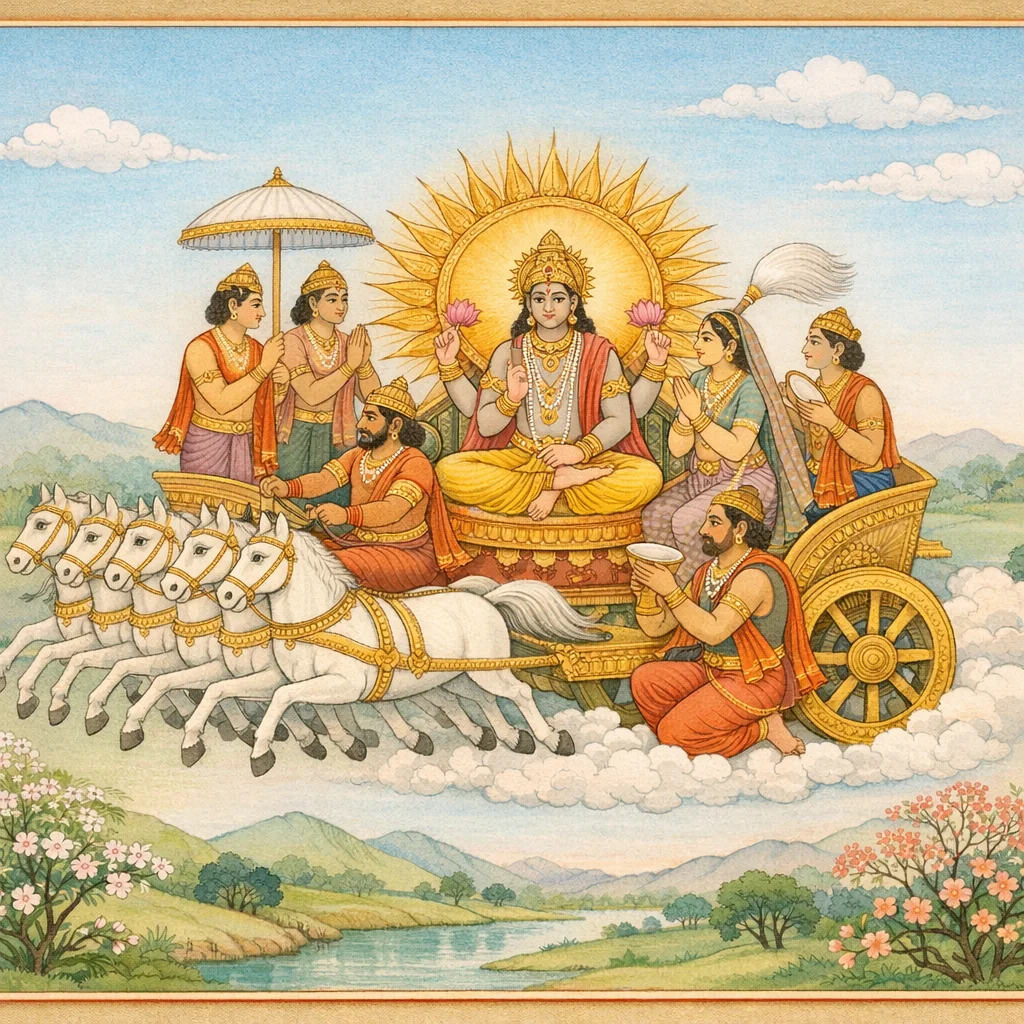
Parāśara teaches Maitreya the measurement of time and the Sun’s yearly course, then describes Sūrya’s chariot as served by ordered classes—Ādityas, Ṛṣis, Gandharvas, Apsarases, Grāmaṇīs, Nāgas, and Rākṣasas—each appointed to a distinct duty. He lists the seven groups who govern month by month (māsādhikāriṇaḥ), beginning with Caitra and continuing through the year, showing that the solar orb is not solitary but a regulated seat of many cosmic agencies. The chapter ends by summarizing their sacred functions: sages praise, Gandharvas sing, Apsarases dance, Nāgas bear the load, Yakṣas marshal the rays, and Vālakhilyas encircle the Sun—together, by Viṣṇu’s sovereign ordinance, becoming the causes of seasonal cold and heat and of rainfall when their time arrives.
Shlokas
Verse 1
अशीतिमण्डलशतं काष्ठयोर् अन्तरं द्वयोः आरोहणावरोहाभ्यां भानोर् अब्देन या गतिः
Between two successive kāṣṭhās there is a measure of time spoken of as “a hundred circles of eighty”; and by the Sun’s ascending and descending course that yearly motion is known and reckoned.
Verse 2
स रथो ऽधिष्ठितो देवैर् आदित्यै ऋषिभिस् तथा गन्धर्वैर् अप्सरोभिश् च ग्रामणीसर्पराक्षसैः
That solar chariot is presided over by the gods—the Ādityas—together with the Ṛṣis; and likewise by Gandharvas and Apsarases, as also by the Grāmaṇīs, the Nāgas, and the Rākṣasas, each fulfilling an appointed function in the ordained cosmic order.
Verse 3
धाता कृतस्थला चैव पुलस्त्यो वासुकिस् तथा रथकृद् ग्रामणीर् हेतिस् तुम्बुरुश् चैव सप्तमः
Dhātā and Kṛtasthalā; Pulastya and Vāsuki; Rathakṛt, Grāmaṇī, Heti, and Tumburu—these are spoken of as the seven in this enumeration.
Verse 4
एते वसन्ति वै चैत्रे मधुमासे सदैव हि मैत्रेय स्यन्दने भानोः सप्त मासाधिकारिणः
These very seven, O Maitreya, abide unfailingly in the month of Caitra, the Madhu season (spring), upon the chariot of the Sun; for they are the seven appointed governors of the months, sustaining the ordered course of time through Sūrya’s onward movement.
Verse 5
अर्यमा पुलहश् चैव रथौजाः पुञ्जिकस्थला प्रहेतिः कच्छनीरश् च नारदश् च रथे रवेः
Upon the chariot of Ravi, the Sun, ride Aryamā and Pulaha, Rathaujā and Puñjikasthalā, along with Praheti, Kacchanīra, and Nārada—attendants of the solar course, whose ordered presence reflects the sovereignty of the Supreme Lord throughout the cosmos.
Verse 6
माधवे निवसन्त्य् एते शुचिसंज्ञे निबोध मे
O Śuci by name, know from me: these all dwell in Mādhava, resting in Lord Viṣṇu as their refuge and very seat of existence.
Verse 7
मित्रो ऽत्रिस् तक्षको रक्षः पौरुषेयो ऽथ मेनका हाहा रथस्वनश् चैव मैत्रेयैते वसन्ति वै
Maitreya, there indeed dwell: Mitra, Atri, Takṣaka, the Rākṣasa, Pauruṣeya, and Menakā, as well as the Gandharvas Hāhā and Rathasvana.
Verse 8
वरुणो वसिष्ठो रम्भा सहजन्या हुहू रथः रथचित्रस् तथा शुक्रे वसन्त्य् आषाढसंज्ञिते
In the month called Āṣāḍha (in the Spring season), Varuṇa and Vasiṣṭha preside; Rambhā is the Apsaras, Sahajanyā the guiding influence, Hūhū the Gandharva, and Ratha the Yakṣa. Likewise Rathacitra is named in connection with Śukra (Venus).
Verse 9
इन्द्रो विश्वावसुः स्रोत एलापत्रस् तथाङ्गिराः प्रम्लोचा च नभस्य् एते सर्पश् चार्के वसन्ति वै
In the month of Nabhasya, these are said to abide with Arka (the Sun): Indra; Viśvāvasu the Gandharva; Srota the Yakṣa; Elāpatra the Nāga; Aṅgiras the Ṛṣi; and Pramlocā the Apsaras—each upholding the Sun’s ordained course.
Verse 10
विवस्वान् उग्रसेनश् च भृगुर् आपूरणस् तथा उम्लोचा शङ्खपालश् च व्याघ्रो भाद्रपदे तथा
For the month of Bhādrapada, these are named in their appointed roles: Vivasvān, Ugrasena, Bhṛgu, and Āpūraṇa; likewise the Apsaras Umlocā, the Nāga Śaṅkhapāla, and the Rākṣasa Vyāghra—each set within the Lord’s ordered procession of time.
Verse 11
पूषा च सुरुचिर् वातो गौतमो ऽथ धनंजयः सुषेणो ऽन्यो घृताची च वसन्त्य् आश्वयुजे रवौ
When the Sun abides in Āśvayuja, these are declared to attend him in their appointed order during the season of Vasanta: Pūṣā, Suruci, Vāta, Gautama, and Dhanaṃjaya; likewise Suṣeṇa, another attendant, and the apsaras Ghṛtācī.
Verse 12
विश्वावसुर् भरद्वाजः पर्जन्यैरावतौ तथा विश्वाची सेनजिच् चापि कार्त्तिके चाधिकारिणः
For the month of Kārttika, the appointed celestial functionaries are: Viśvāvasu and Bharadvāja; likewise Parjanya and Airāvata; and also Viśvācī and Senajit—each holding authority in the sphere ordained.
Verse 13
अंशुकाश्यपतार्क्ष्यास् तु महापद्मस् तथोर्वशी चित्रसेनस् तथा विद्युन् मार्गशीर्षाधिकारिणः
For the month of Mārgaśīrṣa, the appointed celestial authorities are: Aṃśukāśya and Patārkṣya; Mahāpadma; likewise the apsaras Urvaśī; the gandharva Citrasena; and Vidyun—these preside over the month’s ordained order.
Verse 14
क्रतुर् भगस् तथोर्णायुः स्फूर्जः कर्कोटकस् तथा अरिष्टनेमिश् चैवान्या पूर्वचित्तिर् वराप्सराः
Also (there are) Kratu and Bhaga; likewise Orṇāyu, Sphūrja, and Karkoṭaka; and Ariṣṭanemi as well—together with others—while Pūrvacitti is named among the excellent Apsarās.
Verse 15
पौषमासे वसन्त्य् एते सप्त भास्करमण्डले लोकप्रकाशनार्थाय विप्रवर्याधिकारिणः
In the month of Pauṣa, these seven—foremost among the brahmanical authorities—abide within the orb of the Sun, so that the worlds may be illumined.
Verse 16
त्वष्टा च जमदग्निश् च कम्बलो ऽथ तिलोत्तमा ब्रह्मापेतो ऽथ ऋतजिद् धृतराष्ट्रश् च सप्तमः
Then came Tvaṣṭṛ and Jamadagni; Kambala and also Tilottamā; then Brahmāpeta and Ṛtajit; and as the seventh, Dhṛtarāṣṭra—thus they are enumerated in due order.
Verse 17
माघमासे वसन्त्य् एते सप्त मैत्रेय भास्करे श्रूयतां चापरे सूर्ये फाल्गुने निवसन्ति ये
O Maitreya, in the month of Māgha these seven abide within Bhāskara, the Sun. Now hear also of the others—those who, in Phālguna, take up their station in the Sun.
Verse 18
विष्णुर् अश्वतरो रम्भा सूर्यवर्चाश् च सत्यजित् विश्वामित्रस् तथा रक्षो यज्ञोपेतो महामुने
O great sage, there were also Viṣṇu, Aśvatara, Rambhā, Sūryavarcā, and Satyajit; likewise Viśvāmitra, the rākṣasa named Rakṣa, and Yajñopeta—thus are they remembered in the ordered account.
Verse 19
मासेष्व् एतेषु मैत्रेय वसन्त्य् एते तु सप्तकाः सवितुर् मण्डले ब्रह्मन् विष्णुशक्त्युपबृंहिताः
In these months, O Maitreya, these sevenfold groups abide within the orb of Savitṛ, the Sun; and, O brahmin, they are sustained and empowered by the very energy of Viṣṇu.
Verse 20
स्तुवन्ति मुनयः सूर्यं गन्धर्वैर् गीयते पुरः नृत्यन्त्य् अप्सरसो यान्ति सूर्यस्यानु निशाचराः
Sages hymn the Sun; before him the Gandharvas sing. The Apsarases dance, and the night-ranging beings also move in his train.
Verse 21
वहन्ति पन्नगा यक्षैः क्रियते ऽभीषुसंग्रहः
The Nāgas bear that cosmic burden, and the Yakṣas bring about the gathering and orderly marshalling of the Sun’s rays.
Verse 22
वालखिल्यास् तथैवैनं परिवार्य समासते
So too the Vālakhilya sages, encircling him, remain seated around him in reverent attendance.
Verse 23
सो ऽयं सप्तगणः सूर्यमण्डले मुनिसत्तम हिमोष्णवारिवृष्टीनां हेतुः स्वसमयं गतः
Thus, O best of sages, this very sevenfold company, abiding in the sphere of the Sun, becomes the governing cause of cold and heat and the falling of rain—each performing its function when its appointed season arrives.
Frequently Asked Questions
It catalogues the Sun’s chariot attendants and the sevenfold monthly groups (māsādhikāriṇaḥ) who govern the solar orb’s functioning across the year, linking their roles to seasonal effects like heat, cold, and rain.
The chapter portrays cosmic order as distributed governance: distinct classes execute specialized functions (bearing, ray-marshalling, singing, praising), while the Sun’s procession remains a coordinated system ultimately established by Viṣṇu’s sovereignty.