Sarga 116
सीतासान्त्वनम् / Hanuman Consoles Sita with the News of Victory
युद्धकाण्ड
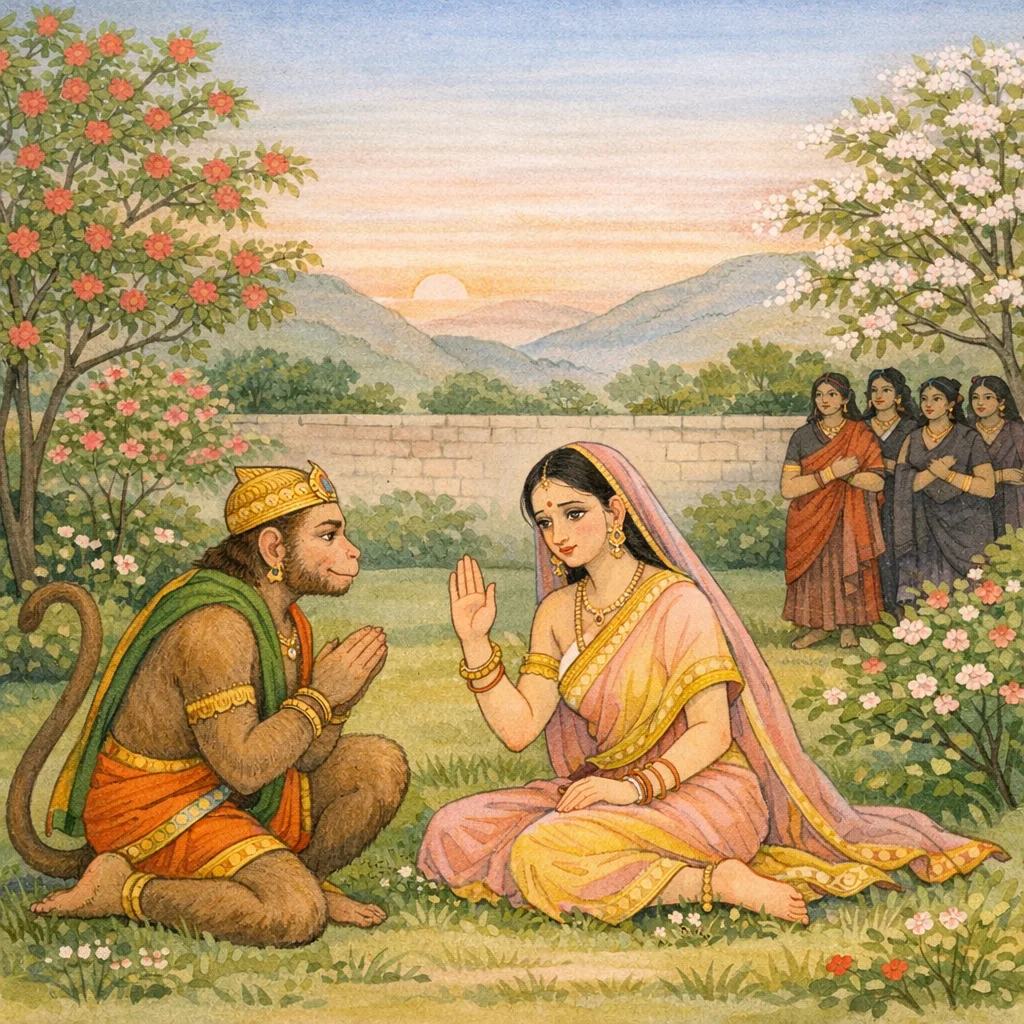
In Sarga 116, after the war’s outcome is settled, Hanumān—now instructed and welcomed in Laṅkā under the new order—enters the city with due courtesies and goes to the Aśoka-vāṭikā to meet Sītā. He finds her physically weakened and joyless, still surrounded by rākṣasī guards. Hanumān delivers Rāma’s message: Rāvaṇa has been slain, Laṅkā is secured under Vibhīṣaṇa, and there is no need for fear, for the very condition of captivity has dissolved. Sītā is overwhelmed with joy and momentarily cannot speak; then she offers thoughtful gratitude. She seeks a fitting gift for the messenger, yet declares that no material wealth can equal the worth of auspicious news. An ethical turning point follows: Hanumān proposes retaliation against the rākṣasīs who threatened her, but Sītā rejects vengeance, attributing her suffering to fate and prior conditions, and affirms a dharma-aligned maxim of restraint and compassion even toward wrongdoers acting under command. Hanumān accepts her moral authority, asks for a return message to Rāma, and Sītā expresses her longing to see her husband. The sarga ends with Hanumān’s swift return and his faithful relay to Rāghava of Sītā’s words in exact sequence, preserving the integrity of speech and intent.
Shlokas
Verse 1
इतिप्रतिसमादिष्टोहनूमान्मारुतात्मजः ।प्रविवेशपुरींलङ्कांपूज्यमानोनिशाचरैः ।।6.116.1।।
Thus commissioned, Hanumān—the son of the Wind—entered the city of Laṅkā, being honored by the rākṣasas.
Verse 2
प्रविश्य चपुरींलङ्कांपूज्यमानोनिशाचारै: ।ततस्तेनाभ्युनुज्ञातोहनुमान्वृक्षवाटिकाम् ।।6.116.2।।सम्प्रविश्ययथान्यायंसीतायाद्विितोहरिः ।ददर्शमृजयाहीनांसातङ्कांरोहिणीमिव ।।6.116.3।।वृक्षमूलेनिरानन्दांराक्षसीभिःपरीवृताम् ।निभृतःप्रणतःप्रह्वस्सोऽभिगम्याभिवाद्य च ।।6.116.4।।
Entering the city of Laṅkā, honoured by the rākṣasas, Hanumān—permitted by Vibhīṣaṇa—then went to the grove. Entering the garden in the proper manner, the monkey known to Sītā beheld her: unpurified, weakened, and afraid, like Rohiṇī. Joyless at the foot of a tree, surrounded by rākṣasī women, Hanumān approached quietly, bowed in humility, greeted her, and stood still.
Verse 3
प्रविश्य चपुरींलङ्कांपूज्यमानोनिशाचारै: ।ततस्तेनाभ्युनुज्ञातोहनुमान्वृक्षवाटिकाम् ।।6.116.2।।सम्प्रविश्ययथान्यायंसीतायाद्विितोहरिः ।ददर्शमृजयाहीनांसातङ्कांरोहिणीमिव ।।6.116.3।।वृक्षमूलेनिरानन्दांराक्षसीभिःपरीवृताम् ।निभृतःप्रणतःप्रह्वस्सोऽभिगम्याभिवाद्य च ।।6.116.4।।
Entering the city of Laṅkā, honoured by the rākṣasas, Hanumān—permitted by Vibhīṣaṇa—then went to the grove. Entering the garden in the proper manner, the monkey known to Sītā beheld her: unpurified, weakened, and afraid, like Rohiṇī. Joyless at the foot of a tree, surrounded by rākṣasī women, Hanumān approached quietly, bowed in humility, greeted her, and stood still.
Verse 4
प्रविश्य चपुरींलङ्कांपूज्यमानोनिशाचारै: ।ततस्तेनाभ्युनुज्ञातोहनुमान्वृक्षवाटिकाम् ।।6.116.2।।सम्प्रविश्ययथान्यायंसीतायाद्विितोहरिः ।ददर्शमृजयाहीनांसातङ्कांरोहिणीमिव ।।6.116.3।।वृक्षमूलेनिरानन्दांराक्षसीभिःपरीवृताम् ।निभृतःप्रणतःप्रह्वस्सोऽभिगम्याभिवाद्य च ।।6.116.4।।
Entering the city of Laṅkā, honoured by the rākṣasas, Hanumān—permitted by Vibhīṣaṇa—then went to the grove. Entering the garden in the proper manner, the monkey known to Sītā beheld her: unpurified, weakened, and afraid, like Rohiṇī. Joyless at the foot of a tree, surrounded by rākṣasī women, Hanumān approached quietly, bowed in humility, greeted her, and stood still.
Verse 5
दृष्टवासमागतंदेवीहनूमन्तंमहाबलम् ।तूष्णीमास्ततदादृष्टवास्मृत्वासृष्टाभवत्तदा ।।6.116.5।।
Seeing the mighty Hanumān arrive, the noble lady remained silent at first; then, beholding him and recognizing him, she was filled with joy.
Verse 6
सौम्यंतस्यामुखंदृष्टवाहनुमान्प्लवगोत्तमः ।रामस्यवचनंसर्वमाख्यातुमुपचक्रमे ।।6.116.6।।
Seeing her gentle face, Hanumān—the foremost of monkeys—began to relate to her the entirety of Rāma’s message.
Verse 7
वैदेही कुशलीरामस्सहसुग्रीवलक्ष्मणः ।वभीषणसहायश्चहरीणांसहितोबलैः ।।6.116.7।।
“Vaidehī, Rāma is well—together with Sugrīva and Lakṣmaṇa; aided by Vibhīṣaṇa, and accompanied by the monkey forces.”
Verse 8
कुशलंचाहसिद्धार्थोहतशत्रुरिमत्रजित् ।विभीषणसहायेनरामेणहरिभिस्सह ।।6.116.8।।निहतोरावणोदेविलक्ष्मणेन च वीर्यवान् ।
“And he asks after your well-being, noble lady. Rāma has achieved his purpose—foe-slayer, conqueror of enemies—supported by Vibhīṣaṇa and joined by the monkeys, and with the mighty Lakṣmaṇa as well. Rāvaṇa has been slain, O Devī.”
Verse 9
प्रियमाख्यामितेदेविभूयश्चत्वांसभाजये ।।6.116.9।।तवप्रभावाद्धर्मजेमहान् रामेणसंयुगे ।लब्धोऽयंविजयस्सीतेस्वस्थाभवगतज्वरा ।।6.116.10।।
“O Devī, I tell you joyous news, and I honour you again. O Sītā, knower of dharma—by the power of your virtue this great victory has been won by Rāma in battle. Be at peace; let the fever of your grief depart.”
Verse 10
प्रियमाख्यामितेदेविभूयश्चत्वांसभाजये ।।6.116.9।।तवप्रभावाद्धर्मजेमहान् रामेणसंयुगे ।लब्धोऽयंविजयस्सीतेस्वस्थाभवगतज्वरा ।।6.116.10।।
Goddess, I bring you glad tidings and honor you once more. O Sītā, knower of dharma—through your spiritual power, the great Rāma has won this victory in battle. Be at peace; let the fever of distress depart.
Verse 11
रावणश्चहतश्शत्रुर्लङ्कचैववशीकृता ।मयाह्यलब्न्दिद्रेणधृतेनतवनिर्जये ।।6.116.11।।प्रतिज्ञैषाविनिस्तीर्णाबद्ध्वासेतुंमहोदधौ ।
Rāvaṇa, the enemy, has been slain, and Laṅkā has been brought under control. For your deliverance, sleepless yet steadfast, the vow has been fulfilled—after the bridge was bound across the great ocean.
Verse 12
सम्भ्रमश्च न कर्तव्योवर्तन्त्यारावणालये ।।6.116.12।।विभीषणविधेयंहिलङ्कैश्वर्यमिदंकृतम् ।
Do not be anxious that you remain in Rāvaṇa’s dwelling; for the sovereignty of Laṅkā has now been placed under Vibhīṣaṇa’s authority.
Verse 13
तदाश्वसिहिविस्रब्धंस्वगृहेपरिवर्तसे ।।6.116.13।।अयंचाभ्येतिसम्हृष्टस्त्वद्धर्शनसमुत्सुकः ।
Therefore be comforted and at ease—you are as though within your own home. And he (Vibhīṣaṇa) is coming, delighted and eager to behold you.
Verse 14
एवमुक्तासमुत्पत्यसीताशशिनिभानना ।।6.116.14।।प्रहर्षेणावरुद्धासाव्याहर्तुं न शशाक ह ।
Thus addressed, Sītā—moon-faced—rose up; overwhelmed and choked with joy, she could not speak.
Verse 15
ततोऽब्रवीद्धरिवरःसीतामप्रतिजल्पतीम् ।।6.116.15।।किंत्वंचिन्तयसेदेविकिं च मांनाभिभाषसे ।
Then the foremost of monkeys (Hanumān), seeing Sītā not replying, spoke: “Goddess, what are you thinking of, and why do you not speak to me?”
Verse 16
एवमुक्ताहनुमतासीताधर्मपथेस्थिता ।।6.116.16।।अब्रवीत्परमप्रीताबाष्पगद्गदयागिरा ।
Thus addressed by Hanumān, Sītā—steadfast on the path of dharma—spoke, overflowing with joy, her words choked by tears.
Verse 17
प्रियमेतदुपश्रुत्यभर्तुर्विजयसंश्रयम् ।।6.116.17।।प्रहर्षवशमापन्नानिर्वाक्यास्मिक्षणान्तरम् ।
“This is dear to hear—assuring my husband’s victory. On hearing it, I am seized by rapture and become speechless for a moment.”
Verse 18
न हिपश्यामिसदृशंचिन्तयन्तीप्लवङ्गमा ।।6.116.18।।मप्रतियाब्यानकस्येहदातुंप्रत्यभिनन्दनम् ।
O monkey, though I reflect, I do not see any fitting gift here to offer in return, as a token of gratitude for your joyful tidings.
Verse 19
नहिपश्यामिततसौम्यपृथिव्यामपिवानर ।।6.116.19।।सदृशंयत्प्रियाख्यानेतवदत्त्वाभवेत्सुखम् ।
Indeed, O gentle one, O monkey, I do not see—anywhere on this earth—something befitting the worth of your pleasing message, which, once given to you, would be a true satisfaction.
Verse 20
हिरण्यंवासुवर्णंवारत्नानिविविधानिच ।।6.116.20।।राज्यंवात्रिषुलोकेषुनैतदर्हतिभाषितम् ।
Neither gold nor fine wealth, nor various gems—nor even sovereignty over the three worlds—can equal what you have spoken.
Verse 21
एवमुक्तस्तुवैदेह्याप्रत्युवाचप्लवङ्गमः ।।6.116.21।।प्रगृहीताञ्जलिर्हर्षासतीतायाःप्रमुखेस्थितः ।
Thus spoken to by Vaidehī, the monkey (Hanumān) replied with delight, standing before Sītā with hands joined in reverence.
Verse 22
भर्तुःप्रियहितेयुक्तेभर्तुर्विजयकाङ्क्षिण: ।।6.116.22।।स्निग्धमेवंविधंवाक्यंत्वमेवार्हस्यनिन्दिते ।
O blameless one, you alone are worthy to speak such affectionate words—seeking what is dear and beneficial for your husband, and longing for his victory.
Verse 23
तवैतद्वचनंसौम्येसारवत् स्निग्धमेव च ।।6.116.23।।रत्नौघाद्विविधाच्चापिदेवराज्याद्विशिष्यते ।
O gentle one, your words—rich in meaning and filled with affection—surpass even heaps of varied jewels, and even the kingship of the lord of the gods.
Verse 24
अर्थतश्चमयाप्राप्तादेवरज्यादयोगुणाः ।।6.116.24।।हतशत्रुंविजयिनंरामंपश्यामिसुस्थितम् ।
Truly it feels to me as though I have attained even the sovereignty of the gods and every such blessing, for I behold Rāma—his enemy slain, victorious, and firmly restored.
Verse 25
तस्यतद्वचनंश्रुत्वामैथिलीजनकात्मजा ।।6.116.25।।ततःशुभतरंवाक्यमुवाचपवनात्मजम् ।
Hearing his words, Maithilī—Janaka’s daughter—then spoke to the son of the Wind-god words even more auspicious.
Verse 26
अतिलक्षणसम्पन्नंमाधुर्यगुणभूषितम् ।।6.116.26।।बुद्ध्याह्यष्टाङ्गयायुक्तंत्वमेवार्हसिभाषितुम् ।
Your speech is richly endowed with noble marks and adorned with sweetness; and, joined with an intellect possessing the eightfold excellences, you alone are truly fit to speak so.
Verse 27
श्लाघनीयोऽनिलस्यत्वंसुतःपरमधार्मिकः ।।6.116.27।।बलंशौर्यंश्रुतंसत्त्वंविक्रमोदाक्ष्यमुत्तमम् ।तेजःक्षमाधृतिस्स्थैर्यंविनीतत्वं न संशयः ।।6.116.28।।एतेचान्ये च बहवोगुणास्त्वय्येवशोभनाः ।
You are the praiseworthy son of the Wind-god, supremely righteous in dharma. Strength, valor, learning, courage, heroism, and excellent skill; radiance, forgiveness, endurance, steadfastness, and humility—without doubt, these and many other noble qualities shine in you alone.
Verse 28
श्लाघनीयोऽनिलस्यत्वंसुतःपरमधार्मिकः ।।6.116.27।।बलंशौर्यंश्रुतंसत्त्वंविक्रमोदाक्ष्यमुत्तमम् ।तेजःक्षमाधृतिस्स्थैर्यंविनीतत्वं न संशयः ।।6.116.28।।एतेचान्ये च बहवोगुणास्त्वय्येवशोभनाः ।
Then, standing before Sītā with joy and folded palms, Hanumān—calm and courteous—spoke to her again.
Verse 29
अथोवाचपुनस्सीतामसम्भ्रान्तोविनीतवत् ।।6.116.29।।प्रगृहीताञ्चलिर्हर्षात्सीतायाःप्रमुखेस्थितः ।
Then, standing before Sītā with joy and folded palms, Hanumān—calm and courteous—spoke to her again.
Verse 30
इमास्तुखलुराक्षस्योयदित्वमनुमन्यसे ।।6.116.30।।हन्तुमिच्छामितास्सर्वायाभिस्त्वंतर्जितापुरा ।
If you permit it, I wish to slay all these rākṣasī women who once threatened and tormented you.
Verse 31
क्लिश्यन्तीम् पतिदेवांत्वामशोकवनिकांगताम् ।।6.116.31।।घोररूपसमाचाराःक्रूराःक्रूरतरेक्षणाः ।इहश्रुतामयादेवि राक्षस्योविकृताननाः ।।6.116.32।।असकृत्परुषैर्वाक्यैर्वद्नत्योरावणाज्ञया ।
O Lady, I heard here those rākṣasī women—cruel in conduct, dreadful in form, with most terrifying eyes and distorted faces—again and again speaking harsh words by Rāvaṇa’s command, while you, devoted to your husband as to a god, were being tormented in the Aśoka grove.
Verse 32
क्लिश्यन्तीम् पतिदेवांत्वामशोकवनिकांगताम् ।।6.116.31।।घोररूपसमाचाराःक्रूराःक्रूरतरेक्षणाः ।इहश्रुतामयादेवि राक्षस्योविकृताननाः ।।6.116.32।।असकृत्परुषैर्वाक्यैर्वद्नत्योरावणाज्ञया ।
O Devi, I heard here how you—so devoted to your husband—were tormented after you had been taken to the Aśoka grove.
Verse 33
विकृताविकृताकाराःक्रूराःक्रूरकचेक्षणाः ।।6.116.33।।इच्छामिविविधैराघतैर्हन्तुमेतास्सुदारुणाः ।राक्षस्योदारुणकथावरमेतत्प्रयच्छमे ।।6.116.34।।
They are hideous—misshapen and grotesque—cruel, with dreadful hair and fierce eyes.
Verse 34
विकृताविकृताकाराःक्रूराःक्रूरकचेक्षणाः ।।6.116.33।।इच्छामिविविधैराघतैर्हन्तुमेतास्सुदारुणाः ।राक्षस्योदारुणकथावरमेतत्प्रयच्छमे ।।6.116.34।।
I wish to strike down these utterly dreadful rākṣasīs with blows of many kinds; their brutality is beyond telling. Grant me this boon—permit it.
Verse 35
मुष्टिभिःपर्षिणघातैश्चविशालैश्चैवबाहुभिः ।जङ्घाजानुप्रहारैश्चदन्तानांचैवपीडनैः ।।6.116.35।।भक्षणैःकर्णनासानांकेशानांलुञ्चनैस्तथा ।भृशंशुष्कमुखैश्चैवदारणैर्लङ्घनैर्हतैः ।।6.116.36।।विभिन्नशङ्कुग्रीवांशपार्श्वकैश्चकलेवरैः ।निपात्यहन्तुमिच्छामितवविप्रियकारिणीः ।।6.116.37।।
With fists and heel-strikes, with those great arms, with blows of shanks and knees, and with the crushing force of teeth—
Verse 36
मुष्टिभिःपर्षिणघातैश्चविशालैश्चैवबाहुभिः ।जङ्घाजानुप्रहारैश्चदन्तानांचैवपीडनैः ।।6.116.35।।भक्षणैःकर्णनासानांकेशानांलुञ्चनैस्तथा ।भृशंशुष्कमुखैश्चैवदारणैर्लङ्घनैर्हतैः ।।6.116.36।।विभिन्नशङ्कुग्रीवांशपार्श्वकैश्चकलेवरैः ।निपात्यहन्तुमिच्छामितवविप्रियकारिणीः ।।6.116.37।।
—by tearing at ears and noses, by ripping out hair, by harshly drying their faces with torment, by rending and hurling them down—
Verse 37
मुष्टिभिःपर्षिणघातैश्चविशालैश्चैवबाहुभिः ।जङ्घाजानुप्रहारैश्चदन्तानांचैवपीडनैः ।।6.116.35।।भक्षणैःकर्णनासानांकेशानांलुञ्चनैस्तथा ।भृशंशुष्कमुखैश्चैवदारणैर्लङ्घनैर्हतैः ।।6.116.36।।विभिन्नशङ्कुग्रीवांशपार्श्वकैश्चकलेवरैः ।निपात्यहन्तुमिच्छामितवविप्रियकारिणीः ।।6.116.37।।
I want to cast down and kill those who wronged you—leaving their bodies shattered, with necks, limbs, and sides broken apart.
Verse 38
एवंप्रहारैर्बहुभिःसंप्प्रहार्ययशस्विनि ।घातयेतीव्ररूपाभिर्याभिस्त्वंतर्जितापुरा ।।6.116.38।।
O illustrious lady, I would strike them in many ways and have slain those fierce-looking ones by whom you were threatened before.
Verse 39
इत्युक्तासाहनुमताकृपणादीनवत्सला ।हनूमन्तमुवाचेदंचिन्तयित्वाविमृश्य च ।।6.116.39।।
Thus addressed by Hanuman, Sita—tender-hearted and compassionate toward the afflicted—after thinking and reflecting, spoke these words to him.
Verse 40
राजसंश्रयवश्यानांकुर्वतीनांपराज्ञया ।विधेयानां च दासीनांकःकुप्यद्वानरोत्तम ।।6.116.40।।
O best of vānaras, who could be angry with maidservants who are bound to the king’s authority, acting only under another’s command and compelled to obey?
Verse 41
भाग्यवैषम्यदोषेणपुरस्ताद्धुष्कृतेन च ।मयैतत्प्राप्यसर्वंस्वकृतंह्युपभुज्यते ।।6.116.41।।
Through the harsh imbalance of fate—and through my own past wrongdoing—this has come upon me. Truly, one must undergo the results of one’s own deeds.
Verse 42
मैवंवदमहाबाहो दैवेह्येषापरागतिः ।प्राप्तव्यंतुदशायोगान्मयैतदितिनिश्चितम् ।।6.116.42।।दासीनांरावणस्याहंमर्षयामीहदुर्बला ।
“Do not speak like that, O mighty-armed one. This outcome was governed by divine fate. I am convinced that, by the force of circumstances, I had to undergo this. Helpless here, I forgive the maidservants of Rāvaṇa.”
Verse 43
आज्ञप्ताराक्षसेनेहराक्षस्यस्तर्जयन्तिमाम् ।।6.116.43।।हतेतस्मिन्नकुर्वन्तितर्जनंमारुतात्मज ।
“Here, at the command of the rākṣasa-lord, the rākṣasīs used to threaten me. Now that he has been slain, O son of the Wind, they will not threaten me any longer.”
Verse 44
अयंव्याघ्रसमीपेतुपुराणोधर्मसंहितः ।।6.116.44।।ऋक्षेणगीतःश्लोकोऽस्तितंनिबोधप्लवङ्गम ।
“O monkey, there is an ancient verse, in accord with dharma, once sung by a bear in the presence of a tiger. Listen to it.”
Verse 45
न पर: पापमादत्तेपरेषांपापकर्मणाम् ।।6.116.45।।समयोरक्षितव्यस्तुसप्तश्चारित्रभूषणाः ।
A noble person does not take up sin because others commit sinful acts. Rather, at the proper time one must guard right conduct—good character is the true ornament.
Verse 46
पापानांवाशुभानांवावधार्हाणांप्लवङ्गम ।।6.116.46।।कार्यंकरुण्यमार्येण न कश्चिन्नापराध्यति ।
Whether they are sinners or virtuous, even those who might seem worthy of death—O monkey—an honorable person should act with compassion; one should not commit wrongdoing.
Verse 47
लोकहिंसाविहाराणांरक्षसांकामरूपिणाम् ।।6.116.47।।कुर्वतामपिपापानिनैवकार्यमशोभनम् ।
Even if the rākṣasas—who delight in harming the world and can assume forms at will—commit sinful deeds, one must not do what is disgraceful in return.
Verse 48
एवमुक्तस्तुहनुमान् सीतयावाक्यकोविदः ।।6.116.48।।प्रत्युवाचततस्सीतांरामपत्नीयशश्विनीम् ।
Thus addressed by Sītā, Hanumān—skilled in speech—then replied to the illustrious Sītā, the wife of Rāma.
Verse 49
युक्तारामस्यभवतीधर्मपत्नीयशश्विनी ।।6.116.49।।प्रतिसन्दिशमांदेवि गमिष्येयत्रराघवः ।
Goddess, you are indeed Rāma’s rightful and renowned dharma-wife, steadfast in dharma. Entrust your message to me; I will go to where Rāghava is.
Verse 50
एवमुक्ताहनुमतावैदेहिजनकात्मजा ।।6.116.50।।साब्रवीद्ध्रष्टुमिच्छामिभर्तारंवानरोत्तम ।
Thus addressed by Hanumān, Vaidehī—Janaka’s daughter—said: “O best of the Vānara, I wish to see my husband.”
Verse 51
तस्यास्तद्वचनंश्रुत्वाहनुमान्पवनात्मजः ।।6.116.51।।हर्षयन्मैथिलींवाक्यमुवाचेदंमहामतिः ।
Hearing her words, Hanumān—the son of the Wind—wise and discerning, spoke again to Maithilī, intending to gladden her heart.
Verse 52
पूर्णचन्द्राननंरामंद्रक्ष्यस्यार्येसलक्ष्मणम् ।।6.116.52।।स्थिरमित्रंहतामित्रंशचीवत्रिदशेश्वरम् ।
“Noble lady, you shall now behold Rāma—his face like the full moon, radiant—together with Lakṣmaṇa: steadfast to friends, with foes laid low, like Śacī beholding Indra, lord of the gods.”
Verse 53
तामेवमुक्त्वाराजन्तींसीतांसाक्षादिवश्रियम् ।।6.116.53।।आजगाममहावेगोहनूमान्यत्रराघवः ।
Having thus spoken to Sītā—shining like Lakṣmī herself—swift Hanumān hastened to the place where Rāghava was.
Verse 54
Then Hanumān, foremost of monkeys, at once related to Rāghava—radiant like Indra—Sītā’s reply, repeating her message word for word in the same order.
Frequently Asked Questions
Hanumān seeks permission to punish and kill the rākṣasīs who had threatened Sītā in captivity. Sītā refuses retaliatory violence, arguing they acted under the king’s command and that dharma requires restraint; with Rāvaṇa dead, the coercive context has ended.
The sarga foregrounds kṣamā and moral agency: even after victory, one must not convert suffering into vengeance. Right conduct is presented as an ornament of character, and compassion is upheld as a higher discipline than punitive impulse, especially toward subordinates acting under orders.
Laṅkā’s political transition under Vibhīṣaṇa is emphasized, alongside the Aśoka-vāṭikā as the captivity setting now reinterpreted as a site of reassurance and reunion-preparation. The great ocean and the constructed setu are referenced as markers of vow-fulfillment and campaign logistics.
Read Valmiki Ramayana in the Vedapath app
Scan the QR code to open this directly in the app, with audio, word-by-word meanings, and more.