Adhyaya 31: Yayāti in Amarāvatī-like Splendor: Devayānī Installed, Śarmiṣṭhā’s Appeal, and the Birth of a Prince
ययाति-देवयानी-शर्मिष्ठा-प्रसंगः
Speaker: Śaunaka (narrator), Śarmiṣṭhā, Yayāti
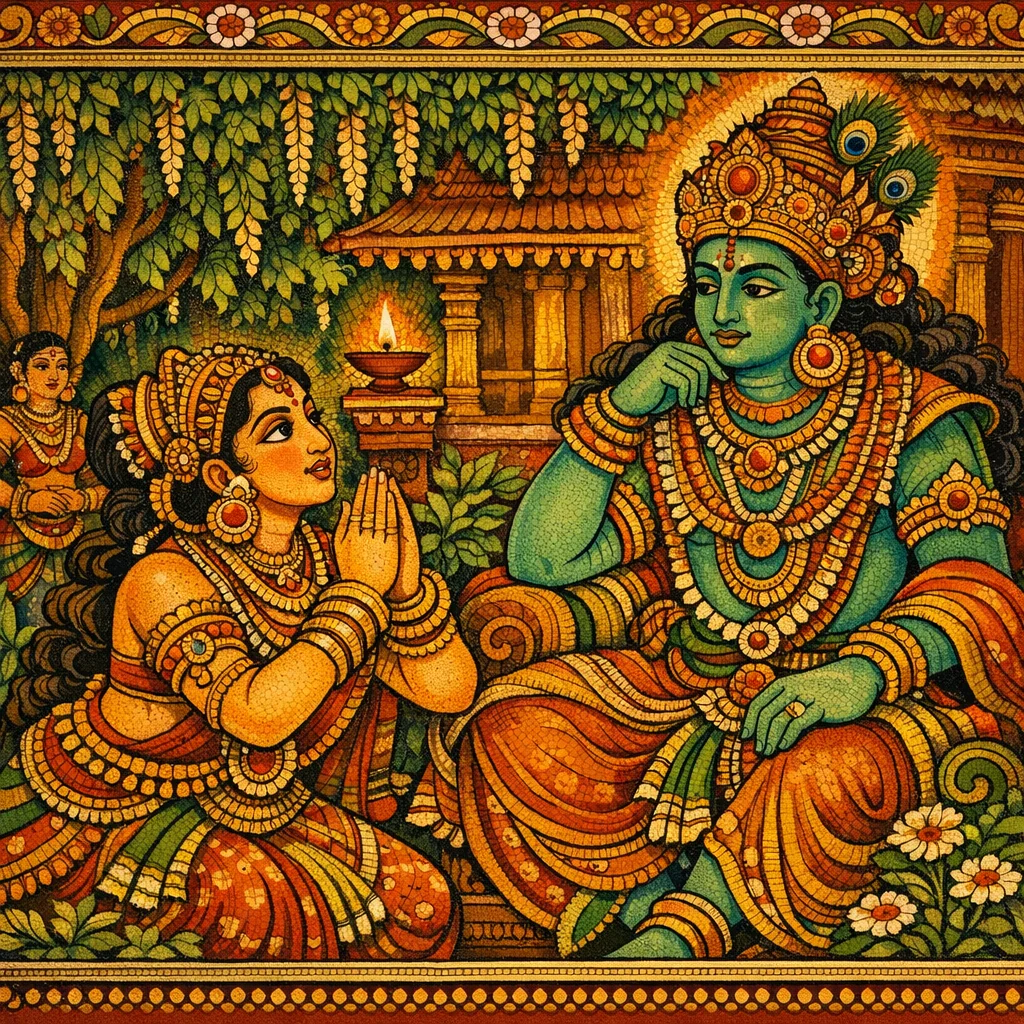
Śaunaka continues Yayāti’s story: Yayāti installs Devayānī in the inner palace, while Vṛṣaparvan settles Śarmiṣṭhā near the Aśoka grove with attendants and provisions. Devayānī conceives and bears a son. After a long time, Śarmiṣṭhā comes of age and secretly approaches Yayāti, asking for conjugal union so she may become a mother and remain established in dharma. A debate follows: she cites kinds of “non-sinful untruths,” but Yayāti insists a king must embody truth as the measure for all beings. Yet bound by another vow—not to refuse a supplicant—he asks her desire. Śarmiṣṭhā presents it as protection from adharma and as the rightful maintenance of one who depends on him. Yayāti grants her plea, honors her, and “establishes dharma in practice”; their union brings Śarmiṣṭhā’s first conception and the birth of a splendid prince.
Key Concepts
Shlokas in Adhyaya 31
Verse 1
*शौनक उवाच ययातिः स्वपुरं प्राप्य महेन्द्रपुरसंनिभम् प्रविश्यान्तःपुरं तत्र देवयानीं न्यवेशयत् //
Śaunaka said: Having reached his own city, comparable to Indra’s city (Amarāvatī), Yayāti entered the inner palace and there installed Devayānī in the royal apartments as queen.
Verse 2
देवयान्याश्चानुमते सुतां तां वृषपर्वणः अशोकवनिकाभ्याशे गृहं कृत्वा न्यवेशयत् //
With Devayānī’s consent, Vṛṣaparvan settled his daughter there, having had a house built near the Aśoka grove.
Verse 3
वृतां दासीसहस्रेण शर्मिष्ठाम् आसुरायणीम् वासोभिरन्नपानैश्च संविभज्य सुसंवृताम् //
Śarmiṣṭhā, the daughter of the Asura king, attended by a thousand maidservants, was duly provided for: garments and food and drink were apportioned to her, so that she was well covered and well cared for.
Verse 4
देवयान्या तु सहितः स नृपो नहुषात्मजः विजहार बहूनब्दान् देववन्मुदितो भृशम् //
Accompanied by Devayānī, that king—the son of Nahusha—sportively enjoyed himself for many years, exceedingly delighted, like one of the gods.
Verse 5
ऋतुकाले तु सम्प्राप्ते देवयानी वराङ्गना लेभे गर्भं प्रथमतः कुमारश्च व्यजायत //
When the season of fertility arrived, Devayānī, that noble and beautiful lady, first conceived; and in due course a son was born.
Verse 6
गते वर्षसहस्रे तु शर्मिष्ठा वार्षपर्वणी ददर्श यौवनं प्राप्ता ऋतुं सा कमलेक्षणा //
When a thousand years had passed, Śarmiṣṭhā, the daughter of Vṛṣaparvan—lotus-eyed—came to youth and perceived that her season of fertility had arrived.
Verse 7
चिन्तयामास धर्मज्ञा ऋतुप्राप्तौ च भामिनी ऋतुकालश्च सम्प्राप्तो न कश्चिन्मे पतिर्वृतः //
The passionate lady, knowing dharma, reflected when her fertile season arrived: “My season has come; the proper time is here—yet I have not chosen any husband for myself.”
Verse 8
किं प्राप्तं किंच कर्तव्यं कथं कृत्वा सुखं भवेत् देवयानी प्रसूतासौ वृथाहं प्राप्तयौवना //
“What has been gained, and what is now to be done? By doing what can happiness arise? Devayānī has borne children—yet I have reached youth in vain.”
Verse 9
यथा तया वृतो भर्ता तथैवाहं वृणोमि तम् राज्ञा पुत्रफलं देयम् इति मे निश्चिता मतिः अपीदानीं स धर्मात्मा रहो मे दर्शनं व्रजेत् //
“Just as she chose him as her husband, so do I choose that very man. It is my firm resolve that the king should be granted the fruit of a son. Let that righteous man now come and meet me in private.”
Verse 10
*शौनक उवाच अथ निष्क्रम्य राजासौ तस्मिन्काले यदृच्छया अशोकवनिकाभ्याशे शर्मिष्ठां प्राप्य विस्मितः //
Śaunaka said: Then that king, having gone out at that time, happened by chance to reach Śarmiṣṭhā near the Aśoka grove—and he was astonished.
Verse 11
तमेकं रहसि दृष्ट्वा शर्मिष्ठा चारुहासिनी प्रत्युद्गम्याञ्जलिं कृत्वा राजानं वाक्यमब्रवीत् //
Seeing the king alone in a secluded place, Śarmiṣṭhā—smiling sweetly—went up to greet him; and, with folded hands, she addressed the king in speech.
Verse 12
*शर्मिष्ठोवाच सोमश्चेन्द्रश्च वायुश्च यमश्च वरुणश्च वा तव वा नाहुष गृहे कः स्त्रियं द्रष्टुमर्हति //
Śarmiṣṭhā said: “Whether it be Soma, Indra, Vāyu, Yama, or Varuṇa—or anyone at all—O Nāhuṣa, who in your house is entitled to look upon a woman?”
Verse 13
रूपाभिजनशीलैर्हि त्वं राजन्वेत्थ मां सदा सा त्वां याचे प्रसाद्येह रन्तुमेहि नराधिप //
O King, you always know me by my beauty, noble lineage, and good conduct. Therefore I beseech you—be gracious here and come, O lord of men, to take your pleasure with me.
Verse 14
*ययातिरुवाच वेद्मि त्वां शीलसम्पन्नां दैत्यकन्यामनिन्दिताम् रूपं तु ते न पश्यामि सूच्यग्रमपि निन्दितम् //
Yayāti said: “I know you to be a blameless maiden of the Daityas, endowed with good conduct; yet I do not see even the slightest trace of your form—not even as much as the tip of a needle.”
Verse 15
मामब्रवीत्तदा शुक्रो देवयानीं यदावहम् नेयम् आह्वयितव्या ते शयने वार्षपर्वणी //
Then Śukra spoke to me, regarding Devayānī: “When I am away, this Vārṣaparvaṇī is not to be called to your bed.”
Verse 16
*शर्मिष्ठोवाच न नर्मयुक्तं वचनं हिनस्ति न स्त्रीषु राजन् न विवाहकाले प्राणात्यये सर्वधनापहारे पञ्चानृतान्याहुर् अपातकानि //
Śarmiṣṭhā said: “A statement spoken in jest does not harm; nor (does an untruth) in matters concerning women, O king, nor at the time of marriage. In danger to life, and when all one’s wealth is being taken away—these five kinds of untruth, they say, are not sin-causing offences.”
Verse 17
पृष्टास्तु साक्ष्ये प्रवदन्ति चान्यथा भवन्ति मिथ्यावचना नरेन्द्र ते एकार्थतायां तु समाहितायां मिथ्या वदन्तं ह्य् अनृतं हिनस्ति //
When questioned for testimony, they speak otherwise and become utterers of falsehood, O king. But when the matter is single and clear, a man who speaks falsely is surely struck down by untruth itself.
Verse 18
*ययातिरुवाच राजा प्रमाणं भूतानां स विनश्येन्मृषा वदन् अर्थकृच्छ्रमपि प्राप्य न मिथ्या कर्तुमुत्सहे //
Yayāti said: “A king is the measure for living beings; if he speaks falsehood, he is ruined. Even when pressed by hardship of wealth, I do not consent to act in untruth.”
Verse 19
*शर्मिष्ठोवाच समाव् एतौ मतौ राजन् पतिः सख्याश्च यः पतिः समं विवाह इत्याहुः सख्या मे ऽसि पतिर्यतः //
Śarmiṣṭhā said: “O King, these two views are equal: that one is a husband and that one is a friend; for marriage is said to be a union of equals. Since you are my friend, therefore you are also my husband.”
Verse 20
*ययातिरुवाच दातव्यं याचमानस्य हीति मे व्रतमाहितम् त्वं च याचसि कामं मां ब्रूहि किं करवाणि तत् //
Yayāti said: “To give to one who asks is the vow I have firmly established. And since you too request a desire of me, tell me—what should I do?”
Verse 21
*शर्मिष्ठोवाच अधर्मात्त्राहि मां राजन् धर्मं च प्रतिपादय त्वत्तो ऽपत्यवती लोके चरेयं धर्ममुत्तमम् //
Śarmiṣṭhā said: “O King, rescue me from adharma and establish me in dharma. Let me become a mother through you, so that I may live in this world following the highest dharma.”
Verse 22
त्रय एवाधना राजन् भार्या दासस्तथा सुतः यत्ते समधिगच्छन्ति यस्य ते तस्य तद्धनम् //
O King, three are said to have no independent property: the wife, the servant, and the son. Whatever they acquire belongs to him to whom they belong; truly, that wealth is his.
Verse 23
देवयान्या भुजिष्यास्मि वश्या च तव भार्गवी सा चाहं च त्वया राजन् भरणीयां भजस्व माम् //
“I am Devayānī’s attendant (bondwoman), and I am under your control, O king. I am Bhārgavī, of Bhṛgu’s lineage; therefore, O king, you must maintain me as well—accept me.”
Verse 24
*शौनक उवाच एवमुक्तस्तया राजा तथ्यम् इत्यभिजज्ञिवान् पूजयामास शर्मिष्ठां धर्मं च प्रतिपादयन् //
Śaunaka said: Thus addressed by her, the king acknowledged, “It is true,” honored Śarmiṣṭhā, and established dharma through practice.
Verse 25
स समागम्य शर्मिष्ठां यथाकाममवाप्य च अन्योन्यं चाभिसंपूज्य जग्मतुस्तौ यथागतम् //
Having met with Śarmiṣṭhā and obtained his desire, and after mutually honoring one another, the two of them departed, returning by the way they had come.
Verse 26
तस्मिन्समागमे सुभ्रूः शर्मिष्ठा वार्षपर्वणी लेभे गर्भं प्रथमतस् तस्मान्नृपतिसत्तमात् //
In that union, the fair-browed Śarmiṣṭhā, daughter of Vṛṣaparvan, conceived for the first time—by that foremost of kings.
Verse 27
प्रजज्ञे च ततः काले राज्ञी राजीवलोचना कुमारं देवगर्भाभम् आदित्यसमतेजसम् //
Then, at that time, the lotus-eyed queen gave birth to a prince—radiant as one born of a divine womb, and possessing splendor equal to the Sun.
Frequently Asked Questions
The chapter foregrounds Rajadharma through Yayāti’s insistence that a king must be truthful because he functions as the moral ‘measure’ (pramāṇa) for society. Even when Śarmiṣṭhā argues for contexts where untruth is considered non-sinful, Yayāti maintains that royal speech has public consequences and that falsehood ruins kingship. Simultaneously, the chapter explores dharma under pressure—how vows (to grant a supplicant) and prior restraints create an ethical dilemma that must be navigated without collapsing the king’s role as guardian of order.
This adhyāya is primarily Dharma and Genealogy-focused. It treats household and royal ethics (truth, vows, protection of dependents, r̥tu-kāla and progeny) and advances Puranic genealogy through Devayānī’s childbirth and Śarmiṣṭhā’s conception and the birth of a prince. It does not teach Vāstu/temple dimensions in this chapter; the architectural and construction sciences appear elsewhere in the Matsya Purāṇa.