Adhyaya 9: Account of the Manvantaras: Manus, Saptarṣis, Deva-gaṇas, and Cosmic Time
मन्वन्तरवर्णनम्
Speaker: Sūta, Manu, Lord Matsya (Janārdana/Madhusūdana)
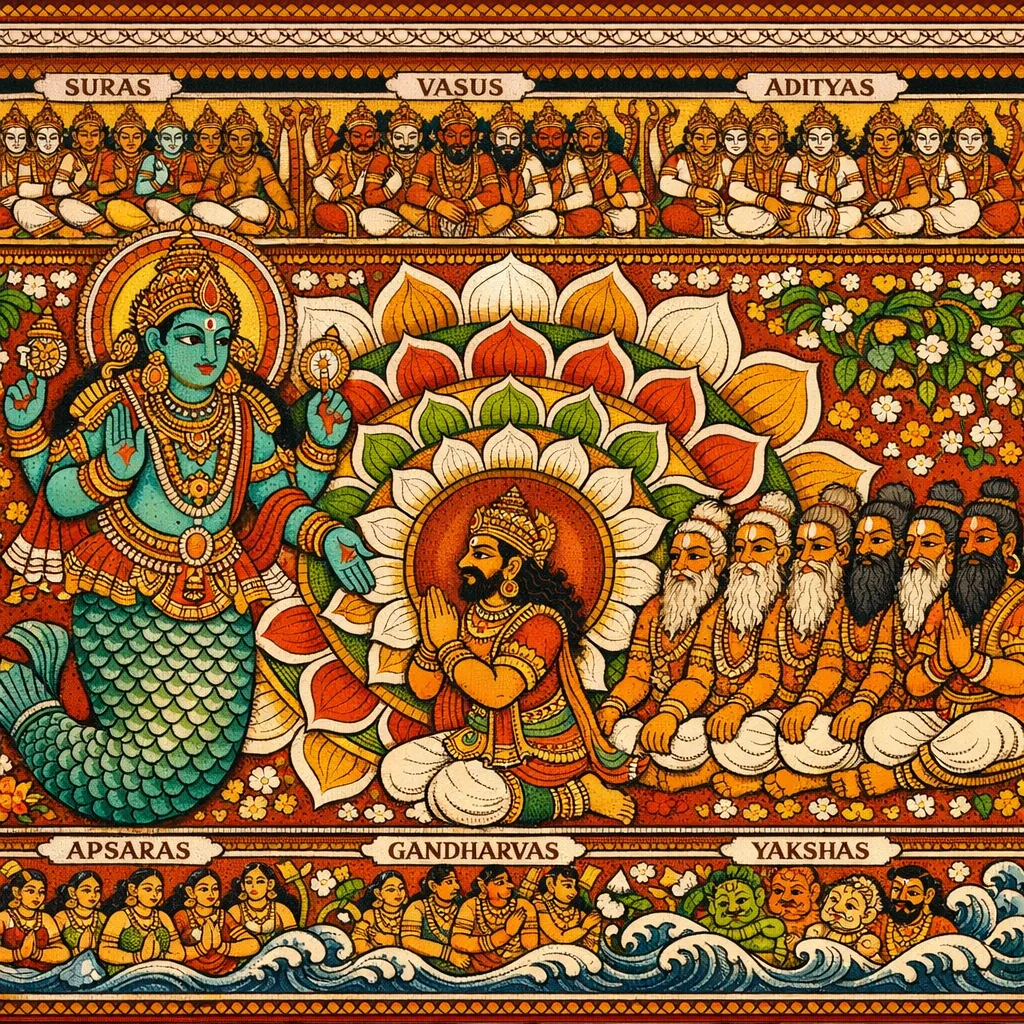
After hearing the earlier teaching, Manu again petitions Janārdana to recount the deeds of the former Manus. Matsya agrees to give a concise yet orderly account of the Manvantaras, their lineages, and the measure of cosmic time. He narrates in sequence: Svāyambhuva (with the Yāmas and lineage-enhancers), Svārociṣa (sons, the Saptarṣis, the Tuṣitas, and Indra Hastīndra), Auttamīya (sons, the Bhāvana gods, the Ṛṣis Ūrjā, and those who strengthen yoga), Tāmasa (the Sādhyas, Ṛṣis, and ten ascetic sons), Raivata (Ṛṣis and deva groups), Cākṣuṣa (the Lekhā gods and five divine “wombs”), and then the present Vaivasvata cycle (the current Saptarṣis and seven classes of devas). Finally, Matsya speaks of the future Sāvarṇi and the subsequent Manus (Raucya, Bhautya, Merusāvarṇi, Ṛta, Ṛtadhāmā, Viṣvaksena), concluding that through these cycles creation repeatedly manifests and is released at the end of the kalpa together with Brahmā.
Key Concepts
Shlokas in Adhyaya 9
Verse 1
*सूत उवाच एवं श्रुत्वा मनुः प्राह पुनरेव जनार्दनम् पूर्वेषां चरितं ब्रूहि मनूनां मधुसूदन //
Sūta said: Having heard thus, Manu again addressed Janārdana: “O Madhusūdana, please recount to me the deeds and life-stories of the earlier Manus.”
Verse 2
*मत्स्य उवाच मन्वन्तराणि राजेन्द्र मनूनां चरितं च यत् प्रमाणं चैव कालस्य तां सृष्टिं च समासतः //
Matsya said: “O king of kings, I shall relate—briefly—the Manvantaras, the deeds and lineages of the Manus, the true measure of cosmic time, and that creation as a whole in summary.”
Verse 3
एकचित्तः प्रशान्तात्मा शृणु मार्तण्डनन्दन यामा नाम पुरा देवा आसन् स्वायम्भुवान्तरे //
With a single-pointed mind and a composed inner self, listen, O son of Mārtaṇḍa (the Sun): in ancient times, during the Svāyambhuva Manvantara, there existed deities known as the Yāmas.
Verse 4
सप्तैव ऋषयः पूर्वे ये मरीच्यादयः स्मृताः आग्नीध्रश्चाग्निबाहुश्च सहः सवन एव च //
Indeed, there were seven ancient sages (ṛṣis), remembered as beginning with Marīci; and (among them were) Āgnīdhra, Agnibāhu, Saha, and also Savana.
Verse 5
ज्योतिष्मान् द्युतिमान् हव्यो मेधा मेधातिथिर् वसुः स्वायम्भुवस्यास्य मनोर् दशैते वंशवर्धनाः //
Jyotiṣmān, Dyutimān, Havya, Medhā, Medhātithi, and Vasu—these are counted among the ten lineage-enhancers (vaṃśa-vardhana) of this Svāyambhuva Manu.
Verse 6
प्रतिसर्गमिमे कृत्वा जग्मुर्यत्परमंपदम् एतत् स्वायम्भुवं प्रोक्तं स्वारोचिषमतः परम् //
Having thus accomplished this secondary creation (pratisarga), they went to the supreme abode. This is declared as the account of the Svāyambhuva Manvantara; from here onward follows the Svārociṣa Manvantara.
Verse 7
स्वारोचिषस्य तनयाश् चत्वारो देववर्चसः नभोनभस्यप्रसृतिभानवः कीर्तिवर्धनाः //
Svārociṣa had four sons, radiant with divine splendor—Nabhonabhas, Prasṛti, Bhānava, and Kīrtivardhana.
Verse 8
दत्तो निश्च्यवनस्तम्बः प्राणः कश्यप एव च और्वो बृहस्पतिश्चैव सप्तैते ऋषयः स्मृताः //
Datta, Niścyavana, Stambha, Prāṇa, and also Kaśyapa; likewise Aurva and Bṛhaspati—these seven are remembered as sages (ṛṣis).
Verse 9
देवाश्च तुषिता नाम स्मृताः स्वारोचिषे ऽन्तरे हस्तीन्द्रः सुकृतो मूर्तिर् आपो ज्योतिरयः स्मयः //
In the Svārociṣa Manvantara, the gods are remembered as the Tuṣitas; the Indra is Hastīndra; and the sages are Sukṛta, Mūrti, Āpa, Jyotiraya, and Smaya.
Verse 10
वसिष्ठस्य सुताः सप्त ये प्रजापतयः स्मृताः द्वितीयमेतत्कथितं मन्वन्तरमतः परम् //
The seven sons of Vasiṣṭha, remembered as Prajāpatis (progenitor-lords), have been spoken of; this is the second Manvantara. Thereafter, the next Manvantara is to be described.
Verse 11
औत्तमीयं प्रवक्ष्यामि तथा मन्वन्तरं शुभम् मनुर्नामौत्तमिर्यत्र दश पुत्रानजीजनत् //
I shall now expound the auspicious Auttamīya Manvantara, wherein the Manu named Auttami begot ten sons.
Verse 12
ईष ऊर्जश्च तर्जश् च शुचिः शुक्रस्तथैव च मधुश् च माधवश्चैव नभस्यो ऽथ नभास्तथा //
These are (also) the month-names: Īṣa, Ūrja, Tarja, Śuci, Śukra, as well as Madhu and Mādhava; and then (the months called) Nabhasya and Nabhas too.
Verse 13
सहः कनीयानेतेषाम् उदारः कीर्तिवर्धनः भावनास् तत्र देवाः स्युर् ऊर्जाः सप्तर्षयः स्मृताः //
Among these, Saha is the youngest; Udāra is the enhancer of fame. In that manvantara, the Bhāvanas are said to be the gods, and the Ūrjās are remembered as the Seven Sages (Saptarṣis).
Verse 14
कौकुरुण्डिश्च दाल्भ्यश्च शङ्गः प्रवहणः शिवः सितश्च सस्मितश्चैव सप्तैते योगवर्धनाः //
Kaukuruṇḍi, Dālbhya, Śaṅga, Pravahaṇa, Śiva, Sita, and Sasmita—these seven are indeed the enhancers of Yoga, whose presence and teaching increase yogic attainment.
Verse 15
मन्वन्तरं चतुर्थं तु तामसं नाम विश्रुतम् कविः पृथुस् तथैवाग्निर् अकपिः कपिरेव च //
The fourth Manvantara is famed by the name Tāmasa. In it are mentioned Kavi, Pṛthu, Agni, Akapi, and also Kapi.
Verse 16
तथैव जल्पधीमानौ मुनयः सप्त तामसे साध्या देवगणा यत्र कथितास्तामसे ऽन्तरे //
Likewise, in the Tāmasa Manvantara there were seven sages, among whom were Jalpa and Dhīmān, and the host of gods called the Sādhyas; all these have been described in the interval of the Tāmasa age.
Verse 17
अकल्मषस् तथा धन्वी तपोमूलस्तपोधनः तपोरतिस्तपस्यश्च तपोद्युतिपरंतपौ //
Also there were Akalmaṣa and Dhanvī—Tapomūla, Tapodhana, Taporati, Tapasya, and Tapodyuti—all supreme ascetics, mighty through austerity and as though scorched by the fire of penance.
Verse 18
तपोभागी तपोयोगी धर्माचाररताः सदा तामसस्य सुताः सर्वे दश वंशविवर्धनाः //
All ten sons of Tāmasa, endowed with the fruits of austerity, devoted to ascetic discipline, and ever delighting in righteous conduct, became increasers of their family lineages.
Verse 19
पञ्चमस्य मनोस् तद्वद् रैवतस्यान्तरं शृणु देवबाहुः सुबाहुश्च पर्जन्यः सोमपो मुनिः //
In the same manner, listen to the interval (Manvantara) of the fifth Manu, Raivata: there were Devabāhu, Subāhu, Parjanya, Somapa, and the sage Muni.
Verse 20
हिरण्यरोमा सप्ताश्वः सप्तैते ऋषयः स्मृताः देवाश्चाभूतरजसस् तथा प्रकृतयः शुभाः //
Hiraṇyaromā and Saptāśva are remembered as among the seven Ṛṣis; and likewise the gods of the Abhūtarajas group, as well as the auspicious Prakṛtis (primordial constituents), are also spoken of.
Verse 21
अरुणस् तत्त्वदर्शी च वित्तवान्हव्यपः कपिः युक्तो निरुत्सुकः सत्त्वो निर्मोहो ऽथ प्रकाशकः //
He is Aruṇa, radiant; a seer of truth, possessed of wealth, a performer of havya-oblations, and swift like a monkey; disciplined and serene, unagitated, established in sattva-purity, free from delusion—indeed, a bringer of illumination.
Verse 22
धर्मवीर्यबलोपेता दशैते रैवतात्मजाः भृगुः सुधामा विरजाः सहिष्णुर्नाद एव च //
Endowed with dharma, valor, and strength—these were the ten sons of Raivata: Bhṛgu, Sudhāmā, Virajā, Sahiṣṇu, and also Nāda among them.
Verse 23
विवस्वानतिनामा च षष्ठे सप्तर्षयो ऽपरे चाक्षुषस्यान्तरे देवा लेखा नाम परिश्रुताः //
In the sixth Manvantara, Vivasvān and Ati are mentioned, and there are other Saptarṣis as well. In the Cākṣuṣa Manvantara, the gods are renowned by the name Lekhā.
Verse 24
ऋभवो ऽथ ऋभाद्याश् च वारिमूला दिवौकसः चाक्षुषस्यान्तरे प्रोक्ता देवानां पञ्च योनयः //
In the Cākṣuṣa Manvantara, five yonis (origins/classes) of the gods are declared: the Ṛbhus; the groups beginning with the Ṛbhus; the water-rooted beings; and the heaven-dwellers.
Verse 25
रुरुप्रभृतयस्तद्वच् चाक्षुषस्य सुता दश प्रोक्ताः स्वायम्भुवे वंशे ये मया पूर्वमेव तु //
Likewise, beginning with Ruru, the ten sons of Cākṣuṣa have already been stated by me earlier in the genealogy of Svāyambhuva.
Verse 26
अन्तरं चाक्षुषं चैतन् मया ते परिकीर्तितम् सप्तमं तत्प्रवक्ष्यामि यद्वैवस्वतमुच्यते //
Thus have I recounted to you this Cākṣuṣa Manvantara. Now I shall expound the seventh, which is called the Vaivasvata (Manvantara).
Verse 27
अत्रिश् चैव वसिष्ठश्च कश्यपो गौतमस्तथा भरद्वाजस्तथा योगी विश्वामित्रः प्रतापवान् //
Here are named Atri and Vasiṣṭha, Kaśyapa and likewise Gautama; Bharadvāja too—and the yogin Viśvāmitra, mighty in splendor.
Verse 28
जमदग्निश्च सप्तैते साम्प्रतं ये महर्षयः कृत्वा धर्मव्यवस्थानं प्रयान्ति परमं पदम् //
And Jamadagni—these seven are the great Ṛṣis of the present age; having established the proper order of dharma, they depart to the supreme state.
Verse 29
साध्या विश्वे च रुद्राश्च मरुतो वसवो ऽश्विनौ आदित्याश्च सुरास्तद्वत् सप्त देवगणाः स्मृताः //
The Sādhyas, the Viśvedevas, the Rudras, the Maruts, the Vasus, the two Aśvins, and the Ādityas—these, likewise, are remembered as the seven classes of divine hosts (deva-gaṇas).
Verse 30
इक्ष्वाकुप्रमुखाश्चास्य दश पुत्राः स्मृता भुवि मन्वन्तरेषु सर्वेषु सप्त सप्त महर्षयः //
Beginning with Ikṣvāku, ten sons of his are remembered on earth; and in every Manvantara there are, indeed, seven great Ṛṣis (the Saptarṣis).
Verse 31
कृत्वा धर्मव्यवस्थानं प्रयान्ति परमं पदम् सावर्ण्यस्य प्रवक्ष्यामि मनोर्भावि तथान्तरम् //
Having established the proper order of dharma, they attain the supreme state. Now I shall expound the Manvantara of Sāvarṇi, and likewise the future succession of the Manus.
Verse 32
अश्वत्थामा शरद्वांश्च कौशिको गालवस्तथा शतानन्दः काश्यपश्च रामश्च ऋषयः स्मृताः //
Aśvatthāmā, Śaradvān, Kauśika, and likewise Gālava; Śatānanda, Kāśyapa, and Rāma—these are remembered in the tradition as revered seers (ṛṣis).
Verse 33
धृतिर् वरीयान् यवसः सुवर्णो वष्टिरेव च चरिष्णुर् ईड्यः सुमतिर् वसुः शुक्रश्च वीर्यवान् //
Steadfastness (Dhṛti), the Most Excellent (Varīyān), Nourishment (Yavas), Gold (Suvarṇa), and Vaṣṭi; also the Wanderer (Cariṣṇu), the Adorable (Īḍya), Right-mindedness (Sumati), Wealth (Vasu), the Bright One (Śukra), and the Powerful (Vīryavān)—these are the revered designations recited in enumeration.
Verse 34
भविष्या दश सावर्णेर् मनोः पुत्राः प्रकीर्तिताः रौच्यादयस्तथान्ये ऽपि मनवः संप्रकीर्तिताः //
In the future, ten sons of Sāvarṇa Manu are proclaimed—beginning with Raucya; and other Manus too are likewise duly enumerated.
Verse 35
रुचेः प्रजापतेः पुत्रो रौच्यो नाम भविष्यति मनुर् भूतिसुतस् तद्वद् भौत्यो नाम भविष्यति //
From Prajāpati Ruci there will be a son named Raucyā; likewise, the Manu who is the son of Bhūti will be known as Bhautya.
Verse 36
ततस्तु मेरुसावर्णिर् ब्रह्मसूनुर् मनुः स्मृतः ऋतश्च ऋतधामा च विष्वक्सेनो मनुस् तथा //
Thereafter, Merusāvarṇi—Brahmā’s son—is remembered as a Manu; likewise Ṛta and Ṛtadhāmā, and also Viṣvaksena, are counted among the Manus.
Verse 37
अतीतानागताश्चैते मनवः परिकीर्तिताः षडूनं युगसाहस्रम् एभिर् व्याप्तं नराधिप //
Thus these Manus—both those who have passed and those yet to come—have been recounted. O king, by them a span of a thousand yuga-cycles, lacking six, is pervaded (that is, fully accounted for).
Verse 38
स्वे स्वे ऽन्तरे सर्वमिदम् उत्पाद्य सचराचरम् कल्पक्षये विनिर्वृत्ते मुच्यन्ते ब्रह्मणा सहा //
In each Manvantara, having brought forth this entire world—both the moving and the unmoving—when the end of the Kalpa arrives and dissolution is complete, they are released together with Brahmā.
Frequently Asked Questions
The chapter teaches a Puranic model of cosmic time: history unfolds through repeating Manvantara cycles, each governed by a Manu, stabilized by seven Saptarṣis who establish dharma, and characterized by specific deva-gaṇas and an Indra-name. This cyclical order culminates at the end of a kalpa, when dissolution occurs and beings are released together with Brahmā.
This adhyāya is primarily Sṛṣṭi/Kāla (creation-time doctrine) and Genealogy (vamśa/lineages of Manus and their sons), with a Rajadharma-adjacent emphasis through “dharma-vyavasthā” established by the Saptarṣis in every Manvantara. Vāstu/architecture is not treated in this chapter.
Atri, Vasiṣṭha, Kaśyapa, Gautama, Bharadvāja, Viśvāmitra, and Jamadagni are listed as the seven great seers of the present age.
Yes. It introduces the future Sāvarṇi cycle and enumerates future Manus including Raucyā (from Prajāpati Ruci), Bhautya (son of Bhūti), Merusāvarṇi (Brahmā’s son), as well as Ṛta, Ṛtadhāmā, and Viṣvaksena.