Adhyaya 231
Duryodhana Seized by Citraseṇa; Kaurava Petition to Yudhiṣṭhira (दुर्योधनापहारः / चित्रसेनगन्धर्वग्रहणम्)
Upa-parva: Gandharva-vijaya / Duryodhana-apahāra Episode (within Āraṇyaka-parva)
Vaiśaṃpāyana reports that after Karṇa is routed, the Dhārtarāṣṭra forces break formation and flee, while Duryodhana alone does not turn away. Seeing the Gandharva host advance, Duryodhana answers with a dense volley of arrows, but the Gandharvas surround his chariot, dismantling its components and disabling mobility. Citraseṇa then captures Duryodhana alive (jīvagrāha), and Gandharvas proceed to bind and carry off additional Kaurava figures (including Duḥśāsana and others) along with royal attendants. As the king is taken, non-combatant groups and camp personnel seek refuge with the Pāṇḍavas. The Pāṇḍavas pursue the abductors; meanwhile, distressed Kaurava ministers approach Yudhiṣṭhira with pleas. Bhīmasena voices a severe assessment: the situation manifests the consequences of misguided counsel and adharmic conduct, and he frames the event as a visible reversal of fortune. Yudhiṣṭhira restrains Bhīma, stating that harsh speech is not timely, thereby reasserting composure and ethical governance amid a volatile strategic moment.
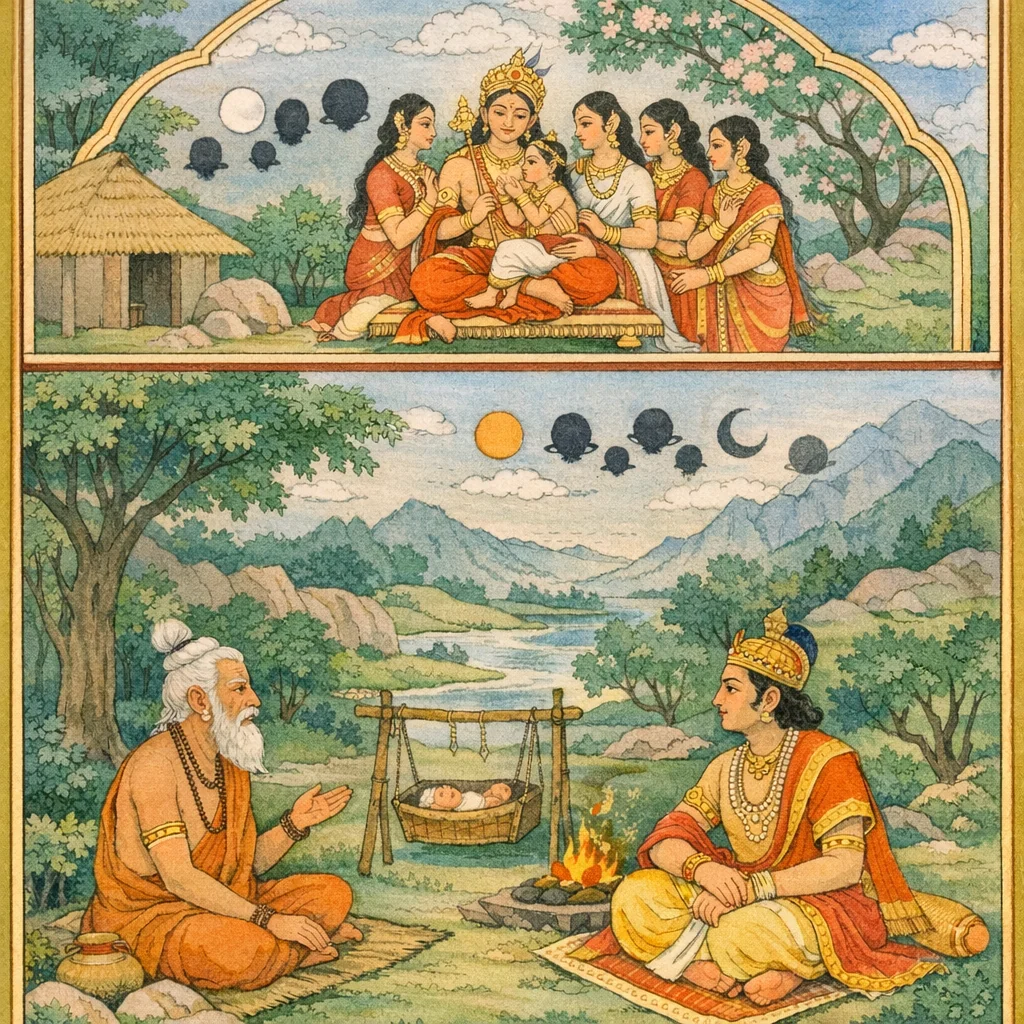
Chapter Arc: Markandeya, in the forest-court of Yudhishthira, turns the listener’s gaze from human exile to a cosmic grievance: the Krittikas—once honored—arrive abandoned by their godlike husbands and stripped of their former sanctity. → The Krittikas lament their unjust rejection and the loss of their worship and progeny, pleading before Skanda, the divine commander. The narrative widens into a catalogue of hostile grahas and fierce female spirits who afflict humans—especially mothers and infants—through miscarriage, stillbirth, and childhood peril, making the world feel besieged by unseen forces. → From Skanda’s very body a blazing, fire-lustrous being bursts forth—an embodiment of punitive, predatory power—signaling that the crisis is not merely social but metaphysical: divine energies themselves can manifest as forces that ‘consume’ human welfare when cosmic order is disturbed. → Markandeya explains the names, natures, and modes of harm of these entities (including Shitaputana), and then pivots to remedy: when properly worshiped, honored, and propitiated, these very powers grant auspiciousness—life, vigor, and protection—rather than loss. → The discourse points forward to continued enumeration and prescriptions—how long children remain vulnerable and which rites, reverences, and protections avert the grahas’ grasp—leaving the listener poised for the next layer of safeguards.
Shlokas
Verse 1
#::73:.8 #::3..7 () हि 2 7 त्रिशर्दाधिकद्वधिशततमो< ध्याय: कृत्तिकाओंको नक्षत्रमण्डलमें स्थानकी प्राप्ति तथा मनुष्योंको कष्ट देनेवाले विविध ग्रहोंका वर्णन मार्कण्डेय उवाच श्रिया जुष्टं महासेनं देवसेनापतिं कृतम् । सप्तर्षिपत्न्य: षड् देव्यस्तत्सकाशमथागमन्,मार्कण्डेयजी कहते हैं--राजन्! कुमार महासेनको श्रीसम्पन्न और देवताओंका सेनापति हुआ देख सप्तर्षियोंमेंसे छः: की पत्नियाँ उनके पास आयीं
Mārkaṇḍeya said: “O King, seeing Kumāra—Mahāsena—endowed with splendor and installed as the commander of the gods’ army, six divine wives of the Seven Ṛṣis came into his presence.”
Verse 2
ऋषिशि: सम्परित्यक्ता धर्मयुक्ता महाव्रता: । द्रुतमागम्य चोचुस्ता देवसेनापतिं प्रभुम्,वे धर्मपरायणा तथा महान् पातिव्रत्यका पालन करनेवाली थीं, तो भी ऋषियोंने उन्हें त्याग दिया था। अतः उन्होंने देवसेनाके स्वामी भगवान् स्कन्दके पास शीघ्रतापूर्वक आकर कहा--
Mārkaṇḍeya said: “Though they were steadfast in dharma and firm in great vows, the sages had abandoned them. Therefore they quickly approached the Lord, the commander of the divine hosts, and spoke to him.”
Verse 3
वयं पुत्र परित्यक्ता भर्तभिददेवसम्मितै: । अकारणाद् रुषा तैस्तु पुण्यस्थानात् परिच्युता:,“बेटा! हमारे देवतुल्य पतियोंने अकारण रुष्ट होकर हमें त्याग दिया है, इसलिये (हम) पुण्यलोकसे च्युत हो गयी हैं
Mārkaṇḍeya said: “My son, our husbands—men regarded as godlike—cast us off. Without any just cause, they became angry and abandoned us; therefore we have fallen away from our meritorious abode.”
Verse 4
अस्माभि: किल जातस्त्वमिति केनाप्युदाह्तम् तत् सत्यमेतत् संश्रुत्य तस्मान्नस्त्रातुमहसि,उन्हें किसीने यह बता दिया है कि तुम हमारे गर्भसे उत्पन्न हुए हो, (परंतु ऐसी बात नहीं है।) अतः हमारे सत्य कथनको सुनकर तुम इस संकटसे हमारी रक्षा करो
‘Someone has spread the report that you were born from our womb. Hear the truth of this matter: it is not so. Having listened to our truthful statement, you ought to protect us from this peril.’
Verse 5
अक्षयश्चव भेवत् स्वर्गस्त्वत्प्रसादाद्धि नः प्रभो । त्वां पुत्रं चाप्यभीप्साम: कृत्वैतदनृणो भव,'प्रभो! तुम्हारी कृपासे हमें अक्षय स्वर्गकी प्राप्ति हो सकती है। इसके सिवा हम तुम्हें अपना पुत्र भी बनाये रखना चाहती हैं। यह सब कार्य सम्पन्न करके तुम हमसे उऋण हो जाओ'
Mārkaṇḍeya said: “O Lord, by your grace we may attain an imperishable heaven. Beyond that, we also desire to keep you as our son. Having accomplished this, be free of any debt to us, O Lord.”
Verse 6
स्कन्द उवाच मातरो हि भवत्यो मे सुतो वो5हमनिन्दिता: । यद्वापीच्छत तत् सर्व सम्भविष्यति वस्तथा,स्कन्द बोले--वन्दनीय सतियो! आपलोग मेरी माताएँ हैं और मैं आप सबका पुत्र हूँ। इसके सिवा यदि आप लोगोंकी और कोई इच्छा हो तो वह भी पूर्ण हो जायगी
Skanda said: “O blameless and venerable ladies, you are truly my mothers, and I am your son. Moreover, whatever else you may desire—every such wish shall likewise be fulfilled for you.”
Verse 7
मार्कण्डेय उवाच विवक्षन्तं तत: शक्रं कि कार्यमिति सो<ब्रवीत् । उक्तः स्कन्देन ब्रूहीति सोडब्रवीद् वासवस्तत:,मार्कण्डेयजी कहते हैं--राजन्! तदनन्तर इन्द्रको कुछ कहनेके लिये उत्सुक देख स्कन्दने पूछा--'क्या काम है, कहिये।” स्कन्दके इस प्रकार आदेश देनेपर इन्द्र बोले --
Mārkaṇḍeya said: Then, seeing Śakra (Indra) eager to speak, Skanda asked him, “What is your purpose—tell me.” Thus addressed by Skanda, Vāsava (Indra) thereupon began to speak.
Verse 8
अभिजित् स्पर्धमाना तु रोहिण्या अनुजा स्वसा | इच्छन्ती ज्येषछ्तां देवी तपस्तप्तुं वनं गता,“रोहिणीकी छोटी बहिन अभिजित् देवी स्पर्धाके कारण ज्येष्ठता पानेकी इच्छासे तपस्या करनेके लिये वनमें चली गयी है
Mārkaṇḍeya said: “Abhijit, the younger sister of Rohiṇī, driven by rivalry and desiring the status of the eldest, went to the forest to undertake austerities.”
Verse 9
तत्र मूढो5स्मि भद्रं ते नक्षत्र गगनाच्च्युतम् काल त्विमं परं स्कन्द ब्रह्मणा सह चिन्तय,“तुम्हारा कल्याण हो, आकाशसे यह एक नक्षत्र च्युत हो गया है; (इसकी पूर्ति कैसे हो?) इस प्रश्नको लेकर मैं किंकर्तव्यविमूढ हो गया हूँ। स्कन्द! तुम ब्रह्माजीके साथ मिलकर इस उत्तम काल (मुहूर्त या नक्षत्र) की पूर्तिके उपायका विचार करो
“In this matter I am utterly perplexed—may good befall you. A star (or auspicious lunar mansion) has fallen from the sky. Therefore, O Skanda, reflect together with Brahmā on how this supreme ‘time’—this auspicious moment or constellation—may be restored.”
Verse 10
धनिष्ठादिस्तदा कालो ब्रह्मणा परिकल्पित: । रोहिणी हाभवत् पूर्वमेवं संख्या समाभवत्,“अभिजितका पतन होनेसे ब्रह्माजीने धनिष्ठासे ही (सत्ययुग आदि) कालकी गणनाका क्रम निश्चित किया (क्योंकि वही उस समय युगादि नक्षत्र था)। इसके पूर्व रोहिणीको ही युगादि नक्षत्र माना जाता था (क्योंकि उसीके प्रारम्भकालमें चन्द्रमा, सूर्य तथा गुरुका योग होता था)--इस प्रकार नाक्षत्र मासकी दिन-संख्या उन दिनों सम थी”
Mārkaṇḍeya said: “At that time, Brahmā established the reckoning of time beginning with Dhaniṣṭhā. Earlier, however, Rohiṇī had been regarded as the starting asterism. Thus, in those days, the count (of days) for the lunar month was held to be even and regular.”
Verse 11
एवमुक्ते तु शक्रेण त्रिदिवं कृत्तिका गता: । नक्षत्र सप्तशीर्षाभं भाति तद् वहल्निदेैवतम्,इन्द्रके उपर्युक्त प्रस्ताव करनेपर उनका आशय समझकर छहों कृत्तिकाएँ अभिजितके स्थानकी पूर्ति करनेके लिये आकाशमें चली गयीं। वह अग्निदेवता-सम्बन्धी कृत्तिका नक्षत्र सात सिरोंकी आकृतिमें प्रकाशित हो रहा है
Mārkaṇḍeya said: “When Śakra (Indra) had spoken thus, the Kṛttikās went up to the heavenly realm. There, that star-formation—presided over by Agni—shone forth in the likeness of seven heads.”
Verse 12
विनता चाब्रवीत् स्कन्दं मम त्वं पिण्डद: सुतः । इच्छामि नित्यमेवाहं त्वया पुत्र सहासितुम्,गरुड़जातीय विनताने स्कन्दसे कहा--“बेटा! तुम मेरे पिण्डदाता पुत्र हो। मैं सदा तुम्हारे साथ रहना चाहती हूँ
Then Vinatā said to Skanda: “My son, you are the one who will offer the funeral oblations (piṇḍa) for me. I wish always to live together with you, my child.”
Verse 13
स्कन्द उवाच एवमस्तु नमस्ते<स्तु पुत्रस्नेहात् प्रशाधि माम् । स्नुषया पूज्यमाना वै देवि वत्स्यसि नित्यदा,स्कन्दने कहा--एवमस्तु (ऐसा ही हो), मा! तुम्हें नमस्कार है। तुम मेरे ऊपर पुत्रोचित स्नेह रखकर कर्तव्यका आदेश देती रहो। देवि! तुम यहाँ सदा अपनी पुत्रवधू देवसेनाद्वारा सम्मानित होकर रहोगी
Skanda said: “So be it. Reverence to you, Mother. Out of a mother’s affection, continue to guide and instruct me in what is to be done. O Goddess, you shall dwell here always, honored and served by your daughter-in-law, Devasenā.”
Verse 14
मार्कण्डेय उदाच अथ मातृगण: सर्व: स्कन्दं वचनमत्रवीत् | वयं सर्वस्य लोकस्य मातर: कविश्नि: स्तुता: । इच्छामो मातरस्तुभ्यं भवितुं पूजयस्व न:,मार्कण्डेयजी कहते हैं--राजन्! तदनन्तर समस्त मातृगणोंने आकर स्कन्दसे कहा --<बेटा! दिद्वानोंने हमें सम्पूर्ण लोकोंकी माताएँ कहकर हमारी स्तुति की है। अब हम तुम्हारी माता होना चाहती हैं। तुम मातृभावसे हमारा पूजन करो”
Mārkaṇḍeya said: Then the entire host of the Mothers approached Skanda and spoke: “We have been praised by the sages as the Mothers of all the worlds. Now we wish to become mothers to you as well. Therefore, honor and worship us with the reverence due to mothers.”
Verse 15
स्कन्द उवाच मातरो हि भवत्यो मे भवतीनामहं सुतः । उच्यतां यन्मया कार्य भवतीनामथेप्सितम्,स्कन्दने कहा--आप मेरी माताएँ हैं। मैं आपलोगोंका पुत्र हूँ। मुझसे सिद्ध होनेयोग्य जो आपका अभीष्ट कार्य हो, उसे बताइये
Skanda said: “You are indeed my mothers, and I am your son. Tell me what task I should accomplish—whatever you desire and which can be fulfilled through me.”
Verse 16
मातर ऊचु: यास्तु ता मातर: पूर्व लोकस्यास्य प्रकल्पिता: । अस्माकं तु भवेत् स्थान तासां चैव न तद् भवेत्,माताओंने कहा--(ब्राह्मी, माहेश्वरी आदि) सुप्रसिद्ध लोकमाताएँ जो पहलेसे इस सम्पूर्ण जगत॒की माताओंके स्थानपर प्रतिष्ठित हों, (वे अपना पद छोड़ दें।) उनके उस स्थानपर अब हमारा अधिकार हो जाय। उनका उसपर कोई अधिकार न रहे
The Mothers said: “Those Mothers who were formerly established as the appointed Mothers of this world—let their station become ours instead. Let that position belong to us, and let it no longer remain theirs.”
Verse 17
भवेम पूज्या लोकस्य न ता: पूज्या: सुरर्षभ | प्रजा5स्माकं हृतास्ताभिस्त्वत्कृते ता: प्रयच्छ न:,सुरश्रेष्ठ! हम सम्पूर्ण जगत्की पूजनीया हों। जो पहले मातृकाएँ थीं, उनकी अब पूजा न हो। उन्होंने तुम्हारे लिये हमपर मिथ्या अपवाद लगाकर हमारे पतियोंको कुपित करके हमारे संतानसुखको छीन लिया है। अतः तुम हमें संतान प्रदान करो (हमारे पतियोंको अनुकूल करके हमें संतान-सुखकी प्राप्ति कराओ)
The Mothers said: “May we become worthy of the world’s reverence, O bull among the gods; and let those (former) Mothers no longer be worshipped. For your sake they have robbed us of our offspring—by casting false blame upon us and inflaming our husbands against us, they have taken away our joy of children. Therefore, O best of the gods, grant us children—restore to us the blessing of progeny by turning our husbands favorable again.”
Verse 18
स्कन्द उवाच वृत्ता: प्रजा न ता: शक््या भवतीभिनिषिवितुम् । अन्यां व: कां प्रयच्छामि प्रजां यां मनसेच्छथ,स्कन्द बोले--माताओ! जिन प्रजाओंकी उत्पत्तिका अवसर बीत गया, उन्हें आपलोग अब नहीं पा सकतीं। यदि दूसरी कोई प्रजा पानेकी आपके मनमें इच्छा हो तो कहिये, मैं उसे प्रदान करूँगा
Skanda said: “Mothers, the time for bringing forth those offspring has passed; you are no longer able to obtain them. If you desire some other kind of progeny in your hearts, speak—whatever progeny you wish for, I shall grant it.”
Verse 19
मातर ऊचु: इच्छाम तासां मातृणां प्रजा भोक्तुं प्रयच्छ नः । त्वया सह पृथग्भूता ये च तासामथेश्वरा:,माताओंने कहा--यदि ऐसी बात है, तो हमें इन लोकमाताओंकी संतानें सौंप दो। हम उन्हें खाना चाहती हैं। तुमसे पृथक् जो उन संतानोंके पिता आदि अभिभावक हैं, उन्हें भी हम खाना चाहती हैं
The Mothers said: “We desire to consume the offspring of those Mother-goddesses; grant them to us. And those who, being separate from you, stand as their lords—fathers and guardians of those children—we wish to devour them as well.”
Verse 20
स्कन्द उवाच प्रजा वो द्मि कष्ट तु भवतीभिरुदाह्ृतम् परिरक्षत भद्ठे व: प्रजा: साधु नमस्कृता:,स्कन्द बोले--देवियो! आपलोगोंने यह दुःखकी बात कही है, तो भी मैं आपको पहलेकी मातृकाओंकी संतानको अर्पित कर देता हूँ; परंतु आपलोग उन सबकी रक्षा करें; इसीसे आपका भला होगा। मैं आपको सादर नमस्कार करता हूँ
Skanda said: “I grant you the offspring you seek; yet the distress you have voiced is grave. Therefore, O auspicious ladies, protect these children well—this will bring you welfare. I bow to you with due reverence.”
Verse 21
मातर ऊचु: परिरक्षाम भद्ठं ते प्रजा: स्कन्द यथेच्छसि । त्वया नो रोचते स्कन्द सहवासभ्षिरं प्रभो,माताओंने कहा--स्कन्द! जैसी तुम्हारी इच्छा है, उसके अनुसार हम उन संतानोंकी रक्षा अवश्य करेंगी। शक्तिशाली कुमार! हमें दीर्घकालतक तुम्हारे साथ रहनेकी इच्छा है
The Mothers said: “O Skanda, for your welfare we shall surely protect the offspring, exactly as you desire. O mighty Lord, we long for the security and blessing of living in your company for a long time.”
Verse 22
स्कन्द उवाच यावत् षोडश वर्षाणि भवन्ति तरुणा: प्रजा: । प्रबाधत मनुष्याणां तावद्रूपै: पृथग्विधै:,स्कन्द बोले--संसारके मनुष्य जबतक सोलह वर्षके तरुण न हो जायूँ, तबतक आप मानव-प्रजाको पृथक्-पृथक् उतने ही रूप धारण करके संताप दे सकती हैं
Skanda said: “So long as human offspring have not yet reached sixteen years and become youthful, you may afflict mankind during that period by assuming as many different forms as you wish.”
Verse 23
अहं च व: प्रदास्यामि रौद्रमात्मानमव्ययम् । परमं॑ तेन सहिता: सुखं वत्स्यथ पूजिता:,मैं आपलोगोंको एक भयंकर एवं अविनाशी पुरुष प्रदान करूँगा, जो मेरा अभिन्न स्वरूप होगा। उसके साथ सम्मानपूर्वक रहकर आपलोग परम सुखकी भागिनी होंगी
Skanda said: “I too shall grant you an imperishable, awe-inspiring being—one who is my very own essence. United with him, and living in honored companionship, you will dwell in the highest happiness.”
Verse 24
मार्कण्डेय उवाच तत:ः शरीरात् स्कन्दस्य पुरुष: पावकप्रभ: । भोक्तुं प्रजा: स मर्त्यानां निष्पपात महाप्रभ:,मार्कण्डेयजी कहते हैं--राजन्! तदनन्तर स्कन्दके शरीरसे अग्निके समान तेजस्वी तथा परम कान्तिमान् एक पुरुष प्रकट हुआ, जो समस्त मानव-प्रजाको खा जानेकी इच्छा रखता था
Mārkaṇḍeya said: “Then, from Skanda’s body there sprang forth a man radiant as fire, of mighty splendor—seeming to hunger to devour all the race of mortals.”
Verse 25
अपतत् सहसा भूमौ विसंज्ञो5थ क्षुधार्दित: । स्कन्देन सो<भ्यनुज्ञातो रौद्ररूपो5भवद् ग्रह:,वह पैदा होते ही भूखसे पीडित हो सहसा अचेत होकर पृथ्वीपर गिर पड़ा। फिर स्कन्दकी आज्ञासे वह भयंकर रूपधारी ग्रह हो गया
Mārkaṇḍeya said: Struck by hunger, he suddenly fell to the ground unconscious. Then, with Skanda’s sanction, he became a fearsome, wrathful graha—an afflicting spirit-force—set loose to seize and torment.
Verse 26
स्कन्दापस्मारमित्याहुर्ग्रहं तं द्विजसत्तमा: । विनता तु महारौद्रा कथ्यते शकुनिग्रह:,श्रेष्ठ द्विज! इस ग्रहको 'स्कन्दापस्मार' कहते हैं। इसी प्रकार अत्यन्त रौद्र रूप धारण करनेवाली विनताको “शकुनि ग्रह” बताया जाता है
Markandeya said: “O best of the twice-born, the foremost Brahmins describe that afflicting spirit as ‘Skandāpasmarā.’ Likewise, Vinatā—assuming a most terrifying form—is spoken of as the ‘Śakuni-graha,’ a baleful seizure associated with ominous birds.”
Verse 27
पूतनां राक्षसीं प्राहुस्तं विद्यात् पूतनाग्रहम् । कष्टा दारुणरूपेण घोररूपा निशाचरी,पूतनाको राक्षसी बताया गया है, उसे “पूतनाग्रह” समझना चाहिये। वह भयंकर रूप धारण करनेवाली निशाचरी बड़ी क्रूरताके साथ बालकोंको कष्ट पहुँचाती है
Mārkaṇḍeya said: “They describe Pūtanā as a rākṣasī; one should recognize her as the ‘Pūtanā-graha’—a malignant, seizing spirit. Taking on a harsh and terrifying form, this night-roaming being cruelly afflicts children.”
Verse 28
पिशाची दारुणाकारा कथ्यते शीतपूतना । गर्भान् सा मानुषीणां तु हरते घोरदर्शना,इसके सिवा भयानक आकारवाली एक पिशाची है, जिसे “शीतपूतना” कहते हैं, वह देखनेमें बड़ी डरावनी है। वह मानवी स्त्रियोंका गर्भ हर ले जाती है
Mārkaṇḍeya said: “There is a fierce-looking female demon known as Śītapūtanā. Terrifying to behold, she steals away the embryos of human women.”
Verse 29
अदितिं रेवतीं प्राहु्ग्रहस्तस्यास्तु रैवत: । सो<5पि बालान् महाघोरो बाधते वै महाग्रह:,लोग अदिति देवीको रेवती कहते हैं। रेवतीके ग्रहका नाम रैवत है। वह महाभयंकर महान् ग्रह भी बालकोंको बड़ा कष्ट देता है
Mārkaṇḍeya said: “Aditi is also known as Revatī; and the planetary affliction (graha) associated with her is called Raivata. That mighty and exceedingly dreadful graha, too, brings severe suffering upon children.”
Verse 30
दैत्यानां या दितिर्माता तामाहुर्मुखमण्डिकाम् । अत्यर्थ शिशुमांसेन सम्प्रह्शा दुरासदा,दैत्योंकी माता जो दिति है, उसे “मुखमण्डिका” कहते हैं। वह छोटे बच्चोंके मांससे अधिक प्रसन्न होती है। उसे पराजित करना अत्यन्त कठिन है
Mārkaṇḍeya said: “Diti, the mother of the Daityas, is known by the name Mukhamaṇḍikā. She is exceedingly delighted by the flesh of infants, and she is very difficult to overcome.”
Verse 31
कुमाराश्च कुमार्यश्न ये प्रोक्ता: स्कन्दसम्भवा: । तेडपि गर्भभुज: सर्वे कौरव्य सुमहाग्रहा:,कुरुनन्दन! स्कन्दके शरीरसे उत्पन्न हुए जिन कुमार एवं कुमारियोंका वर्णन किया गया है, वे सभी गर्भस्थ बालकोंका भक्षण करनेवाले महान् ग्रह हैं
Mārkaṇḍeya said: “Those boys and girls who are described as born from Skanda—O scion of the Kurus—are all, indeed, mighty ‘seizers’ (grahas) who prey upon embryos in the womb.”
Verse 32
तासामेव तु पत्नीनां पतयस्ते प्रकीर्तिता: । आजायमानान् गृह्नन्ति बालकान् रौद्रकर्मिण:,वे कुमार उन्हीं पत्नीस्वरूपा कुमारियोंके पति कहे गये हैं। उनके कर्म बड़े भयंकर हैं। वे जन्म लेनेके पहले ही बच्चोंको पकड़ ले जाते हैं
Markandeya said: “Those very beings are spoken of as the ‘husbands’ of those maiden-like wives. Their deeds are fierce and dreadful: they seize infants even as they are about to be born.”
Verse 33
गवां माता तु या प्राज्जै: कथ्यते सुरभिरननप । शकुनिस्तामथारुह् सह भुड्धक्ते शिशून् भुवि,राजन! विद्वान् पुरुष जिसे गोमाता सुरभि कहते हैं, उसीपर आरूढ़ होकर शकुनिग्रह ->-विनता अन्य ग्रहोंके साथ भूमण्डलके बालकोंका भक्षण करती है
Mārkaṇḍeya said: “O blameless king, that being whom the wise call Surabhi, the Mother of cows—upon her the demoness Śakunī mounts, and together with her host of spirits she preys upon the infants of the earth. Thus the world’s most innocent become the victims of a perverted power that violates the natural order and dharma.”
Verse 34
सरमा नाम या माता शुनां देवी जनाधिप । सापि गर्भान् समादत्ते मानुषीणां सदैव हि,नरेश्वर! कुत्तोंकी माता जो देवजातीय सरमा है, वह भी सदैव मानवीय स्त्रियोंके गर्भस्थ बालकोंका अपहरण करती रहती है
Mārkaṇḍeya said: “O lord of men, Saramā—the divine mother of dogs—also, indeed, continually seizes the unborn offspring from the wombs of human women.” The statement underscores a moral warning: even beings of divine origin may act harmfully, and rulers must remain vigilant against hidden, recurring sources of suffering that violate the protection owed to the vulnerable.
Verse 35
पादपानां च या माता करञ्जनिलया हि सा । वरदा सा हि सौम्या च नित्यं भूतानुकम्पिनी,जो वृक्षोंकी माता है, वह करंजवृक्षपर निवास किया करती है। वह वर देनेवाली तथा सौम्य है और सदा समस्त प्राणियोंपर कृपा करती है
Mārkaṇḍeya said: “She who is the mother of trees dwells upon the karañja tree. Gentle by nature and a giver of boons, she is ever compassionate toward all living beings.”
Verse 36
करज्जे तां नमस्यन्ति तस्मात् पुत्रार्थिनो नरा: । इमे त्वष्टादशान्ये वै ग्रहा मांसमधुप्रिया:
Therefore people who long for sons bow down to her at the Karajja. And these other eighteen, indeed, are grahas—seizing spirits—who are fond of meat and honey, and whose propitiation is sought to avert their harmful grasp.
Verse 37
द्विपज्चरात्र॑ तिष्ठन्ति सततं सूतिकागृहे । कद्रू: सूक्ष्मवपुर्भूत्वा गर्भिणीं प्रविशत्यथ
Mārkaṇḍeya said: “For two nights and five nights they remain continually in the lying-in chamber. Then Kadrū, assuming an exceedingly subtle form, enters the pregnant one.”
Verse 38
भुडुक्ते सा तत्र तं गर्भ सा तु नागं प्रसूयते । इसीलिये पुत्रार्थी मनुष्य करंजवृक्षपर रहनेवाली उस देवीको नमस्कार करते हैं। ये तथा दूसरे अठारह ग्रह मांस और मधुके प्रेमी हैं और दस राततक सूतिका-गृहमें निरन्तर टिके रहते हैं। कटद्रू सूक्ष्म शरीर धारण करके गर्भिणी स्त्रीके शरीरके भीतर प्रवेश कर जाती है और वहाँ उस गर्भको खा जाती है। इससे वह गर्भिणी स्त्री सर्प पैदा करती है || ३६-३७ ३ || गन्धर्वाणां तु या माता सा गर्भ गृह गच्छति
Mārkaṇḍeya said: “There she devours the embryo; and thus the woman gives birth to a serpent. And she who is called the Mother of the Gandharvas goes to the lying-in chamber.”
Verse 39
या जनित्री त्वप्सरसां गर्भमास्ते प्रगृह्ा सा
Mārkaṇḍeya said: “She who is the mother of the Apsarases is now bearing a pregnancy, holding it within herself.”
Verse 40
लोहितस्योदथे: कन्या धात्री स्कन्दस्यथ सा स्मृता
Mārkaṇḍeya said: “She is known as the daughter of Lohita’s ocean, and she is remembered as the nurse (foster-mother) of Skanda.”
Verse 41
लोहितायनिरित्येवं कदम्बे सा हि पूज्यते । लालसागरकी कन्याका नाम लोहितायनि है, जिसे स्कन्दकी धाय बताया गया है। उसकी कठम्बवृक्षोंमें पूजा की जाती है || ४० $ || पुरुषेषु यथा रुद्रस्तथा5<र्या प्रमदास्वपि,यावत् षोडश वर्षाणि शिशूनां हाशिवास्तत: । जैसे पुरुषोंमें भगवान् रुद्र श्रेष्ठ हैं, उसी प्रकार स्त्रियोंमें आर्या उत्तम मानी गयी हैं। आर्या कुमार कार्तिकेयकी जननी हैं। लोग अपने अभीष्टकी सिद्धिके लिये उनका उपर्युक्त ग्रहोंसे पृथक् पूजन करते हैं। इस प्रकार मैंने ये कुमारसम्बन्धी महान् ग्रह बताये हैं। जबतक सोलह वर्षकी अवस्था न हो जाय, तबतक ये बालकोंका अमंगल करनेवाले होते हैं
Mārkaṇḍeya said: “She is indeed worshipped in the kadamba groves under the name ‘Lohitāyanī’. And just as Rudra is held supreme among men, so too is Āryā regarded as foremost among women. Up to the age of sixteen, these (graha-like forces connected with Kumāra/Skanda) are said to bring ill to children.”
Verse 42
आर्या माता कुमारस्य पृथक् कामार्थमिज्यते । एवमेते कुमाराणां मया प्रोक्ता महाग्रहा:
Mārkaṇḍeya said: “The venerable Mother of the youthful deity is worshipped separately for the sake of desired attainments. In this very manner, I have explained to you these mighty ‘seizers’ (powerful afflictive forces) that beset children.”
Verse 43
ये च मातृगणाः प्रोक्ता: पुरुषाश्चैव ये ग्रहा:,सर्वे स्कन्दग्रहा नाम ज्ञेया नित्यं शरीरिभि: । जो मातृगण और पुरुषग्रह बताये गये हैं, इन सबको समस्त देहधारी मनुष्य सदा 'स्कन्दग्रह” के नामसे जाने-
Mārkaṇḍeya said: “All those groups of Mother-spirits that have been described, and all those male seizing spirits (grahas) as well—every one of them should always be recognized by embodied beings as ‘Skanda-grahas.’”
Verse 44
|। तेषां प्रशमनं कार्य स्नान धूपमथाञ्जनम् | बलिकर्मोपहाराशक्ष् स्कन्दस्येज्याविशेषत:,स्नान, धूप, अज्जन, बलिकर्म, उपहार अर्पण तथा स्कन्ददेवकी विशेष पूजा करके इन स्कन्दग्रहोंकी शान्ति करनी चाहिये
Markandeya said: “To pacify those (Skanda-afflicting forces), one should perform rites of appeasement—ritual bathing, offering of incense, and application of protective unguents; along with bali-offerings and other presentations. In particular, this should be done through special worship offered to Skanda.”
Verse 45
एवमभ्यर्चिता: सर्वे प्रयच्छन्ति शुभं नृणाम् आयुर्वीर्य च राजेन्द्र सम्यक्पूजानमस्कृता:,राजेन्द्र! इस प्रकार पूजित तथा विधिवत् पूजनद्वारा अभिवन्दित होनेपर वे सभी ग्रह मनुष्योंका मंगल करते हैं और उन्हें आयु तथा बल देते हैं
Mārkaṇḍeya said: “Thus duly worshipped and properly honored with reverent salutations, all those grahas bestow auspiciousness upon people, O king; they grant them longevity and strength.”
Verse 46
ऊर्ध्व॑ तु षोडशाद् वर्षाद् ये भवन्ति ग्रहा नृणाम् । तानहं सम्प्रवक्ष्यामि नमस्कृत्य महेश्वरम्,अब मैं भगवान् महेश्वरको नमस्कार करके उन ग्रहोंका परिचय दूँगा, जो सोलह वर्षकी अवस्थाके बाद मनुष्योंके लिये अनिष्टकारक होते हैं
Markandeya said: “Now I shall describe those malignant ‘seizers’ (grahas) that afflict human beings after the age of sixteen. First, having bowed in reverence to Lord Maheśvara, I will set forth their nature.”
Verse 47
यः पश्यति नरो देवान् जाग्रदू वा शयितोडपि वा । उन्माद्यति स तुक्षिप्रं तं तु देवग्रह॑ विदु:,जो मनुष्य जागते या सोतेमें देवताओंको देखता और तुरंत पागल हो जाता है, उस वष्ट देनेवाले ग्रहको 'देवग्रह” कहते हैं
Mārkaṇḍeya said: “If a man sees the gods—whether he is awake or even lying asleep—and he quickly falls into madness, the wise recognize that affliction as ‘devagraha’, a divine seizure.”
Verse 48
आसीनश्च शयानश्व यः पश्यति नरः पितृन् | उन्माद्यति स तु क्षिप्रं स ज्ञेयस्तु पितृग्रह:,जो मनुष्य बैठे-बैठे या सोते समय पितरोंको देखता और शीघ्र पागल हो जाता है, उस बाधा देनेवाले ग्रहको 'पितृग्रह” जानना चाहिये
Mārkaṇḍeya said: “If a man, whether sitting or lying down, begins to see the departed ancestors, and soon thereafter falls into madness, that afflicting spirit is to be recognized as the ‘Pitṛ-graha’—the seizure associated with the Pitṛs.”
Verse 49
अवमन्यति यः सिद्धान् क्रुद्धाश्नापि शपन्ति यम् । उन्माद्यति स तु क्षिप्र॑ ज्ञेयः सिद्धग्रहस्तु सः,जो सिद्ध पुरुषोंका अनादर करता है और क्रोधमें आकर वे सिद्ध पुरुष जिसे शाप दे देते हैं, जिसके कारण वह तुरंत पागल हो जाता है, उसे 'सिद्धग्रह” की बाधा प्राप्त हुई है, ऐसा समझना चाहिये
Mārkaṇḍeya said: “Whoever shows contempt for accomplished holy beings (siddhas), and whom those siddhas—angered—curse, so that he quickly falls into madness: he should be understood as one afflicted by the ‘seizure of the siddhas’ (siddha-graha).”
Verse 50
उपाघ्राति च यो गन्धान् रसांश्वापि पृथग्विधान् | उन्माद्यति स तु क्षिप्रं स ज्ञेयो राक्षसो ग्रह:
Mārkaṇḍeya said: “That being who sniffs out scents and also tastes various distinct flavors, and who quickly drives a person into madness—know him to be a rākṣasa-like possessing spirit.”
Verse 51
जो विभिन्न सुगन्धोंको सूँघता तथा रसोंका आस्वादन करता है एवं तत्काल ही उन्मत्त हो उठता है, उसपर प्रभाव डालनेवाले ग्रहको 'राक्षसग्रह” जानना चाहिये ।। गन्धर्वाश्चापि यं॑ दिव्या: संविशन्ति नरं भुवि । उन्माद्यति स तु क्षिप्रं ग्रहो गान्धर्व एव सः,भूतलपर जिस मनुष्यमें दिव्य गन्धवॉका आवेश होता है, वह भी शीघ्र ही उन्मादग्रस्त हो जाता है। इसे “गान्धर्वग्रह" की ही बाधा समझनी चाहिये
Mārkaṇḍeya said: “If a man keeps sniffing many kinds of fragrances and tasting various flavors, and then suddenly becomes deranged, the possessing force that seizes him should be understood as the ‘Rākṣasa-grasp.’ Likewise, when divine Gandharvas enter a man upon the earth, he quickly falls into madness; that affliction is to be recognized as the ‘Gāndharva-grasp.’”
Verse 52
अधिरोहन्ति यं नित्यं पिशाचा: पुरुष॑ प्रति । उन्माद्यति स तु क्षिप्रं ग्रह: पैशाच एव स:,जिस पुरुषपर सदा पिशाच चढ़े रहते हैं, वह भी शीघ्र पागल हो जाता है। अतः वह 'पिशाचग्रह' की ही बाधा है
Markandeya said: “The man upon whom piśācas continually fasten is quickly driven into madness; therefore, this affliction is indeed the very ‘piśāca-grasp’ (a demonic seizure).”
Verse 53
आविशन्ति च यं यक्षा: पुरुष कालपर्यये । उन्माद्यति स तु क्षिप्रं ज्ञेयो यक्षग्रहस्तु सः,कालक्रमसे जिस पुरुषमें यक्षोंका आवेश होता है, उसे भी पागल होते देर नहीं लगती। इसे 'यक्षग्रह' की बाधा जाननी चाहिये
Mārkaṇḍeya said: “When, at a fateful turning of time, Yakṣas enter and seize a man, he quickly falls into madness. Know this affliction as ‘yakṣa-graha’—a possession by Yakṣas.”
Verse 54
यस्य दोषै: प्रकुपितं चित्त मुह्मति देहिन: । उन्माद्यति स तु क्षिप्रं साधनं तस्य शास्त्रत:,जिस देहधारी मनुष्यका चित्त वात, पित्त और कफ नामक दोषोंके कुपित होनेसे अपनी संज्ञा खो बैठता है, वह शीघ्र ही विक्षिप्त हो जाता है। उसकी वैद्यक शास्त्रके अनुसार चिकित्सा करानी चाहिये
Mārkaṇḍeya said: “When a living person’s mind becomes bewildered and loses clarity because the bodily humors (vāta, pitta, and kapha) are aggravated, he quickly falls into derangement. Therefore, his condition should be treated promptly according to the medical science laid down in the śāstras.”
Verse 55
वैक्लव्याच्च भयाच्चैव घोराणां चापि दर्शनात् । उन्माद्यति स तु क्षिप्रं सान्त्वं तस्प तु साधनम्,जो घबराहट, भय तथा घोर वस्तुओंके दर्शनसे ही तत्काल पागल हो जाता है, उनके अच्छे होनेका उपाय केवल उसे सान्त्वना देना है
Markandeya said: ‘From sheer helplessness and fear, and even from the sight of terrifying things, he quickly falls into madness. In such a case, the practical remedy for him is reassurance—calming words and consoling support.’
Verse 56
वश्चित् क्रीडितुकामो वै भोक्तुकामस्तथापर: । अभिकामस्तथैवान्य इत्येष त्रिविधो ग्रह:,कोई ग्रह क्रीडा-विनोदकी, कोई भोजनकी और कोई कामोपभोगकी इच्छा रखता है, इस प्रकार ग्रहोंकी प्रकृति तीन प्रकारकी है
Mārkaṇḍeya said: “One (type) is driven by the wish to play and sport; another is driven by the wish to eat; and yet another is driven by the wish for sensual enjoyment. Thus, the ‘seizing force’ (graha) is of three kinds.”
Verse 57
यावत् सप्ततिवर्षाणि भवन्त्येते ग्रहा नृणाम् । अतः: पर देहिनां तु ग्रहतुल्यो भवेज्ज्वर:,जबतक सत्तर वर्षकी अवस्था पूरी होती है, तबतक ये ग्रह मनुष्योंको सताते हैं। उसके बाद तो सभी देहधारियोंको ज्वर आदि रोग ही ग्रहोंके समान सताने लगते हैं
Mārkaṇḍeya said: “So long as a man’s life has not yet reached seventy years, these ‘grahas’ (seizing afflictions) are said to trouble human beings. But after that point, for embodied creatures, fever and similar illnesses themselves become like grahas—seizing and tormenting the body.”
Verse 58
अप्रकीर्णेन्द्रियं दान्तं शुचिं नित्यमतन्द्रितम् । आस्तिकं श्रद्धधानं च वर्जयन्ति सदा ग्रहा:,जिसने अपनी इन्द्रियोंको सब ओरसे समेट लिया है, जो जितेन्द्रिय, पवित्र, नित्य आलस्यरहित, आस्तिक तथा श्रद्धालु है, उस पुरुषको ग्रह कभी नहीं छेड़ते हैं--उसे दूरसे ही त्याग देते हैं
Mārkaṇḍeya said: The grahas (planetary influences) always keep away from a man whose senses are not scattered, who is self-controlled, pure, ever vigilant and free from sloth, and who believes in dharma with faith. Such a person is not harassed by astral afflictions; they abandon him from afar.
Verse 59
इत्येष ते ग्रहोद्देशो मानुषाणां प्रकीर्तित: । न स्पृशन्ति ग्रहा भक्तान् नरान् देवं महेश्वरम्,राजन! इस प्रकार मैंने मनुष्योंको जो ग्रहोंकी बाधा प्राप्त होती है, उसका संक्षेपसे वर्णन किया है। जो भगवान् महेश्वरके भक्त हैं, उन मनुष्योंको भी ये ग्रह नहीं छूते हैं
Markandeya said: “Thus I have briefly set forth for you the account of the planetary afflictions that befall human beings. Yet these malignant influences do not touch those men, O king, who are devoted to the god Maheśvara. The teaching is clear: steadfast devotion and a life oriented to dharma provide a higher refuge than fear of omens and astral forces.”
Verse 229
इस प्रकार श्रीमहाभारत वनपर्वके अन्तर्गत मार्कण्डेयसमास्यापर्वमें आंगिरसोपाख्यानके प्रसंगरें स्कन्दोपाख्यानसम्बन्धी दो सौ उनतीसवाँ अध्याय पूरा हुआ ॥/
Thus ends the two hundred and twenty-ninth chapter concerning the Skanda episode, occurring within the context of the Āṅgirasa sub-narrative, in the Mārkaṇḍeya-samāsyā section of the Vana Parva of the Śrī Mahābhārata. This is a colophon marking the completion of the chapter rather than a spoken doctrinal verse.
Verse 230
इति श्रीमहाभारते वनपर्वणि मार्कण्डेयसमास्यापर्वणि आज्िरसे मनुष्यग्रहकथने त्रिंशदधिकद्विशततमो<ध्याय:
Thus, in the Śrī Mahābhārata, within the Vana Parva—specifically in the section summarizing Mārkaṇḍeya’s discourse—ends the two-hundred-and-thirtieth chapter, in the episode concerning Ājīrasa and the account of the man-eater. The colophon marks the close of this unit, signaling a transition in the narrative and preserving the ethical frame of the tale as a remembered instruction.
Verse 386
ततो विलीनगर्भा सा मानुषी भुवि दृश्यते । जो गन्धर्वोकी माता है, वह गर्भिणी स्त्रीके गर्भभो लेकर चल देती है, जिससे उस मानवी स्त्रीका गर्भ विलीन हुआ देखा जाता है
Then that human woman is seen on the earth with her pregnancy dissolved—her womb emptied—showing that her conception has been made to vanish by another’s intervention. In the narrative frame, this underscores the vulnerability of ordinary human life before beings of greater power, and it raises an ethical tension about the misuse of extraordinary abilities against the innocent.
Verse 396
उपनष्ट ततो गर्भ कथयन्ति मनीषिण: । जो अप्सराओंकी माता है, वह भी गर्भको पकड़ लेती है, जिससे बुद्धिमान् मनुष्य कहते हैं कि अमुक स्त्रीका गर्भ नष्ट हो गया
Then they say the embryo has been lost. The wise describe it thus: when the womb is seized and the pregnancy fails, people conclude, “This woman’s conception has perished.”
Verse 423
यावत् षोडश वर्षाणि शिशूनां हाशिवास्तत: । जैसे पुरुषोंमें भगवान् रुद्र श्रेष्ठ हैं, उसी प्रकार स्त्रियोंमें आर्या उत्तम मानी गयी हैं। आर्या कुमार कार्तिकेयकी जननी हैं। लोग अपने अभीष्टकी सिद्धिके लिये उनका उपर्युक्त ग्रहोंसे पृथक् पूजन करते हैं। इस प्रकार मैंने ये कुमारसम्बन्धी महान् ग्रह बताये हैं। जबतक सोलह वर्षकी अवस्था न हो जाय, तबतक ये बालकोंका अमंगल करनेवाले होते हैं
Mārkaṇḍeya said: “Up to the age of sixteen, these grahas are regarded as inauspicious influences upon children. Just as Lord Rudra is held to be the foremost among men, so among women Āryā is considered supreme. Āryā is the mother of Kumāra Kārttikeya. People, seeking the fulfillment of their desired aims, worship her separately from the aforesaid grahas. Thus I have described these great grahas connected with Kumāra; until a child reaches sixteen years of age, they are said to bring misfortune to the young.”
Frequently Asked Questions
Whether to treat an adversary’s public humiliation and capture as an opportunity for retaliation or as a moment requiring restraint, measured speech, and principled conduct toward petitioners seeking refuge.
Bhīma articulates consequence-based critique of adharmic behavior, while Yudhiṣṭhira emphasizes timely restraint and governance-minded speech—teaching that ethical authority is maintained by composure even when vindication seems available.
No explicit phalaśruti is presented here; the chapter functions as narrative-ethical exemplification, embedding its instruction in the consequences of conduct and in Yudhiṣṭhira’s regulation of speech and response.