Adhyaya 142
Udyoga Parva 142: Vidura’s warning to Kuntī and Kuntī’s resolve to meet Karṇa (Gaṅgātīra encounter begins)
Upa-parva: Kuntī–Karṇa Saṃvāda (Kuntī’s approach to Karṇa on the Gaṅgā bank)
Vaiśaṃpāyana narrates that, with Kṛṣṇa’s conciliation unsuccessful and the Pāṇḍavas returned from the Kurus, Vidura approaches Kuntī in grief and speaks of the worsening situation: Duryodhana refuses counsel; Yudhiṣṭhira, though settled at Upaplavya, still seeks kin-harmony; Dhṛtarāṣṭra’s age does not restrain him from partiality born of attachment to his son; and divisive influence is attributed to key partisans (including Karṇa, Jayadratha, Duḥśāsana, and Śakuni). Vidura anticipates a destructive course and sleeplessly worries about the resulting loss. Kuntī, distressed, reflects on the futility of wealth and victory purchased by kinsmen’s destruction, and fears formidable elders and teachers aligned with the Kauravas. She identifies Karṇa’s persistent hostility as especially consequential, then recalls the earlier boon granted by Durvāsā and her youthful invocation of Sūrya that led to Karṇa’s birth. Concluding that she must attempt to soften Karṇa toward the Pāṇḍavas, she goes to the Bhāgīrathī. Hearing Karṇa’s Vedic recitation at the riverbank, she stands behind him, waiting until he completes his japa; when he turns, he greets her with proper respect, and the encounter is formally set for the ensuing dialogue.
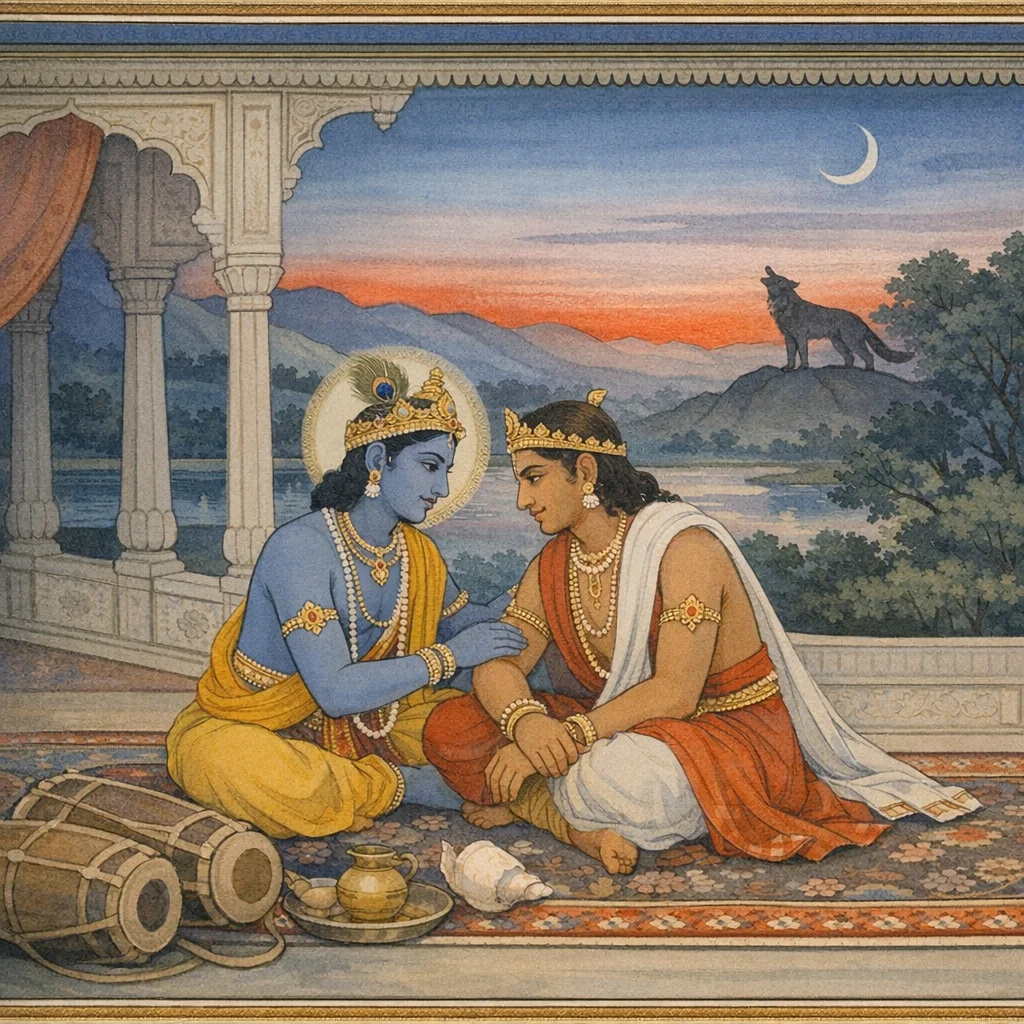
Chapter Arc: कृष्ण के समक्ष कर्ण अपने भीतर उठते अनिष्ट-संकेतों और स्वप्न-छायाओं का द्वार खोलता है—मानो युद्ध का भविष्य पहले ही आकाश में लिख दिया गया हो। → कर्ण कृष्ण से कहता है कि आप सब जानते हुए भी मुझे मोह में क्यों डालना चाहते हैं; विनाश उपस्थित है, और इस विनाश के निमित्त शकुनि, दुःशासन, दुर्योधन तथा धृतराष्ट्र-पुत्रों की हठधर्मिता है। फिर वह विचित्र अपशकुनों का क्रम गिनाता है—सेनाओं में वाद्यों का न बजना, संध्याओं में शिवा का घोर रुदन, दिशाओं का रक्त-शस्त्र-रंग होना, और देह-प्रकृति तक में विकृति के संकेत। → कर्ण निर्णायक स्वर में भविष्यवाणी-सा निष्कर्ष रखता है: ये लक्षण पाण्डवों की विजय और कौरवों की पराजय बताते हैं; स्वयं कर्ण भी भीतर से दीन-चित्त हो उठता है, फिर भी अपने पक्ष-बंधन को नहीं तोड़ता। → अपशकुनों की सूची और कारण-निर्देश के बाद संवाद एक कठोर सत्य पर टिकता है—पराजय का ज्ञान होते हुए भी कर्ण का संकल्प दुर्योधन के साथ बना रहता है; कृष्ण की नीति-भाषा और कर्ण की प्रतिज्ञा एक-दूसरे को काटती हुई आगे के निर्णयों की भूमि तैयार करती है। → कर्ण स्वर्ण-विभूषित रथ पर चढ़कर लौटता है; उधर कृष्ण सात्यकि सहित शीघ्र प्रस्थान करते हैं और सारथि से बार-बार कहते हैं—“चलो, चलो”—मानो अगले ही क्षण कोई निर्णायक कूटनीतिक मोड़ आने वाला हो।
Shlokas
Verse 1
अपन हत< बक। ] अंक: त्रिचत्वारिशर्दाधिकशततमो< ध्याय: कर्णके द्वारा पाण्डवोंकी विजय और कौरवोंकी पराजय सूचित करनेवाले लक्षणों एवं अपने स्वप्रका वर्णन संजय उवाच केशवस्य तु तद् वाक्य कर्ण: श्रुत्वा हितं शुभम् । अब्रवीदभिसम्पूज्य कृष्णं तं मधुसूदनम्,संजय कहते हैं--राजन्! भगवान् केशवका वह हितकर एवं कल्याणकारी वचन सुनकर कर्ण मधुसूदन श्रीकृष्णके प्रति सम्मानका भाव प्रदर्शित करते हुए इस प्रकार बोला --
Sañjaya said: O King, having heard that beneficial and auspicious counsel of Keśava, Karṇa—showing due honor to Kṛṣṇa, the slayer of Madhu—spoke in reply.
Verse 2
जानन् मां कि महाबाहो सम्मोहयितुमिच्छसि । यो<यं पृथिव्या: कार्त्स्न्येन विनाश: समुपस्थित:,“महाबाहो! आप सब कुछ जानते हुए भी मुझे मोहमें क्यों डालना चाहते हैं? यह जो इस भूतलका पूर्णरूपसे विनाश उपस्थित हुआ है, उसमें मैं, शकुनि, दुःशासन तथा धृतराष्ट्रपुत्र राजा दुर्योधन निमित्तमात्र हुए हैं
“O mighty-armed one, why do you wish to bewilder me, though you already know? This destruction that has now arisen, engulfing the whole earth, is at hand.”
Verse 3
निमित्तं तत्र शकुनिरहं दुःशासनस्तथा । दुर्योधनश्व नृपतिर्धुतराष्ट्रसुतो5 भवत्,“महाबाहो! आप सब कुछ जानते हुए भी मुझे मोहमें क्यों डालना चाहते हैं? यह जो इस भूतलका पूर्णरूपसे विनाश उपस्थित हुआ है, उसमें मैं, शकुनि, दुःशासन तथा धृतराष्ट्रपुत्र राजा दुर्योधन निमित्तमात्र हुए हैं
“In that catastrophe, Śakuni, I, and Duḥśāsana—as well as King Duryodhana, the son of Dhṛtarāṣṭra—became merely the instruments.”
Verse 4
असंशयमिदं कृष्ण महद् युद्धमुपस्थितम् । पाण्डवानां कुरूणां च घोरं रुधिरकर्दमम्,“श्रीकृष्ण! इसमें संदेह नहीं कि कौरवों और पाण्डवोंका यह बड़ा भयंकर युद्ध उपस्थित हुआ है, जो रक्तकी कीच मचा देनेवाला है
“O Kṛṣṇa, there is no doubt—this great war has now come upon us, a dreadful conflict between the Pāṇḍavas and the Kurus, turning the battlefield into a mire of blood.”
Verse 5
राजानो राजपुत्राश्न दुर्योधनवशानुगा: । रणे शस्त्राग्निना दग्धा: प्राप्स्पन्ति यमसादनम्,“दुर्योधनके वशमें रहनेवाले जो राजा और राजकुमार हैं, वे रणभूमिमें अस्त्र-शस्त्रोंकी आगसे जलकर निश्चय ही यमलोकमें जा पहुँचेंगे
Sañjaya said: The kings and royal princes who have submitted themselves to Duryodhana’s control will, on the battlefield, be consumed by the fire of weapons; and they will surely reach the abode of Yama.
Verse 6
स्वप्ना हि बहवो घोरा दृश्यन्ते मधुसूदन । निमित्तानि च घोराणि तथोत्पाता: सुदारुणा:,“मधुसूदन! मुझे बहुत-से भयंकर स्वप्न दिखायी देते हैं। घोर अपशकुन तथा अत्यन्त दारुण उत्पात दृष्टिगोचर होते हैं
Sañjaya said: “O Madhusūdana, many terrifying dreams keep appearing to me. Grim portents and exceedingly dreadful omens are also coming into view.”
Verse 7
पराजयं धार्तराष्ट्रे विजयं च युधिष्ठिरे । शंसन्त इव वार्ष्णेय विविधा रोमहर्षणा:,वृष्णिनन्दन! वे रोंगटे खड़े कर देनेवाले विविध उत्पात मानो दुर्योधनकी पराजय और युधिष्ठिरकी विजय घोषित करते हैं
Sañjaya said: “O Vārṣṇeya (descendant of the Vṛṣṇis), these many kinds of hair-raising portents seem as though they are proclaiming defeat for the son of Dhṛtarāṣṭra and victory for Yudhiṣṭhira.”
Verse 8
प्राजापत्यं हि नक्षत्र ग्रहस्तीक्ष्णो महाद्युति: । शनैश्वर: पीडयति पीडयन् प्राणिनोडधिकम्,“महातेजस्वी एवं तीक्ष्ण ग्रह शनैश्षर प्रजापति-सम्बन्धी रोहिणीनक्षत्रको पीड़ित करते हुए जगतके प्राणियोंको अधिक-से-अधिक पीड़ा दे रहे हैं
Sañjaya said: “Śanaiścara (Saturn), a fierce and brilliantly radiant planet, is afflicting the Prajāpati-associated lunar mansion; and by that very affliction he is causing ever greater suffering to living beings.”
Verse 9
कृत्वा चाड्भरारको वक्रं ज्येष्ठायां मधुसूदन । अनुराधां प्रार्थयते मैत्रं संगमयज्निव
Sañjaya said: “Having performed that act—crooked in its intent—O Madhusūdana, he seeks Anurādhā in the Jyeṣṭhā season, as though to secure a friendly alliance, as if arranging a union-sacrifice.”
Verse 10
“मधुसूदन! मंगल ग्रह ज्येष्ठाके निकटसे वक्रणतिका आश्रय ले अनुराधा नक्षत्रपर आना चाहते हैं। जो राज्यस्थ राजाके मित्रमण्डलका विनाश-सा सूचित कर रहे हैं ।। नूनं महद्धयं कृष्ण कुरूणां समुपस्थितम् । विशेषेण हि वार्ष्णेय चित्रां पीडयते ग्रह:,वृष्णिनन्दन श्रीकृष्ण! निश्चय ही कौरवोंपर महान् भय उपस्थित हुआ है। विशेषत: “महापात” नामक ग्रह चित्राको पीड़ा दे रहा है (जो राजाओंके विनाशका सूचक है)
Sañjaya said: “Kṛṣṇa, a great terror has surely come upon the Kurus. In particular, O Vārṣṇeya, a baleful celestial influence is afflicting Citrā (the star Spica)—an omen traditionally read as foretelling the ruin of kings and the collapse of royal alliances.”
Verse 11
सोमस्य लक्ष्म व्यावृत्तं राहुररकमुपैति च । दिवश्लोल्का: पतन्त्येता: सनिर्घाता: सकम्पना:,'चन्द्रमाका कलंक (काला चिह्न) मिट-सा गया है, राहु सूर्यके समीप जा रहा है। आकाशसे ये उल्काएँ गिर रही हैं, वजपातके-से शब्द हो रहे हैं और धरती डोलती-सी जान पड़ती है
Sañjaya said: “The mark upon the Moon seems to have shifted, and Rāhu is drawing near to the Sun. From the sky these meteors are falling; there are thunderous crashes, and the earth appears to tremble.” In the Udyoga context, such portents are narrated as ominous signs that adharma-driven conflict is ripening toward catastrophic war.
Verse 12
निष्टनन्ति च मातड्ा मुज्चन्त्यश्रूणि वाजिन: । पानीयं यवसं चापि नाभिनन्दन्ति माधव,“माधव! गजराज परस्पर टकराते और विकृत शब्द करते हैं। घोड़े नेत्रोंसे आँसू बहा रहे हैं। वे घास और पानी भी प्रसन्नतापूर्वक नहीं ग्रहण करते हैं
Sañjaya said: “O Mādhava, the lordly elephants are trumpeting and clashing against one another with harsh, distorted cries. The horses are shedding tears from their eyes, and they do not even take water or fodder with any gladness.”
Verse 13
प्रादुर्भूतेषु चैतेषु भयमाहुरुपस्थितम् । निमित्तेषु महाबाहो दारुणं प्राणिनाशनम्,“महाबाहो! कहते हैं, इन निमित्तों (उत्पातसूचक लक्षणों)-के प्रकट होनेपर प्राणियोंके विनाश करनेवाले दारुण भयकी उपस्थिति होती है
Sañjaya said: “When these portents manifest, O mighty-armed one, people say that a dreadful fear arises—one that brings about the destruction of living beings. Such omens are understood as harbingers of calamity.”
Verse 14
अल्पे भुक्ते पुरीषं च प्रभूतमिह दृश्यते । वाजिनां वारणानां च मनुष्याणां च केशव,“केशव! हाथी, घोड़े तथा मनुष्य भोजन तो थोड़ा ही करते है; परंतु उनके पेटसे मल अधिक निकलता देखा जाता है
Sañjaya said: “O Keśava, it is seen here that although horses, elephants, and men eat only a little, a great quantity of excrement is produced from them.”
Verse 15
धार्तराष्ट्रस्य सैन्येषु सर्वेषु मधुसूदन । पराभवस्य तल्लिड्भरमिति प्राहुर्मनीषिण:,“मधुसूदन! दुर्योधनकी समस्त सेनाओंमें ये बातें पायी जाती हैं। मनीषी पुरुष इन्हें पराजयका लक्षण कहते हैं
Sañjaya said: “O Madhusūdana, throughout the entire host of Dhṛtarāṣṭra these signs are seen. The wise declare such a cluster of indications to be the mark of impending defeat.”
Verse 16
प्रहृष्ट वाहनं कृष्ण पाण्डवानां प्रचक्षते | प्रदक्षिणा मृगाश्नैव तत् तेषां जयलक्षणम्,“श्रीकृष्ण! पाण्डवोंके वाहन प्रसन्न बताये जाते हैं और मृग उनके दाहिनेसे जाते देखे जाते हैं; यह लक्षण उनकी विजयका सूचक है
Sañjaya said: “O Kṛṣṇa, the mounts and vehicles of the Pāṇḍavas are seen to be spirited and joyful; and the deer are observed passing on their right. Such omens are taken as signs foretelling their victory.”
Verse 17
अपस्व्या मृगा: सर्वे धार्तराष्ट्रस्य केशव । वाचश्नचाप्यशरीरिण्यस्तत् पराभवलक्षणम्,“केशव! सभी मृग दुर्योधनके बाँयेंसे निकलते हैं और उसे प्राय: ऐसी वाणी सुनायी देती है, जिसके बोलनेवालेका शरीर नहीं दिखायी देता। यह उसकी पराजयका चिह्न है
Sañjaya said: “O Keśava, all the wild creatures are passing to the left of Dhṛtarāṣṭra’s son. And he repeatedly hears disembodied voices—speech whose speaker cannot be seen. These are signs that foretell his defeat.”
Verse 18
मयूरा: पुण्यशकुना हंससारसचातका: । जीवंजीवकसडसघाश्षाप्यनुगच्छन्ति पाण्डवान्,“मोर, शुभ शकुन सूचित करनेवाले मुर्गे, हंस, सारस, चातक तथा चकोरोंके समुदाय पाण्डवोंका अनुसरण करते हैं
Sañjaya said: “Peacocks—auspicious birds—along with swans, cranes, and cātaka birds, and also flocks of other omen-bearing birds, are seen following the Pāṇḍavas.”
Verse 19
गृध्रा: कड़का बका: श्येना यातुधानास्तथा वृका: । मक्षिकाणां च सड्घाता अनुधावन्ति कौरवान्,“इसी प्रकार गीध, कंक, बक, श्येन (बाज), राक्षस, भेड़िये तथा मक्खियोंके समूह कौरवोंके पीछे दौड़ते हैं
Sañjaya said: “Vultures, herons, cranes, hawks, flesh-eating demons, and wolves—along with swarming masses of flies—are seen running after the Kauravas.”
Verse 20
धार्तराष्ट्रस्य सैन्येषु भेरीणां नास्ति नि:ःस्वन: । अनाहता: पाण्डवानां नदन्ति पटहा: किल,“दुर्योधनकी सेनाओंमें बजानेपर भी भेरियोंके शब्द प्रकट नहीं होते हैं और पाण्डवोंके डंके बिना बजाये ही बज उठते हैं
Sañjaya said: “In the armies of Dhṛtarāṣṭra’s son, even when the kettledrums are struck, no sound arises; but among the Pāṇḍavas, the great war-drums resound as if of themselves, unstruck.”
Verse 21
उदपानाश्ष नर्दन्ति यथा गोवृषभास्तथा । धार्तराष्ट्रस्य सैन्येषु तत् पराभवलक्षणम्,“दुर्योधनकी सेनाओंमें कुएँ आदि जलाशय गाय-बैलोंके समान शब्द करते हैं। यह उसकी पराजयका लक्षण है
Sañjaya said: “In Dhṛtarāṣṭra’s forces, even the wells and other water-reservoirs resound as if lowing like cows and bulls. Such uncanny sounds are an omen—an unmistakable sign of their impending defeat.”
Verse 22
मांसशोणितवर्ष च वृष्टं देवेन माधव । तथा गन्धर्वनगरं भानुमत् समुपस्थितम्,“माधव! बादल आकाशसे मांस और रक्तकी वर्षा करते हैं। अन्तरिक्षमें चहारदिवारी, खाईं, वप्र और सुन्दर फाटकोंसहित सूर्ययुक्त गन्धर्वनगर प्रकट दिखायी देता है। वहाँ सूर्यको चारों ओरसे घेरकर एक काला परिघ प्रकट होता है
Sañjaya said: “O Mādhava, the god has sent a rain of flesh and blood. And in the sky there appears a radiant Gandharva-city, as though fully formed before our eyes.”
Verse 23
सप्राकारं सपरिखं सवप्रं चारुतोरणम् । कृष्णश्न परिघस्तत्र भानुमावृत्य तिकछति,“माधव! बादल आकाशसे मांस और रक्तकी वर्षा करते हैं। अन्तरिक्षमें चहारदिवारी, खाईं, वप्र और सुन्दर फाटकोंसहित सूर्ययुक्त गन्धर्वनगर प्रकट दिखायी देता है। वहाँ सूर्यको चारों ओरसे घेरकर एक काला परिघ प्रकट होता है
Sañjaya said: “A celestial city appears in the sky, complete with ramparts, a moat, an earthen embankment, and beautiful gateways, with the sun seeming to stand within it. There, a dark, ring-like mass surrounds and obscures the sun.”
Verse 24
उदयास्तमने संध्ये वेदयन्ती महद्धयम् । शिवा च वाशते घोरं तत् पराभवलक्षणम्,'सूर्योदय और सूर्यास्त दोनों संध्याओंके समय एक गीदड़ी महान् भयकी सूचना देती हुई भयंकर आवाजमें रोती है। यह भी कौरवोंकी पराजयका लक्षण है
Sañjaya said: “At both twilight times—sunrise and sunset—a jackal cries out in a dreadful voice, as if announcing great fear. This too is an omen marking the Kauravas’ coming defeat.”
Verse 25
एकपक्षाक्षिचरणा: पक्षिणो मधुसूदन । उत्सृजन्ति महद् घोरं तत् पराभवलक्षणम्,“मधुसूदन! एक पाँख, एक आँख और एक पैरवाले पक्षी अत्यन्त भयंकर शब्द करते हैं। यह भी कौरवपक्षकी पराजयका ही लक्षण है
Sañjaya said: “O Madhusūdana, birds that are malformed—having only one wing, one eye, and one foot—are letting out a loud and dreadful cry. Such a portent is a mark of impending defeat.”
Verse 26
कृष्णग्रीवाश्व॒ शकुना रक्तपादा भयानका: । संध्यामभिमुखा यान्ति तत् पराभवलक्षणम्,'संध्याकालमें काली ग्रीवा और लाल पैरवाले भयानक पक्षी सामने आ जाते हैं, वह भी पराजयका ही चिह्न है
Sañjaya said: “Terrifying birds with black necks and red feet are seen moving straight toward the twilight hour. Such an omen is a mark of impending defeat.”
Verse 27
ब्राह्मणान् प्रथमं द्वेष्टि गुरूंश्व मधुसूदन । भृत्यान् भक्तिमतश्चापि तत् पराभवलक्षणम्,“मधुसूदन! दुर्योधन पहले ब्राह्मणोंसे द्वेष करता है; फिर गुरुजनोंसे तथा अपने प्रति भक्ति रखनेवाले भृत्योंसे भी द्रोह करने लगता है, यह उसकी पराजयका ही लक्षण है
Sañjaya said: “O Madhusūdana, Duryodhana first turns to hatred of the brāhmaṇas; then he comes to despise his elders and teachers, and even betrays the devoted servants who are loyal to him. Such conduct is a clear sign that ruin and defeat are drawing near.”
Verse 28
पूर्वा दिगू लोहिताकारा शस्त्रवर्णा च दक्षिणा । आमपात्रप्रतीकाशा पश्चिमा मधुसूदन । उत्तरा शड्खवर्णाभा दिशां वर्णा उदाह्वता:,“श्रीकृष्ण! पूर्व दिशा लाल, दक्षिण दिशा शस्त्रोंके समान रंगवाली (काली), पश्चिम दिशा मिट्टीके कच्चे बर्तनोंकी भाँति मटमैली तथा उत्तर दिशा शंखके समान श्वेत दिखायी देती है। इस प्रकार ये दिशाओंके पृथक्-पृथक् वर्ण बताये गये हैं
Sañjaya said: “O Madhusūdana, the eastern quarter appears reddish; the southern has the dark, harsh hue of weapons; the western looks dull like unbaked earthen vessels; and the northern shines white like a conch. Thus are the distinct colours of the directions described.”
Verse 29
प्रदीप्ताश्न॒ दिश: सर्वा धार्तराष्ट्रस्य माधव । महद् भयं वेदयन्ति तस्मिन्नुत्पातदर्शने,“माधव! दुर्योधनको इन उत्पातोंका दर्शन तो होता ही है। उसके लिये सारी दिशाएँ भी प्रज्वलित-सी होकर महान् भयकी सूचना दे रही हैं
Sañjaya said: “O Mādhava, all the directions seem ablaze for Dhṛtarāṣṭra’s son. They proclaim a great fear in connection with that sight of ominous portents.”
Verse 30
सहस्रपादं प्रासादं स्वप्रान्ते सम युधिष्ठिर: । अधिरोहन् मया दृष्ट: सह भ्रातृभिरच्युत,“अच्युत! मैंने स्वप्रके अन्तिम भागमें युधिष्ठिरकों एक हजार खंभोंवाले महलपर भाइयोंसहित चढ़ते देखा है
Sañjaya said: “O Acyuta, I saw Yudhiṣṭhira, together with his brothers, ascending a palace supported by a thousand pillars, situated at the far end of his own precincts.”
Verse 31
श्वेतोष्णीषाश्व दृश्यन्ते सर्वे वै शुक्लवासस: । आसनानि च शुभ्राणि सर्वेषामुपलक्षये,“उन सबके सिरपर सफेद पगड़ी और अंगोंमें श्वेत वस्त्र शोभित दिखायी दिये हैं। मैंने उन सबके आसनोंको भी श्वेत वर्णका ही देखा है
Sañjaya said: “All of them are seen wearing white turbans and white garments. I also observe that the seats of every one of them are white.”
Verse 32
तव चापि मया कृष्ण स्वप्रान्ते रुधिराविला । अन्त्रेण पृथिवी दृष्टा परिक्षिप्ता जनार्दन,“'जनार्दन! श्रीकृष्ण! मैंने स्वप्रके अन्तमें आपकी इस पृथ्वीको भी रक्तसे मलिन और आँतसे लिपटी हुई देखा है
Sañjaya said: “O Krishna, O Janardana—at the end of my dream I also saw this very earth, smeared with blood and wrapped about with entrails.”
Verse 33
अस्थिसंचयमारूढश्चामितौजा युधिष्ठिर: । सुवर्णपात्र्यां संहृष्टो भुक्ततवान् घृतपायसम्,“मैंने स्वप्रमें देखा, अमिततेजस्वी युधिष्ठिर सफेद हड्डियोंके ढेरपर बैठे हुए हैं और सोनेके पात्रमें रखी हुई घृतमिश्रित खीरको बड़ी प्रसन्नताके साथ खा रहे हैं
Sañjaya said: “In a dream I saw Yudhiṣṭhira—of immeasurable prowess—seated upon a heap of bones, joyfully eating rice-pudding mixed with ghee from a golden bowl.”
Verse 34
युधिष्ठिरो मया दृष्टो ग्रसमानो वसुन्धराम् | त्वया दत्तामिमां व्यक्त भोक्ष्यते स वसुन्धराम्,“मैंने यह भी देखा कि युधिष्ठिर इस पृथ्वीको अपना ग्रास बनाये जा रहे हैं; अतः यह निश्चित है कि आपकी दी हुई वसुन्धराका वे ही उपभोग करेंगे
Sañjaya said: “I have seen Yudhiṣṭhira as though he were swallowing up the earth itself. Therefore it is certain and manifest that he—yes, he—will enjoy and rule this very land that you have bestowed.”
Verse 35
उच्च॑ पर्वतमारूढो भीमकर्मा वृकोदर: । गदापाणिर्नरिव्याप्रो ग्रसन्निव महीमिमाम्,“भयंकर कर्म करनेवाले नरश्रेष्ठ भीमसेन भी हाथमें गदा लिये ऊँचे पर्वतपर आरूढ़ हो इस पृथ्वीको ग्रसते हुए-से स्वप्नमें दिखायी दिये हैं
Sañjaya said: “In a dream, Bhīmasena—terrible in his deeds, the wolf-bellied hero, a tiger among men—was seen having climbed a lofty mountain, mace in hand, as though he were about to swallow up this very earth.”
Verse 36
क्षपयिष्यति न: सर्वान् स सुव्यक्त महारणे । विदितं मे हृषीकेश यतो धर्मस्ततो जय:,अतः यह स्पष्टरूपसे जान पड़ता है कि वे इस महायुद्धमें हम सब लोगोंका संहार कर डालेंगे। हृषीकेश! मुझे यह भी विदित है कि जहाँ धर्म है उसी पक्षकी विजय होती है
Sañjaya said: “In that great battle, he will plainly destroy all of us. O Hṛṣīkeśa, this too is known to me: where dharma stands, there victory stands.”
Verse 37
पाण्डुरं गजमारूढो गाण्डीवी स धनंजय: । त्वया सार्थ हृषीकेश श्रिया परमया ज्वलन्,“श्रीकृष्ण! इसी प्रकार गाण्डीवधारी धनंजय भी आपके साथ श्वेत गजराजपर आरूढ़ हो अपनी परम कान्तिसे प्रकाशित होते हुए मुझे स्वप्रमें दृष्टिगोचर हुए हैं
Sañjaya said: “I beheld Dhanañjaya (Arjuna), bearer of the Gāṇḍīva, mounted upon a white elephant and blazing with supreme splendor—together with you, O Hṛṣīkeśa (Kṛṣṇa).”
Verse 38
यूयं सर्वे वधिष्यध्वं तत्र मे नास्ति संशय: । पार्थिवान् समरे कृष्ण दुर्योधनपुरोगमान्,“अत: श्रीकृष्ण! आप सब लोग इस युद्धमें दुर्योधन आदि समस्त राजाओंका वध कर डालेंगे, इसमें मुझे संशय नहीं है
Sañjaya said: “All of you will surely slay them—of this I have no doubt. O Kṛṣṇa, in the battle you will kill the kings who march at Duryodhana’s head.”
Verse 39
नकुलः सहदेवश्व सात्यकिश्न महारथ: । शुक्लकेयूरकण्ठत्रा: शुक्लमाल्याम्बरावृता:,“नकुल, सहदेव तथा महारथी सात्यकि--ये तीन नरश्रेष्ठ मुझे स्वप्नमें श्वेत भुजबन्द, श्वेत कण्ठहार, श्वेत वस्त्र और श्वेत मालाओंसे विभूषित हो उत्तम नरयान (पालकी)-पर चढ़े दिखायी दिये हैं। ये तीनों ही श्वेत छत्र और श्वेत वस्त्रोंसे सुशोभित थे
Sañjaya said: “In a dream I saw Nakula, Sahadeva, and the great chariot-warrior Sātyaki—those foremost of men—adorned with white armlets and white neck-ornaments, clothed and garlanded in white. They appeared mounted upon an excellent man-borne conveyance, and were resplendent with a white parasol and white garments.”
Verse 40
अधिरूढा नरव्याप्रा नरवाहनमुत्तमम् | त्रय एते मया दृष्टा: पाण्डुरच्छत्रवासस:,“नकुल, सहदेव तथा महारथी सात्यकि--ये तीन नरश्रेष्ठ मुझे स्वप्नमें श्वेत भुजबन्द, श्वेत कण्ठहार, श्वेत वस्त्र और श्वेत मालाओंसे विभूषित हो उत्तम नरयान (पालकी)-पर चढ़े दिखायी दिये हैं। ये तीनों ही श्वेत छत्र और श्वेत वस्त्रोंसे सुशोभित थे
Sañjaya said: “I saw these three—active and resolute men—mounted upon an excellent man-borne conveyance. Clad in pale-white garments and shaded by white parasols, they appeared to me (in a dream) as auspiciously adorned.”
Verse 41
श्वेतोष्णीषाश्न दृश्यन्ते त्रय एते जनार्दन | धार्तरष्टेषु सैन्येषु तान् विजानीहि केशव,“'जनार्दन! दुर्योधनकी सेनाओंमेंसे मुझे तीन ही व्यक्ति स्वप्नमें श्वेत पगड़ीसे सुशोभित दिखायी दिये हैं। केशव! आप उनके नाम मुझसे जान लें। वे हैं--अश्वत्थामा, कृपाचार्य और यादव कृतवर्मा। माधव! अन्य सब नरेश मुझे लाल पगड़ी धारण किये दिखायी दिये हैं
Sanjaya said: “O Janardana, in my dream I saw only three men among Dhritarashtra’s forces adorned with white turbans. O Keshava, recognize them and tell me their names.”
Verse 42
अश्वत्थामा कृपश्चैव कृतवर्मा च सात्वत: । रक्तोष्णीषाश्न दृश्यन्ते सर्वे माधव पार्थिवा:,“'जनार्दन! दुर्योधनकी सेनाओंमेंसे मुझे तीन ही व्यक्ति स्वप्नमें श्वेत पगड़ीसे सुशोभित दिखायी दिये हैं। केशव! आप उनके नाम मुझसे जान लें। वे हैं--अश्वत्थामा, कृपाचार्य और यादव कृतवर्मा। माधव! अन्य सब नरेश मुझे लाल पगड़ी धारण किये दिखायी दिये हैं
Sanjaya said: “Ashvatthama, Kripa, and Kritavarma the Sātvata are the ones I see with white turbans; but all the other kings, O Mādhava, appear to me wearing red turbans.”
Verse 43
उष्ट्प्रयुक्तमारूढौ भीष्मद्रोणी महारथौ | मया सार्ध महाबाहो धार्तराष्ट्रेण वा विभो,“महाबाहु जनार्दन! मैंने स्वप्नमें देखा, भीष्म और द्रोणाचार्य दोनों महारथी मेरे तथा दुर्योधनके साथ ऊँट जुते हुए रथपर आरूढ़ हो दक्षिण दिशाकी ओर जा रहे थे। विभो! इसका फल यह होगा कि हमलोग थोड़े ही दिनोंमें यमलोक पहुँच जायँगे
Sanjaya said: “O mighty-armed Lord! In a dream I saw the two great chariot-warriors, Bhishma and Drona, mounted upon a chariot yoked with camels, going south together with me—or with Dhritarashtra’s son. This foretells that within a few days we shall reach the realm of Yama (death).”
Verse 44
अगस्त्यशास्तां च दिशं प्रयाता: सम जनार्दन । अचिरेणैव कालेन प्राप्स्यामो यमसादनम्,“महाबाहु जनार्दन! मैंने स्वप्नमें देखा, भीष्म और द्रोणाचार्य दोनों महारथी मेरे तथा दुर्योधनके साथ ऊँट जुते हुए रथपर आरूढ़ हो दक्षिण दिशाकी ओर जा रहे थे। विभो! इसका फल यह होगा कि हमलोग थोड़े ही दिनोंमें यमलोक पहुँच जायँगे
Sanjaya said: “O Janardana, we are heading toward the southern quarter ruled by Agastya. In a very short time, we shall reach the abode of Yama.”
Verse 45
अहं चान्ये च राजानो यच्च तत् क्षत्रमण्डलम् | गाण्डीवान्निं प्रवेक्ष्याम इति मे नास्ति संशय:,“'मैं' अन्यान्य नरेश तथा वह सारा क्षत्रियसममाज सब-के-सब गाण्डीवकी अम्निमें प्रवेश कर जायँगे, इसमें संशय नहीं है
Sanjaya said: “I, and the other kings as well—indeed that entire circle of kshatriya power—will enter the fire of the Gandiva. Of this, there is no doubt in my mind.”
Verse 46
श्रीकृष्ण उवाच उपस्थितविनाशेयं नूनमद्य वसुन्धरा । यथा हि मे वच: कर्ण नोपैति हृदयं तव,श्रीकृष्ण बोले--कर्ण! निश्चय ही अब इस पृथ्वीका विनाशकाल उपस्थित हो गया है; इसीलिये मेरी बात तुम्हारे हृदयतक नहीं पहुँचती है
Śrī Kṛṣṇa said: “Surely, Karṇa, the hour of destruction has now come upon this earth. That is why my words do not enter your heart—though spoken for your good, they find no inward acceptance.”
Verse 47
सर्वेषां तात भूतानां विनाशे प्रत्युपस्थिते । अनयो नयसंकाशो हृदयान्नापसर्पति,तात! जब समस्त प्राणियोंका विनाश निकट आ जाता है, तब अन्याय भी न्यायके समान प्रतीत होकर हृदयसे निकल नहीं पाता है
“O dear one, when the destruction of all beings draws near, even what is unjust appears to the mind as if it were justice, and it does not withdraw from the heart. In times of impending ruin, moral perception becomes clouded, and wrongdoing gains the persuasive look of right conduct.”
Verse 48
कर्ण उवाच अपि त्वां कृष्ण पश्याम जीवन्तो5स्मान्महारणात् | समुत्तीर्णा महाबाहो वीरक्षत्रविनाशनात्,कर्ण बोला--महाबाह श्रीकृष्ण! वीर क्षत्रियोंका विनाश करनेवाले इस महायुद्धसे पार होकर यदि हम जीवित बच गये तो पुनः: आपका दर्शन करेंगे
Karna said: “O Krishna, mighty-armed one, if we survive and come through this great battle—this war that brings about the destruction of heroic kshatriyas—then we shall behold you once more.”
Verse 49
अथवा सड्म: कृष्ण स्वर्गे नो भविता ध्रुवम् तत्रेदानीं समेष्याम: पुनः सार्थ त्वयानघ,अथवा श्रीकृष्ण! अब हमलोग स्वर्गमें ही मिलेंगे, यह निश्चित है। अनघ! वहाँ आजकी ही भाँति पुन: आपसे हमारी भेंट होगी
“Or else, O Kṛṣṇa, our destined meeting-place will surely be in heaven. There, blameless one, we shall meet again—just as we do today, once more in companionship.”
Verse 50
संजय उवाच इत्युक्त्वा माधवं कर्ण: परिष्वज्य च पीडितम् । विसर्जितः केशवेन रथोपस्थादवातरत्,संजय कहते हैं--ऐसा कहकर कर्ण भगवान् श्रीकृष्णका प्रगाढ़ आलिंगन करके उनसे विदा ले रथके पिछले भागसे उतर गया
Sanjaya said: Having spoken thus, Karṇa embraced Mādhava (Kṛṣṇa) tightly, overcome with inner anguish. Then, dismissed by Keśava, he descended from the rear of the chariot.
Verse 51
ततः स्वरथमास्थाय जाम्बूनदविभूषितम् । सहास्माभिननिववृते राधेयो दीनमानस:,तदनन्तर अपने सुवर्णभूषित रथपर आरूढ़ हो राधानन्दन कर्ण दीनचित्त होकर हमलोगोंके साथ लौट आया
Sañjaya said: Then Rādheya (Karna), mounting his own chariot adorned with Jāmbūnada-gold, turned back and returned with us, his mind cast down.
Verse 52
ततः शीघ्रतरं प्रायात् केशव: सहसात्यकि: । पुनरुच्चारयन् वाणीं याहि याहीति सारथिम्,तदनन्तर सात्यकिसहित श्रीकृष्ण सारथिसे बार-बार “चलो-चलो' ऐसा कहते हुए अत्यन्त तीव्र गतिसे उपप्लव्य नगरकी ओर चल दिये
Sañjaya said: Then Keśava, accompanied by Sātyaki, set out with even greater speed. Repeatedly raising his voice, he urged the charioteer, “Go on, go on!” and thus they drove swiftly toward the city of Upaplavya.
Verse 143
इति श्रीमहाभारते उद्योगपर्वणि भगवद्यानपर्वणि कर्णोपनिवादे कृष्णकर्णसंवादे त्रिचत्वारिंशदधिकशततमो< ध्याय:,इस प्रकार श्रीमहाभारत उद्योगपर्वके अन्तर्गत भगवद्यानपर्वमें कर्णके द्वारा अपने अभिप्राय निवेदनके प्रसंगर्में भगवद््वाक्यविषयक एक सौ तैंतालीसवाँ अध्याय पूरा हुआ
Sañjaya said: Thus, in the Mahābhārata, within the Udyoga Parva—specifically in the section on the Lord’s peace-mission—during Karna’s statement of his intention, in the dialogue between Kṛṣṇa and Karna, the one hundred and forty-third chapter is concluded.
Frequently Asked Questions
Kuntī confronts whether any political gain can justify outcomes that entail broad kin-destruction, and whether personal responsibility and maternal disclosure can be used to avert collective harm when public diplomacy has failed.
The chapter emphasizes the ethical necessity of heeding counsel, restraining pride-driven decision-making, and prioritizing social cohesion; it also frames ritual discipline and respectful dialogue as prerequisites for serious moral negotiation.
No explicit phalaśruti is stated here; the chapter functions as causal and ethical positioning—showing how counsel, memory, and identity shape later decisions within the epic’s broader dharma inquiry.