Adhyaya 181
भृगु–भरद्वाजसंवादः: वर्णभेदस्य कर्माधारितव्याख्या (Bhrigu–Bharadvaja Dialogue: A Karma-Based Account of Varṇa)
Upa-parva: Mokṣadharma Parva (Selected Discourse Cluster: Varṇa and Karma)
Chapter 181 presents a structured disputation on the basis of varṇa. Bhṛgu begins with a cosmogonic register: Brahmā first creates brāhmaṇas as radiant beings and establishes satya, dharma, tapas, brahman, ācāra, and śauca as ordinances oriented toward svarga. A catalog of beings follows—devas, dānavas, gandharvas, asuras, nāgas, yakṣas, rākṣasas, piśācas, and humans—alongside the four varṇas, including an early color-assignment schema (white/red/yellow/black). Bharadvāja then challenges the adequacy of color-based division by pointing to varṇa-saṅkara (observable mixture), shared affective states (kāma, krodha, bhaya, lobha, śoka, etc.), and shared bodily processes (sweat, excretion, phlegm, bile, blood), extending the argument to the diversity of species and colors in nature. Bhṛgu responds with a unifying thesis—"all this world is brahman"—and reinterprets varṇa as a karmic outcome: individuals (including those termed dvija) shift into kṣatriya, vaiśya, or śūdra status through dispositions, livelihoods, and ethical lapses (e.g., violence, falsehood, greed, abandonment of prescribed discipline). The chapter closes by noting that despite such shifts, dharma and yajña are not categorically negated, while also describing the proliferation of other jātis (including mleccha groupings) as linked to loss of knowledge and deviation from disciplined conduct, contrasted with communities shaped by ṛṣis’ tapas and dharma-oriented mental creation (mānasī sṛṣṭi).
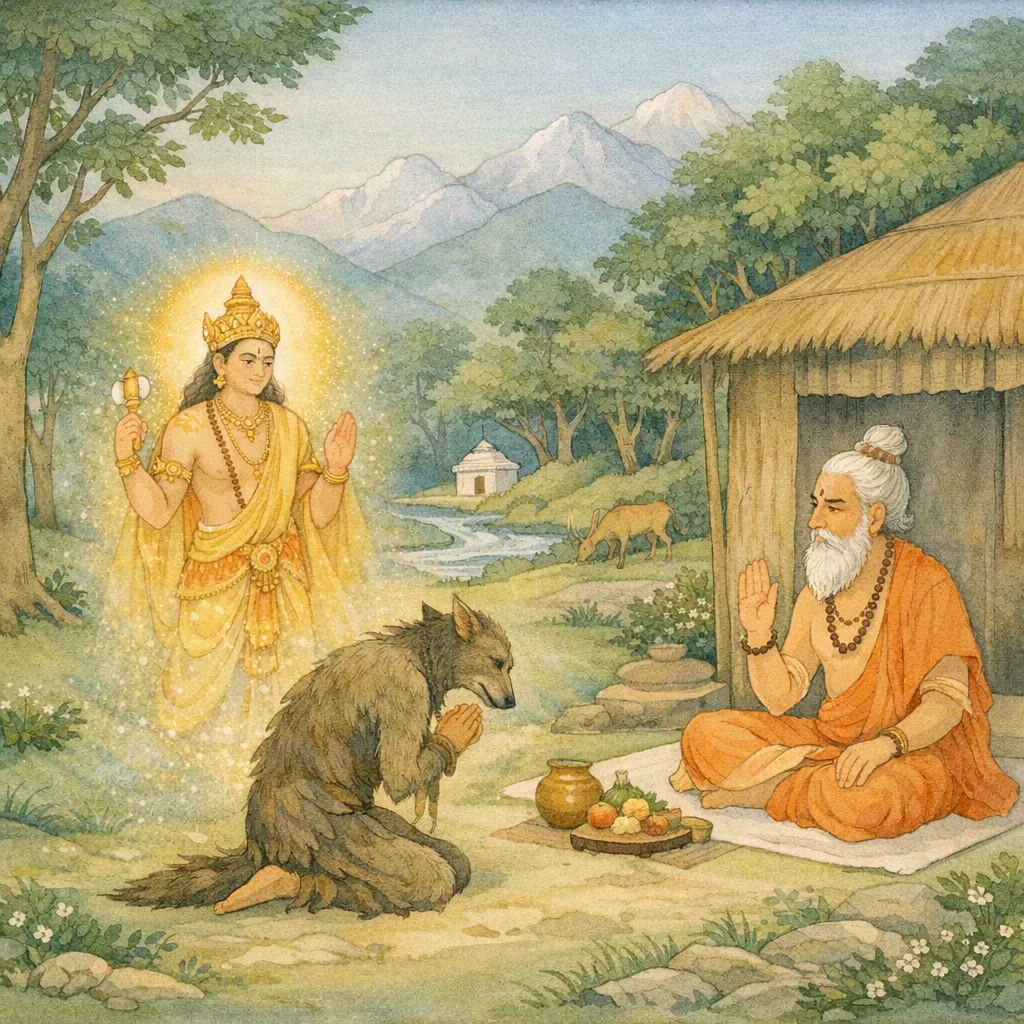
Chapter Arc: युधिष्ठिर के प्रश्न के उत्तर में भीष्म ‘प्रज्ञा’ की महिमा का उद्घोष करते हैं—वही प्राणियों की प्रतिष्ठा, वही परम लाभ, वही स्वर्ग और नि:श्रेयस का द्वार। → उपदेश कथा-रूप लेता है: काश्यप ब्राह्मण के सामने एक दीन, आर्त और क्रुद्ध प्राणी (शृगाल/व्यक्ति-रूप) दरिद्रता से टूटकर आत्महत्या का निश्चय करता है—‘धनहीन जीवन का अर्थ नहीं।’ पाप-बोध और निराशा का द्वंद्व तीव्र होता जाता है। → आत्मत्याग के क्षण पर निर्णायक विवेक जागता है—‘आत्महत्या अकार्य है; इससे मैं और पापी योनि में गिरूँगा’ (V21)। इसी मोड़ पर कथा का रहस्य खुलता है: काश्यप ज्ञान-दृष्टि से देखता है और उस रूप में देवराज इन्द्र को पहचान लेता है (V53)। → इन्द्र काश्यप को वेदोक्त धर्म के फल और प्रज्ञा-आश्रित धैर्य का उपदेश देकर आश्वस्त करते हैं (V42)। काश्यप इन्द्र का पूजन करता है; इन्द्र की अनुमति लेकर अपने आश्रम/गृह लौट जाता है (V54, V180)।
Shlokas
Verse 1
पम्प बछ। अं कऋ-> अशीर्त्याधिकशततमो<& ध्याय: 2283 आश्रय लेकर आत्महत्यादि पापकर्मसे निवृत्त सम्बन्धमें काश्यप ब्राह्मण और इन्द्रका संवाद युधिछिर उवाच बान्धवा: कर्म वित्तं वा प्रज्ञा वेह पितामह । नरस्य का प्रतिष्ठा स्थादेतत् पृष्टो वदस्व मे,युधिष्ठिरने पूछा--पितामह! अब मेरे प्रश्नके अनुसार मुझे यह बताइये कि मनुष्यको बन्धुजन, कर्म, धन अथवा बुद्धि--इनमेंसे किसका आश्रय लेना चाहिये?
Yudhiṣṭhira said: “Grandfather, in this world what is a man’s true support—kinsmen, his deeds, his wealth, or his understanding? Asked this, tell me clearly.”
Verse 2
भीष्म उवाच प्रज्ञा प्रतिष्ठा भूतानां प्रज्ञा लाभ: परो मत: । प्रज्ञा नि:श्रेयसी लोके प्रज्ञा स्वर्गो मत: सताम्,भीष्मजीने कहा--राजन्! प्राणियोंका प्रधान आश्रय बुद्धि है। बुद्धि ही उनका सबसे बड़ा लाभ है। संसारमें बुद्धि ही उनका कल्याण करनेवाली है। सत्पुरुषोंके मतमें बुद्धि ही स्वर्ग है
Bhishma said: “O King, wisdom is the firm foundation of all beings; wisdom is held to be their highest gain. In this world, wisdom is what leads to true welfare, and in the judgment of the virtuous, wisdom itself is heaven.”
Verse 3
प्रज्ञया प्रापितार्थों हि बलिरैश्वलूर्यसंक्षये । प्रह्यादो नमुचिर्मड्किस्तस्या: कि विद्यते परम्,राजा बलिने अपना एऐश्वर्य क्षीण हो जानेपर पुनः उसे बुद्धिबलसे ही पाया था। प्रह्नाद, नमुचि और मंकिने भी बुद्धिबलसे ही अपना-अपना अर्थ सिद्ध किया था। संसारमें बुद्धिसे बढ़कर और क्या है?
Bhishma said: “Indeed, Bali regained his purpose through wisdom when his sovereignty had declined. Prahlada, Namuci, and Maṅki too accomplished their respective aims by the power of discernment. In this world, what is higher than intelligence?”
Verse 4
अत्राप्युदाहरन्तीममितिहासं पुरातनम् । इन्द्रकाश्यपसंवादं तन्निबोध युधिष्ठिर,युधिष्ठिर! इस विषयमें विज्ञ पुरुष इन्द्र और काश्यपके संवादरूप प्राचीन इतिहासका उदाहरण दिया करते हैं, उसे सुनो
Bhishma said: “Here too, O Yudhishthira, the learned cite an ancient precedent—an old historical exemplar—in the form of a dialogue between Indra and Kashyapa. Listen to it.”
Verse 5
वैश्य: कश्चिदृषिसुतं काश्यपं संशितव्रतम् । रथेन पातयामास श्रीमान् दृप्तस्तपस्विनम्,कहते हैं, पूर्वकालमें धनके अभिमानसे मतवाले हुए किसी धनी वैश्यने कठोर व्रतका पालन करनेवाले तपस्वी ऋषिकुमार काश्यपको अपने रथसे धक्के देकर गिरा दिया
Bhishma said: In former times, a certain wealthy merchant (vaiśya), intoxicated with the pride of riches, struck down with his chariot the ascetic Kashyapa—an rishi’s son, steadfast in severe vows—causing the tapasvin to fall.
Verse 6
आर्त: स पतित: क्रुद्धस्त्यक्त्वा55त्मानमथाब्रवीत् । मरिष्याम्यधनस्येह जीवितार्थों न विद्यते,वे पीड़ासे कराहकर गिर पड़े और कुपित होकर आत्महत्याके लिये उद्यत हो इस प्रकार बोले--“अब मैं प्राण दे दूँगा; क्योंकि इस संसारमें निर्धन मनुष्यका जीवन व्यर्थ है!
Afflicted, fallen low, and inflamed with anger, he abandoned himself and said: “Now I shall give up my life; for in this world the life of a poor man is without purpose.”
Verse 7
तथा मुमूर्षमासीनमकूजन्तमचेतसम् । इन्द्र: शूगालरूपेण बभाषे लुब्धभानसम्,उन्हें इस प्रकार मरनेकी इच्छा लेकर बैठे मूच्छसे अचेत हो कुछ न बोलते और मन- ही-मन धनके लिये ललचाते देखकर इन्द्रदेव सियारका रूप धारण करके आये और उनसे इस प्रकार कहने लगे--
Seeing him seated there, longing to die—faint, senseless, and silent—yet inwardly consumed by greed for wealth, Indra assumed the form of a jackal and addressed that covetous man.
Verse 8
मसहाभारत&«>«» काश्यप ब्राह्मणके प्रति गीदड़के रूपमें इन्द्रका उपदेश इन्द्रको पहचाननेपर काश्यपद्वारा उनकी पूजा मनुष्ययोनिमिच्छन्ति सर्वभूतानि सर्वशः । मनुष्यत्वे च विप्रत्व॑ं सर्व एवाभिनन्दति,“मुने! सभी प्राणी सब प्रकारसे मनुष्ययोनि पानेकी इच्छा रखते हैं। उसमें भी ब्राह्मणत्वकी प्रशंसा तो सभी लोग करते हैं
Bhishma said: “O sage, all beings in every way long to attain birth as a human. And even among human births, everyone praises and celebrates the state of being a brahmin.”
Verse 9
मनुष्यों ब्राह्मणश्चासि श्रोत्रियश्वासि काश्यप । सुदुर्लभमवाप्यैतन्न दोषान्मर्तुमहसि,“काश्यप! आप तो मनुष्य हैं, ब्राह्मण हैं और श्रोत्रिय भी हैं। ऐसा परम दुर्लभ शरीर पाकर आपको उसमें दोषदृष्टि करके स्वयं ही मरनेके लिये उद्यत होना उचित नहीं है
Bhishma said: “O Kāśyapa, you are a human being, a brāhmaṇa, and also a learned Vedic scholar. Having obtained this exceedingly rare human embodiment, it is not right for you to fix your gaze on its faults and resolve to die by your own hand.”
Verse 10
सर्वे लाभा: साभिमाना इति सत्यवती श्रुति: । संतोषणीयरूपो5सि लोभाद् यदभिमन्यसे,'संसारमें जितने लाभ हैं, वे सभी अभिमानपूर्ण हैं, ऐसा सत्य अर्थका प्रतिपादन करनेवाली श्रुतिका कथन है (अर्थात् मैंने यह लाभ अपने पुरुषार्थसे किया है, ऐसा अहंकार प्राय: सभी मनुष्य कर लेते हैं)। आपका स्वरूप तो संतोष रखनेके योग्य है। आप लोभवश ही उसकी अवहेलना करते हैं
Bhishma said: “All gains are attended by self-conceit—so declares the scripture that speaks the truth. Your very nature is fit to be content; yet, driven by greed, you imagine otherwise.”
Verse 11
अहो सिद्धार्थता तेषां येषां सन्तीह पाणय: । अतीव स्पृहये तेषां येषां सन््तीह पाणय:,“अहो! जिनके पास भगवानके दिये हुए हाथ हैं, उनको तो मैं कृतार्थ मानता हूँ। इस जगत्में जिनके पास एकसे अधिक हाथ हैं, उनके-जैसा सौभाग्य पानेकी इच्छा मुझे बारंबार होती है
Bhīṣma said: “Ah! Truly fulfilled are those who have hands in this world. I yearn intensely for the good fortune of those who have hands here.”
Verse 12
पाणिमद्भ्य: स्पृहास्माकं यथा तव धनस्य वै | न पाणिलाभादधिको लाभ: कश्षन विद्यते,“जैसे आपके मनमें धनकी लालसा है, उसी प्रकार हम पशुओंको हाथवाले मनुष्योंसे हाथ पानेकी अभिलाषा रहती है। हमारी दृष्टिमें हाथ मिलनेसे अधिक दूसरा कोई लाभ नहीं
Bhīṣma said: “Just as you yearn for wealth, so do we—beings without hands—yearn for those who possess hands, hoping to gain hands ourselves. In our view, there is no gain greater than the gaining of hands.”
Verse 13
अपाणिव्वाद् वय ब्रह्मन् कण्टकं नोद्धरामहे । जन्तूनुच्चावचानड्े दशतो न कषाम वा,“ब्रह्मन! हमारे शरीरमें काँटे गड़ जाते हैं; परंतु हाथ न होनेसे हम उन्हें निकाल नहीं पाते हैं। जो छोटे-बड़े जीव-जन्तु हमारे शरीरमें डँसते हैं, उनको भी हम हटा नहीं सकते
Bhīṣma said: “O Brahmin, we are like beings without hands: when thorns pierce our bodies, we cannot pull them out. Nor can we drive away the various small and great creatures that bite and sting us.”
Verse 14
अथ येषां पुन: पाणी देवदत्तौ दशाड्गुली । उद्धरन्ति कृमीनड्रादू दशतो निकषन्ति च,'परंतु जिनके पास भगवान्के दिये हुए दस अंगुलियोंसे युक्त दो हाथ हैं, वे अपने अंगोंसे उन कीड़ोंको हटाते या नष्ट कर देते हैं, जो उन्हें डँसते हैं
Bhīṣma said: “But those who possess two hands—God-given and furnished with ten fingers—use their own limbs to ward off or crush the biting worms that attack them.”
Verse 15
वर्षाहिमातपानां च परित्राणानि कुर्वते । चैलमन्नं सुखं शय्यां निवातं चोपभुञ्जते,वे वर्षा, सर्दी और धूपसे अपनी रक्षा कर लेते हैं, कपड़ा पहनते हैं, सुखपूर्वक अन्न खाते हैं, शय्या बिछाकर सोते हैं तथा एकान्त स्थानका उपभोग करते हैं
Bhīṣma said: “People arrange protections against rain, cold, and heat. They wear clothing, eat their food in comfort, sleep on prepared beds, and enjoy sheltered, windless places.”
Verse 16
अधिष्ठाय च गां लोके भुञ्जते वाहयन्ति च । उपायैर्बहुभिश्वैव वश्यानात्मनि कुर्वते,“हाथवाले मनुष्य बैलोंसे जुती हुई गाड़ीपर चढ़कर उन्हें हाँकते हैं और जगत्में उनका यथेष्ट उपभोग करते हैं तथा हाथसे ही अनेक प्रकारके उपाय करके लोगोंको अपने वशमें कर लेते हैं
Bhīṣma said: “In this world, men who possess hands mount a cart yoked with oxen, drive them, and make use of them as they wish. By the hand itself, employing many kinds of means, they also bring others under their control.”
Verse 17
ये खल्वजिद्दा: कृपणा अल्पप्राणा अपाणय: । सहन्ते तानि दुःखानि दिष्ट्या त्वं न तथा मुने,“मुने! जो दुःख बिना हाथके दीन, दुर्बल और बेजबान प्राणी सहते हैं, सौभाग्यवश वे तो आपको नहीं सहने पड़ते हैं
Bhīṣma said: “Those pitiable creatures—weak in vitality and without hands—endure such sufferings. By good fortune, O sage, you are not made to endure afflictions of that kind.”
Verse 18
दिष्ट्या त्वं न शृगालो वै न कृमिर्न च मूषक: । न सर्पो न च मण्डूको न चान्य: पापयोनिज:,“आपका बड़ा भाग्य है कि आप गीदड़, कीड़ा, चूहा, साँप, मेढ़क या किसी दूसरी पापयोनिमें नहीं उत्पन्न हुए
Bhīṣma said: “By good fortune, you have not been born as a jackal, nor as a worm, nor as a mouse; not as a serpent, nor as a frog, nor as any other creature of sinful birth.”
Verse 19
एतावतापि लाभेन तोष्ट्महसि काश्यप । कि पुनर्योडसि सत्त्वानां सर्वेषां ब्राह्मणोत्तम:,“काश्यप! आपको इतने ही लाभसे संतुष्ट रहना चाहिये। इससे अधिक लाभ क्या होगा कि आप सभी प्राणियोंमें श्रेष्ठ ब्राह्मण हैं
Bhīṣma said: “Kāśyapa, you should be content even with just this much gain. What greater gain could there be than this—that among all living beings you are the foremost of brāhmaṇas?”
Verse 20
इमे मां कृमयो5दन्ति येषामुद्धरणाय वै । नास्ति शक्तिरपाणित्वात् पश्यावस्थामिमां मम,“मुझे ये कीड़े खा रहे हैं, जिन्हें निकाल फेंकनेकी शक्ति मुझमें नहीं है। हाथ न होनेके कारण होनेवाली मेरी इस दुर्दशाको आप प्रत्यक्ष देख लें
Bhīṣma said: “These worms are eating into me. Yet I have no power to remove and cast them away—because I have no hands. Behold with your own eyes the wretched condition in which I now lie.”
Verse 21
अकार्यमिति चैवेम॑ नात्मानं संत्यजाम्यहम् । नात:ः पापीयसीं योनिं पतेयमपरामिति,“आत्महत्या करना पाप है; यह सोचकर ही मैं अपने इस शरीरका परित्याग नहीं करता हूँ। मुझे भय है कि मैं इससे भी बढ़कर किसी दूसरी पापयोनिमें न गिर जाऊँ
Bhīṣma said: “Knowing it to be a wrongful act, I do not abandon my own life. I fear that, if I were to do so, I might fall from this state into another, even more sinful, womb (rebirth).”
Verse 22
मध्ये वै पापयोनीनां शार्गालीं यामहं गत: । पापीयस्यो बहुतरा इतो<न्या: पापयोनय:,“यद्यपि मैं इस समय जिस शृगालयोनिमें हूँ, इसकी गणना भी पापयोनियोंमें ही है, तथापि दूसरी बहुत-सी पापयोनियाँ इससे भी नीची श्रेणीकी हैं
Bhīṣma said: “Although the jackal-womb into which I have now fallen is counted among sinful births, there are many other sinful wombs even lower than this.”
Verse 23
जात्यैवैके सुखितरा: सन्त्यन्ये भृुशदु:खिता: । नैकान्तं सुखमेवेह क्वचित्पश्यामि कस्यचित्,“कुछ देवता आदि जातिसे ही सुखी हैं, दूसरे पशु आदि जातिसे ही अत्यन्त दुखी हैं; परंतु मैं कहीं किसीको ऐसा नहीं देखता, जिसको सर्वथा सुख ही सुख हो
Bhīṣma said: “By their very birth and species, some beings are comparatively happy, while others, by that same condition, are intensely afflicted. Yet in this world I do not see anyone anywhere whose lot is nothing but unbroken happiness.”
Verse 24
मनुष्या हाब्यतां प्राप्य राज्यमिच्छन्त्यनन्तरम् । राज्याद् देवत्वमिच्छन्ति देवत्वादिन्द्रतामपि,“मनुष्य धनी हो जानेपर राज्य पाना चाहते हैं, राज्यसे देवत्वकी इच्छा करते हैं और देवत्वसे फिर इन्द्रपद प्राप्त करना चाहते हैं
Bhīṣma said: “When people attain the condition of being human, they immediately desire kingship. From kingship they then long for divinity, and from divinity they even seek the status of Indra.”
Verse 25
भवेस्त्वं यद्यपि त्वाब्यो न राजा न च दैवतम् । देवत्व॑ प्राप्य चेन्द्रत्वं नैव तुष्पेस्तथा सति,“यदि आप धनी हो जायाँ तो भी ब्राह्मण होनेके कारण राजा नहीं हो सकते। यदि कदाचित् राजा हो जायाँ तो देवता नहीं हो सकते। देवता और इन्द्रका पद भी पा जायाँ तो भी आप उतनेसे संतुष्ट नहीं रह सकेंगे
Bhīṣma said: “Even if you were to become wealthy, being a brahmin you would not be a king, nor would you be a god. And even if you attained godhood and even the sovereignty of Indra, you still would not be satisfied in that condition.”
Verse 26
न तृप्ति: प्रियलाभे<स्ति तृष्णा नाद्धि: प्रशाम्यति । सम्प्रज्वलति सा भूय: समिद्धिरिव पावक:,'प्रिय वस्तुओंका लाभ होनेसे कभी तृप्ति नहीं होती। बढ़ती हुई तृष्णा जलसे नहीं बुझती। ईंधन पाकर जलनेवाली आगके समान वह और भी प्रज्वलित होती जाती है
Bhīṣma said: “A person does not become satisfied by gaining what is dear; craving is not quenched by what is obtained. Rather, it flares up again and again—like fire that blazes more fiercely when it is fed with fuel.”
Verse 27
अस्त्येव त्वयि शोको<पि हर्षश्वापि तथा त्वयि । सुखदु:खे तथा चोभे तत्र का परिदेवना,“तुम्हारे भीतर शोक भी है और हर्ष भी। साथ ही सुख और दु:ख दोनों हैं; फिर शोक करना किस कामका?
Bhīṣma said: “Within you there is sorrow, and within you there is also joy. Likewise, both pleasure and pain are present in you. When both opposites inevitably arise, what purpose is served by lamentation?”
Verse 28
परिच्छिद्यैव कामानां सर्वेषां चैव कर्मणाम् | मूल॑ बुद्धीन्द्रियग्रामं शकुन्तानिव पठ्जरे,“बुद्धि और इन्द्रियाँ ही समस्त कामनाओं और कर्मोकी मूल हैं। उन्हें पिंजड़ेमें बंद पक्षियोंकी तरह अपने काबूमें रखा जाय तो कोई भय नहीं है
Bhīṣma said: “Having clearly delimited and restrained all desires and all actions, one should recognize that their root is the mind’s faculty of discernment together with the whole ‘flock’ of senses. If intelligence and the senses are kept under one’s control—like birds confined within a cage—then there is no cause for fear.”
Verse 29
न द्वितीयस्य शिरसश्छेदनं विद्यते क्वचित् । न च पाणेस्तृतीयस्य यन्नास्ति न ततो भयम्,“मनुष्यको दूसरे सिर और तीसरे हाथके कटनेका कभी भय नहीं होता है। जो वास्तवमें है ही नहीं, उसके कारण भय भी नहीं होता है
Bhīṣma said: “No one ever fears the cutting off of a second head, nor of a third hand—for such things do not exist. Fear does not arise from what is unreal; it arises only where there is an actual basis.”
Verse 30
न खल्वप्यरसज्ञस्थ काम: क्वचन जायते । संस्पर्शाद् दर्शनाद् वापि श्रवणाद् वापि जायते
Bhīṣma said: “Desire does not arise anywhere in one who is devoid of the sense for pleasure (rasa). Rather, it is born from contact, or from seeing, or even from hearing—through these gateways by which the mind becomes engaged with objects.”
Verse 31
“जो किसी विषयका रस नहीं जानता, उसके मनमें कभी उसकी कामना भी नहीं होती। स्पर्शसे, दर्शनसे अथवा श्रवणसे भी कामनाका उदय होता है ।। न त्वं स््मरसि वारुण्या लट्वाकानां च पक्षिणाम् | ताभ्यां चाभ्यधिको भक्ष्यो न वक्चिद् विद्यते क्वचित्,“वारुणी मदिरा तथा चिड़िया--इन दोनोंका आप कभी स्मरण नहीं करते होंगे; क्योंकि इनको आपने नहीं खाया है; परंतु (जो तामसी मनुष्य इनको खाते हैं उनके लिये) कहीं और कोई भी भक्ष्य पदार्थ उन दोनोंसे बढ़कर नहीं है
Bhishma said: “You do not even think of Vāruṇī liquor, nor of the birds called laṭvāka—because you have never eaten or tasted them. Yet for those of a tamasic bent (tāmasika) who do consume them, no other food anywhere seems superior to those two. Thus desire arises only after one has known a thing’s ‘taste’—through touch, sight, or even hearing.”
Verse 32
यानि चान्यानि भूतेषु भक्ष्यजातानि कस्यचित् | येषाम भुक्तपूर्वाणि तेषामस्मृतिरेव ते,'प्राणियोंमें किसीके भी जो अन्यान्य भक्ष्य पदार्थ हैं, जिनका तुमने पहले उपभोग नहीं किया है, उन भोजनोंकी स्मृति तुमको कभी नहीं होगी
Bhishma said: “Whatever other kinds of edible foods exist among living beings, if you have never consumed them before, then you will not even retain a memory of those foods. In this way, craving is checked by the principle that desire follows experience and recollection; what is not known through prior enjoyment does not become an object of persistent longing.”
Verse 33
अप्राशनमसंस्पर्शमसंदर्शनमेव च । पुरुषस्यैष नियमो मन्ये श्रेयो न संशय:,“मैं ऐसा मानता हूँ कि किसी वस्तुको न खाने, न छूने और न देखनेका नियम लेना ही पुरुषके लिये कल्याणकारी है, इसमें संशय नहीं
Bhishma said: “I hold that for a man, the discipline of refraining—of not eating, not touching, and not even looking at (the prohibited object)—is truly beneficial; of this there is no doubt.”
Verse 34
पाणिमन्तो बलवन्तो धनवन्तो न संशय: । मनुष्या मानुषैरेव दासत्वमुपपादिता:,“जिनके दोनों हाथ बने हुए हैं, निस्संदेह वे ही बलवान् और धनवान हैं। मनुष्योंको तो मनुष्योंने ही दास बना रखा है
Bhīṣma said: “Those who have hands (i.e., the capacity to work and act) are, without doubt, the truly strong and the truly wealthy. For it is by human beings alone that other human beings are reduced to servitude.”
Verse 35
वधबन्धपरिकक्लेशै: क्लिश्यन्ते च पुनः पुन: । ते खल्वपि रमन्ते च मोदन्ते च हसन्ति च,“कितने ही मनुष्य बारंबार वध और बन्धनके क्लेश भोगते रहते हैं, परंतु वे भी (आत्महत्या करके प्राण नहीं देते, बल्कि) आपसमें क्रीड़ा करते, आनन्दित होते और हँसते हैं
Bhishma said: “Many people are again and again afflicted by the sufferings of killing and captivity; yet even they do not abandon life. Instead, they continue to play among themselves, take delight, and laugh—showing that endurance and the will to live persist even amid repeated hardship.”
Verse 36
अपरे बाहुबलिन: कृतविद्या मनस्विन: । जुगुप्सितां च कृपणां पापवृत्तिमुपासते,“दूसरे बहुत-से बाहुबलसे सम्पन्न विद्वान् और मनस्वी मनुष्य दीन, निन्दित एवं पापपूर्ण वृत्तिसे जीविका चलाते हैं
Bhishma said: “There are others too—men endowed with physical strength, accomplished in learning, and possessed of resolve—who nevertheless sustain themselves by resorting to a wretched, contemptible, and sinful mode of livelihood.”
Verse 37
उत्सहन्ते च ते वृत्तिमन्यामप्युपसेवितुम् । स्वकर्मणा तु नियतं भवितव्यं तु तत् तथा,“वे दूसरी वृत्तिका सेवन करनेके लिये भी उत्साह रखते हैं; परंतु अपने कर्मके अनुसार जो नियत है, वैसा ही भविष्यमें होता है
Bhishma said: “They may even show eagerness to take up another livelihood as well; yet what is fixed by one’s own karma is what must come to pass—so indeed it happens.”
Verse 38
न पुल्कसो न चाण्डाल आत्मान त्यक्तुमिच्छति । तया तुष्ट: स्वया योन्या मायां पश्यस्व यादृशीम्,“भंगी अथवा चाण्डाल भी अपने शरीरको त्यागना नहीं चाहता है, वह अपनी उसी योनिसे संतुष्ट रहता है। देखिये, भगवान्की कैसी माया है?
Bhishma said: “Neither the Pulkaśa nor the Cāṇḍāla wishes to abandon his own embodied self. Content with the very birth and station that has come to him, he remains satisfied in his own womb-line. Behold, then, what a wondrous power of delusion this is—how the Lord’s māyā makes each being cling to its allotted condition.”
Verse 39
दृष्टवा कुणीन् पक्षहतान् मनुष्यानामयाविन: । सुसम्पूर्ण: स्वया योन्या लब्धलाभोडसि काश्यप,“काश्यप! कुछ मनुष्य लूले और लँगड़े हैं, कुछ लोगोंको लकवा मार गया है, बहुत-से मनुष्य निरन्तर रोगी ही रहते हैं। उन सबकी ओर देखकर यह कहना पड़ता है कि आप अपनी योनिके अनुसार नीरोग और परिपूर्ण अंगवाले हैं। आपको मानवशरीरका लाभ मिल चुका है
Bhīṣma said: “Seeing people who are crippled, whose limbs are impaired, and who are afflicted with disease, one must acknowledge this: you, Kāśyapa, are healthy and complete in your own natural constitution. You have already obtained the great gain of a human body.”
Verse 40
यदि ब्राह्मण देहस्ते निरातड़को निरामय: । अड्जरननि च समग्राणि न च लोकेषु धिक्कृत:,'ब्राह्मगदेव! यदि आपका शरीर निर्भय और नीरोग है, आपके सारे अंग ठीक हैं, किसीमें कोई विकार नहीं आया है तो लोकमें कोई भी आपको धिक्कार नहीं सकता-- आप धिक्ककारके पात्र नहीं हो सकते
Bhīṣma said: “O brāhmaṇa, if your body is free from fear and illness—if all your limbs are sound and no defect has arisen—then no one in the world can rightly condemn you. You are not a fit object of reproach.”
Verse 41
न केनचित् प्रवादेन सत्येनैवापहारिणा । धर्मायोत्तिष्ठ विप्रर्षे नात्मानं त्यक्तुमहसि,“यदि आपपर जातिच्युत करनेवाला कोई सच्चा कलंक लगा हो तो भी आपको प्राणत्यागका विचार नहीं करना चाहिये। ब्रह्मर्ष!ी आप धर्मपालनके लिये उठ खड़े होइये
Bhishma said: “Do not abandon yourself—do not think of giving up your life—because of any accusation, even if it is true and able to strip you of honor. O brahmarshi, rise up for the sake of dharma; you are not fit to renounce yourself. Stand firm in righteous conduct, rather than yielding to despair or social disgrace.”
Verse 42
यदि ब्रह्मन् शृणोष्येतच्छुद्धधासि च मे वचः । वेदोक्तस्यैव धर्मस्य फलं मुख्यमवाप्स्यसि,“ब्रह्म! यदि आप मेरी बात सुनेंगे और उसपर श्रद्धा करेंगे तो आपको वेदोक्त धर्मके पालनका ही मुख्य फल प्राप्त होगा
Bhishma said: “O Brahmin, if you will listen to this and place your trust in my words, you will attain the principal reward that comes from practicing the very dharma enjoined by the Vedas.”
Verse 43
स्वाध्यायमग्निसंस्कारमप्रमत्तो$नुपालय । सत्यं दमं च दानं च स्पर्थिष्ठा मा च केनचित्,“आप सावधान होकर स्वाध्याय, अन्निहोत्र, सत्य, इन्द्रियसंयम तथा दानधर्मका पालन कीजिये। किसीके साथ स्पर्धा न कीजिये
Bhishma said: “Remain vigilant and faithfully maintain your daily disciplines—study of the sacred texts (svādhyāya), the rites connected with the sacred fire (agnihotra), truthfulness, self-restraint, and the duty of giving. Do not enter into rivalry with anyone.”
Verse 44
ये केचन स्वध्ययना: प्राप्ता यजनयाजनम् | कथं ते चानुशोचेयुर्थ्यायेयुवाप्पशो भनम् । इच्छन्तस्ते विहाराय सुखं महदवाप्लुयु:,'जो ब्राह्मण स्वाध्यायमें लगे रहते हैं तथा यज्ञ करते और कराते हैं, वे किसी प्रकारकी चिन्ता क्यों करेंगे और कोई आत्महत्या आदि बुरी बात भी क्यों सोचेंगे? वे यदि चाहें तो यज्ञादिके द्वारा विहार करते हुए महान् सुख पा सकते हैं
Bhishma said: “Those Brahmins who are devoted to Vedic study and who perform sacrifices and also officiate for others—why should they fall into anxiety or lamentation? Why would they even entertain ignoble thoughts such as self-destruction? If they so desire, by living in the wholesome ‘recreation’ of sacrificial and sacred duties, they can attain great happiness.”
Verse 45
उत जाता: सुनक्षत्रे सुतिथौ सुमुहूर्तजा: । यज्ञदानप्रजेहायां यतन्ते शक्तिपूर्वकम्,“जो उत्तम नक्षत्र, उत्तम तिथि और उत्तम मुहूर्तमें पैदा हुए हैं, वे अपनी शक्तिके अनुसार यज्ञ एवं दान करते और न्यायानुकूल संतानोत्पादनकी चेष्टा भी करते हैं
Bhishma said: “Those who are born under an auspicious constellation, on an auspicious lunar day, and at an auspicious moment strive with all the strength they possess to perform sacrifices and give gifts, and they also endeavor to beget offspring in a manner consistent with justice and dharma.”
Verse 46
नक्षत्रेष्वासुरेष्वन्ये दुस्तिथौ दुर्मुहूर्तजा: । सम्पतन्त्यासुरीं योनिं यज्ञप्रसववर्जिता:,“दूसरे जो लोग आसुर नक्षत्र, दूषित तिथि तथा अशुभ मुहूर्तमें उत्पन्न होते हैं, वे यज्ञ तथा संतानसे रहित होकर आसुरी योनिमें पड़ते हैं
Bhīṣma said: Others who are born under demonic constellations, on tainted lunar days, and at inauspicious moments—being deprived of yajña and of progeny—fall into demonic modes of existence.
Verse 47
अहमासं पण्डितको हैतुको वेदनिन्दक: । आन्वीक्षिकीं तर्कविद्यामनुरक्तो निरर्थिकाम्,'पूर्वजन्ममें मैं एक पण्डित था और कुतर्कका आश्रय लेकर वेदोंकी निन्दा करता था। प्रत्यक्षके आधारपर अनुमानको प्रधानता देनेवाली थोथी तर्कविद्यापर ही उस समय मेरा अधिक अनुराग था
In a former birth I was a scholar, yet, taking refuge in specious reasoning, I reviled the Vedas. In those days I was devoted to anvīkṣikī—the art of logic and disputation—empty and without true purpose.
Verse 48
हेतुवादान् प्रवदिता वक्ता संसत्सु हेतुमत् । आक्रोष्टा चाभिवक्ता च ब्रह्म॒वाक्येषु च द्विजान्,“मैं सभाओंमें जाकर तर्क और युक्तिकी बातें ही अधिक बोलता। जहाँ दूसरे ब्राह्मण श्रद्धापूर्वक वेद-वाक्योंपर विचार करते, वहाँ मैं बलपूर्वक आक्रमण करके उन्हें खरी-खोटी सुना देता और स्वयं ही अपना तर्कवाद बका करता था
Bhīṣma said: In assemblies I used to put forward arguments, speaking always laden with reasons and disputation. And when learned brāhmaṇas were reverently reflecting on the sacred Vedic utterances, I would instead forcefully assail them—abusing and contradicting them—only to parade my own contentious logic.
Verse 49
नास्तिकः सर्वशड्की च मूर्ख: पण्डितमानिक: । तस्येयं फलनिर्वुत्ति: शृगालत्वं मम द्विज,“मैं नास्तिक, सबपर संदेह करनेवाला तथा मूर्ख होकर भी अपनेको पण्डित माननेवाला था। विप्रवर! यह शृगालयोनि मेरे उसी कुकर्मका फल है
Bhīṣma said: I was an unbeliever, suspicious of everyone, and though foolish I fancied myself learned. O brāhmaṇa, this present condition of being born as a jackal is the manifested result of those misdeeds of mine.
Verse 50
अपि जातु तथा तस्मादहोरात्रशतैरपि । यदहं मानुषी योनि शूगाल:ः प्राप्तुयां पुन:
Bhīṣma said: May it never happen—no, not even after hundreds of days and nights—that I, having become a jackal, should ever again obtain a human birth.
Verse 51
अब मैं सैकड़ों दिन-रातोंतक साधन करके भी क्या कभी वह उपाय कर सकता हूँ, जिससे आज सियारकी योनिमें पड़ा हुआ मैं पुनः वह मनुष्ययोनि पा सकूँ ।। संतुष्टश्षाप्रमत्तश्न॒ यज्ञदानतपोरति: । ज्ञेयज्ञाता भवेयं वै वर्ज्यवर्जयिता तथा,“जिस मनुष्ययोनिमें मैं संतुष्ट और सावधान रहकर यज्ञ, दान और तपस्यामें लगा रह सकूँ, जिसमें मैं जाननेयोग्य वस्तुको जान लूँ और त्यागनेयोग्य वस्तुका त्याग कर दूँ"
Bhishma said: “May I again attain a human birth—one in which I remain content and vigilant, devoted to sacrifice, charity, and austerity; in which I truly understand what ought to be known, and likewise renounce what ought to be renounced.”
Verse 52
ततः स मुनिरुत्थाय काश्यपस्तमुवाच ह । अहो बतासि कुशलो बुद्धिमांश्वेति विस्मित:,यह सुनकर काश्यप मुनि आश्वर्यसे चकित होकर खड़े हो गये और बोले--“अहो! तुम तो बड़े कुशल और बुद्धिमान हो'
Then the sage Kaśyapa rose and said to him, astonished: “Ah indeed! You are truly capable and wise.”
Verse 53
समवैक्षत त॑ विप्रो ज्ञानदीर्घेण चक्षुषा । ददर्श चैनं देवानां देवमिन्द्र शचीपतिम्,ऐसा कहकर ब्रह्मर्षिने उसकी ओर ज्ञानदृष्टिसे देखा। तब उसके रूपमें इन्हें देवदेव शचीपति इन्द्र दिखायी दिये
Bhīṣma said: The brahmin-sage then looked upon him with the far-reaching eye of spiritual knowledge. In that very form he beheld Indra—lord of the gods, the divine ruler, and the husband of Śacī—revealed before him.
Verse 54
ततः सम्पूजयामास काश्यपो हरिवाहनम् | अनुज्ञातस्तु तेनाथ प्रविवेश स््वमालयम्
Then Kāśyapa duly honored Hari, the Lord who is borne by Garuḍa. Having received His permission, Kāśyapa thereafter entered his own abode.
Verse 180
तदनन्तर काश्यपने इन्द्रदेवका पूजन किया और उनकी आज्ञा लेकर वे पुनः अपने घरको लौट गये ।। इति श्रीमहाभारते शान्तिपर्वणि मोक्षधर्मपर्वणि शृुगालकाश्यपसंवादे अशीत्यधिकशततमो<ध्याय:
After this, Kāśyapa worshipped Indradeva; and, having received his permission, they returned once more to their own home. Thus ends the one-hundred-and-eightieth chapter (the 181st by count) in the Śānti Parva, within the Mokṣadharma section, in the dialogue between the jackal and Kāśyapa.
Frequently Asked Questions
Whether varṇa can be justified as a fixed, color-based category when human emotions, bodily processes, and social intermixture appear broadly shared—prompting a search for a more defensible criterion.
Bhṛgu’s resolution reframes varṇa as contingent on karma—dispositions, conduct, and livelihood—within an overarching assertion of metaphysical unity (the world as brahman).
No explicit phalaśruti is stated in these verses; the chapter functions as doctrinal exposition, positioning ethical conduct and disciplined knowledge as the interpretive key to social differentiation.