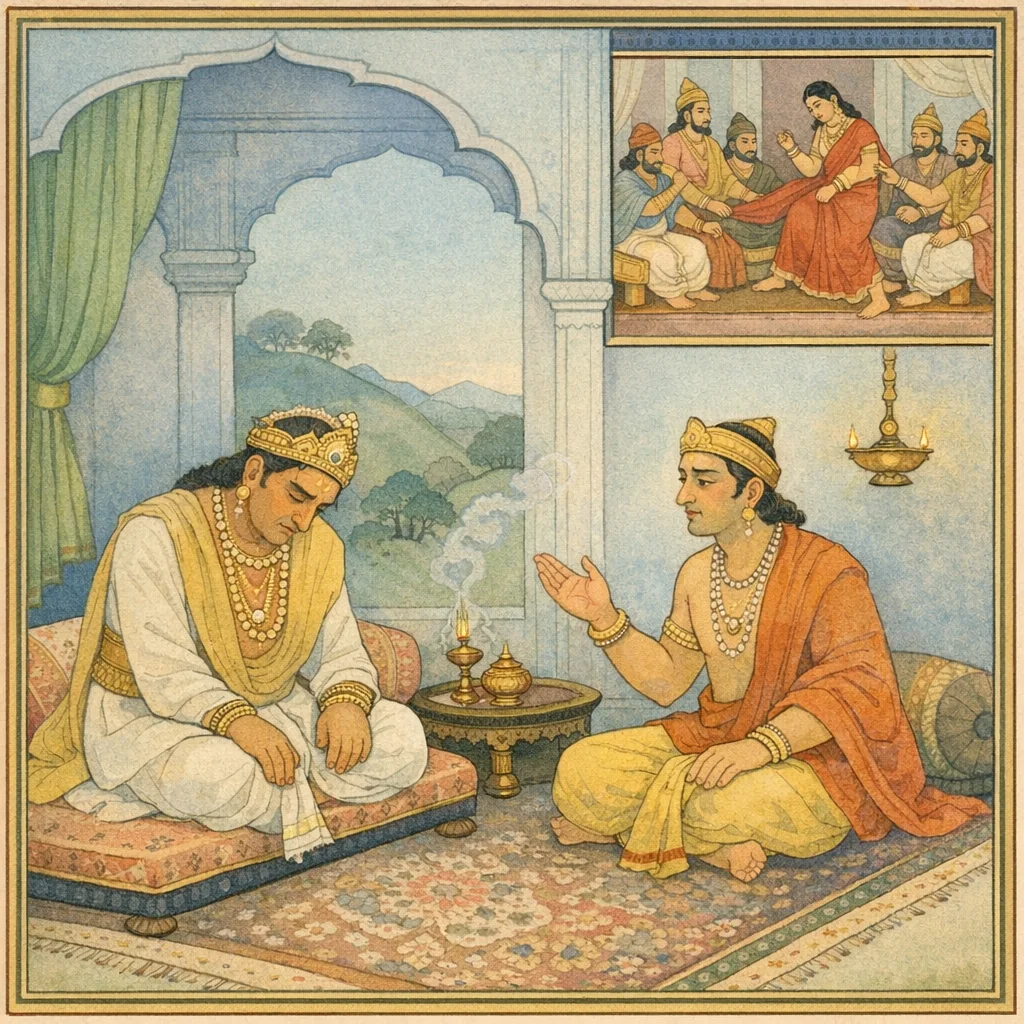
Adhyaya 81
Chapter Arc: राजसभा के अपमान और अनर्थ की छाया में धृतराष्ट्र अकेले बैठे हैं—लंबी साँसें, उद्विग्न मन, और भीतर-भीतर उठती आशंका; तभी संजय उनके मौन को तोड़ते हैं। → संजय धृतराष्ट्र के शोक का कारण उलटकर दिखाते हैं: ‘राज्य और वैभव पाकर भी आप क्यों पछताते हैं?’ फिर वे स्पष्ट कहते हैं कि यह वैर धृतराष्ट्र का ‘स्वकृत’ है—दुर्योधन की हठ, प्रातिकामी द्वारा द्रौपदी का अपमान, और भीष्म-द्रोण-विदुर की बार-बार की गई रोक के बावजूद राजकीय संरक्षण। → संजय का कठोर निष्कर्ष—यह वैर ऐसा विनाश लाएगा जो ‘लोक’ तक को सानुबन्ध (परिवार-वंश सहित) डुबो देगा; और ‘काल’ का रहस्य यह है कि वह स्वयं तलवार नहीं चलाता, बल्कि मनुष्य की बुद्धि को विपरीतार्थ-दर्शन में फँसाकर उसे अपने ही कर्मों से कटवा देता है। → धृतराष्ट्र के शोक को संजय ‘पश्चात्ताप’ की दिशा में मोड़ते हैं: दोष बाह्य नहीं, भीतर है—राजा की दुर्बलता, पुत्रमोह, और अधर्म को रोकने में असफलता। अध्याय एक चेतावनी-स्वर में ठहरता है, मानो अभी भी सुधार का एक क्षीण अवसर शेष हो। → क्या धृतराष्ट्र पुत्रमोह से ऊपर उठकर दुर्योधन को रोकेँगे, या ‘काल’ के विपरीतार्थ-दर्शन में फँसकर विनाश को आमंत्रित करेंगे?
Shlokas
Verse 1
(दाक्षिणात्य अधिक पाठके १५ श्लोक मिलाकर कुल ६७ श्लोक हैं) नफमशा< (0) आज अन+- एकाशीतितमो<ध्याय: धृतराष्ट्रकी चिन्ता और उनका संजयके साथ वार्तालाप वैशम्पायन उवाच वन॑ गतेषु पार्थेषु निर्जितिषु दुरोदरे । धृतराष्ट्र महाराज तदा चिन्ता समाविशत्,वैशम्पायनजी कहते हैं--जनमेजय! जब पाण्डव जूएमें हारकर वनमें चले गये, तब राजा धृतराष्ट्रको बड़ी चिन्ता हुई
Vaiśampāyana said: When the sons of Pṛthā (the Pāṇḍavas), having been defeated in the ruinous game of dice, had departed for the forest, King Dhṛtarāṣṭra was then seized by deep anxiety. The moment marks the moral recoil after an adharma-driven victory—power gained through deceit brings fear, not peace.
Verse 2
त॑ चिन्तयानमासीन धृतराष्ट्र जनेश्वरम् । निःश्वसन्तमनेकाग्रमिति होवाच संजय:,महाराज धुृतराष्ट्रको लंबी साँस खींचते और उद्विग्नचित्त होकर चिन्तामें डूबे हुए देख संजयने इस प्रकार कहा
Seeing King Dhṛtarāṣṭra—lord of men—seated and sunk in anxious thought, breathing long sighs and unable to steady his mind, Sañjaya spoke to him in these words.
Verse 3
संजय उवाच अवाप्य वसुसम्पूर्णा वसुधां वसुधाधिप । प्रत्राज्य पाण्डवान् राज्याद राजन् किमनुशोचसि,संजय बोले--पृथ्वीनाथ! यह धन-रत्नोंसे सम्पन्न वसुधाका राज्य पाकर और पाण्डवोंको अपने देशसे निकालकर अब आप क्यों शोकमग्न हो रहे हैं?
Sañjaya said: O lord of the earth, having obtained a kingdom and land filled with wealth, and having driven the Pāṇḍavas out of their realm, O king—why do you now grieve? The question implicitly exposes the moral dissonance between unjust gain and inner unrest: prosperity secured through adharma does not yield peace of mind.
Verse 4
धृतराष्ट्र रवाच अशोच्यत्वं कुतस्तेषां येषां वैरं भविष्यति । पाण्डवैर्युद्धशौण्डैर्हि बलवद्धिर्महारथै:,धृतराष्ट्रने कहा--जिन लोगोंका युद्धकुशल बलवान् महारथी पाण्डवोंसे वैर होगा, वे शोकमग्न हुए बिना कैसे रह सकते हैं?
Dhṛtarāṣṭra said: “How could those men be free from grief—those who are destined to incur enmity with the Pāṇḍavas, mighty and battle-hardened great chariot-warriors? To oppose such warriors cannot but lead to sorrow.”
Verse 5
संजय उवाच तवेदं स्वकृतं राजन् महद् वैरमुपस्थितम् । विनाशो येन लोकस्य सानुबन्धो भविष्यति,संजय बोले--राजन्! यह आपकी अपनी ही की हुई करतूत है, जिससे यह महान् वैर उपस्थित हुआ है और इसीके कारण सम्पूर्ण जगत्का सगे-सम्बन्धियों-लहित विनाश हो जायगा
Sañjaya said: O King, this great enmity now standing before you is of your own making. Because of it, the destruction of the world—together with its ties and dependents—will come to pass.
Verse 6
वार्यमाणो हि भीष्मेण द्रोणेन विदुरेण च । पाण्डवानां प्रियां भारया द्रौपदी धर्मचारिणीम्,भीष्म, द्रोण और विदुरने बार-बार मना किया तो भी आपके मूढ़ और निर्लज्ज पुत्र दुर्योधनने सूतपुत्र प्रातिकामी-को यह आदेश देकर भेजा कि तुम पाण्डवोंकी प्यारी पत्नी धर्मचारिणी द्रौपदीको सभामें ले आओ
Sañjaya said: Though he was repeatedly restrained by Bhīṣma, Droṇa, and Vidura, your foolish and shameless son Duryodhana still sent Prātikāmin, the charioteer’s son, with this command: “Bring Draupadī—beloved wife of the Pāṇḍavas, a woman devoted to dharma—into the royal assembly.”
Verse 7
प्राहिणोदानयेहेति पुत्रो दुर्योधनस्तव । सूतपुत्र॑ सुमन्दात्मा निर्लज्ज: प्रातिकामिनम्,भीष्म, द्रोण और विदुरने बार-बार मना किया तो भी आपके मूढ़ और निर्लज्ज पुत्र दुर्योधनने सूतपुत्र प्रातिकामी-को यह आदेश देकर भेजा कि तुम पाण्डवोंकी प्यारी पत्नी धर्मचारिणी द्रौपदीको सभामें ले आओ
Sañjaya said: Your son Duryodhana—mean-minded and shameless—dispatched Prātikāmin, the charioteer’s son, with the command, “Go and bring her here.”
Verse 8
यस्मै देवा: प्रयच्छन्ति पुरुषाय पराभवम् | बुद्धि तस्यापकर्षन्ति सोडवाचीनानि पश्यति,देवतालोग जिस पुरुषको पराजय देना चाहते हैं, उसकी बुद्धि ही पहले हर लेते हैं, इससे वह सब कुछ उलटा ही देखने लगता है। विनाशकाल उपस्थित होनेपर जब बुद्धि मलिन हो जाती है, उस समय अन्याय ही न्यायके समान जान पड़ता है और वह हृदयसे किसी प्रकार नहीं निकलता
Sañjaya said: When the gods intend a man’s downfall, they first draw away his discernment. Deprived of clear judgment, he begins to see things in a perverse, inverted way—taking what is unrighteous to be righteous—and persists in that delusion as ruin draws near.
Verse 9
बुद्धी कलुषभूतायां विनाशे समुपस्थिते । अनयो नयसंकाशो हृदयान्नापसर्पति,देवतालोग जिस पुरुषको पराजय देना चाहते हैं, उसकी बुद्धि ही पहले हर लेते हैं, इससे वह सब कुछ उलटा ही देखने लगता है। विनाशकाल उपस्थित होनेपर जब बुद्धि मलिन हो जाती है, उस समय अन्याय ही न्यायके समान जान पड़ता है और वह हृदयसे किसी प्रकार नहीं निकलता
Sañjaya said: When ruin draws near and a person’s understanding becomes tainted, what is wrong appears to him as if it were right; and that delusive conviction does not withdraw from his heart.
Verse 10
अनर्थाश्षार्थरूपेण अर्थाश्षानर्थरूपिण: । उत्तिष्ठन्ति विनाशाय नूनं तच्चास्य रोचते,उस समय उस पुरुषके विनाशके लिये अनर्थ ही अर्थरूपसे और अर्थ भी अनर्थरूपसे उसके सामने उपस्थित होते हैं और निश्चय ही अर्थरूपमें आया हुआ अनर्थ ही उसे अच्छा लगता है
Sañjaya said: When a man is headed toward ruin, misfortunes present themselves to him disguised as gains, and even true gains appear in the form of misfortunes. In such a state, it is surely the misfortune that comes wearing the mask of “profit” that pleases him.
Verse 11
न कालो दण्डमुद्यम्य शिर: कृन्तति कस्यचित् | कालस्य बलमेतावद् विपरीतार्थदर्शनम्,काल डंडा या तलवार लेकर किसीका सिर नहीं काटता। कालका बल इतना ही है कि वह प्रत्येक वस्तुके विषयमें मनुष्यकी विपरीत बुद्धि कर देता है
Sañjaya said: Time does not literally raise a rod and cut off anyone’s head. The power of Time is only this: it makes a person see things in a reversed way—mistaking what is beneficial for what is harmful, and thereby bringing about one’s own ruin through misguided judgment.
Verse 12
आसादितमिदं घोरं तुमुलं लोमहर्षणम् । पाञज्चालीमपकर्षद्धि: सभामध्ये तपस्विनीम्,पांचालराजकुमारी द्रौपदी तपस्विनी है। उसका जन्म किसी मानवी स्त्रीके गर्भसे नहीं हुआ है, वह अग्निके कुलमें उत्पन्न हुई और अनुपम सुन्दरी है। वह सब धर्मोको जाननेवाली तथा यशस्विनी है। उसे भरी सभामें खींचकर लानेवाले दुष्टोंने भयंकर तथा रोंगटे खड़े कर देनेवाले घमासान युद्धकी सम्भावना उत्पन्न कर दी है। अधर्मपूर्वक जूआ खेलनेवाले दुर्योधनके सिवा कौन है, जो द्रौपदीको सभामें बुला सके। सुन्दर शरीरवाली पांचालराजकुमारी स्त्रीधर्मसे युक्त (रजस्वला) थी। उसका वस्त्र रक्तसे सना हुआ था। वह एक ही साड़ी पहने हुए थी। उसने सभामें आकर पाण्डवोंको देखा। उन पाण्डवोंके धन, राज्य, वस्त्र और लक्ष्मी सबका अपहरण हो चुका था। वे सम्पूर्ण मनोवांछित भोगोंसे वंचित हो दासभावको प्राप्त हो गये थे। धर्मके बन्धनमें बँधे रहनेके कारण वे पराक्रम दिखानेमें भी असमर्थ-से हो रहे थे
Sañjaya said: “A dreadful crisis has now been brought upon us—tumultuous and hair-raising—when the Panchāla princess, the ascetic-minded Draupadī, was dragged into the midst of the royal assembly. This outrage, committed in the very court, kindles the conditions for a terrible conflict: it is a violation of dharma that turns a political contest into a moral catastrophe and makes war seem inevitable.”
Verse 13
अयोनिजां रूपवतीं कुले जातां विभावसो: । को नुतां सर्वधर्मज्ञां परिभूय यशस्विनीम्,पांचालराजकुमारी द्रौपदी तपस्विनी है। उसका जन्म किसी मानवी स्त्रीके गर्भसे नहीं हुआ है, वह अग्निके कुलमें उत्पन्न हुई और अनुपम सुन्दरी है। वह सब धर्मोको जाननेवाली तथा यशस्विनी है। उसे भरी सभामें खींचकर लानेवाले दुष्टोंने भयंकर तथा रोंगटे खड़े कर देनेवाले घमासान युद्धकी सम्भावना उत्पन्न कर दी है। अधर्मपूर्वक जूआ खेलनेवाले दुर्योधनके सिवा कौन है, जो द्रौपदीको सभामें बुला सके। सुन्दर शरीरवाली पांचालराजकुमारी स्त्रीधर्मसे युक्त (रजस्वला) थी। उसका वस्त्र रक्तसे सना हुआ था। वह एक ही साड़ी पहने हुए थी। उसने सभामें आकर पाण्डवोंको देखा। उन पाण्डवोंके धन, राज्य, वस्त्र और लक्ष्मी सबका अपहरण हो चुका था। वे सम्पूर्ण मनोवांछित भोगोंसे वंचित हो दासभावको प्राप्त हो गये थे। धर्मके बन्धनमें बँधे रहनेके कारण वे पराक्रम दिखानेमें भी असमर्थ-से हो रहे थे
Sañjaya said: She is not born from a womb; she is radiant and beautiful, born in the lineage of Vibhāvasu (Agni). Who indeed could, after humiliating that illustrious lady—Draupadī, who knows all dharma—summon her into the assembly? By such contempt for righteousness, the wicked have sown the seed of a dreadful, hair-raising war.
Verse 14
पर्यानयेत् सभामध्ये विना दुर्द्यूतदेविनम् । स्त्रीधर्मिणी वरारोहा शोणितेन परिप्लुता,पांचालराजकुमारी द्रौपदी तपस्विनी है। उसका जन्म किसी मानवी स्त्रीके गर्भसे नहीं हुआ है, वह अग्निके कुलमें उत्पन्न हुई और अनुपम सुन्दरी है। वह सब धर्मोको जाननेवाली तथा यशस्विनी है। उसे भरी सभामें खींचकर लानेवाले दुष्टोंने भयंकर तथा रोंगटे खड़े कर देनेवाले घमासान युद्धकी सम्भावना उत्पन्न कर दी है। अधर्मपूर्वक जूआ खेलनेवाले दुर्योधनके सिवा कौन है, जो द्रौपदीको सभामें बुला सके। सुन्दर शरीरवाली पांचालराजकुमारी स्त्रीधर्मसे युक्त (रजस्वला) थी। उसका वस्त्र रक्तसे सना हुआ था। वह एक ही साड़ी पहने हुए थी। उसने सभामें आकर पाण्डवोंको देखा। उन पाण्डवोंके धन, राज्य, वस्त्र और लक्ष्मी सबका अपहरण हो चुका था। वे सम्पूर्ण मनोवांछित भोगोंसे वंचित हो दासभावको प्राप्त हो गये थे। धर्मके बन्धनमें बँधे रहनेके कारण वे पराक्रम दिखानेमें भी असमर्थ-से हो रहे थे
Sañjaya said: “Who, except that wicked Duryodhana—addicted to unrighteous gambling—could order Draupadī, the princess of Pāñcāla, to be brought into the assembly? She is a woman of virtue, of noble form, and at that time she was in the condition proper to womanhood (in her courses), her garment stained with blood. Yet the cruel men dragged her into the royal hall, thereby sowing the seed of a dreadful, hair-raising war. Entering the assembly, she saw the Pāṇḍavas—robbed of wealth, kingdom, clothing, and splendor—reduced to servitude, and, bound by their own sense of dharma, seemingly unable to display their valor.”
Verse 15
एकवस्त्राथ पाज्चाली पाण्डवानभ्यवैक्षत । हतस्वान् द्वतराज्यांश्व॒ हृतवस्त्रान् हृतश्रिय:,पांचालराजकुमारी द्रौपदी तपस्विनी है। उसका जन्म किसी मानवी स्त्रीके गर्भसे नहीं हुआ है, वह अग्निके कुलमें उत्पन्न हुई और अनुपम सुन्दरी है। वह सब धर्मोको जाननेवाली तथा यशस्विनी है। उसे भरी सभामें खींचकर लानेवाले दुष्टोंने भयंकर तथा रोंगटे खड़े कर देनेवाले घमासान युद्धकी सम्भावना उत्पन्न कर दी है। अधर्मपूर्वक जूआ खेलनेवाले दुर्योधनके सिवा कौन है, जो द्रौपदीको सभामें बुला सके। सुन्दर शरीरवाली पांचालराजकुमारी स्त्रीधर्मसे युक्त (रजस्वला) थी। उसका वस्त्र रक्तसे सना हुआ था। वह एक ही साड़ी पहने हुए थी। उसने सभामें आकर पाण्डवोंको देखा। उन पाण्डवोंके धन, राज्य, वस्त्र और लक्ष्मी सबका अपहरण हो चुका था। वे सम्पूर्ण मनोवांछित भोगोंसे वंचित हो दासभावको प्राप्त हो गये थे। धर्मके बन्धनमें बँधे रहनेके कारण वे पराक्रम दिखानेमें भी असमर्थ-से हो रहे थे
Sañjaya said: Then Pāñcālī (Draupadī), clad in a single garment, looked toward the Pāṇḍavas. She saw the sons of Dhṛtarāṣṭra exulting, while the Pāṇḍavas stood stripped of their garments and bereft of their royal fortune—an ethical catastrophe in the assembly, where the humiliation of a woman becomes the visible sign that dharma has been violated and that violent retribution is being invited.
Verse 16
विहीनान् सर्वकामेभ्यो दासभावमुपागतान् | धर्मपाशपरिक्षिप्तानशक्तानिव विक्रमे,पांचालराजकुमारी द्रौपदी तपस्विनी है। उसका जन्म किसी मानवी स्त्रीके गर्भसे नहीं हुआ है, वह अग्निके कुलमें उत्पन्न हुई और अनुपम सुन्दरी है। वह सब धर्मोको जाननेवाली तथा यशस्विनी है। उसे भरी सभामें खींचकर लानेवाले दुष्टोंने भयंकर तथा रोंगटे खड़े कर देनेवाले घमासान युद्धकी सम्भावना उत्पन्न कर दी है। अधर्मपूर्वक जूआ खेलनेवाले दुर्योधनके सिवा कौन है, जो द्रौपदीको सभामें बुला सके। सुन्दर शरीरवाली पांचालराजकुमारी स्त्रीधर्मसे युक्त (रजस्वला) थी। उसका वस्त्र रक्तसे सना हुआ था। वह एक ही साड़ी पहने हुए थी। उसने सभामें आकर पाण्डवोंको देखा। उन पाण्डवोंके धन, राज्य, वस्त्र और लक्ष्मी सबका अपहरण हो चुका था। वे सम्पूर्ण मनोवांछित भोगोंसे वंचित हो दासभावको प्राप्त हो गये थे। धर्मके बन्धनमें बँधे रहनेके कारण वे पराक्रम दिखानेमें भी असमर्थ-से हो रहे थे
Sañjaya said: Bereft of every desired enjoyment, reduced to the condition of slaves, and bound fast by the noose of dharma, they seemed—as it were—powerless to display their valor.
Verse 17
क्रुद्धां चानर्हतीं कृष्णां दु:खितां कुरुसंसदि । दुर्योधनश्व कर्णश्रव कटुकान्यभ्यभाषताम्
Sañjaya said: In the assembly of the Kurus, Draupadī—though undeserving of such treatment—stood distressed and angered; and there Duryodhana and Karṇa addressed her with harsh, cutting words, deepening the injustice done to her.
Verse 18
धृतराष्ट उवाच तस्या: कृपणचक्षुर्भ्या प्रदह्नेतापि मेदिनी,धृतराष्ट्रने कहा--संजय! द्रौपदीके उन दीनतापूर्ण नेत्रोंद्वारा यह सारी पृथ्वी दग्ध हो सकती थी
Dhṛtarāṣṭra said: “Sañjaya, by the pitiable, grief-stricken gaze of Draupadī, even the whole earth could have been set ablaze.”
Verse 19
अपि शेषं भवेदद्य पुत्राणां मम॒ संजय । भरतानां स्त्रिय: सर्वा गान्धार्या सह संगता:,संजय! उसके अभिशापसे मेरे सभी पुत्रोंका आज ही संहार हो जाता, परंतु उसने सब कुछ चुपचाप सह लिया। जिस समय रूप और यौवनसे सुशोभित होनेवाली पाण्डवोंकी धर्मपरायणा धर्मपत्नी कृष्णा सभामें लायी गयी, उस समय वहाँ उसे देखकर भरतवंशकी सभी स्त्रियाँ गान्धारीके साथ मिलकर बड़े भयानक स्वरसे विलाप एवं चीत्कार करने लगीं
Dhṛtarāṣṭra said: “O Sañjaya, would any remnant of my sons still remain today? All the women of the Bharata line, gathered together with Gāndhārī, raised a dreadful cry of lamentation.”
Verse 20
प्राक्रोशन् भैरवं तत्र दृष्टवा कृष्णां सभागताम् । धर्मिष्ठां धर्मपत्नीं च रूपयौवनशालिनीम्,संजय! उसके अभिशापसे मेरे सभी पुत्रोंका आज ही संहार हो जाता, परंतु उसने सब कुछ चुपचाप सह लिया। जिस समय रूप और यौवनसे सुशोभित होनेवाली पाण्डवोंकी धर्मपरायणा धर्मपत्नी कृष्णा सभामें लायी गयी, उस समय वहाँ उसे देखकर भरतवंशकी सभी स्त्रियाँ गान्धारीके साथ मिलकर बड़े भयानक स्वरसे विलाप एवं चीत्कार करने लगीं
Dhṛtarāṣṭra said: “There, seeing Kṛṣṇā (Draupadī) brought into the assembly—most steadfast in dharma, the lawful wife, radiant with beauty and youth—the women of the Bharata line, together with Gāndhārī, raised a dreadful cry of lamentation, O Sañjaya.”
Verse 21
प्रजाभि: सह संगम्य हानुशोचन्ति नित्यश: । अन्निहोत्राणि सायाह्ले न चाहूयन्त सर्वश:
Dhṛtarāṣṭra said: “Gathering together with their subjects, they grieve continually. And at the time of evening, the Agnihotra rites are not being duly invoked and performed everywhere.”
Verse 22
आसीज्निष्ठानको घोरो निर्घातश्न महानभूत्,उस समय प्रलयकालीन मेघोंकी भयानक गर्जनाके समान भारी आवाजके साथ बड़े जोरकी आँधी चलने लगी। वज्रपातका-सा अत्यन्त कर्कश शब्द होने लगा। आकाशसे उल्काएँ गिरने लगीं तथा राहुने बिना पर्वके ही सूर्यको ग्रस लिया और प्रजाके लिये अत्यन्त घोर भय उपस्थित कर दिया
Dhṛtarāṣṭra said: “A dreadful, crashing tumult arose—like the terrifying roar of clouds at the time of cosmic dissolution. A violent wind began to blow, and a harsh sound like a thunderbolt’s strike resounded. Meteors fell from the sky, and Rāhu, without the proper occasion, seized the sun, casting the people into extreme fear. These ominous portents signal a moral disorder ripening into calamity, as adharma gathers force and the world itself seems to protest impending ruin.”
Verse 23
दिव उल्काश्चापतन्त राहुश्चार्कमुपाग्रसत् । अपर्वणि महाघोरंं प्रजानां जनयन् भयम्,उस समय प्रलयकालीन मेघोंकी भयानक गर्जनाके समान भारी आवाजके साथ बड़े जोरकी आँधी चलने लगी। वज्रपातका-सा अत्यन्त कर्कश शब्द होने लगा। आकाशसे उल्काएँ गिरने लगीं तथा राहुने बिना पर्वके ही सूर्यको ग्रस लिया और प्रजाके लिये अत्यन्त घोर भय उपस्थित कर दिया
Dhṛtarāṣṭra said: “From the sky, meteors began to fall, and Rāhu seized the sun—an eclipse occurring out of season—creating a most dreadful terror among the people.” In the narrative, these unnatural portents function as moral and cosmic warnings: when rulers and assemblies abandon dharma, nature itself seems to signal the approach of calamity and the ripening of collective wrongdoing.
Verse 24
तथैव रथशालासु प्रादुरासीद्भधुताशन: । ध्वजाश्वापि व्यशीर्यन्त भरतानामभूतये,इसी प्रकार हमारी रथशालाओंमें आग लग गयी और रथोंकी ध्वजाएँ जलकर खाक हो गयीं, जो भरत-वंशियोंके लिये अमंगलकी सूवना देनेवाली थीं
“Likewise, in our chariot-sheds a fierce fire suddenly blazed forth. Even the banners and the horses were destroyed—portents foretelling calamity for the Bharata race.”
Verse 25
दुर्योधनस्याग्निहोत्रे प्राक्रोशन् भैरवं शिवा: । तास्तदा प्रत्यभाषन्त रासभा: सर्वतो दिश:,दुर्योधनके अग्निहोत्रगृहमें गीदड़ियाँ आकर भयंकर स्वरसे हुँआ-हुँआ करने लगीं। उनकी आवाज सुनते ही चारों दिशाओंमें गधे रेंकने लगे
Dhṛtarāṣṭra said: “At Duryodhana’s agnihotra-house, jackals began to cry out with a dreadful sound. As soon as their howls were heard, donkeys from all directions answered back with braying.” The scene functions as an ominous portent: even the sacrificial space is disturbed, suggesting moral disorder and the approach of calamity brought on by adharma.
Verse 26
प्रातिष्ठत ततो भीष्मो द्रोणेन सह संजय । कृपश्च सोमदत्तश्न बाह्लीकश्न महामना:,संजय! यह सब देखकर द्रोणके साथ भीष्म, कृपाचार्य, सोमदत्त और महामना बाह्नीक वहाँसे उठकर चले गये। तब मैंने विदुरकी प्रेरणासे वहाँ यह बात कही---'मैं कृष्णाको मनोवांछित वर दूँगा। वह जो कुछ चाहे, माँग सकती है”
Dhṛtarāṣṭra said: “Then Bhīṣma rose and departed together with Droṇa, O Sañjaya; and so too did Kṛpa, Somadatta, and the high-minded Bāhlīka.”
Verse 27
ततो&5हमन्र॒वं तत्र विदुरेण प्रचोदित: । वरं ददानि कृष्णायै काड्क्षितं यद् यदिच्छति,संजय! यह सब देखकर द्रोणके साथ भीष्म, कृपाचार्य, सोमदत्त और महामना बाह्नीक वहाँसे उठकर चले गये। तब मैंने विदुरकी प्रेरणासे वहाँ यह बात कही---'मैं कृष्णाको मनोवांछित वर दूँगा। वह जो कुछ चाहे, माँग सकती है”
Then, urged on by Vidura, I spoke there: ‘I shall grant Kṛṣṇā a boon according to her heart’s desire—whatever she wishes, she may ask, Sañjaya.’
Verse 28
अवृणोत्् तत्र पाज्चाली पाण्डवानामदासताम् | सरथान् सभनुष्कांश्चाप्पनुज्ञासिषमप्यहम्,तब वहाँ पांचालीने यह वर माँगा कि पाण्डवलोग दासभावसे मुक्त हो जाय॑ँ। मैंने भी रथ और धनुष आदिके सहित पाण्डवोंको उनकी समस्त सम्पत्तिके साथ इन्द्रप्रस्थ लौट जानेकी आज्ञा दे दी थी
There, Draupadī chose as her boon that the Pāṇḍavas should no longer remain in the condition of slavery. I too granted permission that the Pāṇḍavas, with their chariots and weapons, should be released and allowed to return to Indraprastha together with their possessions.
Verse 29
अथाब्रवीन्महाप्राज्ञो विदुर: सर्वधर्मवित् । एतदन्तास्तु भरता यद् व: कृष्णा सभां गता,तदनन्तर सब धर्मोके ज्ञाता परम बुद्धिमान् विदुरने कहा--“भरतवंशियो! यह कृष्णा जो तुम्हारी सभामें लायी गयी, यही तुम्हारे विनाशका कारण होगा। यह जो पांचालराजकी पुत्री है, वह परम उत्तम लक्ष्मी ही है। देवताओंकी आज्ञासे ही पांचाली इन पाण्डवोंकी सेवा करती है
Then Vidura, the supremely wise knower of all dharma, spoke: “O Bharatas, this will be the end-result for you—this very act, that Kṛṣṇā (Draupadī) has been brought into your assembly.”
Verse 30
यैषा पाञउ्चालराजस्य सुता सा श्रीरनुत्तमा । पाज्चाली पाण्डवानेतान् दैवसृष्टोपसर्पति,तदनन्तर सब धर्मोके ज्ञाता परम बुद्धिमान् विदुरने कहा--“भरतवंशियो! यह कृष्णा जो तुम्हारी सभामें लायी गयी, यही तुम्हारे विनाशका कारण होगा। यह जो पांचालराजकी पुत्री है, वह परम उत्तम लक्ष्मी ही है। देवताओंकी आज्ञासे ही पांचाली इन पाण्डवोंकी सेवा करती है
Dhṛtarāṣṭra said: “This daughter of the king of Pāñcāla—she is the unsurpassed Śrī (Fortune) herself. By divine ordination Pāñcālī has come near and attached herself to these Pāṇḍavas.”
Verse 31
तस्या: पार्था: परिकलेशं न क्षंस्यन्ते हामर्षणा: | वृष्णयो वा महेष्वासा: पाज्चाला वा महारथा:,“कुन्तीके पुत्र अमर्षमें भरे हुए हैं। द्रौपदीको जो यहाँ इस प्रकार क्लेश दिया गया है, इसे वे कदापि सहन नहीं करेंगे। सत्यप्रतिज्ञ भगवान् श्रीकृष्णसे सुरक्षित महान् धनुर्धर वृष्णिवंशी अथवा महारथी पांचाल वीर भी इसे नहीं सहेंगे। अर्जुन पांचाल वीरोंसे घिरे हुए अवश्य आयेंगे
Dhṛtarāṣṭra said: “The sons of Pṛthā (Kuntī), burning with indignation, will not endure the torment inflicted upon her (Draupadī). Nor will the mighty bowmen of the Vṛṣṇis, nor the great chariot-warriors of the Pāñcālas tolerate it.”
Verse 32
तेन सत्याभिसंधेन वासुदेवेन रक्षिता: । आगमिष्यति बीभत्सु: पाज्चालै: परिवारित:,“कुन्तीके पुत्र अमर्षमें भरे हुए हैं। द्रौपदीको जो यहाँ इस प्रकार क्लेश दिया गया है, इसे वे कदापि सहन नहीं करेंगे। सत्यप्रतिज्ञ भगवान् श्रीकृष्णसे सुरक्षित महान् धनुर्धर वृष्णिवंशी अथवा महारथी पांचाल वीर भी इसे नहीं सहेंगे। अर्जुन पांचाल वीरोंसे घिरे हुए अवश्य आयेंगे
Dhṛtarāṣṭra said: “Protected by Vāsudeva (Kṛṣṇa), unwavering in his truth-bound resolve, they are secure. And Bībhatsu (Arjuna) will surely return, surrounded by the Pāñcālas.”
Verse 33
तेषां मध्ये महेष्वासो भीमसेनो महाबल: । आगमिष्यति धुन्वानो गदां दण्डमिवान्तक:,“उनके बीचमें महाधनुर्धर महाबली भीमसेन होंगे, जो दण्डपाणि यमराजकी भाँति गदा घुमाते हुए युद्धके लिये आयेंगे
Dhṛtarāṣṭra said: “Among them will be Bhīmasena—mighty in strength and famed as a great archer—who will come to the battle whirling his mace, like Yama the punisher brandishing his staff.”
Verse 34
ततो गाण्डीवनिर्ोषि श्रुत्वा पार्थस्य धीमत: । गदावेगं च भीमस्य नाल॑ सोदढुं नराधिपा:,“उस समय परम बुद्धिमान् अर्जुनके गाण्डीव धनुषकी टंकार सुनकर और भीमसेनकी गदाका महान् वेग देखकर कोई भी राजा उनका सामना करनेमें समर्थ न हो सकेंगे
Dhṛtarāṣṭra said: “Then, hearing the thunderous twang of the wise Pārtha’s Gāṇḍīva bow, and seeing the tremendous rush of Bhīma’s mace, the kings will not be able to endure it—none will be capable of standing against them.”
Verse 35
तत्र मे रोचते नित्यं॑ पार्थ: साम न विग्रह: । कुरुभ्यो हि सदा मन्ये पाण्डवान् बलवत्तरान्,“अतः मुझे तो पाण्डवोंके साथ सदा शान्ति बनाये रखनेकी ही नीति अच्छी लगती है। उनके साथ युद्ध करना मुझे पसंद नहीं है। मैं पाण्डवोंको सदा ही कौरवोंसे अधिक बलवान् मानता हूँ
Dhṛtarāṣṭra said: “Therefore, what ever pleases me is that Pārtha choose sāma—conciliation—rather than vigraha, open conflict. For I have always deemed the Pāṇḍavas stronger than the Kurus.”
Verse 36
तथा हि बलवान् राजा जरासंधो महाद्युति: । बाहुप्रहरणेनैव भीमेन निहतो युधि
Indeed, the mighty king Jarāsandha, radiant in power, was slain in battle by Bhīma—by the sheer force of his arms alone.
Verse 37
“क्योंकि महान् तेजस्वी और बलवान् राजा जरासंधको भीमसेनने बाहुरूपी शस्त्रसे ही युद्धमें मार गिराया था ।। तस्य ते शम एवास्तु पाण्डवैर्भरतर्षभ । उभयो: पक्षयोर्युक्ते क्रियतामविशड्कया,“भरतवंशशिरोमणे। अत: पाण्डवोंके साथ आपको शान्ति ही बनाये रखनी चाहिये। दोनों पक्षोंके लिये यही उचित है। आप नि:शंक होकर यही उपाय करें
For even the mighty, radiant, and powerful king Jarāsandha was struck down in battle by Bhīmasena using his arms as weapons. Therefore, O bull of the Bharatas, let your course with the Pāṇḍavas be one of peace. This is the fitting policy for both sides. O crest-jewel of the Bharata line, adopt this measure without suspicion.
Verse 38
एवं कृते महाराज पर श्रेयस्त्वमाप्स्यसि । एवं गावल्गणे क्षत्ता धर्मार्थसहितं वच:,“महाराज! ऐसा करनेपर आप परम कल्याणके भागी होंगे।” संजय! इस प्रकार विदुरने मुझसे धर्म और अर्थयुक्त बातें कही थीं; किंतु पुत्रका हित चाहनेवाला होकर भी मैंने उनकी बात नहीं मानी
Dhṛtarāṣṭra said: “O King, if this is done, you will attain the highest good.” Thus, O Sañjaya, the chamberlain Vidura—son of Gāvalgaṇa—spoke to me words grounded in dharma and sound policy; yet, though he sought my sons’ welfare, I did not accept his counsel.
Verse 39
उक्तवान् न गृहीतं वै मया पुत्रहितैषिणा,“महाराज! ऐसा करनेपर आप परम कल्याणके भागी होंगे।” संजय! इस प्रकार विदुरने मुझसे धर्म और अर्थयुक्त बातें कही थीं; किंतु पुत्रका हित चाहनेवाला होकर भी मैंने उनकी बात नहीं मानी
Dhṛtarāṣṭra said: “I did not accept what was spoken—though I was seeking my sons’ welfare. ‘O King, by acting thus you will become a sharer in the highest good.’ Sañjaya, in this way Vidura spoke to me words grounded in dharma and sound policy; yet, even while desiring my son’s benefit, I did not heed his counsel.”
Verse 80
इस प्रकार श्रीमह्याभारत सभापवके अन्तर्गत अनुद्यूतपर्वमें विदुर धृतराष्टर और द्रोणके वचनविषयक जअस्सीवाँ अध्याय पूरा हुआ
Thus, in the Śrī Mahābhārata, within the Sabhā Parva—specifically in the Anudyūta section—the eighty-first chapter, dealing with the words and counsel of Vidura, Dhṛtarāṣṭra, and Droṇa, comes to an end.
Verse 81
इति श्रीमहाभारते शतसाहसरूयां संहितायां वैयासिक्यां सभापर्वणि अनुद्यूतपर्वणि धृतराष्ट्रसंजयसंवादे एकाशीतितमो<ध्याय:
Thus ends the eighty-first chapter of the Anudyūta section within the Sabhā Parva of the Śrī Mahābhārata, the Vyāsa-composed compendium of one hundred thousand verses, presented as a dialogue between Dhṛtarāṣṭra and Sañjaya. The closing formula underscores the epic’s framing as a moral-historical record, where royal blindness, counsel, and accountability remain central ethical concerns.
Verse 173
उनकी यह दशा देखकर कृष्णा क्रोध और दु:खमें डूब गयी। वह तिरस्कारके योग्य कदापि न थी, तो भी कौरवोंकी सभामें दुर्योधन और कर्णने उसे कटु वचन सुनाये ।। इति सर्वमिदं राजन्नाकुलं प्रतिभाति मे । राजन! ये सारी बातें मुझे महान् दुःखको निमन्त्रण देनेवाली जान पड़ती हैं
Seeing her in that condition, Kṛṣṇā (Draupadī) sank into anger and grief. She was never deserving of contempt; yet in the Kauravas’ assembly Duryodhana and Karṇa hurled bitter words at her. “O King,” says Sañjaya, “all this appears to me confused and ominous—an invitation to great sorrow.”
Verse 213
ब्राह्मणा: कुपिताश्चासन् द्रौपद्या: परिकर्षणे । ये सारी स्त्रियाँ प्रजावर्गकी स्त्रियोंके साथ मिलकर रात-दिन सदा इसीके लिये शोक करती रहती हैं। उस दिन द्रौपदीका वस्त्र खींचे जानेके कारण सब ब्राह्मण कुपित हो उठे थे, अतः सायंकाल हमारे घरोंमें उन्होंने अग्निहोत्रतक नहीं किया
Dhṛtarāṣṭra said: “The Brahmins were enraged when Draupadī was dragged and her garment was pulled. The women of the city, together with the women of the common people, grieve for her day and night. Because of that outrage, the Brahmins, burning with indignation, did not even perform their evening agnihotra rites in our houses.”