Adhyaya 52
Adhyāya 52 (Sabhā-parva): Vidura Invites Yudhiṣṭhira to Hastināpura for the Dice Match
Upa-parva: Dyūta-āhvāna (Invitation to the Dice-Game) — Vidura’s Embassy Episode
Vaiśaṃpāyana narrates Vidura’s swift journey, sent by Dhṛtarāṣṭra, to the Pāṇḍavas. Vidura is received with honor by Yudhiṣṭhira, who immediately notices Vidura’s lack of cheer and inquires about the welfare of Dhṛtarāṣṭra, his sons, and the realm. Vidura reports the king’s well-being and delivers the formal invitation: a new assembly comparable to the Pāṇḍavas’ own, a reunion with kin, and a proposed friendly dice-game. Vidura then states the dangerous core of the arrangement—experienced gamblers are already seated—implying manipulation. Yudhiṣṭhira articulates a dharmic objection: gambling breeds quarrel and is disfavored by the wise; he asks who besides Dhṛtarāṣṭra’s sons will play, and Vidura lists prominent participants including Śakuni. Yudhiṣṭhira recognizes the peril of deceptive play yet resolves to go, asserting he will not refuse the king’s directive and that once summoned he does not turn back, treating this as an established vow. Preparations follow: the Pāṇḍavas travel with Draupadī and attendants to Hastināpura, are welcomed by elders and kin, housed with honor, and after the night’s rituals they enter the splendid sabhā in the morning, already crowded with gamblers—closing the chapter at the threshold of the contest.
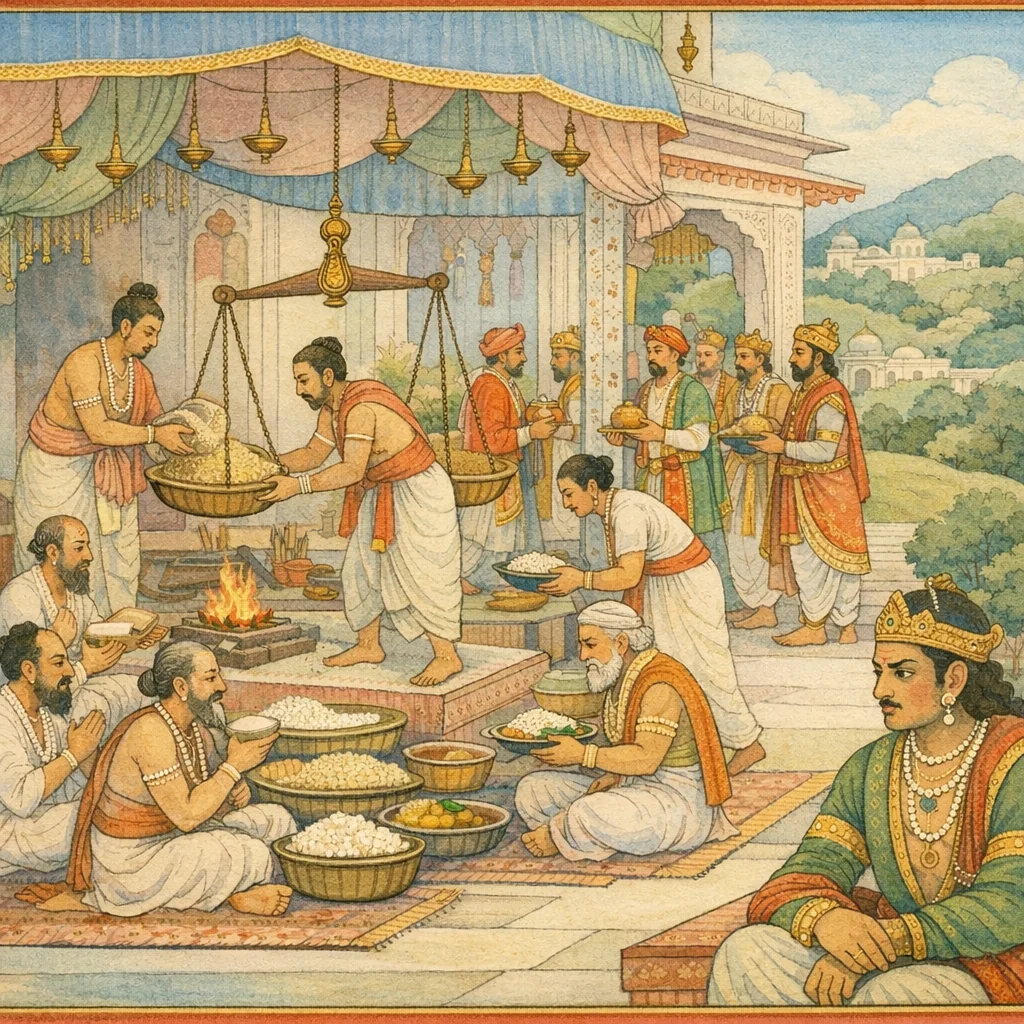
Chapter Arc: सभा में दुर्योधन अपनी आँखों से देखे राजसूय-यज्ञ के वैभव का वृत्तांत सुनाने उठता है—युधिष्ठिर को राजाओं से भेंट में मिला धन, पशु, रत्न और जन-समुदाय उसके मन में जलन बनकर उबल रहा है। → वह एक-एक कर दूर-दूर के जनपदों और राजाओं के उपहार गिनाता है—घोड़े, हाथी, रथ, दास-दासियाँ, वस्त्र, वैदूर्य-मणि, मोतियों के ढेर, सिंहल के झूल, और अनगिनत कर-राशि। वर्णन के साथ-साथ उसके भीतर का विष भी बढ़ता जाता है: ‘मेरे शत्रुओं के घर’ में यह समृद्धि कैसे? → दुर्योधन यज्ञ-मण्डप की जीवंत तस्वीर खींच देता है—कहीं कच्चा अन्न तौला जा रहा है, कहीं पक रहा है, कहीं परोसा जा रहा है; ब्राह्मणों के ‘पुण्याह’ स्वरों से दिशाएँ गूँज रही हैं; और उसने किसी को भी ऐसा नहीं देखा जो तृप्त होकर, आभूषणों से विभूषित होकर, संतुष्ट न लौटा हो। यही दृश्य उसके हृदय में असह्य दाह बनकर फूटता है—वह कह उठता है कि यह देखकर उसे दुःख से मरने की इच्छा होती है। → वर्णन का अंत युधिष्ठिर की व्यवस्था और दान-धर्म की व्यापकता पर टिकता है—अतिथियों, स्नातकों और सेवकों तक की नियमित सेवा-व्यवस्था; राजाओं द्वारा समर्पित सम्पूर्ण राज्य-धन तक का यज्ञार्थ निवेदन। दुर्योधन का कथन वस्तुतः प्रशंसा नहीं, ईर्ष्या का प्रमाण बनकर सभा में ठहर जाता है। → समृद्धि का यह लेखा-जोखा दुर्योधन के भीतर प्रतिशोध की चिंगारी को हवा देता है—अब प्रश्न यह नहीं कि युधिष्ठिर कितना महान है, बल्कि यह कि दुर्योधन इस वैभव को सहने के लिए कौन-सा कपट रचेगा।
Shlokas
Verse 1
अफड--रू- द्विपञज्चाशत्तमो<ड ध्याय: युधिष्ठिरको भेंटमें मिली हुई वस्तुओंका दुर्योधनद्वारा वर्णन दुर्योधन उवाच दायं तु विविध तस्मै शृणु मे गदतो5नघ । यज्ञार्थ राजभिर्दत्तं महान्तं धनसंचयम्
Duryodhana said: “Now hear from me, O blameless one, as I describe to him the many kinds of tribute—an immense accumulation of wealth, given by kings for sacrificial purposes.”
Verse 2
दुर्योधन बोला--अनघ! राजाओंद्वारा युधिष्ठिरके यज्ञके लिये दिये हुए जिस महान् धनका संग्रह वहाँ हुआ था, वह अनेक प्रकारका था। मैं उसका वर्णन करता हूँ, सुनिये ।। मेरुमन्दरयोर्मध्ये शैलोदामभितो नदीम् | ये ते कीचकवेणूनां छायां रम्यामुपासते
Duryodhana said: “O blameless one! The vast wealth that had been gathered there—given by many kings for Yudhiṣṭhira’s sacrificial rite—was of many kinds. I shall describe it; listen. Between Meru and Mandara lies the river Śailodā; along its banks dwell those who delight in the lovely shade of the kīcaka bamboos.”
Verse 3
खसा एकासना हार्हा: प्रदरा दीर्घवेणव: । पारदाश्न कुलिन्दाश्न तड़णा: परतड़णा:
Duryodhana said: “The Khasas, the Ekāsanas, the Hārhyas, the Pradaras, and the Dīrghaveṇus; likewise the Pāradās and the Kulindas; the Taḍaṇas and the Parataḍaṇas—these too are among the peoples (arrayed in this assembly of kings).”
Verse 4
तद् वै पिपीलिकं नाम उद्धृतं यत् पिपीलिकै: । जातरूपं द्रोणमेयमहार्षु: पुज्जशो नृपा:
Duryodhana said: “This is indeed what is called ‘pipīlika’—that which has been carried up by ants. Here is a trough-like heap of gold, gathered in piles, O kings—(a marvel) brought forth through the power of the great sage.”
Verse 5
मेरु और मन्दराचलके बीचमें प्रवाहित होनेवाली शैलोदा नदीके दोनों तटोंपर छिठ्रोंमें वायुके भर जानेसे वेणुकी तरह बजनेवाले बाँसोंकी रमणीय छायामें जो लोग बैठते और विश्राम करते हैं, वे खस, एकासन, अह, प्रदर, दीर्घवेणु, पारद, पुलिन्द, तंगण और परतंगण आदि नरेश भेंटमें देनेके लिये पिपीलिकाओं (चींटियों)-द्वारा निकाले हुए पिपीलिक नामवाले सुवर्णके ढेर-के-ढेर उठा लाये थे। उसका माप द्रोणसे किया जाता था ॥। २-- ४।। कृष्णॉल्ललामां श्वमराज्छुक्लां श्षान्याज्छशि प्रभान् । हिमवत्पुष्पजं चैव स्वादु क्षौद्रं तथा बहु
Duryodhana said: “Between Mount Meru and Mount Mandara flows the river Śailodā. On both its banks, in the hollows where the wind gathers, the bamboos sound like flutes; in their delightful shade certain peoples sit and rest. Those kings—Khasa, Ekāśana, Āha, Pradara, Dīrghaveṇu, Pārada, Pulinda, Taṅgaṇa, Parataṅgaṇa, and others—came bearing as tribute great heaps of gold called ‘Pīpīlika’, said to have been brought out by ants; its quantity was measured by the droṇa measure. He further mentions abundant sweet honey and other rare goods.”
Verse 6
उत्तरेभ्य: कुरुभ्यश्षाप्पपोढं माल्यमम्बुभि: । उत्तरादपि कैलासादोषधी: सुमहाबला:
Duryodhana said: “From the northern Kurus comes a garland, washed by sacred waters and cleansed of every curse; and from the northern side of Mount Kailāsa come medicinal herbs of exceedingly great power. Such marvels are spoken of in those far northern regions.”
Verse 7
पर्वतीया बलिं चान्यमाहृत्य प्रणता: स्थिता: । अजाततशभत्रोर्नुपतेर्द्धारि तिष्ठन्ति वारिता:
Duryodhana said: “Having brought the mountain-tribute and other offerings, they stand with bowed heads. Yet, though they are ready to present it, they are held back at the gate of King Ajātaśatru (Yudhiṣṭhira).”
Verse 8
इतना ही नहीं, वे सुन्दर काले रंगके चँवर तथा चन्द्रमाके समान श्वेत दूसरे चामर एवं हिमालयके पुष्पोंसे उत्पन्न हुआ स्वादिष्ट मधु भी प्रचुर मात्रामें लाये थे। उत्तरकुरुदेशसे गंगाजल और मालाके योग्य रत्न तथा उत्तर कैलाससे प्राप्त हुई अतीव बलसम्पन्न औषधियाँ एवं अन्य भेंटकी सामग्री साथ लेकर आये हुए पर्वतीय भूपालगण अजातशत्रु राजा युधिष्ठिरके द्वारपर रोके जाकर विनीतभावसे खड़े थे ।। ये परार्थे हिमवत: सूर्योदयगिरौ नृपा: । कारूषे च समुद्रान्ते लौहित्यमभितश्न ये,पिताजी! मैंने देखा कि जो राजा हिमालयके परार्धभागमें निवास करते हैं, जो उदयगिरिके निवासी हैं, जो समुद्र-तटवर्ती कारूषदेशमें रहते हैं तथा जो लौहित्यपर्वतके दोनों ओर वास करते हैं, फल और मूल ही जिनका भोजन है, वे चर्मवस्त्रधारी क्रूरतापूर्वक शस्त्र चलानेवाले और क्रूरकर्मा किरातनरेश भी वहाँ भेंट लेकर आये थे
Duryodhana reported to his father: “Not only that: they brought splendid dark yak-tail fans and other fans white as the moon, and abundant, delicious honey said to come from Himalayan flowers. From Uttarakuru they carried sacred Ganga water and gems fit for garlands; from the northern Kailasa region they brought potent medicinal herbs and many other gifts. Mountain rulers, halted at the door of King Yudhishthira—Ajatashatru—stood there with humility. And, Father, I myself saw rulers dwelling in the farther reaches of the Himalayas, on the Sunrise Mountain (Udayagiri), in Karusha by the sea, and on both sides of the Lauhitya range; even Kirata chieftains—living on fruits and roots, clad in skins, fierce in weapon-use and harsh in deeds—had come there bearing tribute.”
Verse 9
फलमूलाशना ये च किराताश्चर्मवासस: । क्रूरशस्त्रा: क्रूरकृतस्तांश्व पश्याम्यहं प्रभो,पिताजी! मैंने देखा कि जो राजा हिमालयके परार्धभागमें निवास करते हैं, जो उदयगिरिके निवासी हैं, जो समुद्र-तटवर्ती कारूषदेशमें रहते हैं तथा जो लौहित्यपर्वतके दोनों ओर वास करते हैं, फल और मूल ही जिनका भोजन है, वे चर्मवस्त्रधारी क्रूरतापूर्वक शस्त्र चलानेवाले और क्रूरकर्मा किरातनरेश भी वहाँ भेंट लेकर आये थे
Duryodhana said: “Father, my lord, I also see those Kirāta chiefs—clad in hides, living on fruits and roots—men of harsh weapons and harsh deeds, present here as well.”
Verse 10
चन्दनागुरुकाष्ठानां भारान् कालीयकस्य च । चर्मरत्नसुवर्णानां गन्धानां चैव राशय:,राजन्! चन्दन और अगुरुकाष्ठ तथा कृष्णागुरुकाष्ठके अनेक भार, चर्म, रत्न, सुवर्ण तथा सुगन्धित पदार्थोकी राशि और दस हजार किरातदेशीय दासियाँ, सुन्दर-सुन्दर पदार्थ, दूर देशोंके मृग और पक्षी तथा पर्वतोंसे संगृहीत तेजस्वी सुवर्ण एवं सम्पूर्ण भेंट-सामग्री लेकर आये हुए राजालोग द्वारपर रोके जानेके कारण खड़े थे
Duryodhana said: “O King, there were heaps of tribute—loads of sandalwood and agaru-wood, and also of kālīyaka; along with quantities of hides, gems, gold, and fragrant substances. Yet those kings, having come bearing such offerings, were made to stand at the gate, held back and dishonoured.”
Verse 11
कैरातकीनामयुतं दासीनां च विशाम्पते । आह्त्य रमणीयार्थान् दूरजान् मृगपक्षिण:,राजन्! चन्दन और अगुरुकाष्ठ तथा कृष्णागुरुकाष्ठके अनेक भार, चर्म, रत्न, सुवर्ण तथा सुगन्धित पदार्थोकी राशि और दस हजार किरातदेशीय दासियाँ, सुन्दर-सुन्दर पदार्थ, दूर देशोंके मृग और पक्षी तथा पर्वतोंसे संगृहीत तेजस्वी सुवर्ण एवं सम्पूर्ण भेंट-सामग्री लेकर आये हुए राजालोग द्वारपर रोके जानेके कारण खड़े थे
Duryodhana said: “O lord of the people, they have brought ten thousand maidservants from the land of the Kirātas, along with delightful articles, and animals and birds obtained from far-off countries.”
Verse 12
निचितं पर्वतेभ्यश्व हिरण्यं भूरिवर्चसम् । बलिं च कृत्स्नमादाय द्वारि तिष्ठन्ति वारिता:,राजन्! चन्दन और अगुरुकाष्ठ तथा कृष्णागुरुकाष्ठके अनेक भार, चर्म, रत्न, सुवर्ण तथा सुगन्धित पदार्थोकी राशि और दस हजार किरातदेशीय दासियाँ, सुन्दर-सुन्दर पदार्थ, दूर देशोंके मृग और पक्षी तथा पर्वतोंसे संगृहीत तेजस्वी सुवर्ण एवं सम्पूर्ण भेंट-सामग्री लेकर आये हुए राजालोग द्वारपर रोके जानेके कारण खड़े थे
Duryodhana said: “And gold of great brilliance, gathered from the mountains, along with the entire tribute—bearing all these offerings—they stand at the gate, held back and prevented from entering.”
Verse 13
कैराता दरदा दर्वा: शूरा वै यमकास्तथा । औदुम्बरा दुर्विभागा: पारदा बाह्विकैः सह
Duryodhana said: “The Kairātas, the Daradas, the Darvas—indeed brave men—as well as the Yamakas; the Audumbaras, the Durvibhāgas, the Pāradas, together with the Bāhvikas—all these peoples are present in array.”
Verse 14
काश्मीराश्च कुमाराश्न घोरका हंसकायना: । शिबित्रिगर्तयौधेया राजन्या भद्रकेकया:
Duryodhana said: “The Kashmiris and the Kāmbojas; the Ghorakas and the Haṃsakāyanas; the Śibis, the Trigartas, and the Yaudheyas; the royal clans, the Bhadrakas, and the Kekayas.”
Verse 15
अम्बष्ठा: कौकुरास्तार्क्ष्या वस्त्रपा: पह्ववैः सह । वशातलाश्च मौलेया: सह क्षुद्रकमालवै:
Duryodhana said: “The Ambaṣṭhas, the Kaukurās, the Tārkṣyas, the Vastrapās—together with the Pahvavas; and the Vaśātalas and the Mauleyas—together with the Kṣudraka-Mālavās.”
Verse 16
शौण्डिका: कुकुराश्चैव शकाश्नैव विशाम्पते । अज्ज वज्जश्न पुण्ड्राश्न शाणवत्या गयास्तथा
Duryodhana said: “O lord of the people, there are the Śauṇḍikas, the Kukuras, and the Śakas; likewise the Ajja–Vajjaśna, the Puṇḍrāśna, and also the Śāṇavatyas and the Gayas.”
Verse 17
सुजातय: श्रेणिमन्त: श्रेयांस: शस्त्रधारिण: । अहार्ष: क्षत्रिया वित्त शतशो5जातशत्रवे
Duryodhana said: “Well-born, well-ordered, eminent, weapon-bearing kṣatriyas—by the hundreds—brought wealth as tribute to Ajātaśatru (Yudhiṣṭhira).”
Verse 18
किरात, दरद, दर्व, शूर, यमक, औदुम्बर, दुर्विभाग, पारद, बाह्लिक, काश्मीर, कुमार, घोरक, हंसकायन, शिबि, त्रिगर्त, यौधेय, भद्र, केकय, अम्बष्ठ, कौकुर, तार्क्ष्य, वस्त्रप, पह्चवव, वशातल, मौलेय, क्षुद्रक, मालव, शौण्डिक, कुक्कुर, शक, अंग, वंग, पुण्ड्र, शाणवत्य तथा गय--ये उत्तम कुलनमें उत्पन्न श्रेष्ठ एवं शस्त्रधारी क्षत्रिय राजकुमार सैकड़ोंकी संख्यामें पंक्तिबद्ध खड़े होकर अजातशत्रु युधिष्ठिरको बहुत धन अर्पित कर रहे थे || १३-- १७ || वज्भा: कलिड्डरा मगधास्ताग्रलिप्ता: सपुण्ड्रका: । दौवालिका: सागरका: पत्रोर्णा: शैशवास्तथा,भारत! वंग, कलिंग, मगध, ताग्रलिप्त, पुण्ड्रक, दौवालिक, सागरक, पत्रोर्ण, शैशव तथा कर्णप्रावरण आदि बहुत-से क्षत्रियनरेश वहाँ दरवाजेपर खड़े थे तथा राजाज्ञासे द्वारपालगण उन सबको यह संदेश देते थे कि आपलोग अपने लिये समय निश्चित कर लें। फिर उत्तम भेंट-सामग्री अर्पित करें। इसके बाद आपलोगोंको भीतर जानेका मार्ग मिल सकेगा
Duryodhana said: “O Bhārata, the kings of Vaṅga, Kaliṅga, Magadha, Tāmrali(pt)a, and Puṇḍra—along with the Daivālika, Sāgaraka, Patrornā, and Śaiśava rulers—were standing at the doorway. By the king’s command, the gatekeepers conveyed to them: ‘Fix your appointed time, then present your finest offerings; only thereafter will you be granted passage within.’”
Verse 19
कर्णप्रावरणाश्रैव बहवस्तत्र भारत । तत्रस्था द्वारपालैस्ते प्रोच्यन्ते राजशासनात् | कृतकाला: सुबलयस्ततो द्वारमवाप्स्यथ,भारत! वंग, कलिंग, मगध, ताग्रलिप्त, पुण्ड्रक, दौवालिक, सागरक, पत्रोर्ण, शैशव तथा कर्णप्रावरण आदि बहुत-से क्षत्रियनरेश वहाँ दरवाजेपर खड़े थे तथा राजाज्ञासे द्वारपालगण उन सबको यह संदेश देते थे कि आपलोग अपने लिये समय निश्चित कर लें। फिर उत्तम भेंट-सामग्री अर्पित करें। इसके बाद आपलोगोंको भीतर जानेका मार्ग मिल सकेगा
Duryodhana said: “O Bhārata, many kings—among them the Karṇaprāvaraṇas and others—were standing there at the gate. By the king’s command, the doorkeepers addressed them: ‘Fix your appointed time, and then, with your offerings duly prepared, you will obtain entry through the door.’”
Verse 20
ईषादन्तान् हेमकक्षान् पद्मवर्णान् कुथावृतान् । शैलाभान् नित्यमत्तांक्षाप्पभित: काम्यकं सर:,तदनन्तर एक-एक क्षमाशील और कुलीन राजाने काम्यक सरोवरके निकट उत्पन्न हुए एक-एक हजार हाथियोंकी भेंट देकर द्वारके भीतर प्रवेश किया। उन हाथियोंके दाँत हलदण्डके समान लंबे थे। उनको बाँधनेकी रस्सी सोनेकी बनी हुई थी। उन हाथियोंका रंग कमलके समान सफेद था। उनकी पीठपर झूल पड़ा हुआ था। वे देखनेमें पर्वताकार और उन्मत्त प्रतीत होते थे
Duryodhana said: “(They presented) elephants with tusks long like the shafts of a plough, tethered with golden ropes, lotus-hued (pale and radiant), and covered with fine cloths. They looked like mountains and seemed ever in rut. (Such gifts were brought) near the Kāmyaka lake, as the kings—patient and well-born—entered within the gate one by one, each offering a thousand elephants.”
Verse 21
दत्त्वैकैको दश शतान् कुञ्जरान् कवचावृतान् । क्षमावन्त: कुलीनाश्न द्वारेण प्राविशंस्तदा,तदनन्तर एक-एक क्षमाशील और कुलीन राजाने काम्यक सरोवरके निकट उत्पन्न हुए एक-एक हजार हाथियोंकी भेंट देकर द्वारके भीतर प्रवेश किया। उन हाथियोंके दाँत हलदण्डके समान लंबे थे। उनको बाँधनेकी रस्सी सोनेकी बनी हुई थी। उन हाथियोंका रंग कमलके समान सफेद था। उनकी पीठपर झूल पड़ा हुआ था। वे देखनेमें पर्वताकार और उन्मत्त प्रतीत होते थे
Duryodhana said: “Then, one by one, those patient and well-born kings entered through the gate, each presenting a gift of a thousand elephants, armored in mail.”
Verse 22
एते चान्ये च बहवो गणा दिग्भ्य: समागता: । अन्यैश्नोपाह्तान्यत्र रत्नानीह महात्मभि:,ये तथा और भी बहुत-से भूपालगण अनेक दिशाओंसे भेंट लेकर आये थे। दूसरे-दूसरे महामना नरेशोंने भी वहाँ रत्नोंकी भेंट अर्पित की थी
“And these, and many other groups as well, have come together from all directions. Here, precious treasures have also been presented—brought as offerings by other high-minded kings.”
Verse 23
राजा चित्ररथो नाम गन्धर्वो वासवानुग: । शतानि चत्वार्यददद्धयानां वातरंहसाम्,इन्द्रके अनुगामी गन्धर्वराज चित्ररथने चार सौ दिव्य अश्व दिये, जो वायुके समान वेगशाली थे
Duryodhana said: “There is a Gandharva-king named Citraratha, a follower of Vāsava (Indra). He bestowed four hundred horses, swift as the wind.”
Verse 24
तुम्बुरुस्तु प्रमुदितो गन्धर्वो वाजिनां शतम् । आम्रपत्रसवर्णानामददाद्धेममालिनाम्,तुम्बुरु नामक गन्धर्वराजने प्रसन्नतापूर्वक सौ घोड़े भेंट किये, जो आमके पत्तेके समान हरे रंगवाले तथा सुवर्णकी मालाओंसे विभूषित थे
Tumburu, the Gandharva, delighted at heart, presented a hundred horses—green like mango leaves in hue and adorned with garlands of gold.
Verse 25
कृती राजा च कौरव्य शूकराणां विशाम्पते । अददाद् गजरत्नानां शतानि सुबहून्यथ,महाराज! शूकरदेशके पुण्यात्मा राजाने कई सौ गजरत्न भेंट किये
Duryodhana said: “O Kauravya, lord of the people! The capable king of the Śūkara realm, O great king, presented hundreds—indeed very many—elephant-treasures as gifts.”
Verse 26
विराटेन तु मत्स्येन बल्यर्थ हेममालिनाम् । कुण्जराणां सहस्रे द्वे मत्तानां समुपाहते,मत्स्यदेशके राजा विराटने सुवर्णमालाओंसे विभूषित दो हजार मतवाले हाथी उपहारके रूपमें दिये
Duryodhana said: “But Virāṭa, the king of the Matsya country, presented as tribute two thousand rutting elephants, adorned with garlands of gold.”
Verse 27
पांशुराष्ट्राद वसुदानो राजा षड्विंशतिं गजान् | अश्वानां च सहस्रे द्वेी राजन् काड्चनमालिनाम्,राजन! राजा वसुदानने पांशुदेशसे छब्बीस हाथी, वेग और शक्तिसे सम्पन्न दो हजार सुवर्णमालाभूषित जवान घोड़े और सब प्रकारकी दूसरी भेंट-सामग्री भी पाण्डवोंको समर्पित की
O king, Vasudāna, ruler of Pāṃśurāṣṭra, offered twenty-six elephants and two thousand young horses—endowed with speed and strength—adorned with garlands of gold.
Verse 28
जवसत्त्वोपपन्नानां वयस्थानां नराधिप । बलिं च कृत्स्नमादाय पाण्डवेभ्यो न्यवेदयत्,राजन! राजा वसुदानने पांशुदेशसे छब्बीस हाथी, वेग और शक्तिसे सम्पन्न दो हजार सुवर्णमालाभूषित जवान घोड़े और सब प्रकारकी दूसरी भेंट-सामग्री भी पाण्डवोंको समर्पित की
O lord of men, he gathered up the entire tribute—young horses endowed with speed and strength—and presented it to the Pāṇḍavas.
Verse 29
यज्ञसेनेन दासीनां सहस्राणि चतुर्दश । दासानामयुतं चैव सदाराणां विशाम्पते । गजयुक्ता महाराज रथा: षड्विंशतिस्तथा
Duryodhana said: “O lord of the people, Yajñasena has given fourteen thousand maidservants, and also ten thousand male servants—together with their wives. And, O great king, there are likewise twenty-six chariots, equipped with elephants.”
Verse 30
राज्यं च कृत्स्नं पार्थेभ्यो यज्ञार्थ वै निवेदितम् राजन! राजा द्रुपदने चौदह हजार दासियाँ, दस हजार सपत्नीक दास, हाथी जुते हुए छब्बीस रथ तथा अपना सम्पूर्ण राज्य कुन्तीपुत्रोंको यज्ञके लिये समर्पित किया था ।। वासुदेवो<पि वार्ष्णेयो मानं कुर्वबन् किरीटिन:
And Yajñasena offered up his entire kingdom to the Pārthas (Kuntī’s sons) for the sake of the sacrifice. And Vāsudeva, the Vārṣṇeya, likewise paid honor to Kirīṭin (Arjuna).
Verse 31
अददाद् गजमुख्यानां सहस्राणि चतुर्दश । आत्मा हि कृष्ण: पार्थस्य कृष्णस्यात्मा धनंजय:
Duryodhana said: “He gave fourteen thousand of the finest elephants. For Kṛṣṇa is truly the very self (ātman) of Pārtha (Arjuna), and Dhanañjaya (Arjuna) is the very self of Kṛṣṇa.”
Verse 32
वृष्णिकुलभूषण वसुदेवनन्दन श्रीकृष्णने भी अर्जुनका आदर करते हुए चौदह हजार उत्तम हाथी दिये। श्रीकृष्ण अर्जुनके आत्मा हैं और अर्जुन श्रीकृष्णके आत्मा हैं ।। यद् ब्रूयादर्जुन: कृष्णं सर्व कुर्यादसंशयम् । कृष्णो धनंजयस्यार्थे स्वर्गलोकमपि त्यजेत्,अर्जुन श्रीकृष्णसे जो कह देंगे, वह सब वे निःसंदेह पूर्ण करेंगे। श्रीकृष्ण अर्जुनके लिये परमधामको भी त्याग सकते हैं
Duryodhana declared: “Śrī Kṛṣṇa—the glory of the Vṛṣṇi line, Vasudeva’s son—honored Arjuna and gave fourteen thousand excellent elephants. Kṛṣṇa is Arjuna’s very self (ātman), and Arjuna is Kṛṣṇa’s very self. Whatever Arjuna were to say to Kṛṣṇa, he would do without doubt; for Arjuna’s sake, Kṛṣṇa could even renounce heaven itself.”
Verse 33
तथैव पार्थ: कृष्णार्थे प्राणानपि परित्यजेत् । सुरभी श्रन्दनरसान् हेमकुम्भसमास्थितान्
Duryodhana said: “In the same way, Pārtha (Arjuna) would even give up his very life for Kṛṣṇa’s sake. And there are fragrant, choice essences, stored in golden jars.”
Verse 34
मणिरत्नानि भास्वन्ति काउ्चनं सूक्ष्मवस्त्रकम्
Radiant gems, gold, and fine, delicate garments.
Verse 35
समुद्रसारं वैदूर्य मुक्तासड्घांस्तथैव च
And ocean-born treasures: vaidūrya (cat’s-eye gems) and clusters of pearls as well.
Verse 36
शतशक्ष कुथांस्तत्र सिंहला: समुपाहरन् । सिंहलदेशके क्षत्रियोंने समुद्रका सारभूत वैदूर्य, मोतियोंके ढेर तथा हाथियोंके सैकड़ों झूल अर्पित किये ।। संवृता मणिचीरैस्तु श्यामास्ताम्रान्तलोचना:,उपाजहुर्विशश्वैव शूद्रा: शुश्रूषवस्तथा । वे सिंहलदेशीय वीर मणियुक्त वस्त्रोंसे अपने शरीरोंको ढके हुए थे। उनके शरीरका रंग काला था और उनकी आँखोंके कोने लाल दिखायी देते थे। उन भेंट-सामग्रियोंको लेकर वे सब लोग दरवाजेपर रोके हुए खड़े थे। ब्राह्मण, विजित क्षत्रिय, वैश्य तथा सेवाकी इच्छावाले शूट्र प्रसन्नता-पूर्वक वहाँ उपहार अर्पित करते थे
Duryodhana said: “From Siṃhala they brought, in hundreds, conches and other offerings. The Kṣatriyas of the Siṃhala country presented treasures drawn, as it were, from the very essence of the ocean—vaidūrya gems, heaps of pearls, and hundreds of elephant-trappings. Clad in gem-studded garments, dark-bodied and with reddish corners to their eyes, they stood held at the gate with those gifts. Brahmins, subdued Kṣatriyas, Vaiśyas, and Śūdras eager to serve likewise offered their presents with outward gladness.”
Verse 37
ता गृहीत्वा नरास्तत्र द्वारि तिष्ठन्ति वारिता: | प्रीत्यर्थ ब्राह्मणाश्रैव क्षत्रियाश्व विनिर्जिता:,उपाजहुर्विशश्वैव शूद्रा: शुश्रूषवस्तथा । वे सिंहलदेशीय वीर मणियुक्त वस्त्रोंसे अपने शरीरोंको ढके हुए थे। उनके शरीरका रंग काला था और उनकी आँखोंके कोने लाल दिखायी देते थे। उन भेंट-सामग्रियोंको लेकर वे सब लोग दरवाजेपर रोके हुए खड़े थे। ब्राह्मण, विजित क्षत्रिय, वैश्य तथा सेवाकी इच्छावाले शूट्र प्रसन्नता-पूर्वक वहाँ उपहार अर्पित करते थे
Duryodhana said: “Having taken those offerings, the men stood there at the gate, held back and not permitted to enter. For the sake of winning favor, Brahmins, conquered Kṣatriyas, Vaiśyas, and Śūdras eager to serve all presented gifts there with outward goodwill.”
Verse 38
।। प्रीत्या च बहुमानाच्चाप्युपागच्छन् युधिष्ठिरम्
Out of apparent affection and also out of professed respect, he approached Yudhiṣṭhira.
Verse 39
नानादेशसमुत्थैश्ष नानाजातिभिरेव च
The assembly was filled with people who had come from many different lands and who belonged to many different communities.
Verse 40
उच्चावचानुपग्राहान् राजभि: प्रापितान् बहूनू
Through kings, many kinds of favors and supports—both great and small—have been obtained in abundance.
Verse 41
शत्रूणां पश्यतो दु:खान्मुमूर्षा मे व्यजायत । भृत्यास्तु ये पाण्डवानां तांस्ते वक्ष्यामि पार्थिव
Duryodhana said: “As I watched the sufferings of my enemies, a desire to die arose in me. O king, I shall now tell you about those retainers who belong to the Pāṇḍavas.”
Verse 42
येषामामं च पक्वं च संविधत्ते युधिष्ठिर: । मेरे शत्रुओंके घरमें राजाओंद्वारा लाये हुए बहुत-से छोटे-बड़े उपहारोंको देखकर दुःखसे मुझे मरनेकी इच्छा होती थी। राजन! पाण्डवोंके वहाँ जिन लोगोंका भरण-पोषण होता है, उनकी संख्या मैं आपको बता रहा हूँ। राजा युधिष्ठिर उन सबके लिये कच्चे-पक्के भोजनकी व्यवस्था करते हैं || ४०-४१ $ ।। अयुतं त्रीणि पद्मानि गजारोहा: ससादिन:
Duryodhana said: “For all those people, King Yudhiṣṭhira provides both uncooked provisions and cooked meals. The number is vast: three ayutas and three padmas of warriors—elephant-riders together with horsemen.”
Verse 43
प्रमीयमाणमामं च पच्यमानं तथैव च
Duryodhana says: “Whether it is still raw and being destroyed, or being cooked all the same…”
Verse 44
नाभुक्तवन्तं नापीत॑ं नालड्कृतमसत्कृतम्
Duryodhana declares that no one here has been left unfed or unwatered, nor left without adornment or due honor.
Verse 45
अष्टाशीतिसहस्राणि स्नातका गृहमेधिन:
Duryodhana said: “Eighty-eight thousand householders—men who have completed their Vedic studentship and returned home as disciplined graduates—(are present/are to be counted).”
Verse 46
सुप्रीता: परितुष्टाश्न ते ह्वाशंसन्त्यरिक्षयम्,वे सब ब्राह्मण भोजनसे अत्यन्त तृप्त एवं संतुष्ट हो राजा युधिष्ठिरको उनके (काम- क्रोधादि) शत्रुओंके विनाशके लिये आशीर्वाद देते हैं
Duryodhana said: “Those Brahmins, delighted and wholly satisfied by the meal, utter blessings for the destruction of the king’s enemies—praying that Yudhiṣṭhira’s foes, such as desire and anger, be brought to ruin.” The scene shows how hospitality and dharmic giving draw benedictions, yet it also hints at the moral strain of invoking ‘enemy-destruction’ in a court already turning toward rivalry.
Verse 47
दशान्यानि सहस््राणि यतीनामूर्थ्वरेतसाम् । भुज्जते रुक्मपात्रीभिय्युधिष्ठिरनिवेशने,इसी प्रकार युधिष्ठिरके महलमें दूसरे दस हजार ऊर्ध्वरेता यति भी सोनेकी थालियोंमें भोजन करते हैं
Duryodhana said: “Another ten thousand ascetics, vowed to lifelong continence, are likewise fed in Yudhiṣṭhira’s residence, taking their meals from golden vessels.” In context, the line stresses the vast scale of Yudhiṣṭhira’s hospitality and public merit, while also hinting at Duryodhana’s competitive gaze, for whom such dharmic prosperity becomes fuel for envy and political strain.
Verse 48
अभुक्तं भुक्तवद् वापि सर्वमाकुब्जवामनम् । अभुज्जाना याज्ञसेनी प्रत्यवैक्षद् विशाम्पते,राजन! उस यज्ञमें द्रौपदी प्रतिदिन स्वयं पहले भोजन न करके इस बातकी देखभाल करती थी कि कुबड़े और बौनोंसे लेकर सब मनुष्योंमें किसने खाया है और किसने अभीतक भोजन नहीं किया है
O lord of the people! In that rite, Yājñasenī (Draupadī) would not eat first; each day she personally oversaw matters, checking—from the hunchbacked and the dwarfish to all alike—who had eaten and who had not yet been fed.
Verse 49
द्वौ करौ न प्रयच्छेतां कुन्तीपुत्राय भारत । सम्बन्धिकेन पञ्चाला: सख्येनान्धकवृष्णय:,भारत! कुन्तीनन्दन युधिष्ठिरको दो ही कुलके लोग कर नहीं देते थे। सम्बन्धके कारण पांचाल और मित्रताके कारण अन्धक एवं वृष्णि
Duryodhana said: “O Bhārata, two groups would not pay tribute to Kuntī’s son: the Pāñcālas, because of kinship ties, and the Andhakas and Vṛṣṇis, because of friendship.” In context, he casts political loyalty and personal bonds as obstacles to Yudhiṣṭhira’s imperial claim, implying that relationships can override formal obligations of submission.
Verse 52
इति श्रीमहा भारते सभापर्वणि द्यूतपर्वणि दुर्योधनसंतापे द्विपञ्चाशत्तमो<5ध्याय: ।। ५२ |। इस प्रकार श्रीमह्याभारत सभापव॑के अन्तर्गत झ्यूतपर्वमें दुर्योधनसंतापविषयक बावनवाँ अध्याय पूरा हुआ
Thus ends the fifty-second chapter, titled “Duryodhana’s Anguish,” within the Dyūta section of the Sabhā Parva of the Śrī Mahābhārata. The colophon marks the close of this episode, underscoring how the dice-game’s moral collapse culminates in Duryodhana’s inner turmoil—an ethical turning point that intensifies hostility and prepares the ground for further injustice and conflict.
Verse 336
मलयाद् दर्दुराच्चैव चन्दनागुरुसंचयान् । इसी प्रकार अर्जुन भी श्रीकृष्णके लिये अपने प्राणोंतकका त्याग कर सकते हैं। मलय तथा दर्दुरपर्वतसे वहाँके राजालोग सोनेके घड़ोंमें रखे हुए सुगन्धित चन्दन-रस तथा चन्दन एवं अगुरुके ढेर भेंटके लिये लेकर आये थे
Duryodhana said: “From the Malaya and Dardura mountains they brought heaps of sandalwood and agaru.”
Verse 343
चोलपाण्ड्यावपि द्वारं न लेभाते ह्ुपस्थितौ । चोल और पाण्ड्यदेशोंके नरेश चमकीले मणि-रत्न, सुवर्ण तथा महीन वस्त्र लेकर उपस्थित हुए थे; परंतु उन्हें भी भीतर जानेके लिये रास्ता नहीं मिला
Duryodhana said: “Even the kings of the Chola and Pāṇḍya lands, though they had arrived and were standing there, could not obtain an entry at the door.”
Verse 386
सर्वे म्लेच्छा: सर्ववर्णा आदिमध्यान्तजास्तथा | सभी म्लेच्छ तथा आदि, मध्य और अन्तमें उत्पन्न सभी वर्णके लोग विशेष प्रेम और आदरके साथ युधिष्ठिरके पास भेंट लेकर आये थे
Duryodhana said: “All the mlecchas, and people of every social order—those born in the beginning, the middle, and the end (of the realm)—came to Yudhiṣṭhira bearing gifts, showing him marked affection and respect.”
Verse 396
पर्यस्त इव लोको<यं युधिष्ठटिरनिवेशने । अनेक देशोंमें उत्पन्न और विभिन्न जातिके लोगोंके आगमनसे युधिष्ठिरके यज्ञमण्डपमें मानो यह सम्पूर्ण लोक ही एकत्र हुआ जान पड़ता था
Duryodhana said: “It seems as though this entire world has been overturned and poured into one place—into Yudhiṣṭhira’s royal enclosure. Because people born in many regions and of diverse communities have arrived, Yudhiṣṭhira’s sacrificial pavilion appears as if the whole world itself has gathered there.”
Verse 423
रथानामर्बुदं चापि पादाता बहवस्तथा । युधिष्ठिरके यहाँ तीन पद्म दस हजार हाथीसवार और घुड़सवार, एक अर्बुद (दस करोड़) रथारोही तथा असंख्य पैदल सैनिक हैं
Duryodhana continued: “There is also an arbuda of chariot-warriors, and likewise countless foot-soldiers.”
Verse 436
विसृज्यमान चान्यत्र पुण्याहस्वन एव च । युधिष्ठिरके यज्ञमें कहीं कच्चा अन्न तौला जा रहा था, कहीं पक रहा था, कहीं परोसा जाता था और वहीं ब्राह्मणोंके पुण्याहवाचनकी ध्वनि सुनायी पड़ती थी
Duryodhana describes the bustle of Yudhiṣṭhira’s sacrificial establishment: in one place provisions were being measured out, elsewhere food was being cooked, elsewhere it was being served, and all the while the auspicious sound of Brahmins reciting the puṇyāha benedictions was heard.
Verse 443
अपश्यं सर्ववर्णानां युधिष्ठिरनिवेशने । मैंने युधिष्ठिरके यज्ञमण्डपमें सभी वर्णके लोगोंमेंसे किसीको ऐसा नहीं देखा, जो खा- पीकर आभूषणोंसे विभूषित और सत्कृत न हुआ हो
Duryodhana said: “In Yudhiṣṭhira’s royal establishment, I saw no one of any social order who had not been fed and given drink, adorned with ornaments, and treated with honor.”
Verse 453
त्रिंशद्दासीक एकैको यान् बिभर्ति युधिष्ठिर: । राजा युधिष्ठिर घरमें बसनेवाले जिन अट्ठासी हजार स्नातकोंका भरण-पोषण करते हैं, उनमेंसे प्रत्येककी सेवामें तीस-तीस दास-दासी उपस्थित रहते हैं
Duryodhana said: “Yudhiṣṭhira maintains such men that each one of them is attended by thirty female servants.”
Frequently Asked Questions
Yudhiṣṭhira must choose between prudential ethics (avoiding gambling known to cause conflict and exploitation) and perceived rājadharma/social obligation (not refusing a formal royal summons and public challenge).
Procedural legitimacy is not equivalent to moral legitimacy: an action can be socially sanctioned (a courtly dice game) yet ethically corrosive when engineered through deception and power asymmetry.
No explicit phalaśruti appears; however, the chapter includes reflective meta-commentary on daiva’s capacity to eclipse discernment, functioning as a thematic warning about compromised agency under coercive circumstances.