Adhyaya 79
Jayadratha-rakṣā: Conch Signals and Encirclement of Arjuna (Chapter 79)
Upa-parva: Jayadratha-rakṣā (Protective Encirclement Episode)
Saṃjaya reports that Kaurava champions, upon sighting the Vṛṣṇi-Andhaka leader (Kṛṣṇa) and the Kuru-foremost archer (Arjuna), advance with urgency, their ornamented chariots and formidable bows described through fire-and-serpent similes to mark brilliance and threat. A coalition of major rathins—Bhūriśravā, Śalya, Karṇa, Vṛṣasena, Jayadratha, Kṛpa, the Madra king, and Droṇa’s son (Drauṇi/Aśvatthāman)—closes in, supported by swift, regionally sourced horses. Conches and instruments surge: Kaurava conches answer, while Arjuna’s Devadatta and Kṛṣṇa’s Pāñcajanya dominate the soundscape, producing fear in the anxious and exhilaration in the resolute, and unsettling the opposing host’s animals and chariots. The tactical situation hardens into a protective ring around Jayadratha. Missile exchanges intensify: Drauṇi strikes Kṛṣṇa and Arjuna; Arjuna counters with dense arrow-showers, repeatedly targeting Karṇa and Vṛṣasena and severing Śalya’s bow at the grip, while also wounding Drauṇi and others. Bhūriśravā damages Kṛṣṇa’s goad and showers Arjuna; Arjuna, likened to a strong wind scattering clouds, checks the attackers with sharp, rapid volleys, demonstrating control under encirclement and the narrative logic of escalation-through-retaliation.
Chapter Arc: अभिमन्यु-वध का समाचार अभी ताज़ा है; केशव के वचनों को सुनते ही सुभद्रा शोक से विह्वल होकर पुत्र के लिए करुण विलाप आरम्भ करती है। → सुभद्रा बार-बार उस मुख का स्मरण करती है जो रण-रेणु से ढँक गया—नीलोत्पल-श्याम, चारुलोचन, सुन्दर दन्तपंक्ति—और पूछती है कि अब वह उसे निर्व्रण कैसे देखेगी; शोक के साथ अपराध-बोध, असहायता और मातृत्व की टूटन बढ़ती जाती है। → वह अभिमन्यु को ‘पितुस्तुल्य-पराक्रम’ कहकर पुकारती है और अपने भाग्य को धिक्कारती हुई उस वीर के रण में निपातित होने पर विलाप करती है—यही करुण-शिखर है, जहाँ मातृ-हृदय का समस्त संसार एक क्षण में ढह जाता है। → श्रीकृष्ण सुभद्रा तथा उपस्थित स्वजनों को आश्वासन देते हैं—धर्मनिष्ठ जीवन, माता-पिता की सेवा, दान-शील, ब्राह्मण-सत्कार, तीर्थ-सेवन आदि के पुण्य-मार्ग का स्मरण कराते हुए शोक को मर्यादा में बाँधते हैं; फिर राजाओं, बन्धुओं और अर्जुन से अनुमति लेकर अंतःपुर में प्रवेश करते हैं और सभा/जन अपने-अपने स्थान लौटते हैं। → अभिमन्यु-वध का प्रतिशोध और प्रतिज्ञा-धर्म अभी शेष है; शोक के नीचे प्रतिकार की अग्नि सुलगती रहती है।
Shlokas
Verse 1
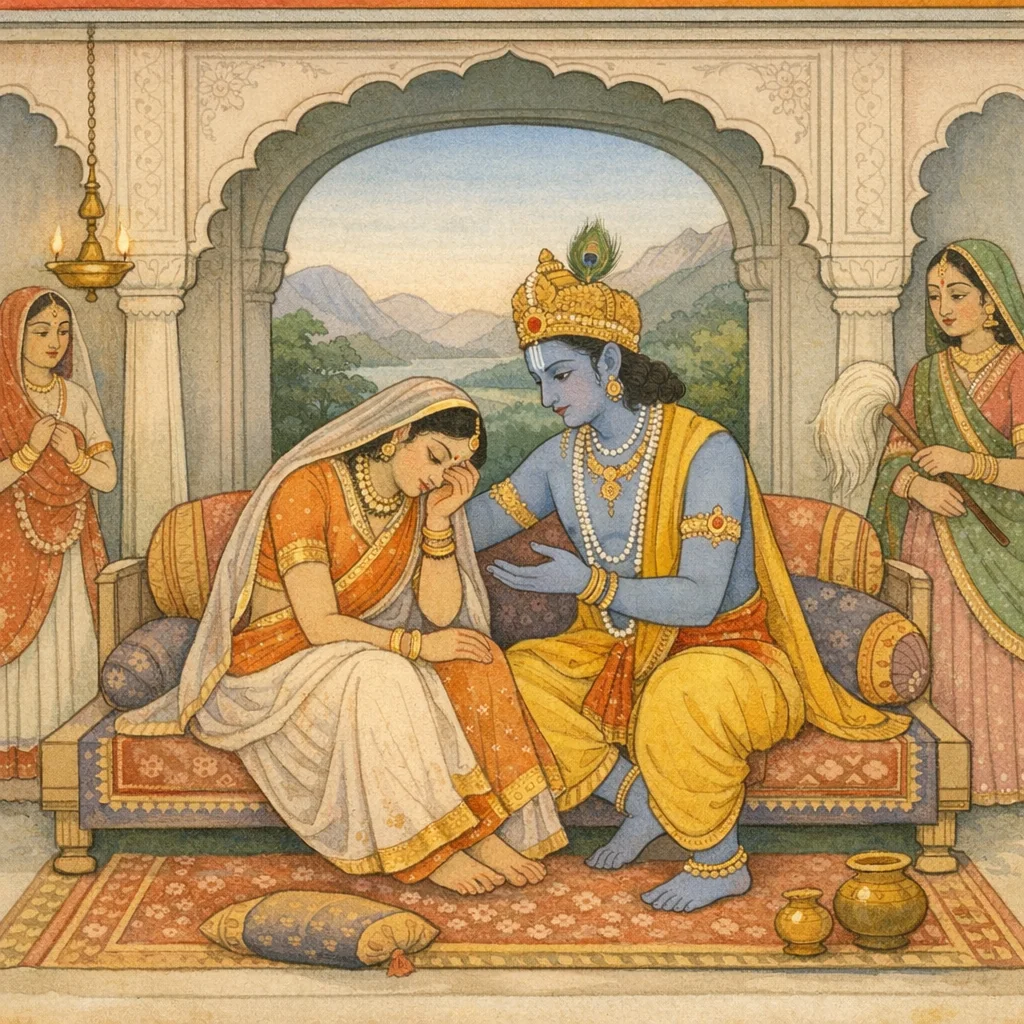
ऑपन-माज बछ। डे अष्टसप्ततितमो< ध्याय: सुभद्राका विलाप और श्रीकृष्णका सबको आश्वासन संजय उवाच एतच्छुत्वा वचस्तस्य केशवस्य महात्मन: । सुभद्रा पुत्रशोकार्ता विललाप सुदु:खिता,संजय कहते हैं--राजन्! महात्मा केशवका यह कथन सुनकर पुत्रशोकसे व्याकुल और अत्यन्त दुः:खित हुई सुभद्रा इस प्रकार विलाप करने लगी--
Sañjaya said: O King, hearing these words of the great-souled Keśava, Subhadrā—overwhelmed by grief for her son and stricken with intense sorrow—began to lament in this manner. The scene frames a moral tension between Kṛṣṇa’s consoling counsel and a mother’s irrepressible anguish amid the devastations of war.
Verse 2
हा पुत्र मम मन्दाया: कथमेत्यासि संयुगे | निधन प्राप्तवांस्तात पितुस्तुल्यपराक्रम:,हा पुत्र! हा बेटा अभिमन्यु! तुम मुझ अभागिनीके गर्भमें आकर क्रमश: पिताके तुल्य पराक्रमी होकर युद्धमें मारे कैसे गये?
Sañjaya said: “Alas, my son—born of me, a wretched woman—how did you come to the battlefield? O dear child, possessing valor equal to your father’s, how did you meet your death in war?”
Verse 3
कथमिन्दीवरश्यामं सुदष्ट्रं चारुलोचनम् । मुखं ते दृश्यते वत्स गुण्ठितं रणरेणुना,“वत्स! नील कमलके समान श्याम, सुन्दर दन्तपंक्तियोंसे सुशोभित, मनोहर नेत्रोंवाला तुम्हारा मुख आज युद्धकी धूलसे आच्छादित होकर कैसा दिखायी देता होगा?
Sañjaya said: “My child, how does your face appear today—dark as a blue lotus, graced with beautiful teeth and lovely eyes—now veiled by the dust of battle?”
Verse 4
नूनं शूरं निपतितं त्वां पश्यन्त्यनिवर्तिनम् । सुशिरोग्रीवबाद्वंसं व्यूढोरस्क॑ नतोदरम्,“बेटा! तुम शूरवीर थे। युद्धसे कभी पीछे पैर नहीं हटाते थे। मस्तक, ग्रीवा, बाहु और कंधे आदि तुम्हारे सभी अंग सुन्दर थे, छाती चौड़ी थी, उदर एवं नाभिदेश नीचा था, समस्त अंग मनोहर और हृष्ट-पुष्ट थे। सम्पूर्ण इन्द्रियाँ विशेषतः नेत्र बड़े सुन्दर थे तथा तुम्हारे सारे अंग शस्त्रजनित आघातसे व्याप्त थे। इस दशामें तुम धरतीपर पड़े होगे और निश्चय ही समस्त प्राणी उदय होते हुए चन्द्रमाके समान तुम्हें देख रहे होंगे
Sañjaya said: “Surely they now behold you fallen—though you were one who never turned back from battle. Your head and neck were well-formed; your arms and shoulders strong and handsome; your chest broad and expanded, your belly firm and slightly drawn in. Such a steadfast warrior now lies brought down upon the earth.”
Verse 5
चारूपचितसर्वःा्िं स्वक्षं शस्त्रक्षताचितम् | भूतानि त्वां निरीक्षन्ते नूनं चन्द्रमिवोदितम्,“बेटा! तुम शूरवीर थे। युद्धसे कभी पीछे पैर नहीं हटाते थे। मस्तक, ग्रीवा, बाहु और कंधे आदि तुम्हारे सभी अंग सुन्दर थे, छाती चौड़ी थी, उदर एवं नाभिदेश नीचा था, समस्त अंग मनोहर और हृष्ट-पुष्ट थे। सम्पूर्ण इन्द्रियाँ विशेषतः नेत्र बड़े सुन्दर थे तथा तुम्हारे सारे अंग शस्त्रजनित आघातसे व्याप्त थे। इस दशामें तुम धरतीपर पड़े होगे और निश्चय ही समस्त प्राणी उदय होते हुए चन्द्रमाके समान तुम्हें देख रहे होंगे
Sañjaya said: “Your whole body was beautifully proportioned, your face handsome, yet now it is covered with wounds made by weapons. Surely all creatures are looking upon you, as they would gaze at the moon newly risen.”
Verse 6
शयनीयं पुरा यस्य स्पर्थ्यास्तरणसंवृतम् । भूमावद्य कथं शेषे विप्रविद्ध: सुखोचित:,“हाय! पहले जिसके शयन करनेके लिये बहुमूल्य बिछौनेसे ढकी हुई शय्या बिछायी जाती थी, वही बेटा अभिमन्यु सुख भोगनेके योग्य होकर भी आज बाणविद्ध शरीरसे भूतलपर कैसे सो रहा होगा?
Sañjaya said: “He for whom, in earlier days, a bed fit for rest was spread and covered with precious bedding—how is that very Abhimanyu, worthy of comfort, lying today upon the bare earth, his body pierced by arrows?”
Verse 7
यो<न्वास्यत पुरा वीरो वरस्त्रीभिर्महाभुज: । कथमन्वास्यते सो5द्य शिवाभि: पतितो मृथे,“जिस महाबाहु वीरके पास पहले सुन्दरी स्त्रियाँ बैठा करती थीं, वही आज युद्धभूमिमें पड़ा होगा और उसके आस-पास सियारिनें बैठी होंगी; यह सब कैसे सम्भव हुआ?”
Sañjaya said: “That mighty-armed hero, whom in former days noble and beautiful women used to sit beside in attendance—how is it that today, fallen on the battlefield, he is attended instead by she-jackals? How could such a reversal come to pass?”
Verse 8
यो<स्तूयत पुरा हृष्टे: सूतमागधवन्दिभि: । सोड्द्य क्रव्यादगणैघोरिविनदद्धिरुपास्यते,“पहले हर्षमें भरे हुए सूत, मागध और वन्दीजन जिसकी स्तुति किया करते थे, उसीकी आज विकट गर्जना करते हुए भयंकर मांसभक्षी जन्तुओंके समुदाय उपासना करते होंगे
Sañjaya said: He whom, in former days, bards—sūtas, māgadhas, and panegyrists—praised with exultant hearts, is today, amid the dreadful din, as though being “worshipped” by packs of terrifying flesh-eating creatures, roaring horribly.
Verse 9
पाण्डवेषु च नाथेषु वृष्णिवीरेषु वा विभो । पज्चालेषु च वीरेषु हत: केनास्थनाथवत्,'शक्तिशाली पुत्र! तुम्हारे रक्षक पाण्डवों, वृष्णिवीरों तथा पांचालवीरोंके होते हुए भी तुम्हें अनाथकी भाँति किसने मारा?
Sañjaya said: “O mighty one, when the Pāṇḍavas were there as protectors, and the heroic Vṛṣṇis and the valiant Pāñcālas as well—by whom were you slain, as though you had no guardian at all?”
Verse 10
अतृप्तदर्शना पुत्र दर्शनस्य तवानघ । मन्दभाग्या गमिष्यामि व्यक्तमद्य यमक्षयम्,“बेटा! तुम्हें देखनेके लिये मेरी आँखें तरस रही हैं, इनकी प्यास नहीं बुझी। अनघ! कितनी मन्दभागिनी हूँ। निश्चय ही आज मैं यमलोकको चली जाऊँगी
Sañjaya said: “My eyes remain unsated, my child, longing to see you; their thirst has not been quenched. O blameless one, how unfortunate I am. Surely, today I shall depart to Yama’s imperishable realm.”
Verse 11
विशालाक्षं सुकेशान्तं चारुवाक्यं सुगन्धि च । तव पुत्र कदा भूयो मुखं द्रक्ष्यामि निर्व्रणम्,“वत्स! बड़े-बड़े नेत्र, सुन्दर केशप्रान्त, मनोहर वाक्य और उत्तम सुगंधसे युक्त तुम्हारा घावरहित सुन्दर मुख मैं फिर कब देख पाऊँगी?
Sañjaya said: “O son, when shall I again behold your lovely, unscarred face—wide-eyed, framed by beautiful hair, sweet of speech, and fragrant?”
Verse 12
धिग् बल॑ भीमसेनस्य धिक् पार्थस्य धनुष्मताम् | धिग् वीर्य वृष्णिवीराणां पञ्चालानां च धिग् बलम्
Sañjaya said: “Shame upon the strength of Bhīmasena; shame upon the bowmanship of Pārtha (Arjuna). Shame upon the valor of the Vṛṣṇi heroes, and shame too upon the might of the Pāñcālas.”
Verse 13
'भीमसेनके बलको धिक्कार है, अर्जुनके धनुष-धारणको धिककार है, वृष्णिवंशी वीरोंके पराक्रमको धिक्कार है तथा पांचालोंके बलको भी धिककार है! ।। धिक्केकयांस्तथा चेदीन् मत्स्यांश्नैवाथ सृञ्जयान् । ये त्वां रणगतं वीरं न शेकुरभिरक्षितुम्,“केकय, चेदि तथा मत्स्यदेशके वीरों और सूंजयवंशी क्षत्रियोंको भी धिक्कार है, जो युद्धमें गये हुए तुम-जैसे वीरकी रक्षा न कर सके
Sañjaya said: “Shame upon the Kekayas, the Cedis, the Matsyas, and the Sṛñjayas—those warriors who could not protect you, a hero, when you had entered the battle.”
Verse 14
अद्य पश्यामि पृथिवीं शून्यामिव हतत्विषम् । अभिमन्युमपश्यन्ती शोकव्याकुललोचना,“अभिमन्युको न देखनेके कारण मेरे नेत्र शोकसे व्याकुल हो रहे हैं। आज मुझे सारी पृथ्वी सूनी एवं कान्तिहीन-सी दिखायी देती है
Sañjaya said: “Today the earth itself appears to me as though empty and robbed of its radiance. Not seeing Abhimanyu, my eyes are overwhelmed and shaken by grief.”
Verse 15
स्वस्त्रीयं वासुदेवस्य पुत्र गाण्डीवधन्चन: । कथं त्वातिरथं वीर द्रक्ष्याम्पद्य निपातितम्,“वसुदेवनन्दन श्रीकृष्णके भानजे और गाण्डीवधारी अर्जुनके अतिरथी वीर पुत्र अभिमन्युको आज मैं धरतीपर पड़ा हुआ कैसे देख सकूँगी?
Sañjaya said: “How can I, today, bear to see that heroic son—related by marriage to Vāsudeva (Kṛṣṇa) and born of the wielder of the Gāṇḍīva—an atiratha among warriors, lying struck down upon the earth?”
Verse 16
एह्ोहि तृषितो वत्स स्तनौ पूर्णो पिबाशु मे । अड्कमारुह्ा मन्दाया हातृप्तायाश्न दर्शने,“बेटा! आओ, आओ । तुम्हें प्यास लगी होगी। तुम्हें देखनेके लिये प्यासी हुई मुझ अभागिनी माताकी गोदमें बैठकर मेरे दूधसे भरे हुए इन स्तनोंको शीघ्र पी लो
Sañjaya said: “Come, my child—come! You must be thirsty. Climb into the lap of your unfortunate mother, who has been longing just to see you, and quickly drink from these breasts, full of milk.”
Verse 17
हा वीर दृष्टो नष्टश्न धनं स्वप्न इवासि मे । अहो हानित्यं मानुष्यं जलबुदबुदचउ्चलम्,“हा वीर! तुम सपनेमें मिले हुए धनकी भाँति मुझे दिखायी दिये और नष्ट हो गये। अहो! यह मनुष्यजीवन पानीके बुलबुलेके समान चंचल एवं अनित्य है
Sañjaya said: “Alas, O hero! You appeared to me and then vanished—like wealth found in a dream. Ah, how fleeting and impermanent is human life, wavering like a bubble upon the water.”
Verse 18
इमां ते तरुणीं भार्या तवाधिभिरभिप्लुताम् । कथं संधारयिष्यामि विवत्सामिव धेनुकाम्,“बेटा! तुम्हारी यह तरुणी पत्नी तुम्हारे विरहशोकमें डूबी हुई है। जिसका बछड़ा खो गया हो, उस गायकी भाँति व्याकुल है। मैं इसे कैसे धीरज बँधाऊँगी?
Sañjaya said: “This young wife of yours is overwhelmed by anguish, submerged in the sorrow of your separation. Restless like a cow that has lost her calf, how am I to steady her and give her courage?”
Verse 19
(उत्तरामुत्तमां जात्या सुशीलां प्रियभाषिणीम् । शनकै: परिरभ्यैनां स्नुषां मम यशस्विनीम् ।। सुकुमारी विशालाक्षीं पूर्णचन्द्रनिभाननाम् । बालपल्लवतन्वज्ीं मत्तमात्तड़गामिनीम् ।। बिम्बाधरोष्ठीमबलामभिमन्यो प्रहर्षय ।) “यह उत्तरा जातिसे उत्तम, सुशीला, प्रियभाषिणी, यशस्विनी तथा मेरी प्यारी बहू है। यह सुकुमारी है। इसके नेत्र बड़े-बड़े और मुख पूर्णिमाके चन्द्रमाकी भाँति परम मनोहर है। इसके अंग नूतन पललवोंके समान कृश हैं। यह मतवाले हाथीके समान मन्दगतिसे चलनेवाली है। इसके ओठ बिम्बफलके समान लाल हैं। बेटा अभिमन्यु! तुम मेरी इस बहूको धीरे-धीरे हृदयसे लगाकर आनन्दित करो। अहो हाकाले प्रस्थानं कृतवानसि पुत्रक । विहाय फलकाले मां सुगृद्धां तव दर्शने,“अहो वत्स! जब पुत्रके होनेका फल मिलनेका समय आया है, तब तुम मुझे अपने दर्शनोंके लिये भी तरसती हुई छोड़कर असमयमें ही चल बसे
Sañjaya said: “Uttarā is noble by birth, virtuous in conduct, and gentle in speech—my illustrious and beloved daughter-in-law. She is delicate, with large eyes and a face lovely as the full moon. Her limbs are slender like fresh sprouts, and she walks with the slow, graceful gait of an intoxicated elephant. Her lips are red like the bimba fruit. O Abhimanyu, embrace my daughter-in-law softly and gladden her.”
Verse 20
नूनं गति: कृतान्तस्य प्राजैरपि सुदुर्विदा । यत्र त्वं केशवे नाथे संग्रामेडनाथवद्धत:,“निश्चय ही कालकी गति बड़े-बड़े विद्वानोंके लिये भी अत्यन्त दुर्बोध है, जिसके अधीन होकर तुम श्रीकृष्ण-जैसे संरक्षकके रहते हुए संग्रामभूमिमें अनाथकी भाँति मारे गये
Sañjaya said: Truly, the course of Death (Time) is exceedingly hard to fathom—even for the wisest. For under its dominion, you were slain on the battlefield like one without protection, though Keśava himself stood as your lord and guardian.
Verse 21
यज्वनां दानशीलानां ब्राह्मणानां कृतात्मनाम् चरितत्रह्वाचर्याणां पुण्यतीर्थावगाहिनाम्
Sañjaya said: “(They were) Brahmins—performers of sacrifices, devoted to giving, self-disciplined—whose conduct was marked by austere observances, and who had bathed in holy pilgrimage-fords.”
Verse 22
कृतज्ञानां वदान्यानां गुरुशुश्रूषिणामपि । सहस्रदक्षिणानां च या गतिस्तामवाप्रुहि
Sañjaya said: “Tell me what final state is attained by those who are grateful and mindful of benefits received, who are generous, who faithfully serve their teachers, and who bestow gifts in the thousands as sacrificial fees. Declare to me that destiny.”
Verse 23
“वत्स! यज्ञकर्ता, दानी, जितेन्द्रिय, ब्रह्मवेत्ता ब्राह्मण, ब्रह्मचारी, पुण्यतीर्थोमें नहानेवाले, कृतज्ञ, उदार, गुरुसेवा-परायण और सहस्रोंकी संख्यामें दक्षिणा देनेवाले धर्मात्मा पुरुषोंको जो गति प्राप्त होती है, वही तुम्हें भी मिले ।। या गतिर्युध्यमानानां शूराणामनिवर्तिनाम् | हत्वारीन् निहतानां च संग्रामे तां गतिं ब्रज,'संग्राममें युद्धतत्पर हो कभी पीछे पैर न हटानेवाले और शत्रुओंको मारकर मरनेवाले शूरवीरोंको जो गति प्राप्त होती है, वही तुम्हें भी मिले
Sañjaya said: “My child! May you attain the very same blessed destiny that is won by righteous men—those who perform sacrifices, give generously, master their senses, know Brahman, live in brahmacarya, bathe at holy fords, remain grateful, are open-handed, devoted to serving their teachers, and bestow gifts in the thousands. And may you also reach that destiny which belongs to heroes who, intent on battle, never turn back—who, having slain their foes, themselves fall in the clash of arms.”
Verse 24
गोसहस्रप्रदातृणां क्रतुदानां च या गति: । नैवेशिकं चाभिमतं ददतां या गति: शुभा,'सहस्र गोदान करनेवाले, यज्ञके लिये दान देनेवाले तथा मनके अनुरूप सब सामग्रियोंसहित निवासस्थान प्रदान करनेवाले पुरुषोंको जो शुभ गति प्राप्त होती है, वही तुम्हें भी मिले
Sañjaya said: “May you attain that same auspicious destiny which is gained by those who bestow a thousand cows, by those who give gifts for the sake of sacrifices, and by those who grant a dwelling furnished with all that is desired. May that blessed reward be yours as well.”
Verse 25
ब्राह्मणेभ्य: शरण्येभ्यो निधिं निदधतां च या । या चापि न्यस्तदण्डानां तां गतिं व्रज पुत्रक,“जो शरणागतवत्सल ब्राह्मणोंके लिये निधि स्थापित करते हैं तथा किसी भी प्राणीको दण्ड नहीं देते, उन्हें जिस गतिकी प्राप्ति होती है, बेटा! वही गति तुम्हें भी प्राप्त हो
Sañjaya said: “May you, dear son, attain that very destiny which is gained by those who, being a refuge to Brahmins, establish endowments for them, and who, having laid aside the rod of punishment, do not harm any living being.”
Verse 26
ब्रह्मचर्येण यां यान्ति मुनय: संशितब्रता: । एकपनन्यश्व यां यान्ति तां गतिं व्रज पुत्रक,“उत्तम व्रतका पालन करनेवाले मुनि ब्रह्मचर्यके द्वारा जिस गतिको पाते हैं और पतिव्रता स्त्रियोंको जिस गतिकी प्राप्ति होती है, बेटा! वही गति तुम्हें भी सुलभ हो
Sañjaya said: “My son, go to that very state which disciplined sages attain through the vow of brahmacarya, and which faithful wives devoted to a single husband attain. May that highest goal be easy for you to reach.”
Verse 27
राज्ञां सुचरितैर्या च गतिर्भवति शाश्वती । चतुराश्रमिणां पुण्यै: पावितानां सुरक्षितै:,"पुत्र! सदाचारके पालनसे राजाओंको तथा सुरक्षित पुण्यके प्रभावसे पवित्र हुए चारों आश्रमोंके लोगोंको जो सनातन गति प्राप्त होती है; दीनोंपर दया करनेवाले, उत्तम वस्तुओंको घरमें बाँटकर उपयोगमें लेनेवाले तथा चुगलीसे दूर रहनेवाले लोगोंको जो गति प्राप्त होती है, वही गति तुम्हें भी मिले
Sañjaya said: “May you attain that eternal destiny which is won through the noble conduct of kings, and which is attained by those of the four āśramas who, protected and made pure by their meritorious deeds, live in righteousness.”
Verse 28
दीनानुकम्पिनां या च सततं संविभागिनाम् | पैशुन्याच्च निवृत्तानां तां गतिं व्रज पुत्रक,"पुत्र! सदाचारके पालनसे राजाओंको तथा सुरक्षित पुण्यके प्रभावसे पवित्र हुए चारों आश्रमोंके लोगोंको जो सनातन गति प्राप्त होती है; दीनोंपर दया करनेवाले, उत्तम वस्तुओंको घरमें बाँटकर उपयोगमें लेनेवाले तथा चुगलीसे दूर रहनेवाले लोगोंको जो गति प्राप्त होती है, वही गति तुम्हें भी मिले
Sañjaya said: “My son, may you attain that same eternal state which belongs to those who are compassionate to the distressed, who constantly share what they have, and who refrain from slander and tale-bearing.”
Verse 29
व्रतिनां धर्मशीलानां गुरुशुश्रूषिणामपि । अमोघातिथिनां या च तां गतिं व्रज पुत्रक,“वत्स! व्रतपरायण, धर्मशील, गुरुसेवक एवं अतिथिको निराश न लौटानेवाले लोगोंको जिस गतिकी प्राप्ति होती है, वह तुम्हें भी प्राप्त हो
Sañjaya said: “My son, go to that same blessed state which is attained by those who are steadfast in vows, devoted to righteous conduct, diligent in service to their teachers, and who never send a guest away disappointed.”
Verse 30
कृच्छेषु या धारयतामात्मानं व्यसनेषु च । गति: शोकाग्निदग्धानां तां गतिं व्रज पुत्रक,“बेटा! जो लोग भारी-से-भारी कठिनाइयोंमें और संकटोंमें पड़नेपर तथा शोकाग्निसे दग्ध होनेपर भी धैर्य धारण करके अपने-आपको स्थिर रखते हैं, उन्हें मिलनेवाली गतिको तुम भी प्राप्त करो
Sañjaya said: “My son, may you attain that same destiny as those who, in hardships and calamities, hold themselves steady with endurance; who, though scorched by the fire of grief, do not waver.”
Verse 31
मातापित्रोश्व शुश्रूषां कल्पयन्तीह ये सदा । स्वदारनिरतानां च या गतिस्तामवाप्लुहि,जो सदा इस जगत्में माता-पिताकी सेवा करते हैं और अपनी ही स्त्रीमें अनुराग रखते हैं, उनकी जैसी गति होती है, वही तुम्हें भी प्राप्त हो
Sañjaya said: “May you attain that very destiny which is gained by those who, in this world, constantly serve their mother and father and remain devoted to their own lawful wife.”
Verse 32
ऋतुकाले स्वकां भार्या गच्छतां या मनीषिणाम् | परस्त्री भ्यो निवृत्तानां तां गतिं व्रज पुत्रक,“पुत्र! ऋतुकालमें अपनी स्त्रीसे सहवास करते हुए परायी स्त्रियोंसे सदा दूर रहनेवाले मनीषी पुरुषोंको जो गति प्राप्त होती है, वही तुम्हें भी मिले
Sañjaya said: “My son, may you attain that very destiny which is won by wise men—those who, approaching only their own wife at the proper season, keep themselves completely withdrawn from the wives of others.”
Verse 33
साम्ना ये सर्वभूतानि पश्यन्ति गतमत्सरा: । नारुंतुदानां क्षमिणां या गतिस्तामवाप्रुहि,“जो ईर्ष्या-द्वेषसे दूर रहकर समस्त प्राणियोंको समभावसे देखते हैं तथा जो किसीके मर्मस्थानको वाणीद्वारा चोट नहीं पहुँचाते एवं सबके प्रति क्षमाभाव रखते हैं, उनकी जो गति होती है, उसीको तुम भी प्राप्त करो
Sañjaya said: “May you attain that very state which belongs to those who, free from envy, look upon all beings with an even mind; who do not wound others at their vulnerable points with speech; and who remain forgiving toward all.”
Verse 34
मधुमांसनिवृत्तानां मदाद् दम्भात् तथानृतात् । परोपतापत्यक्तानां तां गतिं व्रज पुत्रक,पुत्र! जो मद्य और मांसका सेवन नहीं करते, मद, दम्भ और असत्यसे अलग रहते और दूसरोंको संताप नहीं देते हैं, उन्हें मिलनेवाली सदगति तुम्हें भी प्राप्त हो
Sañjaya said: “My son, attain that blessed destiny which comes to those who abstain from honey and meat, who keep away from intoxication, hypocrisy, and falsehood, and who do not cause suffering to others.”
Verse 35
ह्वीमन्त: सर्वशास्त्रज्ञा ज्ञानतृप्ता जितेन्द्रिया: । यां गतिं साधवो यान्ति तां गतिं व्रज पुत्रक,“बेटा! सम्पूर्ण शास्त्रोंके ज्ञाता, लज्जाशील, ज्ञानसे परितृप्त, जितेन्द्रिय श्रेष्पपुरुष जिस गतिको पाते हैं, उसीको तुम भी प्राप्त करो”
Sañjaya said: “O dear son, become one who is modest and self-restrained—one who knows the teachings of all the śāstras, is satisfied through true knowledge, and has conquered the senses. Go to that very state of attainment which the virtuous reach.”
Verse 36
एवं विलपतीं दीनां सुभद्रां शोककर्शिताम् अन्वपद्यत पाज्चाली वैराटीसहितां तदा,इस प्रकार उत्तरासहित विलाप करती हुई दीन-दुःखी एवं शोकसे दुर्बल सुभद्राके पास उस समय द्रौपदी भी आ पहुँची
Sañjaya said: At that time, Draupadī of Pāñcāla also came to Subhadrā—who was wretched, lamenting, and worn down by grief—accompanied by Uttarā of Virāṭa.
Verse 37
ता: प्रकामं रुदित्वा च विलप्य च सुदुःखिता: । उन्मत्तवत् तदा राजन् विसंज्ञान्यपतन् क्षितौ,राजन्! वे सब-की-सब अत्यन्त दुःखी हो इच्छानुसार रोती और विलाप करती हुई पगली-सी हो गयीं और मूर्च्छित होकर पृथ्वीपर गिर पड़ीं
Sañjaya said: Overwhelmed by grief, they wept as much as they wished and lamented aloud; then, O King, behaving like those bereft of reason, they lost consciousness and fell upon the earth.
Verse 38
सोपचारस्तु कृष्णश्न दुःखितां भृशदु:खित: । सिक्त्वाम्भसा समाश्चास्य तत्तदुक्त्वा हितं वच:,तब कमलनयन भगवान् श्रीकृष्ण अत्यन्त दुःखी हो उन सबको होशमें लानेके लिये उपचार करने लगे। उन्होंने अपनी दु:खिनी बहिन सुभद्रापर जल छिड़ककर नाना प्रकारके हितकर वचन कहते हुए उसे आश्वासन दिया। पुत्र-शोकसे मर्माहत हो वह रोती हुई काँप रही थी और अचेत-सी हो गयी थी। उस अवस्थामें भगवानने उससे कहा--
Sañjaya said: Deeply afflicted by grief, Kṛṣṇa began to apply gentle remedies to restore the distraught to composure. Sprinkling water upon his sorrowing sister Subhadrā and speaking to her in many ways with words meant for her welfare, he consoled her. Struck to the core by grief for her son, she was weeping, trembling, and had fallen into a near-unconscious state; in that condition the Blessed Lord addressed her—showing that even amid war, compassion, steadiness, and timely counsel are duties toward the suffering.
Verse 39
विसंज्ञकल्पां रुदतीं मर्मविद्धां प्रवेषतीम् । भगिनीं पुण्डरीकाक्ष इदं वचनमत्रवीत्,तब कमलनयन भगवान् श्रीकृष्ण अत्यन्त दुःखी हो उन सबको होशमें लानेके लिये उपचार करने लगे। उन्होंने अपनी दु:खिनी बहिन सुभद्रापर जल छिड़ककर नाना प्रकारके हितकर वचन कहते हुए उसे आश्वासन दिया। पुत्र-शोकसे मर्माहत हो वह रोती हुई काँप रही थी और अचेत-सी हो गयी थी। उस अवस्थामें भगवानने उससे कहा--
Sañjaya said: Seeing his sister entering a state like unconsciousness—weeping, trembling, and pierced to the core by grief—Puṇḍarīkākṣa (Kṛṣṇa, the lotus-eyed one) spoke these words to her. The scene underscores compassionate duty amid war: even in the midst of catastrophic loss, Kṛṣṇa turns first to restoring composure and offering consoling, welfare-oriented counsel to the bereaved.
Verse 40
सुभद्रे मा शुच:ः पुत्र पाउ्चाल्याश्वासयोत्तराम् । गतो5भिमन्यु: प्रथितां गतिं क्षत्रियपुज्रव:,“सुभद्रे! तुम पुत्रके लिये शोक न करो। द्रुपदकुमारी! तुम उत्तराको धीरज बँधाओ। वह क्षत्रियशिरोमणि सर्वश्रेष्ठ गतिको प्राप्त हुआ है
Sañjaya said: “Subhadrā, do not grieve for your son. O Pāñcālī, give reassurance to Uttarā. Abhimanyu, that foremost among warriors, has attained the renowned, highest destiny—falling in battle with honor, as befits a kṣatriya.”
Verse 41
ये चान्येडपि कुले सन्ति पुरुषा नो वरानने । सर्वे ते तां गति यान्तु हभिमन्योर्यशस्विन:,'सुमुखि! हमारी इच्छा तो यह है कि हमारे कुलमें और भी जितने पुरुष हैं, वे सब यशस्वी अभिमन्युकी ही गति प्राप्त करें
Sañjaya said: “O fair-faced lady, it is our wish that whatever other men there are in our lineage as well, may all of them attain that very destiny which the illustrious Abhimanyu has attained.” In the midst of war and bereavement, the statement frames Abhimanyu’s death not as mere loss but as a morally exalted end—an ideal of heroic, duty-bound departure that the family reveres and even prays to share.
Verse 42
कुर्याम तद् वयं कर्म क्रियासु सुहृदश्च नः । कृतवान् यादृगद्यैकस्तव पुत्रो महारथ:,“तुम्हारे महारथी पुत्रने अकेले ही आज जैसा पराक्रम किया है, उसे हम और हमारे सुहृद् भी कार्यरूपमें परिणत करें"
Sañjaya said: “Let us, together with our well-wishers, now bring that resolve into action in the tasks before us—matching the kind of feat your son, the great chariot-warrior, has accomplished today all by himself.”
Verse 43
एवमाश्चास्य भगिनीं द्रौपदीमपि चोत्तराम् । पार्थस्यैव महाबाहु: पार्श्वमागादरिंदम:,इस प्रकार अपनी बहिन सुभद्रा, उत्तरा तथा द्रौपदीको आश्वासन देकर शत्रुदमन महाबाहु श्रीकृष्ण पुनः अर्जुनके ही पास चले आये
Sañjaya said: Having thus reassured his sister, and also Draupadī and Uttarā, the mighty-armed Kṛṣṇa—subduer of foes—returned again to the very side of Pārtha (Arjuna).
Verse 44
ततो<भ्यनुज्ञाय नृपान् कृष्णो बन्धूंस्तथार्जुनम् । विवेशान्त:पुरे राजंस्ते च जम्मुर्यथालयम्,राजन! तदनन्तर श्रीकृष्ण राजाओं, बन्धुजनों तथा अर्जुनसे अनुमति ले अन्तःपुरमें गये और वे राजालोग भी अपने-अपने शिविरमें चले गये
Sañjaya said: Then Kṛṣṇa, having taken leave of the kings, of his kinsmen, and of Arjuna, entered the inner palace, O King; and those kings too departed, each to his own quarters.
Verse 77
इस प्रकार श्रीमहाभारत द्रोणपर्वके अन्तर्गत प्रतिज्ञापर्वमें सुभद्राको श्रीकृष्णका आश्वासनविषयक सतहत्तरवाँ अध्याय पूरा हुआ
Thus ends the seventy-seventh chapter of the Pratijñā-parvan, contained within the Droṇa-parvan of the Śrī Mahābhārata, describing Śrī Kṛṣṇa’s reassurance to Subhadrā.
Verse 78
इति श्रीमहाभारते द्रोणपर्वणि प्रतिज्ञापर्वणि सुभद्राप्रविलापे अष्टसप्ततितमो<ध्याय:
Thus, in the Śrī Mahābhārata, within the Droṇa Parva—specifically in the section called the Pratijñā Parva—this concludes the seventy-eighth chapter, themed around Subhadrā’s lament.
Frequently Asked Questions
The episode implies a tension between protective duty to an ally (Jayadratha-rakṣā) and the escalating retaliatory logic of battlefield necessity, where concentrated force and counter-force risk subordinating restraint to tactical urgency.
The chapter models how morale, communication (sound-signals), and disciplined coordination shape outcomes alongside personal valor; it also illustrates composure under encirclement as a strategic competence.
No explicit phalaśruti appears in this passage; its meta-significance lies in Saṃjaya’s archival narration, where acoustic imagery and tactical detail function as interpretive cues for understanding causality and escalation within the war.