Adhyaya 30
Chapter 30: Formation Disruption, Competing War-Cries, and Nīla’s Fall (Droṇa-parva)
Upa-parva: Droṇa–Dhṛṣṭadyumna Strategic Engagement (Chapter-context unit)
Dhṛtarāṣṭra questions Sañjaya about the Kuru army’s mental state and reorganization after formations are broken by the Pāṇḍavas (1–2). Sañjaya reports that, despite disarray, warriors motivated by loyalty and reputation continue to protect Droṇa, while the battlefield becomes ethically and tactically volatile as weapons rise and conventional norms appear strained (3–4). Key Pāṇḍava-aligned figures (Bhīma, Sātyaki, Dhṛṣṭadyumna) press for openings, and the field resounds with opposing imperatives—some urging “Droṇa, Droṇa,” others urging “not Droṇa”—creating a contested objective environment (5–7). Dhṛṣṭadyumna tracks Droṇa’s movements across the Pāñcāla chariot groups; engagements become distributed and role-inverted as the brave meet the brave and fear spreads among others (8–9). The Pāṇḍavas hold firm and counter-shake enemy units, driven by indignation and resolve, producing a crushing collision likened to iron or stone impacts; elders recall no comparable battle, and the earth is described as trembling under the burden (10–14). The roar of massed forces is associated with the anger of Yudhiṣṭhira and Dhṛtarāṣṭra’s son (15). Droṇa breaks Pāṇḍava units with sharp arrows; Dhṛṣṭadyumna, as commander, closes to contain Droṇa, and their combat is marked as exceptional (16–18). Nīla burns through the Kuru host like fire; Aśvatthāmā challenges him to single combat, is struck, then severs Nīla’s martial insignia and ultimately beheads him as Nīla attempts a close assault (19–26). Nīla’s death throws the Pāṇḍava army into turmoil; leaders deliberate protective responses against enemies, while a powerful Kuru element continues destructive action on the southern flank, including remnants of specialized forces (27–29).
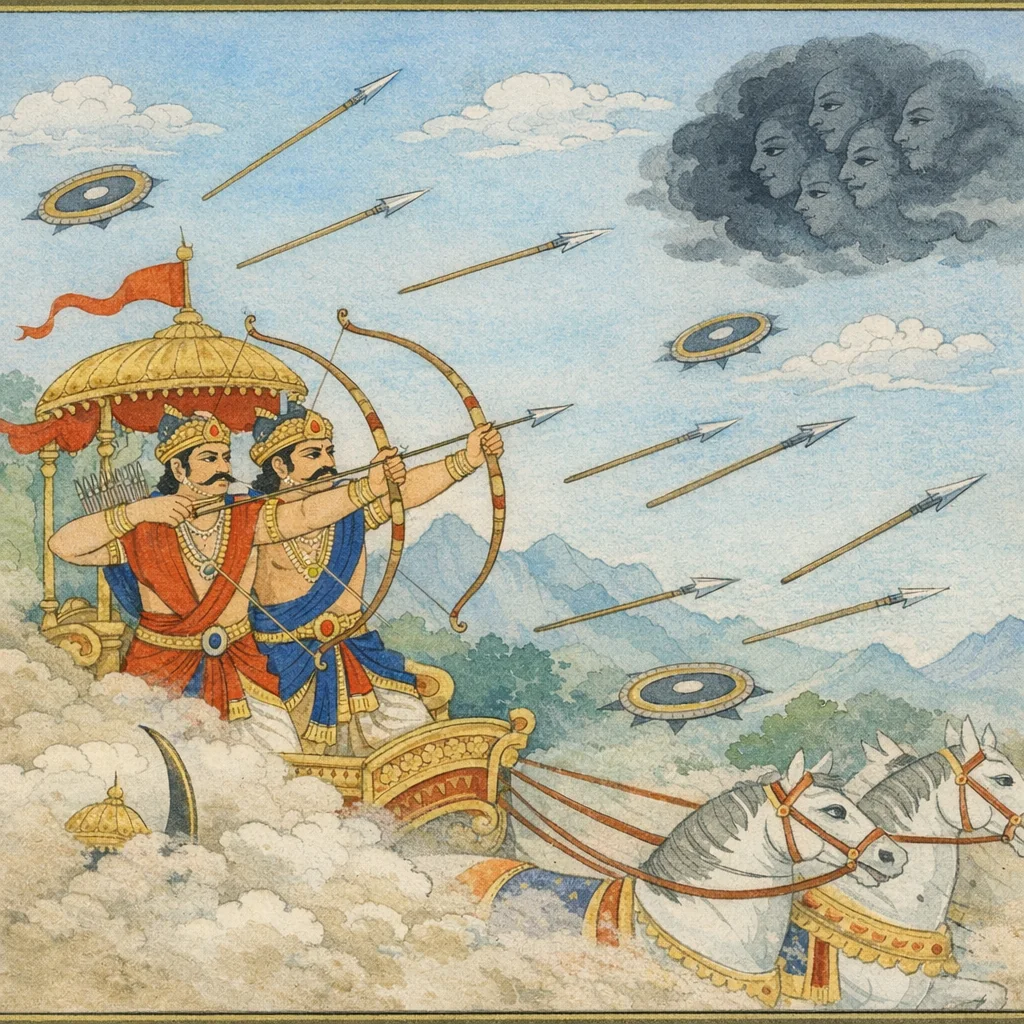
Chapter Arc: धूल-धूसरित रणभूमि में गाण्डीव का निर्घोष दिशाओं को चीरता है—और अर्जुन के रथ की ओर गान्धार-वीरों का नया ज्वार उमड़ पड़ता है। → गान्धारराज सुबल के पुत्र, भ्राता वृषक और अचल, एक ही रथ पर चढ़कर अर्जुन को आगे-पीछे से घेरते हैं और तीव्र शरवर्षा करते हैं। उनके साथ सैकड़ों गान्धार योद्धा विविध आयुधों—चक्र, प्रास, विशिख, और अनेक अस्त्र—से अर्जुन पर टूट पड़ते हैं। रण में धूल, शंख-नाद और धनुष-घोष के बीच लक्ष्य-भ्रम और घेराबंदी का संकट बढ़ता जाता है। → अर्जुन क्रोधोन्मत्त होकर प्रतिघात करता है—पाँच सौ गान्धार वीरों को बाणों से मृत्यु-लोक भेज देता है और वृषक-अचल की संयुक्त आक्रामकता को निर्णायक रूप से तोड़ देता है। इसी उग्र क्षण में अर्जुन के रथ के समीप तम का प्रादुर्भाव होता है; अन्धकार से क्रूर वाणी पार्थ को भर्त्सना करती है, मानो रण स्वयं मनोयुद्ध में बदल गया हो। → अर्जुन का पराक्रम इतना प्रचण्ड होता है कि दुर्योधन की सेना के अनेक योद्धा पीड़ित होकर द्रोणाचार्य के पीछे जा छिपते हैं; धूल के कारण अर्जुन दृष्टिगोचर नहीं, पर गाण्डीव का गर्जन आकाश को स्पर्श करता सुनाई देता है—उसकी उपस्थिति ही भय और भग्न-मनोरथ का कारण बनती है। → अर्जुन के रथ के पास उत्पन्न अन्धकार और उससे निकली क्रूर वाणी संकेत देती है कि आगे कोई मायावी/अस्त्रीय व्यवधान या नई घेराबंदी फिर उठ खड़ी होगी।
Shlokas
Verse 1
(दाक्षिणात्य अधिक पाठका १ श्लोक मिलाकर कुल ५२ “लोक हैं।) अपन क्रात छा अर: अर्जुनके द्वारा भगदत्तका वध त्रिशो&्थ्याय: अर्जुनके द्वारा वृषबक और अचलका वध, शकुनिकी माया और उसकी पराजय तथा कौरव-सेनाका पलायन संजय उवाच प्रियमिन्द्रस्य सततं सखायममितौजसम् | हत्वा प्राग्ज्योतिषं पार्थ: प्रदक्षिणमवर्तत,संजय कहते हैं--राजन्! जो सदा इन्द्रके प्रिय सखा रहे हैं, उन अमित तेजस्वी प्राग्ज्योतिषपुरनरेश भगदत्तको मारकर अर्जुन दाहिनी ओर घूमे
Sañjaya said: O King, having slain Bhagadatta, the mighty lord of Prāgjyotiṣa—ever a dear friend of Indra—Pārtha (Arjuna) wheeled to the right and continued his course on the battlefield.
Verse 2
ततो गान्धारराजस्य सुतौ परपुरंजयौ । अर्देतामर्जुनं संख्ये भ्रातरौ वृषकाचलौ,उधरसे गान्धारराज सुबलके दो पुत्र शत्रुनगरीपर विजय पानेवाले वृषक्र और अचल दोनों भाई आ पहुँचे और युद्धमें अर्जुनको पीड़ित करने लगे
Sañjaya said: Then the two sons of the king of Gāndhāra—brothers Vṛṣa and Acala, renowned as conquerors of enemy strongholds—closed in upon Arjuna on the battlefield and began to press and harass him in combat.
Verse 3
तौ समेत्यार्जुनं वीरौ पुर: पश्चाच्च धन्विनौ । अविध्येतां महावेगैर्निशितैराशुगैर्भुशम्,उन दोनों धनुर्धर वीरोंने अर्जुनपर आगे और पीछेसे भी आक्रमण करके अत्यन्त वेगशाली पैने बाणोंद्वारा उन्हें बहुत घायल कर दिया
Sañjaya said: The two heroic archers closed in upon Arjuna, attacking from the front and from behind; with razor-sharp, swift arrows driven with great force, they struck him repeatedly, wounding him severely.
Verse 4
वृषकस्य हयान् सूतं धनुश्छत्र॑ रथं ध्वजम् । तिलशो व्यधमत् पार्थ: सौबलस्य शितै: शरै:,तब कुन्तीकुमार अर्जुनने अपने तीखे बाणोंद्वारा सुबलपुत्र वृषकके घोड़ों, सारथि, रथ, धनुष, छत्र और ध्वजाको तिल-तिल करके काट डाला
Sañjaya said: Then Pārtha (Arjuna), with razor-sharp arrows, cut to pieces—bit by bit—the horses, charioteer, chariot, bow, parasol, and banner of Vṛṣaka, the son of Saubala.
Verse 5
ततोडर्जुन: शख्रातैर्नानाप्रहरणैरपि । गान्धारानाकुलांश्वक्रे सौबलप्रमुखान् पुन:,तत्पश्चात् अर्जुनने अपने बाणसमूहों तथा नाना प्रकारके आयुधोंद्वारा सुबलपुत्र आदि समस्त गान्धारोंको पुन: व्याकुल कर दिया
Sañjaya said: Then Arjuna, using volleys of arrows and many kinds of weapons, once again threw the Gandhāras—led by the son of Subala—into confusion.
Verse 6
ततः पञ्चशतान् वीरान् गान्धारानुद्यतायुधान् | प्राहिणोन्मृत्युलोकाय क्रुद्धो बाणैर्धनं॑जय:,फिर क्रोधमें भरे हुए धनंजयने हथियार उठाये हुए पाँच सौ गान्धारदेशीय वीरोंको अपने बाणोंसे मारकर यमलोक भेज दिया
Sañjaya said: Then Dhanaṃjaya (Arjuna), inflamed with wrath, struck down with his arrows five hundred Gandhāra warriors who had raised their weapons, and sent them to the realm of Death.
Verse 7
हताश्वात तु रथात् तूर्णमवतीर्य महाभुज: । आरुरोह रथं भ्रातुरन्यच्च धनुराददे ७ ।। महाबाहु वृषक उस अश्वहीन रथसे शीघ्र उतरकर अपने भाई अचलके रथपर जा चढ़ा। फिर उसने अपने हाथमें दूसरा धनुष ले लिया
Sañjaya said: When his chariot had been deprived of horses, the mighty-armed warrior quickly descended from it, mounted his brother’s chariot, and then took up another bow—resolute to continue the fight despite the setback.
Verse 8
तावेकरथमारूढौ भ्रातरौ वृषकाचलौ । शरवर्षेण बीभत्सुमविध्येतां मुहुर्मुहु:,इस प्रकार एक रथपर बैठे हुए वे दोनों भाई वृषक और अचल बारंबार बाणोंकी वर्षासे अर्जुनको घायल करने लगे
Sañjaya said: Those two brothers, Vṛṣa and Acala, mounted on a single chariot, repeatedly struck Arjuna (Bībhatsu) with a shower of arrows.
Verse 9
श्यालौ तव महात्मानौ राजानौ वृषकाचलौ | भृशं विजषघ्नतुः पार्थमिन्द्रं वृत्रबलाविव,महाराज! आपके दोनों साले महामनस्वी राजकुमार वृषक और अचल, इन्द्रको वृत्रासुर तथा बलासुरके समान, अर्जुनको अत्यन्त घायल करने लगे
Sañjaya said: “O great king, your two brothers-in-law—the high-souled princes Vṛṣaka and Acala—assailed Pārtha (Arjuna) with fierce blows, wounding him grievously, as Vṛtra and Bala once pressed Indra in battle.”
Verse 10
लब्धलक्ष्यौ तु गान्धारावहतां पाण्डवं पुन: । निदाघवार्षिकौ मासौ लोकं घर्माशुभिर्यथा,जैसे गर्मीके दो महीने सूर्यकी उष्ण किरणोंद्वारा सम्पूर्ण लोकोंको संतप्त करते रहते हैं, उसी प्रकार वे दोनों भाई गान्धारराजकुमार लक्ष्य वेधनेमें सफल होकर पाण्डुपुत्र अर्जुनपर बारंबार आघात करने लगे
Sañjaya said: The two Gandhāra princes, having found their mark, struck the son of Pāṇḍu again and again—like the two months of summer and the rainy season, whose oppressive heat and harshness keep the whole world afflicted.
Verse 11
तौ रथस्थौ नरव्यात्रौ सजानौ वृषकाचलौ । संश्लिष्टाड्ौ स्थितो राजन् जघानैकेषुणा<र्जुन:,राजन! वे नरश्रेष्ठ राजकुमार वृूषक और अचल रथपर एक-दूसरेसे सटकर खड़े थे। उसी अवस्थामें अर्जुनने एक ही बाणसे उन दोनोंको मार डाला
Sañjaya said: O King, the two princely heroes, Vṛṣaka and Acala, stood together upon their chariot, pressed close side by side. In that very posture, Arjuna struck them down with a single arrow.
Verse 12
तौ रथात् सिंहसंकाशौ लोहिताक्षौ महाभुजौ । राजन् सम्पेततुर्वीरी सोदर्यावेकलक्षणौ,महाराज! वे दोनों वीर परस्पर सगे भाई होनेके कारण एक-जैसे लक्षणोंसे युक्त थे। दोनों ही सिंहके समान पराक्रमी, लाल नेत्रोंवाले तथा विशाल भुजाओंसे सुशोभित थे। वे दोनों एक ही साथ रथसे पृथ्वीपर गिर पड़े
Sañjaya said: O King, those two heroic brothers—alike in appearance—both lion-like in prowess, red-eyed, and broad-armed, fell together from the chariot onto the earth.
Verse 13
तयोर्भूमिं गतौ देहौ रथाद् बन्धुजनप्रियौ । यशो दश दिश: पुण्यं गमयित्वा व्यवस्थितौ
Sañjaya said: The bodies of those two, beloved of their kinsmen, fell from the chariot to the earth. Having spread their holy fame through the ten directions, they now lay still.
Verse 14
उन दोनों भाइयोंके शरीर उनके बन्धुजनोंके लिये अत्यन्त प्रिय थे। वे अपने पवित्र यशको दसों दिशाओंमें फैलाकर रथसे भूतलपर गिरे और वहीं स्थिर हो गये ।। दृष्टवा विनिहतौ संख्ये मातुलावपलायिनौ । भृशं मुमुचुरश्रूणि पुत्रास्तव विशाम्पते,प्रजानाथ! युद्धसे पीठ न दिखानेवाले अपने दोनों मामाओंको युद्धमें मारा गया देख आपके सभी पुत्र अपने नेत्रोंसे आँसुओंकी अत्यन्त वर्षा करने लगे
Sañjaya said: Seeing your two maternal uncles—warriors who never turned their backs in battle—slain in the fight, your sons, O lord of the people and ruler of men, burst into copious tears.
Verse 15
निहतौ भ्रातरौ दृष्टवा मायाशतविशारद: । कृष्णौ सम्मोहयन् मायां विदधे शकुनिस्तत:,अपने दोनों भाइयोंको मारा गया देख सैकड़ों मायाओंके प्रयोगमें निपुण शकुनिने श्रीकृष्ण और अर्जुनको मोहित करते हुए उनके प्रति मायाका प्रयोग किया
Sañjaya said: Seeing his two brothers slain, Śakuni—skilled in deploying hundreds of deceptive stratagems—cast an illusion to bewilder Kṛṣṇa and Arjuna.
Verse 16
लगुडायोगुडाश्मान: शतघ्न्यश्न॒ सशक्तय: । गदापरिघनिस्त्रिंशशूलमुद्गरपट्टिशा:,फिर तो अर्जुनके ऊपर दंडे, लोहेके गोले, पत्थर, शतघ्नी, शक्ति, गदा, परिघ, खड़्ग, शूल, मुदगर, पट्टिश, कम्पन, ऋष्टि, नखर, मुसल, फरसे, छूरे, क्षुरप्र, नालीक, वत्सदन्त, अस्थिसंधि, चक्र, बाण, प्रास तथा अन्य नाना प्रकारके सैकड़ों अस्त्र-शस्त्र सम्पूर्ण दिशाओं और विदिशाओंसे आ-आकर पड़ने लगे
Sañjaya said: Clubs, iron balls and stones, heavy missiles (śataghnīs) and spears (śaktis), along with maces, iron bars, swords, tridents, hammers, and battle-axes—such weapons, in countless varieties, began to rain down upon Arjuna from every direction.
Verse 17
सकम्पनर्टिनखरा मुसलानि परश्चधा: । क्षुरा: क्षुरप्रनालीका वत्सदन्तास्थिसन्धय:,फिर तो अर्जुनके ऊपर दंडे, लोहेके गोले, पत्थर, शतघ्नी, शक्ति, गदा, परिघ, खड़्ग, शूल, मुदगर, पट्टिश, कम्पन, ऋष्टि, नखर, मुसल, फरसे, छूरे, क्षुरप्र, नालीक, वत्सदन्त, अस्थिसंधि, चक्र, बाण, प्रास तथा अन्य नाना प्रकारके सैकड़ों अस्त्र-शस्त्र सम्पूर्ण दिशाओं और विदिशाओंसे आ-आकर पड़ने लगे
Sañjaya said: “Trembling ‘kampana’ weapons, spears and nail-like missiles, heavy pestles, and battle-axes; razors, razor-headed shafts, tubular missiles, and weapons fashioned like a calf’s tooth and jointed bone—such varied arms, in countless kinds, came rushing from every direction and struck down upon Arjuna.”
Verse 18
चक्राणि विशिखा: प्रासा विविधान्यायुधानि च । प्रपेतु: शतशो दिवग्भ्य: प्रदिग्भ्यश्चार्जुनं प्रति,फिर तो अर्जुनके ऊपर दंडे, लोहेके गोले, पत्थर, शतघ्नी, शक्ति, गदा, परिघ, खड़्ग, शूल, मुदगर, पट्टिश, कम्पन, ऋष्टि, नखर, मुसल, फरसे, छूरे, क्षुरप्र, नालीक, वत्सदन्त, अस्थिसंधि, चक्र, बाण, प्रास तथा अन्य नाना प्रकारके सैकड़ों अस्त्र-शस्त्र सम्पूर्ण दिशाओं और विदिशाओंसे आ-आकर पड़ने लगे
Sañjaya said: Discs, barbed missiles, spears, and many other kinds of weapons came hurtling down by the hundreds from every direction and intermediate quarter, all converging upon Arjuna.
Verse 19
खरोष्टमहिषा: सिंहा व्याप्रा: सूमरचित्रका: । ऋक्षा: शालावृका गृध्रा: कपयश्न सरीसूपा:,गदहे, ऊँट, भैंसे, सिंह, व्याप्र, रोझ, चीते, रीक्ष, कुत्ते, गीध, बन्दर, साँप तथा नाना प्रकारके भूखे राक्षस एवं भाँति-भाँतिके पक्षी अत्यन्त कुपित हो अर्जुनपर धावा करने लगे
Sañjaya said: Donkeys and buffaloes, lions and tigers, and beasts of varied and mottled kinds; bears, jackals, vultures, monkeys, and creeping reptiles—these and many other ravenous creatures, inflamed with fury, surged forward to assail Arjuna. The scene shows how, in the frenzy of war, even nature’s imagery turns predatory, mirroring the moral darkness and chaos that violence unleashes.
Verse 20
विविधानि च रक्षांसि क्षुधितान्यर्जुनं प्रति । संक्रुद्धान्यभ्यधावन्त विविधानि वयांसि च,गदहे, ऊँट, भैंसे, सिंह, व्याप्र, रोझ, चीते, रीक्ष, कुत्ते, गीध, बन्दर, साँप तथा नाना प्रकारके भूखे राक्षस एवं भाँति-भाँतिके पक्षी अत्यन्त कुपित हो अर्जुनपर धावा करने लगे
Sañjaya said: Many kinds of ravenous rākṣasas, driven by hunger and fury, rushed toward Arjuna; and many kinds of birds as well surged at him. The scene underscores the war’s ominous, adharma-tinged atmosphere—where ferocity and predation gather around the foremost warrior, testing resolve amid terror and confusion.
Verse 21
ततो दिव्यास्त्रविच्छूर: कुन्तीपुत्रो धनंजय: । विसृजन्निषुजालानि सहसा तान्यताडयत्,तदनन्तर दिव्यास्त्रोंके ज्ञाता शूरवीर कुन्तीपुत्र धनंजय सहसा बाणसमूहोंकी वर्षा करते हुए उन सबको मारने लगे
Sañjaya said: Then Dhanañjaya (Arjuna), the son of Kuntī—brilliant in the use of celestial weapons (divyāstra)—suddenly unleashed dense nets of arrows and struck down those foes. The scene underscores the terrible efficiency of divinely empowered warfare, where mastery and resolve can swiftly decide life and death on the battlefield.
Verse 22
ते हन्यमाना: शूरेण प्रवरै: सायकैर्दूढै: । विरुवन्तो महारावान् विनेशु: सर्वतो हता:,शूरवीर अर्जुनके सुदृढ़ एवं श्रेष्ठ सायकोंद्वारा मारे जाते हुए वे समस्त हिंसक पशु सब ओरसे घायल हो घोर चीत्कार करते हुए वहीं नष्ट हो गये
Sañjaya said: Struck down by the hero’s firm and excellent arrows, those violent beasts—wounded on every side—cried out with terrible roars and perished there. The scene underscores how, in the fury of war, even fierce life is swiftly extinguished when confronted by superior martial force.
Verse 23
ततस्तम: प्रादुरभूदर्जुनस्य रथं प्रति । तस्माच्च तमसो वाच: क्रूरा: पार्थम भर्त्सयन्,तदनन्तर अर्जुनके रथके समीप अन्धकार प्रकट हुआ और उस अंधकारसे क्रूरतापूर्ण बातें कानोंमें, पड़कर अर्जुनको डाँट बताने लगीं
Sañjaya said: Then a darkness suddenly manifested around Arjuna’s chariot. From within that gloom arose harsh, cruel voices that assailed and rebuked Pārtha (Arjuna), as if to shake his resolve and cloud his discernment amid the moral strain of battle.
Verse 24
तत् तमो भैरवं घोरं भयकर्त महाहवे । उत्तमास्त्रेण महता ज्यौतिषेणार्जुनोडवधीत्,उस महासमरमें प्रकट हुए उस भयदायक घोर एवं भयानक अंधकारको अर्जुनने अपने विशाल उत्तम ज्योतिर्मय अस्त्रद्वारा नष्ट कर दिया
Sañjaya said: In that great battle, a dreadful, terrifying darkness arose, striking fear into all. Arjuna dispelled and destroyed that gloom by deploying his mighty, supreme, radiant weapon—restoring clarity and courage amid the chaos of war.
Verse 25
हते तस्मिज्जलौघास्तु प्रादुरासन् भयानका: । अम्भसस्तस्य नाशार्थमादित्यास्त्रमथार्जुन:
Sañjaya said: When he had been slain, terrifying torrents of water suddenly arose. Then Arjuna, in order to destroy that mass of water, employed the Āditya weapon. The episode underscores how, in the chaos of war, countermeasures must be guided by discernment—using power not for excess, but to neutralize imminent harm.
Verse 26
एवं बहुविधा माया: सौबलस्य कृता: कृता:
Sañjaya said: Thus, the Saubala (Śakuni) repeatedly employed many kinds of deceptive stratagems—illusions and tricks devised to mislead—showing how cunning, rather than righteousness, was being used to steer events amid the war’s turmoil.
Verse 27
तदा हतासु मायासु त्रस्तो$र्जुनशराहत:
Sañjaya said: When those deceptive stratagems had been destroyed, he—struck by Arjuna’s arrows—became frightened. The verse underscores how, in the heat of war, reliance on illusion and trickery collapses before steadfast skill and righteous resolve, leaving the aggressor shaken when confronted by direct, effective force.
Verse 28
ततोरर्जुनो<स्त्रविच्छैघर्यं दर्शयन्नात्मनो5रिषु
Then Arjuna, displaying his own steadfast courage and mastery in the use of missiles, demonstrated it against his foes—making his prowess evident in the thick of battle.
Verse 29
सा हन्यमाना पार्थेन तव पुत्रस्य वाहिनी
Sañjaya said: As Pārtha (Arjuna) struck it down, the army of your son was being cut to pieces—its ranks collapsing under his assault, a stark reminder that unrighteous confidence in power falters when met by disciplined valor in a just cause.
Verse 30
द्रोणमेवान्वपद्यन्त केचित् तत्र नरर्षभा:,इति श्रीमहा भारते द्रोणपर्वणि संशप्तकवधपर्वणि शकुनिपलायने त्रिंशोडध्याय: ।। ३० || इस प्रकार श्रीमह्ाभारत द्रोणपर्वके अन्तर्गत संशप्तकवधपर्वमें शक़ुनिका पलायनविषयक तीसवाँ अध्याय पूरा हुआ
Sañjaya said: There, some of those bull-like men (foremost warriors) rallied behind Droṇa alone, choosing him as their refuge and leader amid the turmoil of battle. The line underscores how, when fear and confusion spread, warriors often seek stability in a single commanding figure—here, Droṇa—revealing both the pull of loyalty and the strategic need for a unifying protector in war.
Verse 31
नापश्याम ततत्त्वेनं सैन्ये वै रजसावृते
Sañjaya said: In that army, veiled by the dust of battle, we could not clearly discern him in his true state and position. The confusion of war obscured accurate perception, making certainty difficult amid the turmoil.
Verse 32
शड्खदुन्दुभिनिर्घोषं वादित्राणां च निः:स्वनम्
Sañjaya said: “There arose the thunderous blare of conches and kettledrums, and the resounding din of other war-instruments as well.” In the moral atmosphere of the epic, this swelling martial sound signals the collective resolve of armies entering a fateful contest where courage and duty are invoked, even as the cost of violence looms over all.
Verse 33
ततः: पुनर्दक्षिणत: संग्रामश्चित्रयोधिनाम्
Sañjaya said: Then again, on the southern flank, a fierce battle arose among warriors of varied and striking prowess—signaling how the struggle kept shifting from one quarter to another, drawing all sides deeper into the relentless demands and moral strain of war.
Verse 34
सुयुद्ध चार्जुनस्यासीदहं तु द्रोणमन्वियाम् । तत्पश्चात् पुनः दक्षिण दिशामें विचित्र युद्ध करनेवाले योद्धाओंका अर्जुनके साथ बड़ा भारी युद्ध होने लगा और मैं द्रोणाचार्यके पास चला गया ।। ३३ $ ।। यौधिष्ठटिरा भ्यनीकानि प्रहरन्ति ततस्तत:,भरतनन्दन! युधिष्ठिरकी सेनाके सैनिक इधर-उधरसे घातक प्रहार कर रहे थे। जैसे वायु आकाशमें बादलोंको छिन्न-भिन्न कर देती है, उसी प्रकार उस समय अर्जुन आपके पुत्रोंकी विभिन्न सेनाओंका विनाश करने लगे
Sañjaya said: Arjuna’s fighting was truly formidable; as for me, I went after Droṇa. Thereafter, in the southern quarter, warriors skilled in wondrous modes of combat engaged Arjuna in a great and terrible battle, while I proceeded to Droṇācārya. O delight of the Bharatas, the troops of Yudhiṣṭhira were striking from various directions with deadly blows; and just as the wind rends clouds apart in the sky, so at that time Arjuna was destroying the many divisions of your sons’ forces.
Verse 35
नानाविधान्यनीकानि पुत्राणां तव भारत । अर्जुनो व्यधमत् काले दिवीवाभ्राणि मारुत:,भरतनन्दन! युधिष्ठिरकी सेनाके सैनिक इधर-उधरसे घातक प्रहार कर रहे थे। जैसे वायु आकाशमें बादलोंको छिन्न-भिन्न कर देती है, उसी प्रकार उस समय अर्जुन आपके पुत्रोंकी विभिन्न सेनाओंका विनाश करने लगे
O Bharata, Arjuna was then shattering the many kinds of battle-divisions of your sons, just as the wind (Marut) rends the clouds in the sky.
Verse 36
त॑ वासवमिवायान्तं भूरिवर्ष शरौघधिणम् | महेष्वासा नरव्यात्रा नोग्रं केचिदवारयन्,इन्द्रकी भाँति बाणरूपी जलराशिकी अत्यन्त वर्षा करनेवाले भयंकर वीर अर्जुनको आते देख कोई भी महाधनुर्धर पुरुषसिंह कौरव योद्धा उन्हें रोक न सके
Sañjaya said: Seeing Arjuna advancing like Vāsava (Indra)—a terrible hero who poured forth torrents of arrows—none among the Kaurava warriors, though great bowmen and tiger-like among men, could check his fierce onrush.
Verse 37
ते हन्यमाना: पार्थन त्वदीया व्यथिता भृशम् | स्वानेव बहवो जष्नुर्विद्रवन्तस्ततस्तत:,अर्जुनकी मार खाकर आपके सैनिक अत्यन्त पीड़ित हो रहे थे। उनमेंसे बहुतेरे जो इधर-उधर भागते समय अपने ही पक्षके योद्धाओंको मार डालते थे
Sañjaya said: As they were being struck down by Pārtha (Arjuna), your troops were grievously shaken. In their panic, many, fleeing here and there, ended up slaying even their own men—so complete was the confusion and collapse of discipline in the press of battle.
Verse 38
तेडर्जुनेन शरा मुक्ता: कड्कपत्रास्तनुच्छिद: । शलभा इव सम्पेतु: संवृण्बाना दिशो दश,अर्जुनके द्वारा छोड़े हुए कंकपक्षसे युक्त बाण विपक्षी वीरोंके शरीरोंको छेद डालनेवाले थे। वे सम्पूर्ण दिशाओंको आच्छादित करते हुए टिड्डीदलके समान वहाँ सब ओर गिरने लगे
Sañjaya said: The arrows released by Arjuna—fletched with vulture-feathers and keen enough to pierce bodies—fell in swarms like locusts, spreading everywhere and veiling all ten directions.
Verse 39
तुरगं रथिनं नागं पदातिमपि मारिष । विनिर्भिद्य क्षितिं जम्मुर्वल्मीकमिव पन्नगा:,आर्य! वे बाण घोड़े, रथी, हाथी और पैदल सैनिकोंको भी विदीर्ण करके उसी प्रकार धरतीमें समा जाते थे, जैसे सर्प बाँबीमें प्रवेश कर जाते हैं
Sañjaya said: “O revered one, the arrows, after piercing through horses, chariot-warriors, elephants, and even foot-soldiers, sank into the earth—just as serpents slip into their anthills.”
Verse 40
न च द्वितीयं व्यसृजत् कुण्जराश्वनरेषु सः । पृथगेकशरारुग्णा निपेतुस्ते गतासव:,हाथी, घोड़े और मनुष्योंपर अर्जुन दूसरा बाण नहीं छोड़ते थे। वे सब-के-सब पृथक्- पृथक् एक ही बाणसे घायल हो प्राणशून्य होकर धरतीपर गिर पड़ते थे
Sañjaya said: He did not release a second arrow against elephants, horses, or men. Each of them, struck separately and wounded by a single shaft, fell to the earth bereft of life.
Verse 41
हतैर्मनुष्यर्द्धिरदेश्व सर्वतः शराभिसूष्टे श्न हयैनिपातितै: । तदा श्वगोमायुबलाभिनादितं विचित्रमायोधशिरो बभूव तत्,बाणोंके आघातसे घायल होकर ढेर-के-ढेर मनुष्य मरे पड़े थे। चारों ओर हाथी धराशायी हो रहे थे और बहुत-से घोड़े मार डाले गये थे। उस समय कुत्तों और गीदड़ोंके समूहसे कोलाहलपूर्ण होकर वह युद्धका प्रमुख भाग अद्भुत प्रतीत हो रहा था
Sañjaya said: All around, heaps of men lay slain, struck down by showers of arrows; elephants were collapsing on every side, and many horses had been felled. Then that foremost sector of the battlefield appeared strange and dreadful—filled with the clamour of packs of dogs and jackals.
Verse 42
पिता सुतं त्यजति सुहृद्वरं सुहृत् तथैव पुत्र: पितरं शरातुर: । स्वरक्षणे कृतमतयस्तदा जना- स्त्यजन्ति वाहानपि पार्थपीडिता:,वहाँ पिता पुत्रको त्याग देता था, सुहृद् अपने श्रेष्ठ सुहृदको छोड़ देता था तथा पुत्र बाणोंके आघातसे आतुर होकर अपने पिताको भी छोड़कर चल देता था। उस समय अर्जुनके बाणोंसे पीड़ित हुए सब लोग अपने-अपने प्राण बचानेकी ओर ध्यान देकर सवारियोंको भी छोड़कर भाग जाते थे
Sañjaya said: In that turmoil, a father abandoned his son, and a friend forsook even his best friend; likewise a son, distressed by the sting of arrows, left even his father behind. Struck and tormented by Pārtha’s shafts, people fixed their minds only on saving their own lives and fled, even abandoning their mounts and vehicles.
Verse 253
प्रायुद्धक्ताम्भस्ततस्तेन प्रायशो<स्त्रेण शोषितम् | उस अंधकारका निवारण हो जानेपर बड़े भयंकर जलप्रवाह प्रकट होने लगे। तब अर्जुनने उस जलके निवारणके लिये आदित्यास्त्रका प्रयोग किया। उस अस्त्रने वहाँका सारा जल सोख लिया
Sañjaya said: Then the mass of water that had been released in battle was, for the most part, dried up by that weapon. When the darkness had been dispelled, terrifying torrents of water became manifest; to check that flood Arjuna employed the Ādityāstra, and that missile drank up all the water there.
Verse 263
जघानास्त्रबलेनाशु प्रहसन्नर्जुनस्तदा । इस प्रकार सुबलपुत्र शकुनिके द्वारा बारंबार प्रयुक्त हुई नाना प्रकारकी मायाओंको उस समय अर्जुनने अपने अस्त्रबलसे हँसते-हँसते शीघ्र ही नष्ट कर दिया
Sañjaya said: Then Arjuna, smiling as though in contempt of deceit, swiftly destroyed by the power of his weapons the many illusory stratagems repeatedly deployed by Śakuni, the son of Subala.
Verse 273
अपायाज्जवनैरश्वै: शकुनि: प्राकृतो यथा । तब मायाओंका नाश हो जानेपर अर्जुनके बाणोंसे आहत एवं भयभीत होकर शकुनि अधम मनुष्योंकी भाँति तेज चलनेवाले घोड़ोंके द्वारा भाग खड़ा हुआ
Sañjaya said: When his stratagems had been shattered, Śakuni—struck by Arjuna’s arrows and seized with fear—fled away, borne by swift horses, like a base and ordinary man who runs when his deceit fails.
Verse 283
अभ्यवर्षच्छरौघेण कौरवाणामनीकिनीम् । तदनन्तर अस्त्रोंके ज्ञाता अर्जुन शत्रुओंको अपनी फुर्ती दिखाते हुए कौरव-सेनापर बाणसमूहोंकी वर्षा करने लगे
Sañjaya said: Arjuna showered the Kauravas’ army with a dense torrent of arrows. Immediately thereafter, displaying his swift mastery of weapons, he continued to rain down volleys upon the Kaurava host.
Verse 296
द्ैधीभूता महाराज गड़्जेवासाद्य पर्वतम् | महाराज! अर्जुनके द्वारा मारी जाती हुई आपके पुत्रकी विशाल सेना उसी प्रकार दो भागोंमें बट गयी, मानो गंगा किसी विशाल पर्वतके पास पहुँचकर दो धाराओंमें विभक्त हो गयी हों
Sañjaya said: O King, as the Gaṅgā, on reaching a mighty mountain, divides into two streams, so too did your son’s vast army—being cut down by Arjuna—split into two parts.
Verse 306
केचिद् दुर्योधन राजन्नर्धमाना: किरीटिना । राजन! किरीटधारी अर्जुनसे पीड़ित हो आपकी सेनाके कितने ही नरश्रेष्ठ द्रोणाचार्यके पीछे जा छिपे और कितने ही सैनिक राजा दुर्योधनके पास भाग गये
Sañjaya said: “O King Duryodhana, some among your warriors—half-fainting and overwhelmed—were harried by the diadem-wearing Arjuna. In fear and confusion, many sought refuge behind Droṇācārya, while others fled back toward you.”
Verse 316
गाण्डीवस्य च निर्घोष: श्रुतो दक्षिणतो मया । महाराज! उस समय हमलोग उड़ती हुई धूलराशिसे व्याप्त हुई सेनामें कहीं अर्जुनको देख नहीं पाते थे। मुझे तो दक्षिण दिशाकी ओर केवल उनके धनुषकी टंकार सुनायी देती थी
Sañjaya said: “And I heard the thunderous sound of Gāṇḍīva from the southern side. O great king, at that moment, with the army engulfed in clouds of rising dust, we could not see Arjuna anywhere. From the south I could hear only the sharp twang of his bow.”
Verse 323
गाण्डीवस्य तु निर्घोषो व्यतिक्रम्यास्पृशद् दिवम् । शंख और दुन्दुभियोंकी ध्वनि, वाद्योंके शब्द तथा गाण्डीव धनुषके गम्भीर घोष आकाशको लाँघकर स्वर्गतक जा पहुँचे
Sañjaya said: “The thunderous roar of the Gāṇḍīva bow rose beyond all bounds and seemed to touch the very heavens. The sounds of conches and dundubhi drums, the clamor of instruments, and the deep proclamation of Gāṇḍīva leapt across the sky and reached even the celestial realms.”
Frequently Asked Questions
The chapter frames an ethical tension between normative kṣatriya conduct and the operational imperatives of survival and command protection: as formations collapse, warriors act under reputation pressure and contradictory directives, blurring the line between orderly duty and crisis-driven violence.
Sustained collective action depends on coherent objectives and disciplined communication; when imperatives conflict, even valor can devolve into fragmentation, making leadership, clarity of intent, and morale management decisive strategic resources.
No explicit phalaśruti appears in the provided passage; the meta-commentary is implicit through Sañjaya’s evaluative comparisons (unprecedented battle, earth trembling), which function as narrative markers of exceptional intensity within the epic’s moral-historical frame.