Adhyaya 184
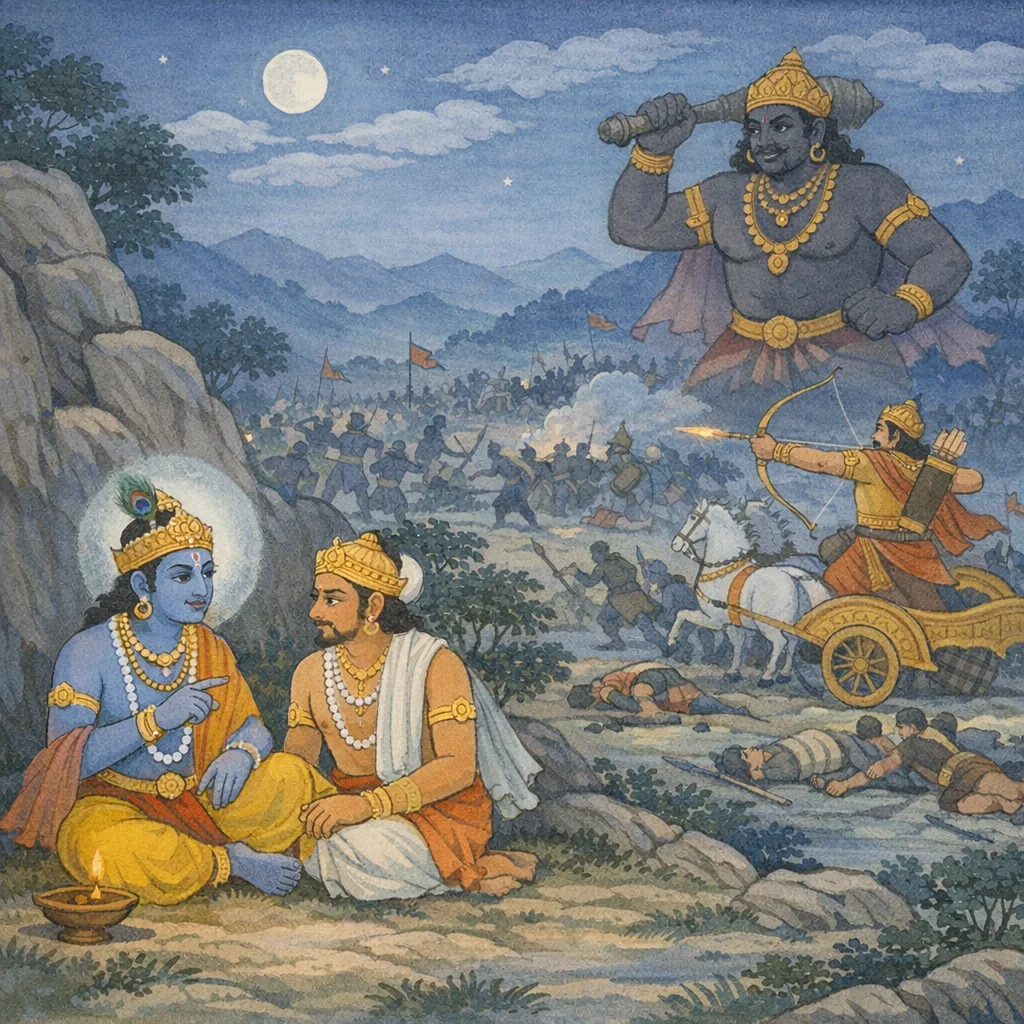
Chapter Arc: रात्रि-युद्ध की धधकती पृष्ठभूमि में धृतराष्ट्र का प्रश्न उठता है—कर्ण ने अर्जुन-वध के लिए संचित अपनी ‘परमा शक्ति’ अभी तक क्यों नहीं छोड़ी, जबकि अर्जुन के गिरते ही पाण्डव-सृञ्जय सेना स्वतः ढह जाती? → संजय धृतराष्ट्र को युद्ध-नीति और मनोविज्ञान का सूत्र समझाता है: अर्जुन का व्रत है कि बुलाए जाने पर वह पीछे नहीं हटता; अतः कर्ण को अर्जुन तक पहुँचने के लिए उसे स्वयं खोजकर चुनौती देनी होगी। उधर श्रीकृष्ण सात्यकि को रहस्य बतलाते हैं—कर्ण की वही दिव्य शक्ति, जो विजय का आधार थी, वासुदेव ने घटोत्कच पर ‘व्यय’ करवा दी; इसी चिंता में कृष्ण को न नींद आती थी, न हर्ष। → कृष्ण का निर्णायक उद्घाटन—घटोत्कच को कर्ण के सामने भेजना एक सोची-समझी युक्ति थी, क्योंकि रात्रि-समर में कर्ण को पीड़ित/विवश करने वाला दूसरा कोई नहीं; लक्ष्य यह था कि कर्ण की अर्जुन-वधिनी शक्ति अर्जुन पर नहीं, घटोत्कच पर खर्च हो जाए। → संजय के कथन से धृतराष्ट्र के प्रश्न का उत्तर स्पष्ट होता है: कर्ण की शक्ति अब अर्जुन के लिए शेष नहीं; कृष्ण की दूरदृष्टि ने पाण्डव-पक्ष को उस एक प्राणघाती संकट से उबार दिया, भले ही इसकी कीमत घटोत्कच के रूप में चुकानी पड़ी। → कर्ण की शक्ति-क्षय के बाद भी रात्रि-युद्ध की दिशा क्या होगी—और कर्ण-अर्जुन का अनिवार्य सामना अब किस शर्त पर घटेगा?
Shlokas
Verse 1
नील ()) आ+_अस+- दयशीत्याधिकशततमो<् ध्याय: कर्णने अर्जुनपर शक्ति क्यों नहीं छोड़ी, इसके उत्तरमें संजयका धृतराष्ट्रसे और श्रीकृष्णका सात्यकिसे रहस्ययुक्त कथन धृतराष्ट्र रवाच एकवीरवधे मोघा शक्ति: सूतात्मजे यदा । कस्मात् सर्वान् समुत्सृज्य स तां पार्थे न मुक्तवान्,धृतराष्ट्रने पूछा--संजय! कर्णके पास जो शक्ति थी, वह यदि एक ही वीरका वध करके निष्फल हो जानेवाली थी तो उसने सबको छोड़कर अर्जुनपर ही उसका प्रहार क्यों नहीं किया?
Dhṛtarāṣṭra said: “Sañjaya, if the divine missile-weapon possessed by Karṇa, the son of a charioteer, was destined to become futile after killing only a single hero, why did he, setting all others aside, not hurl it against Pārtha (Arjuna)?”
Verse 2
तस्मिन् हते हता हि स्यु: सर्वे पाण्डवसृञ्जया: । एकवीरवथधे कस्माद् युद्धे न जयमादथे,अर्जुनके मारे जानेपर समस्त सृंजय और पाण्डव अपने-आप नष्ट हो जाते। अत: एक वीर अर्जुनका ही वध करके उसने युद्धमें क्यों नहीं विजय प्राप्त की?
Vāyu said: “If he (Arjuna) had been slain, then indeed all the Pāṇḍavas and the Sṛñjayas would have been as good as destroyed. Why, then, did he not secure victory in the war simply by killing that one hero?”
Verse 3
आहूतो न निवर्तेयमिति तस्य महाव्रतम् । स्वयं मार्गयितव्य: स सूतपुत्रेण फाल्गुन:,अर्जुनका तो यह महान् व्रत ही है कि युद्धमें किसीके बुलानेपर मैं पीछे नहीं लौट सकता; ऐसी दशामें सूतपुत्र कर्णको स्वयं ही अर्जुनकी खोज करनी चाहिये थी
Vāyu said: “It is his great vow: ‘When summoned, I shall not turn back.’ Therefore, in such a situation, the son of a charioteer (Karna) ought to have sought out Phālguna (Arjuna) himself.”
Verse 4
ततो द्वैरथमानीय फाल्गुनं शक्रदत्तया । जघान न वृष: कस्मात् तन््ममाचक्ष्व संजय,संजय! इस प्रकार अर्जुनको द्वैरथयुद्धमें लाकर धर्मात्मा कर्णने इन्द्रकी दी हुई शक्तिसे उन्हें क्यों नहीं मार डाला? यह मुझे बताओ
Then, having drawn Phālguna (Arjuna) into a direct chariot-to-chariot duel, why did Vṛṣa (Karna)—though righteous by his own code—fail to strike him down with the weapon-power bestowed by Śakra (Indra)? Tell me, Sañjaya.
Verse 5
नूनं बुद्धिविहीनश्चवाप्पसहायश्व मे सुतः । शत्रुभिव्य॑सित: पाप: कथं नु स जयेदरीन्,निश्चय ही मेरा पुत्र दुर्योधन बुद्धिहीन और असहाय है। शत्रुओंने उसे ठग लिया। अब वह पापी अपने शत्रुओंपर कैसे विजय पा सकता है?
Vāyu said: “Surely my son is bereft of discernment and now stands without support. Deceived and outmaneuvered by his enemies, how can that sinful one possibly win victory over his foes?”
Verse 6
या हास्य परमा शक्तिर्जयस्य च परायणम् | सा शक्तिर्वासुदेवेन व्यंसिता च घटोत्कचे,जो इसकी सबसे बड़ी शक्ति और विजयका आधार-स्तम्भ थी, उस दिव्य शक्तिको घटोत्कचपर चलवाकर श्रीकृष्णने व्यर्थ कर दिया
That weapon which was his supreme power and the very mainstay of his victory—Vāsudeva caused it to be spent upon Ghaṭotkaca, thereby rendering that divine force futile for its intended purpose.
Verse 7
कुणेर्यथा हस्तगतं हियेत् फलं बलीयसा । तथा शक्तिरमोघा सा मोघी भूता घटोत्कचे,जैसे कोई बलवान पुरुष लुंजे (टूंट)-के हाथका फल छीन ले, उसी प्रकार श्रीकृष्णने उस अमोघ शक्तिको घटोत्कचपर चलवाकर अन्यत्रके लिये निष्फल कर दिया
Just as a stronger man snatches away a fruit already held in the hand of a weak or crippled person, so too that unfailing spear-weapon was made to fall fruitlessly upon Ghaṭotkaca; Kṛṣṇa caused the ‘infallible’ power to be spent there and thus rendered it ineffective for any other target.
Verse 8
यथा वराहस्य शुनश्च युध्यतो- स्तयोरभावे श्वपचस्य लाभ: । मन्ये विद्वन् वासुदेवस्य तद्धद् युद्धे लाभ: कर्णहैडिम्बयोर्व,विद्वन! जैसे सूअर और कुत्तेके आपसमें लड़नेपर उन दोनोंमेंसे किसीकी भी मृत्यु हो जाय तो चाण्डालको लाभ ही होता है, उसी प्रकार कर्ण और घटोत्कचके युद्धमें मैं वसुदेवनन्दन श्रीकृष्णका ही लाभ हुआ मानता हूँ
Śrī Vāyudeva said: “Just as when a boar and a dog fight, if either is destroyed, the gain ultimately goes to a carrion-eater (an outcaste) who profits from the carcass—so too, learned one, in the battle between Karṇa and Ghaṭotkaca, I judge that the real beneficiary is Vāsudeva’s son, Śrī Kṛṣṇa.”
Verse 9
घटोत्कचो यदि हन्याद्धि कर्ण परो लाभ: स भवेत् पाण्डवानाम् | वैकर्तनो वा यदि त॑ निहन्यात् तथापि कृत्यं शक्तिनाशात् कृतं स्यात्,घटोत्कच यदि कर्णको मार देगा तो पाण्डवोंको बहुत बड़ा लाभ होगा और यदि वैकर्तन कर्ण घटोत्कचको मार डालेगा तो भी इन्द्रकी दी हुई शक्तिका नाश हो जानेसे उनका ही प्रयोजन सिद्ध होगा
Vāyu said: “If Karṇa were to slay Ghaṭotkaca, that would bring the Pāṇḍavas a great advantage. And if Vaikartana (Karṇa) were instead to kill him, even then the purpose would be fulfilled—for the destruction of Indra’s gifted spear would itself accomplish what must be done.”
Verse 10
इति प्राज्ञ: प्रज़्॒यैतद् विचिन्त्य घटोत्कचं सूतपुत्रेण युद्धे । अघातयद् वासुदेवो नृसिंह: प्रियं कुर्वन् पाण्डवानां हितं च,मनुष्योंमें सिंहके समान पराक्रमी बुद्धिमान् वसुदेवनन्दन श्रीकृष्णने अपनी बुद्धिसे यही सोचकर पाण्डवोंका प्रिय तथा हित करते हुए युद्धमें सूतपुत्र कर्णके द्वारा घटोत्कचको मरवा दिया
Thus, the wise Vāsudeva—lion-like among men—having reflected with clear discernment on this matter, arranged in the battle that Ghaṭotkaca be slain by the charioteer’s son (Karna), acting to secure what was dear to the Pāṇḍavas and what served their welfare.
Verse 11
संजय उवाच एतच्चिकीर्षितं ज्ञात्वा कर्णस्य मधुसूदन: । नियोजयामास तदा द्वैरथे राक्षसेश्वरम्,संजयने कहा--राजन! कर्ण भी उस शक्तिसे अर्जुनका ही वध करना चाहता था। उसके इस अभिप्रायको जानकर परम बुद्धिमान् मधुसूदन भगवान् श्रीकृष्णने उस अमोघ शक्तिको नष्ट करनेके लिये ही कर्णके साथ द्वैरथ युद्धमें उस समय महापराक्रमी राक्षसराज घटोत्कचको लगाया। महाराज! यह सब आपकी कुमन्त्रणाका ही फल है
Sañjaya said: Knowing this intention of Karṇa, Madhusūdana (Kṛṣṇa) then deployed the lord of the Rākṣasas in that chariot-duel, so that Karṇa’s unfailing weapon might be spent and rendered ineffective.
Verse 12
घटोत्कचं महावीर्य महाबुद्धिर्जनार्दन: । अमोघाया विघातार्थ राजन दुर्मन्त्रिते तव,संजयने कहा--राजन! कर्ण भी उस शक्तिसे अर्जुनका ही वध करना चाहता था। उसके इस अभिप्रायको जानकर परम बुद्धिमान् मधुसूदन भगवान् श्रीकृष्णने उस अमोघ शक्तिको नष्ट करनेके लिये ही कर्णके साथ द्वैरथ युद्धमें उस समय महापराक्रमी राक्षसराज घटोत्कचको लगाया। महाराज! यह सब आपकी कुमन्त्रणाका ही फल है
Sañjaya said: O King, the highly intelligent Janardana (Krishna) deployed the mighty warrior Ghaṭotkaca with the specific aim of neutralizing Karṇa’s unfailing weapon. This, O King, is the consequence of your own misguided counsel.
Verse 13
तदैव कृतकार्या हि वयं स्याम कुरूद्वह । न रक्षेद् यदि कृष्णस्तं पार्थ कर्णान्महारथात्,कुरुश्रेष्ठ! यदि श्रीकृष्ण महारथी कर्णसे कुन्तीकुमार अर्जुनकी रक्षा न करते तो हमलोग उसी समय कृतकार्य हो गये होते
Sañjaya said: “O bull among the Kurus, we would have achieved our purpose at that very moment—if Kṛṣṇa had not protected Pārtha (Arjuna) from Karṇa, that great chariot-warrior.”
Verse 14
साश्वध्वजरथ: संख्ये धृतराष्ट्र पतेद् भुवि । विना जनार्दन॑ पार्थो योगानामीश्वरं प्रभुम्,महाराज धृतराष्ट्र! यदि योगेश्वर भगवान् श्रीकृष्ण न हों तो अर्जुन घोड़े, ध्वज और रथसहित निश्चय ही युद्धमें धराशायी हो जायेँ
Sañjaya said: “O Dhṛtarāṣṭra, in the press of battle Pārtha (Arjuna) would surely fall to the ground along with his horses, banner, and chariot, if he were without Janārdana—Śrī Kṛṣṇa, the sovereign Lord and master of Yoga.”
Verse 15
तैस्तैरुपायैर्बहुभी रक्ष्यमाण: स पार्थिव । जयत्यभिमुख: शत्रून् पार्थ: कृष्णेन पालित:,राजन! नाना प्रकारके विभिन्न उपायोंसे श्रीकृष्णद्वारा सुरक्षित रहकर ही अर्जुन सम्मुख युद्धमें शत्रुओंपर विजय पाते हैं
Sañjaya said: “O king, protected by Kṛṣṇa through many and varied stratagems, Pārtha (Arjuna) confronts the enemy face to face and wins victory over his foes.”
Verse 16
स विशेषात् त्वमोघाया: कृष्णो5रक्षत पाण्डवम् | हन्यात् क्षिप्रं हि कौन्तेयं शक्तिवृक्षमिवाशनि:,श्रीकृष्णने विशेष प्रयत्न करके उस अमोघ शक्तिसे पाण्डुपुत्र अर्जुनकी रक्षा की है, नहीं तो जैसे वज्र गिरकर वृक्षको भस्म कर देता है, उसी प्रकार वह शक्ति कुन्तीकुमार अर्जुनको शीघ्र ही नष्ट कर देती
Sañjaya said: “With special effort, Kṛṣṇa protected the Pāṇḍava (Arjuna) from that unfailing missile. For indeed it would have swiftly slain Kuntī’s son—just as a thunderbolt, striking, burns up a tree.”
Verse 17
धृतराष्ट उवाच विरोधी च कुमन्त्री च प्राज्ञममानी ममात्मज: । यस्यैव समतिक्रान्तो वधोपायो जयं प्रति,धृतराष्ट्रने कहा--संजय! मेरा पुत्र दुर्योधन सबका विरोधी और अपनेको ही सबसे अधिक बुद्धिमान् समझनेवाला है। उसके मन्त्री भी अच्छे नहीं हैं; इसीलिये अर्जुनके वध और विजय-लाभका यह अमोघ उपाय उसके हाथसे निकल गया है
Dhṛtarāṣṭra said: “My son is quarrelsome and oppositional, ill-advised in counsel, and vainly imagines himself wise. Because of this, the unfailing means—aimed at victory—by which Arjuna could have been slain has slipped past him.”
Verse 18
सवा कर्णो महाबुद्धि: सर्वशस्त्रभूतां वर: । न मुक्तवान् कथं सूत ताममोघां धनंजये,सूत! समस्त शस्त्रधारियोंमें श्रेष्ठ कर्ण तो बड़ा बुद्धिमान् है; उसने स्वयं ही उस अमोघ शक्तिको अर्जुनपर कैसे नहीं छोड़ा?
Dhṛtarāṣṭra said: “That Karṇa—of great intelligence, the foremost among all wielders of weapons—why, O Sūta, did he not release upon Dhanañjaya (Arjuna) that unfailing power?”
Verse 19
तवापि समतिक्रान्तमेतद् गावल्गणे कथम् | एतमर्थ महाबुद्धे यत् त्वया नावबोधित:,परम बुद्धिमान् गवल्गणकुमार! तुम्हारे ध्यानसे यह बात कैसे निकल गयी कि तुमने कर्णको इसके विषयमें कुछ नहीं समझाया
Dhṛtarāṣṭra said: “How did this matter escape even your notice, O Gāvalgaṇa? O man of great understanding, how was this point not grasped by you?”
Verse 20
संजय उवाच दुर्योधनस्य शकुनेर्मम दुःशासनस्य च । रात्रौ रात्रौ भवत्येषा नित्यमेव समर्थना,संजयने कहा--राजन्! प्रतिदिन रातको दुर्योधन, शकुनि और दुःशासनका तथा मेरा भी कर्णसे यही आग्रह रहता था कि “कर्ण! कल खबेरे तुम सारी सेनाओंको छोड़कर अर्जुनको मार डालो। फिर तो पाण्डवों और पांचालोंका हम भृत्योंके समान उपभोग करेंगे
Sañjaya said: “O King, night after night there is always this same urging—on the part of Duryodhana, Śakuni, Duḥśāsana, and even myself.”
Verse 21
श्वः सर्वसैन्यान्युत्सूज्य जहि कर्ण धनंजयम् । प्रेष्यवत् पाण्डुपज्चालानुपभोक्ष्यामहे तत:,संजयने कहा--राजन्! प्रतिदिन रातको दुर्योधन, शकुनि और दुःशासनका तथा मेरा भी कर्णसे यही आग्रह रहता था कि “कर्ण! कल खबेरे तुम सारी सेनाओंको छोड़कर अर्जुनको मार डालो। फिर तो पाण्डवों और पांचालोंका हम भृत्योंके समान उपभोग करेंगे
Sañjaya said: “O King, day after day Duryodhana, Śakuni, Duḥśāsana—and I as well—kept pressing Karṇa with the same demand: ‘Karṇa, tomorrow abandon all other engagements and slay Dhanañjaya (Arjuna). Then, with Arjuna removed, we shall treat the Pāṇḍavas and the Pañcālas like servants and enjoy dominion over them at our pleasure.’”
Verse 22
अथवा निहते पार्थे पाण्डवान्यतमं ततः । स्थापयेद् यदि वार्ष्णेयस्तस्मात्कृष्णो हि हन्यताम्,“यदि ऐसा सोचो कि अर्जुनके मारे जानेपर श्रीकृष्ण दूसरे किसी पाण्डवको युद्धके लिये खड़ा कर लेंगे तो श्रीकृष्णको ही मार डालो
Sañjaya said: “Or if you think that, once Arjuna (Pārtha) is slain, Kṛṣṇa of the Vṛṣṇis will then set up some other Pāṇḍava to carry on the fight—then, for that very reason, Kṛṣṇa himself must be killed.”
Verse 23
कृष्णो हि मूलं पापडूनां पार्थ: स्कन्ध इवोद्गत:ः । शाखा इवेतरे पार्था: पञ्चाला: पत्रसंज्ञिता:,“श्रीकृष्ण ही पाण्डवोंकी जड़ हैं, अर्जुन ऊपरके तनेके समान हैं, अन्य कदुन्तीपुत्र शाखाएँ हैं तथा पांचाल सैनिक पत्तोंके समान हैं
Sañjaya said: “Kṛṣṇa is indeed the root of the Pāṇḍavas; Arjuna stands forth like the rising trunk. The other sons of Pṛthā are like branches, and the Pañcālas may be regarded as the leaves.”
Verse 24
कृष्णाश्रया: कृष्णबला: कृष्णनाथाश्न पाण्डवा: । कृष्ण: परायणं चैषां ज्योतिषामिव चन्द्रमा:,“श्रीकृष्ण ही पाण्डवोंके आश्रय, बल और रक्षक हैं। जैसे नक्षत्रोंके परम आश्रय चन्द्रमा हैं, उसी प्रकार इन पाण्डवोंका सबसे बड़ा सहारा श्रीकृष्ण हैं
Sañjaya said: The Pāṇḍavas rest upon Kṛṣṇa; their strength is Kṛṣṇa; their protector and lord is Kṛṣṇa. For them Kṛṣṇa is the highest refuge—just as the moon is the supreme support and guiding light among the heavenly luminaries.
Verse 25
तस्मात् पर्णानि शाखाश्व स्कन्ध॑ चोत्सृज्य सूतज । कृष्णं हि विद्धि पाण्डूनां मूलं सर्वत्र सर्वदा,“अतः सूतनन्दन! तुम पत्तों, डालियों और तनेको छोड़कर जड़को ही काट दो। सर्वत्र और सदा श्रीकृष्णको ही पाण्डवोंकी जड़ समझो”
Sañjaya said: “Therefore, O son of a charioteer, leave aside the leaves, the branches, and even the trunk—strike at the very root. Know that Kṛṣṇa alone is, everywhere and always, the root of the Pāṇḍavas.”
Verse 26
हन्याद् यदि हि दाशाह कर्णो यादवनन्दनम् | कृत्स्ना वसुमती राजन् वशे तस्य न संशय:,राजन! यदि कर्ण यादवनन्दन श्रीकृष्णको मार डालता, तो यह सारी पृथ्वी उसके वशमें हो जाती, इसमें संशय नहीं है
Sañjaya said: “O King, if Karṇa were to slay Dāśārha—Kṛṣṇa, the delight of the Yādavas—then the entire earth would surely come under Karṇa’s control; of this there is no doubt.”
Verse 27
यदि हि स निहतः शयीत भूमौ यदुकुलपाण्डवनन्दनो महात्मा । ननु तव वसुधा नरेन्द्र सर्वा सगिरिसमुद्रवना वशं व्रजेत,नरेन्द्र! यदि यदुकुल और पाण्डवोंको आनन्दित करनेवाले महात्मा श्रीकृष्ण उस शक्तिसे मारे जाकर रणभूमिमें सो जाते, तो पर्वत, समुद्र और वनोंसहित यह सारी पृथ्वी आपके वशमें आ जाती
Sañjaya said: If that great-souled Kṛṣṇa—who brings joy to the Yadu line and to the Pāṇḍavas—were struck down and lay upon the battlefield, then surely, O king, this entire earth, together with its mountains, oceans, and forests, would come under your control.
Verse 28
सातु बुद्धि: कृताप्येवं जाग्रति त्रिदशेश्वरे । अप्रमेये हृषीकेशे युद्धकालेडप्यमुहयुत,ऐसा निश्चय कर लेनेके बाद भी जब वह युद्धके समय सदा सजग रहनेवाले अप्रमेयस्वरूप देवेश्वर भगवान् श्रीकृष्णके समीप जाता तो उसपर मोह छा जाता था
Sañjaya said: Even though he had thus formed a firm resolve, when the time of battle came and he drew near to Hṛṣīkeśa—the immeasurable Lord of the gods, ever wakeful and vigilant—his mind still fell into delusion.
Verse 29
अर्जुन चापि राधेयात् सदा रक्षति केशव: । न होनमैच्छत् प्रमुखे सौते: स्थापयितुं रणे
Sañjaya said: Keśava ever protects Arjuna from Rādheya. Therefore he did not wish, in the very forefront of battle, to place the Sūta’s son in a position of advantage.
Verse 30
भगवान् श्रीकृष्ण अर्जुनको सदा राधानन्दन कर्णसे बचाये रखते थे। उन्होंने रणभूमिमें अर्जुनको सूतपुत्र कर्णके सम्मुख खड़ा करनेकी कभी इच्छा नहीं की ।। अन््यांश्वास्मै रथोदारानुपास्थापयदच्युत: । अमाोधघां तां कथं शक्ति मोघां कुर्यामिति प्रभो,प्रभो! अपनी महिमासे कभी च्युत न होनेवाले भगवान् श्रीकृष्ण अन्यान्य महारथियोंको कर्णके पास इसलिये भेजा करते थे कि किसी प्रकार उस अमोघ शक्तिको व्यर्थ कर दूँ
Sanjaya said: The Blessed Lord Śrī Kṛṣṇa continually sought to protect Arjuna from Karṇa, the son of Rādhā. He never wished to place Arjuna face to face with Karṇa on the battlefield. Therefore Acyuta kept sending other great chariot-warriors against Karṇa, thinking, “How can I cause that unfailing weapon to be spent in vain?”—so that its deadly power would be exhausted before it could be used against Arjuna.
Verse 31
यश्चैवं रक्षते पार्थ कर्णात् कृष्णो महामना: । आत्मानं स कथं राजन् न रक्षेत् पुरुषोत्तम:,राजन्! जो महामनस्वी पुरुषोत्तम भगवान् श्रीकृष्ण कर्णसे अर्जुनकी इस प्रकार रक्षा करते हैं, वे अपनी रक्षा कैसे नहीं करेंगे?
Sañjaya said: “O King, if the great-minded Krishna protects Partha in this very manner from Karna, how could that Supreme Person fail to protect himself?”
Verse 32
परिचिन्त्य तु पश्यामि चक्रायुधमरिंदमम् । न सोस्ति त्रिषु लोकेषु यो जयेत जनार्दनम्,मैं भलीभाँति सोच-विचारकर देखता हूँ तो तीनों लोकोंमें कोई ऐसा वीर उपलब्ध नहीं होता, जो शत्रुओंका दमन करनेवाले चक्रधारी भगवान् श्रीकृष्णको जीत सके
Sañjaya said: “Having reflected carefully, I see this clearly: there exists no one in the three worlds who could overcome Janārdana—Kṛṣṇa, the wielder of the discus, the subduer of foes.”
Verse 33
ततः कृष्णं महाबाहुं सात्यकि: सत्यविक्रम: । पप्रच्छ रथशार्दूल: कर्ण प्रति महारथ:,तदनन्तर रथियोंमें सिंहके समान शूरवीर सत्यपराक्रमी महारथी सात्यकिने महाबाहु श्रीकृष्णसे कर्णके विषयमें इस प्रकार प्रश्न किया--
Sañjaya said: Then Sātyaki—true in valor, a great warrior and a tiger among charioteers—questioned mighty-armed Kṛṣṇa about Karṇa.
Verse 34
अयं च प्रत्यय: कर्णे शक्तिश्चलामितविक्रमा । किमर्थ सूतपुत्रेण न मुक्ता फाल्गुने तु सा,'प्रभो! कर्णको उस शक्तिके प्रभावपर विश्वास तो था ही। वह अमित पराक्रम कर दिखानेवाली दिव्य शक्ति उसके हाथमें मौजूद भी थी, तथापि सूतपुत्रने अर्जुनपर उसका प्रयोग कैसे नहीं किया?”
“My lord! Karṇa had full faith in the might of that Śakti. That divine weapon, able to display immeasurable prowess, was in his very hand. Even so, why did the sūta’s son (Karṇa) not hurl it at Phālguna (Arjuna)?”
Verse 35
श्रीवायुदेव उवाच दुःशासनश्व कर्णश्र शकुनिश्च ससैन्धव: । सतत मन्त्रयन्ति सम दुर्योधनपुरोगमा:
Śrī Vāyudeva said: “Duḥśāsana, Karṇa, Śakuni, and Saindhava (Jayadratha)—with Duryodhana at their head—were continually holding counsel.”
Verse 36
कर्ण कर्ण महेष्वास रणेडमितपराक्रम । नान्यस्य शक्तिरेषा ते मोक्तव्या जयतां वर
Vāyu said: “O Karṇa, O great archer—whose prowess in battle is irresistible—this Śakti of yours is not to be discharged against anyone else. O best among victors, reserve it for the one for whom it is truly meant.”
Verse 37
ऋते महारथात् कर्ण कुन्तीपुत्राद् धनंजयात् । भगवान् श्रीकृष्ण बोले--सात्यके! दुःशासन, कर्ण, शकुनि और जयद्रथ--ये दुर्योधनको आगे रखकर सदा गुप्त मन्त्रणा करते और कर्णको यह सलाह देते थे कि 'रणभूमिमें अनन्त पराक्रम प्रकट करनेवाले, विजयी वीरोंमें श्रेष्ठ महाधनुर्धर कर्ण! तुम कुन्तीपुत्र महारथी अर्जुनको छोड़कर दूसरे किसीपर इस शक्तिको न छोड़ना ।। ३५-३६ ६ || स हि तेषामतियशा देवानामिव वासव:
Vāyu said: “Except for Karṇa, the great chariot-warrior, and Dhanañjaya (Arjuna), the son of Kuntī—there is none comparable. For among them his fame is surpassing, like Vāsava (Indra) among the gods.”
Verse 38
तस्मिन् विनिहते पार्थे पाण्डवा: सृञज्जयै: सह । भविष्यन्ति गतात्मान: सुरा इव निरग्नय:
When that Pārtha (Arjuna) is slain, the Pāṇḍavas together with the Sṛñjayas will become as if bereft of life and spirit—like the gods themselves when deprived of the sacred fire.
Verse 39
३७-३८ ।। तथेति च प्रतिज्ञातं कर्णेन शिनिपुड्भव । ह्ृदि नित्यं च कर्णस्य वधो गाण्डीवधन्वचन:
“So be it,” Karṇa promised, O descendant of Śini. Yet in Karṇa’s heart there remained, unceasingly, the thought of killing the wielder of Gāṇḍīva. His resolve was fixed on slaying Arjuna—an inner vow that shows how, in war, personal enmity and pride can harden into a single-minded purpose, heedless of the wider claims of dharma.
Verse 40
शिनिप्रवर! कर्णने वैसा ही करनेकी उनके सामने प्रतिज्ञा भी की थी। कर्णके हृदयमें नित्य-निरन्तर गाण्डीवधारी अर्जुनके वधका संकल्प उठता रहता था ।। अहमेव तु राधेयं मोहयामि युधां वर । ततो नावासृजच्छक्ति पाण्डवे श्वेतवाहने,योद्धाओंमें श्रेष्ठ सात्यके! परंतु मैं ही राधापुत्र कर्णको मोहित किये रहता था; इसीलिये ब्ैतवाहन अर्जुनपर उसने वह शक्ति नहीं छोड़ी
Vāyu said: “O foremost of the Śinis! Karṇa had indeed made that very vow openly before them. In Karṇa’s heart, the resolve to slay Arjuna, the wielder of Gāṇḍīva, rose again and again without cease. Yet it was I who kept Rādheya (Karṇa) deluded, O best of warriors; therefore he did not hurl that divine spear at Arjuna, the Pāṇḍava of the white steeds.”
Verse 41
फाल्गुनस्य हि सा मृत्युरिति चिन्तयतो5निशम् | ननिद्रा न च मे हर्षो मनसो<स्ति युधां वर
Vāyu said: “As I keep thinking without cease, ‘That will indeed be Phālguna’s death,’ sleep does not come to me, nor does any joy arise in my mind, O best of warriors.”
Verse 42
वीरवर! वह शक्ति अर्जुनके लिये मृत्युस्वरूप है, इस चिन्तामें निरन्तर डूबे रहनेके कारण न तो मुझे नींद आती थी और न मेरे मनमें कभी हर्षका उदय होता था ।। घटोत्कचे व्यंसितां तु दृष्टवा तां शिनिपुड्रव । मृत्योरास्यान्तरान्मुक्तं पश्याम्यद्य धनंजयम्,शिनिवंशशिरोमणे! वह शक्ति घटोत्कचपर छोड़ दी गयी, यह देखकर आज मैं यह समझता हूँ कि अर्जुन मौतके मुखसे निकल आये हैं
O best of heroes! That divine missile was like death itself for Arjuna. Because I remained continually sunk in that anxiety, sleep would not come to me, nor did joy ever arise in my heart. But now, O bull among the Śinis—seeing that very weapon discharged upon Ghaṭotkaca—I understand today that Dhanañjaya has been released from the very mouth of death, O crest-jewel of the Śini line.
Verse 43
नपिता न च मे माता न यूयं॑ भ्रातरस्तथा । न च प्राणास्तथा रक्ष्या यथा बीभत्सुराहवे,मुझे युद्धमें अर्जुनकी रक्षा जितनी आवश्यक प्रतीत होती है, उतनी पिता, माता, तुम- जैसे भाइयों तथा अपने प्राणोंकी रक्षा भी नहीं प्रतीत होती
Vāyu said: “Neither my father nor my mother, nor you—my brothers—are to me so much in need of protection; nor even my own life is so to be guarded, as Bībhatsu (Arjuna) must be protected in battle.”
Verse 44
त्रैलोक्यराज्याद् यत् किंचिद् भवेदन्यत् सुदुर्लभम् । नेच्छेयं सात्वताहं तद् विना पार्थ धनंजयम्,सात्यके! तीनों लोकोंके राज्यसे भी बढ़कर यदि कोई अत्यन्त दुर्लभ वस्तु हो तो उसे भी मैं कुन्तीनन्दन अर्जुनके बिना नहीं पाना चाहता
Vāyu-deva said: “Even if there were something rarer and greater than sovereignty over the three worlds, I would not desire it without Pārtha Dhanañjaya (Arjuna), O Sātyaki.”
Verse 45
अतः प्रहर्ष: सुमहान् युयुधानाद्य मे5भवत् | मृतं प्रत्यागतमिव दृष्टवा पार्थ धनंजयम्,युयुधान! इसीलिये जैसे कोई मरकर लौट आया हो उसी प्रकार कुन्तीपुत्र अर्जुनको देखकर आज मुझे बड़ा भारी हर्ष हुआ था
Therefore, O Yuyudhāna, a very great joy arose in me today. Seeing Pārtha Dhanañjaya (Arjuna) was like seeing one who had died return again—such was the relief and gladness I felt.
Verse 46
अततश्र प्रहितो युद्धे मया कर्णाय राक्षस: । न हान्यः समरे रात्रौ शक्त: कर्ण प्रबाधितुम्
Vāyu-deva said: “In the midst of battle I dispatched the rākṣasa Atataśra against Karṇa. Yet in the night-fighting of war, no one is capable of slaying him or even effectively checking Karṇa’s advance.”
Verse 47
इसी उद्देश्यसे मैंने युद्धमें कर्णका सामना करनेके लिये उस राक्षसको भेजा था। उसके सिवा दूसरा कोई रात्रिके समय समरांगणमें कर्णको पीड़ित नहीं कर सकता था ।। संजय उवाच इति सात्यकये प्राह तदा देवकिनन्दन: । धनंजयतहिते युक्तस्तत्प्रिये सततं रत:,संजय कहते हैं--महाराज! इस प्रकार अर्जुनके हितमें संलग्न और उनके प्रिय साधनमें निरन्तर तत्पर रहनेवाले भगवान् देवकीनन्दनने उस समय सात्यकिसे यह बात कही थी
For that very purpose I sent that rākṣasa into the battle to confront Karṇa; besides him, no one could trouble Karṇa on the field at night. Sañjaya said: “O King, thus at that time Keśava, Devakī’s son (Kṛṣṇa)—ever intent on Dhanañjaya’s welfare and ceaselessly devoted to what was dear to Arjuna—spoke these words to Sātyaki.”
Verse 182
इति श्रीमहा भारते द्रोणपर्वणि घटोत्कचवधपर्वणि रात्रियुद्धे कृष्णवाक्ये द्ववशीत्यधिकशततमो<ध्याय:
Thus, in the Śrī Mahābhārata, within the Droṇa Parva—specifically in the section on the slaying of Ghaṭotkaca—this concludes the chapter concerning the night-battle and Kṛṣṇa’s words: the one hundred and eighty-second chapter.
Verse 1819
इस प्रकार श्रीमह्माभारत द्रोणपर्वके अन्तर्गत घटोत्कचवधपर्वमें रात्रि-युद्धके समय श्रीकृष्णणा कथनविषयक एक सौ इक्यासीवाँ अध्याय पूरा हुआ
Thus ends the one hundred and eighty-first chapter of the Droṇa Parva of the Śrī Mahābhārata, within the section on the slaying of Ghaṭotkaca, set during the night-battle, and centered on the words spoken by Śrī Kṛṣṇā. This colophon marks a turn in the tale: the war has entered a morally fraught nocturnal phase, and Kṛṣṇā’s speech is framed as weighty guidance amid the chaos and ethical strain of fighting in the dark.