Adhyaya 5
धृतराष्ट्रस्य पश्चात्तापः तथा वनप्रस्थानानुज्ञा | Dhṛtarāṣṭra’s Remorse and Request for Forest-Retirement
Upa-parva: Dhṛtarāṣṭra–Vānaprastha Anujñā (Permission for Forest-Dwelling)
Dhṛtarāṣṭra addresses the Kuru survivors, stating that the destruction at Kurukṣetra is to be understood as arising from his own fault. He confesses key failures: installing Duryodhana in authority, dismissing Vāsudeva’s meaningful counsel, and being overcome by paternal attachment despite repeated advice from Vidura, Bhīṣma, Droṇa, Kṛpa, Vyāsa, Sañjaya, and Gāndhārī. He describes persistent inner torment, intensified over fifteen years, and outlines his regulated austerities—restricted intake and sleeping on the ground with ascetic materials—known to Gāndhārī. He clarifies that he does not grieve the fallen sons as cowards, framing their deaths within kṣatra-dharma, and then reassures Yudhiṣṭhira of his care and the performance of gifts and śrāddhas. He further notes that those who harmed Draupadī and deprived Yudhiṣṭhira of sovereignty have met their end in battle and that no retaliatory action remains. Concluding, he requests Yudhiṣṭhira’s permission to depart for the forest with Gāndhārī, adopting bark-garments and a disciplined life aimed at self-benefit and purification, while affirming the dynastic custom of retiring to the forest at life’s end.
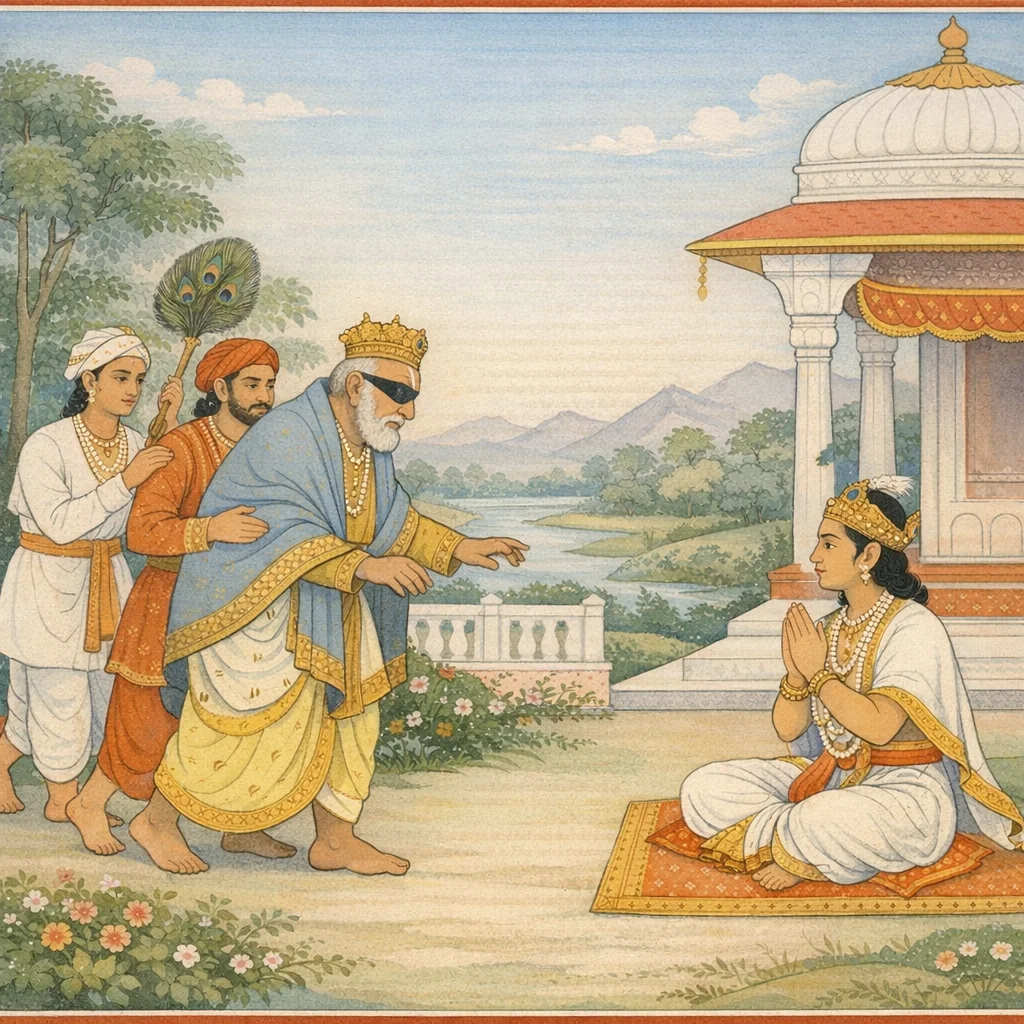
Chapter Arc: राजा धृतराष्ट्र, युधिष्ठिर से अनुमति पाकर, जर्जर देह और मंद गति के साथ अपने भवन से निकलते हैं—मानो वृद्ध गजपति कठिनाई से कदम बढ़ा रहा हो। → उनके पीछे विदुर, सूत-संजय और शारद्वत कृप जैसे अनुभवी जन चलते हैं। धृतराष्ट्र का स्वर अब युद्ध का नहीं, राज्य-रक्षा की सूक्ष्म नीति का है—और युधिष्ठिर के सामने प्रश्न है: धर्म के साथ शासन कैसे टिके? → धृतराष्ट्र का निर्णायक उपदेश: ‘कौन्तेय, राज्य की रक्षा धर्म से ही संभव है।’ वे युधिष्ठिर को विद्वानों का संग, उनकी बात का सावधान श्रवण, समय का सदुपयोग, कार्य देखकर सेवकों की नियुक्ति, और दृढ़-प्रतिज्ञ, शूर, कष्ट-सहिष्णु, हितैषी, स्वामिभक्त सेनापति चुनने की नीति बताते हैं; न्याय-कार्य में विश्वासपात्र, संतोषी, हितैषी पुरुषों को लगाकर निरंतर गुप्तचर-व्यवस्था से शासन को जाग्रत रखने की सीख देते हैं। → युधिष्ठिर के लिए यह अध्याय एक ‘राजधर्म-संहिता’ बन जाता है—जहाँ सम्मानित विद्वान हित-वचन कहेंगे, और राजा का कर्तव्य है कि वह उसे विवेकपूर्वक शासन-व्यवस्था में उतारे। → उपदेश की यह धारा आगे और किन-किन व्यवहारिक नियमों में विस्तृत होगी, और युधिष्ठिर इसे अपने राज्य-जीवन में कैसे साधेंगे—यह जिज्ञासा बनी रहती है।
Shlokas
Verse 1
::ज बछ। अकाल पजञठ्चमो< ध्याय: धृतराष्ट्रके द्वारा युधिष्ठिरको राजनीतिका उपदेश वैशम्पायन उवाच ततो राज्ञाभ्यनुज्ञातो धृतराष्ट्र: प्रतापवान् । ययौ स्वभवन राजा गान्धार्यानुगतस्तदा,वैशम्पायनजी कहते हैं--तदनन्तर जनमेजय! राजा युधिष्ठिरकी अनुमति पाकर प्रतापी राजा धृतराष्ट्र गान्धारीके साथ अपने भवनमें गये
Vaiśampāyana said: Then, having received the king’s permission, the mighty Dhṛtarāṣṭra departed for his own residence, accompanied at that time by Gāndhārī.
Verse 2
मन्दप्राणगतिर्धीमान् कृच्छादिव समुद्रहन् । पदाति: स महीपालो जीर्णो गजपतिर्यथा,उस समय उनकी चलने-फिरनेकी शक्ति बहुत कम हो गयी थी। वे बुद्धिमान् भूपाल बूढ़े हाथीकी भाँति पैदल चलते समय बड़ी कठिनाईसे पैर उठाते थे
Vaiśampāyana said: The wise king, his vital energies moving only faintly, advanced with difficulty. That lord of the earth, now on foot, could scarcely lift his steps—like an aged leader of elephants.
Verse 3
तमन्वगच्छद् विदुरो विद्वान् सूतश्च॒ संजय: । स चापि परमेष्वास: कृप: शारद्वतस्तथा
Vaiśampāyana said: The wise Vidura followed him, and so did Sañjaya the charioteer. Kr̥pa too—renowned as a supreme archer, the son of Śāradvat—went along as well.
Verse 4
इस प्रकार श्रीमहाभारत आश्रमवासिकपव॑के अन्तर्गत आश्रमवासपर्वमें व्यायकी आज्ञाविषयक चौथा अध्याय पूरा हुआ,उस समय उनके पीछे-पीछे ज्ञानी विदुर, सारथि संजय तथा शरद्वानके पुत्र महाधनुर्धर कृपाचार्य भी गये ।। स प्रविश्य गृहं राजन् कृतपूर्वाल्निकक्रिय: । तर्पयित्वा द्विजश्रेष्ठानाहारमकरोत् तदा राजन! घरमें प्रवेश करके उन्होंने पूर्वाह्लकालकी धार्मिक क्रिया पूरी की; फिर श्रेष्ठ ब्राह्मणोंको अन्न-पान आदिसे तृप्त करके स्वयं भी भोजन किया
Vaiśampāyana said: O King, after entering the house and completing the prescribed religious duties of the forenoon, he satisfied the foremost Brahmins with food and drink; then, in due order, he himself took his meal.
Verse 5
गान्धारी चैव धर्मज्ञा कुन्त्या सह मनस्विनी । वधूभिरुपचारेण पूजिताभुडद्धक्त भारत,भरतनन्दन! इसी प्रकार धर्मको जाननेवाली मनस्विनी गान्धारी देवीने भी कुन्तीसहित पुत्रवधुओंद्वारा विविध उपचारोंसे पूजित होकर आहार ग्रहण किया इति श्रीमहाभारते आश्रमवासिके पर्वणि आश्रमवासपर्वणि धृतराष्ट्रोपदेशे पडठ्चमो<ध्याय:
Vaiśampāyana said: And Gāndhārī, steadfast and learned in dharma, also took her meal together with Kuntī, honoured and attended by the daughters-in-law with many forms of service.
Verse 6
कृताहारं कृताहारा: सर्वे ते विदुरादय: । पाण्डवाश्व कुरुश्रेष्ठमुपातिष्ठन्त तं नूपम्
Vaiśampāyana said: Having finished their meal, all of them—beginning with Vidura—together with the Pāṇḍavas, attended upon that king, the foremost of the Kurus.
Verse 7
कुरुश्रेष्ठ राजा धृतराष्ट्रके भोजन कर लेनेपर पाण्डव तथा विदुर आदि सब लोगोंने भी भोजन किया, फिर सब-के-सब धृतराष्ट्रकी सेवामें उपस्थित हुए ।। ततो<ब्रवीन्महाराज कुन्तीपुत्रमुपद्दरे । निषण्णं पाणिना पृष्ठे संस्पृशन्नम्बिकासुत:,महाराज! उस समय दुन्तीनन्दन युधिष्ठिरको एकान्तमें अपने निकट बैठा जान धृतराष्ट्रने उनकी पीठपर हाथ फेरते हुए कहा--
After King Dhṛtarāṣṭra had finished his meal, the Pāṇḍavas—along with Vidura and the others—also ate. Then all of them gathered to attend upon Dhṛtarāṣṭra in service. Thereupon the son of Ambikā (Dhṛtarāṣṭra), in private, seated Kuntī’s son Yudhiṣṭhira close by and, gently touching his back with his hand, spoke to him—beginning an intimate counsel and moral reflection amid the austerity of forest life.
Verse 8
अप्रमादस्त्वया कार्य: सर्वथा कुरुनन्दन | अष्टाड़े राजशार्दूल राज्ये धर्मपुरस्कृते,“कुरुनन्दन! राजसिंह! इस आठ अंगोंवाले राज्यमें तुम सदा धर्मको ही आगे रखना और इसके संरक्षण और संचालनमें कभी किसी तरह भी प्रमाद न करना
Vaiśampāyana said: “O joy of the Kurus, you must be vigilant in every way. O tiger among kings, in this eight-limbed kingdom—where dharma is set foremost—always place righteousness at the front, and never be negligent in its protection and governance.”
Verse 9
तत्तु शक््यं महाराज रक्षितुं पाण्डुनन्दन । राज्यं धर्मेण कौन्तेय विद्वानसि निबोध तत्,“महाराज पाण्डुनन्दन! कुन्तीकुमार! राज्यकी रक्षा धर्मसे ही हो सकती है। इस बातको तुम स्वयं भी जानते हो तथापि मुझसे भी सुनो
Vaiśampāyana said: “O great king, O delight of Pāṇḍu, O son of Kuntī—this kingdom can truly be protected only through dharma. You are wise and already know this; still, listen and take it to heart.”
Verse 10
विद्यावृद्धान् सदैव त्वमुपासीथा युधिष्ठिर । शृणुयास्ते च यद् ब्रूयु: कुर्याश्रैवाविचारयन्
Vaiśampāyana said: “O Yudhiṣṭhira, you should always attend upon elders who are mature in learning and wisdom. Listen to what they tell you, and carry it out without hesitation—so that your conduct remains aligned with dharma through humble receptivity to righteous counsel.”
Verse 11
'युधिष्ठिर! विद्यामें बढ़े-चढ़े विद्वान् पुरुषोंका सदा ही संग किया करो। वे जो कुछ कहें, उसे ध्यानपूर्वक सुनो और उसका बिना विचारे पालन करो” ।। प्रातरुत्थाय तान् राजन् पूजयित्वा यथाविधि । कृत्यकाले समुत्पन्ने पृच्छेथा: कार्यमात्मन:,'राजन्! प्रातःकाल उठकर उन विद्वानोंका यथायोग्य सत्कार करके कोई कार्य उपस्थित होनेपर उनसे अपना कर्तव्य पूछो
Vaiśampāyana said: “O Yudhiṣṭhira, always keep the company of men who are eminent in learning. Whatever they say, listen with full attention and follow it without hesitation. O King, rising early in the morning, honor those learned elders in the proper manner; and when any duty or occasion arises, ask them what you yourself ought to do.”
Verse 12
ते तु सम्मानिता राजंस्त्वया कार्यहितार्थिना | प्रवक्ष्यन्ति हित॑ं तात सर्वथा तव भारत,“राजन! तात! भरतनन्दन! अपना हित करनेकी इच्छासे तुम्हारे द्वारा सम्मानित होनेपर वे सर्वथा तुम्हारे हितकी ही बात बतायेंगे
Vaiśampāyana said: “O King—dear child, O scion of Bharata—since you have honored them with the intention of securing what is beneficial and proper to be done, they will, in every way, speak only what is truly for your welfare.”
Verse 13
इन्द्रियाणि च सर्वाणि वाजिवत् परिपालय । हितायैव भविष्यन्ति रक्षितं द्रविणं यथा,'जैसे सारथि घोड़ोंको काबूमें रखता है, उसी प्रकार तुम सम्पूर्ण इन्द्रियोंको अपने अधीन रखकर उनकी रक्षा करो। ऐसा करनेसे वे इन्द्रियाँ सुरक्षित धनकी भाँति भविष्यमें तुम्हारे लिये निश्चय ही हितकर होंगी
Vaiśampāyana said: “Guard and govern all your senses as a charioteer restrains and guides his horses. When thus protected and kept under control, the senses will surely become beneficial to you in the future—like wealth that, when safeguarded, serves one’s good.”
Verse 14
अमात्यानुपधातीतान् पितृपैतामहान् शुचीन् । दान्तान् कर्मसु पुण्यांश्व॒ पुण्यान् सर्वेषु योजये:,“जो जाँचे-बूझे हुए तथा निष्कपटभावसे काम करनेवाले हों, जो पिता-पितामहोंके समयसे काम देखते आ रहे हों तथा जो बाहर-भीतरसे शुद्ध, संयमी और जन्म एवं कर्मसे भी पवित्र हों, ऐसे मन्त्रियोंको ही सब तरहके उत्तरदायित्वपूर्ण कार्योमें नियुक्त करना
Vaiśampāyana said: One should appoint to all responsible duties only those ministers who have been tested and found reliable, who serve without deceit, who have been in service since the time of one’s father and grandfather, who are pure within and without, self-controlled, and who are themselves worthy and upright by both birth and conduct.
Verse 15
चारयेथाश्ष सततं चारैरविदित: परै: | परीक्षितैर्बहुविधै: स्वराष्ट्प्रतिवासिभि:,“जिनकी किसी अवसरपर परीक्षा कर ली गयी हो और जो अपने ही राज्यके भीतर निवास करनेवाले हों, ऐसे अनेक जासूसोंको भेजकर उनके द्वारा शत्रुओंका गुप्त भेद लेते रहना और प्रयत्नपूर्वक ऐसी चेष्टा करना, जिससे शत्रु तुम्हारा भेद न जान सकें”
Vaiśampāyana said: “You should keep the enemy under constant watch through spies, while remaining unknown to them. Employ many kinds of agents—men already tested and proven, and residents of your own realm—so that you may continually learn the foe’s hidden intentions, and strive carefully that the enemy does not come to know your own secrets.”
Verse 16
पुरं च ते सुगुप्तं स्थाद् दृढप्राकारतोरणम् । अट्टाष्टालकसम्बाधं षट्पदं सर्वतोदिशम्,“तुम्हारे नगरकी रक्षाका पूर्ण प्रबन्ध रहना चाहिये। उसके चारों ओरकी दीवारें तथा मुख्य द्वार अत्यन्त सुदृढ़ होने चाहिये। बीचका सारा नगर ऊँची-ऊँची अट्टालिकाओंसे भरा होना चाहिये। सब दिशाओंमें छ: चहारदीवारियाँ बननी चाहिये
Vaiśampāyana said: “Let your city be thoroughly secured. Its encircling ramparts and its main gateways should be exceedingly strong. Let the inner quarters be crowded with lofty watchtowers and fortified structures, and let there be sixfold defensive works extending in every direction.”
Verse 17
तस्य द्वाराणि सर्वाणि पर्याप्तानि बृहन्ति च । सर्वतः सुविभक्तानि यन्त्रैरारक्षितानि च,“नगरके सभी दरवाजे विस्तृत एवं विशाल हों। सब ओर उनकी रक्षाके लिये यन्त्र लगे हों तथा उन द्वारोंका विभाग सुन्दर ढंगसे सम्पन्न हो
Vaiśampāyana said: “Let all the gates of that city be ample and lofty; let them be well arranged on every side, and protected by defensive devices.”
Verse 18
पुरुषैरलमर्थस्ते विदितैः कुलशीलत: । आत्मा च रक्ष्य: सततं भोजनादिषु भारत,“भारत! जिन मनुष्योंके कुल और शील अच्छी तरह ज्ञात हों, उन्हींसे तुम्हें काम लेना चाहिये। भोजन आदिके अवसरोंपर सदा तुम्हें आत्मरक्षापर ध्यान देना चाहिये
Vaiśampāyana said: “O Bhārata, you should employ only those men whose family background and conduct are well known. And at times such as meals and other daily occasions, you must always be vigilant in protecting yourself.”
Verse 19
विहाराहारकालेषु माल्यशय्यासनेषु च । स्त्रियश्व ते सुगुप्ता: स्युर्वद्धैराप्तैरधिषछ्ठिता:
Vaiśampāyana said: “At times of recreation and at meals, and in matters of garlands, beds, and seats, your womenfolk should be well protected—kept under the vigilant care and supervision of trusted elders.”
Verse 20
मन्त्रिणश्वैव कुर्वीथा द्विजान् विद्याविशारदान्
Vaiśampāyana said: “You should also appoint as your ministers learned brāhmaṇas—men thoroughly skilled in knowledge—so that counsel and governance rest on wisdom and dharma.”
Verse 21
विनीतांश्व कुलीनांश्व धर्मार्थकुशलानूजून् । ते: सार्ध मन्त्रयेथास्त्वं नात्यर्थ बहुभि: सह
Vaiśampāyana said: “You should take counsel with men who are disciplined, of good family, skilled in dharma and practical welfare, and straightforward in conduct. Consult with such persons; do not deliberate at excessive length in the midst of many people.”
Verse 22
“राजन! तुम उन्हीं ब्राह्मणोंको अपने मन्त्री बनाओ, जो विद्यामें प्रवीण, विनयशील, कुलीन, धर्म और अर्थमें कुशल तथा सरल स्वभाववाले हों। उन्हींके साथ तुम गूढ़ विषयपर विचार करो; किंतु अधिक लोगोंको साथ लेकर देरतक मन्त्रणा नहीं करनी चाहिये ।। समस्तैरपि च व्यस्तैर्व्यपदेशेन केनचित् । सुसंवृतं मन्त्रगृहं स्थलं चारुह्ु मन्त्रये:,“सम्पूर्ण मन्त्रियोंको अथवा उनमेंसे दो-एकको किसी कामके बहाने चारों ओरसे घिरे हुए बंद कमरेमें या खुले मैदानमें ले जाकर उनके साथ किसी गूढ़ विषयपर विचार करना
Vaiśampāyana said: “O king, appoint as your ministers only those Brahmins who are learned, disciplined in conduct, of good lineage, skilled in both dharma and artha (practical statecraft), and straightforward by nature. Consult with such men on confidential matters; but you should not hold prolonged deliberations with a large crowd. Whether with all the ministers together or with only one or two of them, on some pretext take them to a well-secured council-chamber—or even to a secluded open place—and there deliberate on secret business.”
Verse 23
अरण्ये नि:शलाके वा न च रात्रौ कथंचन । वानरा: पक्षिणश्वैव ये मनुष्यानुसारिण:
Vaiśampāyana said: “Whether in the forest or in a place without lamps, and never at night in any circumstance—those monkeys and birds that follow after human beings (and haunt their paths) were not to be encountered or allowed to approach.”
Verse 24
सर्वे मन्त्रगृहे वर्ज्या ये चापि जडपड़व: । “जहाँ अधिक घास-फूस या झाड़-झंखाड़ न हो, ऐसे जंगलमें भी गुप्त मन्त्रणा की जा सकती है; परंतु रात्रिके समय इन स्थानोंमें किसी तरह गुप्त सलाह नहीं करनी चाहिये। मनुष्योंका अनुसरण करनेवाले जो वानर और पक्षी आदि हैं, उन सबको तथा मूर्ख एवं पंगु मनुष्योंको भी मन्त्रणा-गृहमें नहीं आने देना चाहिये || २३ $ ।। मन्त्रभेदे हि ये दोषा भवन्ति पृथिवीक्षिताम्
Vaiśampāyana said: “All who are dull-witted or crippled should be kept out of the council-chamber. For when counsel is leaked, the faults and calamities that arise for kings who rule the earth are grave.”
Verse 25
दोषांश्न मन्त्रभेदस्य ब्रूयास्त्वं मन्त्रिमण्डले
Vaiśampāyana said: “In the council of ministers, you should state the faults that arise from the breach of counsel (the divulging of confidential deliberations).”
Verse 26
पौरजानपदानां च शौचाशौचे युधिष्ठिर
Vaiśampāyana said: “And regarding the purity and impurity (the rules of cleanliness and defilement) observed among the townspeople and the rural folk, O Yudhiṣṭhira …”
Verse 27
व्यवहारश्न ते राजन् नित्यमाप्तैरधिषछित:
Vaiśampāyana said: “O King, your conduct in worldly affairs has always been guided and upheld by trustworthy and well-wishing elders.”
Verse 28
परिमाणं विदित्वा च दण्डं दण्ड्येषु भारत
Vaiśampāyana said: “O Bhārata, having first ascertained the proper measure (of punishment), he should then apply the rod of chastisement to those who deserve to be punished.”
Verse 29
प्रणयेयुर्यथान्यायं पुरुषास्ते युधिष्ठिर । “भरतनन्दन युधिष्ठिर! तुम्हें ऐसा विधान बनाना चाहिये, जिससे तुम्हारे नियुक्त किये हुए न्यायाधिकारी पुरुष अपराधियोंके अपराधकी मात्राको भलीभाँति जानकर जो दण्डनीय हों, उन्हें ही उचित दण्ड दें ।। आदानरुचयश्लैव परदाराभिमर्शिन:,“जो दूसरोंसे घूस लेनेकी रुचि रखते हों, परायी स्त्रियोंसे जिनका सम्पर्क हो, जो विशेषत: कठोर दण्ड देनेके पक्षपाती हों, झूठा फैसला देते हों, जो कटुवादी, लोभी, दूसरोंका धन हड़पनेवाले, दुस्साहसी, सभाभवन और उद्यान आदिको नष्ट करनेवाले तथा सभी वर्णके लोगोंको कलंकित करनेवाले हों, उन न्यायाधिकारियोंको देश-कालका ध्यान रखते हुए सुवर्णदण्ड अथवा प्राणदण्डके द्वारा दण्डित करना चाहिये
Vaiśampāyana said: “O Yudhiṣṭhira, you should institute a lawful system by which the men you appoint as judges first ascertain the true measure of an offender’s guilt and then punish only those who deserve punishment, and in a fitting way. But judges who delight in taking bribes, who violate others’ wives, who are especially inclined to excessive severity, who deliver false verdicts—who are harsh of speech, greedy, who seize others’ wealth, reckless, who destroy assembly-halls, buildings, and gardens, and who bring disgrace upon people of every social order—such officials, considering place and time, should be punished either by a fine in gold or, where warranted, by the penalty of death.”
Verse 30
उग्रदण्डप्रधानाश्न मिथ्या व्याहारिणस्तथा । आक्रोष्टारश्न लुब्धाश्न हर्तार: साहसप्रिया:,“जो दूसरोंसे घूस लेनेकी रुचि रखते हों, परायी स्त्रियोंसे जिनका सम्पर्क हो, जो विशेषत: कठोर दण्ड देनेके पक्षपाती हों, झूठा फैसला देते हों, जो कटुवादी, लोभी, दूसरोंका धन हड़पनेवाले, दुस्साहसी, सभाभवन और उद्यान आदिको नष्ट करनेवाले तथा सभी वर्णके लोगोंको कलंकित करनेवाले हों, उन न्यायाधिकारियोंको देश-कालका ध्यान रखते हुए सुवर्णदण्ड अथवा प्राणदण्डके द्वारा दण्डित करना चाहिये
Vaiśaṃpāyana said: “Those officials who are chiefly inclined to harsh punishments, who deliver false judgments, who are abusive in speech, greedy, given to seizing others’ property, and fond of reckless violence—such men, mindful of place and time, should be punished by a fine of gold or, where warranted, by the penalty of life.”
Verse 31
“जो दूसरोंसे घूस लेनेकी रुचि रखते हों, परायी स्त्रियोंसे जिनका सम्पर्क हो, जो विशेषत: कठोर दण्ड देनेके पक्षपाती हों, झूठा फैसला देते हों, जो कटुवादी, लोभी, दूसरोंका धन हड़पनेवाले, दुस्साहसी, सभाभवन और उद्यान आदिको नष्ट करनेवाले तथा सभी वर्णके लोगोंको कलंकित करनेवाले हों, उन न्यायाधिकारियोंको देश-कालका ध्यान रखते हुए सुवर्णदण्ड अथवा प्राणदण्डके द्वारा दण्डित करना चाहिये
Vaiśampāyana said: “Those judicial officers who delight in taking bribes, who consort with other men’s wives, who are especially inclined to inflict harsh punishments, who deliver false judgments, who speak bitterly, who are greedy, who seize the wealth of others, who are recklessly audacious, who destroy assembly-halls, buildings, and pleasure-gardens, and who bring disgrace upon people of every social order—such officials, with due regard to place and time, should be punished either by a fine in gold or by the penalty of life. The passage frames justice as a moral trust: when judges themselves become agents of corruption and social ruin, the king’s duty is to restore dharma through proportionate, context-sensitive punishment.”
Verse 32
प्रातरेव हि पश्येथा ये कुर्युव्ययकर्म ते । अलंकारमथो भोज्यमत ऊर्ध्व॑ समाचरे:
Vaiśampāyana said: “Indeed, early in the morning you would see those engaged in tasks of expenditure and arrangement. Then, after attending to adornment and to what was to be eaten, they would proceed further with the day’s prescribed duties.”
Verse 33
'प्रातःकाल उठकर (नित्य नियमसे निवृत्त होनेके बाद) पहले तुम्हें उन लोगोंसे मिलना चाहिये, जो तुम्हारे खर्च-बर्चके कामपर नियुक्त हों। उसके बाद आभूषण पहनने या भोजन करनेके कामपर ध्यान देना चाहिये ।। पश्येथाश्व॒ ततो योधान् सदा त्वं प्रतिहर्षयन् । दूतानां च चराणां च प्रदोषस्ते सदा भवेत्,“तत्पश्चात् सैनिकोंका हर्ष और उत्साह बढ़ाते हुए उनसे मिलना चाहिये। दूतों और जासूसोंसे मिलनेके लिये तुम्हारे लिये सर्वोत्तम समय संध्याकाल है
Vaiśampāyana said: “Rising at dawn and completing your daily observances, you should first meet those appointed to manage your expenditures and household outlay. After that, attend to matters such as adorning yourself or taking food. Then, always encouraging them, you should meet the warriors and raise their spirits. For meeting envoys and spies, the evening twilight is always the most suitable time for you.”
Verse 34
सदा चापररात्रान्ते भवेत् कार्यार्थनिर्णय: । मध्यरात्रे विहारस्ते मध्याह्ले च सदा भवेत्,“पहरभर रात बाकी रहते ही उठकर अगले दिनके कार्य-क्रमका निश्चय कर लेना चाहिये। आधी रात और दोपहरके समय तुम्हें स्वयं घूम-फिरकर प्रजाकी अवस्थाका निरीक्षण करना उचित है
“And always, at the end of the night, there should be a settling of decisions regarding the matters to be accomplished. At midnight and again at midday, it is fitting that you yourself go about, inspecting the condition of the people.”
Verse 35
सर्वे त्वौपयिका: काला: कार्याणां भरतर्षभ । तथैवालंकृतः काले तिष्ठेथा भूरिदक्षिण,प्रचुर दक्षिणा देनेवाले भरतश्रेष्ठ! काम करनेके लिये सभी समय उपयोगी हैं तथा तुम्हें समय-समयपर सुन्दर वस्त्राभूषणोंसे अलंकृत रहना चाहिये
Vaiśampāyana said: “O bull among the Bharatas, every time is fit and serviceable for the performance of one’s duties. Therefore, at the proper times you should also remain well-adorned—O giver of abundant gifts—so that your conduct and appearance accord with what the occasion requires.”
Verse 36
चक्रवत् तात कार्याणां पर्यायो दृश्यते सदा । कोशस्य निचये यत्नं कुर्वीथा न्न्यायत: सदा
Vaiśampāyana said: “Dear one, the succession of affairs is always seen to move in cycles, like a wheel. Therefore, you should always strive—by rightful means—to build up and preserve your treasury.”
Verse 37
चारैरविंदित्वा शत्रूंश्व ये राज्ञामन्तरैषिण:
Vaiśampāyana said: Those who, acting as spies and secret agents, discovered the enemies and sought out the hidden vulnerabilities within kings’ affairs—such men worked from within, probing for openings and weaknesses.
Verse 38
कर्म दृष्टवाथ भृत्यांस्त्वं वरयेथा: कुरूद्गबह
Vaiśampāyana said: “Having observed their conduct, you should then choose your attendants, O foremost bearer of the Kuru line.”
Verse 39
सेनाप्रणेता च भवेत् तव तात दृढव्रतः
Vaiśampāyana said: “And, dear one, he should become your commander and leader of the army—steadfast in his vows and firm in discipline.”
Verse 40
सर्वे जनपदाश्षैव तव कर्माणि पाण्डव
Vaiśampāyana said: “O Pāṇḍava, all the provinces and peoples indeed speak of your deeds.”
Verse 41
गोवद्रासभवच्चैव कुर्युर्ये ब्यवहारिण: । 'पाण्डुनन्दन! तुम्हारे राज्यके अंदर रहनेवाले जो कारीगर और शिल्पी तुम्हारा काम करें, तुम्हें उनके भरण-पोषणका प्रबन्ध अवश्य करना चाहिये; जैसे गधों और बैलोंसे काम लेनेवाले लोग उन्हें खानेको देते हैं || ४० इ ।। स्वरन्ध्रं पररन्ध्रं च स्वेषु चैव परेषु च
Vaiśampāyana said: “O son of Pāṇḍu, within your kingdom, the artisans and craftsmen who perform work for you must certainly be provided for and maintained by you. One should not take labor without sustenance—just as people who make donkeys and oxen work still give them food.”
Verse 42
उपलक्षयितव्यं ते नित्यमेव युधिष्ठिर । 'युधिष्ठिर! तुम्हें सदा ही स्वजनों और शत्रुओंके छिद्रोंपर दृष्टि रखनी चाहिये ।। ४१ $ई देशजाश्वैव पुरुषा विक्रान्ता: स्वेषु कर्मसु,'जनेश्वर! अपने देशमें उत्पन्न होनेवाले पुरुषोंमेंसे जो लोग अपने कार्यमें विशेष कुशल और हितैषी हों, उन्हें उनके योग्य आजीविका देकर अनुग्रहपूर्वक अपनाना चाहिये। विद्वान् राजाको उचित है कि वह गुणार्थी मनुष्यके गुण बढ़ानेका प्रयत्न करता रहे। उनके सम्बन्धमें तुम्हें कोई विचार नहीं करना चाहिये। वे तुम्हारे लिये सदा पर्वतके समान अविचल सहायक सिद्ध होंगे”
Vaiśampāyana said: “Yudhiṣṭhira, you must always remain vigilant—constantly observing the vulnerabilities and openings of both your own people and your enemies.”
Verse 43
यात्राभिरनुरूपाभिरनुग्राह्मा हितास्त्वया । गुणार्थिनां गुण: कार्यो विदुषां वै जनाधिप । अविचार्यश्चि ते ते स्युरचला इव नित्यश:,'जनेश्वर! अपने देशमें उत्पन्न होनेवाले पुरुषोंमेंसे जो लोग अपने कार्यमें विशेष कुशल और हितैषी हों, उन्हें उनके योग्य आजीविका देकर अनुग्रहपूर्वक अपनाना चाहिये। विद्वान् राजाको उचित है कि वह गुणार्थी मनुष्यके गुण बढ़ानेका प्रयत्न करता रहे। उनके सम्बन्धमें तुम्हें कोई विचार नहीं करना चाहिये। वे तुम्हारे लिये सदा पर्वतके समान अविचल सहायक सिद्ध होंगे”
Vaiśampāyana said: “O king, you should win over and support with favor those well-wishers born in your own realm who are especially capable in their duties, granting them livelihoods suited to their station. It is the task of a learned ruler to foster and increase the merits of those who seek excellence. Do not keep second-guessing such people; for you they will stand always as steady, mountain-like allies.”
Verse 193
शीलवद्धिः कुलीनैश्न विद्वद्धिश्न युधिष्ठिर । “आहार-विहारके समय तथा माला पहनने, शय्यापर सोने और आसनोंपर बैठनेके समय भी तुम्हें सावधानीके साथ अपनी रक्षा करनी चाहिये। युधिष्ठिर! कुलीन, शीलवान्, विद्वान, विश्वासपात्र एवं वृद्ध पुरुषोंकी अध्यक्षतामें रखकर तुम्हें अन्तःपुरकी स्त्रियोंकी रक्षाका सुन्दर प्रबन्ध करना चाहिये
Vaiśaṃpāyana said: “O Yudhiṣṭhira, even at ordinary moments—while eating or moving about, while putting on garlands, while lying on a bed, and while sitting on seats—you must guard yourself with constant vigilance. And, O Yudhiṣṭhira, you should also arrange a proper system for protecting the women of the inner apartments, placing that responsibility under the supervision of men who are well-born, of good conduct, learned, trustworthy, and elder.”
Verse 246
न ते शक््या: समाधातुं कथंचिदिति मे मतिः । “गुप्त मन्त्रणाके दूसरोंपर प्रकट हो जानेसे राजाओंको जो संकट प्राप्त होते हैं, उनका किसी तरह समाधान नहीं किया जा सकता--ऐसा मेरा विश्वास है
Vaiśaṃpāyana said: “In my judgment, there is no way at all to remedy those calamities that befall kings when secret counsel is exposed to others.”
Verse 253
अभेदे च गुणा राजन् पुन: पुनररिंदम । 'शत्रुदमन नरेश! गुप्त मन्त्रणा फ़ूट जानेपर जो दोष पैदा होते हैं और न फूटनेसे जो लाभ होते हैं, उनको तुम मन्त्रिमण्डलके समक्ष बारंबार बतलाते रहना
Vaiśampāyana said: “O King, subduer of foes—O ruler who crushes enemies—repeatedly impress upon your council of ministers the virtues of keeping counsel undivided. Again and again, set before them the harms that arise when secret deliberations are leaked, and the benefits that follow when they are not.”
Verse 263
यथा स्याद् विदितं राजंस्तथा कार्य कुरूद्वह । “राजन! कुरुश्रेष्ठ युधिष्ठि!र[ नगर और जनपदके लोगोंका हृदय तुम्हारे प्रति शुद्ध है या अशुद्ध, इस बातका तुम्हें जैसे भी ज्ञान प्राप्त हो सके, वैसा उपाय करना
Vaiśaṃpāyana said: “O King, best of the Kurus, act in whatever way will truly make the matter known. Take such measures as will let you ascertain whether the hearts of the people of the city and the countryside are pure toward you or tainted.”
Verse 331
सभाविहारभेत्तारो वर्णानां च प्रदूषका: । हिरण्यदण्ड्या वध्याक्ष् कर्तव्या देशकालत:
Vaiśampāyana said: “Those who violate the decorum of the royal assembly and those who corrupt the social orders (varṇas) should, according to place and time, be punished with fines in gold—or, where warranted, be put to death.”
Verse 363
विविधस्य महाराज विपरीत विवर्जये: । “तात! चक्रकी भाँति सदा कार्योंका क्रम चलता रहता है, यह देखनेमें आता है। महाराज! नाना प्रकारके कोषका संग्रह करनेके लिये तुम्हें सदा न्यायानुकूल प्रयत्न करना चाहिये। इसके विपरीत अन्यायपूर्ण प्रयत्नको त्याग देना चाहिये
“My child! Like a wheel, the order of affairs is ever turning without cease, as one may see. O great king, to gather the treasury in its many forms, you should always strive in accordance with justice, and abandon the contrary—every unjust endeavor.”
Verse 373
तानाप्तैः पुरुषैर्दूराद घातयेथा नराधिप । “नरेश्वर! जो राजाओंके छिद्र देखा करते हैं, ऐसे राजविद्रोही शत्रुओंका गुप्तचरोंद्वारा पता लगाकर विश्वसनीय पुरुषोंद्वारा उन्हें दूरसे ही मरवा डालना चाहिये
Vaiśampāyana said: “O king, have those enemies—treasonous plotters who watch for a ruler’s vulnerabilities—tracked through secret agents, and have them slain from a distance by trustworthy men.”
Verse 386
कारयेथाश्व कर्माणि युक्तायुक्तैरधिष्ितै: । “कुरुश्रेष्ठ पहले काम देखकर सेवकोंको नियुक्त करना चाहिये और अपने आश्रित मनुष्य योग्य हों या अयोग्य, उनसे काम अवश्य लेना चाहिये
Vaiśampāyana said: “O best of the Kurus, one should first assess the work and then appoint attendants accordingly; and from those who are dependent on one—whether competent or not—one should still have the necessary duties carried out.”
Verse 393
शूर: क्लेशसहश्नैव हितो भक्तश्न पूरुष: । “तात! तुम्हारे सेनापतिको दृढ़प्रतिज्ञ, शूरवीर, क्लेश सह सकनेवाला, हितैषी, पुरुषार्थी और स्वामिभक्त होना चाहिये
Vaiśampāyana said: “A commander should be a hero—able to endure hardships—well-wishing, energetic in manly effort, and devoted to his lord.”
Verse 2736
योज्यस्तुषश्टहिते राजन् नित्यं चारैरनुछित: । “नरेश्वर! न्याय करनेके कामपर तुम सदा ऐसे ही पुरुषोंको नियुक्त करना, जो विश्वासपात्र, संतोषी और हितैषी हों तथा गुप्तचरोंके द्वारा सदा उनके कार्योंपर दृष्टि रखना
Vaiśampāyana said: “O King, in matters of administering justice, you should always appoint men who are trustworthy, contented, and devoted to the public good; and you should keep their conduct under continual observation through your network of spies.”
Frequently Asked Questions
The dilemma is how a ruler should ethically respond after recognizing that attachment-driven decisions and ignored counsel contributed to systemic harm: whether to remain within political life or to pursue reparative discipline through renunciation.
Power without self-restraint and receptivity to wise counsel becomes ethically unstable; acknowledgment of fault and disciplined life-stage transition are presented as mechanisms for restoring inner order and social legitimacy after failure.
No explicit phalaśruti is stated; the meta-function is structural and ethical—positioning vānaprastha and prāyaścitta as the appropriate narrative and moral continuation after the war, emphasizing purification rather than further retaliation.