Adhyaya 145
एकचक्रानिवासे ब्राह्मणगृहदुःखश्रवणम् | Hearing the Brāhmaṇa Household’s Distress at Ekacakrā
Upa-parva: Ekacakrā-nivāsa (Residence at Ekacakrā) — Baka-vadha narrative arc
Janamejaya asks what the Pāṇḍavas did after reaching Ekacakrā. Vaiśaṃpāyana reports that they stayed for some time in a brāhmaṇa’s residence, moving through pleasant landscapes while maintaining concealment. They lived by collecting alms; at night they presented the gathered food to Kuntī, who apportioned it, with Bhīma receiving a large share—an index of both his physical needs and the household’s pragmatic economy. As time passes, on a day when the brothers go out for alms, Bhīma remains with Kuntī. A sudden, intense cry of anguish arises within the brāhmaṇa’s home. Kuntī, unable to endure the lamentation, approaches and finds the brāhmaṇa with wife, son, and daughter in visible distress. The brāhmaṇa delivers an extended lament on the burdens of dependent life, the inevitability of suffering, and the impossibility (for him) of abandoning spouse or children to escape danger. Kuntī frames the family’s crisis as an opportunity for the Pāṇḍavas to repay hospitality through assistance; Bhīma agrees to act once the cause is known. The chapter thus pivots from concealed survival to ethically motivated intervention grounded in gratitude and protection.
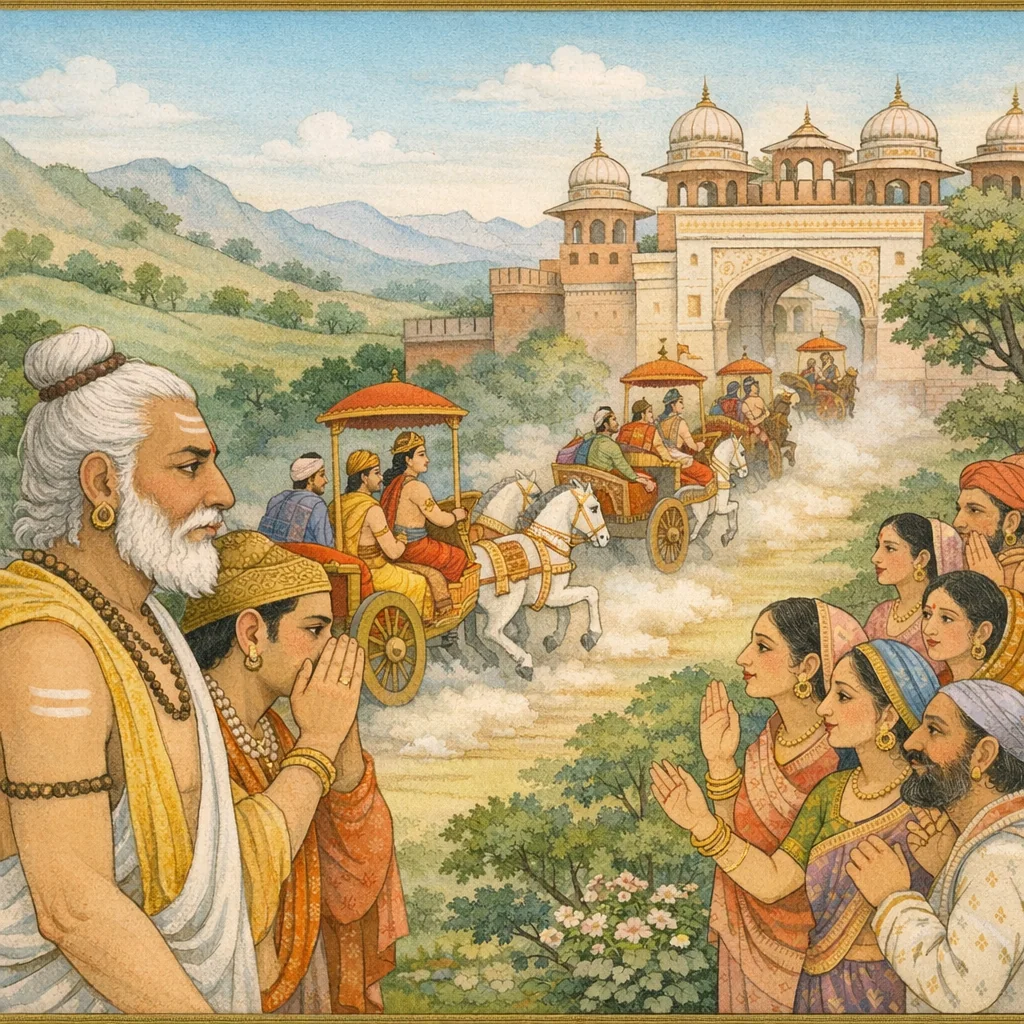
Chapter Arc: हस्तिनापुर में राजाज्ञा के अनुसार पाण्डवों की वारणावत-यात्रा की तैयारी होती है; वे रथों पर आरूढ़ होकर भीष्म, द्रोण, कृप, विदुर आदि वृद्ध-कुरुओं को प्रणाम करने निकलते हैं। → नगरवासी व्याकुल होकर इस ‘निर्वासन’ को अधर्म मानते हैं—विशेषतः भीष्म के मौन-अनुमोदन पर प्रश्न उठता है। युधिष्ठिर दुःखित जनसमुदाय को धैर्य देता है, पर भीतर-भीतर संकट की गन्ध फैलती जाती है। → विदुर का गुप्त उपदेश—संकेत-भाषा में ‘जतुगृह’ और अग्नि-भय से बचने का उपाय—पाण्डवों तक पहुँचता है; युधिष्ठिर उस रहस्य को समझने/समझाने की सीमा पर ठहरता है (संवाद जानने की जिज्ञासा और दोष-भय)। → पाण्डव समस्त कुरुवृद्धों को अभिवादन कर, नगरवासियों को सांत्वना देकर, नियत तिथि-नक्षत्र में वारणावत की ओर प्रस्थान करते हैं और आठवें दिन वहाँ पहुँचकर नगर-जन को देखते हैं। → वारणावत पहुँचना केवल आरम्भ है—विदुर के संकेत का अर्थ अब कर्म में उतरना है; ‘जतुगृह’ की छाया आगे घनी होने लगती है।
Shlokas
Verse 1
अड-#-क- चतुश्नत्वारिशर्दाधिकशततमो< ध्याय: पाण्डवोंकी वारणावत-यात्रा तथा उनको विदुरका गुप्त- उपदेश वैशम्पायन उवाच पाण्डवास्तु रथान् युक्तान् सदश्वैरनिलोपमै: । आरोहमाणा भीष्मस्य पादौ जगृहुरार्तवत्,वैशम्पायनजी कहते हैं--जनमेजय! वायुके समान वेगशाली उत्तम घोड़ोंसे जुते हुए रथोंपर चढ़नेके लिये उद्यत हो उत्तम व्रतको धारण करनेवाले पाण्डवोंने अत्यन्त दुःखी-से होकर पितामह भीष्मके दोनों चरणोंका स्पर्श किया। तत्पश्चात् राजा धृतराष्ट्र, महात्मा द्रोण, कृपाचार्य, विदुर तथा दूसरे बड़े-बूढ़ोंको प्रणाम किया। इस प्रकार क्रमश: सभी वृद्ध कौरवोंको प्रणाम करके समान अवस्थावाले लोगोंको हृदयसे लगाया। फिर बालकोंने आकर पाण्डवोंको प्रणाम किया
Vaiśampāyana said: As the Pāṇḍavas were about to mount their chariots—yoked with excellent horses swift as the wind—they approached grandsire Bhīṣma in deep distress and reverently touched and held his feet. Thereafter they bowed to King Dhṛtarāṣṭra, the great-souled Droṇa, Kṛpa, Vidura, and the other elders; in due order they paid homage to all senior Kauravas, embraced those of equal standing with heartfelt affection, and then the younger boys came forward to salute the Pāṇḍavas.
Verse 2
राज्ञश्न धृतराष्ट्रस्य द्रोणस्प च महात्मन: । अन््येषां चैव वृद्धानां कृपस्य विदुरस्थ च,वैशम्पायनजी कहते हैं--जनमेजय! वायुके समान वेगशाली उत्तम घोड़ोंसे जुते हुए रथोंपर चढ़नेके लिये उद्यत हो उत्तम व्रतको धारण करनेवाले पाण्डवोंने अत्यन्त दुःखी-से होकर पितामह भीष्मके दोनों चरणोंका स्पर्श किया। तत्पश्चात् राजा धृतराष्ट्र, महात्मा द्रोण, कृपाचार्य, विदुर तथा दूसरे बड़े-बूढ़ोंको प्रणाम किया। इस प्रकार क्रमश: सभी वृद्ध कौरवोंको प्रणाम करके समान अवस्थावाले लोगोंको हृदयसे लगाया। फिर बालकोंने आकर पाण्डवोंको प्रणाम किया
Vaiśampāyana said: They paid their respects to King Dhṛtarāṣṭra, to the noble-minded Droṇa, and likewise to the other elders—to Kṛpa and to Vidura as well.
Verse 3
एवं सर्वान् कुरून् वृद्धानभिवाद्य यतव्रता: । समालिज्गय समानान् वै बालैश्लाप्पभिवादिता:,वैशम्पायनजी कहते हैं--जनमेजय! वायुके समान वेगशाली उत्तम घोड़ोंसे जुते हुए रथोंपर चढ़नेके लिये उद्यत हो उत्तम व्रतको धारण करनेवाले पाण्डवोंने अत्यन्त दुःखी-से होकर पितामह भीष्मके दोनों चरणोंका स्पर्श किया। तत्पश्चात् राजा धृतराष्ट्र, महात्मा द्रोण, कृपाचार्य, विदुर तथा दूसरे बड़े-बूढ़ोंको प्रणाम किया। इस प्रकार क्रमश: सभी वृद्ध कौरवोंको प्रणाम करके समान अवस्थावाले लोगोंको हृदयसे लगाया। फिर बालकोंने आकर पाण्डवोंको प्रणाम किया
Vaiśampāyana said: Having duly saluted all the elder Kurus, the Pāṇḍavas—steadfast in their vows and disciplined in conduct—embraced those of their own age as equals; and thereafter they were in turn saluted by the children.
Verse 4
सर्वा मातृस्तथा55पृच्छद्य कृत्वा चैव प्रदक्षिणम् । सर्वाः प्रकृतयश्चैव प्रययुर्वारणावतम्,इसके बाद सब माताओंसे आज्ञा ले उनकी परिक्रमा करके तथा समस्त प्रजाओंसे भी विदा लेकर वे वारणावत नगरकी ओर प्रस्थित हुए
Vaiśampāyana said: Having first sought the consent and blessings of all their mothers and then circumambulated them in reverence, and having likewise taken leave of all the people of the realm, they set out for the city of Vāraṇāvata.
Verse 5
विदुरश्न महाप्राज्ञस्तथान्ये कुरुपुड्रवा: । पौराश्च पुरुषव्याप्रानन्वीयु: शोककर्शिता:,उस समय महाज्ञानी विदुर तथा कुरुकुलके अन्य श्रेष्ठ पुरुष एवं पुरवासी मनुष्य शोकसे कातर हो नरश्रेष्ठ पाण्डवोंके पीछे-पीछे चलने लगे। तब कुछ निर्भय ब्राह्मण पाण्डवोंको अत्यन्त दीन-दशामें देखकर बहुत दुःखी हो इस प्रकार कहने लगे--
Vaiśampāyana said: The greatly wise Vidura, along with other foremost men of the Kuru line, and the citizens as well—worn down by grief—followed behind the tiger-like heroes (the Pāṇḍavas).
Verse 6
तत्र केचिद् ब्रुवन्ति सम ब्राह्मणा निर्भयास्तदा । दीनान् दृष्टवा पाण्डुसुतानतीव भृशदु:खिता:,उस समय महाज्ञानी विदुर तथा कुरुकुलके अन्य श्रेष्ठ पुरुष एवं पुरवासी मनुष्य शोकसे कातर हो नरश्रेष्ठ पाण्डवोंके पीछे-पीछे चलने लगे। तब कुछ निर्भय ब्राह्मण पाण्डवोंको अत्यन्त दीन-दशामें देखकर बहुत दुःखी हो इस प्रकार कहने लगे--
There, some fearless Brahmins began to speak. Seeing the sons of Pāṇḍu brought low to a pitiable state, they were overwhelmed with intense sorrow and voiced their feelings aloud—moved by compassion and by moral concern for the unjust suffering of the righteous.
Verse 7
विषम पश्यते राजा सर्वथा स सुमन्दधी: । कौरव्यो धृतराष्ट्रस्तु न च धर्म प्रपश्यति,“अत्यन्त मन्दबुद्धि कुरुवंशी राजा धृतराष्ट्र पाण्डवोंको सर्वथा विषम दृष्टिसे देखते हैं। धर्मकी ओर उनकी दृष्टि नहीं है
Vaiśaṃpāyana said: That king, of exceedingly dull understanding—Dhṛtarāṣṭra of the Kuru line—looks upon the Pāṇḍavas with bias in every way, and he does not truly perceive dharma at all.
Verse 8
न हि पापमपापात्मा रोचयिष्यति पाण्डव: । भीमो वा बलिनां श्रेष्ठ; कौन्तेयो वा धनंजय:,“निष्पाप अन्त:ःकरणवाले पाण्डुकुमार युधिष्ठिर, बलवानोंमें श्रेष्ठ भीमसेन अथवा कुन्तीनन्दन अर्जुन कभी पापसे प्रीति नहीं करेंगे
For the Pāṇḍava—pure in soul—will never approve of sin. Neither Bhīma, the foremost among the strong, nor Arjuna, Kuntī’s son Dhanañjaya, will ever take delight in wrongdoing.
Verse 9
कुत एव महात्मानौ माद्रीपुत्रौ करिष्यत: । तान् राज्यं पितृतः प्राप्तान् धृतराष्ट्रो न मृष्यते,'फिर महात्मा दोनों माद्रीकुमार कैसे पाप कर सकेंगे। पाण्डवोंको अपने पितासे जो राज्य प्राप्त हुआ था, धृतराष्ट्र उसे सहन नहीं कर रहे हैं
Vaiśampāyana said: “How indeed could the two noble sons of Mādrī commit any wrongdoing? Yet Dhṛtarāṣṭra cannot bear that those Pāṇḍavas, who have obtained the kingdom by right of their father, should possess it.”
Verse 10
अधर्म्यमिदमत्यन्तं कथं भीष्मोडनुमन्यते । विवास्यमानानस्थाने नगरे यो$भिमन्यते,“इस अत्यन्त अधर्मयुक्त कार्यके लिये भीष्मजी कैसे अनुमति दे रहे हैं? पाण्डवोंको अनुचितरूपसे यहाँसे निकालकर जो रहनेयोग्य स्थान नहीं, उस वारणावत नगरमें भेजा जा रहा है! फिर भी भीष्मजी चुपचाप क्यों इसे मान लेते हैं?
Vaiśaṃpāyana said: “This is utterly unrighteous—how can Bhīṣma possibly give his assent to it? The Pāṇḍavas are being driven out without just cause and sent to Vāraṇāvata, a city that is no fit place to dwell; yet Bhīṣma appears to accept it in silence.”
Verse 11
पितेव हि नृपो5स्माकमभूच्छांतनव: पुरा । विचित्रवीर्यो राजर्षि: पाण्डुश्न॒ कुरुनन्दन:,“पहले शंतनुकुमार राजर्षि विचित्रवीर्य तथा कुरुकुलको आनन्द देनेवाले महाराज पाण्डु हमारे राजा थे। केवल राजा ही नहीं, वे पिताके समान हमारा पालन-पोषण करते थे
Vaiśampāyana said: “In former times, the Śāṃtanava king was to us like a father. So too were the royal sage Vicitravīrya and Pāṇḍu, the delight of the Kuru line—our kings who did not merely rule, but cared for and nurtured us with paternal concern.”
Verse 12
स तस्मिन् पुरुषव्याप्रे देवभावं गते सति । राजपुत्रानिमान् बालान् धृतराष्ट्रो न मृष्यते,“नरश्रेष्ठ पाण्डु जब देवभाव ([स्वर्ग)-को प्राप्त हो गये हैं, तब उनके इन छोटे-छोटे राजकुमारोंका भार धृतराष्ट्र नहीं सहन कर पा रहे हैं
Vaiśampāyana said: When that foremost of men had departed to the state of the gods, Dhṛtarāṣṭra could not bear the responsibility of these young princes.
Verse 13
वयमेतदनिच्छन्त: सर्व एव पुरोत्तमात् | गृहान् विहाय गच्छामो यत्र गन्ता युधिष्ठिर:,“हमलोग यह नहीं चाहते, इसलिये हम सब घर-द्वार छोड़कर इस उत्तम नगरीसे वहीं चलेंगे, जहाँ युधिष्ठिर जा रहे हैं!
Vaiśampāyana said: “Since none of us desire this, we will all abandon our homes and leave this excellent city, going wherever Yudhiṣṭhira is going.”
Verse 14
तांस्तथावादिन: पौरान् दुःखितान् दुःखकर्शित: । उवाच मनसा ध्यात्वा धर्मराजो युधिष्ठिर:,शोकसे दुर्बल धर्मराज युधिष्ठिर अपने लिये दुःखी उन पुरवासियोंको ऐसी बातें करते देख मन-ही-मन कुछ सोचकर उनसे बोले--
Seeing the townspeople speaking in that manner—grief-stricken and worn down by sorrow—Dharma-king Yudhiṣṭhira, after reflecting within his mind, addressed them.
Verse 15
पिता मान्यो गुरु: श्रेष्ठी यदाह पृथिवीपति: । अशड्कमानैस्तत् कार्यमस्माभिरिति नो व्रतम्,“बन्धुओ! राजा धृतराष्ट्र मेरे माननीय पिता, गुरु एवं श्रेष्ठ पुरुष हैं। वे जो आज्ञा दें, उसका हमें नि:शंक होकर पालन करना चाहिये; यही हमारा व्रत है
Vaiśampāyana said: “The king, lord of the earth, is to us a revered father, a teacher, and the foremost of men. Whatever he commands, we must carry out without suspicion or hesitation—this is our solemn vow. Kinsmen, King Dhṛtarāṣṭra is my honored father, my guru, and the best among men; therefore his order must be obeyed with unwavering confidence.”
Verse 16
भवन्त: सुहृदो5स्माकमस्मान् कृत्या प्रदक्षिणम् प्रतिनन्द्य तथाशीर्भिनिविर्तध्वं यथा गृहम्
Vaiśampāyana said: “You are our well-wishers. Having honored us by the customary rightward circumambulation and having expressed your approval, now depart with blessings and return to your respective homes.”
Verse 17
यदा तु कार्यमस्माकं भवद्धिरुपपत्स्यते । तदा करिष्यथास्माकं प्रियाणि च हितानि च
“But when our own need arises and can be duly met through you, then you shall do for us what is both dear to us and truly beneficial.”
Verse 18
“आपलोग हमारे हितचिन्तक हैं, अतः हमें अपने आशीर्वादसे संतुष्ट करें और हमें दाहिने करते हुए जैसे आये थे, वैसे ही अपने घरको लौट जायँ। जब आपलोगोंके द्वारा हमारा कोई कार्य सिद्ध होनेवाला होगा, उस समय आप हमारे प्रिय और हितकारी कार्य कीजियेगा' ।। एवमुक्तास्तदा पौरा: कृत्वा चापि प्रदक्षिणम् आशीर्भिश्चवाभिनन्द्यैताञ्जमग्मुर्नगरमेव हि,उनके यों कहनेपर पुरवासी उन्हें आशीर्वादसे प्रसन्न करते हुए दाहिने करके नगरको ही लौट गये
Vaiśampāyana said: “You are well-wishers who seek our good. Therefore, please satisfy us with your blessings, and, having circumambulated us to the right as you came, return to your homes. When some task of ours is to be accomplished through you, then you will do what is dear to us and beneficial.” Thus addressed, the townspeople, after making the respectful rightward circumambulation and offering blessings and congratulations, returned to the city.
Verse 19
पौरेषु विनिवृत्तेषु विदुर: सत्यधर्मवित् | बोधयन् पाण्डवश्रेष्ठमिदं वचनमब्रवीत्,पुरवासियोंके लौट जानेपर सत्यधर्मके ज्ञाता विदुरजी पाण्डवश्रेष्ठ युधिष्ठिरको दुर्योधनके कपटका बोध कराते हुए इस प्रकार बोले
When the townspeople had withdrawn and returned to their homes, Vidura—knower of truth and dharma—began to awaken the foremost of the Pāṇḍavas, Yudhiṣṭhira, to the deceitful designs of Duryodhana, and spoke these words.
Verse 20
प्राज्ञ: प्राज्प्रलापज्ञ: प्रलापज्ञमिदं वच: । प्राज्ञ प्राज्ञ: प्रलापज्ञ: प्रलापज्ञं वचो5ब्रवीत्,विदुरजी बुद्धिमान् तथा मूढ़ म्लेच्छोंकी निरर्थक-सी प्रतीत होनेवाली भाषाके भी ज्ञाता थे। इसी प्रकार युधिष्ठिर भी उस म्लेच्छभाषाको समझ लेनेवाले तथा बुद्धिमान् थे। अतः उन्होंने युधिष्ठिस्से ऐसी कहनेयोग्य बात कही, जो म्लेच्छभाषाके जानकार एवं बुद्धिमान् पुरुषको उस भाषामें कहे हुए रहस्यका ज्ञान करा देनेवाली थी, किंतु जो उस भाषाके अनभिभक्ञ पुरुषको वास्तविक अर्थका बोध नहीं कराती थी
Vaiśampāyana said: Vidura, a truly wise man, was skilled even in speech that appears confused or meaningless to the untrained—such as the language of foreigners. Yudhiṣṭhira too was intelligent and capable of understanding that coded manner of speaking. Therefore Vidura addressed him in words that, though framed in that obscure speech, conveyed a hidden meaning to a discerning listener, while revealing nothing of the real intent to one who did not know that mode of expression.
Verse 21
यो जानाति परप्रज्ञां नीतिशास्त्रानुसारिणीम् । विज्ञायेह तथा कुर्यादापद॑ निस्तरेद् यथा
He who understands another’s intelligence—how it follows the principles of statecraft and ethical policy—should, having discerned it here, act accordingly, so that he may cross over a crisis in the proper way.
Verse 22
“जो शत्रुकी नीति-शास्त्रका अनुसरण करनेवाली बुद्धिको समझ लेता है, वह उसे समझ लेनेपर कोई ऐसा उपाय करे, जिससे वह यहाँ शत्रुजनित संकटसे बच सके ।। अलोहं निशितं शस्त्र शरीरपरिकर्तनम् । यो वेत्ति न तु त॑ घ्नन्ति प्रतिघातविदं द्विष:,“एक ऐसा तीखा शस्त्र है, जो लोहेका बना तो नहीं है, परंतु शरीरको नष्ट कर देता है। जो उसे जानता है, ऐसे उस शस्त्रके आघातसे बचनेका उपाय जाननेवाले पुरुषको शत्रु नहीं मार सकतेः
Vaiśampāyana said: “There is a weapon—keen-edged, not made of iron—yet it can ruin the body. But enemies cannot destroy the person who recognizes this ‘weapon’ and knows how to ward off its blow. Therefore, one who understands the enemy’s policy and stratagems should adopt such measures here and now as will keep him safe from dangers arising from foes.”
Verse 23
कक्षघ्न: शिशिरघ्नश्ष महाकक्षे बिलौकस: । न दहेदिति चात्मानं यो रक्षति स जीवति,“घास-फ़ूस तथा सूखे वृक्षोंवाले जंगलको जलाने और सर्दीको नष्ट कर देनेवाली आग विशाल वनमें फैल जानेपर भी बिलमें रहनेवाले चूहे आदि जन्तुओंको नहीं जला सकती-- यों समझकर जो अपनी रक्षाका उपाय करता है, वही जीवित रहता है
Vaiśampāyana said: “A fire that consumes dry grass and brushwood and even destroys the cold, when it spreads through a vast forest, still cannot burn the creatures that live inside burrows. Knowing this—‘it will not burn me’—the one who takes measures to protect himself is the one who survives.”
Verse 24
नाचक्षुवेत्ति पन्थानं नाचक्षुविन्दते दिश: । नाधृतिर्बुद्धिमाप्रोति बुध्यस्वैवं प्रबोधित:,“जिसके आँखें नहीं हैं, वह मार्ग नहीं जान पाता; अंधेको दिशाओंका ज्ञान नहीं होता और जो धैर्य खो देता है, उसे सदबुद्धि नहीं प्राप्त होती। इस प्रकार मेरे समझानेपर तुम मेरी बातको भलीभाँति समझ लोः
Vaiśampāyana said: “One who lacks sight cannot discern the path; the blind do not find the directions. Likewise, one who has lost steadfastness does not attain sound judgment. Therefore, having been instructed in this way, understand my counsel clearly.”
Verse 25
अनाप्तैर्दत्तमादत्ते नर: शस्त्रमलोहजम् | श्वाविच्छरणमासाद्य प्रमुच्येत हुताशनात्,'शत्रुओंके दिये हुए बिना लोहेके बने शस्त्रको जो मनुष्य ग्रहण कर लेता है, वह साहीके बिलमें घुसकर आगसे बच जाता हैं
Vaiśampāyana said: “A man who accepts a weapon made without iron, given by those who are not rightful (or not to be trusted), is like one who reaches the burrow of a porcupine and thereby escapes a blazing fire.”
Verse 26
चरन् मार्गान् विजानाति नक्षत्रैविन्दते दिश: | आत्मना चात्मन: पञज्च पीडयन् नानुपीड्यते,“मनुष्य घूम-फिरकर रास्तेका पता लगा लेता है, नक्षत्रोंस दिशाओंको समझ लेता है तथा जो अपनी पाँचों इन्द्रियोंका स्वयं ही दमन करता है, वह शत्रुओंसे पीड़ित नहीं होता
Vaiśampāyana said: “By travelling about, a person comes to know the roads; by the stars, he finds the directions. And one who, by his own self, restrains the five senses is not oppressed by enemies.”
Verse 27
एवमुक्त: प्रत्युवाच धर्मराजो युधिष्ठिर: । विदुरं विदुषां श्रेष्ठ ज्ञातमित्येव पाण्डव:,इस प्रकार कहे जानेपर पाण्डुनन्दन धर्मराज युधिष्ठिरने दिद्वानोंमें श्रेष्ठ विदुरजीसे कहा --'मैंने आपकी बात अच्छी तरह समझ ली”
Thus addressed, Dharmarāja Yudhiṣṭhira replied to Vidura, the foremost among the wise: “I have understood what you have said.”
Verse 28
अनुशिक्ष्यानुगम्यैतान् कृत्वा चैव प्रदक्षिणम् । पाण्डवानभ्यनुज्ञाय विदुर: प्रययौ गृहान्,इस तरह पाण्डवोंको बारंबार कर्तव्यकी शिक्षा देते हुए कुछ दूरतक उनके पीछे-पीछे जाकर विदुरजी उनको जानेकी आज्ञा दे उन्हें अपने दाहिने करके पुनः अपने घरको लौट गये
Vaiśampāyana said: Having repeatedly instructed them in their duties, and having followed them for some distance, Vidura took leave of the Pāṇḍavas. After respectfully circumambulating them (keeping them to his right), he returned to his home.
Verse 29
निवत्ते विदुरे चापि भीष्मे पौरजने तथा । अजातशशत्रुमासाद्य कुन्ती वचनमब्रवीत्,विदुर, भीष्मजी तथा नगरनिवासियोंके लौट जानेपर कुन्ती अजातशत्रु युधिष्ठिरके पास जाकर बोली--
When Vidura had withdrawn, and Bhīṣma and the townspeople likewise had departed, Kuntī approached Ajātaśatru (Yudhiṣṭhira) and spoke to him.
Verse 30
क्षत्ता यदब्रवीद् वाक््यं जनमध्येडब्रुवन्निव । त्वया च स तथेत्युक्तो जानीमो न च तद् वयम्,“बेटा! विदुरजीने सब लोगोंके बीचमें जो अस्पष्ट-सी बात कही थी, उसे सुनकर तुमने “बहुत अच्छा' कहकर स्वीकार किया था; परंतु हमलोग वह बात अबतक नहीं समझ पा रहे हैं
Vaiśampāyana said: “My son, we heard the chamberlain Vidura utter certain words in the midst of the assembly, as though speaking indirectly. You, on hearing them, assented—saying, ‘So be it.’ Yet we still do not understand what that statement truly meant.”
Verse 31
यदीदं शक््यमस्माभिज्ञातुं न च सदोषवत् | श्रोतुमिच्छामि तत् सर्व संवादं तव तस्य च,“यदि उसे हम भी समझ सकें और हमारे जाननेसे कोई दोष न आता हो तो तुम्हारी और उनकी सारी बातचीतका रहस्य मैं सुनना चाहती हूँ”
Vaiśampāyana said: “If this can indeed be understood by us, and if knowing it would not incur any fault or impropriety, then I wish to hear in full the entire conversation—both yours and his.”
Verse 32
युधिछिर उवाच गृहादग्निश्च बोद्धव्य इति मां विदुरोडब्रवीत् । पन्थाश्च वो नाविदित: कश्रित् स्यादिति धर्मधी:,युधिष्ठिरने कहा--माँ! जिनकी बुद्धि सदा धर्ममें ही लगी रहती है, उन विदुरजीने (सांकेतिक भाषामें) मुझसे कहा था, “तुम जिस घरमें ठहरोगे, वहाँसे आगका भय है, यह बात अच्छी तरह जान लेनी चाहिये। साथ ही वहाँका कोई भी मार्ग ऐसा न हो, जो तुमसे अपरिचित रहे
Yudhiṣṭhira said: “Vidura, whose understanding is firmly grounded in dharma, warned me in veiled words: ‘Know well that the house where you stay carries the danger of fire. And let there be no route there that is unknown to you.’”
Verse 33
जितेन्द्रियश्च वसुधां प्राप्स्यतीति च मेडब्रवीत् । विज्ञातमिति तत् सर्व प्रत्युक्तो विदुरो मया,“यदि तुम अपनी इन्द्रियोंको वशमें रखोगे तो सारी पृथ्वीका राज्य प्राप्त कर लोगे, यह बात भी उन्होंने मुझसे बतायी थी और इन्हीं बातोंके लिये मैंने विदुरजीको उत्तर दिया था कि “मैं सब समझ गया”
Yudhiṣṭhira said: “He also told me this: ‘If you keep your senses under control, you will attain sovereignty over the whole earth.’ It was with reference to all these points that I replied to Vidura, saying, ‘I have understood everything.’”
Verse 34
वैशम्पायन उवाच अष्टमे5हनि रोहिण्यां प्रयाता: फाल्गुनस्य ते । वारणावतमासाद्य ददृशुर्नागरं जनम्,वैशम्पायनजी कहते हैं--जनमेजय! पाण्डवोंने फाल्गुन शुक्ला अष्टमीके दिन रोहिणी नक्षत्रमें यात्रा की थी। वे यथासमय वारणावत पहुँचकर वहाँके नागरिकोंसे मिले
Vaiśampāyana said: “O Janamejaya! On the eighth day (Aṣṭamī) of the bright fortnight of Phālguna, under the Rohiṇī constellation, the Pāṇḍavas set out. Reaching Vāraṇāvata in due time, they met the townspeople there.”
Verse 144
इति श्रीमहा भारते आदिपर्वणि जतुगृहपर्वणि वारणावतगमने चतुश्चत्वारिंशदधिकशततमो< ध्याय:,इस प्रकार श्रीमह्ाभारत आदिपर्वके अन्तर्गत जदुगृहपर्वमें पाण्डवोंकी वारणावतयात्राविषयक एक सौ चौवालीसवाँ अध्याय पूरा हुआ
Thus ends the one hundred and forty-fourth chapter of the Ādi Parva of the Śrī Mahābhārata, within the section concerning the lac-house (Jatugṛha), describing the Pāṇḍavas’ journey to Vāraṇāvata.
Frequently Asked Questions
The host brāhmaṇa faces a crisis where survival seems to demand abandoning family, but he judges abandonment of spouse or children as ethically intolerable; simultaneously, Kuntī weighs the duty to help the host against the need to remain concealed.
Dharma is operationalized as reciprocal responsibility: receiving protection and sustenance generates an obligation to assist when the benefactor suffers, and compassion is expressed through informed, deliberate action rather than impulse.
No explicit phalaśruti appears in the cited verses; the chapter’s meta-function is narrative-ethical, establishing motives (gratitude and protection) that justify the forthcoming intervention within the Ekacakrā arc.