Adhyaya 21
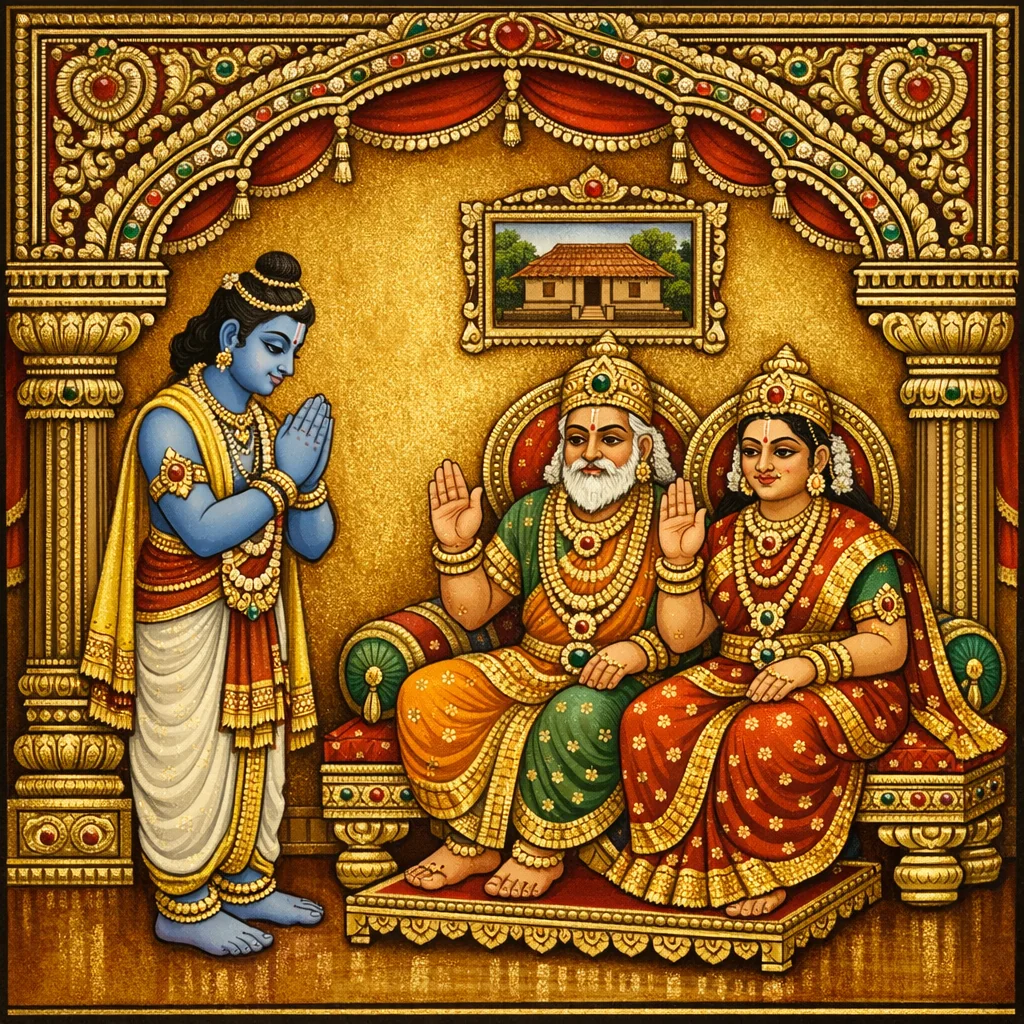
Rāma’s Service to Parents and Departure to Visit the Paternal Grandparents (Pitāmaha-gṛha-gamana)
This adhyāya follows immediately after the closing marker of the prior Śrāddha-kalpa discourse, shifting from ritual prescription to an exemplum narrated as Vasiṣṭha’s speech to a king. Rāma, the ideal upholder of dharma and learned in Veda and Vedāṅga, spends years in disciplined service (śuśrūṣā) to his parents, winning their affection through daily conduct. A turning point comes when he humbly, with folded hands, seeks permission to visit his paternal grandparents’ home (pitāmaha-gṛha), prompted by repeated invitations and his grandmother’s longing to see him. His parents, moved with emotion, bless him to go and instruct him to honor and serve the elders properly, stay an appropriate time, and return safely. The chapter thus affirms filial piety, intergenerational continuity, and the social-ritual logic of lineage (vaṃśa) transmission, bridging śrāddha theory and lived family ethics.
Shlokas
Verse 1
इति श्रीब्रह्माण्डे महापुराणे वायुप्रोक्ते मध्यभागे तृतीय उपोद्धातपादे श्राद्धकल्पो नाम विंशतितमो ऽध्यायः // २०// समाप्तश्चायं श्राद्धकल्पः / वसिष्ठ उवाच इत्थं प्रवर्त्तमानस्य जमदग्नेर्महात्मनः / वर्षाणि कतिचिद्राजन्व्यतीयुरमितौजसः
Thus, in the Śrī Brahmāṇḍa Mahāpurāṇa proclaimed by Vāyu, in the middle section, in the third pāda of the introduction, the twentieth chapter called “Śrāddhakalpa” is concluded. Vasiṣṭha said: O king, as the great-souled Jamadagni of immeasurable splendor thus continued, some years passed.
Verse 2
रामो ऽपि नृपशार्दूल सर्वधर्मभृतां वरः / वेदवेदाङ्गतत्त्वज्ञः सर्वशास्त्रविशारदः
O tiger among kings, Rāma too was the foremost among upholders of dharma; he knew the essence of the Vedas and Vedāṅgas and was accomplished in all śāstras.
Verse 3
पित्रोश्चकार शुश्रूषां विनीतात्मा महामतिः / प्रीतिं च निजचेष्टाभिरन्वहं पर्यवर्त्तयत्
Humble in spirit, the great-minded one served his parents, and by his own noble deeds he increased their joy day after day.
Verse 4
इत्थं प्रवर्त्तमानस्य वर्षाणि कतिचिन्नृप / पित्रोः शुश्रूषयानैषीद्रामो मतिमतां वरः
O king, as he lived thus, some years passed; Rāma, best among the wise, spent his days in devoted service to his parents.
Verse 5
स कदाचिन्महातेजाः पितामह गुहं प्रति / गन्तुं व्यवसितो राजन्दैवेन च नियोजितः
O king, that radiant one once resolved to go toward the cave of his forefather, and destiny too appointed him to that path.
Verse 6
निपीड्य शिरसा पित्रोश्चरणौ भृगुपुङ्गवः / उवाच प्राञ्जलिर्भूतवा सप्रश्रयमिदं वचः
The foremost of Bhṛgu’s line bowed his head to his father’s feet; with palms joined, he spoke these words with reverent humility.
Verse 7
कञ्चिदर्थमहं तात मातरं त्वां च साम्प्रतम् / विज्ञापयितुमिच्छामि मम तच्छ्रोतुमर्हथः
Father, I wish at this moment to submit a matter to Mother and to you; please deem it worthy to hear from me.
Verse 8
पितामहमहं द्रष्टुमुत्कण्ठितमनाश्चिरम् / तस्मात्तत्पार्श्वमधुना गमिष्ये वामनुज्ञया
For long my heart has yearned to behold Pitāmaha; therefore now, with Vāmana’s permission, I shall go to his side.
Verse 9
आहूतश्चासकृत्तात सोत्कण्ठं प्रीयमाणया / पितामह्या बहुमुखैरिच्छन्त्या मम दर्शनम्
O father, Pitāmahī, rejoicing and longing for my darśana, has called me again and again with eager heart.
Verse 10
पितॄन्पितामहस्यापि प्रियमेव प्रदर्शनम् / सदीयं तेन तत्पार्श्वं गन्तुं मामनुजानत
To the Pitṛs and to Pitāmaha as well, my presence is dear; therefore he granted me leave to go to his side.
Verse 11
वसिष्ठ उवाच इति तस्य वचः श्रुत्वा संभ्रान्तं समुदीरितम् / हर्षेण महता युक्तौ साश्रुनेत्रौ बभूवतुः
Vasiṣṭha said: Hearing his words, spoken in eager agitation, the two were filled with great joy, their eyes brimming with tears.
Verse 12
तमालिङ्ग्य महाभागं मूर्ध्न्युपाघ्राय सादरम् / अभिनन्द्याशिषा तात ह्युभौ ताविदमाहतुः
They embraced the greatly blessed one, reverently kissing/inhailing the fragrance of his crown, and greeting him with blessings; then, O son, the two spoke thus.
Verse 13
पितामहगृहं तात प्रयाहि त्वं यथासुखम् / पितामहपितामह्योः प्रीतये दर्शनाय च
Dear child, go at ease to your grandfather’s house, for the joy and for the sacred darśana of your grandfather and great-grandfather.
Verse 14
तत्र गत्वा यथान्यायं तं शुश्रूषा परायणः / कञ्चित्कालं तयोर्वत्स प्रीतये वस तद्गृहे
Having gone there, attend to him with due propriety; dear child, stay for some time in that house, for the pleasure of them both.
Verse 15
स्थित्वा नातिचिरं कालं तयोर्भूयो ऽप्यनुशय / अत्रागच्छ महाभाग क्षेमेणास्मद्दिदृक्षया
Do not stay with them for long; then return here, O fortunate one, and come safely, for we long to see you again.
Verse 16
क्षणार्द्धमपि शक्ताः स्थो न विना पुत्रदर्शनम् / तस्मात्पितामह गृहे न चिरात्स्थातुमर्हसि
Without the sight of our son we cannot endure even half a moment; therefore you should not remain long in your grandfather’s house.
Verse 17
तदाज्ञयाथ वा पुत्र प्रपितामहसन्निधिम् / गतो ऽपि शीघ्रमागच्छ क्रमेण तदनुज्ञया
By his command, my son, go also into the presence of your great-grandfather; yet, having received permission in due order, return swiftly.
Verse 18
वसिष्ठ उवाच इत्युक्तस्तौ परिक्रम्य प्रणम्य च महामतिः / पितरावप्यनुज्ञाप्य पितामहगृहं ततः
Vasiṣṭha said: Thus addressed, the great-minded one circumambulated them and bowed; having also obtained his parents’ leave, he then went to the house of his grandsire (pitāmaha).
Verse 19
स गत्वा भृगुवर्यस्य ऋचीकस्य महात्मनः / प्रविवेशाश्रमं रामो मुनिशिष्योपशोभितम्
Then Rāma went to Ṛcīka, the great-souled foremost of Bhṛgu’s line, and entered the hermitage adorned by the sage’s disciples.
Verse 20
स्वाध्यायघोषैर्विपुलैः सर्वतः प्रतिनादितम् / प्रशान्तवैर सत्त्वाढ्यं सर्वसत्त्वमनोहरम्
It resounded on every side with the full-throated chants of svādhyāya; free from enmity, rich in sattva, and delightful to the hearts of all beings.
Verse 21
स प्रविश्यश्रमं रम्यमृचीकं स्थितमासने / ददर्श रामो राजेन्द्र स पितामहमग्रतः
O king, entering the lovely hermitage, Rāma beheld Ṛcīka seated upon his seat; and before him he also saw his own grandsire (pitāmaha).
Verse 22
जाज्वल्यमानं तपसा धिष्ण्यस्थमिव पावकम् / उपासितं सत्यवत्या यथा दक्षिणायऽध्वरम्
He blazed with the fire of austerity, like sacred flame set upon the altar; and Satyavatī attended and worshiped him as one honors the dākṣiṇā in a yajña.
Verse 23
स्वसमीपमुपायान्तं राममालोक्य तौ नृप / सुचिरं तं विमर्शेतां समाज्ञापूर्वदर्शनौ
Seeing Rama draw near, those two royal men—who had earlier beheld him only by command—gazed at him for a long while, pondering him within.
Verse 24
को ऽयमेष तपोराशिः सर्वलत्रणपूजितः / बालो ऽयं बलवान्भातिगांभीर्यात्प्रश्रयेण च
Who is this—an embodiment of austerity, revered for every noble mark? Though but a boy, he shines with strength; his depth and humility are equally evident.
Verse 25
एवं तयोश्चिन्तयतोः सहर्षं हृदि कौतुकात् / आससाद शनै रामः समीपे विनयान्वितः
As they thus reflected with joy and wonder in their hearts, Rama, endowed with humility, slowly approached and came near.
Verse 26
स्वनामगोत्रे मतिमानुक्त्वा पित्रोर्मुदान्वितः / संस्पृशंश्चरणौ मूर्ध्ना हस्ताभ्यां चाभ्यवादयत्
Wise Rama, filled with joy, stated his name and lineage before his parents; then he touched their feet with his head and saluted them with joined hands.
Verse 27
ततस्तौ प्रीतमनसौ समुथाप्य च सत्तमम् / आशीर्भिरभिनन्देतां पृथक् पृथगुभावपि
Then, their hearts pleased, the two raised up that excellent man, and each in turn greeted him with words of blessing.
Verse 28
तमाश्लिष्याङ्कमारोप्य हर्णाश्रुप्लुतलोचनौ / वीक्षन्तौ तन्मुखांभोजं परं हर्षमवापतुः
Embracing him and lifting him onto their lap, their eyes flooded with tears of joy, the two gazed upon his lotus-like face and attained supreme delight.
Verse 29
ततः सुखोपविष्टं तमात्मवंशसमुद्वहम् / अनामयमपृच्छेतां तावुभौ दंपती तदा
Then, when he had sat in comfort—the upholder of their lineage—the husband and wife together asked after his health and well-being.
Verse 30
पितरौ ते कुशलिनो वत्स किंभ्रातरस्तथा / अनायासेन ते वृत्तिर्वर्तते चाथ कर्हिचित्
Child, are your parents well? And your brothers too? Tell us also—does your livelihood go on without strain or hardship?
Verse 31
समस्ताभ्यां ततो राजन्नाचचक्षे यथोदितः / तथा स्वानुगतं पित्रोर्भ्रातॄणां चैव चेष्टितम्
Then, O King, he told them both everything exactly as it had occurred, and likewise described the conduct of his parents and brothers as he had experienced it.
Verse 32
एवं तयोर्महाराज सत्प्रीतिजनितैगुणैः / प्रीयमाणो ऽवसद्रामः पितुः पित्रोर्न्निवेशने
Thus, O great king, pleased by the virtues born of their true affection, Rama remained to dwell in the home of his father and grandfather.
Verse 33
स तस्मिन्सर्वभूतानां मनोनयननन्दनः / उवास कतिचिन्मासांस्तच्छुश्रूषापरायणः
He, who delighted the minds and eyes of all beings, dwelt there for some months, wholly devoted to their service.
Verse 34
अथानुज्ञाप्य तौ राजन्भृगुवर्यो महामनाः / पितामहगुरोर्गन्तुमियेषाश्रयमाश्रमम्
Then, O King, having taken leave of them both, the great-souled Bhrigu, foremost of sages, desired to go to the hermitage that was the refuge of his ancestral Guru (Pitāmaha).
Verse 35
स ताभ्यां प्रीतियुक्ताभ्यामाशीर्भिरभिनन्दितः / यथा चाभ्यां प्रदिष्टेन यया वौर्वाश्रमं प्रति
Honored by the loving blessings of them both, he set out by the path they had shown, bound for Vaurva’s hermitage.
Verse 36
तं नमस्कृत्य विधिवच्च्यवनं च महातपाः / सप्रहर्षं तदाज्ञातः प्रययावाश्रमं भृगोः
The great ascetic bowed to him, and to Cyavana as well, in due rite; and, having received their command, he departed with joy for Bhrigu’s hermitage.
Verse 37
स गत्वामुनिमुख्यस्य भृगोराश्रममण्डलम् / ददर्श शान्तचेतोभिर्मुनिभिः सर्वतो वृतम्
Reaching the precincts of Bhrigu’s hermitage, chief among sages, he beheld it surrounded on every side by munis of tranquil mind.
Verse 38
सुस्निग्धशीतलच्छायैः सर्वर्तुकगुणान्वितैः / तरुभिः संवृतं प्रीतः फलपुष्पोत्तरान्वितैः
That forest, enclosed by trees with gentle, cool shade—endowed with the virtues of every season and abundant in fruits and blossoms—was deeply delightful.
Verse 39
नानाखगकुलारावैर्मनःश्रोत्रसुखावहैः / ब्रह्मघोषैश्च विविधैः सर्वतः प्रतिनादितम्
That place resounded on every side with the calls of many flocks of birds, pleasing to mind and ear, and with diverse brahma-ghoṣas—sacred chants—echoing all around.
Verse 40
समन्त्राहुतिहोमोत्थधूमगन्धेन सर्वतः / निरस्तनिखिलाघौघं वनान्तरविसर्पिणा
The fragrance of smoke rising from the homa—offerings cast with mantras—spread everywhere, coursing through the forest’s depths and driving away every mass of sin.
Verse 41
समित्कुशाहरैर्दण्डमेखलाजिनमण्डितैः / अभितः शोभितं राजन्रम्यैर्मुनिकुमारकैः
O King, that forest was adorned on every side by lovely young sages—sons of seers—bearing samit and kuśa, and wearing staff, girdle, and deer-skin.
Verse 42
प्रसूनजलसंपूर्मपात्रहस्ताभिरन्तरा / शोभितं मुनिकल्याभिश्चरन्तीभिरितस्ततः
Sage-maidens moved to and fro, vessels in hand filled with flowers and water; by them, even the inner reaches of the forest were made radiant.
Verse 43
सपोतहरिणीयूथैर्विस्रंभादविशङ्किभिः / उटजाङ्गणपर्यन्ततरुच्छायास्वधिष्ठितम्
With herds of does with their fawns, trusting and unafraid, that place lay graced beneath the trees’ shade spreading to the very courtyard of the hermitage.
Verse 44
रोमन्थतः परामृष्टियूथ साक्षिकमुत्प्रदैः / प्रारब्धताण्डवं केकीमयूरैर्मधुरस्वरैः
Herds that ruminated, bearing witness to gentle caresses, and sweet-voiced kekī peacocks that had begun their tāṇḍava dance—thus the hermitage grew more enchanting.
Verse 45
प्रविकीर्णकणोद्देशं मृगशब्दैः समीपगैः / अनालीढातपच्छायाशुष्यन्नीवारराशिभिः
That tract, strewn with scattered grains, resounded with the calls of nearby deer, and held heaps of nīvāra rice drying, as though untouched by sun and shade.
Verse 46
हूयमानानलं काले पूज्यमानातिथिव्रजम् / अभ्यस्यमानच्छन्दौघं चिन्त्यमानगमोदितम्
In due season the homa fire received its offerings, the company of guests was duly honored; streams of sacred metres were practiced, and matters of departure and return were thoughtfully weighed.
Verse 47
पठ्यमानाखिलस्मार्त्तं श्रौतार्थप्रविचारणम् / प्रारब्धपितृदेवेज्यं सर्वभूतमनोहरम्
All smārta observances were being recited, and the meanings of śrauta rites were examined; worship of the Fathers and the Gods had begun—delighting the hearts of all beings.
Verse 48
तपस्विजनभूयिष्ठमाकापुरुषसेवितम् / तपोवृद्धिकरं पुण्यं सर्वसत्त्वसुखास्पदम्
That āśrama abounded with ascetics and was attended by celestial beings; it was holy, a giver of increase to tapas, and a refuge of joy for all creatures.
Verse 49
तपोधनानन्दकरं ब्रह्मलोकमिवापरम् / प्रसूनसौरभभ्राम्यन्मधुपारावनादितम्
It gladdened the sages rich in tapas, like another Brahmaloka; the fragrance of blossoms set the bees whirling, and their hum filled the grove.
Verse 50
सर्वतो वीज्यमानेन विविधेन नभस्वता / एवंविधगुणोपेतं पश्यन्नाश्रममुत्तमम्
As varied breezes fanned it from every side, he beheld that supreme āśrama, endowed with such virtues.
Verse 51
प्रविवेश विनीतात्मा सुकृतीवामरालयम् / संप्रविश्यश्रमोपान्तं रामः स्वप्रपितामहम्
Humble of heart, Rāma entered the precincts of the āśrama as a meritorious man enters the abode of the gods, and drew near to his own great forefather.
Verse 52
ददर्श परितो राजन्मुनिशिष्यशतावृतम् / व्याख्यानवेदिकामध्ये निविष्टं कुशविष्टरे / सितश्मश्रुजटाकूर्चब्रह्मसूत्रोपशोभितम्
O King, he saw the sage surrounded on all sides by a hundred disciples, seated upon a kuśa-grass seat in the midst of the teaching dais, adorned with white beard, matted locks, a kuśa tuft, and the sacred thread, the brahmasūtra.
Verse 53
वामेतरोरुमध्यास्त वामजङ्घेन जानुना
He sat upon the right thigh, steadying the knee with the left leg.
Verse 54
योगपट्टेन संवीतस्वदेहमृषिपुङ्गवम् / व्याख्यानमुद्राविलसत्सव्यपाणितलांबुजम्
There stood the foremost sage, his body bound with the yogic strap; his left lotus-palm shone in the teaching gesture.
Verse 55
योगपट्टोपरिन्यस्तविभ्राजद्वामपाणिकम् / सम्यगारण्यवाक्यानां सूक्ष्मतत्त्वार्थसंहतिम्
With his radiant left hand resting upon the yogic strap, he rightly expounded the subtle, essential purport of the Āraṇyaka sayings.
Verse 56
विवृत्य मुनिमुख्येभ्यः श्रावयन्तं तपोनिधिम् / पितुः पितामहं द्दष्ट्वा रामस्तस्य महात्मनः
Rama beheld that great soul, a treasure of austerity, unfolding the meaning and reciting it to the foremost sages; and he recognized him as his father’s grandsire.
Verse 57
शनैरिवमहाराज समीपं समुपागमत् / तमागतमुपालक्ष्य तत्प्रभावप्रधर्षिताः
O great king, Rama drew near, as it were, slowly. Seeing him arrive, those present were overawed by his radiant power.
Verse 58
शङ्कामवापुर्मुनयो दूरादेवाखिला नृप / तावदूभृगुरमेयात्मा तदागमनतोषितः
O king, all the sages were seized by doubt even from afar; then Bhṛgu, of immeasurable spirit, was pleased by their arrival.
Verse 59
निवृत्तान्यकथालापस्तं पश्यन्नास पार्थिव / रामो ऽपि तमुपागम्य विनयावनताननः
O king, he ceased all other talk and kept his gaze upon him; Rama too approached, his face bowed in humility.
Verse 60
अवन्दत यथान्ययमुपेन्द्र इव वेधसम् / अभिवाद्य यथान्यायं ख्यातिं च विनयान्वितः
Rama bowed to him in due order, as Upendra bows to Vedhas; having greeted him according to rite, he gained renown, adorned with humility.
Verse 61
तांश्च संभावयामास मुनीन्रामोयथावयः / तैश्च सर्वैर्मुदोपेतैराशीर्भिरभिवर्द्धितः
Rama honored those sages according to their age and rank; and they all, filled with joy, increased him with blessings.
Verse 62
उपाविवेश मेधावी भूमौ तेषामनुज्ञया / उपविष्टं ततो राममाशीर्भिरभिनन्दितम्
Rama, the wise, sat upon the ground with their permission; then, as he sat, he was greeted and blessed with benedictions.
Verse 63
पप्रच्छकुशलप्रश्नं तमालोक्य भृगुस्तदा / कुशलं खलु ते वत्स पित्रोश्च किमनामयम्
Seeing him, Bhṛgu asked an auspicious question: “My child, are you well? And are your father and mother both free from illness?”
Verse 64
भ्रातॄणां चैव भवतःपितुः पित्रोस्तथैव च / किमर्थमागतो ऽत्र त्वमधुनामम सन्निधिम्
“Are your father and mother, and your brothers as well, all in good health? Then why have you come here to my presence now?”
Verse 65
केनापि वा त्वमादिष्टः स्वयमेवाथवागतः / ततोरामो यथान्यायं तस्मै सर्वमशेषतः
“Were you sent by someone, or have you come of your own accord?” Then Rāma, as was proper, told him everything in full, leaving nothing out.
Verse 66
कथयामास यत्पृष्टं तदा तेन महात्मना / पितुर्मातुश्च वृत्तान्त भ्रातॄणां च महात्मनाम्
Whatever that great soul asked, Rāma then related: the condition of his father and mother, and the affairs of his noble brothers.
Verse 67
पितुः प्रित्रोश्चकौशल्य दर्शनं च तयोर्नृप / एतदन्यच्च सकलं भृगोः सप्रश्रयं मुदा
O king, the welfare of his parents, the meeting with them, and all else besides—Rāma conveyed it all to Bhṛgu with reverence and joy.
Verse 68
न्यवेदयद्यथान्यायमात्मनश्च समीहितम् / श्रुत्वैतदखिलं राजन्रामेण समुदीरितम्
He then reported, in due manner, what his own heart desired. O King, having heard all this spoken by Rama.
Verse 69
तं च दृष्ट्वा विशेषेण भृगुः प्रीतो ऽभ्यनन्दत / एवं तस्य प्रियं कुर्वन्नुत्कृष्टैरात्मकर्मभिः
Seeing him in particular, Bhrigu was pleased and welcomed him with praise. Thus he sought to please him through noble deeds.
Verse 70
तत्राश्रमे ऽवसद्रामो दिनानि कतिचिन्नृप / ततः कदाचिदेकान्ते रामं मुनिवरोत्तमः
O King, Rama dwelt in that hermitage for a few days. Then once, in private, the foremost of sages summoned Rama.
Verse 71
वत्सागच्छेति तं राजन्नुपाह्वयदुपह्वरे / सो ऽभिगम्य तमासीनमभिवाद्य कृताञ्जलिः
O King, in that secluded place he called to him, “Child, come.” He approached, bowed to the one seated, and stood with palms joined.
Verse 72
तस्थौ तत्पुरतो रामः सुप्रीतेनान्तरात्मना / आशीर्भिरभिनन्द्याथ भृगुस्तं प्रीत मानसः
Rama stood before him with an inward heart filled with joy. Then Bhrigu, his mind delighted, greeted him with words of blessing.
Verse 73
प्राह नाधिगताशङ्कं राममालोक्य सादरम् / श्रुणु वत्स वचो मह्य यत्त्वां वक्ष्यामि सांप्रतम्
Gazing upon Rama, free of doubt, with reverence, he spoke: “My child, listen to my words—what I shall tell you now.”
Verse 74
हितार्थं सर्वलोकानां तव चास्माकमेव च / गच्छ पुत्र ममादेशाद्धिमवन्तं महागिरिम्
For the welfare of all worlds, and for your good and ours as well—my son, go by my command to the great mountain Himavan.
Verse 75
अधुनैवाश्रमादस्मात्तपसे धृतमानसः / तत्रगत्वा महाभाग कृत्वाश्रमापदं शुभम्
Leave this hermitage at once, your mind held firm for austerity; O fortunate one, go there and establish a sacred, auspicious abode of retreat.
Verse 76
आराधय महादेवं तपसा नियमेन च / प्रीतिमुत्पाद्य तस्य त्वं भक्त्यानन्यगया चिरात्
Worship Mahadeva through austerity and sacred discipline; for long, with undivided devotion, awaken His gracious delight.
Verse 77
श्रेयो महदवाप्नोषि नात्र कार्या विजारणा / तरसा तव भक्त्या च प्रीतो भवति शङ्करः
You shall attain great blessedness—let there be no doubt. By the swiftness and strength of your devotion, Shankara is quickly pleased.
Verse 78
करिष्यति च ते सर्वं मनसा यद्यदिच्छसि / तुष्टे तस्मिञ्जगन्नाथे शङ्करे भक्तवत्सले
When Jagannātha Śaṅkara, Lord of the world and tender to his devotees, is pleased, he will accomplish for you all that you desire in your heart.
Verse 79
अस्त्रग्राममशेषं त्वं वणु पुत्र यथेप्सितम् / त्वया हितार्थं देवानां करणीयं सुदुष्करम्
O son of Vaṇu, receive the entire host of weapons as you desire; for the welfare of the gods, you must accomplish a deed most difficult.
Verse 80
विद्यते ऽभ्यधिकं कर्म शस्त्रसाध्यमनेकशः / तस्मात्त्वं देवदेवेशं समाराधय शङ्करम्
Many greater deeds can be accomplished by weapons in various ways; therefore worship Śaṅkara, Lord of the lords of the gods, with due devotion.
Verse 81
भक्त्या परमया युक्तस्ततो ऽभीष्टमवाप्स्यसि
Joined with supreme devotion, then you will attain what you desire.
Frequently Asked Questions
The narrative centers on Jamadagni’s household and Rāma’s position within a Bhrgu-linked familial setting (bhṛgupuṅgava), highlighting intergenerational continuity through parents, paternal grandparents (pitāmaha/pitāmahī), and the ethics of lineage maintenance.
No. The sampled portion is ethical-narrative and rite-adjacent: it focuses on filial service, permission protocols, and family movement (visiting elders), rather than bhuvana-kośa descriptions or planetary distances.
No. The content shown is not Lalitopākhyāna/Śākta-yantra material; it is a dharma-illustrative family narrative following a śrāddha-related transition, with no explicit mantra/vidyā/yantra exposition in the provided verses.